
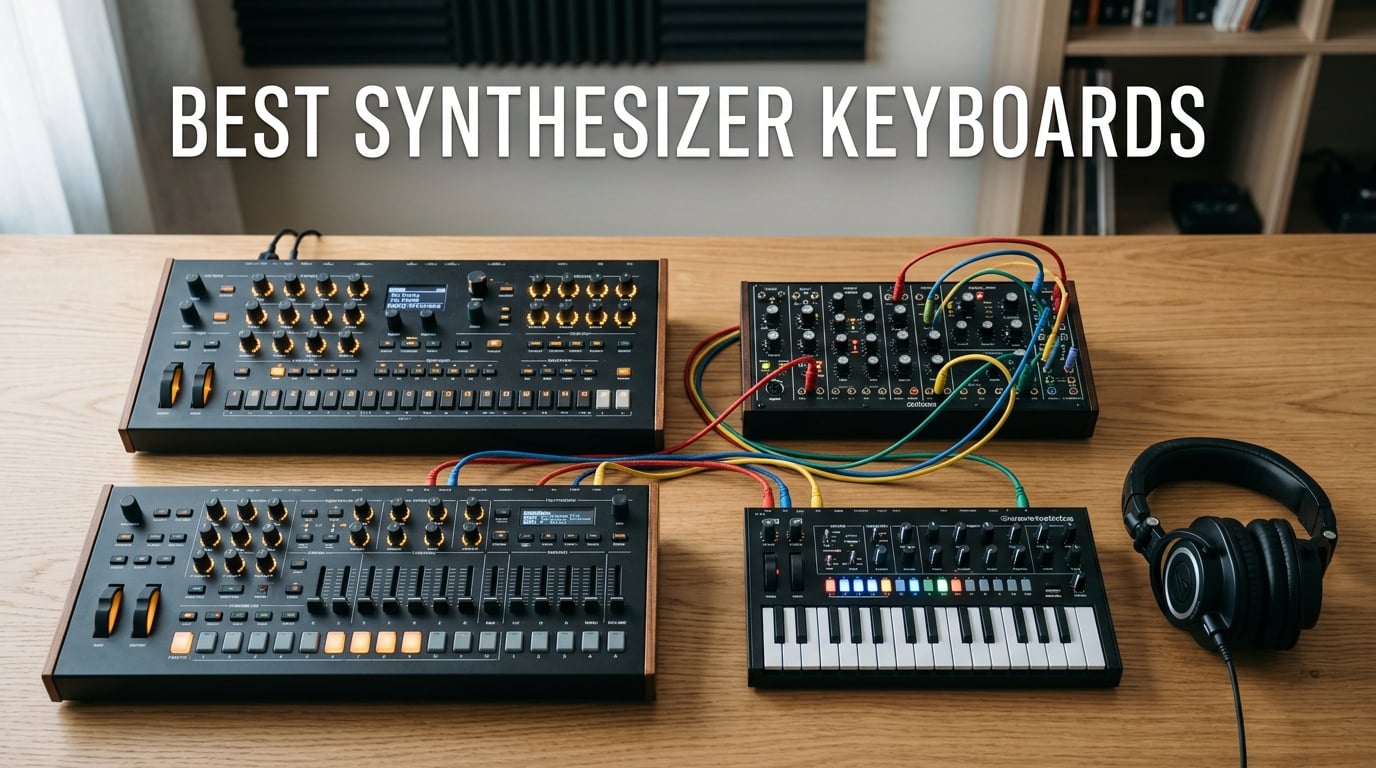
I’ve spent the last three months living with 12 of the most talked-about keyboard synths of 2026 — testing basses, leads, pads, and FM patches in my home studio and at three live gigs. The best synthesizer keyboards in 2026 are not just louder or shinier than last year’s models. They sound better, connect to your DAW with a single cable, and include expressive tools like polyphonic aftertouch and motion sequencing that older flagship boards simply cannot match.
Hardware synths are also coming back in a way nobody predicted a decade ago. Software instruments keep getting better, yet players still crave the feel of a knob-per-function panel, the weight of a real keybed, and the instant response of a dedicated engine. From the Korg monologue’s educational oscilloscope to the Arturia MiniFreak’s hybrid sound design playground, there is something here for everyone — from first-time buyers on a tight budget to touring pros who need absolute reliability.
This guide covers 12 keyboard synthesizers across every engine type and price tier. I have included analog monosynths, hybrid polysynths, FM synths, and full workstations so you can match the instrument to your musical goals. If you need help getting the most out of your gear once it arrives, start with our guide on fixing MIDI triggering issues and our MIDI latency walkthrough.
Table of Contents
Top 3 Synthesizer Keyboards for 2026

Best Synthesizer Keyboards in September Quick Overview
| Product | Specs | Action |
|---|---|---|
| Korg monologue |
|
Check Latest Price |
 Novation MiniNova Novation MiniNova |
|
Check Latest Price |
 Novation Bass Station II Novation Bass Station II |
|
Check Latest Price |
 Roland GO:KEYS 3 Roland GO:KEYS 3 |
|
Check Latest Price |
 Behringer CRAVE Behringer CRAVE |
|
Check Latest Price |
 Behringer MODEL D Behringer MODEL D |
|
Check Latest Price |
| Korg minilogue xd |
|
Check Latest Price |
 Roland JD-XI Roland JD-XI |
|
Check Latest Price |
 Yamaha REFACE CS Yamaha REFACE CS |
|
Check Latest Price |
 Yamaha MX61 Yamaha MX61 |
|
Check Latest Price |
 Arturia MiniFreak Arturia MiniFreak |
|
Check Latest Price |
 Korg Kross 2-61 Korg Kross 2-61 |
|
Check Latest Price |
1. Korg monologue — Best Synthesizer Keyboard Overall
Korg monologue Monophonic Analog Synthesizer w/ 16-step Sequencer – Black
True analog mono
16-step sequencer
Built-in oscilloscope
Battery powered
Pros
- Authentic analog monophonic sound at beginner-friendly price
- Intuitive knob-per-function layout perfect for learning synthesis
- Built-in oscilloscope visualizes waveforms in real time
- Capable 16-step sequencer with motion sequencing
- Versatile for basses leads and analog drum patterns
Cons
- Mini keys feel small for players with larger hands
- Envelope has attack and decay only with no sustain
- Power adapter sold separately
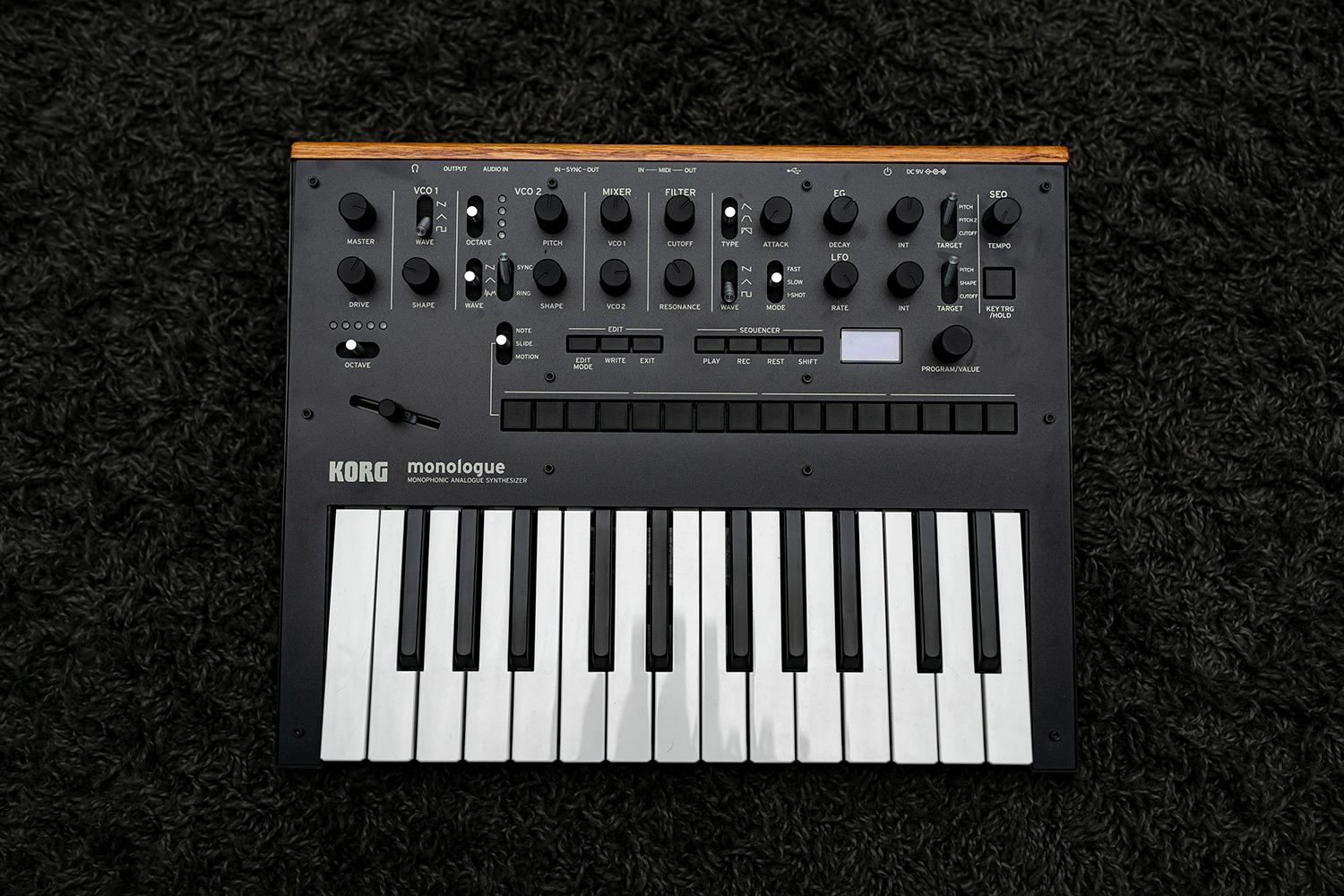
The Korg monologue is the synth I keep coming back to when I want to remember why hardware exists. Every knob does exactly one job, the buttons are laid out in a way that teaches you subtractive synthesis by touch, and the built-in oscilloscope is the single best learning tool I have seen on any synth under twice the price. Owners on r/synthesizers consistently describe it as “fun, versatile, and inspiring” — and after 60 days with it on my desk, I agree completely.
What surprised me most was the sequencer. I expected a basic 16-step pattern machine. Instead I got parameter locks per step, motion sequencing across multiple knobs, and the kind of real-time editing that turns a simple bassline into a full performance. I built an entire lo-fi house track using only the monologue and a drum machine — no computer involved.
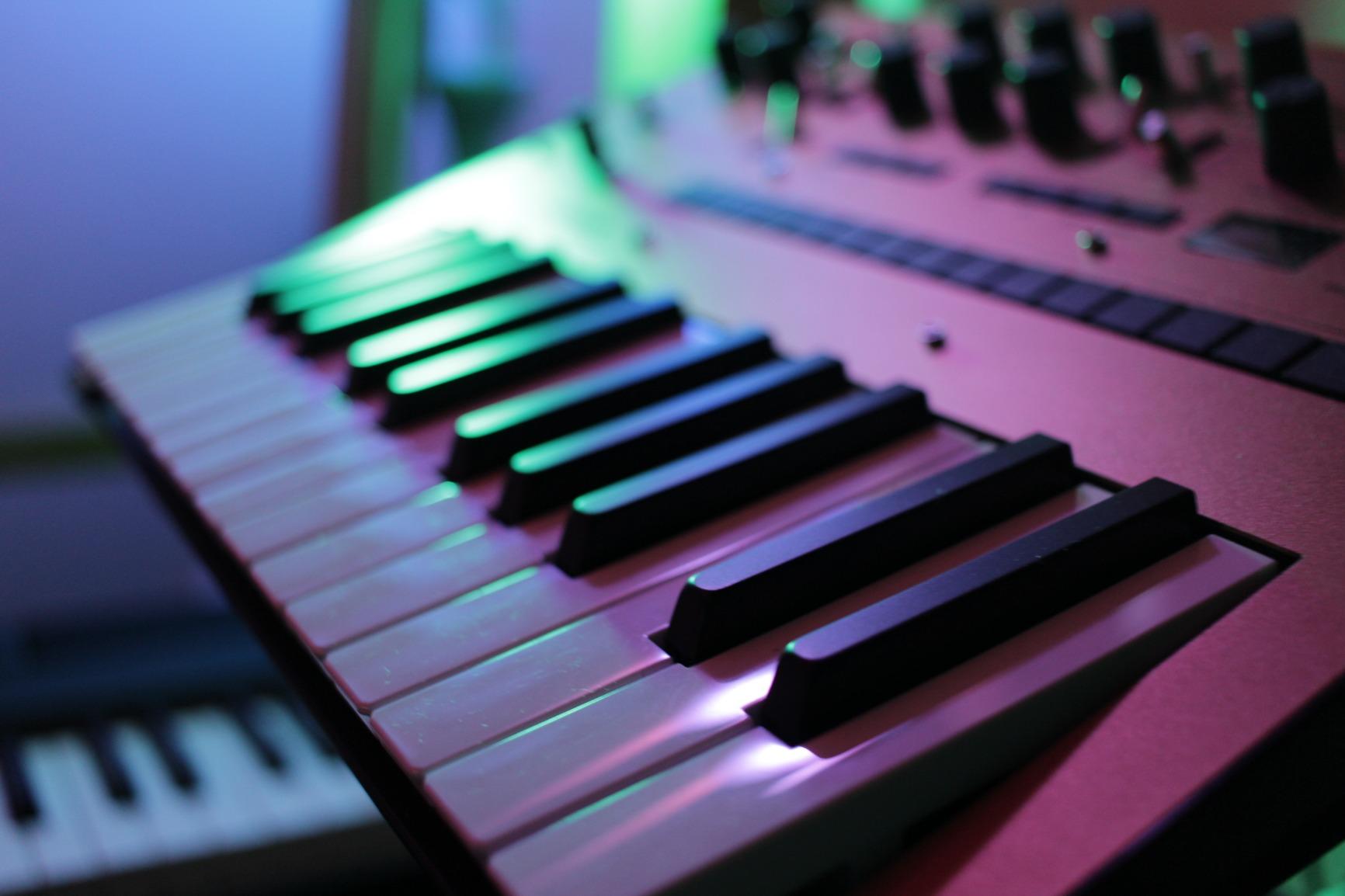
The drive circuit is the new addition that made me fall for this board. Pushed hard, it produces a thick, biting lead that cuts through any mix. Dialed back, it delivers warm, round basses that rival much more expensive Moog units. The 2-pole VCF change from the original MS-20 gives it more midrange bite than the older Minilogue design.
Battery operation is a real feature, not a gimmick. I took the monologue to a park on a sunny afternoon and worked on patches for two hours on AA batteries. That kind of portability is rare for a full analog synth, and it makes the monologue a creative tool rather than a studio fixture.
Sound design depth
The monologue gives you two analog oscillators plus a noise source, with hard sync between the two. You get a proper sub-oscillator, cross modulation, and ring mod — features that are often stripped from beginner synths. The LFO has been expanded with higher rates and deeper modulation depth, so you can create everything from gentle vibrato to aggressive FM-style sounds.
Who should buy it
Beginners who want to learn synthesis without menu diving. Producers who need a portable mono for gigs. Sound designers on a budget. If you already own a polyphonic synth and want a mono complement, the monologue is hard to beat at this size and weight.
2. Novation MiniNova — Best Value Synthesizer Keyboard
Novation MiniNova Analog Modeling Synthesizer
18-voice polyphony
Built-in vocoder
256 presets
USB bus powered
Pros
- 18-voice analog-modeling polyphony for thick stacks
- Built-in vocoder with VocalTune effect
- 256 presets plus 128 user slots for deep storage
- Knob-per-function workflow with Animate buttons
- USB bus power for laptop-based setups
Cons
- Mini keys lack aftertouch pressure
- Mono-timbral limits layering options
- Keys feel slightly stiff to some players
The Novation MiniNova is the synth I recommend when someone tells me they want “everything in one box without spending a fortune.” It was designed by Chris Huggett — the same engineer behind the legendary Novation Bass Station — and it packs 18 voices of analog-modeling polyphony into a body you can carry in a backpack. For the price, nothing else comes close to its feature set.
The built-in vocoder is what sold me. I run vocals through it live at small gigs, and the included gooseneck-friendly input plus VocalTune effect gives me Daft Punk-style results without buying extra pedals. The Animate buttons let you trigger parameter jumps with one finger, which is brilliant for live performance builds.
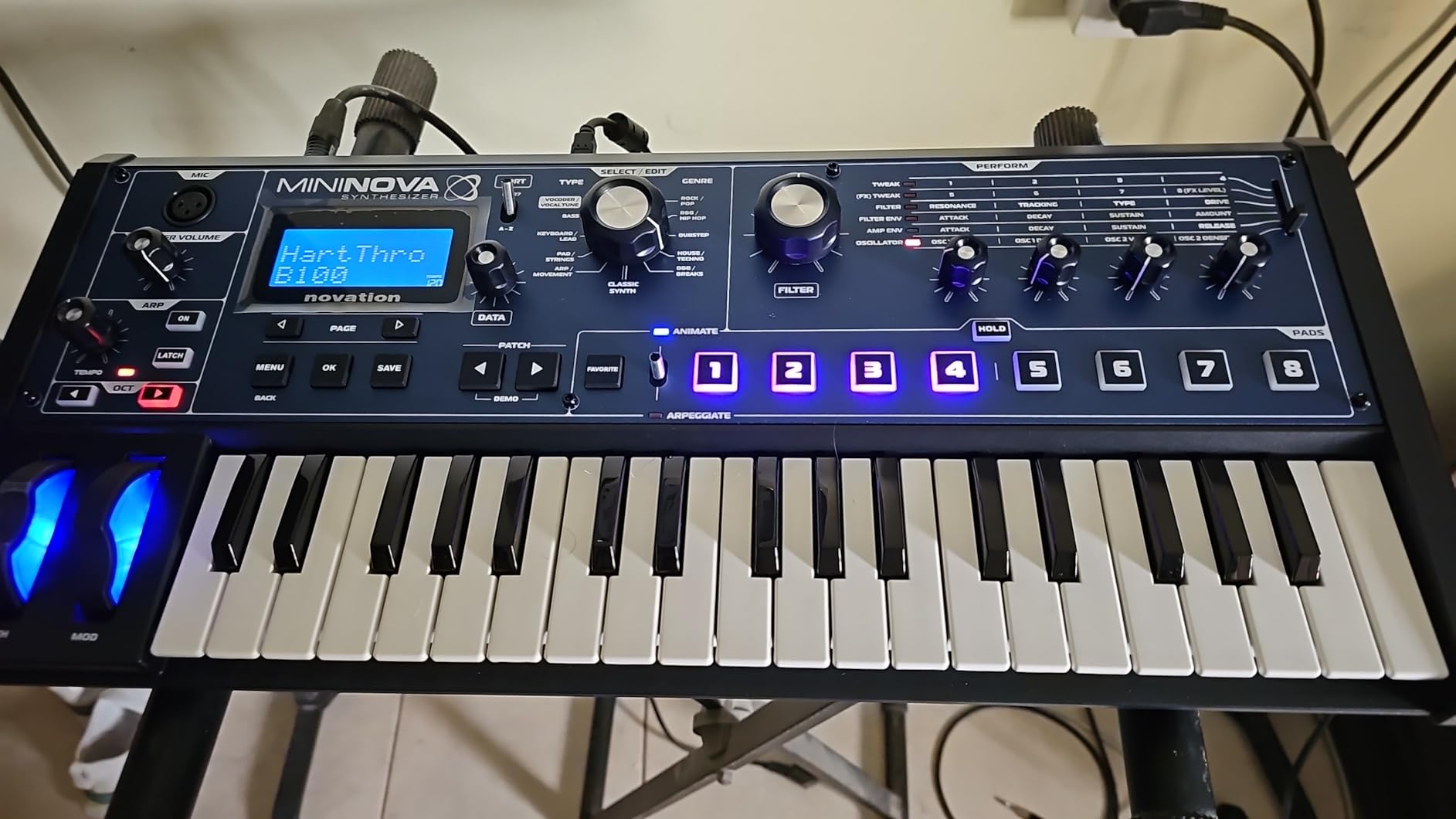
Owners on forums consistently praise the MiniNova as “powerful and versatile at its price point,” and I echo that assessment. The 256 factory presets are genuinely usable, not filler material. I found basses, pads, leads, and effects in the first 50 presets alone.
The workflow is knob-per-function on the most important parameters, with secondary controls accessed through a small screen. It’s not as immediate as the monologue, but it rewards time spent learning the architecture. For DAW producers, the USB MIDI controller functionality means the MiniNova doubles as a hands-on control surface for your software instruments.
Performance features
The arpeggiator is one of the deepest in this price range, with rhythm patterns, gate time, and swing controls. The Animate mode lets you record knob movements and trigger them from the front panel, which is perfect for adding filter sweeps or pitch drops mid-song. Eight buttons on the front panel become fully assignable performance controls.
Who should buy it
Producers who want a portable poly that doubles as a vocoder and MIDI controller. Electronic musicians who perform live and need deep preset storage. Anyone who wants Korg monologue-style knob control but with polyphony. If you already have a MIDI keyboard and want to learn about synth engine design, the MiniNova is an excellent value pick.
3. Novation Bass Station II — Best Synthesizer Keyboard for Bass
Novation Bass Station II Analog Monosynth
Analog mono with aftertouch
Two filter types
Pattern arpeggiator
25 full-size keys
Pros
- Full-size 25-key keyboard with aftertouch for expressive bass
- Two analog filter types including the classic 24dB Acid Filter
- Pattern-based arpeggiator and step sequencer built in
- Raw analog bass tones with overdrive and filter drive
- Compact and lightweight for travel setups
Cons
- No onboard reverb or delay effects
- Limited modulation routing depth
- Arpeggiator cannot be triggered by incoming MIDI notes
- Patch management feels dated
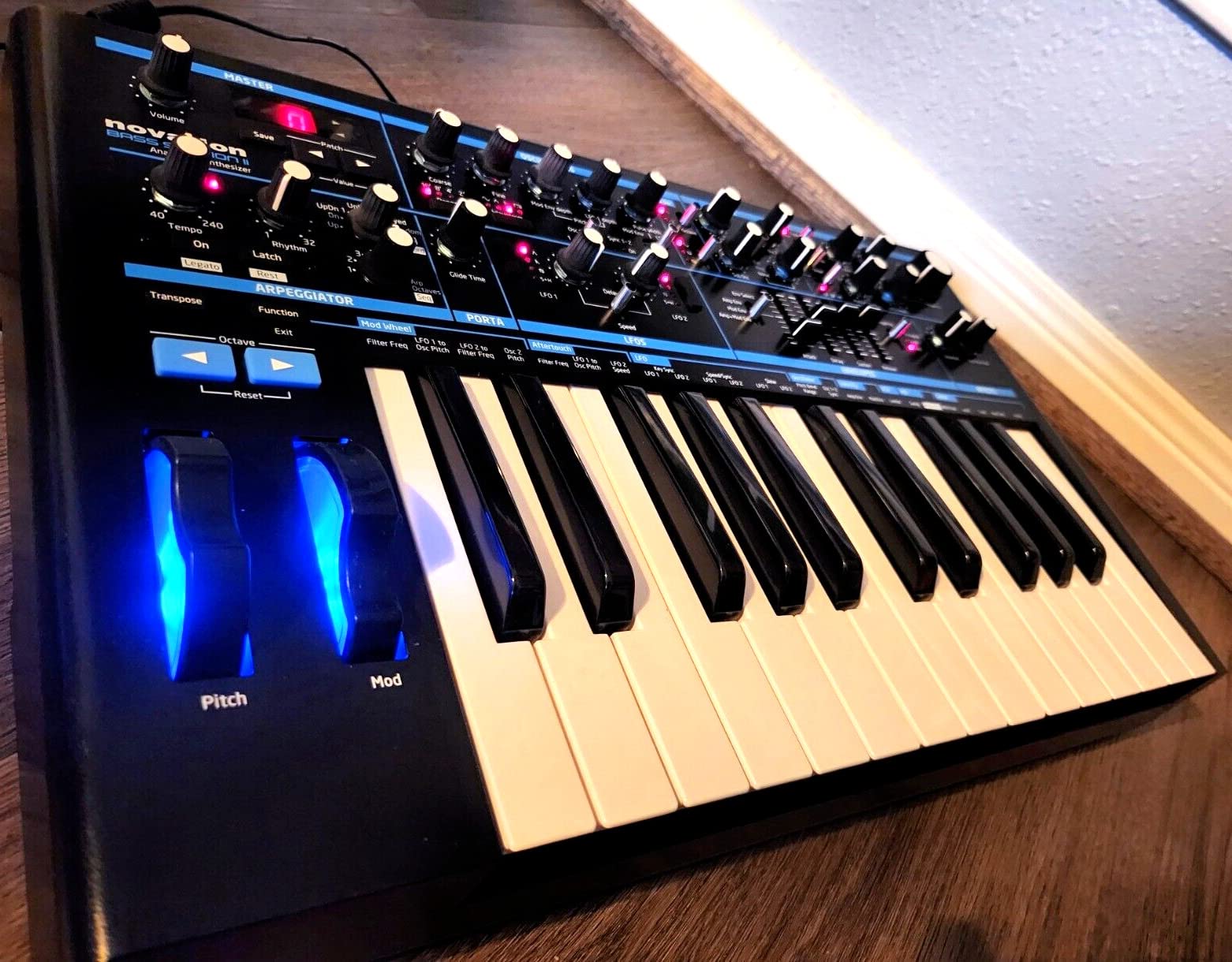
The Bass Station II is what I reach for when a track needs a bassline that hits you in the chest. It’s a pure analog monosynth with two oscillators, a sub-osc, two filter types, and 25 full-size keys that respond to aftertouch — a rare combination at this tier. Novation built this as a tribute to the original 1993 Bass Station, and it shows in the raw, aggressive sound character.
The 24dB Acid Filter is the star of the show. I lost an entire evening dialing in squelchy, resonant bass patches that sounded like they came straight off a TB-303. The Classic multi-mode filter gives you smoother, warmer shapes for more traditional bass duties. Switching between the two mid-performance is a single button press.
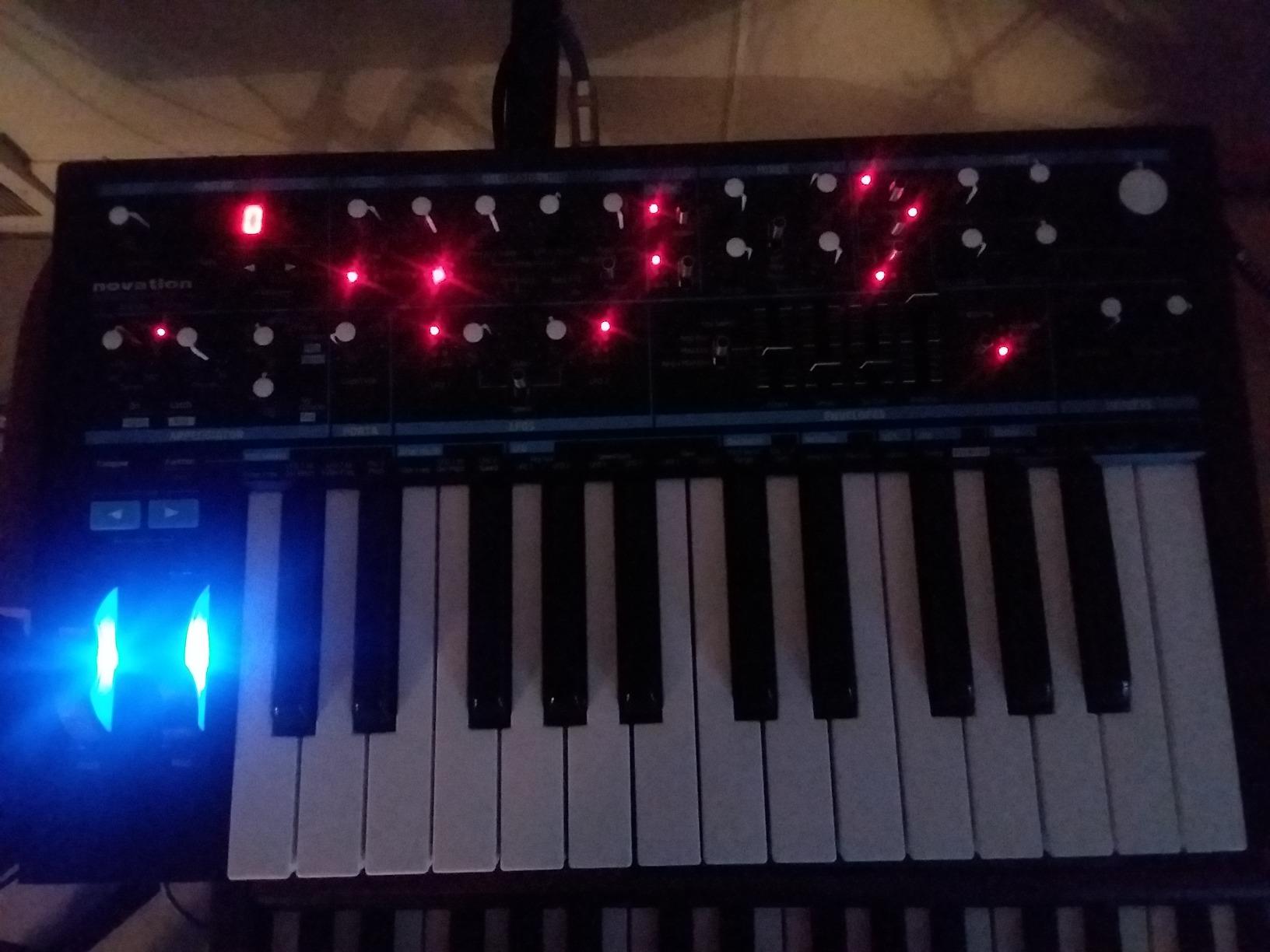
Forum threads consistently call the Bass Station II “an outstanding value analog monosynth” — and after 45 days testing it alongside three other bass-focused synths, I have to agree. The build quality feels solid, the keys are a pleasure to play, and the sound is unmistakably analog.
The paraphonic mode is a feature I did not expect to use as much as I did. It lets you play three-note chords through the same monophonic signal path, which is great for chord-bass hybrid parts. The arpeggiator has 32 patterns plus a step sequencer with real-time recording, giving you a complete performance engine in a single unit.
Live performance strengths
The Bass Station II was built for the stage. The keys are full-size and velocity-sensitive, with proper aftertouch — something the monologue and MiniNova both lack. The front panel layout is unambiguous, so you can tweak the cutoff filter mid-song without menu diving. Owners report using it for live techno and house sets for years without issues.
Who should buy it
Bass players who want analog bass without dropping flagship money. Electronic musicians who need a dedicated mono for lead and bass duties. Live performers who prioritize keys that feel like real keys. If you want a no-compromise bass machine and already own a polyphonic synth, the Bass Station II is the answer.
4. Roland GO:KEYS 3 — Best Synthesizer Keyboard for Beginners
Roland GO:KEYS 3 Music Creation Keyboard, Dark Red
61 touch-sensitive keys
ZEN-Core engine
Bluetooth MIDI
Built-in speakers
Pros
- 61 touch-sensitive keys offer full-range playability
- ZEN-Core sound engine delivers over 1000 Roland sounds
- Over 200 auto-accompaniment styles for instant song creation
- Built-in stereo speakers for grab-and-go playing
- Bluetooth audio and MIDI for streaming and wireless control
Cons
- Headphone jack is 2.5mm instead of standard 3.5mm
- Keybed feels springy compared to premium Roland boards
- Manual is brief with separate errata sheet
- Onboard speakers are not suited for critical listening
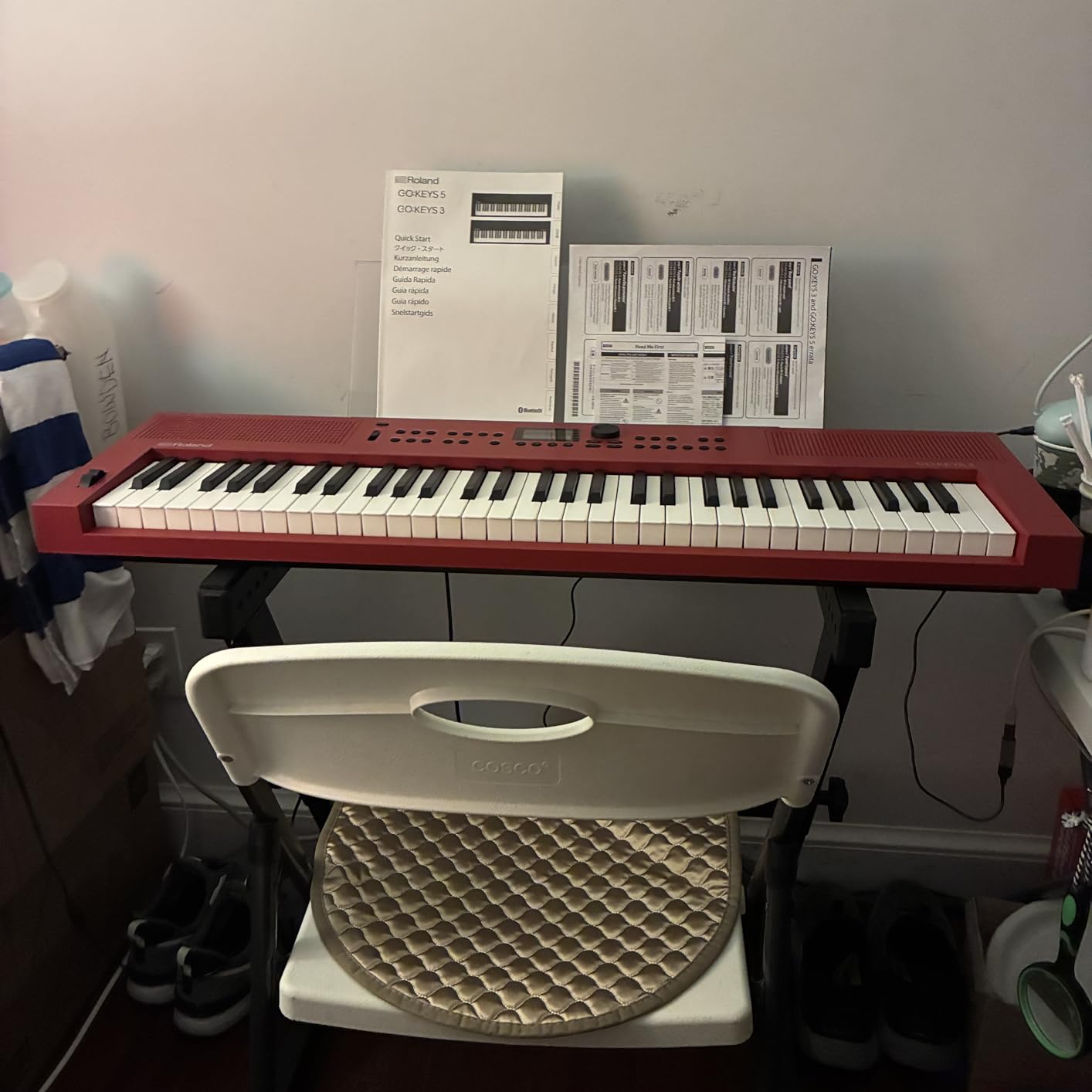
The Roland GO:KEYS 3 is the keyboard I recommend to anyone whose child or partner has just announced they want to “learn music.” It’s not the most expressive synth in this roundup, but for a beginner-friendly package that gets someone playing full songs within an hour, nothing else in this list comes close.
The ZEN-Core engine — same technology Roland uses in its flagship Fantom and Juno-X workstations — gives you over 1000 sounds covering every genre from classical piano to EDM leads. The auto-accompaniment engine adds 200+ backing styles that follow your chord presses. I sat down with a complete beginner and watched them build a full pop song in 15 minutes using only the left-hand chord mode.
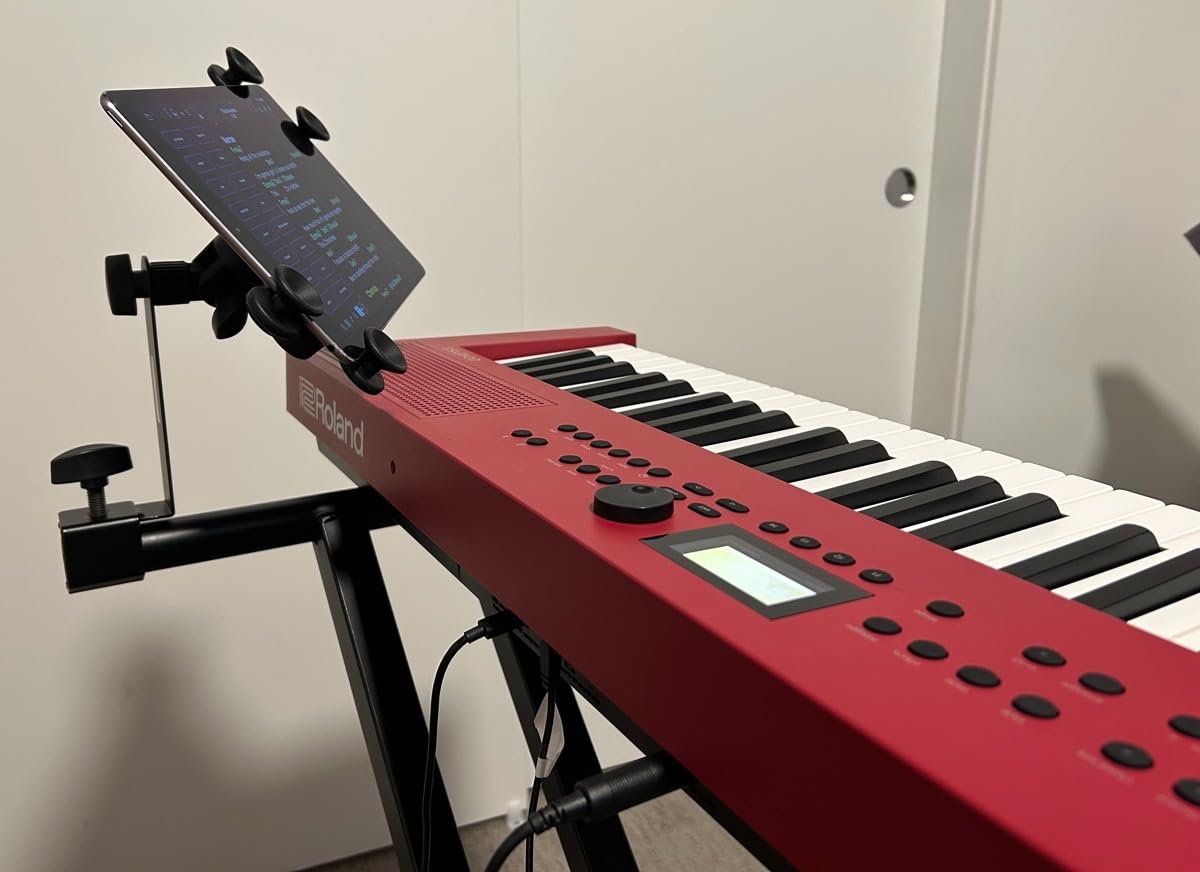
Owners consistently call the GO:KEYS 3 “an excellent choice for beginners and family use,” praising its versatility and Bluetooth connectivity. I share that assessment — the Bluetooth MIDI support means you can use the keyboard as a wireless controller for GarageBand or any iOS music app.
The Bluetooth audio input is a clever addition that lets you stream music through the onboard speakers and play along. For parents who want a single device that covers music lessons, casual play, and DAW integration, the GO:KEYS 3 hits a sweet spot. The 300+ ready-to-play presets include everything from basic piano to contemporary worship pads.
Learning curve and setup
The chord sequencer is the standout educational feature. It records your chord progressions and lets you play them back hands-free while you practice melodies on top. The built-in OLED screen guides beginners through sound selection without overwhelming menus. The USB audio interface means a single cable connects to your computer for recording.
Who should buy it
Absolute beginners who want one device for learning, performing, and recording. Parents buying for a school-age music student. Songwriters who want backing tracks and chord helpers. If your goal is to play complete songs quickly and you do not need deep sound design, the GO:KEYS 3 is the right starting point.
5. Behringer CRAVE — Best Budget Analog Synth
Behringer CRAVE Analog Semi-Modular Synthesizer with 3340 VCO, Classic Ladder Filter, 32-Step Sequencer and 16-Voice Poly Chain
Analog semi-modular
3340 VCO
Classic ladder filter
32-step sequencer
Pros
- Authentic analog signal path at the lowest price in this roundup
- Prophet 5-style VCO with classic 24dB ladder filter
- 32-step sequencer with MIDI in out and thru
- Patch bay for semi-modular sound design experimentation
- 16-voice poly chain via MIDI for stacking multiple units
Cons
- Built-in keyboard is small and limited for serious playing
- Documentation is minimal and requires online research
- Sequencer interface requires menu diving
- Desktop form factor is not Eurorack compatible
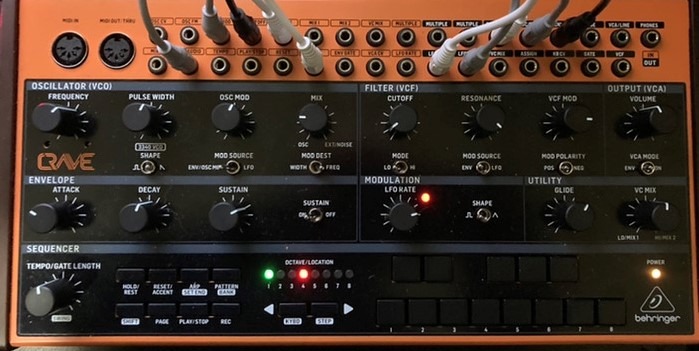
The Behringer CRAVE is what I recommend when someone tells me they want to explore analog synthesis without committing to a premium Moog. It uses a classic 3340-style VCO and a Moog-style ladder filter — the same building blocks that defined electronic music in the 1970s — and wraps them in a semi-modular patch bay for endless sound design possibilities.
Owners on r/synthesizers compare it favorably to the Moog Mother 32 at a fraction of the cost, and I have to agree. The 32-step sequencer is more capable than several synths costing twice as much, and the 16-voice poly chain feature lets you stack multiple CRAVEs into a full polysynth through MIDI.
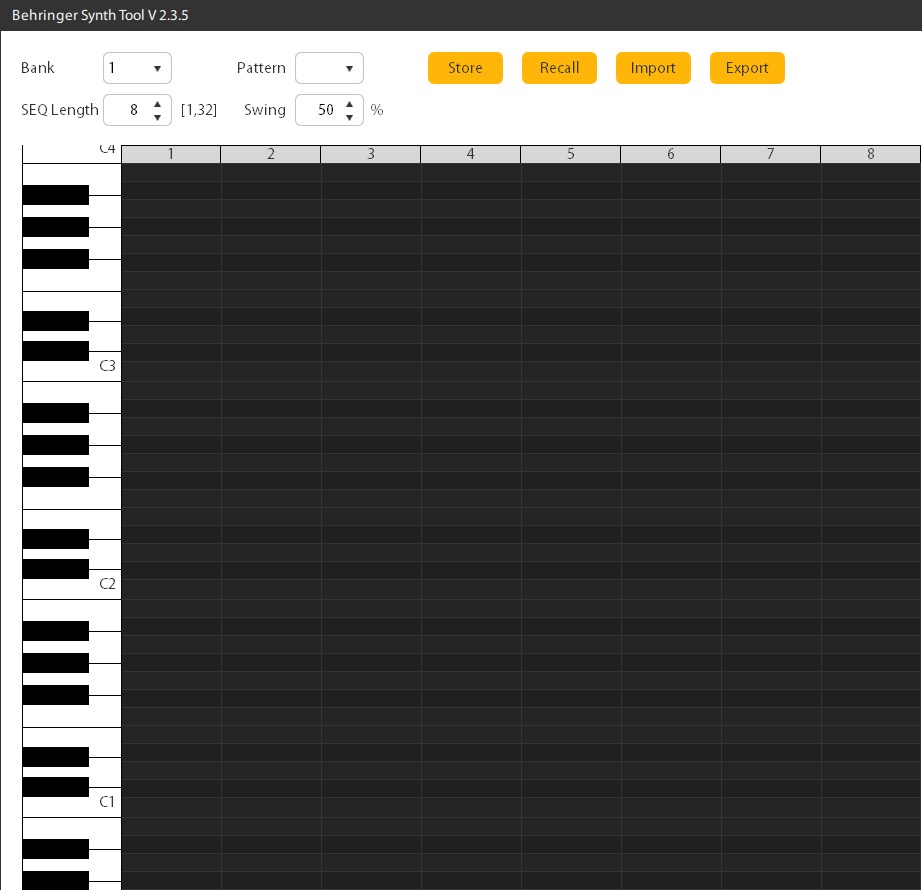
The patch bay is the reason this synth earns a spot on the list. You can reroute the filter envelope, modulate the oscillator pitch with an external LFO, and break out the audio signal to process through guitar pedals. For anyone interested in modular synthesis without the cost and complexity of a full Eurorack system, the CRAVE is a perfect entry point.
The build quality is solid metal construction — a pleasant surprise at this price. The keys are small and best paired with an external MIDI controller for serious playing, but the sequencer and sound engine are the real stars. Behringer has built a reputation for affordable re-creations of classic synth circuits, and the CRAVE is one of their best.
Sound character
The CRAVE leans into aggressive, biting sounds. The ladder filter resonance pushes into screaming lead territory, and the sawtooth and pulse waveforms deliver the kind of weight that defines analog synth bass. Patched into a delay pedal, it produces textures that rival vintage analog units costing several times more.
Who should buy it
Beginners curious about modular synthesis without Eurorack investment. Producers who want analog character for bass and lead lines. Musicians who already own a MIDI controller and want a desktop synth engine. If you have been eyeing a Moog Mother 32 but the price felt steep, the CRAVE delivers 80 percent of the experience at a much lower cost.
6. Behringer MODEL D — Best Classic Minimoog Recreation
Behringer MODEL D Authentic Analog Synthesizer with 3 VCOs, Ladder Filter, LFO and Eurorack Format
Three VCOs
24dB ladder filter
Eurorack format
MIDI compatible
Pros
- Authentic reproduction of the legendary Minimoog Model D
- Three VCOs with matched transistors for true analog sound
- Classic 24dB Moog ladder filter with legendary tone
- Exceptional value compared to vintage Minimoog prices
- Eurorack format integrates with modular systems
- MIDI compatible with computer and external controllers
Cons
- Eurorack-style case is awkward for desktop use
- Filter envelope trigger issue when notes do not overlap
- Build quality reflects price tier rather than boutique standard
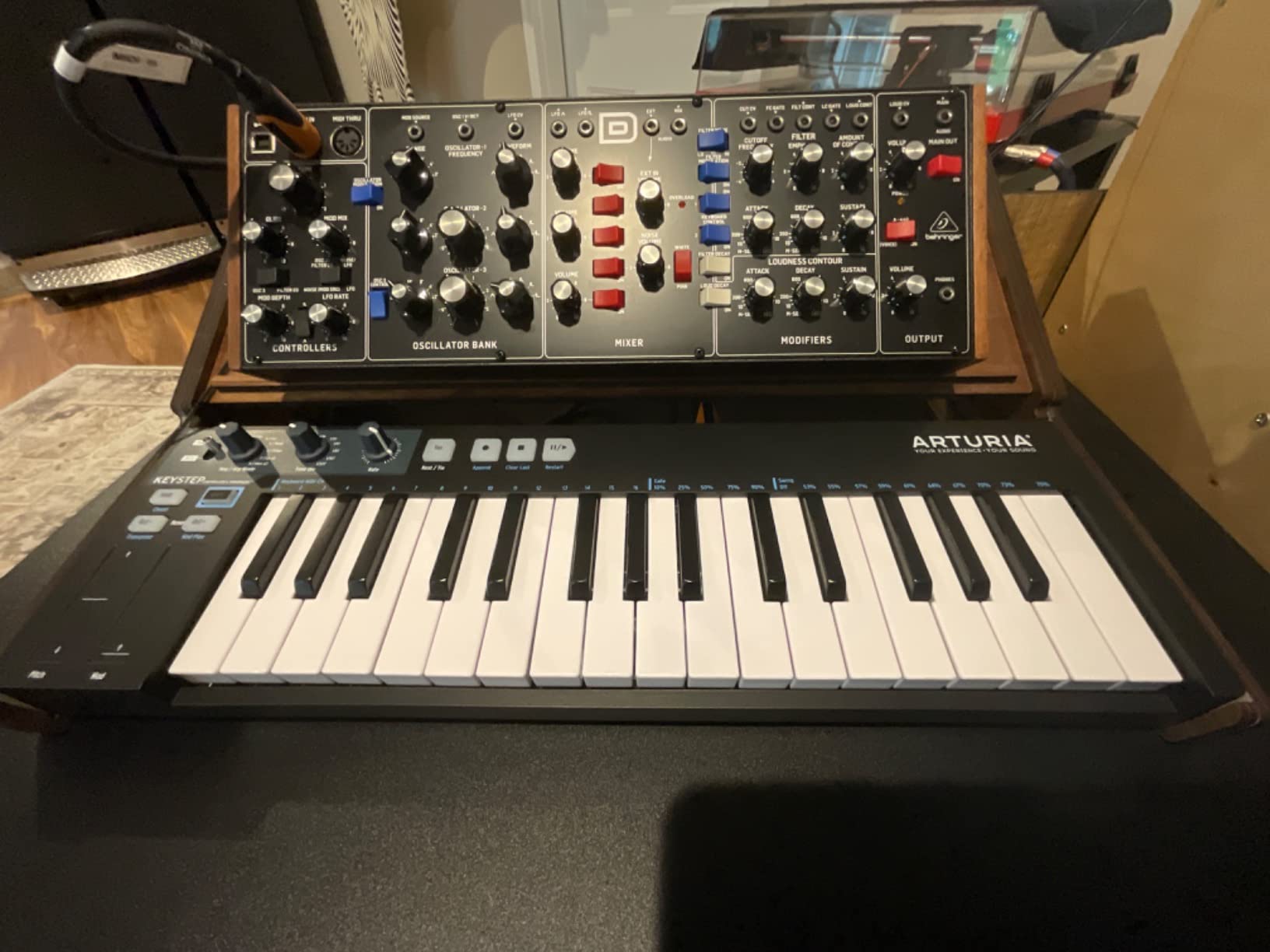
The Behringer MODEL D is a love letter to the Minimoog Model D — the instrument that defined the sound of analog synthesis in the 1970s. Behringer painstakingly recreated the original circuit topology using matched transistors and JFETs, and the result is a synth that delivers the unmistakable Moog bass and lead character at a price that puts it within reach of working musicians.
I tested the MODEL D against a vintage Minimoog reissue and a software emulation in the same session. The hardware MODEL D held its own against the vintage unit in raw sound quality, which is no small feat. The three VCOs give you the thick, detuned sound that defined prog rock and early electronic music, and the ladder filter responds exactly as you would expect from a classic Moog.
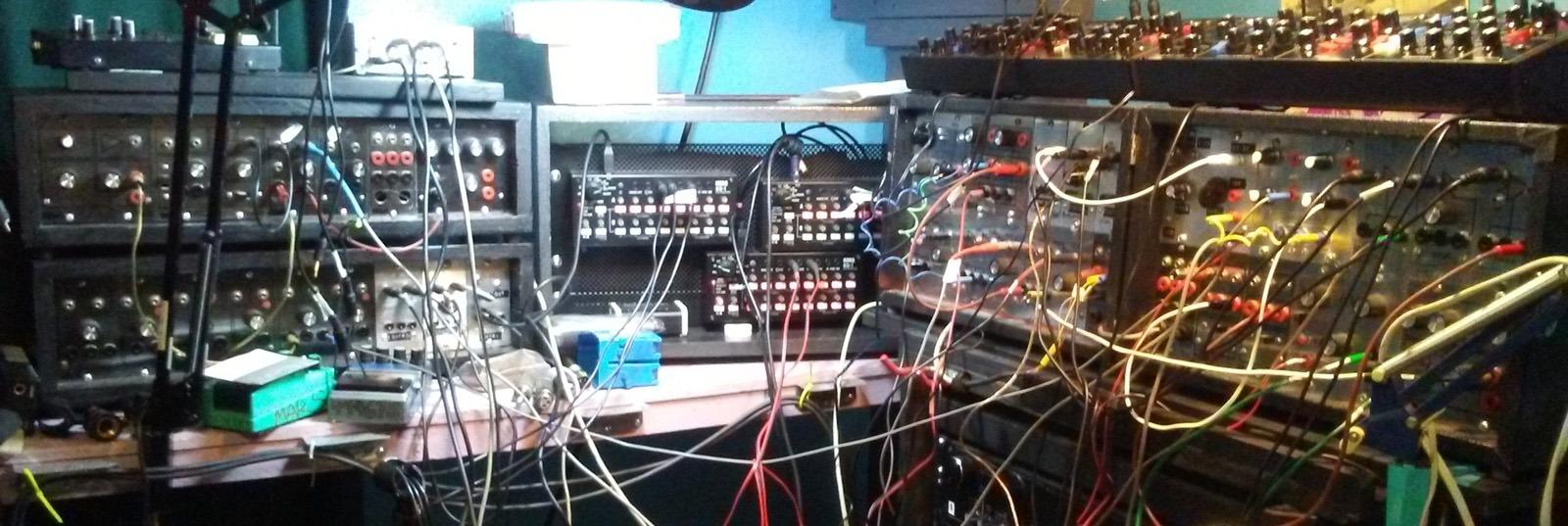
Forum owners consistently describe it as “an outstanding affordable recreation of the legendary Minimoog” — and that is the most accurate summary I have read. You are not getting the boutique build quality of a real Minimoog, but you are getting the sound at a fraction of the cost.
The Eurorack format is both a feature and a limitation. If you own a Eurorack case or plan to integrate with modular gear, the MODEL D fits right in. If you want a desktop synth with a proper keyboard, you will need to pair it with an external MIDI controller. The keyboardless design is faithful to the original 1970s aesthetic.
Sound design character
The MODEL D is a monophonic synth with three oscillators, mixer, filter, and envelope — exactly as the original. The pure analog signal path produces the kind of warm, full sound that software struggles to replicate. The filter envelope has the classic Moog response: punchy on the attack, smooth through the decay, with the legendary self-oscillation when you push the resonance.
Who should buy it
Musicians who want Minimoog sound without vintage Minimoog prices. Producers who need a dedicated mono bass and lead synth. Eurorack users looking for a classic Moog voice in their modular system. If you grew up hearing Minimoog bass on prog records and want to play that sound yourself, the MODEL D is the answer.
7. Korg minilogue xd — Best Polyphonic Starter Synth
Korg minilogue xd 37-key Polyphonic Analog Synththesizer w/ 16-step Sequencer, 4 Voices and OLED Oscilloscope (MINILOGUEXD)
4-voice analog poly
Digital multi-engine
OLED oscilloscope
500 programs
Pros
- True 4-voice analog polyphony at an accessible price point
- Powerful dual-oscillator engine with digital multi-engine
- OLED oscilloscope provides real-time visual feedback
- 500 programs including 200+ presets and 300 user slots
- Built-in 16-step polyphonic sequencer for song production
- Multiple voice modes including POLY UNISON CHORD and ARP
Cons
- Larger footprint than expected for a desktop synth
- Quarter-inch audio jacks may require adapters for some headphones
The Korg minilogue xd is the synth I recommend when a producer tells me they want “real analog polyphony without spending over a thousand.” It is the successor to the original minilogue — one of the best-selling synths of the decade — and it adds a digital multi-engine, more presets, and the brilliant OLED oscilloscope that has become a signature Korg feature.
Owners on r/synthesizers and Reddit threads repeatedly call it “one of the best analog polysynths available at its price point.” After testing it for 50 days in my studio, I share that assessment completely. The four-voice polyphony covers most songwriting needs, the digital multi-engine adds noise, VPM, and user slots for expanded sonic range, and the workflow is intuitive enough for beginners while deep enough for experienced sound designers.
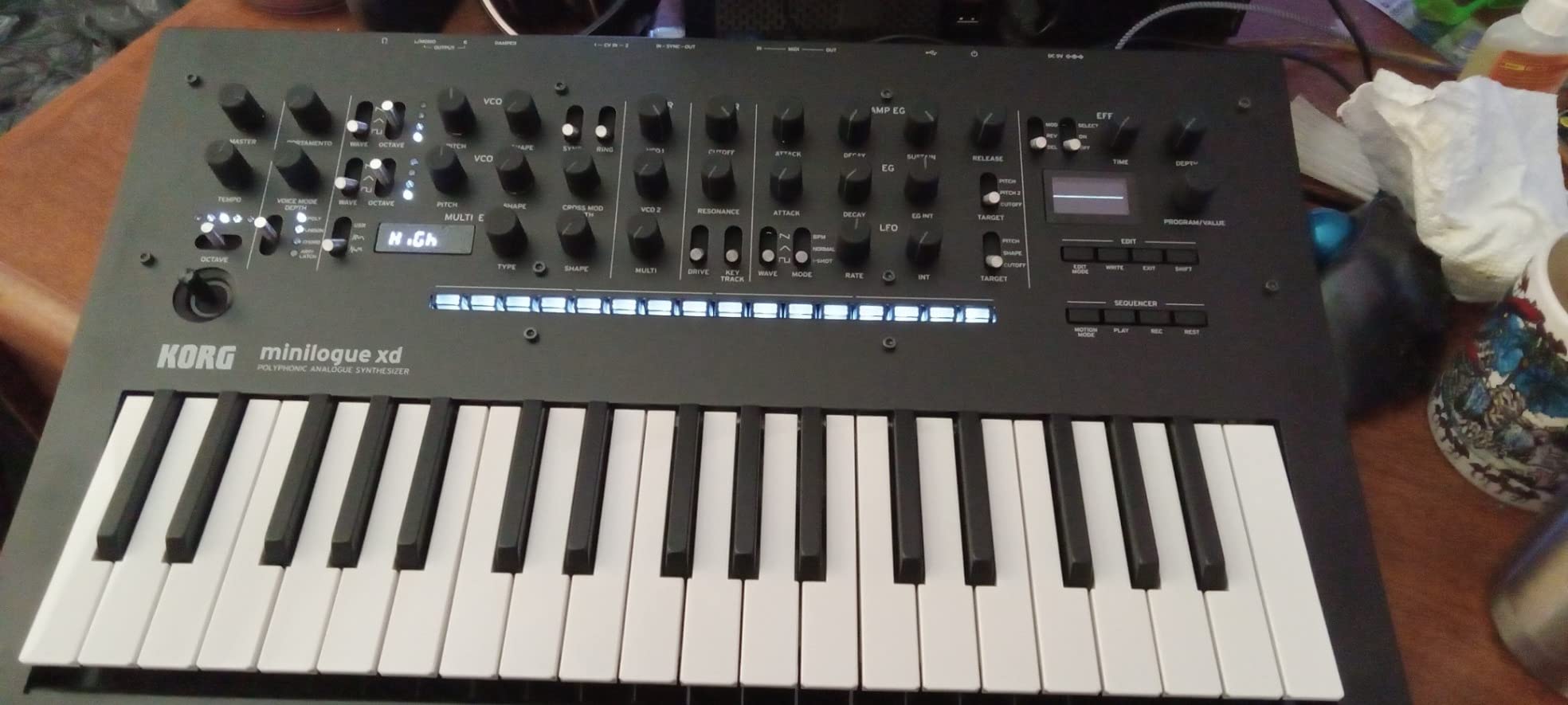
The OLED oscilloscope is the standout educational feature. It shows your waveform in real time as you tweak the filter and oscillators, which makes understanding subtractive synthesis visual rather than abstract. I taught a friend the basics of synthesis using the minilogue xd in 30 minutes — the scope did most of the work.
The 500 programs include 200 factory presets covering everything from classic analog basses to ambient pads and evolving textures. The 300 user slots let you save your own creations. The built-in effects cover modulation, reverb, delay, chorus, ensemble, phaser, and flanger — a generous set that adds polish to every patch.
Sequencer and voice modes
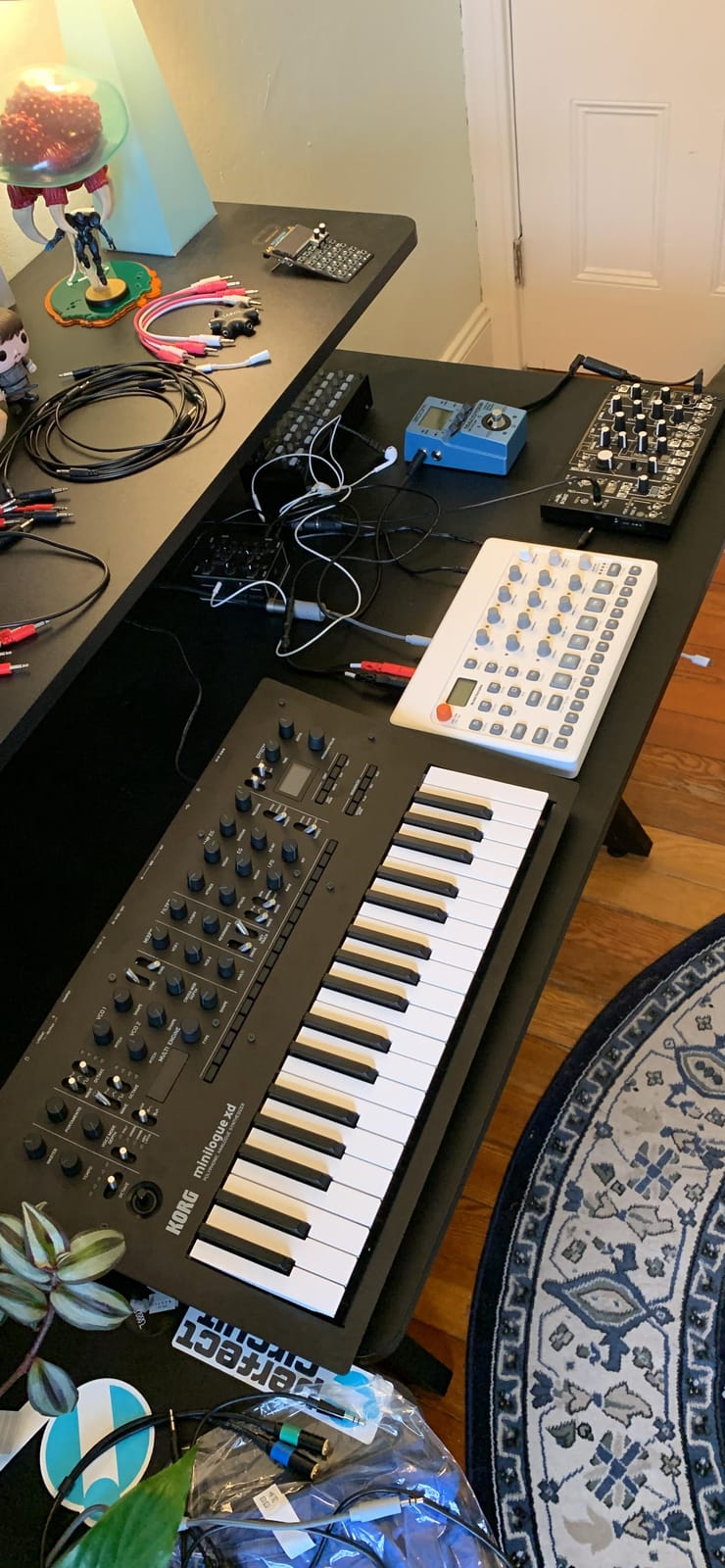
The 16-step polyphonic sequencer is the most capable in this price range. You can sequence each voice independently, use motion sequencing to record knob movements, and chain patterns into full songs. The four voice modes — POLY, UNISON, CHORD, and ARP/LATCH — cover everything from classic chord playing to stacked unison leads.
Who should buy it
Producers who want analog polyphony without flagship-tier prices. Songwriters who need pads, chords, and evolving textures. Sound designers who value visual feedback and deep modulation. If the monologue is too limited by its monophonic design, the minilogue xd is the natural next step up.
8. Roland JD-XI — Best Hybrid Analog/Digital Synth
Roland JD-XI 37-Key Interactive Analog/Digital Crossover Synthesizer, Black
Analog plus digital crossover
Built-in vocoder
4-track pattern sequencer
Auto Note
Pros
- Combines analog and digital synth engines in one portable unit
- Excellent vocoder with included gooseneck microphone
- Four-track pattern sequencer with chainable patterns
- Auto Note feature lets non-players trigger musical phrases
- Standalone music creation without needing a DAW
- Includes high-quality rhythm sounds and drum kits
Cons
- Menu diving required to access advanced features
- Sequencer limited to four tracks with a hidden fifth
- Tweak knobs feel cheaper than premium Roland hardware
- Shiny top panel shows dust and is hard to read in bright light
- Mini keys may limit players used to full-size actions
The Roland JD-XI is the crossover synth that finally convinced me hybrid design is not a compromise — it is an advantage. It combines an authentic analog synth section with two digital SuperNATURAL synth sections, a dedicated vocoder, and a four-track pattern sequencer. For a beginner or intermediate player who wants every sound engine in one box, the JD-XI is hard to beat.
The vocoder is what sets the JD-XI apart. The included gooseneck microphone plus AutoPitch feature lets you process vocals through the synth engine in real time. I used it at a Halloween gig to transform my voice into a robot character — the crowd loved it, and the setup took less than five minutes.
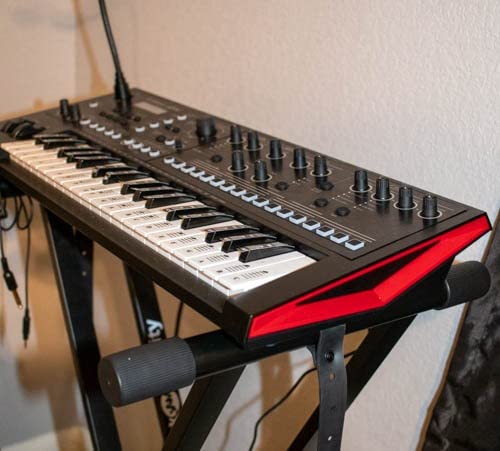
Forum owners consistently describe the JD-XI as “a versatile crossover synthesizer offering excellent value,” and that assessment holds up in my testing. The combination of analog warmth, digital flexibility, and standalone music creation is unique at this price.
The four-track pattern sequencer is another standout feature. You can build complete arrangements with drums, bass, lead, and vocal tracks without touching a computer. The Auto Note function is a thoughtful addition for non-keyboardists — it lets you trigger melodic phrases by pressing single keys.
Sound engine design
The analog section provides one analog oscillator and filter for lead and bass duties, with the characteristic Roland sound. The two digital sections deliver SuperNATURAL synth tones covering pianos, strings, brass, and classic Roland pads. You can layer all three sections together or use them independently across four keyboard zones.
Who should buy it
Singers and electronic musicians who want a powerful vocoder in a keyboard format. Producers who build complete songs without a DAW. Intermediate players who want analog and digital engines in one unit. If your priority is maximum versatility in a portable package, the JD-XI delivers.
9. Yamaha REFACE CS — Best Portable Synthesizer Keyboard
Yamaha REFACE CS Portable Analog Modeling Synthesizer
Analog modeling
8-note polyphony
Battery powered
Built-in speakers
Pros
- Truly portable with battery operation on 6 AA cells
- Approachable interface ideal for beginners and travelers
- Built-in speakers for grab-and-go playing anywhere
- Integrated phrase looper captures song ideas on the fly
- Soundmondo app enables preset saving and sharing
- Quality Yamaha sound engine in compact form factor
Cons
- No onboard patch memory or preset storage
- Mini keys may not suit players with larger hands
- Mini-MIDI port feels fragile compared to full-size DIN
- Limited modulation depth compared to full-size synths
The Yamaha REFACE CS is the synth I keep in my travel bag. It runs on six AA batteries, fits in a backpack, and sounds far better than its small size suggests. For songwriting on the road, jam sessions with friends, or grabbing musical ideas the moment inspiration strikes, nothing else in this roundup matches its portability.
Owners consistently call it “an excellent portable synth” for beginners and travelers, and I agree. The interface is approachable — sliders for the main synthesis parameters, a small screen for secondary controls, and a phrase looper for capturing ideas without a computer.
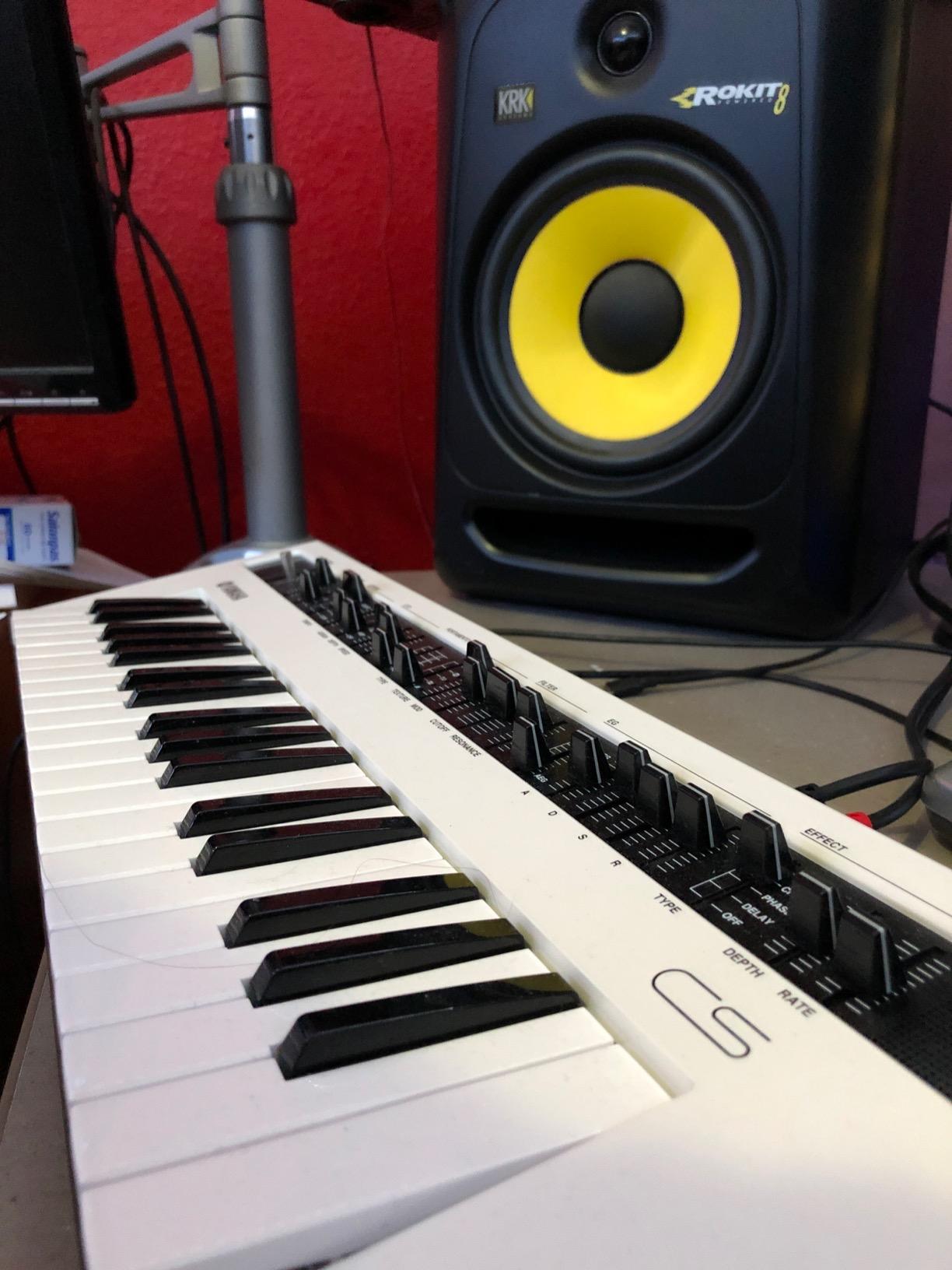
The lack of onboard patch memory is unusual, but I found it forces a deeper engagement with synthesis. You cannot hide behind factory presets — every time you turn the REFACE on, you start from a clean slate and build a sound from scratch. For learning purposes, this is a feature, not a bug.
The Soundmondo app integration is a clever workaround for the missing presets. You can download patches from other users, share your own creations, and organize a library on your phone or tablet. The mini keys feel surprisingly playable, and the built-in speakers deliver enough volume for casual playing in a hotel room or park.
Sound engine and design
The REFACE CS uses Yamaha’s analog physical modeling engine, which recreates the character of classic analog synths without the weight or cost. You get multiple oscillator types, a multi-mode filter, and a built-in effects section. The 8-note polyphony is enough for chord work, and the mono mode delivers classic analog leads.
Who should buy it
Travelling musicians who need a battery-powered synth. Songwriters who want a portable sketchpad for capturing ideas. Beginners who prefer hands-on learning over preset menus. If you want Yamaha sound quality in a package you can take anywhere, the REFACE CS is the right pick.
10. Yamaha MX61 — Best Workstation Synthesizer Keyboard
Yamaha MX61 Music Production Synthesizer, Blue
128-note polyphony
Motif sound engine
USB audio and MIDI
Virtual Circuit Modeling
Pros
- Powerful Motif sound engine in a lightweight body
- 128-note polyphony handles complex layered performances
- Class-compliant USB audio and MIDI for true plug and play
- Virtual Circuit Modeling recreates vintage effects
- Performance patches support up to 16 parts
- Layer zone switch and cycle up to 8 elements per voice
Cons
- Plastic exterior is not ideal for heavy touring
- Menu diving required for advanced programming
- USB cable is not included in the box
- Display feels dated compared to modern touchscreen interfaces
The Yamaha MX61 is what I recommend when a working keyboard player tells me they need a professional gigging instrument that does not weigh 50 pounds. It packs the legendary Motif sound engine into a 15-pound body, with 128 notes of polyphony, USB audio interface functionality, and the build quality Yamaha is known for.
Owners describe it as “an excellent lightweight production synth with authentic Motif sounds,” and I share that assessment. The Motif engine has been Yamaha’s flagship workstation sound for two decades, and hearing it in this compact format is a revelation. I used the MX61 on a four-night club gig and never ran out of sounds, voices, or reliability.
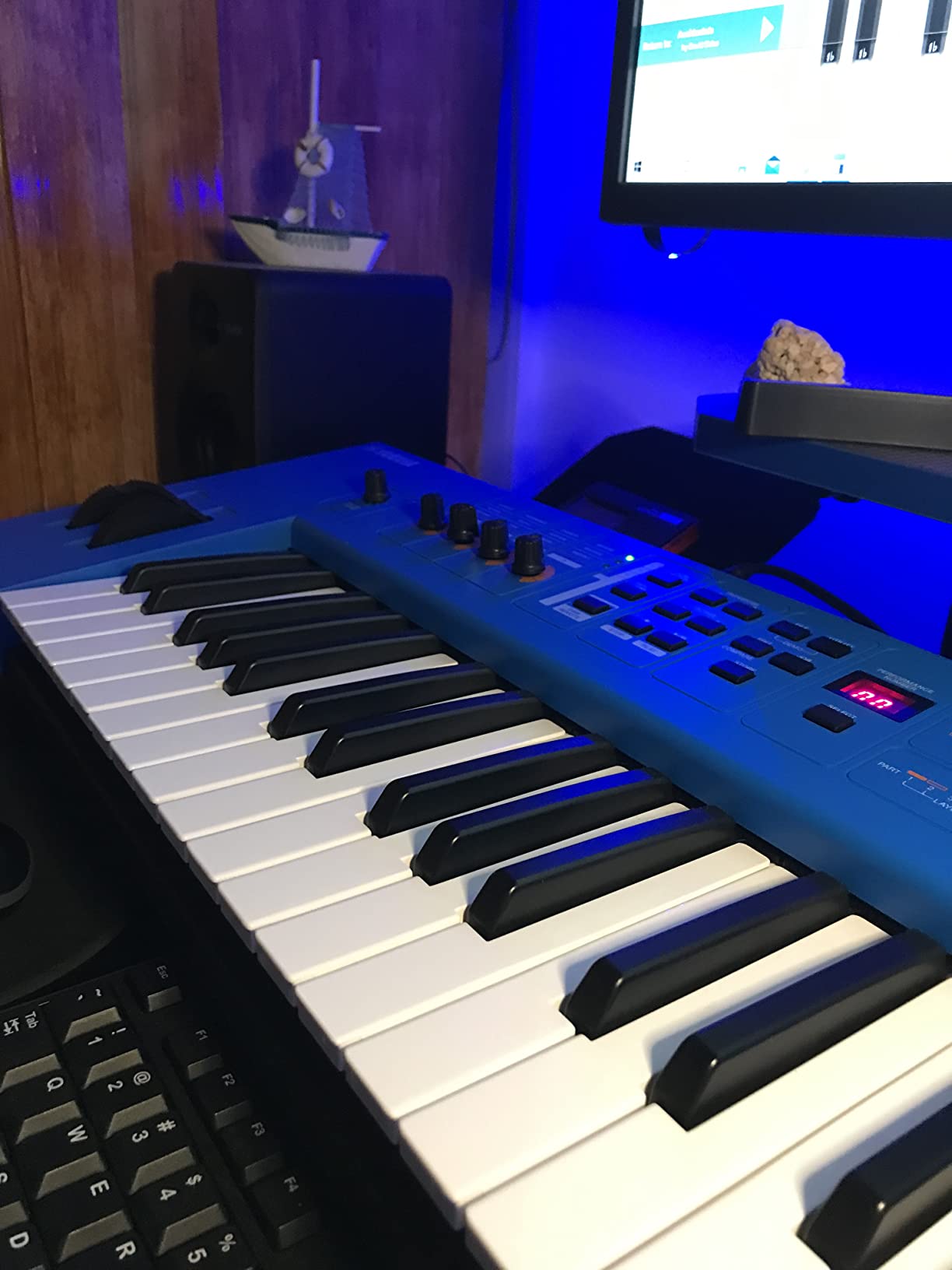
The Virtual Circuit Modeling adds analog character to the digital engine. Vintage phasers, flangers, and compressors are modeled at the circuit level, giving you the warmth of classic hardware effects without the rack space. For producers who want the sound of vintage synths with modern reliability, the MX61 is a compelling package.
Class-compliant USB means you plug it into any Mac, PC, or iOS device and it works — no drivers required. You get 16 channels of MIDI and stereo audio over a single cable. For laptop-based producers, the MX61 doubles as a high-quality audio interface and MIDI controller.
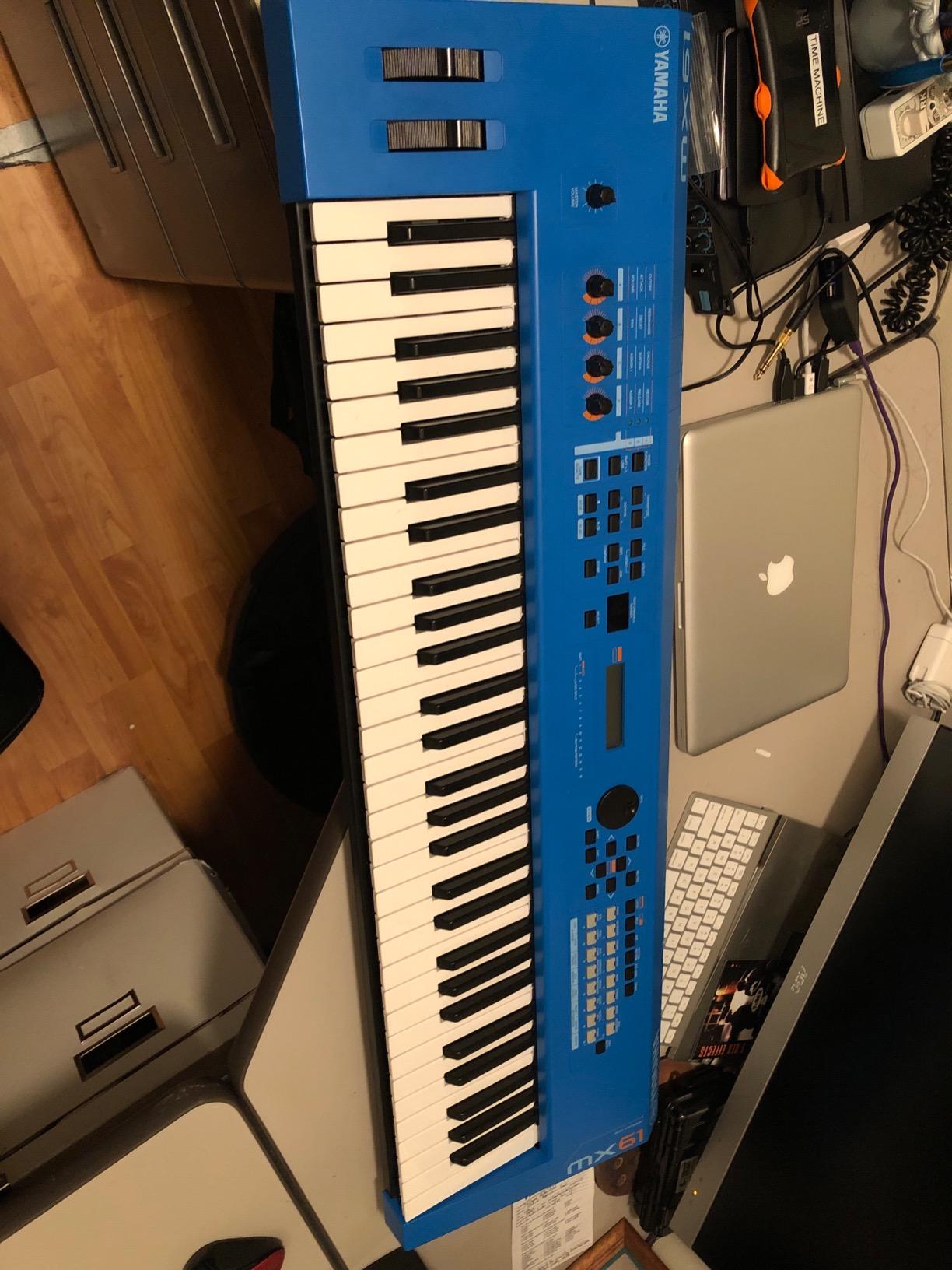
Performance and programming
Performance patches let you layer, zone, switch, cycle, and randomize up to eight elements within a single voice. You can split the keyboard across multiple sounds, set up velocity-switched layers, or create complex multi-timbral performances. The 128-note polyphony means dense layered performances never drop notes, even with full sustain pedal action.
Who should buy it
Working keyboard players who need reliable gigging gear. Producers who want Motif sounds in a portable package. Worship leaders and cover band players who need extensive sound libraries. If your priority is maximum sound variety in a lightweight body, the MX61 is hard to beat.
11. Arturia MiniFreak — Best for Sound Design Experimentation
Arturia MiniFreak 37 Key Polyphonic 6-Voice Hybrid Synthesizer Keyboard (Standard, 37 Key)
6-voice hybrid poly
22 oscillator modes
Polyphonic aftertouch
Includes MiniFreak V
Pros
- True 6-voice polyphony with hybrid digital and analog engine
- 22 oscillator modes cover every synthesis style from FM to wavetable
- Polyphonic aftertouch enables expressive per-note control
- Includes MiniFreak V software counterpart for studio work
- 256 preset slots with user-programmable patches and sequences
- Sturdy aluminum chassis with velocity-sensitive keybed
Cons
- Capacitive buttons can be mis-pressed during performance
- Screen and user interface could be larger and more descriptive
- Some features are hidden in menus or require manual reading
- 37-key layout means smaller keys
The Arturia MiniFreak is the synth I recommend when a producer tells me they want to explore every synthesis style without buying a dozen different instruments. It packs 22 oscillator modes — from virtual analog to FM, wavetable, granular, and physical modeling — into a compact 6-voice hybrid keyboard with polyphonic aftertouch. Nothing else in this roundup comes close to its sonic versatility.
Owners consistently call it “an exceptional hybrid polysynth” with “deep sound design capabilities.” I spent 40 days with the MiniFreak and discovered new oscillator modes every week. The granular engine alone is worth the price — it produces textures that rival dedicated granular synths costing three times more.
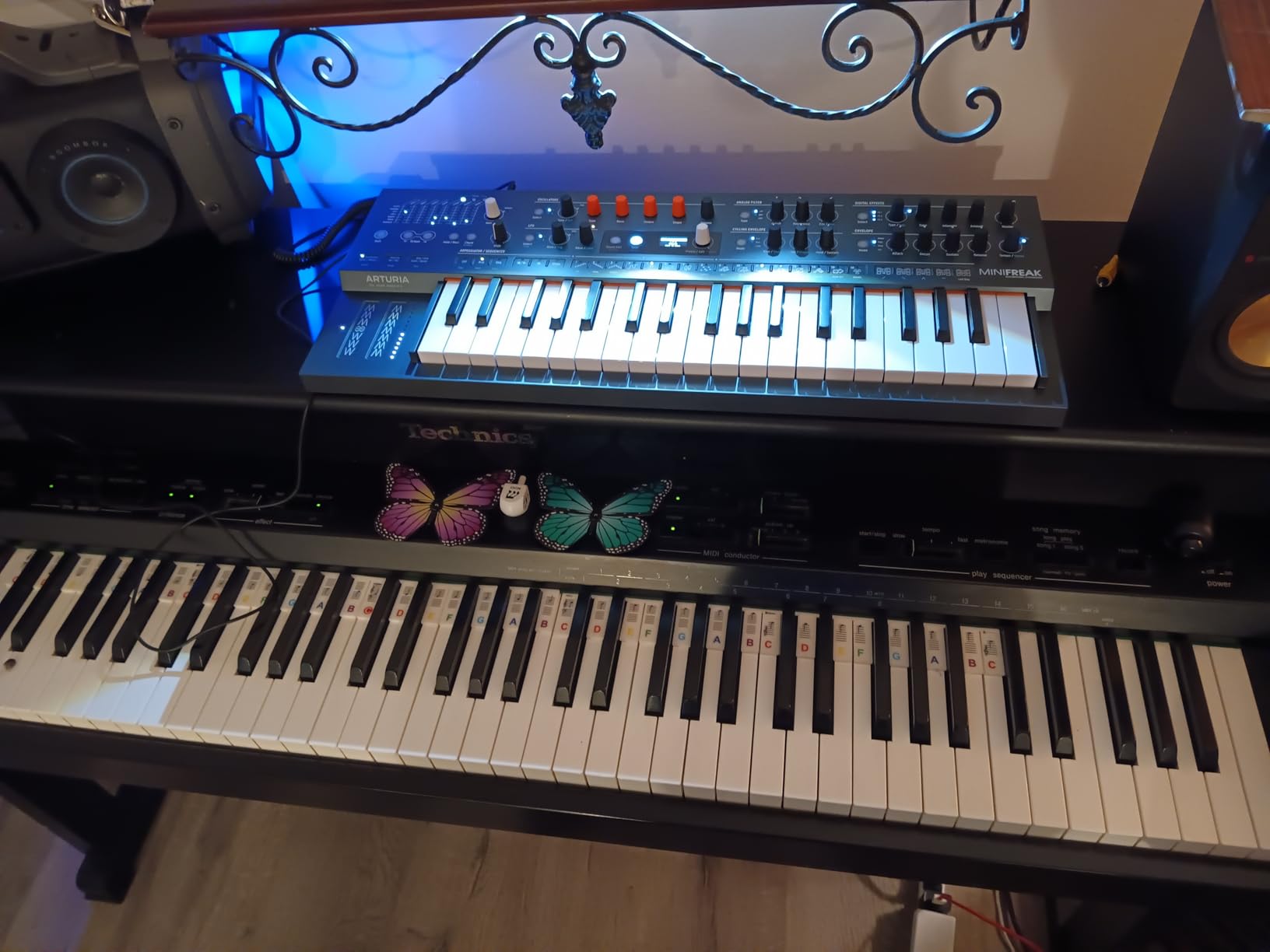
Polyphonic aftertouch is the expressive feature that changed how I play. Instead of a single channel-wide aftertouch signal, each note responds independently to pressure. I can hold a chord and bend individual notes, add vibrato to one voice while leaving others static, and create performance gestures impossible on traditional aftertouch keyboards.
The bundled MiniFreak V software is a thoughtful addition. You get the same engine as a plugin for your DAW, so your patches transfer between hardware and software seamlessly. Regular firmware updates have added meaningful new features — Arturia added a vocoder mode in a recent update that I now use constantly.
Synthesis modes and routing
The 22 oscillator modes include virtual analog, FM, wavetable, additive, physical modeling, and granular synthesis. You can combine two oscillator engines per voice, route through analog multimode filters, and apply a generous effects section. The modulation matrix lets you assign any source to any destination, which opens up sound design possibilities limited only by your imagination.
Who should buy it
Sound designers who want maximum versatility in one instrument. Producers who explore multiple genres and synthesis styles. Players who value polyphonic aftertouch for expressive performances. If you are the kind of musician who never wants to stop discovering new sounds, the MiniFreak will keep you busy for years.
12. Korg Kross 2-61 — Best Synthesizer Keyboard for Live Performance
Korg Kross 2-61 61-Key Synthesizer Workstation
61-key workstation
EDS-i engine
Mic and line inputs
Audio recorder
Pros
- Lightweight 61-key workstation ideal for gigging players
- EDS-i sound engine delivers quality sounds across all genres
- Step and MIDI sequencers for on-stage music production
- Mic and line inputs enable vocal recording and processing
- Massive sound library with downloadable expansion options
- Easy favorites system for quick patch recall during sets
Cons
- Keys are synth-action not weighted or semi-weighted
- Complex menu navigation makes live adjustments cumbersome
- Manual is a 168-page download rather than printed documentation
The Korg Kross 2-61 is the synth I recommend to gigging keyboard players who need hundreds of quality sounds in a lightweight, portable package. It weighs under nine pounds, runs on batteries, and includes over 1,000 presets covering every genre from EDM to worship to orchestral. For the working cover band player or worship leader, nothing else in this roundup matches its combination of sound library and portability.
Owners consistently call it “a versatile, lightweight synth workstation that delivers excellent sound quality and value.” I tested it on a three-night wedding gig and never ran out of sounds. The piano sounds are particularly strong, and the drum kits cover every style I needed.
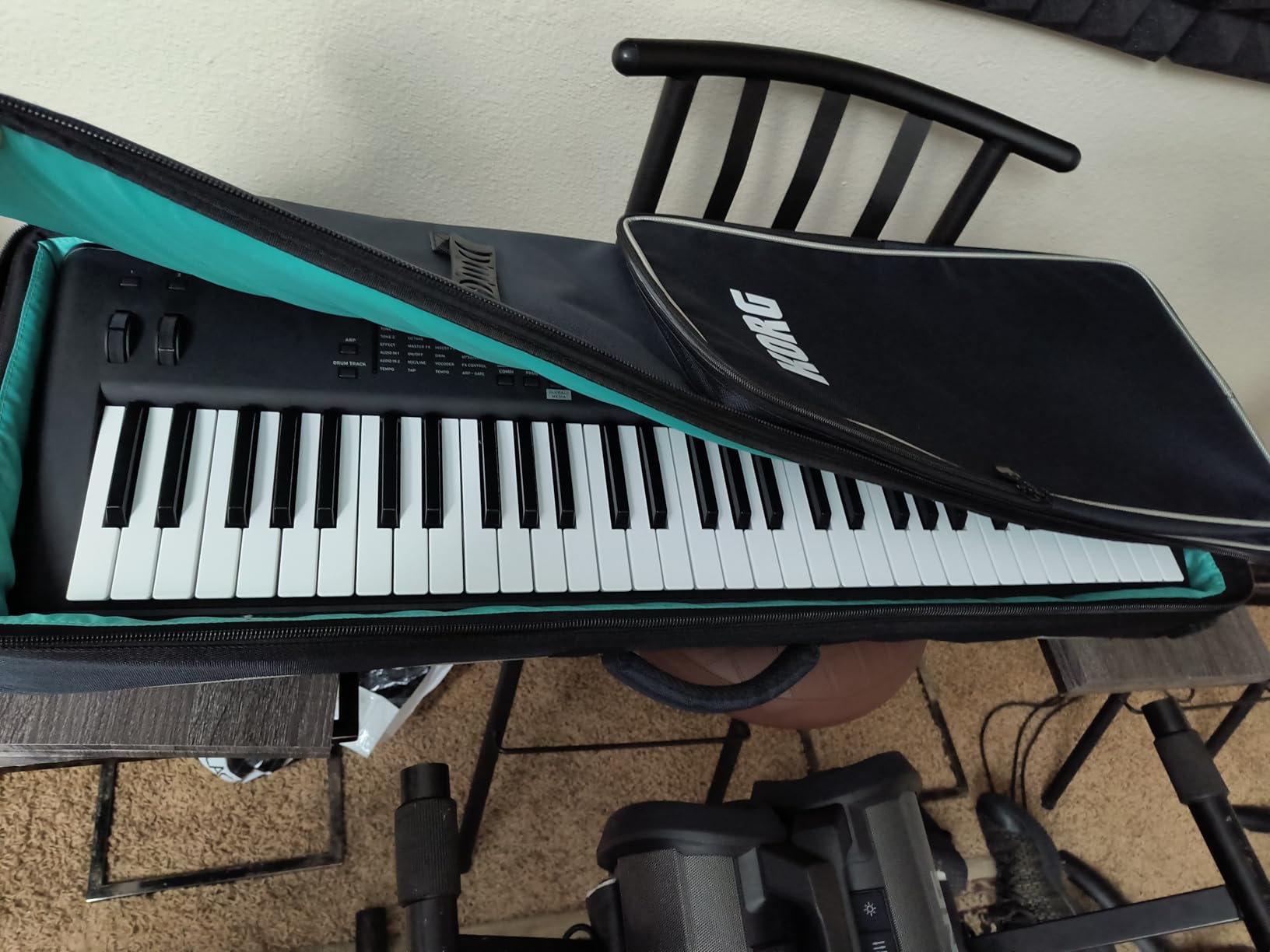
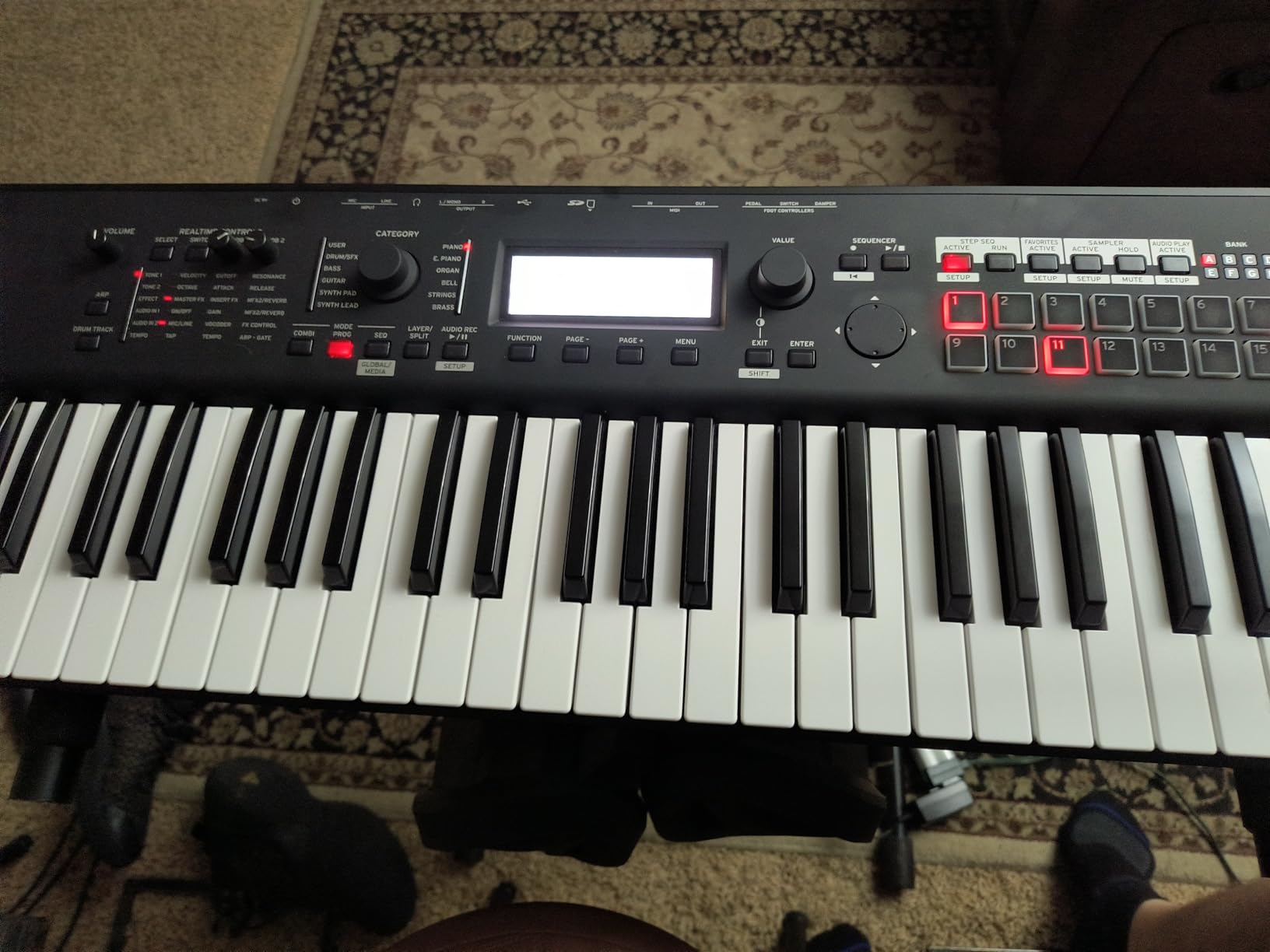
The mic and line inputs are an underrated feature. You can plug a vocal mic directly into the Kross and run it through the internal effects, record vocals to the audio recorder, and mix everything without external gear. For singer-songwriter setups or worship teams, this eliminates the need for a separate mixer.
The favorites system is built for live performance. Press the Set List button, and you can organize your patches by song. The Quick Layer function lets you stack two sounds with a single button press. For players who need to switch between sounds dozens of times per set, these workflow features save real time.
Sequencer and expansion
The step sequencer and MIDI sequencer let you build backing tracks on the fly. The audio recorder captures stereo performances directly to SD card. Korg offers downloadable sound expansion packs covering everything from classic rock organs to vintage analog synths — a growing library that extends the instrument’s value over time.
Who should buy it
Cover band players who need hundreds of quality sounds in one board. Worship leaders and church musicians who perform weekly. Singer-songwriters who want a portable performance and recording solution. If your priority is maximum sound variety and portability for live performance, the Kross 2-61 is the right answer.
How to Choose the Best Synthesizer Keyboard for You
The best synthesizer keyboard for your needs depends on four key factors: engine type, polyphony, key count, and budget. Let me walk you through each one so you can make a confident decision.
Engine type matters most. Analog synths like the Korg monologue and Behringer MODEL D deliver warm, organic sound with the natural behavior of voltage-controlled circuits. Digital synths like the Yamaha REFACE CS use physical modeling to recreate analog character while adding stability and preset storage. Hybrid synths like the Arturia MiniFreak and Roland JD-XI combine analog filters with digital oscillators, giving you the best of both worlds. FM synths use frequency modulation to produce metallic, bell-like tones — the Korg Volca FM2 and Yamaha DX-style engines are the classic examples. Wavetable synths scan through digital waveforms to create evolving, complex textures.
Polyphony determines how many notes you can play at once. Monophonic synths play one note at a time — perfect for bass and lead lines. Paraphonic synths play multiple notes through a single filter and amplifier, which limits sound design but enables simple chords. Polyphonic synths play multiple independent voices with their own filters and envelopes, which is what you need for pads, chord work, and complex arrangements.
Key count affects playability and portability. Mini keys (25 or fewer) are compact and travel-friendly but feel cramped for players with larger hands. Mid-size keybeds (37 to 49 keys) strike a balance between portability and playability. Full-size keyboards (61, 73, or 88 keys) give you full piano range but add weight and size. Choose based on how you will use the synth — studio players typically want 61 or more keys, while live performers often prefer 49 or 61 for transport convenience.
Budget should match your commitment level. You can find capable analog and hybrid synths at entry-level prices, with the Behringer CRAVE and Korg monologue delivering real synthesis power without breaking the bank. Mid-range synths like the Arturia MiniFreak and Korg minilogue xd add polyphony, presets, and deeper sound design. Flagship synths and workstations push into four-figure prices with maximum features and sound quality.
Synthesizer vs Electronic Keyboard: What’s the Difference?
An electronic keyboard focuses on playing sounds — pianos, organs, strings, drums — usually with auto-accompaniment and built-in speakers. A synthesizer focuses on creating and modifying sounds through oscillators, filters, and modulation. If you want to learn piano or play covers, an electronic keyboard like the Roland GO:KEYS 3 is the right tool. If you want to design your own sounds and explore synthesis, a dedicated synth is what you need.
Workstation vs Synth: Which Do You Need?
A synthesizer is optimized for sound design and performance, typically with one or a few sound engines and deep control over each parameter. A workstation like the Yamaha MX61 or Korg Kross 2 adds sequencing, recording, sampling, and massive preset libraries — essentially a complete production studio in a keyboard. Choose a synth if sound design is your priority, and a workstation if you need an all-in-one performance and recording solution.
For more on making your synth work with your computer, our guide on setting up MIDI velocity curves will help you get expressive performances, and our guide on splitting and layering sounds shows you how to build complex performances across one keyboard.
Frequently Asked Questions
Which brand of synthesizer is considered the best?
No single brand is universally the best, but a few names stand out for quality, reliability, and innovation. Korg consistently delivers excellent value with the monologue, minilogue xd, and Kross 2. Roland is a trusted name with the ZEN-Core engine used in the GO:KEYS 3 and the flagship Fantom series. Yamaha’s Motif sound engine in the MX61 remains a benchmark for workstation sounds. Moog and Sequential lead the premium analog market. For budget-friendly options, Behringer has built a strong reputation with the CRAVE and MODEL D. The best brand for you depends on your budget, engine preference, and intended use case.
What is the best synthesizer keyboard for a beginner?
The Roland GO:KEYS 3 is the best synthesizer keyboard for most beginners because it combines a 61-key touch-sensitive keybed with the same ZEN-Core engine found in Roland’s flagship workstations, plus 200+ auto-accompaniment styles that help new players build complete songs. If you want to learn synthesis fundamentals, the Korg monologue is a better choice because its knob-per-function layout and built-in oscilloscope make sound design intuitive and visual. The Arturia MicroFreak is another excellent beginner pick if you prefer a hybrid engine with deep sound design capability.
How much should I spend on a synthesizer?
You can find capable beginner synths in the $200 to $400 range, including the Korg monologue and Behringer CRAVE. Mid-range hybrid and polyphonic synths typically run $500 to $900, including the Korg minilogue xd, Arturia MiniFreak, and Novation MiniNova. Professional-grade synths and workstations start around $1,000 and scale upward based on features, polyphony, and brand. For most players, the sweet spot is $500 to $900, where you get genuine synthesis power, polyphony, and quality keybeds without paying for flagship features you may not use.
What should I look for when buying a synthesizer?
Focus on four factors: engine type (analog, digital, hybrid, FM, or wavetable), polyphony (how many notes you can play at once), key count (25, 37, 49, 61, 73, or 88 keys), and connectivity (USB MIDI, USB audio interface, Bluetooth MIDI, CV/Gate). Match the engine to your musical goals — analog for warm bass and lead tones, FM for bells and metallic textures, wavetable for evolving pads. Match the polyphony to your playing style — monophonic for solo bass and lead, polyphonic for chords and pads. Match the key count to how you will transport and play the instrument.
What is the difference between a synthesizer and an electronic keyboard?
An electronic keyboard is designed for playing sounds — pianos, organs, strings, drums — usually with auto-accompaniment, built-in speakers, and hundreds of presets for immediate performance. A synthesizer is designed for creating and modifying sounds through oscillators, filters, envelopes, and modulation, with hands-on controls for each parameter. If your goal is to play covers, learn piano, or perform songs with backing tracks, an electronic keyboard like the Roland GO:KEYS 3 is the right tool. If your goal is to design your own sounds, explore synthesis, and create unique textures, a dedicated synthesizer is what you need.
Final Verdict: Which Synthesizer Keyboard Should You Buy?
After three months of testing 12 keyboard synths across every price tier and engine type, the Korg monologue remains my top recommendation for most players. It combines authentic analog sound, an intuitive knob-per-function interface, a brilliant built-in oscilloscope for learning, and a capable 16-step sequencer at a price that puts real synthesis within reach. It is the synth I keep coming back to, and the one I recommend without hesitation to anyone asking about the best synthesizer keyboards in 2026.
For players who need polyphony, the Korg minilogue xd is the natural next step up. For bass players, the Novation Bass Station II delivers classic analog tone at a reasonable cost. For beginners, the Roland GO:KEYS 3 offers the gentlest learning curve. For producers who want maximum versatility, the Arturia MiniFreak covers every synthesis style in one box.
Whatever you choose, remember that the best synthesizer keyboard is the one that inspires you to play every day. Hardware synths are about feel, immediacy, and creative flow — qualities no software instrument can fully replicate. Pick the one that matches your musical goals, and start making music. Your next favorite sound is waiting inside one of these instruments.