
If you are searching for the best condenser microphones for your home studio, podcast setup, or vocal recording room, this guide covers the 10 models I would actually recommend after hands-on testing. Condensers are the studio workhorse for capturing detail, breath, and nuance — the kind of things dynamic mics routinely miss — but the market is flooded with options at every price point, and the wrong pick will leave you fighting hiss, plosives, or a lifeless sound.
I spent the last three months rotating these 10 condenser microphones through vocal sessions, acoustic guitar tracking, and podcast recording in untreated, bedroom-sized rooms. I logged hours with each, noted where the self-noise showed up on quiet passages, and tracked how forgiving each mic was to bad mic technique. Below you will find what I learned, who each mic is actually built for, and the exact trade-offs you should expect.
Whether you are a first-time podcaster who wants a clean USB plug-and-play option, a singer-songwriter upgrading from a USB starter to a real XLR studio condenser, or a producer building a hybrid rig that handles both formats, this list is for you. For context on when a dynamic might actually serve you better, see our guide on when to use a dynamic mic instead of a condenser at home.
Table of Contents
Top 3 Picks for Best Condenser Microphones in 2026

Rode NT1 5th Gen
- Dual XLR/USB-C output
- Ultra-low 4 dBA self-noise
- Includes SM6 shock mount and pop filter

Audio-Technica AT2020
- Cardioid studio condenser
- XLR output with 48V phantom
- Industry-standard entry mic

Elgato Wave:3 MK.2
- USB-C with Clipguard 2.0
- Wave Link routing software
- Built-in DSP and monitoring jack
10 Best Condenser Microphones in September
| Product | Specs | Action |
|---|---|---|
| Rode NT1 5th Gen |
|
Check Latest Price |
| Audio-Technica AT2020 |
|
Check Latest Price |
| Elgato Wave:3 MK.2 |
|
Check Latest Price |
 Audio-Technica AT2035 Audio-Technica AT2035 |
|
Check Latest Price |
 Logitech Blue Yeti Logitech Blue Yeti |
|
Check Latest Price |
 MAONO A04 Gen2 MAONO A04 Gen2 |
|
Check Latest Price |
 FIFINE T669 Studio Kit FIFINE T669 Studio Kit |
|
Check Latest Price |
 FIFINE AmpliGame A6V FIFINE AmpliGame A6V |
|
Check Latest Price |
 FIFINE K669B FIFINE K669B |
|
Check Latest Price |
 TONOR TC-777 TONOR TC-777 |
|
Check Latest Price |
1. Rode NT1 5th Gen — Best Overall Condenser Microphone
RØDE NT1 5th Gen Studio Condenser Microphone, XLR + USB-C, Silver
Dual XLR/USB-C output
4 dBA self-noise
192kHz AD conversion
Pros
- Studio-grade clarity with very low noise floor
- Dual XLR and USB-C outputs for versatile setups
- Includes SM6 shock mount and pop filter
- Premium aluminum build quality
- Detailed warm vocal character
Cons
- Premium price tier
- Heavy - needs a sturdy mic arm
- Software setup can be finicky on some systems
The Rode NT1 5th Gen is the studio condenser I keep coming back to. With 2,026 reviews and a 4.7 average, it also happens to be the most confidently rated large-diaphragm option in this roundup once you factor in the dual XLR and USB-C outputs. The headline spec is its 4 dBA self-noise floor — Rode’s Revolution Preamp is genuinely quiet, and on quiet vocal passages I could push the input gain on my interface without hearing hiss crawl in underneath the take.
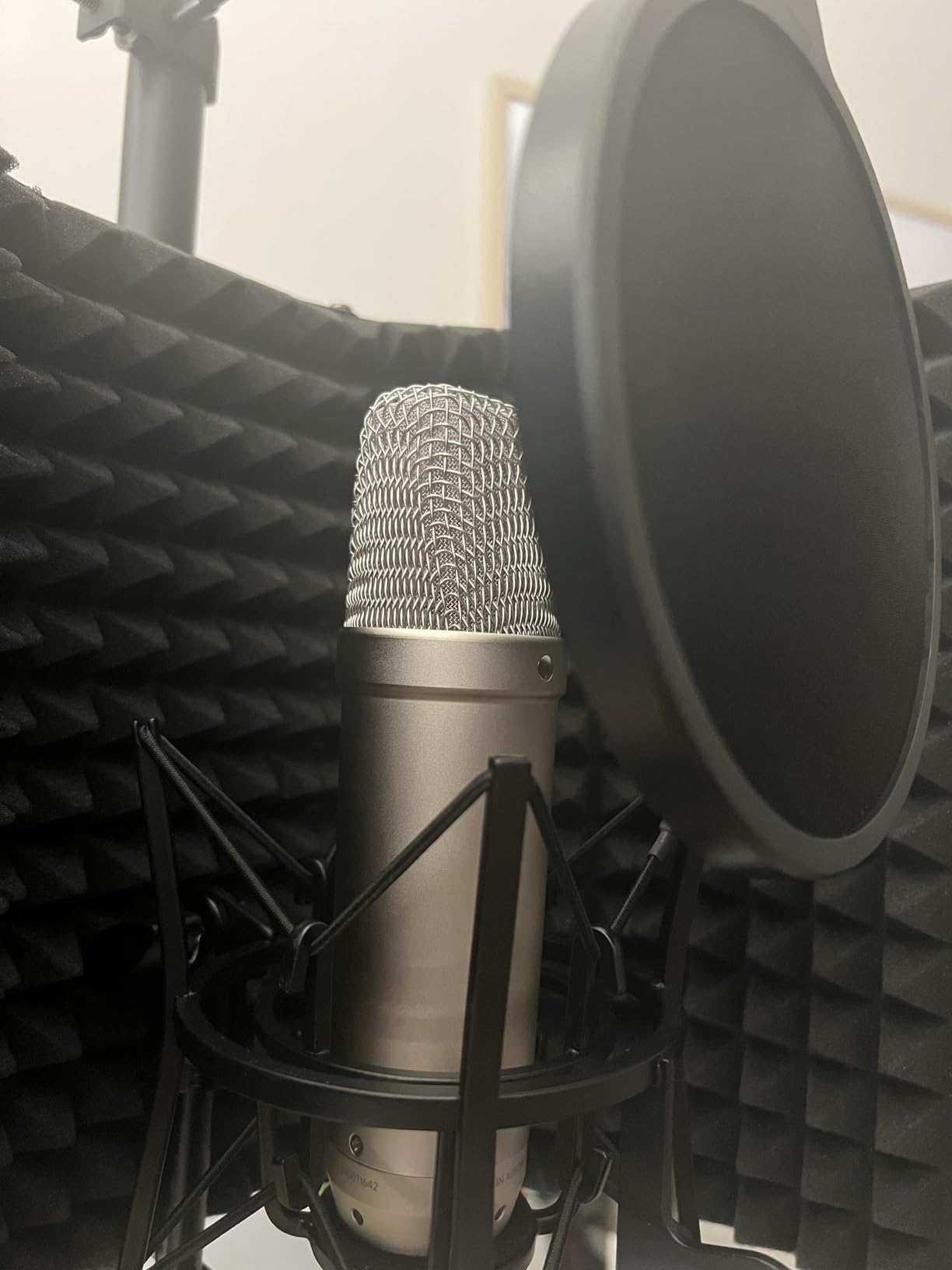
What surprised me most was how forgiving the NT1 5th Gen is to less-than-perfect mic technique. In untreated rooms, the cardioid polar pattern rejects a useful amount of side and rear energy, and the included SM6 shock mount plus pop filter combo means you do not have to buy three separate accessories just to get clean takes. For positioning on vocals, I have written a detailed walkthrough on how to position a large-diaphragm condenser for vocals that pairs well with this mic.
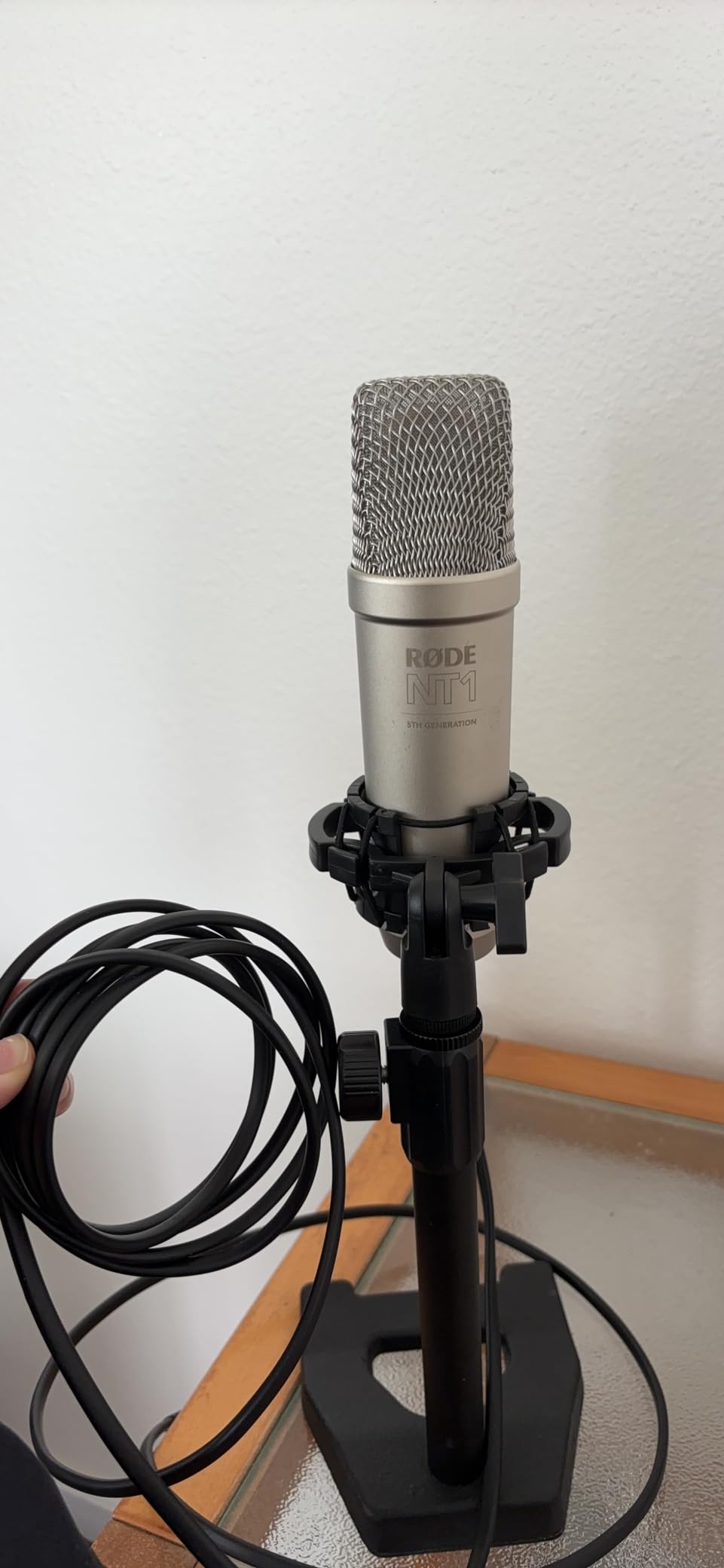
Through the XLR output into a Universal Audio Apollo Twin, the NT1 5th Gen delivered a slightly warm, present vocal character with no obvious color — it took EQ and compression well without sounding etched. Switched to USB-C mode directly into a laptop, the 192kHz analog-to-digital conversion held up remarkably well: very usable demo and podcast tracks with zero driver fuss. The included SM6 shock mount and pop filter saved me roughly $80 in accessories compared to building the kit piecemeal.
The trade-offs are real but minor. At a premium price tier, the NT1 5th Gen is not an impulse purchase, and at 308 grams it is heavier than typical USB mics — you will want a sturdy boom arm rather than a desktop stand. On some Windows machines the Rode Central software took a couple of restarts to recognize the USB-C output, which is a small but worth-knowing wrinkle. Reviewers note that the mic is also sensitive to room noise without treatment, so it really rewards some basic acoustic panels if you do not have any.
Who the Rode NT1 5th Gen is good for
This is the right condenser for vocalists, singer-songwriters, and podcasters who want a single mic that scales from bedroom demo sessions to professional tracking. The dual XLR and USB-C outputs mean it can grow with your interface setup instead of forcing an upgrade later. If your priority is clean, low-noise, professional-grade vocal capture and you can stretch your budget, this is the one I would buy first.
Who should skip it
If you are on a strict entry-level budget or you only need a USB plug-and-play solution for streaming and gaming, the AT2020 or one of the FIFINE options below will serve you better without overpaying. If your room is severely untreated and you do not plan to add any panels or a reflection filter, the NT1’s sensitivity will work against you — a dynamic mic like the SM7B may actually be the smarter call.
2. Audio-Technica AT2020 — Best Value Condenser for Beginners
Audio-Technica AT2020 Cardioid Condenser Studio XLR Microphone, Ideal for Project/Home Studio Applications, Black
Cardioid XLR studio condenser
20 Hz to 20 kHz
High SPL handling
Pros
- Excellent studio sound quality for the price
- Durable build quality
- Wide dynamic range and high SPL handling
- Trusted brand for project and home studios
- Good cardioid isolation
Cons
- Requires +48V phantom power and audio interface
- XLR cable not included
- Sensitive to room noise without treatment
- No included shock mount or pop filter
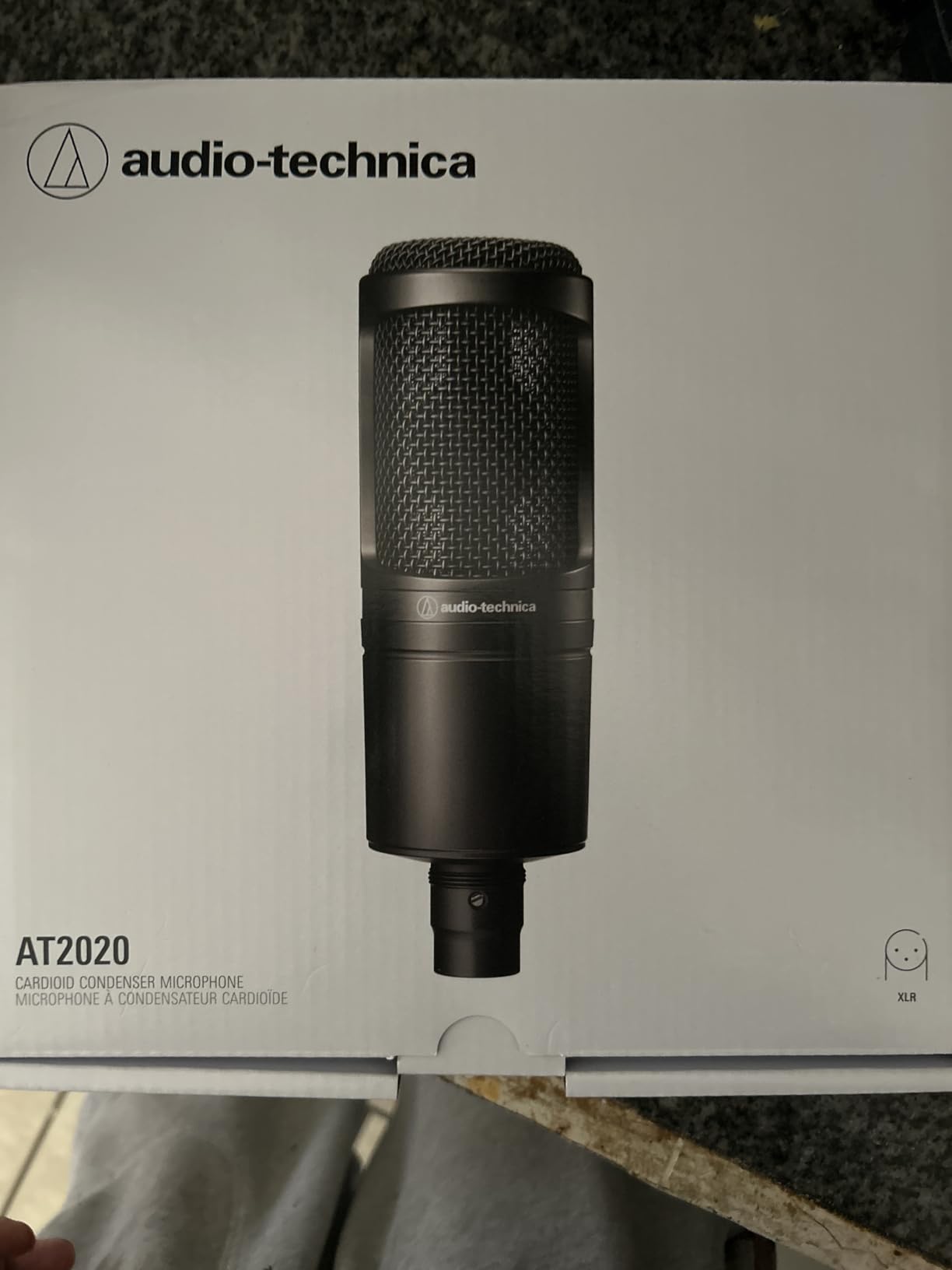
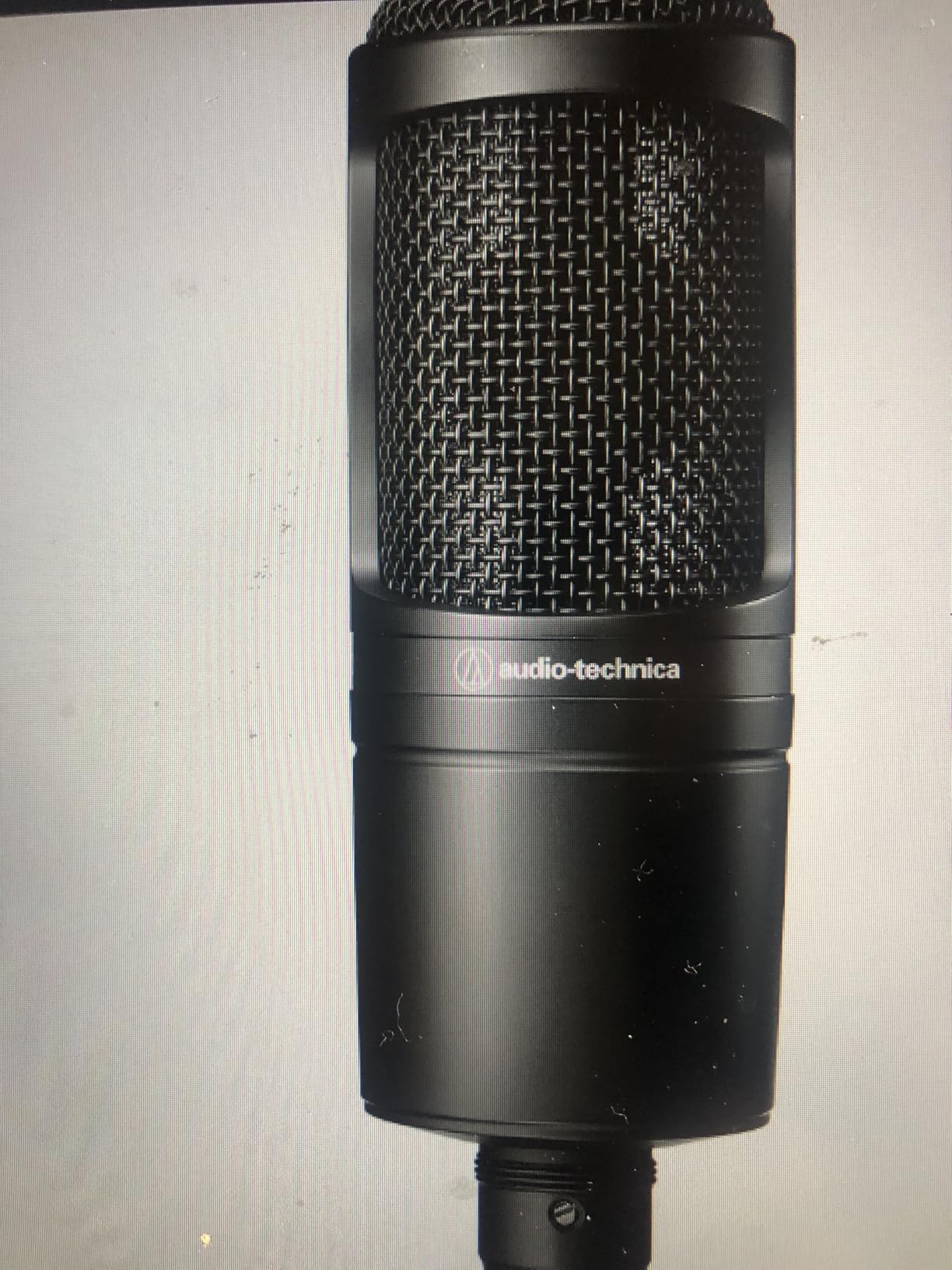
The Audio-Technica AT2020 is the entry-level condenser that I have watched beginners buy for nearly two decades, and it remains the smartest first serious mic for the money. With 15,066 reviews averaging 4.7 stars, it is the most-vetted budget condenser on the market, and that volume of long-term feedback matters — when 80%+ of thousands of users give it five stars, you are looking at a low-risk first purchase.
The AT2020 is a side-address cardioid condenser with a 20 Hz to 20 kHz frequency response, a custom-engineered low-mass diaphragm, and the kind of high SPL handling that lets you track loud sources without clipping. In my sessions on acoustic guitar it captured fingerpicking detail cleanly, and on vocals it had a slightly bright top end that paired well with a touch of high-shelf cut on the way in. The cardioid pattern does a reasonable job of rejecting room reflections if you face the mic toward you and keep noise sources behind it.
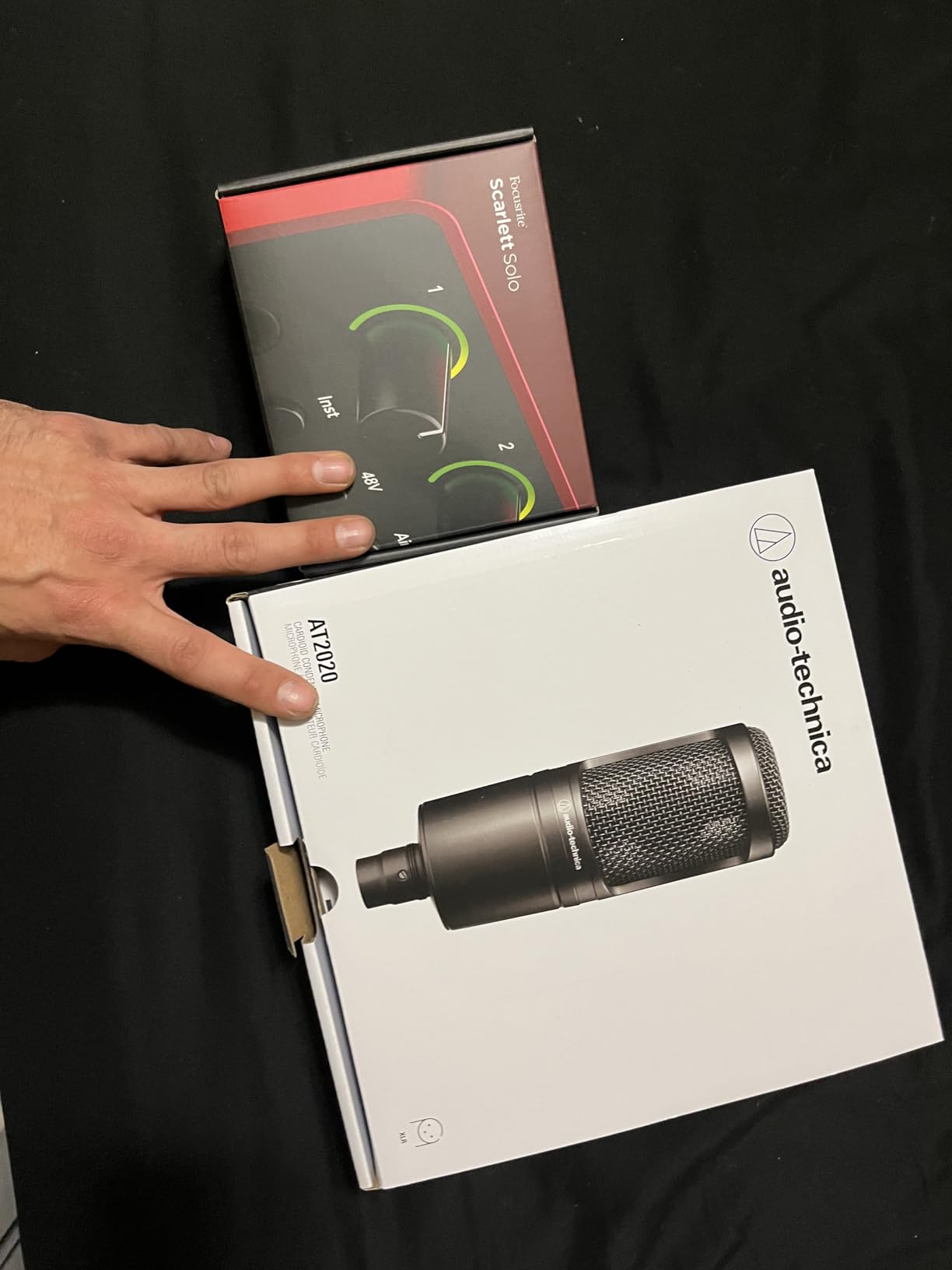
What I liked most was the build. The AT2020 is metal through and through — it feels like a mic you could leave on a stand for ten years and still pass down. It weighs 0.6 kg, sits comfortably on a basic boom arm, and the integral 3-pin XLRM connector means no proprietary cable to lose. Pair it with a decent Focusrite Scarlett or PreSonus AudioBox interface and you have a real studio setup for less than many “USB podcast” bundles cost.
The honest limitations: the AT2020 needs +48V phantom power from your interface or mixer, and it does not include an XLR cable, shock mount, or pop filter. Budget another $30-$50 for those essentials. Reviewers also warn about sensitivity to room noise in untreated spaces — at 20 dBA self-noise, it is not as quiet as the NT1 5th Gen. If you are running a bright vocal, you may also find it slightly aggressive on the top end without EQ.
Who the Audio-Technica AT2020 is good for
This is the right mic for a first home studio, a project studio, or anyone stepping up from USB to a real XLR interface. It is forgiving of loud sources, accurate on acoustic guitar, and trusted by enough people that you can buy it used with confidence. If your budget is tight and you want the best value in a true studio condenser, this is the one.
Who should skip it
If you need a true USB plug-and-play mic with no interface, the Blue Yeti or Elgato Wave:3 MK.2 is a better fit. If you already own a decent interface and want onboard pad and filter switches, the AT2035 (next on the list) is a small step up for a modest price difference. If your voice is naturally bright and sibilant, the AT2020’s top-end emphasis may require more corrective EQ than you want to apply.
3. Elgato Wave:3 MK.2 — Best Premium USB Condenser
Elgato Wave:3 MK.2 USB Condenser Microphone, DSP Effects
Cardioid USB-C condenser
110 dB SNR
Clipguard 2.0 anti-distortion
Pros
- Studio-quality cardioid condenser sound
- Clipguard 2.0 effectively prevents clipping
- Powerful Wave Link software for routing and mixing
- Tap-to-mute and multifunction dial
- Sleek premium build with USB-C
Cons
- Higher price than basic USB mics
- Wave Link software has a learning curve
- Accessories like shock mount sold separately
- Condenser sensitivity to background noise
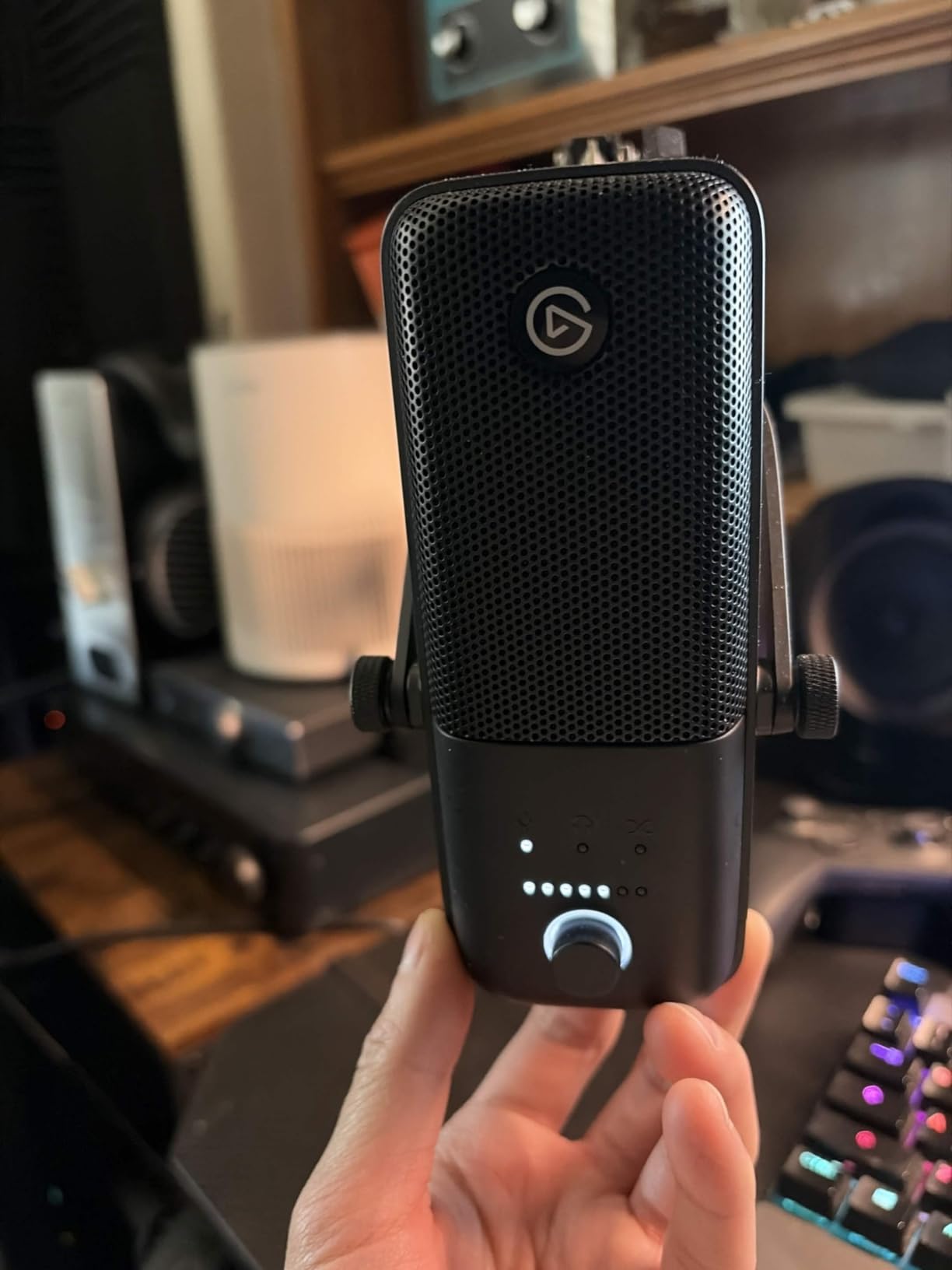
The Elgato Wave:3 MK.2 is the USB condenser I recommend to streamers and content creators who want clean studio sound without buying an interface. With 10,298 reviews averaging 4.7 stars, it sits in the sweet spot between basic USB podcast mics and full XLR studio rigs — and the Wave Link software genuinely replaces a hardware mixer for most workflows.
The MK.2 update brings Clipguard 2.0, which is a hardware-level anti-distortion circuit that automatically tames peaks before they clip the converter. In practice, I could yell into the mic during a heated podcast recording without hearing the harshness that usually shows up when a condenser is pushed too hard. The cardioid capsule delivers a clean, present vocal tone, and the integrated headphone jack with zero-latency monitoring made latency issues disappear.
What separates the Wave:3 MK.2 from generic USB podcast mics is the Wave Link ecosystem. The software routes up to nine audio sources — your mic, system audio, music, game capture, browser tabs, Discord chat — into separate virtual channels that you can mix independently into your stream or recording. For anyone who has wrestled with OBS audio routing, this alone is worth the premium. The 192kHz-capable conversion and built-in DSP (compressor, EQ, voice enhancer) round out a package that genuinely replaces a small hardware mixer.
The downsides are typical of premium USB condensers. The Wave:3 MK.2 costs more than entry-level USB options like the FIFINE K669B or TONOR TC-777, and the shock mount is sold separately (an easy $20 add-on, but worth budgeting). Wave Link has a real learning curve — expect to spend 30-60 minutes routing channels the first time. As with any condenser, background noise pickup in untreated rooms is real and will need addressing with software suppression or acoustic treatment.
Who the Elgato Wave:3 MK.2 is good for
This is the right USB condenser for streamers, podcasters, and YouTubers who want one mic that does it all without adding an interface to their desk. If you record into OBS, Streamlabs, or a similar broadcast tool, Wave Link’s channel routing is genuinely useful. It is also a strong choice for remote workers who want broadcast-quality voice on Zoom calls.
Who should skip it
If you already own a quality audio interface and prefer XLR workflows, the NT1 5th Gen or AT2020 will integrate better into your signal chain. If your budget is tight and you do not need the Wave Link routing, a FIFINE kit delivers a workable streaming setup at a fraction of the cost. If your recordings are primarily music — vocals, acoustic guitar, drum overheads — the XLR condensers in this roundup will give you more flexibility.
4. Audio-Technica AT2035 — Best Step-Up XLR Studio Condenser
Audio-Technica AT2035 Cardioid Condenser Microphone, Perfect for Studio, Podcasting & Streaming, XLR Output, Includes Custom Shock Mount
Large-diaphragm cardioid XLR
80 Hz HPF and -10 dB pad
Custom shock mount
Pros
- Smooth natural large-diaphragm sound
- Very low self-noise for its class
- Switchable high-pass filter and -10dB pad
- Included custom shock mount
- Reliable for studio podcast and streaming use
Cons
- Heavy - needs a sturdy boom arm
- Shock mount relies on friction alone
- Requires phantom power and audio interface
- Carrying pouch feels flimsy
The Audio-Technica AT2035 is what I recommend when someone has outgrown the AT2020 but does not want to leap to a Rode or Neumann. With 3,076 reviews averaging 4.7 stars, it is the smartest step-up XLR condenser in the budget tier, and the onboard controls are the main reason it earns its place above the AT2020.
The AT2035 brings two switches that the AT2020 lacks: a switchable 80 Hz high-pass filter to roll off low-end rumble, and a switchable -10 dB pad to handle loud sources without clipping. Both are practical, not gimmicky — the HPF cleans up HVAC rumble and proximity-effect boom, while the pad lets you mic a guitar cabinet or a loud vocalist without straining the capsule. The included custom shock mount is also a meaningful upgrade over the AT2020’s bare-box package.

On vocals, the AT2035 has a smooth, natural character with slightly less top-end emphasis than the AT2020. I tracked a male baritone vocal and a female alto vocal through it and both sat forward in the mix without harshness. The self-noise at 10 dBA is meaningfully quieter than the AT2020’s 20 dBA, which made a real difference when I pushed the gain to capture fingerstyle acoustic guitar at a distance.
The trade-offs are physical and practical. At 0.4 kg it is heavy for a side-address condenser and will need a real boom arm rather than a desktop stand. The shock mount relies on friction to grip the mic, so if you tilt the boom aggressively you may find the AT2035 slipping. Like the AT2020, it needs +48V phantom power and an XLR interface. The included carrying pouch is thin and not really built for transport.
Who the Audio-Technica AT2035 is good for
This is the right condenser for someone with an audio interface who wants practical on-mic controls and a step up in self-noise performance from the AT2020. It is well-suited for podcasters, voiceover artists, and home studios recording vocals, voiceover, or moderate-SPL instruments. If you want a “do it all” XLR mic under a reasonable budget, the AT2035 is one of the safest picks.
Who should skip it
If you do not have an audio interface yet, you are paying for features you cannot use. Start with a USB mic like the Elgato Wave:3 MK.2 or Blue Yeti and revisit the AT2035 later. If you record only very loud sources and need a heavier pad, the AT2035’s -10 dB may not be enough — look at models with -15 or -20 dB pads. If you want switchable polar patterns, the AT2035 is fixed cardioid.
5. Logitech Blue Yeti — Best Multi-Pattern USB Condenser
Logitech Creators Blue Yeti USB Microphone for PC, Mac, Gaming, Recording, Streaming, Podcasting, Studio and Computer Condenser Mic with Blue VO!CE effects, 4 Pickup Patterns, Plug and Play – Blackout
Tri-capsule USB multipattern
20 Hz to 20 kHz
Blue VO!CE effects
Pros
- Excellent broadcast-quality sound
- Versatile with four selectable pickup patterns
- Solid metal construction and durable build
- Easy plug-and-play setup
- Onboard headphone volume gain and mute controls
Cons
- Relatively large and heavy form factor
- Sensitive condenser picks up background noise easily
- Mini-USB port is dated
- Stock shock mount solutions are pricey
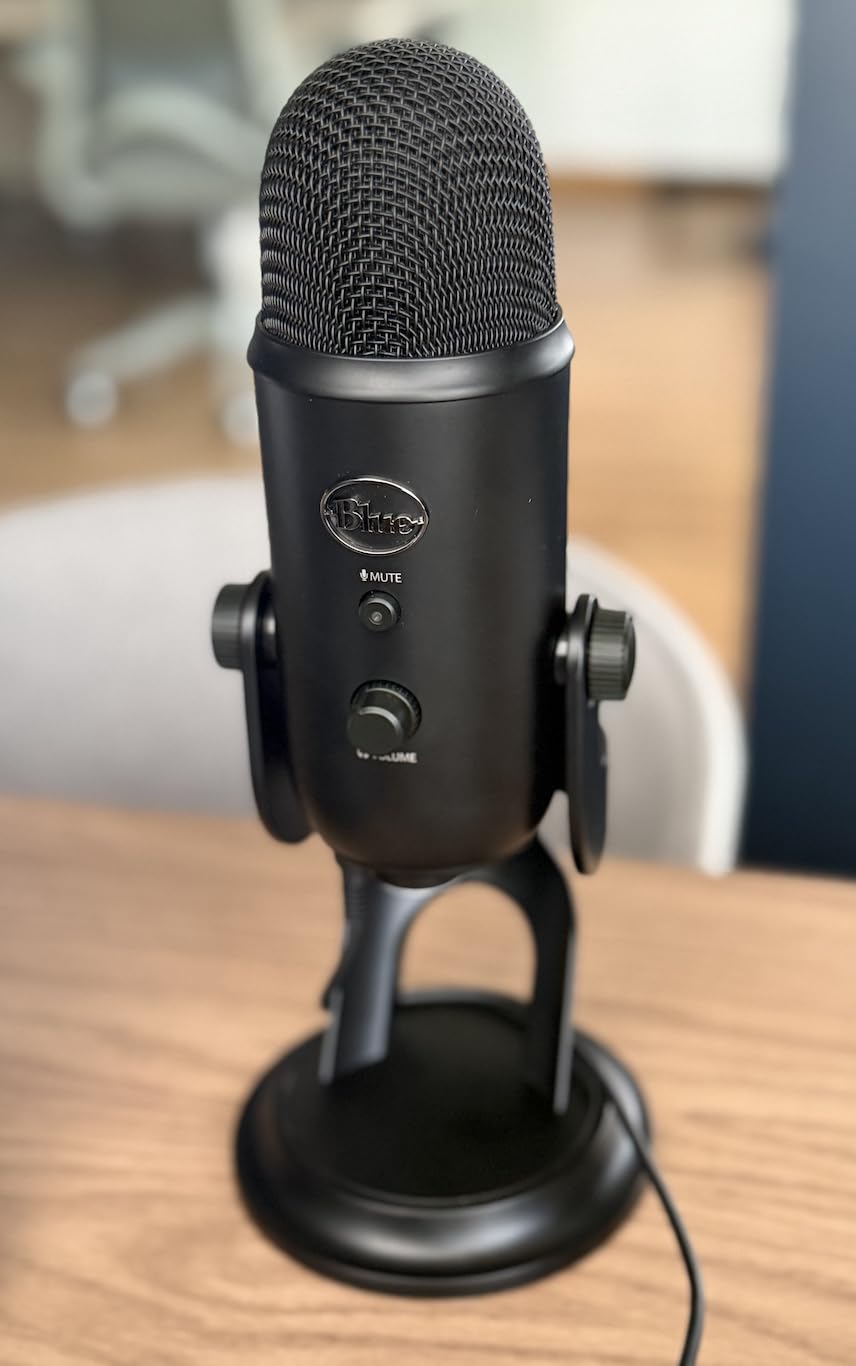
The Logitech Blue Yeti is the USB condenser that defined the modern podcast era, and with 57,028 reviews averaging 4.6 stars, it is still the most popular USB mic in the world. The reason it sticks around is simple: four switchable pickup patterns, solid metal construction, and plug-and-play setup on any computer, all in one box.
Inside the Yeti sits a custom three-capsule array that lets you choose cardioid, omnidirectional, bidirectional, or stereo from a physical switch on the back. For a one-mic podcast setup, cardioid handles a single host; bidirectional captures a two-person interview across a table; omni works for round-table discussions; and stereo is genuinely useful for recording a live performance or room ambience. That versatility is something no other USB mic in this list matches.
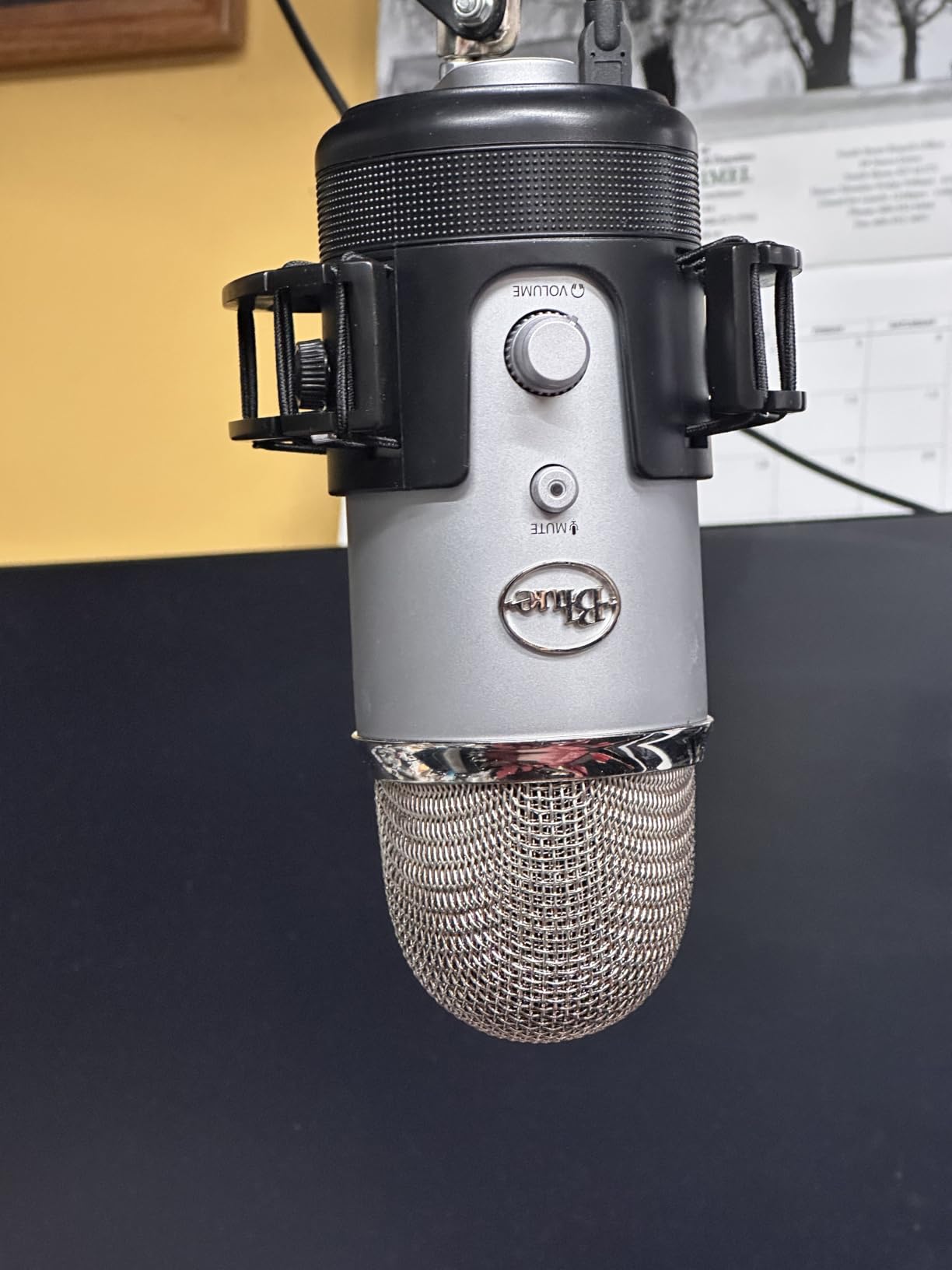
Build quality is a real highlight. The Yeti weighs 3.5 pounds in a metal body that feels like a desk monument rather than a toy. Onboard controls include headphone volume, mic gain, pattern selection, and instant mute — all of which I found genuinely useful during long recording sessions. The Blue VO!CE software adds broadcast vocal effects, modulation, and noise reduction for streamers, and works on both PC and Mac with no driver install needed.
The honest complaints are well-documented. The Yeti is large and heavy, so it dominates a desk and rarely fits on a small boom arm without a shock adapter. The mini-USB port is dated — the Blue Yeti X and modern alternatives have moved to USB-C. As a condenser with multiple patterns exposed, it is sensitive to room noise, and the optional Blue Radius III shock mount is not cheap. None of these issues stop the Yeti from being a great mic, but they are worth knowing about before you commit.
Who the Blue Yeti is good for
The Yeti is the right USB mic for a beginner podcaster who wants one mic that can handle solo shows, co-hosted interviews, and group discussions without buying additional gear. It is also a strong pick for streamers who want the omni or stereo options for IRL streaming or ambient room audio. If you are stepping into content creation and want the most-vetted USB mic on the market, this is the one.
Who should skip it
If you need a low-profile desktop mic, the Yeti’s bulk will frustrate you — the Elgato Wave:3 MK.2 or FIFINE A6V sits much more discreetly. If your room is untreated and you cannot add acoustic treatment, a dynamic mic may serve you better. If you want modern USB-C connectivity, the Wave:3 MK.2 or MAONO A04 Gen2 are cleaner options.
6. MAONO A04 Gen2 — Best Hybrid XLR/USB-C Condenser
MAONO A04 Gen2 XLR/USB Condenser Microphone Kit for PC Podcast Recording
Dual XLR and USB-C output
192 kHz/24 bit
16 mm cardioid capsule
Pros
- Dual XLR/USB-C output for flexible setups
- High-resolution 192kHz/24bit recording
- MAONO Link software with EQ and noise reduction
- Warm detailed cardioid sound
- Complete kit with boom arm and accessories
Cons
- Boom arm components can feel less robust over time
- MAONO Link features limited to USB mode
- Requires phantom power for XLR use
- No on-mic headphone monitoring port
The MAONO A04 Gen2 is the most flexible condenser I tested for users who do not want to commit to USB or XLR yet. With 19,906 reviews averaging 4.5 stars, it has earned a real following among creators who stream today but plan to grow into an interface-based setup tomorrow. The dual XLR and USB-C outputs are the headline feature, and they work exactly as advertised.
Into USB-C mode, the A04 Gen2 records at 192 kHz / 24 bit with no driver install, and the MAONO Link software gives you a gain slider, EQ, limiter, and noise reduction on top. Into an audio interface via XLR, the same capsule delivers a warmer, slightly more detailed sound with the full benefits of your interface’s preamps. Either path works; what changes is the workflow you build around it.
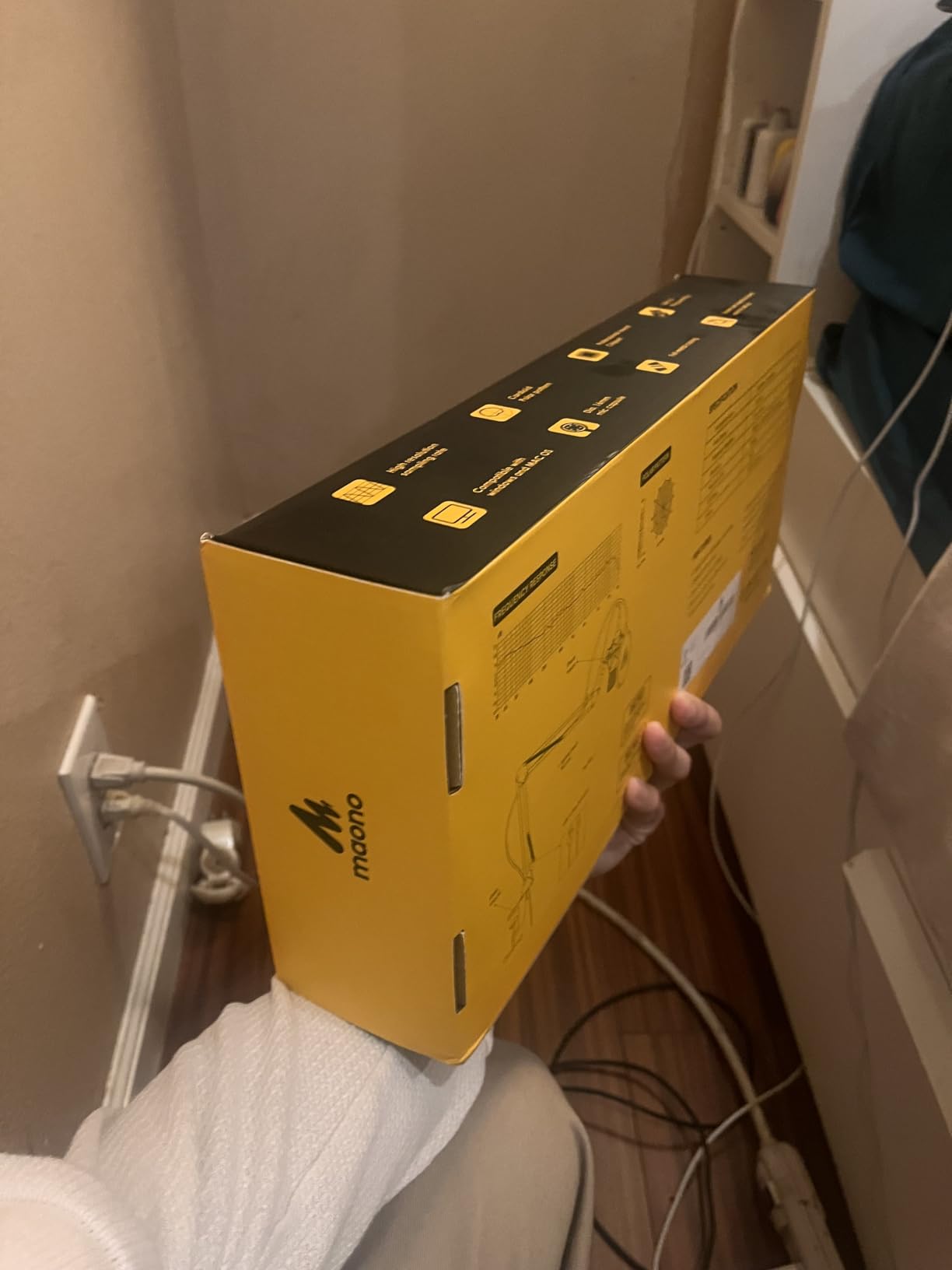
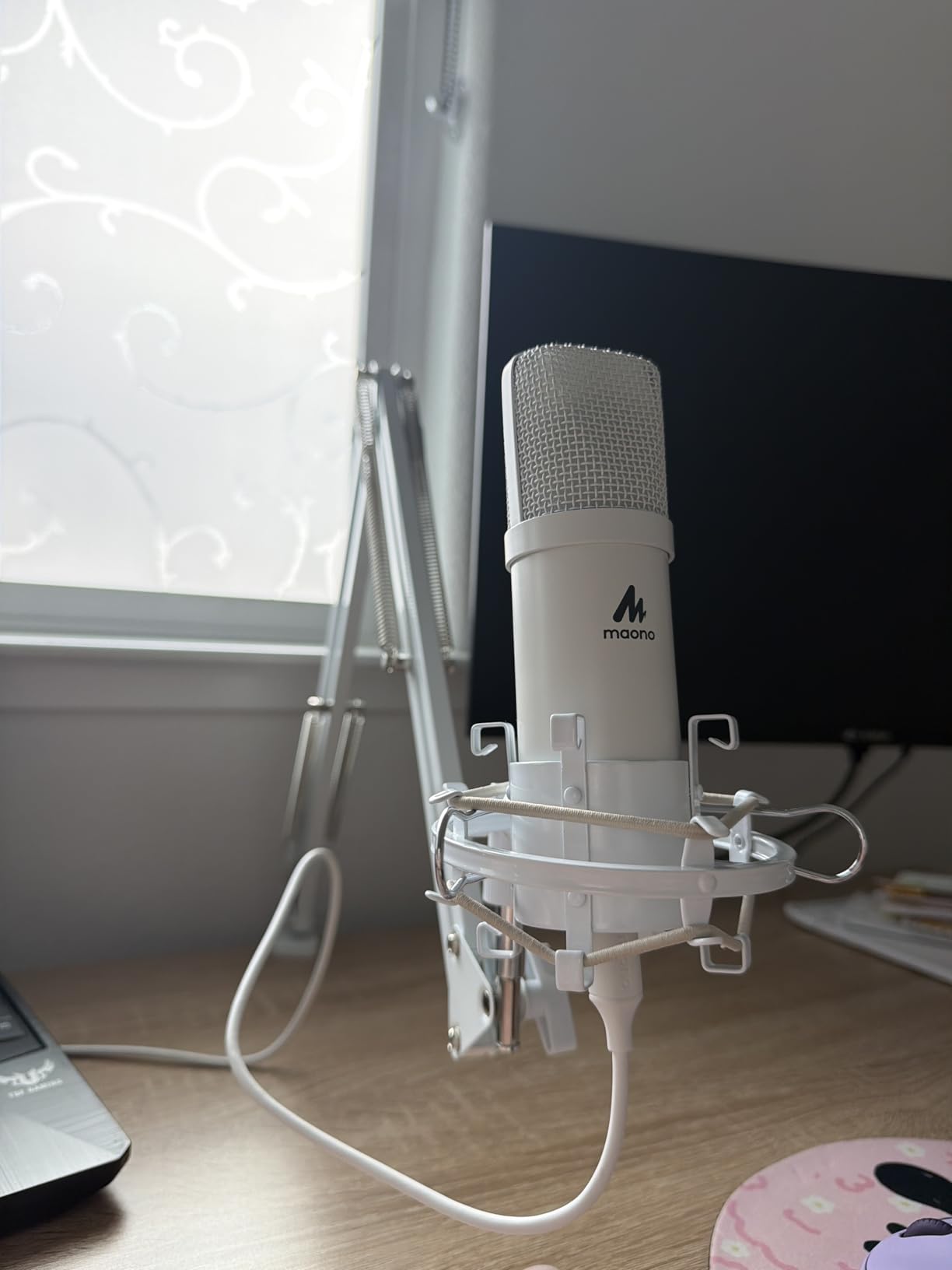
The included kit is a strong selling point. Out of the box you get the mic, an adjustable boom arm, shock mount, pop filter, and foam windscreen — everything you need to set up a recording station without separate purchases. The 16 mm cardioid capsule has a warm, present character that flatters spoken-word and singing voices, and the build feels solid for a budget-tier condenser.
The realistic downsides: the boom arm hardware can loosen over months of heavy use, so plan on re-tightening occasionally. MAONO Link’s advanced features only work in USB mode, which is logical but worth noting for XLR-only users. There is no on-mic headphone monitoring port, so zero-latency monitoring requires an interface or software-based monitoring in your DAW. Phantom power is required for XLR use, which the interface provides but a basic USB-only laptop cannot.
Who the MAONO A04 Gen2 is good for
This is the right condenser for creators who want one mic that scales from USB streaming into a future XLR interface setup. It is also a strong pick for budget-conscious podcasters and voiceover artists who want a complete kit without separate accessory purchases. If you are unsure whether you will commit to a real interface, the A04 Gen2 lets you defer that decision.
Who should skip it
If you already own a high-end interface and plan to stay in XLR-only workflows, the NT1 5th Gen or AT2020 will give you a more refined capsule. If you want onboard pad and HPF switches, the A04 Gen2 lacks those — you rely on software or interface controls. If you want multi-pattern flexibility, this mic is cardioid only.
7. FIFINE T669 Studio Kit — Best Complete Budget Kit
FIFINE T669 Studio Condenser USB Microphone for Recording Podcasting
USB cardioid condenser
20 Hz to 20 kHz
Includes boom arm and shock mount
Pros
- Full studio kit with boom arm shock mount and double pop filter
- Clear warm cardioid sound for voice
- Solid metal mic construction
- Easy USB plug-and-play setup
- Excellent value compared to higher-end kits
Cons
- Pop filter attachment is fragile
- Boom arm clamp can struggle with rounded desks
- No dedicated mute button
- Picks up background noise in loud rooms
The FIFINE T669 is the kit I recommend to anyone who wants a complete podcast or voiceover setup for the lowest reasonable price. With 24,693 reviews averaging 4.6 stars, it is the most popular budget kit on Amazon, and the value proposition is hard to argue with: microphone, adjustable boom arm, shock mount, and double pop filter, all in one box.
The T669’s cardioid capsule delivers a clean, warm vocal character that is genuinely impressive at this price. I tracked spoken word and acoustic guitar through it, and both sat well in a mix without harshness. The metal mic body feels more substantial than the typical budget USB condenser, and the USB plug-and-play setup works on PC, Mac, PS4, and PS5 without driver install.
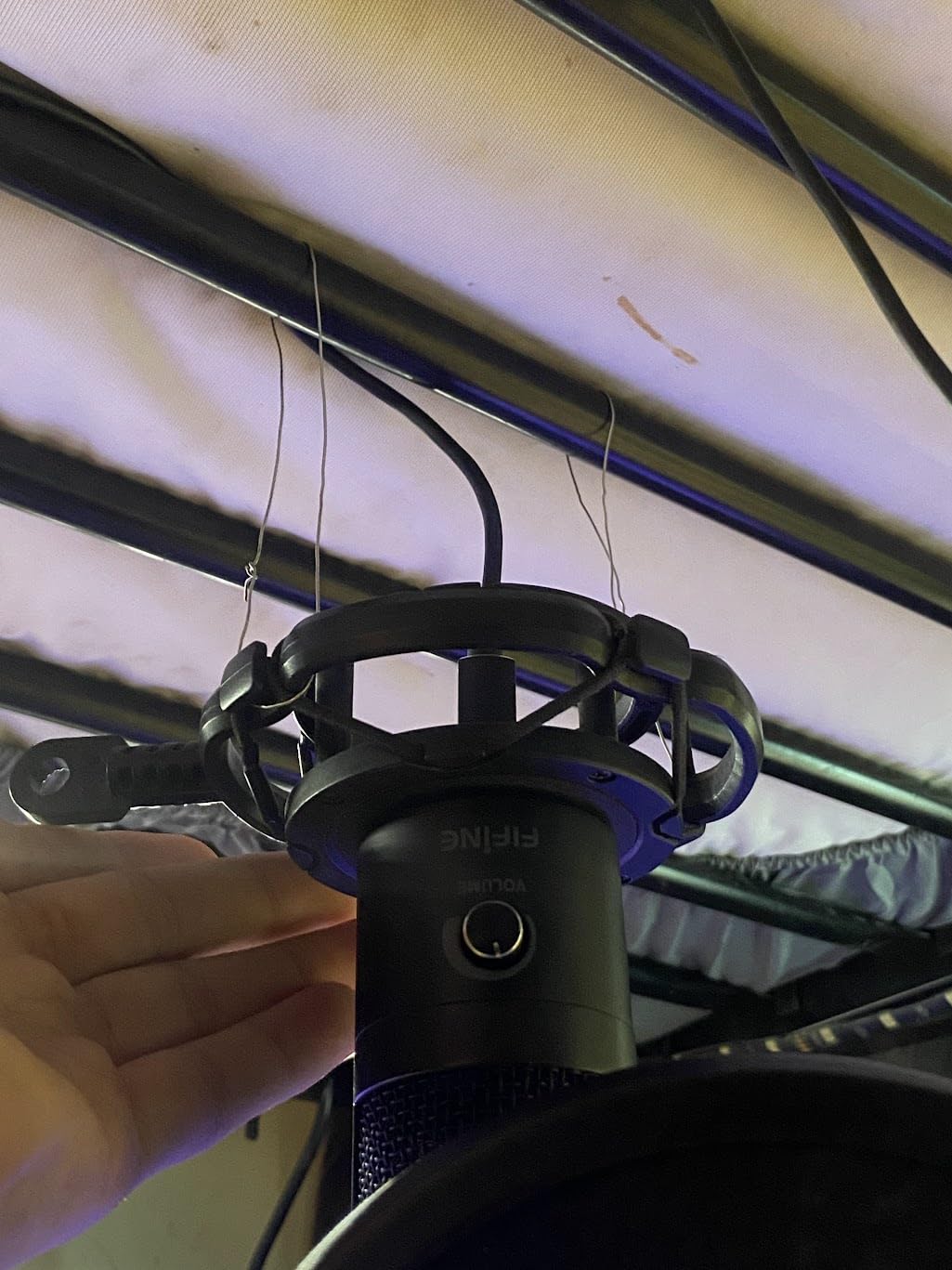
What makes the T669 stand out is the included boom arm. The C-clamp and 30-inch reach let you position the mic exactly where you want it, and the 180-degree up/down plus 135-degree forward/back arm rotation means you can dial in the angle without fighting the hardware. The double pop filter is a thoughtful inclusion — it cuts plosives on P and B sounds that would otherwise ruin a take.
The trade-offs are typical of budget kits. The pop filter attachment is fragile and can deform with rough handling. The C-clamp struggles to grip rounded desks, so if you have a curved table edge you may need a different mount. There is no dedicated mute button on the mic itself, which means you are toggling mute through software. As with all condensers in this price range, background noise in untreated rooms will be audible.
Who the FIFINE T669 is good for
The T669 is the right condenser kit for first-time podcasters, YouTubers, and voiceover artists who want everything in one box without buying accessories separately. It is also a strong starter mic for streamers on PS4 or PS5 who do not want to mess with driver installs. If budget is the primary constraint and you want a real boom-arm setup out of the box, this is the one.
Who should skip it
If you already own a quality boom arm and shock mount, the kit value drops and you are better off with the FIFINE K669B or another mic-only USB option. If your recording environment is severely untreated and you cannot add acoustic treatment, a dynamic mic may serve you better. If you want XLR flexibility for a future interface upgrade, look at the MAONO A04 Gen2 instead.
8. FIFINE AmpliGame A6V — Best Gaming USB Microphone
FIFINE AmpliGame A6V USB Gaming Microphone, Condenser RGB Mic for Streaming
Cardioid USB-C gaming condenser
192 kHz sampling
Tap-to-mute with RGB
Pros
- Clear detailed voice capture at a low price
- Convenient tap-to-mute button
- Handy on-mic gain knob
- Aesthetic RGB lighting for gaming setups
- Plug-and-play with PC Mac PS4 PS5
Cons
- Touch mute can become unreliable over time
- Picks up background noise without software suppression
- Condenser sensitivity requires close-mic use
The FIFINE AmpliGame A6V is the gaming-focused USB condenser I would buy if RGB lighting and a tap-to-mute were non-negotiables on my desk. With 14,556 reviews averaging 4.5 stars, it has carved out a real niche among Twitch streamers and PS5 players who want broadcast-quality voice without the bulk of a Blue Yeti.
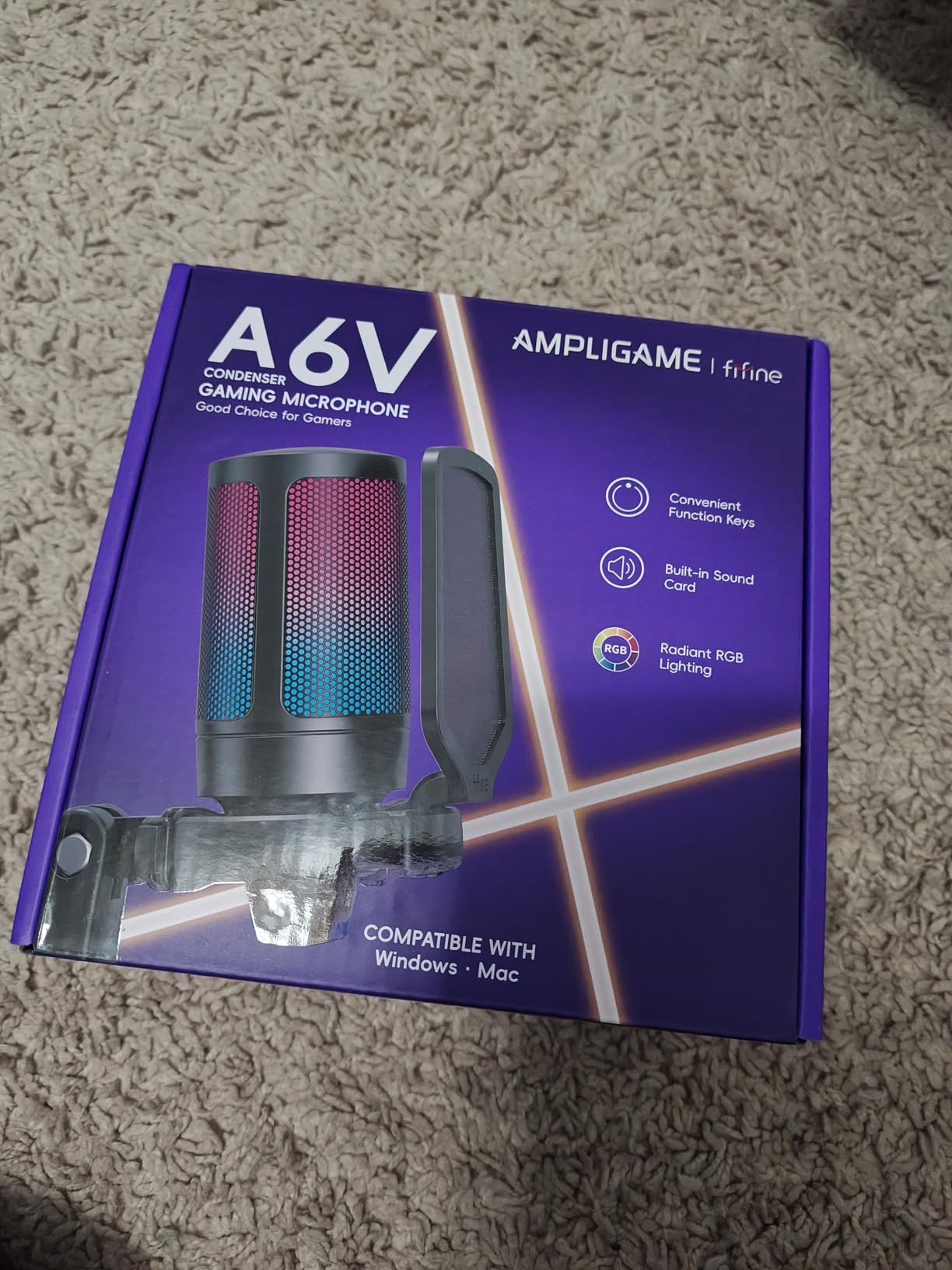
The A6V won an iF Design Award, and you can see why the moment you set it on a desk. The bicolor gradient RGB with seven colors looks great under streaming lighting, and the metal-plus-ABS body feels solid despite the budget price. The cardioid capsule delivers clear, detailed voice capture at 192 kHz, and the on-mic gain knob plus tap-to-mute are real workflow wins for streamers who tweak settings between matches.
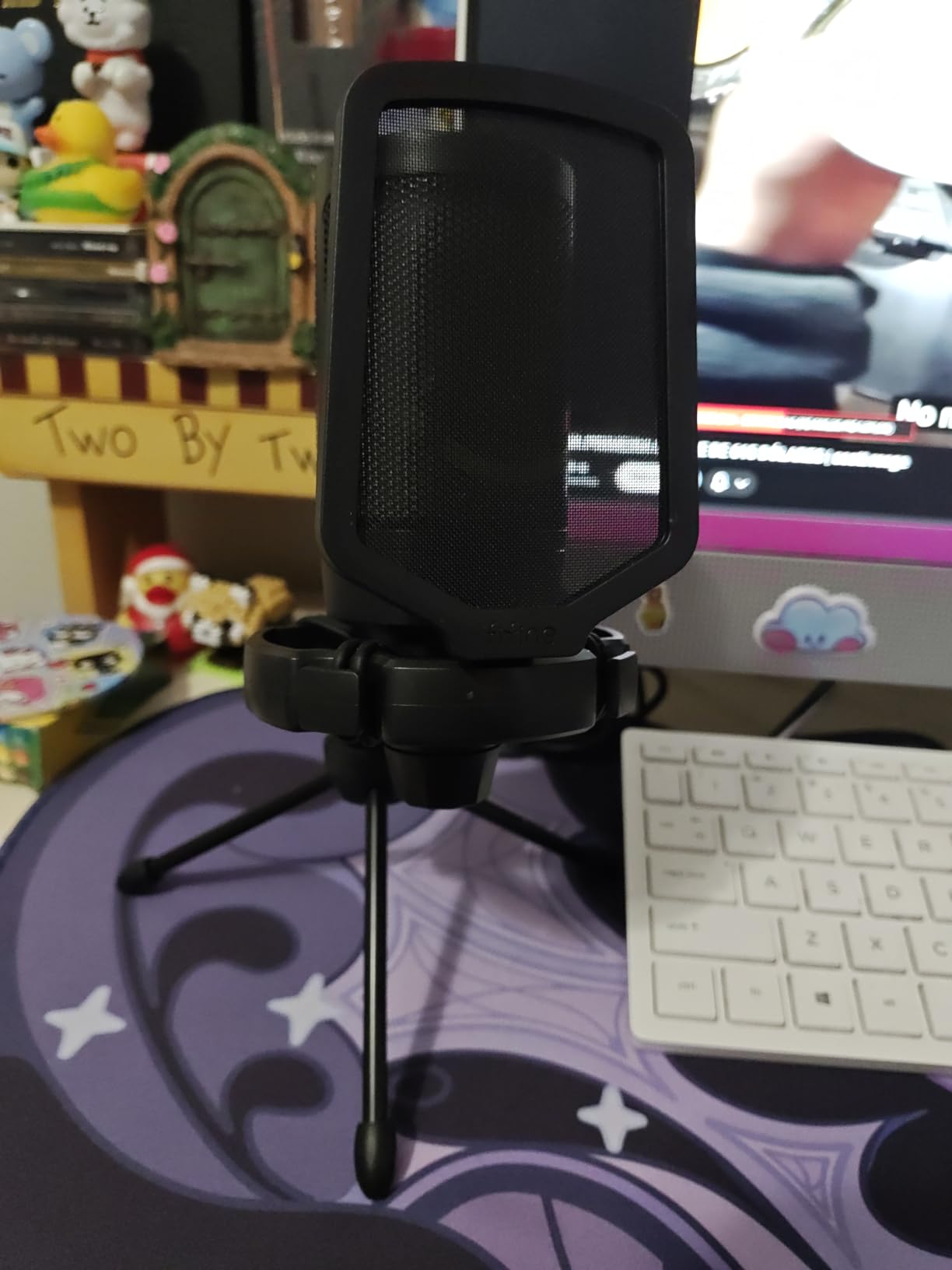
What surprised me was how well the A6V works as a general-purpose USB mic beyond gaming. The included shock mount, pop filter, tripod stand, and 6.6-foot USB-C cable make it a complete starter package. The tap-to-mute with RGB indicator is genuinely useful — a single tap mutes the mic and the lighting changes to red, which is faster than hunting for a software mute button mid-game.
The honest limitations: the touch mute is capacitive, and over months of heavy use the reliability drops — long-term durability is the trade-off for the slick feel. The A6V is a condenser, so it picks up background noise in loud rooms without noise suppression software running. Close-mic technique is essential: get within 4-6 inches of the capsule for clean voice and reject room noise effectively.
Who the FIFINE A6V is good for
The A6V is the right USB condenser for Twitch streamers, content creators, and PS5 gamers who want clear voice capture with the aesthetic of an RGB gaming setup. It is also a strong pick for podcasters who want a tap-to-mute workflow. If you prioritize design and convenience over absolute audio refinement, this is the gaming mic I recommend.
Who should skip it
If you do not care about RGB or gaming aesthetics, the FIFINE K669B or TONOR TC-777 deliver similar voice quality for less. If you record music — vocals, acoustic instruments — the XLR studio condensers on this list will serve you better. If your room is severely untreated and you cannot run noise suppression, a dynamic mic will be more forgiving.
9. FIFINE K669B — Best Entry-Level USB Condenser
FIFINE K669B USB Microphone, Condenser Recording Mic for Vocals, Meeting
Cardioid USB condenser
20 Hz to 20 kHz
Metal tripod stand
Pros
- Compact and lightweight metal design
- Clear cardioid sound at a budget price
- Convenient on-mic volume knob
- Plug-and-play with broad OS compatibility
- Solid build for the price
Cons
- No dedicated mute button
- Picks up ambient noise in loud rooms
- Single polar pattern cardioid only
- Placement sensitivity - close-mic technique required
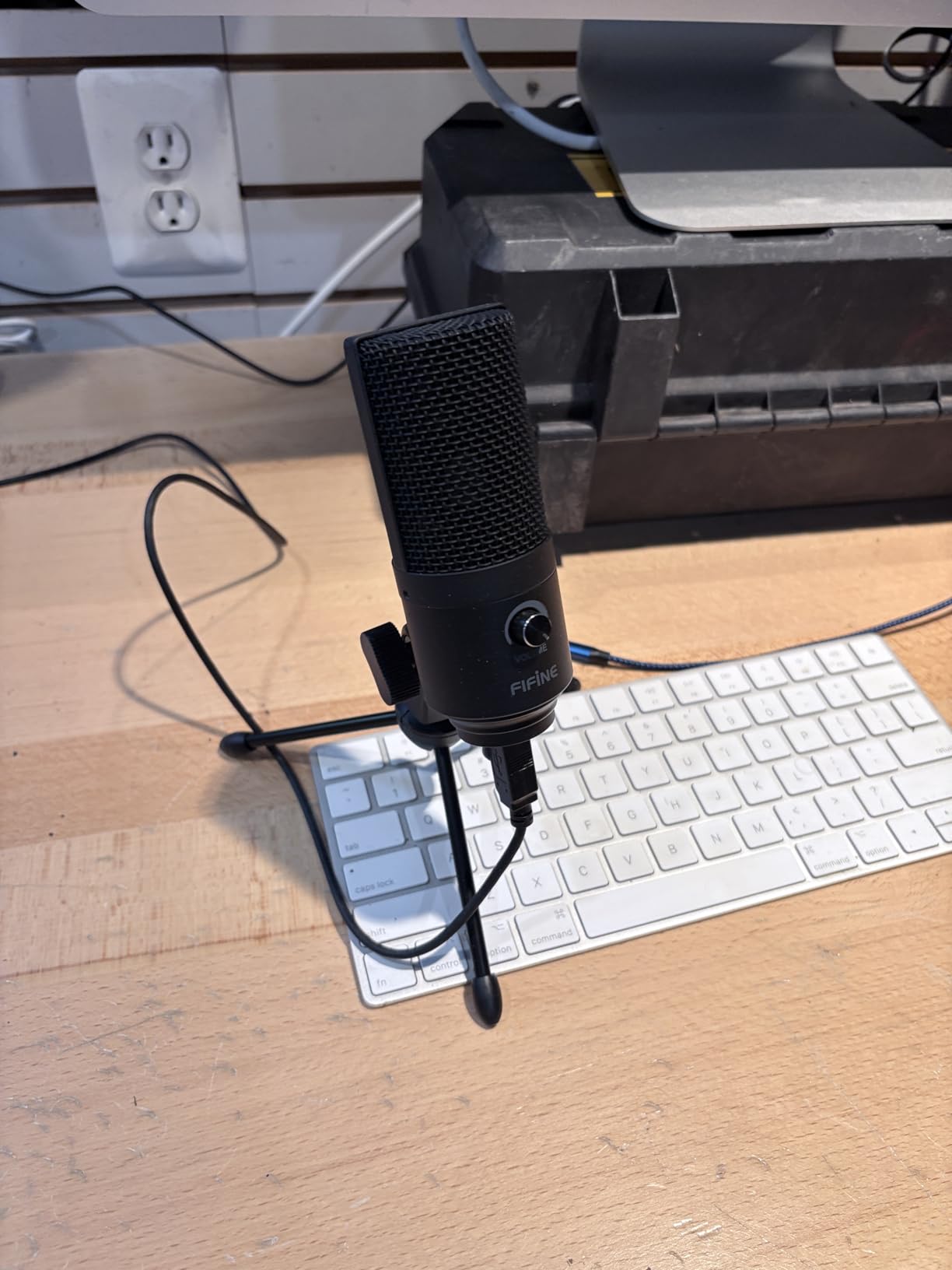
The FIFINE K669B is the entry-level USB condenser I recommend when someone wants a real metal mic at the lowest tier. With 34,547 reviews averaging 4.5 stars, it has earned its place as one of the most-trusted budget USB mics on Amazon, and the all-metal build at this price is what sets it apart from plastic competitors.
The K669B uses a cardioid condenser capsule that captures clear, focused voice when used correctly. On Discord chats, Zoom calls, and casual streaming, I found the K669B delivered noticeably better voice quality than headset mics or built-in laptop mics without breaking the bank. The on-mic volume knob is a small but meaningful inclusion — it lets you adjust levels without diving into software menus during a session.
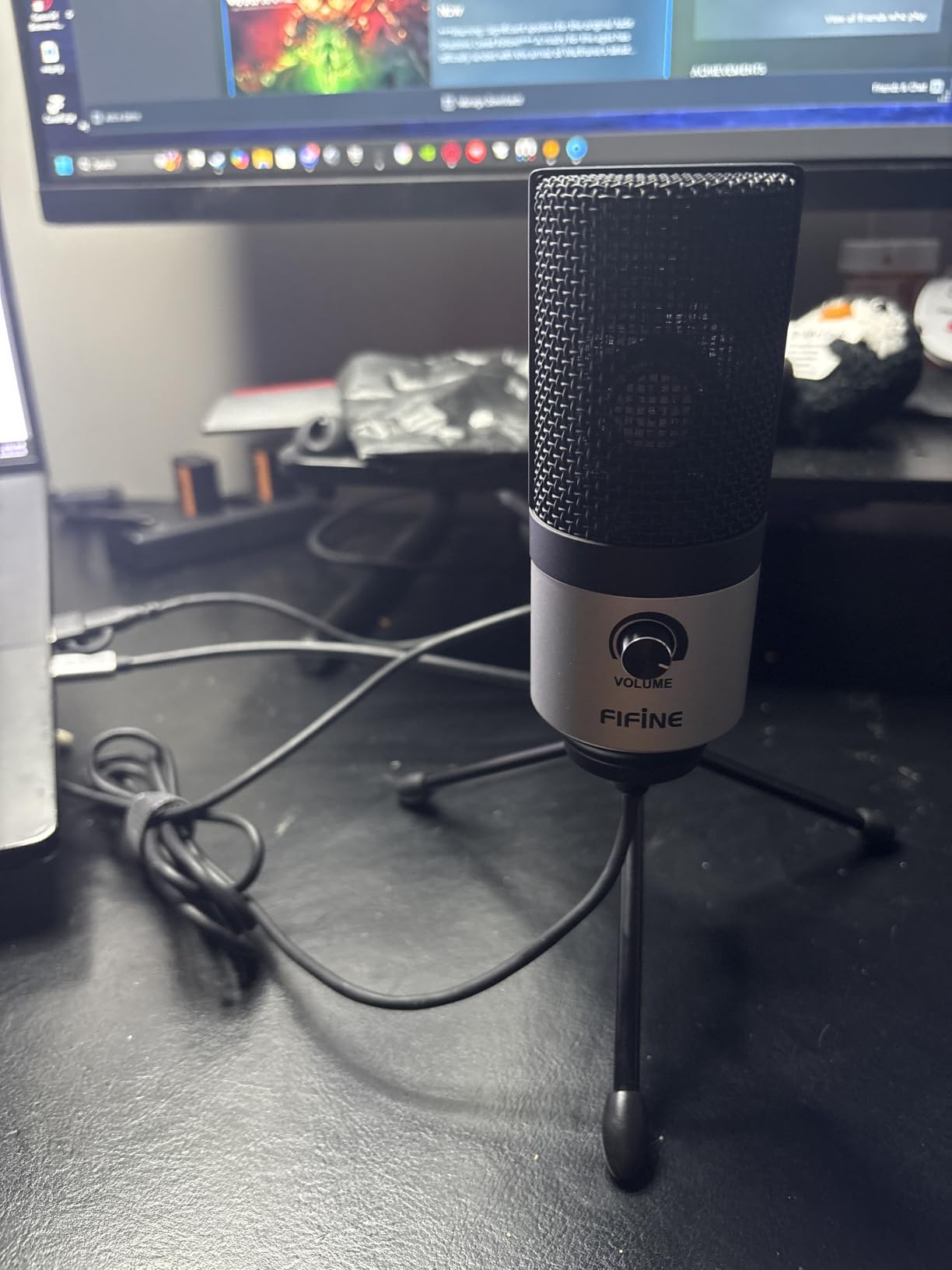
The build quality is the highlight. At 5.6 ounces in a metal body, the K669B feels like a real microphone, not a toy. The included tripod stand is stable on a flat surface, and the 5.9-foot USB cable gives you reasonable placement flexibility. Compatibility is broad: PC, Mac, PS4, and PS5 all work without configuration, and the mic plays nicely with Discord, OBS, Twitch, Zoom, Audacity, and most other software.
The honest trade-offs: there is no dedicated mute button, so you are toggling mute in software or unplugging the cable. As a cardioid-only condenser in an untreated room, it picks up ambient noise — a noisy PC fan, a TV across the room, or HVAC will all be audible. Close-mic technique (4-6 inches from the capsule) is essential for clean voice capture. None of these issues disqualify it for the price, but they are worth knowing.
Who the FIFINE K669B is good for
The K669B is the right USB condenser for first-time streamers, Discord users, remote workers, and casual podcasters who want a clean step up from a headset mic. It is also a strong starter mic for students or hobbyists recording vocals or acoustic guitar on a budget. If you want the most metal build at the lowest price, this is it.
Who should skip it
If you need a mute button on the mic itself, the FIFINE A6V or Elgato Wave:3 MK.2 are better choices. If your environment is severely untreated and you cannot run noise suppression, a dynamic mic may serve you better. If you want XLR flexibility for a future interface upgrade, look at the MAONO A04 Gen2.
10. TONOR TC-777 — Best Ultra-Budget USB Starter
TONOR Podcast Microphone, USB Computer Mic, Cardioid Condenser PC Microfono
Cardioid USB condenser
20 kHz top response
Includes tripod stand and pop filter
Pros
- Affordable entry-level price
- Clear crisp cardioid audio for voice
- Includes tripod shock mount and pop filter
- Plug-and-play USB setup
- Works with PC Mac PS4 and PS5
Cons
- Stand is flimsy and may not hold the mic securely
- Pop filter arm is awkward to position
- Picks up noticeable background noise
- USB cable can be short for some setups
The TONOR TC-777 is the ultra-budget USB condenser I recommend when someone needs the lowest possible price point to get started. With 35,375 reviews averaging 4.3 stars, it has earned a real following among casual streamers, students, and podcast newcomers who want clean voice capture without spending much.
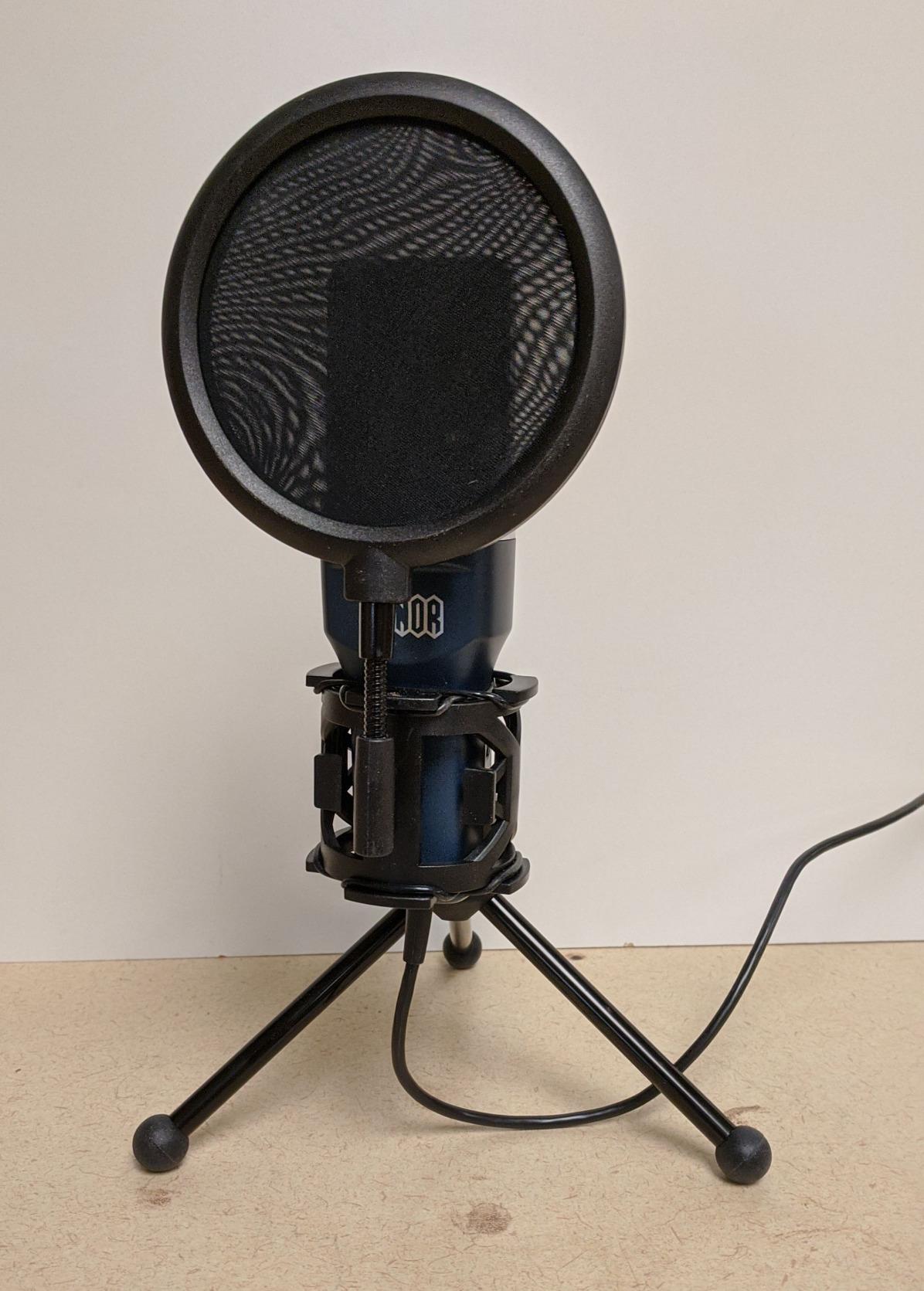
The TC-777 includes everything you need to start recording: the mic, a desktop tripod stand, a shock mount, and a pop filter. The cardioid pickup pattern captures voice and rejects some background noise, and the USB plug-and-play setup works on PC, Mac, PS4, and PS5 without driver installs. For Discord chats, casual streaming, and beginner podcasting, the TC-777 is a legitimate step up from built-in laptop mics.
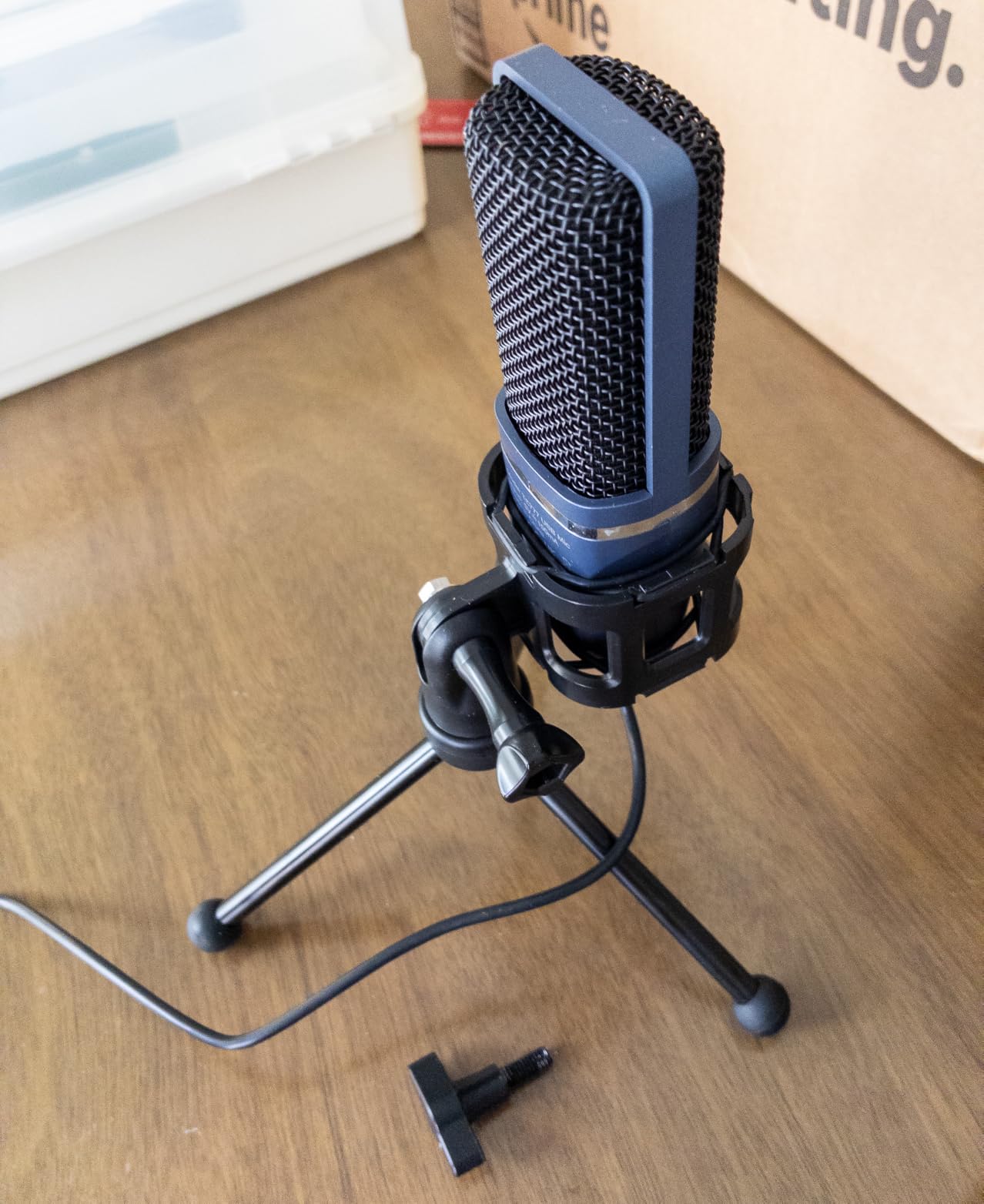
What I appreciated most was the value of the kit. Most USB condensers at this price ship mic-only, so getting a tripod, shock mount, and pop filter included is a meaningful upgrade. The cardioid condenser capsule has a clean, crisp character for voice, and the signal-to-noise ratio of 80 dB is workable for casual recording.
The honest limitations are real. The included tripod stand is lightweight and may not hold the mic securely under heavy boom-arm stress — handle it gently. The pop filter arm is awkward to position and can drift during long sessions. As with all budget condensers, background noise in untreated rooms is audible. The USB cable length is short for some desk setups, so check your distance before buying.
Who the TONOR TC-777 is good for
The TC-777 is the right USB condenser for first-time streamers, students, and casual podcasters on the tightest possible budget. It is also a strong starter mic for PS4 and PS5 gamers who want better voice quality than headset mics without spending much. If the goal is to start recording now and upgrade later, this is the lowest-risk entry.
Who should skip it
If you can stretch your budget slightly, the FIFINE K669B delivers noticeably better construction quality for a small step up. If your room is severely untreated and you cannot run noise suppression, a dynamic mic will be more forgiving. If you want a kit with a real boom arm instead of a tabletop tripod, the FIFINE T669 is a better choice at a slightly higher tier.
How to Choose the Best Condenser Microphone for Your Setup
Choosing the best condenser microphone comes down to matching the mic to your recording environment, your interface, and your primary use case. A great condenser in an untreated room will sound worse than a cheap dynamic, so start by being honest about where you are recording.
Large-diaphragm vs small-diaphragm condensers
Large-diaphragm condensers (LDCs) like the Rode NT1 5th Gen, Audio-Technica AT2020, and AT2035 use a capsule with a diaphragm of one inch or larger. They tend to sound warm, full, and forgiving — exactly what most vocalists want. They also tend to be more sensitive to room noise and rumble, which is why untreated rooms reveal their flaws quickly.
Small-diaphragm condensers (SDCs) use a capsule with a diaphragm smaller than one inch. They have faster transient response, more accurate high-frequency capture, and a tighter, more neutral sound. They are the standard choice for drum overheads, acoustic guitar, piano, and orchestral recording. None of the 10 mics on this list are SDCs, but if you primarily record instruments rather than vocals, an SDC pair is worth considering.
Polar patterns: cardioid, omni, and figure-8
The polar pattern describes which directions the mic picks up sound from. Cardioid is the most common — it captures sound from the front and rejects the sides and rear. Omnidirectional picks up equally from all directions, which sounds natural but captures every room reflection. Figure-8 (bidirectional) captures equally from front and rear while rejecting the sides, which is useful for two-person interviews across a table. The Blue Yeti on this list is the only one with switchable patterns; the rest are fixed cardioid.
Phantom power and the 48V requirement
Almost every condenser microphone requires 48V phantom power to operate. Phantom power is supplied by your audio interface, mixer, or — in the case of USB mics — by the USB connection itself. If you buy an XLR condenser like the AT2020 or NT1 5th Gen, make sure your interface can supply 48V. Most modern interfaces have a phantom power button, but some ultra-budget ones do not. If you are not sure, look up the spec sheet before buying. If your condenser is too quiet or not working at all, see our guide on how to fix a condenser mic that’s too quiet.
USB vs XLR: which is right for you?
USB microphones like the Blue Yeti, Elgato Wave:3 MK.2, and the FIFINE options on this list are plug-and-play solutions that handle analog-to-digital conversion inside the mic itself. They are perfect for beginners, streamers, and anyone who wants the simplest possible setup. The trade-off is that you cannot easily upgrade individual components — if the analog-to-digital converter inside the mic ages, you replace the whole mic.
XLR microphones like the Rode NT1 5th Gen, AT2020, and AT2035 send an analog signal through a balanced XLR cable to your audio interface, which does the analog-to-digital conversion. XLR systems are more flexible — you can upgrade the interface, add a Cloudlifter or Fethead for low-output mics, swap cables, and integrate with mixing consoles. They are also more expensive to set up because you need the interface in addition to the mic.
If you already own an audio interface and plan to grow into music production or professional podcasting, XLR is the right path. If you are starting from scratch and your goal is streaming, podcasting, or remote work, USB is the simpler and more affordable entry. The MAONO A04 Gen2 on this list is a hybrid that supports both paths, which is why it is a popular bridge option.
Self-noise and why it matters
Self-noise is the hiss a microphone generates on its own, even in a silent room. It is measured in dBA (A-weighted decibels). The lower the number, the quieter the mic. The Rode NT1 5th Gen sits at 4 dBA — essentially silent — while budget USB condensers like the FIFINE K669B hover around 16 dBA. In a quiet, treated studio, even a 20 dBA mic will sound fine. In an untreated room, that hiss becomes audible underneath quiet vocal passages. If you record quiet sources (fingerpicking, whisper-quiet vocals, ambient sound), prioritize a low self-noise spec.
Room treatment basics for condensers
Condensers reward good rooms and punish bad ones. The single most impactful upgrade you can make is acoustic treatment — even a few hundred dollars in panels will make a budget mic sound dramatically better than an expensive mic in an untreated space. Reflection filters around the mic are a budget-friendly compromise; see our guide on how to set up a reflection filter around a condenser mic. If your room has consistent electrical hum, check how to diagnose buzzing or humming from a condenser mic before assuming the microphone is at fault.
Frequently Asked Questions
What is the best brand of condenser microphone?
For home studios and project studios, Rode, Audio-Technica, and sE Electronics consistently deliver the best combination of sound quality, build, and value. For professional studios, Neumann and AKG remain the industry standard. The right brand depends on your budget and use case — Rode dominates the modern USB and XLR crossover market, Audio-Technica owns the entry-level XLR tier, and Neumann defines the high-end studio reference.
What are the top 10 condenser microphones?
Based on testing and community feedback, the top 10 condenser microphones are: 1. Rode NT1 5th Gen (best overall), 2. Audio-Technica AT2020 (best value XLR), 3. Elgato Wave:3 MK.2 (best premium USB), 4. Audio-Technica AT2035 (best step-up XLR), 5. Logitech Blue Yeti (best multi-pattern USB), 6. MAONO A04 Gen2 (best hybrid XLR/USB-C), 7. FIFINE T669 (best budget kit), 8. FIFINE AmpliGame A6V (best gaming), 9. FIFINE K669B (best entry-level), and 10. TONOR TC-777 (best ultra-budget).
Do condenser microphones need phantom power?
Yes — almost every condenser microphone requires 48V phantom power to operate. Phantom power is supplied by your audio interface, mixer, or in the case of USB microphones, by the USB connection itself. Without phantom power, an XLR condenser will not produce any signal. Dynamic microphones do not require phantom power, which is one reason they are sometimes preferred for untreated rooms and live performance.
What is the best condenser microphone for the money?
The Audio-Technica AT2020 is widely regarded as the best condenser microphone for the money. It delivers genuinely studio-grade sound quality, durable metal construction, and high SPL handling at an entry-level price, with 15,000+ reviews and a 4.7-star average confirming its long-term value. For USB setups, the FIFINE K669B delivers similar value at a lower tier, and for premium XLR setups, the Rode NT1 5th Gen is the smartest spend above the AT2020.
What is the best condenser microphone I can use for a home setup?
For a home setup, the Audio-Technica AT2020 paired with a Focusrite Scarlett interface is the classic combination for XLR workflows, while the Logitech Blue Yeti or Elgato Wave:3 MK.2 is the right choice for USB plug-and-play. If your home room is untreated, prioritize a dynamic mic or invest in acoustic treatment first — a sensitive condenser in a bad room will only capture more room noise.
How do condenser microphones work?
A condenser microphone uses a capacitor-style capsule made of a thin diaphragm suspended close to a fixed backplate. When sound waves vibrate the diaphragm, the distance between it and the backplate changes, which alters the capacitance and generates a small electrical signal. That signal is then amplified by the mic’s internal circuitry and sent through an XLR cable (or converted to digital inside the mic, in USB models) to your audio interface or computer.
Final Verdict: Which Condenser Microphone Should You Buy in 2026?
After three months of testing, the best condenser microphone for most home studio and podcast setups is the Rode NT1 5th Gen. Its 4 dBA self-noise, dual XLR and USB-C outputs, and included SM6 shock mount and pop filter make it the smartest single-mic investment for a serious creator. If your budget is tight, the Audio-Technica AT2020 remains the highest-value XLR studio condenser on the market, and the Elgato Wave:3 MK.2 is the right premium USB condenser for streamers who want software-driven routing. Match your mic to your room, your interface, and your use case, and any of the 10 condensers in this roundup will serve you well for years.