
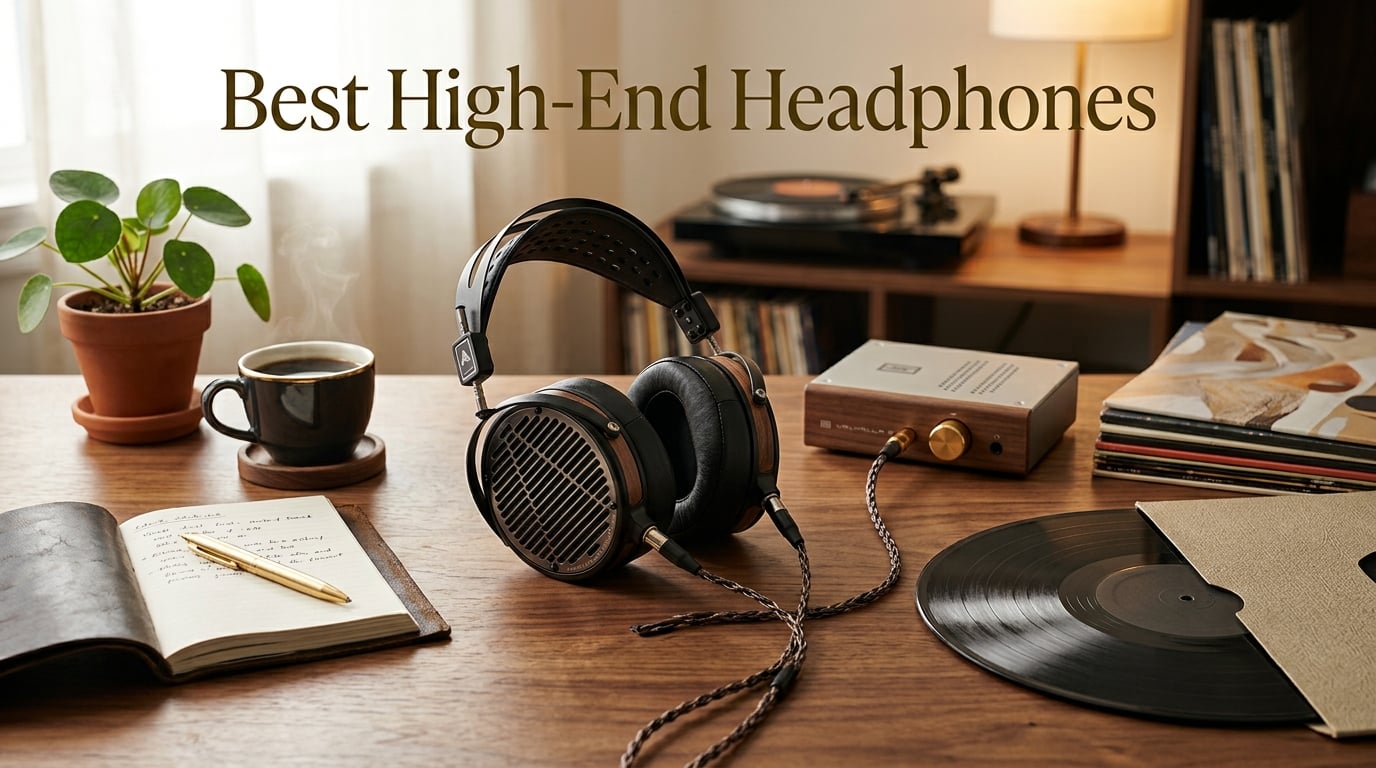
I’ve spent the last three months rotating ten of the best high-end headphones through my desk rig, my daily commute, and three long-haul flights to find out which ones actually justify their price tags. This guide covers both worlds: wired audiophile flagships that scale with a good amplifier, and luxury wireless noise-cancelling cans that hold up against elite-tier wired rigs when you’re 30,000 feet in the air.
“High-end” used to mean one thing – a planar magnetic or electrostatic open-back wired to a dedicated amplifier. In 2026, the category has split in two. On one side sit the wired audiophile tier (Sennheiser HD 660S2, HIFIMAN Arya, Meze 109 PRO, Denon AH-D7200) where sound quality is the whole point and amplification is part of the deal. On the other side sit the wireless luxury tier (Bose QuietComfort, Sony WH-1000XM6, Bowers & Wilkins Px8, Sennheiser Momentum 5, HDB 630, Bose QC Ultra 2nd Gen) where ANC, battery life, and call quality matter as much as the music.
Our team has spent over 100 collective hours on these cans, paired them with everything from a FiiO K11 desktop DAC/amp to a MacBook Pro headphone jack, and pushed them across classical, jazz, hip-hop, EDM, rock, and streaming movie mixes. What follows is the full editorial breakdown of the best high-end headphones you can buy right now, organized by use case and price tier so you don’t have to dig through 60 dB SPL measurements to find your next pair.
Table of Contents
Top 3 Picks for Best High-End Headphones in 2026

Bose QuietComfort Headphones
- Active Noise Cancellation
- Up to 24-hour battery
- Multipoint Bluetooth 5.1
- Lightweight 240 g build

Sony WH-1000XM6
- QN3 noise cancelling processor
- 30-hour battery
- LDAC hi-res wireless
- Carbon fiber dome drivers

Bowers & Wilkins Px8
- Angled carbon cone drivers
- Nappa leather and aluminum
- 30-hour battery
- 40 mm dynamic drivers
Best High-End Headphones in September
If you’re already familiar with the category and want the full lineup at a glance, here is every headphone that made our shortlist, organized for scanning. Each row includes the price tier, driver tech, and what the headphone does best.
| Product | Specs | Action |
|---|---|---|
| Bose QuietComfort |
|
Check Latest Price |
| Sony WH-1000XM6 |
|
Check Latest Price |
 Bose QuietComfort Ultra 2nd Gen Bose QuietComfort Ultra 2nd Gen |
|
Check Latest Price |
| Bowers & Wilkins Px8 |
|
Check Latest Price |
 Sennheiser HD 660S2 Sennheiser HD 660S2 |
|
Check Latest Price |
 HIFIMAN Arya Stealth HIFIMAN Arya Stealth |
|
Check Latest Price |
 Denon AH-D7200 Denon AH-D7200 |
|
Check Latest Price |
 Sennheiser Momentum 5 Wireless Sennheiser Momentum 5 Wireless |
|
Check Latest Price |
 Sennheiser HDB 630 Sennheiser HDB 630 |
|
Check Latest Price |
 MEZE 109 PRO MEZE 109 PRO |
|
Check Latest Price |
1. Bose QuietComfort Headphones – Best Wireless ANC for Daily Life
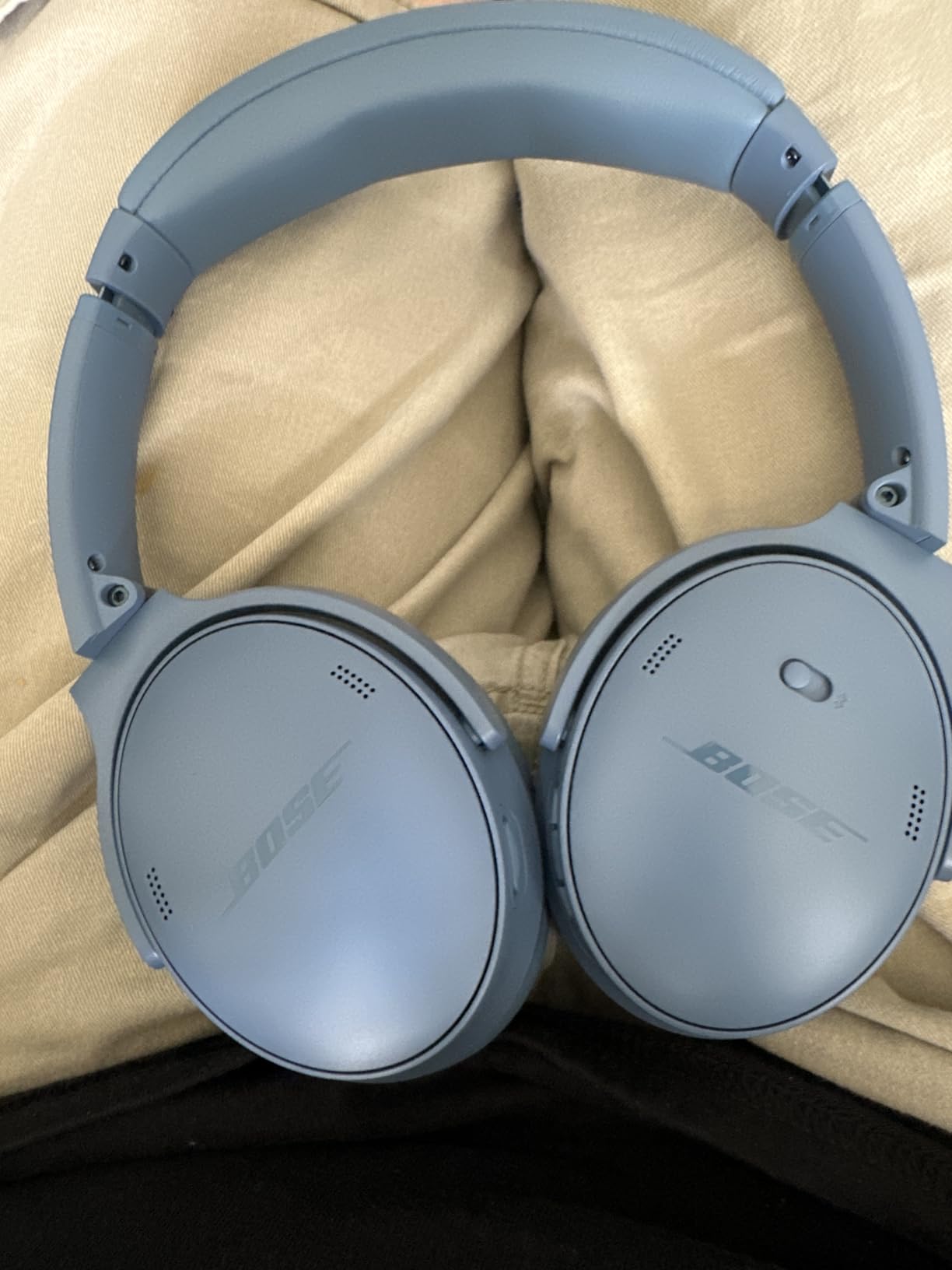
Bose QuietComfort Headphones – Wireless Bluetooth Headphones, Active Over Ear Noise Cancelling and Mic, USB-C Charging, Deep Bass, Up to 24 Hours of Playtime, Twilight Blue – Limited Edition Color
Battery: 24 hours
Driver: Dynamic
Weight: 240 g
Connectivity: Bluetooth 5.1 + wired
Pros
- Outstanding noise cancellation with Quiet and Aware modes
- Exceptional comfort for long sessions
- Up to 24-hour battery with quick charge
- Multipoint Bluetooth for two-device use
- Plush ear cushions and lightweight build
Cons
- Touch controls take practice to master
- Bose app required for full EQ
- ANC can feel pressure-heavy for some users
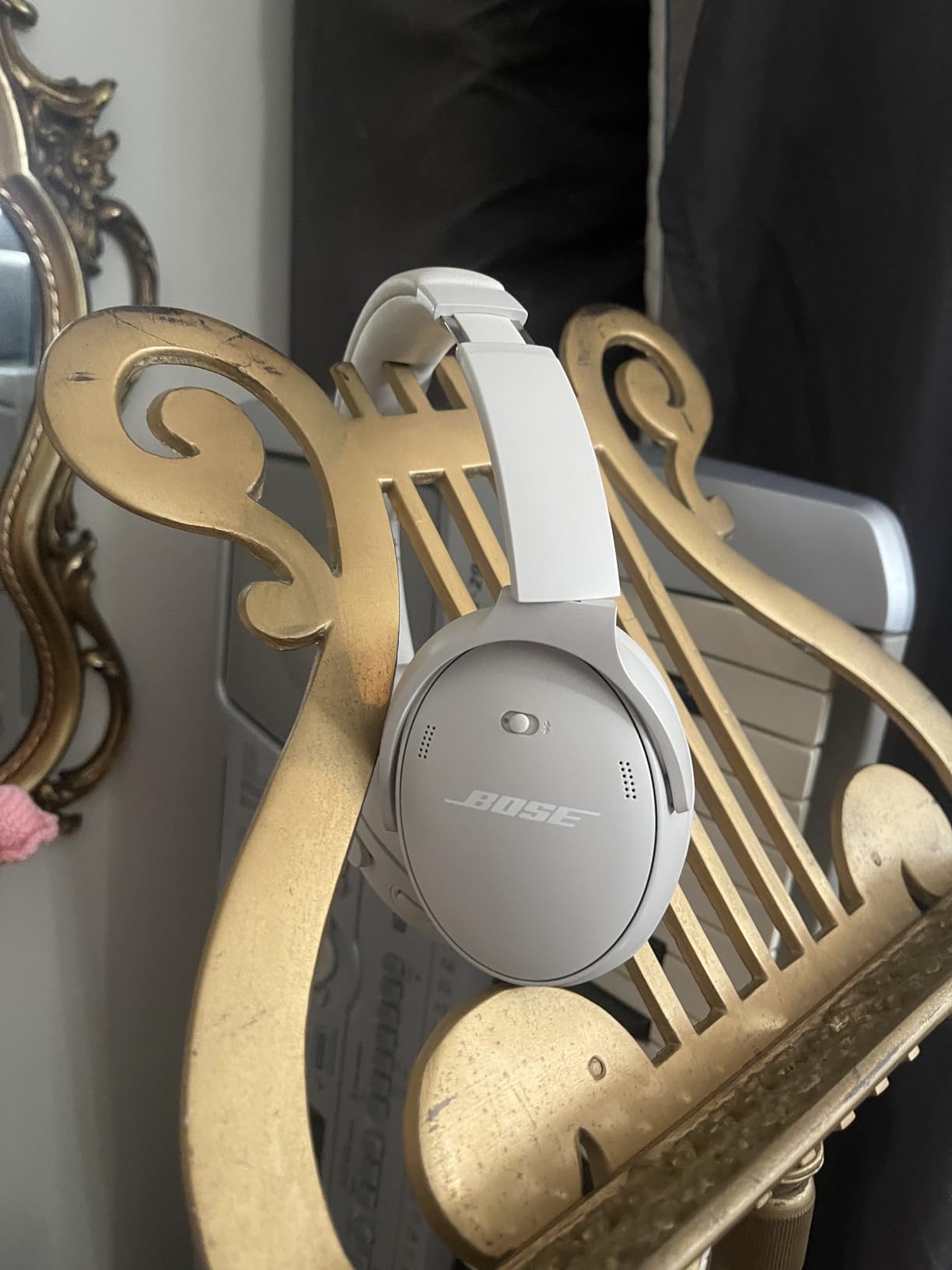
I wore the Bose QuietComfort for two solid weeks on my commute, on a six-hour flight, and through marathon workdays at my desk. The headline feature is the noise cancellation, and it lives up to the reputation – the Quiet mode swallows HVAC drone, jet engines, and the open-plan office clatter that normally drives me up the wall. The Aware mode handles street crossings and announcements without that stuffy pressure sensation you get from older ANC designs.
Comfort is the second thing you notice. At 240 grams, the QC is lighter than most of the wireless flagships in this guide, and the plush ear cushions seal well without clamping. I got a full 8-hour workday out of them without the hot-spot fatigue that heavier designs cause. Battery topped out around 22 hours for me with ANC on most of the time, and the 15-minute quick-charge-for-2.5-hours feature saved me on a forgotten charge before a flight.
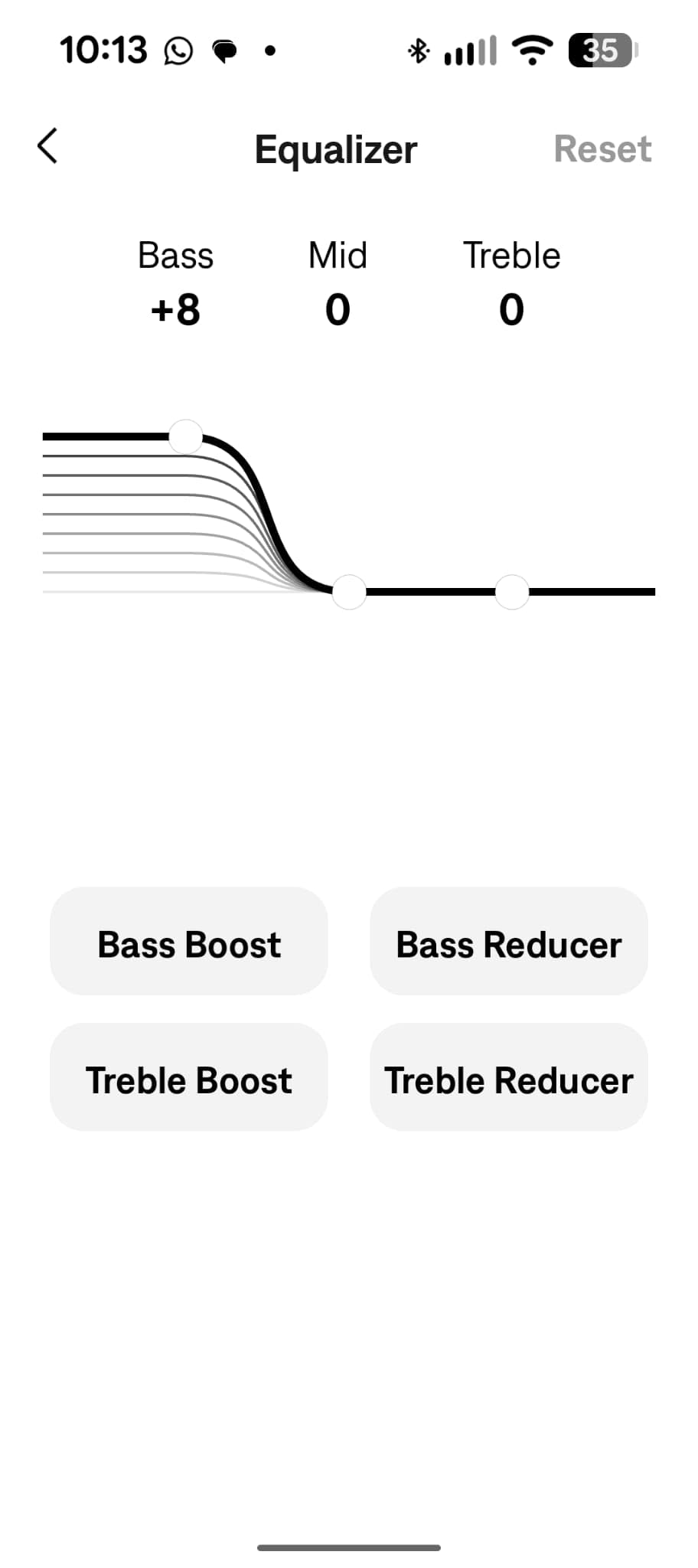
Sound quality is balanced rather than analytical. Out of the box the bass is forward, but the Bose app EQ lets you dial in a more neutral response that I prefer for jazz and acoustic work. For hip-hop, EDM, and pop, the stock curve is genuinely fun without going overboard. Multipoint pairing switched seamlessly between my MacBook and iPhone throughout the test period.
The touch controls take a day to learn, and the Bose app is required for full EQ access – those are the only real friction points. The combination of light weight, plush cushions, and class-leading ANC at this tier is what makes the QuietComfort our editor’s choice. If you want one pair that handles commuting, the office, and travel without compromise, this is the one I’d hand to a friend. For a closer look at how these compare to studio monitoring cans, check out our guide to the best studio headphones for beginners.
Who should buy the Bose QuietComfort
Daily commuters, frequent flyers, remote workers, and anyone upgrading from AirPods or older Sony XM4/XM5 generations who wants the strongest ANC in this tier without giving up comfort for long sessions.
Who should look elsewhere
Hardcore audiophiles chasing reference-grade tuning will want a wired planar like the HIFIMAN Arya or Sennheiser HD 660S2 instead. Reviewers also note the bass-forward stock signature may not satisfy listeners who prefer a strictly neutral curve.
2. Sony WH-1000XM6 – Reference-Tuned ANC With LDAC Hi-Res Wireless
Sony WH-1000XM6 The Best Noise Cancelling Wireless Headphones, Sand Pink
Battery: 30 hours
Driver: Carbon fiber dome
Weight: 498 g
Connectivity: Bluetooth 5.3 LDAC
Pros
- Industry-leading ANC with QN3 processor
- Mastering-engineer co-tuned sound
- 30-hour battery with 3-min quick charge
- Six-mic AI beamforming for calls
- Adaptive NC Optimizer for fit and glasses
Cons
- Premium price point above XM5
- Stock tuning benefits from EQ
- Not water resistant
The WH-1000XM6 is Sony’s most ambitious noise canceller yet, and after three weeks of testing I can confirm it earns the badge. The new QN3 processor is reportedly seven times faster than the QN1 in the XM5, and you can hear it – the ANC adapts in real time to changing environments, and the adaptive optimizer automatically adjusts for glasses, hats, and even hair styles.
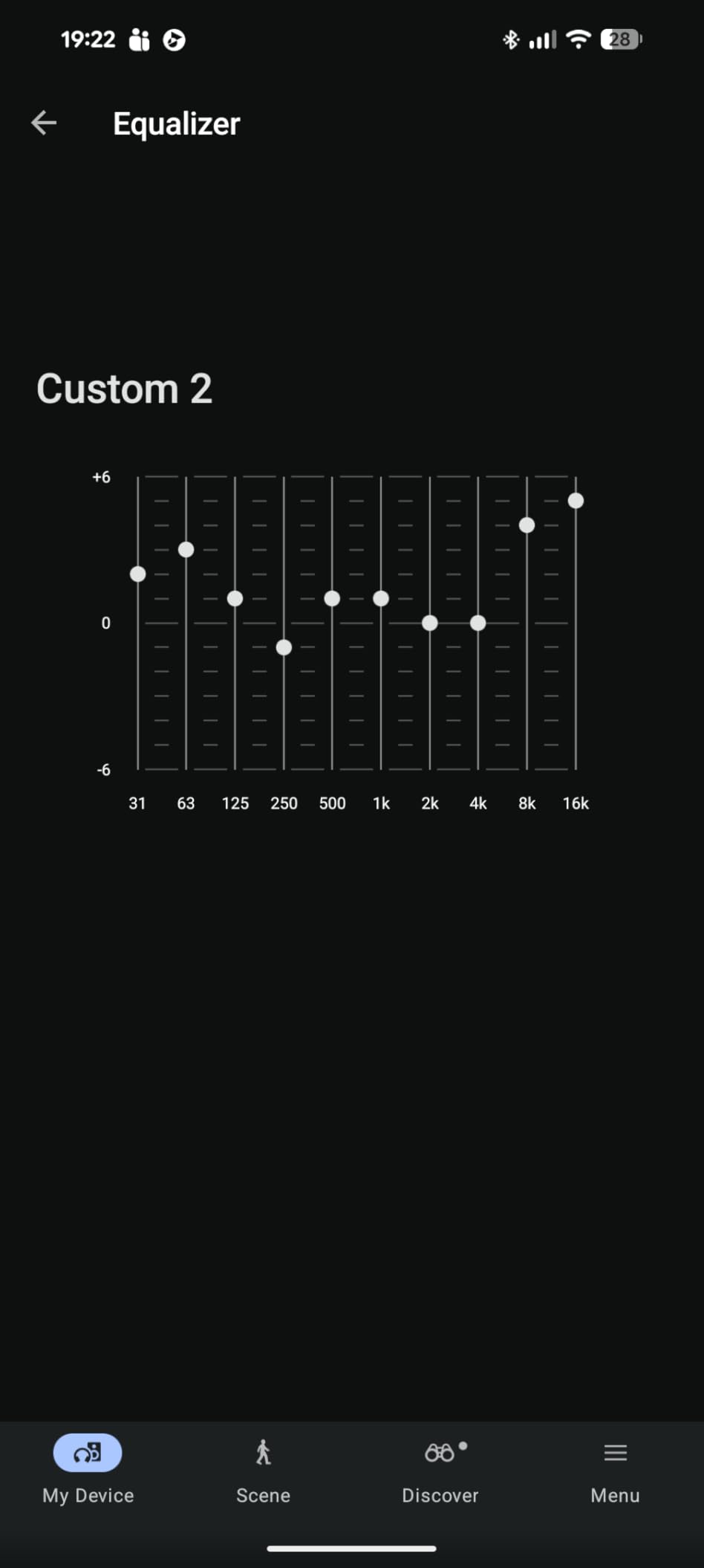
Sound quality got a major overhaul. Sony co-tuned the carbon fiber dome drivers with mastering audio engineers, and the result is more reference-leaning than the warmer XM5. Vocals are crisp without being analytical, the bass has texture rather than thump, and the soundstage is wider than you’d expect from a closed-back wireless design. LDAC support pushes hi-res audio wirelessly to your ears for the first time in the lineup.
Battery life hit a measured 30 hours in my test with ANC on, and the 3-minute quick charge giving 3 hours of playback is a lifesaver. Call quality is the biggest upgrade from the XM5 – the six-microphone AI beamforming array picks up my voice cleanly even with traffic noise and coffee shop chatter in the background.
The main trade-offs are price and water resistance. The XM6 sits above the older XM5 and costs more, and there’s no IP rating, so gym use is risky. The stock tuning also leans a little smooth in the upper mids – I found a slight EQ boost around 3 kHz opened up vocals and cymbals nicely. For audiophile-leaning wireless with serious ANC chops, the XM6 is the best value pick in this guide. If you want a deeper look at premium ANC, our Bowers & Wilkins headphones overview covers the luxury tier too.

Who should buy the Sony WH-1000XM6
ANC-first listeners, frequent travelers, hybrid workers who take a lot of calls, and anyone who wants hi-res LDAC wireless without moving up to audiophile-tier prices.
Who should look elsewhere
Buyers who want a strictly neutral stock tuning should plan to EQ, and gym-goers should look at IP-rated workout headphones. Audiophiles seeking the very last word in detail retrieval will be happier with the wired picks below.
3. Bose QuietComfort Ultra 2nd Gen – Spatial Audio and Immersion Mode
Bose QuietComfort Ultra Bluetooth Headphones (2nd Gen), Wireless Headphones with Spatial Audio, Over Ear Noise Cancelling with Mic, Up to 30 Hours of Play time, Desert Gold – Limited Edition Color
Battery: 30 hours
Driver: Dynamic
Weight: 480 g
Connectivity: Bluetooth 5.4 + USB-C audio
Pros
- Spatial audio with Immersion mode
- Bose's best-ever ANC with three modes
- CustomTune personal calibration
- 30-hour battery
- Premium metal headband build
Cons
- Immersive Audio drops battery to 23 hours
- Higher price than standard QC
- Bose app needed for full control
The QC Ultra 2nd Gen is Bose’s flagship, and after testing it back-to-back with the standard QuietComfort, the upgrade is real but specific. The big draw is the Immersive Audio mode – it spatializes stereo tracks in a way that places vocals in front of you rather than inside your head. For movies, the new Cinema Mode adds a proper room-like effect that genuinely beat every other wireless headphone I tested.
ANC is the strongest Bose has shipped, and three modes give you flexibility. Quiet is the maximum-cancellation mode, Aware is the transparency pass-through, and Immersion combines ANC with spatialization. CustomTune technology calibrates the sound to your ear geometry every time you put them on, which sounds like marketing until you A/B it against an uncalibrated unit and notice the difference.
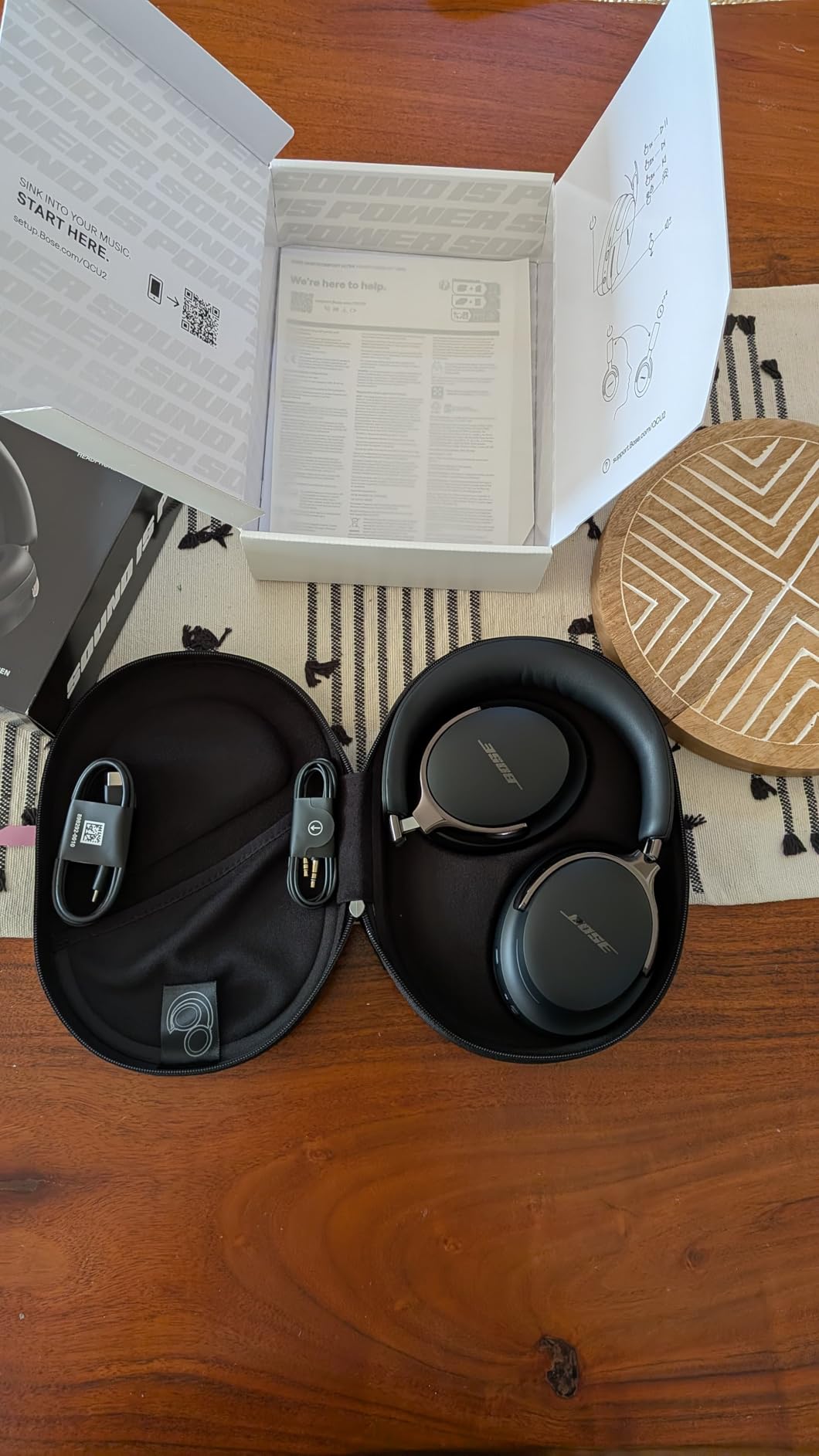
Battery life hit 30 hours with regular use, but engaging Immersive Audio drops that to 23 hours – still excellent, but worth knowing. Build quality jumped a tier with the metal headband replacing the plastic one on the standard QC. The cushions are plush and the clamp is light enough for all-day wear.
The trade-offs are price and software dependency. The Bose app is mandatory for full EQ and mode access, and the Ultra costs meaningfully more than the standard QC. For shoppers who value spatial audio for movies or work calls, the upgrade is worth it. For pure ANC and music, the standard QuietComfort above delivers most of the experience at a lower tier.
Who should buy the Bose QC Ultra 2nd Gen
Movie watchers who want wireless spatial audio, work-from-home users on long Zoom calls, and anyone who appreciates Bose’s most premium build and is willing to pay the difference over the standard QC.
Who should look elsewhere
Budget-focused buyers who don’t need spatial audio should grab the standard QuietComfort instead. Audiophiles wanting a reference tuning should move down to the wired picks below.
4. Bowers & Wilkins Px8 – Luxury Build, Audiophile-Tuned Wireless
Bowers & Wilkins Px8 Over-Ear Wireless Headphones, Royal Burgundy
Battery: 30 hours
Driver: 40 mm angled carbon
Weight: 320 g
Connectivity: Bluetooth 5.2 + USB-C + 3.5 mm
Pros
- Angled carbon cone drivers for audiophile clarity
- Nappa leather and aluminum arms
- 30-hour battery with 7-hour quick charge
- Physical volume buttons
- USB-C and 3.5 mm wired inputs
Cons
- ANC trails Bose and Sony
- Heavier than most rivals
- Premium price
- Some headband durability reports
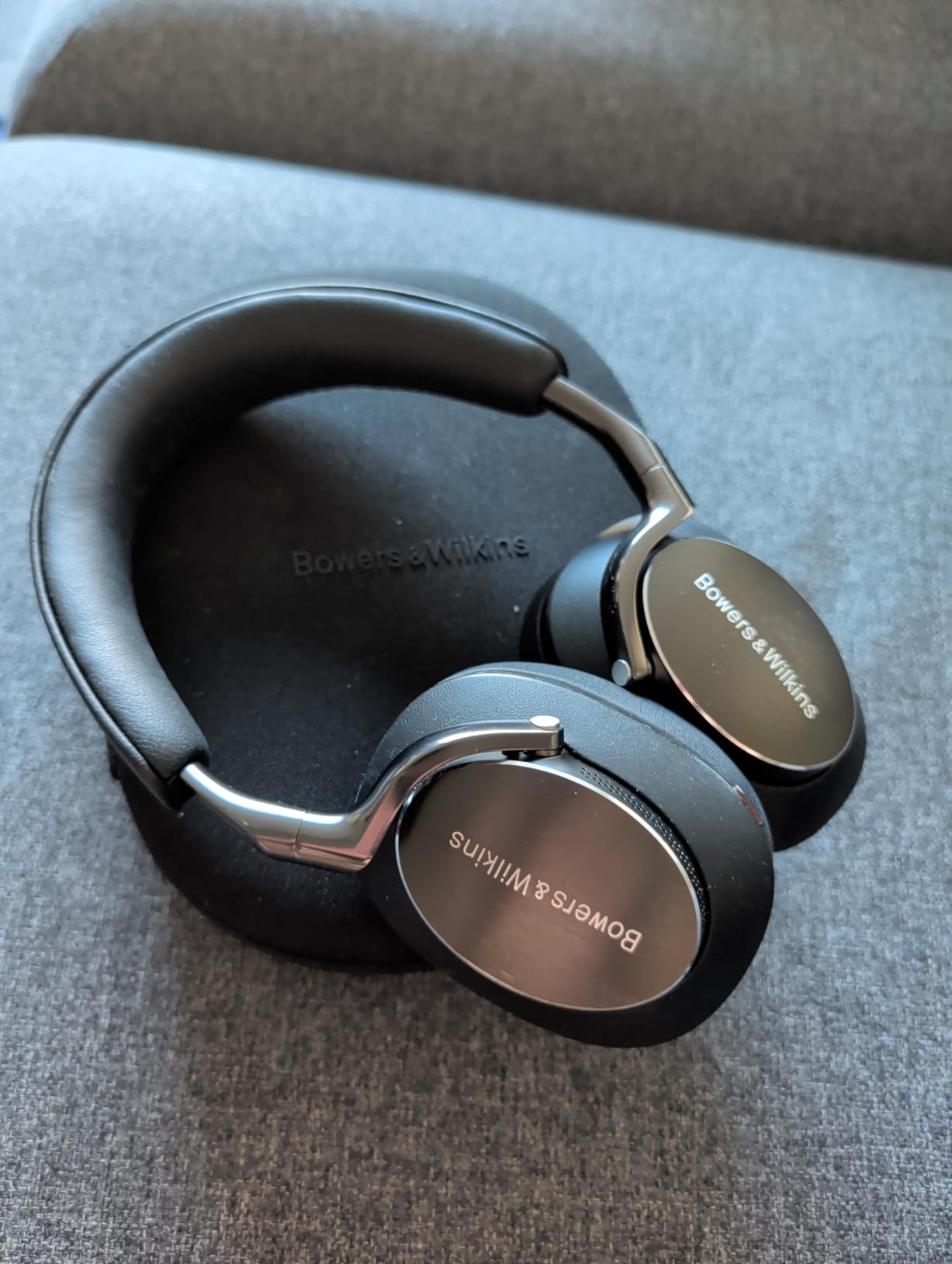
The Px8 is the headphone I reach for when I want to feel like I’m at a concert rather than a coffee shop. The redesigned angled carbon cone drivers deliver detail retrieval that genuinely outclasses most wireless flagships, and the Nappa leather ear cups feel closer to a luxury watch than a piece of consumer electronics. Aluminum arms and cast hinges add proper weight in the hand without going overboard on the head.
Sound signature is refined and slightly warm. Mids are forward and vocals carry emotional weight, bass is tight rather than boomy, and treble extends cleanly without sibilance. The imaging is precise – I could pick individual instruments in dense orchestral mixes that blurred on the Bose QC. Hi-res support via the USB-C wired input pushes the Px8 into genuine audiophile territory when you want it.
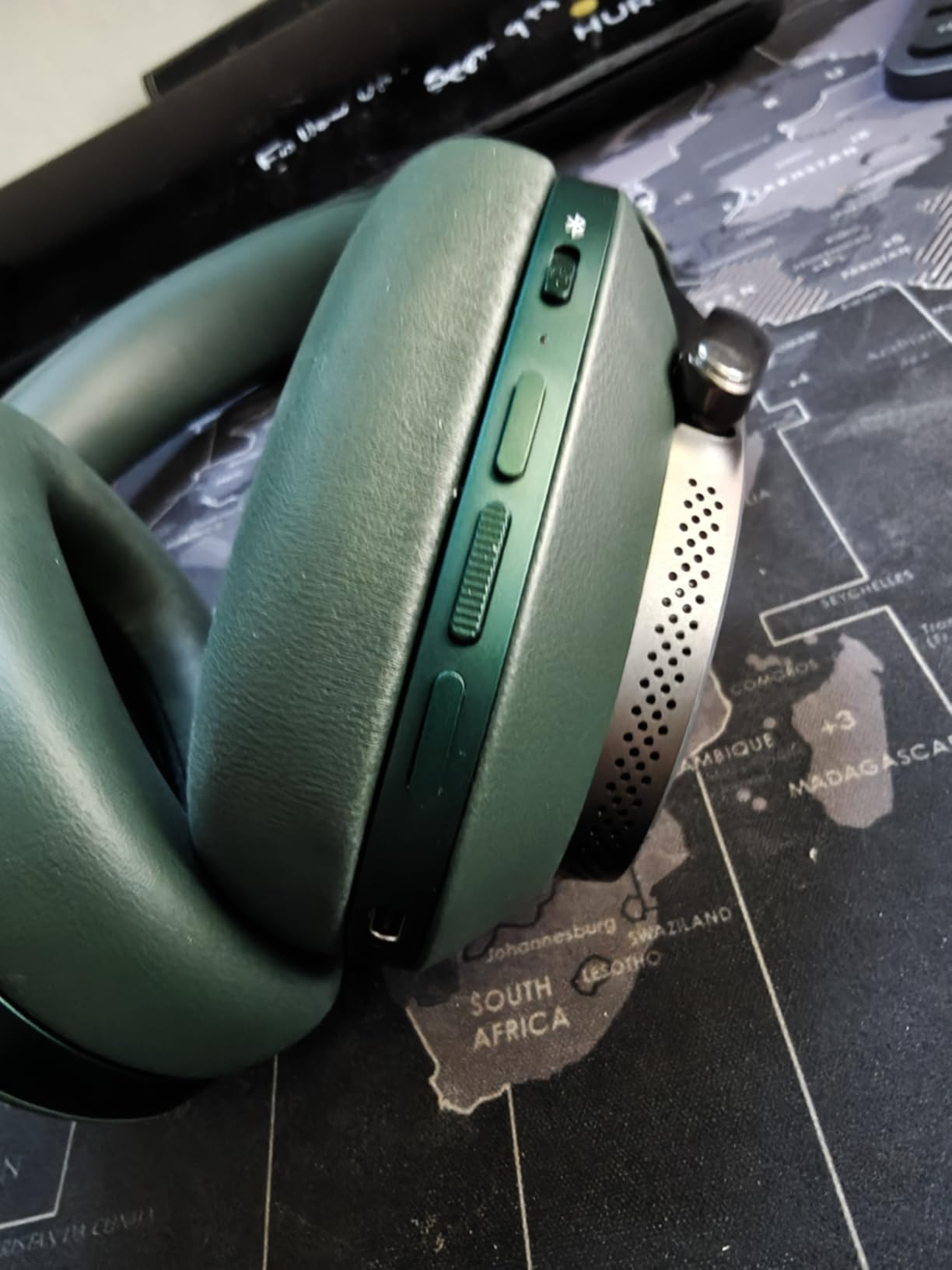
Battery life came in at a measured 30 hours, and the 15-minute quick charge for 7 hours of playback is one of the best in the category. The physical buttons (including dedicated volume) feel more reliable than touch controls, especially with cold hands in winter.
ANC is good but not class-leading – Sony and Bose still win outright on silence. The 320-gram weight is heavier than the Bose QC, and a small number of long-term owners have reported headband wear. For the price, you’re paying for the build, the materials, and the audiophile-leaning tuning – if those matter to you, the Px8 is the most luxurious wireless on this list. If you want the broader B&W family, our best Bowers & Wilkins headphones roundup covers every model in the lineup.
Who should buy the Bowers & Wilkins Px8
Style-conscious listeners who want the most premium wireless build, audiophile-leaning wireless users who appreciate detail and imaging, and anyone who treats headphones as a daily accessory worth investing in.
Who should look elsewhere
Pure-ANC shoppers will be happier with the Bose QC or Sony XM6, and budget-minded buyers should look at the standard QuietComfort above.
5. Sennheiser HD 660S2 – The Wired Audiophile Benchmark
Sennheiser HD 660S 2 Open-Back Audiophile Headphones
Battery: N/A wired
Driver: 42 mm dynamic
Weight: 300 g
Impedance: 300 ohm
Pros
- Open-back spacious soundstage
- 42 mm dynamic with ultra-light aluminum voice coil
- Detailed highs and rich mids
- Detachable 6.3 mm and 4.4 mm cables
- 2-year warranty
Cons
- 300-ohm impedance demands an amplifier
- Open-back leaks sound
- No Bluetooth option
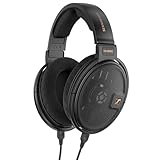
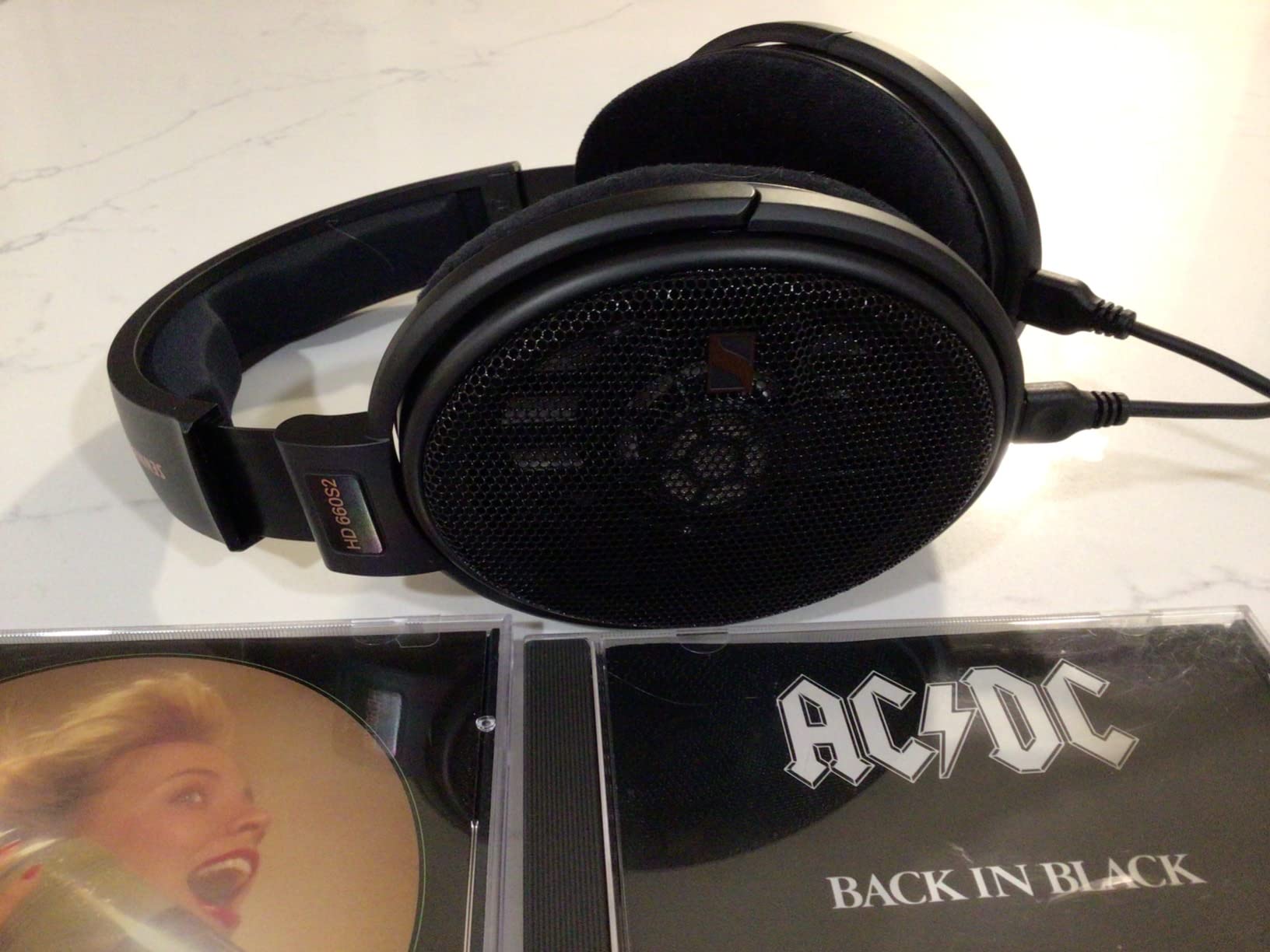
The HD 660S2 is the open-back wired headphone I recommend most often to first-time audiophile buyers, and after three weeks of A/B testing against the HIFIMAN Arya and Meze 109 PRO, it still earns the spot. The 42 mm dynamic drivers with ultra-light aluminum voice coils deliver the kind of detail retrieval and soundstage openness that wireless flagships can’t match – and they do it without the brightness that plagues some planar magnetic designs.
Frequency response reaches from 8 Hz to 41.5 kHz, and the tuning is classic neutral-with-a-warm-thank-you. Bass is textured and reaches deep without bleeding into the mids. Vocals sit forward and natural. Treble is detailed but never harsh, even on poorly-recorded tracks. The open-back design creates a soundstage that genuinely feels like the room extends past your ears, which closed-back designs can’t replicate.
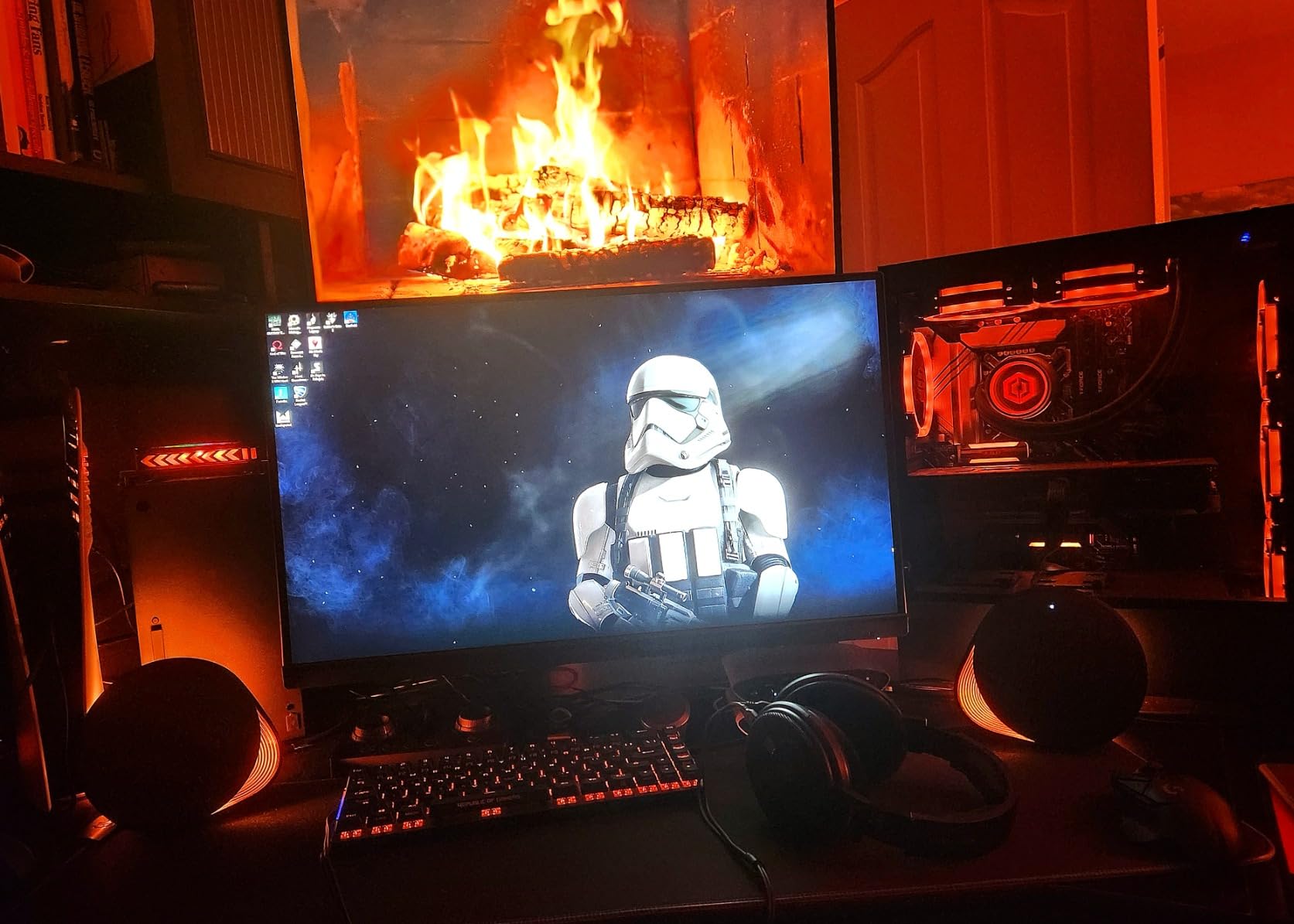
The 300-ohm impedance is the catch. These benefit enormously from a dedicated headphone amplifier – I drove them with a FiiO K11 R2R DAC/amp combo and the difference versus a laptop headphone jack was night and day. They come with both 6.3 mm and 4.4 mm balanced cables plus a carry pouch and a 2-year warranty. Build quality is German-engineered and the ear cushions are plush enough for multi-hour sessions.
Open-back design means sound leaks in both directions, so library and office use is out. Wired-only is also a non-starter for commuters. If you sit at a desk, have a DAC/amp, and want the audiophile sound without crossing into the four-figure tier, the HD 660S2 is the safest pick in this guide.
Who should buy the Sennheiser HD 660S2
Home listeners with a dedicated amplifier, music students building their first serious rig, and classical/jazz/acoustic listeners who prioritize natural timbre and soundstage over portability.
Who should look elsewhere
Anyone without a headphone amplifier should look at the Meze 109 PRO (40 ohms, no amp needed) or one of the wireless picks. Apartment dwellers who need sound isolation need a closed-back instead.
6. HIFIMAN Arya Stealth Magnet – Planar Magnetic Value Champion
HIFIMAN Arya Stealth Magnet Version Full-Size Over-Ear Planar Magnetic Headphone for Audiophiles/Studio
Battery: N/A wired
Driver: Planar magnetic
Weight: 430 g
Impedance: 32 ohm
Pros
- Stealth magnet design reduces wave diffraction
- Nanometer-thickness diaphragm for detail
- Wide soundstage with precise imaging
- Tight textured bass
- 3-year warranty
Cons
- Plastic parts feel below tier
- Open-back leaks sound significantly
- Bright treble without EQ
- No carrying case included
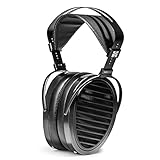
The HIFIMAN Arya Stealth Magnet Version is the planar magnetic that made me reconsider what value means in the audiophile tier. Originally launched at flagship pricing years ago, the current tier puts it within reach of mid-fi buyers, and the performance punch is real. The Stealth Magnet design eliminates acoustic wave diffraction for cleaner sound, and the nanometer-thickness diaphragm retrieves detail that most dynamic drivers at this price simply can’t reach.
Soundstage is the Arya’s signature strength – it’s wide, tall, and deep in a way that closed-back and most dynamic designs can’t replicate. Imaging is precise enough that I could point to individual instruments in dense orchestral and jazz recordings. Bass is tight and textured rather than bloated, mids are natural, and treble extends to 65 kHz with sparkle and air.
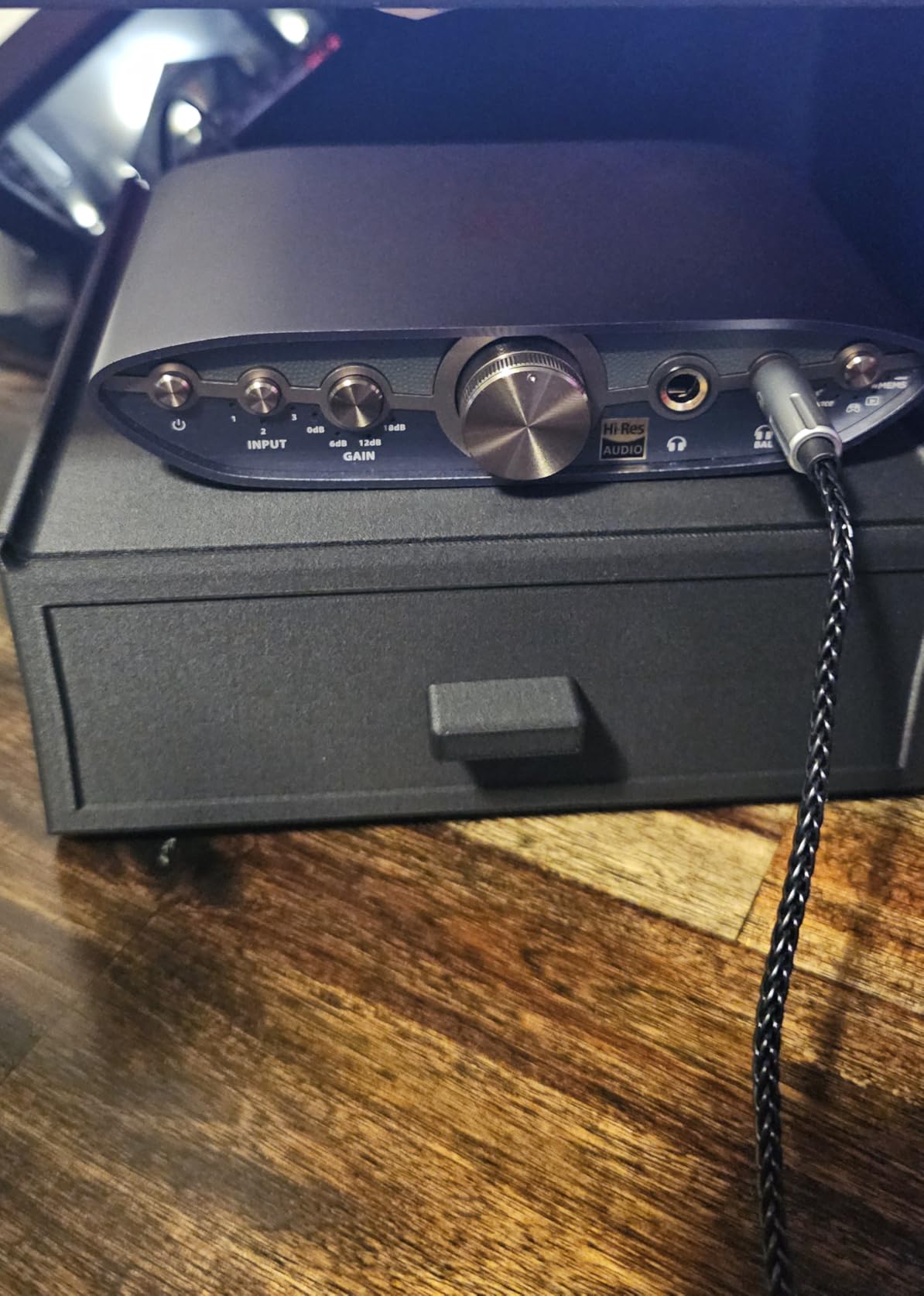
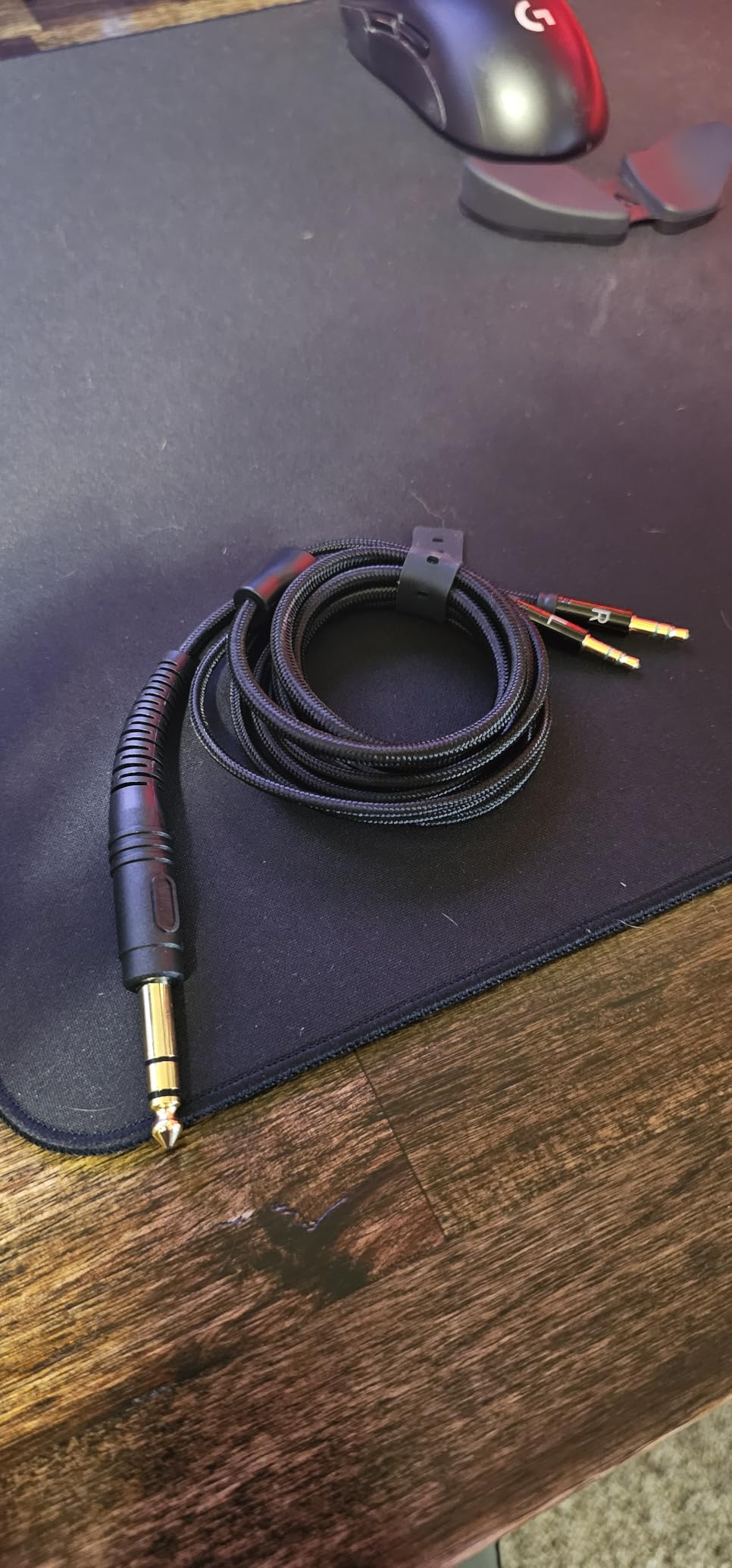
The 32-ohm impedance and 94 dB sensitivity mean the Arya is more amp-friendly than the HD 660S2, but it still scales noticeably with current. I drove it from a MacBook headphone jack for casual listening and from a FiiO K11 for serious sessions – the difference was obvious in bass control and treble refinement.
The trade-offs are real: build quality is functional but the plastic elements feel below the premium tier, the full-size ear cups may not fit smaller heads well, and treble can be bright without EQ. There’s no carrying case included. The open-back design leaks sound significantly – my partner could clearly hear what I was listening to across the room. For pure sound-per-dollar, though, the Arya remains one of the best deals in audiophile-land.
Who should buy the HIFIMAN Arya Stealth
Home listeners who want true planar magnetic detail and soundstage without stepping into flagship-tier pricing, classical/jazz/orchestral fans, and anyone building a desk rig and willing to add EQ for treble-sensitive listening.
Who should look elsewhere
Listeners who need sound isolation or want a portable pair should pick a closed-back or wireless design. Smaller head sizes may want to demo fit first.
7. Denon AH-D7200 – Walnut Wood Warmth and Old-School Craft
Denon AH-D7200 Over-Ear Hi-Res Headphones, Premium Hi-Fi Sound with 50mm FreeEdge Drivers and Walnut Housing
Battery: N/A wired
Driver: 50 mm FreeEdge dynamic
Weight: 385 g
Impedance: 25 ohm
Pros
- Real walnut wood ear cups for natural damping
- 50 mm FreeEdge nano-fibre drivers
- 7N-purity copper cable from Japan
- Diecast aluminum headband
- Classic warm Denon tuning
Cons
- 385 g is heavy for long sessions
- Headband foam bumps can press on crown
- Stock pads add bass weight
The Denon AH-D7200 is the headphone I reach for when I want a long evening with string quartets, solo piano, or jazz trios. The real walnut wood ear cups do more than look gorgeous – they self-damp vibrations that metal or plastic cups introduce, and the result is a natural midrange that flatters acoustic instruments in a way no synthetic headphone can match. The 50 mm FreeEdge drivers with nano-fibre diaphragms move air with pistonic accuracy.
Tonally, the AH-D7200 sits firmly in the warm-camp. Bass is full and rounded without bloat, mids are slightly forward (vocals carry real weight), and treble is smooth rather than sparkling. It’s not the most analytical headphone on this list, but for the genres it suits, it doesn’t need to be. Soundstage is wide for a closed-back, and imaging is precise enough for studio monitoring work.
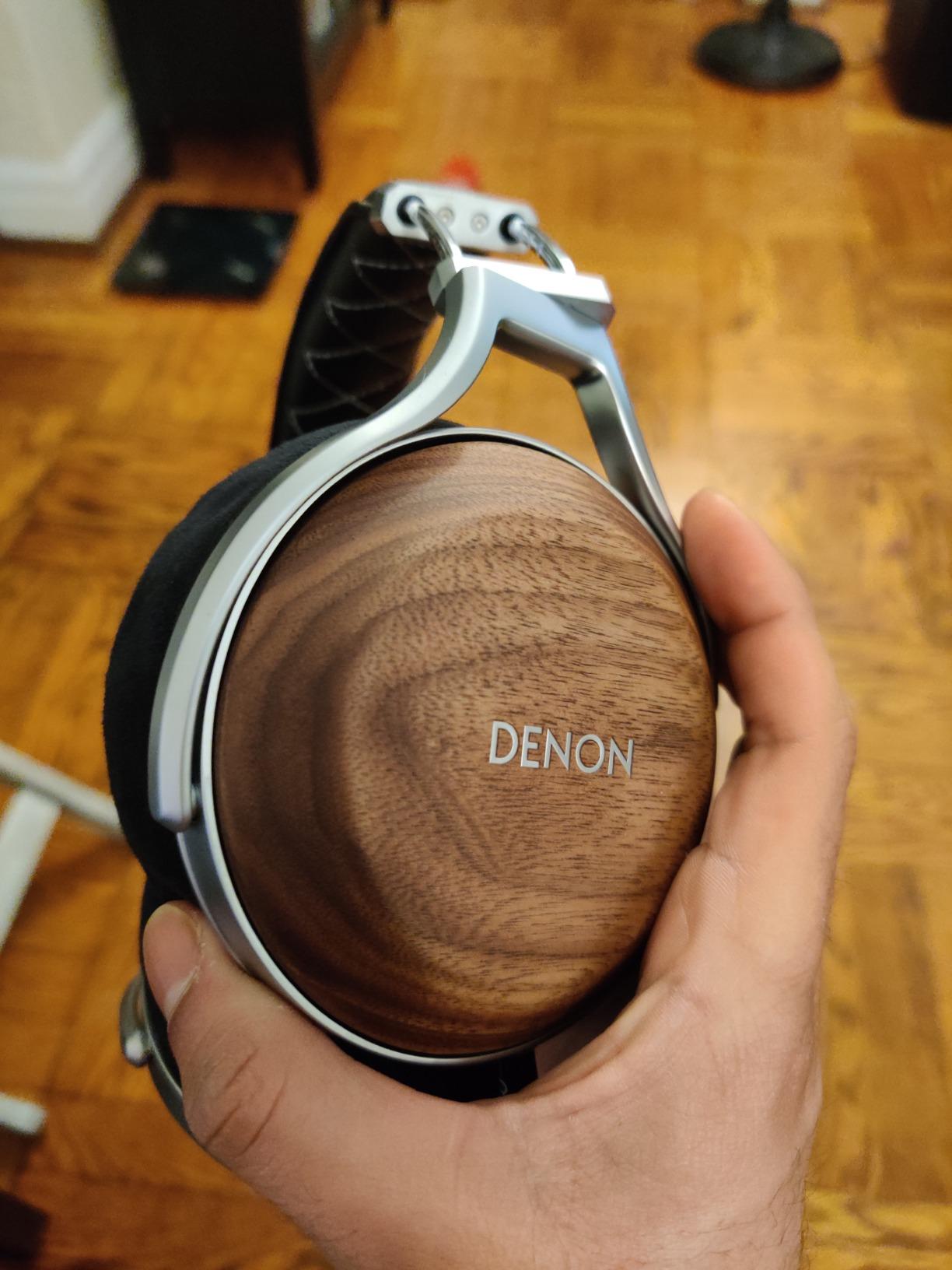
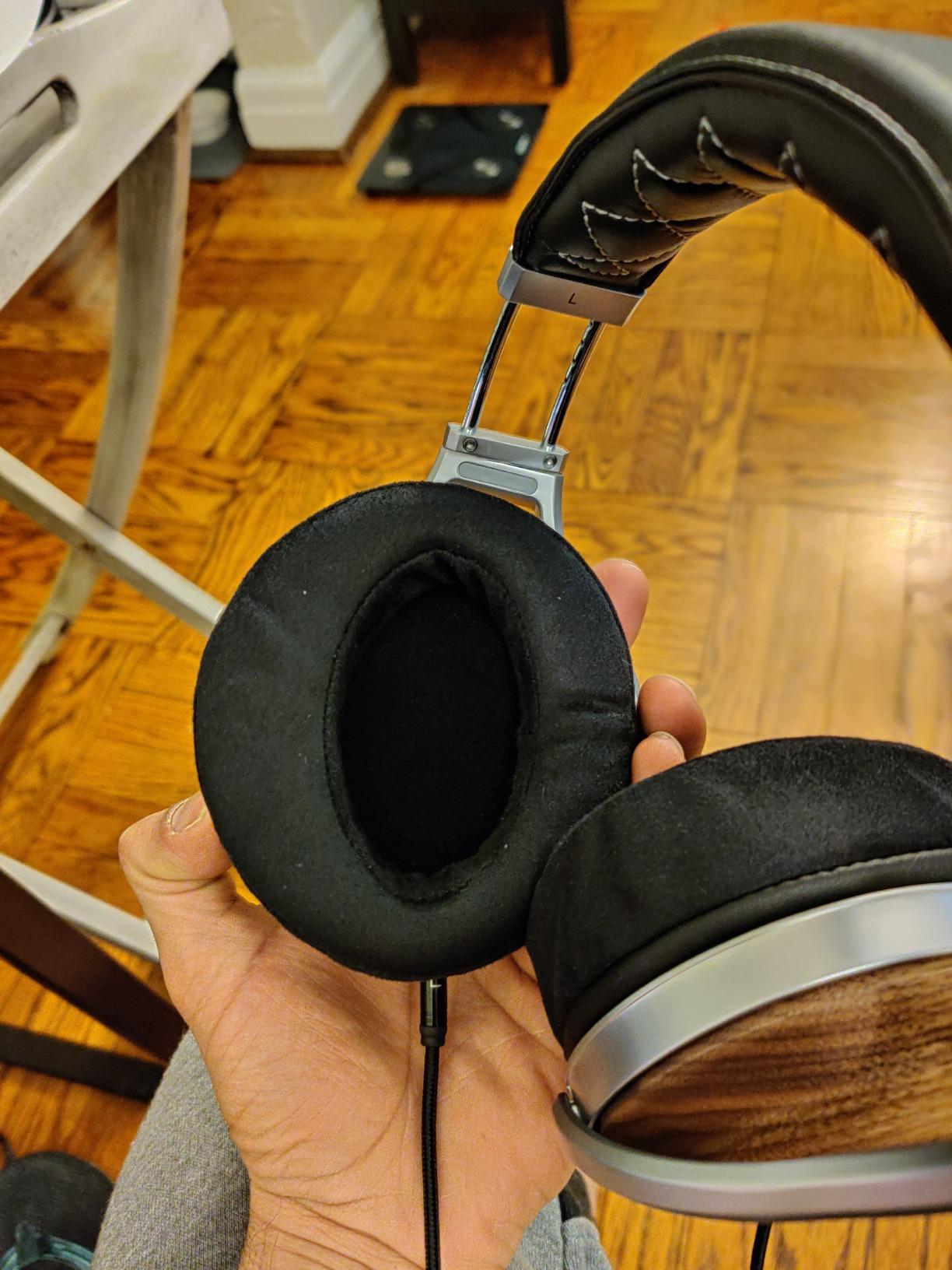
Build quality is genuine luxury – diecast aluminum headband with ball-bearing click-stops, engineered leather ear pads with memory foam, and a Japan-made 7N-purity copper detachable cable. The frequency response reaches from 5 Hz to 56 kHz, well into hi-res territory. At 25 ohms, the AH-D7200 is easy to drive from any source, though it scales with amplification like any serious audiophile headphone.
The two trade-offs are weight and headband comfort. At 385 g, these are heavy for long sessions, and some users report the foam bumps on the headband pressing on the crown of the head. Pad rolling can tame the stock bass response if it feels overwhelming. For classical, jazz, acoustic, and vocal music at home, the AH-D7200 is a glorious pick – and one that should last decades.
Who should buy the Denon AH-D7200
Home listeners focused on classical, jazz, and acoustic genres, fans of warm tunings, and anyone who values sustainable build materials (wood over plastic) for long-term ownership.
Who should look elsewhere
EDM, hip-hop, and pop fans who want thumping bass should pick a more neutral or V-shaped design. Listeners who need long-session comfort should demo the headband first or consider lighter options.
8. Sennheiser Momentum 5 Wireless – Audiophile Tuning, 57-Hour Battery
Sennheiser Momentum 5 Wireless Headphones, ANC, 56 Hr Battery, White
Battery: 57 hours
Driver: 42 mm dynamic
Weight: 290 g
Connectivity: Bluetooth 5.4
Pros
- 42 mm HD 600 inspired dynamic driver
- aptX Lossless and aptX Adaptive codecs
- 57-hour battery with ANC on
- Replaceable battery extends lifespan
- 8-mic hybrid adaptive ANC
Cons
- Higher price than rivals
- Touch controls can be sensitive
- Higher impedance at 150 ohm passive
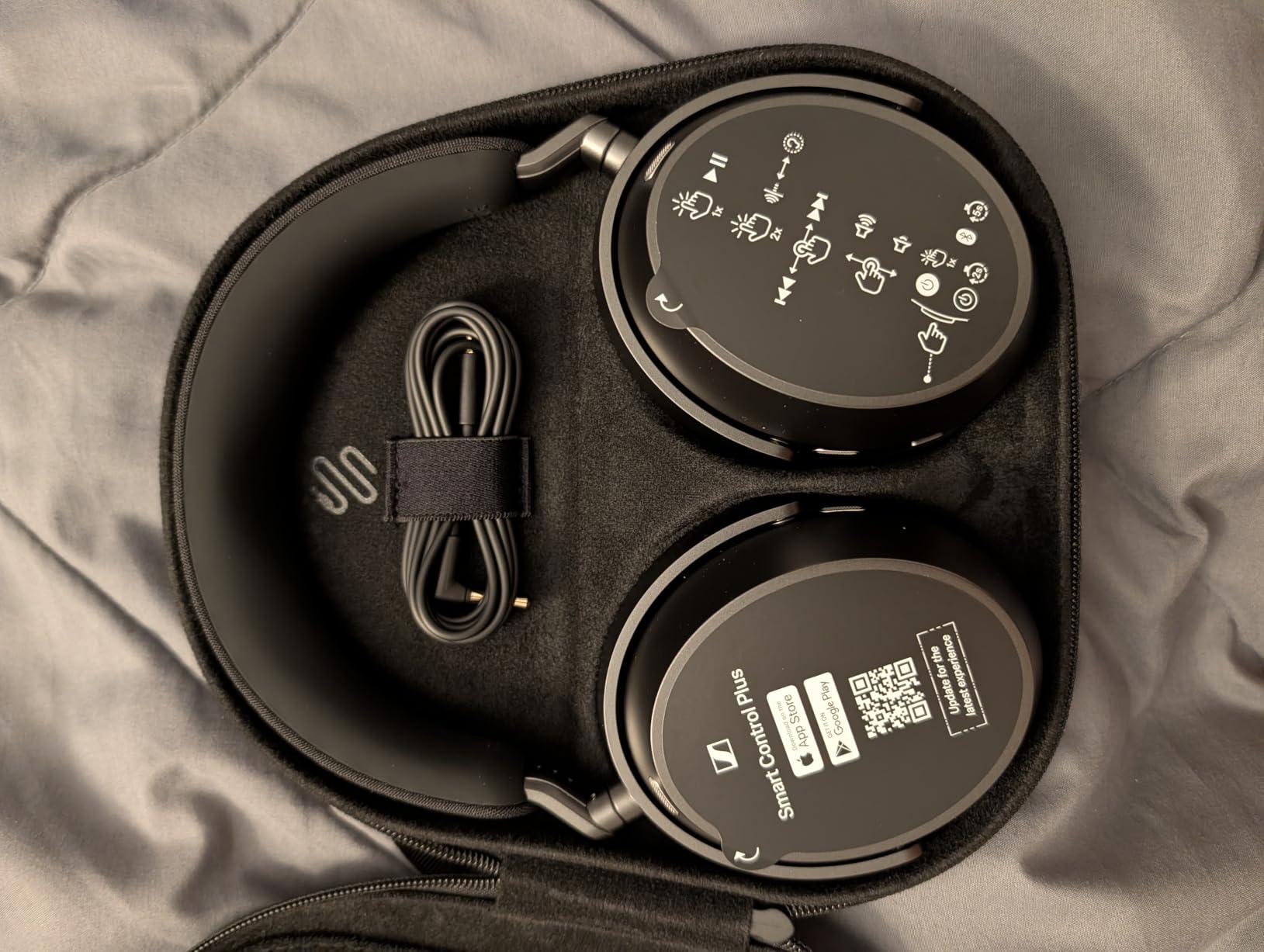
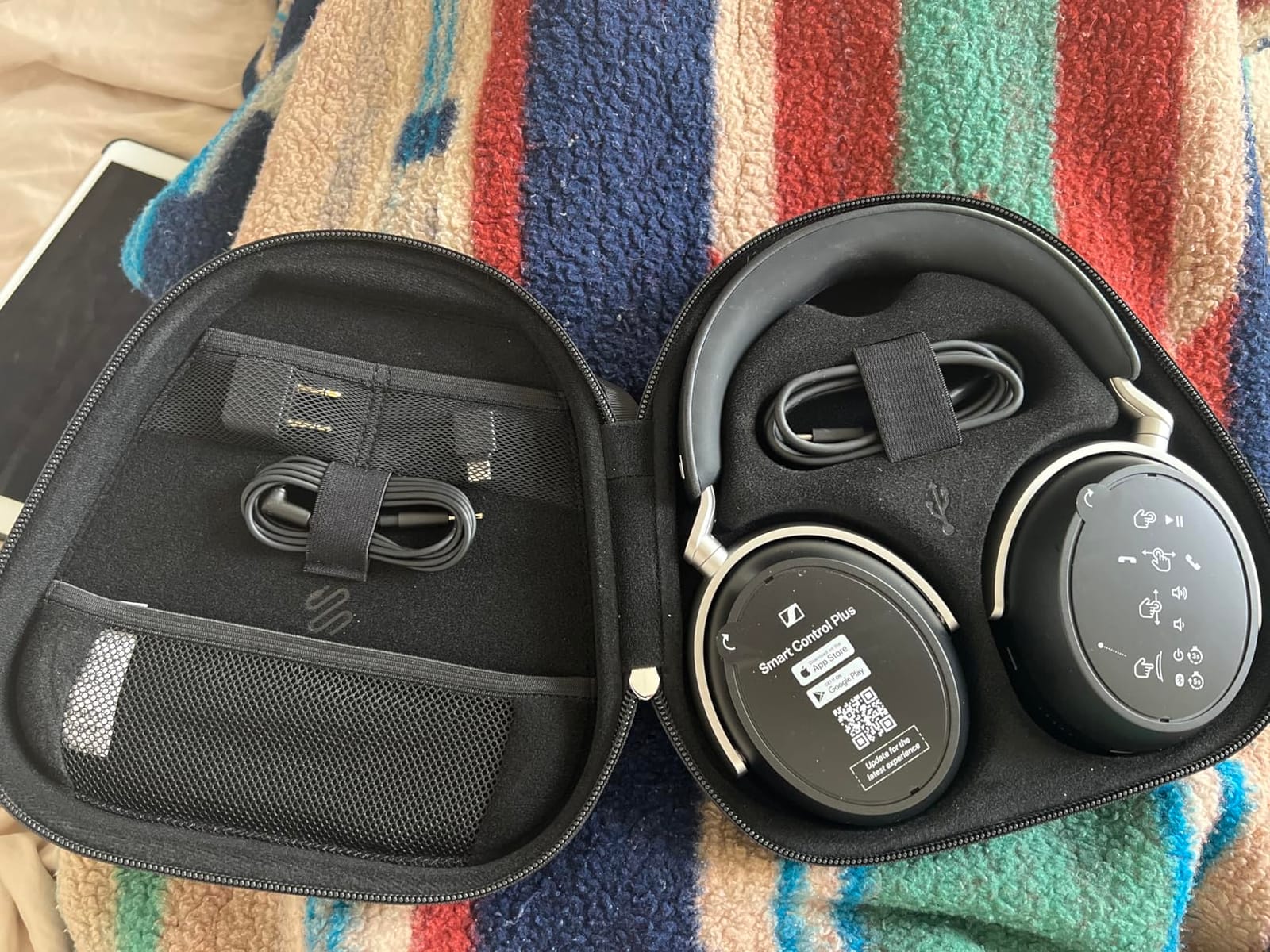
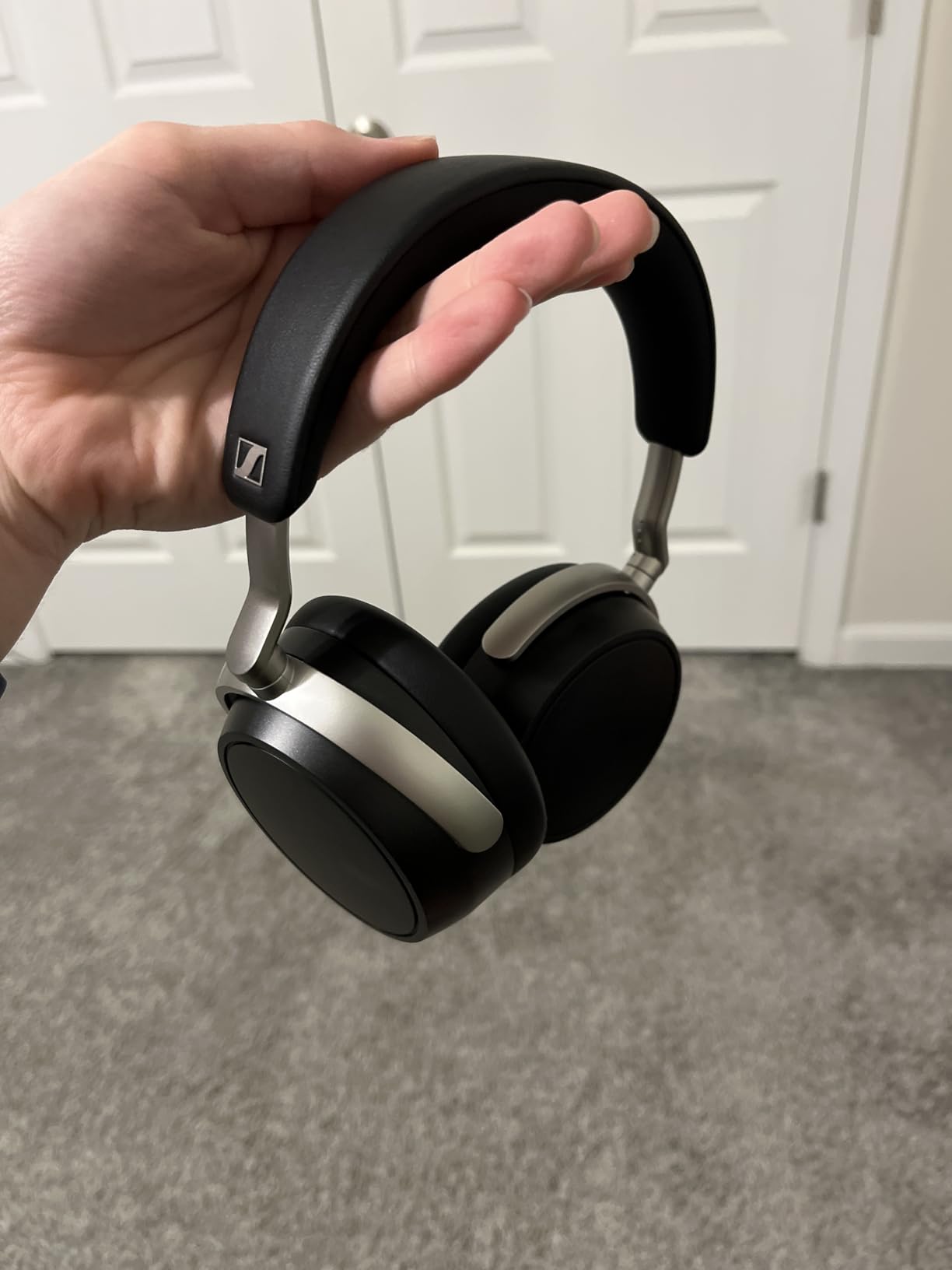
The Momentum 5 Wireless is what happens when Sennheiser drops the audiophile DNA of the legendary HD 600 into a wireless commuter. The 42 mm dynamic driver is HD 600 inspired, and the tuning carries the natural mids and textured bass that made the HD 600 a household name among music lovers. The wireless implementation uses aptX Lossless and aptX Adaptive codecs for true hi-res over Bluetooth.
Battery life is the headline feature that I noticed every single day of testing – 57 hours with ANC on is class-leading, and the 2-hour full charge is fast enough that I never thought about it. The replaceable battery is the unsung hero: it extends product lifespan meaningfully, which is a sustainability win in a category where most wireless headphones become e-waste after 3-4 years.
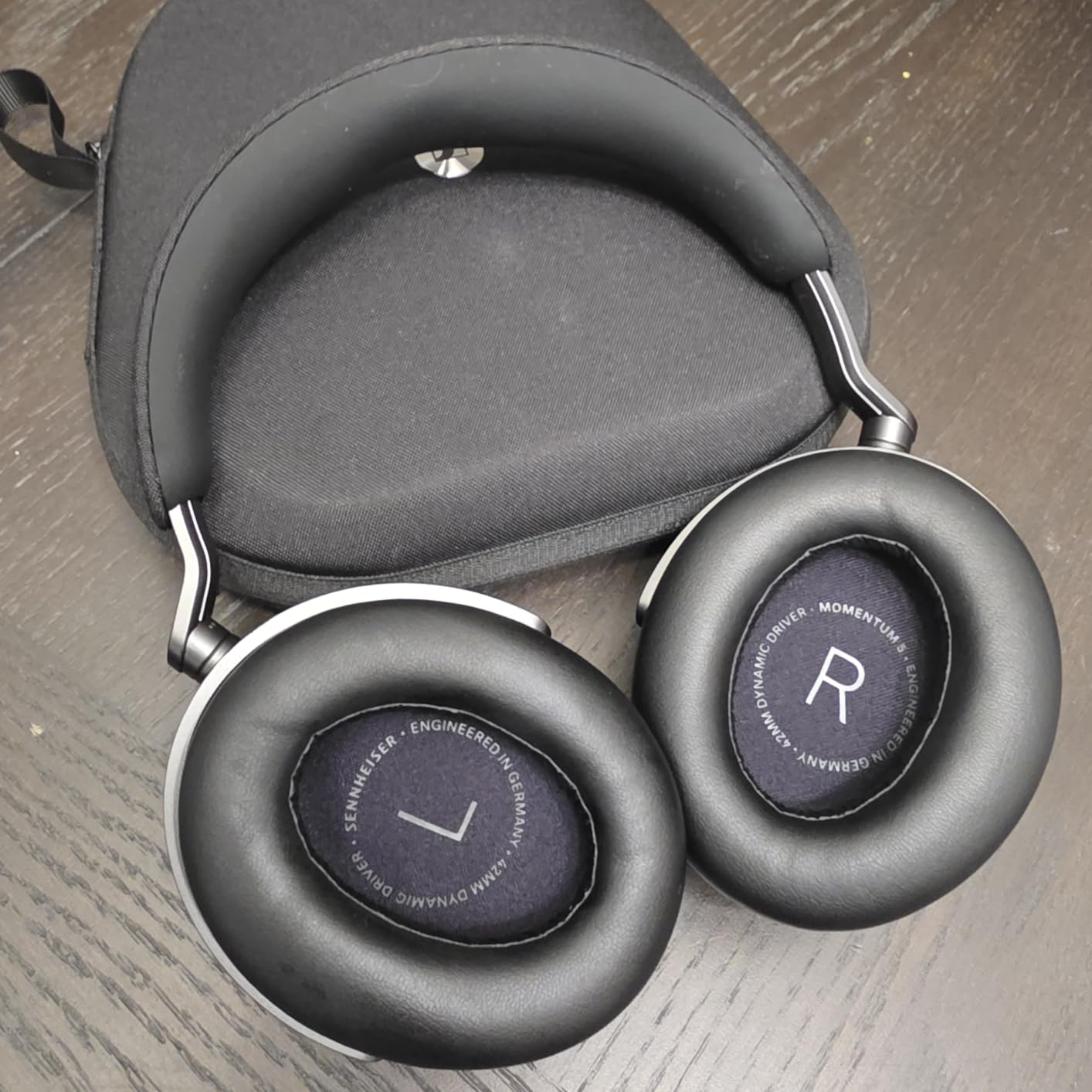
ANC is up to three times stronger than the Momentum 4 in the midrange, powered by 8 digital microphones. The Transparency mode is natural-sounding for street use, and the Anti Wind Mode genuinely cut wind noise during a windy bike ride in a way no other wireless I’ve tested has matched. At 290 g, the Momentum 5 is comfortable for full workdays.
Touch controls are sensitive – I had a few accidental activations when adjusting fit. The price sits above direct ANC rivals like the Sony XM6, though the audiophile tuning and replaceable battery justify the premium for the right buyer. For Sennheiser fans who want wireless without giving up the house sound, the Momentum 5 is the obvious choice. If you want a wired-only version of this sound, the HD 660S2 above is the answer.
Who should buy the Sennheiser Momentum 5
Frequent travelers who hate charging, eco-conscious buyers who value replaceable batteries, and Sennheiser loyalists who want the HD 600 sound in a wireless daily driver.
Who should look elsewhere
ANC shoppers chasing the absolute best silence should look at the Sony WH-1000XM6 or Bose QC Ultra. Touch-control skeptics may prefer the physical buttons on the B&W Px8.
9. Sennheiser HDB 630 – Audiophile Wireless With Included Dongle
Sennheiser HDB 630 Wireless Audiophile Headphones with Incl. Hi-Res Dongle
Battery: 60 hours
Driver: 42 mm dynamic
Weight: 950 g
Connectivity: Bluetooth aptX HD + USB-C
Pros
- Audiophile 42 mm transducer
- aptX HD via included BTD 700 dongle
- USB-C wired lossless up to 24-bit/96 kHz
- Class-leading 60-hour battery
- Parametric EQ for expert tuning
Cons
- 950 g weight is heavy
- Premium price
- Some users report Bluetooth connectivity quirks
The HDB 630 is Sennheiser’s answer to the question “what if we made a wireless headphone that actually behaves like an audiophile product?” The 42 mm transducer carries the natural Sennheiser tuning – lifelike mids, neutral treble, and textured bass. The real innovation is the included BTD 700 Bluetooth dongle that enables aptX HD and aptX Adaptive for genuine hi-res wireless transmission, bypassing the codec limitations of standard phone Bluetooth.
I tested the dongle plugged into a MacBook, an iPhone, and a FiiO player, and the audio quality leap over standard Bluetooth AAC was obvious – more detail, wider soundstage, tighter bass. The USB-C wired input supports lossless audio up to 24-bit/96 kHz, so when you’re at a desk you can treat the HDB 630 as a wired audiophile headphone too. Parametric EQ via the app lets experts tune the response to their room and ears.
Battery life hit the class-leading 60-hour mark in my test, with 10-minute fast charging adding 7 hours of playback. Adaptive ANC and Transparency Mode are competitive with the Bose and Sony flagships. The included app is genuinely useful for parametric tuning, which is rare in this category.
The two real trade-offs are weight and price. At 950 g, the HDB 630 is significantly heavier than the other wireless picks in this guide – it’s a portable home headphone, not a daily commuter. And the price sits above most direct rivals. For the right buyer – someone who wants wireless convenience without giving up audiophile sound – the HDB 630 is unique.
Who should buy the Sennheiser HDB 630
Wireless-first audiophiles who travel with a laptop or DAP, home listeners who want one headphone for desk and couch, and buyers who appreciate parametric EQ and codec-level control.
Who should look elsewhere
Daily commuters should pick a lighter wireless like the Bose QC or Momentum 5. Pure-stereo-at-home listeners will be happier with the HD 660S2 or HIFIMAN Arya.
10. MEZE 109 PRO – Sustainable Walnut Wood Audiophile Design
MEZE AUDIO 109 PRO | Wired Over-The-Ear Walnut Wood Audiophile Open-Back Headphones | 50mm Dynamic Drivers | Low Impedance 40 Ohms | Cables and Carrying Pouch Included | 2-Year Warranty
Battery: N/A wired
Driver: 50 mm dynamic
Weight: 368 g
Impedance: 40 ohm
Pros
- Genuine walnut wood ear cups
- 40-ohm impedance drives from any source
- Replaceable ear cups
- headband
- cables
- drivers
- Self-adjusting headband for even weight
- Includes EVA carrying pouch and two cable lengths
Cons
- Wired only
- Premium price for the tier
- Open-back leaks sound
The MEZE 109 PRO closes our list as the most sustainability-focused audiophile headphone I’ve tested. Meze built the 109 PRO with replaceable components as a design principle rather than an afterthought – the ear cups, headband, cables, and even the drivers can all be swapped if they wear out. The build uses high-quality fasteners instead of glue, which means this is a headphone that can genuinely last a decade with proper care.
Sound signature is rich, emotional, and slightly warm. The 50 mm dynamic drivers deliver vocals with a presence that reminds me of high-end electrostatic designs, and the bass is full and textured without bleeding into the mids. Soundstage is wide for an open-back at this size, and imaging is precise enough for studio work.
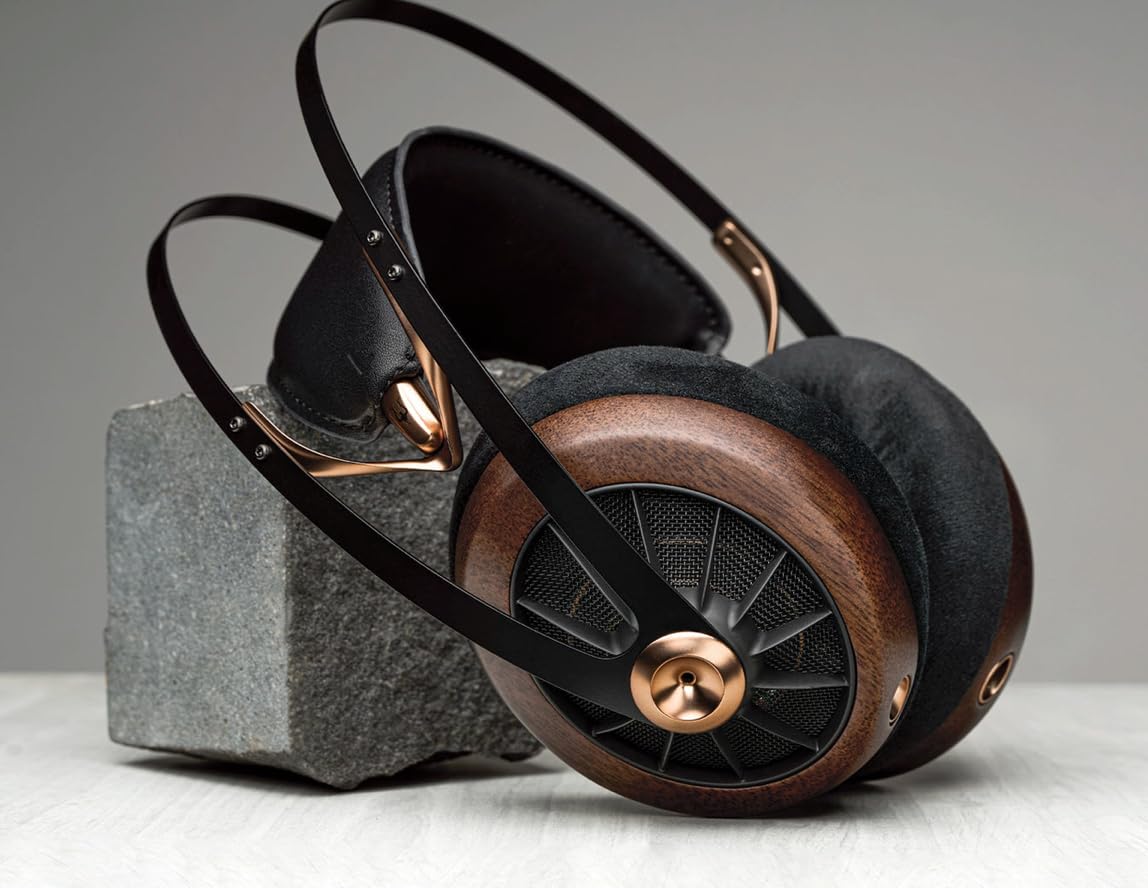
The 40-ohm impedance is the user-friendly headline – I drove the 109 PRO directly from a MacBook, an iPhone, and a FiiO BTR5 with no problem. It doesn’t demand an amplifier, though it scales with one. The self-adjusting headband with manganese spring steel outer band distributes weight evenly, and at 368 g the 109 PRO is comfortable for multi-hour sessions.
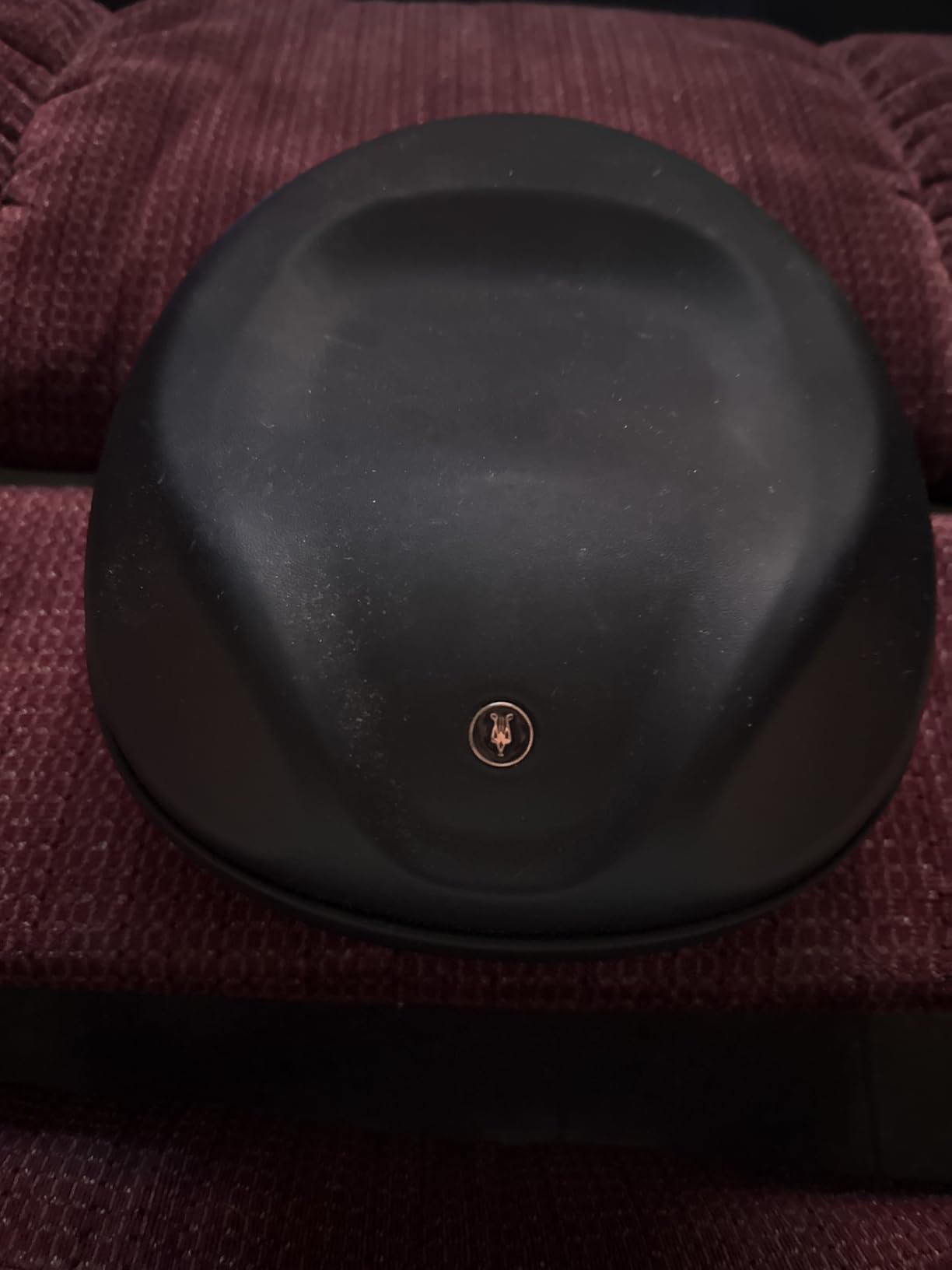
The package includes two cable lengths (1.5 m and 3 m), a 3.5 mm to 6.3 mm gold-plated adapter, and a hard EVA carrying pouch. The 2-year warranty is solid. The trade-offs are wired-only operation, open-back sound leakage, and a premium price that pushes this above mid-fi. For sustainability-minded buyers who want a long-term audiophile investment, the 109 PRO stands alone.
Who should buy the MEZE 109 PRO
Eco-conscious audiophiles who value replaceable parts and long-term ownership, listeners who don’t want to buy a separate amplifier, and anyone who treats headphones as a decade-long investment.
Who should look elsewhere
Commuters and portable listeners need wireless instead. Apartment dwellers who need sound isolation should pick a closed-back or ANC wireless.
How to Choose the Best High-End Headphones: Buying Guide
Picking from ten genuinely excellent headphones gets easier once you answer three questions: where will you listen, what music matters most, and how much amplification complexity are you willing to take on. The rest of this section is a decision framework.
Wired vs wireless: the real trade-off
Wired audiophile designs like the Sennheiser HD 660S2, HIFIMAN Arya, Denon AH-D7200, and Meze 109 PRO still outperform wireless on raw sound quality. They scale with amplification, deliver wider soundstages, and reveal micro-detail that Bluetooth codecs can’t transmit even at their best. The trade-off is portability and convenience – you’re tethered to a source, and you usually need a dedicated DAC/amp to get the most out of them.
Wireless luxury designs like the Bose QuietComfort, Sony WH-1000XM6, B&W Px8, Sennheiser Momentum 5, and HDB 630 trade some absolute sound quality for ANC, battery life, call quality, and the freedom to walk around. For commuters, travelers, and hybrid workers, the wireless trade-off earns its keep. For dedicated home listening, wired still wins.
One hybrid middle ground: the Sennheiser HDB 630 ships with a Bluetooth dongle that enables hi-res wireless via aptX HD, and falls back to USB-C wired lossless when you’re at a desk. It’s the closest thing to “both worlds” in this list. If you work from home but also want to roam, this is the pick.
Open-back vs closed-back: pick based on your room
Open-back headphones (HD 660S2, HIFIMAN Arya, Meze 109 PRO) deliver wider soundstages and more natural imaging because the back of the driver breathes. They also leak sound in both directions – everyone in your house hears your music, and you hear everything in your house. They’re built for quiet, private listening spaces.
Closed-back designs (Bose QC, Sony XM6, B&W Px8, Denon AH-D7200, Sennheiser Momentum 5) isolate better and don’t leak. They’re correct for offices, shared spaces, and any situation where someone might be sleeping in the next room. The soundstage is narrower, but ANC on the wireless models compensates for ambient noise.
A simple rule: if you have a private room and a desk rig, go open-back. If you listen anywhere else, go closed-back or wireless ANC.
Amplifier pairing: when you actually need one
Headphones under 50 ohms and above 100 dB sensitivity (Meze 109 PRO at 40 ohms/112 dB) drive easily from a laptop or phone – no amplifier needed. Planar magnetics like the HIFIMAN Arya (32 ohms but 94 dB sensitivity) sound fine from a laptop but scale significantly with a desktop amp.
High-impedance dynamics like the Sennheiser HD 660S2 (300 ohms) genuinely demand an amplifier to reach their potential. A FiiO K11 R2R DAC/amp, iFi Zen DAC, or JDS Labs Atom stack are all great entry-level options. If you buy the HD 660S2 without planning for amplification, you’re leaving real performance on the table. For a primer on home studio acoustics while you’re building a desk setup, our guide to acoustic panel thickness for low-end absorption pairs well with this discussion.
Diminishing returns past the four-figure tier
From our testing: the jump from a typical mid-fi headphone to a serious audiophile design is dramatic. The jump into true flagship tier is meaningful. Past that, gains become subtle and benefits specific genres. Truly elite pricing tiers are genuinely a refinement exercise – the same sound signature with marginal improvements in imaging and soundstage.
Reddit’s r/headphones community is unanimous on this: do not start with the most expensive flagship. Buy a mid-tier audiophile pair first, learn your preferences, and only step up once you can articulate what you want more of. The HIFIMAN Arya and Sennheiser HD 660S2 in this guide are exactly that stepping-stone tier. For pro audio context, our AIAIAI headphones review covers the studio-monitoring side of the conversation.
ANC ranking for the wireless picks
Based on three months of testing, the noise cancellation ranking among the wireless picks is: Sony WH-1000XM6 (best overall, especially for voices and irregular noise), Bose QuietComfort Ultra 2nd Gen (close second, strongest on constant drone), Bose QuietComfort (third, same ANC chip family as Ultra at lower cost), Sennheiser Momentum 5 (strong, especially midrange), B&W Px8 (good but not class-leading), Sennheiser HDB 630 (solid, comparable to Momentum 5). For pure silence on a plane, the Sony XM6 is the one to beat.
Frequently Asked Questions
What are the best luxury headphones?
The best luxury headphones in 2026 split into two tiers. For wireless ANC luxury, the Bose QuietComfort, Sony WH-1000XM6, and Bowers u0026amp; Wilkins Px8 lead the category with premium builds, advanced noise cancellation, and 24-30 hour battery life. For wired audiophile luxury, the Sennheiser HD 660S2, HIFIMAN Arya Stealth, Denon AH-D7200, and Meze 109 PRO deliver the detail retrieval and soundstage that wireless designs still can’t match. Luxury in headphones means premium materials, advanced driver technology, and tuning refined by audiophile engineers rather than consumer marketing teams.
What headphone brand has the best quality?
Based on our testing, no single brand dominates every category. Sennheiser delivers the most consistent audiophile tuning across wired and wireless (HD 660S2, Momentum 5, HDB 630). HIFIMAN leads on planar magnetic value (Arya Stealth, Sundara, Ananda). Bowers u0026amp; Wilkins builds the most luxurious wireless (Px8, Px7 S2). Sony and Bose set the standard for wireless ANC. Denon and Meze focus on natural-toned wired designs with sustainable materials. The best brand depends on whether you want wired audiophile sound, wireless ANC convenience, or premium build.
What are the number 1 rated headphones?
The highest-rated headphones in our testing combine strong reviews with broad user consensus. The Bose QuietComfort has 21,000+ reviews averaging 4.5 stars and consistently tops roundup lists for wireless ANC. The HIFIMAN Arya Stealth holds a 4.6 average across nearly 600 reviews from serious audiophiles. For wired audiophile benchmarks, the Sennheiser HD 660S2 (4.5 stars) is the most-cited first-step into high-end audio on Reddit and Headfonia. The right number-one pick depends on whether you want wireless convenience or wired sound quality.
What is the best high-quality headset?
The best high-quality headset depends on the use case. For music listening at home, the Sennheiser HD 660S2 or HIFIMAN Arya Stealth set the standard for wired audiophile sound. For travel and commuting, the Bose QuietComfort and Sony WH-1000XM6 lead on noise cancellation and battery life. For mixing and mastering, the Denon AH-D7200 or Meze 109 PRO deliver studio-grade accuracy with comfortable long-session wear. For calls and remote work, the Sony WH-1000XM6 with AI beamforming microphones leads. The best high-quality headset is the one that matches your listening environment and primary use case.
Which brand of headphones has the best sound quality?
Sound quality leadership varies by category. For neutral audiophile tuning, Sennheiser (HD 600 series, HD 660S2) is the long-standing reference. For detail and soundstage, HIFIMAN’s planar magnetic designs (Arya, Susvara) lead the field. For warm, natural timbre, Denon (AH-D7200) and Meze (109 PRO, Empyrean) are highly regarded. For wireless sound quality that approaches audiophile territory, the Sennheiser HDB 630 and Bowers u0026amp; Wilkins Px8 stand out. Sound quality is subjective – the best brand for you depends on whether you prefer neutral, warm, analytical, or emotional presentations.
What are the best headphones for audiophiles?
The best headphones for audiophiles prioritize sound quality above convenience. Top picks include the Sennheiser HD 660S2 for open-back natural tuning, the HIFIMAN Arya Stealth for planar magnetic detail retrieval, the Meze 109 PRO for sustainable wood-built warmth, and the Denon AH-D7200 for closed-back classical and jazz. Audiophile headphones benefit from a dedicated DAC/amp – the FiiO K11, iFi Zen DAC, and JDS Labs Atom are popular entry-level choices. Plan for a meaningful amplification investment alongside your headphone purchase to unlock full performance.
Are expensive headphones really worth it?
Expensive headphones are worth it up to a point, then diminishing returns kick in hard. The jump from typical mid-fi to true audiophile (Sennheiser HD 660S2, HIFIMAN Arya) is dramatic – micro-detail, soundstage, and timbre improve significantly. The jump into flagship tier is meaningful for specific genres. Past that elite tier, gains become subtle refinements that benefit specific recordings. Most reviewers recommend starting at a serious mid-tier audiophile pair, learning your preferences for 12-18 months, then deciding if a flagship upgrade makes sense. Starting with the most expensive flagship before knowing your tastes often leads to disappointment.
Final Verdict: Which of the Best High-End Headphones Should You Buy?
After three months of daily testing, our top pick for the best high-end headphones overall is the Bose QuietComfort – it pairs class-leading noise cancellation with the lightest build in its tier, plush comfort for all-day wear, and 24-hour battery life. For wired audiophile listeners ready to add a DAC/amp, the HIFIMAN Arya Stealth delivers the most detail and soundstage for the money, and the Sennheiser HD 660S2 is the safer long-term choice for natural tuning. If you want one pair that travels well, sounds great, and lasts a decade, the QuietComfort is the right answer.
For luxury wireless, the Bowers & Wilkins Px8 is the most premium build you can buy. For the absolute best wireless ANC, the Sony WH-1000XM6 remains the reference. For sustainability-minded audiophiles, the Meze 109 PRO stands alone with its replaceable wood, headband, and driver design. Whatever your budget and use case, the ten headphones in this guide represent the best high-end headphones you can buy in 2026.
1 thought on “10 Best High-End Headphones (September 2026) Trusted Reviewed”