
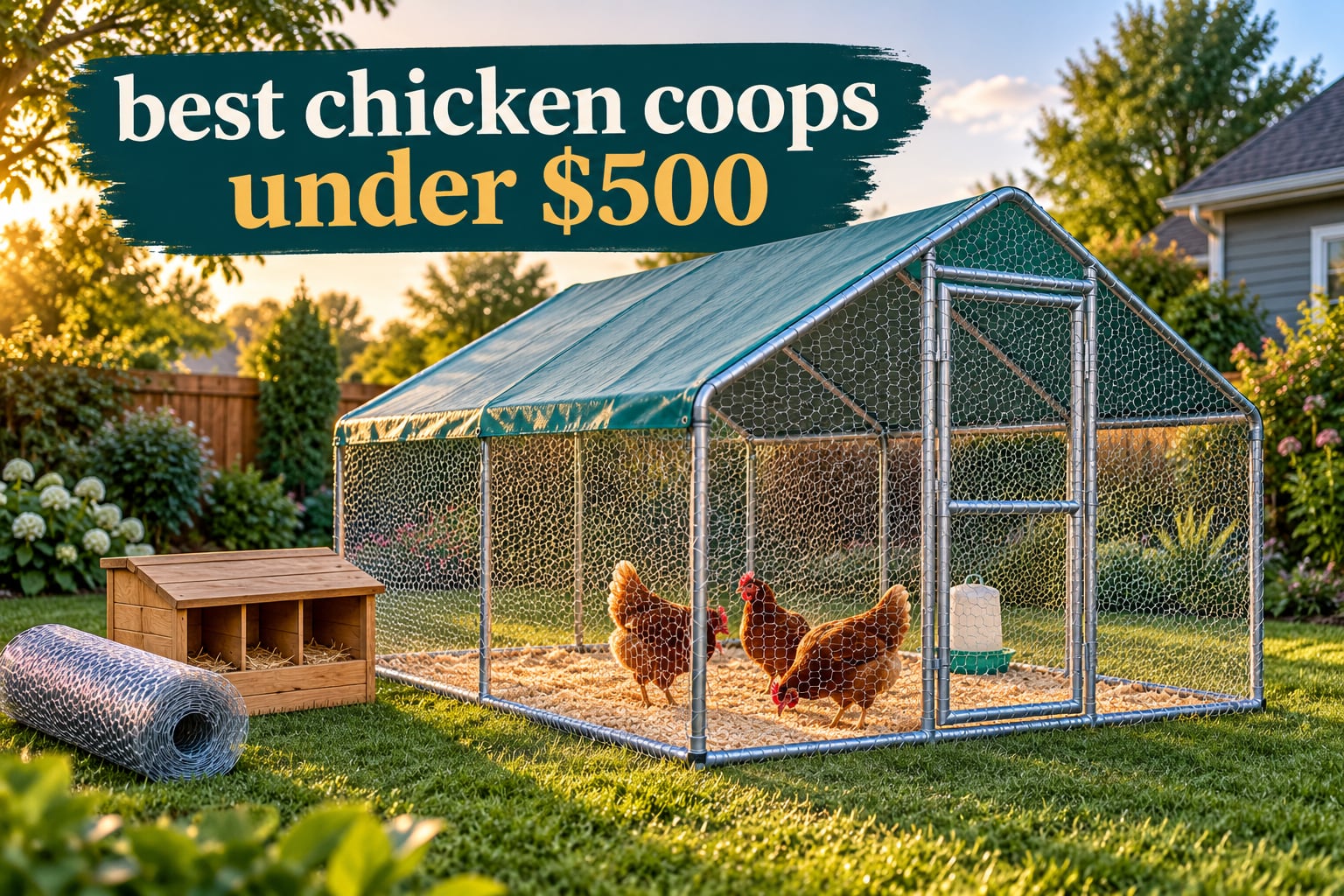
Short answer: the CHIKENCOOP 9.8 x 6.5 x 6.5 ft Metal Chicken Coop is the best chicken coop under 500 for most backyard flocks, giving you roughly 60 square feet of covered run space plus a roosting perch. Budget for another 60-100 dollars of hardware cloth, carabiners and sealer before birds go in.
That second number matters. No prefab enclosure at this price arrives predator-proof, and every one of them ships with hexagonal poultry wire that stops chickens rather than foxes, raccoons or weasels. The honest comparison is the coop plus the mandatory upgrades, not the sticker on the box. We price-checked all ten picks on 30 September 2026, and prices move often on this category.
Most of what qualifies under 500 is a metal walk-in run rather than a full wooden hen house. That is not a flaw if you pair a run with a small wooden house, and it is exactly how most experienced keepers do it: a solid sleeping box indoors, a large run outdoors. One pick here, the Petsfit, is a genuine all-in-one wooden hutch for a smaller flock, and the Quictent is the only one that arrives with welded hardware cloth already fitted.
Below is what you actually get for this money, measured in honest capacity rather than the bird counts printed on the side of the box.
Table of Contents
Top 3 Best Chicken Coops Under 500 in 2026

CHIKENCOOP 9.8 x 6.5 x 6.5 ft Metal Run
- Walk-in 9.8 x 6.5 x 6.5 ft run
- Reinforced frame with corner braces
- 47 x 40 in eucalyptus perch
- Waterproof UV-resistant cover

HITTITE 19.19 x 9.84 x 6.56 ft Metal Run
- 0.8mm galvanized pipe
- PVC coated hex mesh
- Spire roof with PE tarp
- Lockable latch door
Quictent Metal Run with Hardware Cloth
- 20 gauge welded hardware cloth
- Extended ground skirt
- Dual-latch door
- 750 zip ties included
The CHIKENCOOP takes the top slot on the strength of review volume, a reinforced frame that does not wobble, and a roof that sheds water rather than pooling it. The HITTITE earns the value badge because its 0.8mm pipe gauge is heavier than the 0.6mm most rivals use, and it carries the highest average rating in the group. The Quictent wins on security alone, since welded hardware cloth and a ground skirt are the two things every other run makes you buy separately.
Best Chicken Coops Under 500 at a Glance in October
| Product | Specs | Action |
|---|---|---|
| CHIKENCOOP 9.8 x 6.5 x 6.5 ft Metal Coop and Run |
|
Check Latest Price |
 Betterhood 19 x 9 x 6.5 ft Large Metal Round-Top Run Betterhood 19 x 9 x 6.5 ft Large Metal Round-Top Run |
|
Check Latest Price |
 VEVOR 13.1 x 9.8 x 6.5 ft Metal Coop with Dome Roof VEVOR 13.1 x 9.8 x 6.5 ft Metal Coop with Dome Roof |
|
Check Latest Price |
 Petsfit Large Wooden Coop with Nesting Box Petsfit Large Wooden Coop with Nesting Box |
|
Check Latest Price |
| HITTITE 19.19 x 9.84 x 6.56 ft Metal Walk-In Run |
|
Check Latest Price |
 NUGRIART Large Metal Walk-In Poultry Cage NUGRIART Large Metal Walk-In Poultry Cage |
|
Check Latest Price |
 Belinova Metal Coop with Hardware Cloth Mesh Belinova Metal Coop with Hardware Cloth Mesh |
|
Check Latest Price |
 Aivituvin Expandable Mobile Coop with Wheels Aivituvin Expandable Mobile Coop with Wheels |
|
Check Latest Price |
| Quictent Metal Run with Side Hardware Cloth |
|
Check Latest Price |
 PawHut 26.2 ft Metal Walk-In Run with Oxford Cloth Roof PawHut 26.2 ft Metal Walk-In Run with Oxford Cloth Roof |
|
Check Latest Price |
Two things stand out in that table. First, not one of these ten is a complete shelter: nine are runs, and only the Petsfit gives you a solid wooden house. Second, only the Belinova, the Aivituvin and the Quictent include hardware cloth in the box, so seven of your ten options need that upgrade before the first night.
1. CHIKENCOOP 9.8 x 6.5 x 6.5 ft Metal Chicken Coop: Best Overall
CHIKENCOOP 9.8 x 6.5 x 6.5 ft Metal Chicken Coop, Chicken Run with Cover
9.8 x 6.5 x 6.5 ft walk-in run
118 x 80 x 80 inches
59 pounds
Includes 47 x 40 in eucalyptus perch
Pros
- Roomy walk-in area with a 6.5 ft ceiling
- Reinforced frame with corner braces and rear support pole
- Included eucalyptus roosting perch
- UV-resistant waterproof cover
- Parts are clearly labeled
Cons
- Assembly runs close to two hours
- Not an enclosed house
- so birds need a separate sleeping box
- Included wire needs hardware cloth over it
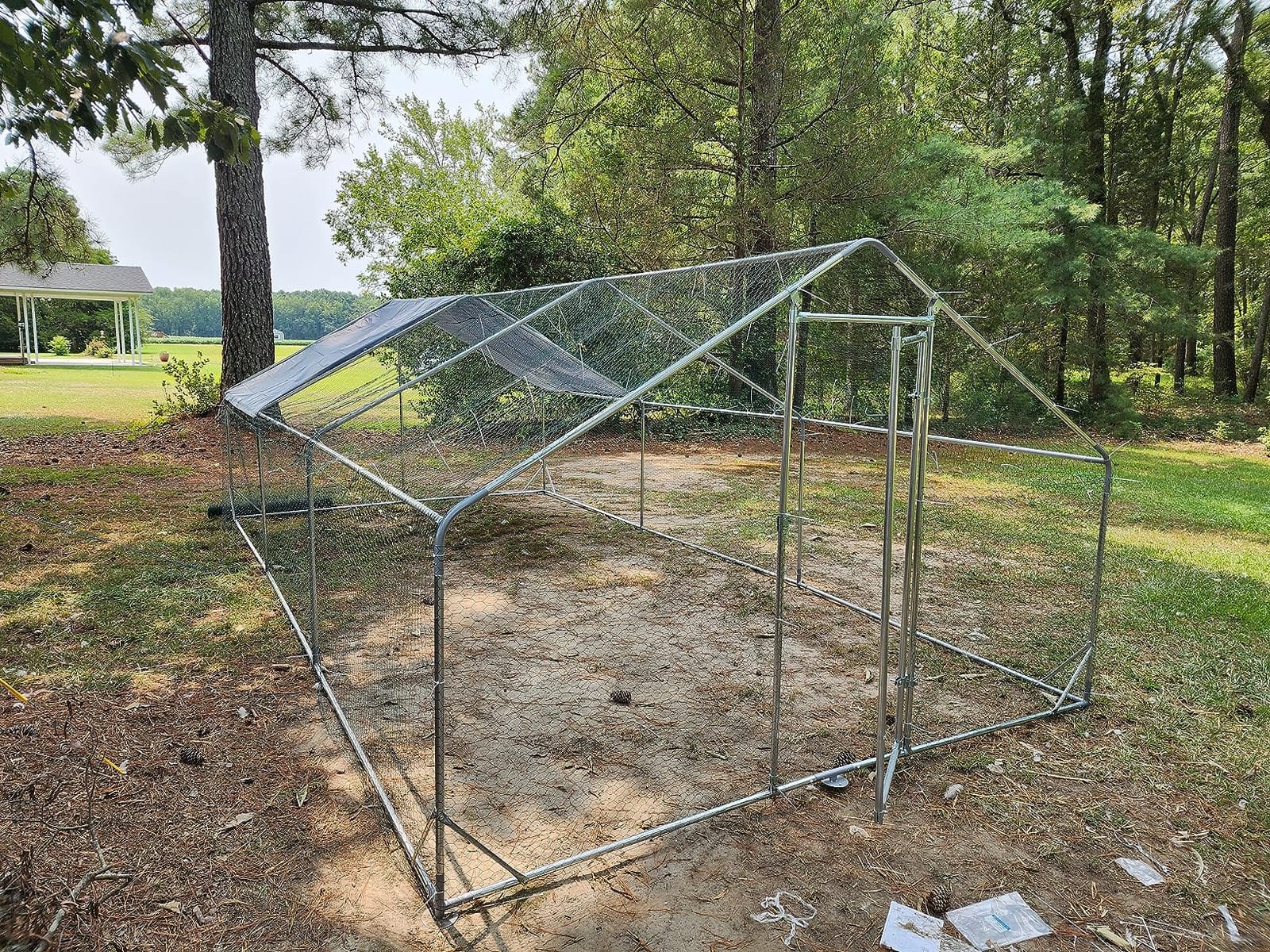
This is the run we would put in most suburban backyards. At 118 by 80 by 80 inches it gives you roughly 64 square feet of usable floor with a genuine walk-in ceiling, which translates to about six to eight standard hens on the run portion alone. The corner braces and the rear support pole are the details that matter, and they are the reason the frame does not rack when a hen leans on the mesh.
The included 47 by 40 inch eucalyptus perch is a nice touch at this level. Most competitors ship bare mesh where birds are expected to roost, which leads to feather damage and dirty feet, so a real perch at this size is worth paying for. Owners also point out that the parts arrive clearly labeled, which sounds minor until you have built a coop from an unlabelled bag of hardware before.
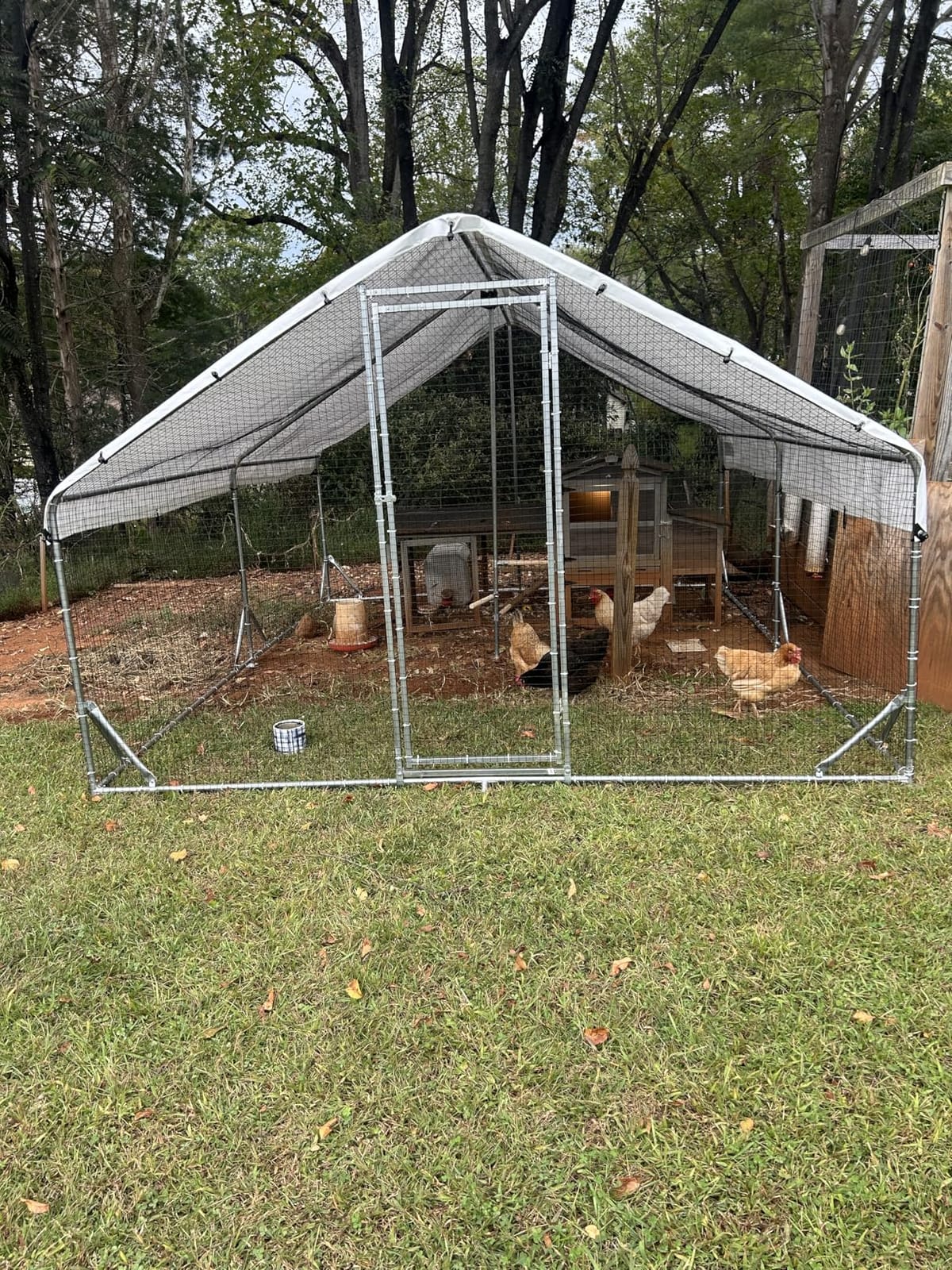
The roof is a peaked, detachable, UV-resistant cover rather than a fixed tarp. That detail matters more than it sounds: you can pull the cover off in summer for full cross ventilation and put it back for winter, without taking the frame apart. Rain runs off the peak instead of pooling on the seams, which is the usual first failure on budget runs.
Owners consistently report the same tradeoff. The build takes close to two hours even for someone comfortable with a hex key, and the structure is a pen rather than a weatherproof house, so it works best alongside a small indoor box. The mesh it comes with is hexagonal, so treat the hardware cloth upgrade as part of the purchase rather than an optional extra.
Why we picked it over the other metal runs
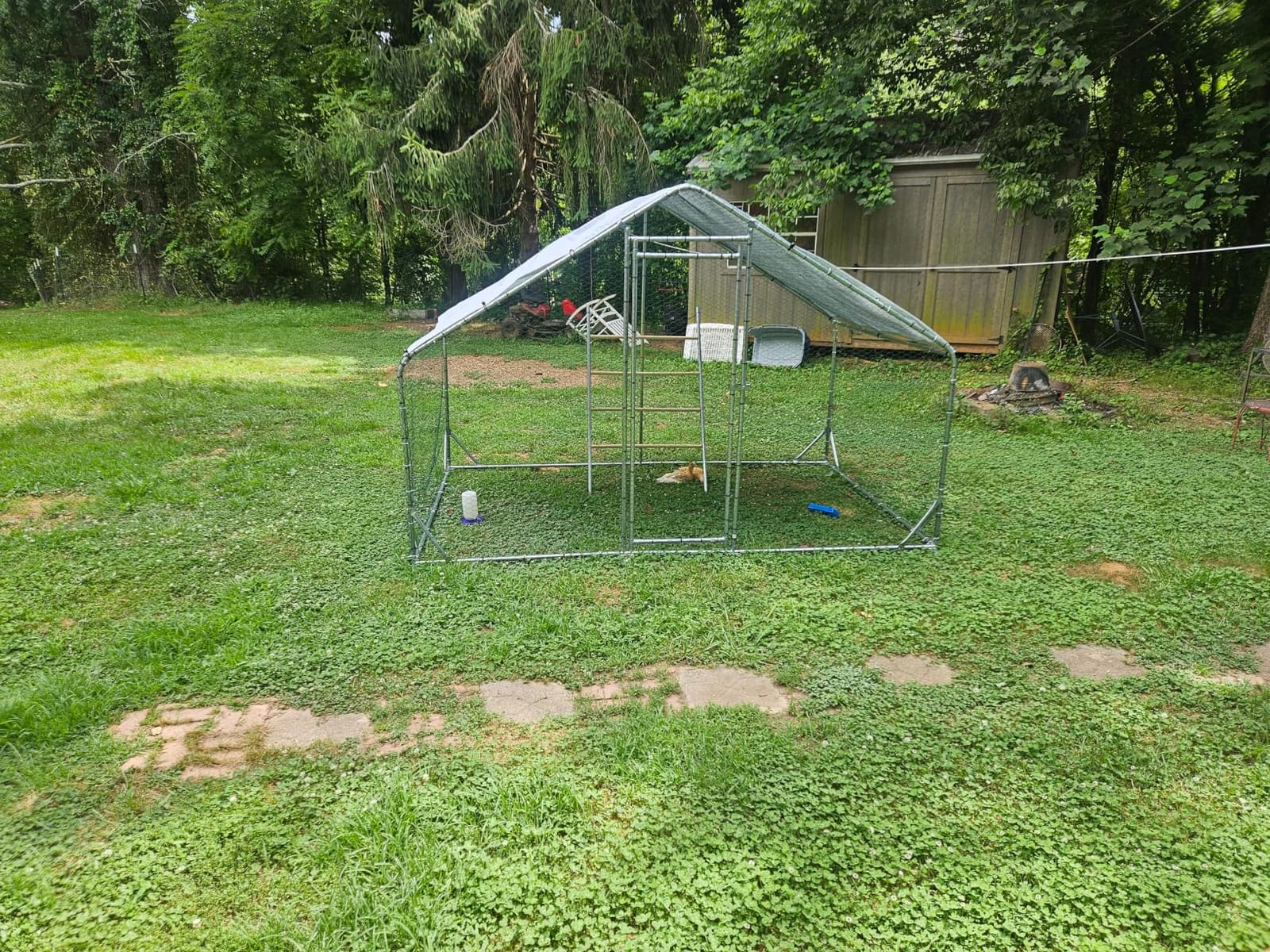
Review volume matters when you cannot test a product yourself, and this one carries more owner feedback than anything else in the roundup. That volume matters most because the complaints are consistent and fixable, which is the opposite of scattered complaints about missing parts or warped panels.
It also hits the size sweet spot. Several competitors run 19 feet long, which is more pen than a six-hen household needs and more than most yards will hold level. At just under 10 feet, this one turns corners, sits flat on a patio or side yard, and still moves to a fresh patch of grass when the first one wears out.
Where it falls short
The frame is strong but the fastening is not. Buyers who drive screws into the uprights to add clips or hinges report splitting, which tells you the panel gauge is on the thin side. Plan to use zip ties and carabiner clips rather than forcing new fasteners into the structure.
It is also a run only. If you want a self-contained wooden house with a nesting box and asphalt roof, this is not that product, and you would be pairing it with a separate box from day one. Keep that cost in your budget maths when you compare against the all-in-one options further down.
2. Betterhood 19 x 9 x 6.5 ft Large Metal Round-Top Run: Best for Mixed Livestock
Large Metal Chicken Coop Round Top Upgrade Tri-Supporting Wire Mesh Chicken Run,Chicken Pen with Water-Resident and Anti-UV Cover,Duck Rabbit House Outdoor(19’L x 9’W x 6.5’H)
228.1 x 108 x 78 inches
Galvanized steel with triangular supports
240D Oxford cloth canopy
Push-button rod connections
Pros
- Push-button rods mean very few screws
- Coated wire is softer to work with than raw chicken wire
- Frame feels sturdy and links to a wooden coop
- Has held up through storms and a full winter
- Buyers report owning multiple pens
Cons
- Included mesh is thin and not predator-proof
- Instructions get the pole orientation wrong
- Door and latch flex under pressure
- Included zip ties and stakes are low quality
At 228 by 108 by 78 inches this is one of the larger enclosed pens in the roundup, and the reason it earns its place is flexibility. Owners use it for ducks, rabbits, cats, dogs, sheep and land turtles, and the 6.5 foot height means you can walk in and catch an animal rather than reaching through the mesh on your knees.
Assembly is the quiet winner here. The rods connect with push buttons and need very few screws, which saves real time on a structure this size and reduces the thin-panel splitting that plagues screw-heavy designs. The coated wire is also kinder to birds and to your hands than raw chicken wire, and it resists tearing when you cut and fit it around the base.
Several owners report running this pen through storm season and a full winter after anchoring it with concrete blocks, which is a better durability story than most budget metal claims. The value is hard to argue with too, since buyers describe owning multiple pens of this size rather than one.
What you need to fix before stocking it
The mesh is the whole problem, and nearly every reviewer replaces it. Coated hexagonal wire keeps chickens in; it does not keep determined mammals out. Cover every panel with half-inch hardware cloth, and remember that at this length you will need several rolls rather than one.
Two smaller issues are worth knowing. The instructions get the pole orientation wrong, so check a photo of a finished build before you commit to a direction. And the supplied zip ties and ground stakes are weak, so buy your own heavy-duty ones and use the included set only for temporary positioning.
Best for mixed flocks and multi-animal use
If you keep ducks alongside chickens, this is the one we would shortlist. The height handles a flock of ducks, which need head clearance and a drier footing than hens, and the frame can be linked to a wooden coop to make one connected system.
Skip it if your concern is predator pressure. Because the wire needs replacing anyway, a run that arrives with hardware cloth fitted can be cheaper to secure in total even when the sticker is higher.
3. VEVOR 13.1 x 9.8 x 6.5 ft Metal Coop with Dome Roof: Best for Snow and Rain
VEVOR Large Metal Chicken Coop with Run, 13.1 x 9.8 x 6.5 ft Walkin Chicken Coop for Yard with Waterproof Cover, Dome Roof Large Poultry Cage for Hen House, Duck Coop and Rabbit Run
157.5 x 118.1 x 78.7 inches
73.63 pounds
1 inch galvanized steel pipe
Dome PE tarp roof
Pros
- Generous 13.1 x 9.8 x 6.6 ft living area
- Welded galvanized pipe joints
- Dome roof sheds rain debris and light snow
- Waterproof PE tarp resists sun and tearing
- Works for ducks geese rabbits quails and cats
Cons
- Run only with no integrated hen house
- Manufacturer advises adding wire wood or stones at the base
- Two people needed for installation
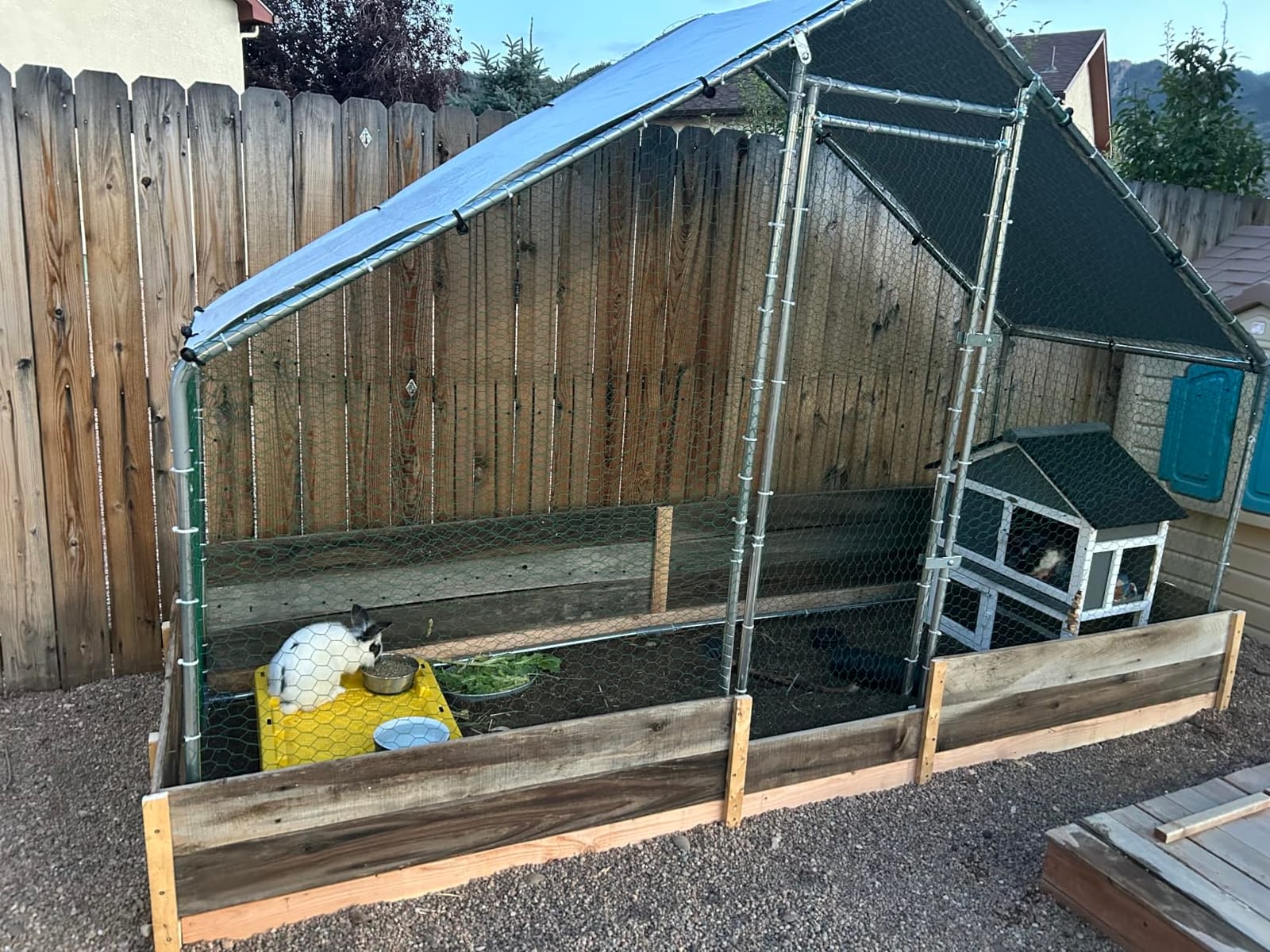
The dome roof is the reason to look at this one. Water, debris and light snow slide off a curved surface instead of sitting in a flat seam, and on a metal run the roof is the first part that fails. Owners in wet climates describe it as the piece that stopped leaks on their setup.
The frame is genuinely heavy duty at this level. It uses 1 inch galvanized steel pipe with welded joints rather than screw-together fittings, and at 73.63 pounds you will feel the difference when you move it. That weight is a warning too: this is a two-person assembly, and it is not a mobile coop.
Reviewers consistently praise the size relative to the effort. At 13.1 by 9.8 feet you get a roomy area that suits six to ten standard hens as a daytime run, with four-sided ventilation that keeps air moving on hot days without needing extra modifications.
What the honest capacity looks like
The 13.1 by 9.8 foot footprint works out to about 128 square feet, which the arithmetic supports for 12 to 14 standard hens in a run-only role. Subtract the shaded area where birds crowd during bad weather and you land on a comfortable eight to ten. Treat the larger number as a ceiling, not a plan.
Because there is no integrated house, this works as a daytime run connected to a wooden box, or as a covered shelter in a mild climate where birds can roost under the dome. In a cold region you still need an insulated indoor space for winter shut-in.
What could be better
The manufacturer itself advises adding extra wire, wood or stones at the base, which is a polite way of saying the frame does not stop diggers on its own. Budget for an apron of hardware cloth laid flat on the ground and weighted down, which defeats the digging approach that foxes and dogs use.
At 73.63 pounds with 1 inch pipe throughout, expect a solid two-person build with a rental bit driver. Some buyers also note that the tarp can tighten or loosen with temperature swings, so check the corner straps a couple of times through the first season.
4. Petsfit Large Wooden Coop with Nesting Box: Best Wooden Hen House
Petsfit Large Chicken Coop with Upgraded Perches, Wooden Outdoor Chicken Cage with Large Nesting Box, Weatherproof Open Asphalt Roof, and Removable Bottom for Easy Cleaning
55 x 26.5 x 28 inches
60.5 pounds
Solid fir with stainless hardware
14 x 23 x 15 in nesting box
Pros
- Solid fir with stainless steel hardware
- Large nesting box with removable dividers
- Detachable bottom plate for cleaning
- Asphalt roof with a metal egg-access lock
- Widened perches and side vents
Cons
- Compact size suits 3 to 5 chickens depending on breed
- Open top means it is a house rather than a covered run
- No run included
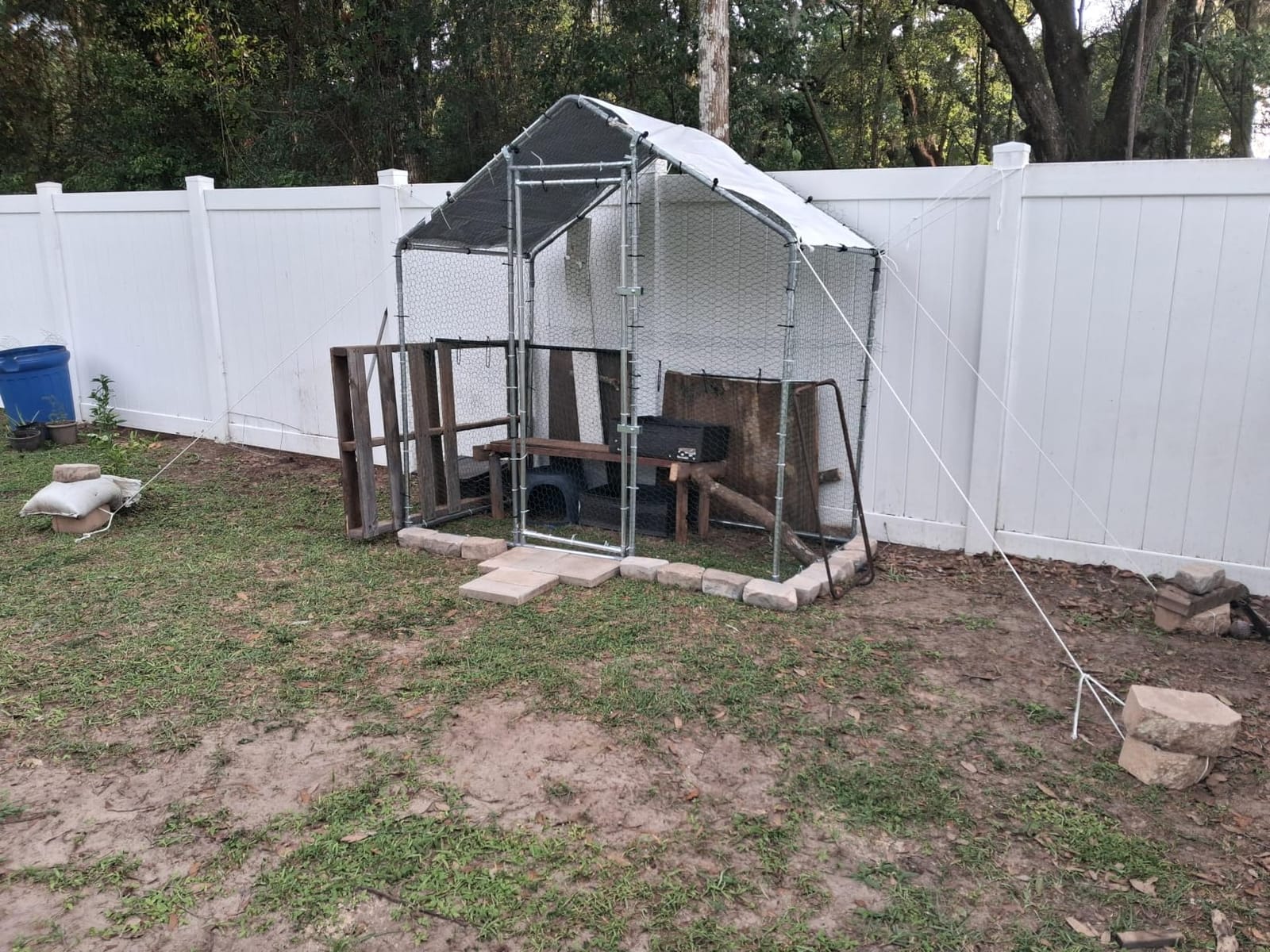
This is the only genuine hen house in the roundup, and for a small flock that is exactly what you want. Solid fir with stainless steel hardware, an asphalt shingle roof, and a built-in nesting box at 14 by 23 by 15 inches that comfortably fits two hens with the removable dividers in place.
The detachable bottom plate is the feature we would not give up. Most budget coops force you to reach into a fixed floor to scrape droppings, and this one lifts out completely, which turns a weekly chore into a two-minute job. Three separate access areas add to that, and the metal lock on the egg-collection door is a genuine upgrade over the plastic catches used elsewhere.
It is also a nice piece of furniture. The paint is described as eco-friendly, the perches are widened and thickened, and there are three side vents for airflow. Buyers tend to keep these on a patio or beside a house rather than hiding them at the back of a yard.
How many hens it honestly holds
The footprint is 55 by 26.5 inches, which is about 12 square feet of floor. Apply the 4 square feet per hen rule and you get three standard hens, or four if the birds are bantams or small Mediterranean breeds. Many owners run four to five with a slightly larger run attached, which works because the house itself is only used overnight.
For large breeds such as Orpingtons or Cochins, drop to three. Those birds need more perch length and floor space than a standard hen, and the internal height of 28 inches is snug for the bigger ones when they roost.
Where it falls short
There is no run. In total, you are buying a house and then solving the outdoor problem separately, which for a beginner can mean more planning than expected. Budget for a run of at least 24 square feet for a 3 to 4 hen flock.
The open asphalt roof is also worth a look in heavy rain. It is described as weatherproof, and most owners are satisfied, but the felt edge can lift over a few seasons if you do not seal it. A coat of exterior sealer on day one is cheap insurance and roughly doubles the service life of the wood.
5. HITTITE 19.19 x 9.84 x 6.56 ft Metal Walk-In Run: Best Value
HITTITE Large Metal Chicken Coop with Run, 19.19 x 9.84 x 6.56 ft Walk in Poultry Cage Chicken Run Pen, Outdoor Chicken Runs for Yard with Waterproof & Anti-UV Cover
230 x 118 x 79 inches
113 pounds
0.8mm reinforced galvanized pipe
PVC coated hexagonal mesh
Pros
- 0.8mm pipe is thicker than the 0.6mm rivals use
- Highest average rating in the roundup at 4.4 stars
- PVC coated mesh is easier on birds and resists abrasion
- Spire roof sheds water debris and light snow
- Lockable metal latch door
Cons
- Manufacturer states the mesh alone is not predator-proof
- Clear the cover when snow exceeds two inches
- Two people needed for a structure this size
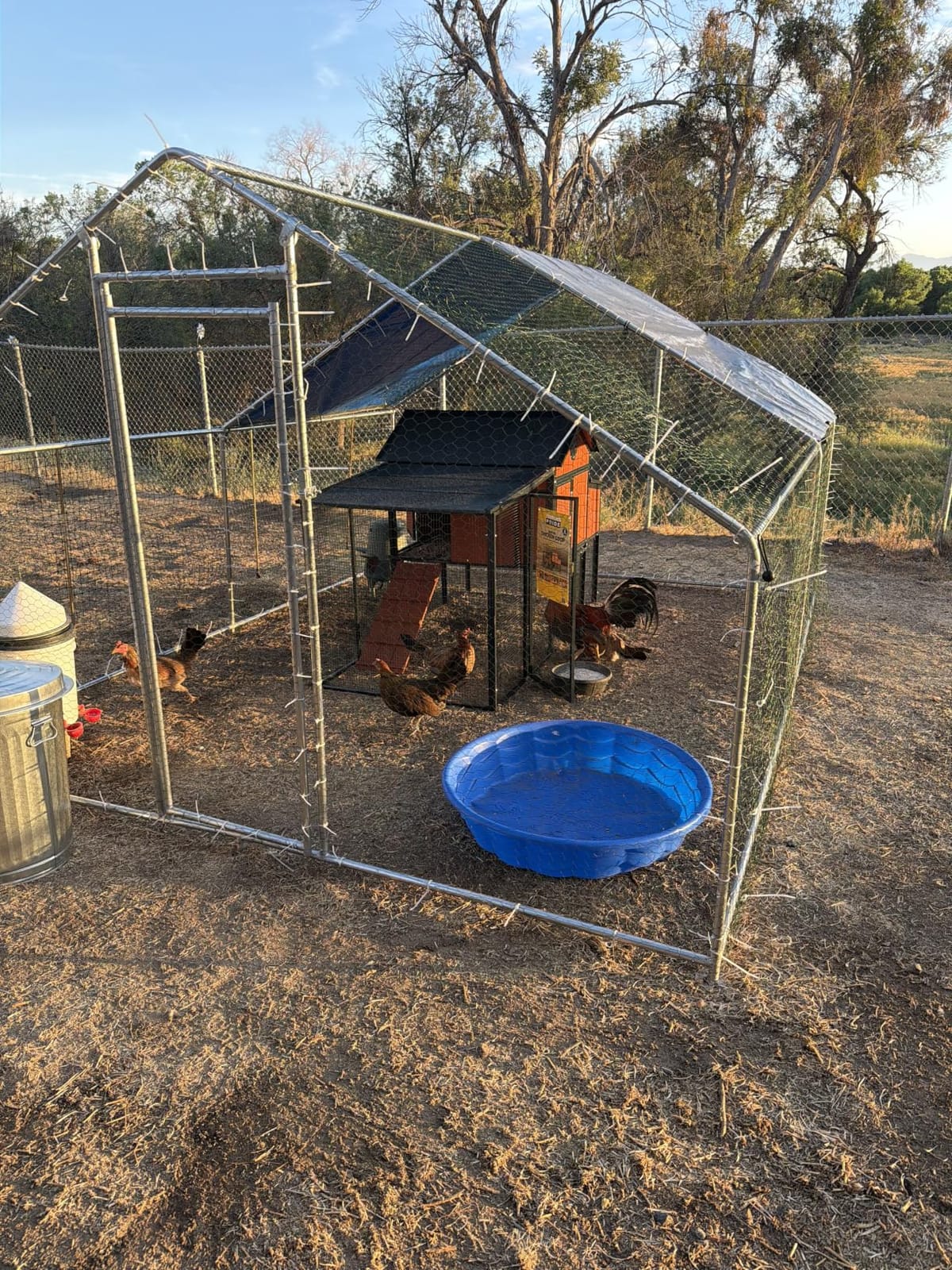
Frame gauge is the quiet differentiator on this one, and it is measurable. The pipe is 0.8mm galvanized steel where most competing runs use 0.6mm, and that difference shows up as less flex when a hen pushes against the mesh or wind loads the panels. It is also the highest average rating in the group, at 4.4 stars across 927 reviews.
At 230 by 118 by 79 inches you get a genuinely large walk-in area, and the 6.5 foot height means an adult can stand and crouch inside to collect eggs or catch a bird. The spire roof, made from a UV-resistant and waterproof PE tarp, sheds water, debris and light snow along the peak.
Reviewers single out the PVC coating on the hexagonal mesh. It is easier to cut and fit than raw wire, less likely to tear during installation, and gentler on birds that brush against it daily. The lockable metal latch is also sturdier than the plastic catches on cheaper pens.
How much flock it actually supports
That is roughly 188 square feet of floor, which supports 18 to 20 standard hens by the run rule alone. Realistic capacity sits lower once you subtract the perimeter where birds cluster in poor weather. For a normal household flock, eight to twelve is the number we would plan around.
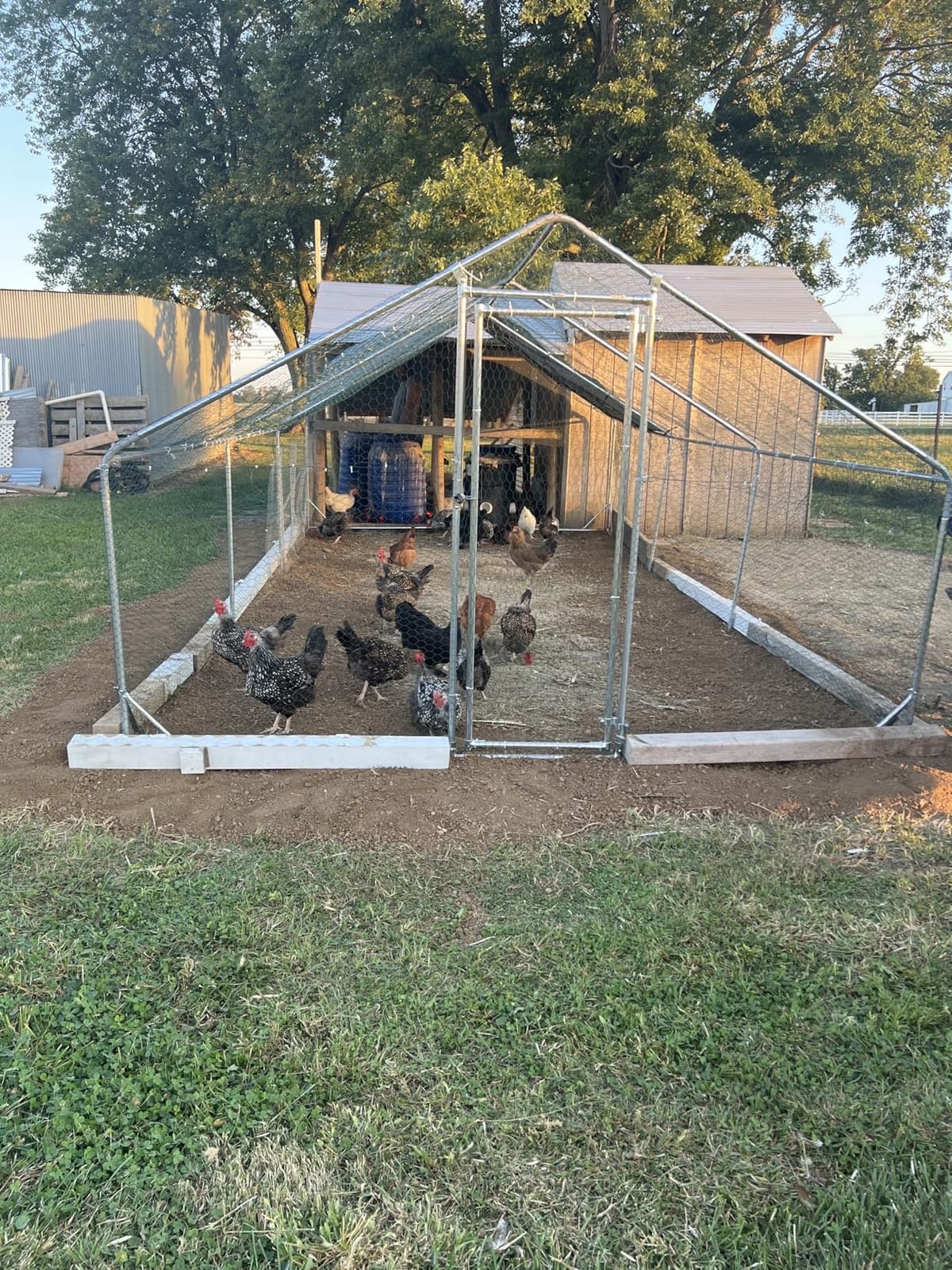
It is a run rather than a house, so the birds still need somewhere secure to roost. Pair it with a small wooden box like the Petsfit, and the two together form the arrangement most experienced keepers in our research described as the sensible build.
What to watch for
At 113 pounds this is a heavy structure and assembly is a two-person job with an illustrated manual. The most common owner advice is to add hardware cloth along the base and over the mesh, since the manufacturer is upfront that the coating improves handling but not predator resistance.
Winter owners should keep an eye on the tarp. Several reviewers note that the cover should be removed or cleared once snow exceeds about two inches, because the spire shape sheds snow until the weight exceeds the frame’s tolerance rather than the design limit.
6. NUGRIART Large Metal Walk-In Poultry Cage: Best Starter Metal Run
NUGRIART Large Metal Chicken Coop Walk-in Poultry Cage Hen Duck Run House with Waterproof & Anti-UV Cover Galvanized Rabbits Habitat Spire Shaped Cage for Outdoor Yard Farm Use
118 x 79 x 79 inches
1 inch diameter galvanized steel
SPIRE roof design with PE cover
PVC coated hexagonal mesh
Pros
- 1 inch galvanized steel at an entry-level price point
- Thicker pipe diameter than most products in its class
- PVC coated mesh resists damage better than bare wire
- Spire roof drains rain snow and debris
- Available in sizes from 118 inches to 26.2 ft long
Cons
- Assembly is described as the hardest step in the roundup
- Gloves are recommended during assembly
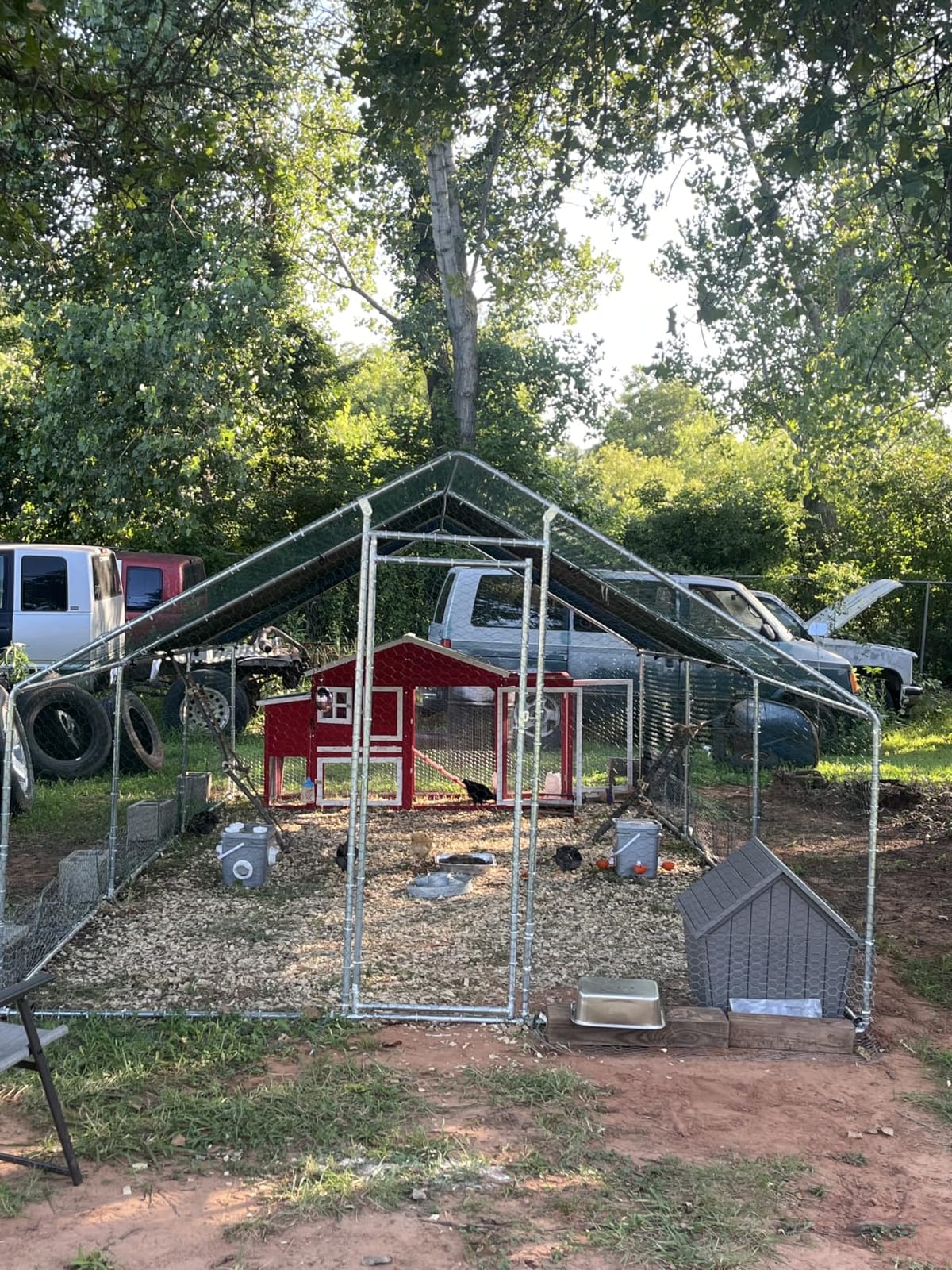
This is the pick for someone starting small and staying on a tight budget. The frame uses 1 inch diameter galvanized steel with a reinforced upgrade design, which is more frame gauge than most products in its class manage at this entry point, and the PVC coated hexagonal mesh is described as harder for predators to damage than bare wire.
The spire frame design is a genuine functional choice rather than styling. Rain, snow and debris drain off the peak instead of accumulating on a flat roof, which is the single most common reason budget runs fail after two wet seasons. At 118 by 79 by 79 inches it suits four to six standard hens comfortably as a daytime run.
Buyers also appreciate the size range. The same design is offered from 118 inches up to 26.2 feet long, so a household that outgrows this can move up a size within the same product family and keep the same hardware and instructions.
What makes it a sensible first run
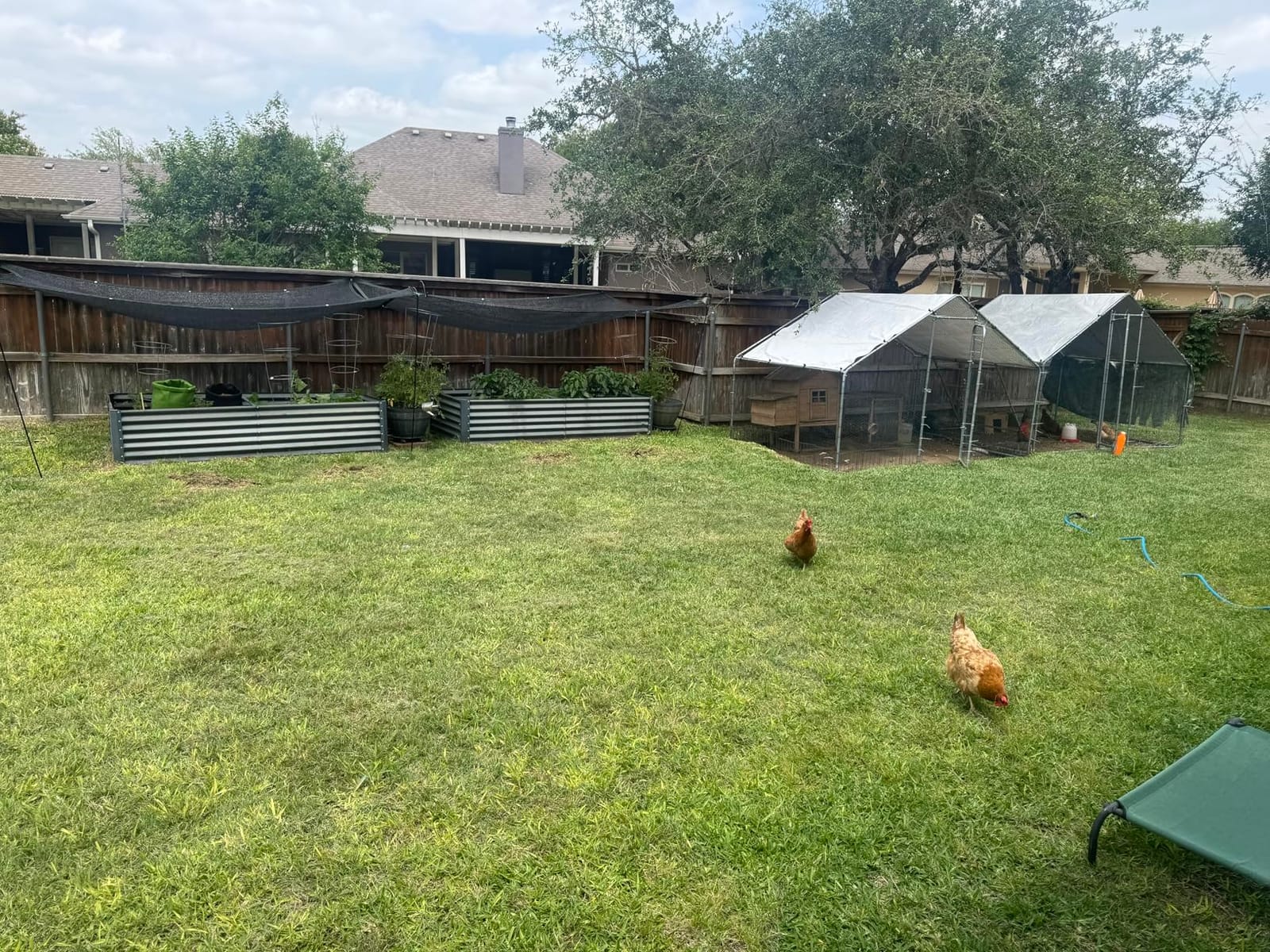
It balances three things cheaply. The pipe gauge resists the flexing that makes cheap runs feel flimsy, the coated mesh survives birds rubbing against it, and the footprint fits a normal side yard without needing a level pad across half the property.
It also suits more than chickens. The design is used for ducks and rabbits as well, and the walk-in height makes daily checks quick. For a first flock of four or five birds, the capacity claim on the box is close to the real number, which is unusual in this category.
Where the difficulty is
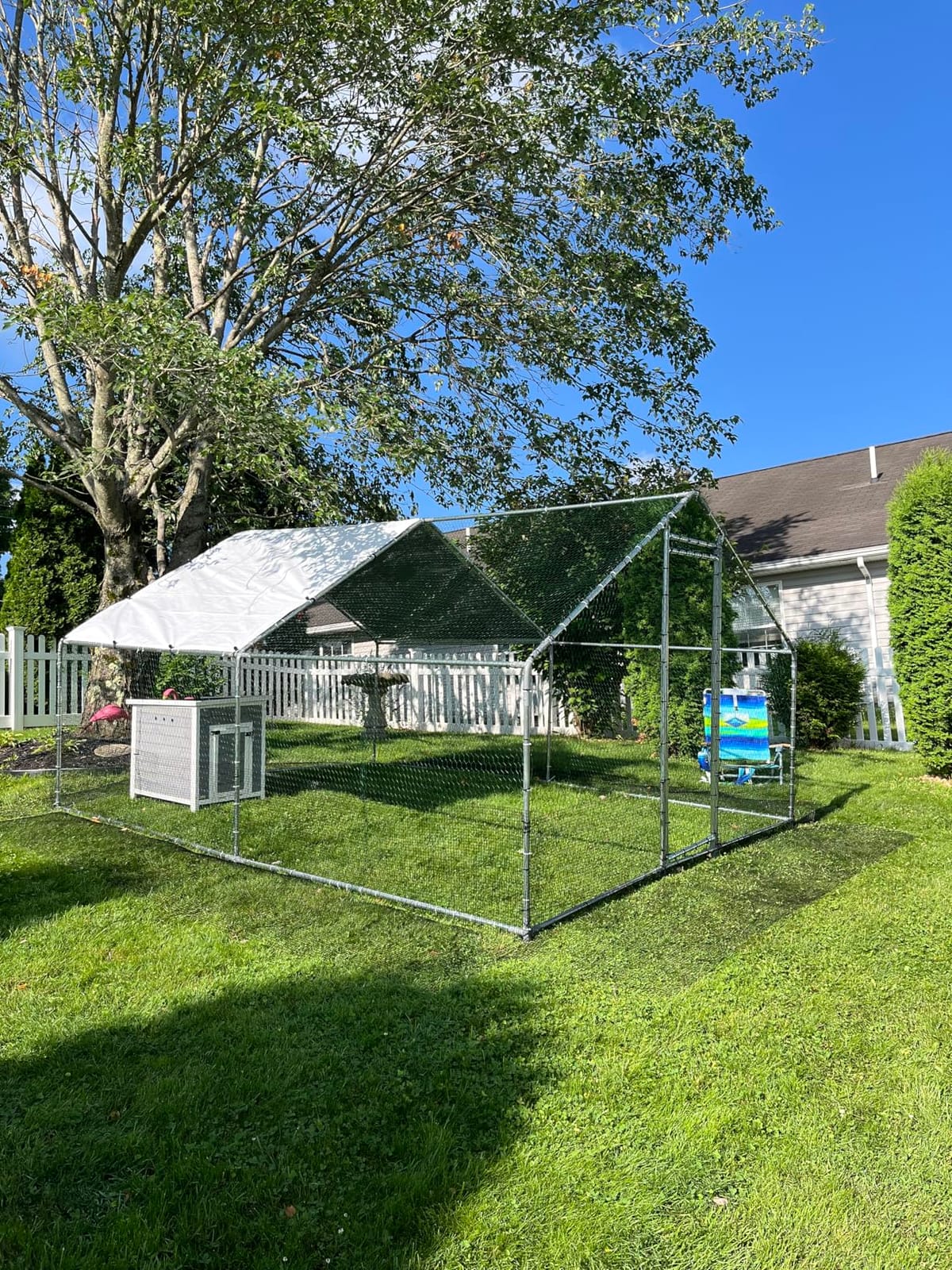
Assembly is the sticking point, and reviewers are consistent about it. Even with improved connectors, this is described as the most difficult build in the roundup, and the manufacturer recommends wearing gloves, which tells you the frame is stiff to hold while the joints seat.
Set aside a full evening rather than an hour. Reviewers with prior kit-building experience report finishing it, but the panels are large and holding them square while connecting takes two people even though the final structure is light enough for one person to reposition later.
7. Belinova Metal Coop with Hardware Cloth Mesh: Best Hardware Cloth Run
Metal Chicken Coop with Hardware Cloth, Walk-in Poultry Cage for Hen Duck
156.16 x 118.37 x 78.02 inches
62.3 pounds
Premium hardware cloth mesh
Galvanized frame with anti-rust finish
Pros
- Hardware cloth instead of hexagonal wire
- Galvanized frame built not to rust or sag after a rainy season
- Roomy for 15 to 20 birds at walk-in height
- Open mesh design keeps air moving on hot days
- Lockable sliding door with padlock tab plus ground stakes
- Includes a solar LED light that activates at dusk
Cons
- Designed for flat level ground only
- One of the higher price points among the metal runs here
This is the run we would buy for a yard where raccoons have been a problem, because it is the one mid-size option that removes the most expensive and most essential upgrade. Instead of hexagonal poultry wire, the panels carry hardware cloth, which is a woven square mesh that mammals cannot push through or chew through quickly.
At 156 by 118 by 78 inches with full walk-in height, reviewers say it is roomy for 15 to 20 birds, and the open mesh layout keeps air moving on hot days to reduce heat stress without needing a ventilation modification. The galvanized frame is described as resistant to rust and sagging across seasons rather than merely powder-coated on the surface.
Two small additions stand out. The UV-resistant PE cover is held with elastic ball straps that stay taut in wind, which solves the flapping-tarp problem, and a solar panel LED light turns on automatically at dusk so you can check on the flock without a flashlight. The lockable sliding door carries a padlock tab, and ground stakes come in the box.
Why the hardware cloth changes the maths
Adding half-inch hardware cloth to a comparable run costs meaningfully more than the price difference between this pen and its neighbours, once you factor in several rolls plus the labour of cutting and stapling. Buyers who were already planning to cover every panel get a better result for the same outlay.
Reviewers also single out the anti-rust coating and the built-in solar light as the two upgrades that stand out. In a wet climate the rust question decides how long a run lasts, and this one is the only mid-size model here whose frame is described as not rusting at the ground line.
What to check before you buy
It is designed for flat, level ground only, and that is a real constraint. If your yard slopes, you will need to level a pad or dig the run in slightly, and the manufacturer does not endorse setting it on an incline. The extended footprint also means less flexibility on a small patio.
It also sits at one of the higher price points among the metal runs in this roundup, which matters if your budget is genuinely tight. If you have predator pressure and flexibility on price, this is the sensible place to spend; if your only real threat is roaming dogs, a cheaper run plus a ground apron will do the same job.
8. Aivituvin Expandable Mobile Chicken Coop: Best for Small Flocks on the Move
Aivituvin Chicken Coop Expandable Mobile Chicken House for Outdoor with Wheels, Nesting Box, Leakproof Pull-on Tray and UV-Resistant Roof Panel (Red)
80.7 x 22 x 44.1 inches
66.14 pounds
Two wheels and a long pull handle
Hardware cloth pre-installed on panels
Pros
- Hardware cloth already installed on every panel
- Light enough to wheel across uneven ground
- Two units connect end to end
- Removable leakproof tray and four access areas
- Owners report it blocked a raccoon attempt
- Assembles in about 90 minutes
Cons
- Parrot-style perches tip over and need replacing
- Cheap nesting-box latches and hinges fail early
- Realistic capacity is 2 to 3 adult chickens
- Wheels do not roll smoothly on uneven ground
This is the pick for two or three hens and for anyone who wants to move them around the garden. It comes with hardware cloth already installed on the assembled panels, which is rare at this level and means the birds are secure from the first night without a roll of mesh and a stapling gun.
The two wheels and the long pull handle make it genuinely mobile in a way most small coops are not. Owners report wheeling it across rocky or uneven ground, and the expandable design means two units can be joined end to end for a longer run when your flock grows. Four access areas plus a removable leakproof tray make cleaning straightforward.
Several buyers report that the hardware cloth and heavy-duty latches actually stopped a raccoon attempt, which is the outcome you are buying this product for. Assembly is around 90 minutes with clearly labeled parts, the fastest in this roundup.
What two to three hens means in practice
At 80.7 by 22 inches the enclosed floor is small, and the honest number is two to three adult chickens rather than the larger range implied by the listing. The nesting box is sized for one hen at a time, and the perch is rounded in a parrot profile that birds struggle to grip securely.
For bantams and small breeds, those dimensions stretch further. A flock of four bantams is comfortable here in a way four standard hens are not, and the internal height of 44.1 inches is generous for birds that stay low.
The weak parts you will replace
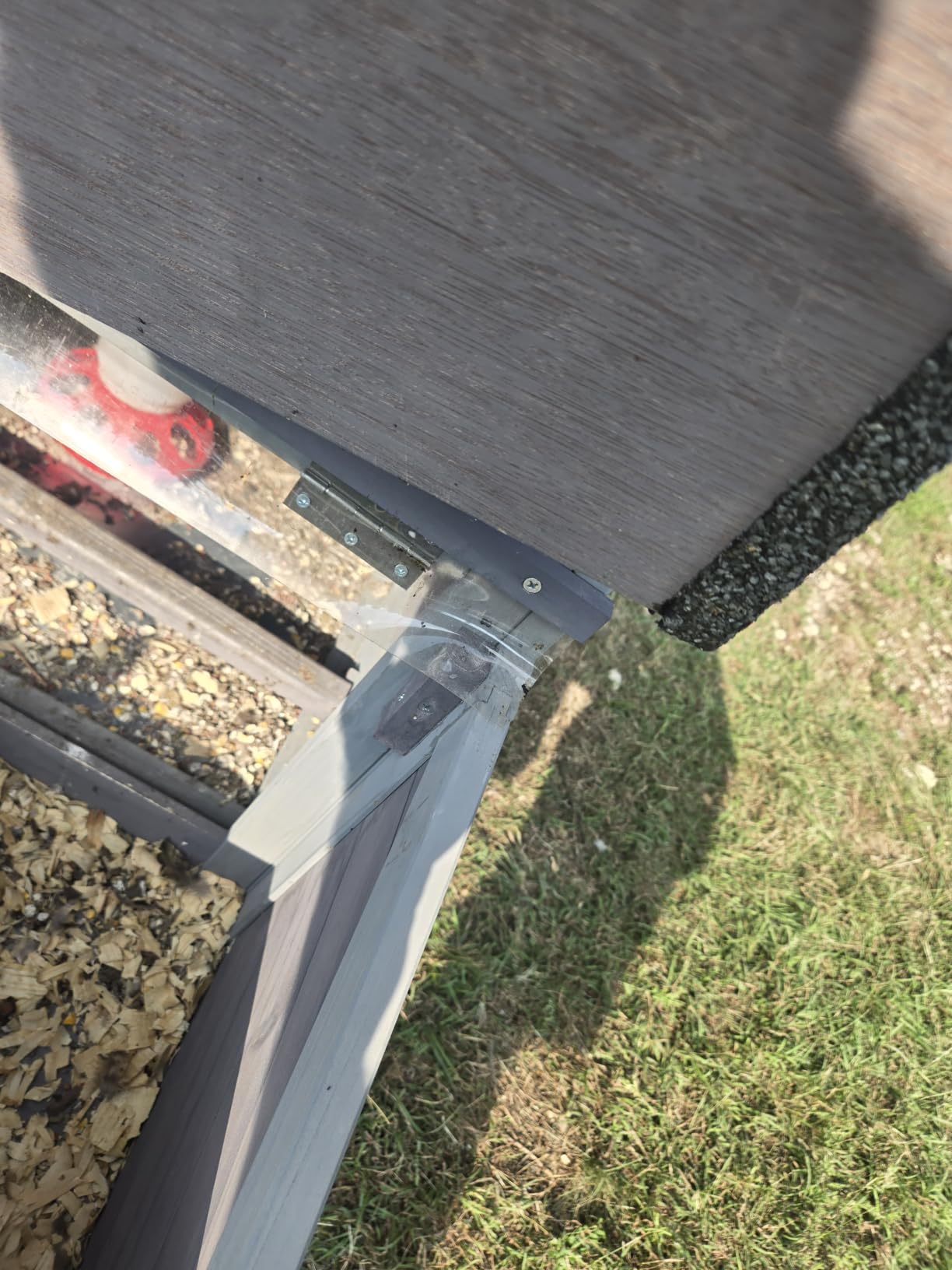
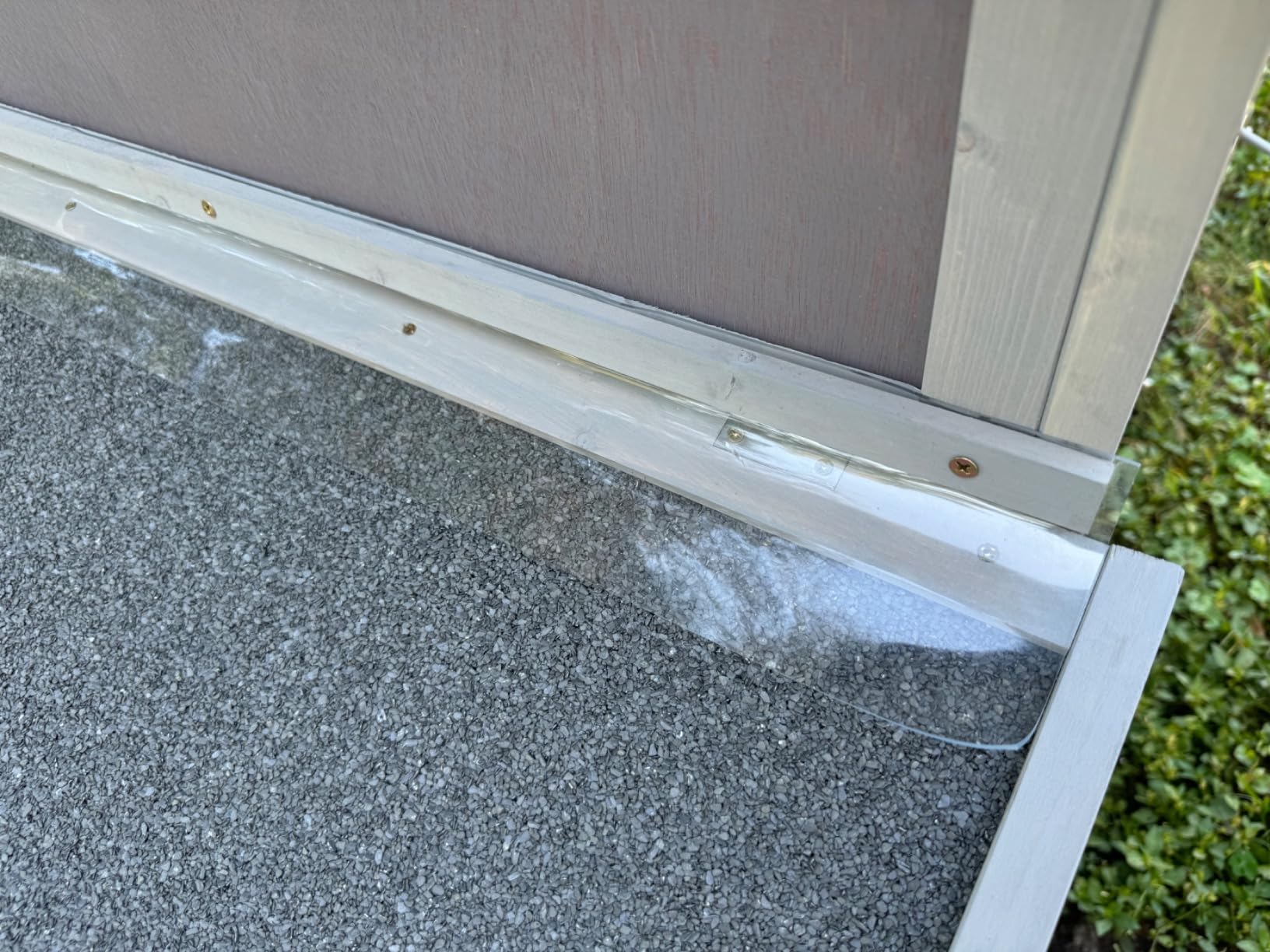
The perch is the first thing to change. Owners upgrade it with a simple 2×4, which is a five-minute fix that stops birds tipping over, and the cheap nesting-box latches are reported breaking away from the roof within weeks. The ladder and brooder-box hinges are the next most common complaint after a few weeks of use.
On mobility, the caveat is terrain. The wheels work on paths, patios and packed soil, but they do not roll smoothly on lawn, which is the surface most people expect to move a coop across. If rotational grazing is the goal, plan to drag it rather than roll it, and keep the travel distances short.
9. Quictent Large Metal Run with Side Hardware Cloth: Best Predator-Hardened
Quictent Large Metal Chicken Coop Run for 30+ Poultry w/Side Hardware Cloth
214.5 x 107.3 x 78 inches
112.2 pounds
1 x 1 inch 20 gauge welded hardware cloth
Extended ground skirt
Pros
- The only run here with 20 gauge welded hardware cloth and a ground skirt
- Includes 750 zip ties and heavy-duty cable ties
- 8 support bars and triangular corner poles resist racking
- Dual-latch door narrows the opening predators can exploit
- Push-button frame design speeds up setup
Cons
- Side and back cover panels are not included
- At 112.2 pounds it is one of the heaviest runs here
- Sized for 30 or more poultry
- far beyond most backyard flocks
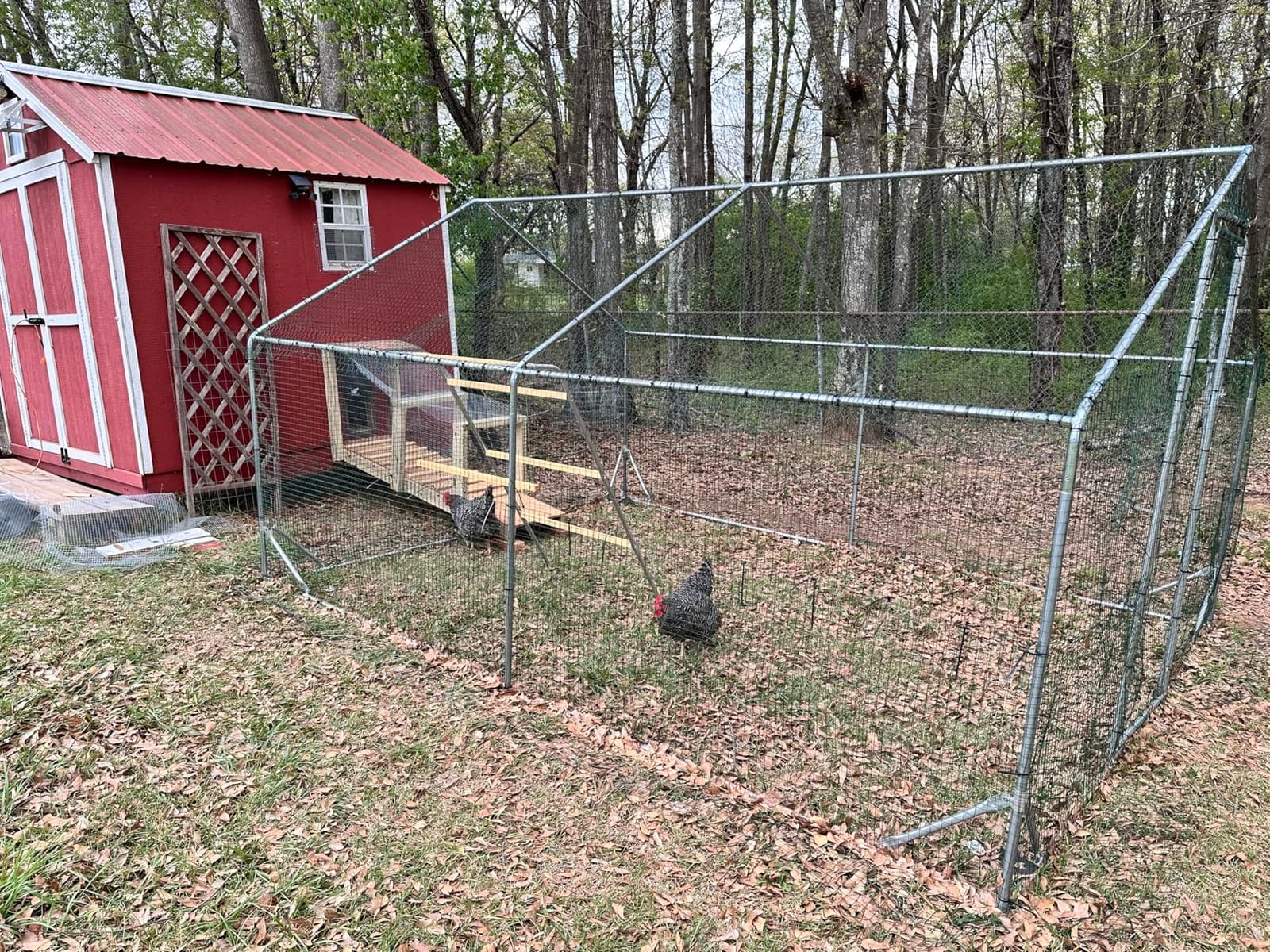
This is the most genuinely predator-resistant option in the roundup, and it earns that on hardware rather than marketing. The side walls carry 1 by 1 inch 20 gauge welded hardware cloth with a thickened PVC coating, and the frame extends down into an extended ground skirt that discourages digging predators from getting underneath.
That combination closes the two most common attack routes. A digging animal hits the skirt rather than bare ground, and a persistent one meets welded square mesh rather than hexagonal poultry wire. The dual-latch door is designed with a narrow gap so a raccoon cannot get its fingers in to work the latch, which is the single most reported failure on cheap runs.
The accessory kit is unusually generous: 750 zip ties plus heavy-duty 0.2 inch cable ties, which is enough to secure the ground skirt and hang the mesh without a second shopping trip. The frame uses 1 inch rust-free poles reinforced with 8 support bars and triangular corner poles, which is what stops a structure this size from racking out of square.
When the extra capacity pays off
At 214.5 by 107.3 inches this is a big run, and reviewers treat it as a multi-flock or grow-out pen rather than a house for a household flock. For 30 or more birds it is well proportioned, and for a family keeping several groups separated it lets you divide the space with a simple internal barrier.
It also has the longest parts support in the group, covering the frame, the cover and the hardware cloth. On a metal structure that spends its life outdoors in sun and rain, that coverage is the difference between a repair in year three and a replacement in year three.
What you still need to add
The roof cover is included, but the optional side and back cover panels are not, so full weather shelter costs extra. If you are keeping birds in a region with cold wind, budget for those panels or plan the run as a daytime space only.
At 112.2 pounds, assembly is genuinely a two-person job and the boxes are large. Check the pieces over carefully before you build, because a defect discovered after assembly is far more painful to return than one found in the box. Using the supplied cable ties on the ground skirt as you go makes the job much faster.
10. PawHut 26.2 ft Metal Walk-In Run: Largest Footprint
PawHut Large Chicken Coop Metal Chicken Run with Waterproof and Anti-UV Cover, Spire Shaped Walk in Fence Cage Hen House for Outdoor and Yard Farm Use, 1″ Tube Diameter, 9.8′ x 26.2′ x 6.6′
315 x 118 x 79 inches
97.9 pounds
1 inch galvanized steel tube frame
Dipped steel wire walling
Pros
- 26.2 by 9.8 by 6.6 ft walk-in area rated for 16 to 24 chickens
- Full walk-in height for adults to move inside
- Lockable latch door
- Steel wire treated by a dipping process to avoid injury
- UV and water-resistant Oxford cloth spire roof
- Can be attached to a wooden coop
Cons
- Lowest average rating in the roundup at 4.0 stars
- Assembly required with no tools mentioned
- Run structure with no integrated enclosed hen house
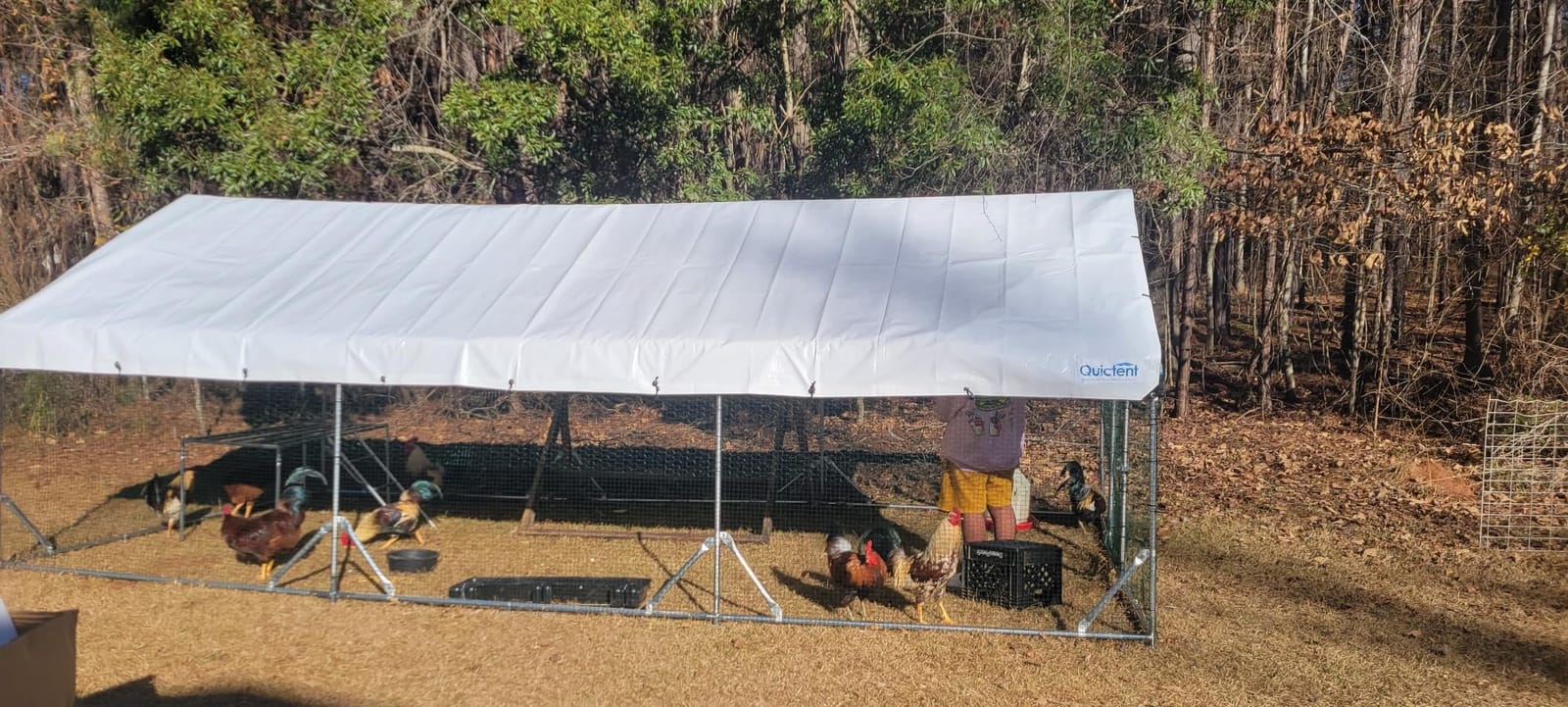
When space is the constraint, this is the biggest run available in the roundup by a wide margin. At 315 by 118 by 79 inches it gives you a 26.2 foot long walk-in area rated by the manufacturer for 16 to 24 chickens, and the 6.6 foot height means you can work inside it without stooping.
Two construction details are worth noting. The steel wire walling goes through a dipping process specifically to avoid injuring birds, which matters on a large surface area where birds brush the mesh constantly. And the spire-shaped roof is made from water- and UV-resistant Oxford cloth held with spring button clips, so it can be removed for cleaning without tools.
It is also designed to attach to a wooden coop, which makes it the natural partner to a house like the Petsfit. Together they form a connected system: a small solid box indoors, a long run outdoors, one continuous footprint.
Realistic capacity for a household flock
The listed 16 to 24 birds assumes the full 27 square feet per bird that the run rule sets as a comfortable outdoor figure. In a real setup, some of that length sits against a fence line, some is shaded, and some is occupied by shelter. For standard hens, plan on ten to fourteen, and less for large breeds.
The bigger question is whether you need it. A 26 foot run takes up a real strip of yard and needs a level, graded base, so for two to eight hens it is a lot of structure and cost for space you will not use.
Where it falls short
This one carries the lowest average rating in the roundup at 4.0 stars across 311 reviews, and the feedback points at build quality and finishing rather than design. At 97.9 pounds with 1 inch tube throughout, it is a long build, and no tools are listed as included, so you will need your own driver and wrench set.
It is also a run with no integrated house, and the wire still needs hardware cloth if predators are a concern. For a flock that genuinely needs 16 or more birds, the space justifies the compromises. For a smaller flock, a mid-size run and a solid wooden house will serve you better for less.
How to Choose a Chicken Coop Under 500 Without Regret
How many chickens can you keep in a coop on this budget?
Four square feet of enclosed floor per hen, and 8 to 10 square feet of run per hen, is the standard guidance repeated by university extension services including Kentucky, Missouri and Penn State. Applied to a 500 budget, that works out to three to six standard hens in a wooden house, or eight to fourteen in a metal run used as a daytime space with a separate house attached.
Large breeds such as Orpingtons and Cochins need more space than standard hens, and bantams need less. Adjust downward for heavy birds and upward for small ones, and never plan a flock around the number printed on the side of the box.
How to predator-proof a budget chicken coop in four steps
Step one is mesh. Cover every hexagonal wire surface with half-inch hardware cloth, cut to fit and fastened with stainless staples or screws. Chicken wire and coated hexagonal mesh are designed to keep birds in, not predators out, and a determined raccoon will find every gap.
Step two is latches. Slide bolts are not predator-resistant and raccoons open them routinely. Replace every one with a carabiner clip, a two-step lock or a padlock hasp; carabiners are the cheapest option and the one most owners settle on.
Step three is the ground. Run the hardware cloth 12 to 18 inches flat along the ground inside the run and weigh it down, or bury an apron, so digging animals meet wire instead of soil. This is the step most often skipped and the one that matters for foxes, dogs and rodents.
Step four is a floor and an apron. Runs with no floor, or with a removable floor panel, create a direct dig-in path. Add a solid bottom panel or a deep bedding tray, and check the ground line after heavy rain for gaps that open up.
In total, expect to add roughly 60 to 100 dollars of hardware cloth, clips, staples and sealer to any purchase in this roundup. Keepers in our research treat that as near-universal and trivial relative to the cost of replacing a flock.
What material and lifespan should you expect?
Unsealed wood weathers and rots within 18 to 24 months, which is the single most common lifespan complaint in the community research. A coat of exterior sealer or polyurethane on every face, including the underside, roughly doubles that to three to seven years.
Metal frames last longer, typically five to ten years, and the limiting factor is the coating rather than the pipe. Watch where the frame meets the ground, since that is where surface rust starts on models that are not specifically anti-rust treated. A wooden house and a metal run have different failure points, and a mixed system ages more evenly than two of either.
Prefab or DIY: which one is genuinely cheaper?
Building from plans typically lands between 300 and 500 dollars in materials, which is not obviously cheaper than buying. The reason people build is control: they choose the lumber thickness, the exact dimensions, and the mesh gauge, which are the three things budget prefab coops get wrong.
Add your own time to that figure. A straightforward 4 to 6 hen coop is a weekend project for someone comfortable with a saw and a drill, and considerably longer for someone who is not. The honest comparison is materials plus hours, and the hours are usually what push experienced keepers toward prefab.
Wood house or metal run: which fits your yard?
A wooden house is insulated, secure overnight, and the only option here with a proper nesting box. A metal run is spacious, light, and rot-proof, but it is a daytime structure that needs a house attached or placed beside it. Most people who keep more than six birds end up with both.
Think about surface as well. Metal runs need a level base and cannot be sited on a slope, and wheeled models only roll properly on paths, patios and packed soil rather than lawn. Wooden hutches can go on a patio, beside a shed, or anywhere you want to see them.
Check zoning and local rules before you buy
Before spending anything, check whether your county or municipality restricts backyard poultry, whether there is a minimum setback from property lines, and whether an HOA or town association has its own rules. These are usually simple record-keeping requirements rather than outright bans, but they exist and they can be enforced.
Your county extension office is also the right place to ask about local predator pressure, which is the variable that should decide between a hardened run and a cheaper one with a hardware cloth budget. It is a free, five-minute conversation and it will save you from buying the wrong structure twice.
Frequently Asked Questions
Can raccoons get through hardware cloth?
No. Half-inch hardware cloth is the standard barrier that stops raccoons, and it is why keepers replace the hexagonal poultry wire that ships with budget coops. Chicken wire and coated hexagonal mesh have openings large enough for a raccoon to work its claws through, and a determined animal will find every gap in a run within a night or two.
Should I put hardware cloth under my chicken coop?
Yes, if you want to stop digging predators, and you do not have to bury it. Lay the hardware cloth flat on the ground inside the run, extending 12 to 18 inches from the frame, and weigh it down with stones or pavers. An apron works as well as burial in most yards and is much easier to adjust later.
What are the best raccoon-proof locks for a chicken coop?
Carabiner clips are the cheapest effective option and the most commonly recommended. Two-step locks and padlock hasps work well too. What does not work is the slide-bolt latch that ships with most budget coops, because raccoons open slide bolts routinely and often do so without leaving damage.
How many chickens can you fit in a coop under 500?
Three to six standard hens in a wooden house, or eight to fourteen in a metal run paired with a separate house. The figures on the box are typically 30 percent higher than reality. Use about 4 square feet of enclosed floor per hen and 8 to 10 square feet of run per hen as the working rule.
Can a chicken coop under 500 be predator-proof?
Not as shipped. Most of the coops in this roundup use hexagonal poultry wire, which stops chickens and not much else. You can make one predator-resistant on this budget by covering every panel with half-inch hardware cloth, replacing the latches with carabiners, and adding a ground apron. Budget 60 to 100 dollars for those upgrades.
How long do cheap chicken coops usually last?
Two years is common for unsealed wood in an exposed position, and three to seven years once every face has been sealed with an exterior sealer or polyurethane. Metal frames run five to ten years, with the ground line where the frame meets the soil being the point that fails first. Sealing on day one is the cheapest life extension available.
Should I buy a budget coop or build my own?
Build if you want control over lumber thickness, exact sizing and mesh gauge, which are the three things budget prefab coops compromise. Buy if your time is the scarce resource, since a prefab coop arrives faster than a materials budget of 300 to 500 dollars suggests. Building is chosen for control far more often than for cost.
How much should I spend on a coop for 4-6 chickens?
Most households on this budget land in the mid-range metal runs, paired with a small wooden house for overnight roosting. A wooden house alone sits in the low hundreds, and a run in the low to mid two hundreds. Adding hardware cloth, carabiner clips, staples and sealer takes the true setup cost 60 to 100 dollars above the sticker price.
Best Chicken Coops Under 500: Our Final Word
For most households, the CHIKENCOOP 9.8 x 6.5 x 6.5 ft metal run is the best chicken coops under 500 choice: enough covered space for six to eight standard hens, a reinforced frame, and a roof that sheds water properly. Pair it with a small solid wooden house, cover the mesh with hardware cloth, and replace every latch with a carabiner.
If predators have already visited your yard, spend the extra on the Belinova or the Quictent, which arrive with hardware cloth or welded mesh already fitted. If your flock is two or three hens and you want to move them around, the Aivituvin is the only pick here with hardware cloth pre-installed in a small mobile format.
Specifications in this category change often, so check the current listing before you commit, and read the specs rather than the bird count on the box. We are not a veterinarian or a building inspector, so check local rules and your county extension office before the purchase.
If you also enjoy testing gear on a real budget, our guides to the best headphones under 500, the best digital pianos under 500, the best jukeboxes under 500 and the best DACs under 500 follow the same approach: measured specs, honest limits, no guessing.