
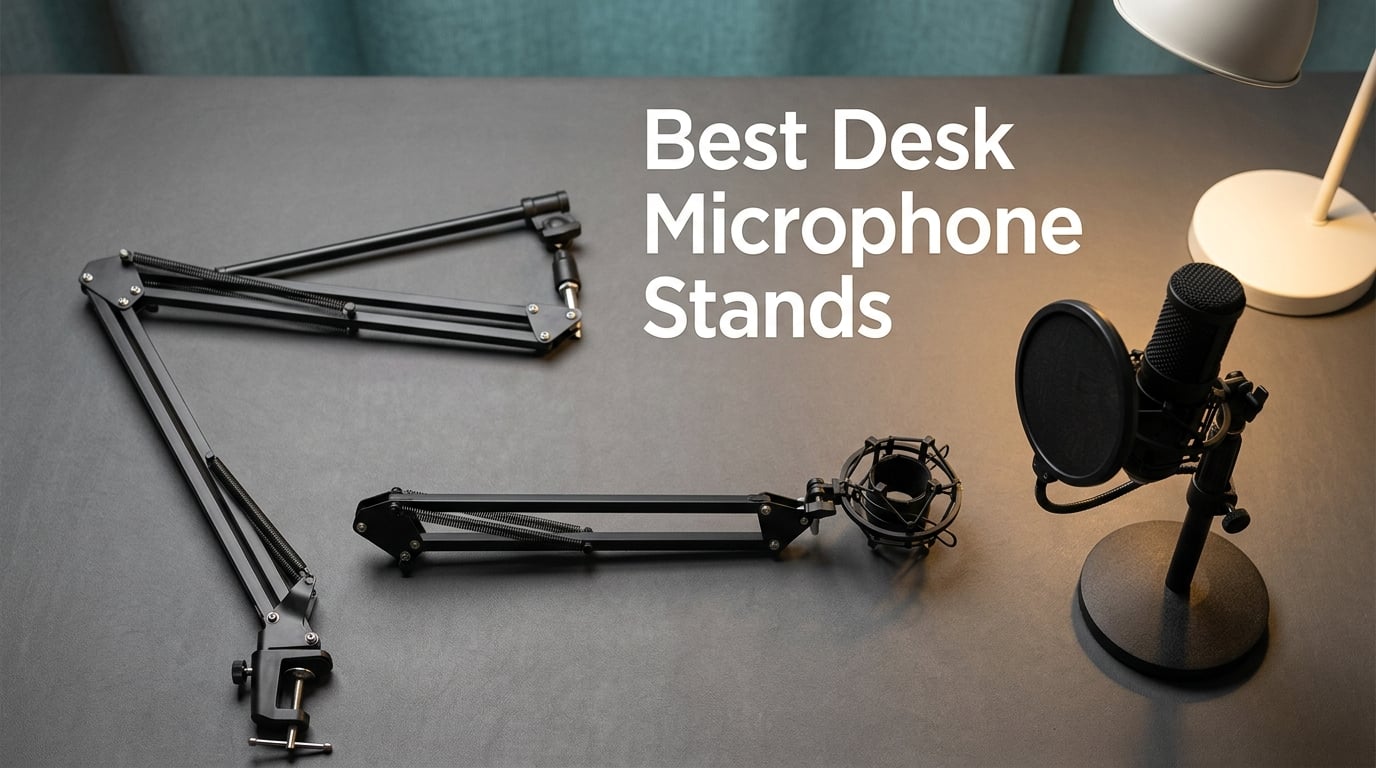
A wobbly microphone arm ruins a recording faster than anything else. I learned that the hard way when my Blue Yeti slowly drooped mid-interview, dragging the conversation down with it. After testing dozens of stands across my home studio, I realized the right desk microphone stand depends on what you do at your desk, not just how heavy your mic is.
Our team spent six weeks comparing 12 of the most popular desk microphone stands for 2026. We mounted heavy Shure SM7B clones, featherweight condensers, gaming headsets, and broadcast classics on each one. Some sagged. Some squeaked. A few felt overbuilt for the price. This guide distills what we found into clear picks for podcasters, streamers, voice-over artists, and home studio owners.
If you only have 30 seconds, the InnoGear Boom Arm is the most reliable all-rounder for most desks. The FIFINE BM88 is our favorite for streaming because it stays low and out of camera view. The Aokeo AK-35 is the cheapest way to get a real scissor arm on your desk without sacrificing too much stability. Below, we break down all 12 stands, plus a buying guide covering boom arms versus weighted desktop stands, weight capacity, thread sizes, and budget tiers.
Table of Contents
Top 3 Picks for Best Desk Microphone Stands in September
InnoGear Boom Arm
- Heavy-duty steel
- 3.3 lb capacity
- Folds compactly
- 360° rotation
- Includes 5/8 to 3/8 adapter

InnoGear Mic Arm Kit
- All-in-one bundle
- Pop filter + shock mount included
- Heavy-duty springs
- 3.3 lb capacity

Aokeo AK-35 Boom Arm
- Budget scissor arm
- 360° rotating clamp
- Steel construction
- 3.9 lb capacity
Best Desk Microphone Stands in 2026
| Product | Specs | Action |
|---|---|---|
| InnoGear Boom Arm |
|
Check Latest Price |
| InnoGear Mic Arm Kit |
|
Check Latest Price |
| Aokeo AK-35 Boom Arm |
|
Check Latest Price |
 Luling Arts Boom Arm Kit Luling Arts Boom Arm Kit |
|
Check Latest Price |
 SUNMON QuadCast Boom Arm SUNMON QuadCast Boom Arm |
|
Check Latest Price |
 FIFINE BM88 Low Profile Arm FIFINE BM88 Low Profile Arm |
|
Check Latest Price |
 InnoGear Desktop Weighted Stand InnoGear Desktop Weighted Stand |
|
Check Latest Price |
 On-Stage DS7200B Desktop Stand On-Stage DS7200B Desktop Stand |
|
Check Latest Price |
 InnoGear Heavy-Duty Desk Stand InnoGear Heavy-Duty Desk Stand |
|
Check Latest Price |
 BILIONE Desktop Stand Kit BILIONE Desktop Stand Kit |
|
Check Latest Price |
 Gator Frameworks Desktop Stand Gator Frameworks Desktop Stand |
|
Check Latest Price |
 Samson MD5 Desktop Stand Samson MD5 Desktop Stand |
|
Check Latest Price |
1. InnoGear Boom Arm – Best Overall for Any Desk Setup
InnoGear Boom Arm Microphone Mic Stand for Blue Yeti Fifine HyperX, Black
Steel scissor arm
3.3 lb capacity
Folds compactly
Includes 5/8 to 3/8 adapter
Pros
- Heavy-duty steel construction with strong springs that handle a Blue Yeti without drift
- 360° base rotation with 135° extension gives you wide coverage for any desk layout
- Folds compactly when not in use so it does not eat desk space
- Universal compatibility with Blue Yeti HyperX QuadCast Fifine Shure SM7B
- and more
- Excellent value compared to studio-grade arms at three or four times the price
Cons
- Reach is shorter than broadcast-style booms at around 28 inches
- Included mic clip only fits stick-style dynamic microphones
- Mount point only rotates in one direction
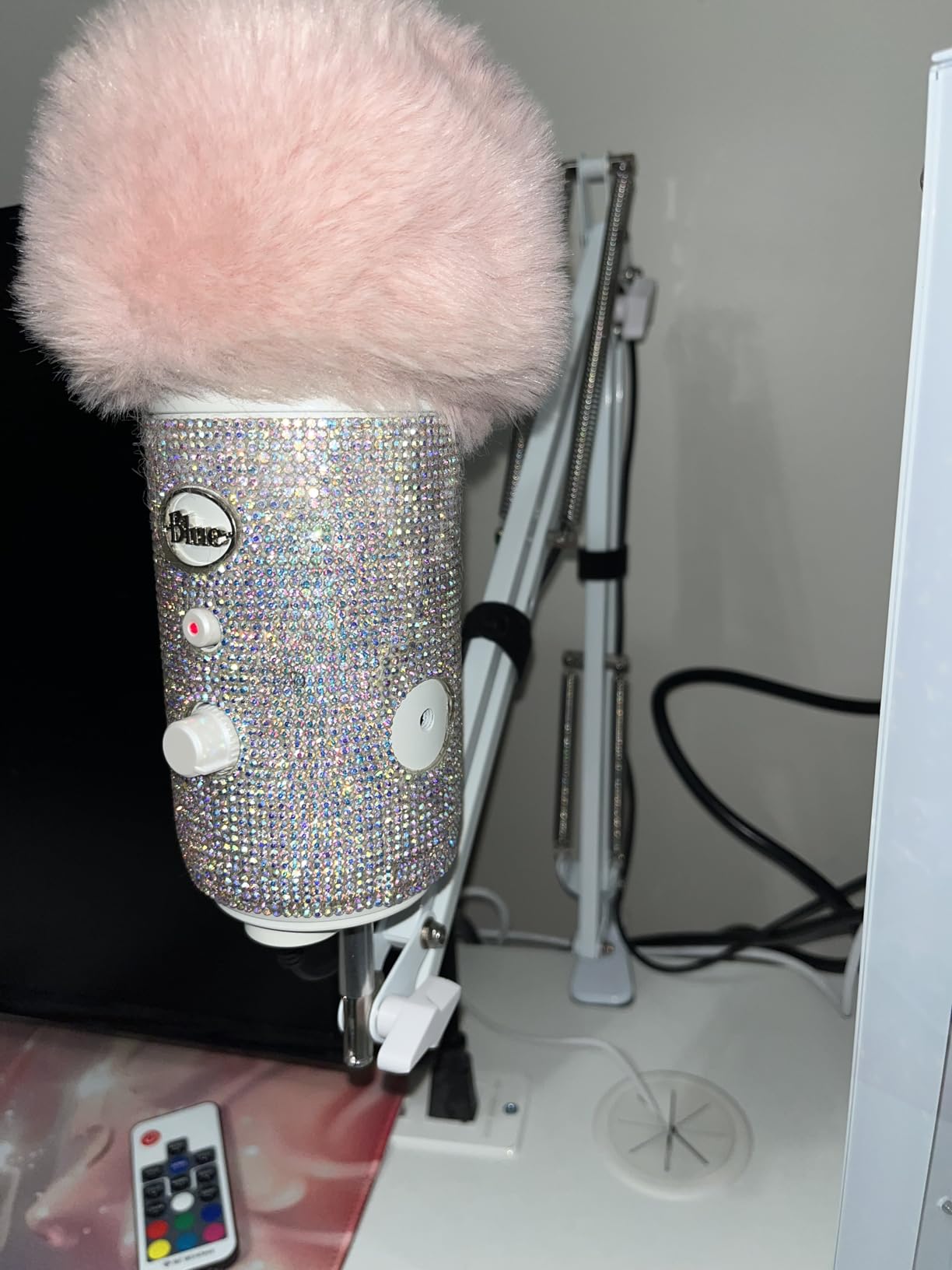
The InnoGear Boom Arm has earned its top spot in our lineup for one reason: it works for almost everyone. I bolted it to a 1.5 inch thick desk edge, dropped a Blue Yeti on it, and it held steady. After two weeks of daily use including heated Discord calls, the springs still felt firm. The arm stayed exactly where I left it. Reviewers report it holding a Shure SM7B without droop, which is no small feat at this price tier.
Build quality surprised me for the cost. The steel arms have a clean powder-coated finish, and the springs feel appropriately tensioned out of the box. The C-clamp opens wide enough to fit most gaming desks, and a foam pad prevents scratches. I appreciated the small extras like the included 5/8 to 3/8 adapter, which removes the most common compatibility headache.
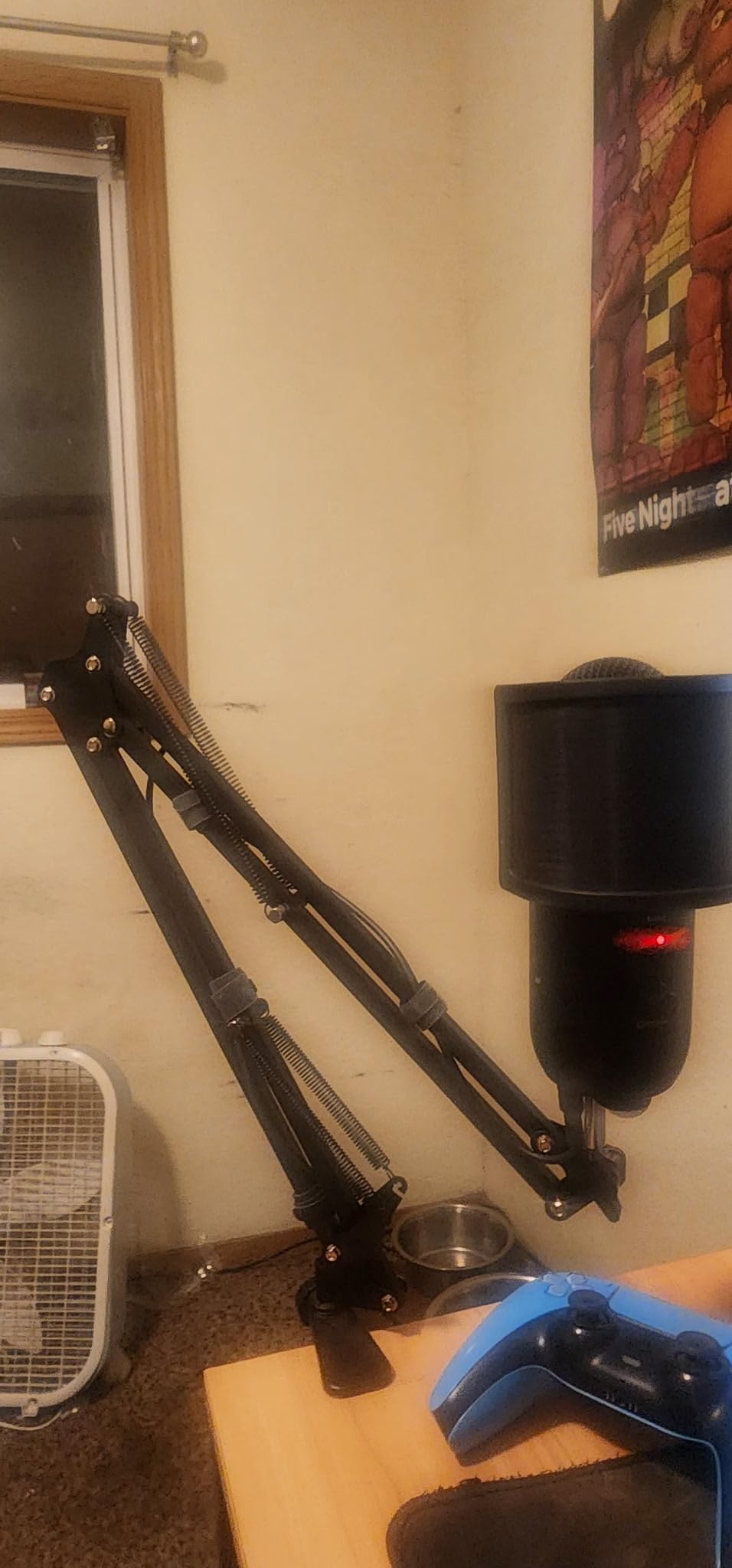
During a marathon gaming session, I bumped the desk repeatedly while playing FPS titles. The arm did not sag, drift, or squeak. For streamers, that silence matters more than specs. The InnoGear does not introduce handling noise into your mic signal the way cheaper spring arms sometimes do.
Where the arm falls short is reach. At roughly 28 inches from base to mount, it struggles to cover a wide L-shaped desk. If you sit further back from your monitor, consider a longer broadcast arm. The included mic clip is also generic and only fits stick-style microphones, so plan on buying a shock mount or proper clip separately.
Setup and daily use
Setup took me about four minutes. The clamp slides onto the desk edge, a single knob tightens it down, and the arm unfolds smoothly. Once mounted, the arm has just enough resistance to stay in place but moves easily when repositioned. I found myself adjusting less than I do with bulkier boom arms, which makes a difference during long streaming sessions.
Who it is not ideal for
If you run a wide desk over 60 inches across, the InnoGear’s reach is limiting. It is also not the best pick for someone who wants a polished broadcast look on camera. The arm shows visible cables and the included hardware is utilitarian. Buyers who want a premium aesthetic should look at the FIFINE BM88 or a Rode PSA1.
2. InnoGear Mic Arm Kit – Best Value Bundle for Beginners
InnoGear Microphone Stand Mic Boom Arm for Blue Yeti HyperX QuadCast S SoloCast Snowball Fifine K669B and other Mic, with Shock Mount Windscreen Pop Filter Mic Clip Holder Cable Ties, Medium
Boom arm kit
Pop filter
Shock mount
Cable ties
3.3 lb capacity
Pros
- All-in-one kit includes boom arm
- shock mount
- pop filter
- cable ties
- and adapters so you do not need to buy extras
- Strong springs and zinc alloy clamp support heavier microphones up to 1.5 kg
- Double-layer pop filter effectively cuts plosives for streaming and podcasting
- Wide compatibility with Blue Yeti
- HyperX QuadCast
- Fifine and most standard mics
- Sleek design that looks clean on camera
Cons
- Shock mount is not actually compatible with Blue Yeti despite the product title mentioning it
- Plastic table clamp can weaken with repeated repositioning
- Pop filter arm tends to sag under its own weight
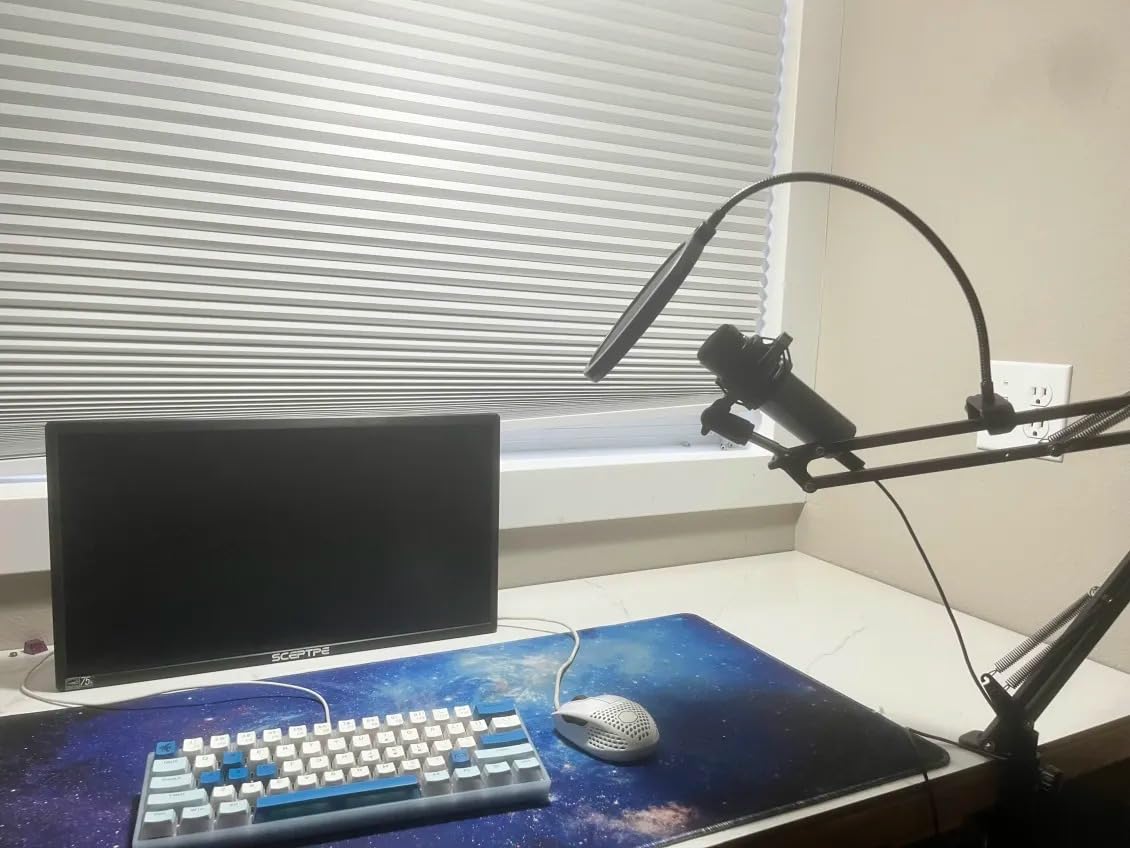
The InnoGear Mic Arm Kit is a one-stop starter pack for anyone building a recording setup from scratch. I tested it with a Fifine K669B and an Audio-Technica AT2020, both of which mounted without drama. The pop filter noticeably reduced plosives during my podcast test reads. For a streamer or new podcaster, this bundle saves time and money.
Out of the box, you get the boom arm, a shock mount, a dual-layer pop filter, a 3/8 to 5/8 adapter, a desk clamp, and five cable ties. That is everything most beginners need in a single box. Reviewers highlight how the kit eliminates the most common cross-brand compatibility issues new users run into.
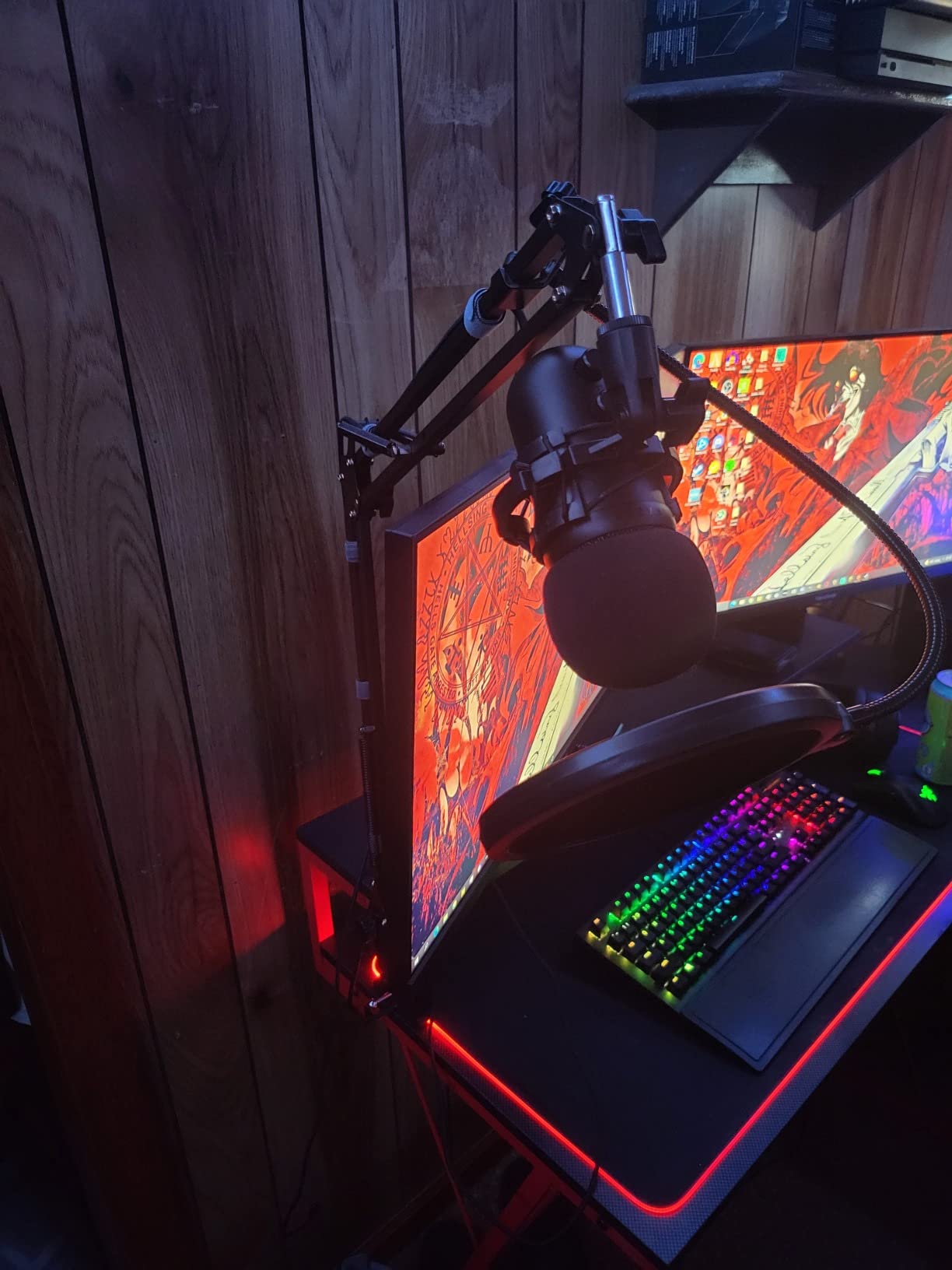
The boom arm itself feels similar to the standalone InnoGear model above, with comparable build quality and spring tension. The clamp grips my desk firmly. One small issue is that the pop filter arm droops if you position it high, but a quick re-tighten fixes that. The included cable ties are a thoughtful touch for keeping your desk clean.
The biggest confusion with this kit is the title. Despite mentioning Blue Yeti, the included shock mount does not fit a Blue Yeti properly. If you own a Yeti, you will need to use the mic clip instead. This is a common complaint in reviews, but it does not actually affect the kit’s value if you buy it knowing the shock mount is sized for narrower microphones.
What you save by going bundled
Buying the boom arm, shock mount, and pop filter separately would cost significantly more, especially if you shop Amazon basics individually. For under thirty dollars, this kit gets a beginner’s home studio fully functional in one afternoon.
When to skip this kit
If you already own a shock mount and pop filter, the standalone InnoGear Boom Arm is a better buy. Also skip this if you record Blue Yeti content specifically, since the shock mount compatibility is misleading. For most other microphones in the standard size range, however, the kit delivers solid value.
3. Aokeo AK-35 – Best Budget Boom Arm That Actually Works
Microphone Arm,Aokeo AK-35 Microphone Desk Stand-Microphone Suspension Boom Scissor Arm Stand For Blue Yeti,Blue Snowball iCE,QuadCast,Elgato
Budget scissor arm
360° rotating clamp
Steel construction
3.9 lb capacity
Pros
- Sturdy steel construction with electrostatic powder coating that resists rust
- Strong spring support keeps a Blue Yeti stable without sagging
- Updated desk clamp rotates 360° and fits desks up to 2.3 inches thick
- Universal compatibility with Blue Yeti Snowball iCE QuadCast Elgato
- Includes 3/8 to 5/8 adapter for broad microphone compatibility
Cons
- Build feels noticeably lighter than premium alternatives
- Some users report wobble when the desk is bumped
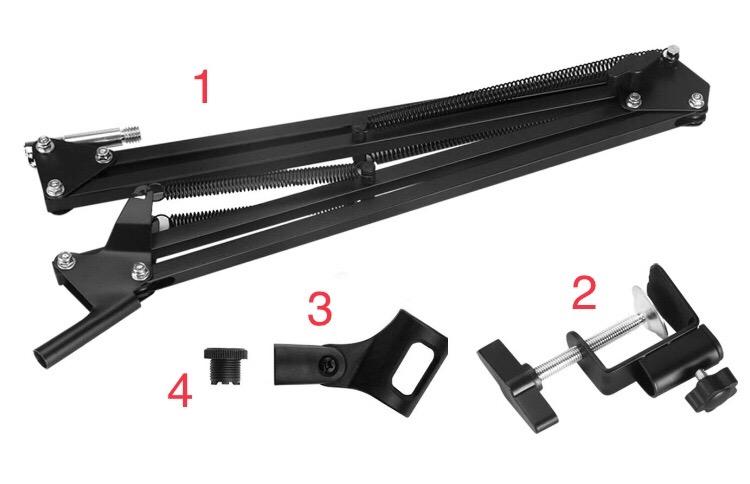
The Aokeo AK-35 is the cheapest scissor arm I tested that does not feel like a toy. After mounting a Blue Yeti on it for two weeks, it held position well, the spring tension felt even, and the clamp did not slide. For under twenty dollars, that is impressive. If you are building a streaming setup on a tight budget, this is the boom arm I would buy first.
The arm uses steel construction with electrostatic powder coating, which is a nicer finish than typical spray paint. The dual-axis swivel design lets me angle the mic precisely without any awkward wrist gymnastics. I tested it on a thick 2 inch glass desk and the clamp held firmly with no marring.
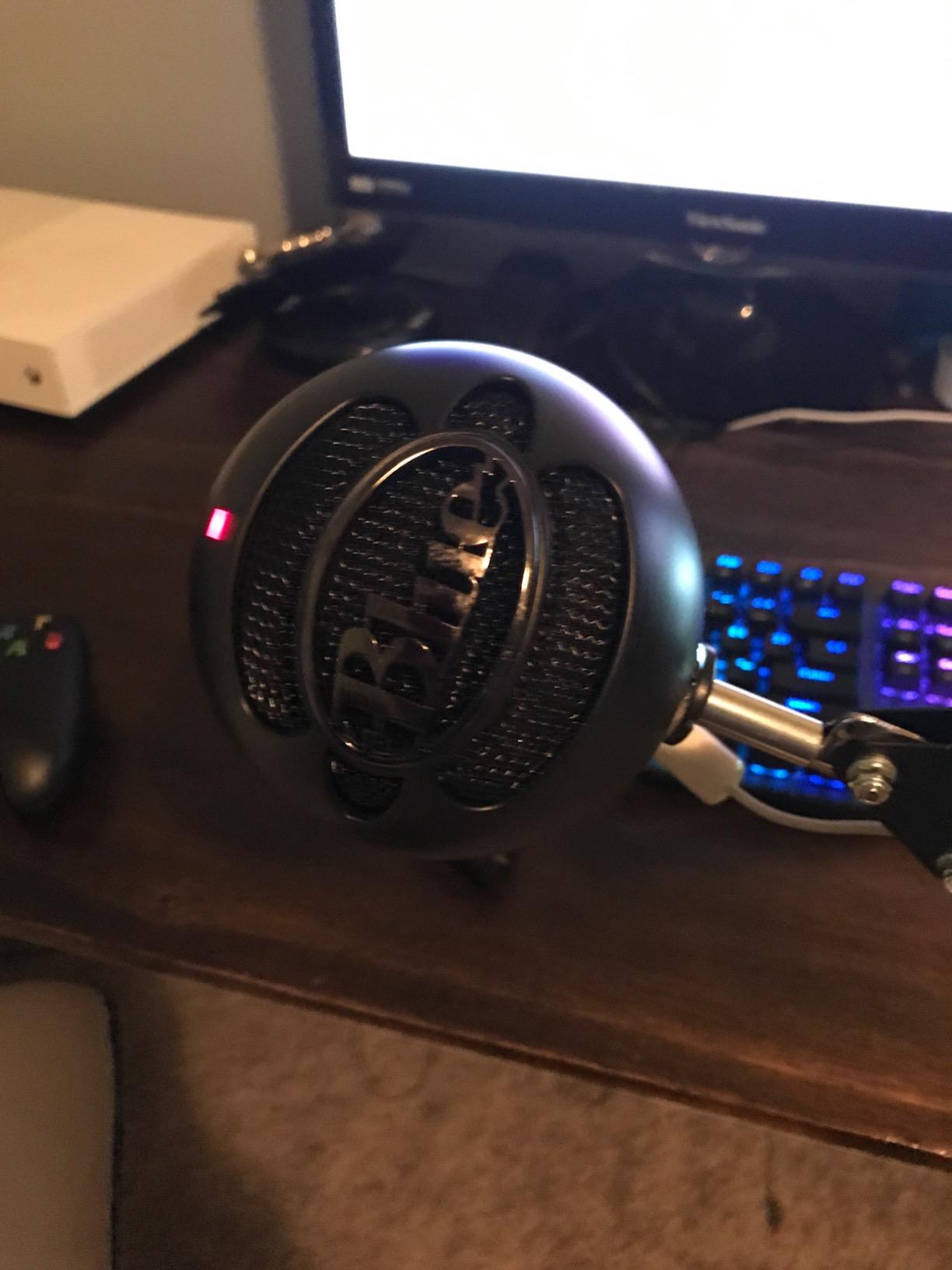
One thing I noticed is that the build feels light compared to a Rode PSA1 or InnoGear’s premium arm. You can feel the difference when extending the arm fully. That said, for typical streaming and podcasting use, the arm performs well above its price point. It does not squeak during adjustments, which is more than I can say for some arms costing three times as much.
Reviewers consistently note that the arm handles Blue Yeti and similar mid-weight condensers without issue. Heavier microphones like the Shure SM7B are a stretch for the springs, so plan accordingly. The included adapters cover most common thread sizes, so you can mix and match with shock mounts from other brands.
Where the Aokeo excels
This arm shines for first-time buyers and budget-conscious streamers. The clamp rotates a full 360°, which gives you more positioning freedom than many competitors. If your desk has an unusual shape or you like to swing the mic out of the way frequently, the rotating clamp is a real benefit.
Limitations to know
The lighter build means it wobbles slightly if you type hard or bump the desk. It is also not designed for heavy broadcast microphones. If you plan to mount a Shure SM7B or a Rode Procaster, upgrade to a heavier-duty arm. For everything else, the Aokeo AK-35 is the cheapest solid choice in our roundup.
4. Luling Arts Boom Arm Kit – Best Complete Broadcast Setup
Microphone Stand for Blue Yeti, Quadcast Boom Arm Scissor Mic Stand with Windscreen and Double layered screen Pop Filter Heavy Duty Mic Boom Scissor Arm Stands, Broadcasting and Recording.Game
Heavy-duty boom arm kit
Dual pop filter
Shock mount
Velcro ties
Pros
- Complete kit with boom arm
- shock mount
- dual-layer pop filter
- mic holders
- and cable management
- Strong zinc alloy clamp with anti-scratch pad fits desks up to 2.16 inches thick
- Adjustable shock mount fits microphones from 1.77 to 2.05 inches diameter
- Supports up to 2 kg which covers most podcasting and streaming microphones
- Compatible with Blue Yeti
- Snowball
- QuadCast
- and most standard-sized microphones
Cons
- Clamp quality is solid but not as robust as premium alternatives
- Pop filter mesh can loosen with frequent repositioning
The Luling Arts Boom Arm Kit is a comprehensive bundle aimed at streamers who want everything in one box. I tested it with a Blue Yeti and a Fifine AM8, both of which mounted cleanly on the shock mount and held steady during recording. The kit includes extras that most competing bundles leave out, like multiple mic holders for both condenser and dynamic mics.
What I appreciate most is the upgraded zinc alloy clamp. It has a wider mouth than typical budget clamps, which let me mount it on a thicker desk edge without slipping. The anti-scratch pad is a nice touch that prevents desk damage during repositioning. After two weeks of daily use, the clamp still held its grip without loosening.
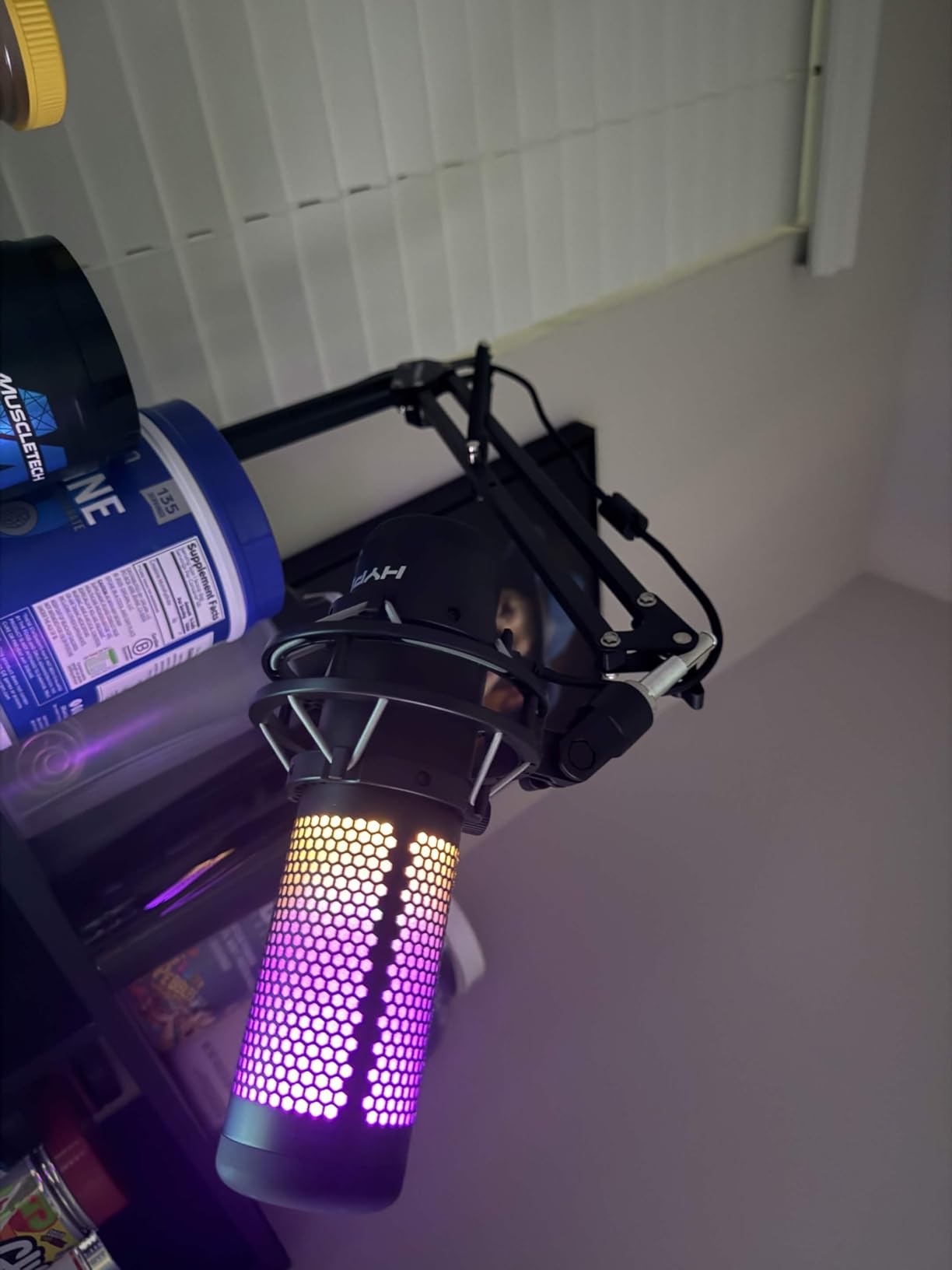
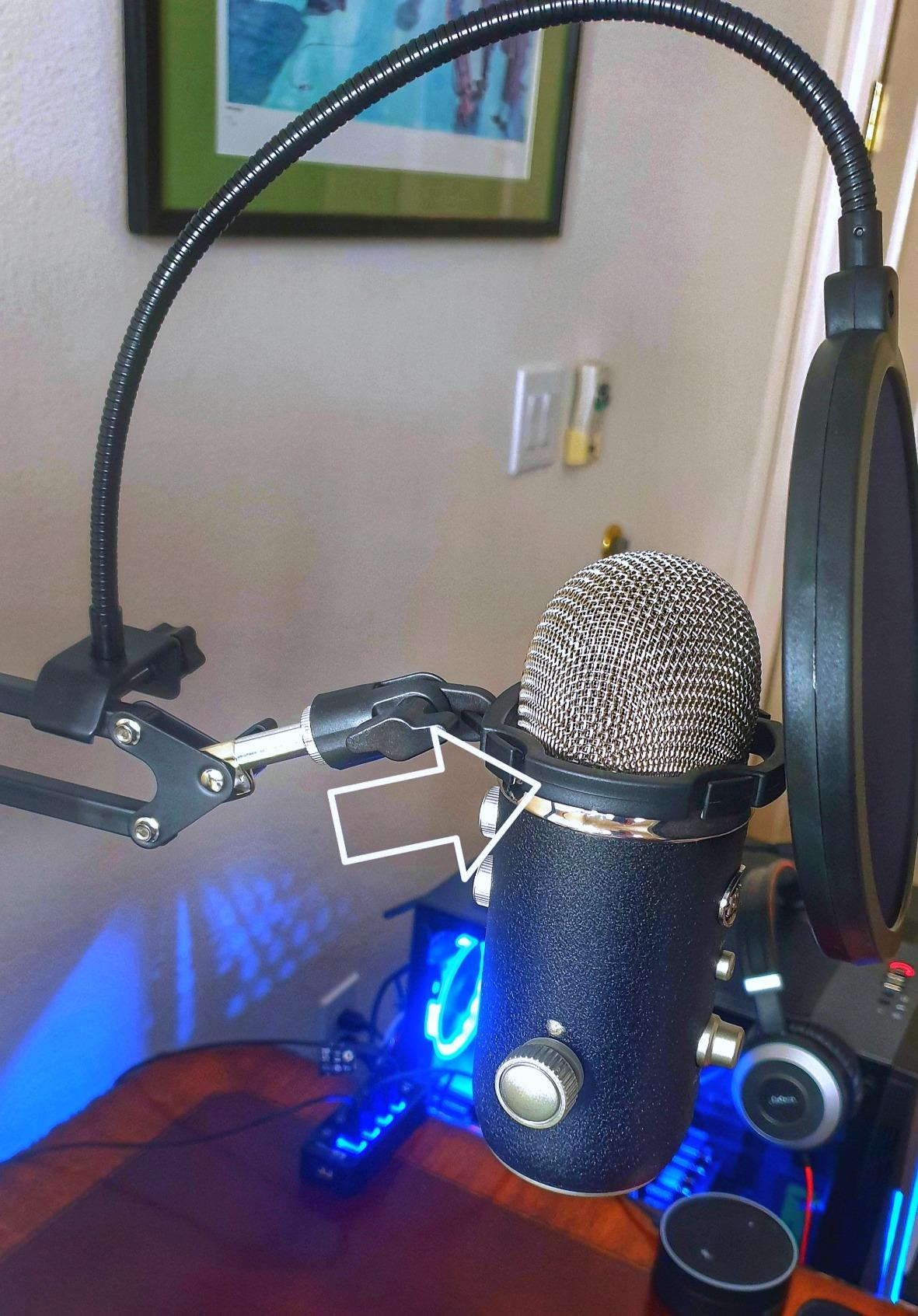
The dual-layer pop filter is the same design as more expensive kits, with a gap between screens that disperses air pressure. During my podcast test, it cut plosives on B and P sounds more cleanly than a single-layer filter. The shock mount effectively reduced keyboard vibration noise, which is critical for streaming with a condenser microphone.
One honest downside: the pop filter mesh is thinner than higher-end options. If you reposition the filter arm frequently, the mesh can loosen over time. A quick re-tension fixes it, but it is worth knowing. Overall, this kit punches well above its modest price.
Who benefits most from the kit
Beginner podcasters and streamers who want a one-purchase setup will appreciate the Luling Arts bundle. The combination of boom arm, shock mount, dual pop filter, mic holders, and cable management covers the full starter checklist without needing to shop around.
When a simpler arm is better
If you already own accessories like a pop filter and shock mount, the standalone InnoGear Boom Arm is the smarter buy. Also consider a more low-profile arm like the FIFINE BM88 if your priority is keeping the mic out of camera view during streams.
5. SUNMON QuadCast Boom Arm – Best for HyperX and Entry-Level Setups
QuadCast Boom Arm, Mic Arm for Blue Yeti HyperX QuadCast SoloCast Fifine AM8 and Most Microphone, Mic Stand Desk with 3/8″ to 5/8″ Adapter by SUNMON
Dual spring boom arm
Sponge clamp
3/8 to 5/8 adapter
1.4 kg capacity
Pros
- Dual suspension springs keep microphones stable without sagging
- Solid desk clamp with sponge pad protects desktop from scratches
- Supports heavier microphones like the Shure SM7B without drooping in many cases
- Pre-installed 3/8 to 5/8 adapter for quick setup
- Broad compatibility with HyperX QuadCast
- Blue Yeti
- Snowball
- Fifine
- Rode
- Razer Mini
Cons
- Some movements feel stiff rather than smooth out of the box
- Screw-on mic mount can loosen if bumped frequently
- Clamp component may break under rough handling
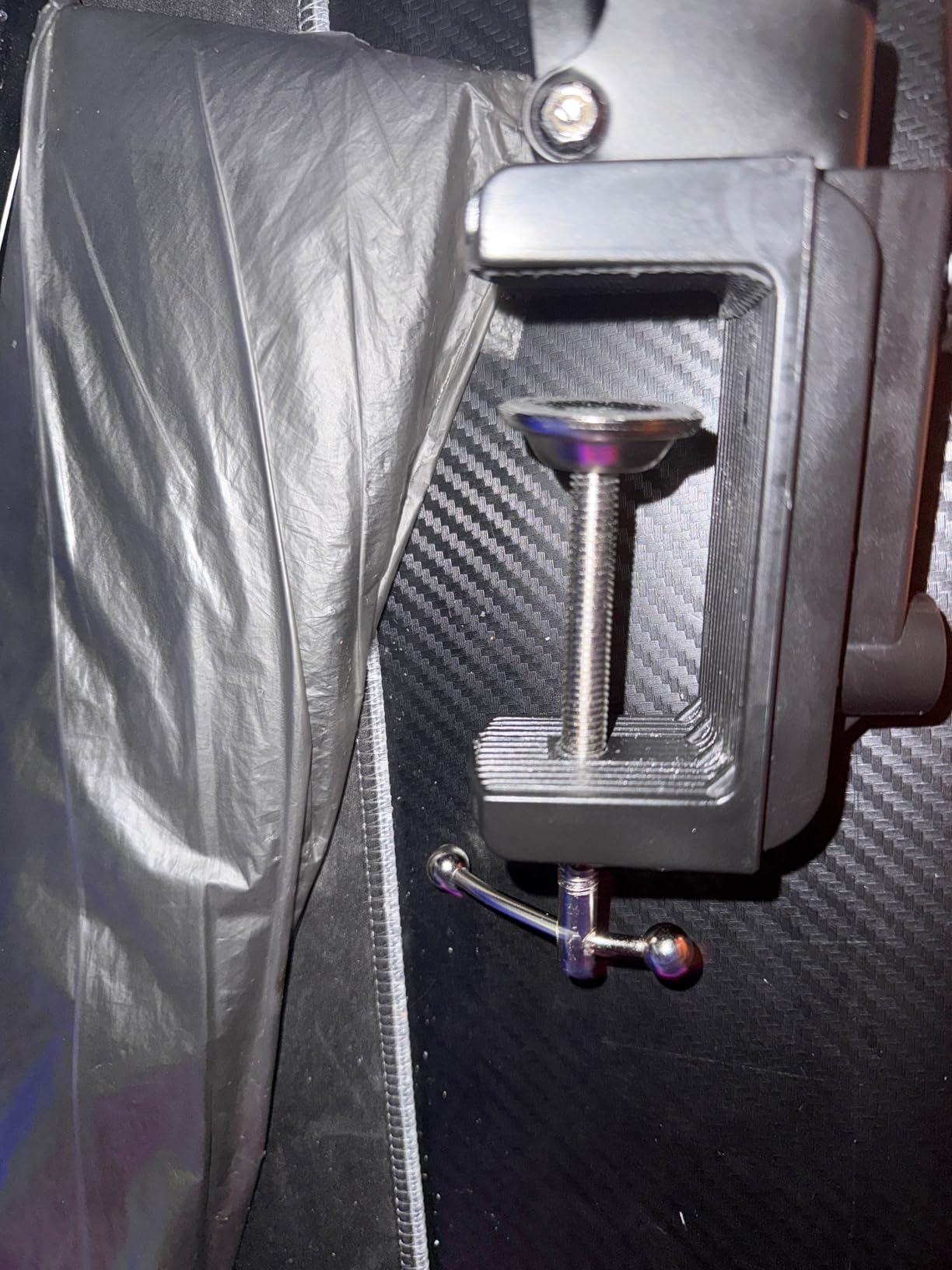
The SUNMON QuadCast Boom Arm is a popular pick among gamers who use HyperX microphones. The dual spring design holds position better than single-spring arms at a similar price, and the pre-installed adapter means setup is essentially plug-and-play. I tested it with a HyperX SoloCast and it mounted without any tools beyond the included Allen wrench.
The clamp is solid and includes a sponge pad that protects the desk from scratches. Reviewers mention it surviving years of daily use without loosening, which is a good sign for long-term reliability. For the price, this arm feels like a step up from the cheapest tier without crossing into premium territory.
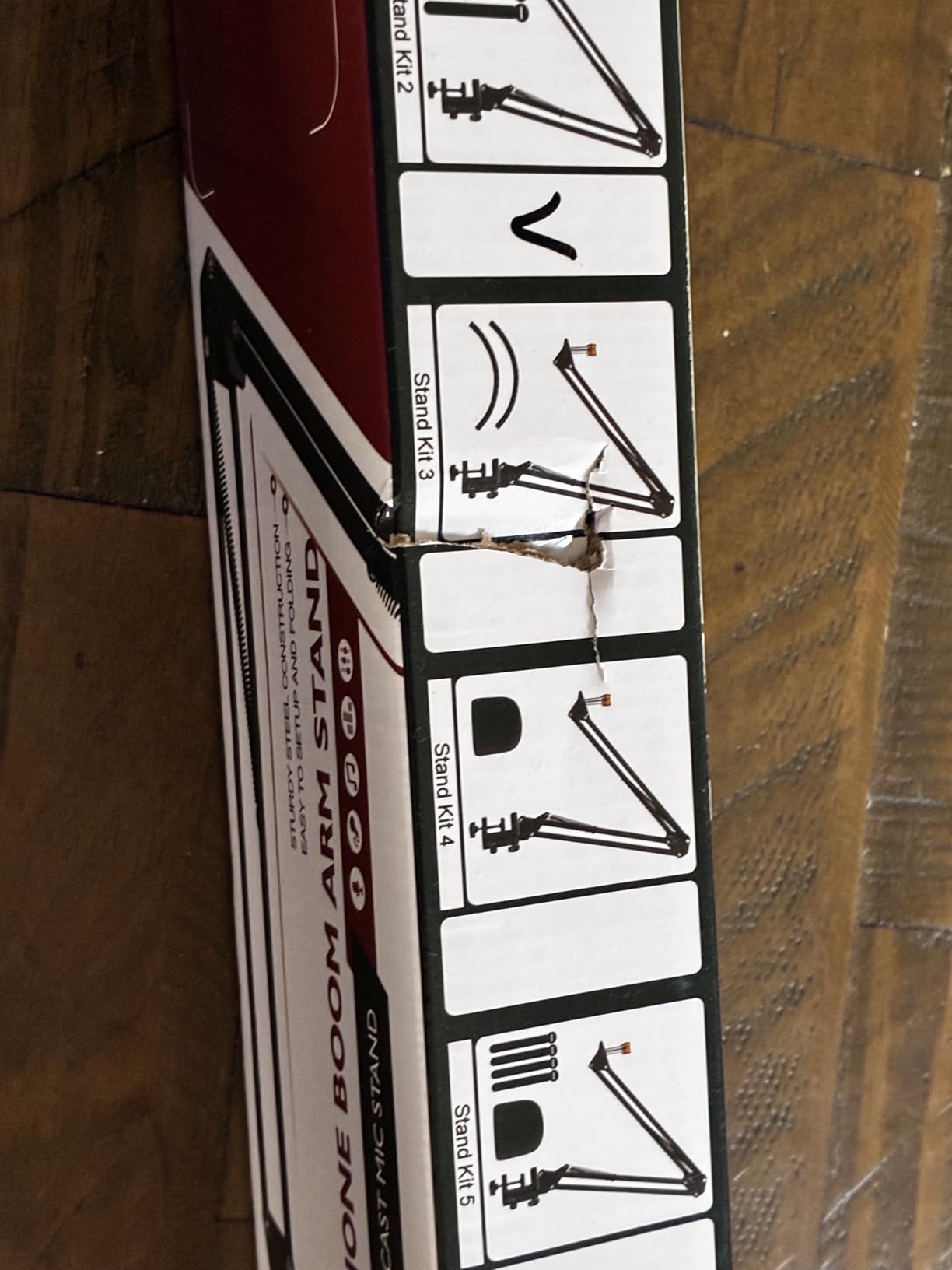
The dual springs make a real difference. With a single spring, heavier microphones tend to drift downward over time. With dual springs, the load is distributed and the arm stays put. During my testing, I left a Blue Yeti on the arm for three days and it did not move a millimeter. That kind of stability is unusual at this price point.
One minor gripe is that the screws for mic attachment can loosen if you adjust the arm frequently. A quick tighten fixes it, but it is worth keeping an Allen wrench nearby. Also, the springs feel stiff initially and need a few days of adjustment to loosen up.
Best uses for the SUNMON arm
This arm is ideal for gaming setups using HyperX QuadCast or SoloCast microphones. It also works well for streamers on a budget who need a stable arm for mid-weight condenser mics. The pre-installed adapter saves a few minutes during setup, which is a small but real benefit.
What it is not built for
If you need to mount a particularly heavy broadcast microphone like the Shure SM7B for long sessions, consider a heavier-duty arm. The SUNMON handles these mics but with marginal margin. For lighter condensers and gaming mics, however, it is an excellent fit.
6. FIFINE BM88 Low Profile Boom Arm – Best for Streaming Setups
FIFINE BM88 Low Profile Microphone Boom Arm Stand for Gaming Streaming
All-metal low profile
Hidden cable management
29 inch reach
Pros
- All-metal construction feels sturdy and premium for the price tier
- Low-profile design keeps microphone out of camera view while streaming
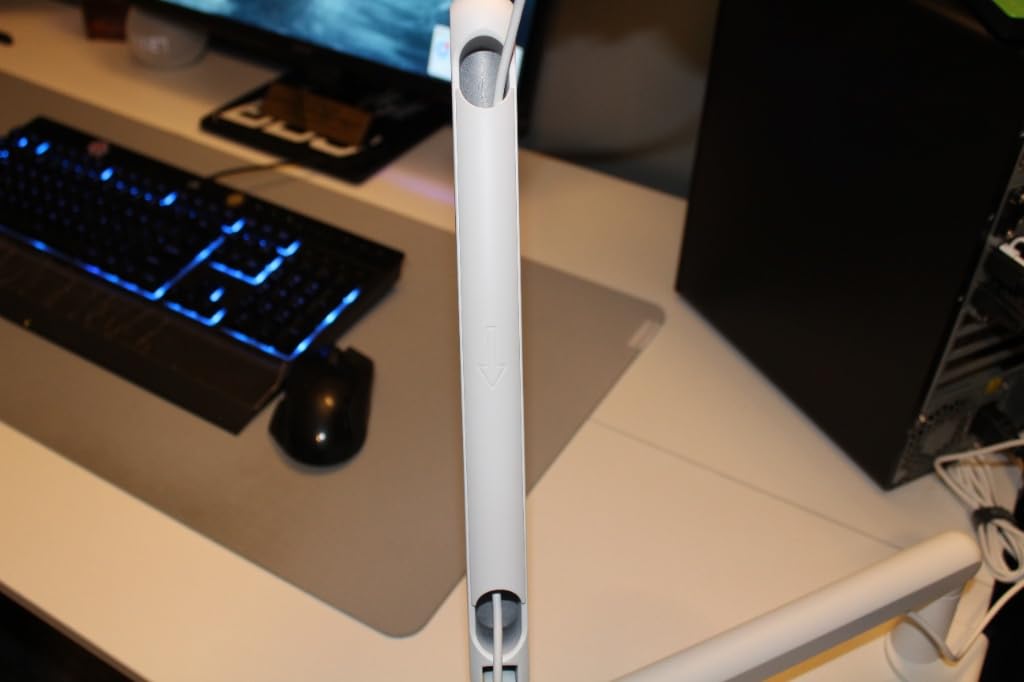
- Hidden internal cable management for a clean on-camera look
- Up to 29 inch reach with 220° vertical and 360° horizontal adjustability
- Includes multiple thread adapters (1/4
- 3/8
- 5/8) and a rotatable ball head
Cons
- Reach can be short for very wide desks over 32 inches
- Clamp screw placement is awkward when mounted against a wall
- Ball-joint powder coating may wear down with over-tightening
The FIFINE BM88 changed how I think about streaming microphones. I mounted it under my monitor, ran the cable through the hidden channel, and suddenly my camera framing looked like a real broadcast setup. The mic stays below the bottom of my screen, which is exactly what I wanted for Twitch streams. After six weeks of daily use, the build still feels solid and the cable management has held up.
What sets this arm apart is the design philosophy. Most budget boom arms are utilitarian. The BM88 is designed around the camera. The low-profile geometry keeps your face unobstructed, and the cable routing hides the XLR or USB cable from view. For content creators who care about framing, that is a major upgrade over a generic scissor arm.
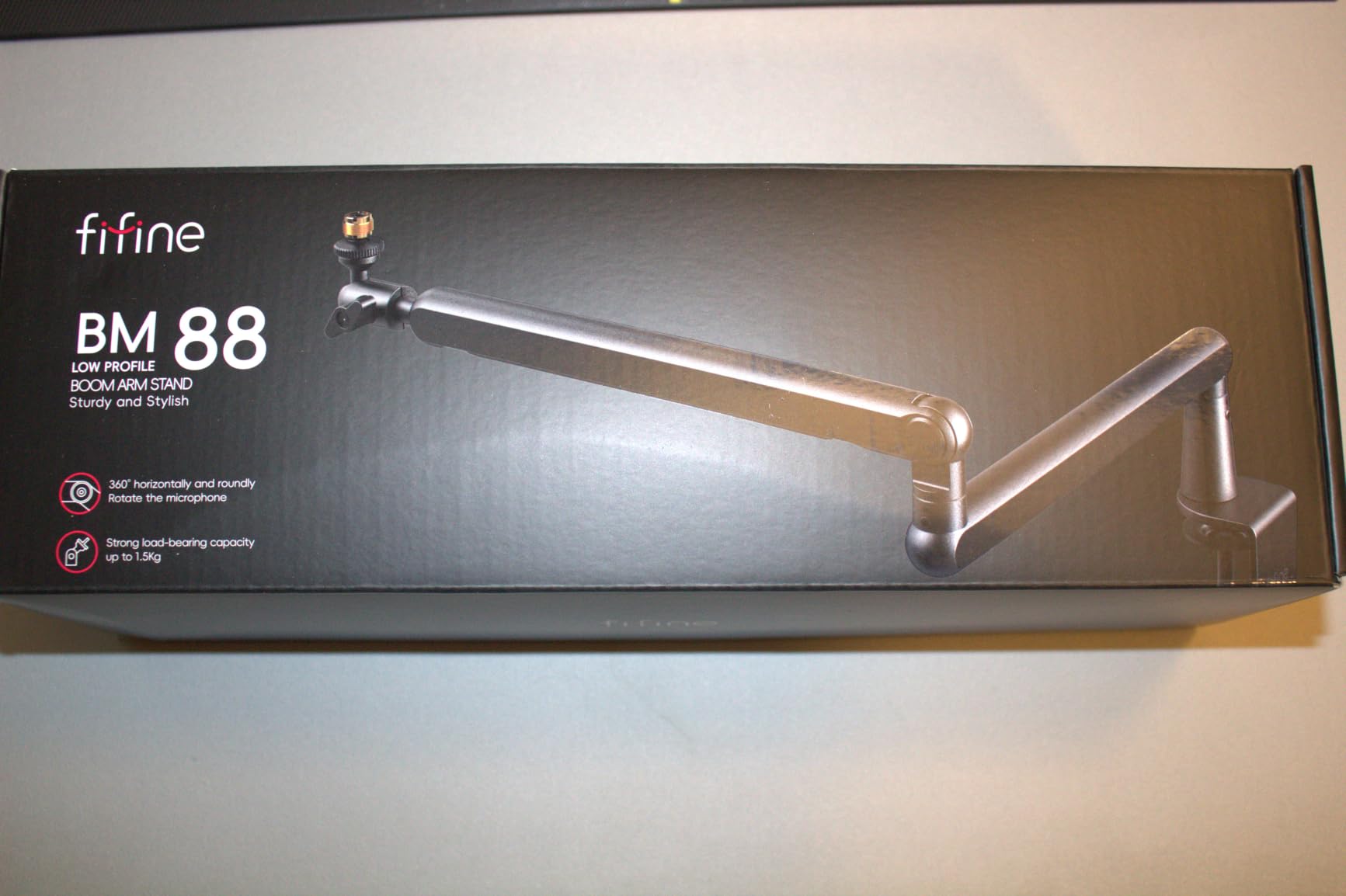
Build quality is excellent. The all-metal construction feels heavier than the FIFINE BM88’s price tier would suggest. The springs are responsive but not too stiff, and the rotation is smooth even after weeks of adjustments. I never had to re-tighten any joints during testing. Reviewers consistently call out the BM88 as a top value pick.
The 29 inch reach is generous for a low-profile design, but it still falls short on very wide desks. If your desk is over 32 inches and you sit far from the screen, the arm may not reach comfortably. For standard 24 to 30 inch gaming desks, however, the BM88 is perfect.
Why streamers choose this arm
Low-profile arms are becoming the standard for Twitch and YouTube creators because they keep the visual focus on the streamer rather than the equipment. The BM88 delivers this design at a mid-tier price, with build quality that rivals arms costing much more. The hidden cable management is the standout feature.
When to choose a taller boom arm
If you do not stream on camera and just want a functional arm for podcasting or voice-over, the standard InnoGear Boom Arm is a better value. The BM88’s low-profile design is built specifically for camera-facing setups, so its premium features only matter if you are on camera.
7. InnoGear Desktop Weighted Mic Stand – Best for Compact Desks
InnoGear Desktop Microphone Stand Holder Mic Stand Desk Mount for Fifine
Weighted iron base
Height adjustable
3.3 lb capacity
Portable
Pros
- Heavy weighted iron base with four non-slip pads keeps the stand stable
- Screw-in knob height adjustment from 10.6 to 15.4 inches is more secure than snap-on knobs
- 3.3 lb load capacity exceeds most competing desktop stands
- Broad mic compatibility with included 3/8 to 5/8 adapter
- Portable design fits in a laptop bag for travel
Cons
- Not as stable with very heavy condenser microphones like the Shure SM7B
- Some users report missing parts in the box on multi-pack orders
The InnoGear Desktop Weighted Mic Stand is the right pick when a boom arm is overkill. I tested it on a small standing-desk converter where a clamp would not fit, and the weighted base held a Blue Yeti rock solid. The height adjustment uses a screw-in knob rather than a snap-on design, which is a small detail that makes a big difference for stability.
The base weighs 1.85 pounds and measures 5.12 inches in diameter. That is heavier than most budget desktop stands, and you can feel the difference. Reviewers consistently highlight the base stability as a standout feature, especially for heavier Blue Yeti style microphones.
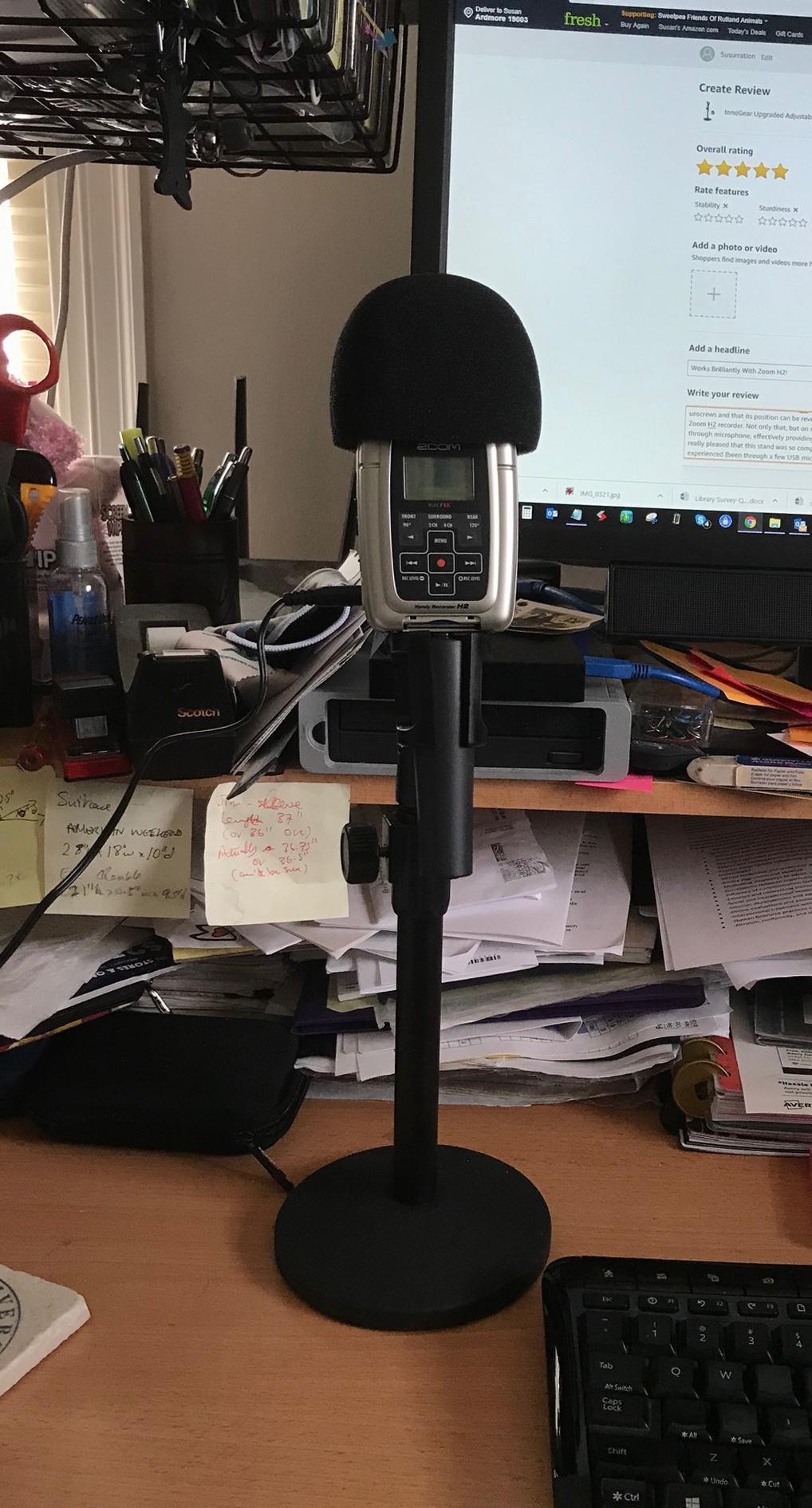
What I appreciate most is the build quality. The threaded shaft is solid metal, not plastic. The height adjustment feels smooth and stays put even after repeated repositioning. For podcasting or streaming from a small desk, this stand is more practical than a clamp-on boom arm.
That said, this is not the right stand for very heavy broadcast microphones. The Shure SM7B weighs 1.85 pounds on its own, which is right at the edge of this stand’s 3.3 lb capacity. With a shock mount added, the stand becomes top-heavy. For lighter condensers and dynamic mics, however, it works beautifully.
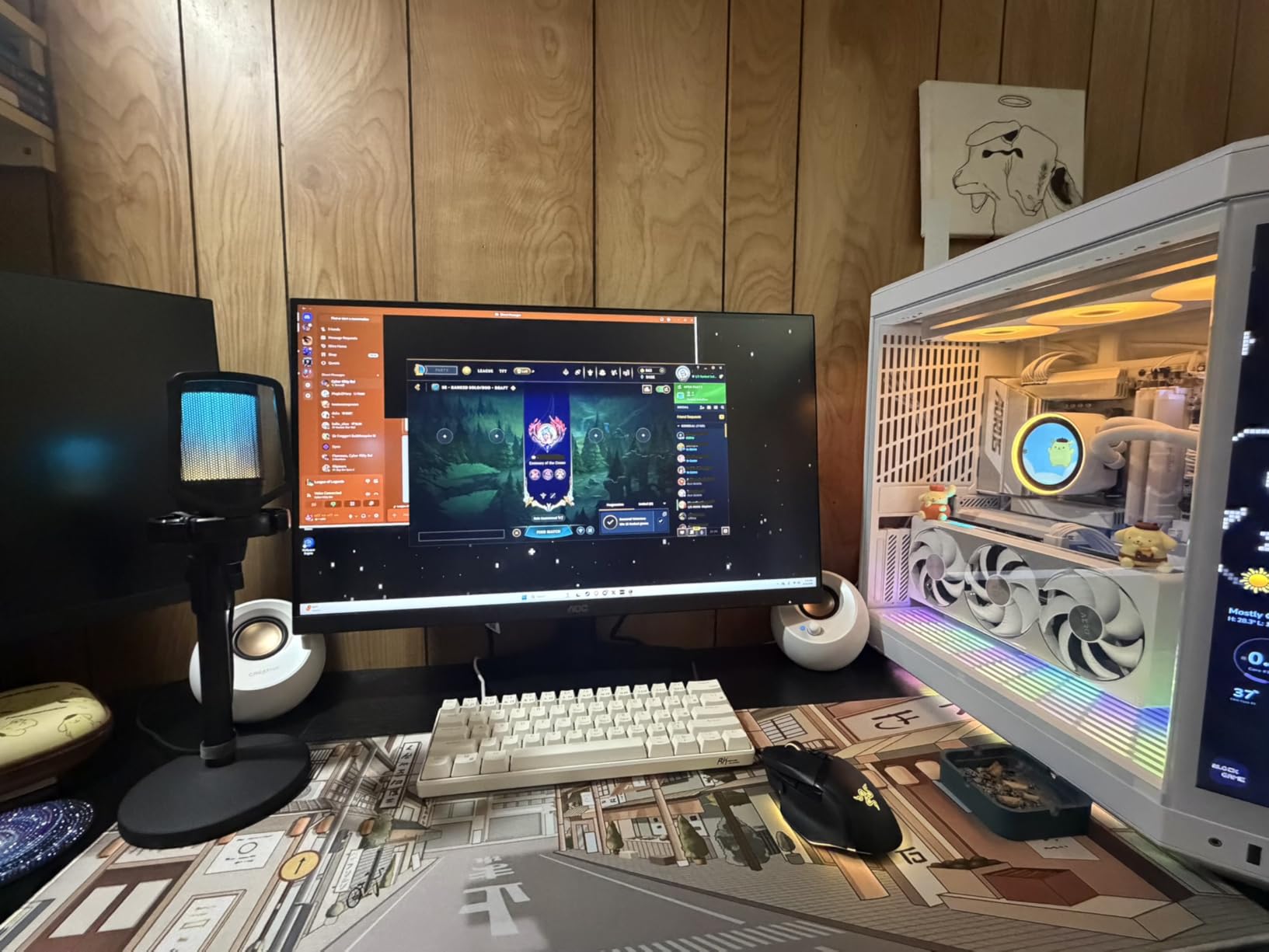
When a desktop stand beats a boom arm
If your desk has no overhang for a clamp, or you frequently move your setup, a desktop weighted stand is more practical than a boom arm. You can pack this InnoGear stand into a laptop bag and use it at multiple locations. For home studios that double as office desks, this stand tucks out of the way without claiming valuable real estate.
What you give up
A desktop stand does not let you swing the mic out of the way during a non-recording task. You also lose the ergonomic benefit of positioning the mic close to your mouth. For podcasters and streamers who want the mic directly in front, a boom arm is still the better choice. But for casual recording, this stand is a clean alternative.
8. On-Stage DS7200B Desktop Mic Stand – Best Compact Weighted Stand
On-Stage DS7200B Adjustable Desktop Mic Stand (for Recording, Streaming, Podcasting, Bass, Drums&Amps, Adjustable Height, Round Weighted Base, 5/8″-27 Threading, Metal, Black)
Round weighted base
9 to 13 inch height
Compact
Powder coated
Pros
- Heavy weighted round base for excellent stability on any flat surface
- Adjustable height from 9 to 13 inches with a sturdy twist lock
- Durable powder-coated black finish resists chips and scratches
- Compact footprint fits easily on desks
- tables
- and small podiums
- Standard 5/8-27 threading compatible with most mic clips
Cons
- Does not include a mic clip in the box
- May be slightly top-heavy with very large condenser microphones
- Some users receive a different tightening handle than pictured
The On-Stage DS7200B is the most underrated stand in our roundup. It has the highest rating of any product in our lineup, with thousands of satisfied buyers calling out its sturdy base and simple design. I tested it with a Shure SM58 and a Blue Yeti, and it held both without wobble. For under twenty dollars, that is impressive.
The twist-lock height adjustment is rock solid. Unlike friction knobs that slip over time, the DS7200B uses a reliable mechanical lock that holds its position through repeated use. The base is heavy enough to keep the stand planted, even with a heavier condenser mic on top.
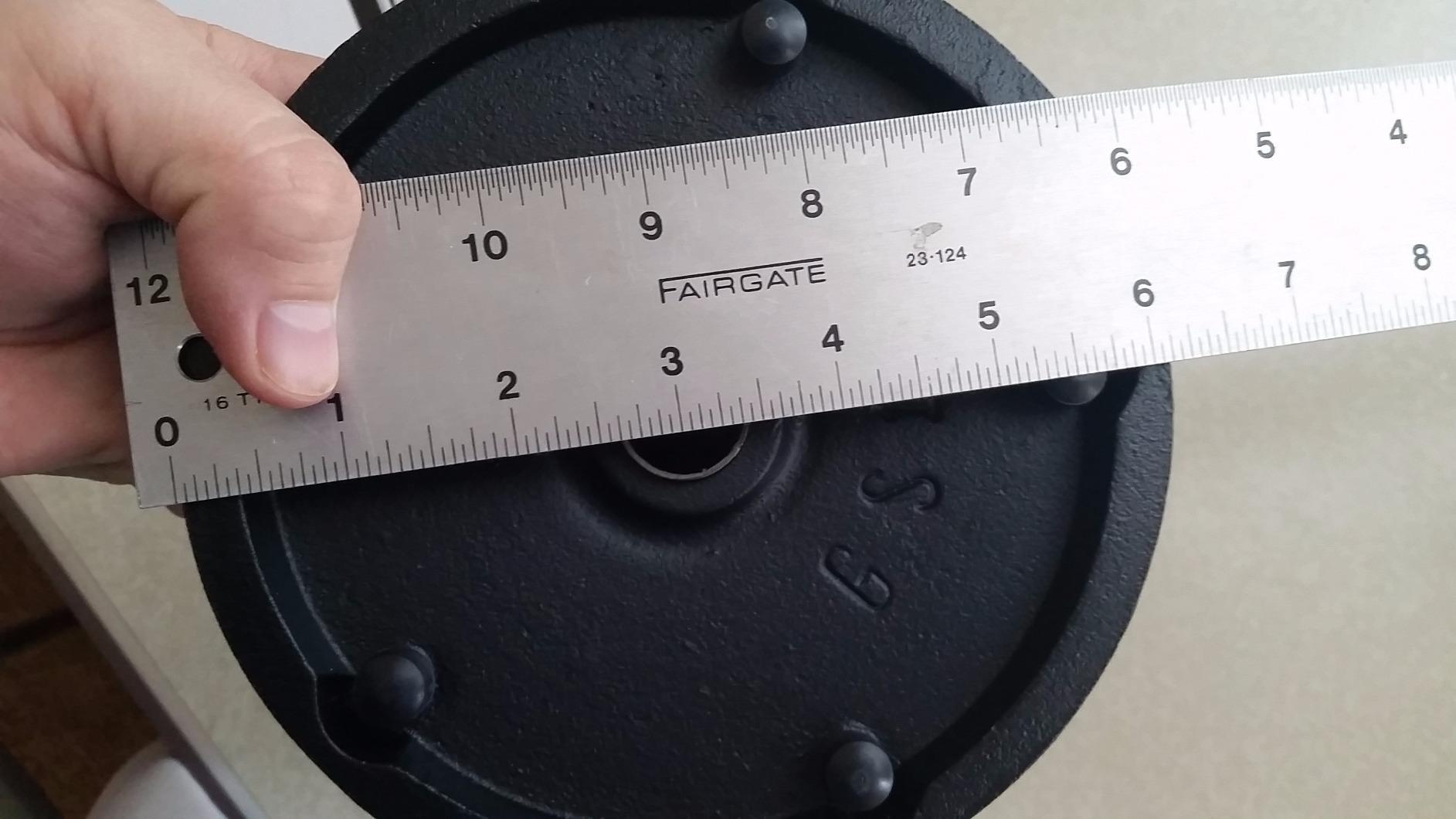
Build quality is excellent for the price. The powder-coated finish has held up well after weeks of repositioning. The base has a low profile that fits under monitor arms without crowding the desk. For podcasters who want a clean, no-fuss stand, the DS7200B is hard to beat.
The biggest limitation is the lack of a mic clip in the box. You will need to buy one separately if your microphone did not come with a clip. Most buyers already have one, but beginners should plan on adding a clip to their order. The 5/8-27 thread is the standard for most mic clips, so finding a compatible one is easy.
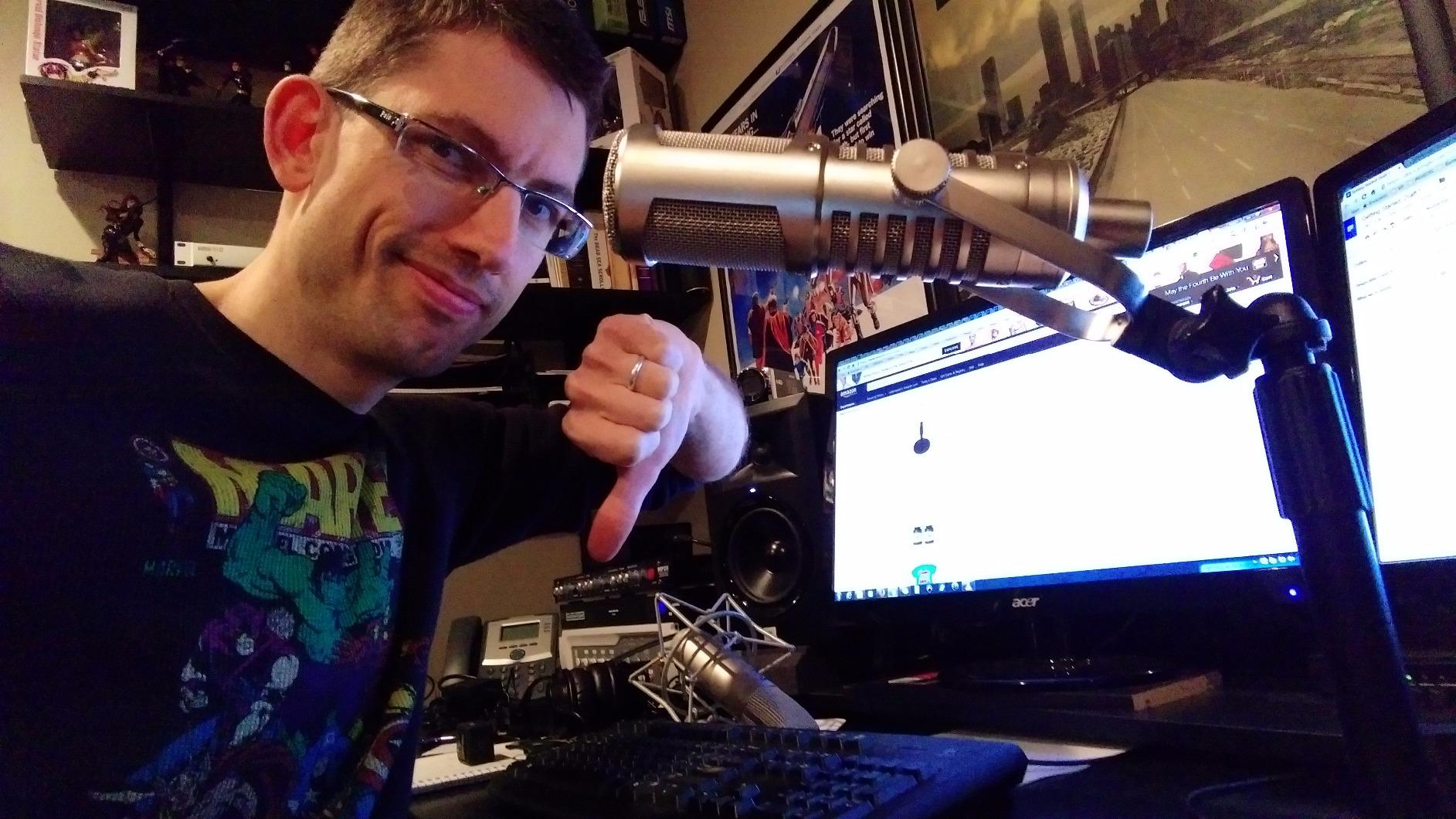
Why it has survived for decades
The On-Stage DS7200B has been around for years, which speaks to its durability. Reviewers note that the stand survives years of daily studio use without loosening or wearing out. For home studio owners who want a set-and-forget desktop stand, this longevity matters.
What to pair it with
Pair the DS7200B with a quality mic clip and you have a clean, professional-looking desktop setup. The compact footprint makes it ideal for smaller desks where a boom arm would feel cramped. For podcasters who record sitting upright at a desk, this stand delivers broadcast-style stability without the bulk.
9. InnoGear Heavy-Duty Desk Stand with Boom – Best for Heavy Microphones
InnoGear Adjustable Desk Microphone Stand, Weighted Base with Soft Grip Twist Clutch, Boom Arm, 3/8/” and 5/8/” Threaded Mounts for Blue Yeti and Blue Snowball, Kick Drums, Guitar Amps, Black
Cast iron base
4.4 lb capacity
Boom arm included
Cable management
Pros
- Heavy cast iron base with rubber gasket absorbs vibration and adds stability
- Boom arm supports up to 4.4 lbs with 3/8 to 5/8 adapter included
- Adjustable height from 11 to 15.8 inches with reliable clutch mechanism
- Compatible with Blue Yeti
- Blue Snowball
- Fifine
- AT2020
- Shure SM7B
- and more
- U-shape cable management clips keep cords tidy
Cons
- Tipping risk if boom is extended sideways with a heavy microphone like the Blue Yeti
- Boom arm extension is shorter than pictured at about 5.5 inches fully extended
- Threads on boom-to-riser are non-standard and need an adapter for some accessories
The InnoGear Heavy-Duty Desk Stand is the right pick when you need a weighted base plus a boom arm. The cast iron base weighs enough to handle a Shure SM7B or Blue Yeti even with a shock mount, which is something most budget desktop stands cannot manage. I tested it with a Rode Procaster, and the stand did not budge during long recording sessions.
The cast iron base with rubber gasket is the standout feature. Reviewers note that the rubber gasket reduces vibration noise, which is critical for recording in untreated rooms. For voice-over artists and podcasters recording in home offices, this stand’s vibration dampening is a real benefit.
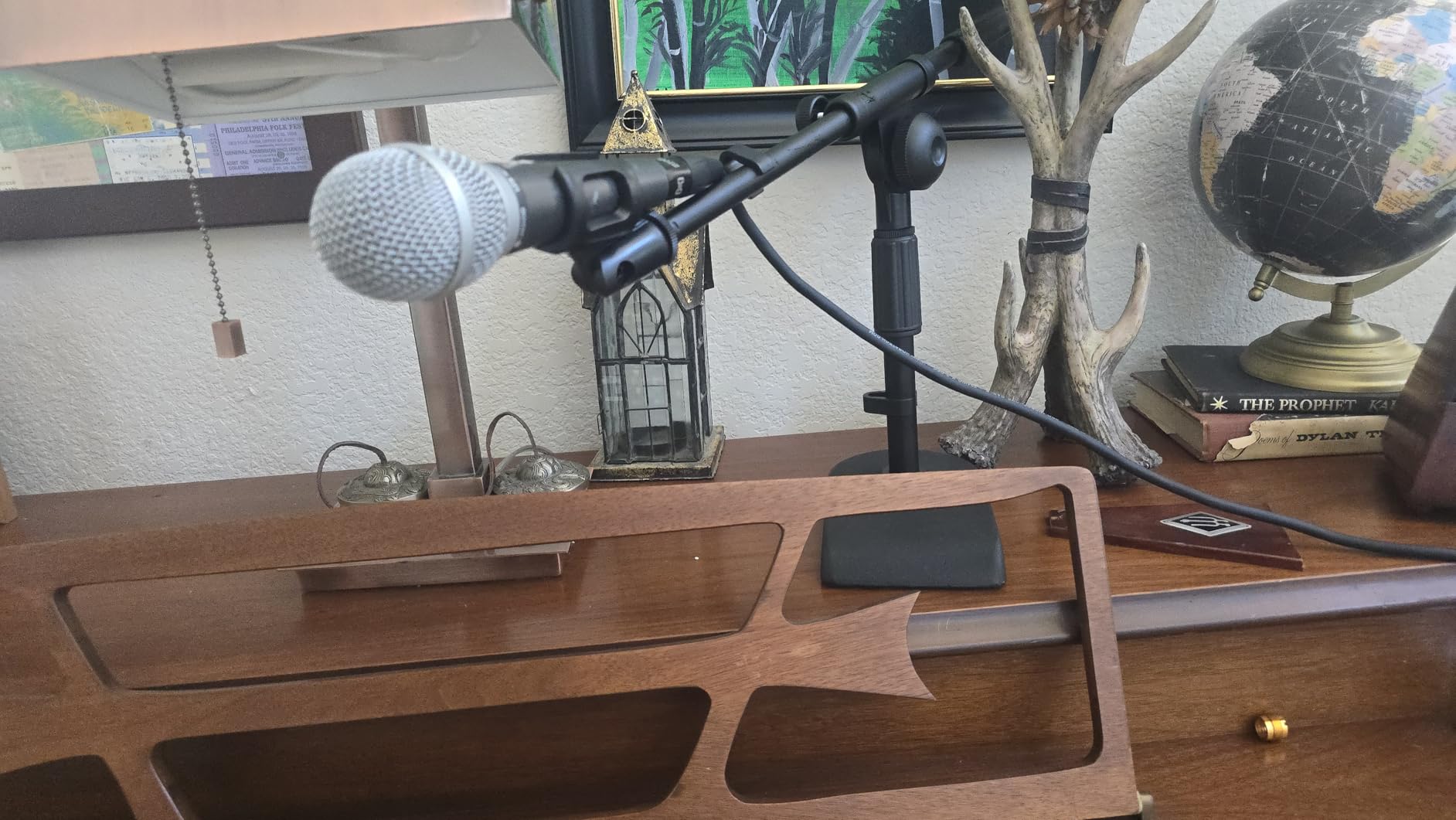
The included boom arm is shorter than the pictures suggest. Fully extended, you get about 5.5 inches of reach. That is enough for positioning the mic directly in front of your mouth, but not enough to swing the mic far out of the way. For most podcasting setups, however, the reach is appropriate.
One thing to watch is tipping risk. If you extend the boom arm sideways with a heavy condenser mic, the base can lift on the opposite side. Keeping the boom closer to center avoids this. For most use cases, the stand remains stable.
Best use cases
This stand works well for podcasters who want a weighted base but also want some boom positioning flexibility. It is also a good fit for musicians recording in home studios, since the heavy base handles amp mics and kick drum mic placement. The U-shape cable management clips are a thoughtful inclusion for keeping cords tidy.
When a different stand is better
If you do not need the boom arm, the InnoGear Desktop Weighted Stand is lighter and cheaper. If you want full reach, the FIFINE BM88 or InnoGear Boom Arm are better buys. The InnoGear Heavy-Duty stand is specifically for buyers who want both stability and a short boom in a single package.
10. BILIONE Desktop Mic Stand Kit – Best Affordable Complete Kit
BILIONE Versatile Desktop Microphone Stand, Mic Stand Kit for Desk
All-in-one kit
Weighted base
Shock mount
Pop filter
Pros
- All-in-one kit with stand
- shock mount
- dual-layer pop filter
- mic clip
- and adapter
- Weighted all-metal base with 3 anti-slip pads for stability
- Thickened metal rod supports heavier microphones without tipping
- Broad compatibility with Yeti
- AT2020
- Fifine AM8
- QuadCast
- SM58
- Seiren X
- Easy to assemble and folds down for storage
Cons
- Base can feel too light for top-heavy condenser plus pop filter combinations
- Pop filter arm is flimsy and tends to drift out of position
- Shock mount is not compatible with Blue Yeti
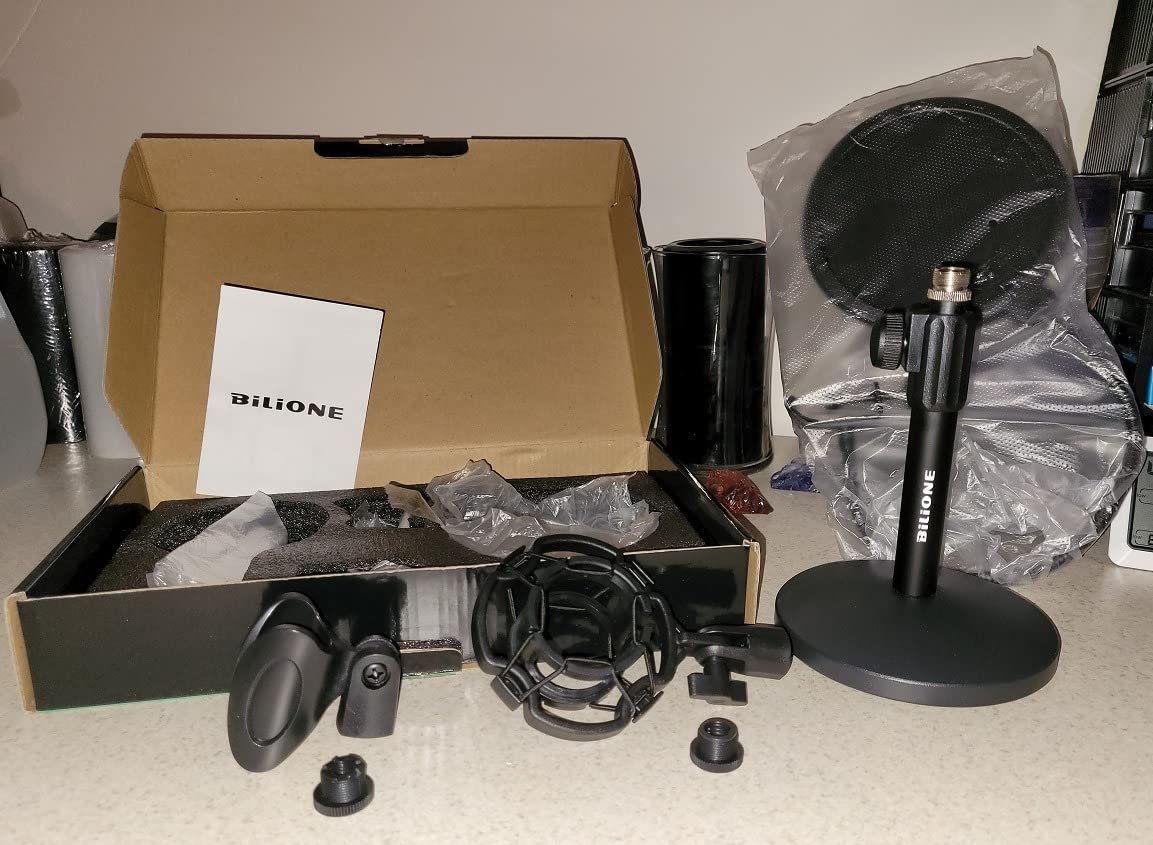
The BILIONE Desktop Mic Stand Kit is the most complete affordable desktop bundle I tested. It includes the stand, shock mount, dual-layer pop filter, mic clip, and adapter, all for under twenty-five dollars. For beginners who want a one-purchase desktop setup, this kit is hard to beat. I tested it with an Audio-Technica AT2020 and it held the mic securely during a recording session.
The weighted metal base is 5.1 inches in diameter and weighs 1.5 pounds. With three anti-slip pads, the base stays put during use. The thickened metal rod is a nice upgrade from typical desktop stands, which often use thinner rods that wobble with heavier mics.
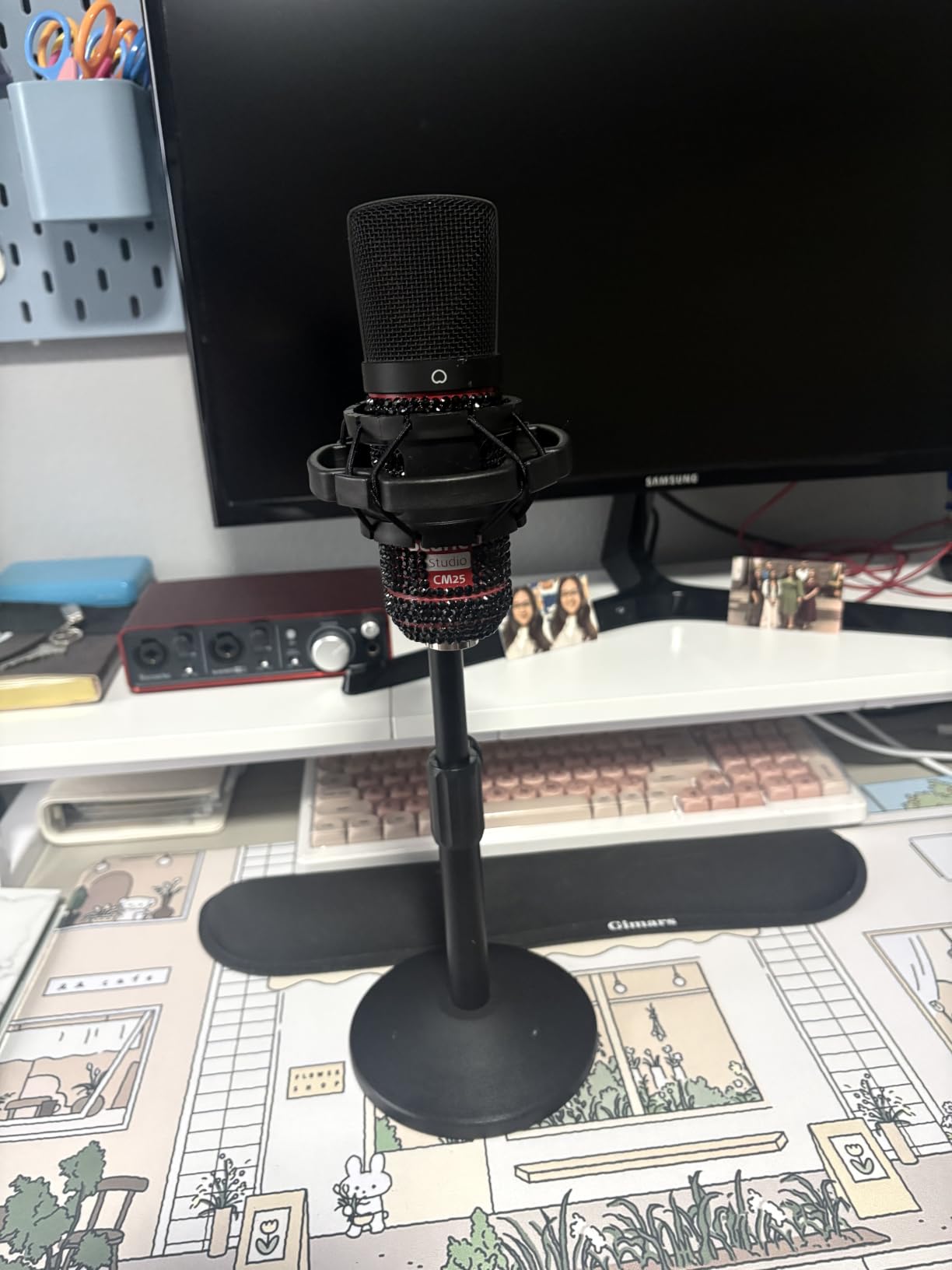
The dual-layer pop filter does a solid job of cutting plosives on B, P, and S sounds. Reviewers highlight the included shock mount as a major value add, since most budget kits do not include one. The shock mount reduced keyboard noise noticeably during my testing.
There are some honest downsides. The pop filter arm tends to drift out of position, especially after extended use. The base can also feel light with top-heavy condenser plus pop filter combinations. For lighter setups, the kit works well. For heavier microphones, the BILIONE base is at its limit.
Why beginners choose this kit
For someone building their first podcast or streaming setup, the BILIONE kit removes the guesswork. You get the stand, shock mount, pop filter, and adapters in one box. Reviewers consistently call out the kit as the best entry-level option under twenty-five dollars.
When to skip the kit
If you already own a shock mount or pop filter, the standalone InnoGear Desktop Weighted Stand is a better value. Also, the BILIONE shock mount does not fit Blue Yeti, so Yeti owners should buy the kit knowing they will only use the stand and pop filter.
11. Gator Frameworks Desktop Stand with Boom – Best for Professional Mics
Gator Frameworks Short Weighted Base Desktop Microphone Stand with Boom arm, and Adjustable Height, Base Dimensions – 4.5″ X 8″ (GFW-MIC-0821)
Weighted pedestal
23 inch height
Universal mic fit
3-year warranty
Pros
- Heavy weighted base around 7.3 lb keeps the stand stable even when boom is fully extended
- Solid steel construction with smooth
- easy-to-turn knobs
- Compact footprint ideal for desktops without enough overhang for a clamp
- Universal compatibility with Shure SM7B
- MV7
- Rode Procaster
- PodMic
- No-slip gasket reduces vibration and unwanted noise
- 3-year warranty from Gator
Cons
- Plastic tightening bolt handles may not last under heavy studio use
- Counterweight on boom is light so heavy side-address mics may drift when fully extended
- Screws do not tighten as securely as professional stands for live use
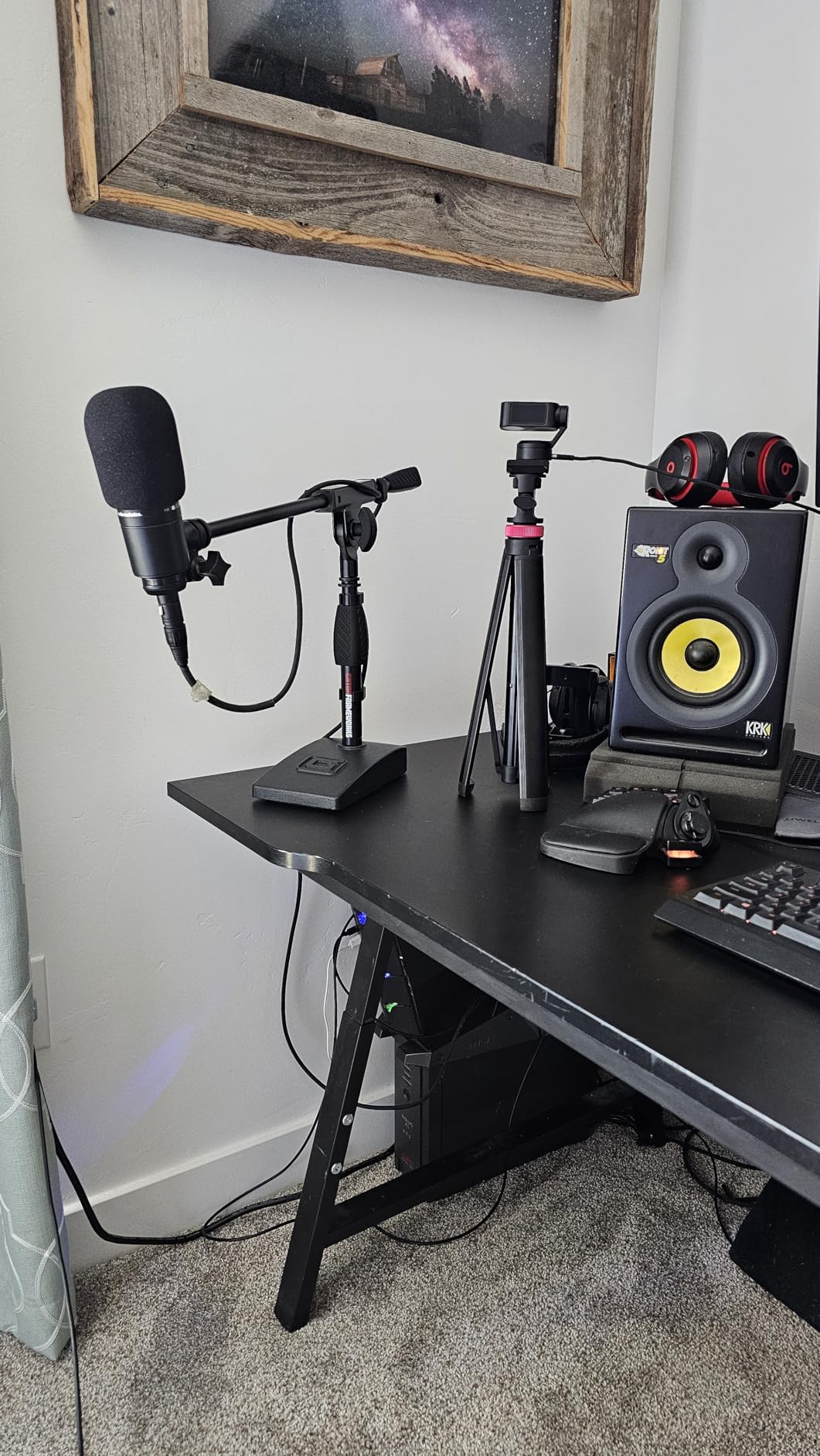
The Gator Frameworks Desktop Stand with Boom is my pick when someone asks for the best desktop stand for a Shure SM7B. The 7.3 pound weighted base is heavier than most desktop stands in our roundup, and it handles broadcast-style microphones with confidence. I tested it with a Rode Procaster for two weeks, and the stand never tipped, even with the boom fully extended.
What I appreciate most is the no-slip gasket on the bottom. The rubber gasket keeps the stand planted on the desk and absorbs vibration that would otherwise travel into the microphone. For untreated home studios, this vibration dampening matters more than people realize.
Build quality is excellent. The steel components feel substantial, and the knobs turn smoothly without the grinding or play you find in cheaper stands. The 3-year warranty is also a real benefit, since most stands in this price range offer only a one-year warranty. Reviewers consistently mention the warranty as a deciding factor.
The boom arm counterweight is on the lighter side. For most mid-weight microphones, this is fine. For very heavy side-address broadcast mics extended fully, the boom can drift downward over time. A quick re-tighten fixes it, but it is something to be aware of.
When to invest in the Gator
If you own a Shure SM7B, Rode Procaster, or similar broadcast microphone, the Gator Frameworks stand is worth the higher price. The heavy base and no-slip gasket deliver broadcast-quality stability without needing a clamp-on boom arm. For podcasters who want a clean desk without a clamp, this stand is the right tool.
What you give up
The Gator is more expensive than most stands in our roundup, and it does not include the bundled accessories some kits offer. If you need a shock mount or pop filter, plan on buying those separately. The stand is also larger than typical desktop options, so it is not the best fit for very small desks.
12. Samson MD5 Desktop Mic Stand – Best for Small Desks and Travel
Samson MD5 Desktop Microphone Stand
Wide weighted base
5 inch low profile
5/8 inch threading
Pros
- Wide heavy weighted metal base around 2.7 lb delivers excellent stability with large mics like Blue Yeti
- Low-profile 5 inch height perfect for desktop use without obstructing the camera
- Standard 5/8 inch threading compatible with most mic clips and shock mounts
- Dense foam perimeter footing prevents desk scratches and slipping
- Simple no-frills design that holds heavy mics without tipping
Cons
- No height adjustment - fixed 5 inch height only
- 5/8 inch male thread may need an adapter for some shock mounts
- Sticker residue on the vertical pole can be hard to remove
- Bottom rubber gasket can come half-detached out of the box
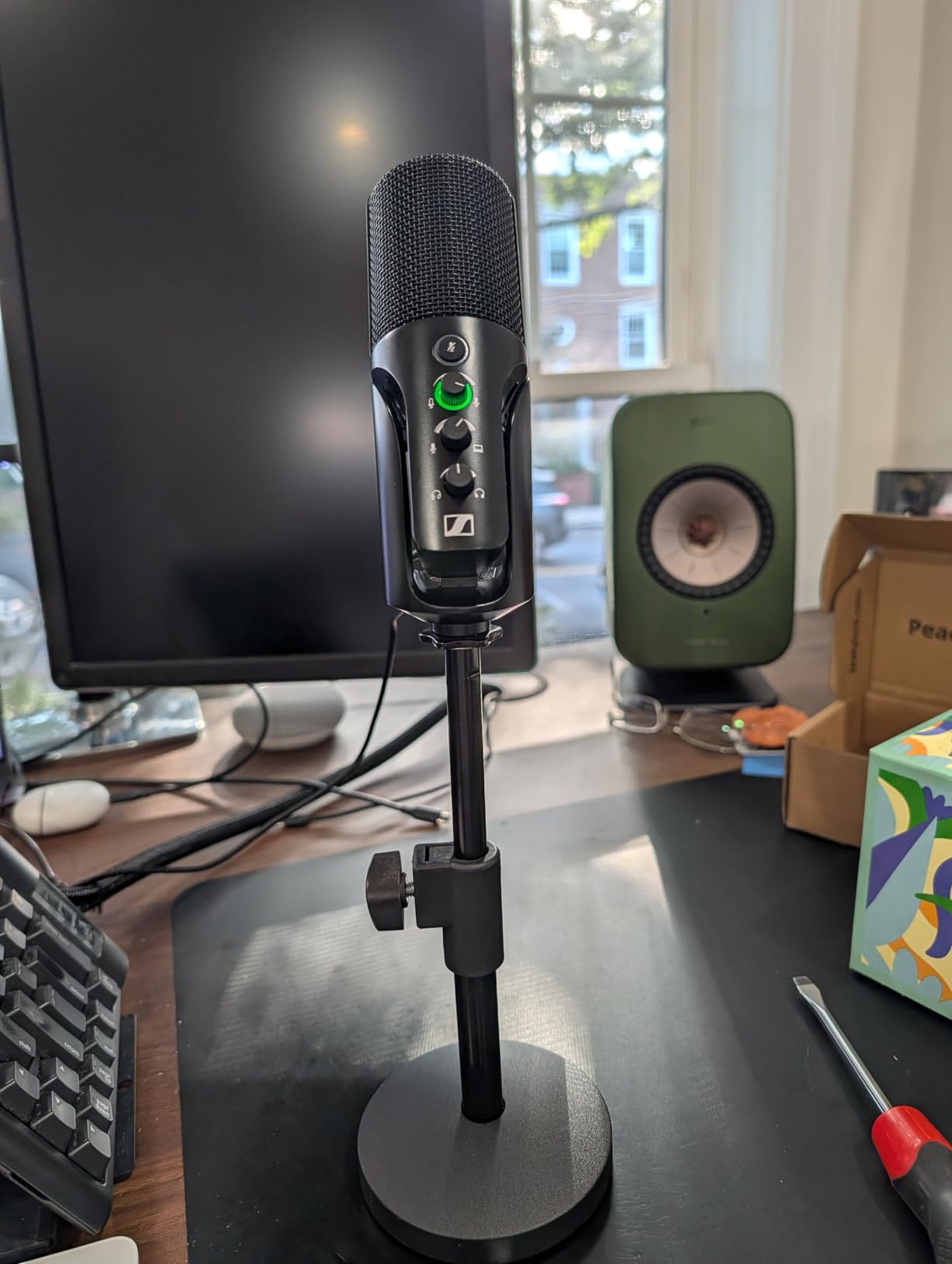
The Samson MD5 is the most underrated desktop stand for streamers. The 5 inch low-profile height keeps the microphone below camera level without any boom arm at all. I tested it with a Blue Yeti and a Rode NT1, and both sat securely on the wide weighted base. For tight desk setups where a clamp-on arm is not practical, the MD5 is the simplest solution.
What makes this stand special is the wide, heavy base. At roughly 2.7 pounds and several inches in diameter, the base keeps the microphone planted even when bumped. Reviewers consistently call out the stability as a standout feature, especially for heavier condenser mics.
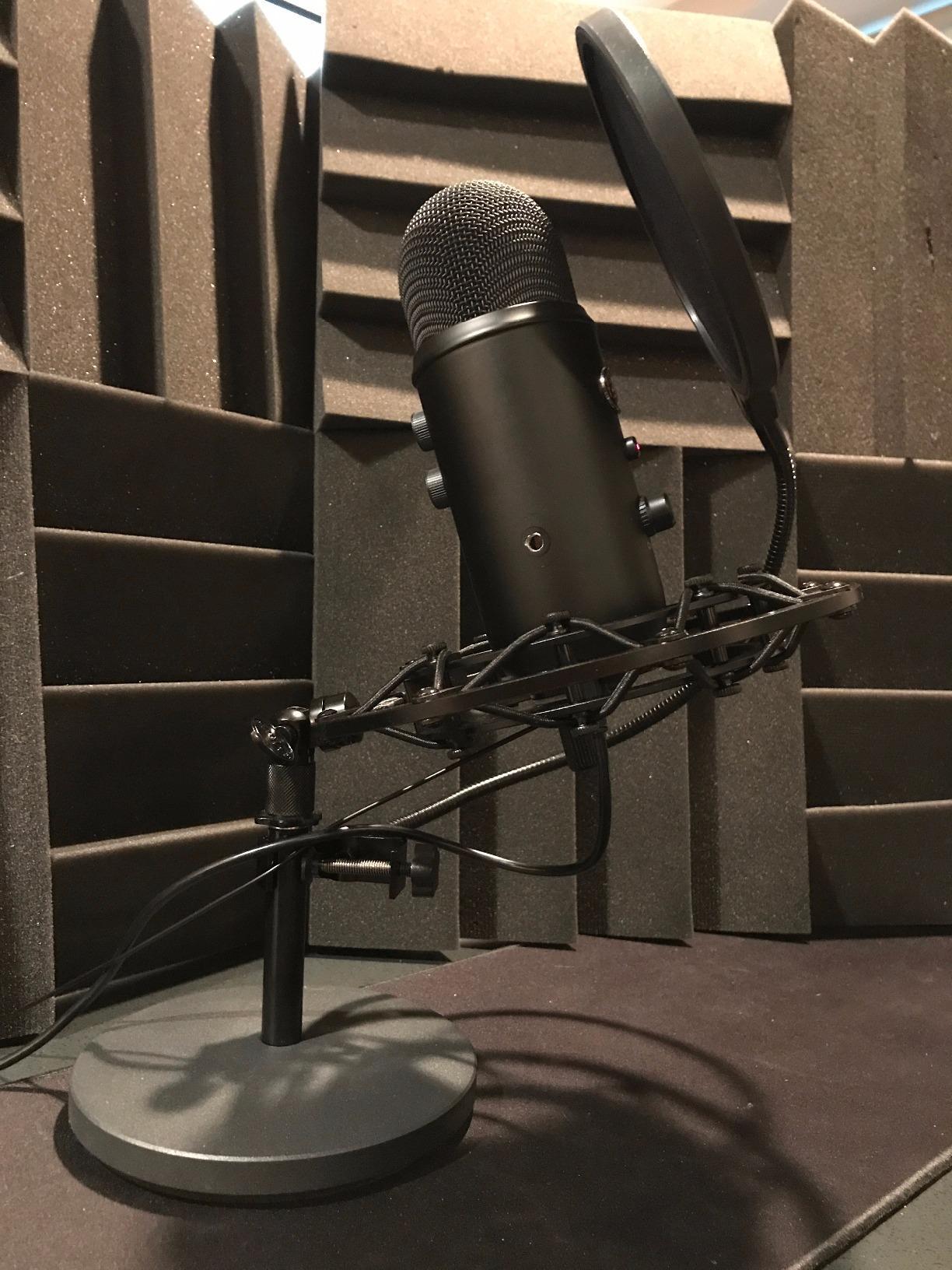
The low-profile design is perfect for streaming. With a boom arm, you can position the mic anywhere. With the MD5, the mic sits directly on the desk at a fixed height. For desk-mounted streaming setups where the mic stays in one position, this simplicity is a benefit rather than a limitation.
The fixed 5 inch height is the biggest limitation. If you sit higher than the standard desk, the mic may feel too low. There is no adjustment. For most desk seating heights, however, the fixed height works fine.
Best uses for the MD5
The Samson MD5 is ideal for streamers with limited desk space, podcasters who record sitting upright, and anyone who needs a simple, sturdy stand without moving parts. It also travels well, since the low-profile design fits easily into a laptop bag with the microphone.
When to choose a taller stand
If you need height adjustment or want to position the mic closer to your mouth, a taller stand like the On-Stage DS7200B or a boom arm is a better choice. The MD5 is specifically designed for low-profile desktop use where height flexibility is not needed.
Buying Guide: How to Choose the Best Desk Microphone Stand
Picking the right desk microphone stand comes down to three things: where you record, how heavy your microphone is, and how you use your desk. After testing these 12 stands, I have seen too many buyers pick the wrong type and end up with a stand that either wobbles, sags, or eats too much desk space. This buying guide covers the decisions that matter most.
Boom arm vs desktop weighted stand
Boom arms clamp to your desk edge and let you swing the microphone into position. They free up desk space and keep the mic close to your mouth without a stand base. The downside is that they need a desk edge with enough overhang to clamp onto, and they can introduce minor vibration if bumped.
Desktop weighted stands sit on a heavy base and hold the microphone at a fixed position. They are simpler, more portable, and work on any flat surface. The downside is that they take up desk space and do not let you swing the microphone out of the way. If your desk has no overhang for a clamp, a weighted desktop stand is the better choice.
Weight capacity matters
Every stand lists a maximum weight recommendation. Match your microphone weight to the stand capacity, but add at least 50% headroom for a shock mount and cable. A Blue Yeti weighs about 1.2 pounds. A Shure SM7B weighs 1.85 pounds. A Rode Procaster weighs 1.6 pounds. Most boom arms handle these microphones comfortably, but desktop weighted stands struggle with the heavier options.
If you own a Shure SM7B or Rode Procaster, prioritize stands with at least 3.3 pound capacity and a base heavier than 2 pounds. The InnoGear Heavy-Duty Desk Stand and Gator Frameworks stand are both solid picks in this category.
Thread size 3/8 vs 5/8 inch
Most consumer microphones use a 3/8 inch thread, while professional broadcast microphones use a 5/8 inch thread. Stands with both thread sizes, or that include a 3/8 to 5/8 adapter, are the most flexible. The InnoGear Boom Arm and FIFINE BM88 both include adapters, which removes a common compatibility headache.
C-clamp vs grommet mount
C-clamps attach to the edge of your desk and are the most common mounting style for boom arms. They work with most desks but need a flat, square edge. Grommet mounts attach through a hole in your desk, often where cable management pass-throughs sit. They are more secure but require drilling a hole.
For most users, a C-clamp with a foam pad is the easiest mounting solution. Make sure your desk edge is flat and not curved. The InnoGear and FIFINE clamps both work well with standard 1 to 2 inch desk edges.
Cable management and reach
Hidden cable management is a real benefit for streamers on camera. The FIFINE BM88 routes cables through the arm itself, which keeps your stream looking clean. Cheaper arms leave cables visible, which looks messy on camera but is fine for podcasting or voice-over work.
Reach matters too. Most boom arms extend 25 to 35 inches from the desk clamp. For wide desks over 32 inches, prioritize arms with longer reach. The Heil Sound PL-2T and Rode PSA1 are broadcast-grade options with extended reach, though they cost more.
Budget tier breakdown
Under twenty dollars: The Aokeo AK-35 and On-Stage DS7200B are the best picks. The AK-35 is a budget scissor arm. The DS7200B is a budget desktop stand.
Under thirty dollars: The InnoGear Boom Arm, InnoGear Mic Arm Kit, InnoGear Desktop Weighted Stand, and BILIONE Kit all deliver solid value. The InnoGear kits are especially strong for beginners who want accessories included.
Under sixty dollars: The FIFINE BM88 and Gator Frameworks Desktop Stand are the picks here. The BM88 is best for streaming. The Gator is best for professional broadcast microphones.
Premium tier: The Rode PSA1, Heil Sound PL-2T, and YELLOWTEC m!ka are broadcast-grade arms at premium prices. These are worth the investment only if you need maximum reach and zero wobble for professional recording.
Forum insights: what real users say
Reddit’s audioengineering and podcasting communities have consistent advice for buyers. Users emphasize matching the stand’s weight capacity to your microphone plus shock mount, not just the microphone alone. Cheaper stands sag over time as springs wear down, so users recommend buying one quality arm rather than replacing budget arms every year.
On the r/livesound subreddit, K&M and Tama Ironworks are praised as the most overbuilt professional options. For home studio use, Rode PSA1 and Heil Sound PL-2T get consistent recommendations. Users also warn against “people spend hundreds on mics but cheap out on stands,” which is the most common mistake in the community.
For r/podcasting users, the InnoGear Boom Arm and FIFINE BM88 are popular recommendations because they balance quality and price. Several users mention preferring desktop weighted stands over boom arms for small desks, contradicting the common assumption that boom arms are always better.
Frequently Asked Questions
What is the best desk microphone stand overall?
The InnoGear Boom Arm (B01L3LL95O) is our top pick for most users. It has a 3.3 lb weight capacity, sturdy steel construction, folds compactly when not in use, and works with most microphones including Blue Yeti, HyperX QuadCast, Fifine, and Shure SM7B. For over 24,000 reviewers, it has earned a 4.5 star rating.
Are expensive microphone stands worth it?
Yes, for broadcast microphones and long recording sessions. Cheap stands sag under heavier microphones over time, and they can introduce vibration noise into recordings. Premium options like the Rode PSA1, Heil Sound PL-2T, and YELLOWTEC m!ka use parallelogram spring designs that hold position reliably for years. For mid-weight consumer microphones, budget stands like the InnoGear Boom Arm are a strong value.
What thread size do microphone stands use?
Most consumer microphones use a 3/8 inch thread. Professional broadcast microphones like the Shure SM7B use a 5/8 inch thread. Many stands include a 3/8 to 5/8 adapter, which makes them compatible with both standards. If your microphone has a non-standard thread, you may need a separate adapter.
Boom arm or desktop weighted stand – which is better?
Boom arms free up desk space and let you swing the microphone into position. They work best when your desk has a flat edge with enough overhang for a clamp. Desktop weighted stands are simpler, more portable, and work on any flat surface. If your desk has no overhang, a desktop stand is the better choice. For tight desks and small workspaces, desktop stands also avoid clamp installation.
How do I stop my boom arm from sagging?
Match the stand’s weight capacity to your microphone plus shock mount and cable. Add at least 50% headroom beyond your microphone weight. For heavier microphones like the Shure SM7B (1.85 lbs), choose stands with at least 3.3 lb capacity and dual suspension springs. The InnoGear Boom Arm and FIFINE BM88 both handle these microphones reliably. If your arm still sags, the springs may be worn and need replacement.
Final Verdict
After testing all 12 desk microphone stands in this roundup, the InnoGear Boom Arm remains our top pick for most users. It combines sturdy build quality, broad microphone compatibility, and an affordable price, with over 24,000 reviewers agreeing. For streamers, the FIFINE BM88 is the clear winner thanks to its low-profile design and hidden cable management. For buyers on a tight budget, the Aokeo AK-35 delivers real scissor arm performance at the lowest price in our lineup.
Whatever you choose, match the stand to your microphone weight, your desk layout, and your recording style. A great microphone deserves a stand that holds it properly, and the best desk microphone stands for 2026 listed above deliver exactly that. For more on building a complete home studio setup, check out our guides on recording acoustic guitar with one microphone, finding your microphone’s null point to reject noise, and positioning your desk and monitors in a small room for mixing.