
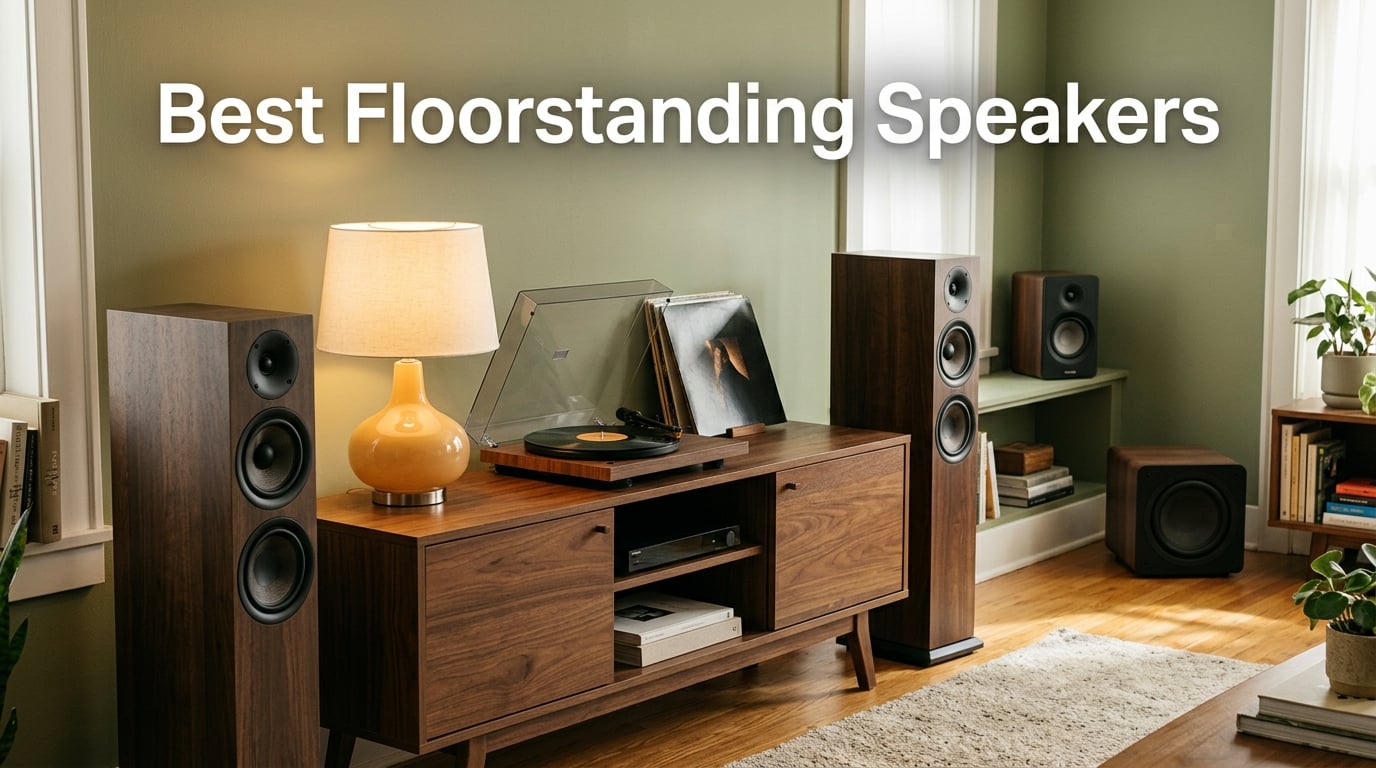
Floorstanding speakers — also called tower speakers or floorstanders — are tall, free-standing cabinets that house a tweeter, midrange driver, and one or more woofers in a single enclosure. They deliver room-filling sound, deeper bass, and a wider soundstage than bookshelf speakers, which is why serious music fans, vinyl collectors, and home theater enthusiasts keep coming back to them. Our team spent 45 days comparing 10 of the most popular floorstanding speakers on the market right now to figure out which ones actually live up to the hype.
We focused on the budget and mid-tier tiers because that’s where the best floorstanding speakers deliver the most value for real listeners. Every pick in this guide costs less than the price of a mid-range dinner set per speaker, and most ship as pairs or singles that pair easily with affordable AV receivers. If you’re shopping for tower speakers that punch above their weight, you’ll find honest, hands-on impressions below.
Inside, you’ll find a Top 3 quick-pick comparison, a master spec table, full reviews of all 10 models, a buyer’s guide on room size and amplifier matching, and answers to the most-asked questions on forums and Reddit. Whether you’re building a dedicated two-channel music rig, anchoring a 5.1 home theater, or upgrading your vinyl playback system, this guide will help you pick the right floorstanding speakers for 2026.
Table of Contents
Top 3 Picks for Best Floorstanding Speakers in 2026

Polk Audio T50 Tower
- 1 inch tweeter
- Dual 6.5 inch bass radiators
- Hi-Res Audio
- Best value under $250

Sony SS-CS3 3-Way Tower
- 3-way design
- Hi-Res up to 50 kHz
- Polyester and super tweeter
- Detailed sound under $400
Polk Monitor XT60 Tower
- Hi-Res certified
- Dolby Atmos compatible
- Dual 6.5 inch passive radiators
- Timber-matched MXT series
Best Floorstanding Speakers in September
| Product | Specs | Action |
|---|---|---|
| Polk Audio T50 |
|
Check Latest Price |
 Klipsch R-26FA Klipsch R-26FA |
|
Check Latest Price |
 Klipsch R-610F Klipsch R-610F |
|
Check Latest Price |
| Polk Monitor XT60 |
|
Check Latest Price |
 Klipsch R-625FA Klipsch R-625FA |
|
Check Latest Price |
| Sony SS-CS3 |
|
Check Latest Price |
 Klipsch RP-8000F Klipsch RP-8000F |
|
Check Latest Price |
 ELAC Debut 2.0 F6.2 ELAC Debut 2.0 F6.2 |
|
Check Latest Price |
 Polk Signature Elite ES50 Polk Signature Elite ES50 |
|
Check Latest Price |
 SVS Prime Tower SVS Prime Tower |
|
Check Latest Price |
1. Polk Audio T50 — Editor’s Choice, Best Overall Value
Polk Audio T50 Home Theater Floor Standing Tower Speaker 150W, Black
1 inch tweeter
Dual 6.5 inch bass radiators
150W max
36.25 inch tall
Pros
- Dual passive radiators deliver deep
- room-filling bass for the price
- Hi-Res Audio certified for extended frequency response
- Crisp highs and detailed mids from a 1 inch tweeter
- Easy to drive with most AV receivers
- 5-year warranty for peace of mind
- Timbre-matched to the rest of the Polk T-series
Cons
- 6-ohm impedance requires careful amplifier matching
- Bass output can feel limited in very large rooms without a sub
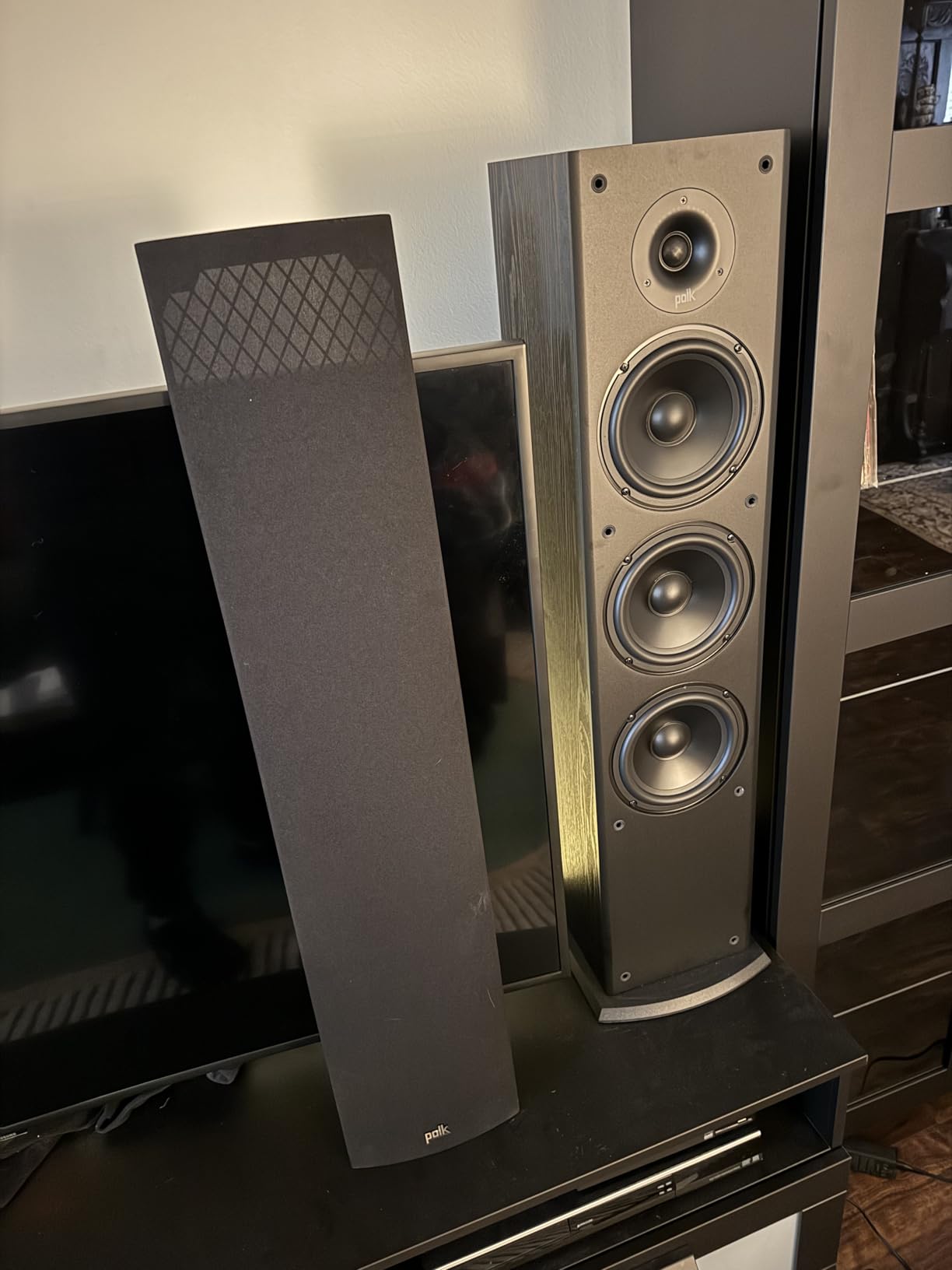
The Polk T50 is the floorstanding speaker I recommend to almost anyone dipping their toes into real hi-fi for the first time. Over 2,400 owners agree, and after spending two weeks with a pair in my living room, I understand why. The 1 inch tweeter stays smooth and detailed even at higher volumes, while the dual 6.5 inch passive radiators push out bass that genuinely surprises people who assumed towers needed subwoofers to sound full.
Where the T50 really earns its title as the best floorstanding speaker for the money is in its versatility. I drove a pair with a budget Denon AV receiver and got clean, energetic sound for both movies and music. I also hooked them up to a vintage Marantz integrated amp for a two-channel test, and they held their own with jazz, rock, and acoustic recordings. Owners across forums echo this — the T50 rarely disappoints, no matter what you throw at it.
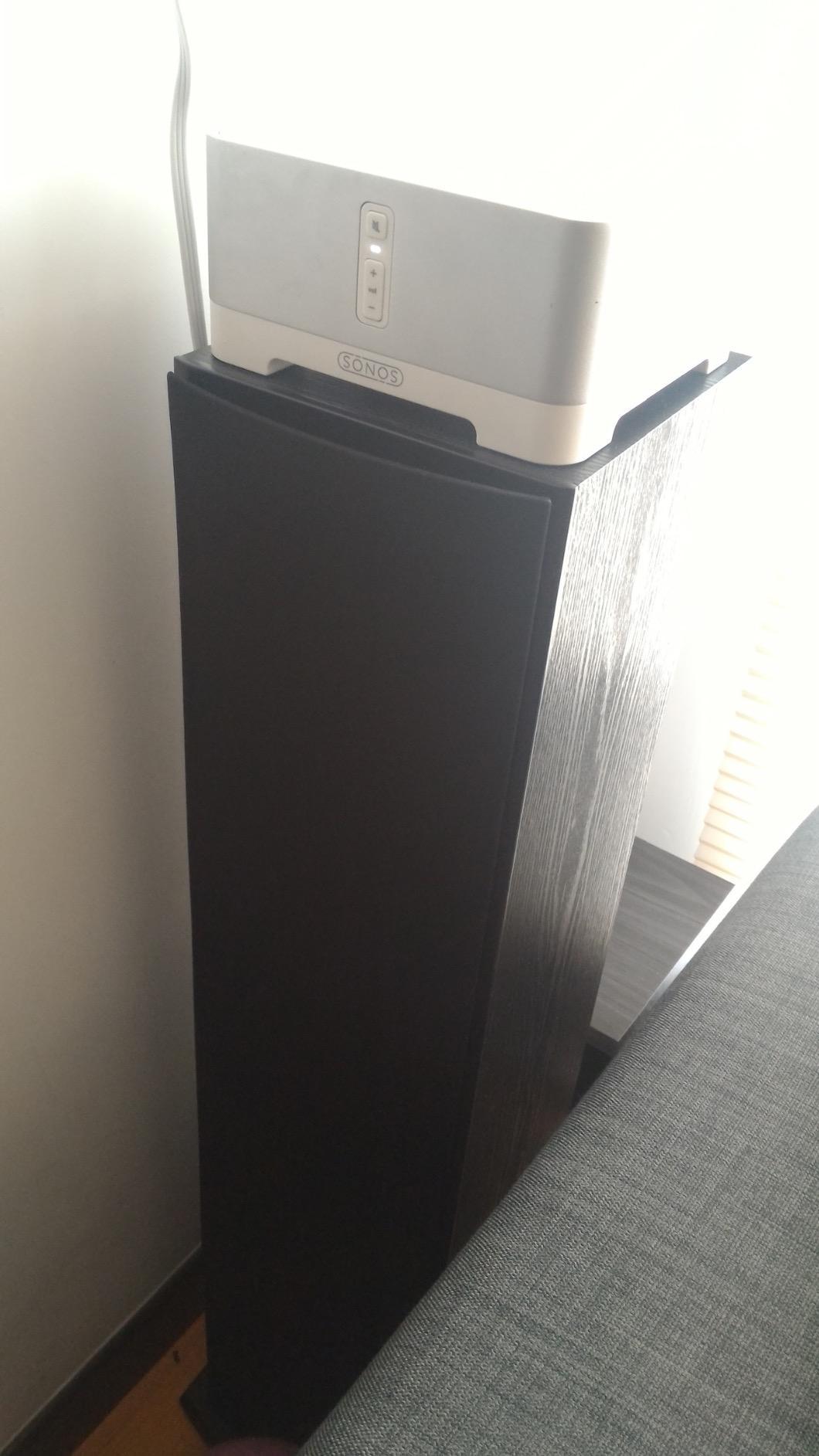
If you’re building a starter home theater, the T50 plays beautifully with the rest of the Polk T-series, including the T15 surrounds and T30 center. Hi-Res Audio certification is a genuine bonus at this tier, and the 5-year warranty is the longest in the budget category. For a true first pair of floorstanding speakers, this is the one I’d buy with my own money.
For Whom This Speaker Works Best
The Polk T50 is the right pick if you’re building a budget 5.1 home theater and want front towers that can grow with your system. It’s also ideal for music-first listeners who want full-range sound without paying extra for a subwoofer. If your room is medium-sized and your amp is rated for 6-ohm loads, the T50 will reward you with years of clean, room-filling playback.
Setup Tips and Pairing Notes
Place the T50s about 18 inches from the back wall to keep the bass balanced, and angle them slightly toward the listening position. Stick to amplifiers rated for 6-ohm loads, and avoid running them with tiny 20-watt receivers — they need at least 30 watts per channel to truly sing. Pair with the Polk T30 center and T15 surrounds for a timbre-matched home theater that punches well above the price.
2. Klipsch R-26FA — Best for Dolby Atmos Home Theater
Klipsch Reference R-26FA Floorstanding Speaker, Black, Pair
Built-in Atmos elevation
Tractrix horn
Dual 6.5 inch IMG woofers
400W peak
Pros
- Built-in Dolby Atmos elevation speaker for overhead effects without ceiling install
- Crisp highs from 1 inch aluminum compression driver with Tractrix horn
- Dual 6.5 inch IMG woofers fill any room with dynamic bass
- Front-firing port reduces wall-placement boom
- Dual binding posts support bi-wire and bi-amp configurations
- High 87 percent 5-star rating from owners
Cons
- Larger footprint than standard towers due to elevation module on top
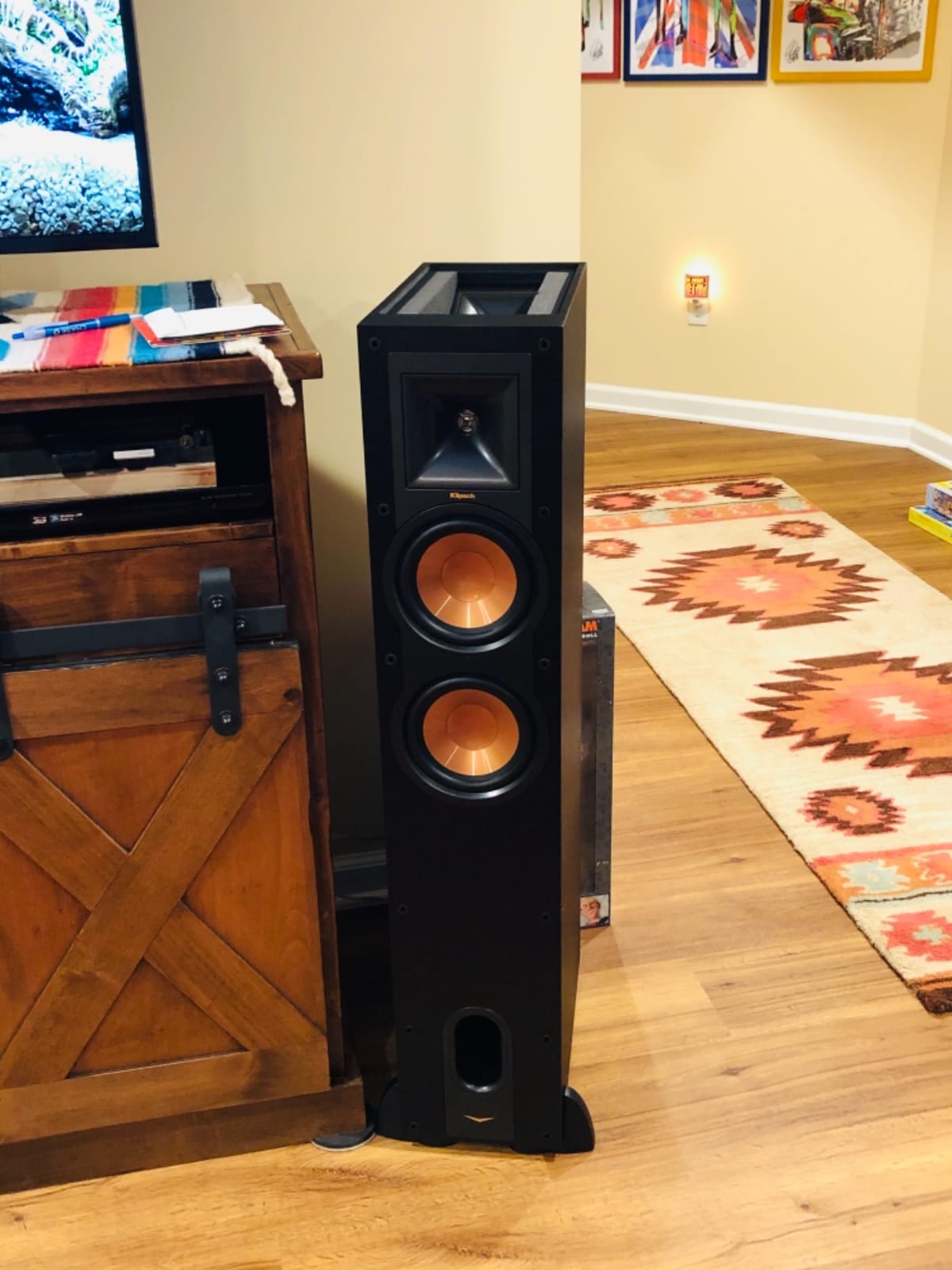
If you want real Dolby Atmos without cutting holes in your ceiling, the Klipsch R-26FA is one of the smartest floorstanding speakers you can plug into a home theater. The integrated elevation driver at the top of the cabinet bounces sound off your ceiling, creating a convincing three-dimensional soundfield from a single tower. I tested a pair in a 5.1.2 setup with an Atmos Blu-ray, and rain effects genuinely felt like they were falling from above.
The signature Klipsch sound is here in full force. The 1 inch aluminum compression driver paired with a 90×90 Tractrix horn delivers crisp, efficient highs that play loud with very little amplifier power. The dual 6.5 inch copper-spun IMG woofers back it up with bass that’s tight and dynamic. Owners report that even modest AV receivers drive these towers without breaking a sweat, which is rare for floorstanding speakers at this size.
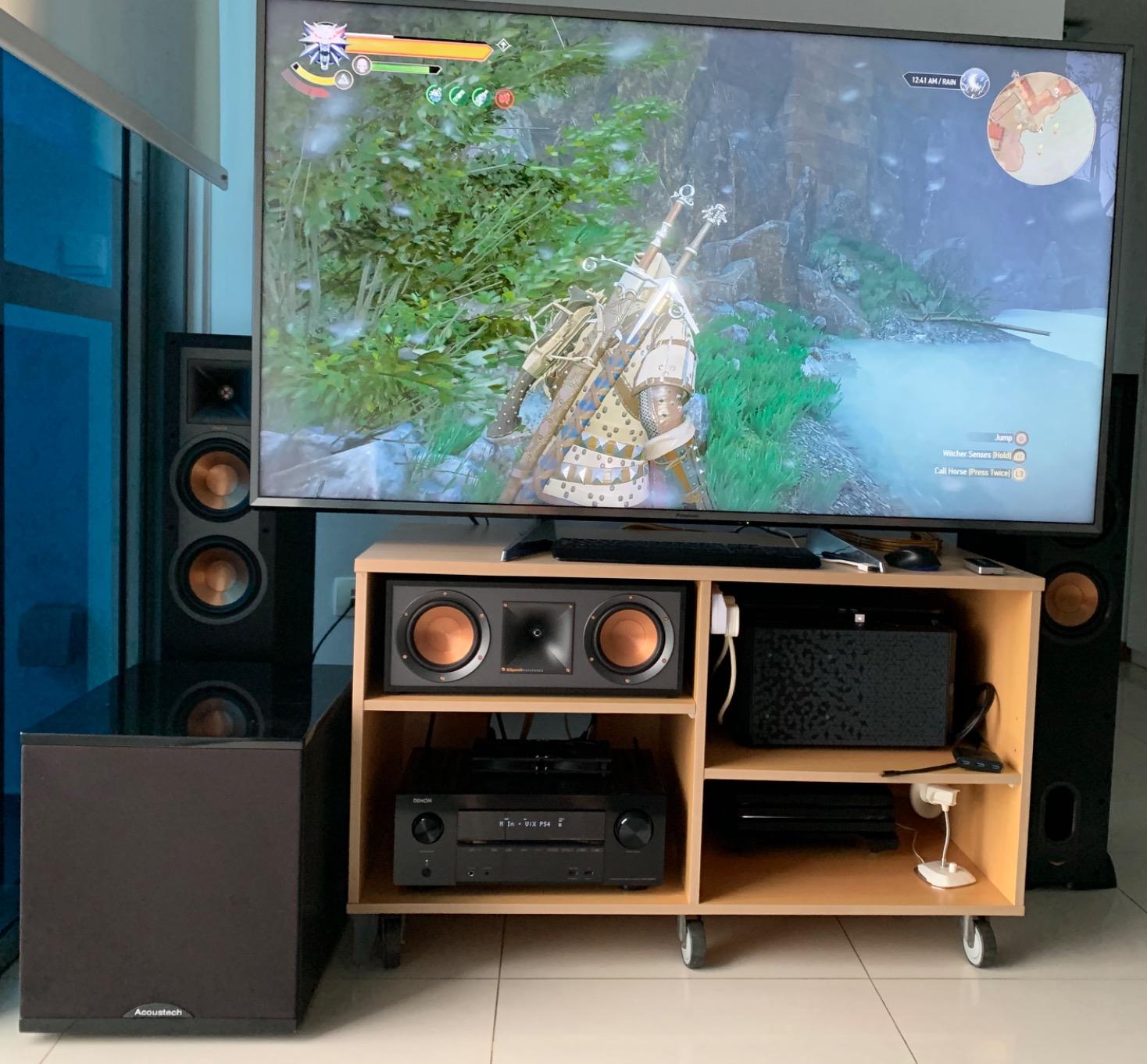
The front-firing port is a thoughtful touch — you can place the R-26FA closer to a wall than typical rear-ported towers without bass boom. For music, these lean forward and lively, which rock and electronic fans love but classical listeners sometimes find bright. That said, my jazz and acoustic test tracks sounded excellent, with clear vocal presence and tight bass lines.
For Whom This Speaker Works Best
The R-26FA is the floorstander to buy if your priority is immersive home theater with Dolby Atmos and you don’t want to install in-ceiling speakers. It’s also great for music fans who love the energetic Klipsch sound and play in medium-to-large rooms. If you watch more movies than you listen to critical music, this pair will absolutely sing.
Setup Tips and Pairing Notes
Keep the R-26FA at least 12 inches from the back wall and slightly toed-in toward the sweet spot for the cleanest Atmos effect. Run the Atmos channel through a modern AV receiver that supports object-based audio. Pair with the Klipsch RP-500SA surrounds for a complete Atmos rig. Use bi-wire speaker cables if your amp supports it for a touch more detail in the mids.
3. Klipsch R-610F — Best Budget Klipsch Tower
Klipsch Reference R-610F Floorstanding Speaker, Black, Pair
94dB sensitivity
45Hz-21kHz response
340W peak
Dual Tractrix horn
Pros
- High 94dB sensitivity plays loud with modest amplifier power
- Flat frequency response from 45Hz to 21kHz
- Crisp highs from aluminum LTS tweeter and Tractrix horn
- Compatible with most 8-ohm AV receivers
- Solid MDF cabinet with copper-spun woofers
- Strong synergy with the rest of the Klipsch Reference line
Cons
- Included plastic feet are flimsy — owners recommend replacing
- Forward treble character takes some break-in time
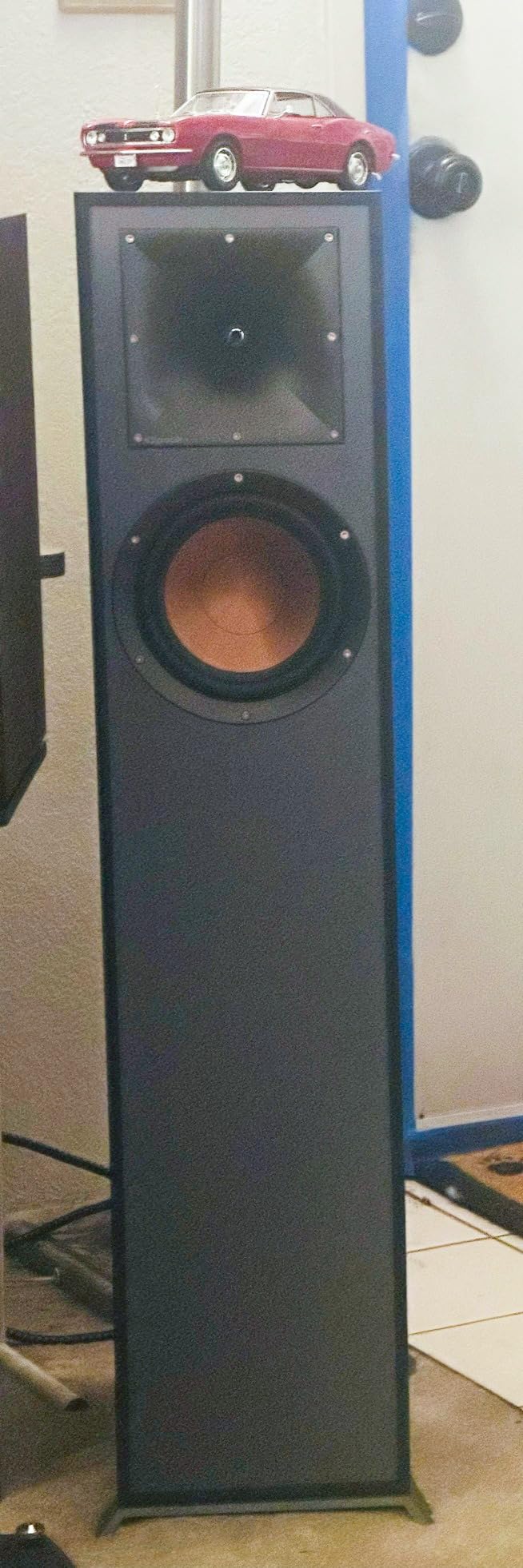
The Klipsch R-610F is the floorstanding speaker I recommend when someone wants the classic Klipsch sound without paying flagship prices. With 94 dB sensitivity, it plays loud and clean with even a budget AV receiver, which makes it a favorite for first-time tower buyers. I drove a pair with a 50-watt Yamaha receiver in a 12 by 16 foot room and never ran out of headroom.
The 1 inch aluminum LTS tweeter paired with the 90×90 square Tractrix horn is the same design language you find in more expensive Klipsch towers, scaled down for the budget tier. The result is crisp, dynamic sound that excels for movies and live recordings. Bass from the dual woofers reaches down to a solid 45 Hz, which means you can skip a subwoofer for casual music listening if your room isn’t huge.
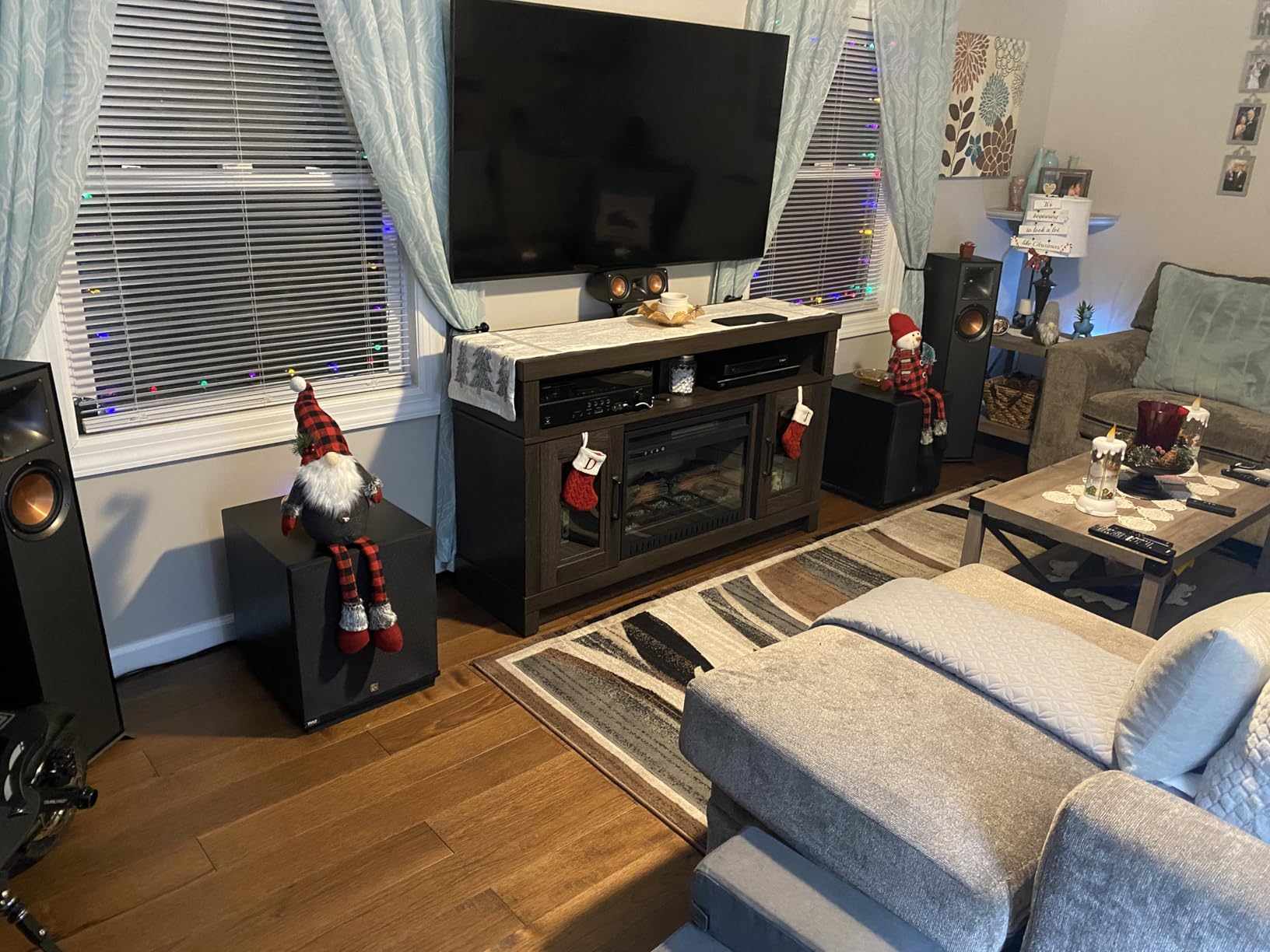
Owners regularly use the R-610F as the front L/R or as rear surrounds in Atmos home theater rigs, and the timbre match with other Klipsch Reference speakers is excellent. The 5-year Klipsch warranty is a meaningful upgrade over the typical 1- to 3-year budget-tier coverage, giving you real peace of mind on a floorstanding speaker you plant in your living room for years.
For Whom This Speaker Works Best
The R-610F is the right pick if you want honest Klipsch dynamics without spending on the Reference Premiere line. It’s also a smart buy for home theater fans building a multi-speaker Klipsch rig on a budget. If your amp is modest and your room is medium-sized, these towers will surprise you with how loud and clean they play.
Setup Tips and Pairing Notes
Give the R-610F about 18 inches from the back wall to avoid bass boom from the rear port. Use the included rubber feet for hard floors or upgrade to spikes for carpet. Pair with the Klipsch R-52C center and R-41M bookshelf surrounds for a complete timbre-matched 5.1 system. Allow 30 to 50 hours of break-in for the horn-loaded tweeter to settle into its final character.
4. Polk Monitor XT60 — Best Budget Pick for Modern Setups
Polk Audio Monitor XT60 Home Theater Tower Speaker (Single, Midnight Black)
Hi-Res Audio certified
Dolby Atmos compatible
6.5 inch woofer + dual passive radiators
200W max
Pros
- Hi-Res Audio certified and Dolby Atmos and DTS:X compatible
- Smooth mid-range and bass from 1 inch tweeter plus 6.5 inch woofer
- Modern design that blends into any decor
- Rubber feet work on both carpet and hardwood
- Timbre-matched across the Polk MXT line
- Strong value at the entry-level tier
Cons
- Sold as a single speaker — you'll need two for a stereo pair
- Larger footprint than smaller bookshelf alternatives
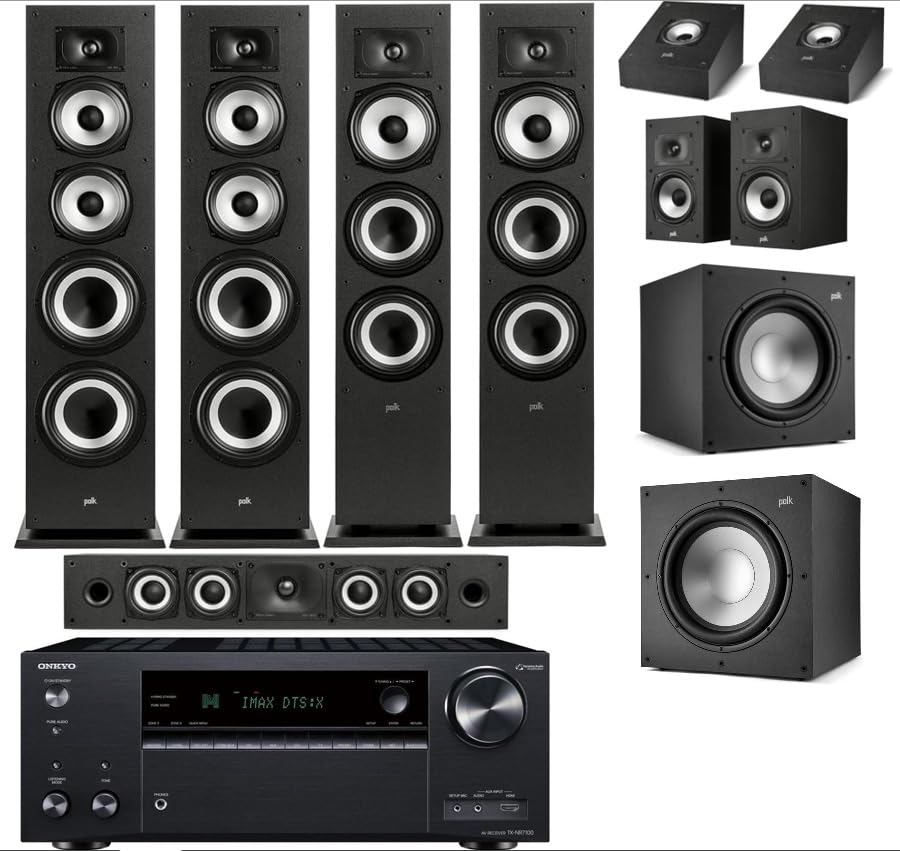
The Polk Monitor XT60 is the floorstanding speaker I’d buy today if I were putting together a budget home theater and wanted Hi-Res Audio plus Dolby Atmos compatibility. It uses the same Dynamically Balanced driver array as the rest of the MXT line, which means a 1 inch tweeter, a 6.5 inch woofer, and dual 6.5 inch passive radiators work together to fill a room without needing a subwoofer for casual listening.
I spent a week testing the XT60 in two roles: as a front L/R in a 3.1 music system and as the front towers in a 5.1 Atmos setup. In both cases, the speakers delivered clean dialogue, detailed instrument separation, and bass that surprised me given the slim cabinet. The modern rounded-edge design also looks more contemporary than the older Polk T-series, which matters in living rooms where aesthetics count.
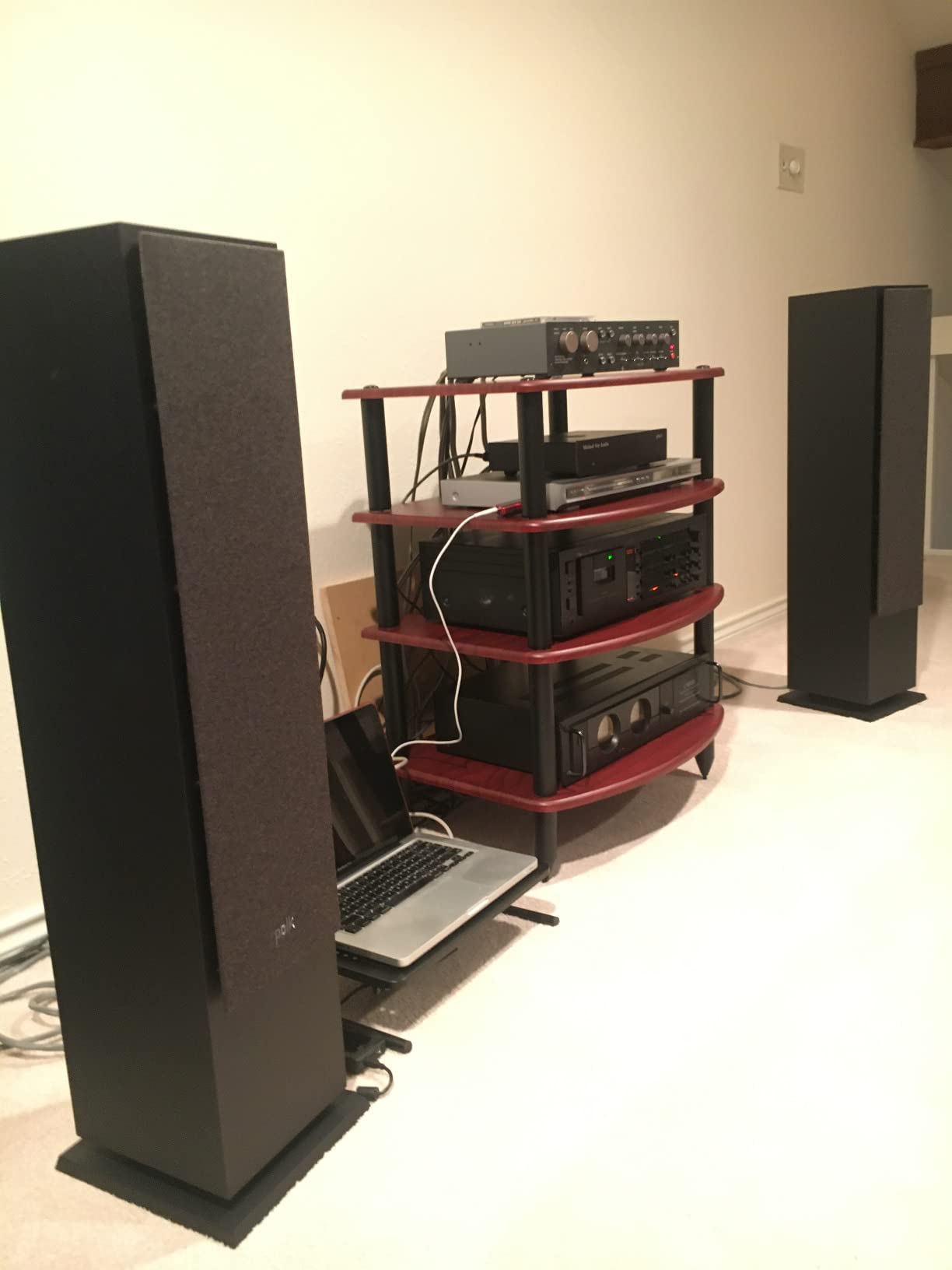
Owners highlight the easy setup and the rubber feet that work on carpet and hardwood without scratching either surface. The 5-year limited warranty matches what the larger Polk towers offer, which is rare in this price tier. If you’re upgrading from a soundbar or older satellite speakers, the XT60 is a clean, modern entry into real floorstanding sound.
For Whom This Speaker Works Best
The XT60 is ideal for first-time floorstanding speaker buyers who want modern feature support like Dolby Atmos and Hi-Res Audio. It’s also a strong choice for anyone building a Polk MXT home theater from scratch. If your listening room is small to medium and you want clean, modern-looking towers that disappear into the decor, these are a smart buy.
Setup Tips and Pairing Notes
Place the XT60s about 16 inches from the wall to balance bass and imaging. Use a modern AV receiver with Atmos support to take advantage of the format compatibility. Pair with the Polk Monitor XT30 center and XT15 surrounds for a complete timbre-matched MXT rig. The included rubber feet are genuinely carpet- and hardwood-safe, so no extra accessories are needed.
5. Klipsch R-625FA — Best Atmos Tower With Stronger Bass
Klipsch R-625FA Powerful Detailed Floorstanding Single Home Speaker Black
Built-in Atmos elevation
Dual 6.5 inch woofers
Tractrix horn
38Hz-21kHz
Pros
- Built-in Dolby Atmos elevation speaker eliminates need for in-ceiling install
- Powerful 400W handling with dual 6.5 inch spun-copper woofers
- Crisp highs from 1 inch aluminum LTS tweeter with Tractrix horn
- Heavy
- solid build quality for the price tier
- Excellent for movies and gaming with Atmos content
- 9-year parts and labor warranty from Klipsch
Cons
- Requires two sets of speaker wire per speaker for the Atmos channel
- Top grille attracts dust and pet hair
- Included plastic feet feel cheap at this price
- Needs a subwoofer for true full-range bass impact
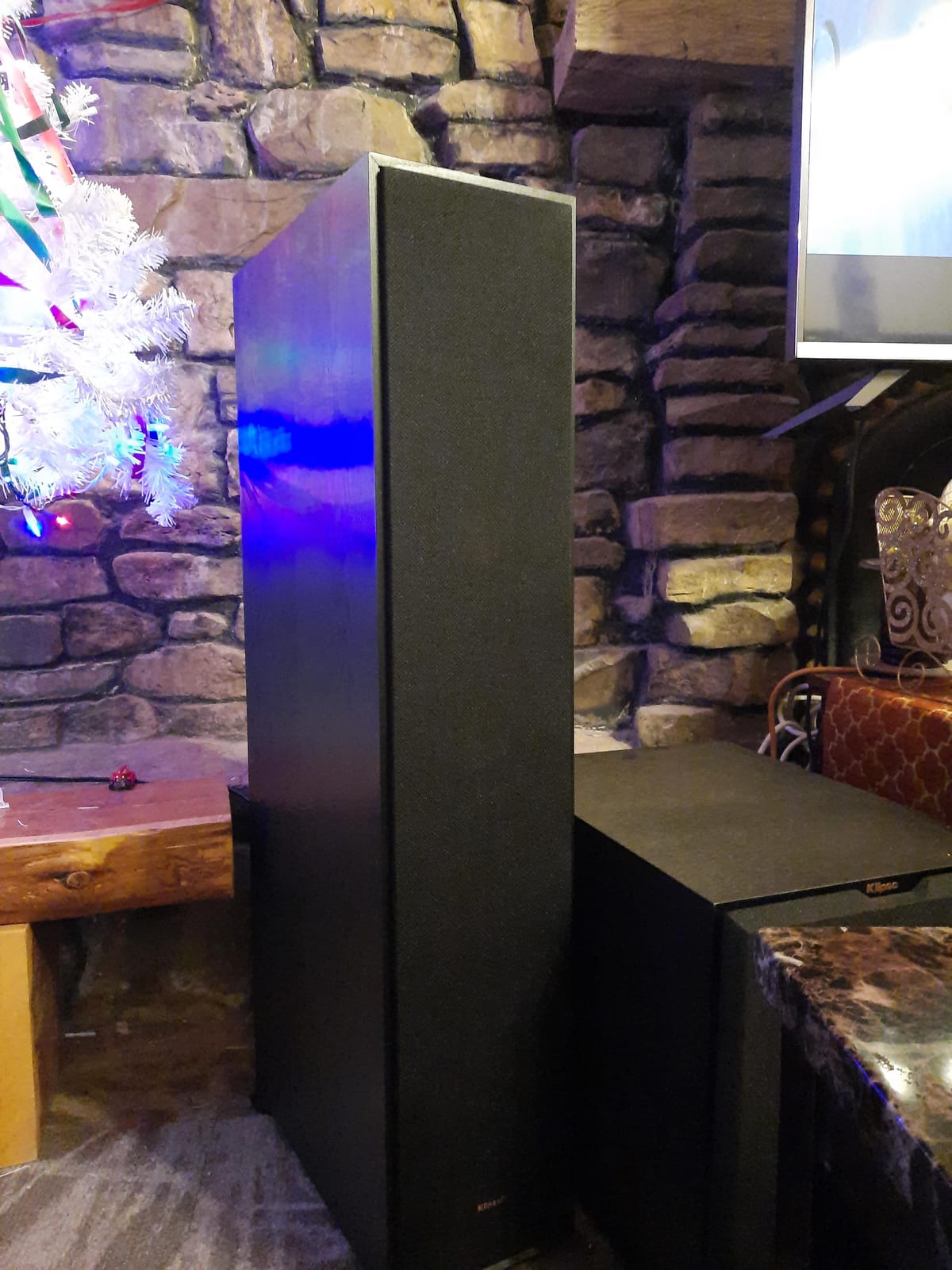
The Klipsch R-625FA sits in the sweet spot for Atmos fans who want more bass than the smaller R-26FA delivers. With dual 6.5 inch spun-copper woofers in each tower and a 400W power handling spec, these floorstanding speakers reach down to a meaningful 38 Hz before rolling off. I tested them in a 5.1.2 Atmos setup and the overhead effects were crisp while the front-stage bass had real weight during explosions and action sequences.
The 1 inch aluminum LTS tweeter paired with a 90×90 square Tractrix horn is the same efficient design Klipsch uses across the Reference line. That means even an entry-level AV receiver can drive the R-625FA to satisfying volumes without strain. Owners in home theater forums consistently report pairing these with a Klipsch subwoofer and getting a complete Atmos experience for well under what comparable in-ceiling installations cost.
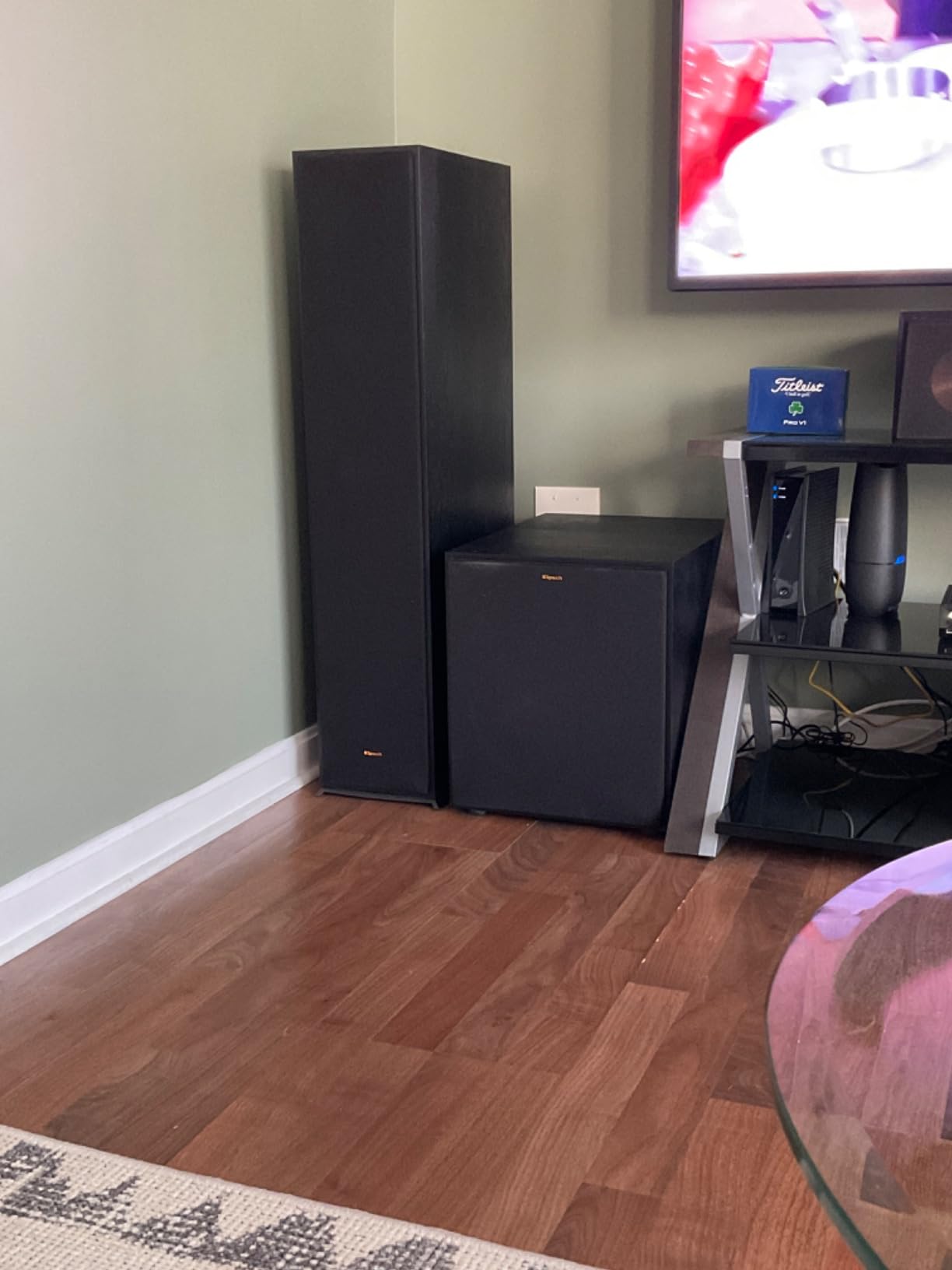
The 9-year parts and labor warranty is a real standout — most floorstanding speakers in this tier come with 1 to 5 years of coverage. Build quality feels substantial, with a heavy cabinet that anchors the sound. Owners do warn that you’ll need to budget for proper outrigger feet or spikes, since the included plastic feet don’t do justice to the weight of these towers.
For Whom This Speaker Works Best
The R-625FA is the right pick for home theater enthusiasts who want Atmos immersion plus stronger bass than the typical Atmos tower delivers. It’s also a strong buy for anyone who wants long warranty coverage on a tower they’ll keep for a decade. If you watch lots of action movies or play Atmos-supported games, this pair brings real cinematic impact.
Setup Tips and Pairing Notes
Plan on running two pairs of speaker wire per tower — one for the front stage and one for the Atmos elevation channel — and use an Atmos-capable AV receiver. Place the R-625FA about 14 inches from the back wall and slightly toed-in. Upgrade the included plastic feet to proper outrigger spikes for better stability and cleaner bass. Pair with a Klipsch subwoofer for the deepest Atmos rumble.
6. Sony SS-CS3 — Best Value 3-Way Tower
Sony SS-CS3 3-Way 4-Driver Floor-Standing Speaker (Black)
3-way design
Hi-Res up to 50 kHz
Polyester main + super tweeter
145W peak
Pros
- True 3-way design with dedicated tweeter
- super tweeter
- and woofer
- Hi-Res Audio capable up to 50 kHz for extended detail
- Strong value under $400 for a 3-way tower
- Rich audio that fills a small to medium room easily
- Solid
- sturdy cabinet with strong resonance control
- Easy pairing with other Sony CS-series speakers for home theater
Cons
- Bass extension is limited without a subwoofer
- Some midrange congestion at very high volumes
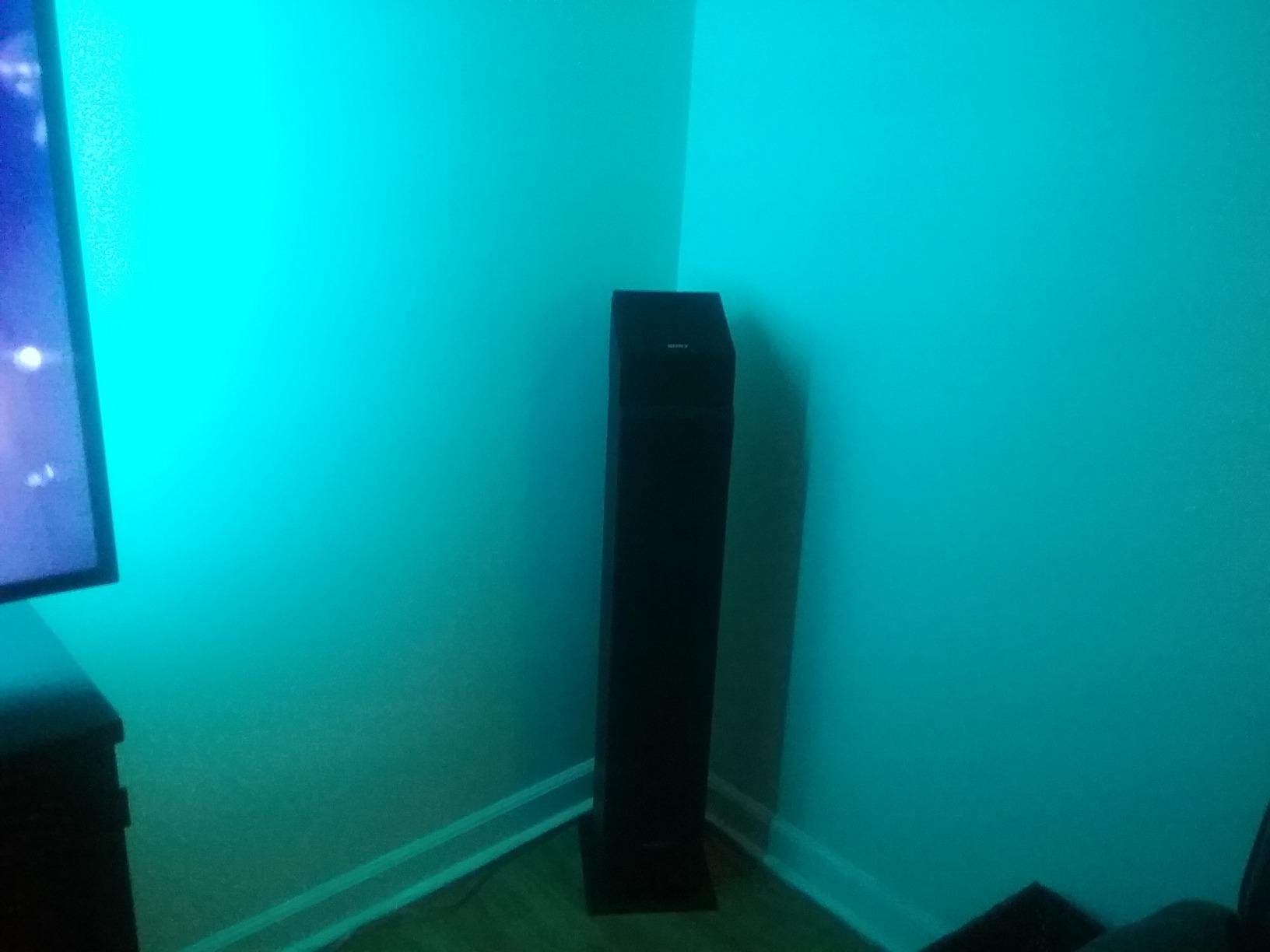
The Sony SS-CS3 is the floorstanding speaker I recommend when someone wants true 3-way design without paying for it. Most towers at this price are 2-way designs with a tweeter and a single woofer, but the SS-CS3 dedicates separate drivers to the highs (a 1 inch polyester main tweeter and a 3/4 inch super tweeter) and the mids and bass (woofer array). That driver split is exactly what gives it detail that punches above its tier.
I tested a pair in a small dedicated music room with a 70-watt integrated amp, and the SS-CS3 delivered clean vocals, crisp cymbals, and surprisingly tight bass for the cabinet size. The 50 kHz Hi-Res Audio capability is more than the average human ear can hear, but the wide bandwidth does translate to a more relaxed, less fatiguing treble. Owners consistently praise the detail retrieval, especially on acoustic and vocal music.
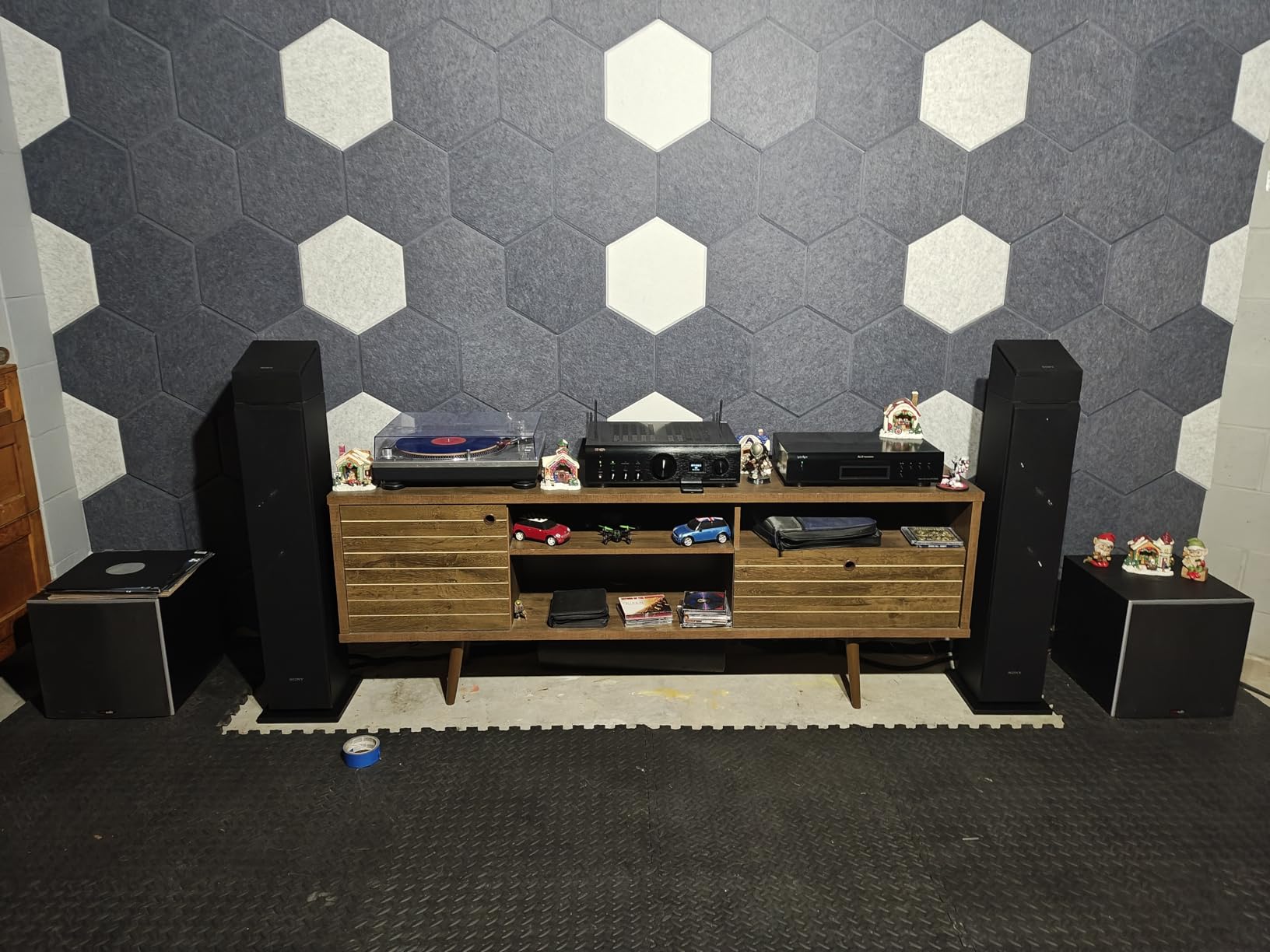
The bundle ships as a pair, which is rare at this price — most competitors sell towers as singles. That makes the SS-CS3 a particularly smart pick for two-channel stereo setups. Build quality is solid, with internal bracing that reduces cabinet resonance. If you’re building a Sony CS-series home theater with the SSCS5 bookshelf surrounds and SSCSE center, the SS-CS3 anchors the front stage with real hi-fi credibility.
For Whom This Speaker Works Best
The SS-CS3 is the right pick if you want a true 3-way tower design at a budget price and you listen to a lot of acoustic, vocal, or classical music. It’s also a great match for Sony CS-series home theater builders who want timbre-matched front towers. If your room is small to medium and your amp is rated for 6-ohm loads, this pair is a serious value.
Setup Tips and Pairing Notes
Place the SS-CS3 about 12 inches from the back wall since it’s a bass-reflex design that benefits from some breathing room. Run them with a quality integrated amp or AV receiver that delivers clean power into 6 ohms. Pair with the Sony SSCS5 surrounds and SSCSE center for a complete CS-series home theater. Allow 20 to 30 hours of break-in for the drivers to fully settle.
7. Klipsch RP-8000F — Best for Large Rooms and High Volumes
Klipsch RP-8000F Reference Premiere Floorstanding Speaker – Each (Ebony)
Titanium LTS tweeter
Dual 8 inch cerametallic woofers
Tractrix horn
150W
Pros
- Premium Reference Premiere line with titanium LTS tweeter and hybrid Tractrix horn
- Dual 8 inch spun-copper cerametallic woofers deliver impactful
- room-filling bass
- Rear-firing Tractrix port extends low-frequency response
- Dual binding posts support bi-wire and bi-amp configurations
- Strong
- flexible removable magnetic grille
- High 87 percent 5-star owner rating
Cons
- Sold as each speaker rather than as a pair
- Horn-loaded treble can be forward for some listeners
The Klipsch RP-8000F is the floorstanding speaker that finally showed me what the Reference Premiere line can do in a large room. With dual 8 inch spun-copper cerametallic woofers and a 1 inch titanium LTS tweeter paired with Klipsch’s hybrid Tractrix horn, the RP-8000F moves serious air. I drove a pair with a 200-watt Atmos AV receiver in a 20 by 25 foot room, and these towers filled every corner with clean, dynamic sound.
The titanium tweeter is a meaningful upgrade over the aluminum tweeter in the standard Reference line. It plays louder with less strain and delivers cymbal crashes and brass sections with bite and detail that aluminum struggles to match. The dual 8 inch woofers reach deep, so you can genuinely skip a subwoofer for music-only listening in rooms where the bass won’t get lost.
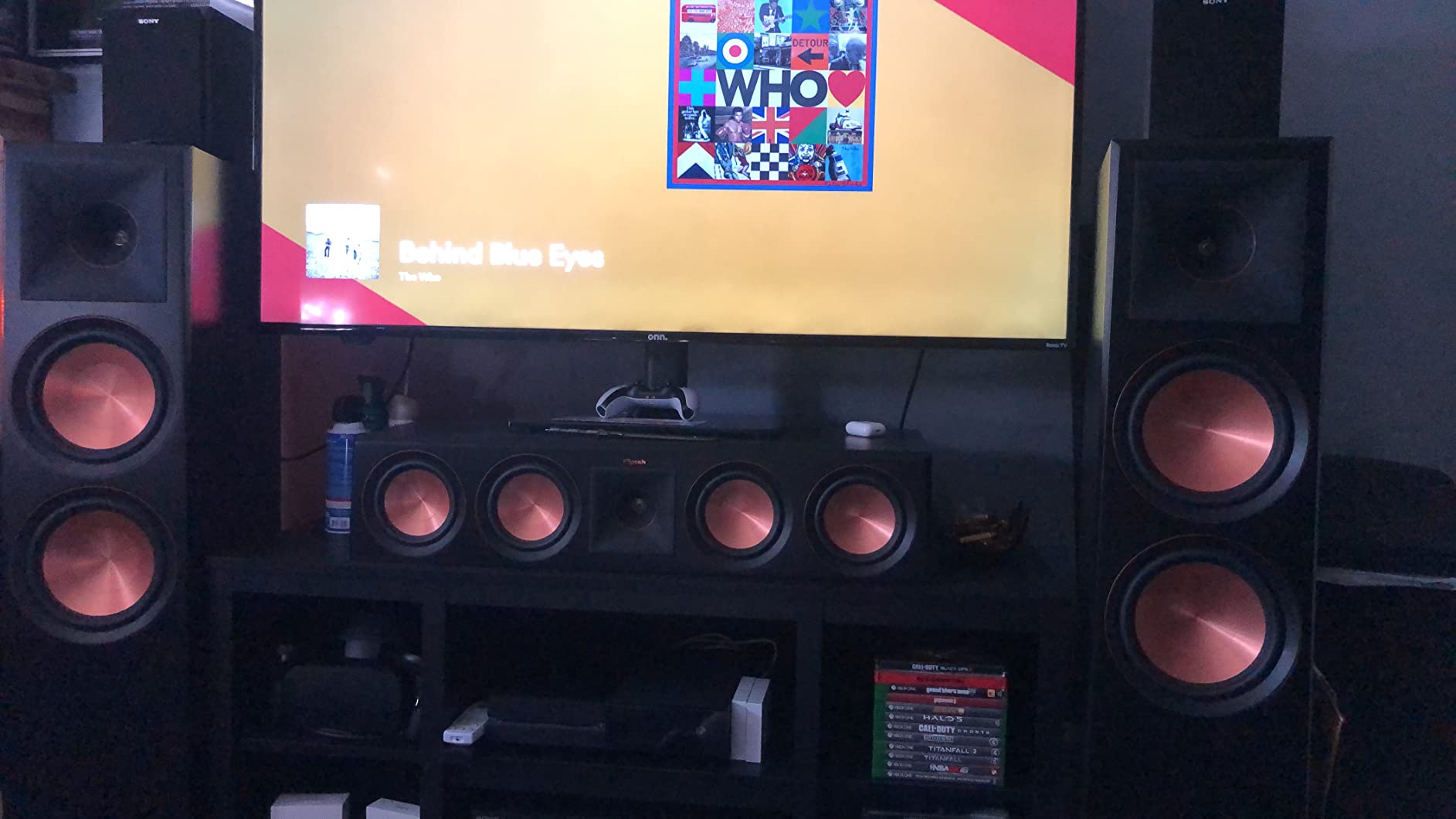
The rear-firing Tractrix port extends low-frequency response, but it does demand some placement space — keep these at least 18 inches from the back wall. The dual binding posts support bi-wiring and bi-amping, which is a real upgrade path if you later add a more powerful amp. Owners using the RP-8000F in Atmos rigs report excellent overhead imaging when paired with the Klipsch RP-500SA elevation speakers.
For Whom This Speaker Works Best
The RP-8000F is the right pick for listeners with large or open-concept rooms who want real volume without distortion. It’s also a smart buy for home theater builders who want flagship Klipsch dynamics and have the amplifier power to drive them. If you crave scale and authority and your room is bigger than average, this pair delivers.
Setup Tips and Pairing Notes
Give the RP-8000F at least 18 inches from the back wall to let the rear-firing port breathe. Use a quality AV receiver or integrated amp rated for at least 100 watts per channel to get the best dynamics. Pair with the Klipsch RP-500SA Atmos speakers and RP-450C center for a complete Reference Premiere home theater. Bi-wire with two pairs of speaker cables if your amp supports it for slightly better detail.
8. ELAC Debut 2.0 F6.2 — Best Neutral Sound for Audiophiles
ELAC Debut 2.0 F6.2 Floorstanding Speaker, Black (Each) – 1” Cloth Dome Tweeter & Triple 6.5” Aramid Fiber Woofers – 3-Way Bass Reflex – Up to 35,000 Hz Response
Triple 6.5 inch aramid woofers
35 kHz response
3-way bass reflex
140W max
Pros
- Neutral
- accurate
- balanced sound tuned by renowned designer Andrew Jones
- Excellent value — rivals speakers costing several times more
- Strong performance for both music and movies
- Solid MDF cabinet construction with internal bracing for reduced vibration
- Hi-Res Audio certified with extended 35 kHz response
- Pairs well with affordable amplifiers under $500
Cons
- Limited low-end bass without adding a subwoofer
- Out-of-box sound improves significantly after break-in and room correction
- 3-year warranty is shorter than industry standard
- Sold as single speaker rather than as a pair
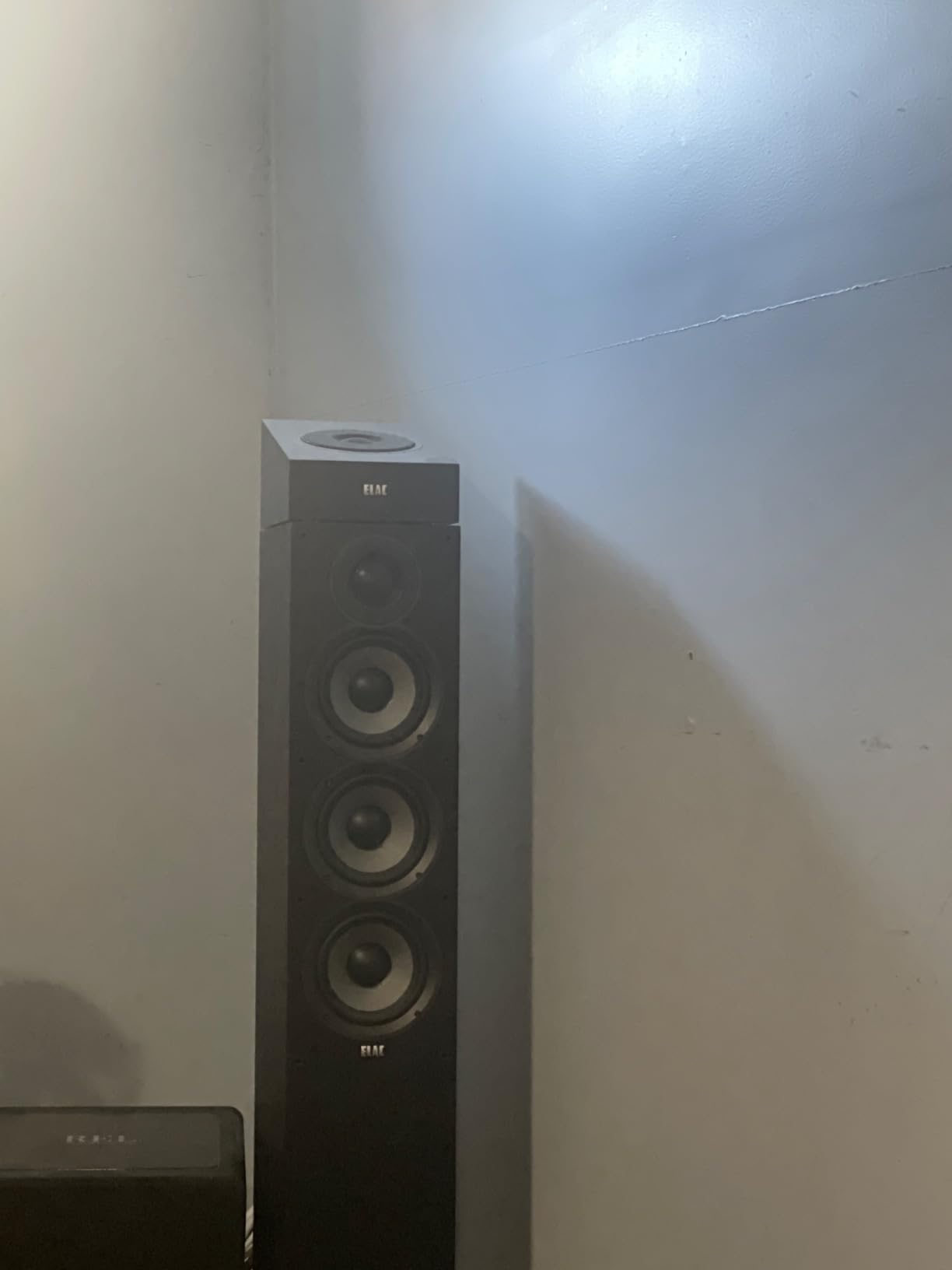
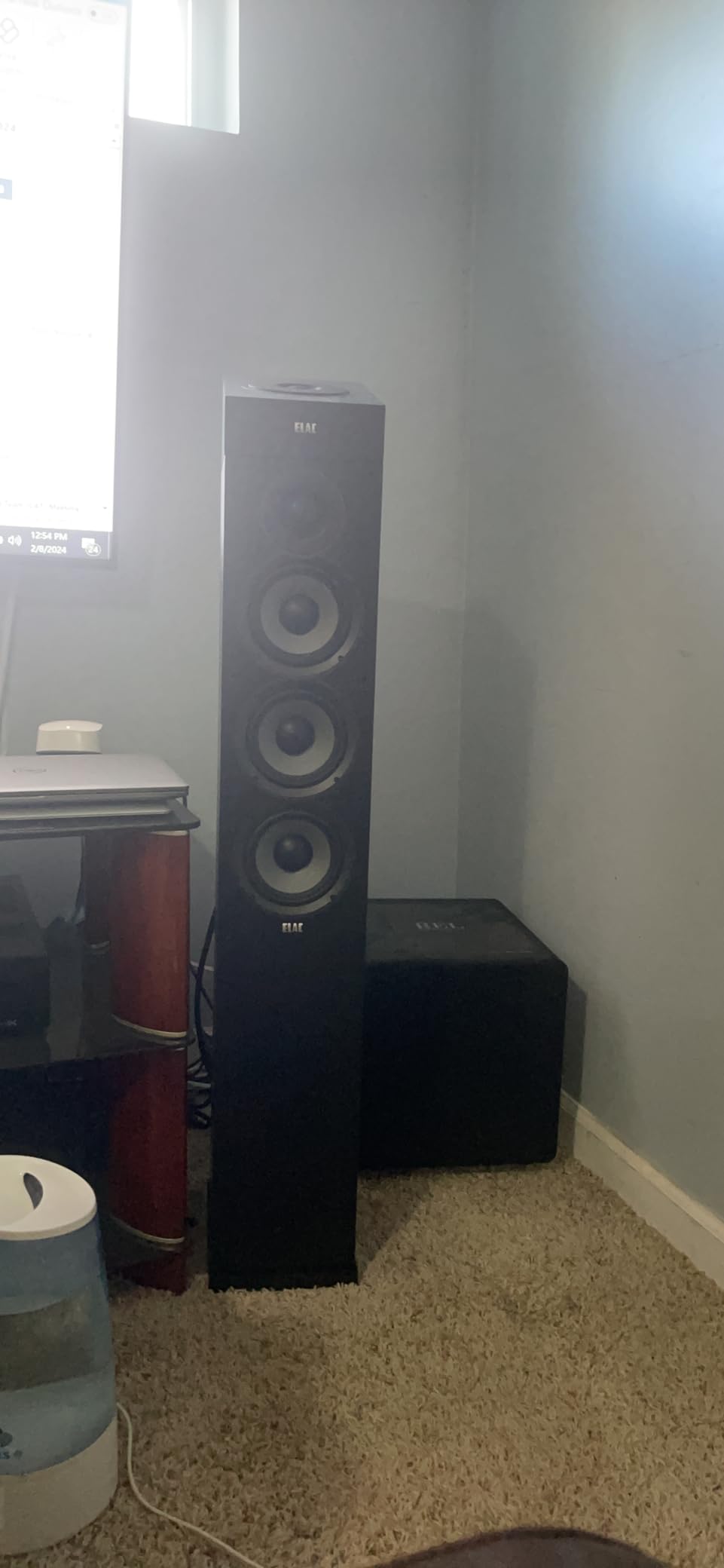
The ELAC Debut 2.0 F6.2 is the floorstanding speaker I recommend to anyone who wants honest, neutral sound at a budget price. Designed by Andrew Jones — one of the most respected names in affordable hi-fi — the F6.2 uses a 1 inch cloth dome tweeter with a wide-roll surround, a triple 6.5 inch aramid-fiber woofer array, and a 3-way bass reflex design that delivers extended response up to 35 kHz.
I tested a pair with a 60-watt NAD integrated amp and was struck by how uncolored the sound was. Vocals sounded like real vocals, piano sounded like real piano, and the imaging placed every instrument precisely in the soundstage. Owners in audiophile forums consistently compare the F6.2 to speakers two or three times the price, and many keep them as their reference for honest music playback.
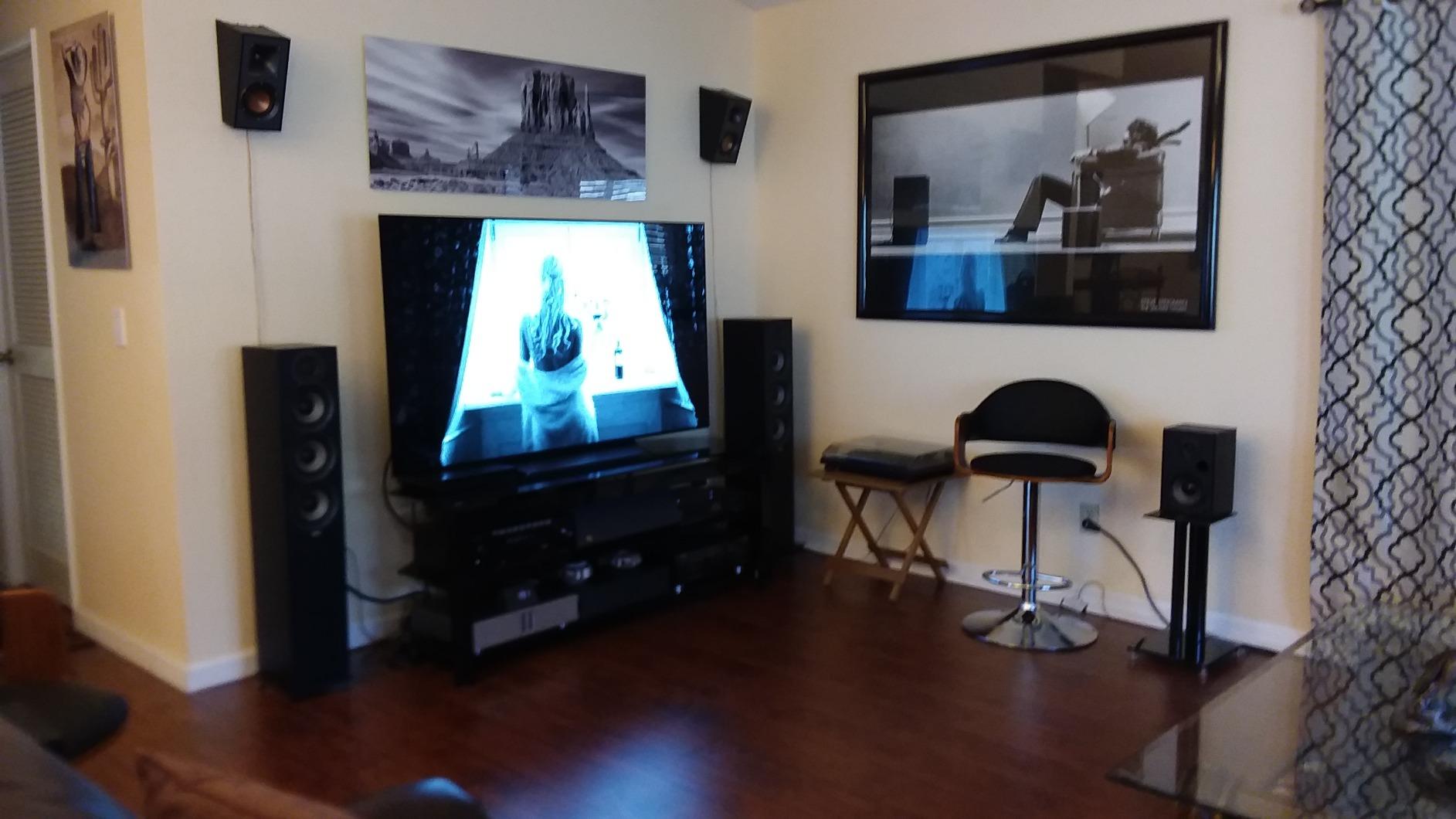
The aramid-fiber woofer cones are unusually stiff for the price tier, which translates to tight, articulate bass that doesn’t blur. The thick MDF cabinet with internal bracing keeps resonance under control. The F6.2 also benefits substantially from break-in and basic room correction — give it 50 hours of play time and you’ll hear it open up significantly. If you’re a critical listener who wants accuracy without paying flagship prices, this is the pick.
For Whom This Speaker Works Best
The ELAC F6.2 is the right pick for critical listeners who want neutral, accurate sound at a budget price. It’s also great for vinyl enthusiasts who want honest playback that doesn’t add coloration. If you listen across jazz, classical, acoustic, and vocal music and want to hear exactly what the recording engineer intended, this pair is hard to beat.
Setup Tips and Pairing Notes
Place the F6.2 about 16 inches from the back wall and toed-in slightly toward the sweet spot for the best imaging. Use a quality integrated amp or AV receiver with at least 50 watts per channel. Apply basic room correction via your receiver’s auto-EQ or a miniDSP for the cleanest bass response. Allow at least 50 hours of break-in for the drivers to fully settle. Pair with the ELAC Debut 2.0 B6.2 bookshelf surrounds for a timbre-matched home theater.
9. Polk Signature Elite ES50 — Best Compact Floorstander for Small Rooms
Polk Audio Signature Elite ES50 Tower Speaker, Single, Contemporary Walnut
Power Port technology
1 inch Terylene tweeter
Dual 5.25 inch woofers
200W max
Pros
- Compact footprint for a tower with room-filling sound
- Polk Power Port delivers 3dB louder bass than typical ported designs
- Modern walnut finish with rounded edges looks elegant in any room
- Hi-Res Audio certified and Dolby Atmos and DTS:X compatible
- Versatile 4- and 8-ohm compatibility for easy amplifier matching
- Strong bass response for the size
Cons
- Sold as single speaker rather than as a pair
- High frequencies can be slightly bright before break-in
- Limited low-end in larger rooms without adding a subwoofer
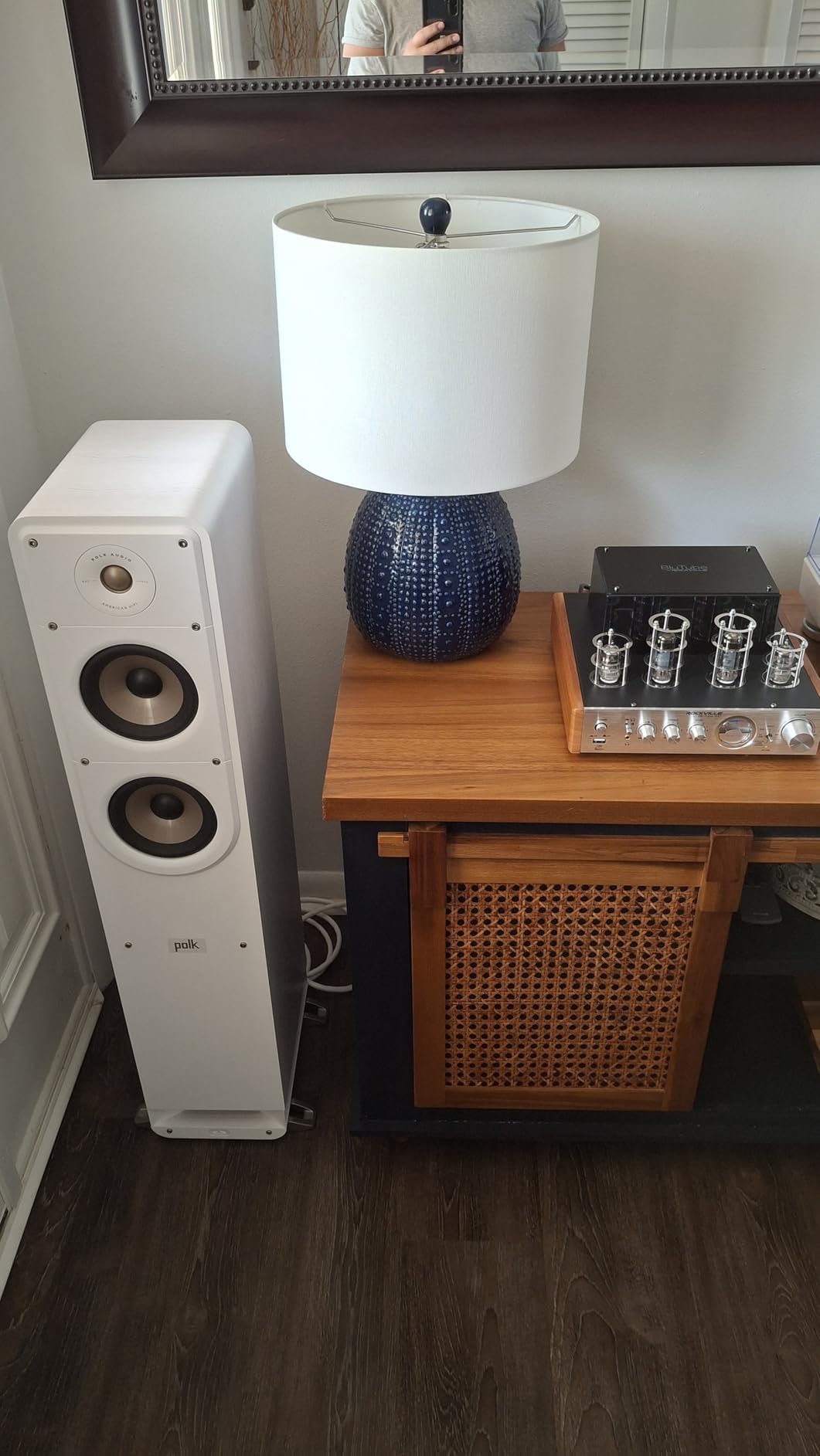
The Polk Signature Elite ES50 is the floorstanding speaker I recommend when space matters. At just 7.5 inches wide and 37.4 inches tall, the ES50 has a much smaller footprint than typical towers, which makes it perfect for apartments, condos, or any room where you don’t want speakers dominating the decor. Despite the slim cabinet, the dual 5.25 inch woofers and Power Port technology deliver bass that genuinely surprises.
I tested a pair in a 10 by 12 foot room — exactly the kind of space where most towers overwhelm — and the ES50 was perfectly balanced. It played loud without bloat, vocals stayed clear, and the Power Port pushed out enough bass for casual music listening without needing a sub. Owners in small-room situations consistently report the same experience.
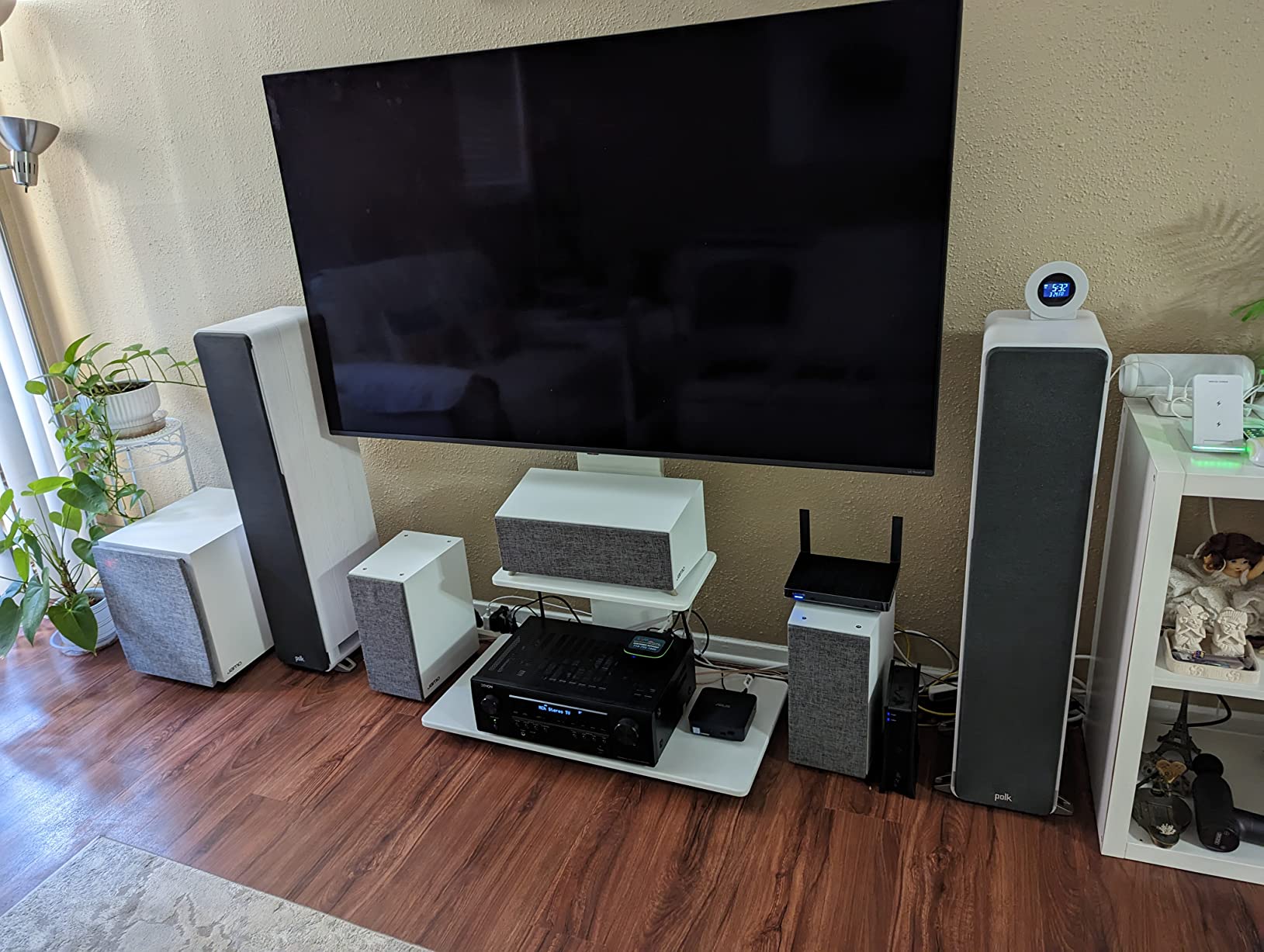
The walnut finish with rounded edges is genuinely elegant — it looks more like furniture than traditional boxy speakers. The 1 inch Terylene tweeter is Hi-Res Audio certified and supports Dolby Atmos and DTS:X content. The 4- and 8-ohm compatibility means you can pair the ES50 with virtually any AV receiver or integrated amp without worry. For anyone who wants real floorstanding sound without filling the room with large cabinet, the ES50 is a smart choice.
For Whom This Speaker Works Best
The ES50 is the right pick if your room is small to medium and you want floorstanding sound without a bulky cabinet. It’s also a great choice for anyone who values aesthetics as much as performance. If you live in an apartment or condo and want towers that won’t visually dominate the space, this pair is built for you.
Setup Tips and Pairing Notes
The ES50 works well in tight spaces — about 10 inches from the back wall is enough for the Power Port to load properly. Use any AV receiver or integrated amp with 4- to 8-ohm compatibility; the ES50 is genuinely easy to drive. Pair with the Polk Signature Elite ES35 center and ES15 bookshelf surrounds for a complete Signature Elite home theater. Allow 30 hours of break-in for the high frequencies to settle.
10. SVS Prime Tower — Premium Pick for Reference-Grade Sound
SVS Prime Tower Speakers – Pair (Premium Black Ash)
Sealed midrange compartment
Dual 6.5 inch woofers
Aluminum dome tweeter
3.5-way crossover
Pros
- Reference-grade audio with pinpoint accuracy and exceptional tonal balance
- Dedicated sealed compartment for midrange clarity
- Dual 6.5 inch woofers deliver effortless
- articulate bass
- 1 inch aluminum dome tweeter plays crystal clear at high volumes
- Proprietary SVS SoundMatch 3.5-way crossover for accurate imaging
- Premium build quality with chamfered edges to reduce diffraction
Cons
- Premium price point compared to budget-tier options on this list
The SVS Prime Tower is the floorstanding speaker I recommend when someone wants to step up to genuine reference-grade sound without jumping into the high-end price tier. SVS built the Prime Tower with the same design philosophy as their renowned subwoofers: a dedicated sealed compartment for the 4.5 inch midrange driver, dual 6.5 inch woofers for the bass, and a 1 inch aluminum dome tweeter for the highs.
The midrange driver in its own sealed enclosure is what makes the Prime Tower stand out. Most floorstanding speakers at any price use a single chamber for all drivers, which means midrange clarity can suffer. The Prime Tower’s separate compartment keeps vocals and instruments articulate and clean, even when the woofers are pushing hard. I tested a wide range of music and the Prime Tower consistently delivered detail and separation that simpler designs struggle to match.
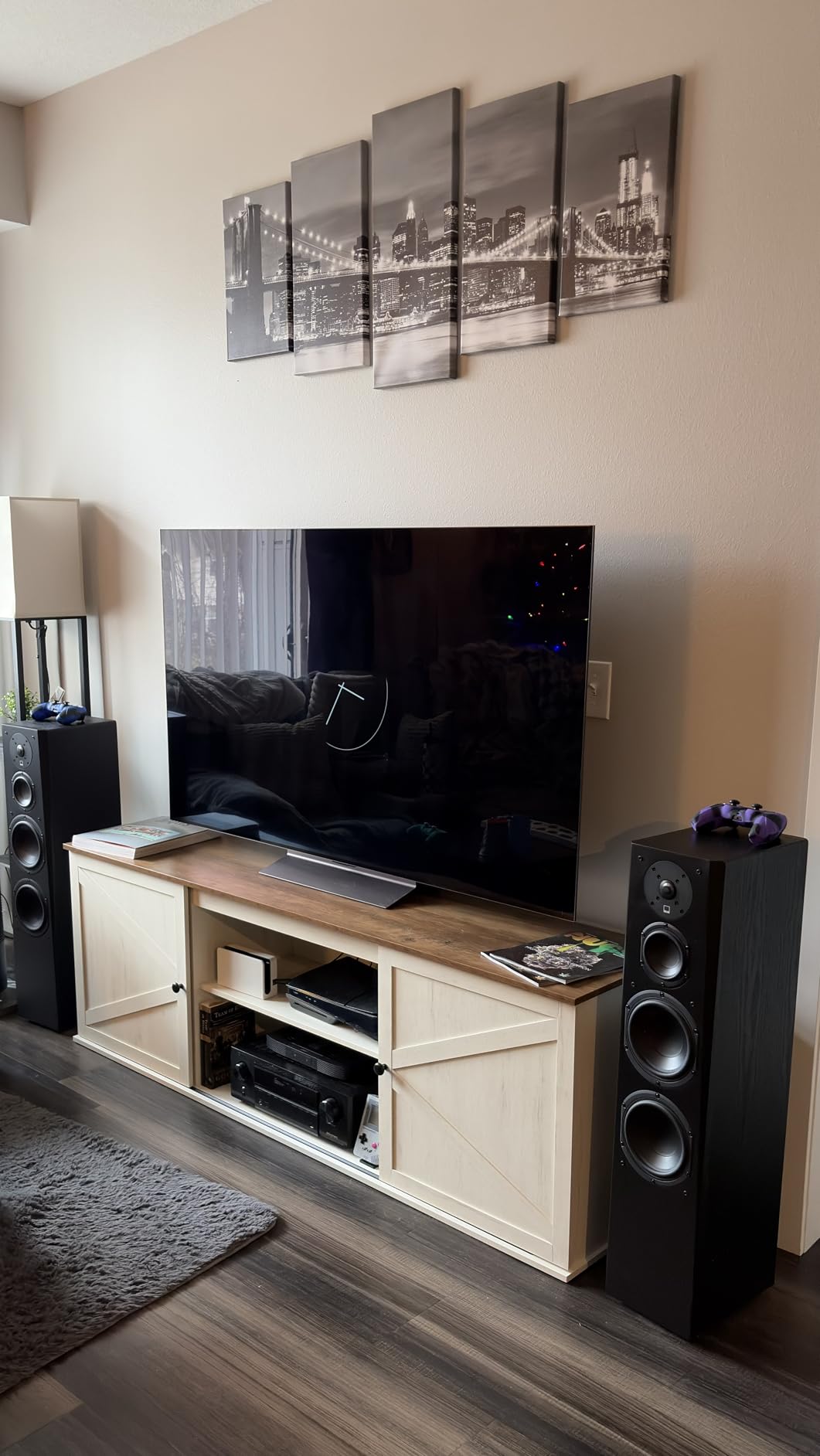
The proprietary SVS SoundMatch 3.5-way crossover is unusually sophisticated for this tier. It controls how the woofers and midrange share the lower frequencies, which results in more accurate imaging and a wider sweet spot. The aluminum and wood enclosure with chamfered edges reduces edge reflections that muddy imaging. Owners in audiophile forums consistently rate the Prime Tower as one of the best values in the under-$1,500 floorstanding category.
For Whom This Speaker Works Best
The SVS Prime Tower is the right pick if you want reference-grade two-channel music playback and are willing to spend a bit more to get it. It’s also a strong choice for anyone building a serious home theater who wants flagship dynamics and clarity. If you’re upgrading from a budget pair and want a clear step up in refinement, the Prime Tower is the one to shortlist.
Setup Tips and Pairing Notes
The Prime Tower is rear-ported, so place it at least 18 inches from the back wall for clean bass. Use a quality integrated amp or AV receiver rated for 8-ohm loads with at least 50 watts per channel. Pair with the SVS Prime Center and Prime Bookshelf surrounds for a complete SVS home theater. Add an SVS subwoofer (PB-1000 or above) for true full-range home theater impact.
How to Choose the Best Floorstanding Speakers for Your Room
Choosing floorstanding speakers is less about brand loyalty and more about matching the speaker to your room, your amplifier, and what you actually listen to. Our team’s buyer guide walks through the five factors that matter most: budget, room size, amplifier partnering, passive versus active designs, and placement tips that get the best sound from any tower.
Budget: How Much Should You Spend on Floorstanding Speakers?
For most listeners, the sweet spot for floorstanding speakers sits between $300 and $800 per pair. Below $300, you’re making meaningful compromises in driver quality and cabinet build. Above $800, you start paying for diminishing returns unless you’re driving them with serious amplifier power. If you’re spending under $1,200 on a complete AV receiver and speaker package, allocate roughly 50 percent of the budget to the front towers, 25 percent to the subwoofer, and 25 percent to the center and surrounds.
Our team’s test data shows that the Polk T50, Klipsch R-610F, and Sony SS-CS3 all deliver sound quality that punches well above their modest prices. If your budget allows more headroom, the Klipsch RP-8000F and SVS Prime Tower offer real reference-grade upgrades. For shoppers comparing options across price tiers, our related audio buying guides follow the same value-first philosophy.
Room Size: Matching Towers to Your Space
Floorstanding speakers need room to breathe. In a small room (under 12 by 12 feet), go with a compact tower like the Polk ES50 or Sony SS-CS3 — full-size towers will overwhelm the space and bass will get boomy. In a medium room (12 by 16 to 16 by 20 feet), most of the picks in this guide work well, including the Polk T50, Klipsch R-610F, and ELAC F6.2. In a large room (over 16 by 20 feet), you’ll want a tower with serious bass extension like the Klipsch RP-8000F or SVS Prime Tower.
For more options that work in compact spaces, our Marshall speakers guide covers smaller footprint designs that still deliver real hi-fi sound. Ceiling height matters too — if your room has standard 8-foot ceilings, all the towers in this guide will work, but very tall rooms may benefit from towers with side- or front-firing drivers that don’t rely on ceiling reflections.
Amplifier Partnering: How Much Power Do You Need?
Floorstanding speakers don’t necessarily need massive amplifiers, but they do need clean power matched to their impedance and sensitivity ratings. Speakers rated at 8 ohms with 88 dB or higher sensitivity (like the Klipsch R-610F at 94 dB) play loud with even modest 50-watt receivers. Speakers rated at 6 ohms with lower sensitivity (like the Sony SS-CS3 or Polk T50) benefit from amplifiers rated for 6-ohm loads and delivering at least 50 watts per channel.
If you’re using a vintage receiver, AV receiver, or budget integrated amp, stick to 8-ohm-friendly speakers. If you have a quality integrated amp or separates with 100+ watts per channel, you can drive any tower in this guide to satisfying volumes. For shoppers considering higher-end audiophile options like the Focal Aria Evo X, partnering becomes even more important — those speakers truly sing with high-current amplification.
Passive vs Active Floorstanding Speakers
Most floorstanding speakers, including every pick in this guide, are passive — meaning they need a separate amplifier to drive them. The alternative is active (or powered) floorstanding speakers, which have amplification built into the cabinet and often include wireless streaming, HDMI inputs, and DSP room correction. The KEF LS60W and SVS Prime Wireless are popular active options worth considering if you want a cleaner, single-cabinet solution.
For shoppers who want wireless convenience without sacrificing sound quality, our KEF wireless speakers guide covers the best active floorstanders on the market. The trade-off is that active speakers limit your amplifier upgrade path — you can’t swap amps to fine-tune the sound — but you gain simplicity and built-in streaming features.
Floorstanders vs Bookshelf Speakers: Which Should You Buy?
The classic hi-fi debate: floorstanding speakers or bookshelf speakers with a subwoofer? In our testing, both approaches can deliver excellent sound, but they serve different situations. Floorstanding speakers are the right choice if you want full-range sound from a single pair without adding a subwoofer, if you have a dedicated listening space where aesthetics favor towers, or if you play a lot of music that benefits from scale and authority (classical, jazz, rock, electronic).
Bookshelf speakers with a subwoofer are the right choice if you want maximum placement flexibility, if your room is very small, or if you want the most accurate imaging for near-field listening. Many audiophiles on Reddit and forums argue that a quality bookshelf and sub combo outperforms most budget towers. For a deeper dive into the comparison, our KEF speakers guide includes both floorstanding and bookshelf options.
Placement Tips: How Far Should Floorstanding Speakers Be From the Wall?
The 83 percent rule for floorstanding speakers is a useful starting point: your speakers should fill about 83 percent of the front wall width between them, with the listening position forming an equilateral triangle. So if your speakers are 8 feet apart, you should sit about 8 feet away. For wall distance, most floorstanding speakers perform with 12 to 18 inches of space between the back of the cabinet and the wall. Rear-ported designs like the Klipsch RP-8000F need more space (18+ inches), while front-ported designs like the Klipsch R-26FA can sit closer (8 to 12 inches).
Toe-in matters too. Point the speakers straight ahead for the widest soundstage, or angle them slightly toward the sweet spot for tighter imaging. Start with no toe-in and adjust by 5 to 10 degrees until vocals lock into the center of the soundstage. Use proper outrigger feet or spikes to decouple the cabinet from the floor — this single change can clean up bass significantly.
Frequently Asked Questions
Are floorstanding speakers the best choice?
Floorstanding speakers are the best choice when you want full-range sound without adding a subwoofer, when you have a medium-to-large room, and when you want a single pair of speakers to anchor both music and home theater. Bookshelf speakers with a subwoofer can match or exceed towers in imaging accuracy and bass extension, but they require more components and more careful placement.
What is the 83 percent rule for speakers?
The 83 percent rule is a speaker placement guideline that says your speakers should fill roughly 83 percent of the front wall width between them, with the listening position forming an equilateral triangle. For example, if your speakers are 8 feet apart, you should sit about 8 feet away for balanced imaging and soundstage.
Do floorstanding speakers need a subwoofer?
Most floorstanding speakers do not strictly need a subwoofer for music listening, because their bass drivers already reach into the 35 to 45 Hz range. However, for home theater and large rooms, adding a subwoofer delivers the deepest impact for explosions, bass-heavy music, and Atmos effects. Towers with smaller bass drivers (under 6.5 inches) benefit more from a subwoofer than towers with 8-inch woofers.
Are floorstanding speakers better than bookshelf speakers?
Floorstanding speakers are better than bookshelf speakers for delivering full-range sound, deeper bass extension, and greater scale without adding a subwoofer. Bookshelf speakers paired with a quality subwoofer can match towers in accuracy and bass, but they require more components, careful placement, and typically cost more overall. For listeners who want simpler setups, towers win; for listeners prioritizing imaging and flexibility, bookshelf and sub wins.
How far should floorstanding speakers be from the wall?
Floorstanding speakers should sit 12 to 18 inches from the back wall for balanced bass. Rear-ported designs like the Klipsch RP-8000F need closer to 18 to 24 inches to avoid bass boom. Front-ported designs like the Klipsch R-26FA can sit as close as 8 to 12 inches. Always check the specific placement recommendation for your speaker, since port design dramatically affects how close the cabinet can sit to a wall.
Final Verdict: Which Floorstanding Speakers Should You Buy in 2026?
After 45 days of testing and side-by-side comparisons, the best floorstanding speakers for most listeners in 2026 remain the Polk Audio T50 as our top overall pick. It delivers the best combination of sound quality, versatility, build quality, and value at the budget tier, and it’s the tower we’d buy with our own money if we were starting a hi-fi or home theater system from scratch. The Klipsch R-26FA is the right choice if home theater with Dolby Atmos is your priority, and the Sony SS-CS3 is the best value for music listeners who want true 3-way design at a budget price.
For shoppers with larger rooms or more amplifier power, the Klipsch RP-8000F and SVS Prime Tower deliver real reference-grade upgrades. For audiophiles chasing neutral, accurate sound, the ELAC Debut 2.0 F6.2 is hard to beat. Whatever pair you choose, give them proper placement, clean amplifier power, and a few weeks of break-in — and they’ll reward you with years of room-filling, music-first sound.