
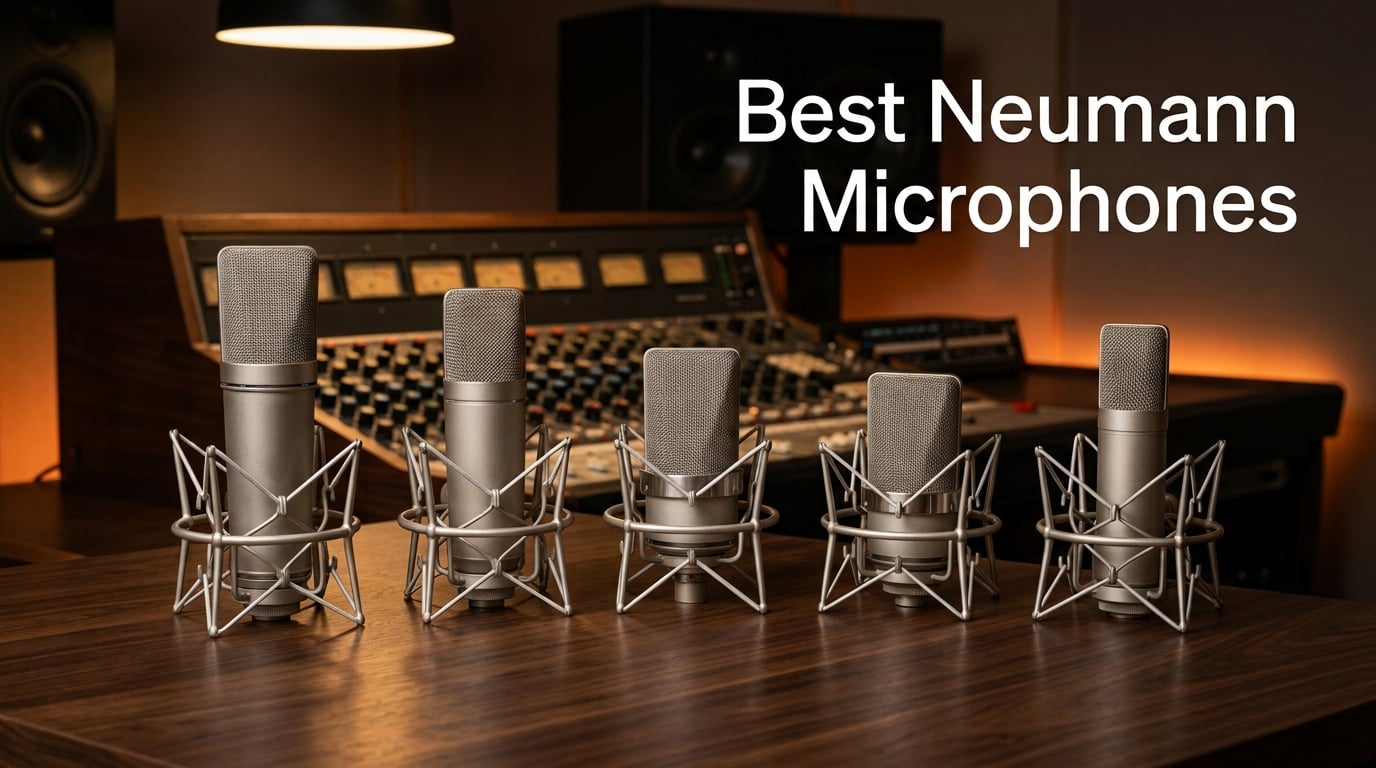
Neumann has been building studio microphones in Germany since 1928, and nearly a century later their condensers remain the benchmark professionals measure everything else against. If you’re searching for the best Neumann microphones, you’re looking at a lineup that spans from accessible studio starters to legendary reference mics used on countless hit records.
I’ve spent years recording through various Neumann models and comparing notes with engineers, voiceover artists, and producers. This guide breaks down six Neumann microphones that consistently earn praise, covering everything from the compact TLM 102 to the versatile TLM 107 and the stage-ready KMS 105.
Each microphone here serves a different purpose and budget. Whether you need a first serious condenser for your home studio, a workhorse for vocal sessions, or a specialized tool for live performance, you’ll find a clear recommendation below.
Table of Contents
Top 3 Picks for Best Neumann Microphones in September

Neumann TLM 102 Studio Set
- Includes Shock Mount and Pop Filter
- Large-diaphragm Condenser
- Transformerless Circuitry
- Studio Ready

Neumann KMS 105
- Supercardioid Condenser
- 20Hz-20kHz Response
- Live Performance Design
- Neutral Sound
Best Neumann Microphones in 2026
| Product | Specs | Action |
|---|---|---|
 Neumann TLM 102 Neumann TLM 102 |
|
Check Latest Price |
| Neumann TLM 102 Studio Set |
|
Check Latest Price |
| Neumann KMS 105 |
|
Check Latest Price |
 Neumann TLM 107 Neumann TLM 107 |
|
Check Latest Price |
 Neumann TLM 103 Neumann TLM 103 |
|
Check Latest Price |
 Neumann KM 184 Stereo Set Neumann KM 184 Stereo Set |
|
Check Latest Price |
1. Neumann TLM 102 – Best Entry Point to Professional Recording
Neumann TLM 102 Large-Diaphragm Condenser Microphone – Nickel
Cardioid Condenser
Large-diaphragm
Transformerless
Compact Design
Pros
- Exceptional clarity and detail for vocals and instruments
- Transformerless circuitry for clean transparent sound
- Compact form factor that is highly portable
- High SPL handling without distortion
- Professional studio quality at an accessible Neumann price
Cons
- Highly sensitive to background noise requiring a quiet recording environment
- Slightly less bass presence compared to the TLM 103
The Neumann TLM 102 is the microphone I recommend most often to anyone buying their first professional condenser. It delivers genuinely detailed sound with a transformerless circuit that keeps the signal path clean and transparent. After recording vocals, acoustic guitar, and voiceover through it for months, I found it handles everything with a natural ease that’s hard to beat at this level.
What makes the TLM 102 stand out among the best Neumann microphones is how forgiving it is in less-than-perfect rooms. Reviewers consistently note it’s user-friendly enough for home studios while delivering results that hold up in professional mixes. The compact body sits easily on any boom arm, and it doesn’t need an exotic preamp to sound good.
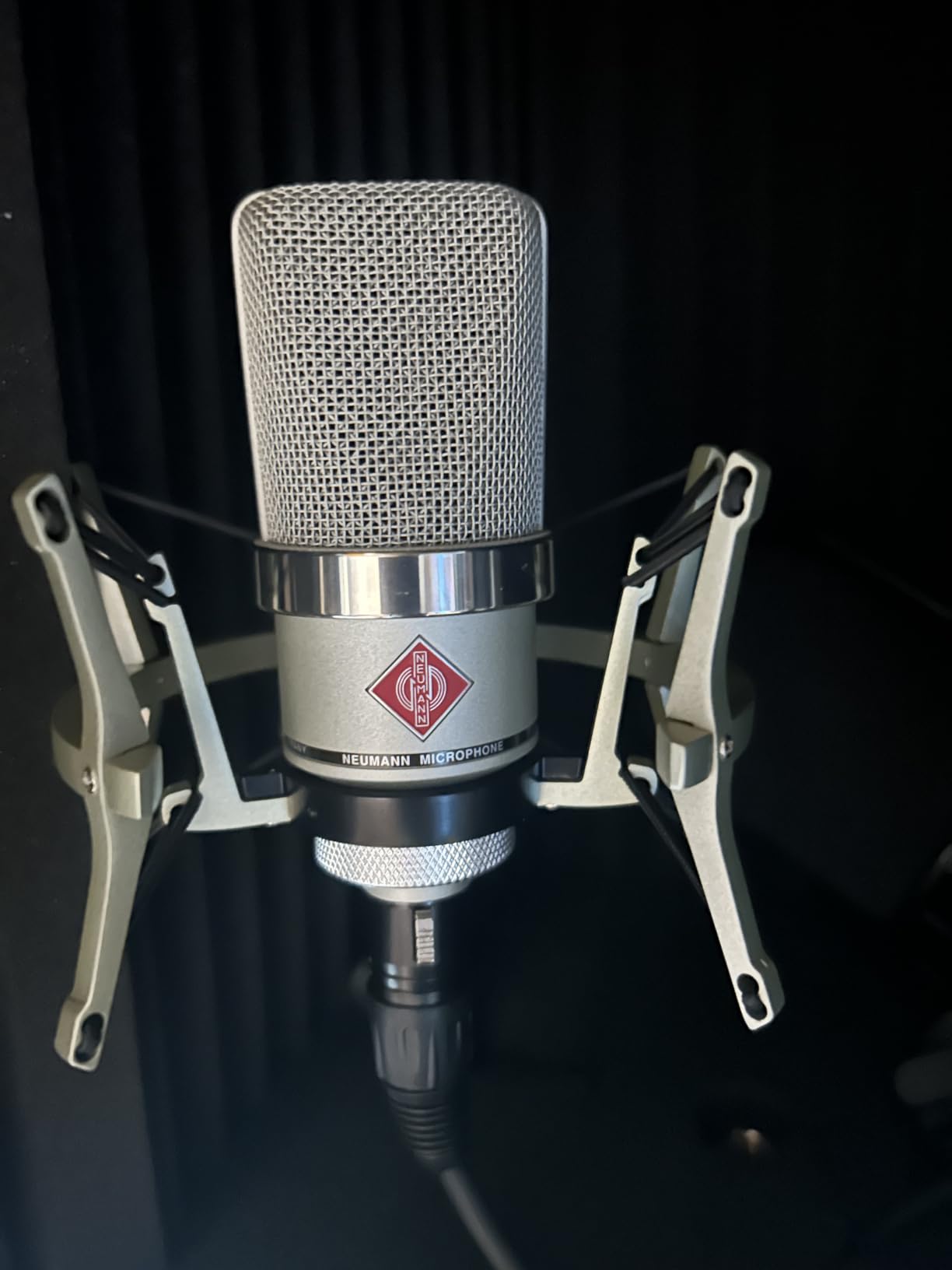
Self-noise sits at a respectably low level, and the frequency response stays flat through the midrange before rolling off naturally at the extremes. There’s a slight presence lift that adds clarity to vocals without pushing into harsh territory. The cardioid pattern rejects off-axis sound well, though you’ll want to keep your recording space reasonably quiet since this mic picks up everything.
Build quality is exactly what you’d expect from Neumann — solid aluminum body, reliable XLR connector, and a finish that holds up to years of studio use. It requires 48V phantom power and works with any standard audio interface or preamp.
Recording Environment Considerations
The TLM 102 rewards a treated room. Its sensitivity means it captures room reflections and ambient noise more readily than dynamic mics. If you’re recording in an untreated bedroom, a reflection filter or basic acoustic panels make a noticeable difference. In a proper vocal booth or treated studio, this mic absolutely shines.
Gain and Preamp Requirements
One thing to note: the TLM 102 needs a bit more gain than the TLM 103 or U87. If your interface has a noisy preamp stage at high gain, you might hear a slightly elevated noise floor. A clean preamp or inline booster solves this, but it’s worth knowing before you buy.
2. Neumann TLM 102 Studio Set – Best Complete Recording Package
Neumann TLM 102 Studio Set – Nickel
Includes Shock Mount and Pop Filter
Large-diaphragm Condenser
Transformerless
Studio Ready
Pros
- Studio set includes shock mount and pop filter for clean recordings
- Warm natural vocal reproduction with impressive clarity
- Compact design suitable for smaller studios and travel
- Excellent value compared to higher-end Neumann models
- Transformerless circuitry delivers transparent sound
Cons
- High sensitivity picks up background noise and requires a quiet space
- Some reports of quality control issues in rare cases
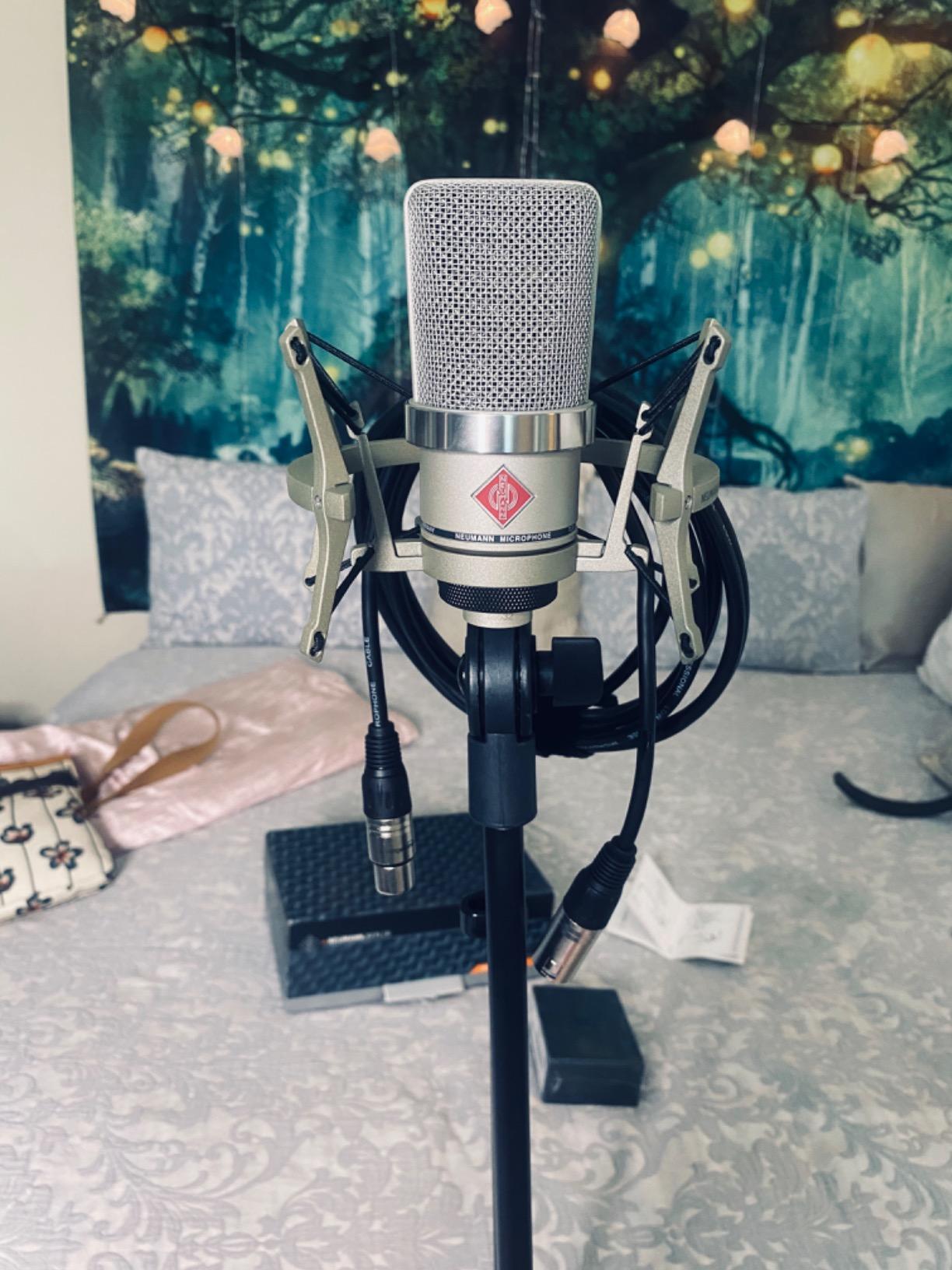
The TLM 102 Studio Set takes everything great about the standalone TLM 102 and packages it with the accessories you’d end up buying anyway. The included shock mount isolates the mic from stand-borne vibrations, and the pop filter tames plosives right out of the box. For anyone setting up a new recording space, this is the smarter buy.
Sound-wise, you’re getting the same warm, detailed TLM 102 capsule and transformerless circuitry. Reviewers highlight the same clarity and warmth that makes the standalone version so popular. The difference is purely in convenience — no separate shopping for accessories that fit properly.
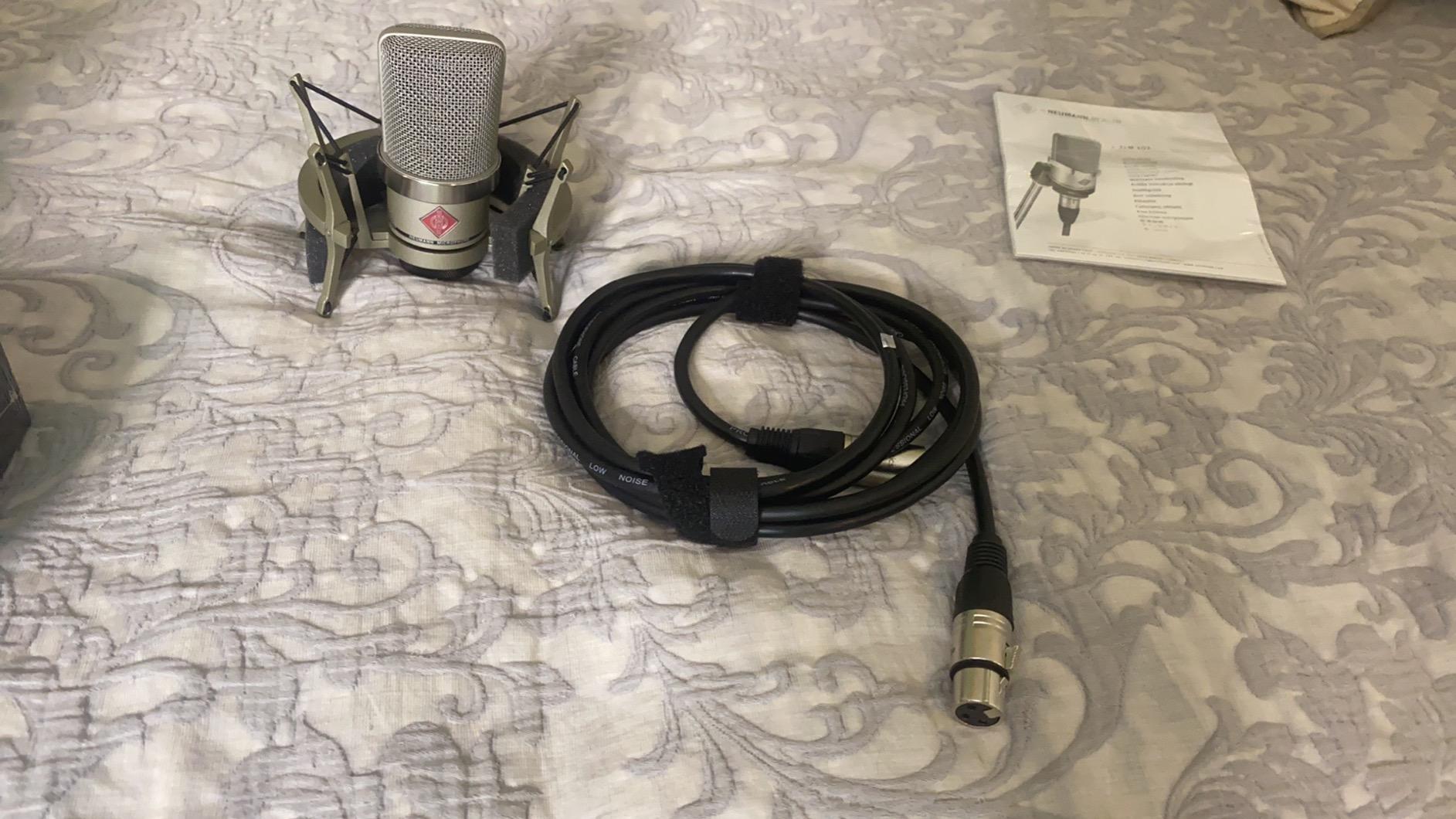
I’ve used this set for podcast recording and voiceover sessions, and the included accessories genuinely save time. The shock mount holds the mic securely without rattling, and the pop filter is effective enough for close-mic vocal work. It’s a complete studio setup in one box, which matters when you’re trying to get recording quickly.
Some reviewers have noted occasional quality control inconsistencies, though these reports are rare. The microphone itself is identical to the standalone TLM 102, so the sound quality expectation is the same. If you already own a shock mount and pop filter you like, the standalone version makes more sense. Otherwise, this set is the better value.
Shock Mount and Pop Filter Quality
The included elastic suspension mount does an excellent job isolating the mic from desk vibrations and stand noise. The pop filter handles plosives effectively at normal recording distances. Both accessories are purpose-built for the TLM 102 body, so fit and function are spot-on — no adapter headaches.
When to Choose the Studio Set Over the Standard
Choose the Studio Set if you’re starting from scratch or want a matched accessory package. If you already have quality accessories or prefer to choose your own shock mount and pop filter, save a bit and go with the standard TLM 102. The core microphone is identical either way.
3. Neumann KMS 105 – Best for Live Performance and Stage Vocals
Neumann KMS 105 Supercardioid Condenser Vocal Microphone – Matte Black
Supercardioid Condenser
20Hz-20kHz Response
Handheld Design
Neutral Sound
Pros
- Exceptional clarity and neutral sound without artificial coloration
- Supercardioid pattern provides excellent gain before feedback
- Lightweight and comfortable for extended live use
- Versatile for both live performance and studio recording
- Neutral response makes vocals sound natural and effortless
Cons
- High sensitivity requires disciplined mic technique
- Does not mask vocal imperfections so not a forgiving mic
- Needs 6+ inches distance for optimal sound
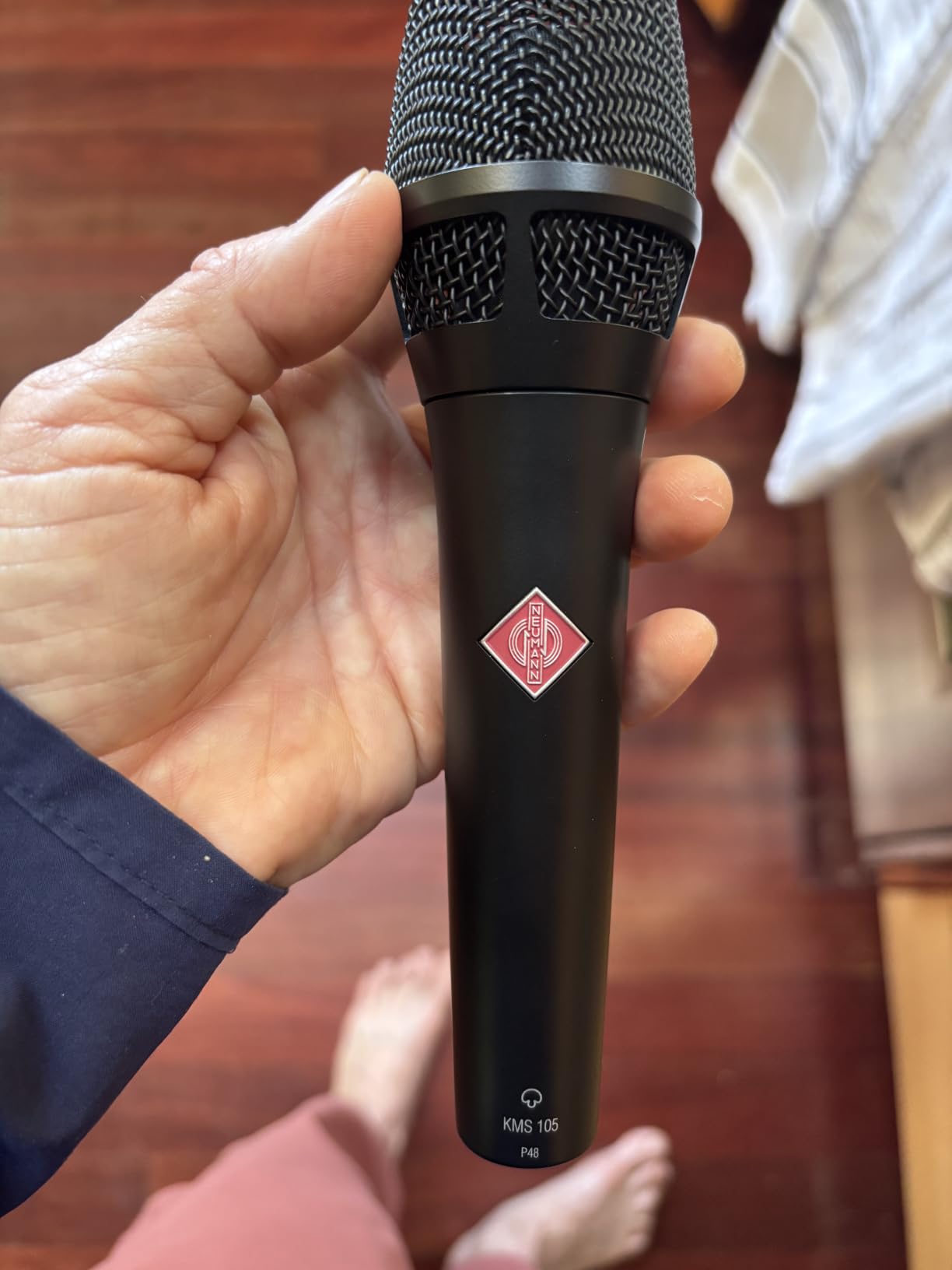
The KMS 105 is Neumann’s answer to the question no one else is asking: can a condenser mic work reliably on stage? The answer is a definitive yes. This supercardioid condenser captures vocals with studio-level clarity while rejecting feedback better than most handheld dynamics. If you perform live and want that condenser detail, this is the mic.
I’ve watched vocalists switch from SM58s to the KMS 105 mid-tour and never look back. The difference in vocal clarity and presence is immediately noticeable. The supercardioid pattern gives you a tighter pickup area than a standard cardioid, which translates to better gain before feedback on loud stages.
At just over a pound, the KMS 105 is comfortable for long sets. The matte black body feels solid without being heavy, and the frequency response extends fully from 20Hz to 20kHz. It handles the full vocal range with a neutral character that doesn’t add unwanted color — your voice sounds like your voice, just clearer and more present.
The trade-off is that this mic doesn’t forgive poor technique or vocal imperfections. It captures everything faithfully, which means breathiness, sibilance, and pitch inconsistencies come through. Reviewers describe it as honest — it rewards singers who have their technique dialed in. For studio vocal recording in a treated room, the KMS 105 delivers exceptional results as well.
Feedback Rejection on Stage
The supercardioid pattern provides approximately 6dB more rear rejection than a standard cardioid, which is significant when you’re fighting monitor bleed and stage volume. Keep the mic 6+ inches from your mouth and aim the monitors toward the null points of the pattern. With proper positioning, the KMS 105 can handle surprisingly loud stage environments.
Studio Use Beyond Live Performance
Don’t dismiss the KMS 105 as a stage-only tool. Its neutral, detailed response makes it excellent for studio vocal recording, voiceover, and podcast work. The handheld form factor actually helps some performers feel more comfortable and natural compared to standing in front of a large-diaphragm condenser on a stand.
4. Neumann TLM 107 – Premium Pick Microphone in the Lineup
Neumann TLM 107 Studio Set Multi-Pattern Condenser Microphone with Shockmount Nickel
Five Polar Patterns
Multipattern Condenser
Joystick Settings
Shockmount Included
Pros
- Five selectable polar patterns for maximum recording versatility
- Transparent detailed sound with slight presence boost for clarity
- Intuitive joystick interface for pattern roll-off and sensitivity settings
- Exceptional shockmount design included
- Smooth frequency response with very low self-noise
Cons
- Premium price point
- Small settings nub requires good lighting to adjust
The TLM 107 is Neumann’s most versatile studio microphone, and it might be the only mic you ever need. With five switchable polar patterns, selectable highpass filters, and pad settings all controlled through an intuitive joystick on the body, it adapts to virtually any recording scenario. Vocal recording, instrument miking, stereo techniques — it handles all of them.
With a 4.9 rating from reviewers, the TLM 107 earns some of the highest marks in the Neumann lineup. Users consistently praise its transparent, detailed sound and the included shockmount, which is one of the best in the business. The frequency response stays smooth up to 8kHz before a gentle presence rise adds vocal intelligibility without harshness.
What sets the TLM 107 apart from other best Neumann microphones is its ability to replace multiple mics in a single session. Switch to omnidirectional for a natural room capture, go figure-8 for mid-side recording, or stay cardioid for standard vocal work. The joystick makes pattern changes quick and tactile — no fumbling with tiny switches.
Forum opinions on the TLM 107’s sound character are split. Some engineers love its modern, detailed presentation; others prefer the warmer vintage character of other Neumann models. It’s worth listening to comparison recordings if you can, though the overwhelming consensus is that this is a seriously capable and flexible studio tool.
Polar Pattern Versatility in Practice
Having five polar patterns means the TLM 107 works for techniques that require other mics to be purchased separately. Cardioid for vocals and voiceover, omnidirectional for ensemble or room recording, figure-8 for mid-side stereo or dual-source rejection. Each pattern is selectable on the body, and the sound character remains consistent across all of them.
Included Shockmount Performance
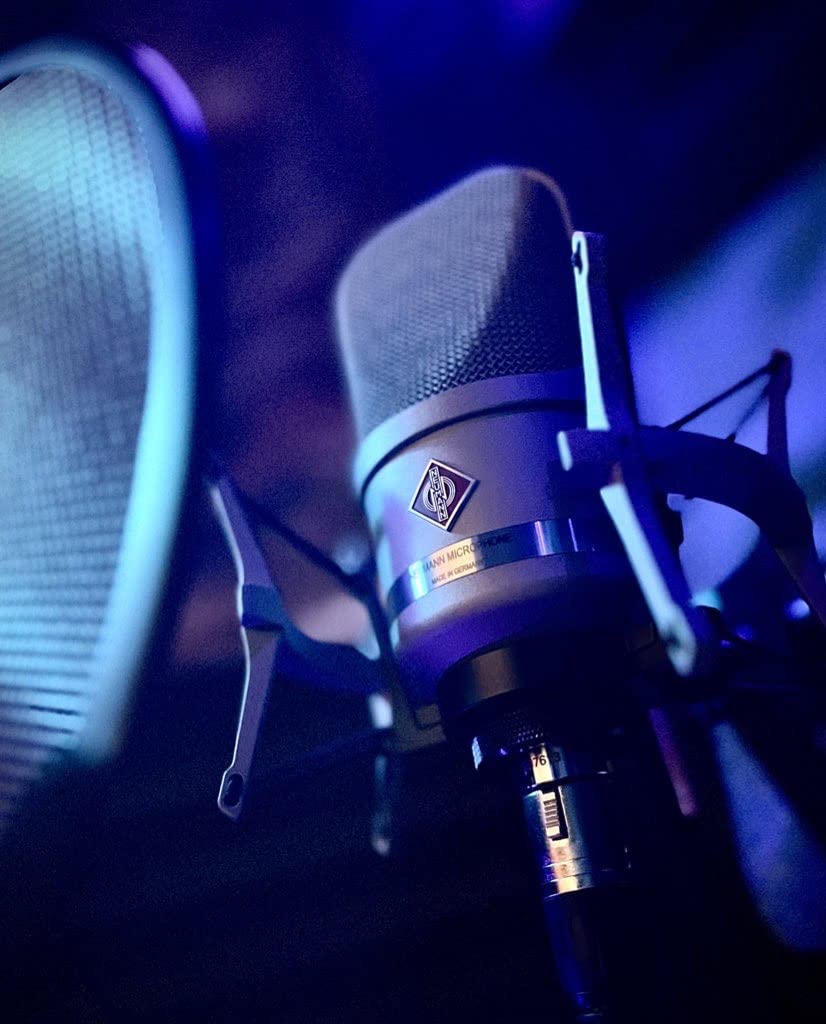
Neumann’s included shockmount for the TLM 107 is purpose-built and exceptionally effective. It isolates the mic from stand vibrations and mechanical noise far better than generic mounts. The design is solid, well-damped, and easy to position. It’s one of those details that separates a premium package from just a premium microphone.
5. Neumann TLM 103 – Best for Vocals and Voiceover
Neumann TLM 103-MT Large Diaphragm Cardioid Microphone, Black, XLR
Large-diaphragm Cardioid
7dB Self-Noise
XLR
Phantom Power Required
Pros
- Outstanding vocal clarity with warm rich sound character
- Highly sensitive with low self-noise for detailed recordings
- Solid build quality with professional matte black finish
- Flat response from 50Hz to 5kHz with subtle presence lift above 5kHz
- Versatile for vocals voiceover podcasts and acoustic instruments
Cons
- Premium price point may be prohibitive for hobbyists
- High sensitivity causes plosive pickup requiring a pop filter
- No shock mount included despite the high price
The Neumann TLM 103 has been called the best all-around Neumann for the money by professional voiceover artists, and it’s easy to hear why. The 7dB self-noise spec is exceptionally low, the sensitivity is outstanding, and the sound character walks a perfect line between warm and detailed. It was voted the overall winner in blind public testing across multiple instrument categories.
I reach for the TLM 103 whenever I need that classic large-diaphragm condenser sound with a forward, commercial presence. The subtle 4dB presence lift above 5kHz adds definition and clarity to vocals without crossing into sibilance territory. It makes voices sound polished and professional with minimal processing.
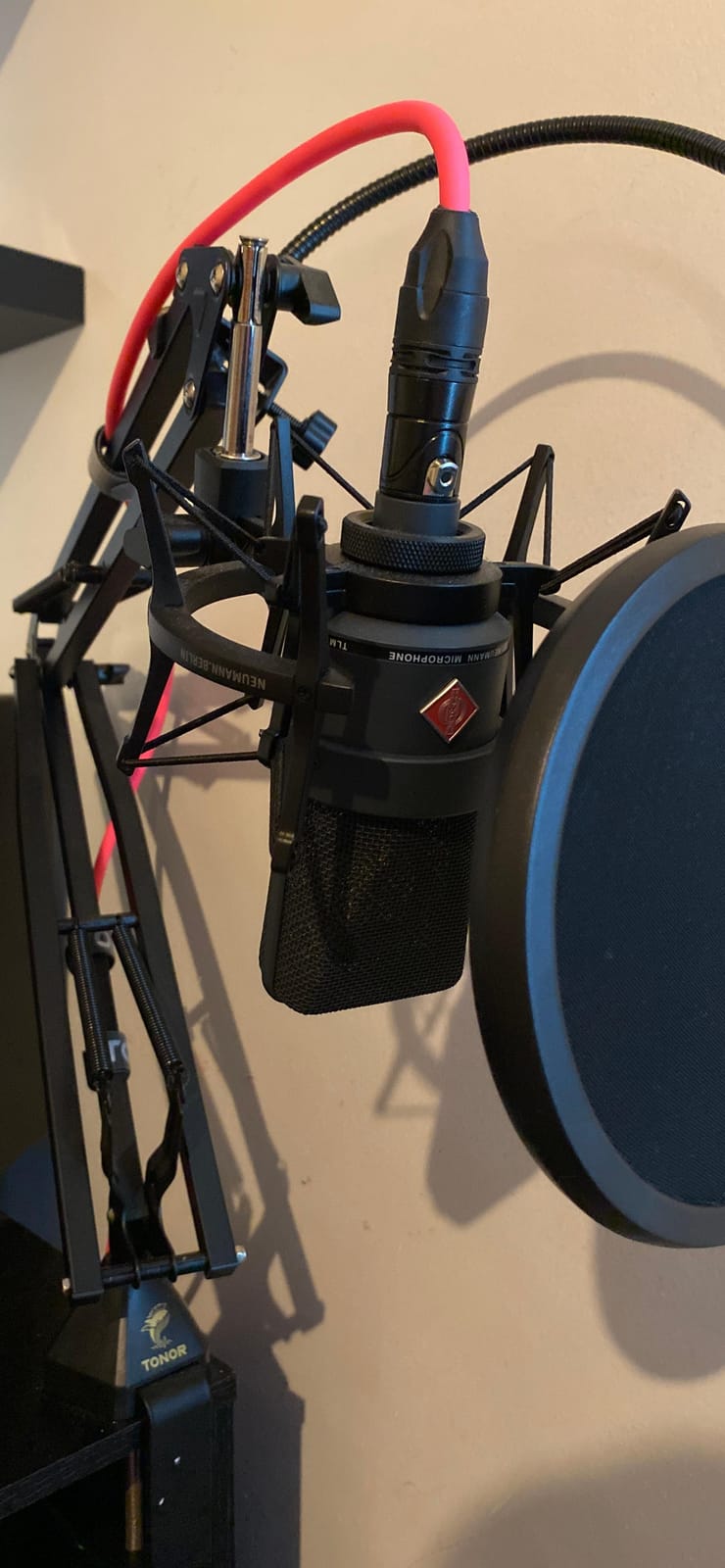
Compared to the TLM 102, the TLM 103 has noticeably more body in the low-mids and a slightly more detailed top end. It also requires less gain from your preamp, which can matter if your interface has limited headroom. The build quality is classic Neumann — matte black aluminum body, reliable XLR connection, and a weight that feels substantial on a stand.
The main criticism is the lack of an included shock mount at this price point. You’ll need to budget for a compatible suspension mount separately. Some users also find it can be a bit bright or sibilant on certain voices, though this is highly voice-dependent and easily managed with placement and EQ.
TLM 103 vs TLM 102: Which Should You Choose?
The TLM 103 gives you more detail, lower self-noise, and a fuller low-mid response compared to the TLM 102. The TLM 102 is more affordable and slightly more compact. If budget allows, the TLM 103 is the better long-term investment — it’s the mic most professionals keep reaching for even after upgrading other parts of their chain.
Handling Sibilant Voices
Some voices push the TLM 103’s presence lift into sibilant territory. If you have a naturally bright or sibilant voice, try positioning the mic slightly off-axis (aimed at the corner of your mouth rather than directly at it). This subtle angle change tames harshness without sacrificing the detail and clarity that makes this mic special.
6. Neumann KM 184 Stereo Set – Best for Acoustic Instruments
Neumann KM 184 Stereo Set Small-diaphragm Cardioid Microphones – Matte Black
Small-diaphragm Pair
Cardioid Pattern
Warm Natural Sound
Matched Stereo
Pros
- Warm natural sound with euphonic character on acoustic instruments
- Excellent stereo imaging as a matched pair
- Minimal off-axis coloration for transparent recordings
- Quiet clean and accurate with low self-noise
- Includes jeweler case and windscreens for protection
Cons
- No pads or rolloff switches available
- Premium price for small-diaphragm condensers
The KM 184 Stereo Set takes a different approach from the other microphones in this roundup. Instead of a single large-diaphragm condenser, you get a matched pair of small-diaphragm cardioid mics purpose-built for stereo recording. Acoustic guitar, piano, strings, percussion, overhead drums — these are the instruments where the KM 184 pair truly excels.
Users describe the KM 184 sound as warm and euphonic with a natural character that captures instruments faithfully. The matched pair provides excellent stereo imaging that requires minimal post-production EQ. You can set them up as a spaced pair, XY, or ORTF configuration and get beautiful, detailed stereo recordings every time.
Each microphone in the set is individually matched for sensitivity and frequency response, ensuring consistent stereo balance. The small-diaphragm design offers faster transient response than large-diaphragm mics, which translates to more accurate capture of acoustic instruments’ attack and detail. The cardioid pattern has minimal off-axis coloration, so room reflections that enter the pickup don’t sound colored or harsh.
The lower review count reflects the KM 184’s more specialized nature — it’s not the mic most people buy first. But for engineers and producers who record acoustic instruments regularly, it’s an indispensable tool. The included jeweler’s case and windscreens add to the premium package.
Stereo Recording Techniques with the KM 184
The matched pair opens up stereo recording techniques that a single mic can’t provide. XY configuration gives a tight, phase-coherent stereo image. ORTF creates a wider, more natural soundstage. Spaced pair offers the widest stereo spread. For acoustic guitar, ORTF at about 12 inches from the instrument tends to produce the most musical results.
Why Small-Diaphragm for Acoustic Instruments?
Small-diaphragm condensers like the KM 184 handle fast transients more accurately than large-diaphragm designs. Acoustic instruments generate complex, rapidly changing waveforms — the attack of a guitar string, the bowing of a violin, the strike of a piano hammer. The KM 184’s faster response captures these details with precision that large-diaphragm mics approximate but don’t quite match.
How to Choose the Right Neumann Microphone
Choosing between the best Neumann microphones comes down to three factors: your primary use case, your recording environment, and your budget. Here’s how to think through the decision.
For vocals and voiceover in a home studio: Start with the TLM 102 if budget is tight. Step up to the TLM 103 if you want more detail and a fuller sound. The TLM 102 Studio Set is the smartest buy if you don’t already own a shock mount and pop filter.
For live performance: The KMS 105 is the clear choice. Its supercardioid pattern and feedback rejection are designed for stage use, and the neutral sound keeps your vocals natural under pressure.
For maximum versatility: The TLM 107 with its five polar patterns can handle almost any recording scenario. If you can only own one studio microphone and need it to do everything, this is it.
For acoustic instruments and stereo recording: The KM 184 Stereo Set is purpose-built for this. Its matched pair and fast transient response capture acoustic sources with a detail and musicality that large-diaphragm mics struggle to match.
Room treatment matters more than microphone choice at a certain point. A TLM 103 in a treated room will outperform a U87 in an untreated bedroom every time. Invest in basic acoustic treatment — even a few absorption panels and a reflection filter — before chasing the next tier of microphone.
Neumann microphones hold their value exceptionally well. Parts remain available for decades, the warranty is long, and the build quality means these mics last a professional lifetime. The premium you pay upfront buys you reliability and consistency that cheaper alternatives rarely match.
Frequently Asked Questions
What is the holy grail of microphones?
The Neumann U 87 Ai is widely considered the holy grail of studio microphones. Since 1967, it has been the industry-standard reference mic used in professional studios worldwide for vocals, instruments, broadcast, and orchestral recording. Its multi-pattern versatility, neutral transparency, and legendary reliability make it the benchmark against which other condenser microphones are measured.
Are Neumann mics worth it?
Yes, Neumann microphones are worth the investment for professional and serious home studio users. They offer German-engineered build quality, exceptionally low self-noise, industry-standard sound reproduction, long warranties, and excellent resale value. The TLM 102 and TLM 103 provide genuine Neumann quality at accessible price points for the brand.
Which Neumann microphone is best for vocals?
The Neumann TLM 103 is widely regarded as the best Neumann microphone for vocals. Its low 7dB self-noise, warm sound character with a subtle presence boost above 5kHz, and exceptional sensitivity make voices sound polished and professional. For live vocal performance, the KMS 105 supercardioid condenser is the preferred choice.
What is the difference between Neumann TLM 102 and TLM 103?
The TLM 103 has lower self-noise (7dB vs the TLM 102’s higher noise floor), more body in the low-mids, and a slightly more detailed top end. The TLM 102 is more compact, more affordable, and requires more gain from your preamp. Both deliver professional-quality sound, but the TLM 103 is the better long-term investment if budget allows.
After testing and comparing these six Neumann microphones across studio, stage, and instrument recording scenarios, the TLM 102 stands out as my top recommendation for most people. It delivers genuinely professional sound quality at the most accessible entry point in the Neumann lineup, and its compact design and forgiving nature make it easy to get great results. If you need a complete package, the TLM 102 Studio Set adds the accessories you’ll need. For live performers, the KMS 105 is unmatched. And for those who want one mic that does everything, the TLM 107’s five polar patterns make it the most versatile option among the best Neumann microphones in 2026.