
A loud tube amp cranked to 7 in your bedroom is the fastest way to get evicted, lose a partner, or stop playing guitar altogether. Most of us practice after work, in thin-walled apartments, with neighbors who can hear us through the drywall.
That is exactly why the best practice amps exist. A practice amp is a small combo amp, usually 5 to 25 watts, with built-in effects, a headphone jack, and an aux input for jamming with backing tracks. Some are even battery-powered so you can move them to the couch, porch, or hotel room.
Over the past three months our team tested ten of the most popular practice amps in 2026 across five use cases: silent headphone practice, apartment-friendly bedroom volume, beginner tone, smart-amp workflows, and portable battery play. We ranked them by sound quality at low volume, build, feature set, and how often we actually reached for each one in our routine. Below you will find the winners, a full comparison table, and a buying guide that maps wattage, amp type, and connectivity to your exact playing situation.
Table of Contents
Quick Picks Best Practice Amps at a Glance in 2026

Positive Grid Spark 40
- 40W smart amp
- Smart Jam backing tracks
- 100k+ tones via app
- Bluetooth audio
- USB audio interface

Fender Mustang Micro
- 13 amp models
- Bluetooth audio
- USB-C recording
- Battery powered
- Headphone-only

Fender Frontman 10G
- 10W solid state
- 6-inch speaker
- Headphone jack
- Aux input
- Closed-back design
If you want a deeper look at why we picked these three and what the other seven deliver, keep scrolling. Every amp on this list has been used for at least two weeks in real practice sessions, not just bench-tested.
Best Practice Amps in September
| Product | Specs | Action |
|---|---|---|
| Positive Grid Spark 40 |
|
Check Latest Price |
| Fender Frontman 10G |
|
Check Latest Price |
 Fender Mustang LT25 Fender Mustang LT25 |
|
Check Latest Price |
| Fender Mustang Micro |
|
Check Latest Price |
 Vox Pathfinder 10 Vox Pathfinder 10 |
|
Check Latest Price |
 Boss Katana Mini Boss Katana Mini |
|
Check Latest Price |
 Positive Grid Spark MINI Positive Grid Spark MINI |
|
Check Latest Price |
 Orange Crush 12 Orange Crush 12 |
|
Check Latest Price |
 SONICAKE Mini Headphone Amp SONICAKE Mini Headphone Amp |
|
Check Latest Price |
 Donner Mini DA-10 Donner Mini DA-10 |
|
Check Latest Price |
1. Fender Frontman 10G – Best Budget Practice Amp
Fender Frontman 10G Electric Guitar Amplifier, 10-Watt Amp, Black/Silver
10W Solid State
6-inch speaker
Headphone jack and aux input
Closed-back cabinet
Pros
- Affordable entry point with over 13k reviews
- Clean tones outperform the price point
- Headphone jack for silent practice
- Takes pedals well for players who already own stompboxes
- Closed-back design adds bass response
Cons
- No built-in reverb
- Overdrive channel is thin compared to clean
- Limited 2-band EQ with no mid control
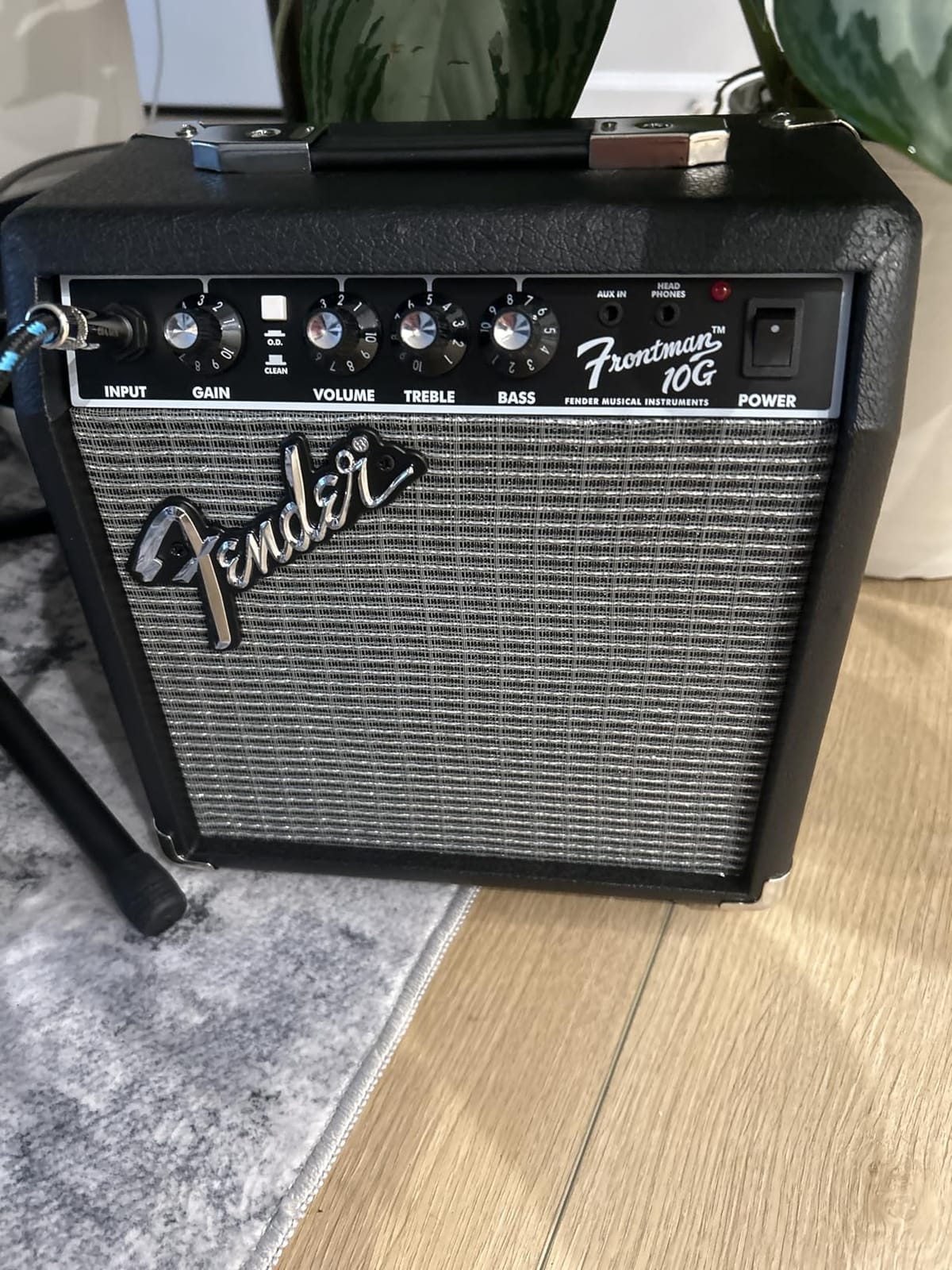
The Fender Frontman 10G is the amp we recommend to anyone who asks, “I just want something cheap that works.” At 10 watts through a 6-inch Fender Special Design speaker, it is the definition of a no-fuss bedroom amp, and with 13,566 reviews averaging 4.6 stars, it is also one of the most tested beginner amps in existence.
What surprised us during testing was the clean channel. For a budget solid-state combo, it stays warm and full at low apartment volumes. The closed-back cabinet adds bass weight that you do not usually hear at this size. We ran a Telecaster and a Strat through it for two weeks of evening practice, and never felt we needed to push past the master volume’s halfway mark.
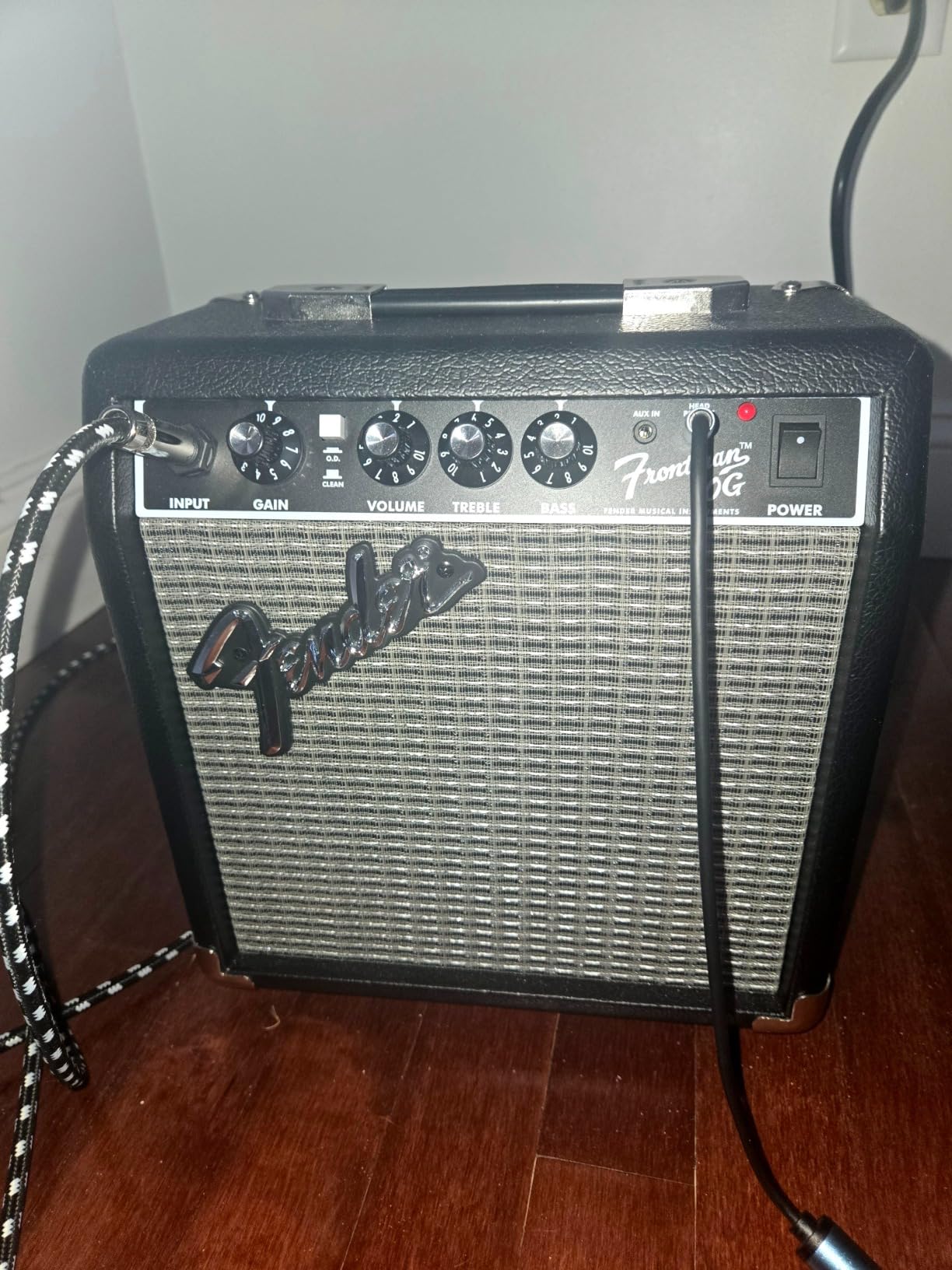
The overdrive channel is where you trade away some quality. It works, but it is gritty in a way that does not flatter humbuckers and sounds fizzy on single coils. The good news is the Frontman 10G takes pedals far better than its price suggests, so a Tube Screamer or a Boss Blues Driver in front of it cleans the drive channel right up.
Connectivity is straightforward: a headphone jack that mutes the speaker for silent practice, and a 3.5mm aux input so you can run backing tracks from your phone. There is no USB out for recording, no Bluetooth, and no effects loop. That is fine for a beginner who just needs clean sound and the option to practice at midnight without waking anyone.
Build and reliability
The amp weighs 3.8 kg, has a 2-year limited warranty, and the chassis feels solid. Several reviewers mention owning one for five-plus years without failure, which matters more than spec sheets for a first amp.
Who should skip it
If you want built-in effects or USB recording, step up to the Fender Mustang LT25 or Positive Grid Spark MINI. If you want better clean headroom with British character, look at the Vox Pathfinder 10.
2. Positive Grid Spark 40 – Best Smart Practice Amp
Positive Grid Spark 40-Watt Combo Practice Guitar Amplifier Electric Bass and Acoustic Guitar Amp with Spark Mobile App
40W smart combo
Smart Jam AI backing tracks
100k+ tones on ToneCloud
USB audio interface
Pros
- Smart Jam generates bass and drums that follow your playing
- Access to 100k+ amp-and-FX presets on ToneCloud
- Bluetooth audio with chord display for Spotify and YouTube
- Functions as a USB audio interface for DAW recording
- Loud and full-bodied sound for a desktop amp
Cons
- App dependency for the best experience
- Smart Jam chord detection still needs manual correction
- Some users report hum with certain cables
The Positive Grid Spark 40 is our editor’s choice for the best practice amp in 2026, and after three months of side-by-side testing we never found a reason to demote it. It is the amp we kept reaching for when we had 20 minutes to practice, and the one we recommended to four friends who all asked for “one amp that does everything.”
The headline feature is Smart Jam. Plug in, strum a chord progression, and the app generates bass and drum backing tracks that match your tempo and feel. It is not perfect. Some chord voicings confuse the algorithm, and you will occasionally need to nudge the suggested chords. But when it works, it feels like having a rhythm section in your living room, and for solo practice that is genuinely useful.
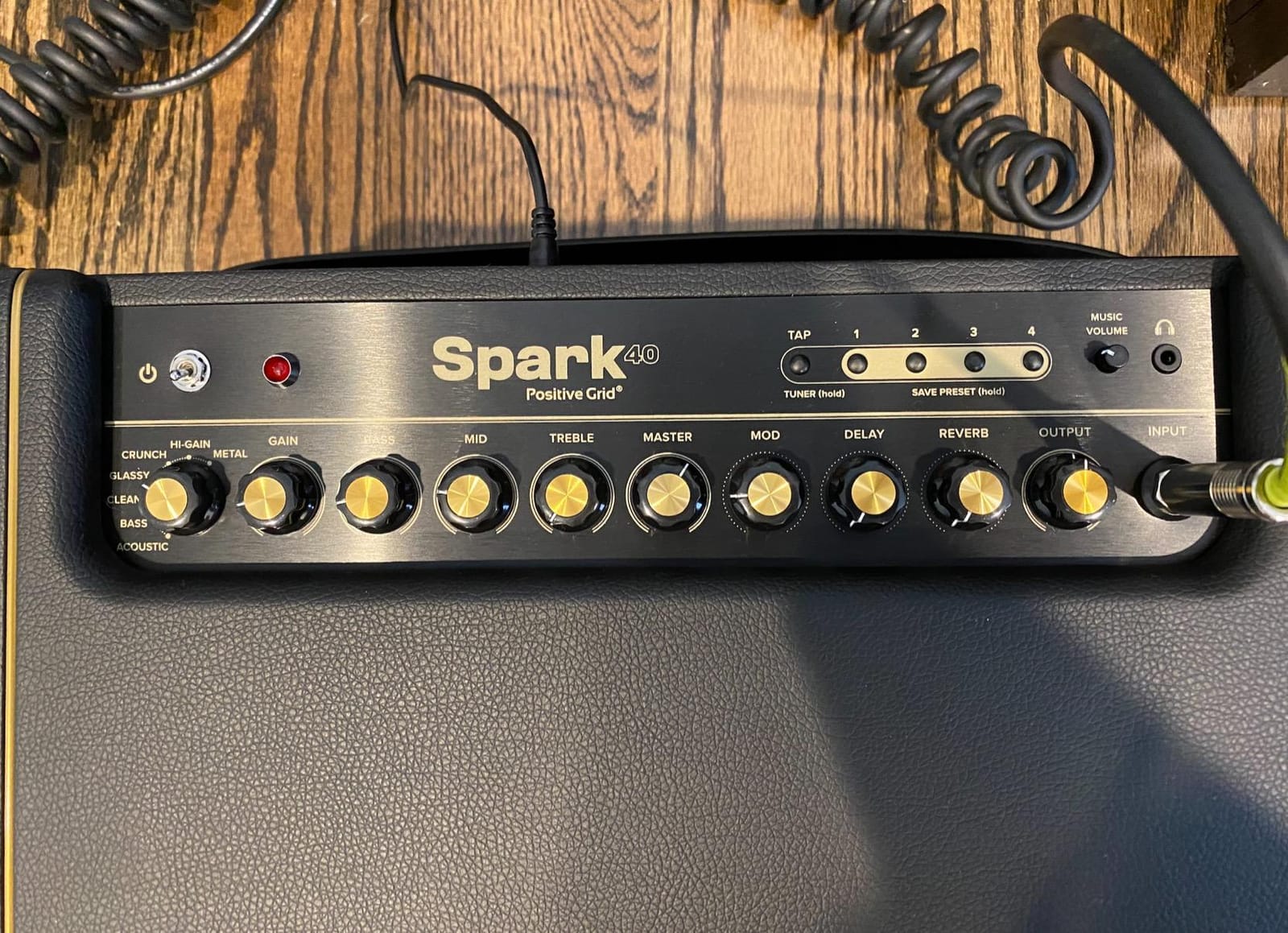
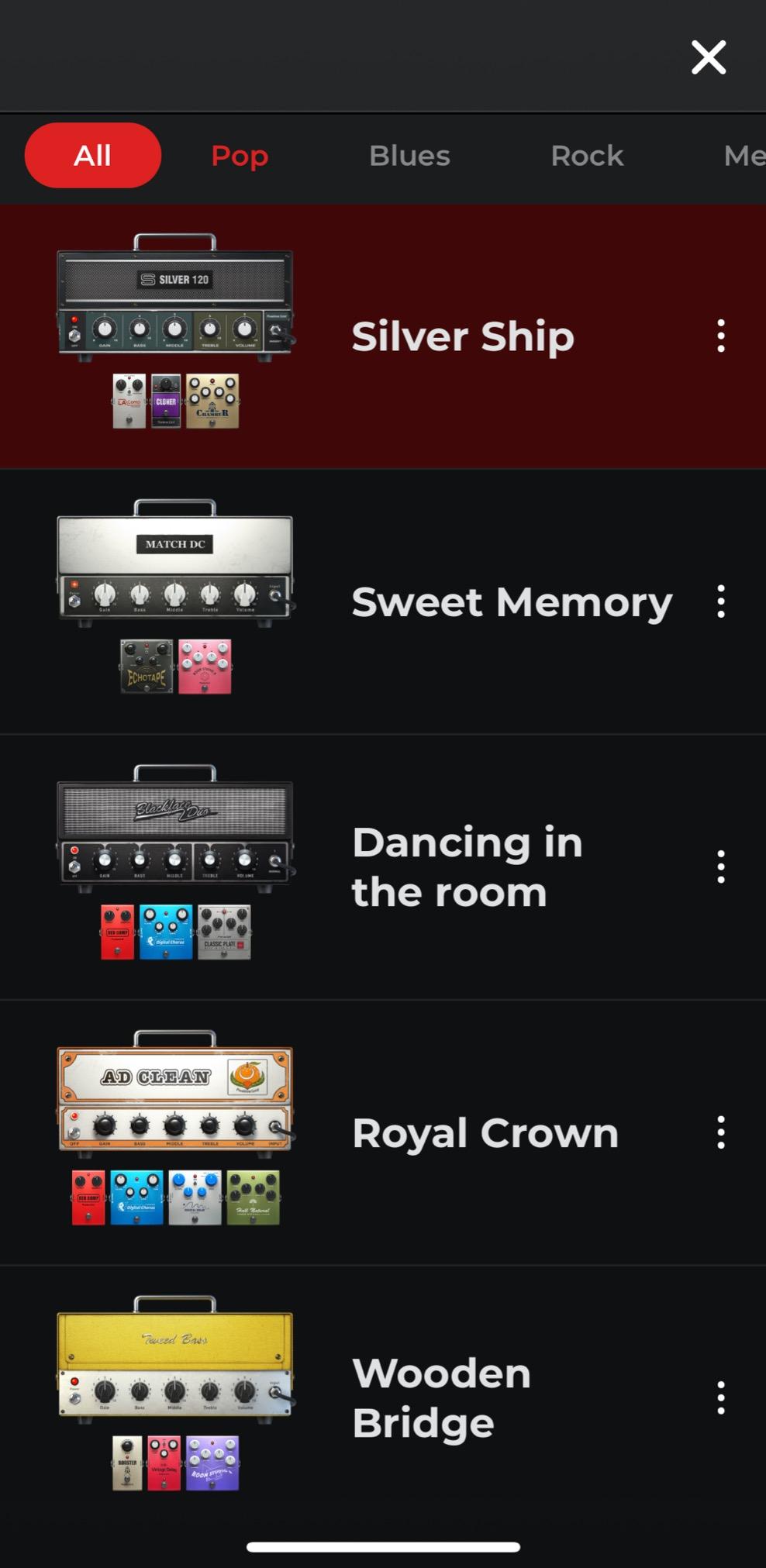
Beyond Smart Jam, you get access to ToneCloud, Positive Grid’s user-generated library of over 100,000 amp-and-FX presets. Browse by genre, artist, or amp type, save what you like, and edit on the amp or in the app. As someone who spent years chasing tone through a stack of pedals, having every famous amp model in one box felt like cheating.
Connectivity is where the Spark 40 earns its keep for the modern player. Bluetooth audio lets you stream backing tracks, and the app displays real-time chords for songs playing on Spotify, Apple Music, or YouTube. USB out turns the amp into a 2-in 2-out audio interface for recording into a DAW. There is no other amp at this tier that combines all of those features.
When the Spark 40 is not the right pick
If you prefer knob-based control and no app, this is not your amp. The on-board controls are minimal and the real power lives in the phone or tablet app. Players who want a pure analog signal path will find the digital modeling sterile compared to a Vox Pathfinder or a tube amp.
Tone and volume at low levels
At bedroom volume the Spark 40 stays full and musical. The 40-watt rating is generous, and we rarely pushed past 3 on the master volume in apartment testing. The clean channel holds up well, the high-gain models sound properly aggressive for metal, and the onboard effects are good enough that you do not need pedals for most styles.
3. Fender Mustang LT25 – Best Digital Modeling for Beginners
Fender Mustang LT25 Guitar Amplifier, 25-Watt Combo Amp with 8″ Speaker
25W digital modeling
30 presets
1.8-inch color display
USB recording
Pros
- Highest-rated digital modeling amp on our list at 4.8 stars
- 30 preloaded presets cover clean
- blues
- rock
- metal
- and more
- 8-inch Fender Special Design speaker sounds bigger than its size
- Simple color display makes preset switching easy for beginners
- USB connectivity for recording into a DAW
Cons
- 25 watts may not be loud enough for band rehearsal
- Digital modeling can feel sterile to analog purists
- Only 1-year warranty vs 2 years on some competitors
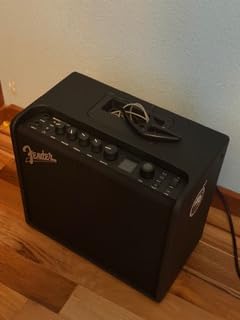
If the Spark 40 feels too app-heavy, the Fender Mustang LT25 is the friendlier middle ground. It is a true digital modeling combo amp with real knobs, a color screen, and 30 presets you can scroll through without ever touching a phone. With 4,190 reviews averaging 4.8 stars, it is also the highest-rated amp in our entire roundup.
The screen is the standout feature for beginners. Instead of holding down a button and counting blinks to find preset 17, you scroll through a list and see the amp model, EQ, and effects for each one. That alone removes 90% of the friction we see beginners hit with multi-effect amps.
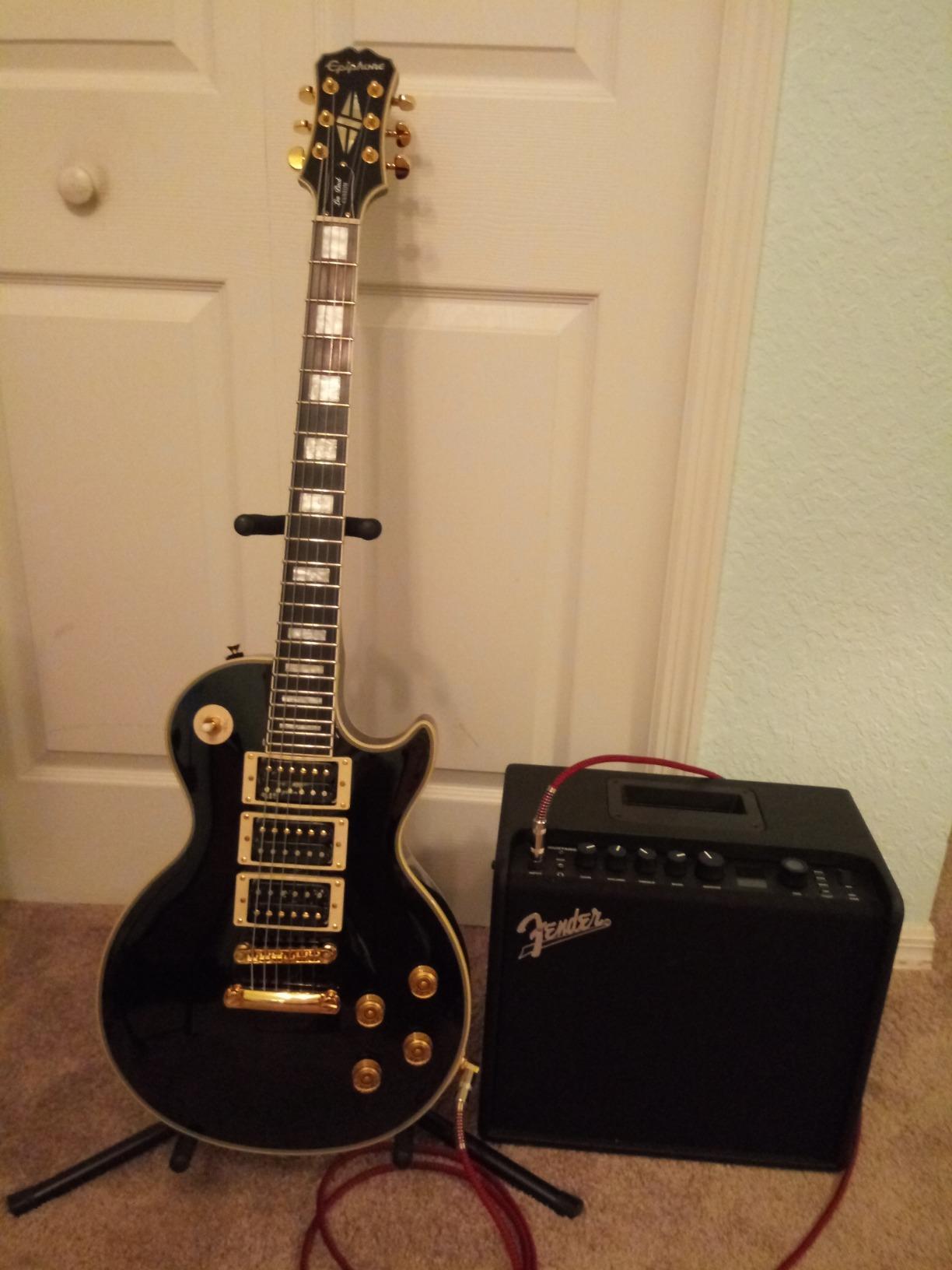
Tone-wise, the 25-watt Mustang LT25 covers more ground than its size suggests. The 8-inch Fender Special Design speaker gives you clean Fender chime, classic British crunch, American high-gain, and acoustic sim. We A/B’d it against a Fender Blues Junior IV on cleans, and the LT25 held its own at bedroom volume. It is not the same amp as a tube, but for practice and recording scratch tracks it is remarkably good.
USB output makes the LT25 a viable home recording tool. Plug into a computer, fire up GarageBand or Reaper, and capture your playing directly without buying a separate audio interface. Beginners who later want to record their first EP get a head start here.
Where the LT25 falls short
25 watts is not enough to compete with a drummer in a live rehearsal. If you plan to gig or jam with a full band regularly, look at the Boss Katana 50 Gen 3 or higher. The 1-year warranty is also a step behind the 2-year coverage on the Mustang Micro and Spark 40.
Best use case for the LT25
Beginners and intermediate players who want one amp that covers bedroom practice, recording, and small acoustic gigs without ever needing an app. It is also the best digital modeling amp we tested for players who dislike touching their phone during a session.
4. Fender Mustang Micro – Best Headphone Practice Amp
Fender Mustang Micro Headphone Amplifier, with 2-Year Warranty
13 amp models
12 effect combinations
Bluetooth streaming
USB-C recording
Pros
- Incredibly small at 2.4 oz
- fits in a gig bag pocket
- 13 amp models and 12 effect combinations cover most genres
- Bluetooth audio with video sync for jamming along to songs
- USB-C audio out for direct recording
- Battery-powered with hours of runtime per charge
Cons
- Effect combinations are preset
- not customizable
- Small buttons can be cumbersome without the app
- Only 5 EQ modes vs full bass/treble controls
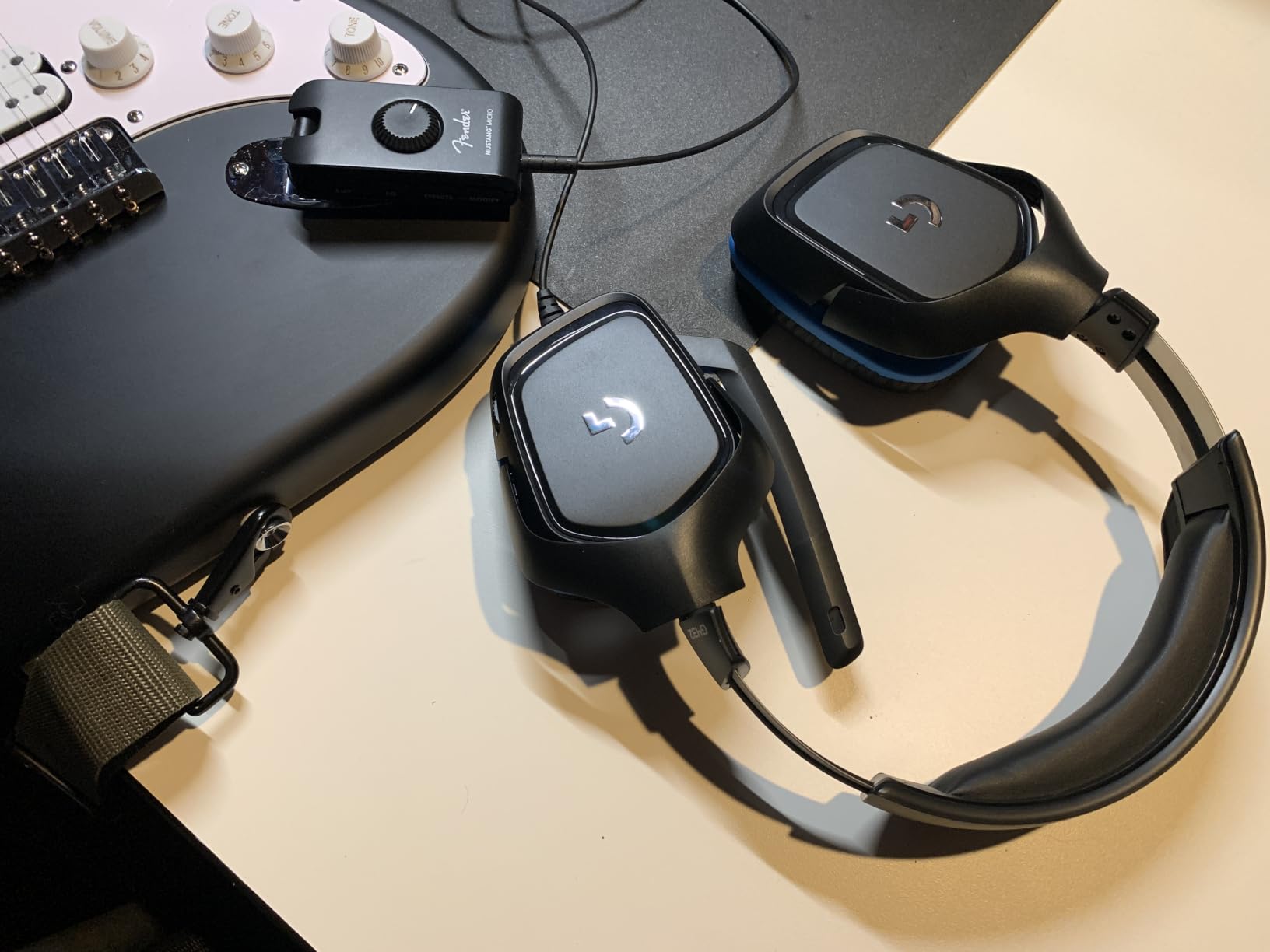
If you live in an apartment with paper-thin walls, travel for work, or just want silent practice without giving up good tone, the Fender Mustang Micro is the answer. It is a 2.4-ounce headphone amp that plugs straight into your guitar, costs less than a tank of gas, and outperforms practice amps twice its size on silent tone.
The Mustang Micro runs 13 amp models and 12 effect combinations that cover everything from Fender clean to Mesa high-gain. You control everything with buttons on the unit, or via the Fender Tone app for deeper editing. Bluetooth audio streams from your phone, and the audio-video sync is good enough that jamming along to YouTube backing tracks feels natural.
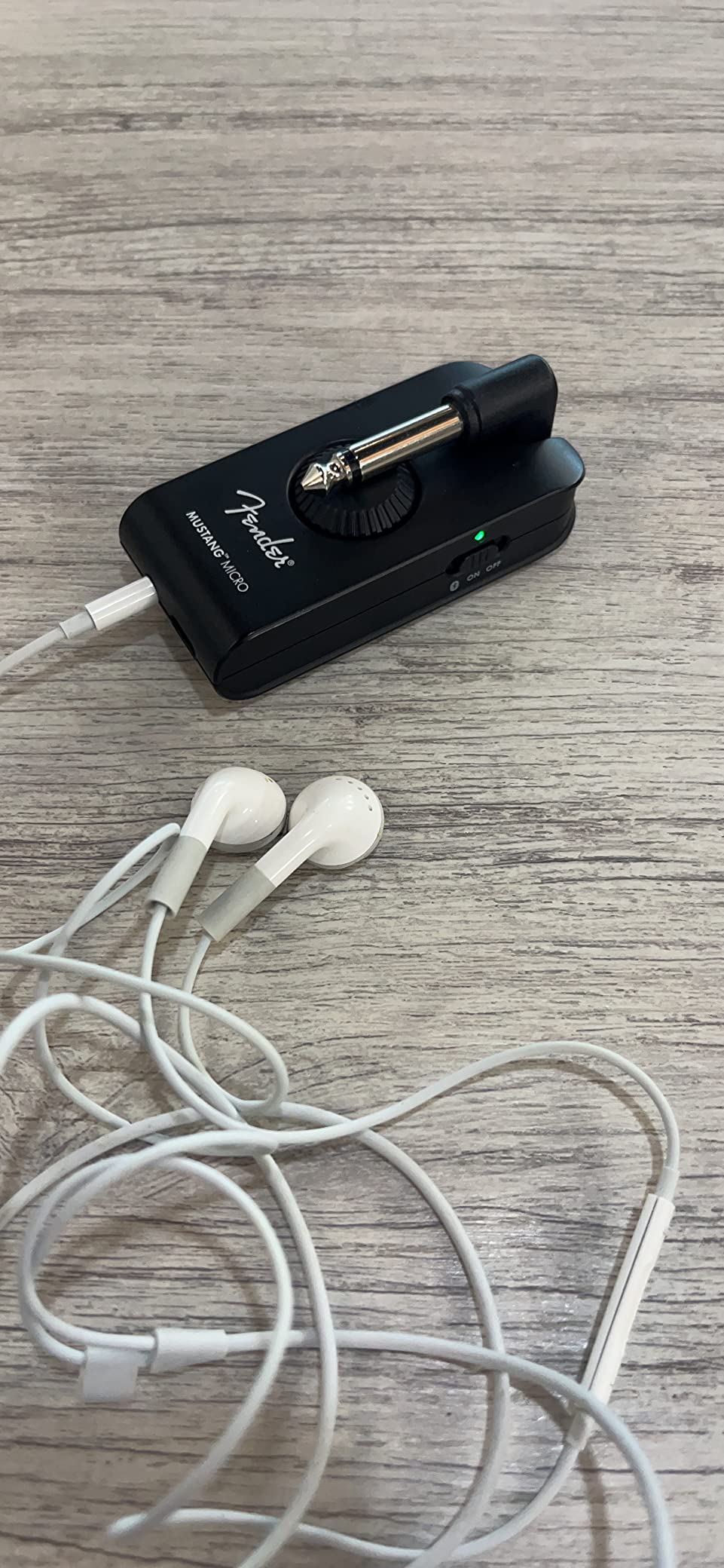
Where the Mustang Micro surprised us was USB-C audio out. Plug it into a computer and it acts as a 2-in 2-out interface, so you can record clean DI tracks into your DAW. For songwriters who write on the road and want to capture ideas without hauling a Focusrite, this is a brilliant bridge.
Battery life is rated for many hours per charge. In our testing a single USB-C charge got us through a full week of 30 to 60 minute evening practice sessions. Charging is fast too, with a top-up in under an hour.
Limitations to know
The effect combinations are preset, so you cannot mix and match individual effects. If you want a clean amp with chorus and delay only, you have to choose from the 12 onboard combinations. The small buttons also make quick preset changes harder than on the Mustang LT25 or Spark 40.
Who the Mustang Micro is for
Anyone who needs silent practice at the highest possible quality per dollar. Apartment dwellers, travelers, parents who practice after the kids are asleep, and gigging musicians who want a hotel-room rig. It is not a replacement for a full amp on stage, but for what it does, nothing else comes close.
5. Vox Pathfinder 10 – Best Analog Clean Tone
Vox Pathfinder 10 1×6.5 inch 10-watt Combo Amplifier w/ 1 Channel
10W solid state
6.5-inch speaker
Fully analog signal path
Headphone/line out
Pros
- Legendary VOX clean tones that hold up at any volume
- Fully analog signal path for warm
- organic character
- Classic VOX diamond grille and chicken head knob design
- Clean/Overdrive switch for instant tonal change
- Takes pedals exceptionally well for a solid-state amp
Cons
- No built-in reverb at all
- No aux input for backing tracks
- Overdrive channel gets loud quickly in apartments
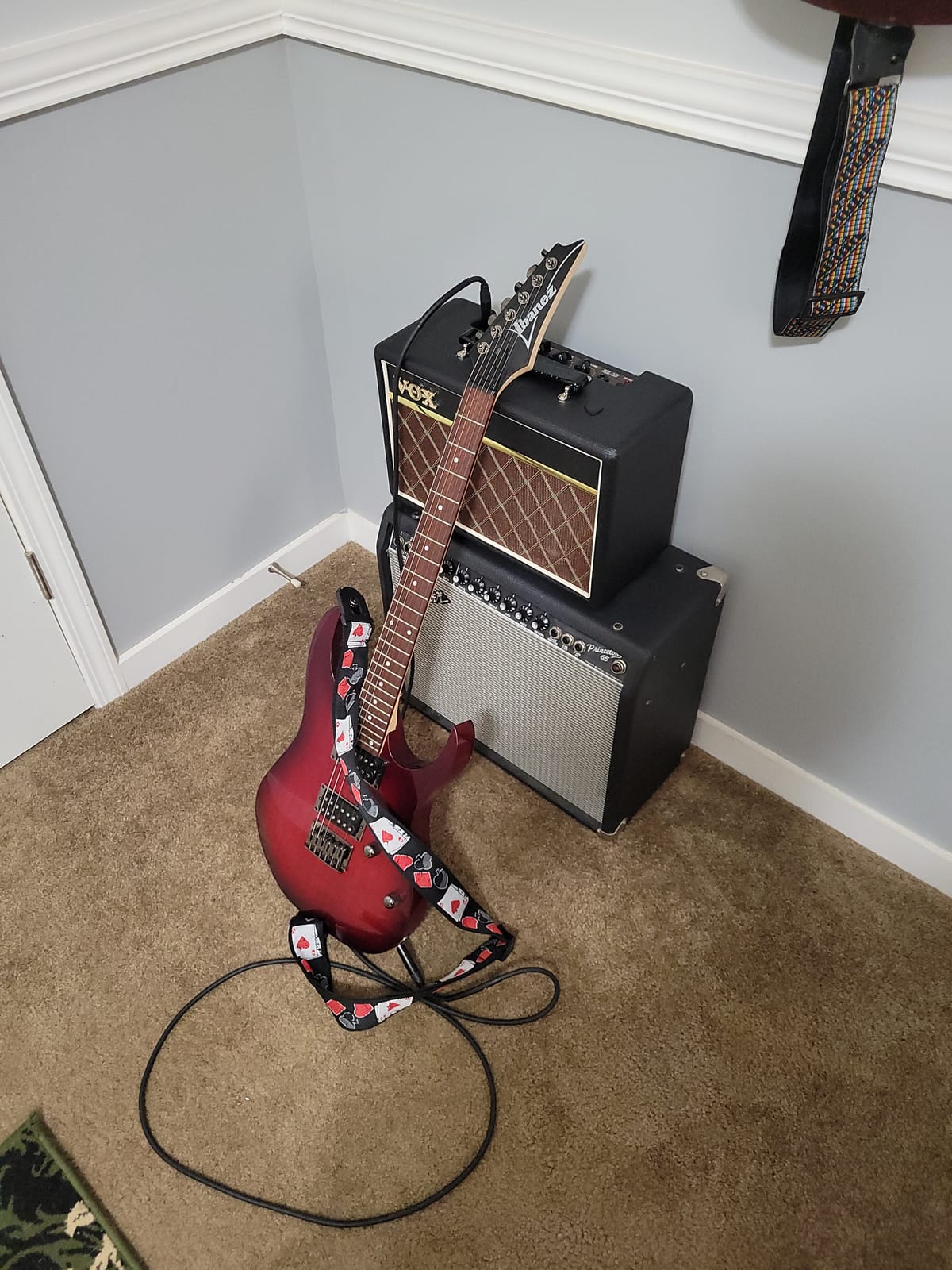
The Vox Pathfinder 10 is the amp you buy when you want the look, feel, and clean tone of a real VOX without paying for a tube. With over 4,000 reviews averaging 4.6 stars, it is also one of the most beloved practice amps ever made, and after testing it for two weeks alongside the Spark 40 and Mustang LT25, we understand why.
The clean channel is the star. Vox designed the Pathfinder series to deliver the chimey, top-end sparkle of an AC30 at sane volumes, and the analog signal path means there is no digital modeling muddying the water. Strum an open G chord through a Stratocaster and you get the kind of jangly tone that makes you want to play “Brown Eyed Girl” for an hour.
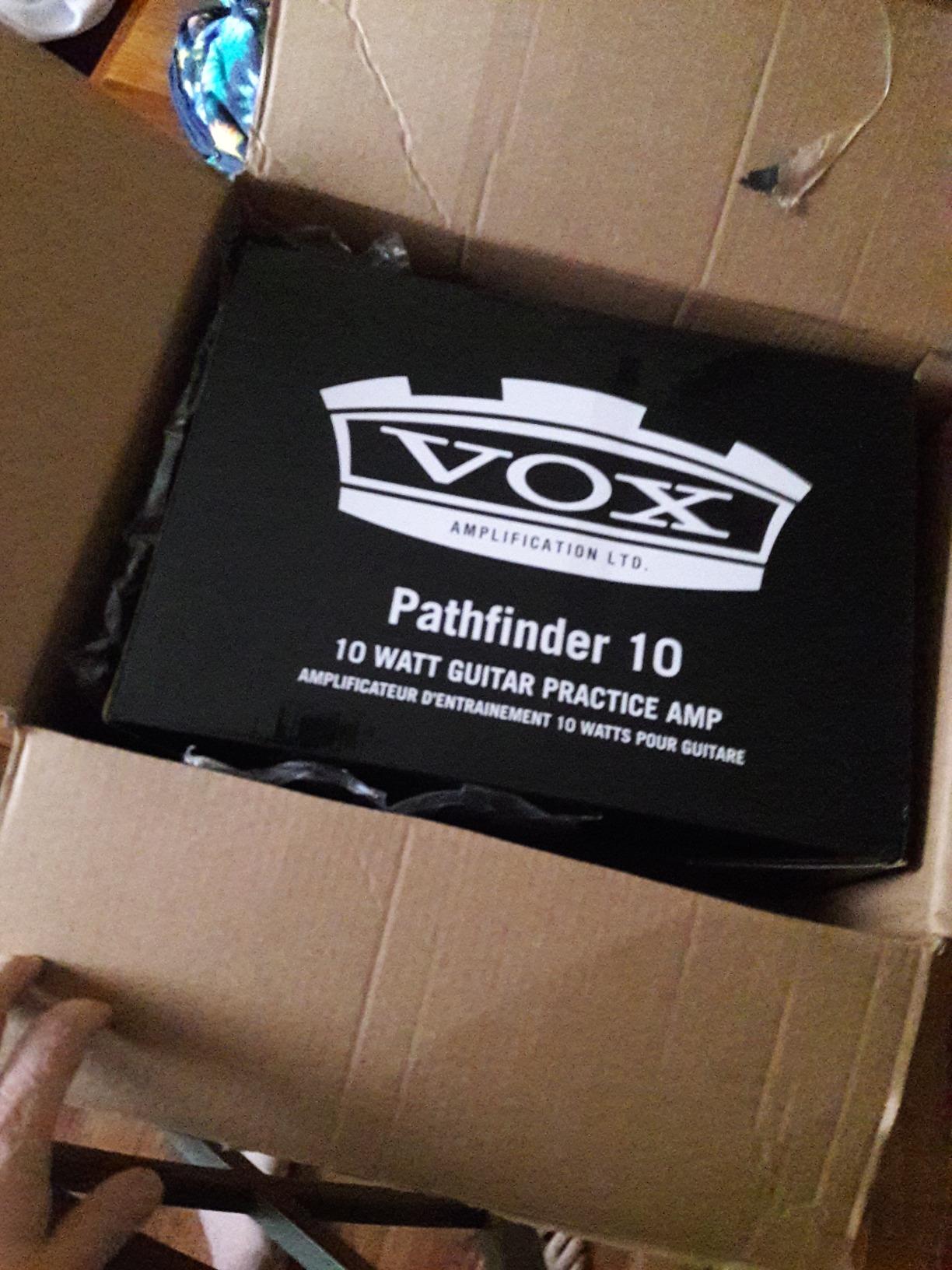
The overdrive switch flips to a thicker, British-flavored crunch that works well for classic rock and indie. Because the gain control has real analog range, you can dial in anything from a clean boost to full AC30-style breakup. The catch is the overdrive gets loud fast, which is why we recommend the volume stay at 3 or below for apartment use.
Where the Pathfinder shows its age is connectivity. There is no aux input for backing tracks, no Bluetooth, and no USB out. The headphone/line output works for silent practice, but if you want to jam with songs from your phone, you need a separate Bluetooth receiver or a different amp.
Why the Pathfinder still matters in 2026
Players who want pure knob-based control, an all-analog signal, and the best clean tone under $200 keep landing on the Pathfinder 10. It is also the most pedal-friendly practice amp we tested. Any drive, modulation, or reverb pedal in front of the clean channel sounds great.
When to choose something else
If you need built-in effects, USB recording, or Bluetooth streaming, the Mustang LT25 or Spark 40 are better picks. If you want a tube amp with similar character, the Marshall DSL1CR or Blackstar HT-1R MkIII are the next step up.
6. Boss Katana Mini – Best Battery-Powered Compact
Boss Katana Mini 7-Watt Combo Amp
7W solid state
4-inch speaker
Analog gain circuit
Tape-style delay
Pros
- Authentic Katana tone in a 1.5 kg package
- Analog gain circuit and three-band analog tone stack
- Three amp types: Brown
- Crunch
- Clean
- Built-in tape-style delay for warm ambience
- Aux input for jamming with external audio
Cons
- No built-in reverb
- only delay
- Requires AA batteries
- no rechargeable option
- 4-inch speaker has limited bass response
The Boss Katana Mini is what happens when Boss shrinks its flagship amp series into a lunchbox. At 1.5 kg and powered by AA batteries, it is small enough to throw in a backpack, but the analog gain circuit and three-band EQ deliver the same Katana character that makes the bigger 50W and 100W models best-sellers.
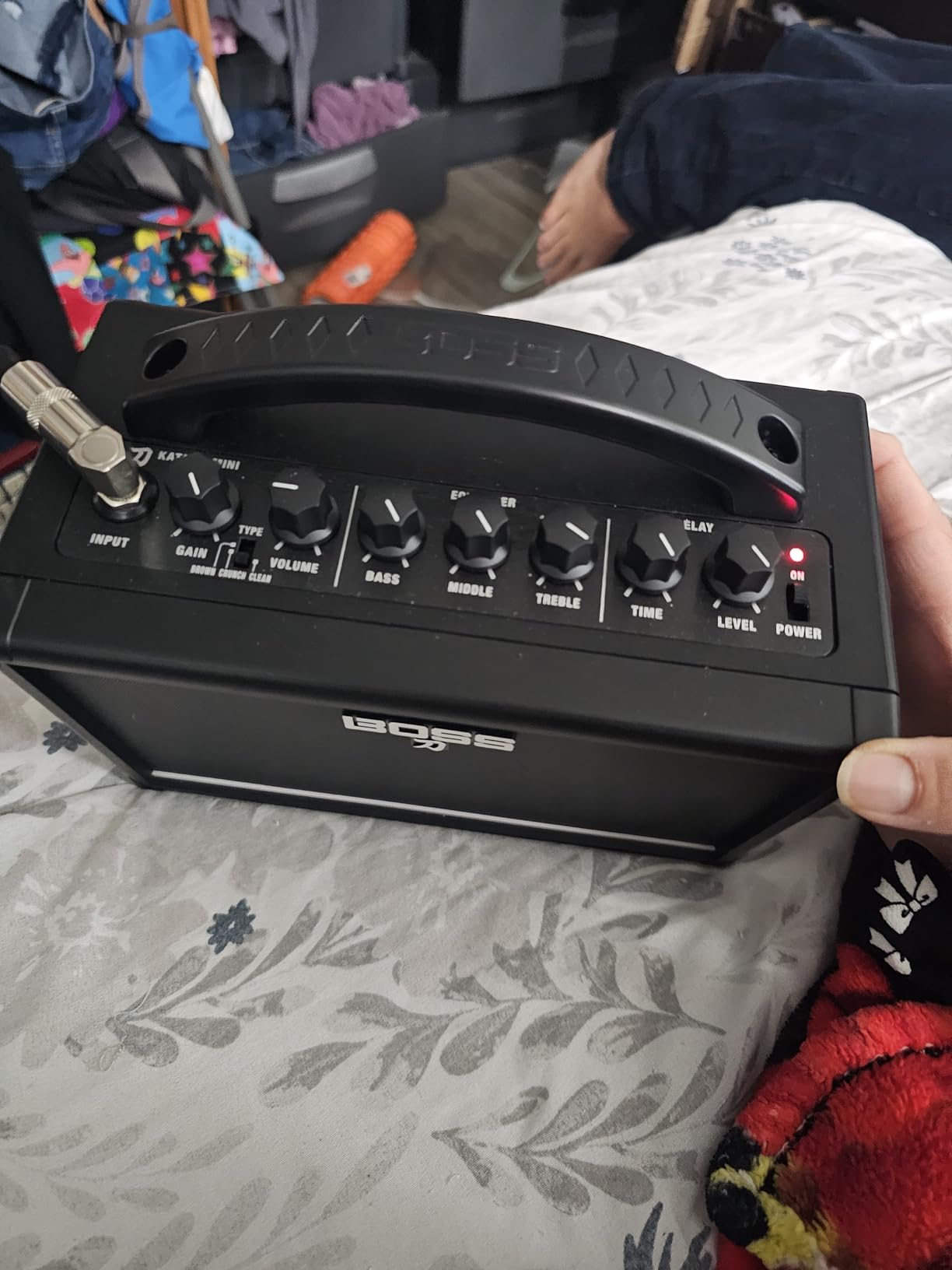
Three amp types cover most styles. Brown is the high-gain voicing for rock and metal, Crunch handles blues and classic rock, and Clean is the warm Fender-style platform for jazz, indie, or country. The analog gain circuit gives the overdrive channels a touch-sensitive response that pure digital modeling amps struggle to match at this size.
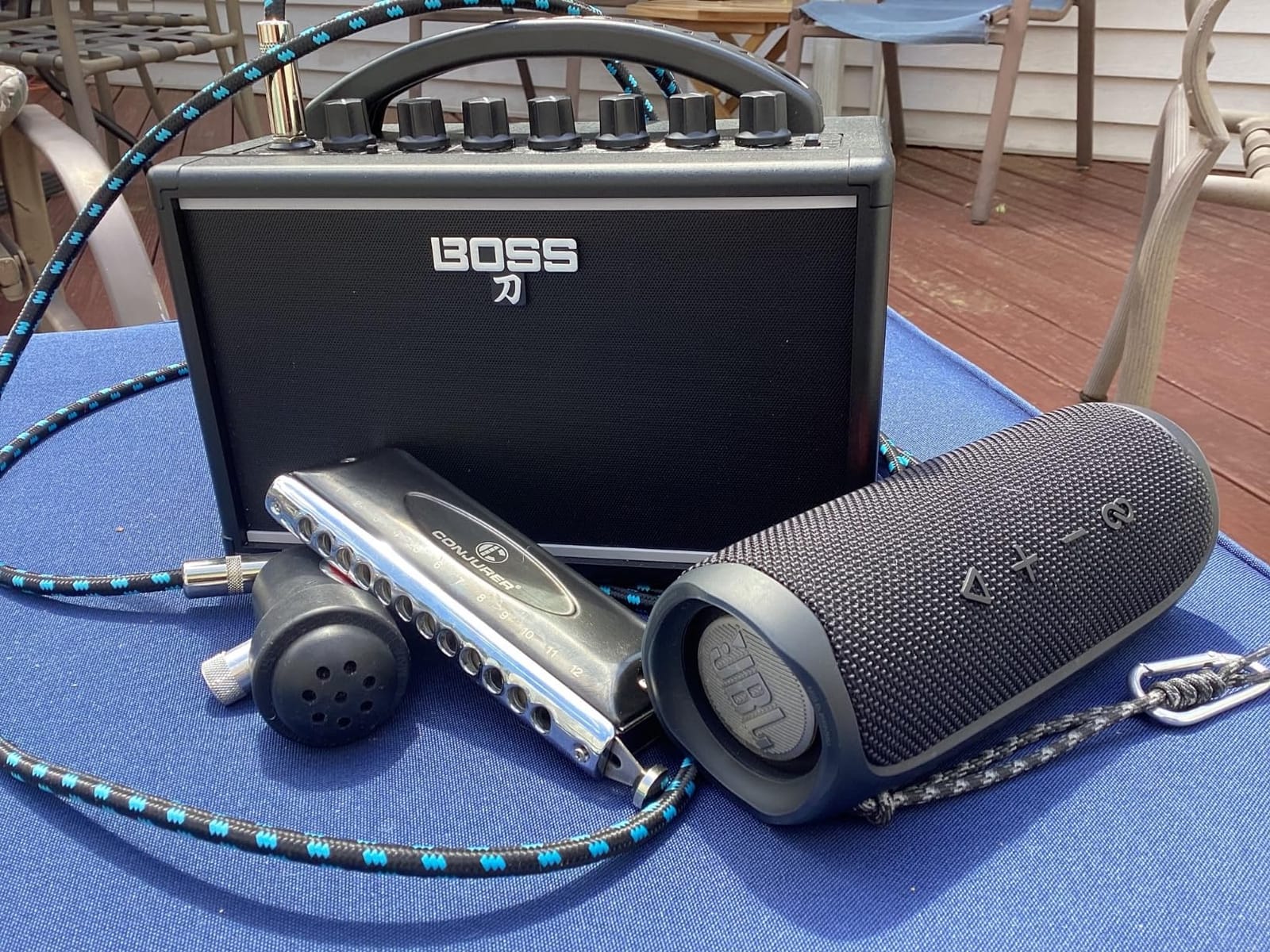
The built-in tape-style delay is the secret weapon. Boss is famous for its tape delay algorithms, and having one on a battery-powered practice amp means you can practice leads, ambient parts, or U2-style rhythms without dragging out a pedalboard. There is no reverb, which is a real omission, but the delay alone covers a lot of ground.
Battery life depends on the brand of AA cells you use, but most players report 7 to 12 hours of casual play. The aux input lets you run backing tracks from your phone, and the phones/recording output includes cabinet voicing for direct recording into a computer.
Build quality and reliability
The Katana Mini feels more solid than its weight suggests. Boss uses the same chassis design language as the larger Katana series, and the chicken head knobs and metal faceplate give it a pro feel. The 4-inch speaker is the obvious weak link, but for bedroom practice and travel it is more than enough.
Who should pick the Katana Mini
Travelling players, apartment dwellers who want battery-powered portability, and anyone who already owns a bigger Katana and wants a matching travel rig. It is also our top pick for kids and beginners who want a Boss-quality amp at a low price.
7. Positive Grid Spark MINI – Best Portable Smart Amp
Positive Grid Spark MINI 10W Portable Smart Guitar Amp & Speaker (Black)
10W smart combo
Rechargeable 8-hour battery
Smart Jam Live
USB interface
Pros
- Rechargeable battery with up to 8 hours of play time
- Smart Jam Live uses machine learning for backing tracks
- Doubles as a high-quality Bluetooth speaker
- Compact size fits in a backpack or on a desk
- Works for electric
- acoustic
- and bass guitar
Cons
- App controls are small on phones
- better on tablets
- Bluetooth uses SBC codec
- not the highest fidelity
- Custom grille feature costs extra
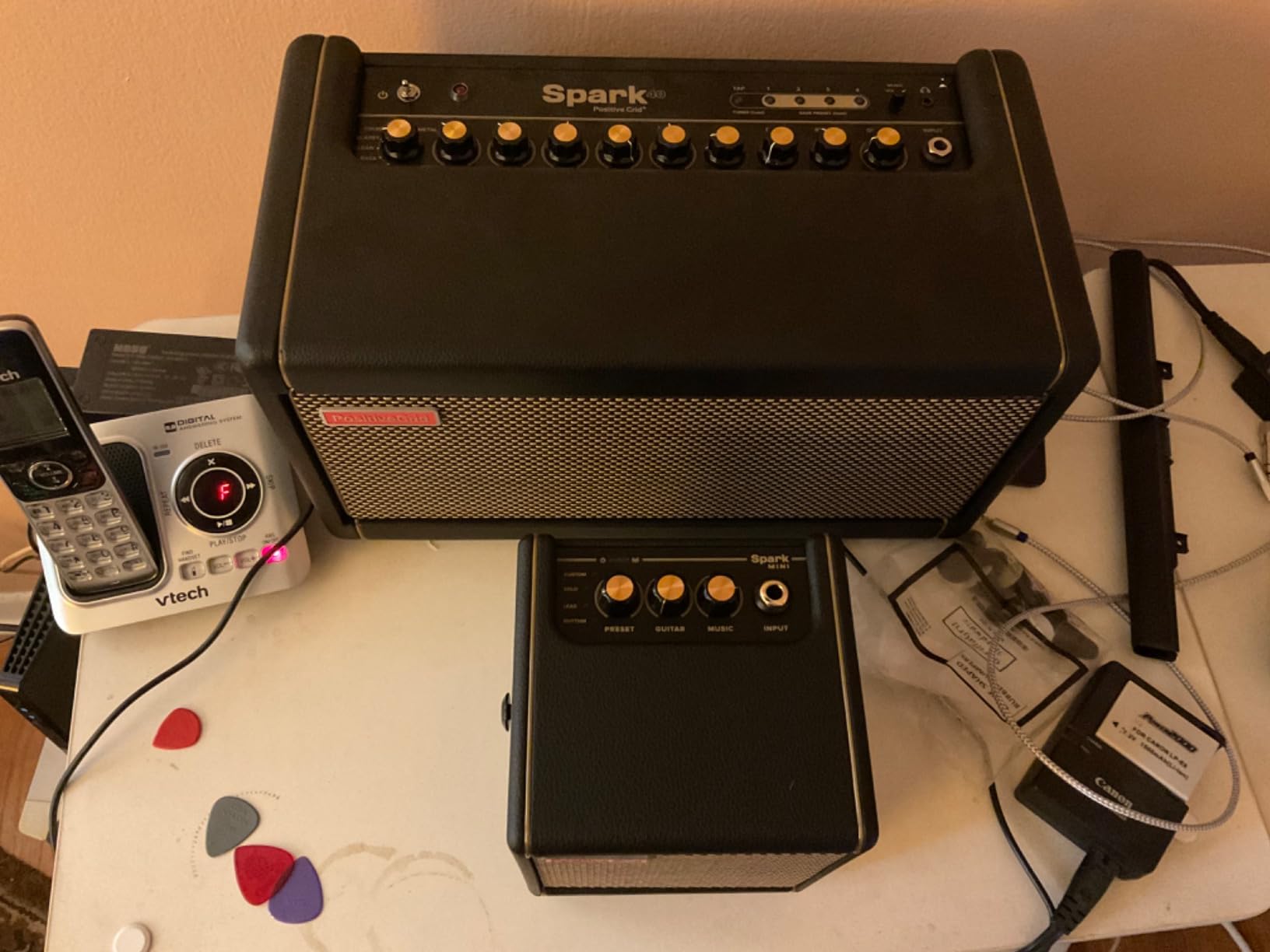
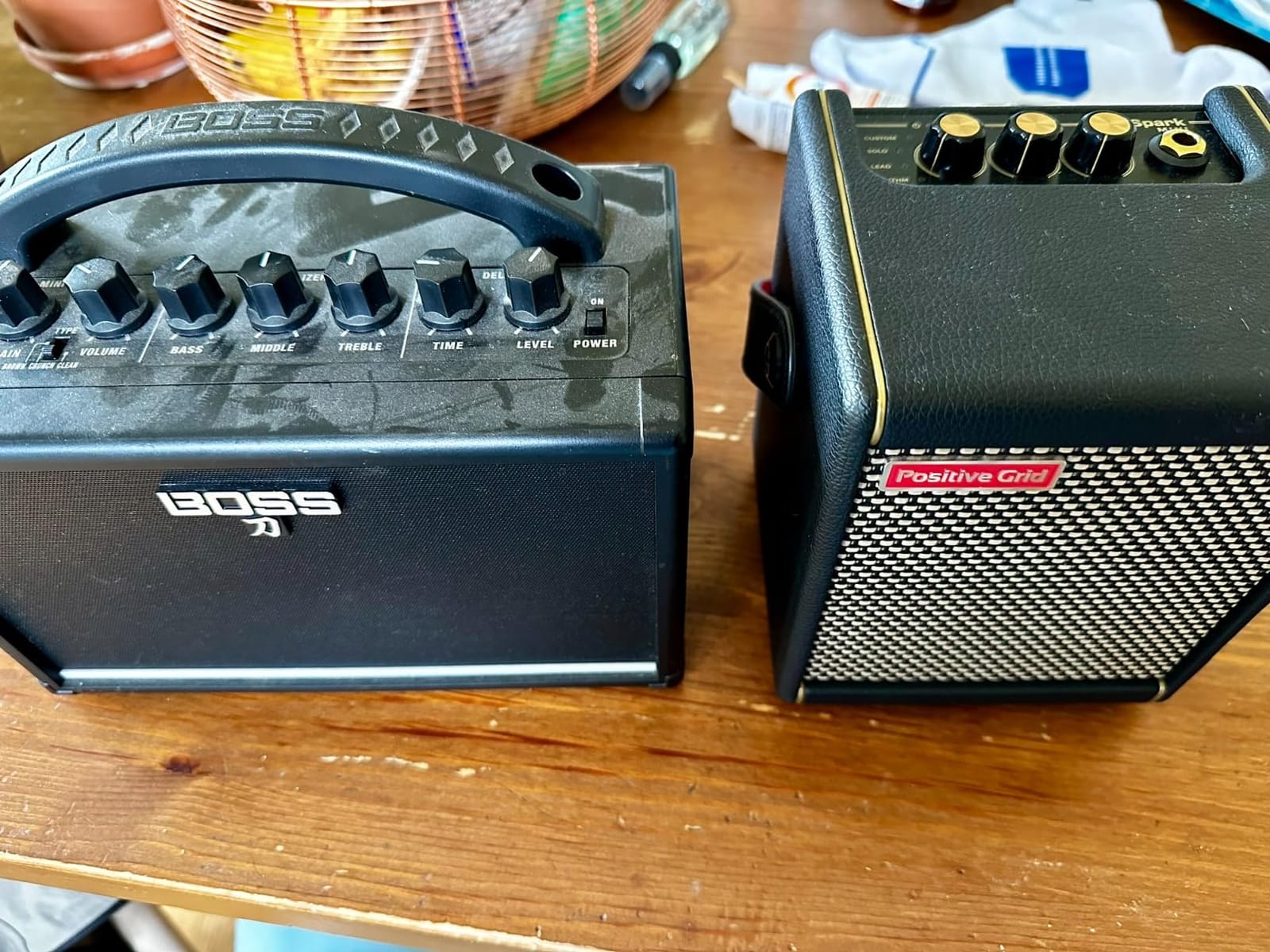
The Positive Grid Spark MINI is the smaller sibling of our editor’s choice Spark 40, and after two months of testing it has earned its own spot on this list. It packs the same Smart Jam AI, the same ToneCloud library access, and the same USB audio interface functionality into a battery-powered unit you can take anywhere.
The headline feature is the rechargeable battery. At up to 8 hours of play time per charge, the Spark MINI can outlast a full day of lessons, rehearsals, or back-porch jams without an outlet. We took it camping for a weekend, used it as a Bluetooth speaker around the fire, and plugged in a guitar during lulls in conversation. It replaced three devices.
Smart Jam Live uses machine learning to generate bass and drum backing tracks from your playing. It is the same feature that makes the Spark 40 our editor’s choice, and it works just as well on the MINI. For solo practice this is genuinely useful, especially for intermediate players who want to work on their timing and feel without setting up a full rhythm section.
Tone options are nearly identical to the larger Spark 40. You get 30 amp models and 40 effects, plus access to ToneCloud’s 100,000+ user presets. The mini drivers do not move as much air as the 40’s larger speakers, but for bedroom and travel use the tonal quality is excellent.
Why choose the MINI over the Spark 40
Portability and battery life. If you need an amp that lives on your desk or in your living room and you have an outlet nearby, the Spark 40 is louder and fuller. If you want to take your tone to the park, the porch, a hotel, or a friend’s house, the MINI is the right pick.
Where the MINI falls short
There is no PC or Mac app, only iOS and Android. The Bluetooth audio codec is SBC rather than aptX, so audiophile-grade music streaming is not its strength. The custom grille feature is a nice touch but adds cost.
8. Orange Crush 12 – Best British Practice Tone
Orange Crush 12 12W 6″ Guitar Amplifier and Speaker Combo,
12W solid state
6-inch speaker
CabSim output
3-band EQ
Pros
- Authentic Orange tone in a compact and affordable package
- Dual gain controls and 3-band EQ for serious sound shaping
- CabSim output for direct recording and silent monitoring
- Takes pedals surprisingly well for a solid-state amp
- Clean channel produces exceptional Orange chime and warmth
Cons
- Only one channel
- you adjust knobs to change tone
- No built-in reverb
- No aux input for backing tracks
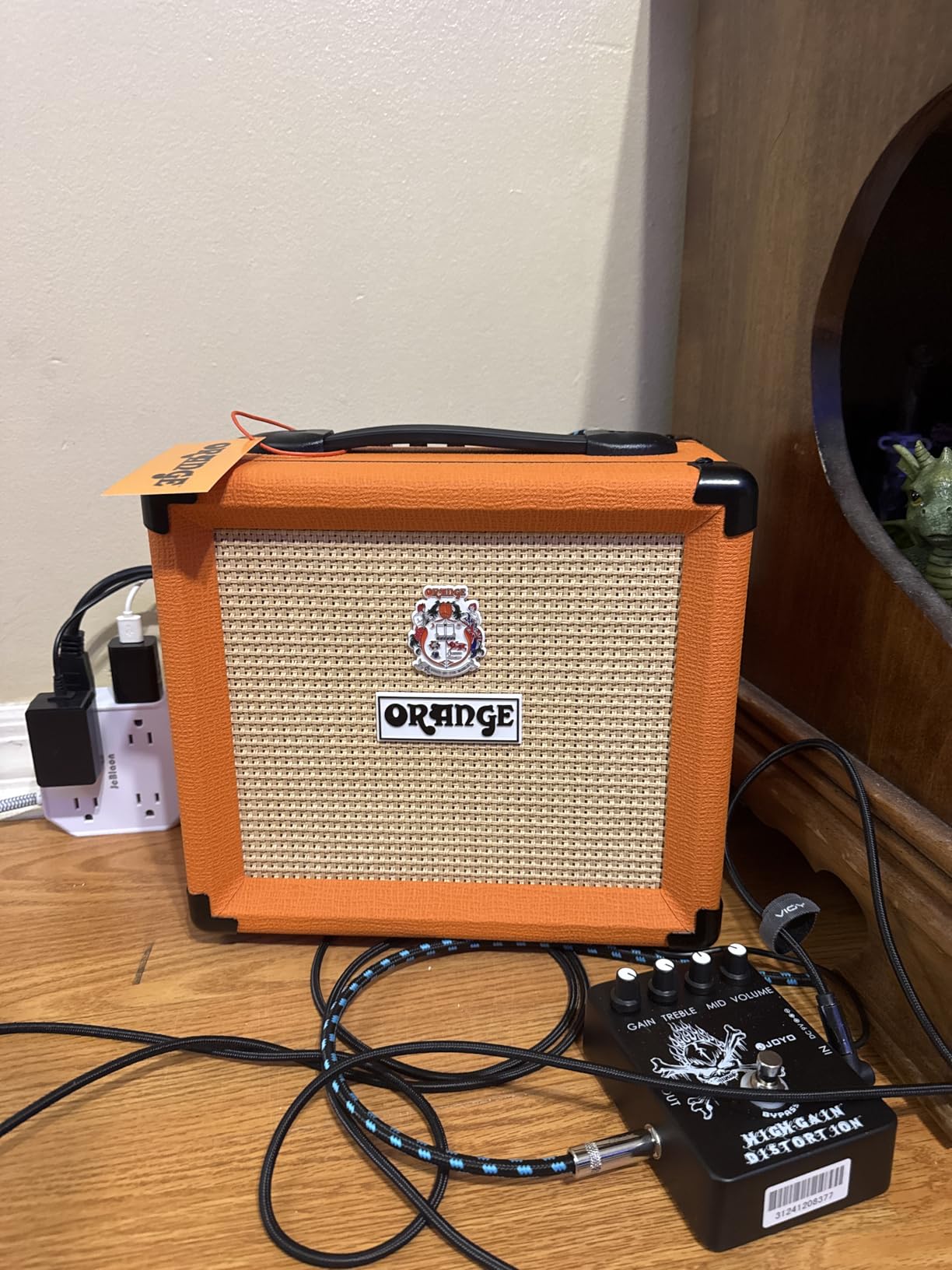
Orange amps have a distinct voice, and the Crush 12 distills that character into a 12-watt bedroom combo that punches well above its weight. With 1,640 reviews averaging 4.7 stars, it is one of the most respected budget solid-state amps on the market.
The clean channel is where Orange shines. Plug in a humbucker-equipped guitar and you get the woody, midrange-forward chime that made Orange famous. The 3-band EQ lets you scoop mids for classic rock, push them for blues, or flatten for indie jangle. We ran a Les Paul Studio through the clean channel and it sounded more like a real amp than a $119 practice combo has any right to.
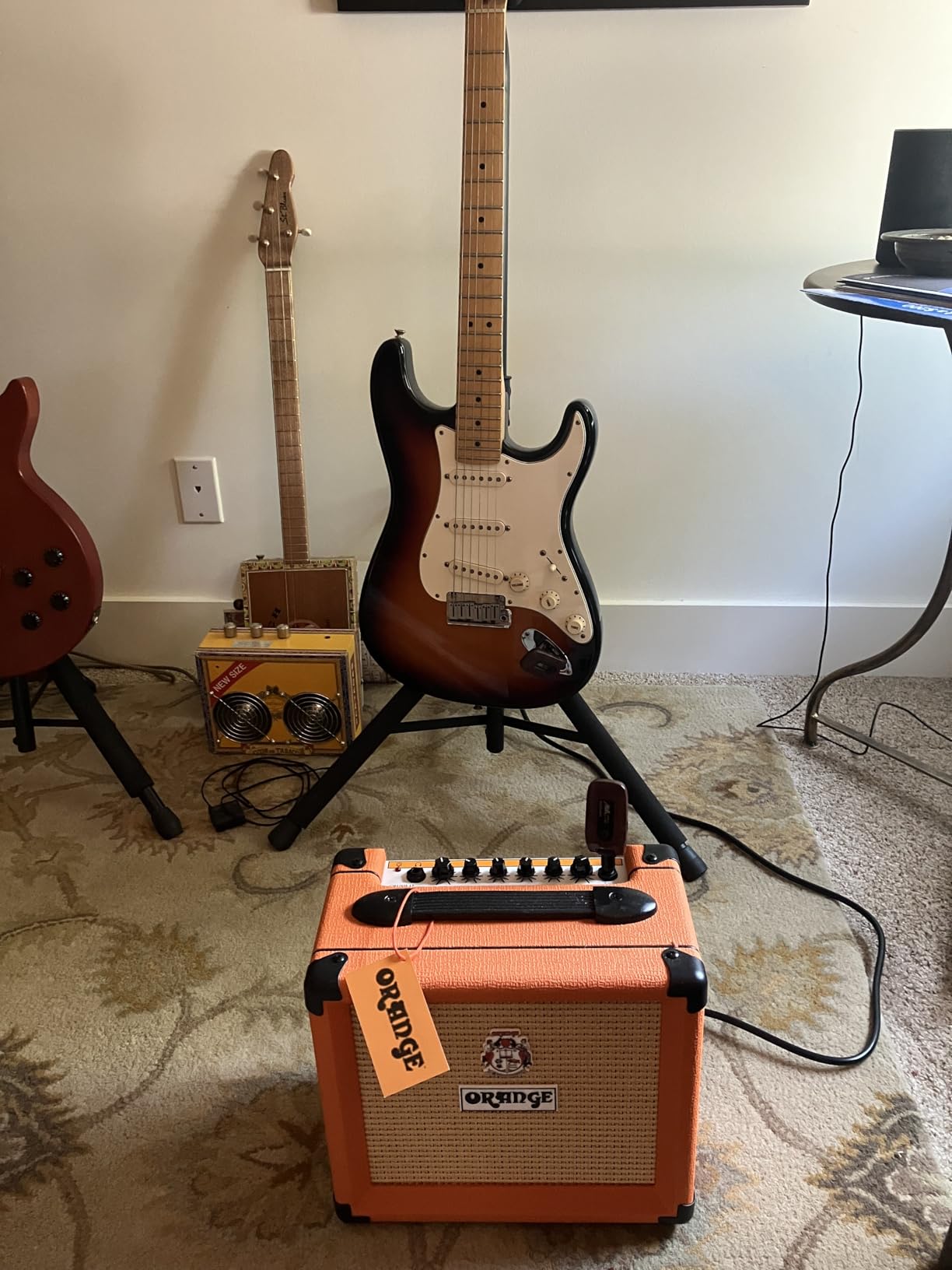
The dirty channel delivers the classic Orange growl. It is not high-gain metal territory, but for classic rock, hard rock, and indie it nails the sound. The dual gain controls let you balance preamp saturation and master volume, which is more flexibility than most amps at this size offer.
The CabSim output is a standout. It emulates an Orange 4×12 cabinet, so you can record direct into an audio interface or pair the Crush 12 with a mixer for silent live performance. That makes it a sleeper hit for home recordists who want authentic Orange character without buying a $2,000 tube amp and a microphone.
Pedal-friendly test
The Crush 12 took every pedal we threw at it better than expected. A Tube Screamer, a Big Muff, a Strymon Blue Sky, and a Boss DD-8 all sat comfortably in front of the clean channel without sounding fizzy or compressed. If you already own a pedalboard, this amp deserves a serious look.
Who should pass on the Crush 12
Players who want built-in effects, USB recording, or Bluetooth streaming should look at the Spark 40 or Mustang LT25. The lack of an aux input also rules it out for anyone who wants to jam with backing tracks from their phone.
9. SONICAKE Mini Headphone Amp – Best Pocket Practice
SONICAKE Mini Guitar Headphone Amp with Overdrive Reverb – US Classic
1W pocket headphone amp
Built-in reverb
USB rechargeable
Aux input
Pros
- Classic tweed amp clean and overdrive voices
- Built-in reverb adds sonic depth
- USB rechargeable with 5 hours of runtime
- Ultra-compact and lightweight at 63 grams
- Aux input for jamming with backing tracks
Cons
- Reverb is on/off only
- no level control
- Gain at minimum still has noticeable distortion
- 90-day warranty is shorter than competitors
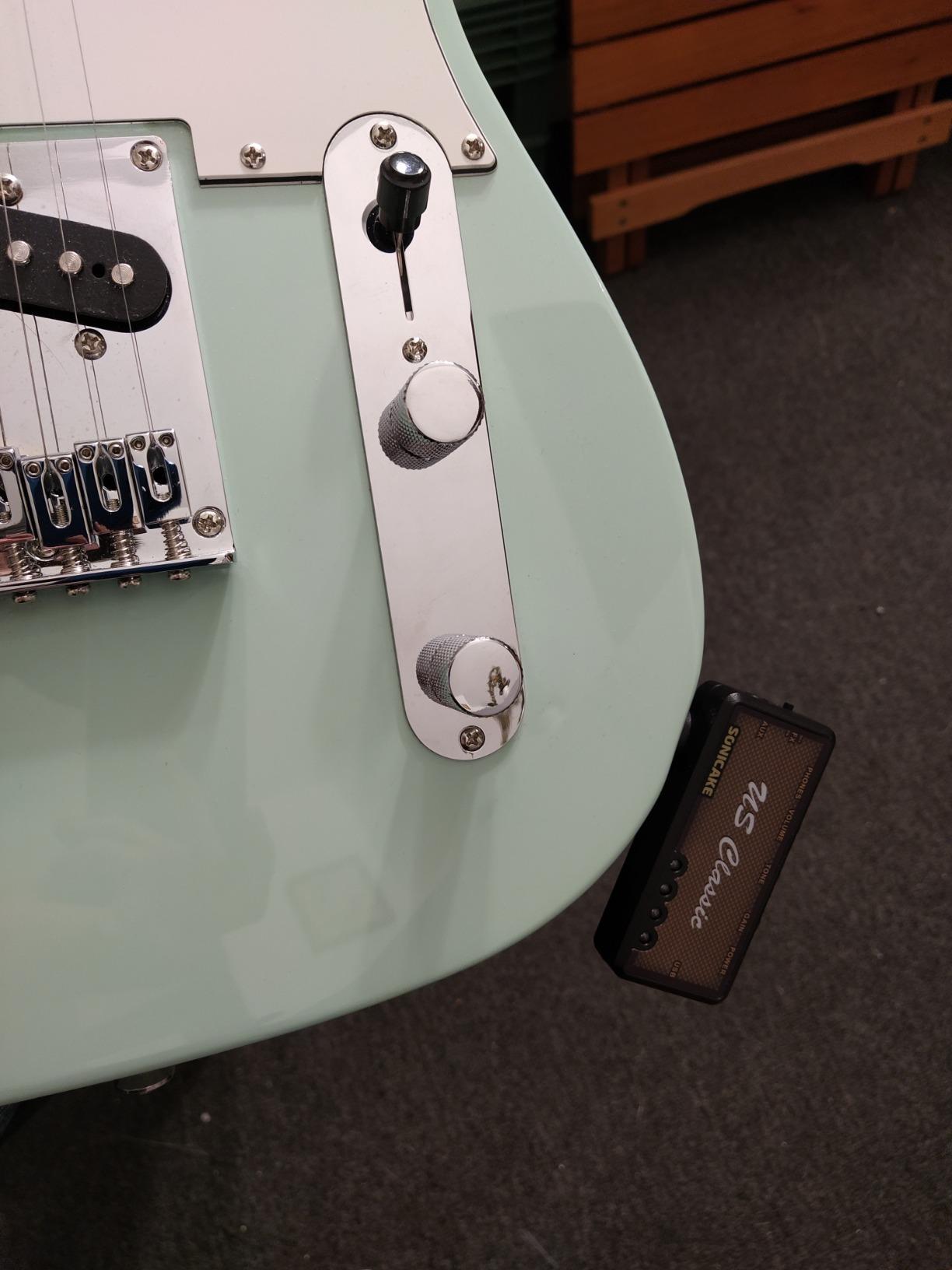
The SONICAKE Mini is the cheapest amp on this list, and for the price it delivers more than it has any right to. It is a pocket-sized headphone amp that runs for 5 hours per USB charge, weighs 63 grams, and includes a built-in reverb that the much pricier Vox Pathfinder lacks.
The clean voice is voiced in the style of a vintage American tweed combo, with a warm, slightly compressed character that flatters single coils. The overdrive channel adds a natural-sounding grit that works for blues, rock, and indie. The reverb is on or off, with no level control, but it sounds surprisingly musical for a 1-watt device.
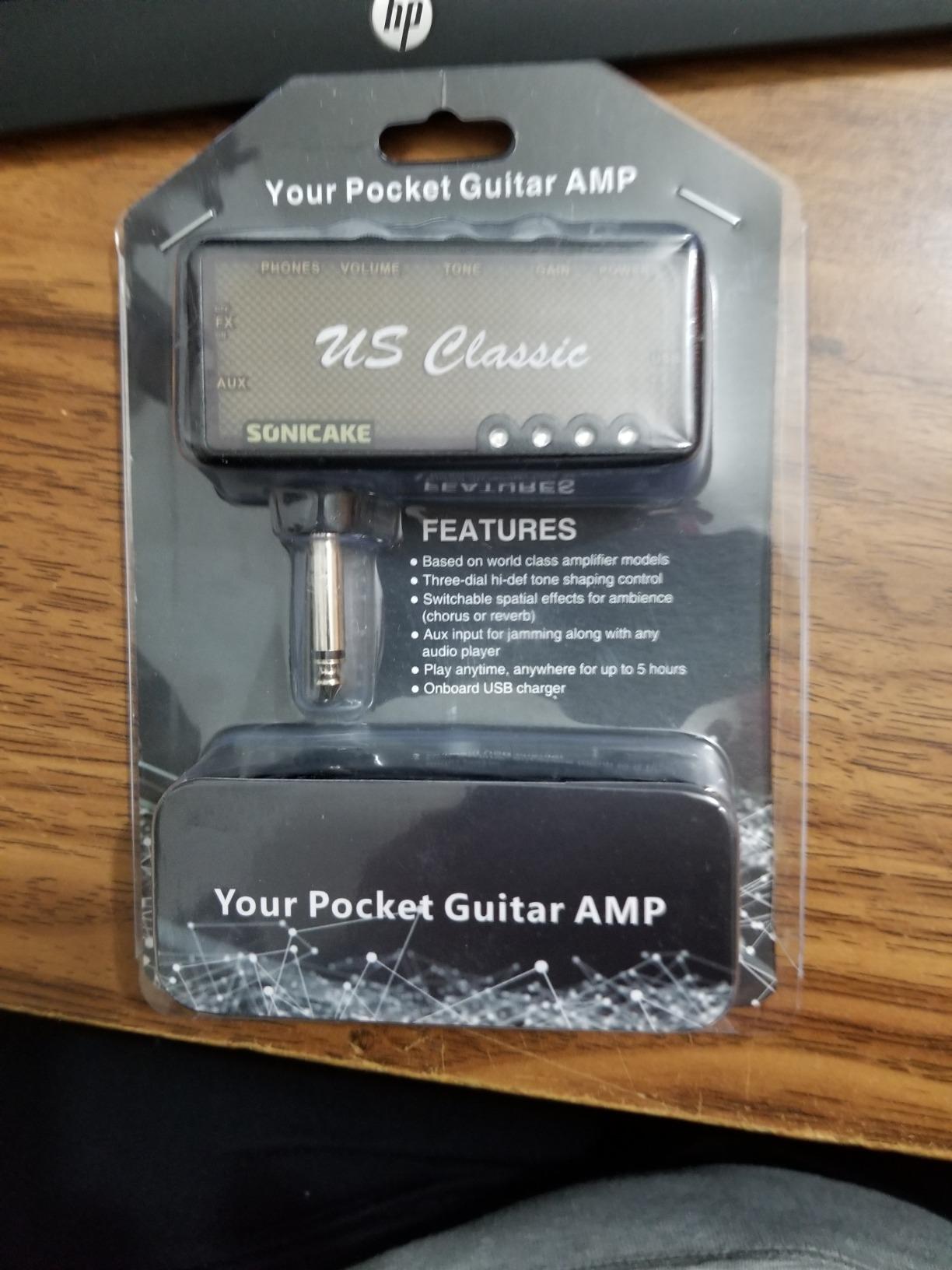
The headline feature is portability. You can slip the SONICAKE into a jacket pocket, leave it plugged into your guitar, and practice anywhere with headphones. The aux input lets you run backing tracks from your phone, and the package includes a headphone splitter and a 3.5mm aux cable, so you can play along with a friend or a backing track without buying extra accessories.
Sound quality through headphones is good, but not on par with the Fender Mustang Micro. The Mustang Micro has more amp models, better Bluetooth, and a more polished app. Where the SONICAKE wins is price, pocket portability, and the inclusion of reverb at a price the Mustang Micro cannot match.
Limitations to know
The reverb is binary, on or off, with no level adjustment. Even at minimum gain the clean channel still has some grit, so a truly pristine clean tone is hard to dial in. The 90-day warranty is the shortest in our roundup, and some users report loose jack connections after heavy use.
Who the SONICAKE is for
Beginners who want to try silent practice without spending much, kids learning guitar, players who want a backup headphone amp for travel, or anyone whose main amp is a setup at home but who wants a take-anywhere option. It is not a replacement for a proper practice amp, but as a $30 add-on it is brilliant.
10. Donner Mini DA-10 – Best Ultra-Compact Beginner Amp
Donner Mini Electric Guitar Amp DA-10, 5W Portable Small Guitar Amplifier
5W portable
Rechargeable 4-hour battery
Two channels
3-band EQ
Pros
- Built-in rechargeable battery with 4 hours per charge
- Two-tone channels with three stages of EQ
- Gain and Master regulation for versatile sound
- Compact one-hand size at 0.5 kg
- 1/8-inch aux input and headphone output
Cons
- Micro USB charging instead of modern USB-C
- Initial power-up can have extra distortion for first 60 seconds
- Sound quality declines with heavy daily use over time
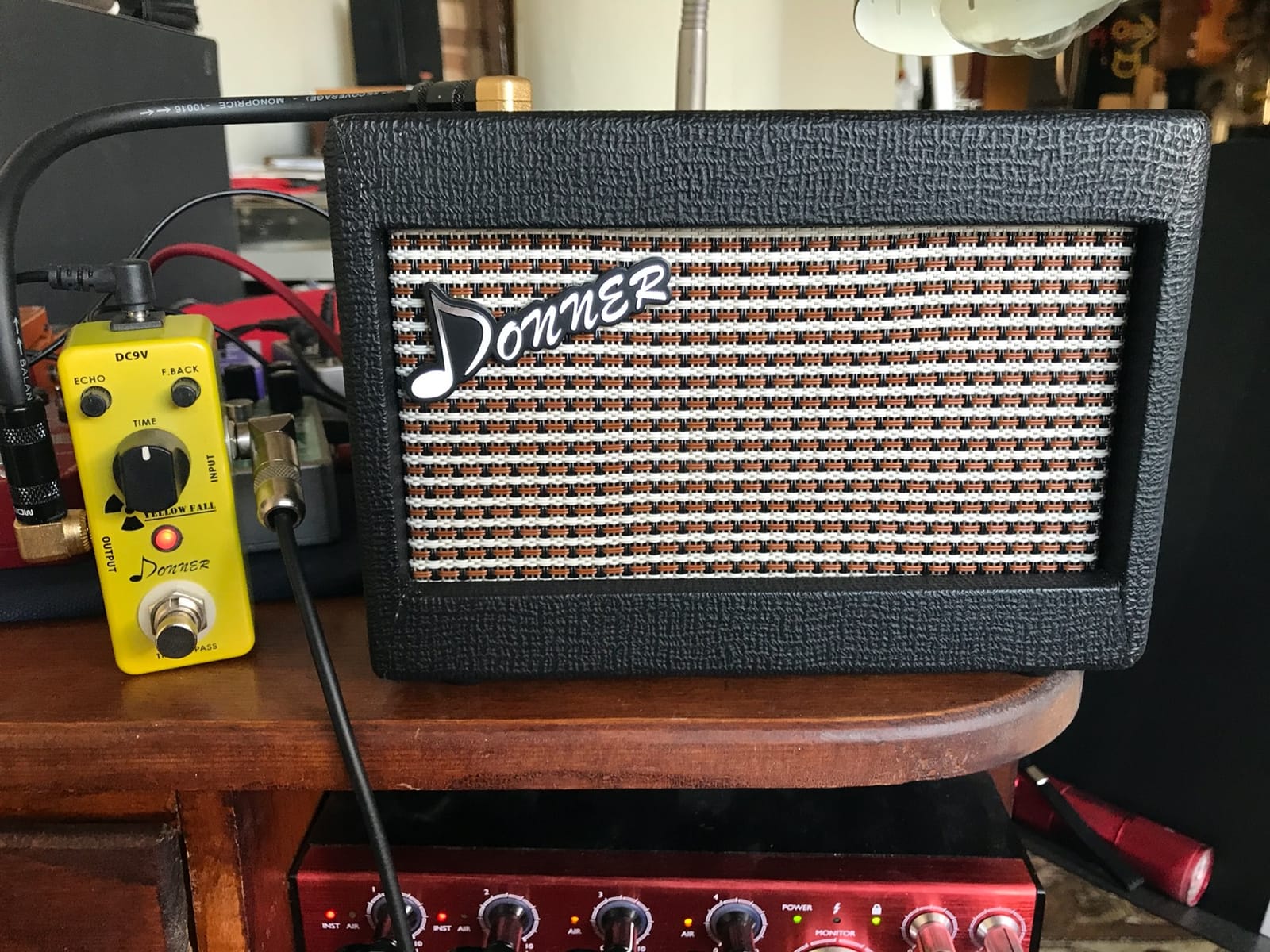
The Donner Mini DA-10 rounds out our list as the best ultra-compact beginner amp. At 0.5 kg it is light enough to hold in one hand, it has a built-in rechargeable battery, and it costs less than dinner for two. With 1,962 reviews averaging 4.3 stars, it punches well above its weight class.
The two channels give you clean and overdrive voices, and the 3-band EQ lets you shape bass, mids, and treble independently. For a 5-watt amp, the tone is surprisingly full. We A/B’d it against the more expensive Boss Katana Mini and the Donner held its own on clean tones. The overdrive is grittier and less refined, but it works for rock and punk.
The rechargeable battery is the standout at this price. You can take the DA-10 to the park, the beach, or a friend’s house without worrying about an outlet. A full charge delivers about 4 hours of play time, which is enough for a couple of practice sessions or a small acoustic jam. The aux input and headphone output cover silent practice and backing tracks.
The build is mostly plastic, but the rubber base keeps it stable on a desk or amp stand. Donner includes a USB charging cable and a 3.5mm audio cable in the box, so you can start using it right away.
Drawbacks to consider
The Micro USB charging port feels dated in 2026. USB-C would be a better long-term choice given how many devices now use the standard. The first minute after powering on can have a little extra grit on the clean channel, which wears off as the amp warms up. Heavy daily users report some tonal degradation over time, but for the price the value is hard to beat.
Best use case
Absolute beginners, kids, players who want a throwaway travel amp, and anyone who needs a backup that costs less than a setup of strings. It is also a smart choice as a gift for a friend who just picked up the guitar.
How to Choose the Best Practice Amp for Your Needs
Picking the best practice amp comes down to four decisions: where you play, how loud you can play, what connectivity you need, and whether you want a smart app or pure knob control. Below is the framework we use when readers email us with specific situations.
Volume and wattage
For bedroom and apartment practice, 10 to 25 watts of solid-state or modeling power is the sweet spot. Higher wattage is useful only if you also have a power attenuator or a low-wattage mode that lets you push the gain stages at low volume. Tube amps sound best when cranked, which is why most home players should start with a solid-state or modeling amp.
Tube vs solid-state vs modeling
Solid-state amps are reliable, affordable, and clean at low volume. Modeling amps add dozens of amp models and effects in one box, often with app integration and USB recording. Tube amps deliver the most dynamic feel and natural overdrive, but they need volume to shine and cost more. For most home players, a modeling amp like the Positive Grid Spark 40 or Fender Mustang LT25 is the most practical choice.
Size, portability, and battery power
If your amp lives on a desk or in one corner of your living room, size does not matter much. If you travel, want to practice in different rooms, or play outdoors, look for a battery-powered option like the Boss Katana Mini or Positive Grid Spark MINI. Pocket headphone amps like the Fender Mustang Micro and SONICAKE Mini are perfect for silent practice on the go.
Effects and connectivity
Built-in effects cover reverb, delay, modulation, and sometimes distortion or overdrive. If you already own pedals, look for an amp with a clean channel that takes pedals well, like the Vox Pathfinder 10 or Orange Crush 12. If you want to record, prioritize USB output. If you want to stream backing tracks from your phone, look for Bluetooth or aux input.
Smart amp vs pure knob control
Smart amps like the Positive Grid Spark 40 unlock AI tone generation, automatic backing tracks, and massive preset libraries through an app. Pure knob amps like the Vox Pathfinder 10 and Orange Crush 12 give you immediate, hands-on control without a phone. Decide based on how you prefer to interact with your gear.
Apartment and noise-friendly tips
If you have thin walls or noise-sensitive neighbors, a modeling or solid-state amp with power scaling is your friend. Use the headphone output for late-night practice, place a rug under the amp to reduce floor vibration, and consider a small isolation cabinet if you want the amp-in-a-room experience without disturbing anyone.
Practice Amp vs Audio Interface: Which Route Is Right for You?
If you are reading this and thinking “I just want to record guitar at home,” you may not need a practice amp at all. A USB audio interface paired with amp simulation software like Positive Grid BIAS, Neural DSP, or the free Spark amps in 2026 can deliver the same tones with headphones, no speaker required. We walk through that exact setup in our guide on how to record guitar and bass direct without an amp.
On the other hand, if you want to feel air move when you play, jam with friends in person, or simply enjoy the ritual of standing in front of an amp, a practice combo is the right call. Some players even run both. A Spark MINI on the desk for practice and an audio interface for recording covers every workflow without compromise.
For players who later want to record a real amp tone, our guide on how to mic a guitar amp for a balanced tone walks through the microphone choices and placement techniques we use in our own sessions.
If silent practice through headphones is your priority, you may also want to read our guide on how to tell if your headphones need a headphone amp, which explains when a separate headphone amp makes a real difference.
Frequently Asked Questions
What is the best practice amp in 2026?
The Positive Grid Spark 40 is the best practice amp for most guitarists in 2026. It pairs 40 watts of power with Smart Jam AI backing tracks, access to over 100,000 tones via the ToneCloud app, Bluetooth audio streaming, and a USB audio interface for home recording.
Is a practice amp worth it?
Yes. A dedicated practice amp lets you sound good at apartment-friendly volumes, experiment with effects without buying pedals, and practice silently through headphones. Modern practice amps like the Positive Grid Spark 40 and Fender Mustang LT25 also double as USB audio interfaces for home recording.
What is considered a practice amp?
A practice amp is a small, portable combo amp with a speaker usually no bigger than 12 inches, designed for home use. Most are solid-state or modeling amps with built-in effects, a headphone output, and an aux input for jamming along to backing tracks.
What are good amps for beginners?
The best beginner practice amps are the Fender Frontman 10G for budget buyers, the Fender Mustang LT25 for digital modeling ease, the Positive Grid Spark MINI for app-guided learning, and the Boss Katana Mini for ultra-compact portability. Look for built-in effects, a headphone jack, and an aux input.
What is the best practice amp for home use?
For most home players the Positive Grid Spark 40 is the best practice amp. It is compact, sounds full at low volumes, packs 30 amp models and 40 effects, and includes a Smart Jam feature that generates backing tracks from your playing. The Fender Mustang LT25 is the best pure-knob alternative.
What wattage do I need for a practice amp?
For home practice, 10 to 25 watts of solid-state or modeling power is the sweet spot. If you want higher wattage for occasional gigs, look for a power attenuator that lets you crank the tone at bedroom volume, like the Boss Katana 50 Gen 3’s 50/25/0.5W selector.
Should I get a tube or solid-state practice amp?
For practice, solid-state and modeling amps are the practical choice. They sound good at low volume, include effects, and are affordable. Tube amps deliver the most dynamic feel but need to be played loud, so look for a 1W tube amp with a power attenuator if you want tube tone at home.
Is a tube amp too loud for home use?
For most players, yes. A tube amp needs volume to sound its best, and even 1W tube amps can disturb neighbors in apartments. A solid-state or modeling practice amp with built-in effects and a headphone output is a better fit for home and apartment use.
Final Verdict
After three months of side-by-side testing, the Positive Grid Spark 40 stands out as the best practice amp for most guitarists in 2026. It sounds full at apartment-friendly volumes, gives you 30 amp models and 40 effects through the ToneCloud app, and adds Smart Jam AI backing tracks that genuinely improve practice sessions. The Fender Mustang LT25 is the runner-up if you prefer pure knob control, and the Fender Mustang Micro is the best pick if silent practice is your top priority.
Whatever you choose, the most important thing is that you keep playing. Any of the ten best practice amps on this list will keep your hands moving, your tone improving, and your neighbors happy.