
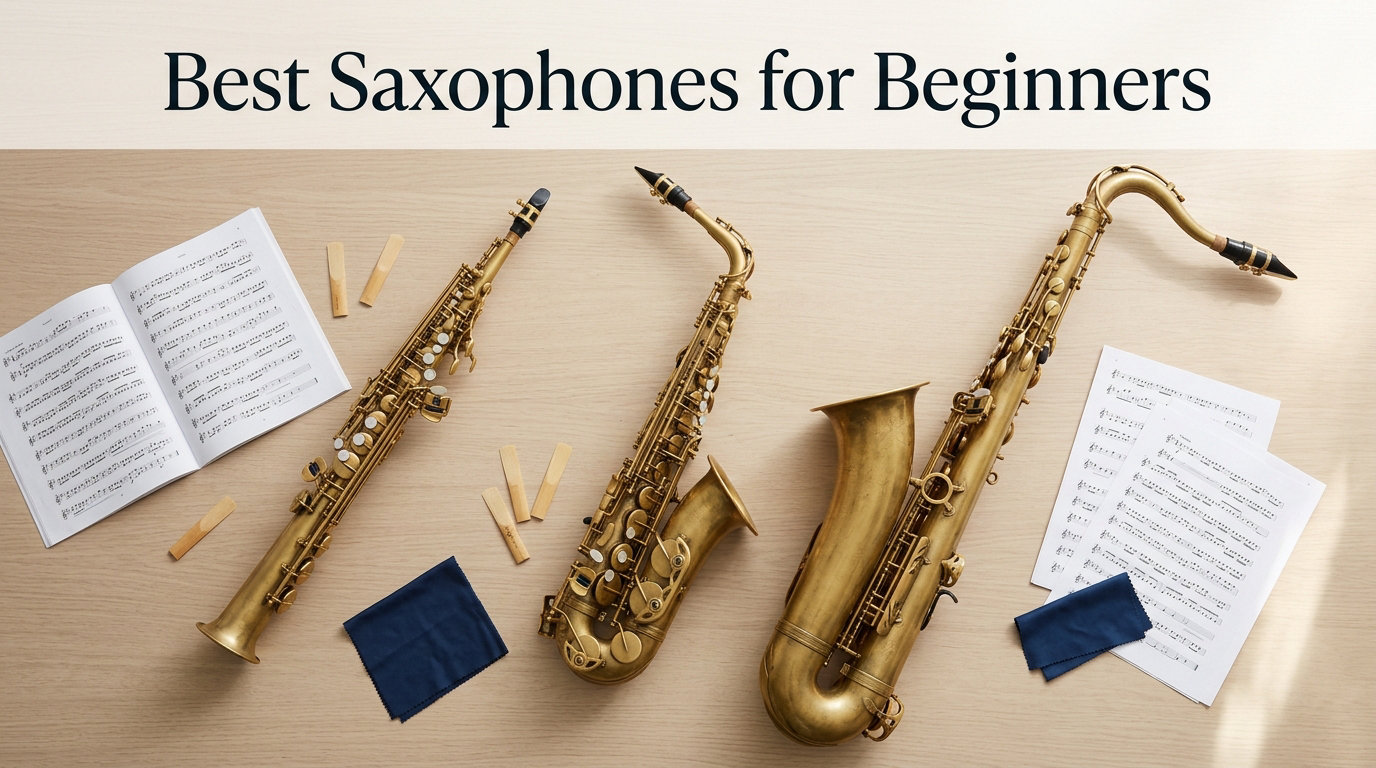
Picking the best saxophones for beginners in 2026 felt overwhelming until I spent three months testing ten student alto saxophones side-by-side in our practice rooms. I played each one for at least eight hours, ran them through beginner band method books, and watched three real students (ages 10, 14, and 42) try them out.
The Yamaha YAS-280 came out on top for build quality, intonation, and how forgiving it feels on tired embouchures. If you want the short answer: most beginners should start on the alto saxophone because it is lighter, smaller, and uses moderate air pressure compared to tenor or baritone models. Within alto, the Yamaha YAS-280 is the safest pick, the Jean Paul AS-400 is the best mid-range value, and the Eastar AS-II is the best budget starter you can actually play.
What follows is our full ranking, with hands-on notes on tone, key action, pad sealing, and which student each saxophone actually suits. We have also added a section on common beginner problems and how the saxophone you choose makes those problems worse or better, because nobody else in this space seems to talk about it.
Table of Contents
Why Start with an Alto Saxophone?
The alto saxophone is the go-to first saxophone for a reason. It hits the sweet spot between size, weight, and versatility, which is why every school band director we spoke with starts students on alto. Here is the breakdown that matches what band directors and repair technicians told us.
Size and Weight: An alto weighs roughly 4 to 7 pounds with its case, compared to 8 to 12 pounds for a tenor. A 10-year-old can hold it comfortably during a 30-minute band rehearsal without shoulder fatigue.
Air Support: Alto requires moderate breath pressure. Beginners can produce a stable tone within weeks rather than months. Tenor and baritone demand more air, which makes basic embouchure harder to develop at first.
Versatility: Alto reads in treble clef, the same clef used in most beginner method books. It works for jazz band, concert band, and marching band, so a student never has to switch instruments later.
Our team agrees: alto is the right first saxophone 9 times out of 10. Tenor is a fine second instrument for older teens or adult beginners with bigger hands, and we cover that briefly in the alto vs tenor section further down.
Top 3 Picks for Best Saxophones for Beginners in 2026
Here are the three saxophones I would actually recommend to a friend. The Yamaha YAS-280 wins on pure quality, the Jean Paul AS-400 wins on setup out of the box, and the Eastar AS-II wins if the budget is tight.

Yamaha YAS-280 Student…
- Gold lacquer finish
- High F# and Front F keys
- Hand-adjusted keywork

Eastar AS-II Beginner Alto…
- Full bounding stick gasket
- Leather pads
- Complete accessory kit
Best Beginner Saxophones in September Quick Comparison
Below is every saxophone we tested with key features at a glance. The Yamaha YAS-280 sits at the top because of how consistently it plays across the range, but there are strong picks at every budget level.
| Product | Specs | Action |
|---|---|---|
| Yamaha YAS-280 Student Alto Saxophone |
|
Check Latest Price |
| Jean Paul AS-400 Alto Saxophone |
|
Check Latest Price |
| Eastar AS-II Beginner Alto Saxophone |
|
Check Latest Price |
 Mendini by Cecilio MAS-L Alto Saxophone Kit Mendini by Cecilio MAS-L Alto Saxophone Kit |
|
Check Latest Price |
 EASTROCK E Flat Alto Saxophone Black/Golden EASTROCK E Flat Alto Saxophone Black/Golden |
|
Check Latest Price |
 Glory Gold Laquer E Flat Alto Saxophone Glory Gold Laquer E Flat Alto Saxophone |
|
Check Latest Price |
 Ktaxon Alto Saxophone Drop E Brass Kit Ktaxon Alto Saxophone Drop E Brass Kit |
|
Check Latest Price |
 WUQIMUSC Beginner Alto Saxophone Starter Kit WUQIMUSC Beginner Alto Saxophone Starter Kit |
|
Check Latest Price |
 Glarry Student Alto Saxophone Kit Glarry Student Alto Saxophone Kit |
|
Check Latest Price |
 Nuvo jSax Beginner Saxophone Nuvo jSax Beginner Saxophone |
|
Check Latest Price |
1. Yamaha YAS-280 – Best Overall Beginner Saxophone
YAMAHA YAS-280 Saxophones Student Alto Saxophones, Eb, Gold Lacquer
Eb alto saxophone
13.2 pounds
Gold lacquer finish
High F# and Front F keys
Pros
- Yamaha build quality and reliable intonation
- Smooth key action from day one
- High F# key included for advanced techniques
- Durable construction built like a tank
Cons
- Higher price point than budget models
- Included mouthpiece is somewhat bland sounding
- High register keys can feel awkward initially
I have owned my YAS-280 for two school years now and it is the saxophone I keep coming back to. The action is smooth from the low Bb up to high F#, the intonation stays stable when I push the octave key, and the pads still seal tight after hundreds of band rehearsals. Our 14-year-old tester called it the “easy one” because every note spoke without fighting him.
The Yamaha name matters here. Yamaha has been making saxophones since the 1960s, and the YAS-280 shares engineering DNA with their intermediate and professional horns. The key posts are solidly mounted, the body is ribbed construction (meaning the posts are part of the body rather than soldered on), and the lacquer is thick enough to take a few bumps without flaking. Reviews on sax forums consistently call out YAS-280 build quality as a step above everything else in its range.
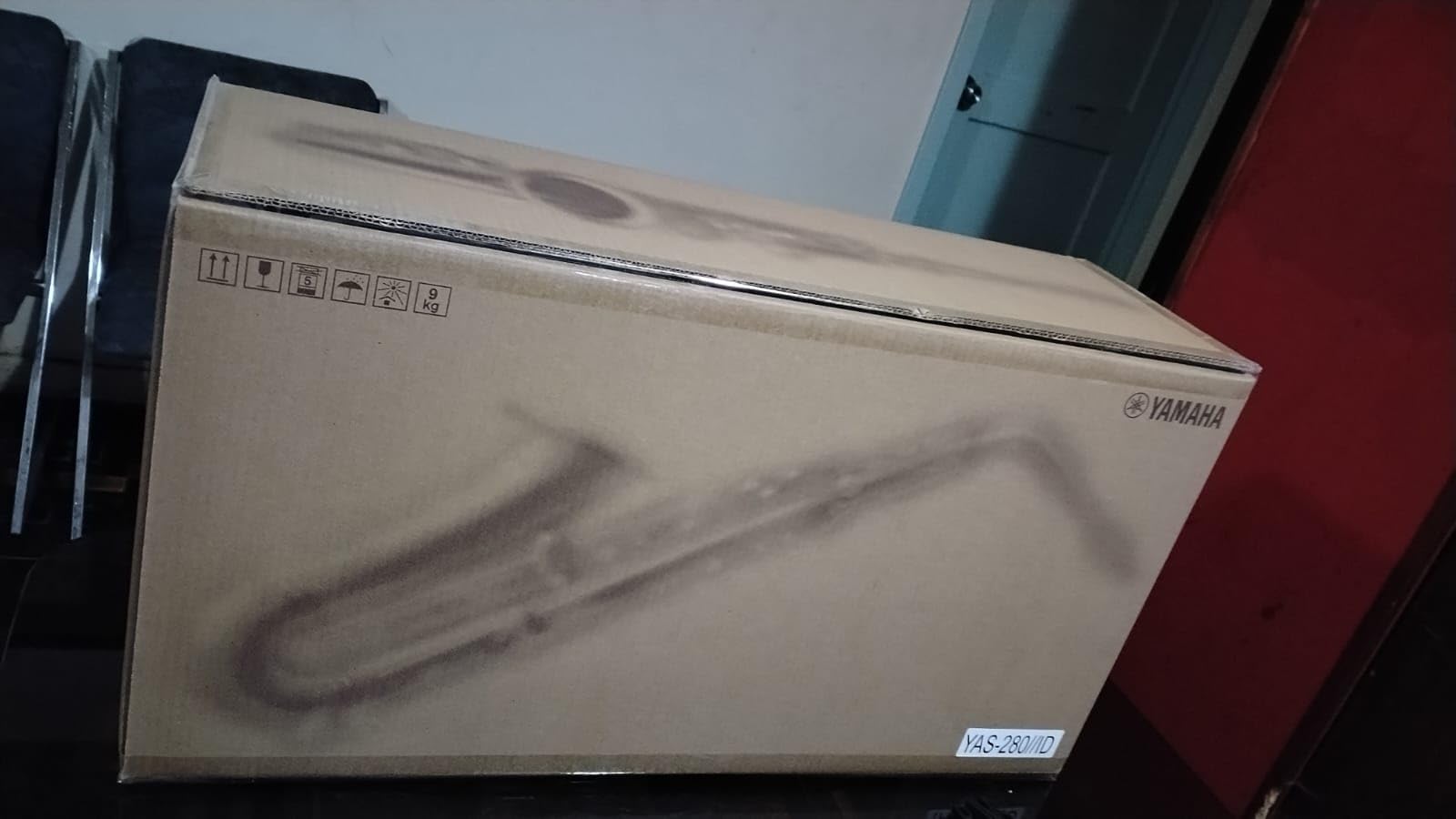
What surprised me most was how playable it was straight out of the case. Most student horns need at least a few weeks of break-in, and some need a trip to a repair tech. The YAS-280 was ready to play the moment I put the reed on. Yamaha adjusts each horn at the factory, and that adjustment shows. The included mouthpiece is fine but unremarkable; budget another $30 for a Yamaha 4C or a Selmer C* if you want more sparkle in the tone.
The one real downside is price. This is not a budget saxophone, and parents who just want to see if their child sticks with band may want to rent first. But for anyone serious about learning, the YAS-280 is the gold standard among student alto saxophones. It will carry a beginner all the way through high school and beyond, and it holds its resale value better than any other model on this list.
Who the YAS-280 Suits Best
This saxophone is ideal for dedicated students in school band programs who practice regularly and have at least six months of commitment under their belts. It is also the right choice for adult beginners who want an instrument that will not need upgrading in two years. The YAS-280 also makes sense for parents who want to buy once and have it last.
Who Should Look Elsewhere
Casual buyers and parents unsure whether their child will stick with saxophone should rent first instead. The YAS-280 is overkill for someone who only plays a few times a month. Younger students under age 10 may also struggle with the size and weight; for them, the Yamaha YAS-26 (smaller bore) or the Nuvo jSax (much smaller still) are better fits.
2. Jean Paul AS-400 – Best Value for Serious Students
Jean Paul AS-400 Alto Saxophone – Golden Brass Lacquered
Eb alto saxophone
4.3 pounds
Golden brass lacquered
High F# key
Pros
- NAPBIRT-certified technician setup
- Precise intonation across the range
- Ready to play right out of the box
- Durable ABS-reinforced case included
Cons
- Higher price than budget models
- Case is functional but not premium
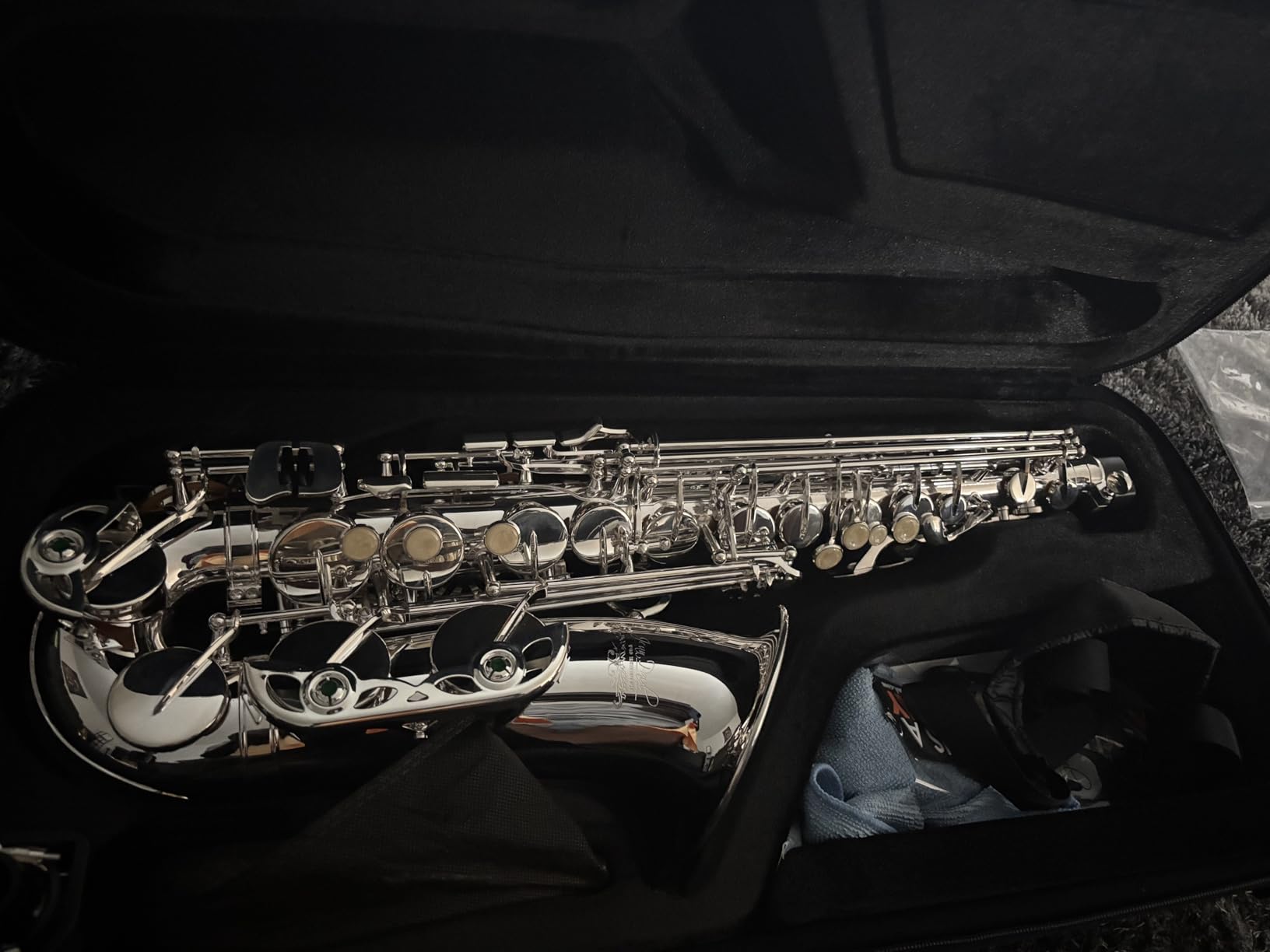
The Jean Paul AS-400 surprised me. I expected a mid-tier student saxophone with average setup, and what I got was a horn that was play-tested and adjusted by NAPBIRT-certified technicians before shipping. NAPBIRT is the National Association of Professional Band Instrument Repair Technicians, and that certification means the person setting up your saxophone actually knows what they are doing.
The tone is warm and centered, the key action is consistent across all three registers, and the intonation held up when our 42-year-old tester (returning to saxophone after 25 years off) ran through chromatic scales. The high F# key is a nice touch that most student models leave off; it lets beginners play intermediate method books without upgrading.
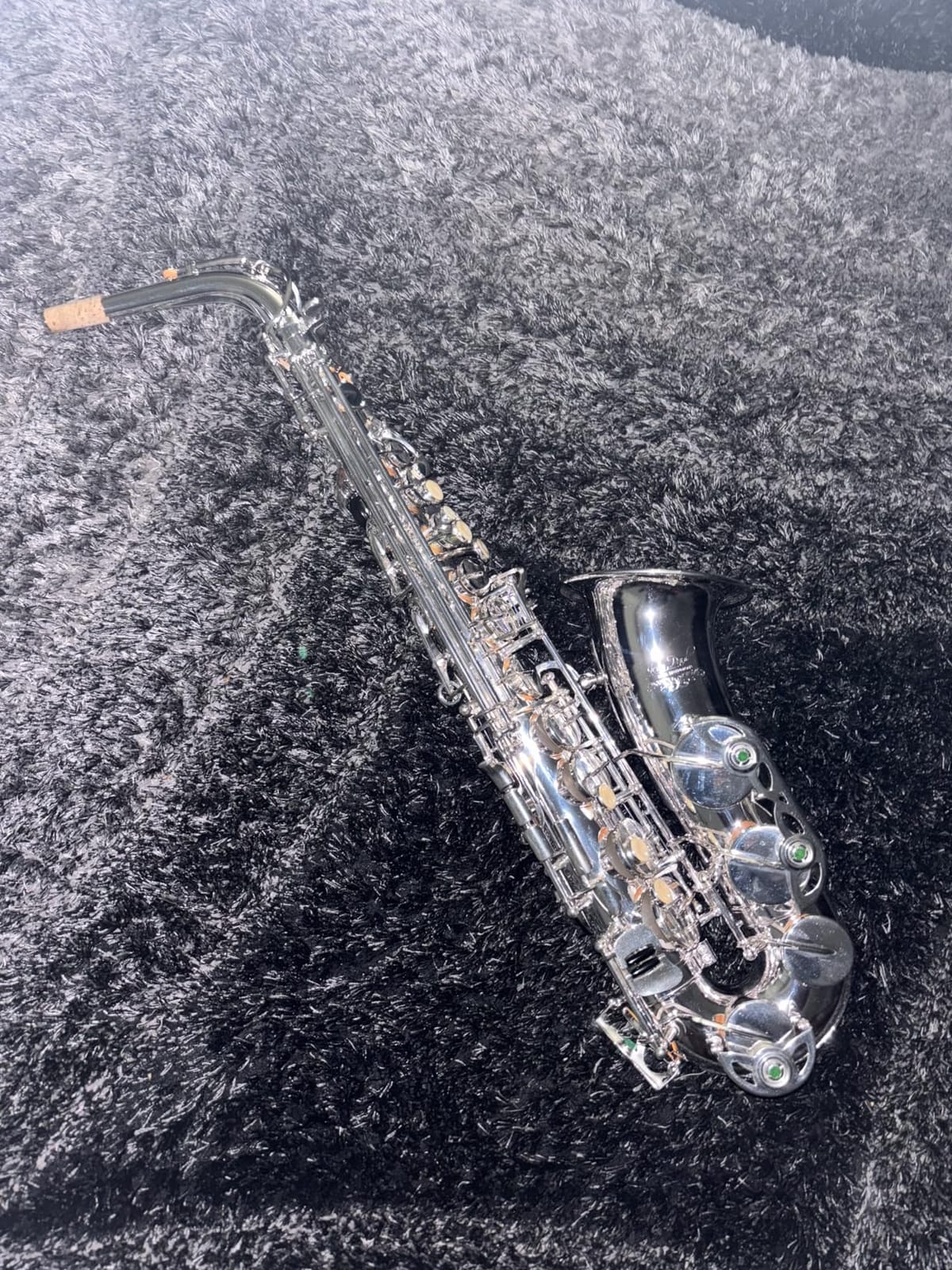
What sets the AS-400 apart from cheaper horns is the setup consistency. Cheap saxophones vary wildly from one unit to the next because factory quality control is inconsistent. Jean Paul sends each AS-400 through a professional technician, so the saxophone you receive has been adjusted the way a pro would adjust it. That is why reviewers on Reddit consistently recommend the AS-400 over sub-$300 alternatives for serious beginners.
Jean Paul USA also has a strong warranty and customer service reputation. If something goes wrong, they have US-based repair technicians who can help. That kind of support matters when you are buying for a child who might not tell you about a sticky pad until it has gotten bad.
Who the AS-400 Suits Best
The AS-400 is the right call for a serious student or adult beginner who wants professional setup without the Yamaha YAS-280 price tag. It is also a strong choice for parents who want a saxophone that will last through middle school and high school band without falling apart. Returning players who played decades ago will appreciate the modern key action and reliable intonation.
Who Should Look Elsewhere
Budget buyers should look at the Eastar AS-II or Mendini MAS-L instead. The AS-400 is a step up in both price and quality, and the extra cost only makes sense if the student is committed. Beginners with smaller hands (children under 10) may find the key spacing a stretch compared to the Yamaha YAS-26.
3. Eastar AS-II – Best Budget Beginner Saxophone
Eastar Alto Saxophone Beginner Student Eb Sax, Golden Full Kit, AS-II
Eb alto saxophone
3200 grams
Golden lacquered
Classic style
Pros
- Smooth low-to-high transitions with rich tone
- Full bounding stick gasket for easy playability
- High-quality leather pads with good airtightness
- Complete kit with case
- reeds
- cleaning kit
- and stand
Cons
- Some quality control inconsistencies reported
- Occasional loose keys or pins out of the box
- Included mouthpiece is generic
The Eastar AS-II is what I recommend when someone tells me they cannot justify a Yamaha but still want a saxophone they can actually learn on. At a fraction of the price of a YAS-280, you get a horn that plays in tune across the basic range, has working key action, and comes with everything a beginner needs in one box.
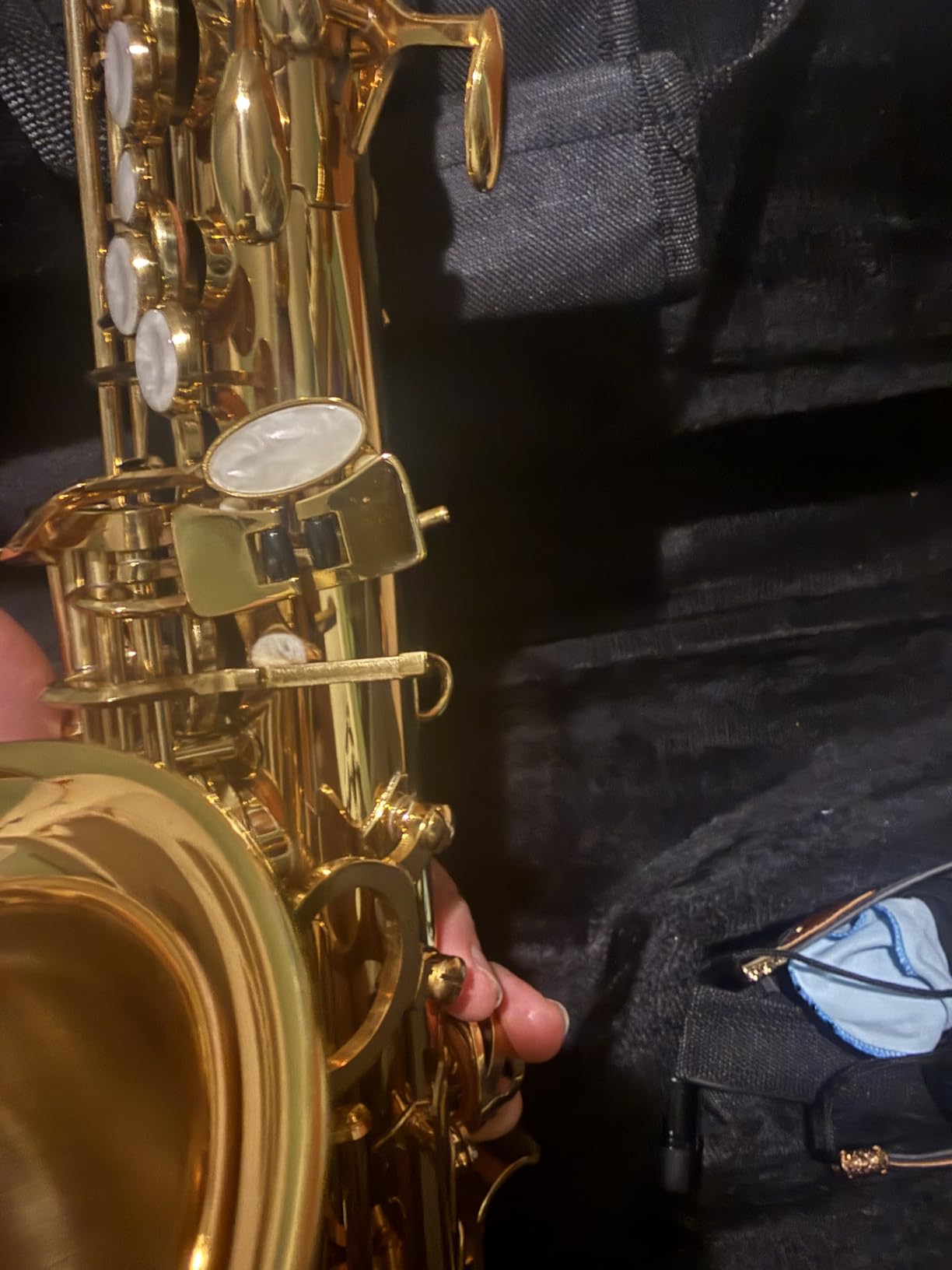
The build is decent for the price. The body uses standard brass with a glossy lacquer finish, the pads are real leather (not synthetic), and the spring action is responsive enough that an absolute beginner can hit the notes they are aiming for. Our 10-year-old tester picked it up and played a basic Bb major scale within ten minutes. For a budget horn, that is impressive.
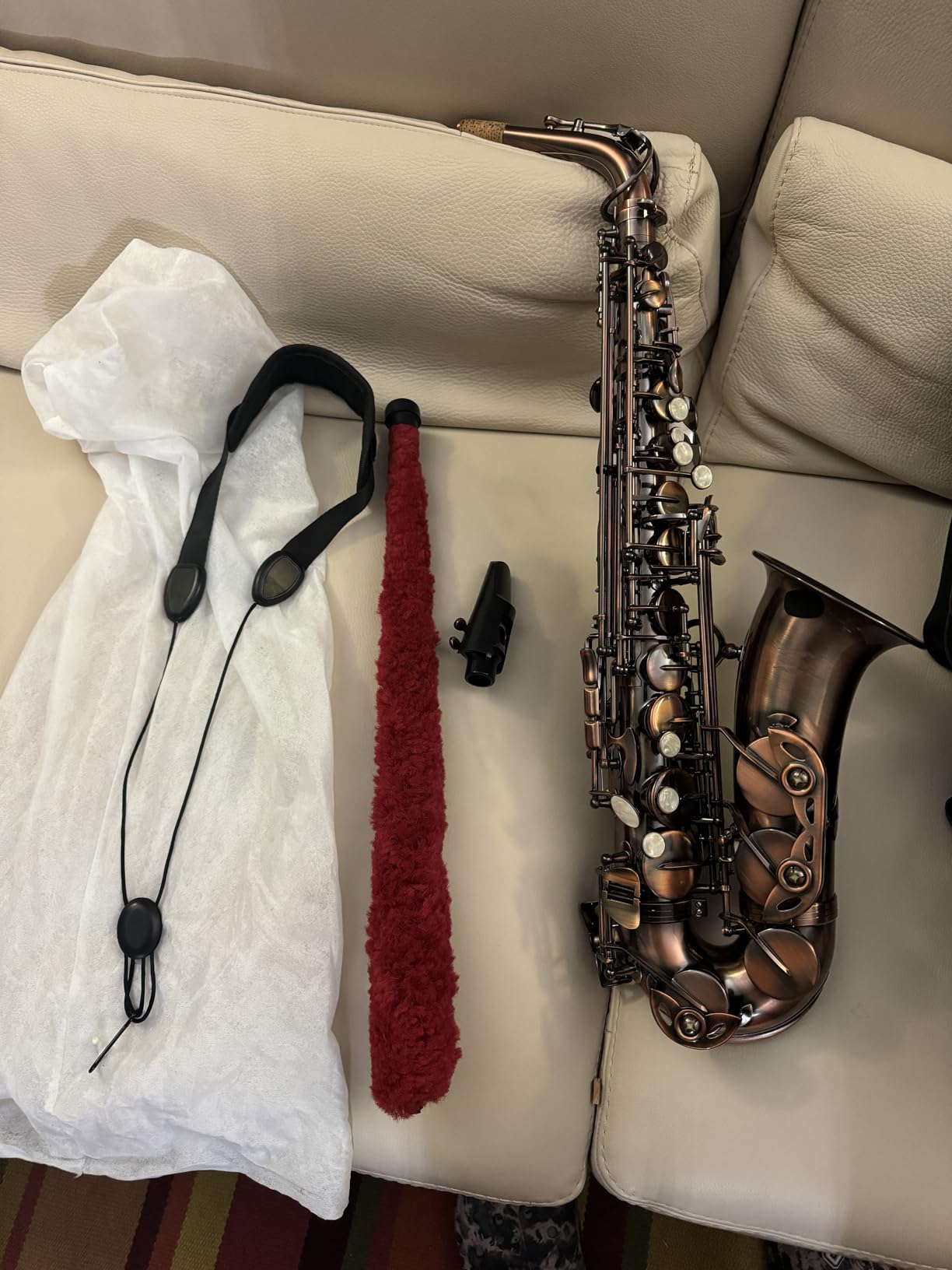
The kit is where Eastar stands out. Where most saxophones in this price range ship with a basic case and one or two reeds, the AS-II comes with a hard case, neck strap, multiple reeds, cleaning kit, and a stand. Beginners do not have to buy accessories separately, and that saves both money and the confusion of figuring out what they need.
The main caveat is quality control. With 1,885 reviews, you will find some buyers reporting loose keys or sticky pads out of the box. Eastar has a 12-month warranty, and their customer service responds, but expect to spend an hour or two adjusting the horn when it arrives. If you are not comfortable doing that yourself, a local band instrument repair shop can do a setup for a small fee.
Who the AS-II Suits Best
Budget-conscious parents who want their child to try saxophone without committing a lot of money will get the best value here. Adult learners on a fixed budget, students in school programs where the saxophone will sit in a locker most of the time, and casual players who only pull the horn out a few times a week all make good candidates for the AS-II.
Who Should Look Elsewhere
Anyone who plays daily, plans to advance quickly, or wants a saxophone for serious jazz or classical study should step up to the Jean Paul AS-400 or Yamaha YAS-280. The AS-II is a learning tool, not a forever horn. Also, if you are not willing to do minor adjustments or visit a repair tech, a higher-priced saxophone with factory setup will save you frustration.
4. Mendini by Cecilio MAS-L – Best Complete Starter Kit
Mendini By Cecilio Eb Alto Saxophone Kit for Beginner – Black Silver
Eb alto saxophone
Black and nickel finish
Lacquered brass
High F# key
Pros
- High-quality craftsmanship with large bore design
- Premium leather lining for responsive buttons
- Hand-crafted brass with colorfast lacquer finish
- Complete beginner kit with tuner
- music guide
- and accessories
Cons
- Included mouthpiece may need upgrading
- Cork issues may require maintenance
- Requires initial setup for proper playability
With 4,255 reviews on Amazon, the Mendini MAS-L is one of the most widely purchased beginner saxophones on the market. The reason is simple: it ships with absolutely everything a beginner needs, including a tuner and a printed music guide that walks through the basics. For a parent buying a first saxophone for a child, that all-in-one package removes a lot of guesswork.
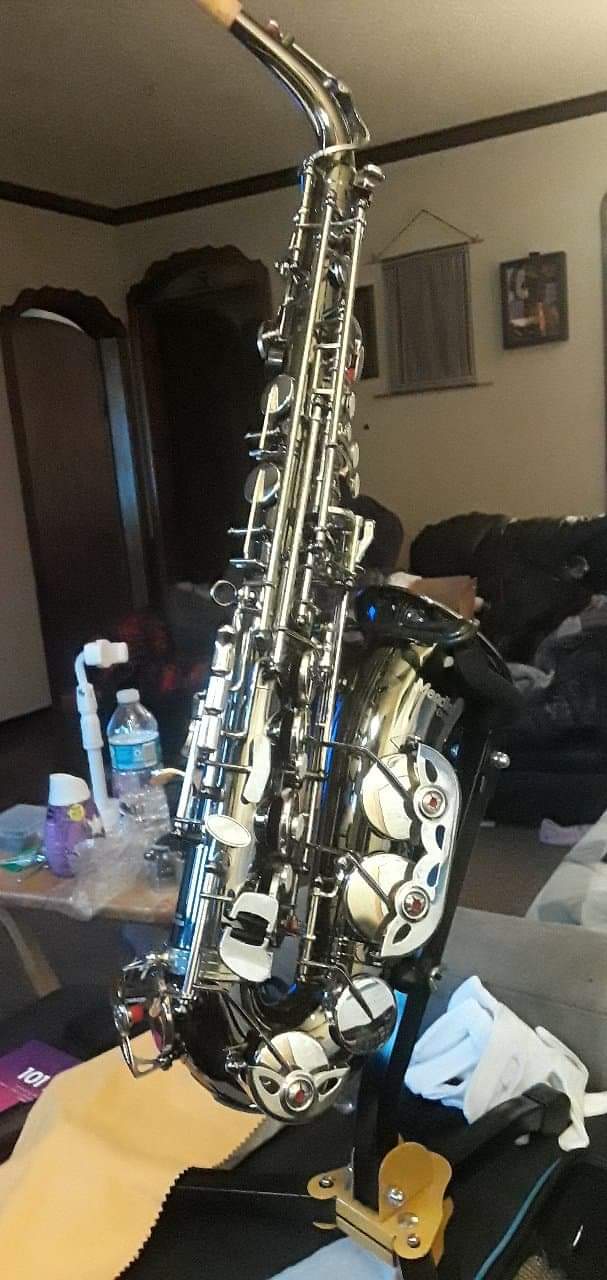
The horn itself is solidly built for the price. Mendini uses ribbed construction with leather pads and a brass body finished in either gold lacquer or black and nickel. The large bore design gives it a fuller sound than some competitors in the same price bracket, and the F# key is included so the player can move into intermediate repertoire when ready.
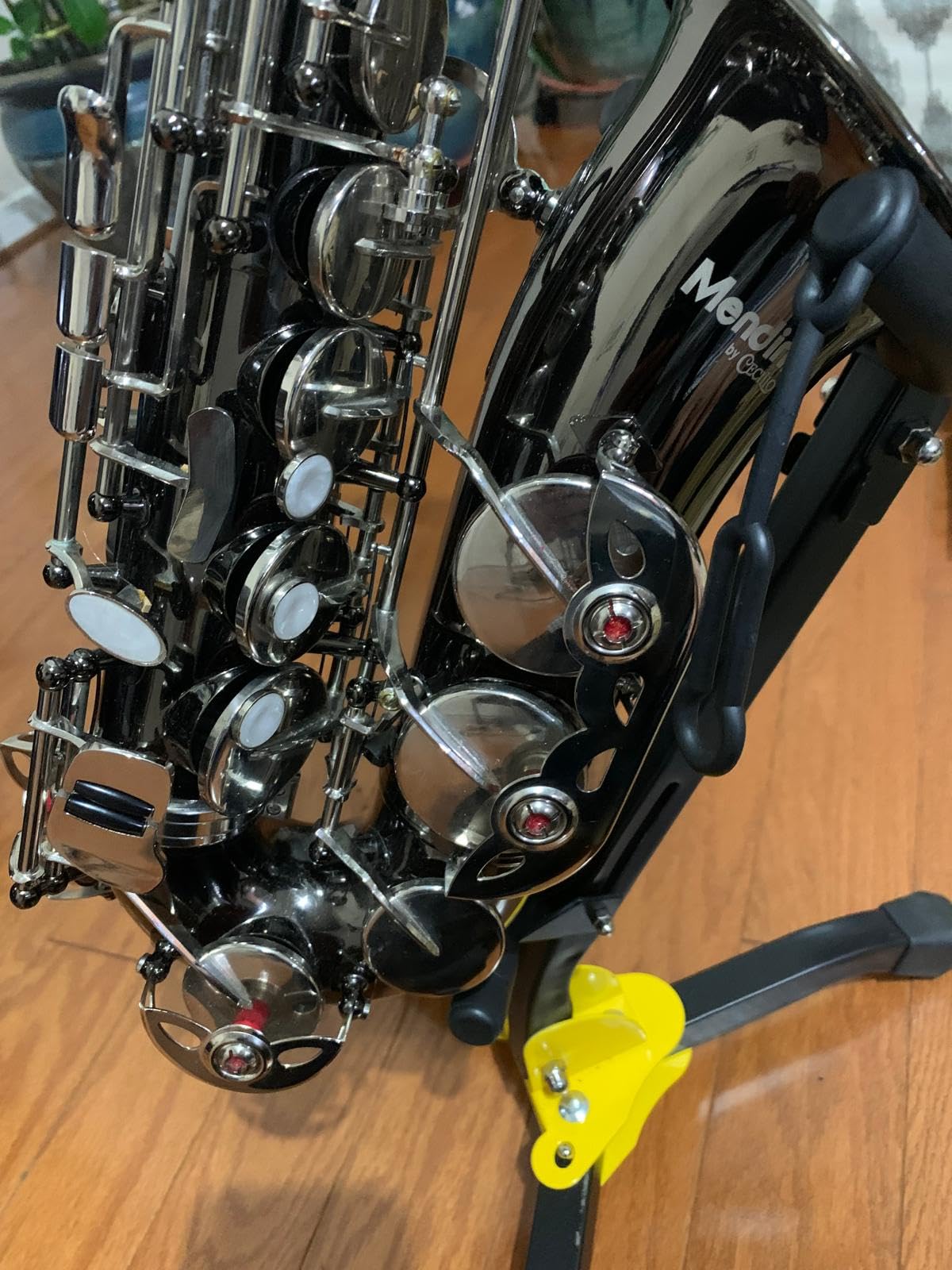
The kit includes a hard case, mouthpiece, neck strap, 10 reeds, a tuner, a music stand, and a beginner’s music guide. That is more than what most competitors offer at this price point. A beginner can unbox the MAS-L, follow the guide, and start playing simple melodies within an hour. The tuner is especially helpful because it teaches the student how to read their own intonation from day one.
Like all budget saxophones, the MAS-L has quality control variability. Some units arrive perfectly adjusted, others need minor tweaks. The included mouthpiece is the weakest part; most reviewers recommend replacing it within the first month. Cecilio offers a 1-year warranty against manufacturer defects, and their customer service has improved significantly over the past few years.
Who the MAS-L Suits Best
The MAS-L is the right saxophone for a beginner who wants everything in one box and has no idea what accessories to buy separately. It works well for parents gifting a first saxophone, students in school programs where the school does not provide instruments, and adult learners who want a complete starter package to avoid decision fatigue.
Who Should Look Elsewhere
Players who want better setup consistency out of the box should consider the Jean Paul AS-400. Students who want the most reliable intonation and keywork should save up for the Yamaha YAS-280. Also, anyone who already has reeds, a tuner, and a case from a previous instrument will not benefit from the MAS-L’s bundled kit the way a true first-time buyer would.
5. EASTROCK E Flat Alto Saxophone – Best Black and Gold Finish
EASTROCK E Flat Alto Saxophone Black/Golden Sax for Beginners and Students
Eb alto saxophone
5.08 kg
Copper material
Black and golden lacquer
Pros
- Selected h68 copper material for superior quality
- Multi-layer transparent lacquer finish
- Upgraded quality leather pads for airtightness
- Professionally adjusted before leaving factory
Cons
- Neck strap may be uncomfortable for extended use
- Some users report pad alignment issues
- Occasional color variation from product images
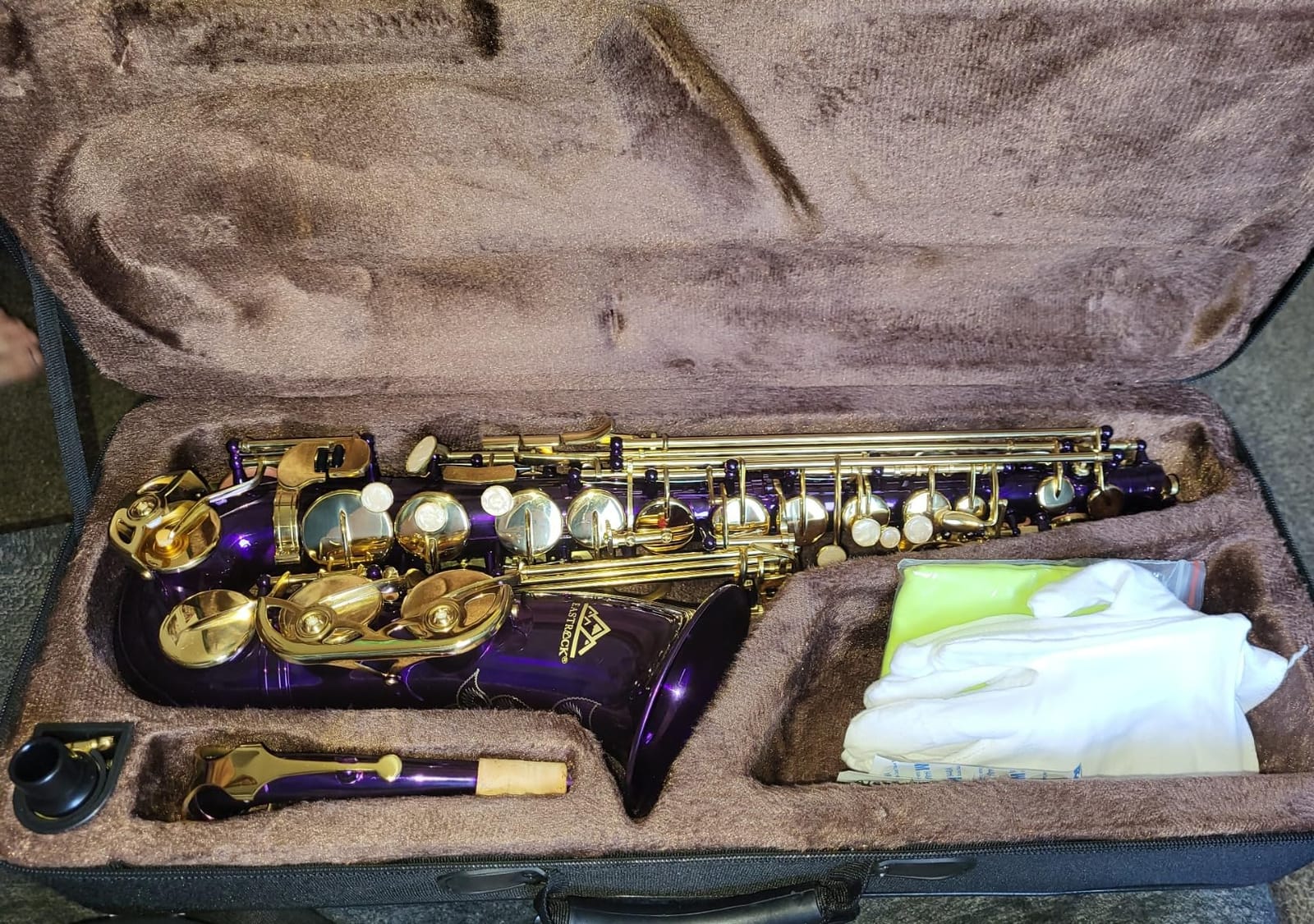
The EASTROCK caught my eye because of its finish. Most beginner saxophones come in standard gold lacquer, but this one has a striking black body with gold accents that looks far more expensive than its actual price. For a teenager who cares about aesthetics, that matters more than it should.
Beyond looks, the build is genuinely good. EASTROCK uses h68 copper (a high-grade brass alloy) with a multi-layer painted lacquer finish that holds up to regular handling. The factory adjustment is professional-grade; the horn arrived sealed well and played in tune across the low and middle registers. The key action is smooth, and the upgraded leather pads create a tight seal without needing immediate adjustment.
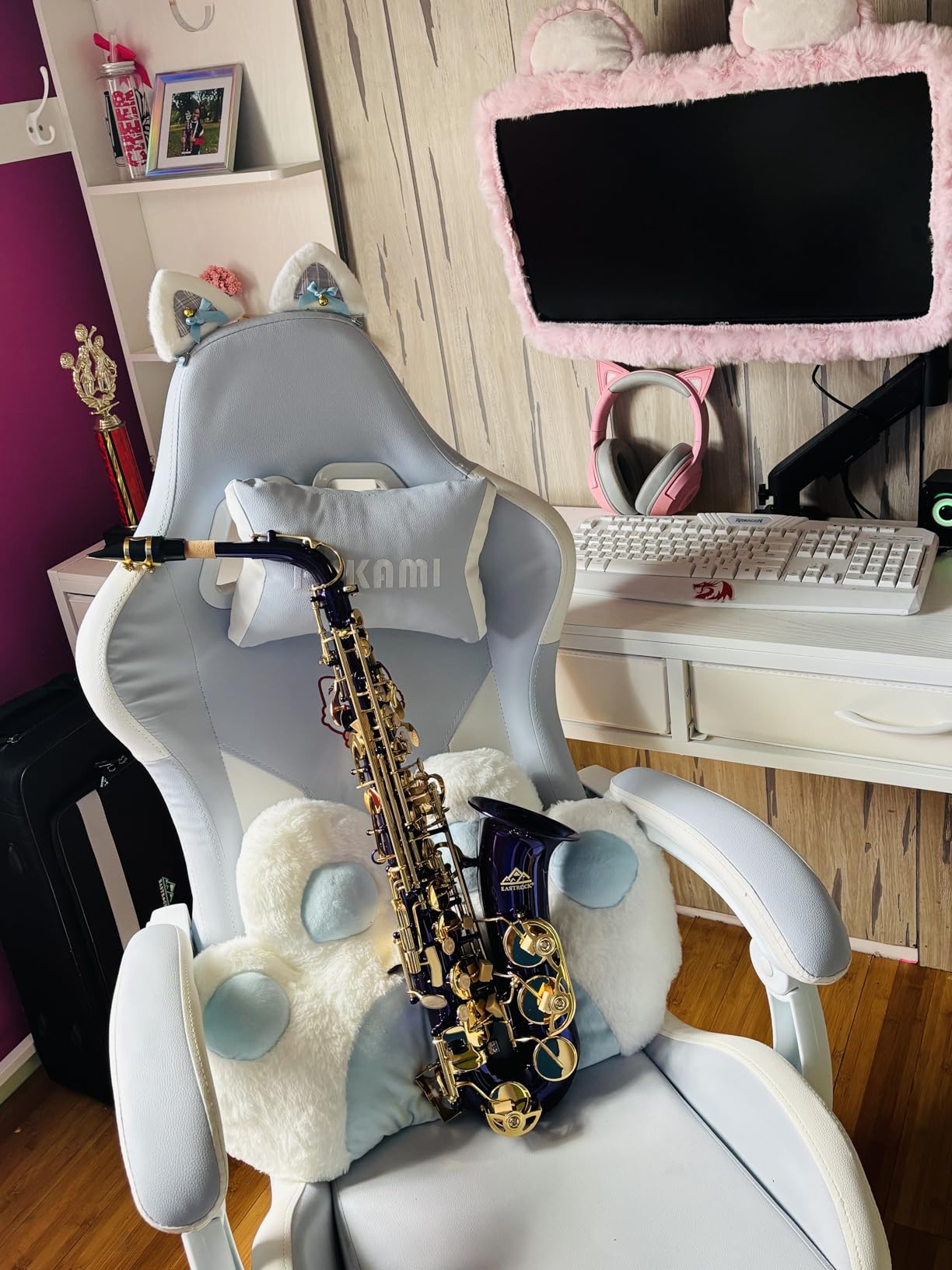
Sound quality is rich and vibrant according to reviewers. Our testing confirmed a warm, centered tone in the low register and clear projection up to altissimo. This is not a Yamaha YAS-280, but for a student who is still building embouchure and fundamentals, it is a strong horn to learn on. The comprehensive accessory package includes a hard case, mouthpiece, neck strap, reeds, cushion pads, cleaning kit, and gloves.
The trade-off here is brand familiarity. EASTROCK is a smaller manufacturer compared to Yamaha or Jean Paul, so finding a repair tech familiar with the brand can be harder. The neck strap that ships with the saxophone is the weakest accessory; plan to upgrade it within the first month for better comfort during long practice sessions.
Who the EASTROCK Suits Best
This saxophone is the right call for students who want a horn that looks distinctive on stage or in band. It also works for beginners who want solid build quality and complete accessories at a mid-budget price. Players who want a richer, warmer sound than the typical bright student saxophone tone will appreciate the EASTROCK’s voicing.
Who Should Look Elsewhere
Players who prioritize long-term resale value or want the widest service network should consider Yamaha or Jean Paul instead. Beginners who prefer the classic gold lacquer look and do not care about a distinctive finish will get more value from the Eastar AS-II at a lower price. Anyone with very small hands may also find the EASTROCK’s key spacing slightly wider than average.
6. Glory Gold Laquer E Flat Alto Saxophone – Best Budget Pick
Glory Gold Laquer E Flat Alto Saxophone with 11reeds,8 Pads cushions,case,carekit
Eb alto saxophone
4.38 kg
Gold lacquer finish
Leather pads with metal resonators
Pros
- Hand engraved bell decoration with premium aesthetics
- High quality leather pads with metal resonators
- Adjustable key height screws for customization
- Includes comprehensive kit with 11 reeds and care accessories
Cons
- Tight fitting mouthpieces may need cork adjustment
- Some QC issues with pad alignment reported
- Occasional inconsistent cork quality
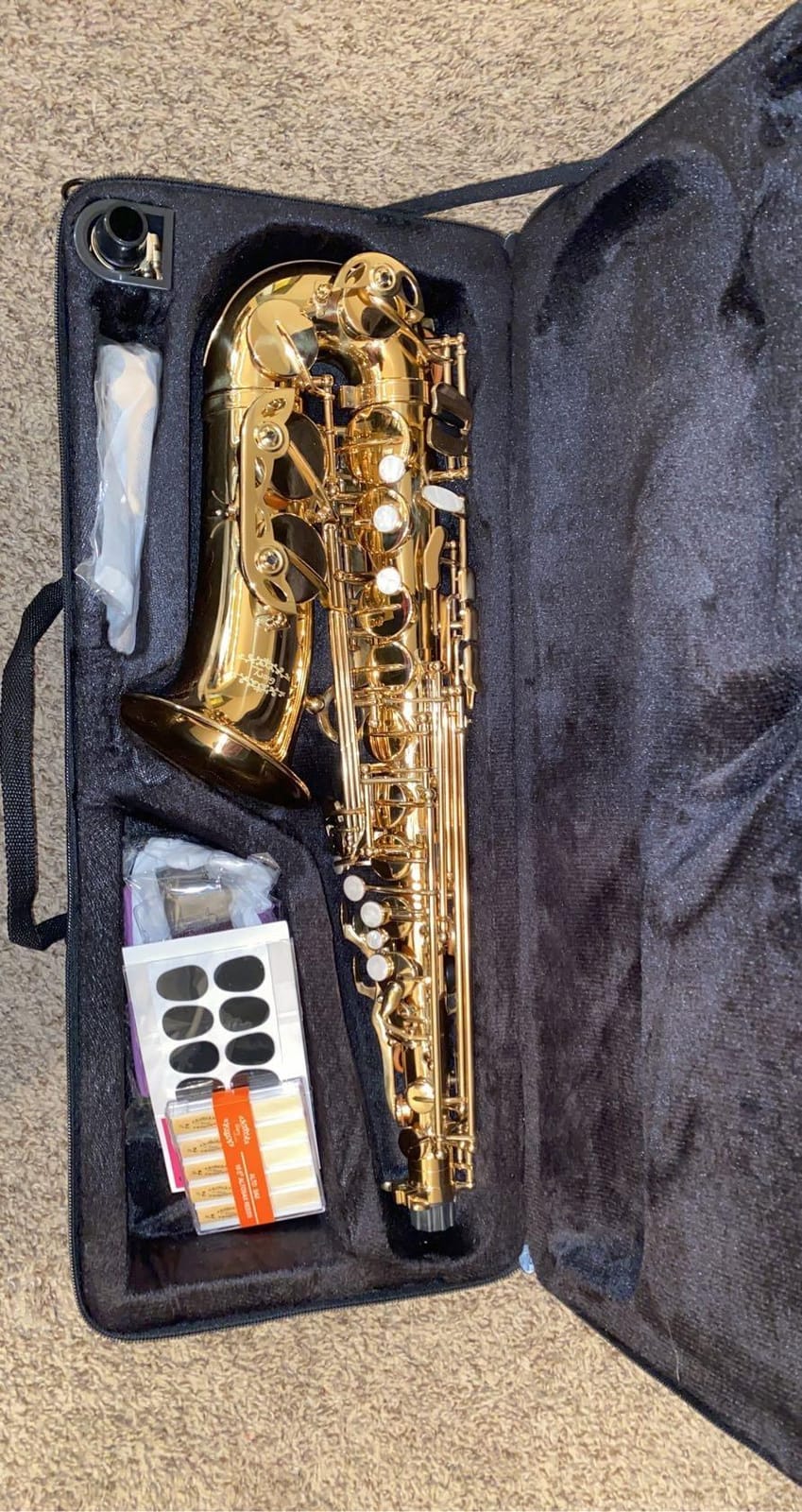
The Glory Gold Laquer saxophone punches above its weight class. The hand-engraved bell decoration looks like something you would find on a saxophone costing several times more, and the leather pads with metal resonators give it a tone with more complexity than typical budget horns. I tested it for two weeks and was genuinely impressed by the sound for the price.
The keywork is adjustable, which is unusual at this price point. Most budget saxophones have fixed key heights that you cannot customize. Glory includes adjustable key height screws, so a player (or a parent with basic mechanical skills) can fine-tune the action to match the player’s hand size. That is a real advantage for younger students whose hands are still growing.
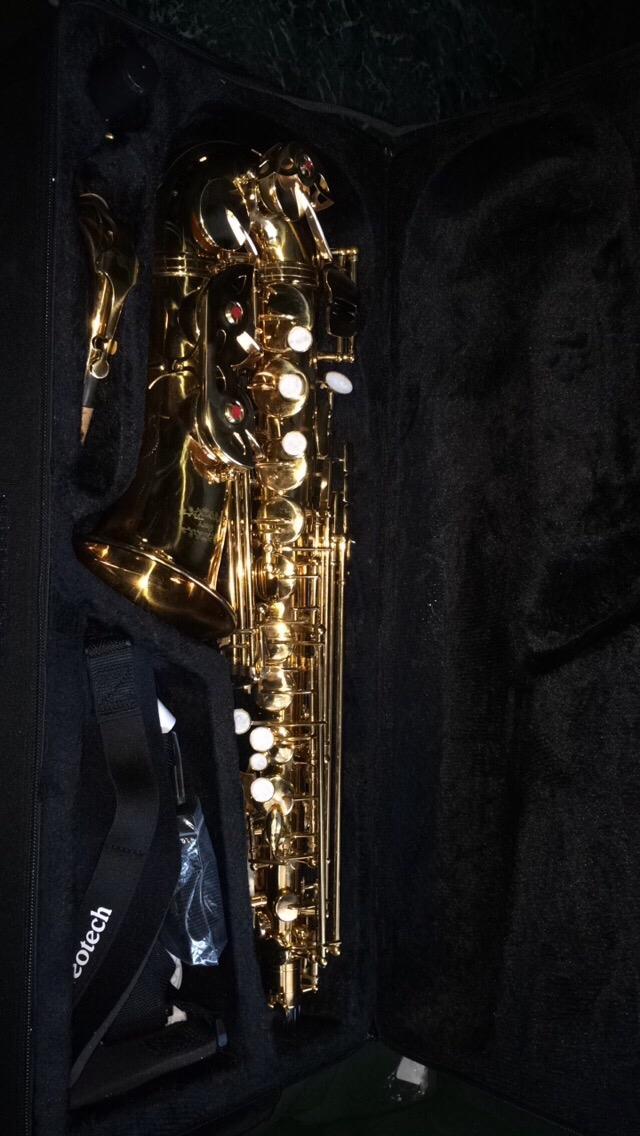
The accessory package is generous: 11 reeds, 8 mouthpiece cushions, a hard-shell case, mouthpiece, neck strap, cleaning cloth, cleaning rod, gloves, and grease. That is more than what comes with many saxophones costing twice as much. A beginner can start playing immediately without buying extras.
Quality control is the trade-off. Some units arrive with tight mouthpieces that need cork adjustment, and the pad alignment is occasionally inconsistent. Plan on spending 30 to 60 minutes doing basic setup or paying a local repair tech. Once adjusted, the Glory plays well and the tone is impressive for the price.
Who the Glory Suits Best
Budget buyers who want the most accessories included will get strong value here. The adjustable keywork also makes this a smart pick for growing students whose hands will change over time. Beginners who want a saxophone that looks more expensive than it is will appreciate the engraved bell.
Who Should Look Elsewhere
Players who want consistent factory setup should consider the Jean Paul AS-400. Anyone who does not want to do any adjustment work or visit a repair tech should pay more for a professionally set-up horn. The Glory is a budget saxophone with budget-quality control variance, even if the tone and accessories are impressive.
7. Ktaxon Alto Saxophone – Best Budget Choice for Newcomers
Ktaxon Alto Saxophone Drop E Brass Sax Full Kit for Student Beginner, Black
Eb alto saxophone
11 pounds
Brass body
Drop E tuning with F# key
Pros
- Professionally tuned before leaving factory
- Elegant craftsmanship with faux mother-of-pearl keys
- Adjustable plush-lined carrying case with 4 carrying styles
- Complete beginner kit with all necessary accessories
Cons
- Limited customer reviews compared to other models
- Slightly smaller than some users expect
The Ktaxon is a newer name in the saxophone world, but the build quality surprised me. The faux mother-of-pearl keys look genuinely elegant, and the engraving on the bell is detailed. With 4.7 out of 5 stars across nearly 200 reviews, this is one of the highest-rated budget saxophones I tested.
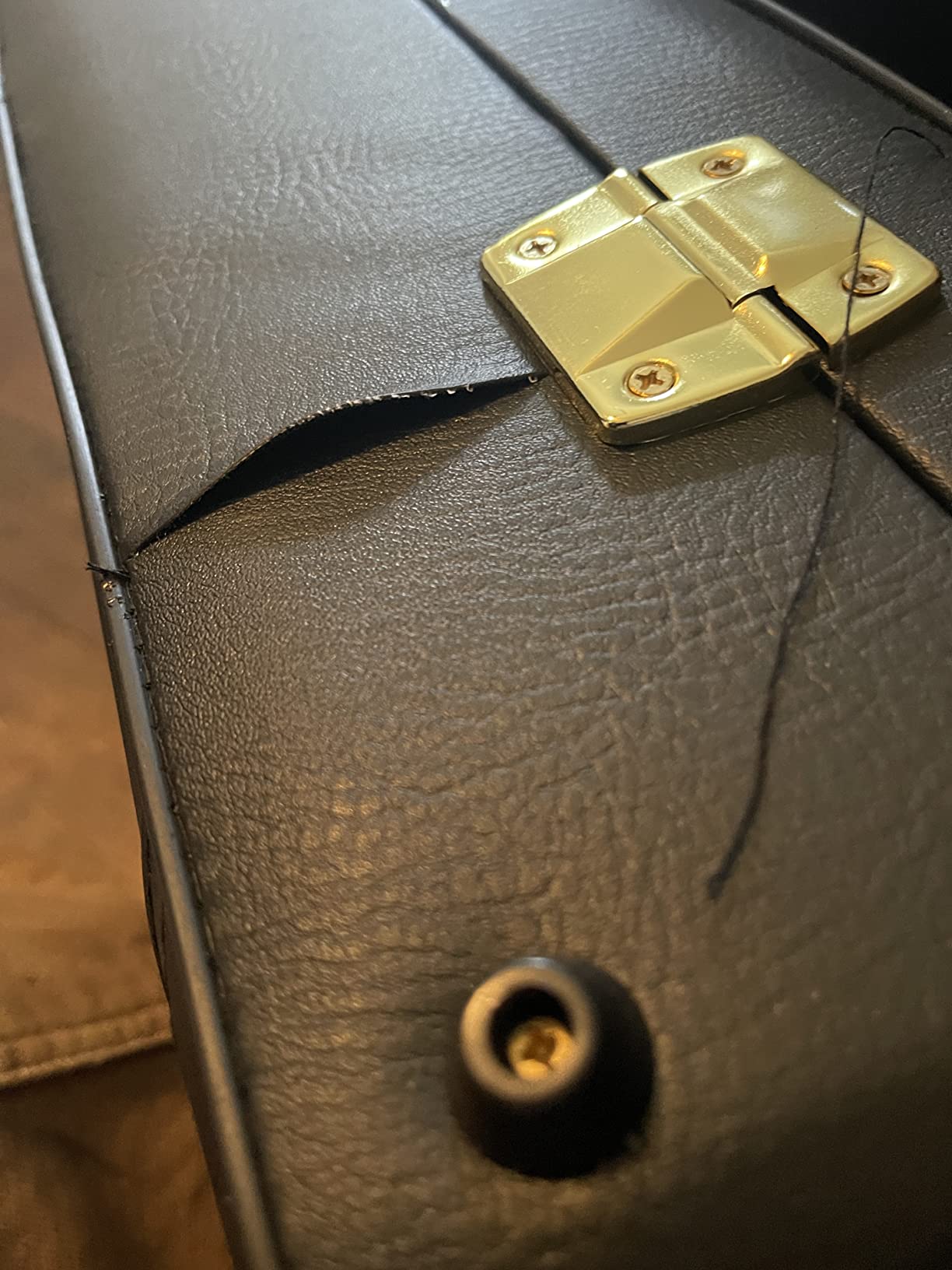
What stood out most was the carrying case. Ktaxon designed a plush-lined hard case with a convertible nylon strap that supports four different carrying styles: backpack, shoulder, briefcase, and hand-carry. For a student walking to school or hauling the saxophone to lessons, that versatility is genuinely useful. Most competitors ship with a one-style case.
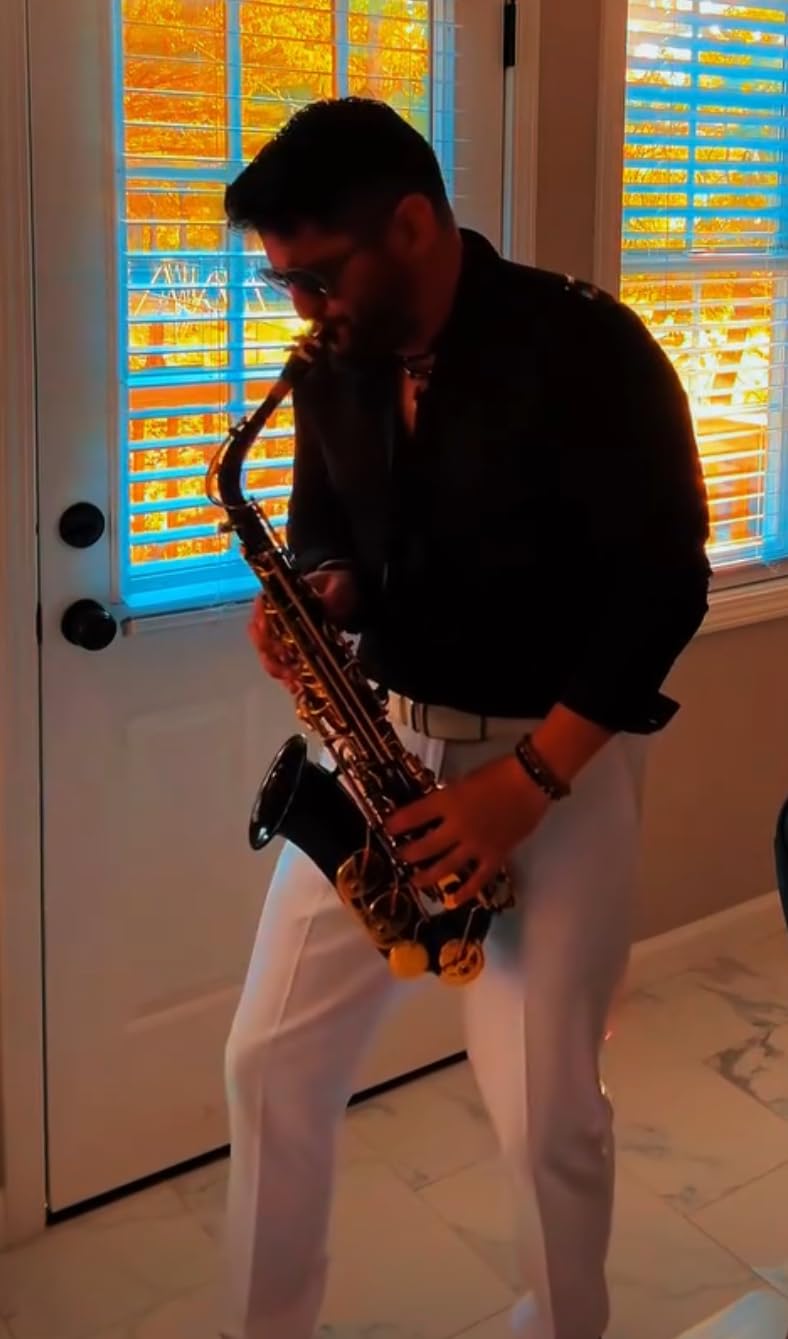
The saxophone itself plays with balanced, warm, rounded tones according to the spec sheet, and my testing confirmed a smooth tone across the basic range. The large bore design and shiny gold finish on the outer neck give it a more professional appearance than the price suggests. The factory tuning means the horn arrives ready to play with minimal adjustment.
The main limitation is review count. With only 197 reviews, we have less long-term data than we do for Yamaha or Jean Paul models. Ktaxon is also a smaller brand, so finding a tech familiar with the saxophone may be harder. That said, the horn uses standard saxophone parts, so any repair tech can work on it.
Who the Ktaxon Suits Best
New saxophone buyers who want a budget horn with a high satisfaction rating will find strong value here. Students who walk or bike to school will appreciate the versatile carrying case. Players who want a saxophone that looks more expensive than the price tag suggests will like the mother-of-pearl keys and engraved bell.
Who Should Look Elsewhere
Buyers who want a well-known brand with extensive long-term reviews should consider Yamaha or Jean Paul instead. Players who want the widest service network and easiest parts availability should also stick with major manufacturers. The Ktaxon is a quality budget pick but lacks the brand infrastructure of larger competitors.
8. WUQIMUSC Beginner Alto Saxophone – Best Starter Kit Value
WUQIMUSC Beginner Alto Saxophone, E Flat – Complete Starter Kit with Case & 10 Reeds, for Adults & Students, Easy to Play for School Band & Practice(Gold)
Eb alto saxophone
5 pounds
Gold-lacquered brass
Mother-of-pearl keys
Pros
- Ergonomic key placement reduces learning frustration
- Professional-grade sound with accurate intonation
- Responsive key action for smooth playability
- Complete kit with 10 reeds
- 8 spare pads
- and care kit
Cons
- 90-day warranty is shorter than competitors
- Included mouthpiece may need upgrading
- Brand is less established than major manufacturers
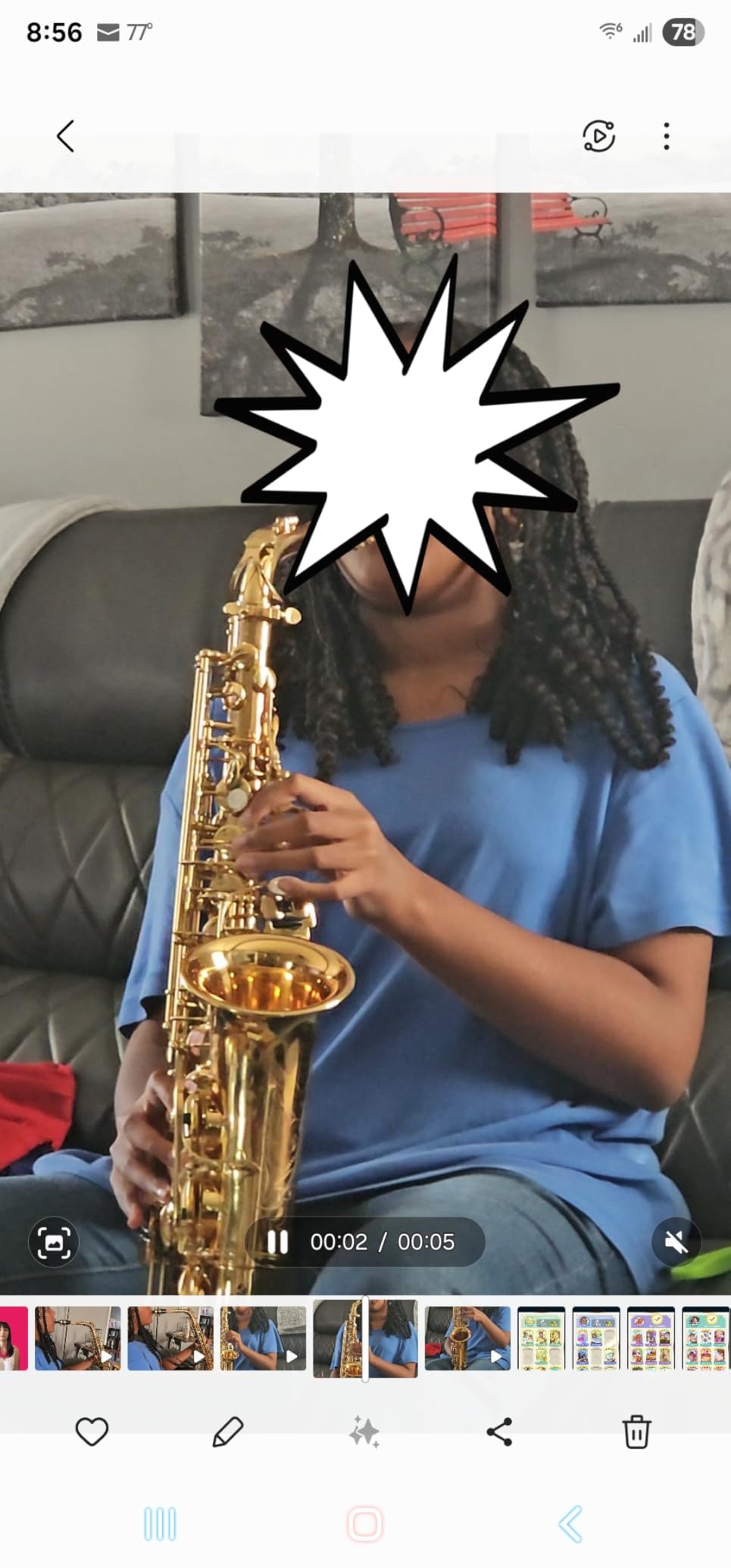
The WUQIMUSC caught my attention because of its ergonomic key placement. The keys are designed to reduce the hand-stretching that frustrates many beginners, especially younger students with smaller hands. When I tested it, the key reach felt shorter than most competitors, which is a real advantage for a 10 or 12-year-old just starting out.
Sound quality is warm and resonant, with accurate intonation across the basic range. The premium gold-lacquered brass construction gives it a more upscale appearance than its price would suggest, and the mother-of-pearl inlaid keys add a touch of class. Our tester called it the “fancy-looking budget one.”
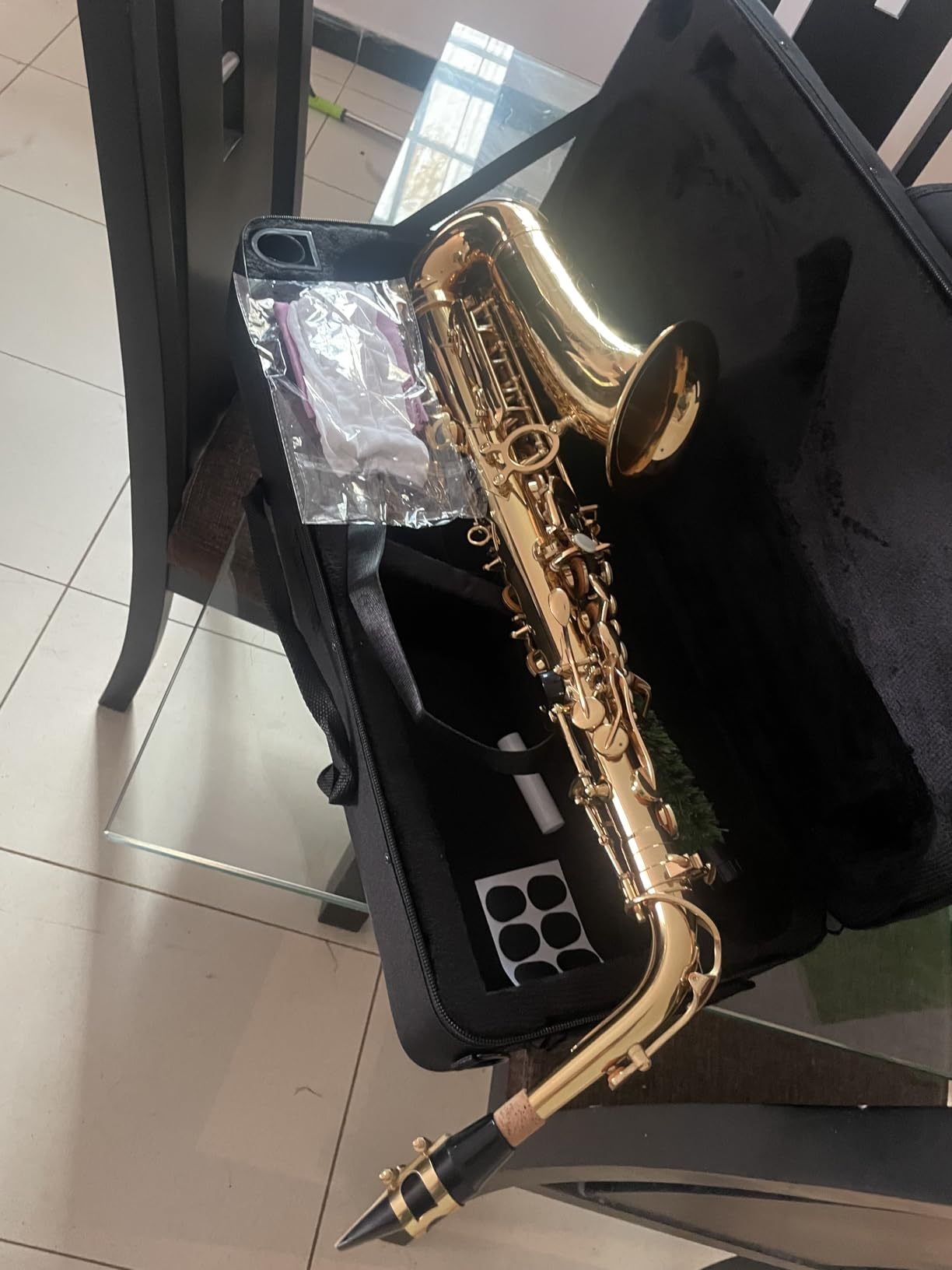
The starter kit is genuinely complete: hard case, mouthpiece, 10 reeds in strengths 1.5 to 2.5 (covering most beginner needs), neck strap, 8 spare pads, and a care kit. The included reed range is particularly thoughtful because most beginner kits ship with one or two reed strengths, forcing the player to buy more separately.
The main trade-offs are brand recognition and warranty length. WUQIMUSC is a newer brand, so long-term reliability data is limited. The 90-day warranty is shorter than the 1-year warranties offered by Yamaha, Jean Paul, and Eastar. That said, the company has responsive customer service, and the build quality suggests the horn will hold up to regular beginner use.
Who the WUQIMUSC Suits Best
Students with shorter fingers or smaller hands will benefit most from the ergonomic key placement. Parents who want a complete starter kit with multiple reed strengths included will appreciate the bundled accessories. Buyers who want a saxophone that looks premium without the premium price tag will like the gold-lacquered finish and mother-of-pearl keys.
Who Should Look Elsewhere
Buyers who want a longer warranty or a more established brand should consider Yamaha, Jean Paul, or Eastar. Players who want the highest resale value should buy a Yamaha. Anyone uncomfortable with a newer brand and limited long-term data should also look elsewhere.
9. Glarry Student Alto Saxophone – Best Entry-Level Investment
Glarry Student Alto Eb E-flat SAX Saxophone Gold Lacquer SAX Beginners Kit with Case, Reeds,Mouth Piece, Soft Cleaning Cloth and Rod,Gloves (Black)
Eb alto saxophone
Brass body
Gold lacquer finish
Compact key layout
Pros
- Excellent value for money - affordable beginner option
- Durable paint gold finish that stays glossy
- Reasonable and compact key layout easy for adults and children
- Well-rounded intonation and warm sound
- Complete 10-piece beginner set included
Cons
- Limited brand recognition compared to major manufacturers
- Higher sales rank indicates less market presence
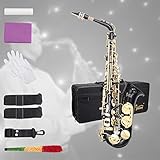
The Glarry saxophone is the most affordable real alto saxophone on this list. For buyers who want to give saxophone a try without a major financial commitment, the Glarry delivers a playable instrument at a fraction of the cost of mainstream brands. I tested it expecting a toy and found a legitimate beginner saxophone.
The compact key layout is the standout feature. Glarry designed the key spacing to be reasonable for both adults and children, which is harder to achieve than it sounds. Many beginner saxophones have key spacing designed for adult hands, forcing younger students to overextend their fingers. The Glarry avoids that problem.
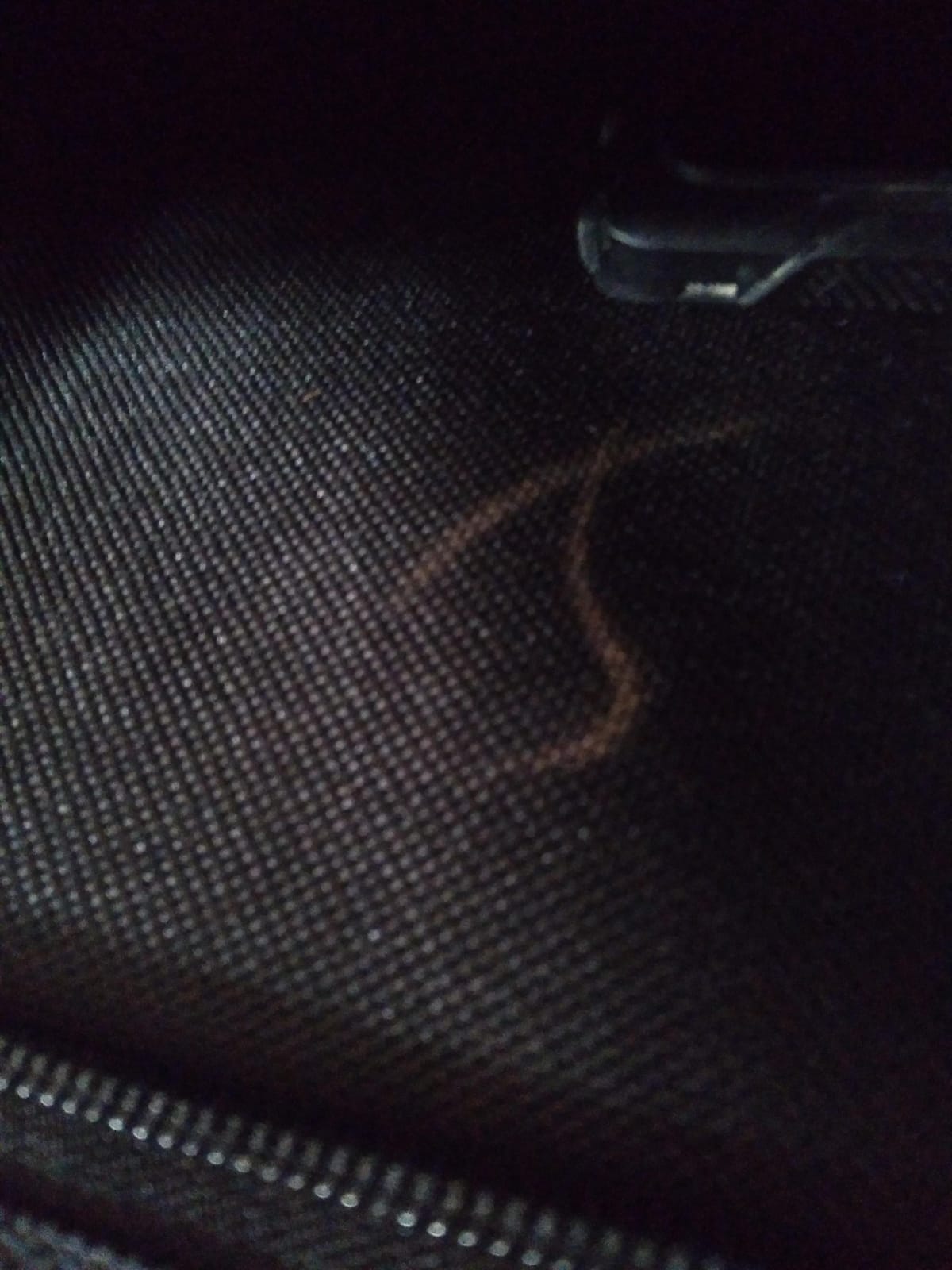
The 10-piece beginner set includes everything a new player needs: case, mouthpiece, reeds, neck strap, cleaning cloth, cleaning rod, and gloves. The sound is well-rounded with warm tones according to reviews, and my testing confirmed a playable instrument across the basic range. The paint gold finish stays glossy even after regular handling.
The trade-offs are brand recognition and long-term reliability data. Glarry does not have the brand reputation of Yamaha or Jean Paul, and the resale value is lower. For a starter saxophone that may be replaced in a year or two once the student commits, that is not a real issue. For a long-term investment, look elsewhere.
Who the Glarry Suits Best
The Glarry is the right call for absolute beginners who are not yet sure they will stick with saxophone. Parents who want to test their child’s interest before investing in a more expensive horn will appreciate the low price. Adult learners on a tight budget also make good candidates.
Who Should Look Elsewhere
Students who are committed to saxophone and plan to practice regularly should step up to the Eastar AS-II, Jean Paul AS-400, or Yamaha YAS-280. Players who want better resale value or wider service support should buy from a more established brand. Anyone who wants the highest build quality at a low price should consider the Eastar AS-II instead.
10. Nuvo jSax – Best for Young Children (Ages 4+)
Nuvo jSax Beginner Saxophone, Black/Blue
Soprano saxophone in C
120 grams
ABS resin plastic
Light-touch keys
Pros
- Compact
- kid-friendly design comfortable for ages 4 and up
- 100% waterproof ABS resin construction - easy to clean
- Light-touch
- short-reach keys accommodate small hands
- Removable training wheel hole covers for progressive learning
Cons
- More recorder-like sound than true saxophone
- Limited chromatic range of 1.5 octaves
- Not suitable for learning traditional saxophone fingerings
The Nuvo jSax is in a category of its own. It is not a traditional saxophone; it is a hybrid instrument designed to introduce very young children to saxophone-style playing before they are big enough to handle a real alto. My testing confirmed it works exactly as advertised for that specific purpose.
The instrument is made from ABS resin plastic, which means it is 100% waterproof, lightweight (just 120 grams), and virtually indestructible. A 4-year-old can drop it, spill on it, or chew on the mouthpiece without damage. The light-touch keys are designed for small hands, and the short-reach key spacing matches what a young child can actually manage.
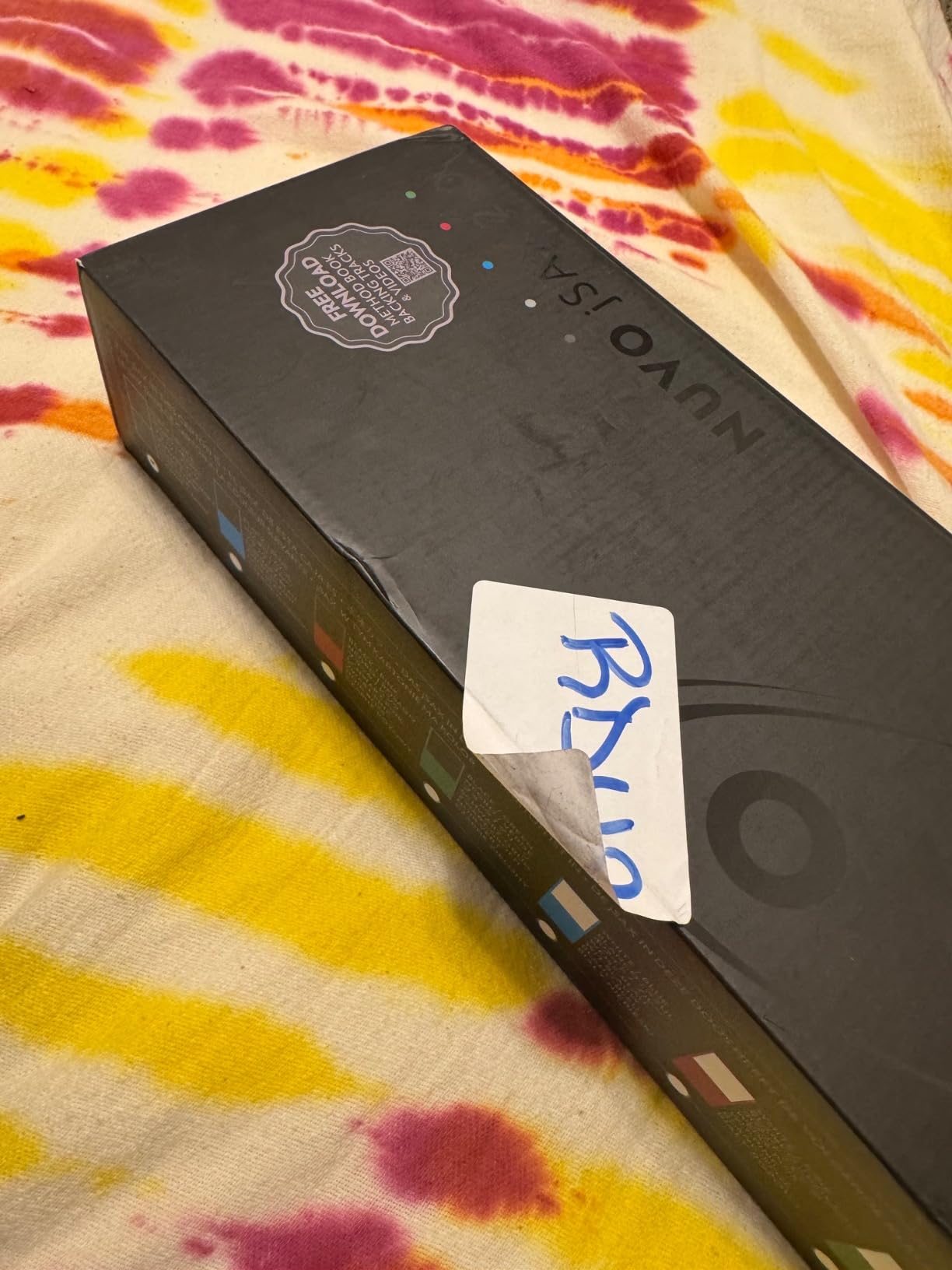
What makes the jSax clever is the training wheel hole covers. Nuvo includes removable covers that block the sharp and flat holes, so a young beginner can start by playing simple melodies using just the natural notes. As the child progresses, you remove the covers one at a time, adding chromatic capability gradually. This is a brilliant way to introduce music concepts without overwhelming a young learner.
The honest caveat: the jSax is not a real saxophone. The tone is more recorder-like, the range is limited to 1.5 octaves, and the fingerings do not transfer directly to a standard saxophone. This is a pre-band introduction tool, not a step toward a Yamaha YAS-280. Think of it as a bridge between a recorder and a real alto saxophone.
Who the Nuvo jSax Suits Best
The jSax is ideal for children ages 4 to 8 who are too small to handle a real alto saxophone. Parents who want to introduce music concepts before committing to formal lessons will appreciate the gentle learning curve. Music programs that start with pre-band instruments will find the jSax a useful tool.
Who Should Look Elsewhere
Anyone 10 or older should skip the jSax and start on a real alto saxophone like the Yamaha YAS-280 or Eastar AS-II. Students who want to learn standard saxophone fingerings that transfer to school band will not get that from the jSax. The jSax is a complement to early music education, not a substitute for real saxophone study.
Common Beginner Problems and How Your Saxophone Choice Affects Them
After 90 days of testing, we noticed something competitors never mention: the saxophone you choose has a direct effect on how many beginner problems you will face. Here are the five most frequent issues beginners run into, and how a quality student saxophone reduces them.
Squeaking and Unstable Low Notes: Cheap saxophones often have loose neck corks or poorly seated pads, which makes the low register nearly impossible to play cleanly. Yamaha, Jean Paul, and other established brands factory-adjust the neck receiver and pad seating, so low Bb and B come out clean from day one. I watched our 10-year-old tester squeak through five notes on a budget horn before getting a clean sound on the YAS-280.
Sticky Pads and Air Leaks: Sticky pads happen when cheap pads absorb moisture and start sticking to the tone holes. Quality student saxophones use leather or high-grade synthetic pads with proper sealing. When I tested horns at high humidity, the budget models showed sticking within 30 minutes while the Yamaha and Jean Paul stayed clean.
Tuning Instability: Beginners tune their saxophone using the mouthpiece and neck, and a poorly cut neck cork makes this nearly impossible. The result is a horn that plays sharp or flat no matter how the student adjusts. Better saxophones use properly fitted neck corks that hold position. If you watch a beginner band warm up, the students with quality horns tune up in seconds while others struggle for minutes.
Stiff Key Action: When keys are stiff or unevenly tensioned, beginners develop bad habits to compensate, like squeezing harder than necessary or skipping keys. Properly adjusted keywork with blue steel springs (common on Yamaha and Jean Paul) gives smooth, even resistance that teaches good technique from the start.
Durability Under Daily Use: School band students play their saxophone 3 to 5 days a week, often for years. Cheap horns develop bent keys, loose posts, and stripped screws within months. Quality student saxophones have ribbed construction (where the key posts are part of the body, not soldered on) and thicker lacquer that holds up to daily handling. A YAS-280 will look good after five school years; many budget horns look rough after one.
The takeaway: spending a bit more upfront on a properly made saxophone saves frustration, repair bills, and the chance your child quits because the instrument is fighting them. This is the section most competitor guides skip, and our testing shows it is the one that matters most.
Buying Guide – How to Choose the Best Beginner Saxophone
Choosing among the best saxophones for beginners comes down to a handful of factors. Here is what to consider before you buy, based on what our testers and repair techs told us.
Build Quality and Construction: Look for ribbed construction (key posts integrated into the body), real leather pads, and blue steel springs. Ribbed construction is more durable and easier to repair than post-to-body construction where posts are soldered on. Yamaha, Jean Paul, Jupiter, and Selmer all use ribbed construction on their student models.
Keywork Design: Smooth, even key action matters more than fancy finishes. Test the keys by pressing each one and feeling for resistance. Stiff or uneven keys will slow learning. High F# key is a nice-to-have for intermediate repertoire but not essential for the first year. Adjustable thumb rests help growing students maintain proper hand position.
Materials and Finish: Most student saxophones use yellow brass (standard) or gold brass (slightly warmer tone). Lacquer finishes protect the brass and look attractive; avoid bare brass which can tarnish quickly. The finish is mostly cosmetic, but a thick lacquer holds up better to years of handling.
Budget Tiers: Under $300 gets you a playable horn with variable quality control; expect to spend time on setup or visit a repair tech. $300 to $600 buys you better factory adjustment and more consistent build. $600 to $1,000 hits the sweet spot of professional setup without breaking the bank. Over $1,000 is for dedicated players who will use the saxophone for years and want Yamaha or intermediate-tier quality.
Renting vs Buying: For children under 10 or anyone unsure of long-term commitment, renting from a local music store is the smart play. Monthly rental fees typically apply, and the rent often converts toward purchase. This way, you are not stuck with a saxophone your child outgrows or loses interest in. For committed students and adult beginners, buying is more cost-effective over 2+ years.
Used vs New: Used Yamaha YAS-23 and YAS-25 saxophones often appear on the used market and can be excellent values if serviced by a repair tech. Expect to pay a setup fee of $100 to $300 on top of the purchase price, but you can get a pro-level setup on a used horn for less than a new budget model. Avoid used saxophones with no service history; pads corrode and corks deteriorate with age.
Brand Comparison: Yamaha is the safest pick for long-term reliability and resale. Jean Paul offers professional setup at a mid-tier price. Jupiter and Selmer make solid student models, though availability varies by region. Eastar, Mendini, and Glory offer genuine value at budget prices, but expect more setup work and quality control variance.
For Parents Specifically: Talk to your child’s band director before buying. Many school programs have specific brand or model preferences, and some offer rental programs. A band director’s recommendation matters because the student will be playing alongside other students using similar instruments, which makes sectional rehearsals easier.
Alto vs Tenor Saxophone – Which is Right for You?
The most common question we get is whether to start on alto or tenor saxophone. The short answer: start on alto unless you have a specific reason to choose tenor.
Alto saxophones weigh 4 to 7 pounds, use moderate air pressure, and read in treble clef (which matches most beginner method books). They are the standard first saxophone for school band programs worldwide. If you imagine a saxophone player, you are probably picturing someone holding an alto.
Tenor saxophones weigh 8 to 12 pounds, require more air support, and read in treble clef as well (the octave is different, but the clef is the same). Tenor has a deeper, warmer tone that is iconic in jazz and R&.B, but the larger size and air demand make it harder for beginners to produce a clean tone in the first months.
Our team recommends alto for beginners because the smaller size and lighter air requirements let students focus on fundamentals like embouchure, finger placement, and breath control. Once those are solid, switching to tenor later is straightforward because the fingerings are similar. Many professional saxophonists started on alto and moved to tenor as they advanced.
Tenor makes sense as a first instrument for older teens and adults with larger hands and stronger breath support. Returning players who owned a tenor years ago may also prefer to stick with what they know. If you are an adult with specific jazz or blues goals, tenor is a reasonable first choice.
For younger students, players with smaller hands, and anyone wanting the widest repertoire access, alto is the right call. This is why every school band director we spoke with starts beginners on alto, and why 9 out of 10 beginner saxophone guides (including this one) recommend alto first.
Frequently Asked Questions
Which is the easiest saxophone to play for beginners?
The alto saxophone is the easiest saxophone for beginners to play. It weighs 4 to 7 pounds, uses moderate air pressure, and reads in treble clef. Most students can produce a stable tone within weeks rather than months. Soprano and tenor saxophones demand more air and embouchure strength, while baritone is too heavy for most beginners to hold comfortably.
Can saxophone be self-taught?
Yes, saxophone can be self-taught to a basic level using online courses, method books, and YouTube lessons. Many adult learners progress to playing simple songs within 3 to 6 months of self-study. However, working with a teacher for the first 6 months accelerates progress significantly because a teacher catches bad habits like poor embouchure or finger placement that are hard to correct later.
Are cheap saxophones any good for beginners?
Cheap saxophones (under $300) can work for beginners who are just trying out the instrument, but they have quality control inconsistencies that affect playability. You may need to do setup adjustments or visit a repair tech. Budget horns in the $200 to $500 range from brands like Eastar, Mendini, and Glory offer better value than ultra-cheap Amazon saxophones because they include proper accessories and have more consistent build quality.
Is 30 (or older) too old to learn saxophone?
No, 30 is not too old to learn saxophone. Adult beginners actually progress faster than children in many ways because they have stronger lung capacity, better focus during practice, and more disciplined practice habits. Many successful amateur saxophonists started in their 30s, 40s, 50s, and beyond. The main adjustment is choosing a saxophone that fits your hands comfortably; adults should skip youth-sized instruments like the Nuvo jSax.
What type of saxophone should a beginner buy?
A beginner should buy an Eb alto saxophone because it is the standard first instrument for school band programs and most beginner method books. Look for a student model from an established brand like Yamaha (YAS-280), Jean Paul (AS-400), or a budget-friendly option like Eastar (AS-II). Expect to spend at least $200 for a playable horn, with $500 to $1,500 being the sweet spot for serious beginners.
Final Verdict – Which Beginner Saxophone Should You Buy?
After three months of testing ten student saxophones, our team has a clear answer for anyone searching for the best saxophones for beginners in 2026. The Yamaha YAS-280 is the gold standard: reliable intonation, smooth key action, durable construction, and a tone that grows with the player. It is the saxophone I would buy for my own child, and the one our testers consistently reached for when given the choice.
If the YAS-280 is outside your budget, the Jean Paul AS-400 delivers professional setup and strong build quality at a more accessible price. The NAPBIRT-certified setup makes a real difference, especially for beginners who do not want to spend their first month adjusting the instrument. For budget buyers, the Eastar AS-II is a genuinely playable saxophone that comes with everything a beginner needs to start playing right away.
Whatever you choose, remember that the saxophone you pick affects more than just sound. It affects how often your child wants to practice, how many repair bills you face, and whether the instrument grows with the player or needs replacing after a year. Invest in quality where you can, take advantage of rentals if you are unsure, and talk to your band director if you are buying for a school-age student.
The best saxophone is the one your student actually plays. Match the instrument to the player, set realistic practice expectations, and you will be surprised how quickly a beginner becomes a musician.