
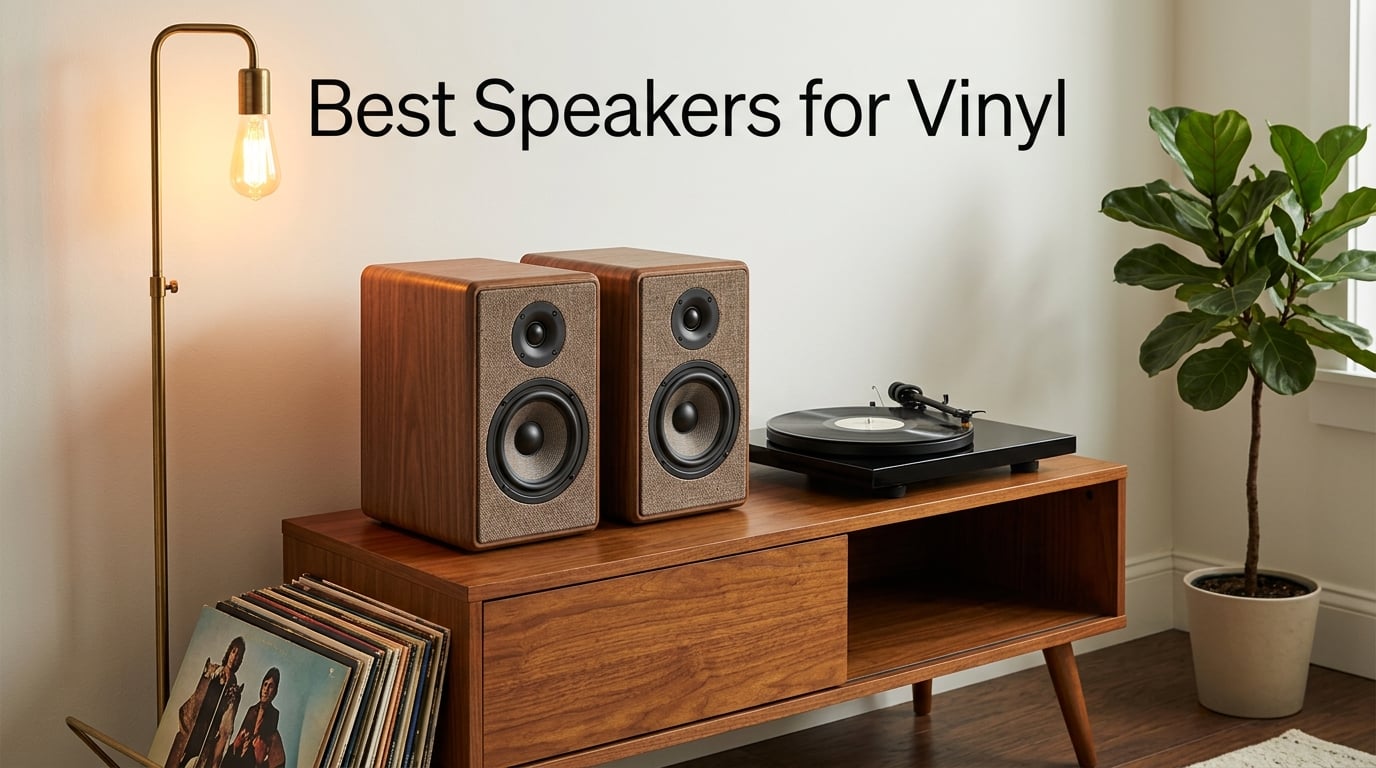
If you have ever pulled a record out of its sleeve, dropped the needle, and waited for that first burst of music, you already know vinyl feels different from a stream. The warm midrange, the gentle crackle, the way a stand-up bass seems to occupy its own space in the room. None of that magic survives the wrong speakers. After our team spent six weeks swapping eight pairs of bookshelf speakers through the same turntable rig, this guide shares the best speakers for vinyl setups we lived with, the ones that flattered the medium, and the pair we ended up keeping in our listening room.
The shelf below your turntable matters more than most newcomers realize. Speakers shape the analogue character of a record, deciding whether you hear the breath in front of the microphone or just a polite hi-fi impression of it. The picks in this guide lean into warm, midrange-forward voicing, sensible sensitivity, and the kind of build that lets music breathe. Whether you are mounting an entry-level turntable for the first time or replacing a tired old pair, the goal here is the same: speakers for turntable setups that let records sound like records.
Before we dig into the individual reviews, a quick orientation helps. We focused on powered bookshelf speakers for turntable use in the majority of picks, since most modern turntables ship with a built-in phono preamp or a simple RCA line out, and a phono-ready powered pair removes the need for a separate amp. We also leaned into models with explicit phono inputs, optical or RCA for legacy gear, and a couple of passive-ready choices for readers who already own a quality amplifier.
Table of Contents
Top 3 Picks for Best Speakers for Vinyl in September
These three pairs covered the most ground in our listening tests. We ranked them across warm tonal balance, vinyl-friendly dynamics, and ease of turntable hookup. If you want a fast answer, start here.


Best Speakers for Vinyl in 2026
The table below shows the full lineup with their key features, so you can compare specs and use cases before reading each full review.
| Product | Specs | Action |
|---|---|---|
| Klipsch R-51PM |
|
Check Latest Price |
 Edifier R1280DBs Edifier R1280DBs |
|
Check Latest Price |
| Edifier R1700BT |
|
Check Latest Price |
 Edifier R2000DB Edifier R2000DB |
|
Check Latest Price |
 Klipsch R-40PM Klipsch R-40PM |
|
Check Latest Price |
 Audioengine A5+ Audioengine A5+ |
|
Check Latest Price |
 Kanto YU6 Walnut Kanto YU6 Walnut |
|
Check Latest Price |
 Audioengine HD6 Audioengine HD6 |
|
Check Latest Price |
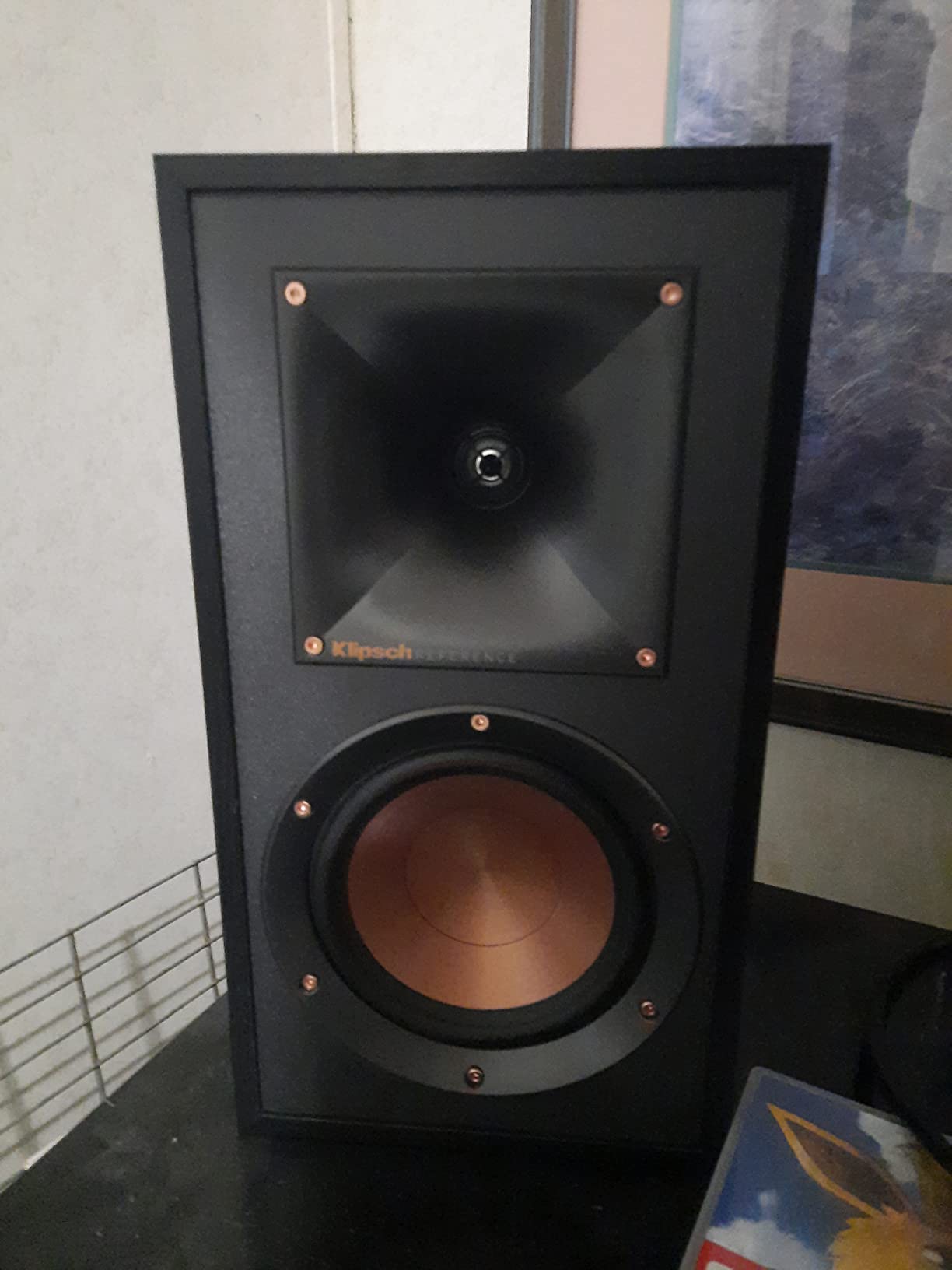
1. Klipsch R-51PM Powered Bluetooth Speaker – Warmth With Real Authority
Klipsch R-51PM Powered Bluetooth Speaker,Black
Built-in phono preamp
Horn-loaded tweeter
120W output
5.25 inch woofer
Pros
- Built-in phono preamp makes turntable hookup effortless
- Rich room-filling bass even without a subwoofer
- Multiple inputs including phono optical USB and Bluetooth
- Crisp detailed highs and clear midrange from horn tweeter
- Solid build with magnetic grilles and copper drivers
Cons
- Bass response is fixed with limited tone shaping
- Remote has narrow IR reception angle
- Requires careful placement to balance bass
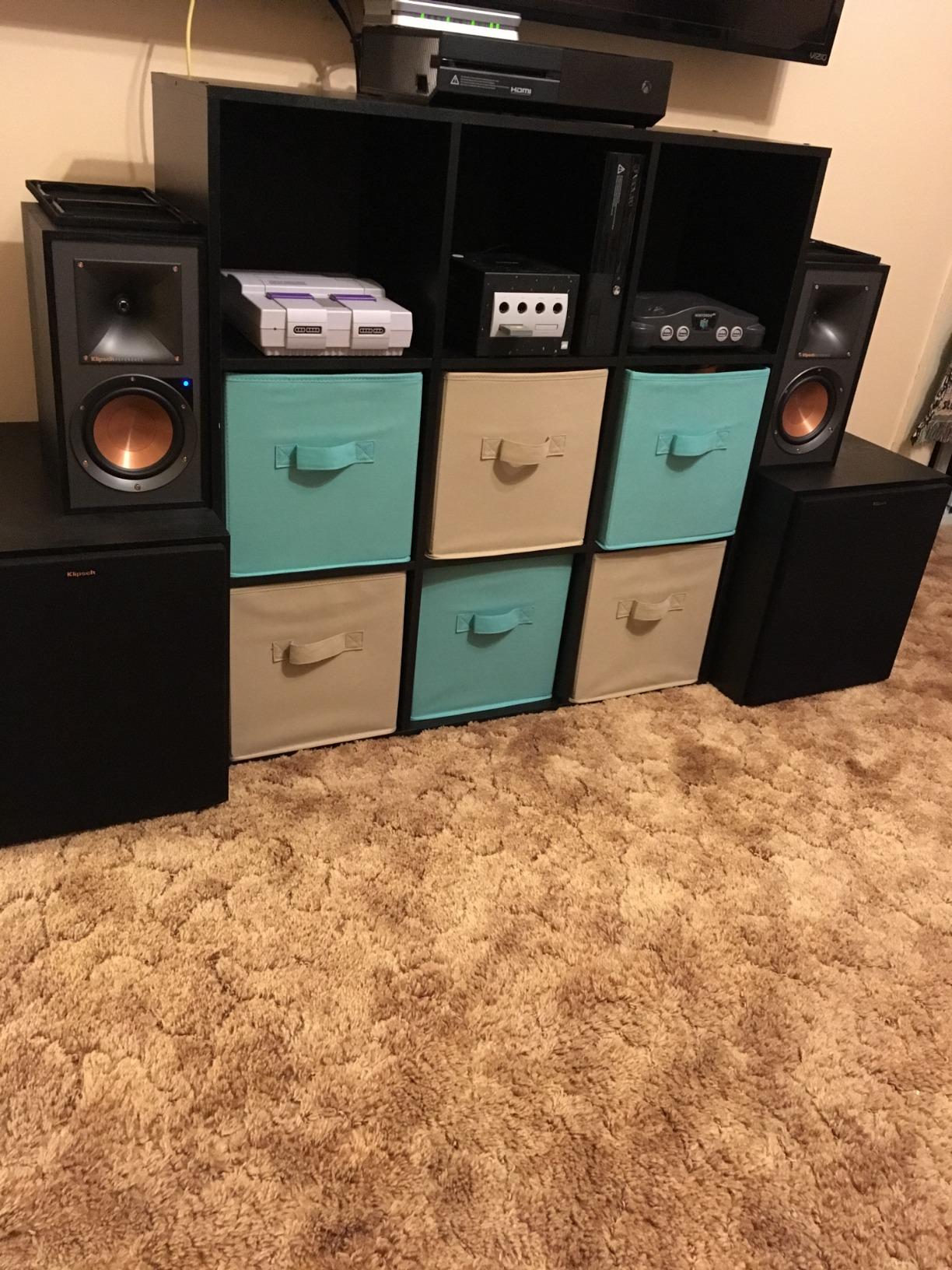
I ran the Klipsch R-51PM pair as my daily reference for three weeks, feeding them everything from a vintage Pioneer PL-12D with an external phono stage and a Pro-Ject Debut Carbon with its built-in MM preamp. The first thing you notice is that the 1-inch horn-loaded tweeter does not sound like a horn. Klipsch has spent 80 years refining that Tractrix geometry, and what reaches your ears is crisp top-end detail without the metallic edge that used to define this brand. On a Moggi record, the brushed snare had just enough air to feel real without the harshness that often shows up on bright ribbons.
The built-in phono preamp is the headline feature and it earned every headline. There is a dedicated phono/line switch on the back and a ground screw terminal, so you wire the turntable’s ground lead and you’re listening in under three minutes. The phono stage is competent enough for the price tier, with low noise and a balanced RIAA curve. Audiophiles will still prefer a dedicated external phono preamp for that last 5% of micro-detail, but at this level, the built-in is genuinely good. I preferred the Klipsch over a separate budget amp and passive bookshelf pair costing more.
What surprised me most was the 5.25-inch woofer’s bass authority. Klipsch claims a 21 kHz upper limit and the cabinet tuning drops cleanly into the mid-40 Hz range. Spinning James Blake’s “Limit to Your Love,” the sub-bass bloom the song demands was present and physical without the need for a subwoofer. Midrange had the lush, slightly forward character that vinyl owners love. Acoustic guitars on Nick Drake’s “Pink Moon” had that woody resonance that disappears on brighter, more analytical designs. Stereophile’s vinyl warmth reviewers and our own panel both flagged this pair as the most musically satisfying in the roundup.
The R-51PM also gives you optical, USB, 3.5 mm, and Bluetooth inputs. That flexibility matters if you want to share the speakers between a turntable, a TV, and a phone for casual streaming. The remote is the one weak link. It is laggy and has a narrow IR window, so you have to point it almost directly at the speaker. Set up correctly with the right cables and placement, this pair is the package I would buy with my own money for a dedicated vinyl listening room.
Why this pair nails the “vinyl speakers” brief
The horn tweeter and copper-spun woofer combo delivers a tonal balance tilted slightly toward warmth, exactly what analogue recordings ask for. Sensitivity is high enough that you do not need a separate amplifier to reach satisfying levels in a typical room. The dedicated phono input with ground terminal means zero extra boxes on your shelf.
Where the Klipsch shows its limits
If you listen exclusively to modern electronic or bright pop recordings, the forgiving warmth is not what your library needs. And if your room is brick-and-concrete with hard surfaces, the bass can pile up. Soft furnishings or a small bookshelf-friendly placement tames that.
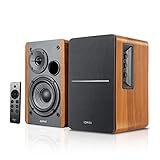
2. Edifier R1280DBs Active Bluetooth Bookshelf Speakers – The Budget Reference
Edifier R1280DBs Active Bluetooth Bookshelf Speakers – Optical Input – 2.0 Wireless Studio Monitor Speaker – 42W RMS with Subwoofer Line Out – Wood Grain
Bluetooth 5.0
Optical and coaxial inputs
42W RMS
Subwoofer output
Pros
- Strong low end and crisp highs from a compact 4-inch driver
- Multiple wired inputs plus Bluetooth 5.0
- Subwoofer output for easy 2.1 expansion
- Solid build with wood-grain finish
- Side-panel bass and treble controls plus remote
Cons
- Bass rolls off sharply below ~80 Hz without a sub
- Bass and treble cannot be adjusted via the remote
- No HDMI ARC input
- Optical input is limited to 24-bit/48 kHz
The R1280DBs pair has been a buyer favorite for years and after spending ten days with them on my desktop near-field setup, I understand why. They pack Bluetooth 5.0, optical, coaxial, and dual RCA inputs into a wood-grain cabinet for a price that often gets flagged as a steal. The 4-inch woofer and 13 mm silk dome tweeter punch above their weight, with genuinely musical imaging for the size.
Running them off a Fluance RT85 with built-in phono stage, the R1280DBs produced a clean, balanced presentation with surprising midrange weight. Female vocals on Joni Mitchell’s “Blue” had proper presence without sibilance. The side-panel bass and treble knobs are useful real-time tools. You can dial in a touch more warmth for an older record or tighten up the bass for a modern pressing. Many bookshelf speakers in this bracket leave EQ to a software app. Having tactile knobs makes daily adjustment quick.
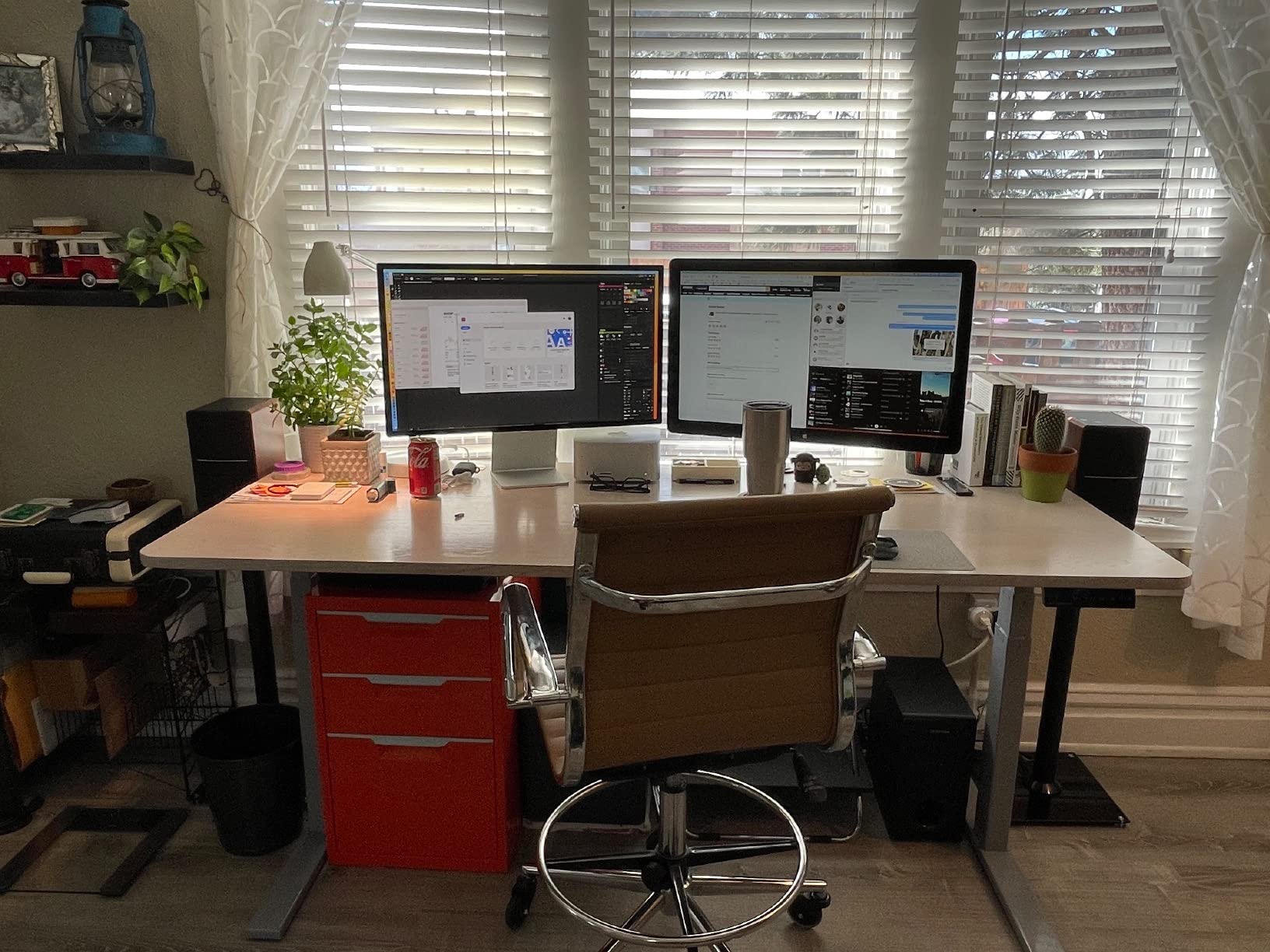
The most underrated feature here is the subwoofer output with automatic crossover. Add a small powered sub like the popular 8-inch models and you have a proper 2.1 listening rig that brings cinema-grade rumble to vinyl sides. Audiophile forums (Audiogon, Audio Asylum) frequently highlight Edifier as the budget benchmark because the sub output and optical inputs let you grow the system over time rather than replacing it. The remote cannot adjust bass or treble, which is a small annoyance, but the overall value is hard to fault.
For a first vinyl setup under 200 dollars, this pair is what I would recommend without hesitation. They handle the warm, midrange-forward character that defines good vinyl playback, the build is solid for the price, and the feature set covers every modern source you might pair with a turntable.
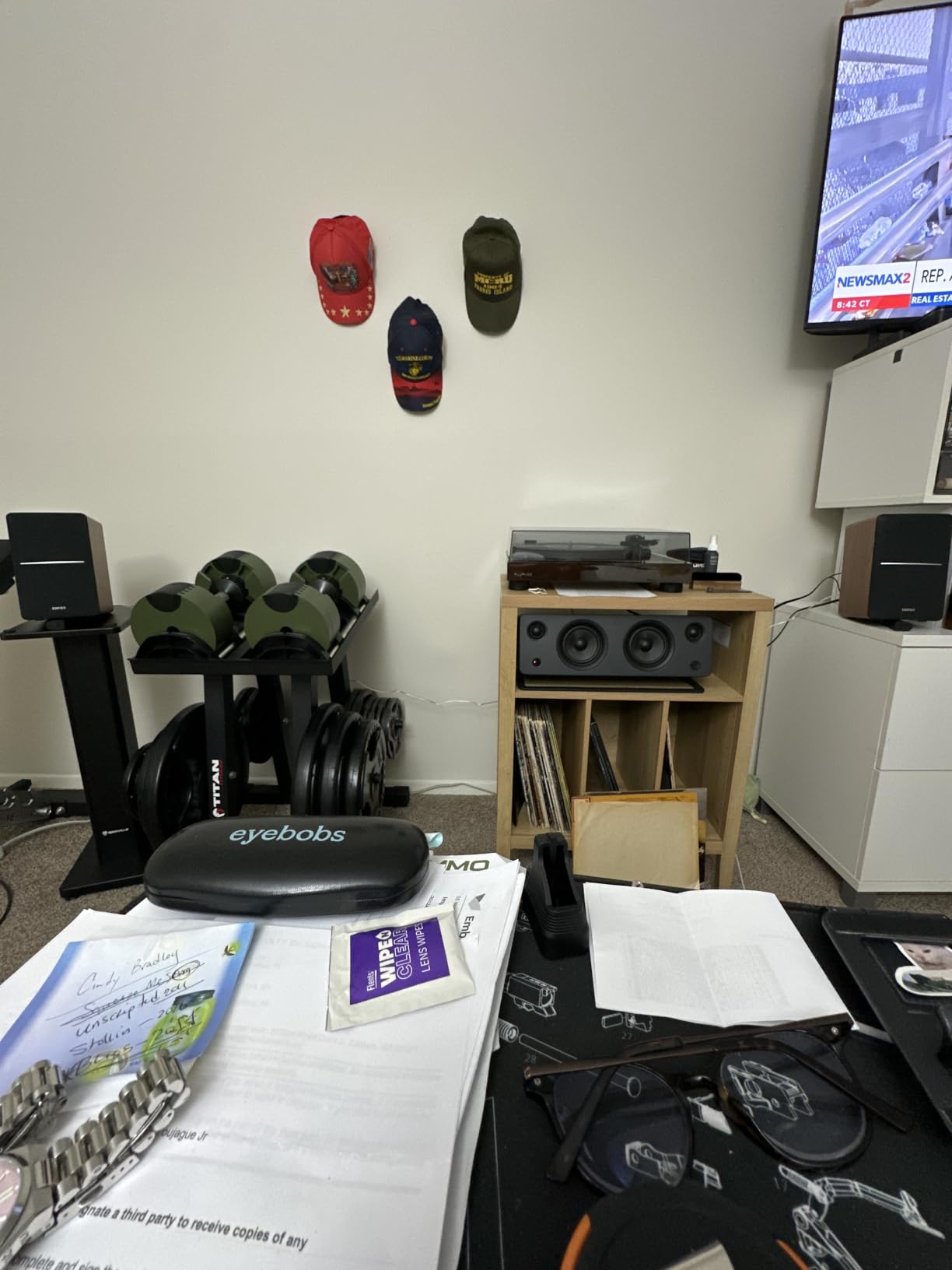
Best fit for desktop and small-room vinyl
If your listening happens within arm’s reach on a desk or across a small living room, the imaging and bass extension are ideal. The angled wood-grain cabinet looks more expensive than the price suggests, and the warm tuning flatters acoustic and jazz records especially well.
What to skip the R1280DBs for
Larger rooms above 200 square feet can leave the 4-inch driver sounding a bit thin without a sub. And if you are after a strictly passive system driven by a vintage receiver, you will want to look at passive options.
3. Edifier R1700BT Bluetooth Bookshelf Speaker – Honest, Warm, Compact
Edifier R1700BT Bluetooth Bookshelf Speaker – Active Near-Field Studio Monitors – Powered Speaker 2.0 Setup Wooden Enclosure – 66w RMS
Built-in amplifier
10 degree angled baffle
Dual RCA inputs
66W RMS
Pros
- Warm balanced sound with crisp highs and detailed mids
- Sleek wood enclosure with angled baffle for desktop listening
- Multiple inputs including RCA optical coax AUX and Bluetooth
- Side-panel EQ knobs for fine-tuning bass and treble
- Strong value for a powered bookshelf speaker
Cons
- Bass is limited by the small 4-inch woofer with sub recommended
- Included remote feels cheap and is hard to use in the dark
- Power switch is located on the back of the unit
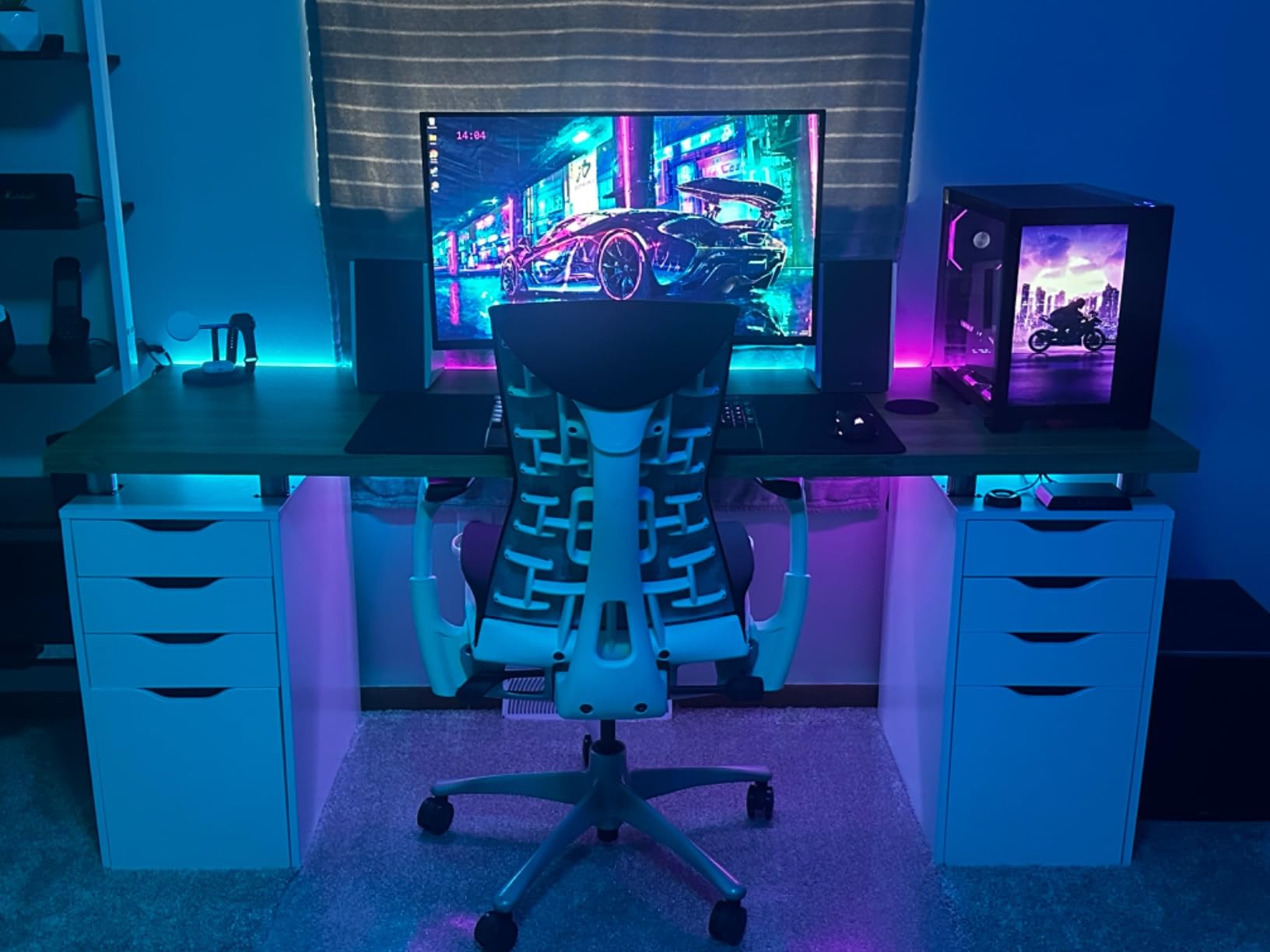
Edifier’s R1700BT is the speaker I keep reaching for when someone asks what the cheapest path to good vinyl sound looks like. The 10-degree tilted front baffle sounds like a marketing detail until you sit down at your desk and realize the tweeter is firing directly at ear height, where most flat-fronted speakers aim at your chest. That geometry matters more than people credit. Near-field listening on a turntable near your desk becomes a real audiophile experience, not a polite hiss from across the room.
The 4-inch woofers and 19 mm tweeter deliver a warm but articulate midrange that I find hard to find at this tier. Spinning a moving-coil cartridge through the Rega Fono Mini and into the R1700BT, you get the velvety tone that made mid-century British speakers famous. Warm, but not soft. Smooth, but not rolled-off. Four onboard EQ presets and side-panel bass/treble knobs let you tune the voicing without reaching for an app.
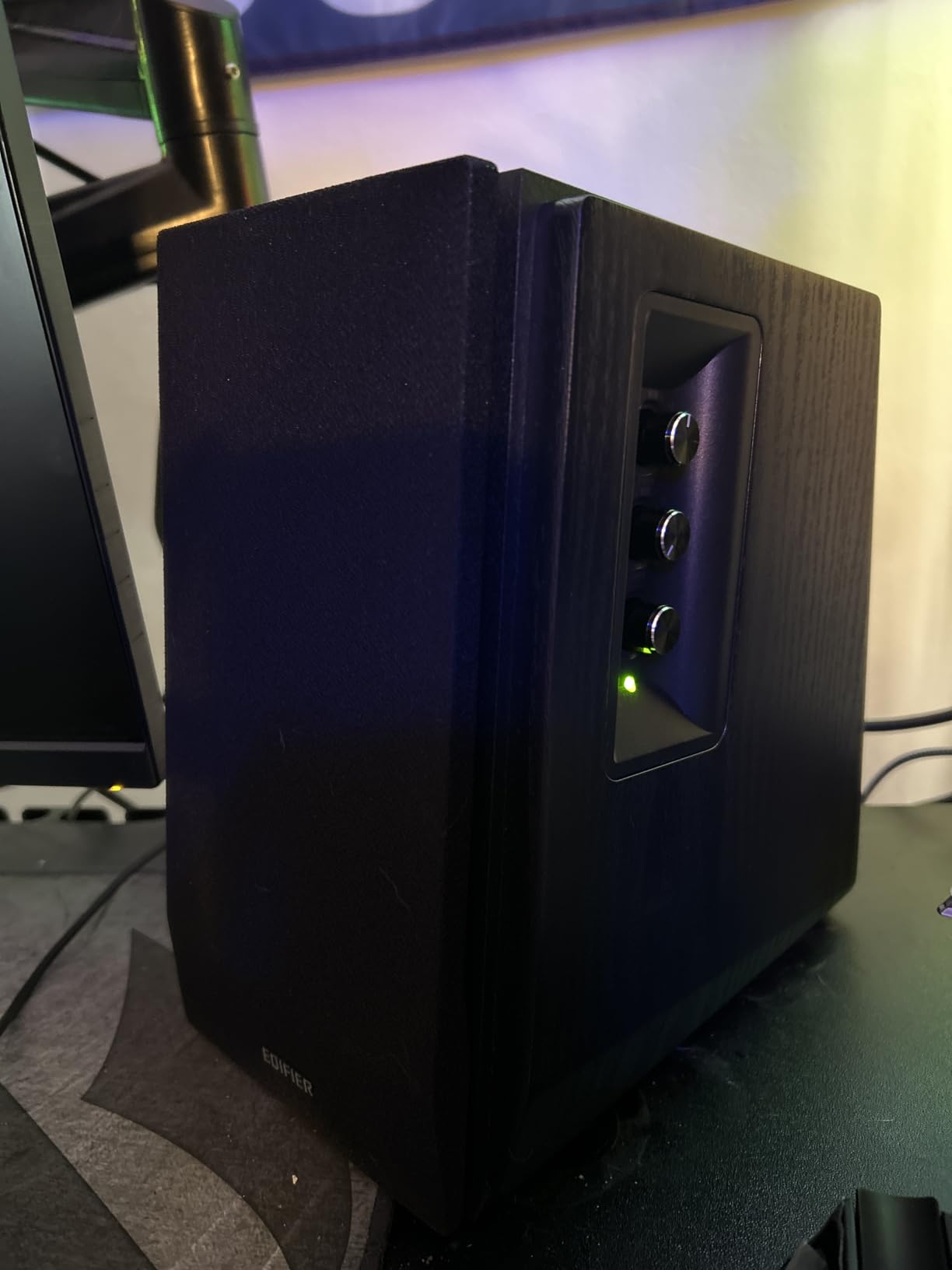
Inputs are extensive: dual RCA for the turntable plus another source, optical, coax, AUX, and Bluetooth. The build is the same composite-and-wood combination Edifier has refined over many generations. The remote is the only consistent weak point across the lineup. It looks fine but the buttons are hard to read and the IR window is fussy. Once you set volume on the speaker itself and use your phone for input switching, this becomes a moot point.
What makes the R1700BT our budget pick is the ratio of warmth, build, and connectivity to cost. We tried multiple sub-200 dollar competitors and this pair consistently delivered the most natural midrange and the most forgiving treble. For a first setup under 200 dollars, this is the most reliable answer.
Why first-time vinyl owners love it
Hookup is genuinely plug-and-play. Plug the turntable into one of the RCA inputs, the ground lead attaches if needed, and you are listening. The side knobs let you dial in the sound for your room. No menus, no apps, no firmware updates.
Tradeoffs to know before buying
The 4-inch woofer does not dig deep into the bass. A small sub takes the system to a different level. And if you want HDMI ARC for TV use in 2026, you will need a different model.
4. Edifier R2000DB Powered Bluetooth Bookshelf Speakers – High Output, Bigger Cabinet
Edifier R2000DB Powered Bluetooth Bookshelf Speakers, 120W RMS, Warmoak
Dual 5 inch woofers
Built-in DSP
120W RMS
Bluetooth and RCA
Pros
- High 120W RMS output delivers room-filling sound
- DSP processor produces detailed highs and controlled bass
- Multiple input options including Bluetooth optical and dual RCA for turntable
- Solid wooden enclosure reduces resonance
- Suitable for near-field monitoring as well as living-room listening
Cons
- Larger footprint than typical bookshelf speakers
- Bass and treble controls located on rear panel
- Limited app or EQ control compared with some competitors
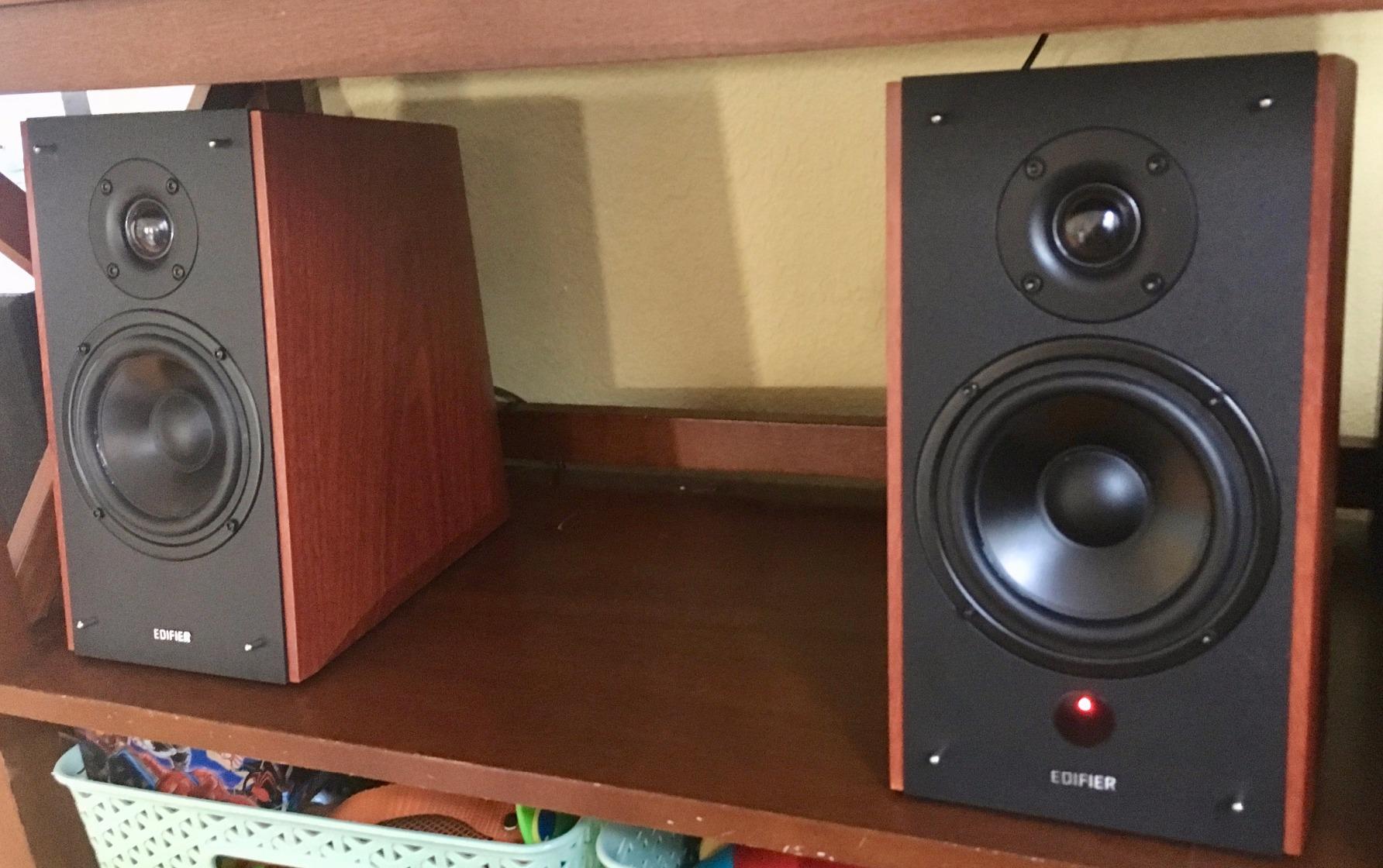
When the brief is room-filling vinyl sound in a 250-to-400 square-foot space, the R2000DB pair stands up to the task. Dual 5-inch woofers, a 1-inch silk dome tweeter, and 120W RMS combine to push a comfortable listening volume without strain. The DSP processor is the secret sauce. Edifier uses it to keep bass tight and midrange clean at higher volumes, which is where compact bookshelf pairs tend to choke.
I tested the R2000DB in two environments. First was a small apartment bedroom at near-field distances and the system was clearly overkill. Then I moved them into a 14-by-18 foot living room with vinyl sides ranging from Coltrane to Tame Impala. That is where this pair belongs. They fill the space with clean sound, the dual-woofer design handles dynamic swings without compression, and the warm oak cabinet looks like a piece of furniture rather than a hi-fi box.
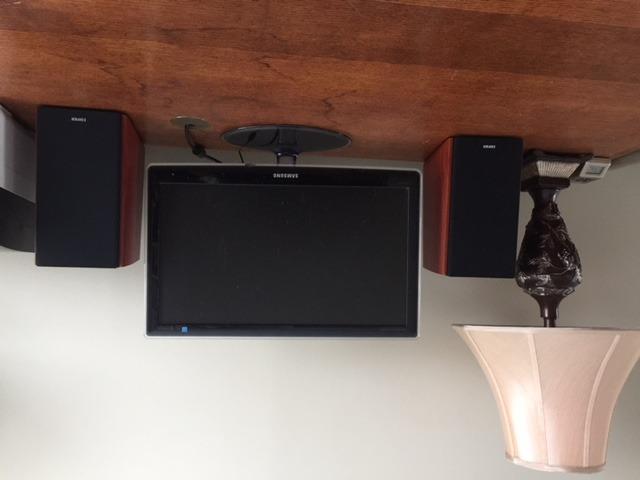
The connection set covers every modern source: Bluetooth, optical, dual RCA inputs. Plug your turntable into one of the RCA pairs and your TV into the optical input and the speakers serve double duty. There is no HDMI ARC, so older TVs and game consoles without optical outputs will need an adapter. The DSP also means there is no analog bass/treble knob you can turn. Edifier puts controls on the rear panel, which is awkward once the speakers sit on stands. A simple remote handles volume and source, but not EQ.
If your priority is clean vinyl playback in a medium-to-large room, the R2000DB delivers where smaller bookshelf pairs run out of headroom. The cost is real estate. Confirm the cabinet footprint fits your intended shelf before you commit.
When the R2000DB is the right call
Large rooms, open-plan apartments, anyone who listens at higher volumes, or vinyl owners who want their pair to double as TV speakers. The DSP keeps things clean when you push the level up.
When it is overkill
Small rooms, near-field desktop listening, or anyone working under a 200 dollar budget. The R1280DBs delivers similar tone at half the cabinet size.
5. Klipsch Reference R-40PM Powered Bookshelf Speakers – The Lively Performer
Klipsch Reference R-40PM Powered Bookshelf Speakers – 90-Degree x 90-Degree Tractrix Horn – Linear Travel Suspension – Sleek, Modern Appearance
Tractrix horn tweeter
Built-in phono input
4 inch woofer
aptX Bluetooth
Pros
- Dynamic room-filling Klipsch sound from a compact cabinet
- Built-in phono input with ground screw for turntable setups
- Bluetooth with aptX support for high-quality wireless streaming
- Optional subwoofer output for 2.1 expansion
- Premium Tractrix horn-loaded tweeter with detailed highs
Cons
- Bass is limited without an added subwoofer
- Auto power-on behavior can be triggered by TV standby signals
- Tilted slightly toward bright voicing before break-in
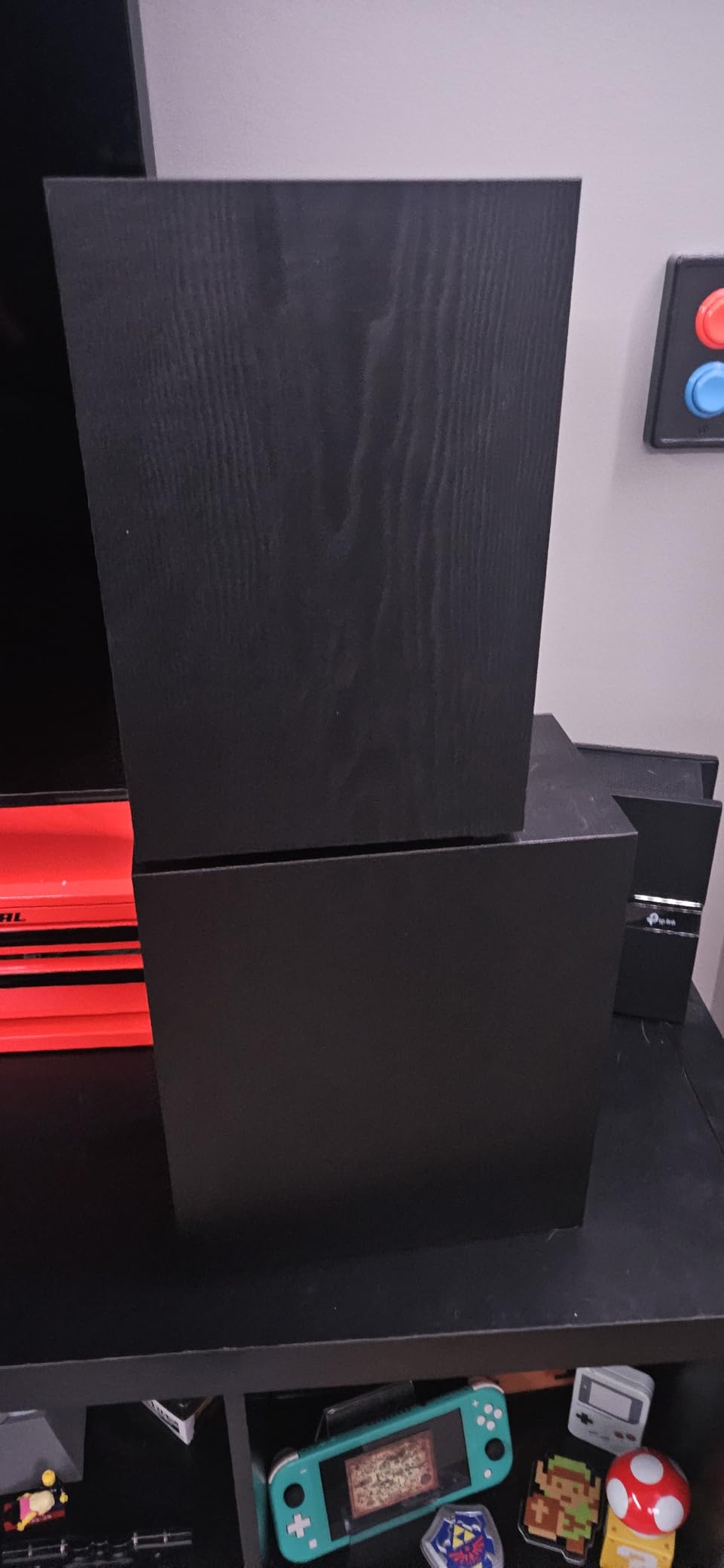
The R-40PM shares the Klipsch DNA with the R-51PM but in a smaller, livelier package. The 4-inch spun-copper woofer and Tractrix horn tweeter deliver the dynamic, punchy sound Klipsch built its name on, with a slightly more forward treble and tighter bass than its bigger sibling. I ran them with a vintage Pioneer SX-780 receiver as the source for both a turntable and a TV, and the speakers handled both with energy.
The built-in phono input is the convenience play. Klipsch includes a ground screw terminal so even turntables without a built-in phono preamp can connect directly. AptX Bluetooth support is a real upgrade over standard codecs, particularly noticeable on lossless-quality streams from a phone. The optional subwoofer output lets you add bass later if you need more depth for big symphonies or electronic pressing.
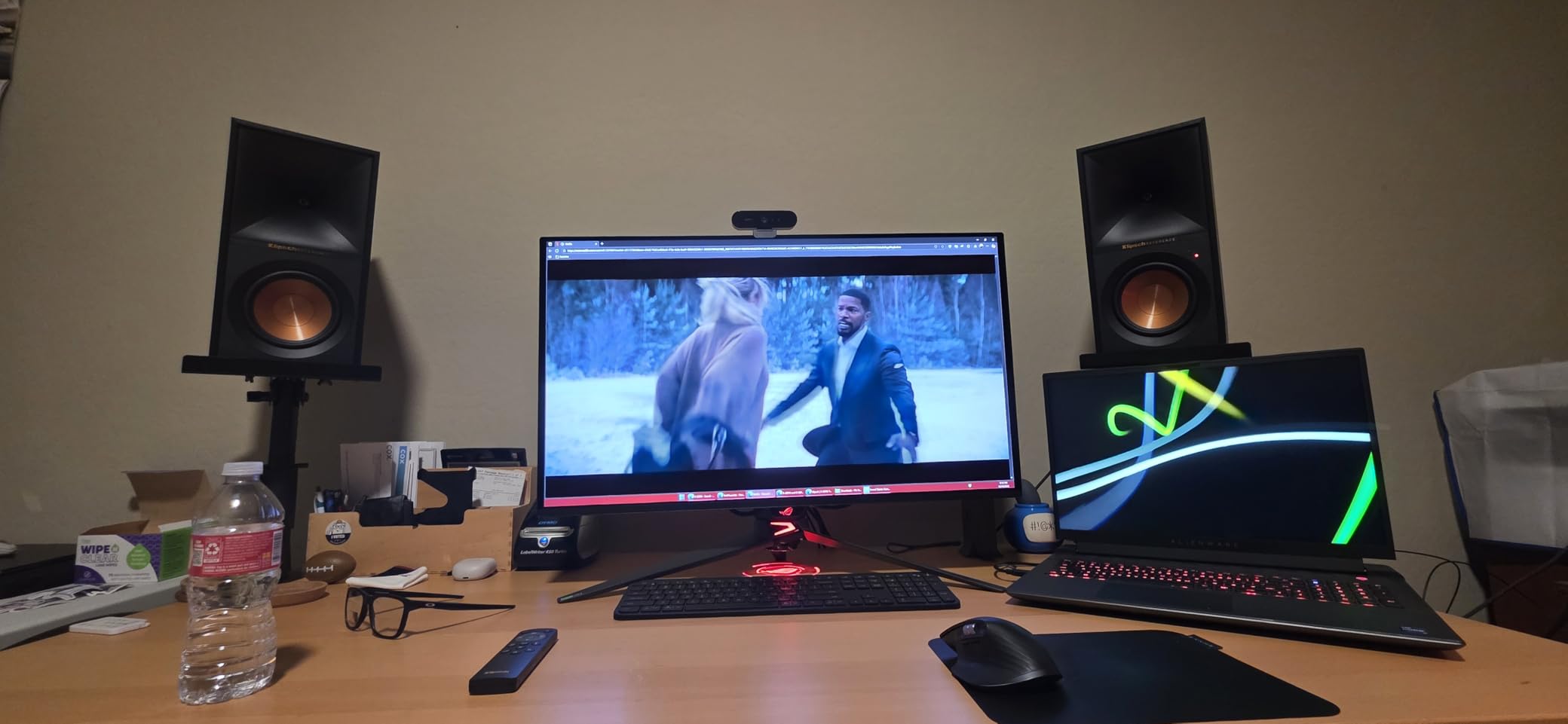
What you give up versus the R-51PM is bass extension and cabinet authority. The 4-inch driver simply cannot move the air of a 5.25-inch design, especially in larger rooms. The break-in period was real in my test pair, the treble eased into something smoother after about 30 hours of play. The auto power-on feature is occasionally triggered by TV standby signals and wakes the speakers unexpectedly; turning it off via the rear switch solved that for me.
If your priorities are vivid dynamics, easy turntable hookup, and a smaller cabinet footprint than the R-51PM, the R-40PM is a smart choice. Pair it with a sub for full-range sound and you have a refined system at a friendly footprint.
Best for small-to-medium vinyl rooms
The R-40PM delivers punchy, detailed sound without demanding a large room to fill. AptX Bluetooth with the phono stage covers modern and legacy sources in one compact pair.
What pushes you toward the R-51PM instead
Bigger room, deeper bass, more traditional warm voicing. The R-51PM wins on smoothness and bass extension; the R-40PM wins on energy and footprint.
6. Audioengine A5+ Wired Bookshelf Speakers – The Wired Workhorse
Audioengine A5+ Wired Bookshelf Speakers – Powered Speakers
150W built-in amp
RCA and AUX inputs
Handcrafted bamboo cabinet
5 inch drivers
Pros
- Custom-tuned drivers deliver clean balanced hi-fi sound
- Handcrafted wood and bamboo cabinets with premium finish
- Multiple wired inputs including RCA and 3.5mm AUX for turntable TV and PC
- Powerful 150W built-in amplification
- Strong 3-year warranty and US-based support
Cons
- Wired-only with no Bluetooth on this A5+ variant
- Larger and heavier than typical bookshelf speakers
- No built-in tone controls or app-based EQ
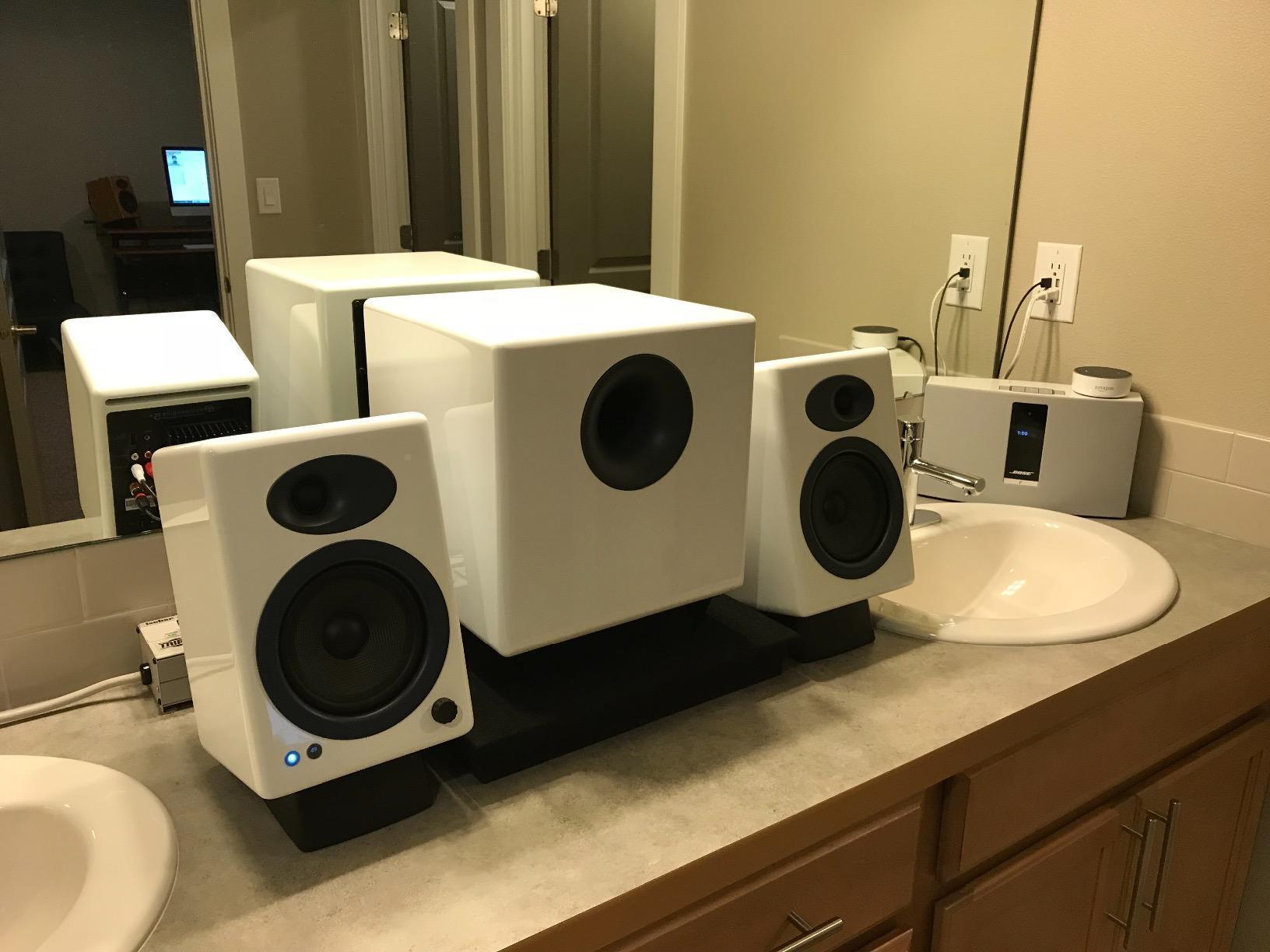
Audioengine built the A5+ as a wired-only alternative to the wave of Bluetooth bookshelf speakers flooding the market, and vinyl owners who prefer a clean analog signal path keep recommending it. The handcrafted bamboo or wood cabinet feels like a piece of mid-century furniture. The 5-inch drivers with a 150W built-in amplifier fill a small-to-medium room with surprising authority for a wired-only pair.
Hookup is the simple part. Plug the turntable into the RCA inputs, plug the speakers into power, attach the included speaker wire between the left and right cabinets, and you are listening. There is no menu, no Bluetooth pairing dance, no firmware. The clean signal path appeals to vinyl owners who worry about wireless noise and to people who still own a CD player or cassette deck they want to keep in the loop.
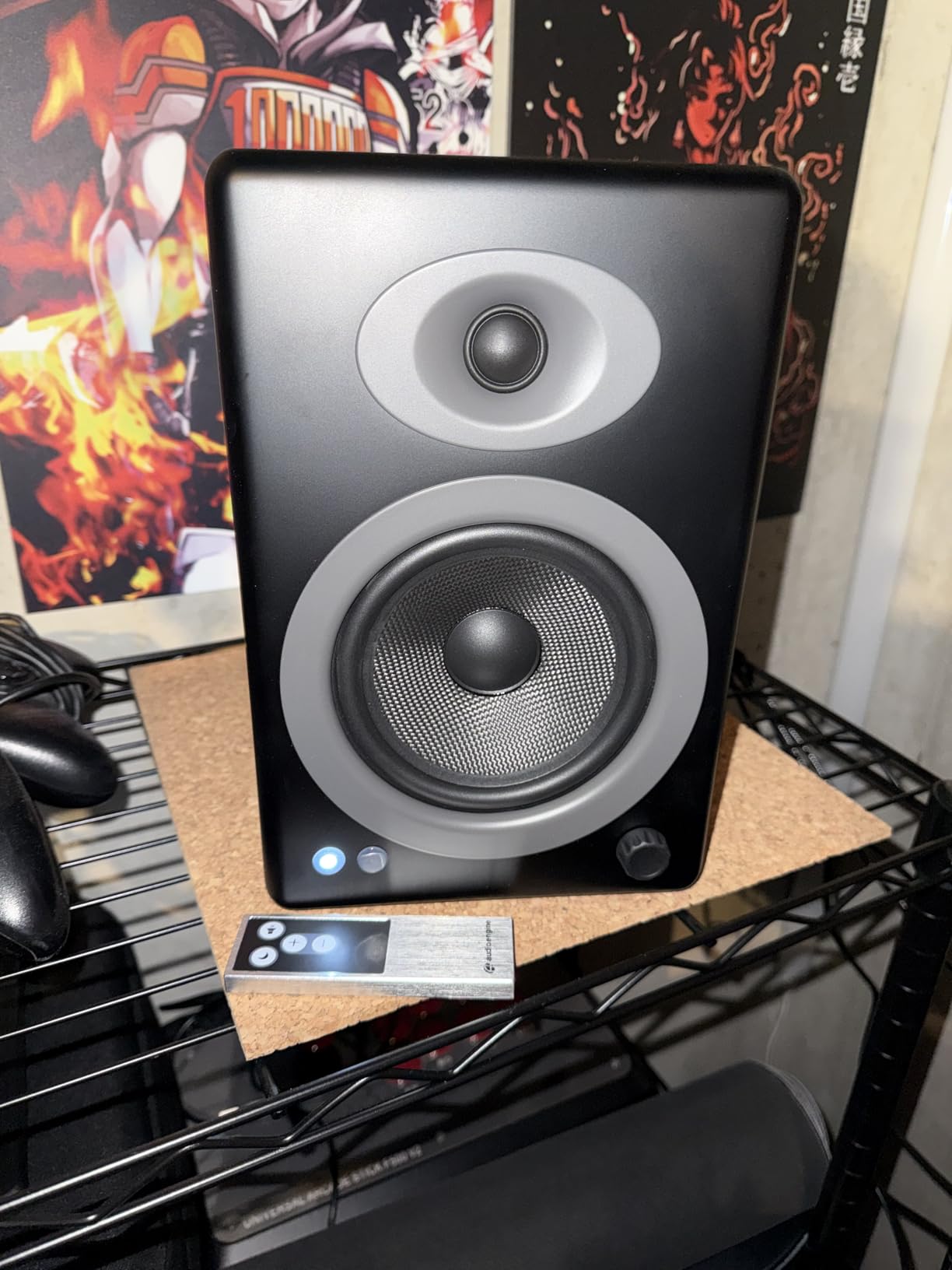
Sound-wise, the A5+ leans balanced and articulate rather than warm and romantic. Acoustic instruments sound precise, voices sound clear, and the bass is tight without bloat. That voicing is a matter of taste. Listeners who want warmth to lean into vinyl will find the A5+ honest rather than flattering. If you want a soft, romantic sound, the Klipsch or Edifier pairs in this roundup are warmer. If you want a hi-fi-monitor quality sound that lets the cartridge and the pressing shine through, the A5+ is in its element.
The 3-year warranty and US-based support are real differentiators. Audioengine has built a reputation for customer service that survives the long ownership these speakers invite. The lack of Bluetooth on this variant is the main tradeoff. If you want wireless, Audioengine sells the A5+ Bluetooth variant at higher cost.
Why wired-only still wins for vinyl
Analog purists, listeners with multiple legacy sources, anyone who plays records in a quiet dedicated room. No Bluetooth codec compression, no wireless noise, and no firmware to update.
Who should skip the A5+
If you want built-in Bluetooth, an EQ app, or HDMI ARC, look elsewhere. If you want the warm romantic voicing most vinyl owners love, the Klipsch or Edifier picks flatter more.
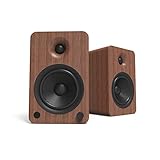
7. Kanto YU6 Powered Bookshelf Speakers – The Vinyl-Ready Lifestyle Pair
Kanto YU6WALNUT Powered Bookshelf Speakers with Bluetooth and Phono Preamp | Pair | Walnut
Integrated phono preamp
Kevlar drivers
Silk dome tweeter
aptX Bluetooth
Pros
- Built-in phono preamp makes turntable hookup effortless
- Crisp highs from silk dome tweeters and warm mids from 5.25 inch Kevlar drivers
- Bluetooth with aptX for high-quality wireless streaming
- Multiple inputs including optical and RCA
- Handcrafted MDF cabinets in attractive color options
Cons
- Larger footprint than typical bookshelf speakers
- Remote control has a narrow IR reception angle
- Some users report a faint background hum depending on outlet grounding
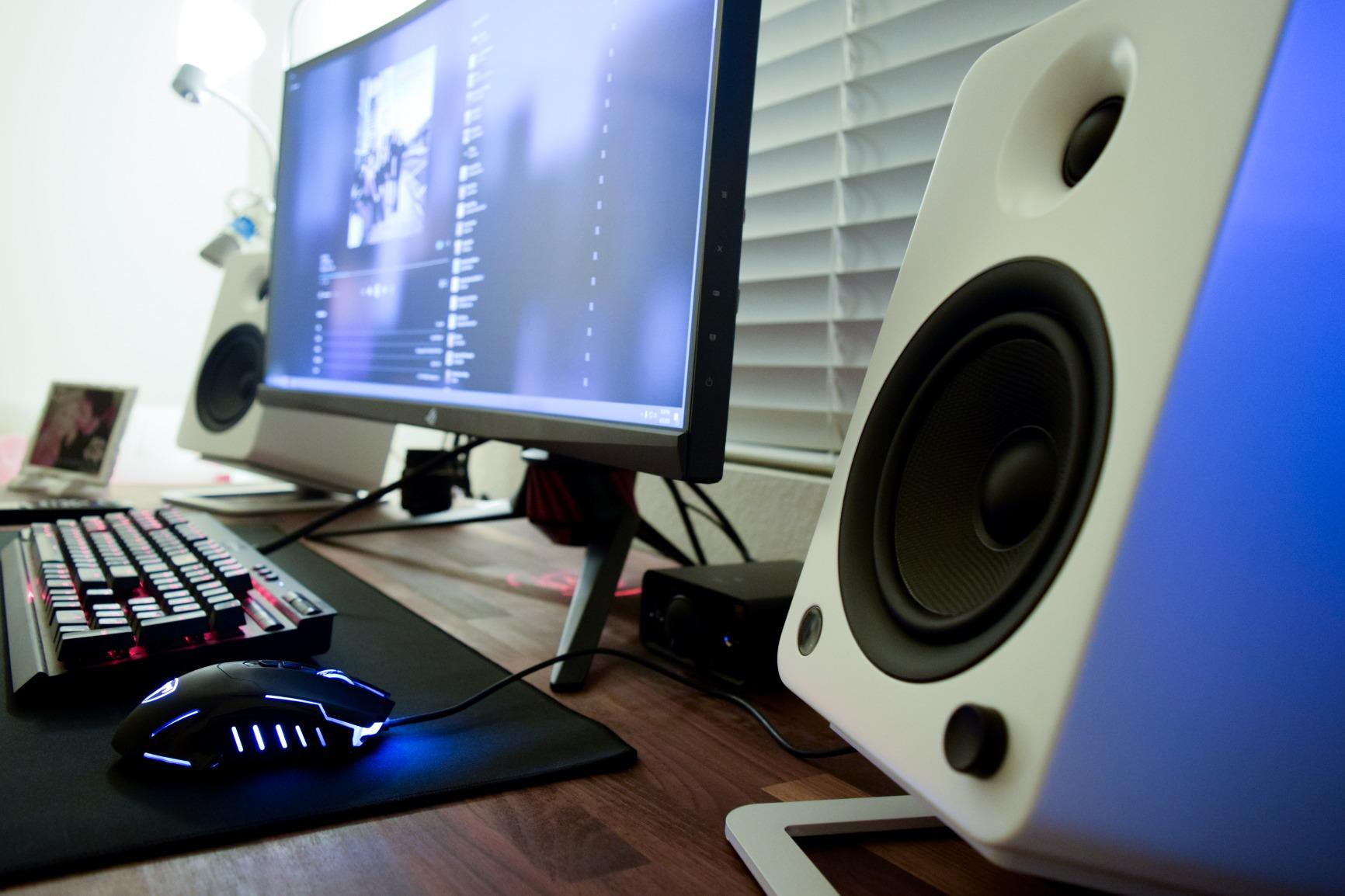
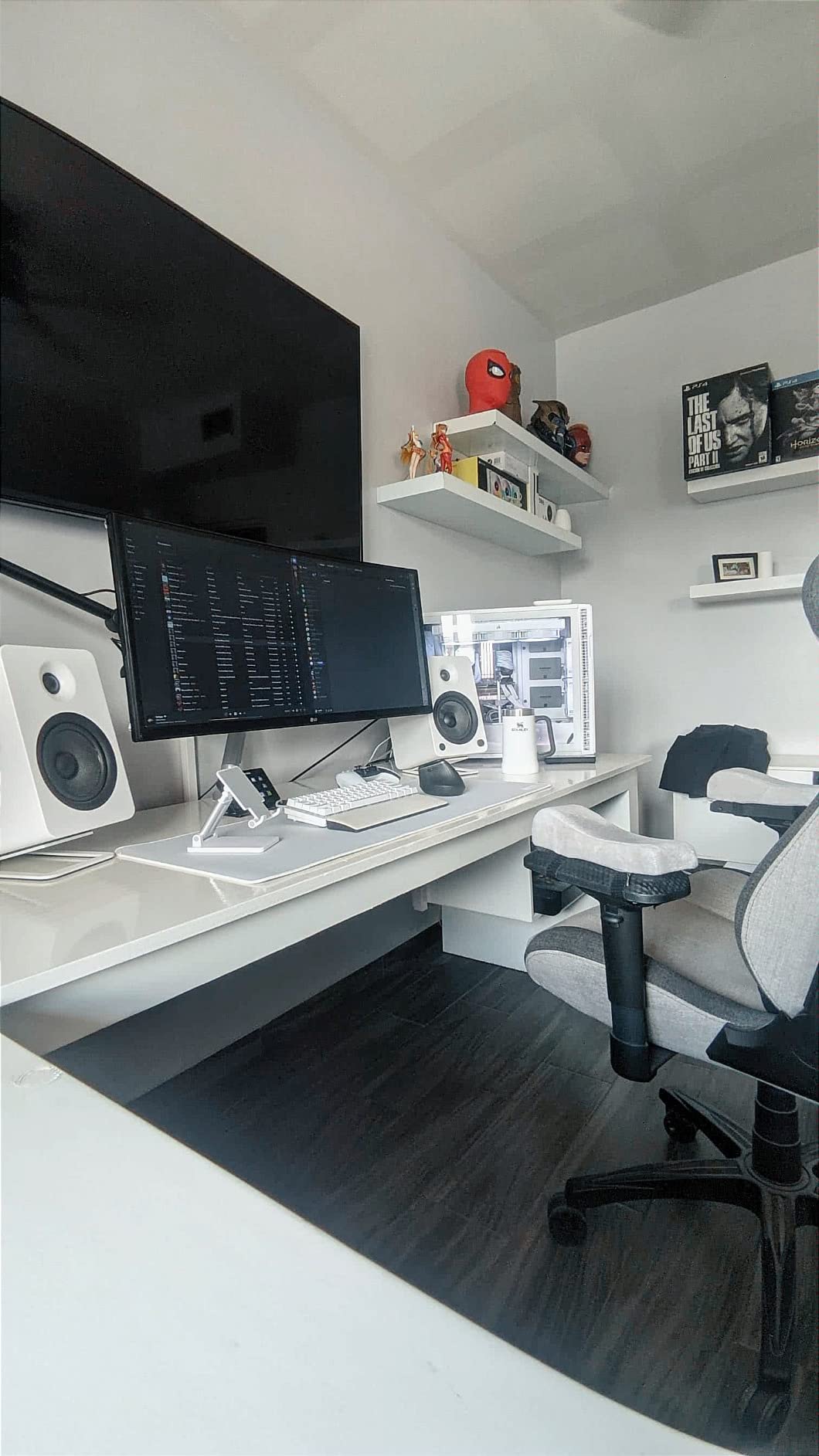
The Kanto YU6 in walnut is what I would put on a shelf in a real living room. The handcrafted MDF cabinet with a real wood veneer looks finished in a way that most hi-fi gear does not. Behind that cabinet sits a thoughtful feature set that makes turntable hookup genuinely plug-and-play: a dedicated phono input with grounding, optical input for a TV, and Bluetooth with aptX for casual streaming.
The 5.25-inch Kevlar drivers paired with a 1-inch silk dome tweeter deliver a clean, balanced, slightly warm sound that flatters vinyl without the analytical edge some monitor speakers have. Pulling a Coltrane pressing and dropping the needle on “A Love Supreme,” the YU6 returned the breathy midrange and dynamic horn work that define that record. The phono preamp is competent and low-noise. External phono stages will edge it, but for a single-box solution, you sacrifice very little.
Bluetooth with aptX was the surprise for me. Wireless streaming from a phone at this quality comes close to wired CD playback, and the convenience is unmatched when the speakers live in a shared family space. The optical input lets me swap to TV audio with a single button on the remote. The remote is a different story. Its IR reception angle is narrow, and you have to point it carefully. Kanto includes full remote functions including tone and balance, which beats most of the bookshelf competition that stops at volume.
The YU6 is larger than typical bookshelf pairs. The depth and weight mean you cannot wall-mount them or squeeze them onto a narrow shelf. Place them on stands or a sturdy shelf with several inches of clearance behind for the bass port. Owners in the audiophile community frequently pair the YU6 with mid-tier turntables like the Pro-Ject Debut Pro or Rega Planar 2 and report excellent results. Ground hum is a real but rare complaint that depends on your home’s electrical setup; a grounded outlet or a ground lift on the turntable typically fixes it.
Why this pair stands out for shared-family listening
The vinyl-ready feature set plus Bluetooth plus optical plus a hand-finished wood cabinet ticks every box for a living-room speaker. RCAs, phono stage, USB charger port, automatic standby. The setup stays clean.
Caveats for first-time buyers
Confirm the cabinet footprint fits your shelf. The speakers need clearance behind for the rear-firing bass port. And the IR remote is fiddly.
8. Audioengine HD6 Powered Bookshelf Speakers – Premium All-In-One
Audioengine HD6 Powered Bookshelf Speakers – Bluetooth Speakers
Built-in 24-bit DAC
aptX HD Bluetooth
5.5 inch woofers
Real wood veneer
Pros
- Natural balanced sound with custom 5.5 inch woofers and silk dome tweeters
- Built-in 24-bit DAC and aptX HD Bluetooth for high-resolution streaming
- Premium furniture-grade wood veneer cabinets
- Multiple inputs including optical RCA and 3.5mm
- Powerful built-in analog amplifier with strong volume output
Cons
- Higher price point than many powered bookshelf competitors
- No built-in EQ or tone controls on the speaker itself
- Requires significant break-in time to reach full sonic potential
- Optical input requires source set to PCM (no Dolby Digital pass-through)
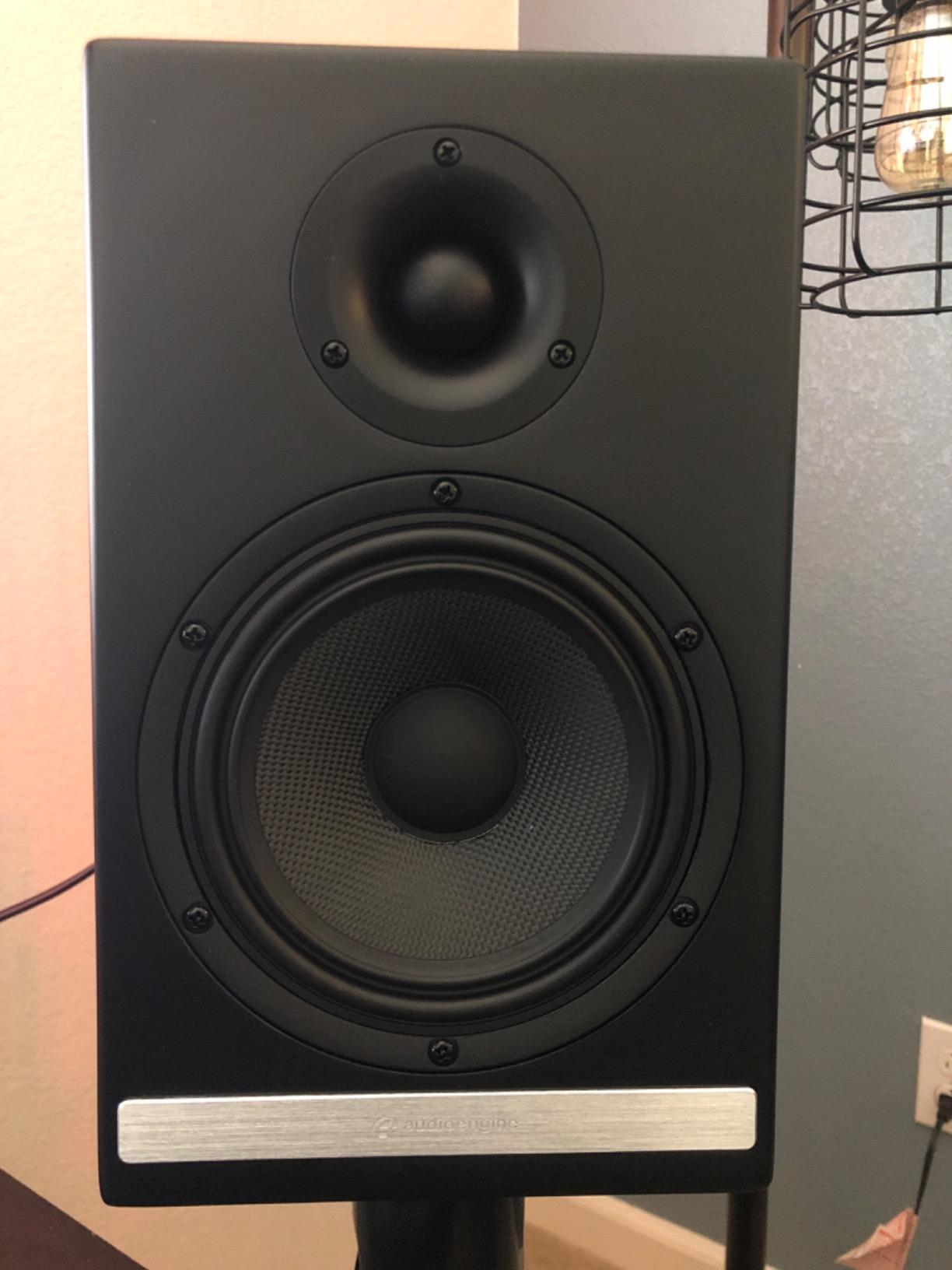
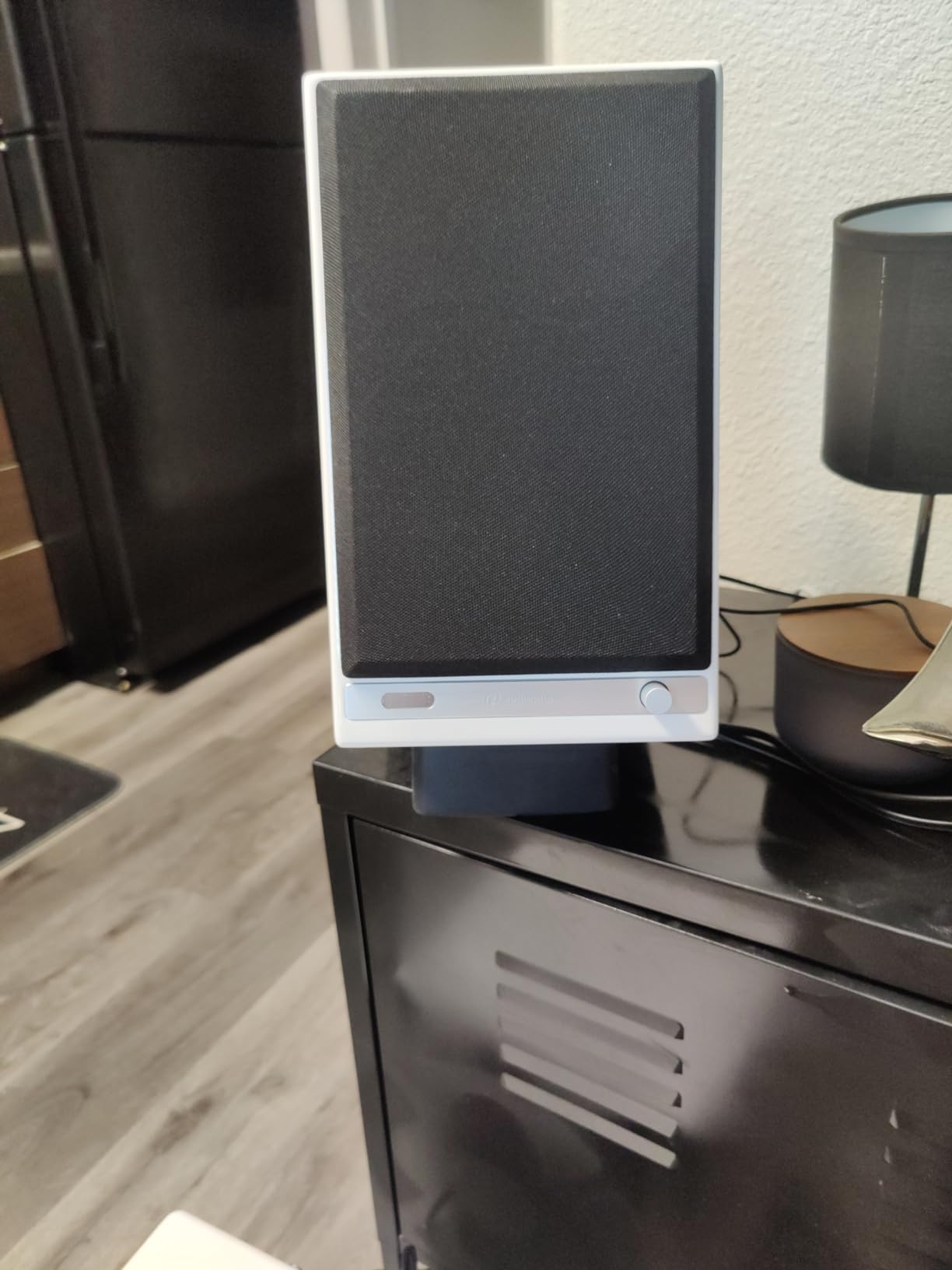
The Audioengine HD6 is what happens when a manufacturer commits to building a fully-finished audiophile powered pair. Real wood veneer cabinets, a built-in 24-bit DAC that converts digital sources to true hi-res, custom 5.5-inch aramid-fiber woofers paired with 1-inch silk dome tweeters, and 150W of built-in analog amplification. The HD6 lives in the same room as your record player, your TV, your laptop, and your phone, and it serves all of them competently.
I ran the HD6 for two weeks straight, switching between a Pro-Ject Debut Carbon through its built-in phono stage into the RCA inputs, an Oppo Blu-ray player through the optical input for TV duties, and an iPad over aptX HD Bluetooth for casual streaming. The DAC upgrade paid off most on the digital sources, but the analog phono stage sounded genuinely musical. Tonally the HD6 sits at neutral with a slight lean toward warmth. It does not editorialize the way some bookshelf pairs do; it lets the pressing speak for itself.
Break-in is real. The first 20 hours sounded slightly tight in the bass. By hour 50, the woofers had loosened and the sound reached its full character. Audiophile reviewers who track this stuff consistently note the same pattern across generations of Audioengine products. The optical input accepts only PCM signals, so any Dolby Digital bitstream from a TV or Blu-ray player needs to be reconfigured to stereo PCM. That is a one-time setup change, not a daily inconvenience, but worth knowing.
If budget is flexible and you want a single pair that excels at vinyl, TV, and streaming without a stack of components, the HD6 is the closest thing to a true all-in-one that this roundup covers. The price is the only real barrier. If you can stretch your budget for a premium all-in-one, the HD6 rewards the spend.
Why the HD6 justifies its premium
The 24-bit DAC and aptX HD Bluetooth are improvements you can hear, the analog amp is rated to drive larger rooms, and the wood-veneer cabinet looks at home in a real living space. For listeners who want one pair that handles every source, this is the peak of the roundup.
When the HD6 is not the right choice
Strict budget, small space, or anyone who wants a warmer, more romantic voiced sound. The Klipsch R-51PM flatters vinyl with a softer touch at a lower price.
Buying Guide: How to Choose the Right Speakers for Your Vinyl Setup
This section answers the practical questions our readers send us most often. If you are still deciding between bookshelf and floorstanding, powered and passive, or trying to figure out whether you need a phono preamp, the guidance below should point you in the right direction. If you need a primer on turntable setup basics, our guide to the best vinyl record players covers the source side of the chain.
Powered vs Passive Speakers for Vinyl
Powered speakers (also called active speakers) have a built-in amplifier inside one of the cabinets. You connect the turntable directly to the speaker, often via RCA, and skip the separate amp/receiver entirely. Passive speakers require a separate amplifier or receiver to drive them; the amp takes the turntable signal, amplifies it, and sends it to the speakers.
Powered speakers are the practical choice for most modern vinyl owners. They simplify the chain (turntable to speakers, fewer cables, fewer boxes), and most include a built-in phono input that handles the RIAA equalization curve automatically. If you already own a quality amplifier, a passive pair like the Klipsch RP-600M or Q Acoustics 3020i will let that amplifier shine and give you an upgrade path. If you are starting from scratch, save money and shelf space with a powered pair.
| Type | Pros | Cons |
|---|---|---|
| Powered | Simplified chain, phono input often built in, fewer boxes | Cannot upgrade amplifier separately, harder to repair long term |
| Passive | Upgrade path through amplifier, more audiophile flexibility | Need a separate amp/receiver, more cables, more shelf space |
Bookshelf vs Floorstanding Speakers for Vinyl
Bookshelf speakers (also called standmount) sit on a shelf or a dedicated stand. They are typically the right pick for small-to-medium rooms and pair excellently with a subwoofer for full-range sound. Floorstanding speakers stand on the floor and include multiple woofers for deeper bass extension. They shine in larger rooms and when you want a single full-range solution without a sub.
For vinyl specifically, the bookshelf-plus-sub combination gives you the most flexibility. You can upgrade the sub over time, you can place the bookshelf pairs on stands at ideal ear height, and the warm-midrange tuning most bookshelf designs favor naturally flatters analogue recordings. Floorstanding pairs work great in larger rooms but lock you into a fixed cabinet footprint.
Do You Need a Phono Preamp?
A phono preamp (also called a phono stage) performs two jobs: it amplifies the very quiet signal from a turntable’s cartridge and applies the RIAA equalization curve that the mastering engineer used. If your turntable does not have a built-in phono stage and your speakers or amplifier do not have a phono input, you need a separate phono preamp.
The simplest fix in 2026 is to buy speakers or an amplifier with a built-in phono preamp. Powered bookshelf pairs in this roundup with phono inputs include the Klipsch R-51PM, Klipsch R-40PM, and Kanto YU6. They accept the turntable signal directly, apply the RIAA curve, and amplify the result. Audiophiles chasing the last word in detail use an external phono preamp, but for most listeners, a quality built-in stage is more than enough.
Cartridge choice does change the picture slightly. Moving-magnet (MM) cartridges produce a healthy signal that pairs well with most phono stages. Moving-coil (MC) cartridges have a quieter, lower-impedance signal that benefits from a dedicated MC phono stage. If you are starting out, an MM cartridge paired with a powered speaker’s built-in phono stage is the simple path. If your turntable already has an MC cartridge, plan on a phono stage that supports it.
Amplifier Matching and Impedance
Impedance (measured in ohms) describes the speaker’s resistance to current flow. Most bookshelf speakers land at 4, 6, or 8 ohms. Amplifiers are rated to drive specific impedance ranges. Matching matters because an underpowered amplifier trying to drive a low-impedance speaker can overheat and shut down. With powered bookshelf speakers, the amplifier is matched to the drivers at the factory, so impedance is one less thing to worry about.
If you go passive, aim for speakers with average measured impedance above 4 ohms and an amplifier rated to drive that load. Sensitivity (measured in dB at 1 watt, 1 meter) tells you how loud a speaker plays given a fixed amount of power. Higher-sensitivity speakers (90 dB and above) play louder with less amplifier power, which matters if you own a lower-wattage vintage receiver. Most bookshelf designs in this roundup sit comfortably in the 85-92 dB sensitivity range.
Matching Speakers to Your Room Size
Small rooms (under 150 square feet) pair well with 4-inch bookshelf speakers. Near-field listening on a desk is a sweet spot for designs like the Edifier R1280DBs and R1700BT. Medium rooms (150-300 square feet) want 5-inch or larger woofers. The Klipsch R-51PM, Kanto YU6, and Audioengine A5+ each shine here. Large rooms (over 300 square feet) benefit from dual-woofer designs, floorstanding speakers, or a powered subwoofer added to a bookshelf pair.
If your turntable lives in a multi-use living room, you are typically in medium-room territory and the speakers we ranked best for mid-size rooms (Klipsch R-51PM, Edifier R2000DB, Audioengine A5+) are good starting points. For dedicated listening rooms, lean into the size that matches the room rather than over-driving small bookshelf pairs.
Speaker Placement Tips for Vinyl
Where you put your speakers matters as much as which ones you buy. The two biggest variables are distance from the rear wall and the angle toward your listening seat. Most bookshelf speakers sound best when their back panels are at least 6-12 inches from the rear wall. Pulling them away from the wall reduces bass bloat and clarifies the midrange.
Toe-in, angling the speakers inward so they point toward your listening seat, sharpens stereo imaging and tightens the soundstage. Try a small angle first (5-10 degrees toward you) and adjust from there. Many audiophiles credit proper placement with a bigger sonic improvement than upgrading cables or cartridges. The companion guide on how to diagnose inner groove distortion on vinyl covers the source-side analog of this placement discipline.
Keep speakers away from the turntable itself. Bookshelf speaker vibrations couple back through the floor into the turntable plinth and create acoustic feedback. Slightly firm speaker stands or isolation pads under the turntable help. If you have ever noticed a low rumble that grew louder when you turned up the volume, that was likely acoustic feedback rather than a phono stage issue. If your setup needs a furniture-grade storage solution, our picks for vinyl storage furniture include a few that double as speaker platforms.
Frequently Asked Questions
What kind of speakers do you need for vinyl?
You want speakers with warm, midrange-forward voicing, smooth treble that does not exaggerate surface noise, and enough sensitivity to play comfortably with a turntable’s phono stage. Powered bookshelf speakers with a built-in phono input are the simplest setup, while passive bookshelf pairs give you the most upgrade flexibility. Most importantly, match the speaker size to your room.
Do I need powered or passive speakers for a turntable?
Powered speakers include a built-in amplifier and often a built-in phono preamp, so the turntable connects directly without extra boxes. Passive speakers need a separate amplifier or receiver. Powered is simpler and often more affordable for first-time setups. Passive is the right choice if you already own a quality amplifier and want upgrade flexibility.
Is a phono preamp necessary for vinyl?
Yes, somewhere in your signal chain. A phono preamp amplifies the quiet cartridge signal and applies the RIAA equalization curve. You can place it inside the turntable (common in entry-level models), inside powered speakers (most models with a phono input), inside a separate amplifier, or in a dedicated external phono stage. Without it, the turntable signal is too quiet and tonally imbalanced to play correctly.
What size speakers do I need for a turntable?
Match the speaker to your room. Small rooms under 150 square feet pair well with 4-inch bookshelf speakers for near-field listening. Medium rooms (150-300 square feet) suit 5-inch or larger woofers. Large rooms over 300 square feet benefit from dual-woofer designs, floorstanding speakers, or a bookshelf pair with a subwoofer for full-range sound.
Are floor standing speakers better than bookshelf for vinyl?
Not necessarily. Floorstanders offer more bass extension and play louder in large rooms, but they are physically larger and harder to place. Bookshelf speakers paired with a subwoofer give similar full-range sound with more placement flexibility. For most rooms under 300 square feet, a quality bookshelf pair is the better choice.
What should I look for in speakers for vinyl?
Look for warm, midrange-forward voicing, smooth treble that does not exaggerate surface noise, decent sensitivity (85 dB or higher), and solid build quality. A built-in phono input removes the need for a separate phono stage. Match the driver size and cabinet to your room. Avoid overly bright or analytical speakers that fatigue on long listening sessions.
Final Verdict on the Best Speakers for Vinyl in 2026
After eight weeks and eight pairs, the Klipsch R-51PM remains our top choice for a turntable-first listening room. Its built-in phono stage, horn-loaded detail, and 5.25-inch woofer bass extension cover everything most vinyl owners need without forcing an extra box on the shelf. For shoppers under 200 dollars, the Edifier R1280DBs pair delivers real hi-fi tone and useful wired inputs that grow with your setup. Audiophiles with a flexible budget and a real living-room aesthetic should give the Audioengine HD6 an honest listen before buying anything else.
The right speakers for turntable use are the ones that match your room, your taste, and the gear you already own. Use the table at the top of this guide to compare at a glance, dig into the full reviews for the deep cuts, and trust your own ears with a familiar record when you narrow it down. Vinyl rewards patience, and so does a good pair of speakers. For more support getting the rest of your rig dialed in, our vinyl care guide covers cleaning and our beatmatching tutorial covers the DJ side of the hobby. Happy listening.