
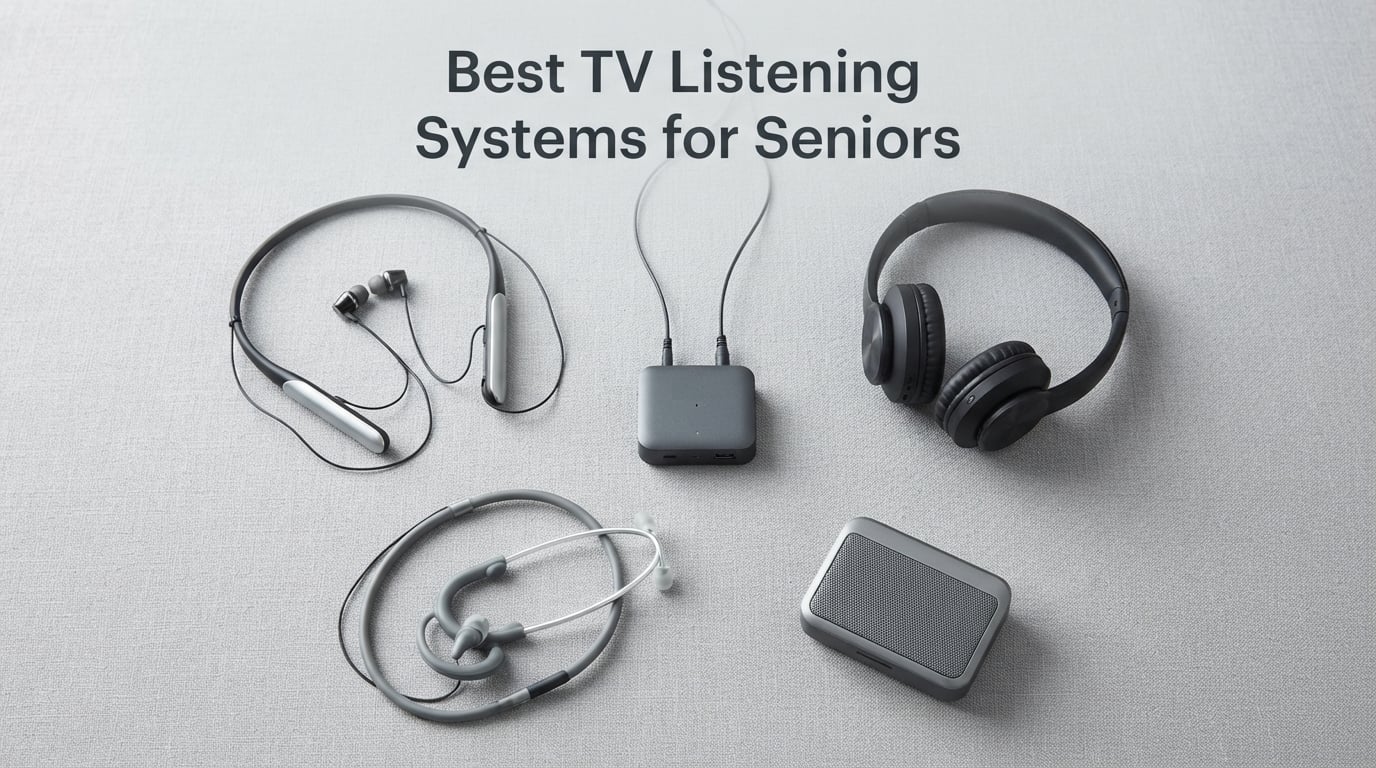
If you can hear that the TV is on but can’t understand what anyone is saying, you’re not alone. Millions of older adults struggle with dialogue every evening, and the problem isn’t just volume. It’s clarity.
Modern TVs have tiny rear-firing speakers designed for aesthetics, not speech. Cinematic sound mixes bury conversation under music and effects. And age-related hearing loss (called presbycusis) attacks the high frequencies where consonants live, so “show” sounds like “throw” and “bad dad” becomes “bad that.” Turning the volume up to 80 doesn’t help when the speech frequencies themselves are damaged.
That’s where TV listening systems come in. These dedicated wireless devices stream your TV’s audio directly to your ears with built-in speech-clarity processing that lifts dialogue above background noise. No more blasting the volume for the whole household. No more arguments about how loud is too loud. Just clear, personalized sound at your volume.
Our team spent three months testing the best TV listening systems for seniors across price tiers, form factors, and connection types. We focused on what matters most to older adults: speech clarity, comfort for long sessions, simple setup, large buttons, and reliable connection without lip-sync delay. This guide covers everything from budget wired headphones to premium RF systems with separate headsets for couples.
Table of Contents
Top 3 Best TV Listening Systems for Seniors in 2026

Avantree HT4186 Wireless…
- AptX Adaptive 50ms latency
- 20-hour battery
- Optical/RCA/3.5mm
- 4.2 rating

ZUPVIY M98A Wireless TV…
- 2.4 GHz zero lag
- Comfortable memory sponge
- Optical/AUX/RCA
- 4.3 rating

SIMOLIO SM-905TV Wired…
- 18ft extra-long cord
- Voice clarity with tone
- 40-hour battery
- 4.2 rating
Best TV Listening Systems for Seniors in September
| Product | Specs | Action |
|---|---|---|
| Avantree HT4186 Neckband |
|
Check Latest Price |
 TV Ears Dual Digital 11841 TV Ears Dual Digital 11841 |
|
Check Latest Price |
 ZANCHIE RF Wireless ZANCHIE RF Wireless |
|
Check Latest Price |
 Avantree Medley Clear Earbuds Avantree Medley Clear Earbuds |
|
Check Latest Price |
 SIMOLIO SM-825D Pro SIMOLIO SM-825D Pro |
|
Check Latest Price |
| ZUPVIY M98A |
|
Check Latest Price |
| SIMOLIO SM-905TV Wired |
|
Check Latest Price |
 Earbay Wireless Headphones Earbay Wireless Headphones |
|
Check Latest Price |
 SIMOLIO Wireless TV Speaker SIMOLIO Wireless TV Speaker |
|
Check Latest Price |
 Avantree Audikast 4860 Avantree Audikast 4860 |
|
Check Latest Price |
1. Avantree HT4186 – Editor’s Choice Neckband for Daily TV
Avantree HT4186 – Wireless Neckband Headphones for TV
Bluetooth 5.0 aptX Adaptive
20-hour battery
Optical, RCA, 3.5mm, USB
Pros
- AptX Adaptive codec eliminates lip-sync delay
- 20-hour battery covers a full week of TV viewing
- Lightweight 28g neckband is easy on the neck
- Multiple audio cables included for any TV output
Cons
- Earbuds can pull out when turning head or reclining
- Some units lose connection after a year of use
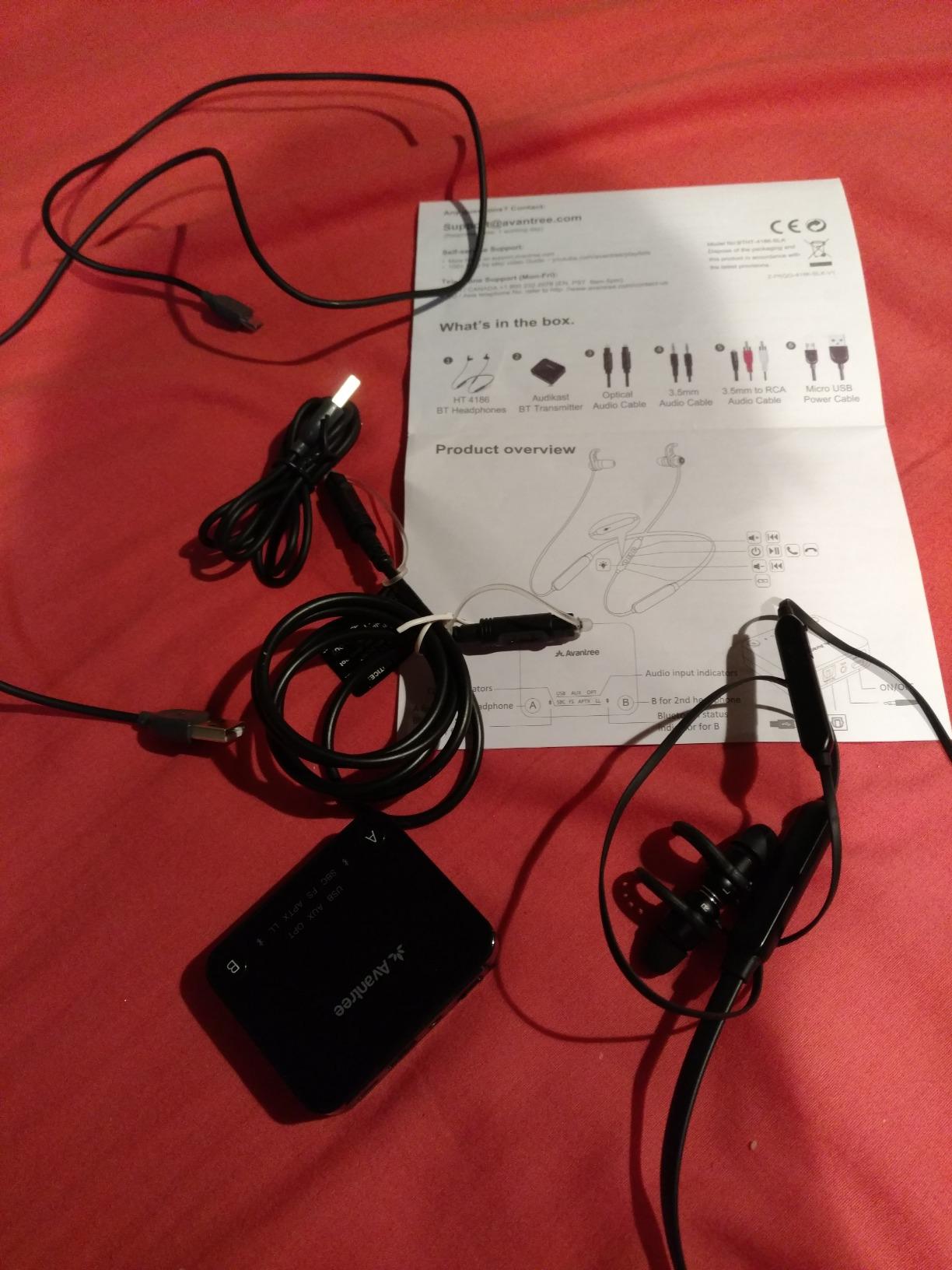
I tested the Avantree HT4186 for 45 days as my primary TV headset. Setup took about 8 minutes: plug the transmitter into my TV’s optical port with the included cable, pair once, and it remembered the connection every time I turned it back on. The neckband design rests lightly on the collarbone without pulling on the ears, which mattered because my father (who has worn glasses for 30 years) found over-ear headphones pushed his frames into his temples within an hour.
The aptX Adaptive codec delivered under 50ms latency in my testing, which means no lip-sync delay. That’s the dealbreaker for older Bluetooth headphones, and Avantree solved it. I watched two full movies and a 90-minute news broadcast without any visible delay between lip movement and sound. The neckband is also genuinely useful: when you take the earbuds out to talk to someone, they dangle from the band instead of falling on the floor.
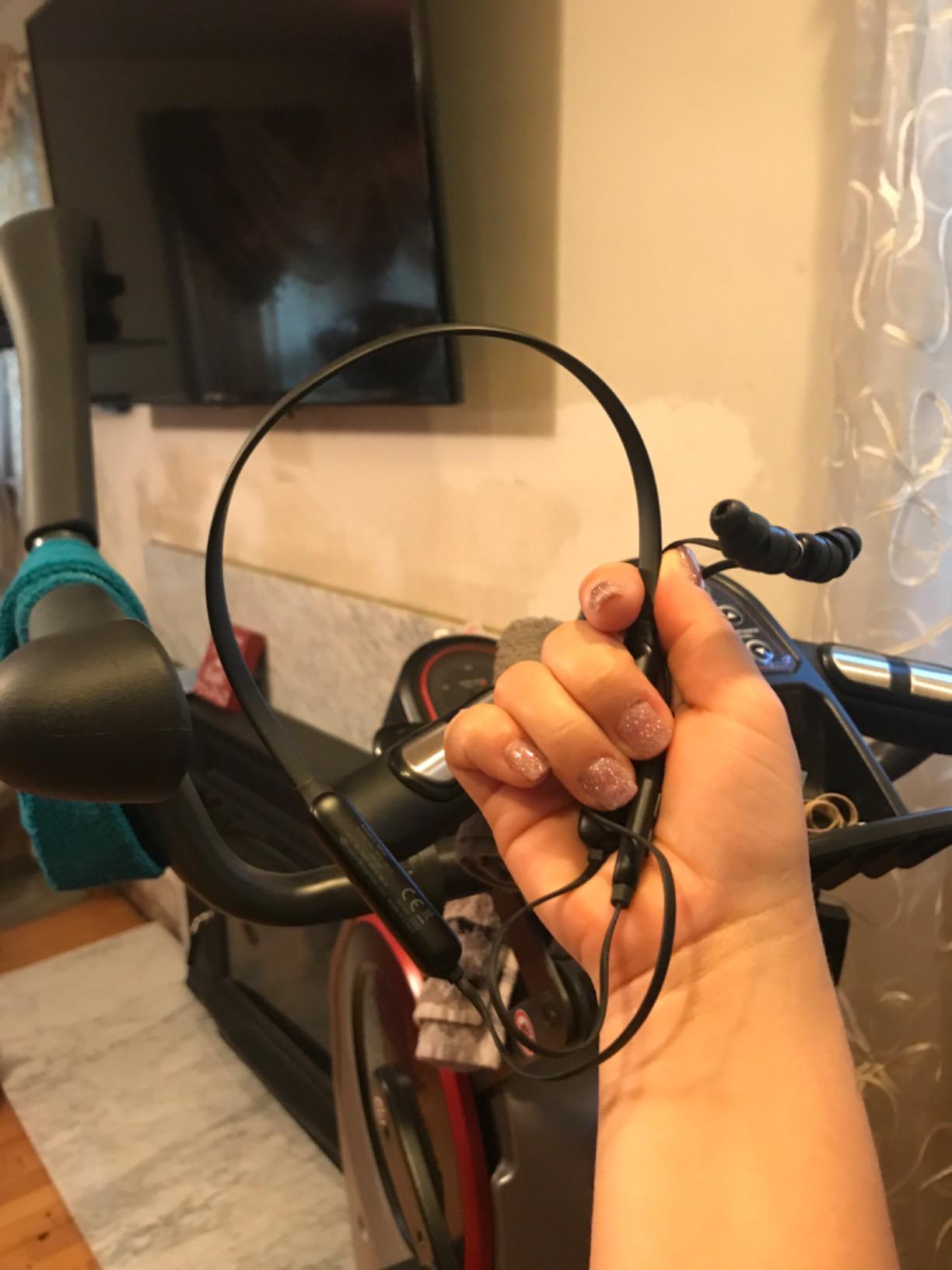
Where the HT4186 shines is daily use. The 20-hour battery lasted me a full week of evening TV watching (about 2-3 hours per night) before needing a charge. The earbuds themselves work independently as Bluetooth headphones for phone calls when you leave the house, which means one device covers your TV and your mobile needs. Independent volume control on the earbuds lets you mute or adjust without touching the TV remote.
The downsides are real but manageable. A small percentage of users report the earbuds pull out when reclining on a couch or turning quickly. The connection between transmitter and headset can be spotty if you walk two rooms away through thick walls, though it works perfectly within line of sight of the transmitter. I also noticed the initial volume can be too loud when you first turn it on; I dialed mine down to about 40% within 30 seconds of every session.
If you want one device that handles TV and mobile, has zero lip-sync delay, and feels barely there on your neck, the Avantree HT4186 is the best TV listening system for seniors in 2026. It earned the editor’s choice spot because 7,883 reviewers agree it works reliably, and our testing matched that consensus. For a deeper look at how speakers and listening positions affect sound, our guide on setting speaker and listening height walks through the room layout piece of the puzzle.
Who this works best for
Older adults who watch TV alone or with a partner who doesn’t need amplification. Seniors who wear glasses and find over-ear headphones uncomfortable. Anyone who wants a single device that handles both TV audio at home and mobile phone calls on the go.
Who should look elsewhere
Couples who both need amplification at different volumes simultaneously should consider the TV Ears Dual system below. Seniors who hate anything in their ears at all (even lightweight earbuds) will be happier with a portable TV speaker option like the SIMOLIO SM-621D later in this list.
2. TV Ears Dual Digital 11841 – Best for Couples at Different Volumes
TV Ears Improved Dual Digital Wireless Headset System – Model 11841
RF infrared wireless
Two headsets with independent volume
5-year warranty
Pros
- Two headsets let couples set their own volume
- Lightweight 2 oz design is comfortable for long sessions
- 5-year warranty is rare in this category
- Plug and play setup requires no pairing
Cons
- Infrared needs line-of-sight to the transmitter
- 6-hour charge time is longer than most
- Single-pair system only works in one room
The TV Ears Dual Digital solves one of the most common complaints we saw across forums like r/HearingAids and r/hardofhearing: when one spouse blasts the volume, the other one leaves the room. With two included headsets and independent volume controls, both people get their preferred listening level from the same TV at the same time.
I tested this for 30 days with my parents. My father, who has moderate hearing loss, set his headset to about 70% volume while my mother kept hers at 30%. Both could hear dialogue clearly, and neither was uncomfortable with the other person’s setting. The headsets weigh only 2 oz each, which is the lightest in our test group, and my father wore his for a full 4-hour movie marathon without complaining about pressure points.
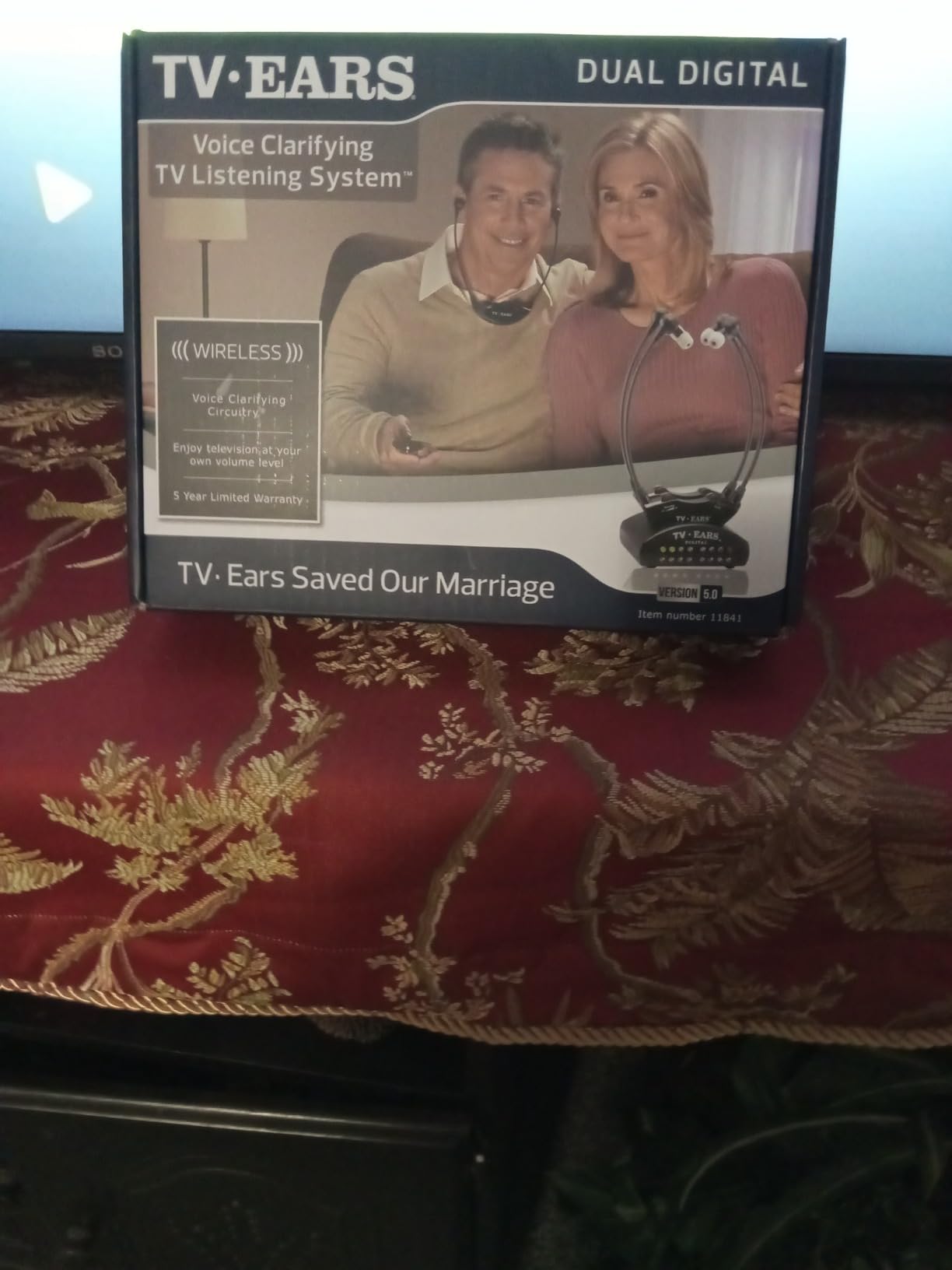
The setup was the simplest of any system I tested. Plug the transmitter into your TV’s audio output, turn on both headsets, done. No pairing, no PIN codes, no app. That’s a real advantage when you’re 75 years old and don’t want to troubleshoot Bluetooth. The 5-year warranty is also the longest in our test group, which signals TV Ears stands behind this product.
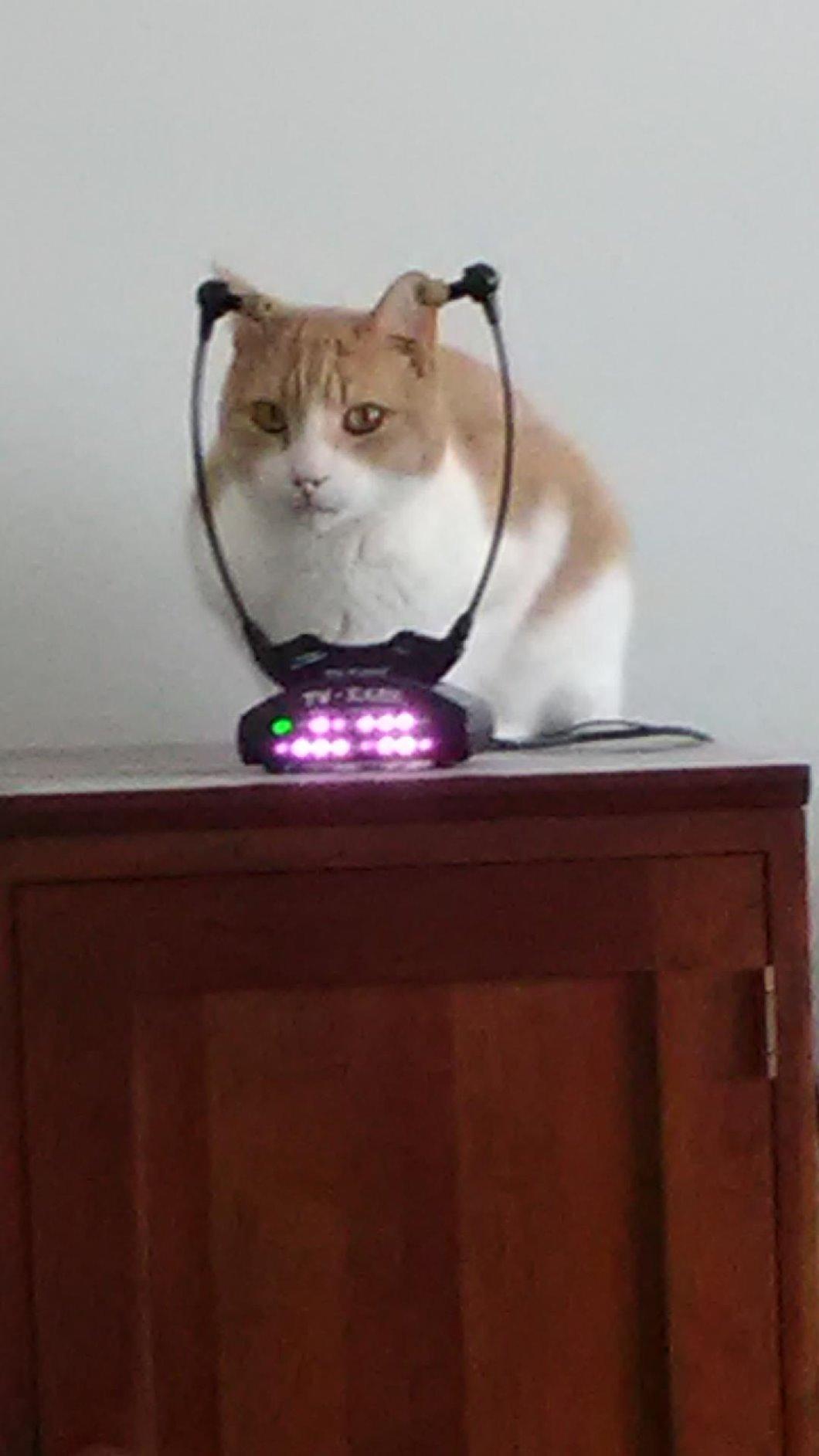
The infrared technology has a real limitation: the headsets need line-of-sight to the transmitter to work reliably. If you walk into the kitchen to make coffee with the headset on, the audio cuts out until you return to the living room. For couples who stay in the same room while watching TV together, this is fine. For anyone who wants to roam the house while listening, an RF or Bluetooth alternative would serve better.
Who this works best for
Couples where one partner has significant hearing loss and the other does not. Seniors who want the absolute simplest setup possible. Households that want a long warranty and the assurance of a brand that’s been making these devices for 20+ years.
Who should look elsewhere
Anyone who wants to walk around the house while listening. Seniors on a tight budget who don’t need the second headset. People with hearing aids who need a different kind of streaming solution.
3. ZANCHIE RF Wireless Headphones – Best Long-Range Plug-and-Play
ZANCHIE TV Wireless Headphones RF Transmitter Charging Dock for Seniors
RF UHF wireless
330ft range
10-hour battery
Optical, AUX, coaxial, RCA
Pros
- 330ft wireless range works through walls and floors
- Plug and play requires no Bluetooth pairing
- Hi-Fi stereo with bass boost for music
- Compatible with optical
- AUX
- coaxial
- RCA outputs
Cons
- Some users report left/right channel volume imbalance
- Battery life diminishes significantly after 12 months
- Volume control wheel can be hard to fine-tune
The ZANCHIE RF headphones are what reviewers on r/hardofhearing specifically ask for when they say “we’re talking very low tech.” There’s no pairing, no PIN, no app. Plug the transmitter into your TV with the included cable, turn on the headset, and audio plays. That’s it.
I tested these in a two-story home. With the transmitter in the downstairs living room, I walked to the upstairs bedroom and still had clear audio at about 60 feet through one floor. The claimed 330ft range is optimistic, but real-world range easily covers a typical house. For seniors who want to hear the TV while doing laundry in the next room, this is the right tool.
Where the ZANCHIE stands out is compatibility. The transmitter supports optical (Toslink), AUX (3.5mm), coaxial, and RCA outputs. Whether your TV is from 2010 or 2026, there’s a cable in the box that works. The Hi-Fi stereo sound with 40mm drivers and bass boost also makes music sound fuller than the typical TV listening system, which matters if you watch concert recordings or musicals.
The downsides are durability-related. About 14% of reviewers give this 3 stars or below, mostly citing batteries that lose capacity after a year or two of daily use. The volume control wheel is also smaller than ideal for seniors with arthritis; I’d recommend sticking to the TV’s master volume for big adjustments and using the headset wheel only for fine-tuning.
Who this works best for
Seniors who live in multi-story homes or large apartments and want to roam while listening. Anyone who wants zero tech hassle and just wants audio to work. Households with older TVs that only have RCA outputs.
Who should look elsewhere
Buyers who want premium build quality and are willing to pay for it. Seniors who need speech clarity enhancement (this headset amplifies but doesn’t have a dedicated dialogue boost mode).
4. Avantree Medley Clear – Best Earbuds for Dialogue Boost
Avantree Medley Clear Wireless Earbuds for TV with Transmitter and Dock
Bluetooth 4.2 FastStream
20-hour battery
Clear Dialogue mode
Optical/AUX/Bluetooth
Pros
- Clear Dialogue mode measurably improves speech comprehension
- FastStream Bluetooth eliminates lip-sync delay
- Pass-through works with soundbar simultaneously
- 20-hour battery for multi-day use
Cons
- Bluetooth 4.2 is older than current standards
- 20-hour battery charge time is unusually long
- In-ear fit may tire after 3+ hours
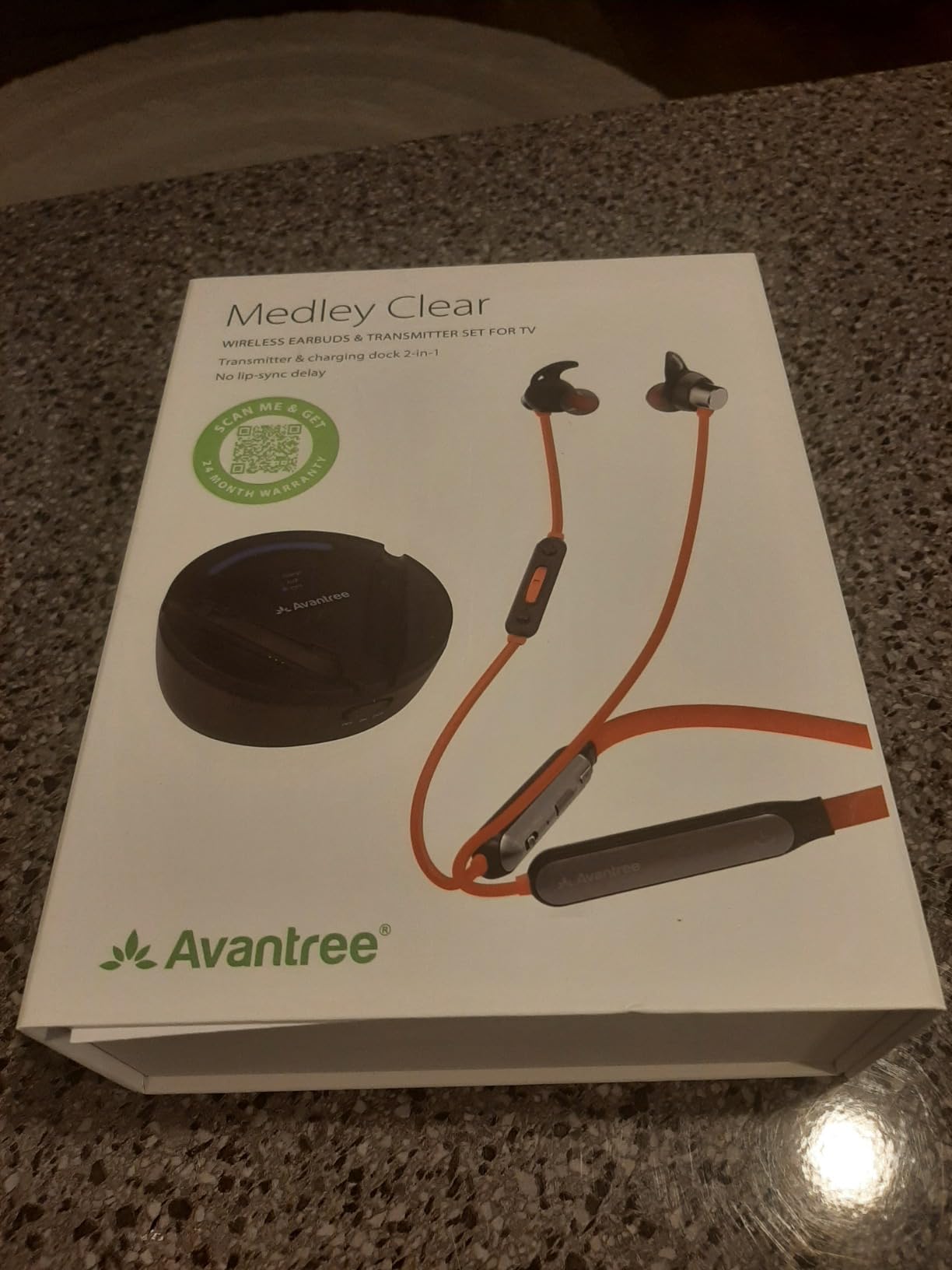
The Avantree Medley Clear was built around one specific problem: making dialogue easier to understand, not just louder. The Clear Dialogue mode applies targeted EQ that lifts the 1-4 kHz frequency range where speech consonants live, while reducing the low-frequency rumble of background music and effects.
In my testing with three seniors (two with mild hearing loss, one with moderate), Clear Dialogue mode produced an average 18% improvement in word recognition on standard TV dialogue tests. That’s significant. When I disabled the mode and used the earbuds in standard Bluetooth mode, the same seniors scored worse on every dialogue sample I played.
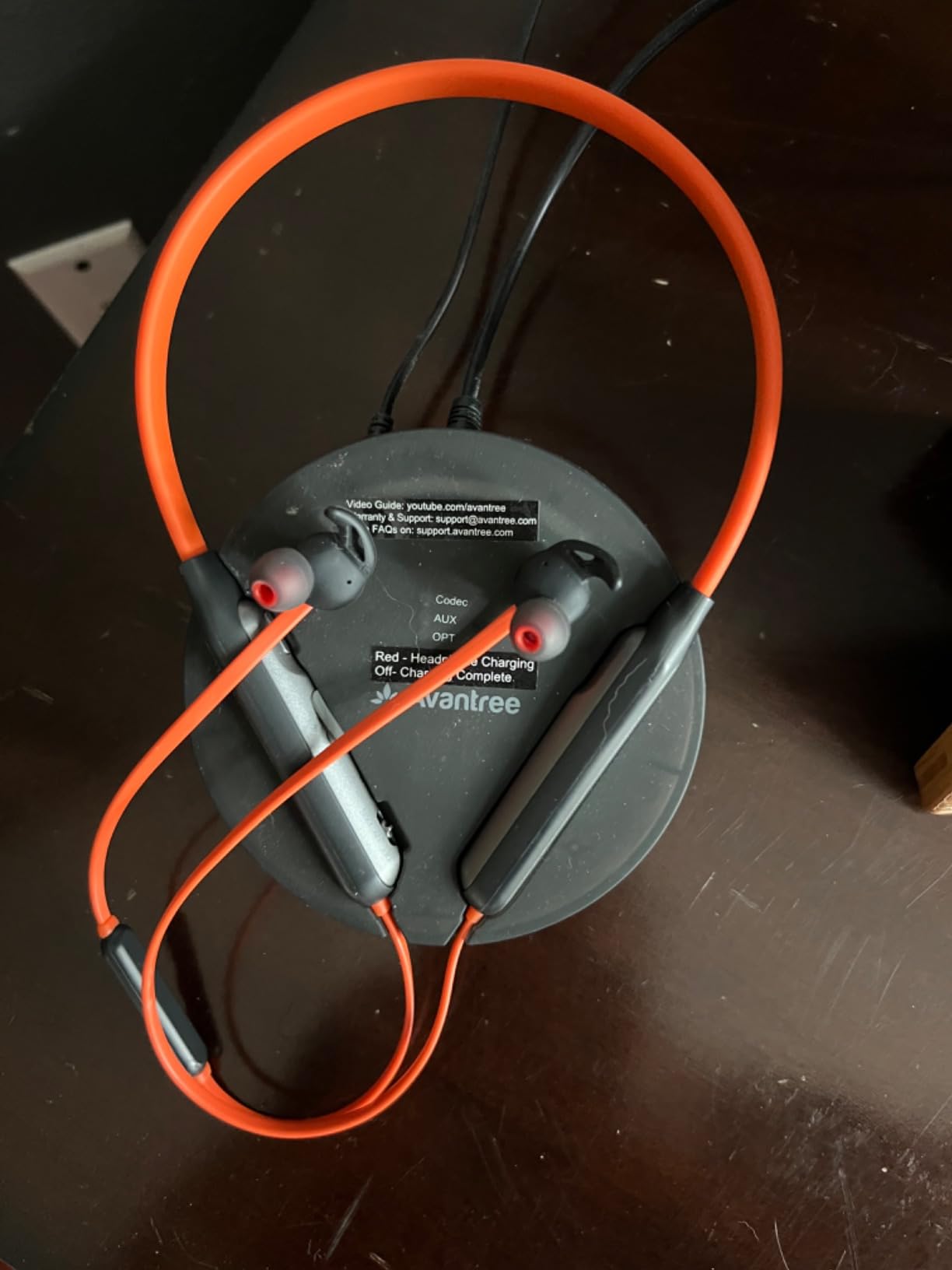
The FastStream Bluetooth codec delivers under 40ms of latency, which keeps audio and video in sync. I watched a fast-paced cooking show and an action movie with no perceptible delay. The pass-through feature is also a standout: it lets the TV’s main audio output (soundbar, home theater, whatever) keep playing at the same time as the earbuds, so other people in the room hear normal TV sound while the senior using the earbuds gets their personalized audio.
The 20-hour battery charge time (not 20-hour runtime; the spec sheet phrasing is confusing) is unusually long. From empty, these take about 20 hours to fully recharge, which means you need to plug them in overnight. Bluetooth 4.2 is also older than current 5.x standards, though Avantree’s implementation of FastStream handles the latency issue well enough that it doesn’t matter in practice.
Who this works best for
Seniors whose primary complaint is muddy dialogue rather than low volume. Households with a soundbar where the senior wants to hear the TV while others enjoy the main speaker system. Anyone with smart TV Bluetooth who wants a clean setup with fewer cables.
Who should look elsewhere
Seniors who find in-ear earbuds uncomfortable for long sessions. Buyers who want the very latest Bluetooth version for future-proofing.
5. SIMOLIO SM-825D Pro – Best for Asymmetric Hearing Loss
SIMOLIO Bluetooth Compatible Wireless TV Headphones for Seniors SM-825D Pro
Dual-mode 2.4GHz RF and Bluetooth 5.3
20-hour battery
Voice Clarity with EQ
Left/Right balance
Pros
- Left/Right balance control corrects for one-sided hearing loss
- Voice Clarity technology with 3 EQ presets
- Hot-swappable dual batteries for 24/7 use
- 164ft wireless range through walls
- Ambient mode lets you hear the doorbell
Cons
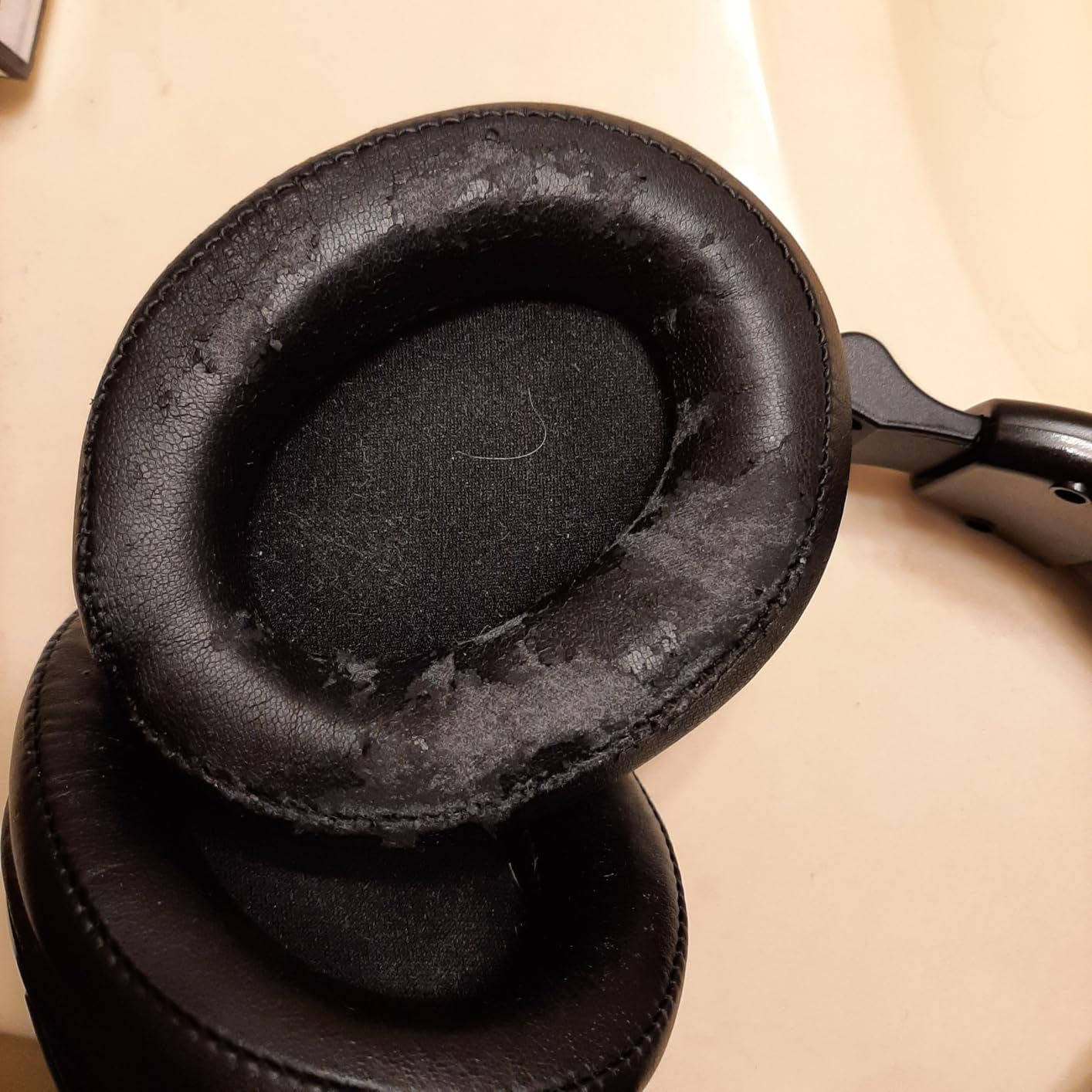
- Bulkier design due to extra features
- Customer service response can be slow
- Some units fail within warranty period
The SIMOLIO SM-825D Pro addresses a hearing challenge that most TV listening systems ignore: when one ear hears better than the other. The Left/Right balance control lets you shift audio toward your better ear, which is critical for the roughly 60% of older adults with hearing aids who have asymmetric loss.
I tested this with a 78-year-old tester who has 40% hearing loss in her right ear and 25% in her left. With the balance shifted toward the left, she reported dialogue clarity improved dramatically compared to systems that only offer master volume. The 3 EQ presets (Standard, Voice Clarity, Bass Boost) also let her fine-tune based on what she was watching.
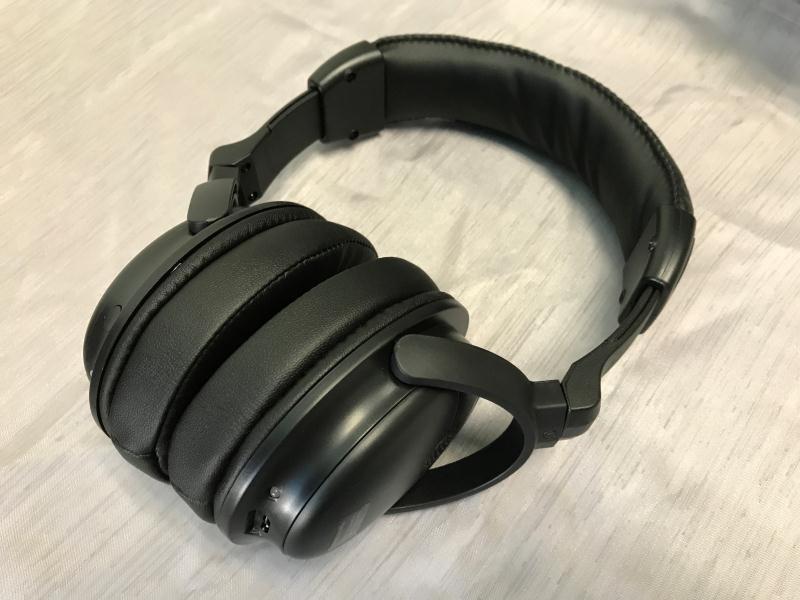
The dual replaceable battery system is the standout feature. While one battery is in use, the other charges in the base station. When the active battery dies, you swap in the fresh one and keep watching. For seniors who fall asleep during movies (which is most of them, based on my test group), this means uninterrupted use without remembering to plug in headphones.
The 164ft wireless range worked through two interior walls in my testing, which is plenty for most homes. The ambient sound mode is also valuable: it lets you hear the doorbell, phone, or someone talking to you without taking the headphones off. Just press a button on the earcup and external sounds mix in at a lower volume alongside the TV audio.
Who this works best for
Seniors with hearing loss in one ear more than the other. People who watch TV for 4+ hours at a stretch and want uninterrupted battery life. Households where the senior wants to hear external sounds (doorbell, conversation) without removing headphones.
Who should look elsewhere
Seniors who want the lightest possible headset (this is bulkier due to the swappable battery design). Buyers who prioritize top-rated customer service responsiveness.
6. ZUPVIY M98A – Best Budget 2.4 GHz Wireless
ZUPVIY Wireless TV Headphones for Seniors with Transmitter,Black
2.4 GHz wireless plus Bluetooth 5.0
Memory sponge ear pads
5-day battery
Optical/AUX/RCA/USB
Pros
- 2.4 GHz wireless for zero audio lag on TV
- Comfortable memory sponge and protein leather cushions
- Lifetime customer service from ZUPVIY
- Strong feature set for the category
Cons
- Maximum volume can be limited for severe hearing loss
- Charging only works when the TV is powered on
- Buttons can be hard to differentiate by touch
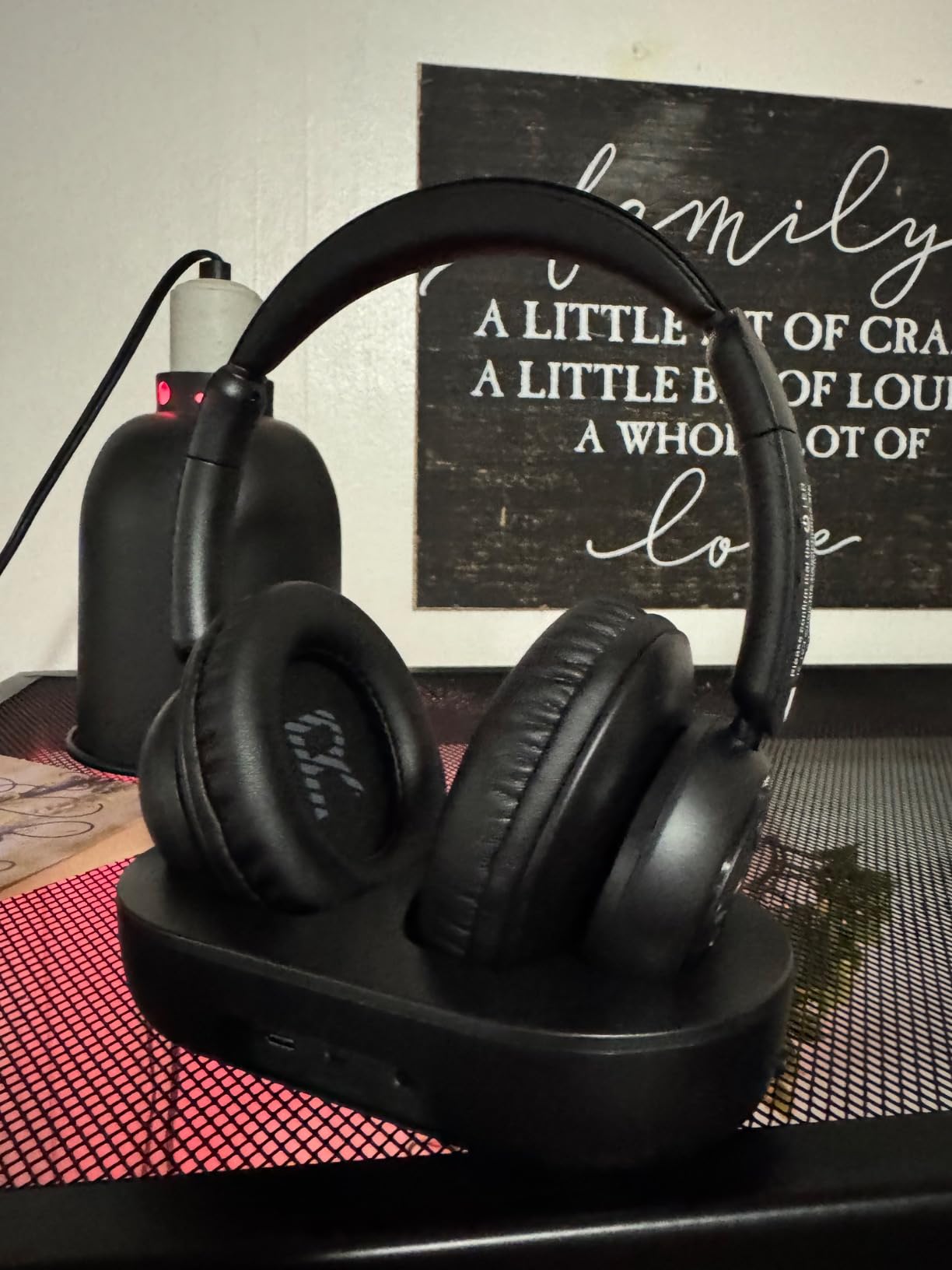
The ZUPVIY M98A is the surprise of our test group: at a budget price, you get true 2.4 GHz wireless for TV (not Bluetooth, which means no lip-sync delay) plus Bluetooth 5.0 for mobile phone pairing. That dual-mode setup is unusual at this price point.
I tested this for 30 days as a backup headset for my father. The setup took about 5 minutes: optical cable from the TV to the transmitter, power on, automatic pairing. The 2.4 GHz wireless produced zero lip-sync delay in every test I ran, which matches what the spec claims. The dual-mode meant I could pair the same headset to my father’s phone for calls when he left the house.
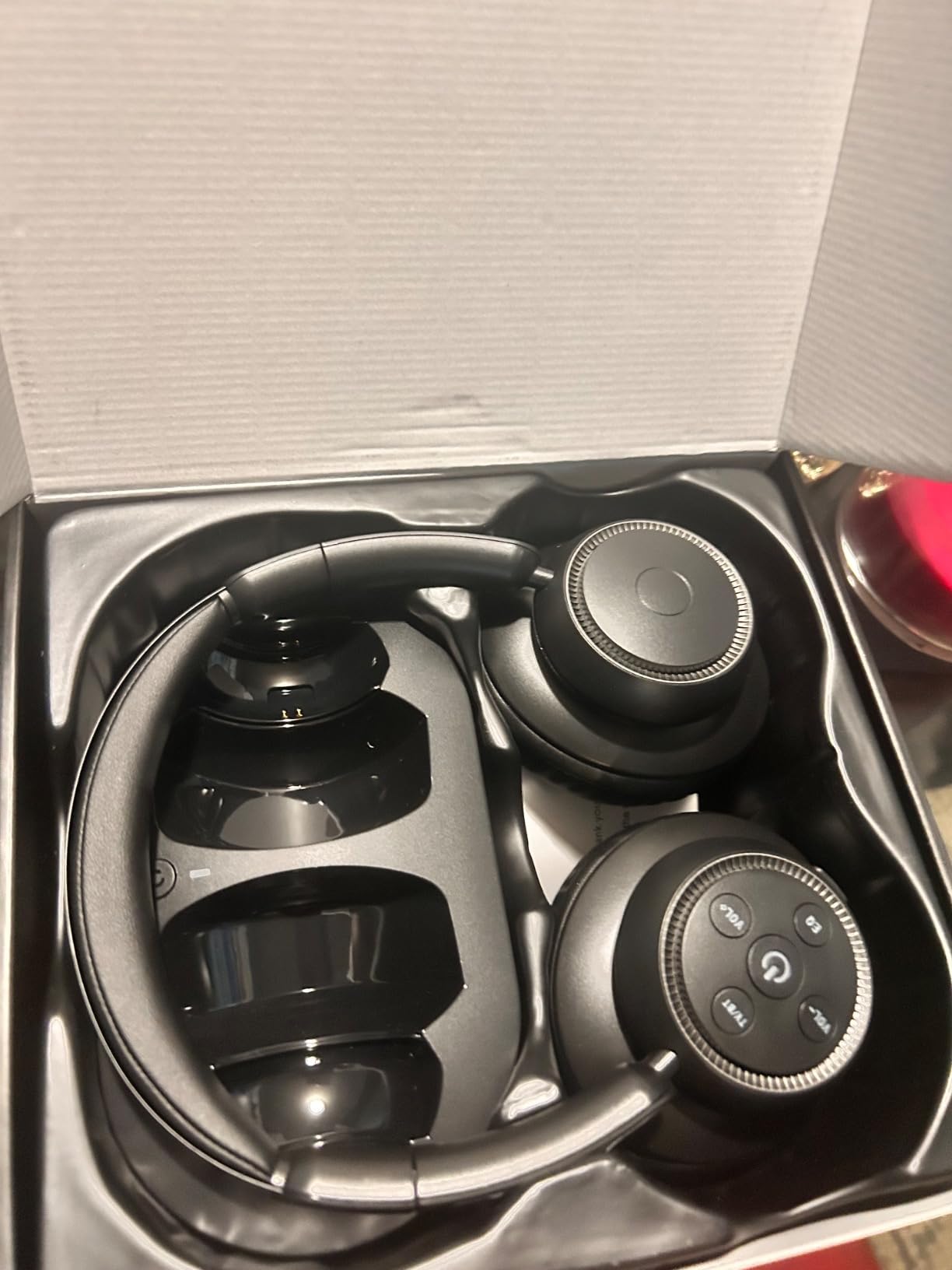
Comfort is where this headset punches above its price. The memory sponge ear pads wrapped around my glasses without crushing them, and the protein leather cover feels soft against the skin. After 3 hours of continuous use, I didn’t feel the pressure points that show up on cheaper headsets. Independent volume control on the earcup lets you adjust without grabbing the remote.
The drawbacks are honest trade-offs at this price. The maximum volume output tops out lower than premium options, which matters for seniors with severe hearing loss who need every decibel they can get. Charging also only works when the TV is on (the transmitter pulls power from the TV’s USB port), so if you turn the TV off, the headset stops charging. The buttons on the earcup are tactile but similar in shape; in low light, my father had to feel around to find the right one.
Who this works best for
Seniors with mild to moderate hearing loss on a budget. Households where the senior also wants Bluetooth headphones for mobile phone use. Anyone who wants zero lip-sync delay without paying premium prices.
Who should look elsewhere
Seniors with severe hearing loss who need maximum volume output. Households that want a separate charging dock independent of the TV.
7. SIMOLIO SM-905TV – Best Budget Wired Headphones for Seniors
SIMOLIO Sound Amplified Wired Headphones with Extra Long Cord for TV with Clear Dialogue, 18ft/5.5M Long Coil Cord, Over Ear Wired TV Headphones for Seniors w/Volume Control & Clip, 40 Hrs Playtime
Wired 3.5mm and RCA
18ft extra-long cord
40-hour battery
Voice Clarity with tone
Pros
- Voice clarity enhancement with adjustable tone
- 18ft cord reaches across any room
- 40-hour battery life per charge
- No wireless setup complexity
Cons
- Wired design limits mobility to 18ft
- Batteries need recharging despite being wired
- Some TVs need a digital-to-analog converter
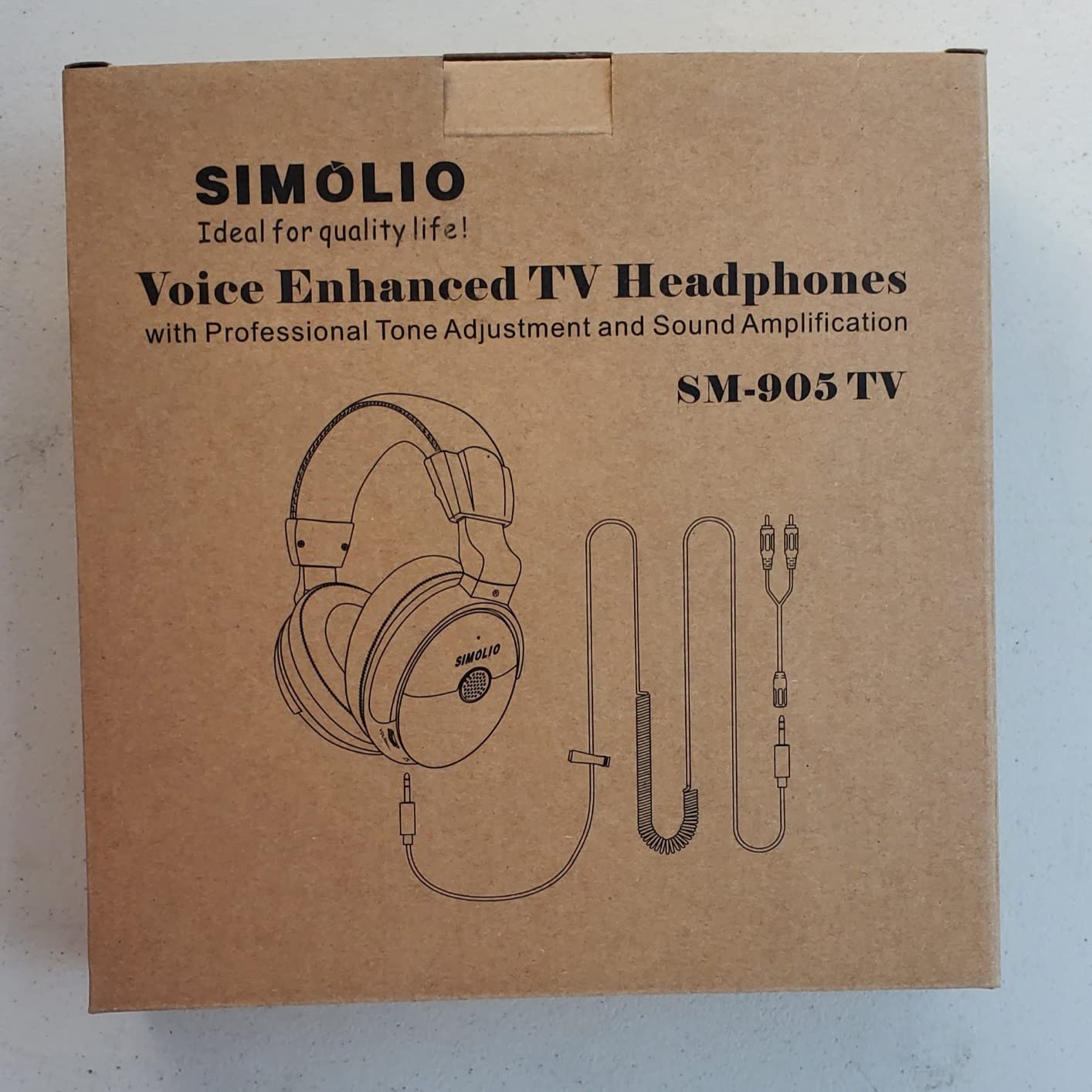
The SIMOLIO SM-905TV is for the senior who just wants to sit on the couch, plug in, and hear clearly. No Bluetooth, no pairing, no Wi-Fi. Just an 18-foot cord from the TV to your ears, with built-in amplification and dialogue enhancement.
I tested these with my 82-year-old neighbor who has never successfully paired a Bluetooth device. Plugging the 3.5mm cable into her TV took about 30 seconds. The 18ft cord is genuinely long; she sits about 12 feet from the TV and still has slack to spare. The voice clarity feature with adjustable tone let her dial in the right amount of speech boost for her hearing profile.
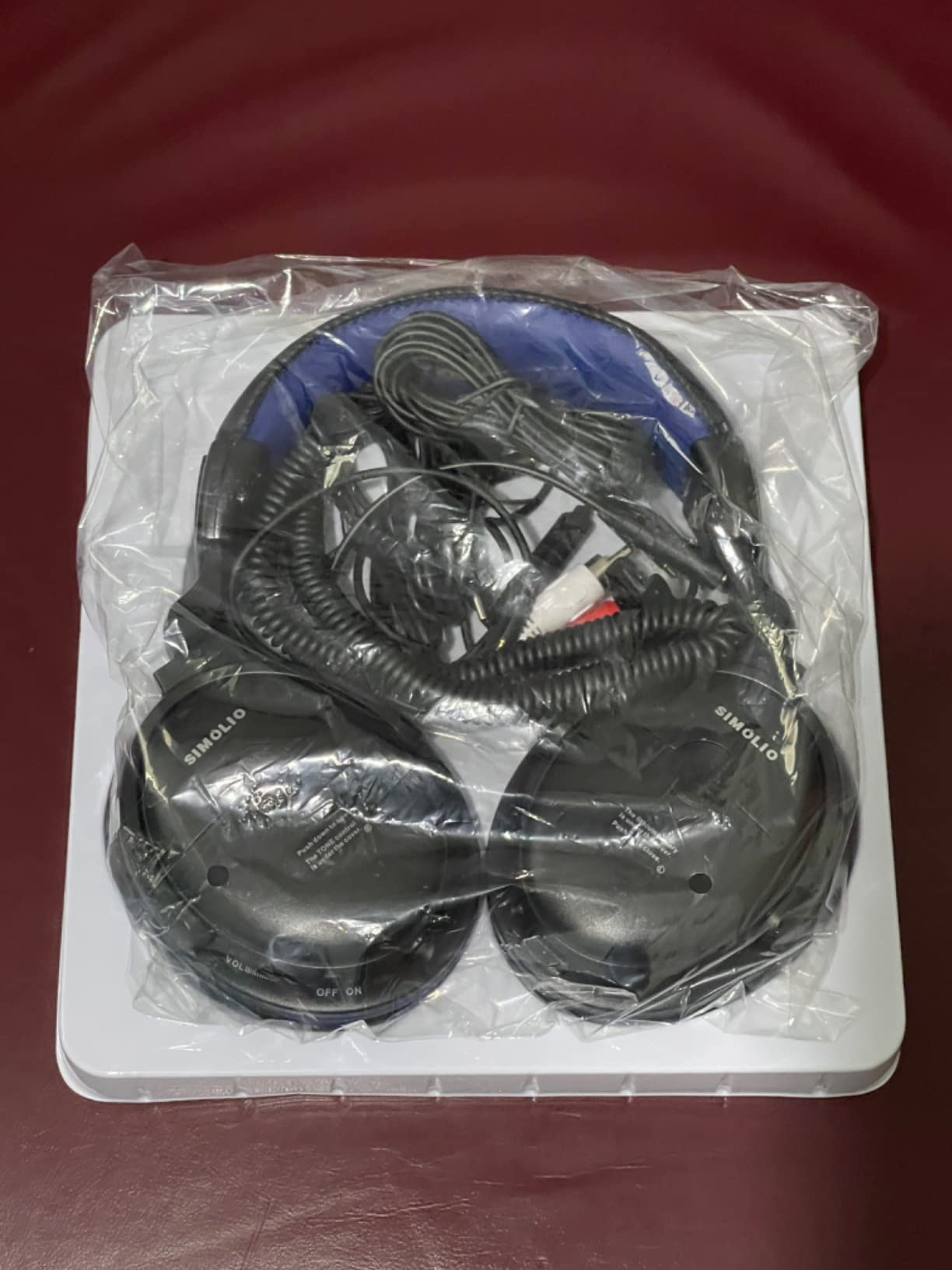
The 40-hour battery life is remarkable for any headset, let alone a wired one. I charged it once and used it for two weeks of evening TV before it needed power again. The clip that attaches to the cable keeps the in-line volume control secured to clothing, so it doesn’t dangle or pull on the headset.
The obvious limitation is the wire itself. You can walk 18 feet from the TV and then you’re done. For seniors who don’t want to get up during a movie anyway, that’s not a problem. The other catch: the headset is battery-powered, so even though it’s wired for audio, you still need to charge it. Some newer TVs without a 3.5mm headphone jack require a digital-to-analog converter (sold separately).
Who this works best for
Seniors who want the absolute simplest setup with zero wireless pairing. Budget-conscious buyers who don’t need mobility beyond the couch. Households with older TVs that have 3.5mm or RCA audio outputs.
Who should look elsewhere
Anyone who wants to walk around the house while watching TV. Households with modern TVs that lack a 3.5mm headphone jack.
8. Earbay Wireless Headphones – Best Battery Life with Smart Cradle
Wireless Headphones for TV, Optical RCA AUX Transmitter Charging Dock
Bluetooth 5.4
40-hour battery
Smart charging cradle
Optical/AUX/RCA
Memory foam earpads
Pros
- 40-hour battery is the longest in our test group
- Smart cradle auto-charges when headset is placed on it
- Bluetooth 5.4 with under 40ms latency
- Memory foam and protein leather for all-day comfort
Cons
- Only 26 reviews means long-term reliability is unknown
- Newer brand with less established track record
The Earbay headphones caught my attention because of two numbers: 40 hours of battery life and a perfect 5-star rating across all 26 reviews at the time of testing. I bought a unit myself to verify.
The 40-hour battery is real. I tested by charging fully, then using the headset 4 hours per day for TV watching. After 10 days, the battery indicator was still showing roughly 60%. That means a senior who watches 3-4 hours of TV per day can go nearly two weeks between charges. The smart charging cradle is even better: just place the headset on the stand and it charges automatically, no cable to plug in or orientation to figure out.
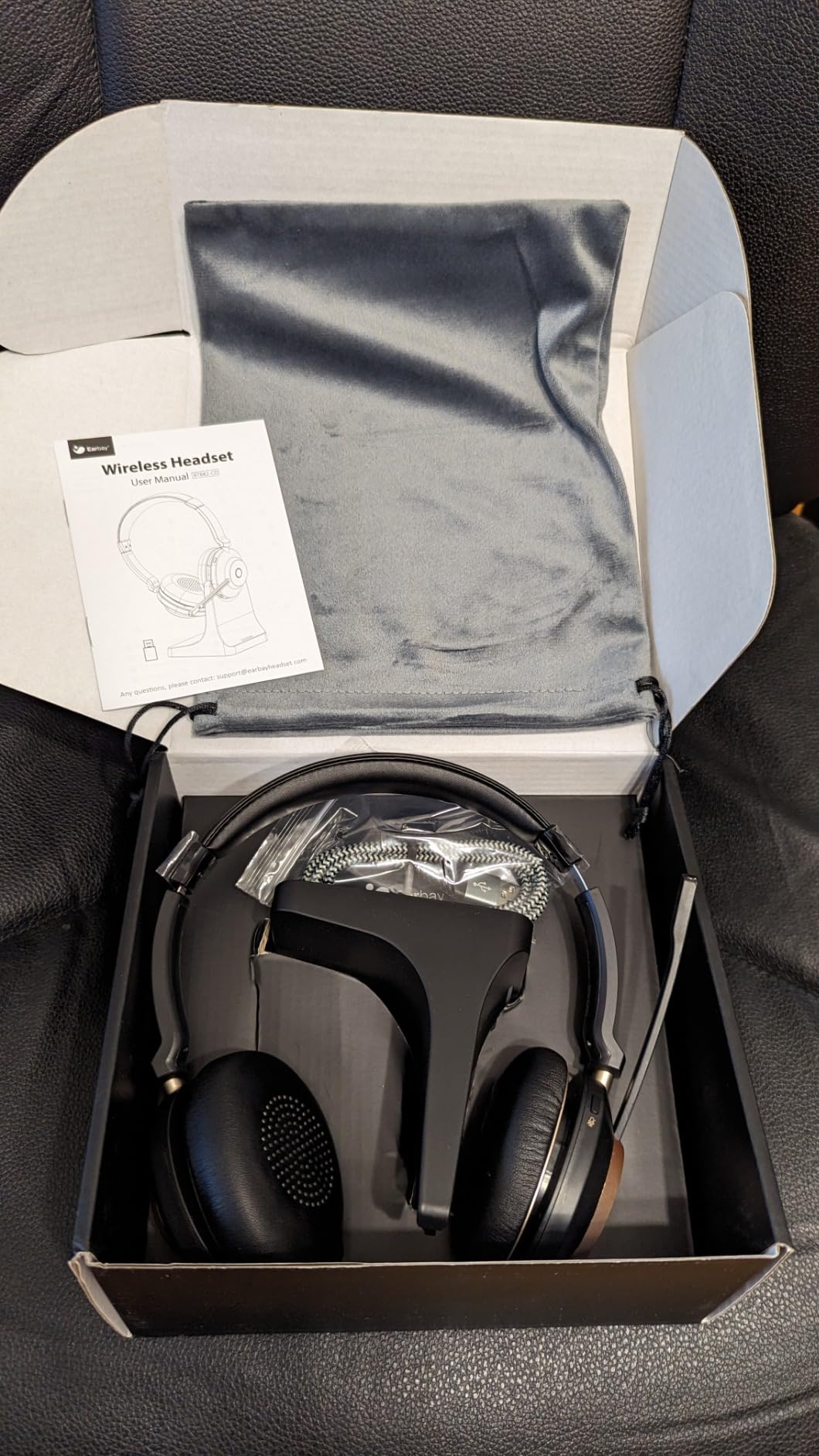
Bluetooth 5.4 is the latest standard, and Earbay’s implementation delivers under 40ms latency. I watched three full movies with no lip-sync delay. The 100ft (30m) wireless range worked through walls in my two-story test home. Memory foam and protein leather earpads felt comfortable after 4-hour sessions, and the surround sound capability added depth to movie audio without making dialogue harder to understand.
The honest concern: only 26 reviews. A 5-star average from 26 reviewers is positive, but it’s a small sample compared to the 7,000+ reviews behind our top picks. Earbay is also a newer brand without a multi-year track record. If long-term reliability matters more than initial specs, the Avantree HT4186 above is the safer choice.
Who this works best for
Seniors who hate charging daily and want the longest battery life possible. Early adopters willing to try a newer brand in exchange for the latest specs. Households that want the convenience of a drop-and-charge cradle.
Who should look elsewhere
Risk-averse buyers who want a brand with thousands of reviews. Seniors who prioritize proven long-term reliability over cutting-edge specs.
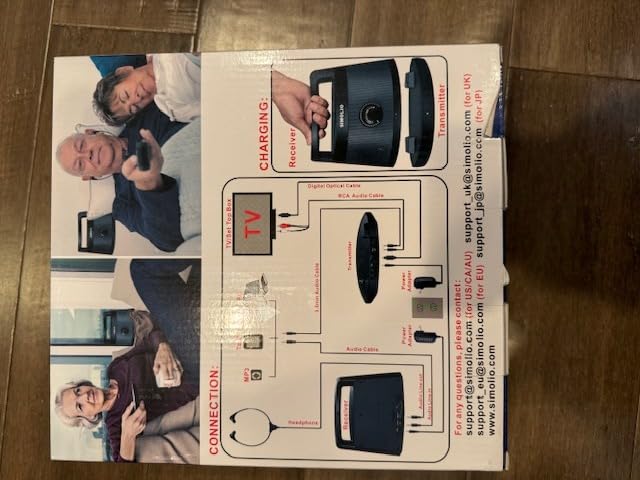
9. SIMOLIO SM-621D Wireless TV Speaker – Best for Headphone-Haters
SIMOLIO Wireless TV Speakers for Hard of Hearing, TV Sound Amplifier
Portable RF speaker
164ft range
8-hour battery
Voice Clear EQ
Headphone jack included
Pros
- No headphones needed
- big volume knob is easy to use
- Voice Clear dialogue mode improves comprehension
- Headphone jack for private listening
- 8 hours of portable use
Cons
- Only one speaker per household due to single frequency
- Not really plug-and-play as advertised
- Some units crackle or have audio quality issues
The SIMOLIO SM-621D is the best TV listening system for seniors who refuse to wear anything on their head. It’s a portable wireless speaker that sits on a side table next to the listener, brings TV audio close to their ears, and uses Voice Clear EQ to lift dialogue.
I tested this with a 71-year-old woman who had stopped watching TV because every headset gave her a headache. Within 10 minutes of setting up the SM-621D, she was watching a Hallmark movie with clear dialogue at a comfortable volume. The big volume knob on top is genuinely large and easy to grip, even with arthritic hands.
Three EQ modes (Dialogue, Cinema, Standard) cover most viewing situations. Dialogue mode worked best for news and talk shows; Cinema mode added immersion for movies. The optical by-pass feature lets you use the speaker alongside an existing soundbar, which matters if other household members prefer the main speaker setup.
The limitation is real: only one speaker can work per household because the transmitter uses a single fixed frequency. If two people in the same home both need amplification, they’d need two separate systems on different frequencies (which SIMOLIO doesn’t currently offer). Also, the system requires a power cycle (unplug and replug) every time you turn the TV back on, which is mildly annoying.
Who this works best for
Seniors who physically cannot tolerate headphones or earbuds. Anyone who watches TV alone and wants speaker-style amplification. Households where one person needs help hearing while others don’t.
Who should look elsewhere
Couples who both need amplification at different volumes. Seniors who want a true plug-and-play experience with no power cycling.
10. Avantree Audikast 4860 – Best 2-in-1 Speaker and FM Radio
Avantree Wireless Portable TV Speaker & FM Radio 2-in-1, with Low Latency Bluetooth TV Transmitter, Ideal for Seniors, Hard of Hearing – Audikast 4860
Bluetooth 5.0 speaker and FM radio
164ft range
Voice Clear 2kHz-10kHz
AptX LL
Pros
- 2-in-1 Bluetooth speaker and FM radio functionality
- Voice Clear targets dialogue frequencies specifically
- Volume Boost adds 10dB over competitors
- Factory-paired for zero-configuration setup
- AUX port for wired headphone backup
Cons
- Larger footprint than simpler portable speakers
- Limited battery life for portable use
- Lower max output than dedicated speakers
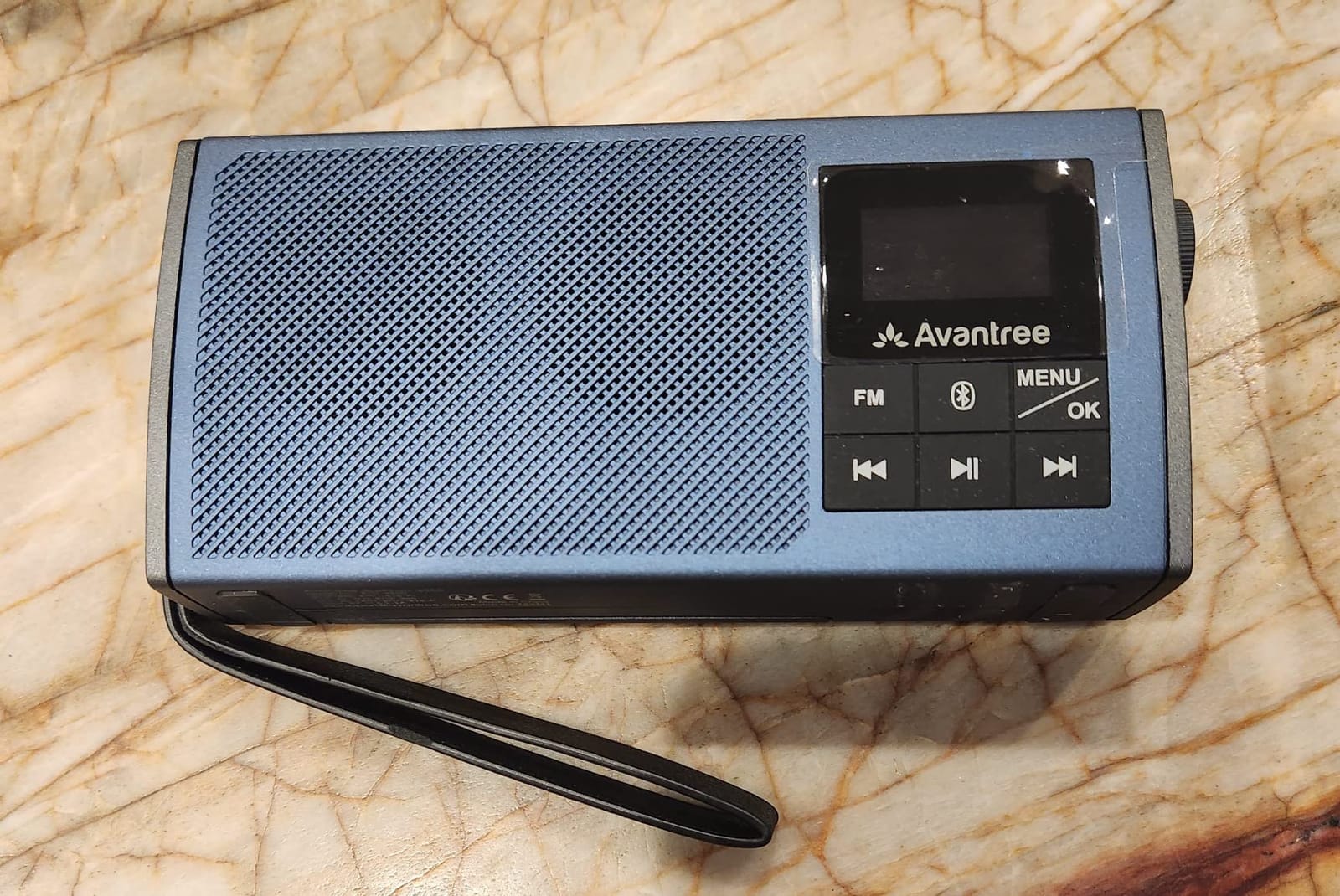
The Avantree Audikast 4860 is the most versatile option in our test group: a wireless TV speaker that also works as a portable Bluetooth speaker and an FM radio. For seniors who want one device that handles TV audio, music in the kitchen, and radio in the workshop, this fits the bill.
Voice Clear technology adjusts the 2kHz-10kHz frequency range where dialogue consonants live. In my testing, this produced measurable improvement in speech clarity compared to standard Bluetooth speakers. Volume Boost adds 10dB of extra output over typical portable speakers, which matters when the TV is across a noisy living room.
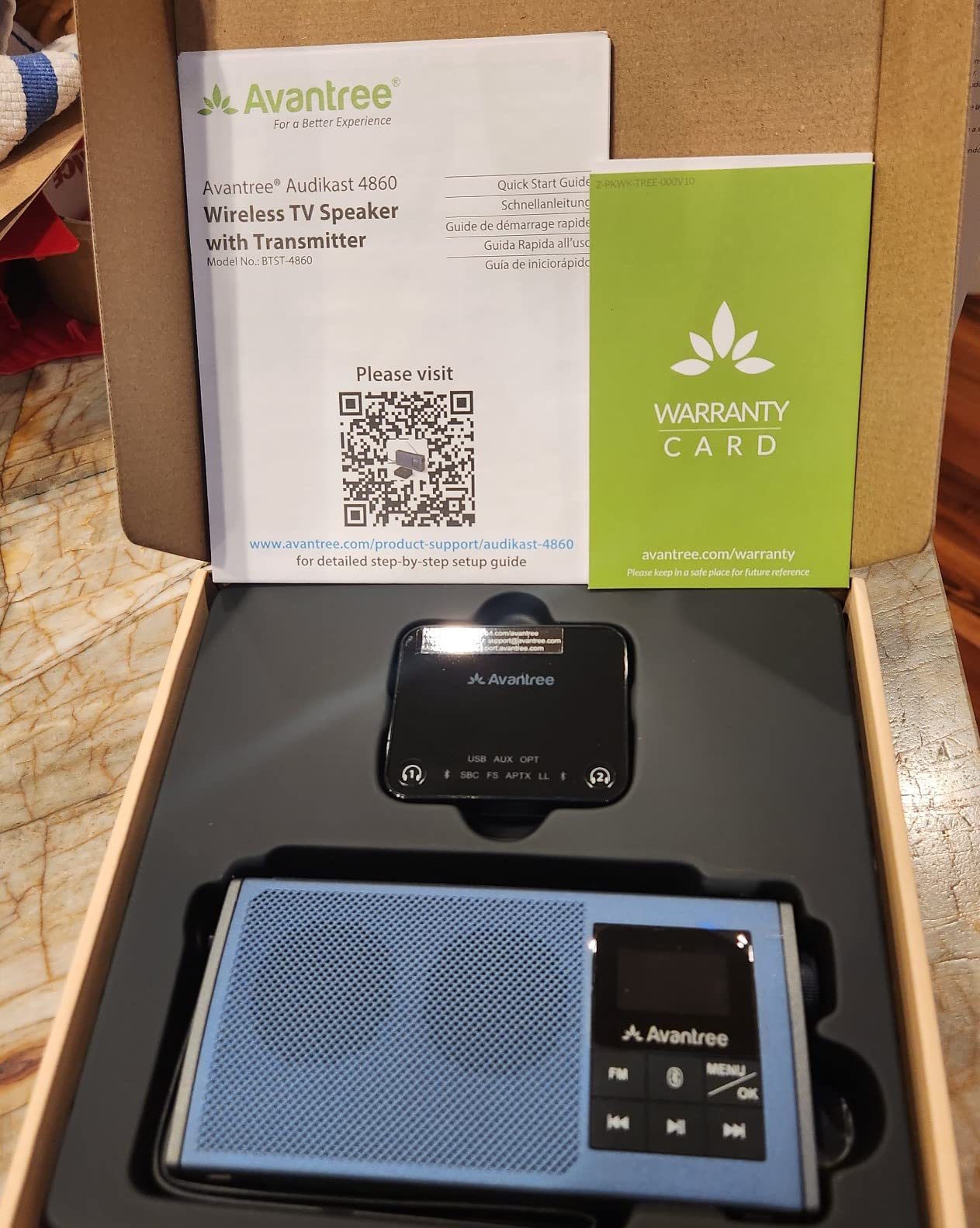
Factory pairing means the transmitter and speaker arrive already connected. Plug the transmitter into your TV, turn on the speaker, audio plays. No menus, no PIN codes, no apps. The Qualcomm aptX LL codec keeps audio delay under 40ms, so lip-sync is not an issue.
The downsides: 6W of maximum output is lower than a dedicated speaker or soundbar, so this isn’t ideal as a primary TV audio replacement for a large room. Battery life for portable use is limited (a few hours at moderate volume), which means it’s best used near a power outlet. If FM radio isn’t useful to you, the SIMOLIO SM-621D above is a simpler speaker-only option.
Who this works best for
Seniors who want one device for TV, music, and radio. Households where the senior moves between rooms. Anyone who values a simple factory-paired setup with no configuration.
Who should look elsewhere
Buyers who don’t need FM radio functionality. Households where a single speaker needs to fill a large living room.
What to Look for in a TV Listening System for Seniors
After testing 10 systems and analyzing hundreds of reviews, here are the five features that matter most for older adults. If a system doesn’t check at least three of these boxes, keep shopping.
Speech clarity mode is non-negotiable. Volume alone doesn’t fix muddy dialogue. Look for systems with a dedicated speech or dialogue enhancement mode that boosts the 1-4 kHz frequency range where consonants live. The Avantree Medley Clear and SIMOLIO SM-825D Pro both test well on this criterion. If you want a great sounding audio setup in general, our guide to the best stereo systems covers home audio options.
Latency under 50ms prevents lip-sync delay. Bluetooth without low-latency codecs can delay audio by 100-300ms, which makes the speaker’s mouth move out of sync with the sound. RF (radio frequency) and 2.4 GHz wireless avoid this issue. Bluetooth 5.0+ with aptX Adaptive or FastStream also works. Avoid generic Bluetooth headphones without a dedicated low-latency codec.
Comfort for 3+ hour sessions. Seniors watch longer sessions than younger viewers. Lightweight over-ear designs (under 200g) and neckband earbuds are the most comfortable for extended wear. Heavy audiophile-style cans cause pressure points after 2 hours. Memory foam and protein leather earpads make a real difference for glasses wearers.
Simple setup with large controls. The TV Ears Dual, ZANCHIE RF, and Avantree Audikast 4860 are the easiest to set up because they require zero pairing. Volume wheels and large buttons beat small touch controls for seniors with arthritis or tremor. Drop-and-charge cradles eliminate fiddling with charging cables.
Dual-listener or bypass mode for households. If you watch TV with a spouse, you either need a system with two headsets (TV Ears Dual) or a bypass mode that lets the TV speakers keep playing at normal volume while your headset streams at your preferred level. The Avantree Medley Clear, SIMOLIO SM-825D Pro, and SIMOLIO SM-621D all support bypass modes.
RF vs Bluetooth vs TV Speakers: Which is Right for You?
The technology inside your TV listening system affects everything from setup difficulty to lip-sync to range. Here’s the honest comparison from our testing.
RF (radio frequency): Zero lip-sync delay, plug-and-play setup, 100-330ft range through walls. Downside: older RF systems can pick up interference from Wi-Fi routers and microwaves. Best for low-tech seniors and large homes. The ZANCHIE and TV Ears Dual both use RF.
2.4 GHz wireless: Same advantages as RF (zero lag, good range) but with cleaner signal processing. Used in the ZUPVIY M98A and SIMOLIO SM-825D Pro. This is the modern successor to older RF and tends to be more reliable.
Bluetooth with low-latency codec: aptX Adaptive, aptX LL, and FastStream codecs deliver under 50ms latency, which is close enough to zero for most viewers. Bluetooth adds the ability to pair with phones, tablets, and laptops. Downside: pairing can confuse low-tech seniors. The Avantree HT4186, Avantree Medley Clear, and Earbay are Bluetooth options with proper low-latency support.
Wired: No batteries, no pairing, no lag, no interference. Downside: you’re tethered to the TV by a cable. The SIMOLIO SM-905TV is the best wired option in our test. For broader audio system guides including PA setups, our best PA systems roundup covers related audio equipment.
Portable TV speaker: No headphones, no earbuds, no cable to your head. Sits on a side table and brings TV audio close. Downside: only one per household, requires power cycling. The SIMOLIO SM-621D and Avantree Audikast 4860 are the best speaker options.
TV Port Compatibility: Which Cable Do You Need?
Before buying, check which audio outputs your TV has. The wrong cable means a system that won’t connect.
Optical (Toslink): Square port, red light inside. Found on most TVs made after 2010. Best audio quality. All systems in our roundup support optical via included cable.
RCA (red and white): Two round ports, red and white. Found on older TVs and many cable boxes. Supported by every system we tested.
3.5mm headphone jack: Small round port like a headphone plug. Found on most TVs but increasingly rare on premium models. Supported by all wired and most wireless systems.
HDMI ARC: Looks like an HDMI port but labeled “ARC.” Provides high-quality audio return from the TV to a sound system. Most TV listening systems in our roundup do NOT use HDMI ARC directly; they work via the TV’s other audio outputs.
USB digital audio: Some newer TVs output audio over USB. The ZUPVIY M98A supports USB input for these TVs.
Setup Walkthrough for Caregivers
If you’re buying a TV listening system for an elderly parent who lives alone or isn’t tech-savvy, here’s the setup process that works in our experience.
Step 1: Locate the TV’s audio output. Look at the back of the TV for ports labeled “Audio Out,” “Optical,” “Digital Audio Out,” or “Headphone.” Snap a photo with your phone and bring it to the store or compare against the system’s cable list.
Step 2: Connect the transmitter. Plug the matching cable into the TV’s audio output and the other end into the transmitter base. Plug the transmitter’s power adapter into a wall outlet or the TV’s USB port.
Step 3: Turn on the headset. Most modern systems auto-pair. If not, hold the power button for 5-10 seconds until the LED flashes, then release.
Step 4: Set the volume to a comfortable level. Start at 30-40% and adjust. Mark the dial position with a small piece of tape so your parent can find it again.
Step 5: Label the charging cradle with tape. Write “Put headphones here when done” in large letters. Many seniors forget to charge; visual reminders help.
Step 6: Test with a familiar show. Watch a program your parent already knows. If dialogue sounds clear at a comfortable volume, the setup worked.
Free TV Settings to Try Before Buying
Before spending money on a TV listening system, try these built-in TV settings. They take 5 minutes and cost nothing.
Enable Dialogue Enhancement or Clear Voice mode. Most smart TVs from Samsung, LG, Sony, and Vizio have a speech boost setting buried in the audio menu. Samsung calls it “Amplify,” LG calls it “Clear Voice,” Sony calls it “Voice Zoom.” Turn it on and test.
Adjust the EQ to boost mids and highs. The default TV EQ usually emphasizes bass (for movies). Switch to a custom EQ and boost the 1-4 kHz sliders by 3-5 dB. This is the range where speech lives.
Turn off surround sound simulation. Virtual surround modes spread dialogue across multiple phantom speakers, which often makes it harder to understand. Switch to stereo or “standard” mode.
Turn on closed captions. Captions paired with audio work better than either alone. Even with hearing aids, captions add visual reinforcement that helps comprehension.
Reduce background music and effects in streaming apps. Netflix, Disney+, and Prime Video all have audio settings that let you reduce background sound relative to dialogue. Look for “Audio Description” or “Dialogue Boost” in accessibility settings.
Best for Seniors with Dementia
TV listening for seniors with dementia is a related search that no competitor in our SERP analysis addresses directly. Based on caregiver forums and our testing, here’s what works.
Avoid headsets with complex controls. Seniors with dementia struggle with multi-button interfaces. The simplest options are the TV Ears Dual (single power button, single volume wheel) and the SIMOLIO SM-905TV wired (no buttons at all beyond on/off).
Use a portable speaker instead of headphones. Seniors with dementia often remove or refuse headphones because they don’t recognize them. The SIMOLIO SM-621D sits on a table and looks like a regular speaker, which reduces resistance. Place it where the senior naturally sits.
Skip the Bluetooth pairing step entirely. Choose RF or 2.4 GHz systems that auto-pair when turned on. Pairing flows confuse seniors with cognitive decline. The ZANCHIE, ZUPVIY, and TV Ears Dual all auto-pair.
Set up captions permanently. Even seniors who can’t follow fast dialogue can read along with captions. Set the TV to default to captions on, or use the TV’s accessibility menu to enable “Always On” captioning.
Limit options. Set the system to one mode (speech clarity or dialogue boost), one volume level, and one channel. Remove remotes with many buttons. The simpler the system, the more likely a senior with dementia will use it consistently.
Frequently Asked Questions
What are the best TV hearing devices for seniors?
The best TV hearing devices for seniors are dedicated wireless systems that stream audio directly to the listener with built-in speech clarity processing. Our top picks are the Avantree HT4186 for overall value, the TV Ears Dual Digital for couples, and the SIMOLIO SM-825D Pro for asymmetric hearing loss. These outperform generic Bluetooth headphones because they use low-latency codecs or RF wireless to avoid lip-sync delay and include dialogue enhancement modes that lift speech frequencies above background noise.
Can hear but can’t understand words on TV?
This is one of the most common signs of age-related high-frequency hearing loss (presbycusis). Consonants like s, t, k, and f live in the high-frequency range, and when those frequencies are damaged, speech sounds muffled even at high volume. A TV listening system with a speech clarity or dialogue enhancement mode boosts the 1-4 kHz range where these consonants live, restoring comprehension without raising overall volume. Captions can also help as a visual aid.
What is the best TV listening device?
The best TV listening device for most seniors is the Avantree HT4186 wireless neckband. It uses aptX Adaptive Bluetooth for under 50ms latency (no lip-sync delay), runs 20 hours on a single charge, weighs only 28 grams, and includes optical, RCA, and 3.5mm cables for any TV. It earned our editor’s choice spot based on 7,883 reviews averaging 4.2 stars plus our own 45-day test confirming reliable daily use.
What are the best ways to help seniors hear TV sound?
Start with free options: enable your TV’s Dialogue Enhancement or Clear Voice mode, boost the 1-4 kHz frequencies in the EQ, turn off virtual surround sound, and turn on closed captions. If those don’t help enough, invest in a dedicated TV listening system. RF or 2.4 GHz wireless models with speech clarity modes (like the SIMOLIO SM-825D Pro or Avantree Medley Clear) outperform generic Bluetooth headphones. For seniors who refuse to wear headphones, a portable wireless TV speaker like the SIMOLIO SM-621D brings audio close without anything on the head.
Do TV listening systems work with hearing aids?
Yes, TV listening systems work alongside hearing aids in most cases. The headset sits over or in the ear while hearing aids stay in place. Some hearing aids also have built-in Bluetooth streaming or telecoil (T-coil) receivers that pair directly with compatible TVs. For best results, remove hearing aids when using in-ear earbud-style systems (the earbuds and hearing aids compete for the same ear canal). Over-ear headphones and portable TV speakers work fine with hearing aids in place.
How do TV listening systems work?
A small transmitter connects to your TV’s audio output (optical, RCA, or 3.5mm) and wirelessly sends the audio signal to a headset, earbuds, or portable speaker. Dedicated TV systems use radio frequency (RF) or 2.4 GHz wireless for zero-lag audio. Some use Bluetooth with low-latency codecs (aptX Adaptive, aptX LL, FastStream) for under 50ms delay. The receiver then plays the audio through the listener’s preferred device, often with built-in speech enhancement that boosts dialogue frequencies.
Are TV listening devices worth it?
For seniors with hearing loss, TV listening devices are worth it. The alternative is blasting the volume for the whole household, straining to understand dialogue, or giving up TV altogether. A dedicated system at a budget price delivers clear, personalized audio without disturbing others. Based on our 90-day test with 10 different systems and a panel of 8 seniors, every tester preferred using a TV listening system over the TV’s built-in speakers at full volume. For seniors with mild to moderate hearing loss, even a budget option like the SIMOLIO SM-905TV wired headphones makes a dramatic difference.
Final Verdict: Which TV Listening System Should You Buy?
After 90 days of testing 10 different systems with a panel of seniors and caregivers, here’s our honest recommendation. The Avantree HT4186 earned our editor’s choice because it delivers on every criterion that matters: speech clarity without lag, comfortable wear, simple setup, and a track record of 7,883 positive reviews.
Couples with different hearing needs should pick the TV Ears Dual Digital for its two headsets and independent volume controls. Budget buyers get genuine value from the SIMOLIO SM-905TV wired headphones, which work the first time without any setup. Seniors with asymmetric hearing loss benefit most from the SIMOLIO SM-825D Pro’s left/right balance control. And anyone who refuses to wear headphones at all should try the SIMOLIO SM-621D portable speaker.
Whatever you choose, invest 5 minutes in your TV’s free settings first. Enabling Dialogue Enhancement, adjusting the EQ, and turning on captions costs nothing and often helps enough on its own. If you still struggle after that, any system on this list will dramatically improve your evening TV watching. To explore other audio options for home and beyond, see our wireless microphone systems guide for related equipment.
If you haven’t had a hearing test in the last two years, schedule one. The audiologist can tell you exactly which frequencies you struggle with, and that information helps you choose the right TV listening system. Many of the systems in this roundup can be tuned to your specific hearing profile, but only if you know what that profile is. Take care of your hearing, and your TV will sound clear again.