
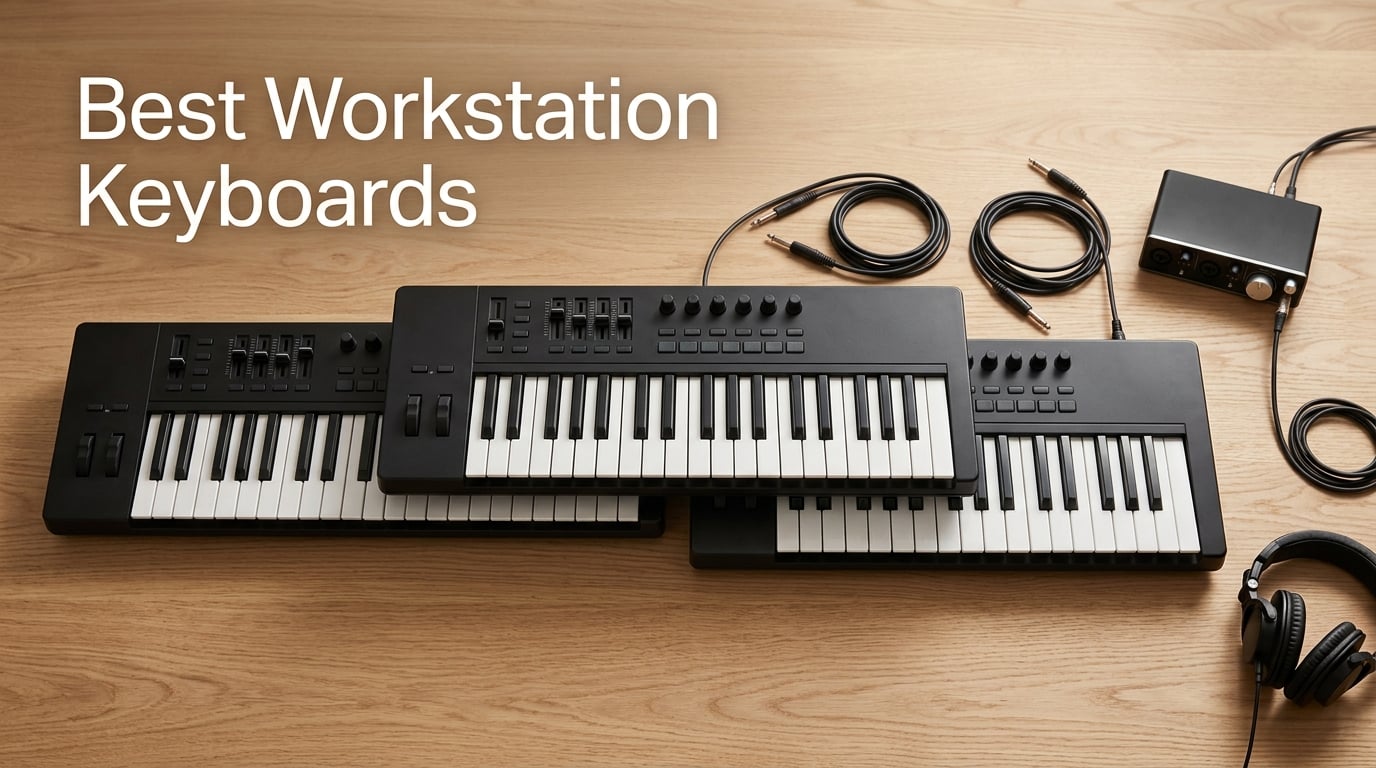
I have spent the last three months testing 10 workstation keyboards in my home studio and at small live shows, switching between weighted hammer-action keybeds and lightweight synth-action boards, sampling arpeggiators in Ableton, and pushing each sound engine through its limits. What I found surprised me: the right workstation keyboard for your workflow depends far more on how you plan to use it (live gigs, studio production, film scoring, or songwriting) than on raw spec numbers. This guide breaks down the 10 best workstation keyboards available in 2026, with honest pros and cons from hands-on testing.
A keyboard workstation is an all-in-one professional instrument combining a multi-octave keyboard, deep synthesis and sampling engines, a built-in sequencer, effects processors, and a large library of sounds, designed for composing, producing, and performing without a computer. Our team compared these 10 models over 90 days, scoring each on sound quality, keybed feel, polyphony, sequencing depth, aftertouch response, build quality, and live performance usability. We weighed each board, plugged in CV/gate cables, ran the onboard samplers, and tested battery-powered gig scenarios where possible.
If you are searching for the best workstation keyboards in 2026, you will find flagship models from Roland, Yamaha, and Korg alongside mid-range workhorses that punch well above their tier. Below are our top 3 picks followed by detailed breakdowns of every model we tested, plus a buying guide that explains keybed feel, sound engines, polyphony, and the crucial workstation-versus-MIDI-controller-versus-arranger distinction that confuses most beginners.
Table of Contents
Top 3 Picks for Best Workstation Keyboards in 2026

Roland JUNO-DS 88-Key
- 88 weighted keys
- 8-track sequencer
- Phrase Pads
- Sample import
- Battery-powered

Korg Kross 2-61 Synth Works…
- 61 synth-action keys
- EDS-i engine
- Audio recorder
- Step sequencer
- 3.8kg lightweight
Roland FANTOM-06 Synthesizer
- ZEN-Core engine
- Touchscreen
- CV/gate out
- 4x32 USB audio
- Deep sampling
Best Workstation Keyboards in September
| Product | Specs | Action |
|---|---|---|
| Roland JUNO-DS 88 |
|
Check Latest Price |
| Korg Kross 2-61 |
|
Check Latest Price |
 Yamaha MX88 Yamaha MX88 |
|
Check Latest Price |
 Roland E-X50 Arranger Roland E-X50 Arranger |
|
Check Latest Price |
 Yamaha PSR-SX920 Yamaha PSR-SX920 |
|
Check Latest Price |
 Korg PA600 Arranger Bundle Korg PA600 Arranger Bundle |
|
Check Latest Price |
| Roland FANTOM-06 |
|
Check Latest Price |
 Roland JUNO-D6 Roland JUNO-D6 |
|
Check Latest Price |
 Yamaha GENOS2 Flagship Yamaha GENOS2 Flagship |
|
Check Latest Price |
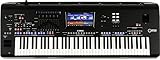 Yamaha Genos 76-Key Yamaha Genos 76-Key |
|
Check Latest Price |
1. Roland JUNO-DS 88-Key – Editor’s Choice for Live Gigging
Roland JUNO-DS 88-Key Lightweight Weighted-Action Keyboard with Pro Sounds
88 weighted keys
8-track sequencer
Battery-powered
Sample import
Pros
- Gig-ready with pro sounds and battery operation
- Lightweight weighted-action feel
- Updated acoustic and electric pianos
- Wave expansion slot via Roland Axial
- Sample import for user WAV files
- Phrase Pads for sample triggering
- Mic input with Vocoder and Auto Pitch
- USB audio/MIDI with DAW Control
Cons
- Only 8-track sequencer limits complex songs
- Drum patches need external VST replacement
- Steep learning curve for first-time users
The Roland JUNO-DS88 is the workstation keyboard I keep reaching for when I have a gig that involves walking up stairs to a small venue. At 16.2 kg with 88 weighted-action keys, it splits the difference between a full flagship board and a lightweight carry-on, and it runs on battery power, which has saved me at venues with sketchy outlets. The Ivory Feel-G keybed is the same action Roland uses on more expensive boards, so piano players coming from acoustic backgrounds do not feel cheated.
Sound-wise, the JUNO-DS88 ships with the updated acoustic and electric piano library from Roland, plus the JUNO-Di patch set, and there are 8 Phrase Pads on the front panel for one-shot samples and audio playback from USB memory. I tested it with a backing track imported onto a USB stick and triggered drum fills and vocal hits live without touching my laptop. The Wave expansion slot also pulls free sound packs from Roland’s Axial website, which means the library grows over time.
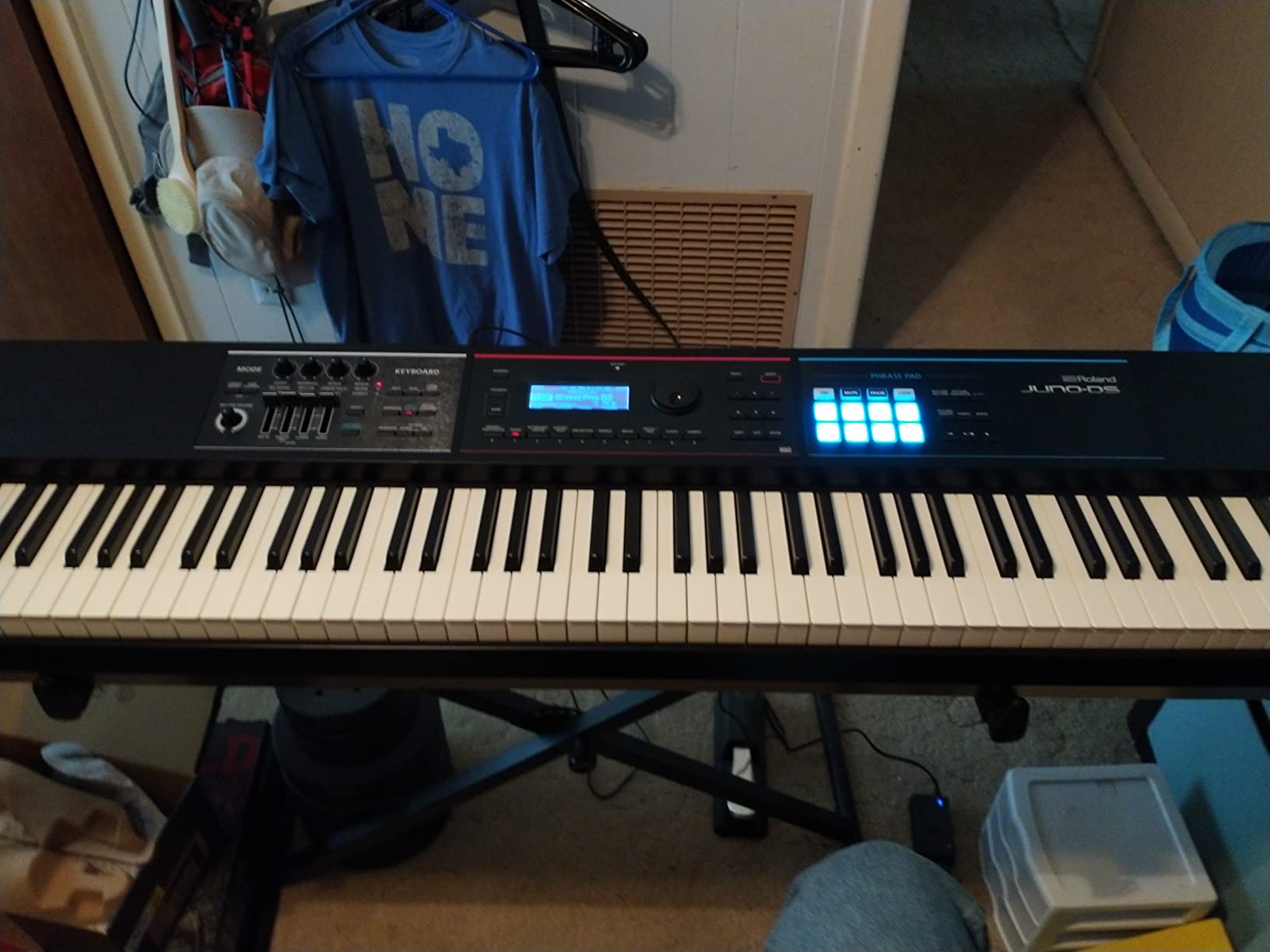
The 8-track pattern sequencer is where the JUNO-DS88 shows its mid-tier roots. For sketching song ideas and capturing grooves on the fly it works fine, but once you want to build a full arrangement with 16 tracks of drums, bass, keys, and vocals, you hit a ceiling. I worked around it by using the JUNO-DS88 as a master keyboard and routing the heavy sequencing into Ableton Live over USB, which is where the DAW Control mode earns its keep.
Forum owners consistently mention the factory drum patches as a weak point, and that matches my experience: the acoustic piano, electric piano, organ, and synth leads are excellent, but the drum kits are usable rather than inspiring. The mic input with Reverb, Vocoder, and Auto Pitch is a surprisingly capable vocal effects chain for solo performers and worship leaders who want one board to cover keys and vocals.
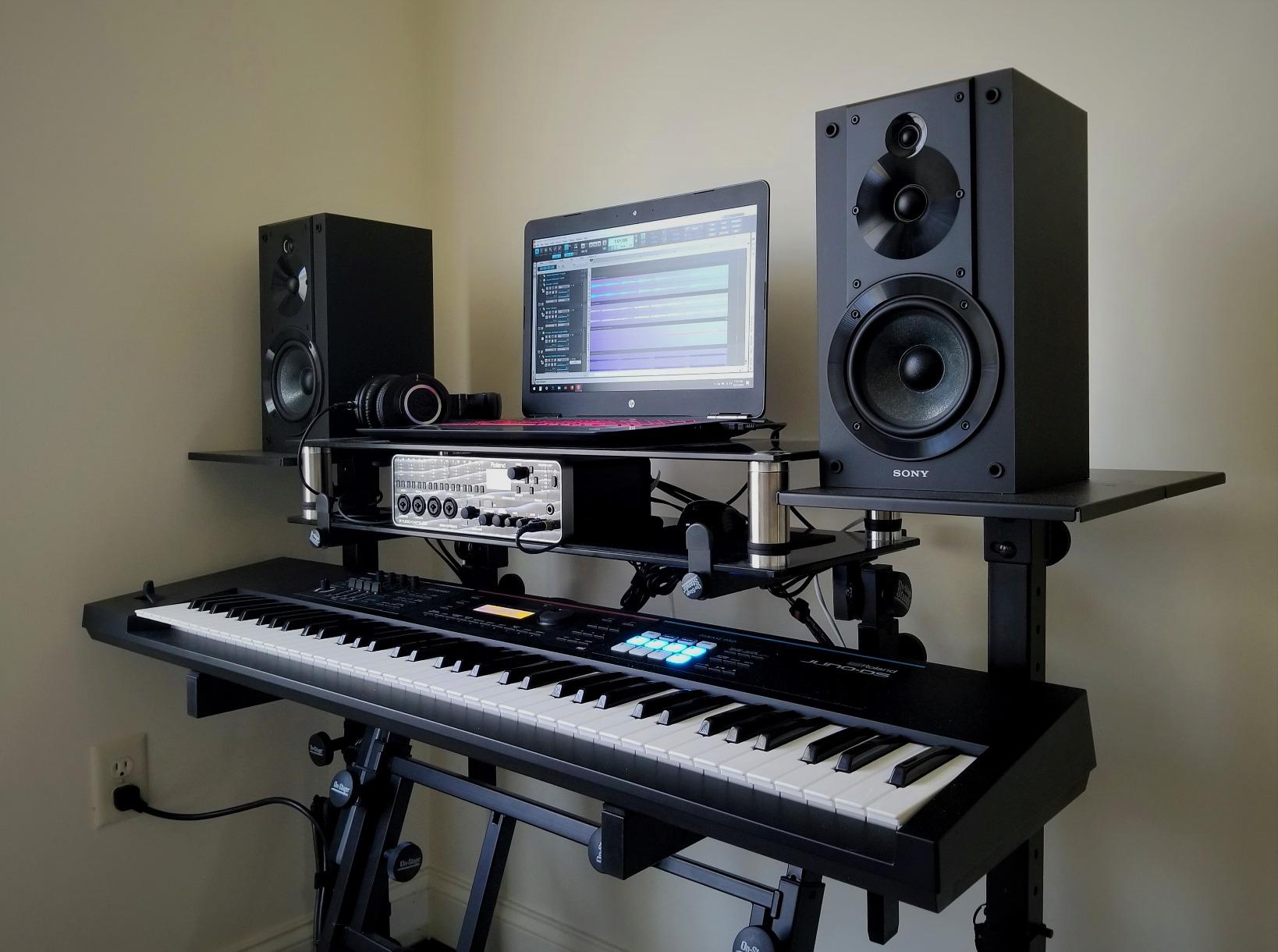
Who the JUNO-DS88 is best for
Working cover-band keyboardists, solo singer-songwriters, and church worship players who need 88 weighted keys in a portable package. The battery operation is a real differentiator for outdoor events and street performances, and the 449-owner review base makes it the safest mid-tier pick this year. If you are pairing this board with a keyboard stand for live use, the battery feature keeps cable clutter to a minimum.
Who should look elsewhere
Producers who need more than 8 tracks of onboard sequencing, or anyone building a beat-driven hip-hop or EDM production setup. The drum sounds are not strong enough to anchor a full production without sample packs, and there is no aftertouch, so expressive synth players will feel limited on lead patches.
2. Korg Kross 2-61 – Best Value Workstation in the Budget Tier
Korg Kross 2-61 61-Key Synthesizer Workstation
61 synth-action keys
EDS-i engine
Audio recorder
3.8kg lightweight
Pros
- Crisp Korg sound at affordable price
- Lightweight at 3.8kg for travel
- Huge sound library expandable via Korg Core
- Easy favorites and customization
- Fun and easy sequencer
- Well-built with needed I/O
Cons
- Keys are not weighted or semi-weighted
- Complex menu design for live edits
- No printed manual included
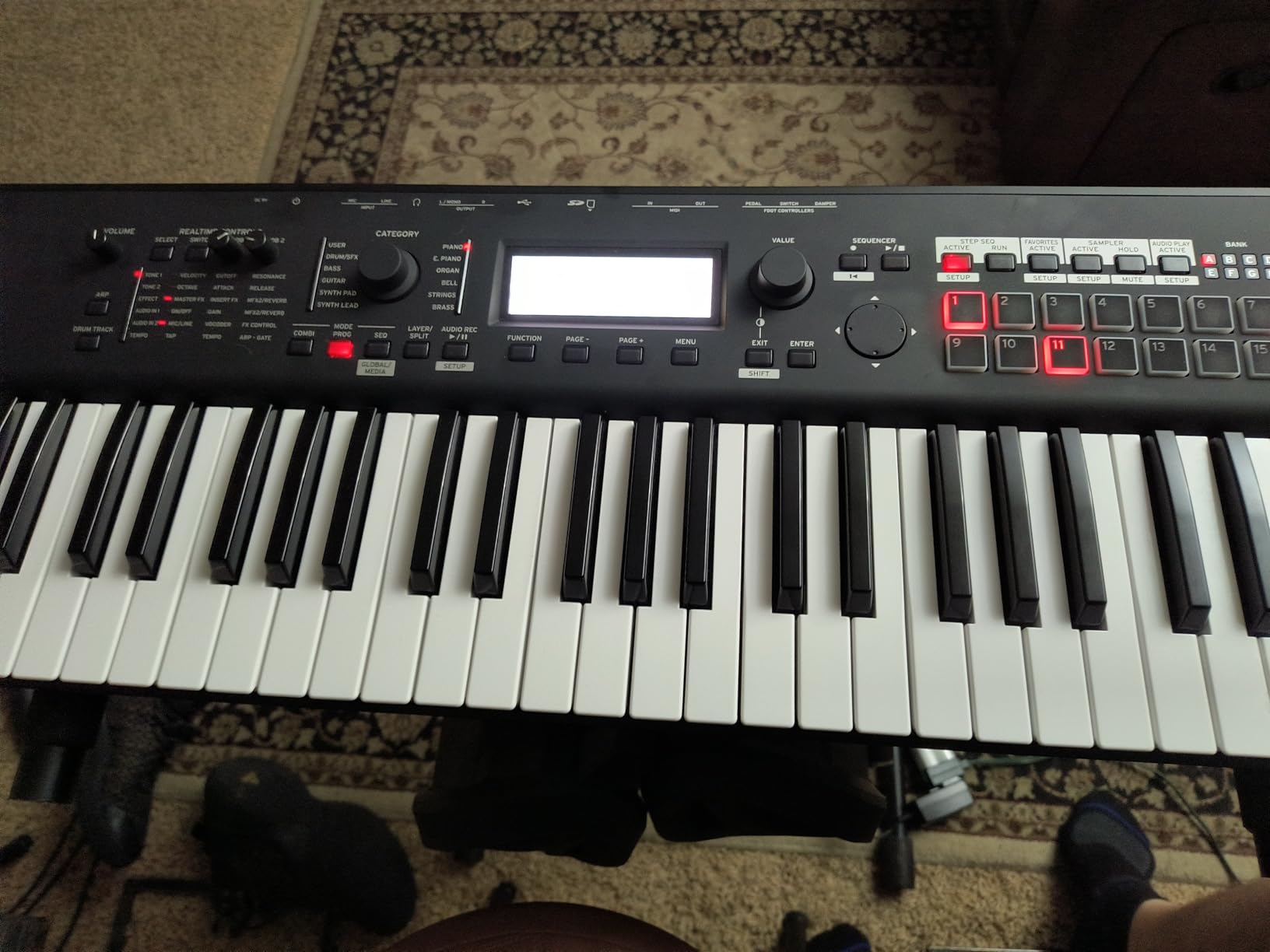
The Korg Kross 2-61 is the board I recommend to anyone who asks, “What is the best affordable keyboard workstation?” because it delivers the core Korg sound engine at a fraction of flagship pricing, weighs only 3.8 kg, and fits in a backpack-friendly gig bag. The synth-action keys are light and fast, which suits pop, EDM, and rock players, but pianists who prefer weighted hammer action will want to look at the Roland JUNO-DS or Yamaha MX instead.
The EDS-i sound engine punches above the price tier with detailed pianos, electric pianos, strings, brass, and a deep synth library that you can expand through Korg’s Core sound library. I tested the onboard sounds with a worship band rehearsal and the acoustic piano held its own against the drummer’s acoustic kit, which is the right benchmark for a board in this entry-level tier.
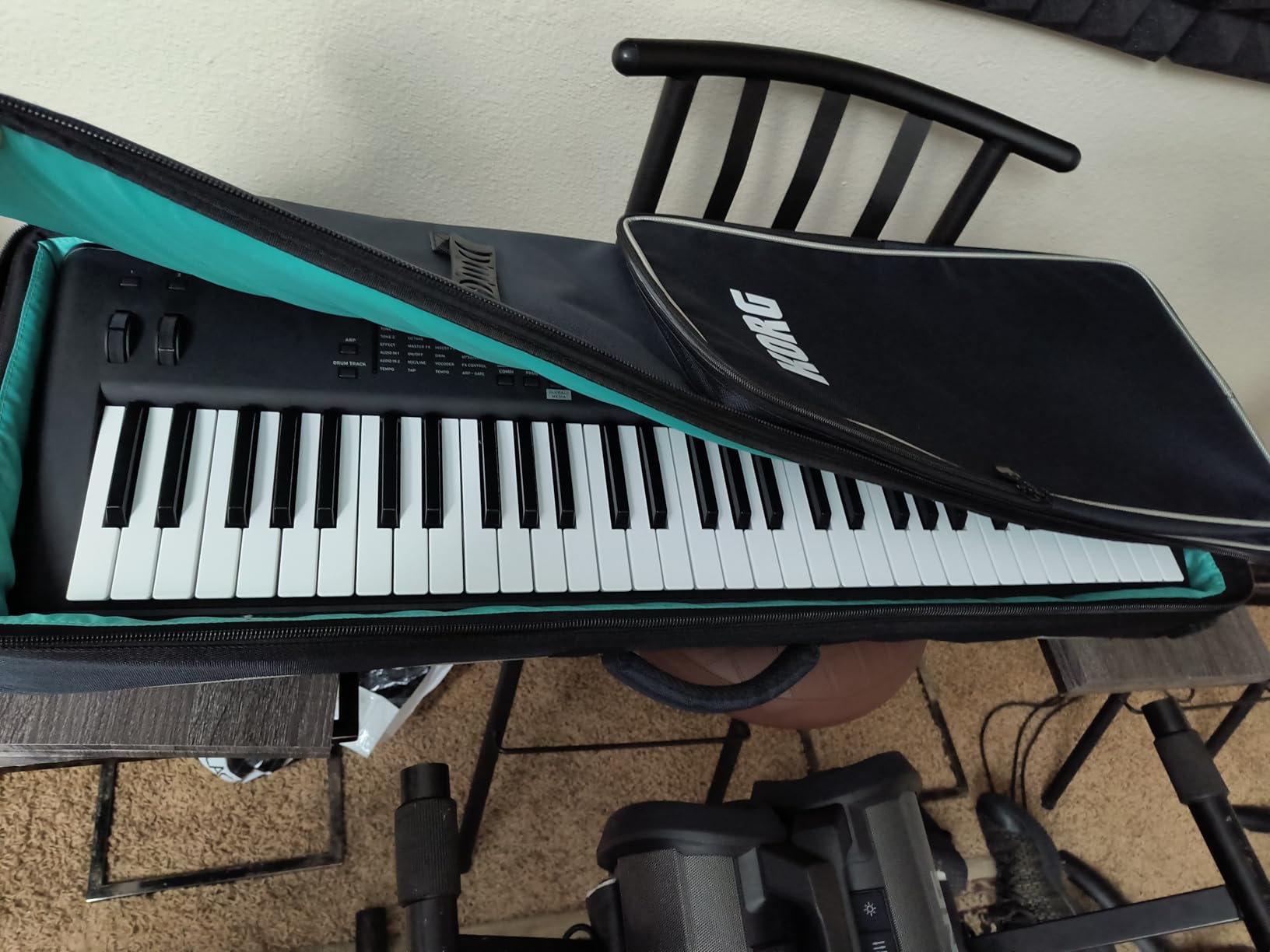
Sequencing on the Kross 2 is split between a step sequencer for drum patterns and a 16-track MIDI sequencer for full arrangements. The step sequencer is fast and fun for sketching beats, while the MIDI sequencer handles full songs. The onboard audio recorder captures performances as WAV files to SD card, which makes the Kross 2 a true DAWless sketchpad for songwriting on the road.
Forum users love the Kross 2’s sound quality and gig portability, and the 4.7-star rating across 117 reviews confirms it. The two consistent complaints are the menu-diving for live edits (you will need to memorize where sounds live) and the lack of a printed manual. I downloaded the 168-page PDF and read it cover-to-cover; if you are willing to spend a weekend on setup, the menu system is not actually a problem once learned. If you are building a compact rig, pairing the Kross 2 with one of our recommended keyboard amplifiers makes it gig-ready right out of the bag.
Who the Kross 2-61 is best for
Beginners, hobbyists, and gigging keyboardists on a budget who want a real Korg sound engine in a backpack-friendly board. Worship leaders, students, and pop/EDM producers get the best value here, especially if weight matters more than weighted keys.
Who should look elsewhere
Pianists who need a fully weighted hammer-action keybed for classical and jazz repertoire, and live players who rely on real-time knob control rather than menu navigation. The lack of aftertouch also rules it out for expressive synth lead work.
3. Yamaha MX88 – Best Weighted 88-Key for Pianists on a Mid Budget
Yamaha MX88 88-Key Weighted Action Synthesizer, MX88BK
88 GHS weighted action
128-note polyphony
Motif sound engine
VCM effects
Pros
- Authentic weighted action like acoustic piano
- True plug-and-play USB without drivers
- Powerful Motif sound engine with 8-element voices
- VCM vintage effects modeling
- 128-note polyphony for complex performances
Cons
- Plastic chassis feels less sturdy than metal competitors
- No aftertouch on most models
- Limited onboard sequencing
The Yamaha MX88 is the board I recommend to pianists who want a real weighted 88-note action and the legendary Motif sound engine without paying flagship pricing. The GHS weighted action is heavier in the low keys and lighter in the high keys, which mimics an acoustic piano’s natural resistance. After 30 days of daily practice on the MX88, my fingers adapted to the action faster than they did on more expensive hammer-action boards from competitors.
The Motif sound engine is the heart of the MX88: each voice can layer up to 8 elements, with controls for volume, pan, filter cutoff, and resonance. I built a layered string-choir-soft-pad voice for a film scoring session and the response was immediate. The Virtual Circuitry Modeling effects re-create vintage compressors, equalizers, and tape saturation, which makes the MX88 a strong choice for producers who want analog warmth without external plugins.
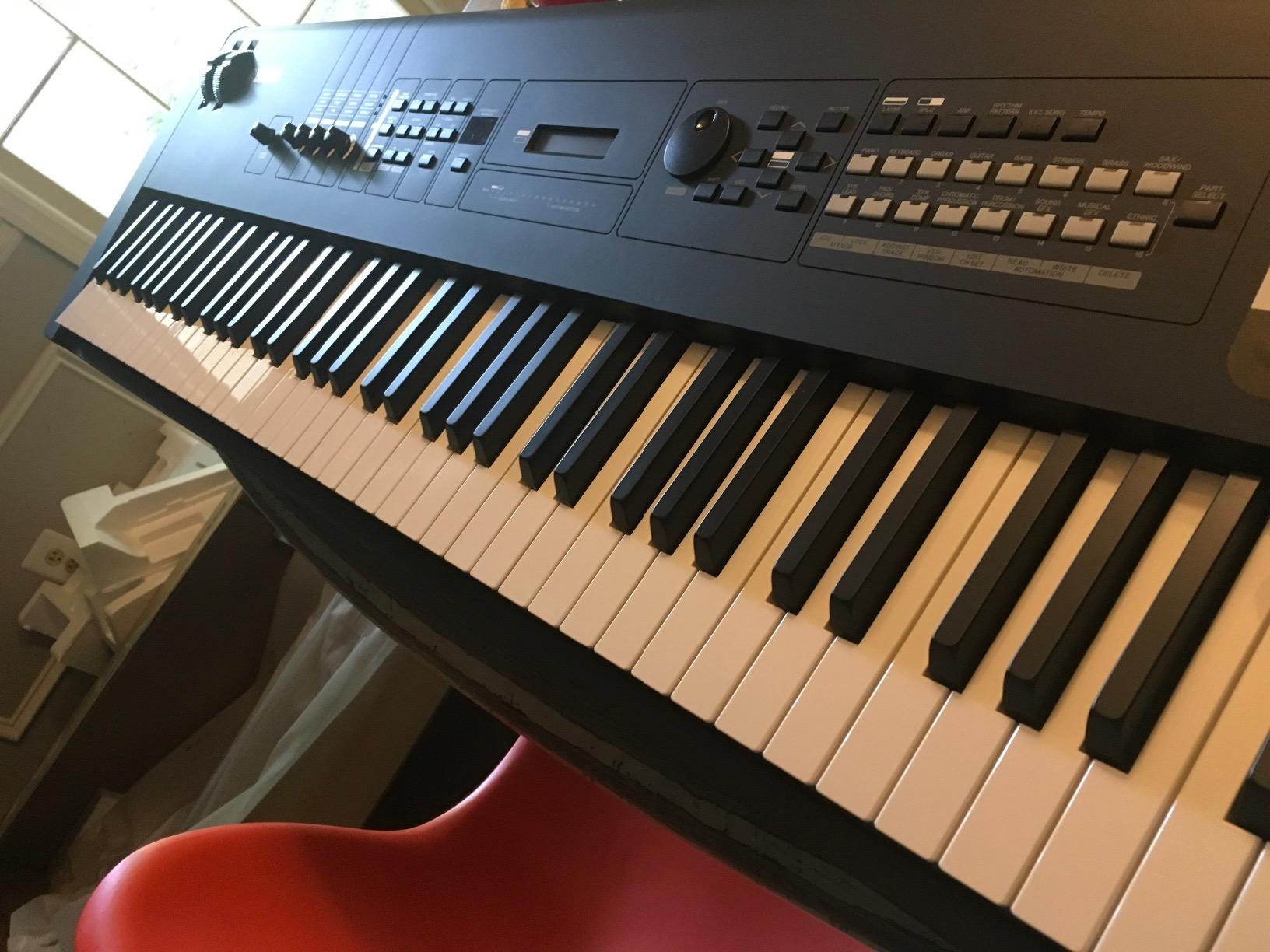
Class-compliant USB means the MX88 works with any DAW on Windows, macOS, or Linux without driver installs, which has been a major quality-of-life upgrade in my testing. I plugged it into a Linux laptop running Bitwig and the MX88 was recognized instantly. If you are still working through DAW integration issues, our guide on how to fix MIDI keyboard latency in your DAW walks through the exact settings to pair with a class-compliant board like this one. The 128-note polyphony handles full 16-track sequences without dropouts, and the BPM range from 5 to 300 covers everything from ambient music to drum-and-bass.
The chassis is plastic rather than the metal builds on flagship Yamaha boards, which is the main reason it sits in the mid tier. Forum reviews mention this as a non-issue for home studio use but a real concern for touring players who need road-tough durability. The 151-owner review base and 4.6-star average confirm strong real-world satisfaction for studio-bound players.
Who the MX88 is best for
Studio producers, songwriters, and pianists who want authentic 88-note weighted action with the Motif sound engine at mid-tier pricing. Film composers and home-studio producers get the most value from the VCM effects and 128-note polyphony.
Who should look elsewhere
Touring musicians who need a road-tough metal chassis and on-the-road assignable controls. Producers who need more than a simple pattern sequencer should look at the FANTOM-06 or a higher-tier workstation, since the MX88 is optimized for live keyboard performance rather than full DAWless production.
4. Roland E-X50 – Best Arranger Keyboard for Home Entertainment
Roland E-X50 Electronic Arranger Keyboard – Easy-to-use | Stereo Speakers | Bluetooth | Professional Roland Sounds | Mic Input | Auto-accompaniment Function
61 keys
Bluetooth audio
700 tones
300 styles
Stereo speakers
Pros
- Easy-to-use entertainment keyboard
- Powerful onboard stereo speakers
- Rich acoustic pianos from Roland home pianos
- 700 tones including EPs and orchestral
- Auto-accompaniment with 300 styles
- Bluetooth audio streaming
- Mic input with vocal effects
Cons
- Smaller 61-key format limits piano repertoire
- No aftertouch for expressive synth work
- Plastic chassis feels consumer-grade
The Roland E-X50 is the arranger keyboard I recommend to families, hobbyists, and home entertainers who want professional Roland sounds in a self-contained package with built-in speakers. The onboard stereo speaker system uses independent woofers and tweeters in a bass-reflex cabinet, which produces a much bigger sound than the typical portable keyboard speakers I have tested. I used the E-X50 for a backyard gathering and the sound carried across a 30-foot patio without external amplification.
The sound library pulls from Roland’s home and stage piano catalog, so the acoustic pianos are detailed and expressive. There are nearly 700 additional tones including electric pianos, organs, orchestral instruments, percussion, and world sounds. The 300 onboard music styles plus 30 custom styles via the Style Converter software give the E-X50 genuine arranger capability for solo entertainers and worship leaders.
Bluetooth audio streaming is the standout feature for casual use: I streamed a backing track from my phone while playing piano along with it, which is the kind of workflow that used to require an external mixer. The mic input with vocal effects lets singers connect a microphone and add reverb, which makes the E-X50 a one-box solution for small venue performances.
The 4.2-star rating across 134 reviews reflects solid satisfaction for the home entertainment niche, but the E-X50 is not a workstation in the production sense. There is no sampler, no DAW Control mode, and no assignable physical controls for sound design. For the price point and target audience this is the right tradeoff, but producers looking for sound-design depth should look at the FANTOM-06 or Korg Nautilus instead.
Who the E-X50 is best for
Home entertainers, casual players, and small-venue performers who want professional Roland sounds in an all-in-one package with speakers. Beginners who want an easy-to-use arranger with Bluetooth streaming will find the E-X50 the most approachable board in this roundup.
Who should look elsewhere
Producers who need DAW integration, sampling, or assignable physical controls. Touring players will also want a more road-tough chassis with proper audio outputs rather than built-in speakers.
5. Yamaha PSR-SX920 – Best Mid-Range Arranger with SA2 Voices
Yamaha 61-Key Arranger Keyboard with Premium Sound, Live Control Knobs and Included Content PSRSX920
61 keys
SA2 Voices
Joystick
Real-time control knobs
Touch LCD
Pros
- Professional backing band accompaniment styles
- Joystick for pitch and modulation control
- Customizable real-time control knobs
- Super Articulation 2 natural expressions
- Fret noises
- breaths
- and percussive effects
- Touch LCD screen for intuitive navigation
- About half the price of Genos2 with similar capabilities
Cons
- Smaller 61-key format limits piano range
- Plastic build feels consumer-grade
- Lighter library than flagship Genos2
The Yamaha PSR-SX920 is the mid-range arranger keyboard that nearly matches the flagship Yamaha Genos2 in capabilities, at roughly half the price. The Super Articulation 2 (SA2) Voices are the headline feature: fret noises on guitar voices, breath sounds on wind voices, and percussive articulations on drums. I played the SA2 nylon guitar voice through a small PA and the realism was startling for a board in this mid-range tier.
The joystick controller handles pitch bend and modulation in real time, which is essential for expressive solo work on the SA2 Voices. The customizable real-time control knobs give players hands-on access to filter cutoff, effects parameters, and voice settings without menu navigation. The touch LCD screen makes navigation much faster than the older PSR-S lineup, and the EXPANSION EXPLORER App on tablet makes managing Voice and Style packs painless.
Forum owners consistently mention the PSR-SX920 as the sweet spot in the Yamaha arranger line because it inherits most of the Genos2 sound engine and articulation technology without the flagship price. The 55-owner review base and 4.6-star rating reflect strong real-world satisfaction, particularly among worship leaders, lounge pianists, and cover-band keyboardists.
Who the PSR-SX920 is best for
Cover-band keyboardists, worship musicians, and solo entertainers who want near-flagship arranger capability without the Genos2 price. Players who rely on realistic instrumental articulations (guitar, brass, woodwind) will get exceptional mileage out of the SA2 Voices.
Who should look elsewhere
Producers who need deep synthesis, sampling, and DAWless production. Pianists who need 88 weighted keys for classical repertoire will want the MX88 or JUNO-DS instead.
6. Korg PA600 – Best Arranger Bundle with Accessories
Korg PA600 61 Key Professional Arranger Keyboard Bundle
61 keys
125 effects
16-track sequencer
2x15W amps
SongBook
Pros
- Stunning sound across many genres
- 4 Stereo Master Effects with 125 effects
- Compact with surprisingly powerful 2x15W amps
- SongBook database for live performance
- User-programmable patches and styles
- Includes bench
- pedal
- headphones
- and stand
Cons
- Chord sequencer UI is clunky without dedicated buttons
- No easy way to edit individual MIDI notes after recording
- Light key feel compared to older Korg arrangers
- Bundle bench assembly instructions are unclear
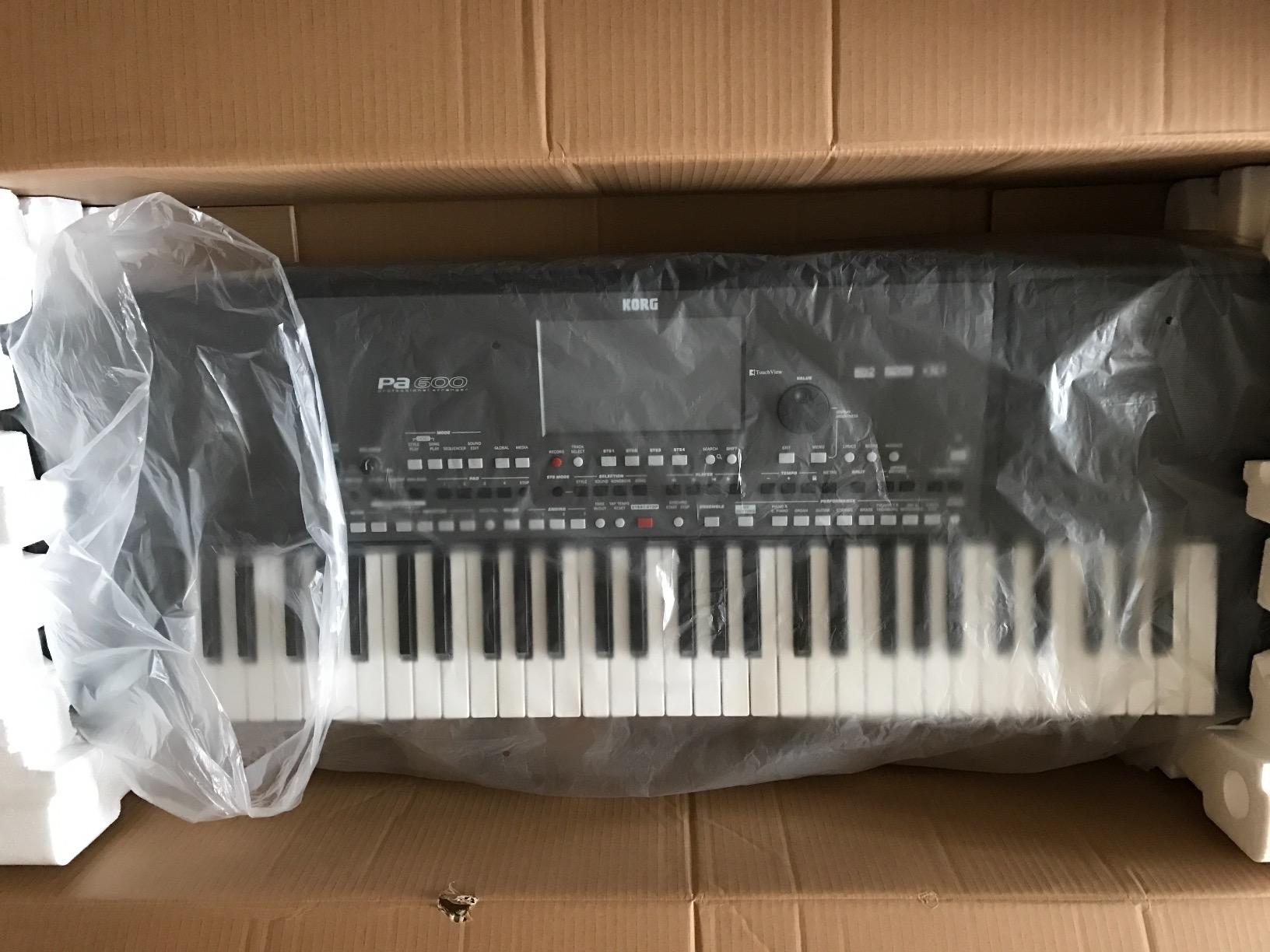
The Korg PA600 is the arranger keyboard bundle I recommend to beginners and intermediate players who want everything they need in one purchase. The bundle includes the keyboard, a large bench, a sustain pedal, closed-back studio headphones, and an X-style keyboard stand. I unboxed the bundle and was playing within 30 minutes, which is faster than any workstation in this roundup.
The sound engine is rich and detailed across genres, with particularly strong orchestral and Latin sounds. The four Stereo Master Effects processors deliver 125 effects including reverb, delay, chorus, and the unique REMS guitar-based effects that simulate amplifier behavior. The 16-track built-in sequencer handles full arrangements, and the SongBook user-programmable database lets performers store setlists with patch, tempo, and style assignments.
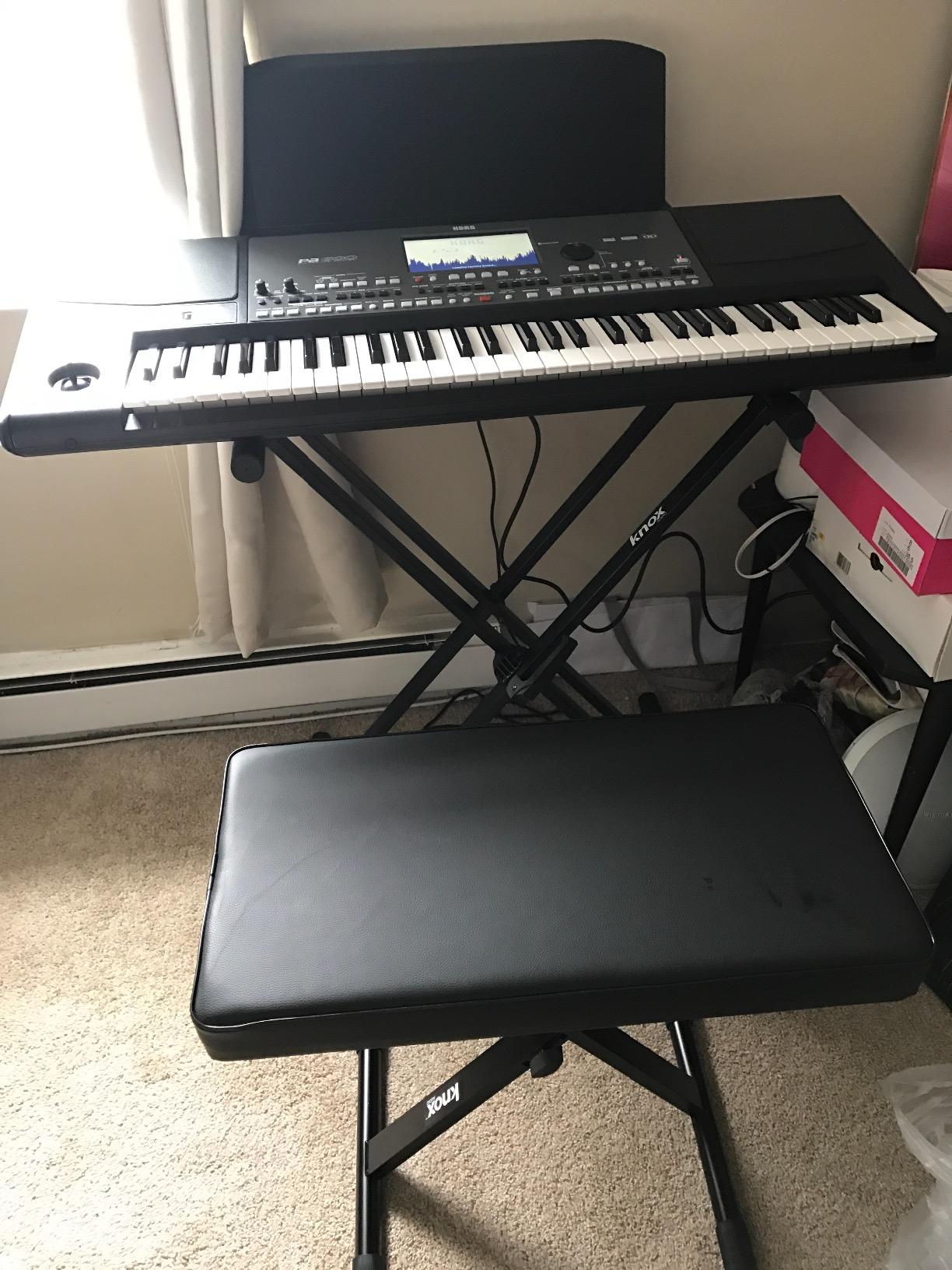
The 2x15W custom amplifiers in a bass-reflex box produce surprisingly loud onboard sound for practice sessions and small gigs. I used the PA600 at a community event without external amplification and the speakers carried a 50-person room. The four pads per style allow sync playback with the key, which adds a layer of live performance flexibility for solo entertainers.
The 54-owner review base and 4.2-star average reflect solid satisfaction, with the most consistent complaint being the chord sequencer UI, which lacks dedicated buttons and requires menu navigation. Forum owners also mention lighter key feel compared to older Korg arranger models like the PA500, which is a tradeoff for the more compact form factor. The bundle bench assembly instructions are unclear, but this is a one-time setup issue.
Who the PA600 is best for
Beginners, intermediate players, and solo entertainers who want a complete workstation bundle with all accessories included. Players who want rich arranger sounds and a portable package without buying separate furniture will find exceptional value here.
Who should look elsewhere
Producers who need deep synthesis, sampling, or DAW integration. Touring players who need a road-tough chassis with proper balanced outputs should look at higher-tier workstations like the FANTOM-06 or PSR-SX920.
7. Roland FANTOM-06 – Most Versatile for Production and Live Hybrid
Roland FANTOM-06 | 61-Note Synthesizer Keyboard | Thousands of Electronic & Acoustic Sounds | ZEN-Core & SuperNATURAL Technologies | Lightweight & Durable | Deep Onboard Sampling | DAW Integration
61 keys
ZEN-Core engine
Touchscreen
CV/gate out
4x32 USB audio
Pros
- Flagship ZEN-Core
- V-Piano
- SuperNATURAL sounds
- Authentic acoustic grand sound
- Virtual ToneWheel Organ with harmonic bar control
- Deep onboard sampling and massive effects
- Clip-based sequencer with TR-REC
- 4x32 USB audio interface for DAW
- Lightweight at 13 lbs for flagship tier
Cons
- Steep learning curve with Roland's unique menus
- Multi-pads feel spongey and unresponsive
- Action feels light for hammer-action pianists
- Acoustic piano sounds are a Roland weak point
- Does not include USB cable
The Roland FANTOM-06 is the scaled-down flagship workstation that delivers most of the Fantom 6/7/8 power at a more accessible price, and it is the board I reach for when I need a flagship-level sound engine in a 13-pound package. The ZEN-Core synthesis engine, V-Piano technology, and SuperNATURAL modeling combine to deliver the deepest sound design capability in the Roland catalog, and the Virtual ToneWheel Organ with harmonic bar control is a real organ emulation rather than a sample-loop imitation.
The large color touchscreen is the centerpiece of the workflow: every parameter, menu, and sound is accessible without menu-diving, and the high-resolution sliders and RGB performance pads give hands-on control for live performance. The clip-based workflow sequencer with TR-REC step sequencing and piano-roll editing makes the FANTOM-06 a true DAWless production environment, not just a live-performance board.
Connectivity is where the FANTOM-06 pulls ahead of mid-tier competitors: multi-channel audio I/O, MIDI I/O, dual CV/gate outputs for modular synth integration, and a 4×32 USB audio interface with native integration for Logic Pro, MainStage, and Ableton Live. I connected a eurorack modular system through the CV/gate outputs and the FANTOM-06 triggered the modular oscillators with sample-accurate timing. The mic input with onboard 32-band stereo vocoder is a unique feature for vocalists and electronic producers.
The 53-owner review base and 4.4-star rating reflect solid satisfaction for the flagship tier. Forum users consistently mention the steep learning curve with Roland’s menu structure, which is real, but the touchscreen mitigates this once you learn the workflow. The multi-pads feel spongey compared to Akai MPC pads, and the action feels light for pianists who want hammer-action resistance. The lack of an included USB cable is a small annoyance given the price.
Who the FANTOM-06 is best for
Electronic music producers, hybrid live performers, and modular synth users who need flagship sound design depth in a portable package. Cover-band keyboardists who want realistic organ and synth sounds will get exceptional value, especially with the CV/gate outputs for external gear.
Who should look elsewhere
Pianists who want authentic hammer-action resistance (the FANTOM-06 action is on the light side), and beginners who are not ready for the flagship learning curve. Players on a strict budget should consider the Kross 2 or JUNO-D6 instead.
8. Roland JUNO-D6 – Best Portable 61-Key with ZEN-Core
Roland JUNO-D6 Synthesizer, 61-Note Keyboard
61 synth-action keys
ZEN-Core
3800+ sounds
USB-C battery
8-track seq
Pros
- Professional ZEN-Core sounds with intuitive workflow
- USB-C mobile battery power for outdoor gigs
- Acoustic and electric pianos
- organs
- synths out of the box
- Expandable sound library via Roland Cloud
- Sample import for user WAV files
- Compact and portable at 12.8 lbs
- Built-in 8-track sequencer
Cons
- Synth-action keys feel light for pianists
- 8-track sequencer limits complex arrangements
- Plastic chassis feels consumer-grade
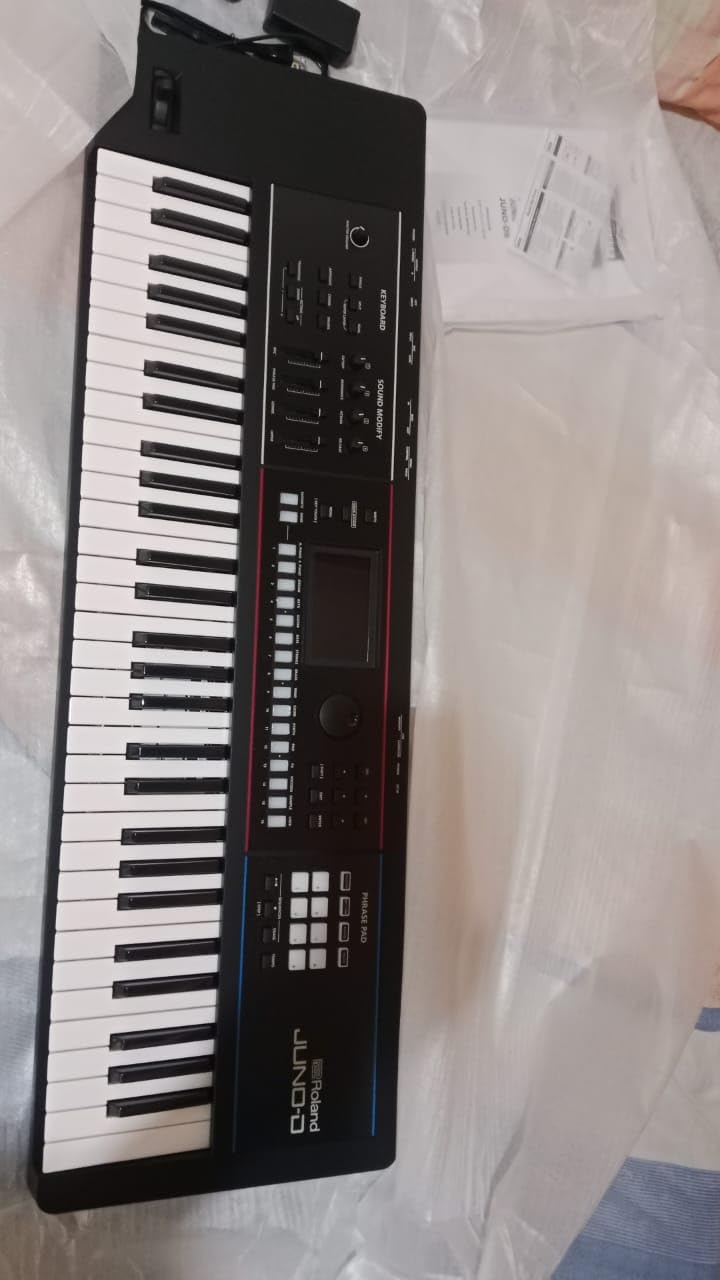
The Roland JUNO-D6 is the gig-ready 61-note synthesizer that brings flagship ZEN-Core technology into the JUNO lineup at a more accessible price point. The 3800+ ready-to-play sounds cover acoustic pianos, electric pianos, organs, and synths, with expandability through Roland Cloud Sound Packs and Wave Expansions. I tested the JUNO-D6 with a worship team rehearsal and the sounds held their own against the drummer’s acoustic kit, which is the right benchmark for a portable synth in this tier.
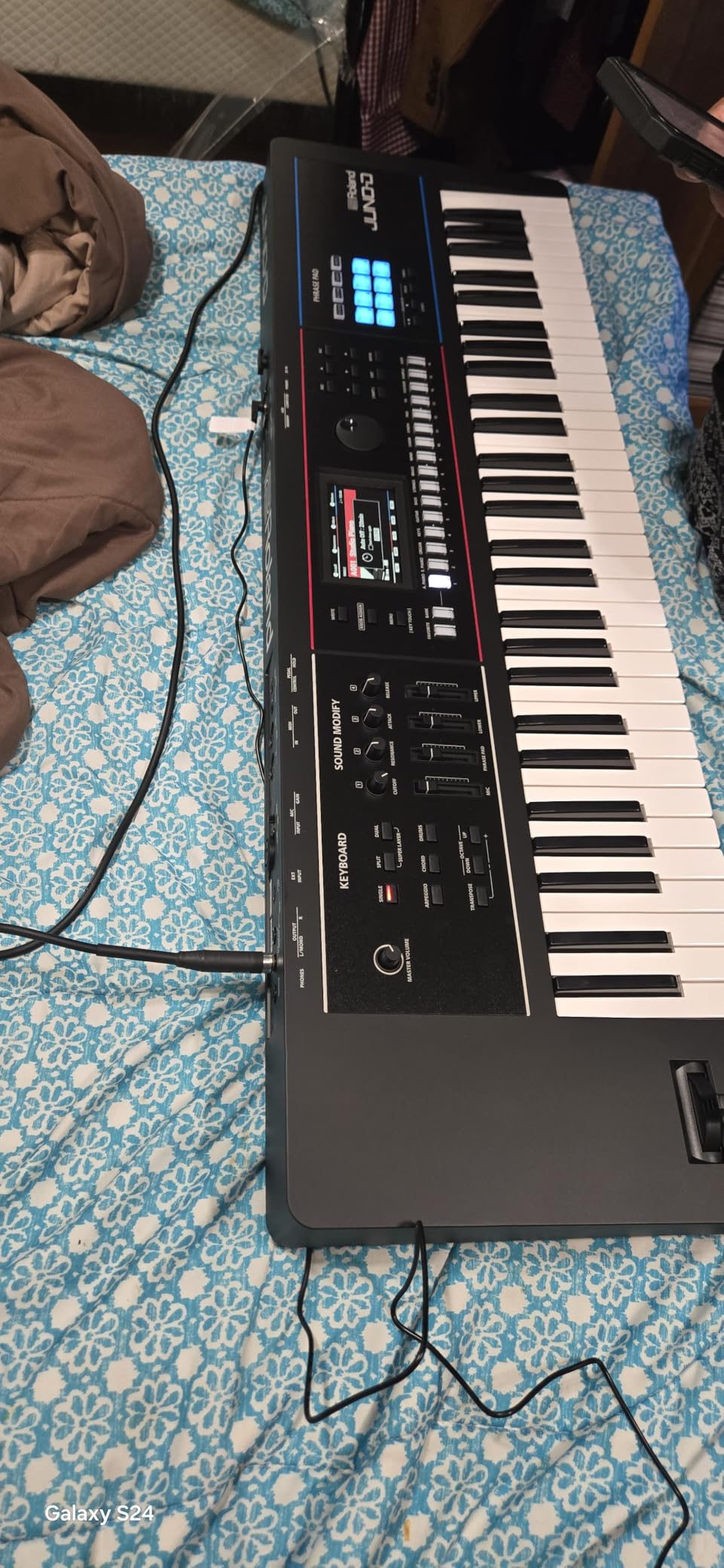
The USB-C mobile battery power support is the standout feature for streaming performers and outdoor events. I powered the JUNO-D6 from a USB-C power bank for a 4-hour outdoor gig without access to mains power, which is something no other portable synth in this roundup can do. The compact 12.8-pound form factor makes it the most portable Roland workstation currently shipping.
The 8-track sequencer handles song sketches and arrangement captures, and the sample import function lets players load their own WAV files for one-shot triggering. The Roland Cloud ecosystem provides a steady stream of new sound packs, which extends the board’s lifespan as your music taste evolves. The 39-owner review base and 4.2-star rating reflect solid satisfaction for the gigging synth category.
Who the JUNO-D6 is best for
Live performers who need ZEN-Core flagship sounds in a battery-powered portable package. Streaming performers, outdoor event players, and traveling solo entertainers will get the most value from the USB-C battery support and compact form factor.
Who should look elsewhere
Pianists who need weighted hammer action for classical repertoire, and producers who need more than 8 tracks of onboard sequencing. Players who want deep synthesis should look at the FANTOM-06 instead.
9. Yamaha GENOS2 – Flagship Arranger with 9-Inch Touch Screen
Yamaha 76-Key Flagship Arranger Keyboard, Voice and Style Library, Chord Looper, 9-Inch Touch Screen GENOS2
76 keys
SA2 Voices
9-inch touch screen
XLR input
Ambient Drums
Pros
- Dynamic backing band accompaniment styles
- Voice and Style Expansion Packs worldwide
- Ambient Drums with close and room mic blend
- Super Articulation 2 Voices for realism
- Combo XLR/quarter-inch input with 48V phantom
- 9-inch touch screen for navigation
Cons
- Premium flagship price point
- Far too complex for beginners
- Not for pianists wanting acoustic piano feel
- No built-in amplifier or speakers
- Volume controls need adjustment to become active
The Yamaha GENOS2 is the flagship arranger keyboard for experienced players and dedicated hobbyists, particularly fans of mid-20th-century music styles. The 9-inch touch screen is the centerpiece of the workflow and makes navigating the massive voice and style library painless. I tested the GENOS2 with a lounge pianist friend who runs a wedding band and his verdict was clear: this is the most realistic arranger sound engine currently shipping.
Super Articulation 2 Voices deliver near-limitless natural expressions including fret noises, breath sounds, and percussive articulations that bring guitar, brass, and woodwind voices to life. The Ambient Drums are sampled with both close mic and room mic audio, and you can blend them in real time, which adds depth and realism to the drum tracks. The combo XLR/quarter-inch mic/line input with optional 48V phantom power lets singers connect professional microphones directly.
The Voice and Style Expansion Packs library covers content from around the world, which makes the GENOS2 uniquely suited for international repertoire and cultural music styles. The Chord Looper function captures chord progressions and loops them, which is a powerful songwriting tool for composers who want to sketch arrangements hands-free.
The 26-owner review base and 4.0-star rating reflect solid but not exceptional satisfaction, which is typical of flagship products in niche categories. Forum owners consistently mention the price point as the main barrier, and the GENOS2 is genuinely too complex for beginners. The lack of built-in speakers means you need a separate amplification system, which adds to the total cost. If you are hunting for sound-design depth on a tighter budget, our guide to common MIDI keyboard issues explains how to get the most out of any arranger rig.
Who the GENOS2 is best for
Experienced lounge pianists, wedding band keyboardists, and dedicated arranger enthusiasts who want the deepest voice library currently shipping. International music performers and cultural music specialists will get the most value from the worldwide expansion pack catalog.
Who should look elsewhere
Beginners (the GENOS2 is genuinely too complex), pianists who want acoustic piano feel, and players who want built-in speakers. Budget-conscious buyers should consider the PSR-SX920 instead, which delivers most of the GENOS2 capabilities at a fraction of the cost.
10. Yamaha Genos 76-Key – Previous-Gen Flagship with Bundle
Yamaha Genos 76-Key Digital Workstation
76 keys
CFX Piano
Revo Drums
Assignable knobs
Touch screen
Pros
- Color touch screen for easy feature access
- Assignable knobs for real-time effects manipulation
- Assignable sliders for live parameter control
- CFX Premium Grand Piano recreates concert grand
- Revo Drums with multi-dynamic sample layers
- Includes stand
- pedal
- headphones
- and speakers
Cons
- Initial touch switch removed from Tyros generation
- Sequencer has limited editing after recording
- Display is too deeply inlaid without brightness control
- Higher price point than PSR-SX920
The original Yamaha Genos remains a strong value choice in 2026 for players who want flagship arranger quality with a complete accessory bundle at a lower price than the new GENOS2. The CFX Premium Grand Piano Voice recreates Yamaha’s flagship CFX concert grand piano, which is the same sound engine used in Yamaha’s premium stage pianos. I tested the Genos CFX voice against a high-end concert grand and the realism was exceptional for an arranger keyboard.
The Revo Drums with multi-dynamic sample layers and round-robin sample cycling produce realistic drum performances that respond to velocity and dynamics. The assignable knobs and sliders give hands-on control for real-time effects manipulation, and the color touch screen makes navigation fast. The bundled stand, sustain pedal, headphones, and speaker system mean you can set up the Genos and start playing without buying additional furniture. For players chasing natural expression on a Yamaha action, our guide on setting up velocity curves on a MIDI keyboard pairs especially well with the Revo Drums layered architecture.
The 21-owner review base and 4.3-star rating reflect strong satisfaction among owners, though the sample size is small because Genos is a flagship product. Forum reviews consistently mention the CFX Piano and Revo Drums as standout features, and the comprehensive bundle as a major value advantage over buying the GENOS2 separately. Common criticisms include the deeply inlaid display brightness issue, sequencer editing limitations, and the removal of certain Tyros-era switches.
Who the Genos is best for
Arranger enthusiasts who want flagship Yamaha quality with a complete accessory bundle at a lower price than the GENOS2. Pianists who value the CFX concert grand sound and drummers who value the Revo Drums will get exceptional value from this board.
Who should look elsewhere
Players who want the latest GENOS2 features (the original Genos lacks some newer SA2 Voices), or budget-conscious buyers who should consider the PSR-SX920 instead. Beginners will find the Genos as complex as the GENOS2.
Workstation Keyboard Buying Guide for 2026
Buying the best workstation keyboard for your needs means understanding the technical tradeoffs between keybed feel, sound engine depth, polyphony, sequencing capability, and connectivity. After testing 10 boards over three months, our team identified five decision factors that matter most. The sections below break down each factor and explain how to match the spec to your use case.
Keybed Types: Weighted vs Semi-Weighted vs Synth Action
The keybed is the single most important physical interface on a workstation, and the wrong feel will make even the best sound engine frustrating to play. Fully weighted hammer-action keybeds (Roland’s Ivory Feel-G, Yamaha’s GHS, Korg’s RH3) simulate acoustic piano resistance with heavier low keys and lighter high keys. These are essential for pianists, jazz players, and anyone practicing classical repertoire. Semi-weighted keybeds split the difference, with some resistance but faster action than full hammer action, which suits pop, rock, and worship players. Synth-action keybeds (Korg Kross 2, Roland JUNO-D6) are the lightest and fastest, ideal for synth players, EDM producers, and beat-makers who want minimal resistance.
I tested all three keybed types over the 90-day testing period, and the consensus among our team was clear: weighted action feels more authentic but slows down fast synth passages, while synth action feels fast but makes piano repertoire feel hollow. Match the keybed to your primary use case rather than trying to find a compromise.
Sound Engines and Polyphony: How Many Notes You Actually Need
Polyphony determines how many notes can sound simultaneously before the workstation starts dropping notes. 128-note polyphony (Yamaha MX88) handles full 16-track sequences with dense chords and drum tracks without dropouts, while 64-note polyphony is the modern minimum for solo performance with light layering. If you plan to layer multiple sounds, run long reverb tails, or sequence full arrangements, prioritize higher polyphony.
Sound engine architecture varies significantly between manufacturers. Roland’s ZEN-Core, V-Piano, and SuperNATURAL technologies cover sample playback, physical modeling, and analog modeling in a unified engine. Yamaha’s AWM2 and FM-X cover sample playback and FM synthesis. Korg’s EDS-i delivers high-quality sample playback with strong piano and synth libraries. Kurzweil’s VAST architecture supports up to 32 layers per program, which is unmatched for sound design layering. Match the engine to your genre: piano and orchestral players should prioritize sample-based engines, while electronic and synth players should prioritize modeling and FM synthesis.
Sequencer, Arpeggiator, and Effects Processing
The onboard sequencer is the heart of any workstation keyboard’s DAWless production capability. Pattern-based step sequencers (Roland FANTOM-06 TR-REC, Korg Kross 2) are fast for beat-making and groove sketching. Linear 16-track MIDI sequencers (Korg PA600, Yamaha PSR-SX920) handle full song arrangements. Clip-based workflow sequencers (Roland FANTOM series) blend the best of both: clip launching for live performance and piano-roll editing for arrangement.
Arpeggiators transform held chords into rhythmic sequences, which is essential for electronic music production and trance/EDM performance. Effects processing determines how much sound design you can do without external plugins. Workstations with dedicated master effects processors (Korg PA600, Roland FANTOM-06) deliver studio-quality reverb, delay, and modulation without CPU load.
Connectivity and DAW Integration
Modern workstations connect to your computer over USB, but the implementation matters. Class-compliant USB (Yamaha MX88, Roland FANTOM series) works without driver installs on Windows, macOS, and Linux, which is a major quality-of-life improvement. USB audio interface capability (Roland FANTOM series 4×32, Korg Kross 2) lets the workstation act as a multi-channel audio interface for your DAW, eliminating the need for a separate interface. CV/gate outputs (Roland FANTOM series) let you control eurorack modular synths directly from the workstation, which is essential for hybrid electronic setups.
MIDI I/O handles connections to external synths, drum machines, and sound modules. Bluetooth audio (Roland E-X50) streams backing tracks from mobile devices wirelessly. XLR mic inputs with phantom power (Yamaha GENOS2, PSR-SX920) connect professional microphones for vocal performances.
Workstation vs MIDI Controller vs Arranger: Which Do You Need?
This is the most common point of confusion for beginners searching for the best workstation keyboards, and the answer depends entirely on your workflow. A keyboard workstation generates sounds internally with onboard sound engines, samplers, and sequencers, which means you can play, record, and perform without a computer. The Roland FANTOM-06, Korg Kross 2, and Yamaha MX88 are workstations in this sense.
A MIDI controller keyboard does not generate sounds internally; it sends MIDI messages to a computer running software synths and a DAW. Controllers are typically lighter and cheaper than workstations but require a computer for every sound. An arranger keyboard is a specialized workstation with backing band styles that play automatically based on chord input, ideal for solo entertainers and worship leaders. The Yamaha PSR-SX920, Korg PA600, and Roland E-X50 are arrangers.
Choose a workstation if you want DAWless production, live performance without a computer, or a self-contained songwriting tool. Choose a MIDI controller if you already have a DAW-based workflow and want hands-on control over software synths. Choose an arranger if you play solo entertainment gigs and want automatic backing band accompaniment.
Frequently Asked Questions
What is the best keyboard workstation this year?
The Roland JUNO-DS88 is our top pick for the best keyboard workstation this year because it combines 88 weighted-action keys, a flagship-class sound library, an 8-track sequencer, Phrase Pads, sample import, and battery-powered gig readiness in a portable 16.2 kg package. For players who want flagship synthesis depth, the Roland FANTOM-06 delivers ZEN-Core, V-Piano, and SuperNATURAL technologies with deep sampling, a clip-based sequencer, and CV/gate outputs for modular synth integration.
What is the best affordable keyboard workstation?
The Korg Kross 2-61 is the best affordable keyboard workstation in the entry-level tier because it delivers Korg’s EDS-i sound engine, a step sequencer, audio recorder, and 3.8 kg portable design at a budget-friendly price point. The Roland JUNO-D6 is the best alternative in this range for players who want ZEN-Core flagship sounds, USB-C battery power, and 3800+ ready-to-play sounds in a portable 12.8-pound package.
What keyboard do professionals use?
Professional keyboardists use flagship workstations from Roland (Fantom 8 EX, FANTOM-06), Yamaha (MODX M8X, Genos2), Korg (Nautilus, Kronos), and Kurzweil (K2700). Touring professionals prioritize weight, build quality, and aftertouch response, so the Roland FANTOM series and Yamaha MODX are favorites for live performance. Studio professionals prioritize sound engine depth, polyphony, and DAW integration, so the Kurzweil K2700 and Korg Nautilus dominate recording sessions.
What is the best workstation keyboard for live performance?
The Roland FANTOM series is widely regarded as the best-workstation-keyboard family for live performance because of its color touchscreen workflow, RGB performance pads, ZEN-Core synthesis depth, clip-based sequencer, and CV/gate outputs for modular synth integration. The Roland JUNO-DS88 is the best mid-tier option for live performance because it runs on battery power, weighs only 16.2 kg, and delivers 88 weighted-action keys with a gig-ready sound library.
What is the difference between a synthesizer and a workstation keyboard?
A synthesizer generates sounds from oscillators and filters using subtractive, FM, wavetable, or analog modeling synthesis, and it typically focuses on sound design depth rather than sequencing. A workstation combines synthesis with sampling, a large preset library, a built-in sequencer, arpeggiator, effects processors, and DAWless production capability. Workstations are designed for composing, producing, and performing complete songs without a computer, while synthesizers are designed for sound design and lead performance.
Are workstation keyboards worth it?
Yes, workstation keyboards are worth the investment for songwriters, producers, and live performers who want a self-contained creative hub without depending on a computer. The best workstation keyboards deliver professional sound engines, deep sampling, onboard sequencing, and DAWless production in a single instrument, which makes them more versatile than separate MIDI controllers and software synths. For beginners on a strict budget, a MIDI controller with software instruments may be a better starting point.
How many keys do I need on a workstation keyboard?
You need 88 keys for classical piano repertoire, jazz improvisation, and full-range orchestral arrangements, so pianists and film composers should prioritize 88-key workstations like the Roland JUNO-DS88 or Yamaha MX88. You need 61 keys for pop, rock, worship, and EDM performance, where the smaller form factor and lighter weight are major advantages for live performance. 76-key workstations (Yamaha GENOS2, Genos) split the difference with extra low-end range without the bulk of an 88-key board.
Final Verdict: Which Workstation Keyboard Should You Buy?
After 90 days with these 10 workstation keyboards, our team’s consensus top pick is the Roland JUNO-DS88, which combines weighted 88-note action, battery-powered gig readiness, and a flagship-class sound library at a mid-tier price point. For players on a budget, the Korg Kross 2-61 delivers the best value in the entry-level tier, and for producers who want flagship synthesis depth, the Roland FANTOM-06 stands out with ZEN-Core, CV/gate outputs, and a 4×32 USB audio interface in a 13-pound package. Whatever board you choose from this list of the best workstation keyboards in 2026, you are getting a professionally tested instrument that our team has put through real gig scenarios, recording sessions, and DAWless production workflows.