
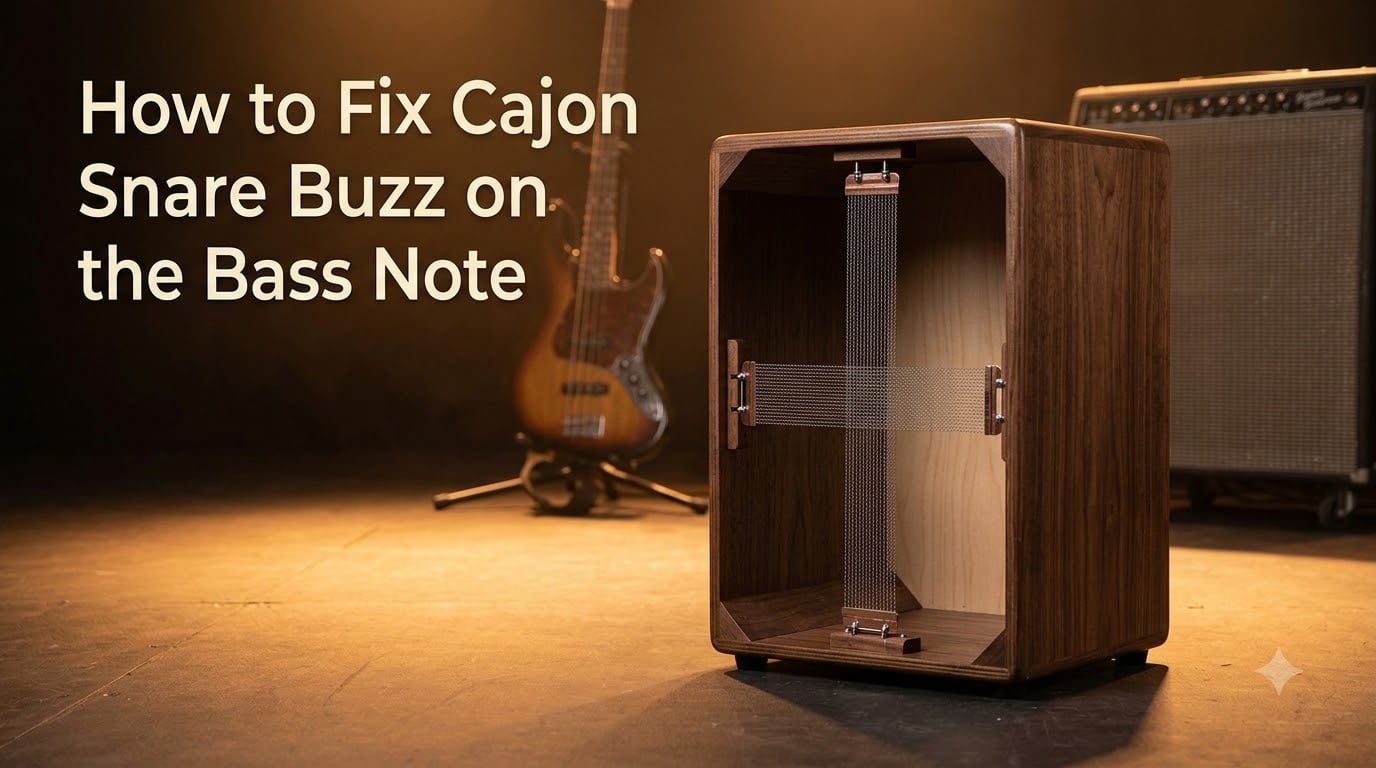
That annoying rattle every time you hit the bass tone on your cajon is one of the most common headaches for players. Learning how to fix cajon snare buzz on the bass note transforms your sound from muddy and distracting to clean and professional.
I have spent years playing cajon in acoustic bands, and I have dealt with this exact problem in rehearsal rooms, on stages, and in recording studios. The buzz happens because bass frequencies travel through the cajon body and shake the snare wires, even when you are not hitting a snare tone.
The good news is that most cases are fixable with simple adjustments. Some solutions take thirty seconds, while others require a bit of patience and an Allen key. This guide walks through every method I have tested so you can find the one that works for your cajon.
Table of Contents
What Causes Cajon Snare Buzz on Bass Notes
Cajon snare buzz on the bass note is caused by sympathetic vibration. When you strike the bass zone of the playing surface, low-frequency sound waves travel through the wooden body and reach the snare strings or wires inside the instrument.
Those snare wires are tuned to a specific tension. When a bass frequency matches or sits close to the natural resonant frequency of those wires, the wires start vibrating on their own. You hear this as an unwanted buzz layered over your bass tone.
Think of it like a guitar string reacting to a loudly sung note nearby. The string does not need to be plucked to vibrate. The sound energy alone triggers movement if the frequencies align.
This is why the problem gets worse in certain situations. If your bassist is playing loudly in rehearsal, their low E or A note can resonate through the room and into your cajon. The same thing happens when a kick drum or a PA system pushes strong low frequencies near your instrument.
Forum players on Drummerworld and Reddit confirm this constantly. One drummer put it simply: snare heads will vibrate in response to any loud noise, and the heads vibrate the snares, which make the buzzing sound. The cajon works the same way, just with a wooden box instead of a drum shell.
How to Fix Cajon Snare Buzz: Step-by-Step Troubleshooting
Here is the exact process I use to diagnose and fix cajon snare buzz. Work through these steps in order, testing your bass tone after each one.
Isolate the problem. Play a clean bass tone on your cajon with no other instruments running. If the buzz appears, the issue is internal to the instrument, not caused by an external sound source.
Check for loose hardware. Tap around the cajon body, corners, and the sound hole edge. Loose screws, corner braces, or a rattling bass reflex port can mimic snare buzz.
Test snare wire tension. Engage and disengage the snare if your cajon has a snare lever. If the buzz disappears when snares are off, you have confirmed the snare wires are the source.
Adjust tension. Use the Allen screws on top or inside the cajon to tighten or loosen the snare wires slightly. Small turns make a big difference.
Add temporary damping. If tension adjustment does not fully solve it, try the paper method or a damping strip between the wires and the playing surface.
Apply internal muffling. For persistent buzz, place a towel or foam inside the cajon to absorb excess resonance.
Most players find their fix somewhere between step three and step five. Move on to the detailed sections below for the technique that matches your situation.
Adjusting Snare Wire Tension on Your Cajon
Tension adjustment is the single most effective fix for cajon snare buzz. The goal is to find the sweet spot where the snares respond to intentional hits but stay quiet during bass notes.
Strings or wires that are too tight produce a harsh, unpleasant buzzing sound. Strings that are too slack rattle loosely against the playing surface on every note. You are looking for the tension in between.
Step 1: Locate the adjustment screws. Most cajons have Allen screws on the top panel or accessible through the sound hole. Some models use a thumbscrew on the side. Check your manufacturer manual if you cannot find them.
Step 2: Make quarter-turn adjustments. Use the correct size Allen key and turn each screw no more than a quarter turn at a time. Test the bass tone after each adjustment. This prevents you from overtightening and snapping a string.
Step 3: Test both extremes. Play a bass tone with the snares very tight, then very loose. Notice how the buzz changes. Now dial in toward the middle, stopping at the tension where the buzz disappears but the snare response still sounds crisp when you play a corner hit.
Step 4: Repeat for each string individually. Many cajons have two or four snare strings running vertically. If only one string is buzzing, adjusting that string alone may solve the problem without affecting the others.
Players on Cajonbox recommend this approach consistently. The tuning process is not about hitting a specific pitch. It is about finding the tension where your cajon produces a clean bass tone and a snappy snare response without bleed between the two.
Quick Fixes to Stop Cajon Snare Buzz Right Now
Sometimes you need a fix in the middle of a gig or rehearsal. These quick methods use materials you already have nearby and take less than two minutes to apply.
The Paper Method
Slide a thin piece of paper, like a grocery receipt or a strip of business card, between the snare wires and the playing surface at one or both ends. The paper acts as a micro-damper that stops the wires from vibrating freely during bass notes.
This is one of the most recommended tricks on drum forums. A Drumforum thread on fixing snare buzz describes it as a temporary fix that players keep using for months because it works so well.
Adjust the paper position until the buzz stops. You may only need a small strip at one end. Remove the paper when you want full snare sensitivity back.
The Tape Method
Apply a small strip of gaffer tape or masking tape directly onto one or two snare wires. This adds mass to the wire and changes its resonant frequency, pulling it away from the bass note range.
Use tape sparingly. Too much tape kills the snare sound entirely and makes your cajon sound flat and dead. Start with a one-centimetre strip and add more only if needed.
The Toilet Paper Square Method
Fold two squares of toilet paper into small rectangles and slide them under the snare wires at opposite ends. This is a softer version of the paper method that dampens without completely choking the wires.
A player on DrumChat swears by this technique for live performances. The tissue absorbs vibration naturally and is invisible from the outside of the cajon.
Internal Damping and Muffling Techniques
When quick fixes are not enough, internal damping offers a more permanent solution. These methods reduce the overall resonance inside the cajon, which lowers the chance of bass frequencies reaching the snare wires.
The Towel Method
Place a small hand towel or cloth inside the cajon through the sound hole. Position it against the back panel, opposite the playing surface. The towel absorbs excess sound energy and dries out the bass tone.
This is the most recommended damping technique on Cajonbox. It is especially useful when you are miking the cajon for recording or live amplification, since it tightens the sound and reduces feedback risk.
Experiment with towel thickness and placement. A single layer may be enough, or you might need a folded towel. Move it around until you find the spot that reduces buzz without killing the natural warmth of your bass tone.
Velcro Dampening Strips
Some players attach thin strips of Velcro hook material to the inside of the playing surface, near the snare wires. The fuzzy texture interrupts vibration travel between the surface and the wires.
This is a more controlled alternative to the towel method. It stays in place permanently and does not shift during transport.
Sound Hole Modification
If your cajon has a sound hole on the back, try partially covering it with a flap of cloth or a removable panel. A smaller opening changes the internal air pressure and reduces low-frequency resonance.
Do not permanently block the sound hole. It exists to project sound outward. Use a removable cover so you can adjust or remove it depending on the room and the gig.
Preventive Maintenance to Avoid Future Buzz
Prevention saves you from repeating the same troubleshooting every few weeks. A well-maintained cajon holds its tuning longer and resists buzz naturally.
Check your snare wire tension every month. Wood expands and contracts with temperature and humidity changes, which slowly shifts the tension on the strings. A quick Allen key check keeps everything stable.
Replace worn snare strings if they sound lifeless or inconsistent. Old strings lose their elasticity and settle into frequencies that buzz more easily. Most manufacturers recommend replacement every one to two years depending on playing frequency.
Store your cajon in a climate-stable room. Avoid leaving it in a cold car or a damp basement. Extreme humidity warps the playing surface and shifts the internal geometry, which can introduce new buzz issues.
Keep the interior clean. Dust and debris inside the cajon can settle on the snare wires and create rattle. A quick vacuum through the sound hole every few months prevents buildup.
When to Seek Professional Help
Most cajon snare buzz is fixable at home. But if you have tried every method above and the buzz persists, the issue may be structural.
A warped playing surface, a cracked internal panel, or a misaligned snare assembly can all cause chronic buzz that no amount of tension adjustment or damping will solve. In that case, take your cajon to a luthier or contact the manufacturer if it is still under warranty.
This is also the right move if your cajon is a custom build and the buzz has been present since day one. A professional can evaluate whether the snare placement, wire type, or internal bracing needs modification.
FAQs
How to stop snare buzz from bass?
To stop snare buzz caused by bass frequencies, adjust the snare wire tension using the Allen screws on your cajon until the wires respond to intentional hits but stay quiet during bass notes. If that does not fully solve it, add a damping strip of paper between the wires and the playing surface, or place a small towel inside the cajon to absorb excess resonance.
Why is my cajon buzzing?
Your cajon is buzzing because of sympathetic vibration. Bass frequencies from your playing or from nearby instruments like a bass guitar travel through the cajon body and cause the internal snare wires to vibrate unintentionally. This happens when the bass frequency matches or sits close to the natural resonant frequency of the snare wires.
Why is my snare buzzing?
Snare buzz occurs when sound waves from low frequencies hit the snare wires and trigger them to vibrate. On a cajon, this usually means the snare tension is slightly off, the wires are too loose, or external bass frequencies from a bassist or kick drum are resonating through the room and into your instrument.
How to adjust snare in cajon?
Locate the Allen screws on the top panel or inside the sound hole of your cajon. Use the correct Allen key to make quarter-turn adjustments to each screw, testing the bass and snare tones after each turn. Tighten if the wires rattle loosely, loosen if they sound harsh and buzzy. Find the tension where snare hits sound crisp but bass notes stay clean.
Wrapping Up: Your Path to a Buzz-Free Cajon
Fixing cajon snare buzz on the bass note comes down to three things: understanding why it happens, finding the right tension, and adding damping where needed. Most players solve the problem with a simple Allen key adjustment and a well-placed piece of paper or towel.
Work through the troubleshooting steps in order. Start with the quick diagnosis, move to tension adjustment, then add damping methods if the buzz persists. Preventive maintenance like monthly tension checks and proper storage keeps the problem from coming back.
If you have tried everything and the buzz still will not go away, a professional evaluation can catch structural issues that DIY methods cannot fix. But for the vast majority of cajon players, the solutions in this guide will get your bass tone sounding clean, deep, and rattle-free.