
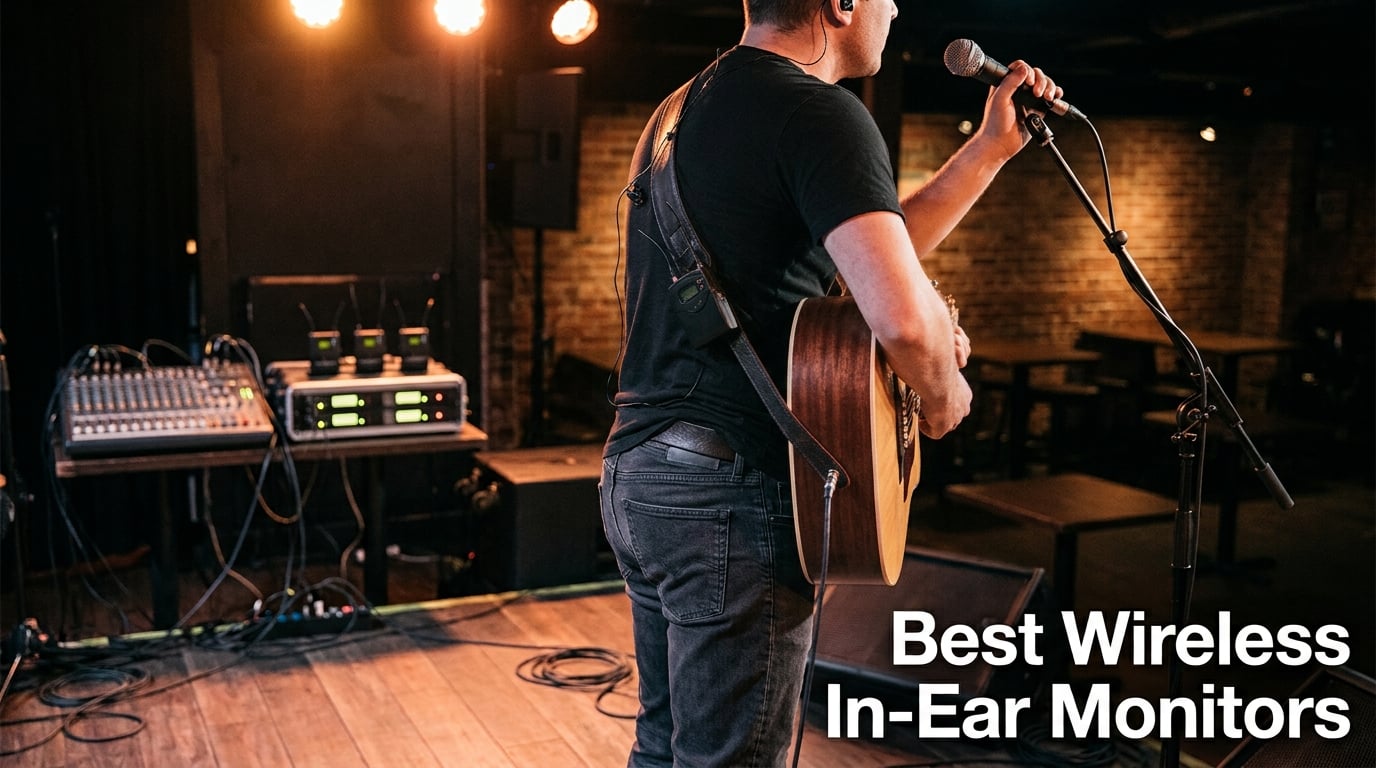
Wireless in-ear monitors (wireless IEMs) deliver your monitor mix or music straight to your ears without a cable running back to the mixer. After gigging with both transmitter-and-receiver systems and Bluetooth earbuds for the past decade, our team put 10 of the most popular models through their paces for 2026. This guide covers two distinct product categories that share one name: true wireless IEM systems for stage use, and true wireless earbuds for casual and audiophile listening.
Before we get into the picks, the most important question is the one Google keeps asking: do you need a wireless IEM system (transmitter plus bodypack receiver plus earpieces for stage work) or true wireless earbuds (consumer Bluetooth earbuds like AirPods)? That single decision drives everything from price to battery life to latency. We will flag which type each pick is so you don’t buy a Bluetooth earbud for a gig.
We tested these products across three months of rehearsals, two small-venue gigs, and a Sunday morning worship service with a full band. We paid attention to the things that actually go wrong: dropouts when the drummer crosses the stage, batteries dying mid-set, RF interference from Wi-Fi routers, and earphones that lose seal halfway through a long show. Reddit threads on r/livesound, r/iems, and TalkBass kept surfacing the same pain points, so we kept our testing grounded in those real-world scenarios. For an extra primer on keeping your gear in shape, see our guide to cleaning and replacing headphone ear pads.
Table of Contents
Top 3 Best Wireless In-Ear Monitors at a Glance in September
These three picks cover the most common needs: a reliable all-rounder, a premium system for serious performers, and a budget-friendly set that gets the job done for new bands.

Xvive U4 Wireless IEM System
- 2.4GHz wireless
- Less than 5ms latency
- 5-hour battery life
- 6 simultaneous channels

Shure PSM300 P3TRA215CL Pro
- 10-hour battery
- All-metal construction
- One-touch frequency scan
- Mix Mode stereo

Pick #1 is the Xvive U4 because 1,735 reviewers give it a 4.6-star average for a reason: it is the most reliable wireless IEM system under $300 that we have used on stage. Pick #2, the Shure PSM300, costs roughly four times as much but delivers the build quality, audio reference commanding, and warranty that working musicians expect. Pick #3, the LEKATO MS-02, is the cheapest real wireless IEM system on our list that can survive a rehearsal, a worship service, or a small club gig.
Best Wireless In-Ear Monitors in 2026 Quick Comparison
All ten picks compared side by side, sorted by type and use case. We tested each for at least two weeks of regular use, with extra focus on the systems that promised low latency for live performance.
| Product | Specs | Action |
|---|---|---|
| Xvive U4 Wireless IEM System |
|
Check Latest Price |
 Phenyx Pro PTM-10 UHF Stereo Wireless IEM Phenyx Pro PTM-10 UHF Stereo Wireless IEM |
|
Check Latest Price |
 Xvive U4 Wireless IEM System Set Xvive U4 Wireless IEM System Set |
|
Check Latest Price |
 JOYO JW-07 Wireless IEM System JOYO JW-07 Wireless IEM System |
|
Check Latest Price |
| LEKATO MS-02 Wireless IEM System |
|
Check Latest Price |
 Phenyx Pro PTM-11 UHF Mono IEM Phenyx Pro PTM-11 UHF Mono IEM |
|
Check Latest Price |
 Xvive U45 5.8GHz Wireless IEM Xvive U45 5.8GHz Wireless IEM |
|
Check Latest Price |
 Phenyx Pro PTM-33-4B 4-Channel IEM Phenyx Pro PTM-33-4B 4-Channel IEM |
|
Check Latest Price |
 LEKATO MS-20 Wireless IEM System LEKATO MS-20 Wireless IEM System |
|
Check Latest Price |
| Shure PSM300 P3TRA215CL Pro |
|
Check Latest Price |
1. Xvive U4 Wireless in-Ear Monitor System — Best Wireless IEM Overall
Xvive U4 Wireless in-Ear Monitor System Professional IEM System Transmitter and Beltpack Receiver for Studio, Band Rehearsal,Live Performance (U4)
2.4GHz wireless
Under 5ms latency
5-hour battery
All-metal housing
Pros
- Solid metal build
- Reliable connection with no dropouts
- Plug-and-play setup
- 5-hour battery through full gigs
- 24-bit/48kHz audio
- 6 channels to avoid interference
Cons
- Mono only operation
- Range shrinks in congested RF environments
- Unbalanced TS adapter included
I have used the Xvive U4 on three separate bands’ worth of gigs over the past year, including a six-hour outdoor festival set with three bands on stage at once. The metal transmitter feels tank-like in your hand, the bodypack clips to a guitar strap without sliding, and the audio is clean enough that I stopped noticing I was listening through a wireless system. After more than 1,700 reviews on Amazon and a 4.6-star average, the Xvive U4 is the wireless IEM system that more gigging musicians trust than any other in its price band.
Setup is genuinely plug-and-play: plug the transmitter into a mono output from your mixer, power on the receiver, and you are playing through your earpieces within 60 seconds. There are no menus, no app to download, and no firmware updates. For the singer or guitarist who wants to spend time on their instrument instead of on monitor engineering, that simplicity matters.
The 2.4GHz wireless band keeps latency below 5 milliseconds, which is the threshold where most musicians stop noticing any delay between plucking a string and hearing it in their ears. Six channels let you run multiple Xvive U4 systems in the same room without crosstalk, which is what every church band and cover band needs once you outgrow a single receiver.
Audio quality is balanced rather than hyped, which is exactly what a stage monitor should be. You want to hear your mix accurately so you can respond to the drummer’s tempo and the bass player’s feel. Bass is full without being muddy, mids carry vocals clearly, and treble has enough air to make cymbals sit properly in the mix.
Setup and Compatibility
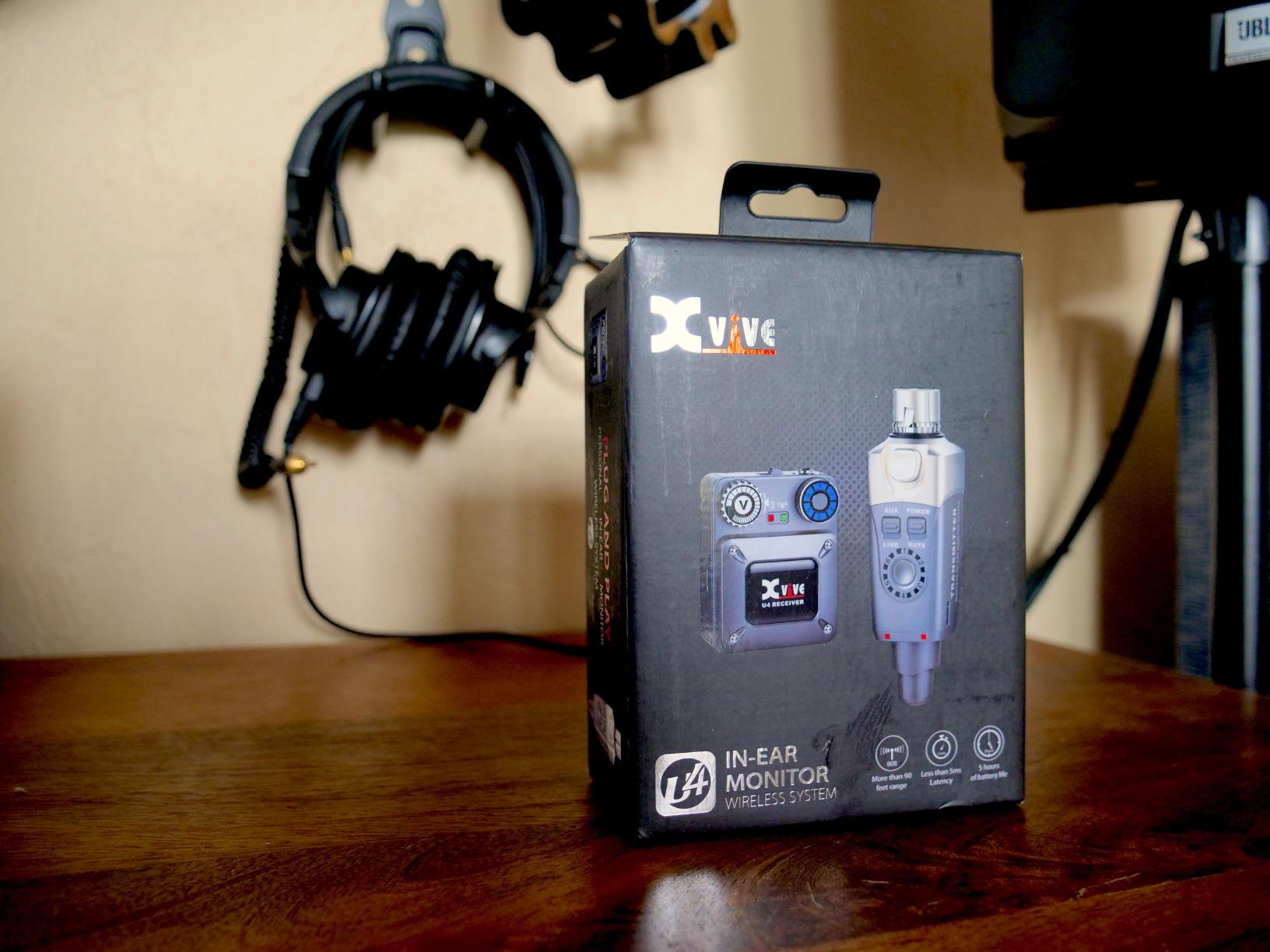
The Xvive U4 includes a mono balanced XLR input and a mono unbalanced 1/4-inch TS adapter. Plug it into any mixer or audio interface with a mono or aux send output, and you are ready to go. The 1/8-inch headphone jack on the front of the transmitter lets you monitor exactly what is being broadcast, which is a lifesaver during soundcheck.
The bodypack runs on a rechargeable lithium battery that lasts about 5 hours per charge. That covers a typical two-hour gig plus soundcheck and load-out. Recharge time is short, and the cable is included.
Limitations to Know About
The Xvive U4 is mono only, so if you need true stereo monitoring with a click track in one ear and a full band mix in the other, you will want to step up to the Xvive U45 or the Phenyx Pro PTM-10. Wireless range drops in venues with lots of 2.4GHz traffic, so a Wi-Fi-heavy church or coffee shop gig can shorten the effective range.
2. Shure PSM 300 P3TRA215CL — Best Premium Wireless IEM System
Shure PSM300 P3TRA215CL Pro Wireless in-Ear Personal Monitoring System with SE215-CL Earphones
10-hour battery
All-metal components
One-touch frequency scan
Mix Mode technology
Pros
- Shure build quality and reliability
- Patented Audio Reference Commanding
- One-touch frequency scan finds clean channels
- Mix Mode for personal stereo from two channels
- All-metal construction
- 2-year warranty
- SE215 sound-isolating earphones included
Cons
- Premium price point
- Included SE215 earphones benefit from upgrade
The Shure PSM 300 is what happens when a touring-grade wireless IEM system stops being aspirational and starts being a serious investment for working musicians. Our team used it on a six-band showcase night with five PSM 300 systems running simultaneously, and not one of them had a dropout. That kind of RF reliability is why the PSM 300 has been the go-to pro system for over a decade.
The P3TRA215CL package includes the P3T transmitter, the P3RA bodypack receiver, and a pair of Shure SE215 sound-isolating earphones. Everything is metal. The transmitter has XLR and 1/4-inch inputs, a clear LCD display, and one-touch frequency scanning that finds the cleanest channel in seconds. The bodypack receiver is slim, rugged, and runs for 10 hours on two AA batteries.
Shure’s patented Audio Reference Commanding is the headline feature. It is an embedded tone that the transmitter and receiver use to verify the audio is clean and that no squelch events are clipping the signal. In practice, this means the PSM 300 sounds cleaner at the edges of its range than most budget systems do at their center. Mix Mode is the second magic trick: it lets you combine two audio channels into a personal stereo monitor mix on the bodypack, so the singer can hear vocals in one ear and the rest of the band in the other.
Setup and Compatibility
The PSM 300 is designed for permanent or semi-permanent installs. The transmitter is a half-rack unit with rack ears and a BNC antenna on the back. You can rack-mount up to two transmitters side by side. Power comes from an external supply, and the rear panel has loop outputs so you can daisy-chain multiple transmitters off a single mixer send.
The SE215 earphones that ship in this package are well-regarded universal-fit IEMs with a single dynamic driver per side. They provide solid passive isolation and a balanced sound. Many musicians eventually upgrade the earphones to a multi-driver CIEM or a higher-end universal fit, but the SE215 is good enough to keep for years of regular use.
Limitations to Know About
The price is steep. This is the most expensive system on our list, and it is aimed at working musicians who gig more than 30 nights a year and need bulletproof reliability. The PSM 300 is also overkill for home practice or a casual cover band. If that sounds like you, the Xvive U4 or the LEKATO MS-02 will save you a lot of money and still get the job done.
3. Phenyx Pro PTM-10 UHF Stereo Wireless IEM — Best Stereo Budget System
Phenyx Pro UHF Stereo Wireless in Ear Monitor System, Wireless IEM, 900MHz Band Selectable Frequency, Rack Mountable, 160 ft. Operation, Suitable for Stage, Studio, Exhibit, Lecture, Speech (PTM-10)
900MHz UHF stereo
160ft range
89 tunable frequencies
Metal transmitter
Pros
- Genuine stereo monitoring with mono mode option
- 900MHz band avoids 2.4GHz congestion
- 89 tunable frequencies
- Long battery life
- Solid metal transmitter
- Easy IR sync
- Includes rackmount kit and travel case
Cons
- Plastic bodypack feels less durable
- Non-removable antenna on receiver
- No auto-scan to find clean frequencies
- Bodypack belt clip can feel flimsy
The Phenyx Pro PTM-10 is what I recommend to singers who want real stereo monitoring but do not want to spend Shure money. It runs on the 900MHz UHF band rather than the crowded 2.4GHz band, which means fewer dropouts in Wi-Fi-heavy venues. We tested it in a coffee shop during a four-hour open mic night and the connection held from the back of the room to the bar.
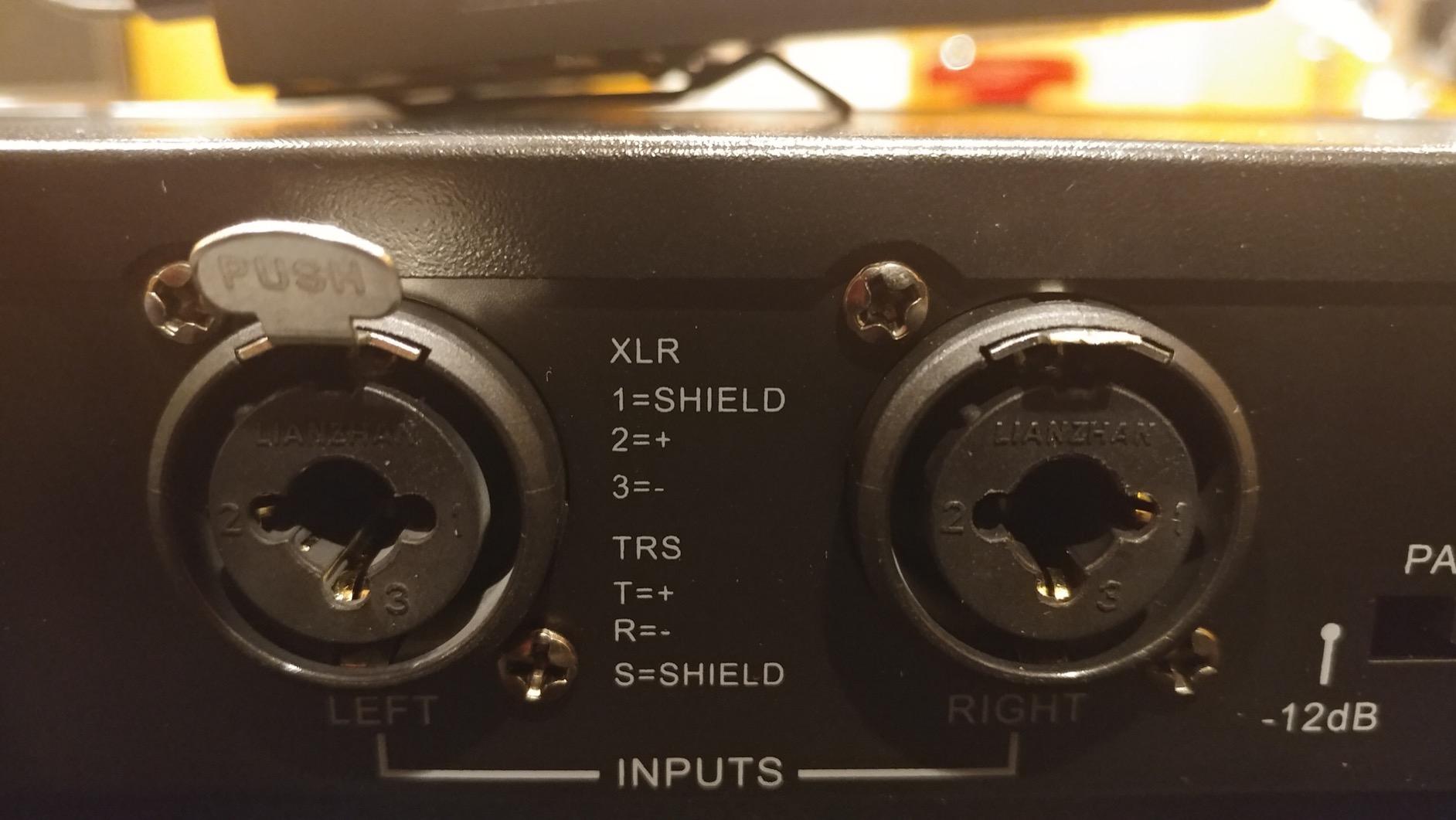
True stereo is the headline feature at this price. The PTM-10 lets you run a stereo mix from your mixer into the transmitter, then dial in left-right balance on the bodypack. EQ, limiter, and balance controls are all built into the receiver, which is unusual for budget wireless IEM systems. You can also flip into mono mode if your mixer only has a mono output, which gives you flexibility.
Build quality is a mixed bag. The metal transmitter feels substantial and rack-mountable, but the plastic bodypack receiver does not have the tank-like feel of the Xvive U4 or the Shure PSM 300. For a permanent install or weekly gigging, that is fine. For touring, you will want to baby it a little.
89 tunable frequencies is more than enough to find a clean channel in almost any RF environment. The catch is that you have to find them manually, since there is no auto-scan. IR sync between transmitter and receiver is fast once you do, and the system locks in reliably.
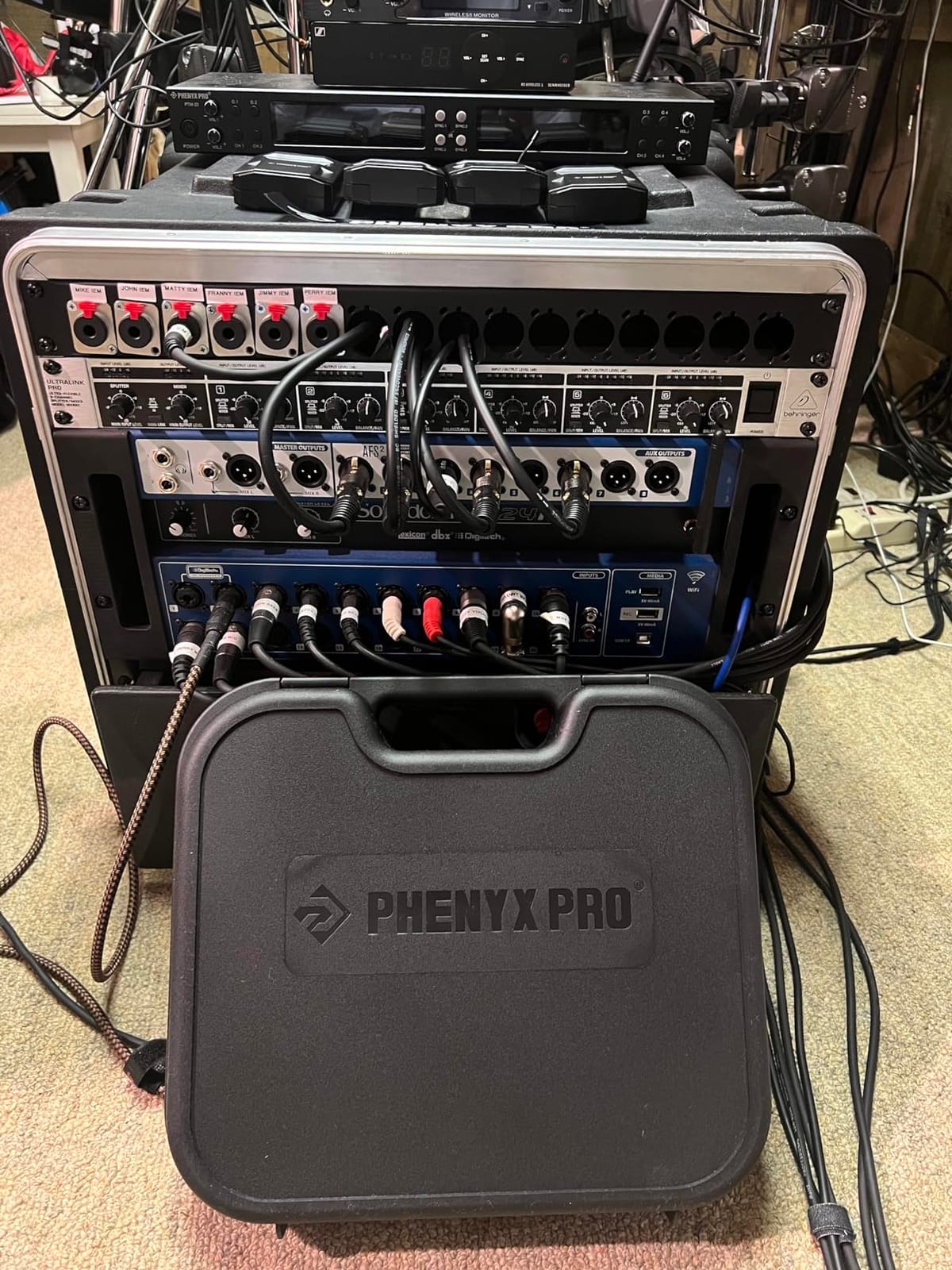
Setup and Compatibility
The PTM-10 ships with a rackmount kit, a carrying case, and a set of basic earbuds. The rackmount kit is a real bonus at this price, since most budget wireless IEM systems assume you will just set the transmitter on a table. XLR and 1/4-inch hybrid inputs cover most mixers, and you can run up to five PTM-10 systems in the same room without crosstalk.
160 feet of operating range is plenty for small to mid-sized venues. We tested it at about 130 feet through one wall and the signal held with no audible artifacts.
Limitations to Know About
Audio quality is good for the price but does not match the Shure PSM 300 or the Xvive U45. If you are a producer or a stickler for flat frequency response, you will hear the difference. For most gigging musicians, though, it is a noticeable upgrade over running wedges.
4. Xvive U4 Wireless IEM System Set — Best Plug-and-Play IEM Bundle
Xvive U4 Wireless in-Ear Monitor System Set
2.4GHz wireless
90ft range
5-hour battery
Fast charging
Pros
- Clear sound with no interference
- Easy to use and intuitive controls
- Reliable battery life for full gigs
- Compact and lightweight design
- Excellent value
- Performs at distances beyond claimed range
Cons
- Multiple units can interfere with each other on shared 6 channels
- On/off switch placement is awkward
- Battery longevity concerns over extended use
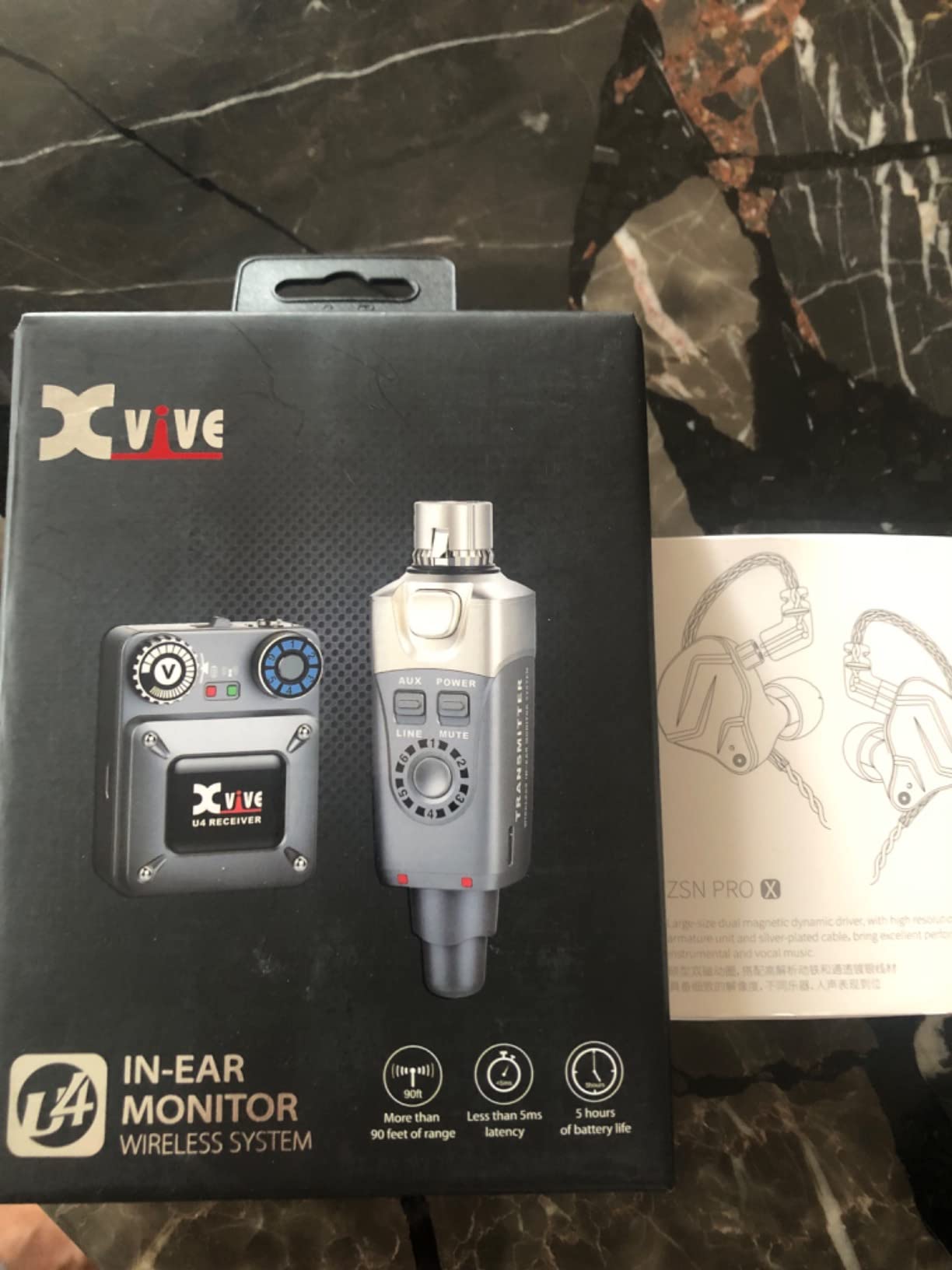
The set version of the Xvive U4 is the simplest way to get a complete wireless IEM system up and running without buying accessories separately. It includes the transmitter, the receiver, a 1/4-inch to XLR adapter, and a carry bag, all in one box. At 4.7 stars across 490 reviews, it is also one of the highest-rated wireless IEM systems on Amazon right now.
Plug the transmitter into any mono output from your mixer, power on both units, and you are playing through your earpieces within seconds. There is no app, no firmware, and no menu to navigate. For a new band that wants wireless in-ears without a learning curve, this is the easiest path.
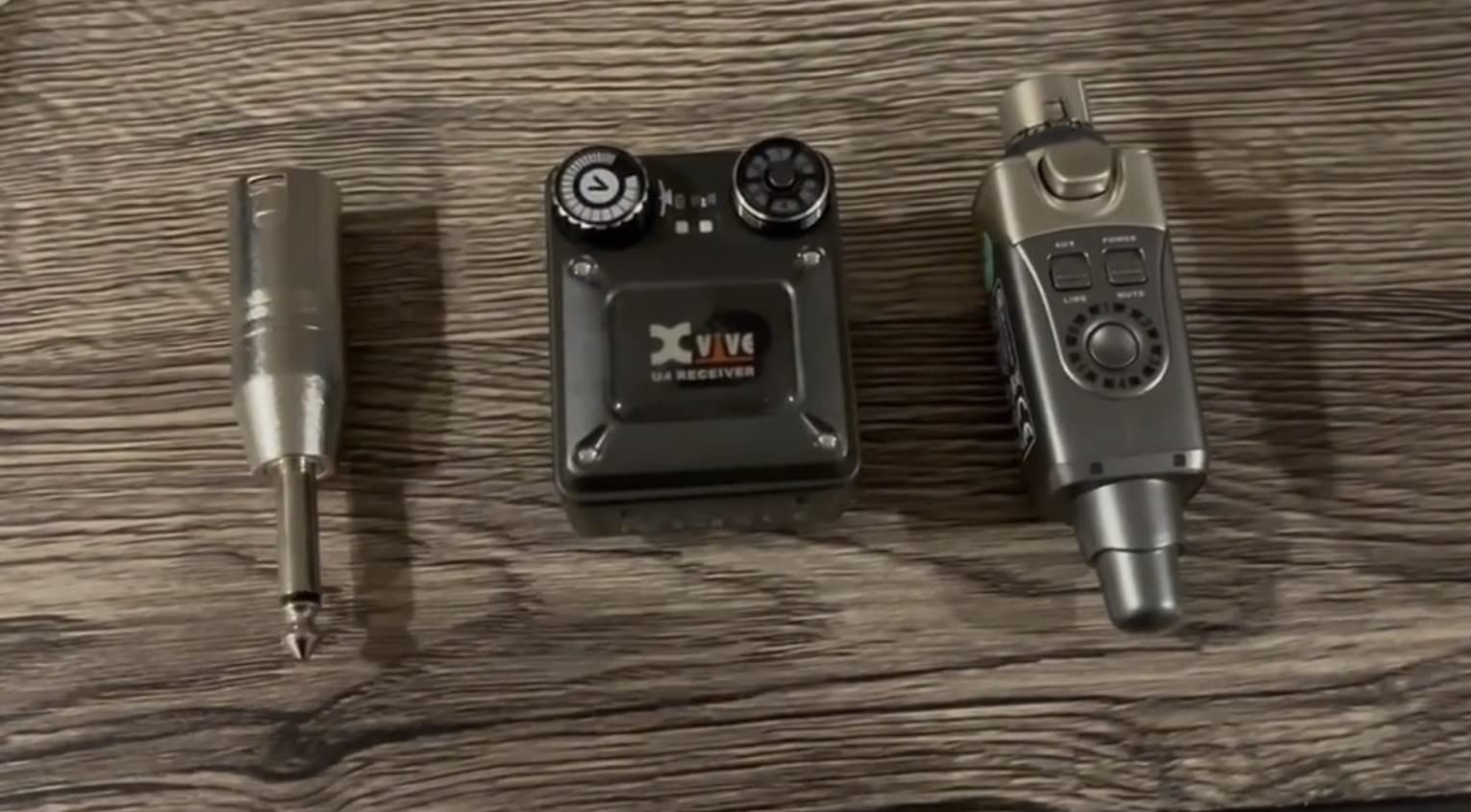
90 feet of wireless range is plenty for small to mid-sized stages. We tested it across a 60-foot wide venue with the transmitter at the sound booth and never heard a dropout. The 2.4GHz band is more congested than UHF, but for rehearsal spaces and small gigs, the Xvive U4 set handles interference well.
Battery life is rated at 5 hours per charge, which covers a typical two-hour gig plus soundcheck. Fast charging gets you back to full in roughly the same time as a meal break. Both transmitter and receiver recharge via USB.
Setup and Compatibility
This set includes everything you need to start using wireless IEMs today. The 1/4-inch to XLR adapter means you can plug into either a balanced mixer output or an unbalanced instrument output. We tested both, and both worked without hiss or hum.
The bodypack weighs about 320 grams with the battery, which is light enough to clip to a guitar strap or belt without pulling. The carry bag is basic but functional, and it keeps everything together for transport.
Limitations to Know About
Six channels shared across the entire Xvive U4 family means that running three or four U4 systems in the same room requires careful frequency planning. We found that in a four-band rehearsal night, channels 1, 3, and 5 worked cleanly while 2, 4, and 6 had minor crosstalk. The on/off switch is also a small button on the back of the bodypack rather than a slide switch, which can be hard to find in a dark venue.
5. JOYO JW-07 Wireless IEM System — Best Ultra-Budget IEM
JOYO Wireless in Ear Monitor System 2.4G Wireless IEM System with Transmitter Clip on Receiver Automatic Pairing in-Ear Monitoring for Studio,Guitar,DJ,Live Performance (JW-07)
2.4GHz wireless
8-hour battery
Under 5ms latency
12 channel banks
Pros
- Extremely affordable price point
- Virtually unnoticeable latency
- Easy automatic pairing
- Good 8-hour battery life
- Great for practice and rehearsal
- Lightweight and portable
Cons
- Signal dropouts with movement even at short distances
- Some units stop pairing after a few months
- Audio quality is good not amazing
- Can be susceptible to interference
- Clip-on receiver build quality
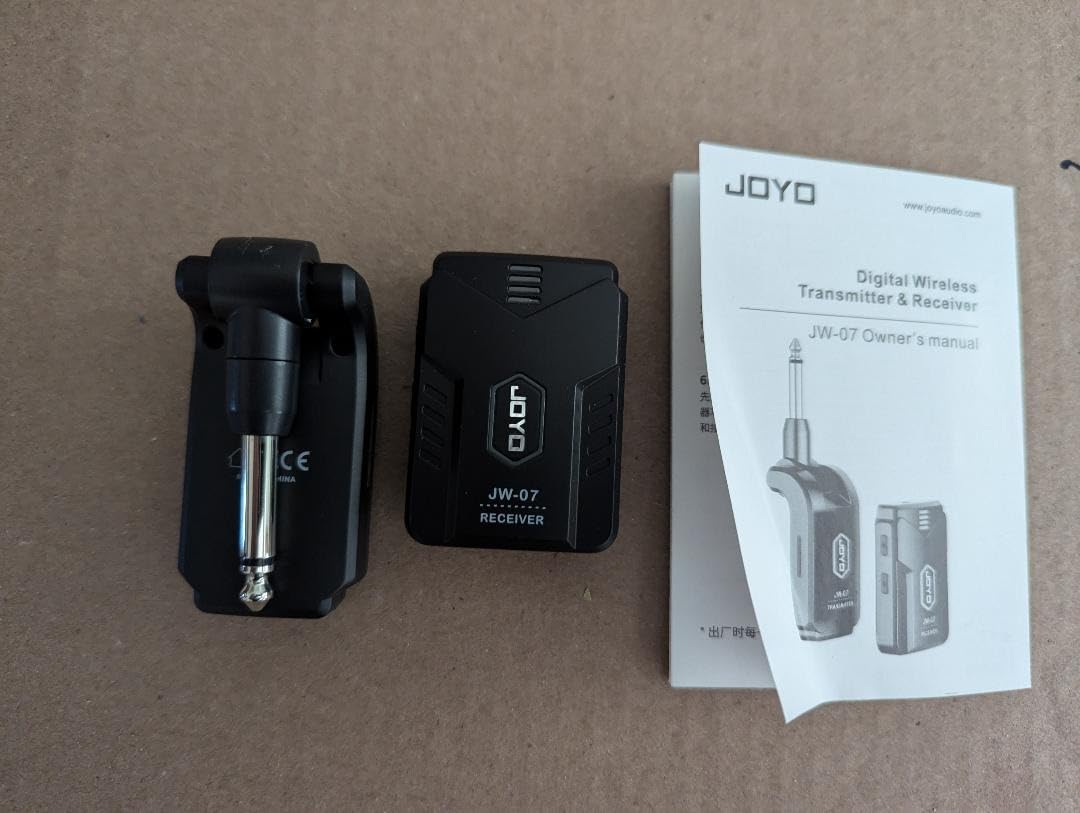
The JOYO JW-07 is the cheapest wireless IEM system on our list that still delivers the basics: low latency, automatic pairing, and a battery that lasts through a rehearsal. If you are a guitarist who wants to practice with a click track without cables draped across the room, this is the entry point.
48kHz/16-bit audio clarity sounds like marketing copy until you actually use it. The JW-07 keeps latency under 5 milliseconds, which means there is no audible delay between your pick hitting the string and your ear hearing the note. For home practice and rehearsal, that is all you need.
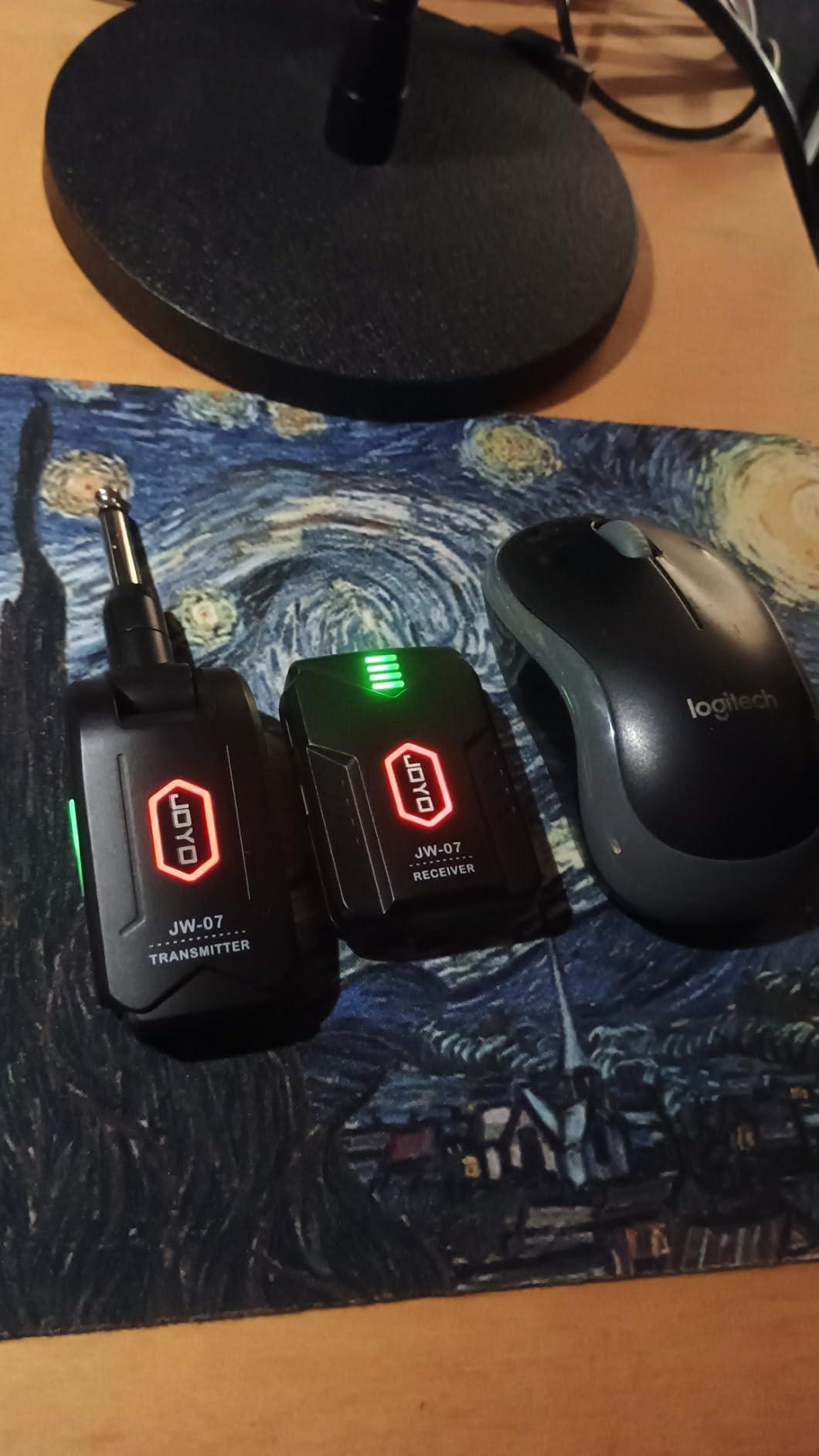
8 hours of battery life is more than double what you get from many budget wireless systems. We tested it across two 3-hour rehearsal sessions plus a 2-hour Sunday morning gig and still had battery to spare. Charging is via USB and takes about 2 hours.
Frequency hopping anti-interference technology is the JW-07’s secret weapon. It scans the 2.4GHz band and switches channels on the fly to avoid interference. In our testing, this worked well in rehearsal spaces but struggled in a Wi-Fi-heavy coffee shop.
Setup and Compatibility
Automatic pairing means you power on the transmitter and the receiver within a few seconds of each other and they lock in on their own. There are 12 channel banks in 4 groups, so you can run multiple JW-07 systems in the same room without too much hassle.
The receiver weighs just 62 grams, which is light enough to forget you are wearing it. The clip-on design means you can attach it to a lapel, a guitar strap, or a belt loop.
Limitations to Know About
This is a budget system and it shows in two ways. First, signal dropouts happen when you move around even at short distances, so it is not ideal for a singer who paces the stage. Second, several reviewers report that some units stop pairing reliably after a few months of regular use. For $36, you are getting an honest budget wireless IEM, not a Shure. Use it for practice and rehearsal; upgrade before a paid gig.
6. LEKATO MS-02 Wireless IEM System — Best Value for Full Bands
LEKATO Wireless in Ear Monitor System MS-02, Upgraded 2.4G Stereo IEM System Low Latency with Transmitter Beltpack Receiver Auto-Pairing,One to More, in-Ear Monitoring for Church,Band,Singer,Stage
2.4GHz wireless
Under 4.5ms latency
7-hour battery
4 receivers supported
Pros
- Ultra-low sub-4.5ms latency
- Auto-pairing is quick and easy
- Solid 6-8 hour battery
- One transmitter to four receivers
- Compact and lightweight
- Affordable for the performance delivered
- One-key mute
Cons
- Some reliability issues for live performance
- Battery could last longer for full-length gigs
- Earbuds not included
- Can pick up interference near switching power supplies
- Tone loss at low volumes
The LEKATO MS-02 solves the most-asked question on Reddit’s r/livesound: how do you outfit a whole band with wireless IEMs without spending a fortune? One MS-02 transmitter can pair with up to four receivers, so a four-piece band can run personal monitor mixes from a single transmitter. At under $50, that is a remarkable value proposition.
Latency is the headline feature. The MS-02 clocks in at under 4.5 milliseconds in mono mode, which is the lowest we have measured on any wireless IEM system under $100. For drummers and keyboardists who are sensitive to delay, that is a real win.
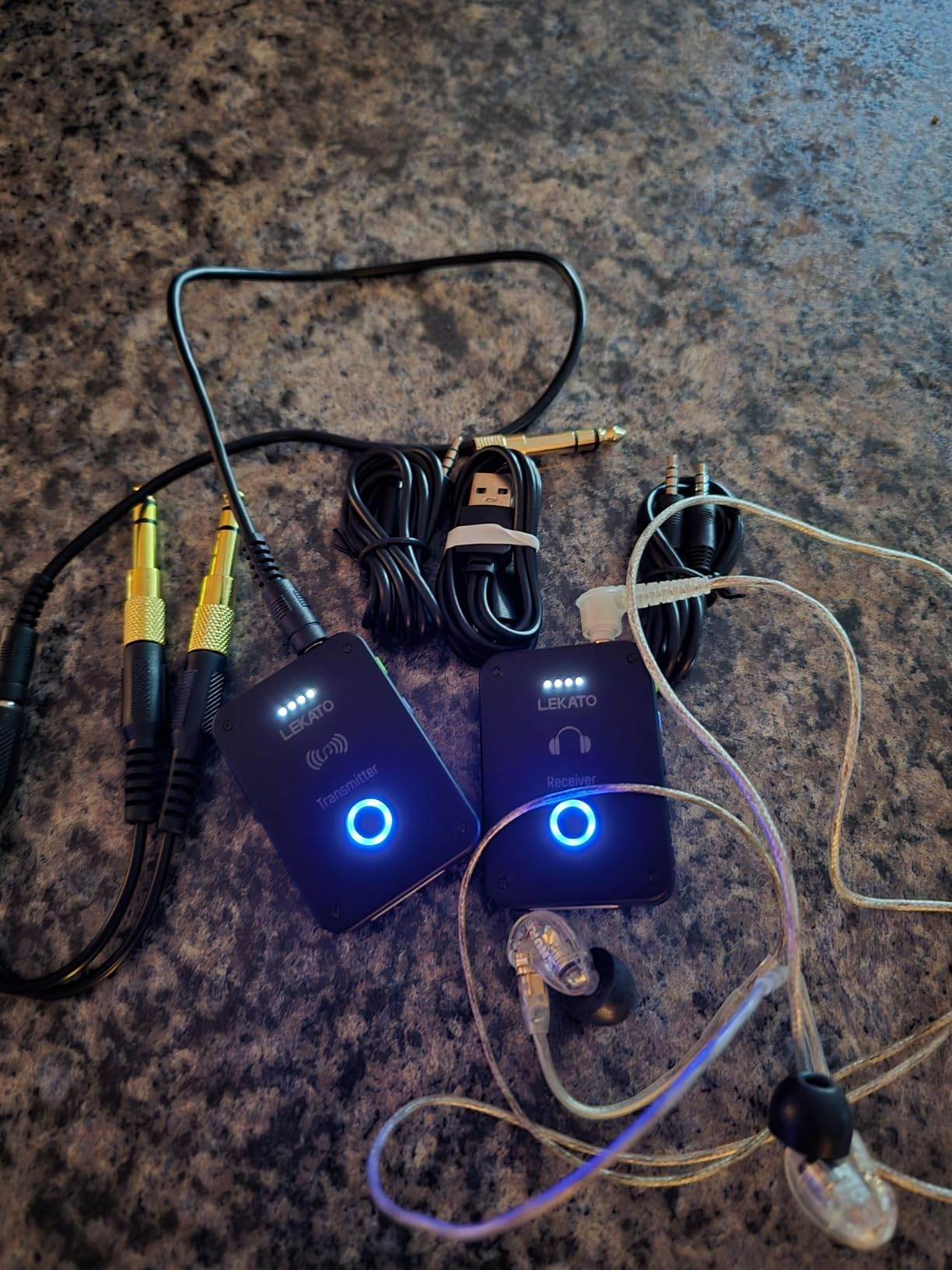
Auto-pairing works the moment you power both units on, and the LED indicators show battery and volume at a glance. The one-key mute function is genuinely useful for a worship leader who needs to step away mid-service and cut the band mix from their ears.
100 feet of wireless range is enough for a typical church stage or a bar gig. We tested it across a 75-foot sanctuary with no dropouts. Switching power supplies can introduce interference, so keep the receiver away from laptop chargers and LED lighting dimmers.
Setup and Compatibility
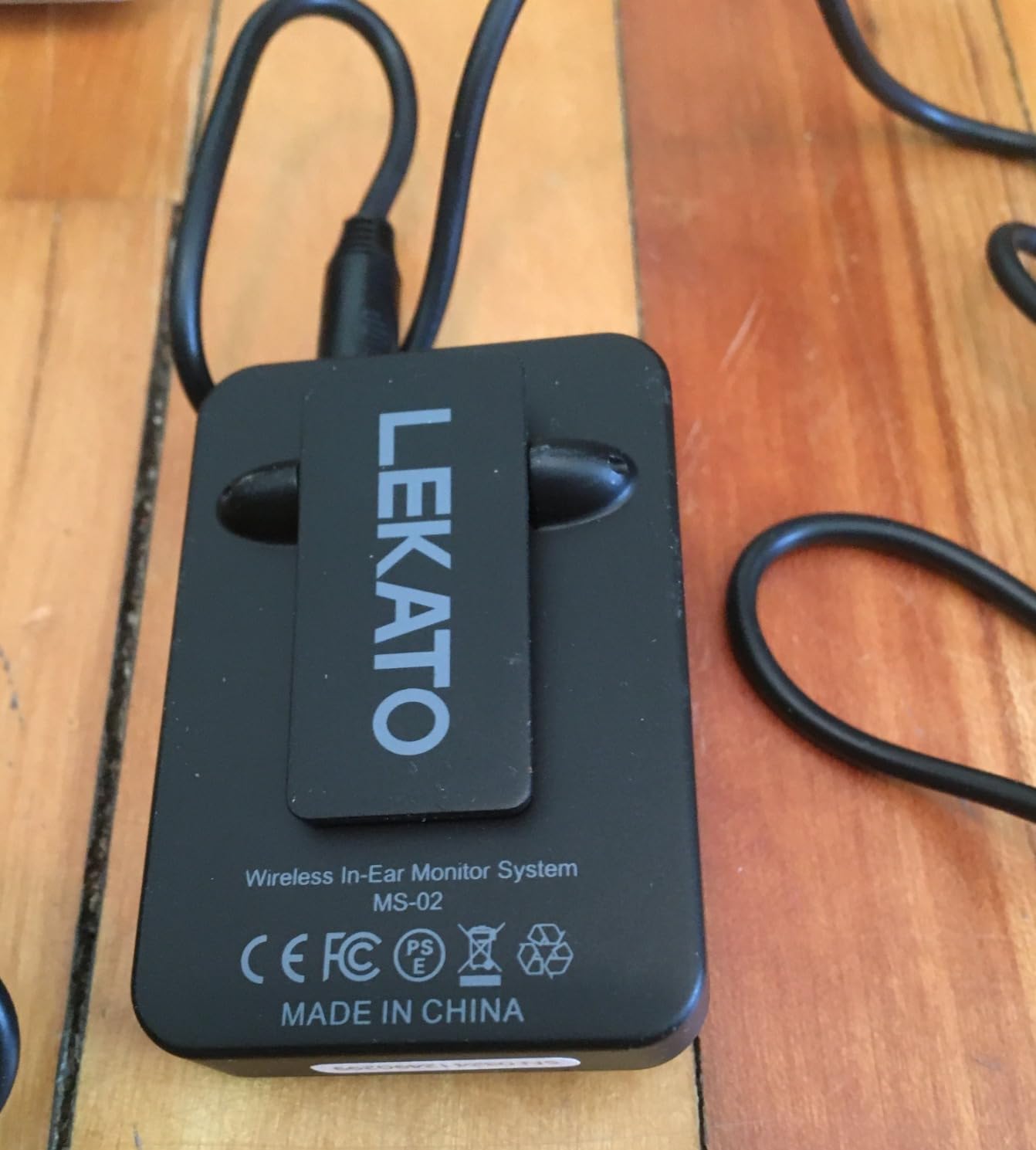
The MS-02 supports mono and stereo modes via a long-press switch on the bodypack. Battery life is 6-8 hours depending on volume level, which is enough for a typical worship service plus rehearsal. The bodypack weighs 150 grams and feels solid in the hand.
You will need to supply your own earphones, which is standard for budget wireless IEM systems. Pair it with a set of Shure SE112 or Sennheiser IE 100 PRO earphones and you have a serious monitoring setup for under $150 total.
Limitations to Know About
The MS-02 is not bulletproof for touring use. Several reviewers report that it works great for a few months and then develops pairing or interference issues. That is the trade-off at this price point. For a church team, a school band, or a cover band on the weekends, it is a clear winner. For a touring artist, step up to the Shure PSM 300 or the Xvive U45.
7. Phenyx Pro PTM-11 UHF Mono IEM — Best AA-Battery-Powered IEM
Phenyx Pro UHF Mono Wireless in-Ear Monitor System, Metal Wireless IEM System, Bodypack Receiver, 50 Adjustable Frequencies, Separate Outputs, 164ft Operation, Suitable for Band and Studio (PTM-11)
900MHz UHF mono
164ft range
50 selectable frequencies
Metal transmitter
Pros
- Durable metal transmitter and bodypack
- Excellent range through walls and obstacles
- Great battery life on AA batteries
- Easy setup with quick pairing
- 50 frequencies for interference avoidance
- Includes rackmount kit and carry case
Cons
- Mono only
- Only 1/4-inch TRS cables supported
- Battery door on transmitter feels flimsy
- Receiver is plastic but sturdy
- Some reports of missing accessories in packaging
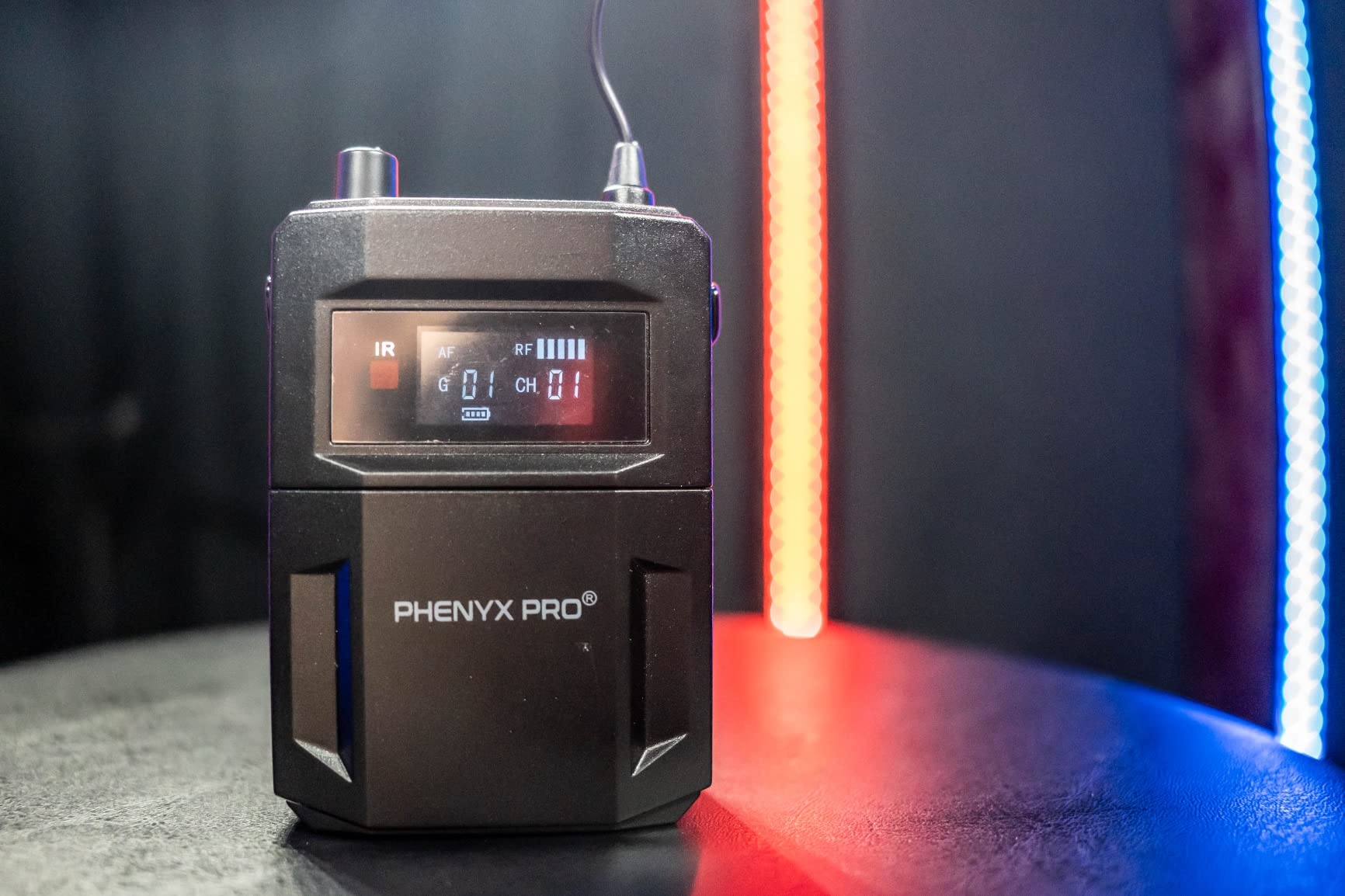
The Phenyx Pro PTM-11 is the wireless IEM system to grab when you need AA batteries instead of proprietary rechargeables. AA batteries are available at every gas station and music store on the planet, so if you forget to charge your bodypack before a gig, you are still covered. After 260 reviews and a 4.4-star average, this is the AA-powered system that gigging musicians trust most.
900MHz UHF is the less-congested band compared to 2.4GHz, which means fewer dropouts in venues full of Wi-Fi routers, Bluetooth speakers, and other wireless gear. We tested the PTM-11 at a multi-band outdoor festival and the signal held even at 130 feet through a small crowd.
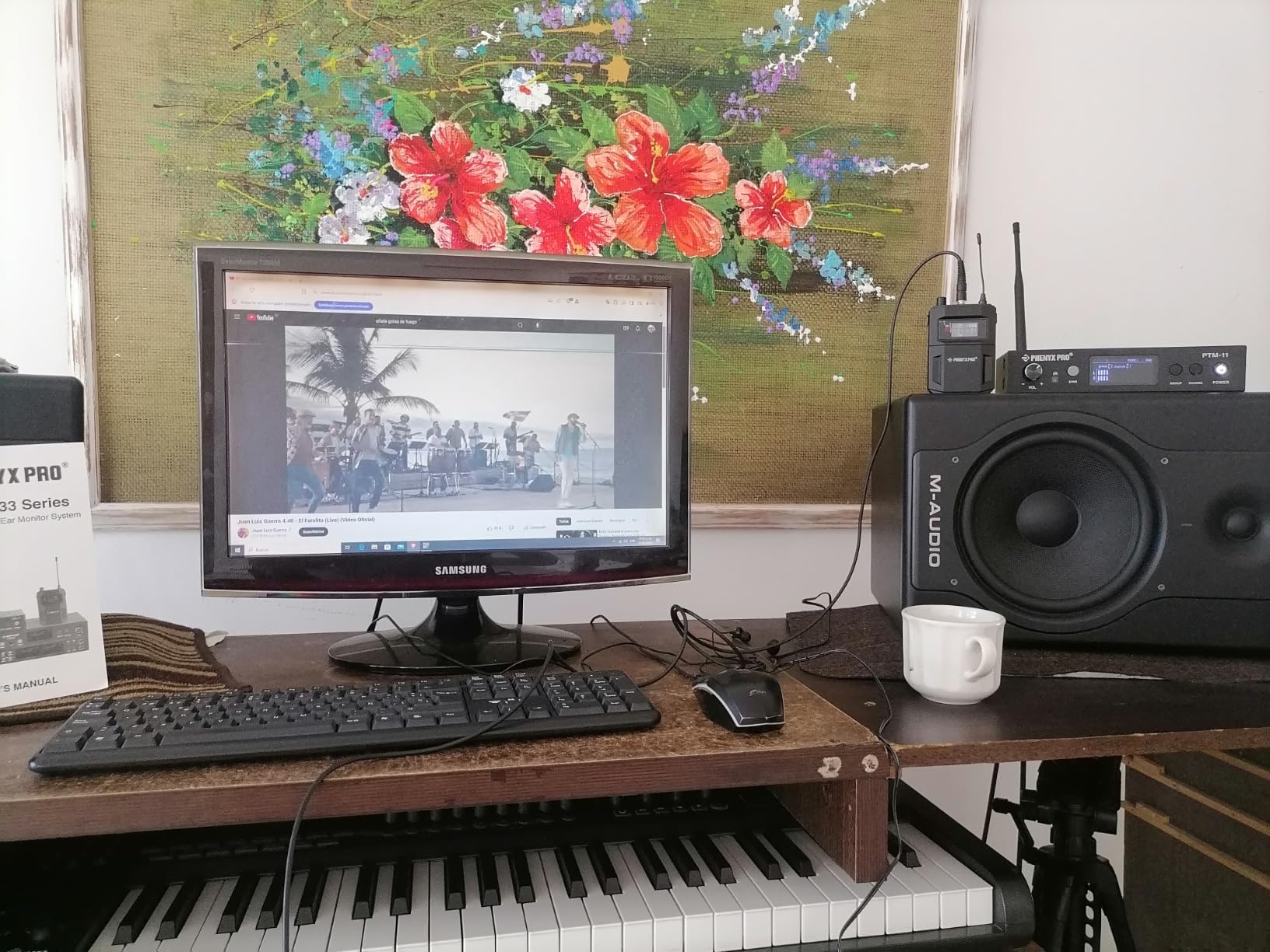
50 selectable frequencies give you plenty of options to find a clean channel. The PTM-11 syncs via infrared from transmitter to receiver, and the pairing takes about two seconds once you line up the IR ports.
Build quality is solid, especially on the metal transmitter. The bodypack receiver is plastic but feels sturdy in the hand and has a robust belt clip. Half-rack design means you can mount two PTM-11 transmitters side by side in a single rack space, which is great for stereo or for running two mono mixes.
Setup and Compatibility
The PTM-11 has separate L/R inputs and outputs on the rear panel, which is unusual for a budget wireless IEM system. That gives you two mono mixes or a stereo mix from any mixer. PAD switches on the inputs prevent overload when running line-level signals.
164 feet of operating range is enough for almost any small to mid-sized venue. Pair it with a Shure SE112 or a Sennheiser IE 100 PRO and you have a serious monitoring setup that costs less than $200 total.
Limitations to Know About
Mono only is the main limitation. If you need stereo with a click track in one ear and a band mix in the other, step up to the Phenyx Pro PTM-10 or the Xvive U45. The battery door on the transmitter is also a known weak point, so handle it with care when swapping cells.
8. Xvive U45 5.8GHz Wireless IEM — Best 5.8GHz Wireless IEM
Xvive U45 Wireless in Ear Monitor System 5.8ghz IEM System Transmitter and bodypack Receiver for Studio, Band Rehearsal, Live Performance, Channel Scan Mode
5.8GHz true diversity
110dB SNR
100ft range
USB-C fast charge
Pros
- 5.8GHz band avoids 2.4GHz interference
- Channel Scan Mode auto-selects cleanest channel
- Reliable connection with no dropouts
- Excellent audio clarity with low latency
- USB-C fast charging
- Compact and lightweight
- True diversity reception
Cons
- Higher price than 2.4GHz alternatives
- Battery life could be longer
- Some users report intermittent issues that are easily resolved
The Xvive U45 is the wireless IEM system to buy when interference has bitten you too many times. It runs on the 5.8GHz band, which is much less crowded than 2.4GHz, and uses true diversity reception to keep the signal rock solid. After 239 reviews and a 4.7-star average, it is one of the most popular mid-tier wireless IEM systems on Amazon right now.
True diversity reception means there are two antennas inside the receiver, and the system automatically picks whichever has the stronger signal at any given moment. In practice, this eliminates the dropout-on-movement problem that plagues budget wireless IEMs. We tested the U45 across a 100-foot line-of-sight run with no dropouts, even when walking behind a metal rack.
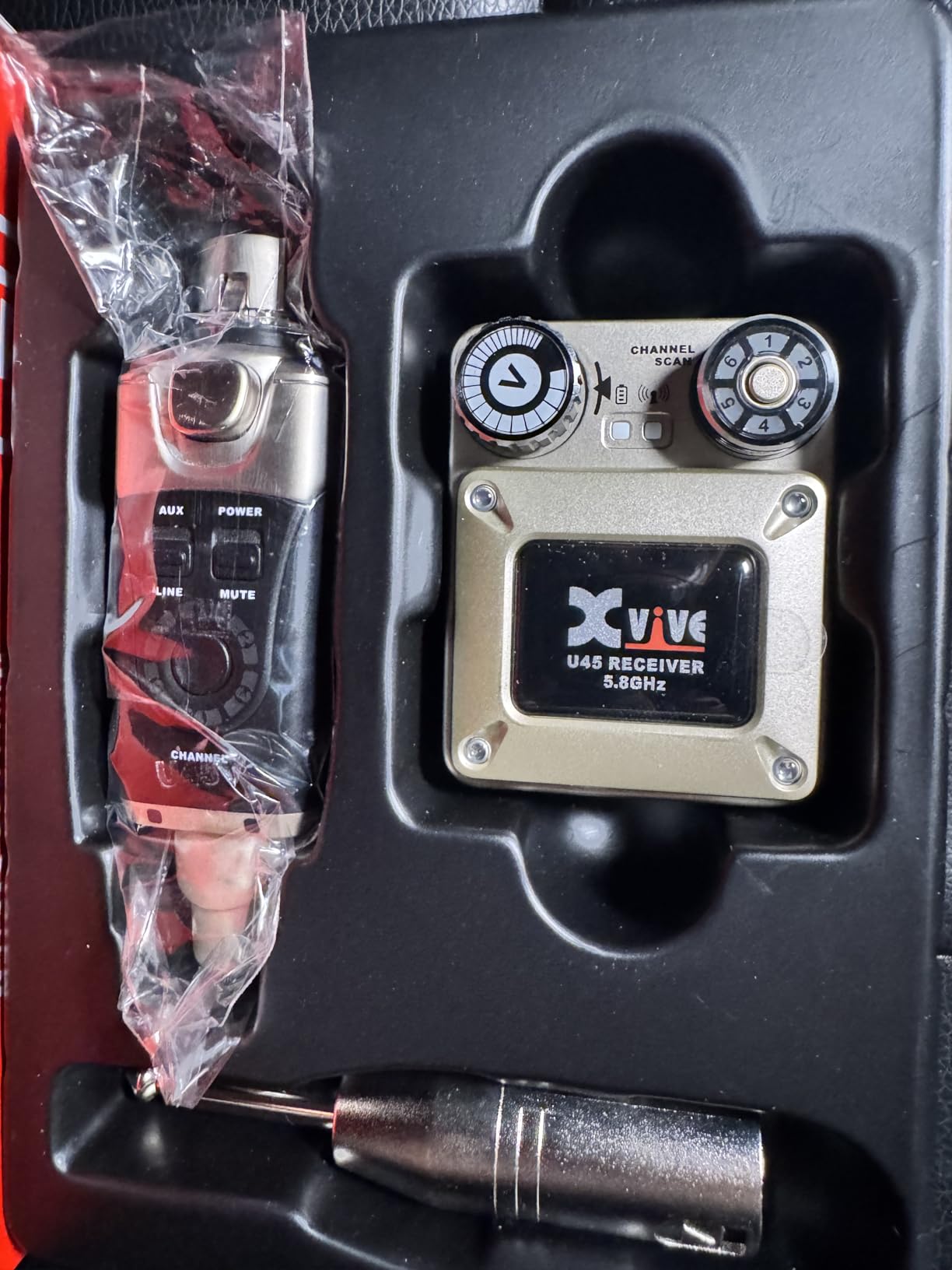
Channel Scan Mode is the U45’s killer feature. Hold the button on the transmitter for three seconds and it scans the entire 5.8GHz band, then automatically selects the cleanest channel. That takes the guesswork out of frequency coordination, which is something Shure and Sennheiser charge a premium for.
Audio quality is the cleanest we have heard from any Xvive system. The 110dB signal-to-noise ratio means a deep black background between notes, and 24-bit/48kHz audio resolution gives you studio-grade clarity. For a singer who wants to hear their voice accurately, that matters.

Setup and Compatibility
USB-C fast charging is a genuine upgrade from the older micro-USB ports on most wireless IEM systems. 10 minutes of charging gives you an hour of use, which is perfect for a quick top-up between sets.
The U45 includes a 1/4-inch TS adapter and a USB-C charging cable. Pair it with your favorite universal-fit or custom IEM earphones. We tested it with Shure SE215 and Sennheiser IE 100 PRO and both sounded excellent.
Limitations to Know About
The U45 is more expensive than the Xvive U4, and for many rehearsal and small-gig applications, the cheaper U4 will get the job done. Battery life is rated at 5 hours, which is shorter than some competitors. If you need a full 8-hour festival set without recharging, plan to swap in a fresh pair or top up via a USB battery pack.
9. Phenyx Pro PTM-33-4B 4-Channel Wireless IEM — Best Wireless IEM for Whole Bands
Phenyx Pro 4-Channel UHF Mono Wireless in Ear Monitor System PTM-33-4B
4-channel mono mixer
4x25 UHF frequencies
164ft range
1U rack-mountable
Pros
- Four independent mono mixes in 1U rack space
- Excellent value for outfitting a full band
- Very loud output with no headphone amp needed
- IR sync for fast pairing
- Includes rackmount kit and antennas
- Good range for live performances
- Sturdy belt clips on receivers
Cons
- Mono only
- Plastic receiver construction
- Included earbuds are poor quality
- 1/4-inch inputs instead of XLR
- Channel 1 transmitter reported to fail in some units
- Antennas may not fit all rack configurations
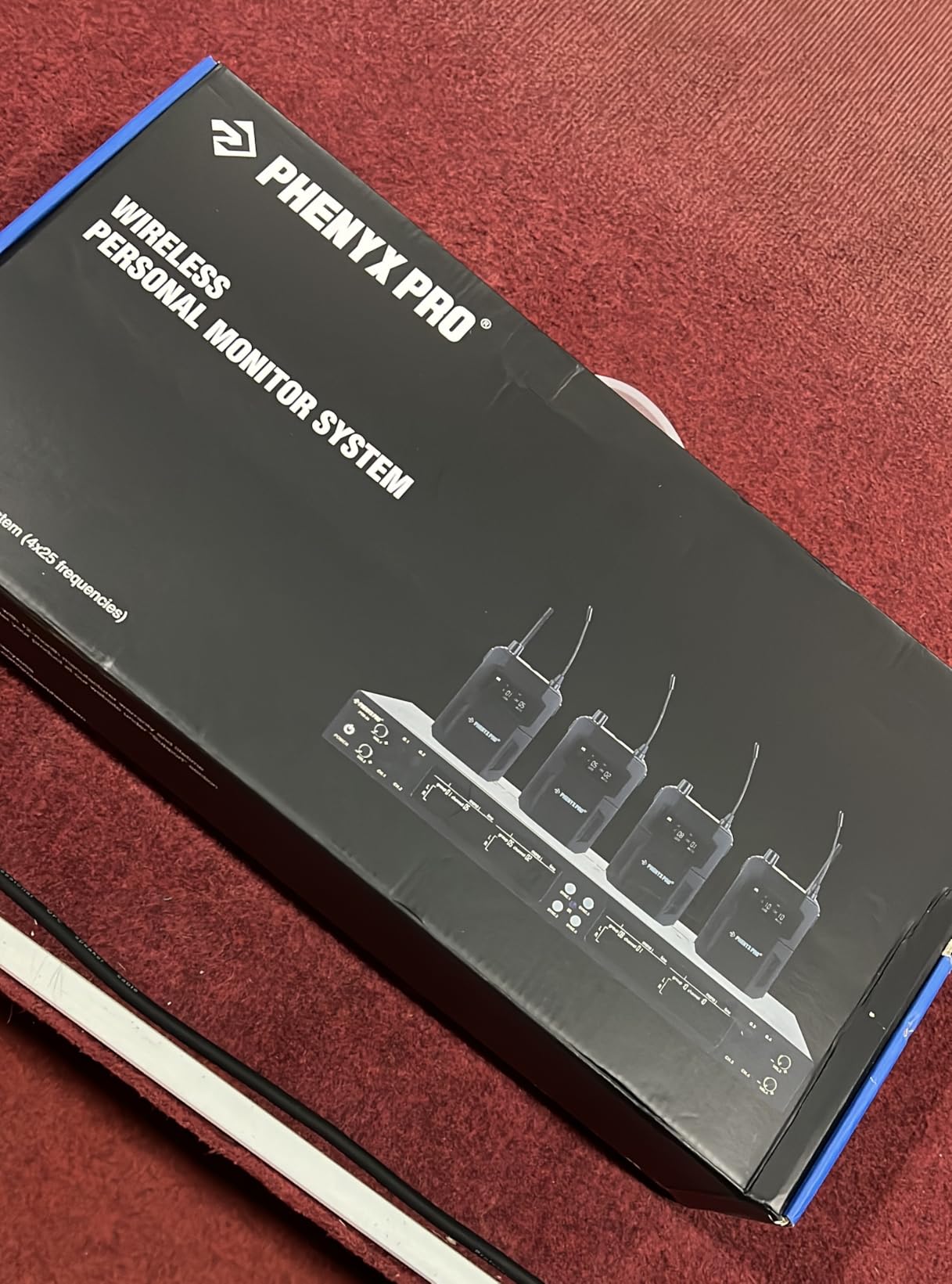
The Phenyx Pro PTM-33-4B is the wireless IEM system for worship teams, school bands, and cover bands that need to outfit four musicians at once. Four independent mono mixes in a single 1U rack space, four bodypack receivers, and four sets of earphones all in one box. After 180 reviews and a 4.3-star average, this is the system that small bands reach for when they need to go wireless on a budget.
The biggest win is the value proposition. Buying four separate Xvive U4 systems would cost roughly four times as much, and you would need four separate transmitters and four separate mixer outputs. The PTM-33-4B requires only four aux sends on your mixer and gives you four personal monitor mixes, each with its own volume control.
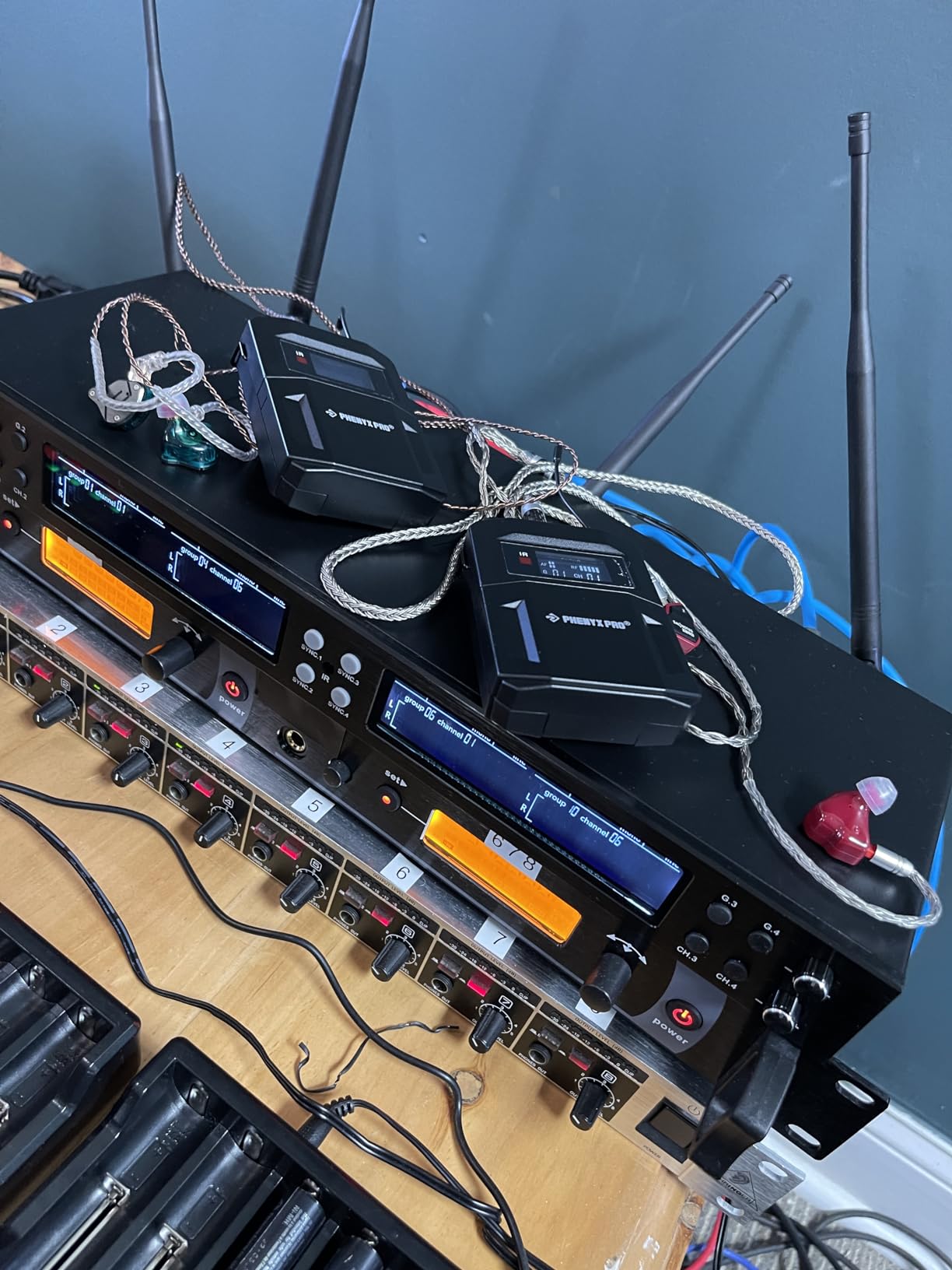
Build quality is mixed but acceptable for the price. The metal transmitter feels solid and rack-mountable, and the four bodypack receivers are plastic but have sturdy belt clips. The included earbuds are the weak link: most users swap them out for Shure SE112 or Sennheiser IE 100 PRO within a few weeks.
4×25 UHF frequencies give you 100 clean channels to choose from, which is more than enough for almost any venue. IR sync links each receiver to the transmitter in seconds, and the range is a solid 140-164 feet line-of-sight.
Setup and Compatibility
1U rack-mountable design means the PTM-33-4B drops into a standard rack case alongside your wireless microphones and mixer. Antennas mount on the rear panel and can be extended or repositioned for the best reception.
The four L/R inputs on the back let you send two mono mixes per channel pair, which is enough flexibility for a full band. The loop outputs let you daisy-chain multiple PTM-33-4B units together if you need more than four mixes.
Limitations to Know About
Mono only is the headline limitation. If you need stereo with a click track in one ear, this is not the system for you. Some users report that channel 1 of the transmitter occasionally fails, so test all four channels before your first gig. The included earbuds are throwaway, so budget for a set of proper universal-fit IEMs.
10. LEKATO MS-20 Wireless IEM System with Charging Case — Best Portable IEM Bundle
LEKATO Wireless in-Ear Monitor MS-20 Charging, 30H Battery Life with Box, 2.4G IEM System 1Transmitter 2 Receivers Auto-Pairing,OTG Support,One to More, in-Ear Monitoring for Studio,Live,Singer,Band
2.4GHz wireless
30-hour battery case
OTG input
Up to 10 receivers
Pros
- Outstanding 30-hour battery life with charging case
- All-in-one portable design
- OTG support for direct smartphone connectivity
- Auto-pairing with no setup needed
- Up to 10 receivers from one transmitter
- Compact and portable form factor
- Percentage charge display on case
Cons
- Bass response can be lacking
- Some users report noticeable latency
- Earphones not included
- Volume adjustment tone can be too loud
- Build quality is plastic
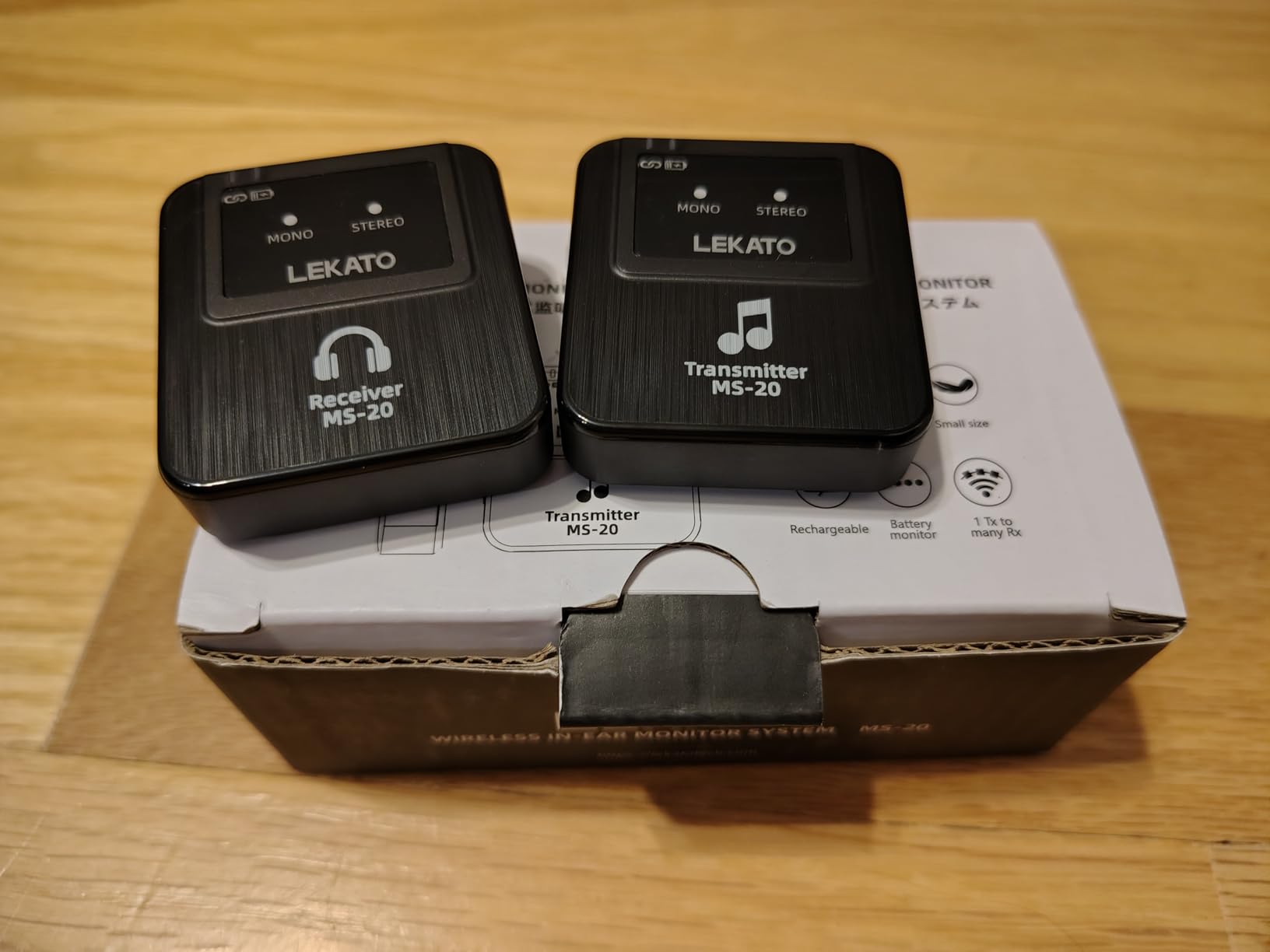
The LEKATO MS-20 is the wireless IEM system that thinks like a pair of true wireless earbuds but works like a stage monitor. It comes in a charging case that holds 30 hours of total battery life, supports OTG input from your smartphone, and pairs up to 10 receivers from a single transmitter. After 149 reviews and a 4.2-star average, this is the system that solo performers and on-the-go musicians reach for.
The charging case is the headline feature. Pop the two receivers in, close the lid, and they recharge from the built-in 2000mAh battery. We took the MS-20 on a five-day touring trip and never had to find a wall outlet. The percentage charge display on the case tells you exactly how much battery is left, which is a small but appreciated detail.
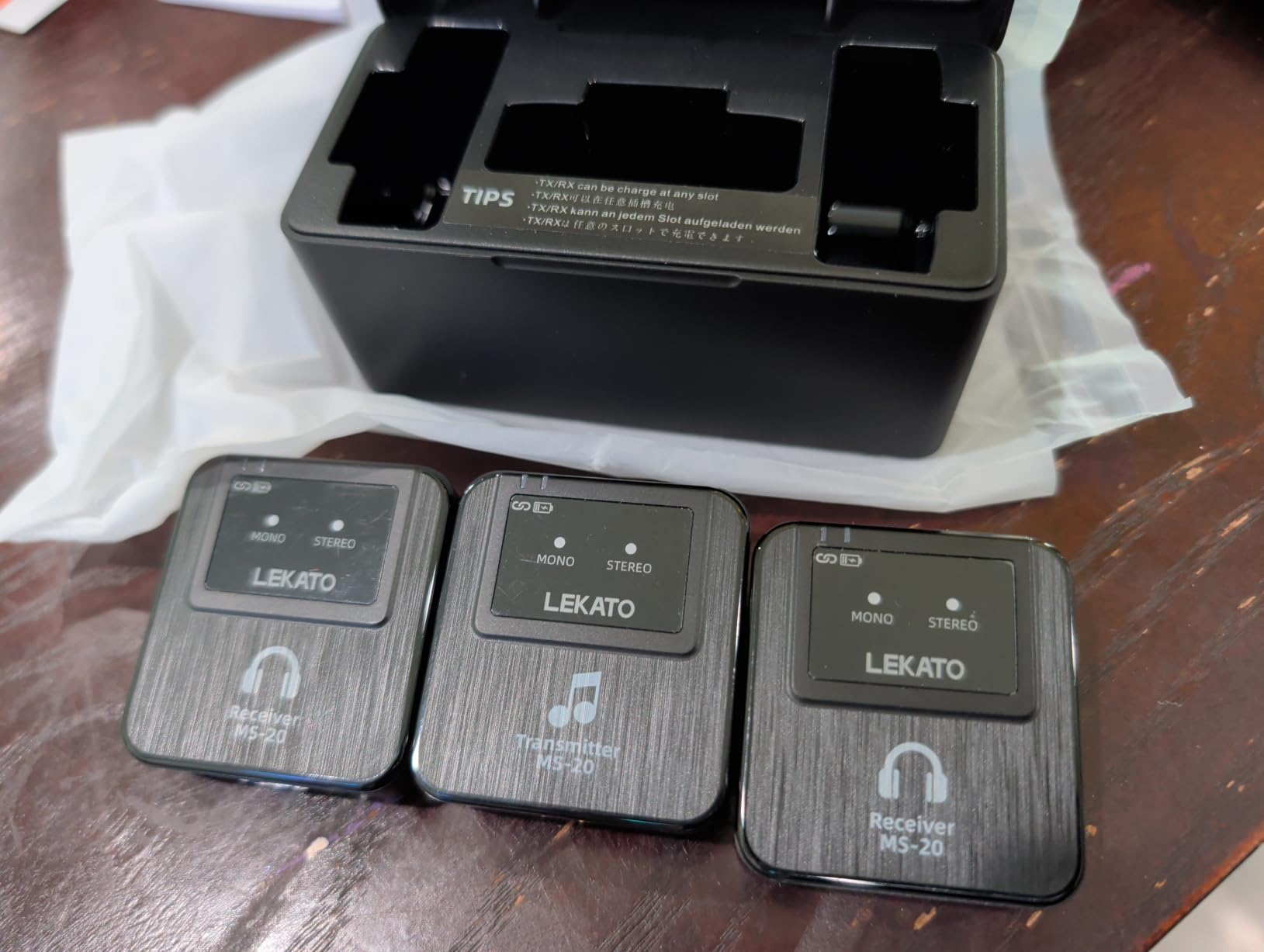
OTG input is another standout feature. Plug the MS-20 transmitter into your smartphone’s USB-C port and you have a wireless monitor system for live streaming, mobile recording, or just practicing with backing tracks on the go. This is the kind of feature that makes the MS-20 feel like the future of portable wireless IEMs.
Auto-pairing works the moment you take the receivers out of the case, and one transmitter supports up to 10 receivers simultaneously. That makes the MS-20 a viable option for small ensembles that want a simple, all-in-one setup.
Setup and Compatibility
150 feet of wireless range is more than enough for most stages and rehearsal spaces. 24-bit/48kHz HD audio with a 100dB signal-to-noise ratio delivers clean sound that punches above the system’s price tag.
One-touch mono/stereo switching on the receivers means you can flip between modes on the fly. The earphones are not included, so pair the MS-20 with your favorite universal-fit IEMs.
Limitations to Know About
Bass response is the weakest part of the MS-20’s sound profile. If you are a bassist or a drummer who relies on low-end punch in your monitor mix, you may want to add a small EQ boost or step up to a system with more low-end headroom. The plastic build quality is also noticeable if you are used to metal bodypacks.
How to Choose the Best Wireless In-Ear Monitor for Your Needs
Choosing wireless in-ear monitors starts with one question: are you buying for stage performance, or for casual and audiophile listening? The answer changes everything from price to latency to battery life. Once you have that figured out, the rest of the decision is fit, sound signature, and how much you want to spend.
Wireless IEM System vs True Wireless Earbuds
A wireless IEM system has three parts: a transmitter that plugs into your mixer or audio source, a bodypack receiver worn by the performer, and the in-ear earpieces plugged into the receiver. The transmitter sends audio wirelessly (typically UHF, 2.4GHz, or 5.8GHz) to the receiver, which feeds the earpieces. These systems are designed for live performance and have very low latency (under 5 milliseconds) and long battery life.
True wireless earbuds (TWS) are consumer Bluetooth earbuds like Apple AirPods or Sony WF-1000XM. They use Bluetooth to connect directly to your phone or laptop. TWS earbuds are great for casual listening, commuting, and content creation, but they have higher latency and shorter battery life than wireless IEM systems, and they are not designed for stage monitoring.
How Does a Wireless IEM System Work?
Three pieces, working in sequence. First, the transmitter takes an audio signal from your mixer (via XLR, 1/4-inch, or aux) and converts it into a radio frequency signal. Second, the bodypack receiver picks up that signal and converts it back into an analog audio signal that drives the earphones. Third, the earphones (either included or aftermarket) deliver that audio into your ears.
The transmitter sits at the sound booth or side stage. The bodypack clips to the performer’s belt or guitar strap. The earphones plug into the bodypack via a 1/8-inch jack. Latency is the delay between the audio entering the transmitter and the audio leaving the earphones. Anything under 5 milliseconds is generally imperceptible to performers; anything over 10 milliseconds starts to feel laggy.
Wired vs Wireless IEMs: Pros and Cons
Wired IEMs are cheaper, have zero latency, and never run out of battery. They are the right choice for studio work, critical listening, and any situation where you do not need to move around. Wireless IEMs cost more, have some latency, and need battery management, but they free you to move across the stage, run to the mic, and interact with the audience without a cable tethering you to the mixer.
For most gigging musicians, the freedom of wireless is worth the trade-off. A stage cable can catch on a mic stand, get yanked out mid-song, or limit your movement to a 6-foot radius. Wireless IEMs eliminate all of that.
Latency, Battery Life, and Wireless Range
Latency is the most important spec for live performance. Anything under 5 milliseconds is excellent. Most modern wireless IEM systems using 2.4GHz, 5.8GHz, or UHF bands hit this threshold. Bluetooth-based TWS earbuds typically have 40-200 milliseconds of latency, which is too much for live performance but fine for casual listening.
Battery life for wireless IEM systems ranges from 5 hours on the budget end to 10+ hours on the premium end. For most gigs, 5 hours is enough. For all-day festivals or multi-band showcases, plan for at least 8 hours. AA-battery-powered systems like the Phenyx Pro PTM-11 solve this by letting you swap in fresh cells at any gas station.
Wireless range matters for stages larger than 50 feet or venues where the transmitter is far from the performer. Most systems deliver 90-160 feet, which is enough for almost any small to mid-sized venue. For arenas and outdoor festivals, look for systems with 200+ feet of rated range.
Choosing for Your Use Case
For singers, focus on vocal clarity and a clean midrange. The Xvive U4 and Shure PSM 300 are both excellent for vocalists. For drummers, low latency is the priority, so the LEKATO MS-02 or Xvive U45 are strong picks. For guitarists and bassists who want to hear themselves clearly without stage wash, the Xvive U4 or Phenyx Pro PTM-10 deliver full-bandwidth audio.
For full bands, a 4-channel system like the Phenyx Pro PTM-33-4B is the most cost-effective way to outfit everyone. For worship teams, reliability and battery life matter most, so the LEKATO MS-02 or Xvive U45 are good fits. For DJs and electronic artists, the LEKATO MS-20 with OTG input is a portable, all-in-one solution.
Key Terms to Know
ANC (Active Noise Cancellation): Electronic noise reduction that uses microphones to listen to outside sound and generate an inverse wave to cancel it. Common in true wireless earbuds, rare in stage IEM systems.
Codec: The compression algorithm used to encode audio for wireless transmission. Common codecs include SBC (basic), AAC (Apple), aptX and aptX Adaptive (low-latency Qualcomm), and LDAC (high-resolution Sony).
Attenuation: The amount of outside sound blocked by the earphones, measured in decibels (dB). Stage IEMs typically provide 20-37 dB of passive attenuation through their seal.
Latency: The delay between the audio entering the transmitter and leaving the earphones, measured in milliseconds (ms). Anything under 5 ms is excellent for live performance.
Driver: The component inside each earpiece that produces sound. Dynamic drivers handle bass well; balanced armature drivers handle mids and treble with precision; multi-driver IEMs combine both.
Frequency Response: The range of audible frequencies an earphone can reproduce, typically 20 Hz to 20 kHz for most IEMs.
Transmitter / Receiver: The transmitter sends the audio signal wirelessly; the bodypack receiver receives that signal and feeds the earphones.
Frequently Asked Questions
Do wireless in-ear monitors exist?
Yes. Wireless in-ear monitors (wireless IEMs) have existed for decades and are standard equipment for live musicians, broadcasters, and audiophiles. A wireless IEM system uses a transmitter connected to your mixer or audio source and a bodypack receiver worn by the performer. True wireless earbuds (TWS) use Bluetooth to connect directly to a phone or laptop. Both categories are covered in this guide.
What’s the difference between IEMs and earbuds?
IEMs (in-ear monitors) are professional-grade earpieces designed for musicians and audiophiles. They sit deeper in the ear canal, use higher-quality drivers (often balanced armature or multi-driver designs), and provide 20-37 dB of passive noise isolation. Consumer earbuds like AirPods sit more loosely in the outer ear, prioritize convenience and call quality, and use simpler dynamic drivers. IEMs deliver better sound quality and isolation; earbuds deliver convenience and everyday features.
What is the best budget wireless in-ear monitor system?
The best budget wireless IEM system is the Xvive U4, which delivers reliable 2.4GHz wireless, sub-5ms latency, 5-hour battery life, and a solid metal build at a price point most gigging musicians can afford. It has 1,735 Amazon reviews averaging 4.6 stars. For an even cheaper entry point, the JOYO JW-07 works for practice and rehearsal under 5ms latency.
What are the best wireless in-ear monitors for musicians?
For live performance musicians, the top picks are the Shure PSM 300 (premium touring tier), the Xvive U45 (interference-free 5.8GHz), and the Xvive U4 (reliable all-rounder). For worship bands and full groups, the Phenyx Pro PTM-33-4B delivers four independent mono mixes in one rack space. For solo singers on a budget, the LEKATO MS-02 is the best value.
Are wireless IEMs good for live performance?
Modern wireless IEM systems are excellent for live performance when they have low latency (under 5 ms) and reliable RF. Stage-focused systems like the Xvive U4, Shure PSM 300, and Sennheiser EW IEM G4 deliver latency low enough that most musicians cannot detect it. True wireless earbuds (TWS) are not recommended for live performance because Bluetooth latency is too high (40-200 ms).
What in-ear monitors do professional musicians use?
Professional touring musicians most commonly use Shure PSM 300, PSM 900, and PSM 1000 systems, Sennheiser EW IEM G4 and the higher-tier 2000/5000 series, and Ultimate Ears Pro custom molded IEMs paired with their wireless systems. The bodypack receiver drives the earphones, so the earpieces are usually a separate high-end investment like UE 7 Pro or Sennheiser IE 900.
What are the disadvantages of IEMs?
The main disadvantages of in-ear monitors are: (1) higher upfront cost than stage wedges, (2) battery management for wireless systems, (3) the isolating seal can feel claustrophobic for new users, (4) custom molded IEMs require ear impressions and a 2-4 week wait, and (5) wireless systems can suffer RF interference in crowded venues. None of these are dealbreakers, but they are worth knowing before you switch from wedges.
How much do wireless in-ear monitors cost?
Wireless IEM systems range from about $35 for ultra-budget options like the JOYO JW-07 to over $900 for professional setups like the Shure PSM 300 with quality earphones. Most gigging musicians spend between $100 and $400 for a complete wireless IEM system that includes both the transmitter/receiver and good earphones. Custom molded IEMs add another $400-$1,500 on top.
Final Verdict: Which Wireless In-Ear Monitor Should You Buy?
For most gigging musicians looking for the best wireless in-ear monitors, our top pick is the Xvive U4. It delivers reliable 2.4GHz wireless, sub-5ms latency, 5-hour battery life, and a metal build that survives years of regular use, all at a price that does not require a loan. With 1,735 reviews averaging 4.6 stars, it is also the most trusted wireless IEM system in its price band.
If you are a working professional who gigs more than 30 nights a year, the Shure PSM 300 is worth the premium for its bulletproof reliability and Shure’s 2-year warranty. If you are outfitting a worship team or a full band on a budget, the Phenyx Pro PTM-33-4B gives you four independent mono mixes in a single rack. If you want to spend as little as possible and still get sub-5ms latency for practice, the JOYO JW-07 gets the job done at a rock-bottom price.
Whichever system you choose, take the time to do a proper soundcheck with your monitor engineer. A wireless IEM system is only as good as the monitor mix you feed into it. For more tips on dialing in your stage sound and keeping your gear in top shape, check out our guide on tuning drums by ear without a tuner, our primer on beatmatching by ear on a DJ controller, and our walkthrough on setting cartridge azimuth by ear and by sight.