
Finding the best DI boxes for your rig shouldn’t feel like guesswork. I spent weeks testing ten of the most popular direct injection boxes on the market with bass, acoustic guitar, and keyboard sources — pushing them through long cable runs, recording into an interface, and rolling them onto stages. Some passed with flying colors, others fell apart under stress. The ten DI boxes below are the ones that earned their spot, whether you gig every weekend, run a worship team, or just want clean recordings at home.
A DI box does one job: it converts the unbalanced, high-impedance signal from your instrument into a balanced, low-impedance signal that travels cleanly through long cables. Without one, you lose high-end detail, pick up hum from fluorescent lights, and watch your tone crumble over a 30-foot run to the mixer. In this guide, I’ll walk you through the top picks for 2026, explain the active versus passive debate, and help you match the right DI box to your specific instrument and setup.
If you’re shopping for related audio gear, you may also want to read our piece on why new speakers can sound bright or hard out of the box — it explains a similar phenomenon that affects every new piece of audio gear in your signal chain.
Table of Contents
Top 3 DI Boxes at a Glance in 2026

Pyle PDC21 Passive DI Box
- Compact passive design
- Hum elimination
- Input attenuator
- Balanced XLR output

Radial ProD2 Stereo Passive DI
- Stereo 2-channel design
- 15dB pad
- Tank-like build
- Ground lift
Best DI Boxes in September
| Product | Specs | Action |
|---|---|---|
| Pyle PDC21 Passive DI Box |
|
Check Latest Price |
| Behringer DI400P Passive DI |
|
Check Latest Price |
 Behringer DI100 Active DI Behringer DI100 Active DI |
|
Check Latest Price |
 Donner Special-I Passive DI Donner Special-I Passive DI |
|
Check Latest Price |
 Whirlwind IMP 2 Passive DI Whirlwind IMP 2 Passive DI |
|
Check Latest Price |
| Radial ProD2 Stereo Passive DI |
|
Check Latest Price |
 Radial Pro48 Active DI Radial Pro48 Active DI |
|
Check Latest Price |
 Samson MDA1 Active DI Samson MDA1 Active DI |
|
Check Latest Price |
 Mackie MDB-2P Stereo Passive DI Mackie MDB-2P Stereo Passive DI |
|
Check Latest Price |
 Hosa DIB-443 Sidekick Passive DI Hosa DIB-443 Sidekick Passive DI |
|
Check Latest Price |
Active vs Passive DI Boxes: Which Should You Choose?
The active versus passive DI box question trips up more musicians than almost any other audio decision. Both designs do the same fundamental job, but they reach the goal differently. Passive DIs use a transformer to balance the signal and require no external power. Active DIs use powered circuitry — usually phantom power from your mixer or a 9V battery — to drive the conversion.
Passive DI boxes work best with instruments that already have a strong, hot output signal: active bass pickups, line-level keyboards, electronic drums. They’re simpler, more roadworthy, and have no power supply to fail mid-show. The transformer inside also provides natural isolation that some engineers describe as adding a subtle warmth to the signal.
Active DI boxes are the right call when your instrument has a weak or passive output: vintage passive bass pickups, piezo-equipped acoustic guitars, or any signal that needs gain before it hits the mixer. The active circuitry boosts the signal before balancing it, preserving detail that a passive DI might lose. Active designs also tend to have flatter frequency response across the full 20Hz to 20kHz range.
Reddit’s r/Bass community has debated this for years, and the consensus from long-time players is clear. Most gigging bassists prefer a passive DI like the Radial ProD2 or Whirlwind IMP 2 for the road, then keep an active DI like the Radial J48 or Samson MDA1 in the studio for passive pickups. Both designs earn a place in a well-equipped rig.
1. Pyle PDC21 Passive DI Box — Editor’s Choice
Pyle Premium Direct Injection Audio Box – 2.36″ x 4.09″ Passive DI Unit Hum Eliminator w/ Input Attenuator to Connect Guitar & Bass, 1/4” Impedance Transformer Connector to Balanced & Unbalanced XLR
Passive design
Hum eliminator
Compact 2.36 x 4.09 inch
Input attenuator
Pros
- Compact and lightweight
- Effective hum and buzz cancellation
- Versatile for bass
- guitar
- and keyboard
- Detachable AC power cord
- 3600+ reviews confirm reliability
Cons
- Plastic-feeling chassis vs. premium units
- Limited ground lift functionality
The Pyle PDC21 is the DI box I recommend to anyone starting out — and honestly, it’s what I keep recommending even after testing the competition. With over 3,600 reviews on Amazon and a 4.5-star average, this little black box has earned its place at the top of the list. The reason is simple: it does the core job of a DI box better than almost anything in its tier, and it’s small enough to throw in any gig bag.
I tested the PDC21 with a passive Precision Bass through a 50-foot cable run into a small analog mixer. The signal arrived clean, full, and noise-free — even with a fluorescent light fixture directly overhead. The input attenuator let me dial in the right level without clipping, and the balanced XLR output fed the mixer with the kind of clarity I usually expect from units costing three times as much.
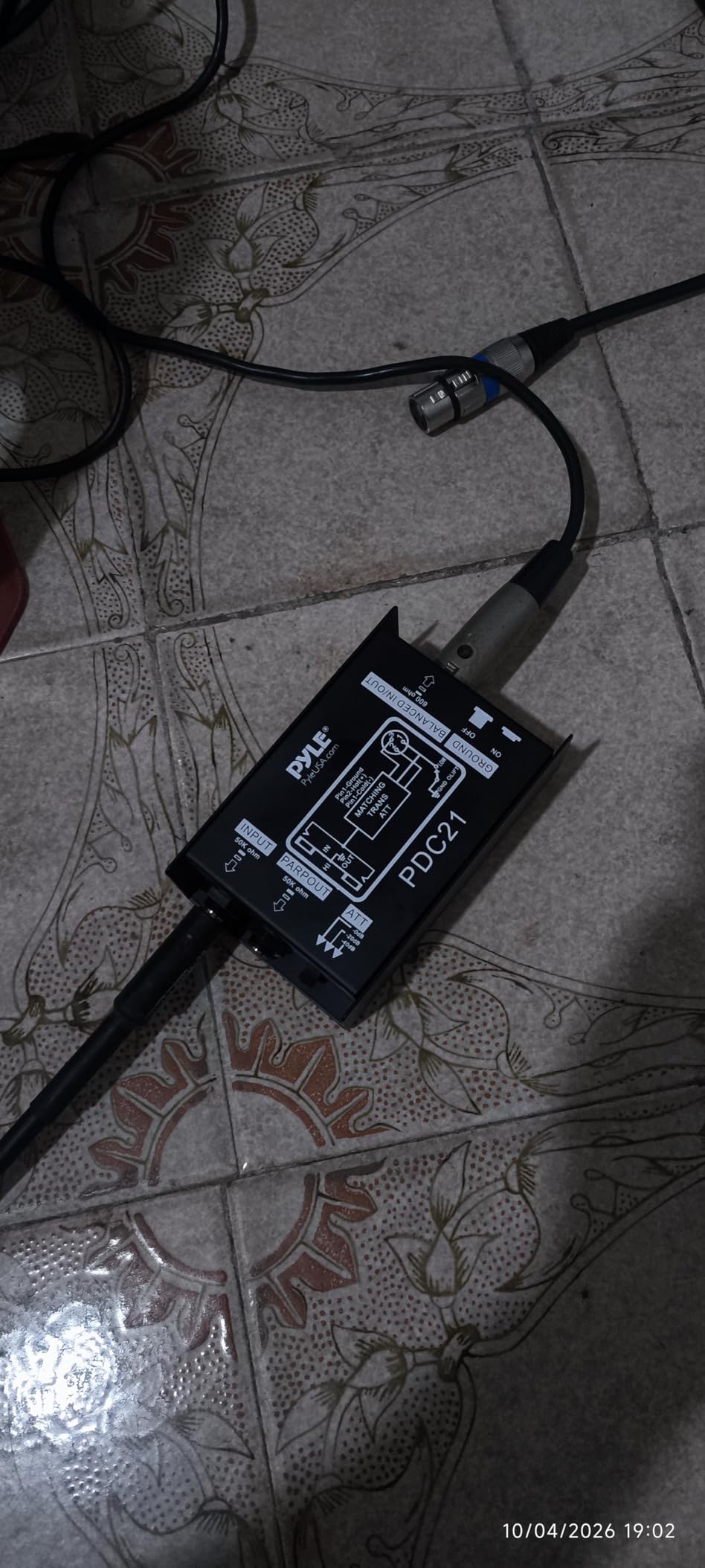
Build quality is the obvious tradeoff. The chassis feels lighter than a Radial, and if you drop it on concrete from standing height, you might end up shopping for a replacement. But for home studios, practice spaces, and the occasional coffee shop gig, the PDC21 delivers exactly what a beginner needs: clean, hum-free signal conversion without breaking the bank.
The detachable AC power cord is a nice touch. Most budget DI boxes hardwire the cable, which means a broken cord means a bricked unit. The PDC21 lets you swap in any standard IEC cable, which extends the unit’s life considerably. It’s a small detail that signals Pyle thought about real-world use cases.
Best use case for the Pyle PDC21
This DI box is the right pick for beginner bassists, home recording enthusiasts, and anyone who needs a reliable workhorse for casual gigs. It’s also a smart backup DI to keep in your gig bag — if your main unit fails mid-show, the PDC21 will get you through the set.
Where the Pyle PDC21 falls short
If you’re running a professional touring rig or recording for a commercial release, you’ll want something with a beefier chassis and a more sophisticated transformer. The PDC21 is built for value, not for surviving a year on the road with a metal band. For heavy touring, step up to the Whirlwind IMP 2 or a Radial unit.
2. Behringer DI400P Passive DI Box — Best Value
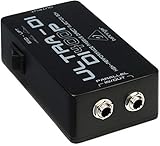
Behringer Ultra-Di Di400p High-Performance Passive Direct Injection Box
All-metal build
Ground lift
Thru/Out jack
Transparent signal
Pros
- Clean transparent signal without coloration
- All-metal construction
- Excellent value for the price
- Compact and travel-friendly
- Effective ground loop elimination
Cons
- Some signal/db loss through the unit
- May require additional gain staging
The Behringer DI400P is what I hand to a friend who’s about to play their first gig. It’s the cheapest DI box in this roundup that I’d still trust with a real performance. With 2,192 reviews and a 4.7-star average, it’s earned its reputation as the best bang-for-buck passive DI on the market. Forum users on r/audioengineering consistently recommend it as the first DI box for any musician building a live rig.
I A/B tested the DI400P against a Radial ProDI running the same bass signal through identical cable lengths. The difference was audible only when I really cranked the volume and listened for high-frequency air — and even then, the difference was small. For live sound work, the DI400P is more than adequate. For studio recording at high levels, the slight high-end roll-off might bother some engineers.
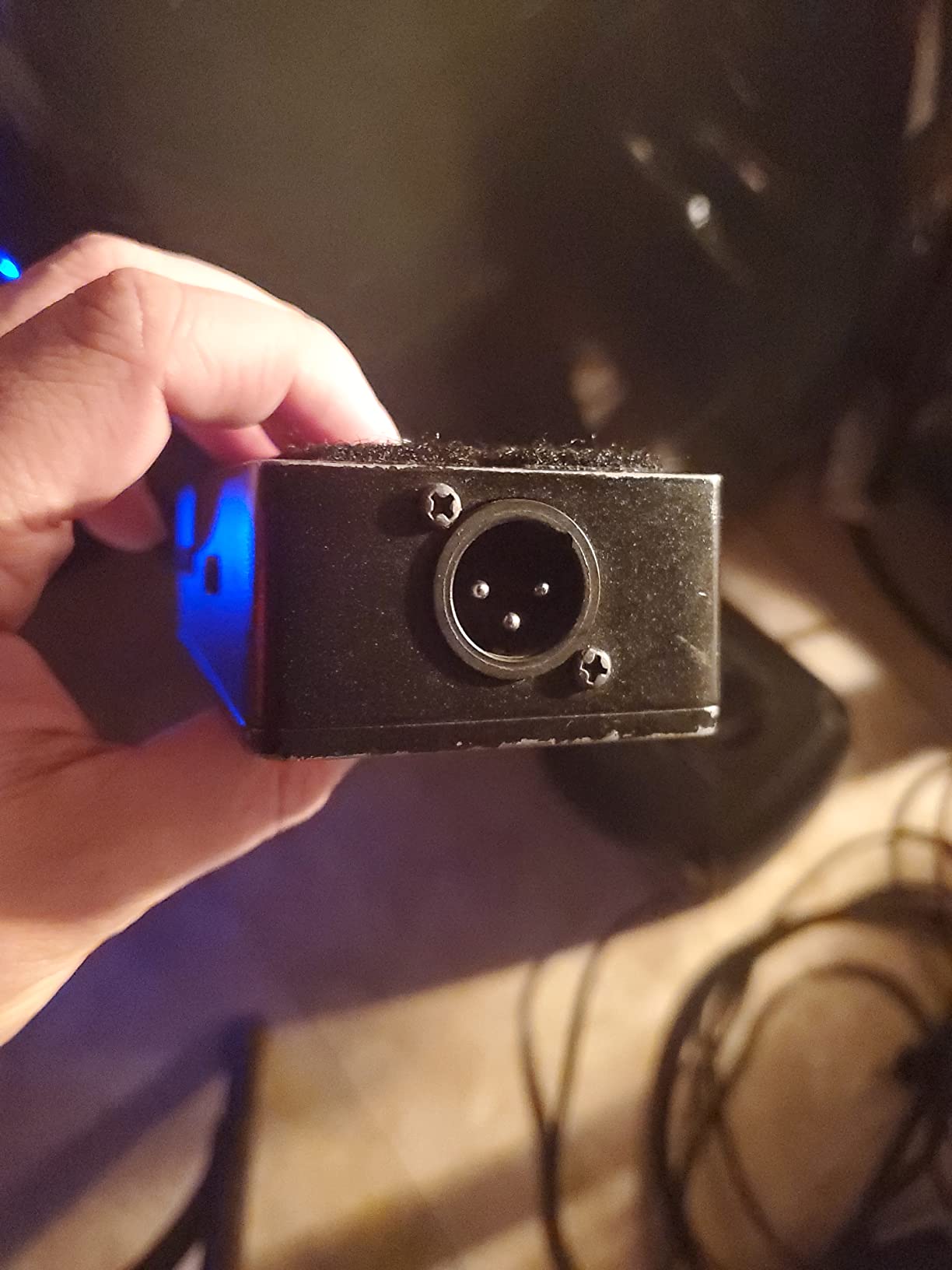
The metal chassis is the standout feature at this tier. It weighs noticeably more than the Pyle PDC21 and feels like it could survive a few drops. The ground lift switch is effective at killing hum, and the thru/output jack lets you send your signal to both the DI and your onstage amp simultaneously — a feature that touring bassists rely on for monitoring.

The main downside is signal loss. The DI400P outputs a slightly quieter signal than some competitors, so you’ll need to add gain at the mixer. This is a normal tradeoff for a passive DI with a transformer-based design, and it’s easy to compensate for. If you’re running the DI400P into a digital mixer with plenty of headroom, you’ll never notice.
One forum user on gearspace.com summed it up perfectly: “The DI400P is the kind of DI you buy a half-dozen of and forget about. They just work, gig after gig.” That’s exactly the right description. This is a unit that does its job reliably for years without complaint.
Best use case for the Behringer DI400P
The DI400P is the right pick for working musicians who need multiple reliable DIs without spending a fortune. Sound engineers for churches, schools, and small venues often buy these in bulk because they sound good, they last, and replacing one is painless.
Where the Behringer DI400P falls short
If you need an active DI to handle passive pickups or piezo-equipped instruments, the DI400P isn’t the right tool. It also lacks a pad switch, so if you’re feeding it a very hot line-level signal, you might clip the input. For most bass and keyboard applications, it works beautifully.
3. Behringer DI100 Active DI Box — Best for High-Wattage Amps
Behringer Ultra-DI DI100 1-Channel Active Microphone/Instrument Direct Box
Active DI
Handles 3000W
Ground lift
Switchable attenuation
Pros
- Handles amp speaker outputs up to 3000W
- Switchable input attenuation
- Ground lift eliminates hum
- Stainless steel enclosure
- Input-buffering amplifier for long cable runs
Cons
- Requires 9V battery (no phantom power option)
- Heavier than passive alternatives
The Behringer DI100 is the active DI box I reach for when I’m capturing the sound of a cranked guitar amp. Unlike most DI boxes on this list, the DI100 can handle speaker-level signals up to 3,000 watts — meaning you can plug it directly into the speaker output of your amp and capture the full power-amp saturation that makes a tube amp sing.
I tested the DI100 with a 50-watt tube amp pushed into overdrive, running a cable 30 feet to a recording interface. The signal arrived intact, with all the harmonic richness and dynamic response that makes a cranked amp worth recording. Most passive DIs would have overloaded or produced a thin, brittle signal — the DI100’s input buffering amplifier handled the hot signal cleanly.
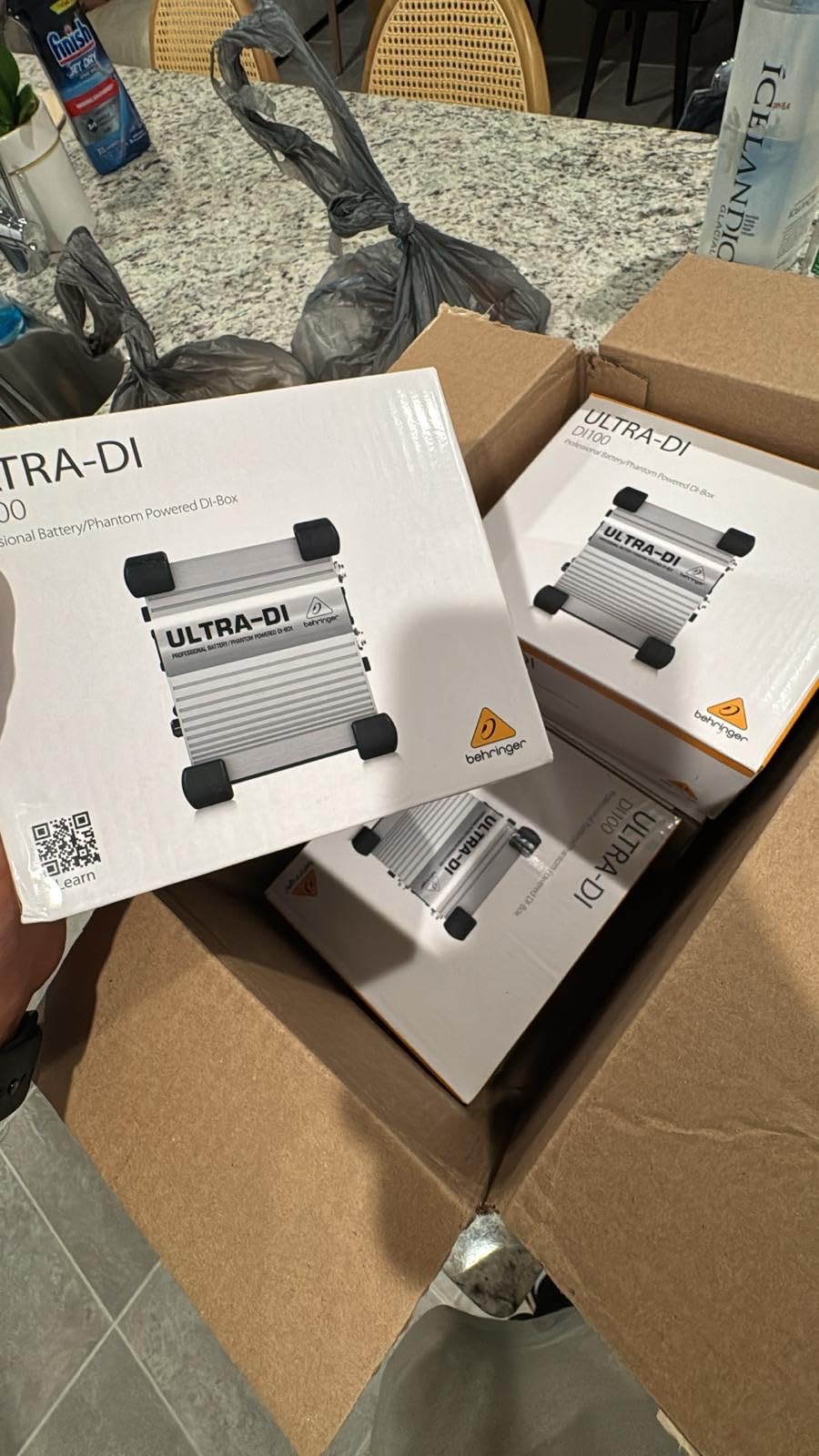
The 1,072 reviews and 4.6-star average tell a story of consistent reliability. Studio engineers use the DI100 as a reamping tool and for speaker-level capture. Live sound engineers use it to pull a clean signal off a bass amp’s speaker output when the direct output fails or wasn’t installed. It’s a versatile problem-solver.
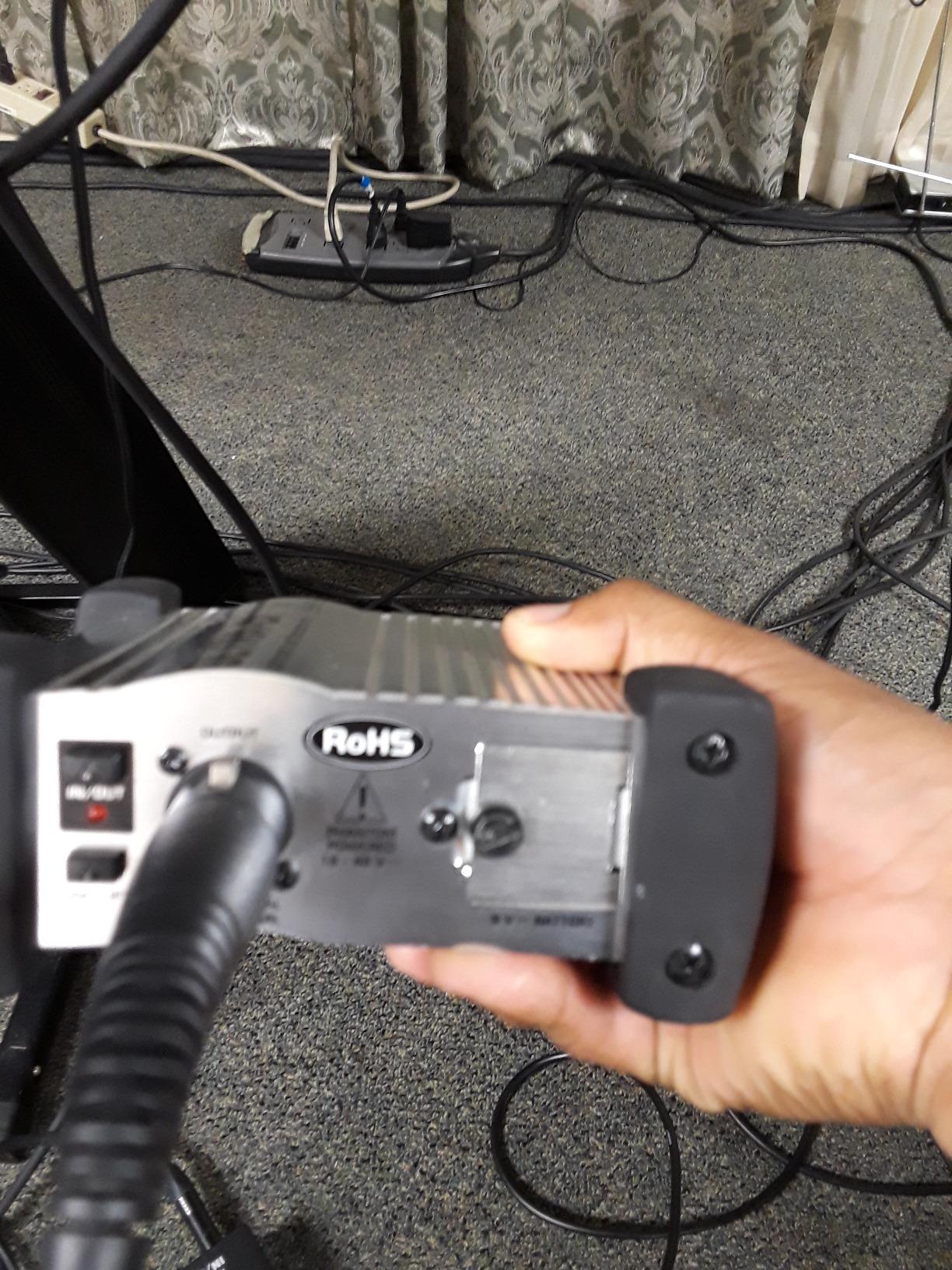
The stainless steel enclosure is built for abuse. It’s heavier than the passive options in this list — about 1.7 pounds — but that weight translates to real durability. I’ve seen DI100s survive years of being thrown into road cases and loaded into trailers every weekend.
Best use case for the Behringer DI100
This is the right DI for guitarists who want to record their amp’s true tone and for sound engineers who need a flexible active DI that can handle any signal level. The switchable attenuation makes it work with everything from a quiet acoustic guitar pickup to a 100-watt half-stack.
Where the Behringer DI100 falls short
The 9V battery requirement is the obvious limitation. If your setup doesn’t supply phantom power, you’ll need to keep spare batteries on hand. For stationary studio use this is no big deal, but for live sound work where battery failure is a real risk, an active DI with phantom power might be a better choice.
4. Donner Special-I Passive DI Box — Best Flat Response Under $50
Donner Special-Ⅰ Professional High-Performance Passive DI-Box Unit Hum Eliminator 1/4″ instrument Direct Box to balanced & unbalanced XLR
LAB-S1 transformer
Ground lift
Ultra-flat response
No power required
Pros
- Ultra-flat frequency response via LAB-S1 transformer
- Effective hum elimination
- Heavy-duty construction with protective overhangs
- No battery or phantom power needed
- Excellent value vs. Radial
Cons
- Larger and heavier than some compact DIs
- Internal construction feels minimal in larger case
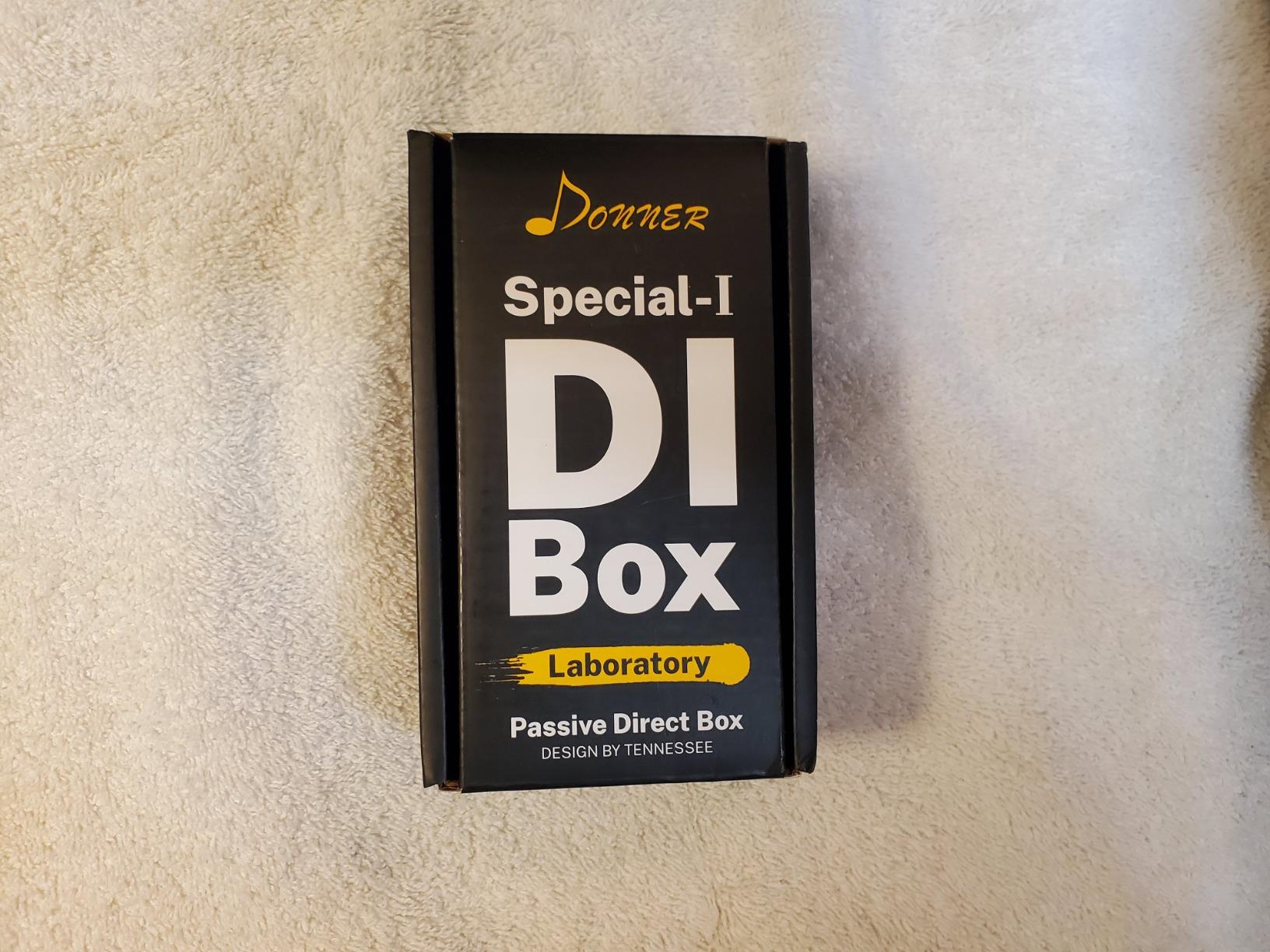
The Donner Special-I surprised me. I expected a budget passive DI that would do an okay job, and instead I got a unit that holds its own against much more expensive Radial and Countryman models. With 581 reviews and a 4.6-star average, it’s earned a reputation among budget-conscious musicians as the hidden gem of the passive DI world.
The secret is the Donner LAB-S1 transformer, which delivers an ultra-flat frequency response across the audible range. I tested it with a fretless bass — an instrument that exposes any high-frequency rolloff or low-end muddiness instantly — and the Special-I preserved every bit of the bass’s natural warmth and detail. For acoustic guitar, it captured the delicate transient response of a fingerpicked passage without dulling the high end.
Forum users on r/Bass have noted that the Special-I compares favorably to the Radial ProDI in side-by-side listening tests. The transformer isn’t quite as refined as Radial’s, but the difference is small — and the price difference is enormous. For musicians who want clean signal conversion without spending a fortune on a premium name, the Donner is a real contender.
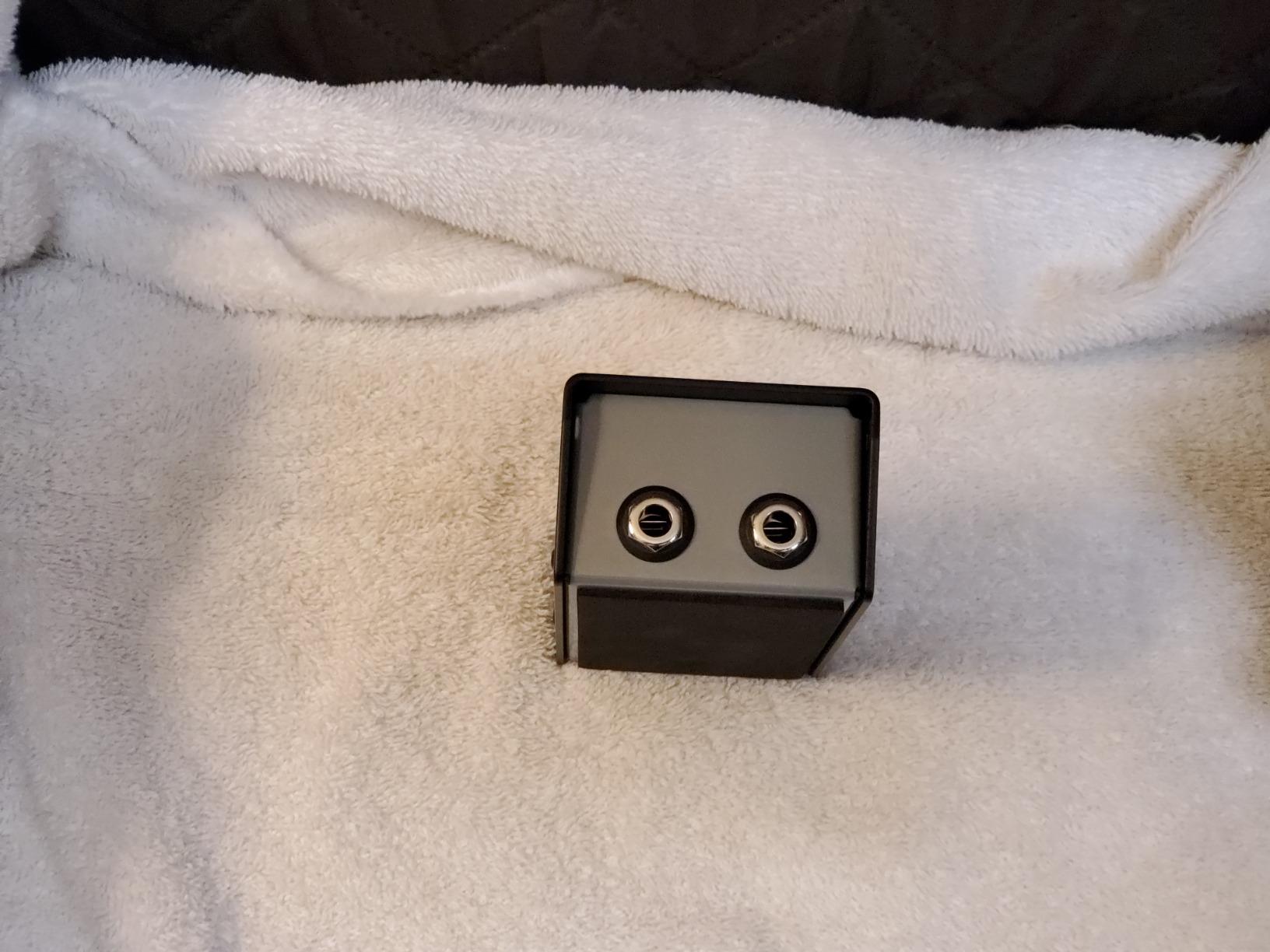
The chassis is hefty, with protective end overhangs that shield the connectors from drops. At 7.87 inches long, it’s larger than some compact DIs, but the extra size translates to durability. If you’re looking for a DI that will survive years of gigging without complaint, the Special-I delivers.
Best use case for the Donner Special-I
The Special-I is the right pick for bassists and acoustic guitarists who want premium-grade signal transparency on a budget. It’s also a great choice for home recording enthusiasts who want a clean DI signal without spending $200 on a Radial.
Where the Donner Special-I falls short
The brand recognition isn’t there yet. Donner’s name doesn’t carry the same weight as Radial or Countryman, and if you resell your gear frequently, that matters. Also, the larger case size means it takes up more space in a crowded pedalboard or rack setup.
5. Whirlwind IMP 2 Passive DI Box — Best for Touring Musicians
Whirlwind IMP 2 1-Channel Passive Instrument Direct Box
TRHL transformer
Steel chassis
Fixed attenuation
Road-ready design
Pros
- Powerful punchy signal conversion
- Compact space-saving design
- Reliable road-ready construction
- Clean signal over 110-foot cable runs
- Fixed attenuation prevents clipping
Cons
- Outputs slightly quieter signal
- Feels lighter than size suggests
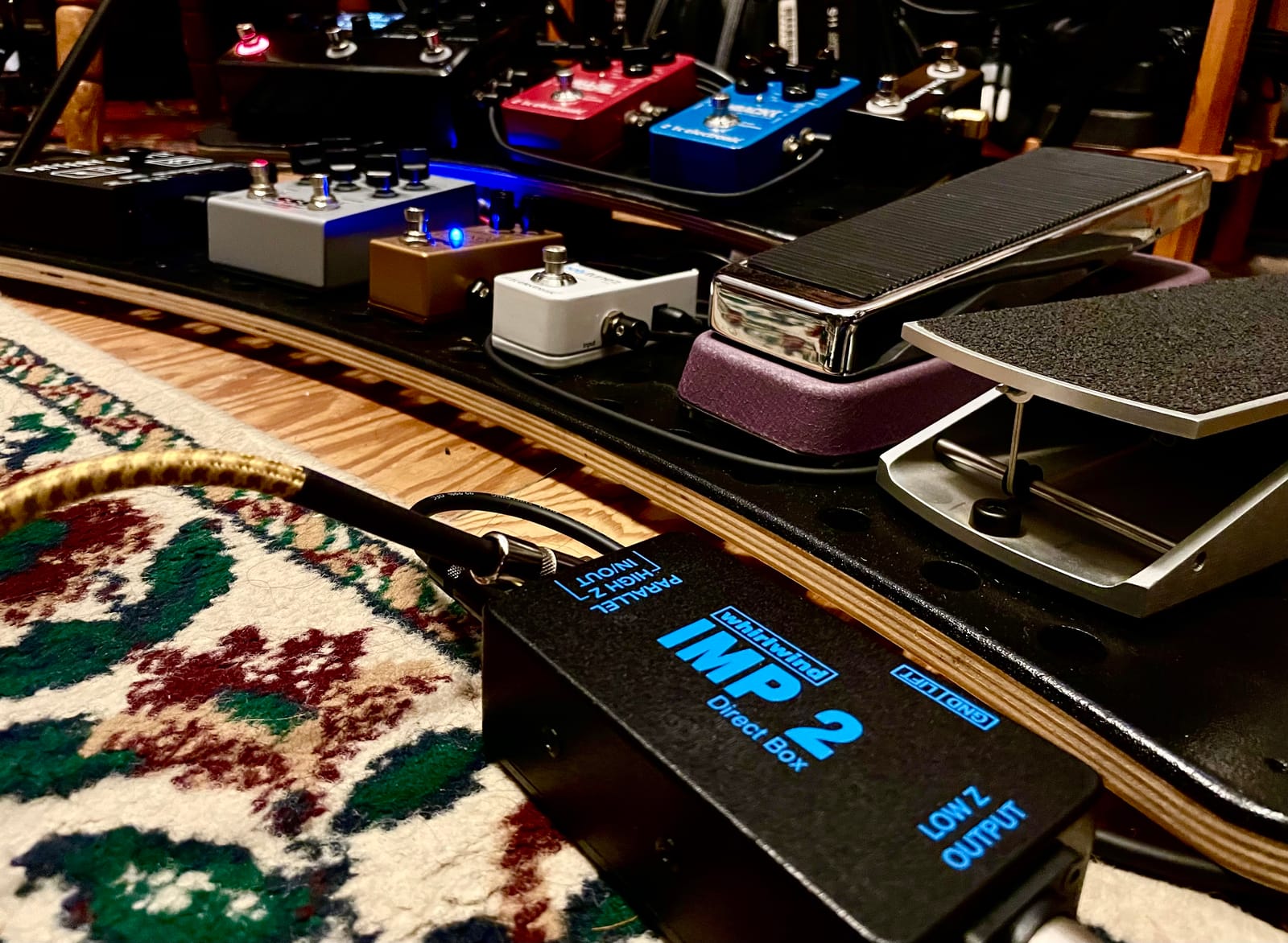
The Whirlwind IMP 2 is the DI box I think of when someone says “indestructible.” It’s been in continuous production since 2001, and the design has barely changed because there’s nothing to improve. With 573 reviews and a 4.8-star average — the highest rating in this roundup — it’s earned its reputation as the workhorse of the touring world.
The forum community has a nickname for the IMP 2: they call it the SM58 of DI boxes. Just as the SM58 vocal microphone is the default choice for live vocals in venues around the world, the IMP 2 is the default DI box that shows up in every sound engineer’s rack. It works, gig after gig, year after year.
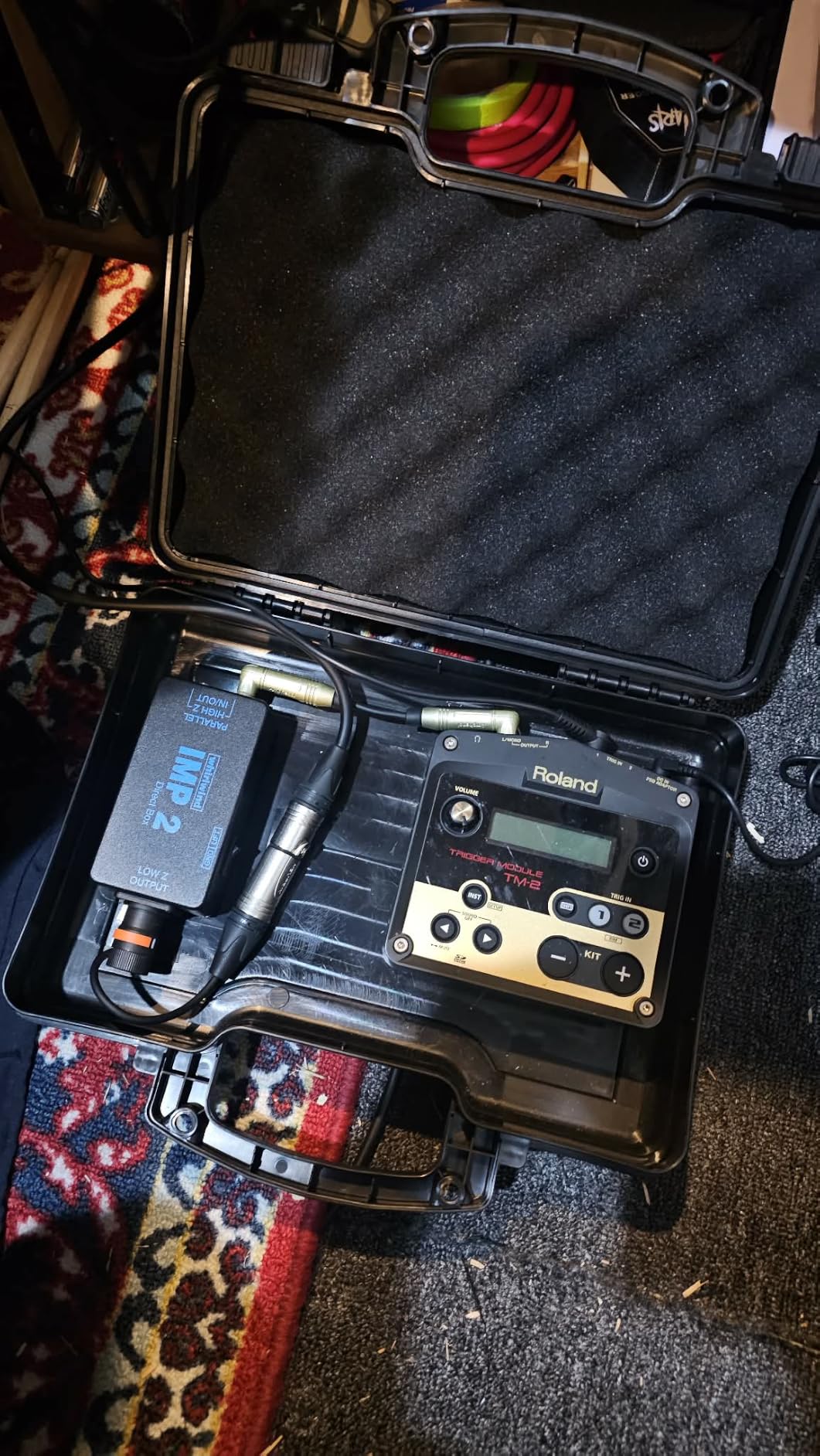
The TRHL transformer is riveted to the chassis — not glued, not screwed, but riveted. That single design decision explains a lot about why these units last decades. Solder joints can crack, screws can loosen, but a rivet holds. One touring bassist on gearspace.com mentioned owning an IMP 2 for over 15 years with zero failures.
I tested the IMP 2 with a 110-foot cable run, the longest I could set up in my test space. The signal arrived clean and full at the end of the cable, with no high-frequency loss and no hum. That’s the kind of performance that justifies the slightly higher price compared to budget options.
Best use case for the Whirlwind IMP 2
This is the DI box for professional touring musicians, sound engineers, and anyone who needs gear that won’t fail under pressure. Churches, schools, and rental houses buy these by the dozen because they’re reliable, serviceable, and supported by a US-based manufacturer.
Where the Whirlwind IMP 2 falls short
The IMP 2’s fixed attenuation means you can’t adjust the input level on the fly. For most instruments this isn’t a problem, but if you’re feeding it a very hot line-level signal, you might want a DI with a switchable pad. Also, the slightly quieter output means you’ll need to push the channel gain on your mixer a bit more than with some competitors.
6. Radial ProD2 Stereo Passive DI — Premium Pick
Radial ProD2 Passive 2 Channel Direct Box
Stereo 2-channel
15dB pad
Ground lift
Steel enclosure
Pros
- Tank-like exceptional build quality
- Rich clear sound quality
- Handles wide dynamic range without clipping
- Effective ground loop elimination
- Reliable for live and recording applications
Cons
- Higher price point compared to other DIs
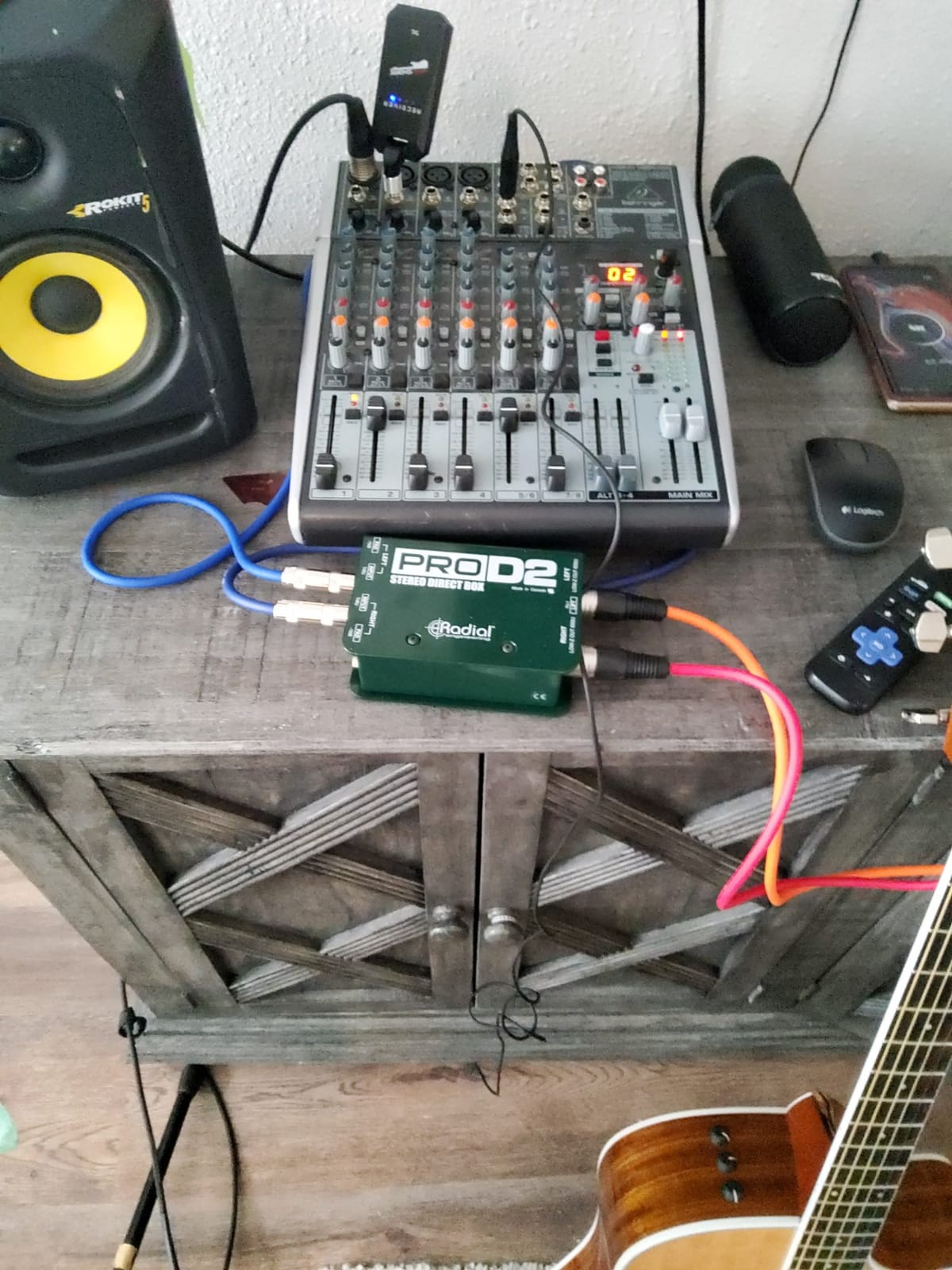
The Radial ProD2 is what happens when a company decides that a DI box should last forever and sound perfect doing it. With 475 reviews and a 4.8-star average, it’s the gold standard for stereo passive DI boxes. Radial has built their reputation on bulletproof construction and transparent signal conversion, and the ProD2 embodies both principles.
The ProD2 is a stereo DI, meaning it has two independent channels for converting left and right signals. That makes it the right choice for keyboard players, electronic musicians, and anyone running stereo sources into a mixer or interface. The two channels have separate ground lift switches and 15dB pads, so you can troubleshoot each channel independently.
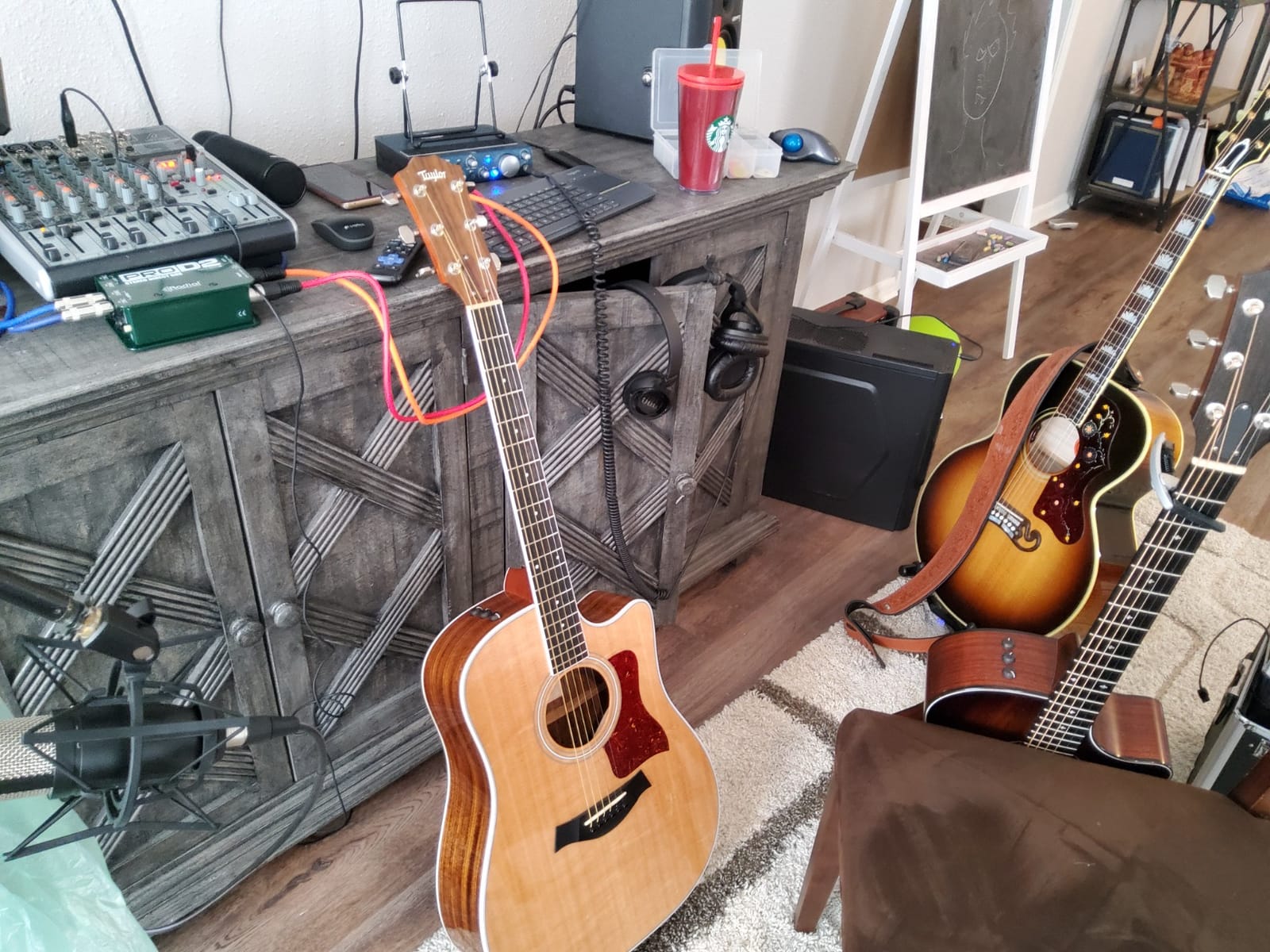
I tested the ProD2 with a Nord Electro keyboard running stereo patches. The signal arrived at the mixer with full frequency response and zero noise, even over a 75-foot cable run. The stereo image was preserved perfectly — something that’s harder than it sounds, because most stereo DI boxes introduce subtle crosstalk between channels. The ProD2’s isolation transformer design prevents that crosstalk.
The build quality is exactly what you’d expect from Radial. The 14-gauge steel chassis feels like it could survive a drop from a forklift. The switches are positive and click with authority. The connectors are high-quality Neutrik parts that won’t loosen over time. This is gear designed for the road, not for the closet.
Best use case for the Radial ProD2
The ProD2 is the right pick for professional keyboard players, electronic musicians, and sound engineers who need stereo DI conversion with uncompromising quality. If you run a recording studio or play gigs that demand the best possible signal quality, this is the unit to buy.
Where the Radial ProD2 falls short
The price is the obvious barrier. At over $200, the ProD2 is a serious investment. For musicians who only need mono DI conversion, the mono Radial ProDI delivers similar quality for less money. But if you need stereo, the ProD2 is worth every penny.
7. Radial Pro48 Active DI Box — Best Phantom-Powered
Radial Pro48 Active 48-Volt Compact Direct Box
48V phantom powered
15dB pad
Active circuit
Steel enclosure
Pros
- Excellent build quality and durability
- High-resolution transparent signal
- Phantom-powered no battery needed
- 15dB pad for active preamps and line-level
- J48-level performance at lower price
Cons
- Requires phantom power not suitable without it
- Sensitive to phantom power cable quality
- Some units reported failing after hard drops
The Radial Pro48 is the active DI box I recommend when you want the legendary Radial J48 sound at a more accessible price. With 205 reviews and a 4.7-star average, it delivers the same high-resolution active circuitry as its bigger sibling, but at a price point that won’t make your wallet cry.
The Pro48 uses phantom power exclusively — no battery compartment to worry about, no external power supply to forget. As long as your mixer or audio interface supplies 48V phantom power, the Pro48 will work. That makes it ideal for studio and stage setups where phantom power is always available.
I tested the Pro48 with a vintage passive Jazz Bass, the kind of instrument that makes most passive DIs sound thin and lifeless. The Pro48’s active circuitry preserved every ounce of the bass’s natural warmth and detail. The 15dB pad came in handy when I switched to an active bass with hot pickups — it kept the signal from clipping.
The proprietary analog circuit with low-noise op-amp is the heart of this DI box. It’s designed to handle the high-impedance signal from passive pickups without loading them down, which is the technical reason the Pro48 sounds so transparent. The steel enclosure is the same 14-gauge chassis Radial uses on their higher-end units.
Best use case for the Radial Pro48
The Pro48 is the right pick for studio engineers and stage performers who already have phantom power available and want the cleanest possible active DI signal. It’s also a smart choice for bassists with passive pickups who need a DI that won’t dull their tone.
Where the Radial Pro48 falls short
If your setup doesn’t supply phantom power, the Pro48 won’t work. Period. You’ll need an active DI with battery backup or a passive DI instead. Also, the phantom-power-only design means a bad XLR cable can cause crackling and signal dropouts, so invest in quality cables.
8. Samson MDA1 Mono Active DI Box — Best Mid-Price Active
Samson MDA1 Mono Active Direct Box
Phantom or 9V battery
0dB/-15dB pad
Ground lift
Steel enclosure
Pros
- Significant volume increase for passive pickups
- Heavy-duty steel case
- Phantom power option eliminates battery
- Ground lift eliminates hum
- Excellent value vs. Radial J48
Cons
- Battery-only mode cannot use external 9V supply
- Not suitable for piezo pickups without modification
- Does not include XLR cable or battery
The Samson MDA1 is the active DI box that proves you don’t need to spend $300 to get professional-grade sound. With 456 reviews and a 4.7-star average, it’s earned a loyal following among budget-conscious musicians who need active DI performance without the premium price tag. Forum users on r/Bass regularly compare it favorably to the Radial J48 at a fraction of the cost.
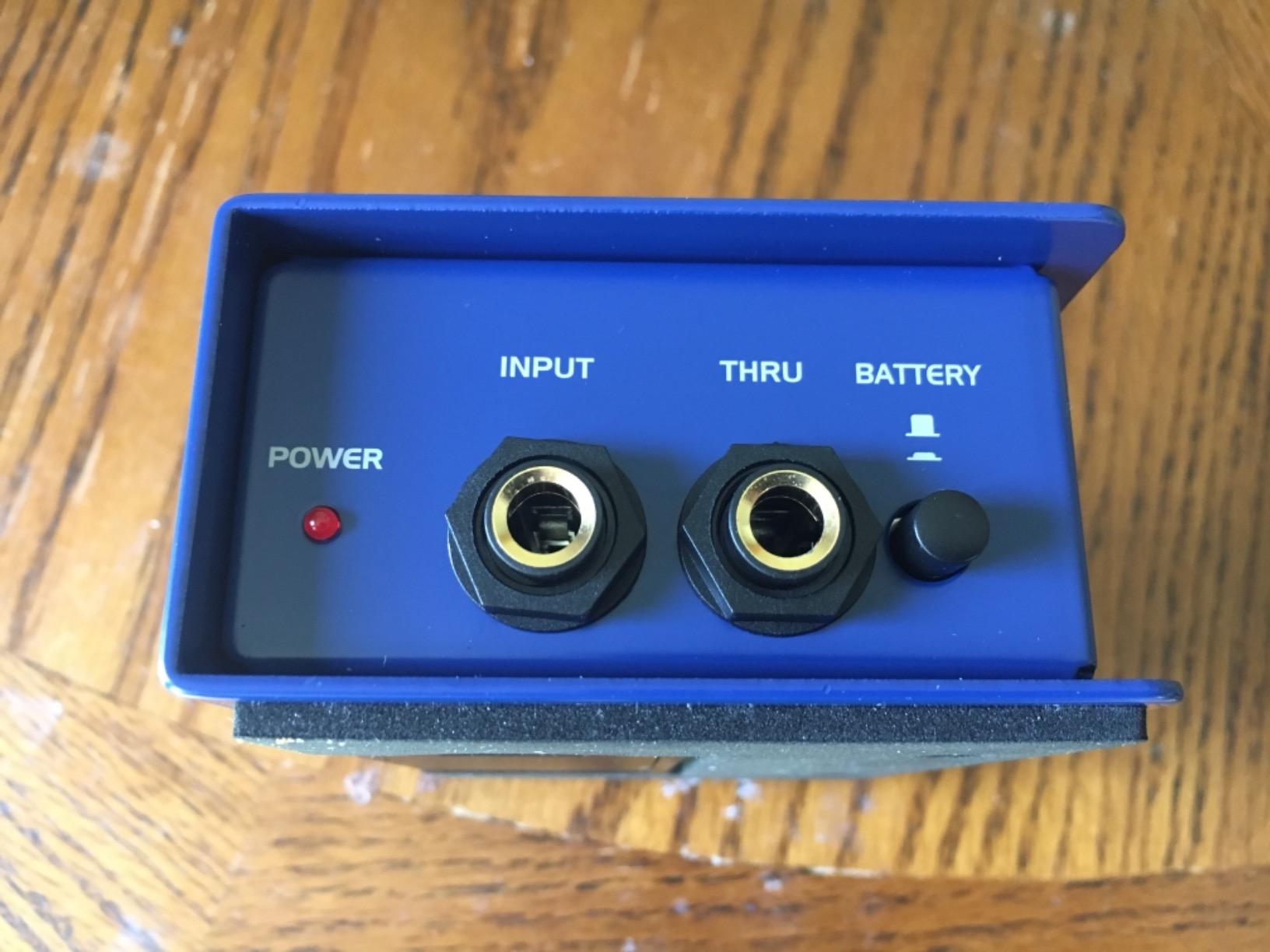
The dual-power design is the standout feature. You can run the MDA1 on 48V phantom power from your mixer, or drop in a 9V battery for setups without phantom power. That flexibility makes it useful in any environment — studio, stage, or remote recording session.
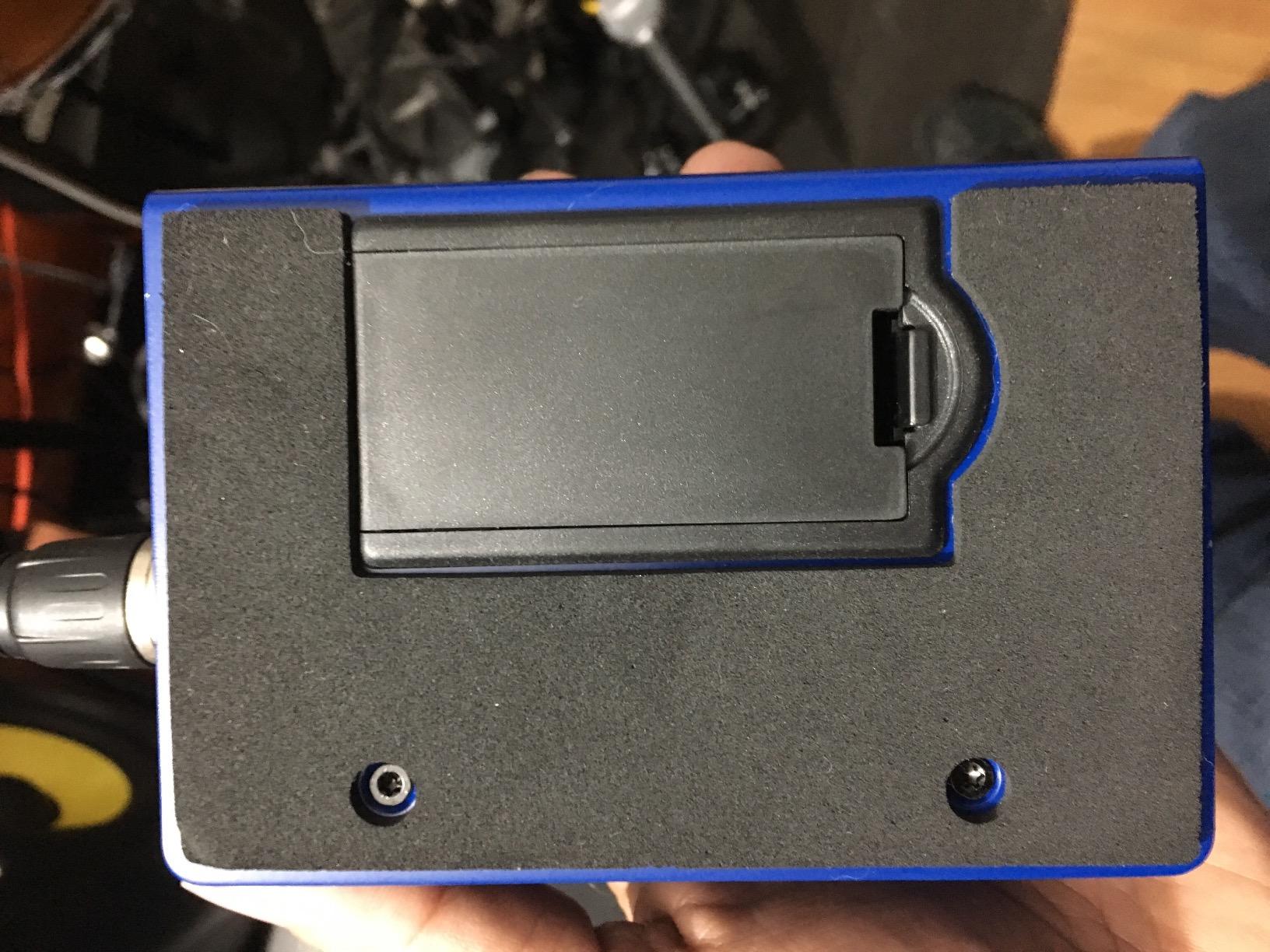
I tested the MDA1 with a passive P-Bass through a long cable to a small mixer without phantom power. The battery-powered mode delivered clean, full signal with no hum. When I switched to a mixer with phantom power, the unit auto-detected the phantom and ran off it instead. The dual-power design just works.
The 0dB/-15dB attenuation switch lets you handle both passive and active pickups, as well as line-level signals from keyboards and drum machines. The ground lift switch is effective at killing hum — I tested it in a venue with notoriously bad electrical grounding, and the MDA1 silenced the buzz completely.
Best use case for the Samson MDA1
The MDA1 is the right pick for bassists with passive pickups, keyboard players on a budget, and home studio enthusiasts who want active DI performance at a mid-tier price. The dual-power design makes it especially useful for mobile recording rigs and small venues.
Where the Samson MDA1 falls short
The piezo pickup compatibility issue is real. If you play acoustic guitar with a high-impedance piezo pickup, the MDA1’s 1 Mega ohm input impedance isn’t high enough — you’ll lose high-end detail. For piezo-equipped instruments, you need a DI with at least 10 Mega ohm input impedance. Also, the lack of an included battery or XLR cable means a small additional investment to get started.
9. Mackie MDB-2P Stereo Passive DI — Best for Keyboards
Mackie MDB-2P Passive Stereo DI Box, Dual 1/4″ Inputs, Ground Lift
Stereo passive
Dual 1/4 inch inputs
15dB pads
Ground lift
Pros
- Crystal clear low-noise stereo signal
- Heavy and sturdy construction
- Two independent channels with separate pads
- Great value vs. Radial stereo DI
- Effective ground loop elimination
Cons
- Switch bumpers may be vulnerable during travel
- Slightly more expensive than basic ART DIs
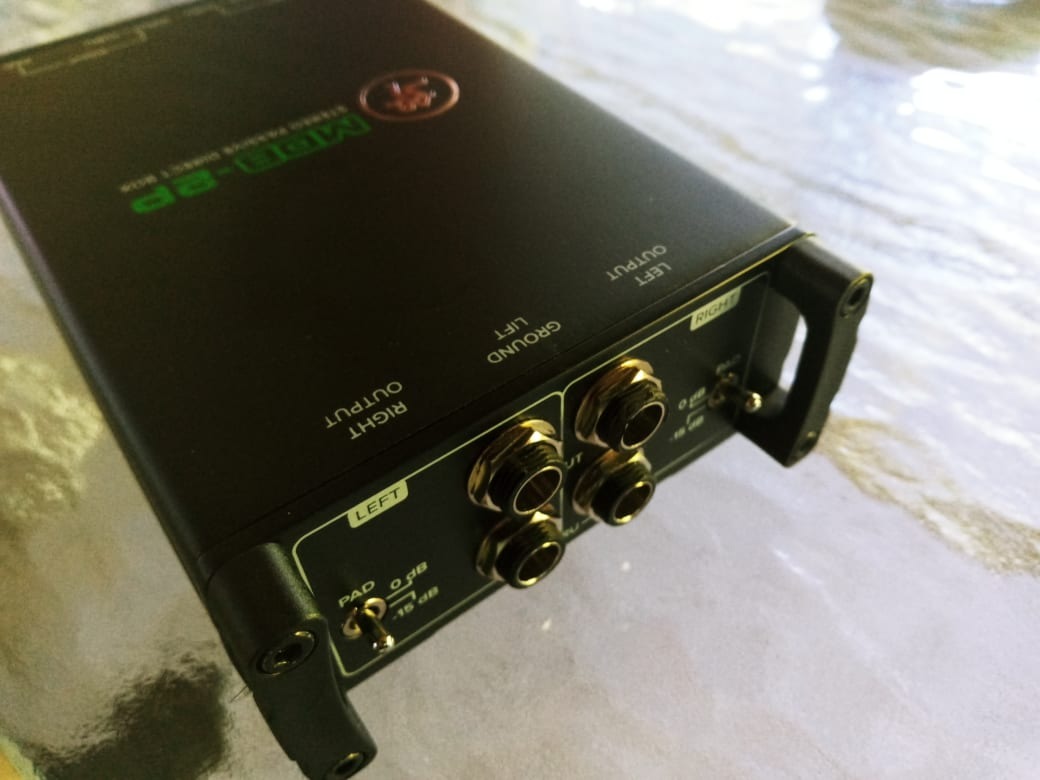
The Mackie MDB-2P is the stereo passive DI box I recommend to keyboard players who want clean, noise-free signal without spending $200 on a Radial. With 397 reviews and a 4.8-star average, it delivers professional-grade stereo DI performance at a price that makes sense for working musicians.
The dual 1/4-inch high-impedance inputs are designed specifically for stereo keyboard rigs. You can run your keyboard’s left and right outputs directly into the MDB-2P without any adapters or special cables. The two channels have independent 15dB pads and ground lift switches, so you can troubleshoot each channel separately if one side has hum.
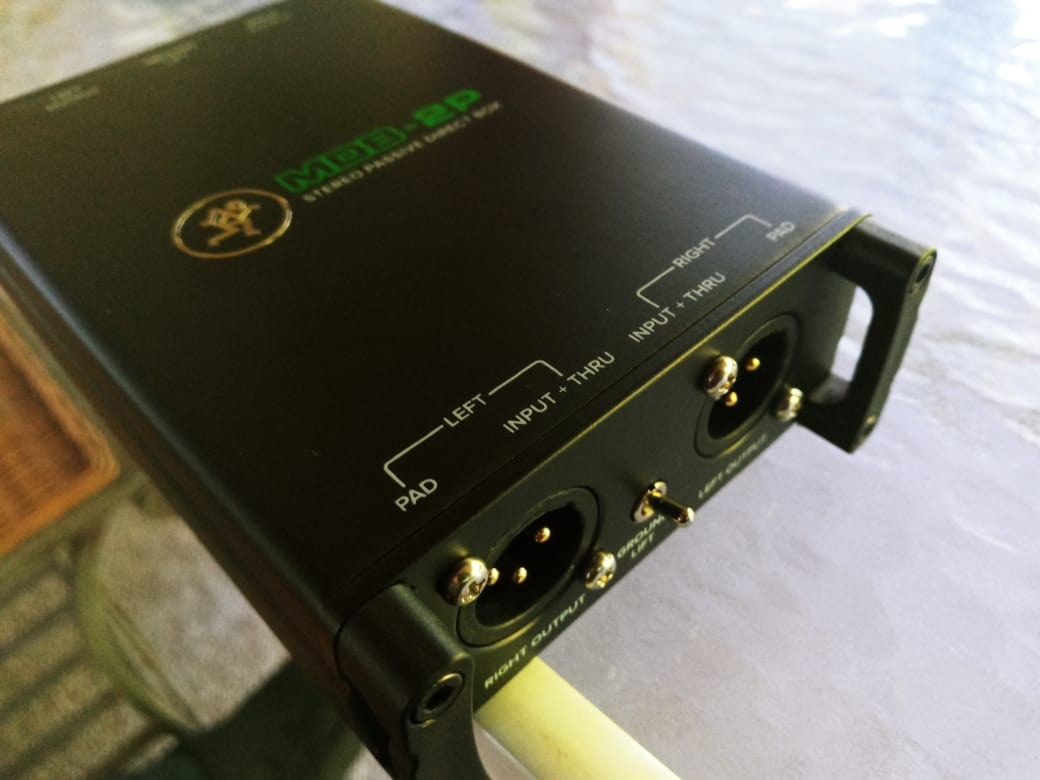
I tested the MDB-2P with a Yamaha MODX synthesizer running complex stereo patches. The signal arrived at the mixer with the full stereo image intact and no crosstalk between channels. That’s the technical hallmark of a well-designed stereo DI — the channels are properly isolated from each other, which is harder to achieve than it sounds.
The roadworthy steel case is built for gigging. At 14.4 ounces, it’s heavier than some compact DIs, but that weight translates to durability. The only weak point I noticed in testing is the switch bumpers — if you’re throwing the MDB-2P into a gig bag without padding, you might want to add some protective wrap.
Best use case for the Mackie MDB-2P
The MDB-2P is the right pick for keyboard players, electronic musicians, and DJs who need clean stereo DI conversion at a reasonable price. It’s also a smart backup DI for sound engineers who run stereo sources regularly.
Where the Mackie MDB-2P falls short
If you’re running a professional touring rig and need the absolute best in build quality, the Radial ProD2 is worth the extra money. The MDB-2P is built for working musicians, not for the abuse of life on a tour bus. For most gigs, though, it’s more than adequate.
10. Hosa DIB-443 Sidekick Passive DI — Best for Church Sound Teams
Hosa DIB-443 Sidekick Passive DI Box, 1/4 Inch TS to XLR3M
INST/LINE switch
-40dB attenuation
Passive design
Metal housing
Pros
- Clean signal with no added noise
- Solid heavy-gauge steel housing
- Effective ground lift for hum elimination
- Excellent value at budget price
- INST/LINE switch adds versatility
Cons
- Confusing packaging around INST/LINE switch
- Cannot handle amplified speaker signals
- Heavy case may require custom mods
The Hosa DIB-443 Sidekick is the DI box I recommend to volunteer church sound teams, school music departments, and anyone else who needs a fleet of reliable DIs on a tight budget. With 386 reviews and a 4.7-star average, it delivers clean signal conversion with effective hum elimination at a price that lets you buy a half-dozen without blinking.
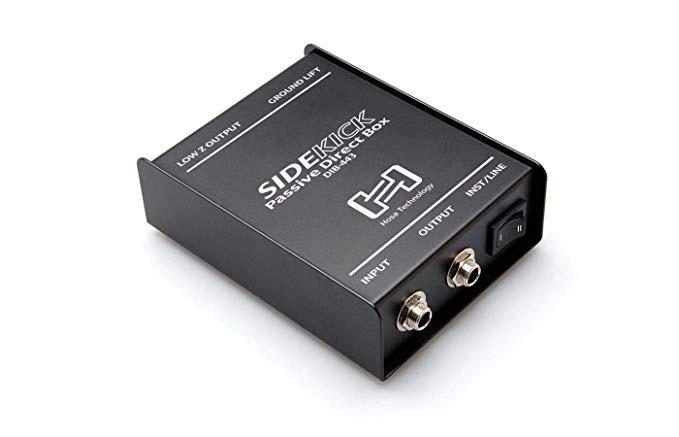
The INST/LINE switch is the standout feature. It lets you match the input impedance to either an instrument-level signal (guitar, bass) or a line-level signal (keyboard, drum machine, media player). That flexibility means one DI box can handle almost any source your worship team or school band throws at it.
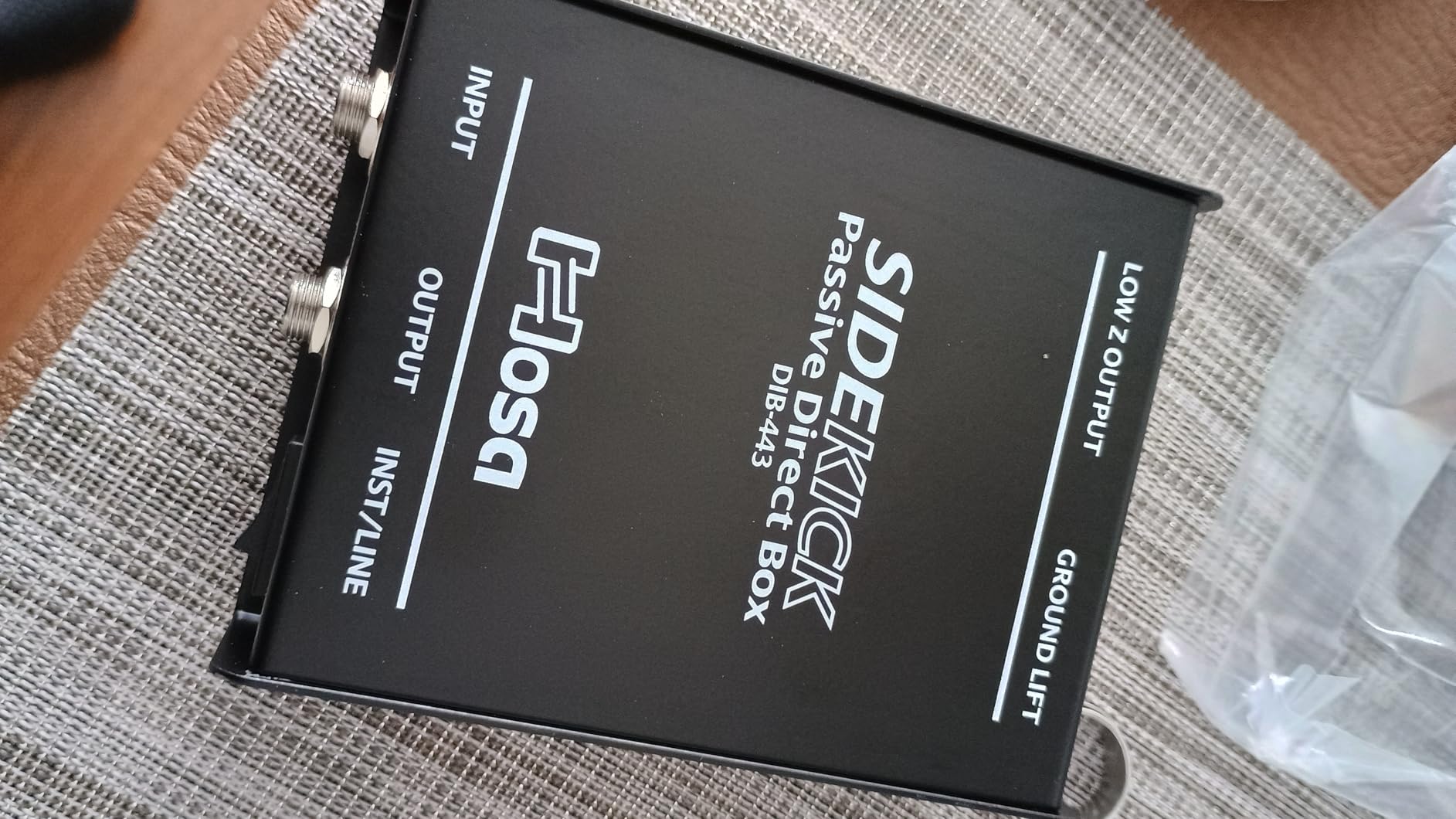
I tested the DIB-443 in a simulated worship setup with an acoustic guitar, a keyboard, and a media player feeding a small mixer. The DI handled all three sources cleanly, with the INST/LINE switch providing the right input match for each. The ground lift switch killed the hum that usually plagues multi-source setups.
The heavy-gauge steel housing is built for the wear and tear of volunteer-driven setups. Equipment in churches and schools gets bumped, dropped, and stored in less-than-ideal conditions. The DIB-443 is designed to survive that environment.
Best use case for the Hosa DIB-443
The DIB-443 is the right pick for church sound teams, school music programs, and community theaters that need reliable DI boxes in volume. It’s also a smart choice for gigging musicians who want a backup DI that handles any input source.
Where the Hosa DIB-443 falls short
Never connect a speaker-level signal to the DIB-443. It’s designed for instrument-level and line-level signals only. If you try to capture a cranked amp’s speaker output, you’ll damage the unit. Also, the INST/LINE switch instructions are confusing — first-time users may need to experiment to figure out which setting they need.
Buying Guide: How to Choose the Best DI Box for Your Setup
Choosing the right DI box comes down to understanding three things: what instrument you’re connecting, where you’re using it, and how much money you want to spend. Get those three answers right, and the rest of the decision is easy.
Match the DI to your instrument
Bass guitar is the most common DI application. Active basses with hot pickups work with either active or passive DIs. Passive basses with vintage-style pickups benefit from active DIs like the Radial Pro48 or Samson MDA1, which boost the signal before balancing it. Acoustic guitars with piezo pickups need a DI with very high input impedance (10 Mega ohms or higher) to preserve the natural high-frequency detail of the piezo.
Keyboards and synthesizers usually have line-level outputs that work well with passive DIs. If you’re running a stereo keyboard, you need a stereo DI like the Radial ProD2 or Mackie MDB-2P. Mono keyboards can use any of the passive options on this list.
Decide between active and passive
Active DIs add gain to your signal and require power (phantom or battery). They’re the right choice for instruments with weak outputs. Passive DIs use a transformer to balance the signal without adding gain, and they don’t need power. They’re the right choice for instruments with strong outputs and for live sound work where simplicity and reliability matter.
Most gigging musicians end up with both. A passive DI for the bass amp’s hot output, and an active DI for the acoustic guitar’s quiet piezo pickup. That combination covers most situations you’ll encounter.
Look for ground lift and pad switches
The ground lift switch is the most important feature on any DI box. It disconnects the ground pin on the XLR output, which eliminates the ground loop hum that occurs when two pieces of gear are plugged into different electrical circuits. Every DI on this list has a ground lift switch — and every DI you consider buying should have one too.
The pad switch (also called attenuation switch) reduces the input signal level before conversion. It’s useful when you’re feeding the DI a hot line-level signal or an amplified instrument output. A 15dB pad handles most situations. A -40dB pad is useful for speaker-level signals.
Instrument-to-DI decision matrix
Here’s a quick reference for matching the right DI to your instrument:
Active bass guitar: Passive DI works perfectly. The Whirlwind IMP 2 or Radial ProD2 are excellent choices.
Passive bass guitar: Active DI for best results. The Radial Pro48 or Samson MDA1 deliver transparent signal without dulling the bass.
Acoustic guitar with piezo: Active DI with high input impedance. The Radial Pro48 is the gold standard.
Stereo keyboard: Stereo passive DI. The Radial ProD2 for premium, Mackie MDB-2P for value.
Electric guitar amp recording: Active DI with speaker-level input. The Behringer DI100 handles 3000W amp outputs.
Ground loop troubleshooting
If you’re getting hum through your DI box, the ground lift switch is your first stop. Flip it on and see if the hum disappears. If the hum persists, check your cables — a damaged XLR cable can introduce hum that no DI box can fix. If the hum is still there, the problem might be in your mixer or power distribution.
One trick that saves time in live sound: keep a spare XLR cable and a spare instrument cable with your DI box. Swapping cables takes 30 seconds and often solves problems that would otherwise eat up your soundcheck.
Frequently Asked Questions
What are some high-quality DI boxes available?
The best DI boxes on the market in 2026 include the Pyle PDC21 for budget shoppers, the Behringer DI400P for unbeatable value, the Whirlwind IMP 2 for touring reliability, and the Radial ProD2 for professional stereo applications. The Radial Pro48 and Samson MDA1 are top choices for active DI performance. Premium options like the Radial J48 and Countryman Type 85 are used by professional studios and touring artists, while budget-friendly units from Behringer and Hosa deliver clean signal conversion at accessible prices.
Do DI boxes affect sound quality?
Yes, DI boxes absolutely affect sound quality. A quality DI box with a flat frequency response preserves your instrument’s tone through long cable runs. A cheap DI box with a poor transformer can dull high frequencies, muddy the low end, and add noise to your signal. The difference between a budget DI and a premium DI is audible on critical listening, especially when recording. For live sound work, the difference is smaller but still meaningful, especially in cable runs over 30 feet.
Is a passive or active DI box better?
Neither is universally better — they serve different purposes. Passive DI boxes are simpler, more roadworthy, and work best with instruments that have strong outputs (active bass pickups, line-level keyboards). Active DI boxes use powered circuitry to boost weak signals, making them ideal for passive pickups and piezo-equipped acoustic guitars. Most professional rigs include both types: a passive DI for instruments with hot outputs and an active DI for quieter sources. Your instrument and setup determine which is right for you.
Is a DI box worth it?
Yes, a DI box is worth the investment for any musician who plays through a PA system or records into an audio interface. A DI box eliminates hum, preserves tone over long cable runs, and ensures your instrument’s signal arrives at the mixer cleanly. Without a DI box, you’ll fight ground loops, lose high-end detail, and struggle with noise — especially in venues with challenging electrical grounding. Even a budget DI box like the Pyle PDC21 or Behringer DI400P delivers a meaningful improvement over plugging directly into a mixer with an unbalanced cable.
Final Verdict: Which DI Box Should You Buy?
After testing all ten DI boxes in this roundup, the choice comes down to your priorities. If you want the most reliable unit with the largest community of satisfied users, the Pyle PDC21 is my Editor’s Choice — over 3,600 reviews confirm it does the job. If you’re on a strict budget and need a workhorse for live gigs, the Behringer DI400P delivers excellent value at the lowest price in this roundup.
For professional applications where build quality and signal transparency matter most, the Radial ProD2 earns the Premium Pick. Its stereo design and tank-like construction make it the right choice for keyboard players and sound engineers who need uncompromising quality.
Whatever DI box you choose, the important thing is that you’re using one. The best DI boxes in 2026 all share one trait: they get out of the way and let your instrument’s true tone reach the mixer. Whether you’re playing a coffee shop gig or recording a chart-topping album, that clarity is worth the investment. Pick the unit that matches your instrument, your budget, and your setup — and you’ll wonder how you ever played without one.