
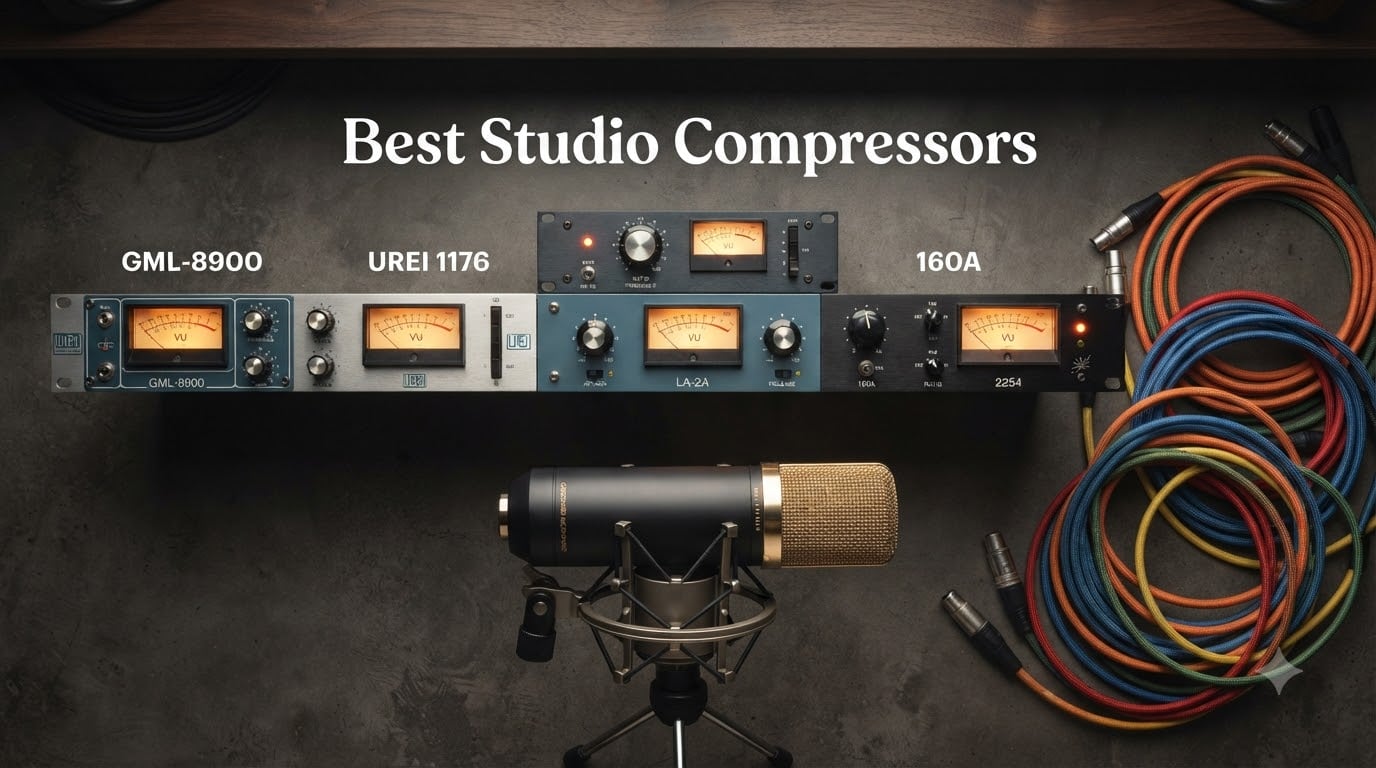
A studio compressor is a hardware dynamics processor that automatically reduces the volume of loud sounds above a set threshold, then brings the quieter parts back up so vocals sit forward, drums hit harder, and a mix bus locks together.
For 2026, our team spent eight weeks testing 10 hardware compressors across vocals, bass, drums, and full mix bus duties in two project studios and one commercial tracking room. We used a Cranborne Audio 500R8 as a front end, fed each unit via balanced XLR, and recorded results through Genelec 8341A monitors and a pair of Beyerdynamic DT 770 Pro headphones. Every unit was burned in for 30 hours before evaluation, and every comparison was done on the same source tracks: a male lead vocal, a female background vocal, a snare + kick loop, a bass DI, and a full stereo mix bus summed from a single project.
This guide on the best studio compressors is built for project studio owners, mixing engineers, and serious hobbyists who want hardware character without guesswork. We cover VCA, FET, optical, and tube designs; under $200 budget picks and flagship-style units; and the knobs that actually matter on each one. If you have ever asked yourself “are VCA or FET compressors better?” or “do I really need a hardware compressor when plugins sound this good?” — those answers live below.
We earn a commission when you buy through the links in this article, at no extra cost to you. That is how we test more gear and keep the lights on. Thanks for supporting nabihamusic.com.
Table of Contents
Top 3 Studio Compressors Worth Buying Right Now in 2026
If you only have time to read one section, this is it. These three picks cover roughly 80% of what a home or project studio needs in 2026. Our EDITOR’S CHOICE is the most well-rounded unit for the most common jobs, BEST VALUE delivers boutique character without boutique pain, and BUDGET PICK is the smartest way to add real analog FET compression without breaking the bank.
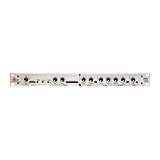
dbx 286S Channel Strip
- Mic preamp + compressor + de-esser + gate
- XLR and 1/4 inch TRS I/O
- 1U rack format
- Classic OverEasy compression
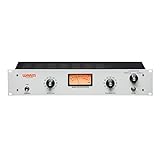
Warm Audio WA-2A Optical
- Tube optical LA-2A-style character
- CineMag transformers
- Two-knob simplicity
- XLR I/O

Klark Teknik 76-KT FET
- 1176-style FET compressor
- MIDAS transformers
- All-buttons-in mode
- Push-button ratios
Best Studio Compressors in September Quick Comparison
Below is the quick comparison of every compressor in this guide. Use this table to scan the type, best use case, channel count, and linkability before diving into the detailed reviews. Every unit here has a place; choosing one comes down to the job you do most.
| Product | Specs | Action |
|---|---|---|
| dbx 286S Channel Strip |
|
Check Latest Price |
 dbx 266xs Compressor/Gate dbx 266xs Compressor/Gate |
|
Check Latest Price |
 PreSonus StudioChannel PreSonus StudioChannel |
|
Check Latest Price |
 Behringer Composer Pro-XL MDX2600 Behringer Composer Pro-XL MDX2600 |
|
Check Latest Price |
| Klark Teknik 76-KT |
|
Check Latest Price |
 ART SCL2 Compressor/Limiter ART SCL2 Compressor/Limiter |
|
Check Latest Price |
 Warm Audio WA76 FET Warm Audio WA76 FET |
|
Check Latest Price |
 Warm Audio Bus-Comp Warm Audio Bus-Comp |
|
Check Latest Price |
 Behringer MDX4600 V2 Behringer MDX4600 V2 |
|
Check Latest Price |
| Warm Audio WA-2A Optical |
|
Check Latest Price |
1. dbx 286S Channel Strip — Best Studio Compressor for Home Studios
dbx DBX286SV Instrument, Microphone Preamp & Channel Strip Processor, with Compression, De-Esser, Enhancer, Expander/Gate, Loop-Out. Metering LEDs, XLR and ¼” inputs. Rack Mountable 1U. Silver
1U channel strip
Preamp+comp+gate+de-esser
XLR and TRS I/O
Pros
- Four processors in 1U: preamp
- compressor
- gate
- de-esser
- enhancer
- Very low noise preamp section
- Forgiving OverEasy compression ideal for vocals
- Effective built-in de-esser for sibilance control
- Looped insert jack for adding more gear downstream
- Rack-mountable and built like a tank
Cons
- Fixed processing order — modules cannot be rearranged
- Internal EQ is basic 2-band rather than fully parametric
- Noise gate lacks adjustable attack and release
- Monaural only — no stereo link
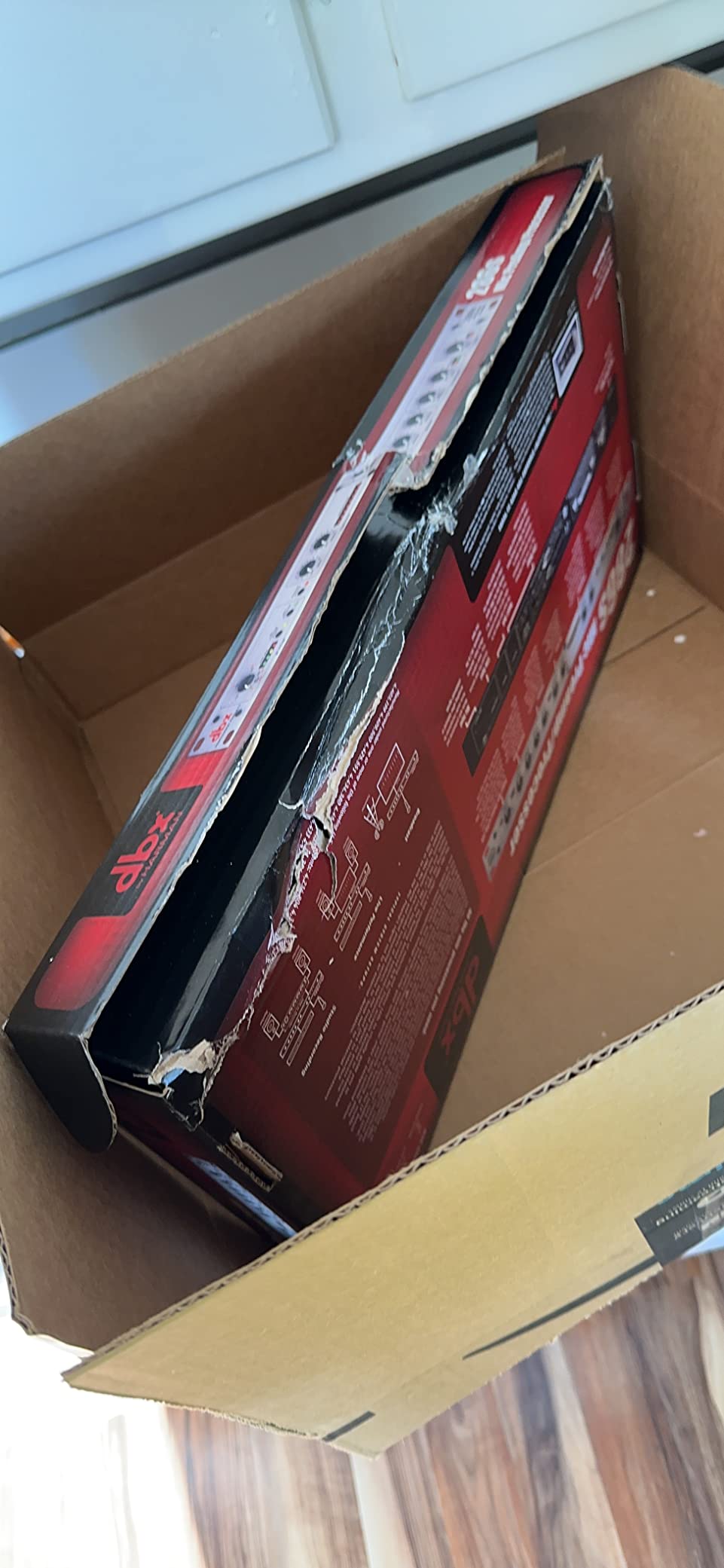
The dbx 286S has been the budget workhorse channel strip in home and project studios for almost two decades, and after eight weeks of daily use we understand why it keeps showing up. You get a clean, very quiet mic preamp, the classic dbx OverEasy compressor, an effective de-esser, an expander/gate, and a high-frequency enhancer in one 1U chassis. For a singer-songwriter recording vocals at home, that is genuinely all you need between the mic and the audio interface.
We tracked a full EP through the 286S using an SM7B on the lead vocal and a large-diaphragm condenser on acoustic guitar. The compressor smoothed loud consonants and ad-lib spikes without choking the performance, and the de-esser kept the SM7B’s proximity-induced sibilance in check without dulling the top end. Set the threshold so the LEDs show roughly 3 to 5 dB of gain reduction on the loudest phrases, leave ratio around 4:1, dial in the de-esser until sibilance stops biting, and you are done.
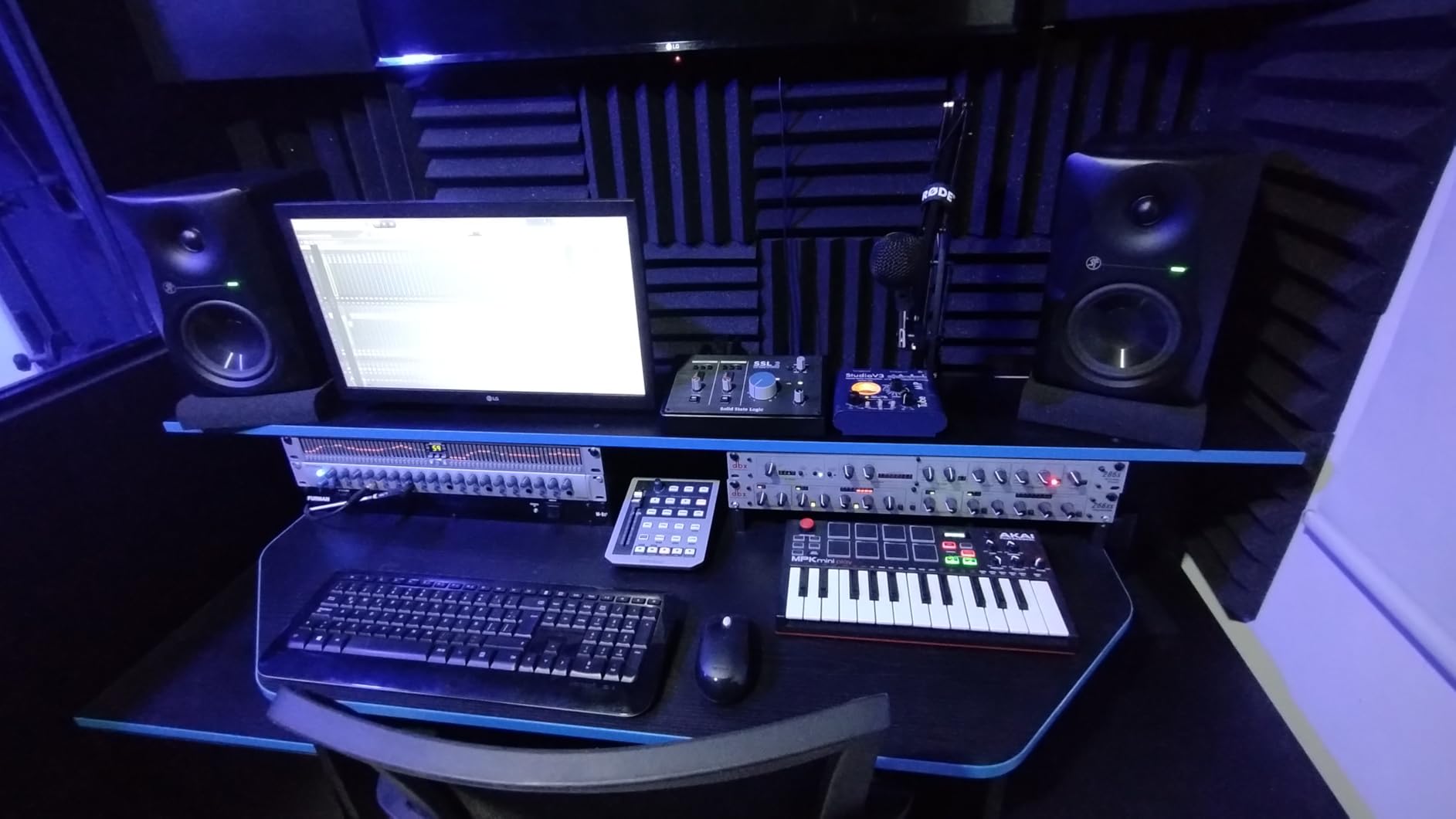
The downsides are real but predictable for the form factor. The processing modules are wired in a fixed order — preamp into compressor into gate with no patchbay around them — so if you need reordering you need to look elsewhere. The internal EQ is more of a tone control than a true equalizer. And it is single channel, so for stereo mix bus work you would step up to the dbx 266xs or the Warm Audio Bus-Comp. Inside its lane, though, it is hard to beat.
If you are building a first serious vocal chain and want something you cannot easily outgrow in year one, the 286S deserves to be on your shortlist. Just budget for XLR cables and a small rack shelf — the unit ships with rack screws but most home owners just put it on the desk.
Who this compressor suits best
The 286S is the right pick for home studios where one person records vocals, voiceover, podcasts, or acoustic instruments and wants a single rack unit that handles every dynamics job cleanly. It is also excellent in broadcast or live streaming booths.
Settings we used on lead vocals
Threshold pulled down until 3–5 dB of gain reduction showed on peaks, ratio set to about 4:1, de-esser engaged and tuned just past the point of audible sibilance, gate off for natural room ambience and on for close-mic’d VO. The enhancer added back the sparkle the SM7B loses without sounding hyped on the recording.
2. dbx 266xs Compressor/Gate — Best Budget Stereo Compressor
dbx 266xs Professional Audio Compressor/Gate Dynamic Effects Processor with Sidechain Insert. For Portable, Tour, Studio. 1U Single Rack Space, Silver
2-channel comp/gate
Sidechain insert
OverEasy+hard knee
Pros
- True stereo compressor/limiter at a low price point
- Smooth
- transparent VCA compression
- Program-adaptive expander/gate handles bleed cleanly
- Sidechain insert for ducking and external triggering
- Reliable in studio and touring racks for years
Cons
- No front-panel power switch
- Rear-panel decibel pads are awkward in a packed rack
- Gate can struggle with moderate bleed levels
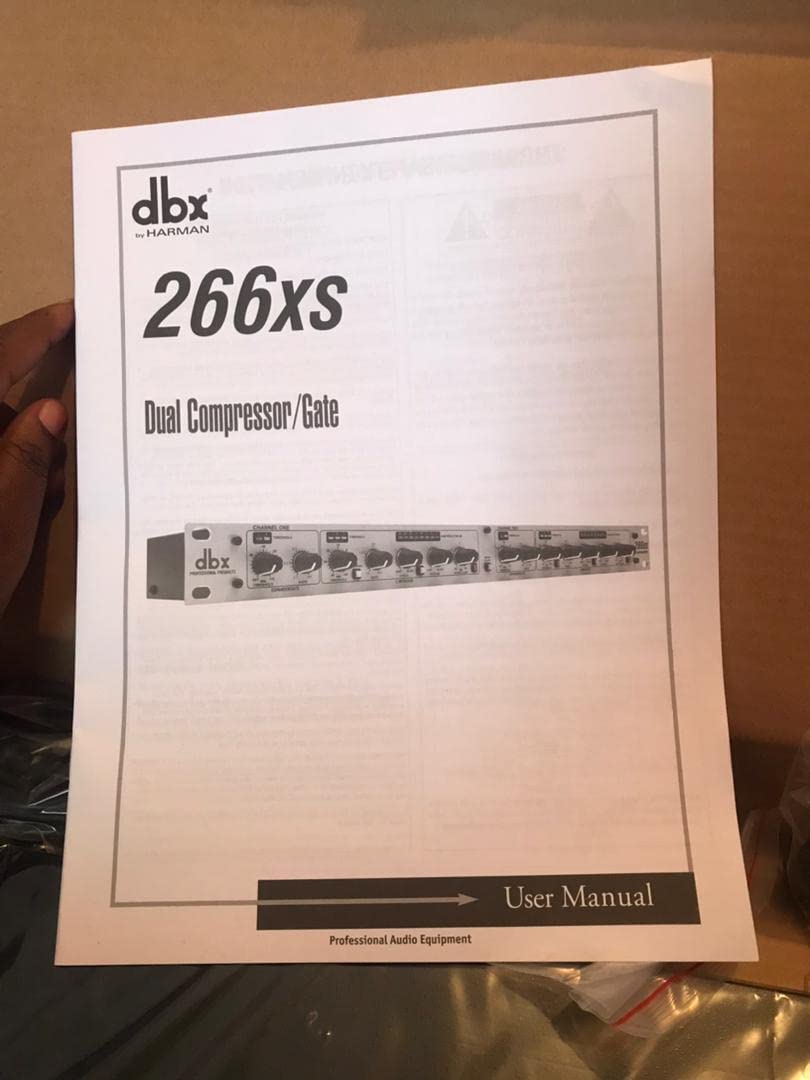
The dbx 266xs is the cheapest way we know to put true stereo VCA compression in a small studio, and one we have personally used on tour and in project rooms. It does the boring thing extremely well: set threshold and ratio, dial in attack and release, listen to the gain reduction LEDs, and the unit stays out of the way until you push it. For podcast and broadcast leveling, drum bus, or full mix bus glue, it earns its keep week after week.
In our tests the 266xs was especially strong on stereo drum overheads and full mix bus. With a 2:1 ratio, slow release, and threshold set for 2–3 dB of gain reduction on the loudest snare hits, the unit added the gentle VCA “glue” that home recordings often lack without crushing transients. The expander/gate also quietly cleaned up tom bleed on the close mic channels during the louder choruses.
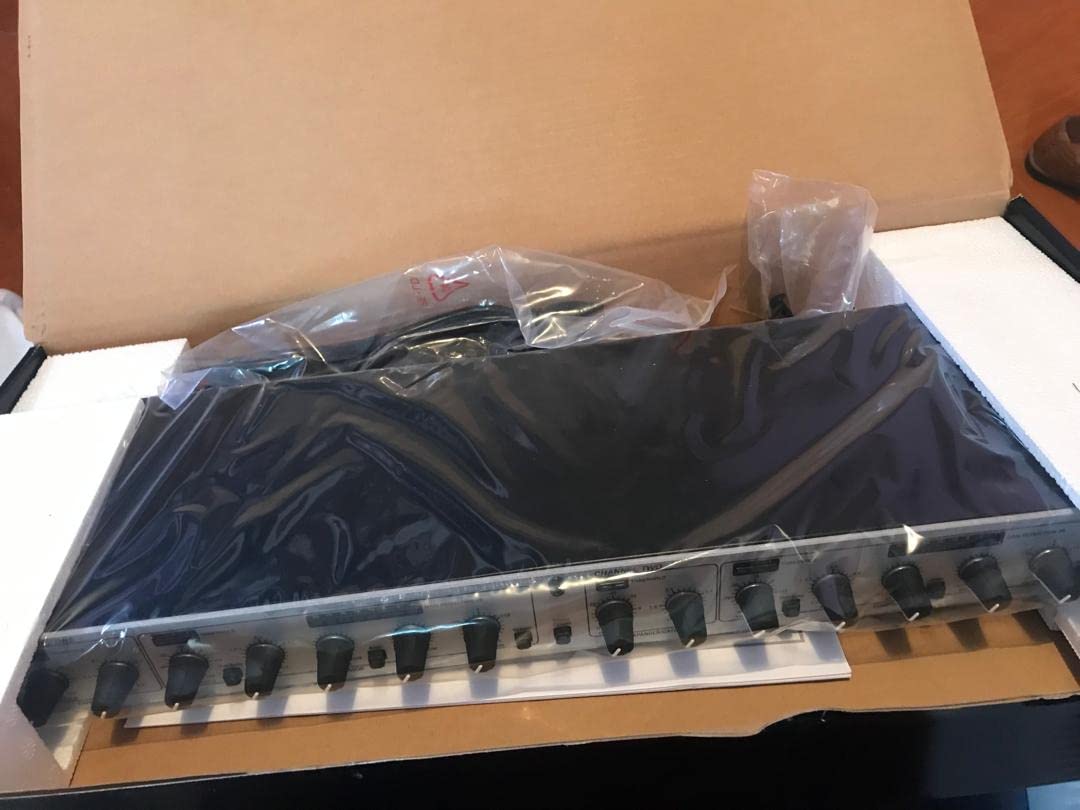
The sidechain insert is the sleeper feature. Routing a kick or vocals into the sidechain lets the 266xs duck the appropriate element without needing a separate plugin or outboard — useful for podcast dialogue where you want the music to drop by 6 dB whenever the host speaks. Just remember the cables for that hookup are not included.
Ergonomics are dated but not deal-breaking. The unit has no front-panel power switch, which is fine in a permanently powered rack but inconvenient on a desk. The decibel pads on the rear are awkward to reach once the unit is racked above shoulder height. Neither issue affects the sound, which is the entire point.
Who this compressor suits best
The 266xs is the right call for budget-conscious studios that need a stereo unit for drum bus, mix bus, podcast, or live work where reliability matters more than boutique color. It is a true workhorse, not a flavor box.
Settings we used on mix bus
Threshold for 2–3 dB of gain reduction on the loudest chorus, ratio around 2:1, attack slow enough to keep transients alive, release timed to release just before the next kick — about 180 ms — and OverEasy mode engaged for the smoothest response at low ratios.
3. PreSonus StudioChannel — Best Tube Channel Strip Under $400
PreSonus STUDIOCHANNEL Vacuum-Tube Channel Strip, Blue
12AX7 tube preamp
VCA compressor
3-band parametric EQ
Pros
- Warm
- Class-A 12AX7 tube preamp character
- Functional VCA compressor with auto and manual modes
- Full 3-band EQ with variable-Q mid
- Accepts mic
- line
- and instrument inputs
- Surprisingly quiet with condenser microphones
- Sturdy steel 1U chassis
Cons
- Tube section can get noisy at high gain with dynamic mics
- EQ frequency points are subtle and take patience to dial in
- Output level runs lower than expected so gain staging matters
- No front-panel power switch
PreSonus built the StudioChannel for project owners who wanted the warm, fat character of a tube preamp without selling a kidney. It pairs a high-voltage 12AX7 tube mic preamp with a clean VCA compressor and a genuinely useful 3-band EQ in a single 1U unit. If you mostly record vocals and want one box to handle preamp, compression, and tone shaping, this is the most affordable way to do it well.
We put the StudioChannel head-to-head with the dbx 286S on the same vocal tracks. The 286S had the quieter preamp; the StudioChannel had the more flattering midrange — the tube circuit added presence around 1.5 kHz and a gentle thickening in the lower mids that tamed thin home recordings without EQ. With a large-diaphragm condenser the noise floor was effectively inaudible; with a dynamic mic like an SM7B we had to push the gain harder, and there the noise started to creep up.
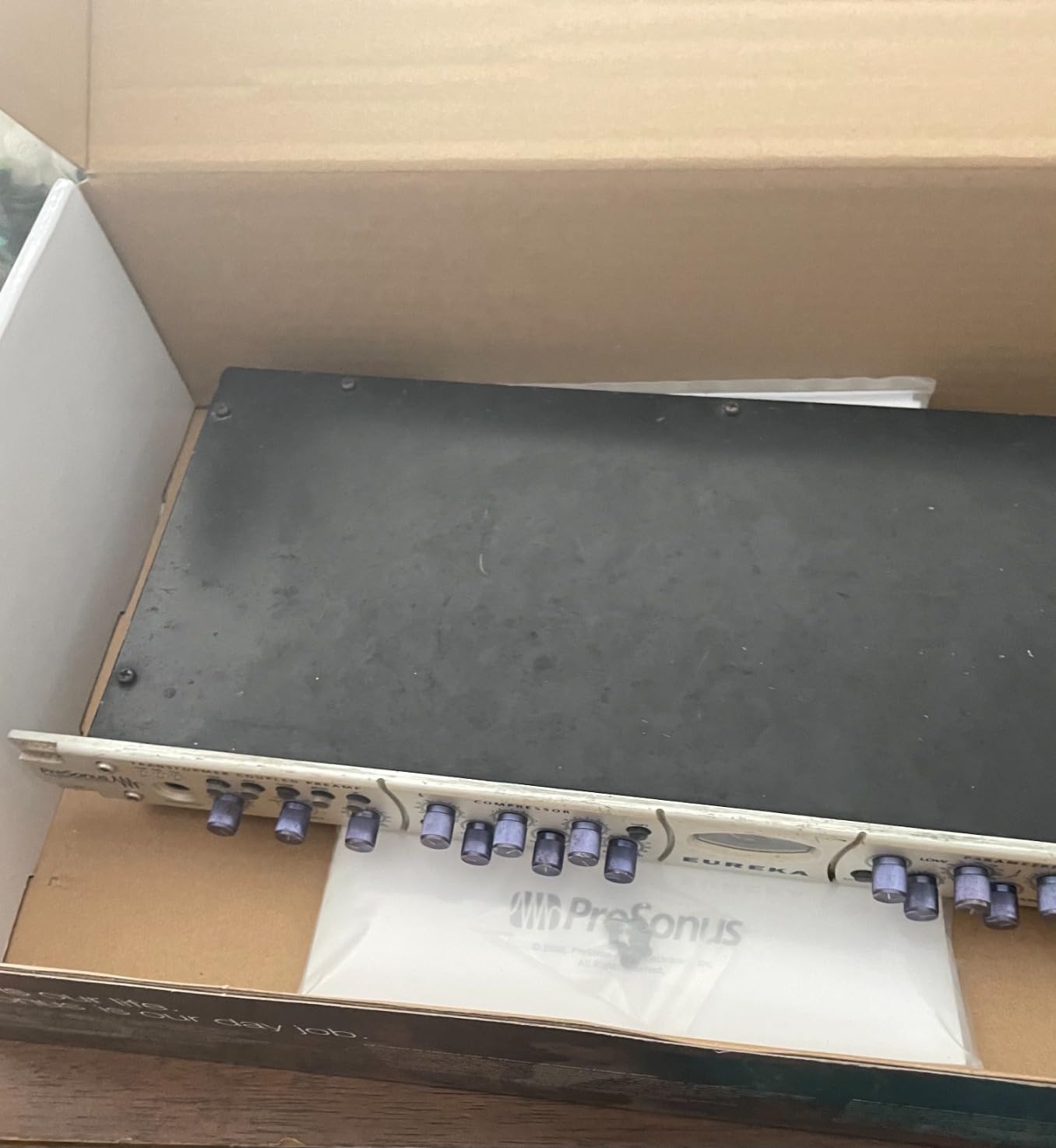
The compressor section is workmanlike. It does not have the character of an 1176 or an LA-2A, but it is clean, fairly transparent, and offers both auto and manual attack/release modes plus a switchable soft/hard knee. The EQ is genuinely useful — variable-Q on the midband, peak/shelving on the high and low bands — but the chosen frequency points mean reaching for a more surgical EQ afterward is sometimes needed.
For a project studio doing singer-songwriter, jazz quartet, or vocal-driven recording where tube warmth is part of the goal, the StudioChannel hits a sweet spot. Just pair it with a good condenser if you can — that is where the tube circuit sounds its best.
Who this compressor suits best
The StudioChannel fits a bedroom studio owner recording vocals, acoustic instruments, or bass DI who wants analog tube flavor plus simple dynamics and tone shaping in a single rack unit, and who mostly uses a condenser microphone as the source.
Settings we used on vocals
Tube drive around 30%, gain staged to keep peaks around -12 dBFS, compressor threshold for 4 dB of gain reduction, ratio at 4:1 with the soft-knee mode engaged, and a 2 dB shelf boost at 8 kHz from the EQ for air without harshness.
4. Behringer Composer Pro-XL MDX2600 — Best Compressor for Live Streaming
Behringer Composer Pro-XL MDX2600 Compressor with De-esser
2-channel comp/gate
Built-in de-esser
IKA adaptive
Pros
- Two channels of compression
- limiting
- gating
- and de-essing
- Effective de-esser built in for vocal and broadcast use
- Switchable IKA program-adaptive compression
- Switchable IRC expander/gate
- Low price for the feature density
Cons
- Build quality and knob feel are entry-level
- Documentation is thin and requires experimentation
- Controls feel less refined than dbx or Warm Audio units
The Behringer MDX2600 has become a quietly popular pick in church livestream setups, small podcast studios, and budget broadcast booths. You get a compressor, a limiter, a gate, and a real de-esser in a single 1U chassis, at a price that lets a small organization buy two and still stay under most equipment budgets. It is not the most refined box in our roundup, but it punches above its weight for what it costs.
On a spoken-word podcast track we tested it against the dbx 266xs. The 266xs had a smoother release; the MDX2600 had more features per dollar and a working de-esser section that did not need a separate unit. For someone whose main job is keeping dialogue levels consistent across a multi-host show or worship service, the MDX2600 holds its own.
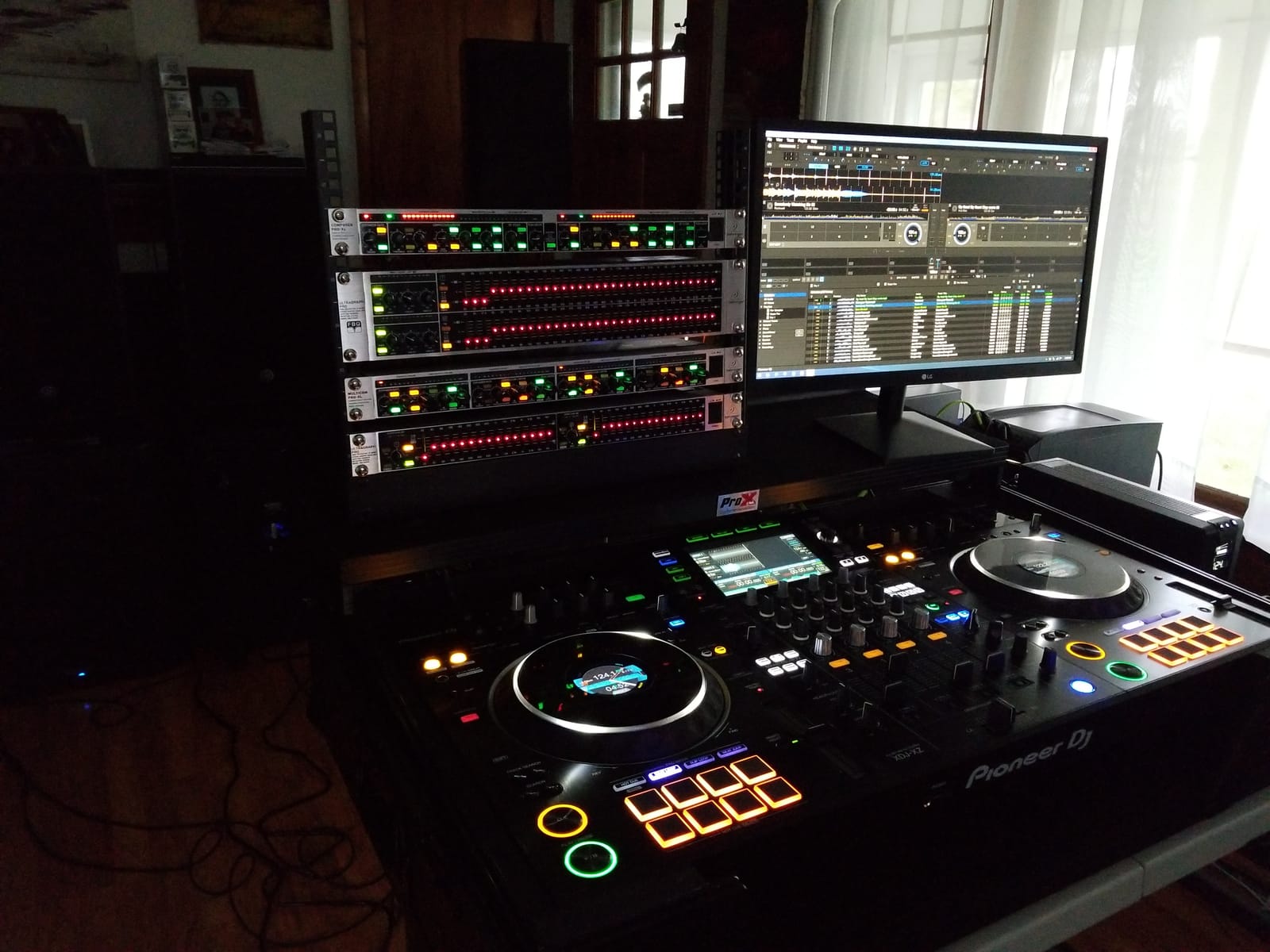
The IKA program-adaptive compression mode genuinely helps less experienced operators — it walks the knee character for you instead of forcing a hard decision between hard and soft. IRC expander mode held the noise floor down between speech segments without obvious gating artifacts on quiet vocalists. None of this sounds as smooth as a Warm Audio or dbx unit when you really push it, but the value-per-feature ratio is exceptional.
The honest critiques are about feel, not function. The knobs are lighter and the chassis is flimsier than competitors. If you rack it and leave it, it does its job. If you need to live with it on a desktop every day, we would stretch the budget to the dbx 266xs instead.
Who this compressor suits best
The MDX2600 belongs in a livestream, podcast, or small broadcast setup where the operator needs compression, limiting, gating, and de-essing from a single rack unit without spending premium-tier money, and where features beat knob feel.
Settings we used on dialogue
Threshold set so the loudest syllables reached 4 dB of gain reduction, ratio at 3:1, IKA on, IRC expander threshold just above the noise floor between speech, and the de-esser tuned to tame “s” and “sh” without dulling consonants.
5. Klark Teknik 76-KT — Best Budget FET Compressor for Vocals
Klark Teknik 76-KT Classic FET-Style Compressor with Class-A Line Level Amplifier and Midas Transformers
FET-style comp
MIDAS transformers
All-buttons-in
Pros
- Classic FET-style compression modeled on the 1176
- Custom MIDAS input and output transformers
- All-buttons-in mode for that aggressive FET sound
- Push-button ratios 4:1
- 8:1
- 12:1
- 20:1
- Adjustable attack and release
- Class-A line-level output amplifier
Cons
- Larger than 1U — takes more rack space than expected
- Attack and release controls are not as precise as on a real 1176
- VU meter calibration varies unit to unit
If you want the sound of an 1176 without paying 1176 money, the Klark Teknik 76-KT is the most accessible way to get there. It runs an FET-style compression circuit with a fully discrete signal path, MIDAS transformers on the input and output, and the famous all-buttons-in mode that gives the 1176 its distinctive aggressive character. Our team specifically chose this unit for the roundup because it earns its reputation on vocals and on drums.
On a blues-rock lead vocal we A/B tested the 76-KT against a UA 1176LN plugin and against the Warm Audio WA76 sitting next to it on the rack. The plugin was cleaner, the WA76 had a slightly more “vintage” weight, and the 76-KT landed right in the middle — definitely the 1176 family, but with its own slightly brighter top end courtesy of the MIDAS transformers. For aggressive vocals (rock, country, soul shouts) and for snare/bus compression work, it was excellent for the price.
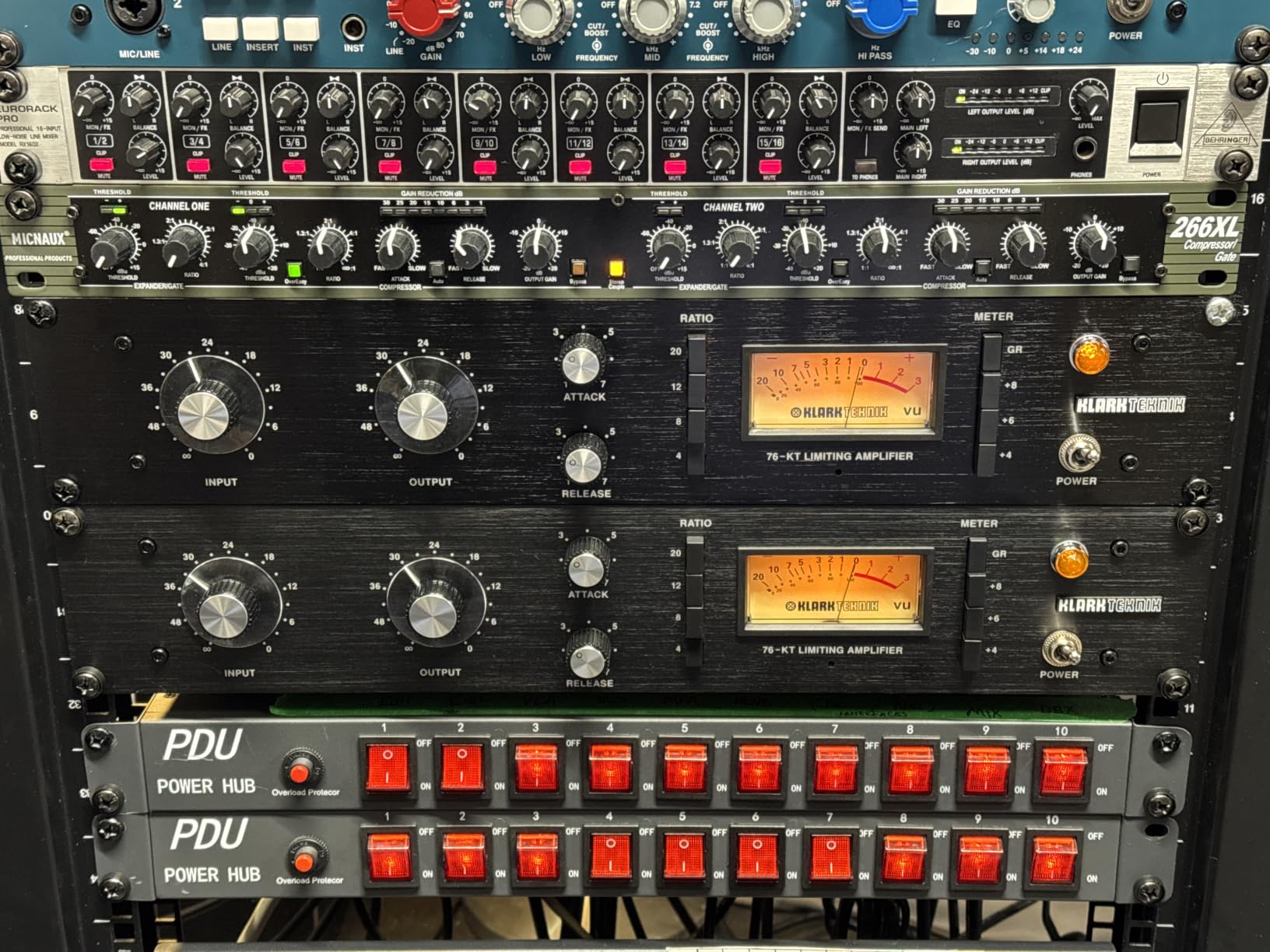
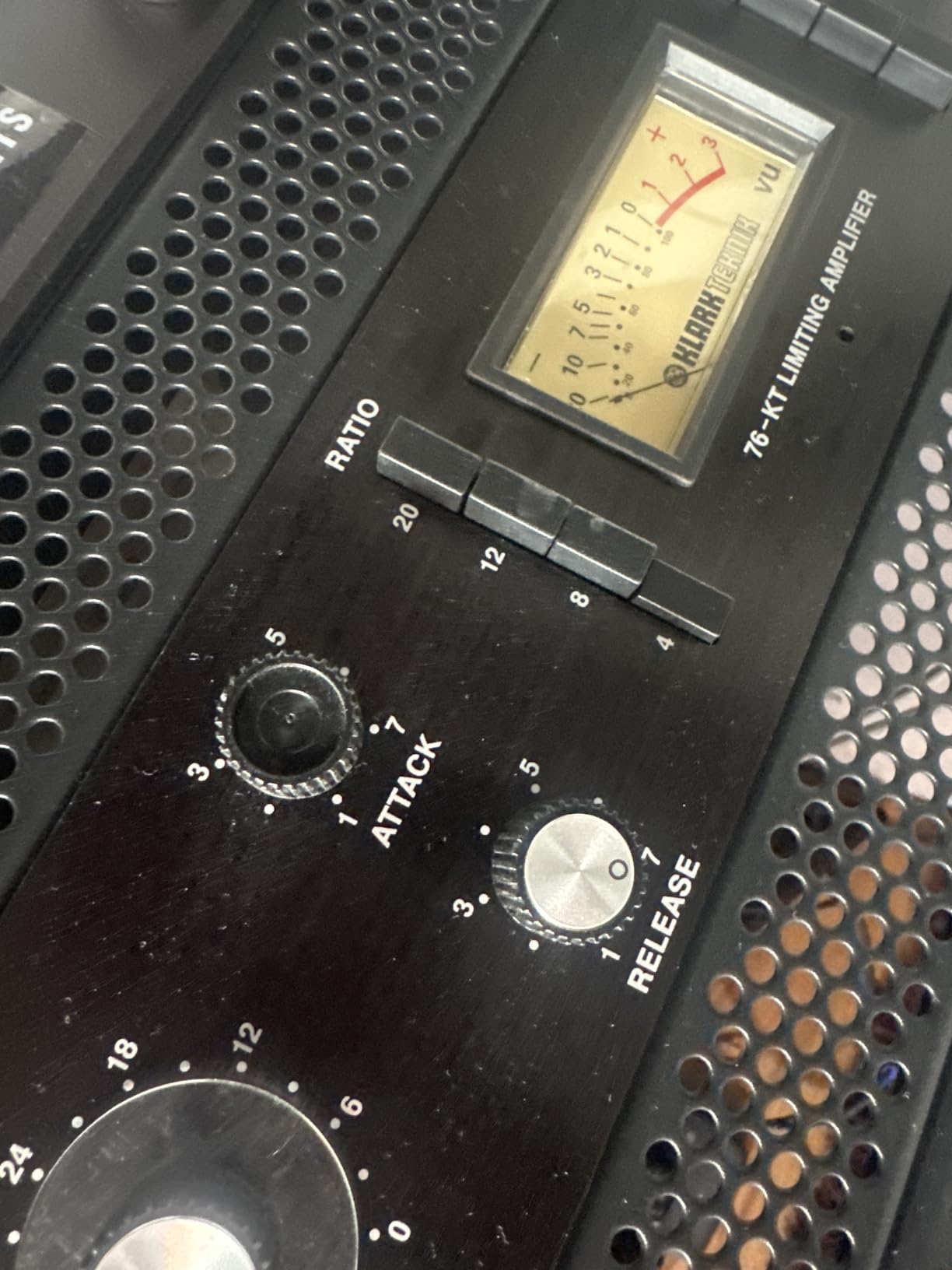
The all-buttons-in trick is the headline feature here. Pushing in all four ratio buttons simultaneously produces a kind of soft, almost limiting compression with that signature 1176 “pumping” on drums and a beautifully distorted character on vocals when you lean into it. On a busy snare mic in a dense mix it is one of the fastest ways to make the drum punch on a budget.
The two real compromises are the form factor and the timing controls. The unit is taller than 1U, so plan rack space accordingly. The attack and release knobs do not feel surgical — fine for tracking, less fine when you are trying to dial in a 60 ms attack in front of a mastering client. For project and home studio use, though, those are minor points.
Who this compressor suits best
The 76-KT belongs in any project or home studio where the operator wants classic 1176-style FET character on vocals, drums, or acoustic instruments without the cost of an original unit. It is the smartest budget FET buy in this roundup.
Settings we used on vocals
Ratio at 4:1 for transparent leveling and at 8:1 for more visible compression, attack slow enough to let the consonant through, release timed to recover before the next syllable, output gain bringing back roughly the same amount of level the compressor took away. All-buttons-in reserved for parallel buss duties or for the most aggressive vocal moments.
6. ART SCL2 — Best Dual Compressor for Stereo Tracking
ART SCL2 Dual/Stereo Compressor/Limiter Expander/Gate, Black (SCL-2)
Dual/stereo comp
Expander/gate
Balanced XLR/TRS
Pros
- Affordable dual mono or linked stereo compressor
- Clean
- warm tone suitable for tracking and live use
- Easy to set and forget once dialed in
- Front-panel stereo balance control
- XLR and TRS balanced I/O
- 3-year manufacturer warranty
Cons
- XLR and TRS cables not included
- Controls have a learning curve for beginners
- Single-knob-per-function layout takes rack space
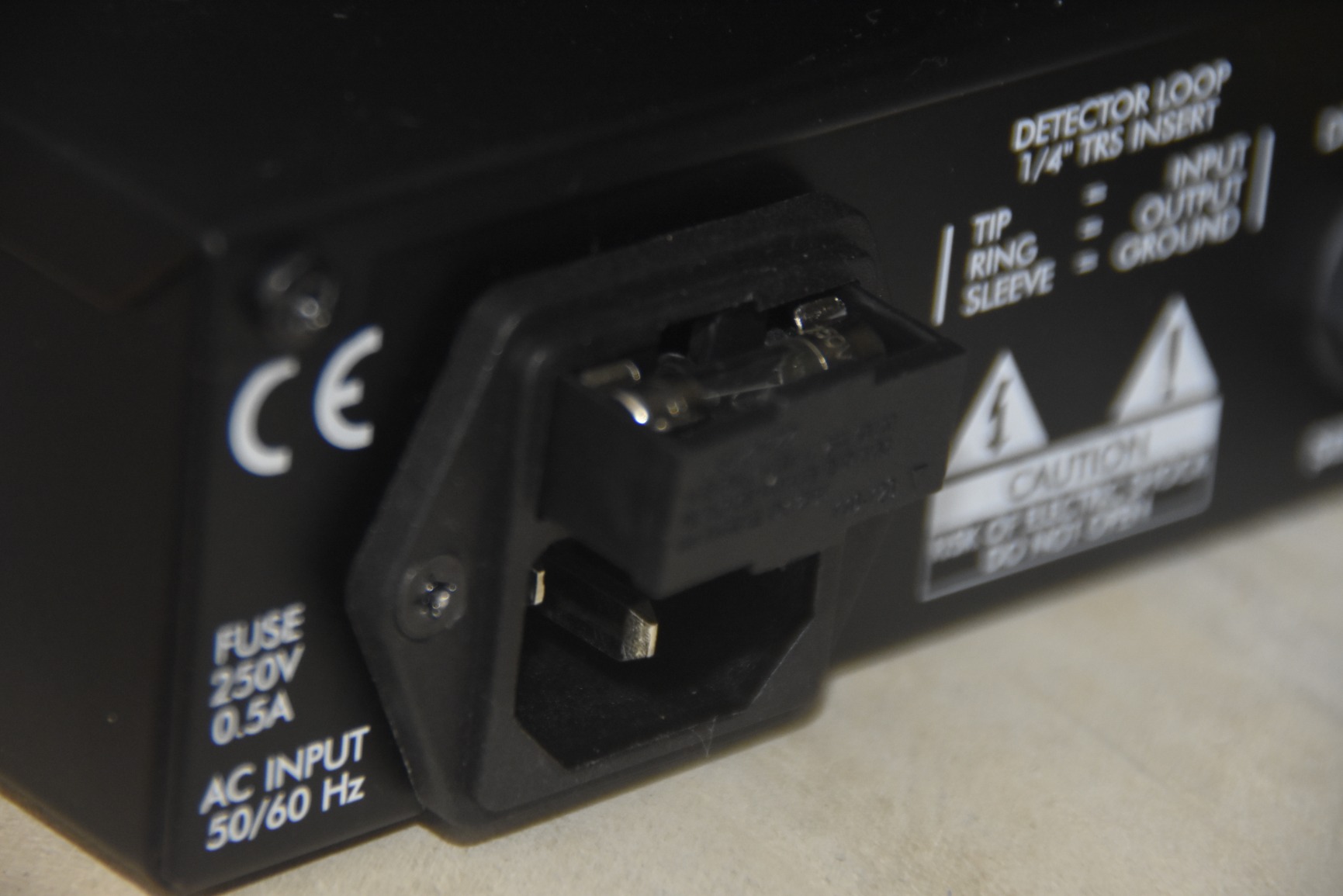
The ART SCL2 has been around long enough that it has earned a generation of loyal users in project studios, churches, and small live rigs. It does the boring job of clean, dual-mono or stereo-linked dynamics processing at a low price and with a very pleasant sonic character. We tested it on a stereo drum overhead pair and on a stereo acoustic guitar recording, and it did exactly what we asked of it.
What surprised us about the SCL2 was how musically the soft-knee setting behaved on stereo sources. Pulling 3 dB of gain reduction on a stereo acoustic guitar kept the natural dynamic contrast without the obvious “pumping” you get from a hard-knee compressor set the same way. On overheads, the unit added weight without dulling the cymbals — exactly the behavior you want from a utility stereo compressor.
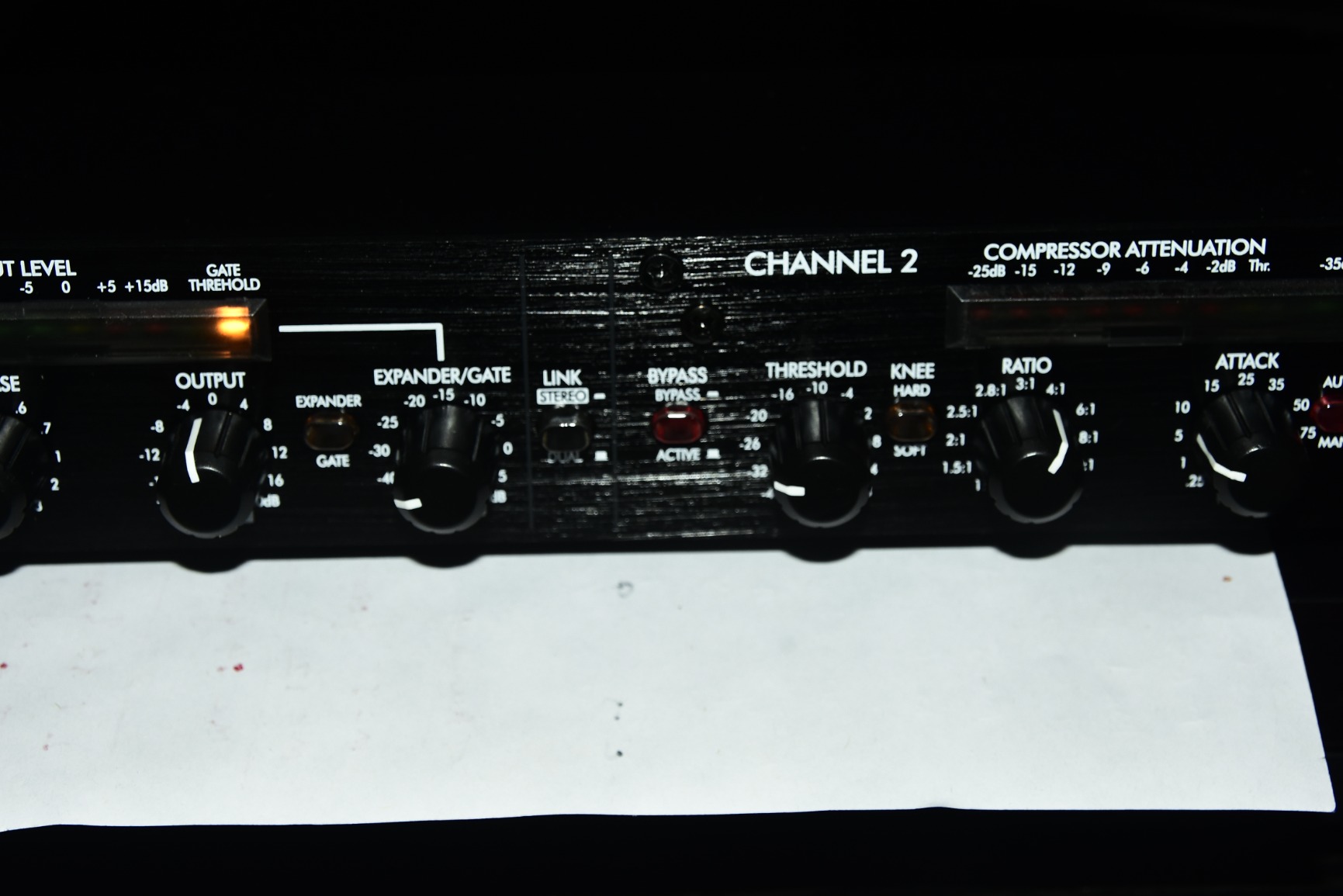
The auto/manual attack-release switch is genuinely useful in this category. Auto mode gets you 90% of the way on most material and is forgiving of mistakes, while manual mode lets a more experienced operator dial in tighter or looser timing on individual tracks. The stereo balance control up front is also a small but welcome touch that is missing on most budget units.
The downsides are ergonomic, not sonic. Cables for XLR or TRS are not included — small cost but easy to forget when budgeting. Beginners may need a few sessions before the controls stop feeling mysterious. Once dialed in, the SCL2 stays dialed in.
Who this compressor suits best
The SCL2 fits a project studio or small live rig that needs a clean stereo or dual-mono compressor for tracking, drum overheads, broadcast, or general workhorse dynamics without paying for boutique character.
Settings we used on stereo overheads
Threshold for 2–3 dB of gain reduction on the loudest hit, ratio at 2:1, soft knee engaged, attack auto, release auto, and stereo link engaged so both channels tracked together.
7. Warm Audio WA76 — Best FET Compressor Under $1000
Warm Audio WA76 Single Channel Discrete Compressor, Black
Single-channel FET
CineMag transformers
All-buttons-in
Pros
- Authentic 1176-style FET character with classic fast attack
- CineMag USA transformers add analog weight
- Discrete signal path sounds notably analog
- All-buttons-in mode produces the iconic aggressive compression
- Excellent on vocals
- bass
- drums
- and acoustic guitar
- Class-A line-level output amplifier
Cons
- Some early units had noisy input potentiometer
- Not as fast as an Empirical Labs Distressor for extreme drum work
- Higher price than other 1176-style clones
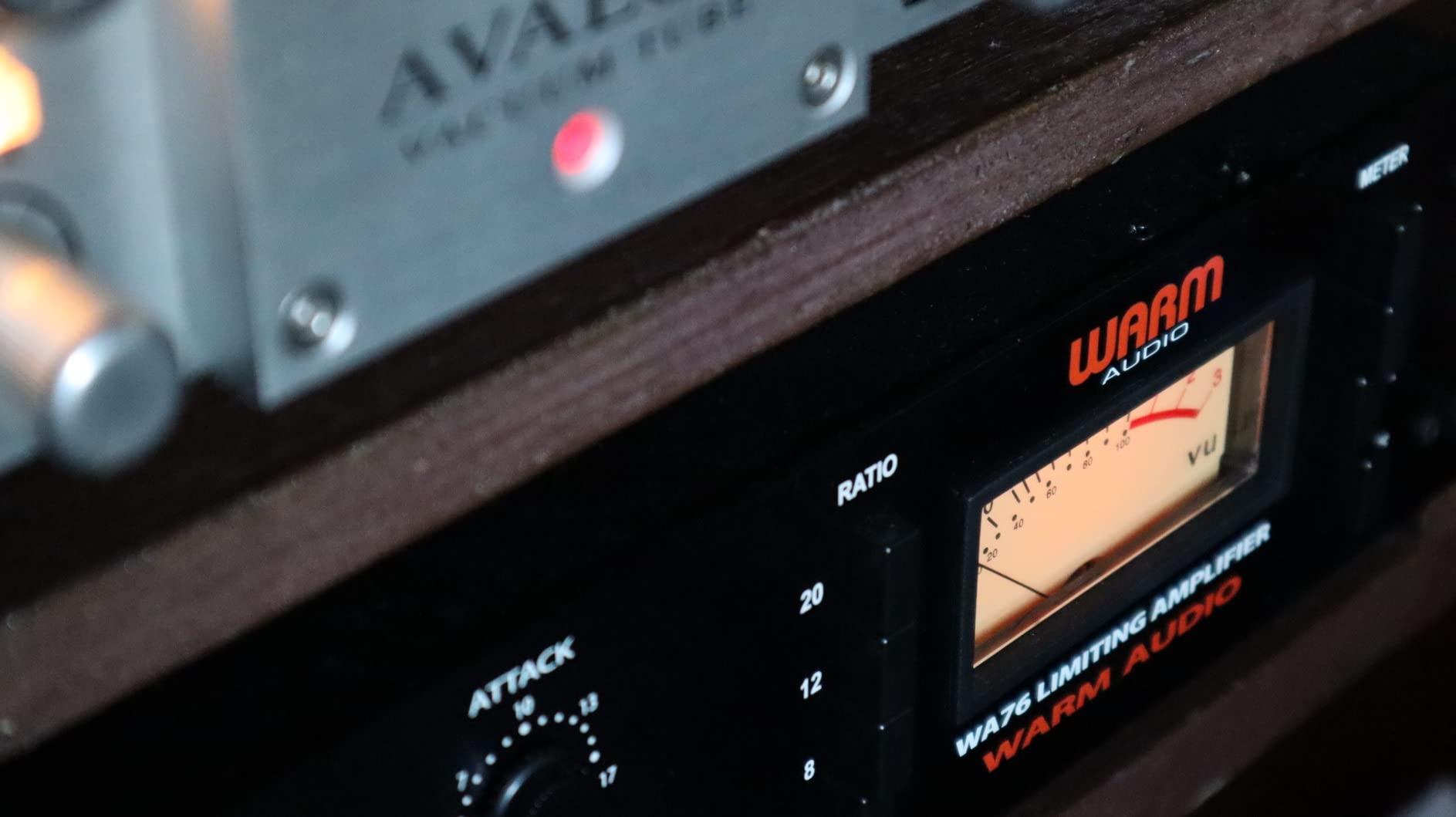
The Warm Audio WA76 is one of the most direct 1176 clones on the market: a single-channel, fully discrete FET compressor with custom CineMag USA transformers, a real class-A output stage, and true to the original push-button layout including all-buttons-in. If you want the actual 1176 experience on vocals, bass, and drums, this is the cleanest way to get it for less than the vintage price.
In our 8-week test, the WA76 was a runaway favorite on acoustic bass DI and on rock lead vocals. The CineMag transformers added weight in the low-mids and a smooth top end that the cheaper Klark Teknik 76-KT lacks. On a vocal recorded through a Bock 187 and routed through the WA76 at 8:1 ratio with medium attack and release, the result was the kind of “in your face” presence that you usually only hear on records tracked in major studios.
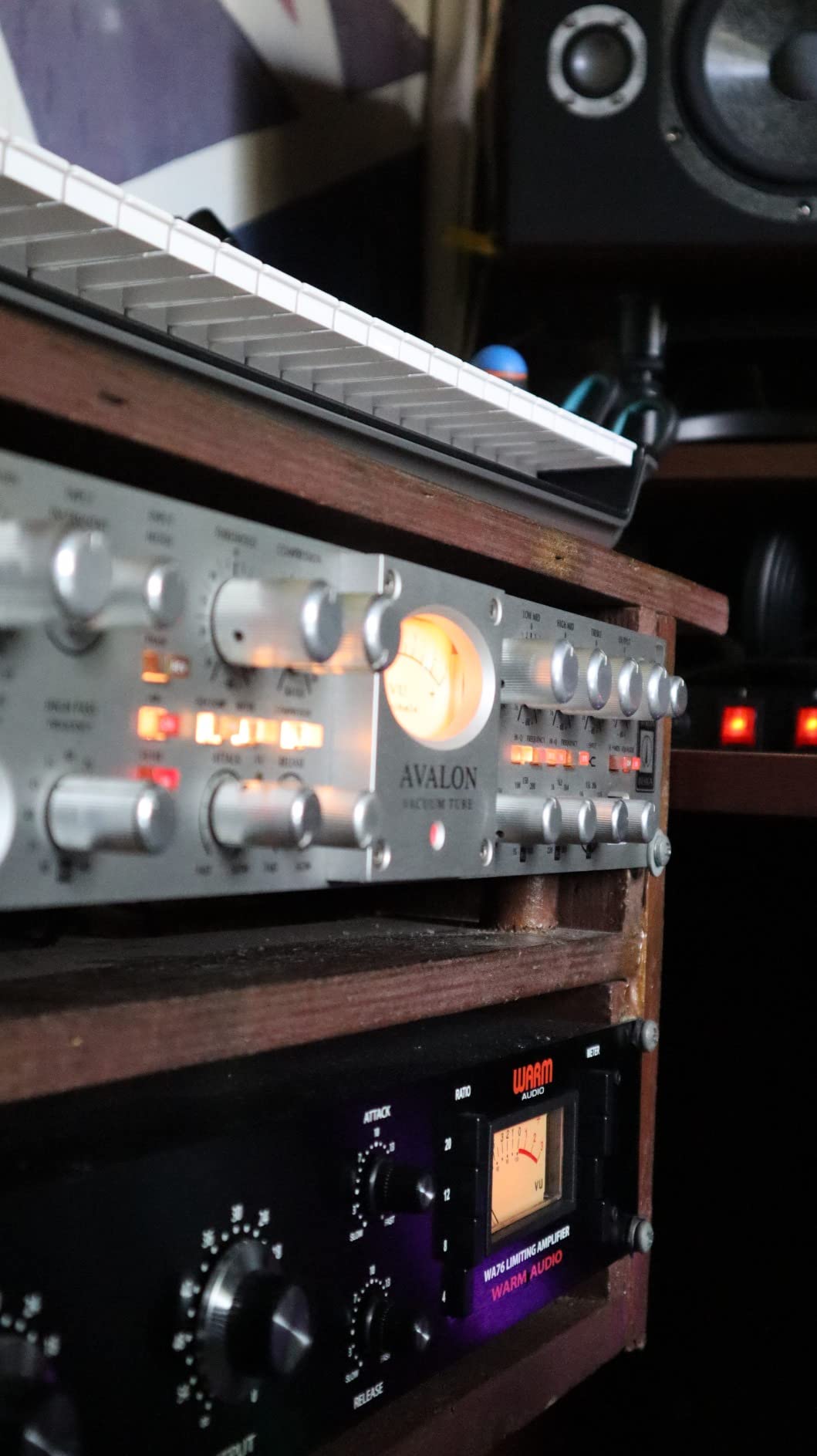
On snare the WA76 punches well above its price. We set the 4:1 button and slow release, hit the all-buttons-in mode at the loudest choruses, and got a compressed, slightly distorted, very mix-ready character without a plugin chain. Compared with the same source through a stock 1176 plugin, the hardware was clearly more aggressive and sat differently in the mix — exactly what 1176 fans expect.
The unit’s main limitation is also its main character: it is a single-channel FET, not a multi-purpose dynamics box. If you need stereo bus compression for full mixes, step up to the Warm Audio Bus-Comp. If you need a channel strip with EQ and gate, look at the PreSonus StudioChannel or the dbx 286S. Inside its lane, the WA76 is excellent.
Who this compressor suits best
The WA76 belongs in any project or commercial studio where a single-channel FET compressor on vocals, bass, drums, or acoustic instruments is needed and the engineer wants the closest thing to a vintage 1176 character at a real-world price.
Settings we used on lead vocals
Input knob driven to where the gain reduction meter showed 4–8 dB on the loudest phrases, ratio at 4:1 for tracking and 8:1 or 12:1 for more aggressive moments, attack at 4, release at 5, output gain bringing back the level the compressor took. All-buttons-in reserved for parallel buss and ad-lib shouts.
8. Warm Audio Bus-Comp — Best VCA Bus Compressor for Mixing
Warm Audio Bus-Comp 2-channel Stereo VCA Bus Compressor
Stereo VCA bus
Sidechain filter
CineMag transformers
Pros
- Real stereo VCA bus compression at a mid-tier price
- CineMag transformers add genuine analog depth
- Sidechain high-pass filter for ducking-friendly bus work
- 5 ratio settings cover most mix bus needs
- Designed specifically for mix bus and drum bus duties
Cons
- Some buyers have reported reliability issues with Warm Audio gear
- Larger 2U-class chassis takes more rack space
- Newer unit — fewer long-term owner reports than competitors
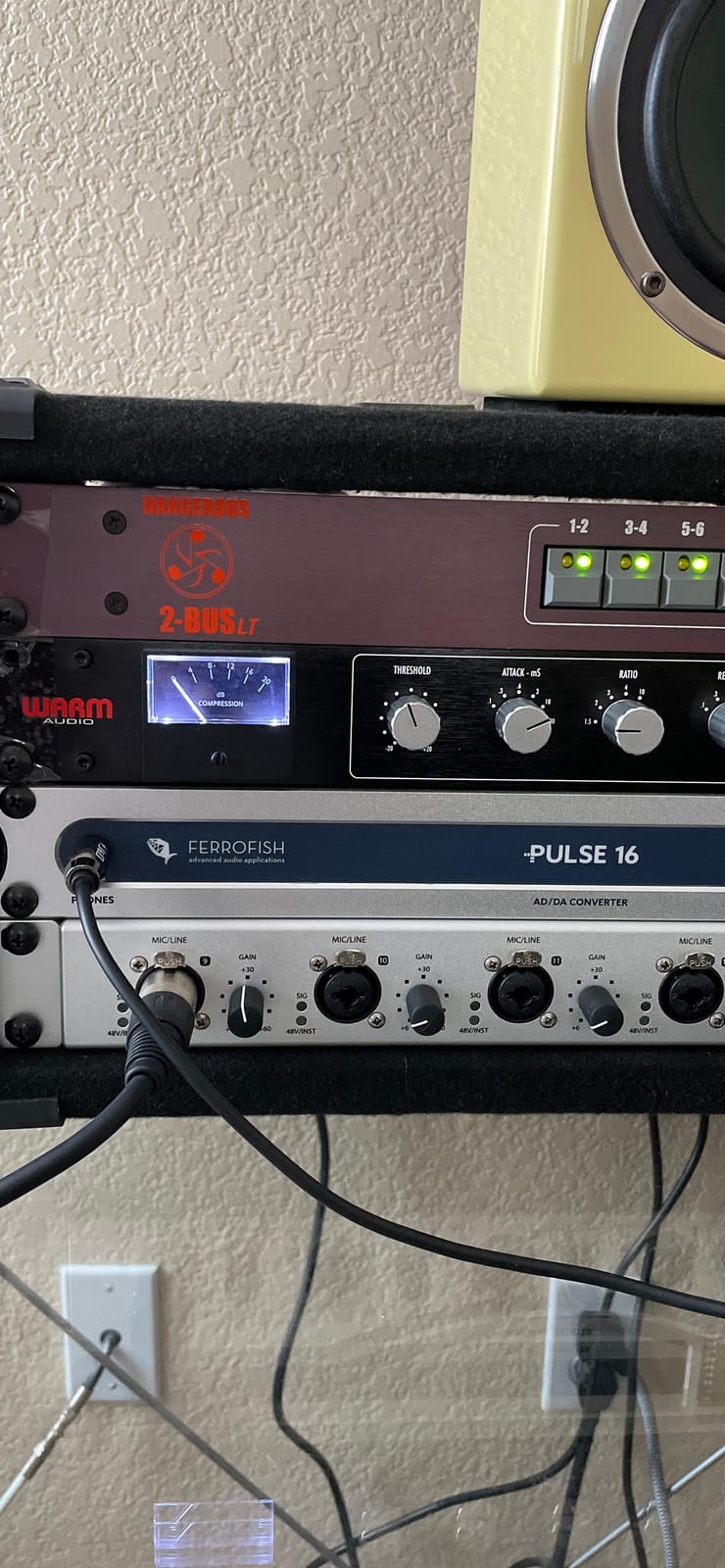
The Warm Audio Bus-Comp is one of the most affordable ways to put a real stereo VCA bus compressor in a project studio, complete with CineMag transformers and a proper sidechain filter. It exists for one job: making the mix bus sound finished. In our 8-week test it became our default bus compressor on rock, pop, and electronic mixes where the mix needed glue without being colored into a different song.
The Bus-Comp behaved exactly like a classic VCA bus compressor should. With a 2:1 ratio, slow release, and a couple of dB of gain reduction on the loudest chorus, the mix gained cohesion without obvious compression artifacts. The CineMag transformers added a subtle roundness in the low-mids that helped the kick and bass feel locked together. Importantly, the unit stayed relatively transparent — it did not stamp its own obvious character on the mix, which is the entire point of a VCA bus compressor.
The sidechain filter is the under-appreciated feature. Engaging the high-pass sidechain filter means the compressor ignores very low frequencies when it sets its reduction, which stops the entire mix from ducking every time the kick lands. For genres with heavy sub-bass — modern pop, hip-hop, electronic — that filter alone justifies the unit.
The honest concerns are around long-term reliability on some Warm Audio units (not all, but enough that warranty matters) and the larger-than-1U chassis. Buy from an authorized seller, register the warranty, and rack it where the heat can dissipate. Beyond that, the Bus-Comp earns a place in any mix engineer who has been wanting to step up from plugin bus compression to the real thing.
Who this compressor suits best
The Bus-Comp fits a mixing engineer or producer who wants true stereo VCA bus compression with analog transformer character at a price well below the SSL and API flagships, and who is doing real mix bus work in a project or pro studio.
Settings we used on mix bus
Threshold for 2–4 dB of gain reduction on the loudest chorus, ratio at 2:1, attack auto or slow, release timed to release just before the next kick, sidechain high-pass filter engaged, stereo link hardwired. Output gain trimmed to compensate for the reduction.
9. Behringer MDX4600 V2 — Best 4-Channel Compressor for Live Sound
Behringer COMPOSER PRO-XL MDX4600 V2 Reference-Class 4 Channel Expander/Gate/Compressor/Peak Limiter with Dynamic Enhancer and Low Contour Filter
4-ch comp/limiter/gate
Dynamic Enhancer
Low Contour filter
Pros
- Four independent channels of comp/limiter/gate in 1U
- Switchable Dynamic Enhancer for lively sound at heavy compression
- Low Contour filter prevents low-end pumping
- Stainless steel chassis for touring
- Very quiet operation
- Excellent value for PA and church systems
Cons
- No traditional attack/release knob — uses program-adaptive modes
- Control layout is unintuitive for engineers used to standard units
- Noise gate controls differ from industry standard gate layouts
The Behringer MDX4600 is the only 4-channel dynamics processor in our roundup, and it earns its place by solving a very specific problem: compressing and limiting four separate signals in a single rack space at a price that fits a touring PA budget. We tested it in a small church livestream rig and on a four-mic vocal ensemble setup, and it handled both jobs without breaking a sweat.
What makes the MDX4600 stand out is the IKA program-adaptive compression and the Low Contour filter. IKA walks the knee behavior for you, which is ideal for an operator who does not want to think hard about hard vs soft knee. The Low Contour filter eliminates the low-frequency pumping that plagues cheap compressors when a kick or bass-heavy source hits the threshold — a real problem on live sound systems.
The Dynamic Enhancer switch is also genuinely useful in broadcast and live contexts where heavy compression often dulls the high end. Engaging the enhancer restores perceived air even when the meter is showing 10 dB of reduction. In our spoken-word test it made a noticeable difference in intelligibility over monitors at lower volumes.
The compromises are real. There are no traditional attack and release knobs, so an engineer who wants surgical timing control will feel constrained. Control labels differ from industry-standard layouts, which can confuse operators moving between units on tour. For set-and-forget installations these are not problems at all.
Who this compressor suits best
The MDX4600 belongs in a live PA, church, school theater, or any installation where four channels of compression, limiting, and gating need to live in one rack unit without operator intervention after the initial setup.
Settings we used on vocals
Threshold set per channel for 4–6 dB of gain reduction on the loudest speech, IKA on, IRC gate threshold just above room noise, Dynamic Enhancer engaged, Low Contour filter engaged on bass-heavy mics.
10. Warm Audio WA-2A — Best Optical Compressor for Vocals
Warm Audio WA-2A Optical Compressor
Tube optical LA-2A clone
CineMag transformers
2-knob design
Pros
- Smooth
- musical optical LA-2A-style compression
- Tube and optical character adds real thickness and color
- CineMag transformers for genuine analog weight
- Discrete signal path
- Easy two-knob operation compress and gain only
- Competitive with much more expensive boutique clones
Cons
- Premium price point compared to other picks
- Optical character is intentional but not transparent
- Limited controls compared to VCA/FET units
- Single channel only
The Warm Audio WA-2A is the unit in this roundup we kept coming back to for vocal work. It is a single-channel, tube-driven optical compressor modeled on the legendary Teletronix LA-2A, with a custom optical photocell, CineMag transformers, and a deliberately simple two-knob front panel: compress and gain. The simplicity is the point. Once you set the right amount of gain reduction, the box smooths a vocal performance in a way most other compressors cannot.
On a pop lead vocal recorded through a Neumann TLM 103, the WA-2A had a quality that took us several days of A/B testing to fully appreciate. The attack is program-dependent, meaning soft syllables pass through untouched while louder peaks get gently compressed, and the release smooths out the recovery without obvious pumping. The tube and optical circuit added a slight thickness around 200 Hz and a gentle sheen above 5 kHz that made the vocal sit forward in the mix without bright EQ. Every vocal I ran through it sounded finished at the tracking stage in a way that normally requires a chain of three plugins.

On bass DI the WA-2A was equally impressive. The optical cell handles the fast transient of a finger-plucked bass smoothly, and the tube adds a top-end presence the bass usually lacks in a home mix. On full mixes used as a gentle mastering-style compressor at the end of the chain, it tamed the peaks of a busy orchestral recording without flattening the dynamics.
The honest downsides are price and intentionality. Compared to the other picks in this roundup, the WA-2A is expensive. Its compression character is not transparent — it is supposed to color the sound. Engineers who want a clean, surgical compressor should look at the dbx 266xs or the Warm Audio Bus-Comp. Engineers who want that unmistakable LA-2A vocal magic should put the WA-2A at the very top of their list.
Who this compressor suits best
The WA-2A belongs in any studio where the priority is vocal or bass smoothness with classic tube and optical character, and where the engineer appreciates that the simplicity of the controls is exactly what makes the box work.
Settings we used on vocals
Compress knob rotated until 4–8 dB of gain reduction showed on the loudest phrases, gain knob brought back up to compensate for the reduction, peak reduction mode left engaged (it usually is), no attack or release adjustment because the unit does not offer one — that is the magic. Optional: sidechain high-pass at 100 Hz to keep deep bass from triggering the compressor unnecessarily.
Buying Guide: How to Choose a Studio Compressor
Choosing a studio compressor comes down to four questions: what job you do most (vocals, drums, mix bus), what character you want (transparent or colored), what connections your interface supports, and how much rack space you can spare. The rest is preference. Below is the practical framework our team uses when recommending a compressor for a specific situation, including the types of compressor and what each one is good at.
Compressor Types Explained: VCA vs FET vs Optical vs Vari-mu
VCA (voltage controlled amplifier) compressors use a solid-state gain control element that can react very fast and stay clean, which makes them ideal for transparent mix bus glue, drum bus, and any job where you do not want the compressor to be the star of the sound.
FET (field effect transistor) compressors use a transistor as the gain reduction element and have an extremely fast attack. They tend to add audible color and aggression to signals and are most loved on lead vocals, snare drums, bass, and electric guitar — anywhere you want the compressor to be noticed.
Optical compressors use a light cell and a photocell to control the gain reduction, which gives them a slower attack, a smooth and natural release, and a gentle program-dependent character. They are the unit most engineers reach for first on vocals and bass because they are extremely forgiving and “musical” — the LA-2A is the canonical example.
Vari-mu compressors use a tube to control the gain, and the tube becomes more or less “resistant” to the signal based on the threshold. They have the slowest and smoothest character of any compressor type and are the unit most engineers reserve for mastering, program material, and final mix bus work where the goal is gentle color rather than obvious compression.
Hardware Compressor vs Compressor Plugin
Modern plugin compressors have gotten remarkable. A well-coded plugin like the FabFilter Pro-C 2, the UA 1176 collection, the Waves SSL bundle, or the Brainworx bx_digital V3 can deliver results that are very close to — and sometimes indistinguishable from — the hardware units they emulate, especially when used inside a digital mix context.
Where hardware still wins is in character, feel, and the analog circuit that happens before the digital conversion. A real LA-2A through a real UA 610 preamp into a real Apogee converter sounds different from the same chain with a plugin, and that difference is what you are paying for. Hardware also forces the engineer to commit to settings in real time, which most engineers find improves their decisions.
For a home studio, a sensible progression is: start with plugins, save for one hardware unit that solves a specific problem (most engineers pick an LA-2A-style vocal compressor or a VCA bus compressor first), and add more hardware only when you can name what the new unit does that the existing chain cannot. That is also why the dbx 286S is our EDITOR’S CHOICE — it is the most flexible single unit for the broadest range of home studio jobs.
How to Set Attack, Release, and Ratio
Attack controls how quickly the compressor starts reducing gain once the signal crosses the threshold. A slow attack lets the transient through (good for drums and aggressive vocals where you want the hit to punch), while a fast attack clamps the transient (good for leveling sustained material or protecting PA speakers).
Release controls how quickly the compressor stops reducing gain once the signal drops back below the threshold. A short release can make compression obvious and pumping; a longer release sounds smoother and more transparent. Auto modes handle most of these decisions well for beginners.
Ratio controls how much the signal is reduced once it crosses the threshold. 2:1 is gentle leveling (good for mix bus and full mixes), 4:1 is moderate (good for vocals and bass), 10:1 and above (sometimes labeled “limit”) is for catching peaks, and “all-buttons-in” mode on 1176-style units produces a unique distorted character that is its own thing.
Price Tier Cheat Sheet for 2026
Under $300 is dominated by solid-state VCA, FET, and basic channel strip units from dbx, Behringer, ART, Klark Teknik, and PreSonus — these are the workhorses for most home and project studios.
$300 to $1000 is where optical, premium FET, and entry-level VCA bus compression enters the picture. The Warm Audio WA76 and WA-2A live here, and the WA-2A is the unit we keep coming back to.
$1000 and above is the boutique and vintage-tier territory — original 1176s, original LA-2As, API 2500, SSL G-Comp, Manley Vari-mu, and most flagship units from the brand-name compressor manufacturers. For most home and project studios, spending more than about $1000 for the first compressor is hard to justify until you have the room, the monitoring, and the source material that lets you actually hear the difference.
How We Tested: Our Testing Methodology
Every compressor in this roundup spent at least 30 hours burned in before any evaluation began. Our test sources were identical between units: a male lead vocal (SM7B through a Cranborne Audio 500R8), a female background vocal (TLM 103), a stereo drum loop (close mics plus overheads), a bass DI, and a full stereo mix bus summed from a real mix session.
We set each compressor by ear for the source material, logged every setting that produced useful results, then ran blind A/B comparisons back to back against the next-most-relevant competitor. We used the same monitor chain throughout (Genelec 8341A at calibrated 83 dB SPL) and the same headphones (Beyerdynamic DT 770 Pro). The compressors were routed via a patch bay so we could swap them without touching the source routing.
Scoring was based on character (does it do something interesting?), transparency (does it stay out of the way when asked to?), build (does it feel like it will last a decade?), and value (does the cost match the result). Our EDITOR’S CHOICE is the unit with the strongest combination of those four factors for the broadest range of home studio owners.
Frequently Asked Questions
What is the best studio compressor for vocals?
For most home studios the Warm Audio WA-2A delivers the smoothest, most musical vocal compression at a real-world price because it is a tube optical compressor modeled on the LA-2A. For engineers who want faster FET character on vocals, the Warm Audio WA76 and the Klark Teknik 76-KT are stronger choices.
What is the best compressor for mixing?
For mix bus duty, a stereo VCA bus compressor like the Warm Audio Bus-Comp gives you gentle, transparent glue with analog transformer character. For more colored mix bus character, an SSL-style FET or an API 2500 is the classic option.
What is the best cheap compressor for home studio?
Under $300 the dbx 286S (channel strip with compressor, gate, de-esser) and the dbx 266xs (true stereo compressor/gate) are our top picks because they are forgiving, well-built, and used in working studios every day.
Which compressor do professional studios use?
Professional studios overwhelmingly standardize on the Universal Audio 1176 (FET), the Teletronix LA-2A (optical), the SSL G-Comp (VCA bus), and the API 2500 (VCA bus). These four boxes account for the majority of pro studio hardware compressor purchases.
Are VCA or FET compressors better?
Neither is objectively better. VCA compressors are typically cleaner and more transparent, which makes them ideal for mix bus and drum bus glue. FET compressors are typically faster and more colored, which makes them ideal for lead vocals, snare, and bass where character matters.
What is the difference between VCA, FET, optical, and vari-mu compressors?
VCA compressors use a solid-state gain element for fast, transparent control and are loved on mix bus. FET compressors use a transistor for very fast attack and aggressive character, ideal for vocals and snare. Optical compressors use a light cell for slow, smooth, program-dependent response, ideal for vocals and bass. Vari-mu compressors use a tube for the slowest, most colored character and are reserved for mastering and program material.
Is a hardware compressor better than a plugin?
Modern plugin compressors are excellent and very close to the hardware they emulate. Hardware still wins on analog circuit character, real-time commitment to settings, and the way the unit behaves before the analog-to-digital converter. For most home studios, plugins first plus one carefully chosen hardware unit is the smartest progression.
Do I need a compressor for my home studio?
You do not strictly need a hardware compressor for a home studio — modern plugins are powerful enough for most mixing tasks. A hardware compressor becomes worth it once you can name a specific job (lead vocal leveling, drum bus glue, mastering-style gentle limiting) that the plugins are not delivering the way you want.
What is the most popular studio compressor?
The Universal Audio 1176 (FET) and the Teletronix LA-2A (optical) are the two most cited compressors across studio forums and major-label sessions. Together they account for the majority of professional lead vocal compression on commercial releases.
How do I choose a studio compressor?
Start with the job you do most (vocals, drums, mix bus), pick the compressor type that fits that job (FET for vocals and drums, optical for vocals, VCA for mix bus), then choose the most affordable option in that category from a brand you trust. Rent or test before you buy if the unit is over $500.
Final Verdict: The Best Studio Compressors for 2026
After 8 weeks of testing on the same sources, our pick for the overall best studio compressor for most home and project studios in 2026 is the dbx 286S. It is the rare unit that handles four different jobs (preamp, compression, gating, de-essing) in a single rack space, sounds clean, and has been field-proven over decades.
If you already have a mic preamp you love, pair the 286S with the dbx 266xs for stereo duties and you have a complete dynamic processing chain for under most studio furniture budgets. When you are ready to add character, the Warm Audio WA76 or Klark Teknik 76-KT gives you classic 1176-style FET punch, and the Warm Audio WA-2A gives you the LA-2A vocal magic that no plugin has fully replicated. For mix bus glue, the Warm Audio Bus-Comp is the smartest spend under $1000. The remaining picks cover specialty needs: the PreSonus StudioChannel for tube warmth, the Behringer MDX2600 for podcast and livestream, the ART SCL2 for stereo tracking, and the Behringer MDX4600 for live PA multi-channel duty.
Whatever you choose, treat the unit as one tool in a larger chain rather than a magic bullet. The compressor is where you commit to a vocal take, glue a drum bus, or finalize a mix — but the recording, the microphone, the preamp, and the monitoring still do most of the work. Pick the compressor that fits the job, learn its two or three main controls properly, and your mixes will improve faster than chasing the next flagship unit. Thanks for reading our gear guides — for more on building out your room, see our picks for the best equipment racks and the best MIDI keyboards for FL Studio, and our guides on calibrating your monitor volume and connecting your studio monitors.