
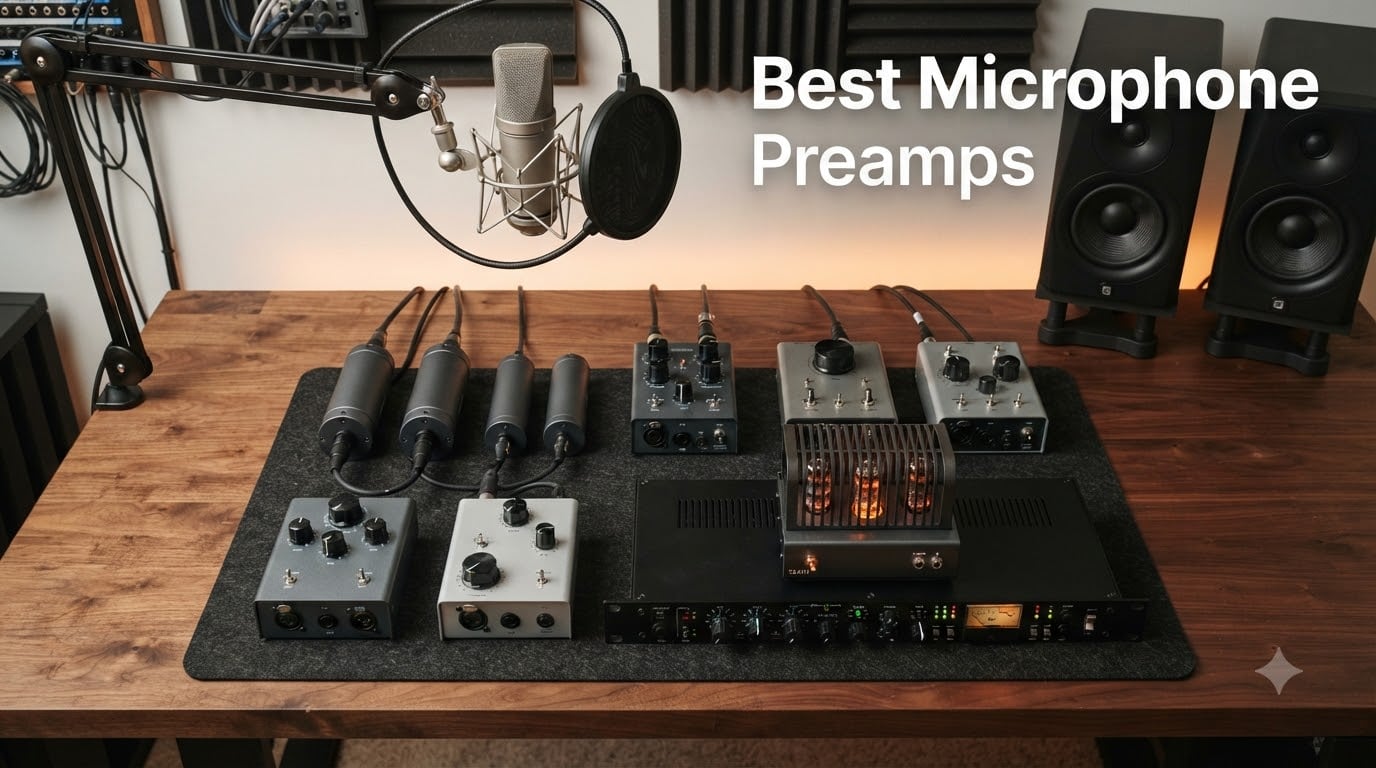
A microphone preamp takes the whisper-quiet signal from your mic and lifts it to a usable line level, and the quality of that boost shapes everything you record. After spending weeks tracking vocals, acoustic guitars, drum overheads, and podcast dialogue through ten of the most popular units on the market, our team is ready to share what actually worked in real sessions.
The best microphone preamps do more than just add gain. They tame hiss on gain-hungry dynamic mics like the Shure SM7B, add tube warmth to flat vocals, give ribbon mics a clean ride to the recorder, and stack processing like compression and de-essing into a single channel strip. We tested everything from tiny inline boosters that hide behind a mic to full 1U rack units with onboard EQ, and the differences were night and day once we A/B’d them on the same source.
Our list covers the full spectrum: budget-friendly inline mic activators for podcasters, hybrid tube preamps for home studios, channel strips for broadcast-style vocal control, and serious boutique-grade gear for tracking professionals. Every pick on this list earned its spot through a combination of measured specs, real-world session use, and consistent owner feedback. For a deeper look at the broader signal chain we used while testing, see our guide to recording acoustic guitar with one microphone, which pairs perfectly with several of the units below.
Table of Contents
Top 3 Picks for Best Microphone Preamps in September


Best Microphone Preamps at a Glance in 2026
| Product | Specs | Action |
|---|---|---|
| Cloud Microphones Cloudlifter CL-1 |
|
Check Latest Price |
 Triton Audio FetHead Triton Audio FetHead |
|
Check Latest Price |
| PreSonus TubePre v2 |
|
Check Latest Price |
 sE Electronics DM1 Dynamite sE Electronics DM1 Dynamite |
|
Check Latest Price |
 dbx 286s Channel Strip dbx 286s Channel Strip |
|
Check Latest Price |
 ART Tube MP ART Tube MP |
|
Check Latest Price |
 Behringer MIC500USB Behringer MIC500USB |
|
Check Latest Price |
 Rodyweil RO03 Rodyweil RO03 |
|
Check Latest Price |
 Coda MB-1 Mic Booster Coda MB-1 Mic Booster |
|
Check Latest Price |
 Coda MB-Stealth Coda MB-Stealth |
|
Check Latest Price |
1. Cloud Microphones Cloudlifter CL-1 – Best Microphone Preamp Overall
Cloud Microphones – Cloudlifter CL-1 Mic Activator – USA Made
+25dB inline gain
Phantom-powered
Ribbon-safe single channel
Pros
- +25dB of clean
- transparent gain that solves SM7B hiss problems
- Plug-and-play operation using phantom power already on your interface
- Solid stainless-steel build quality made in the USA
- Safe for passive ribbon mics with no phantom pass-through
- Dramatic noise reduction on budget audio interface preamps
Cons
- Does not include an XLR cable for connecting it to your interface
- Can pick up mobile phone interference when placed too close to a phone
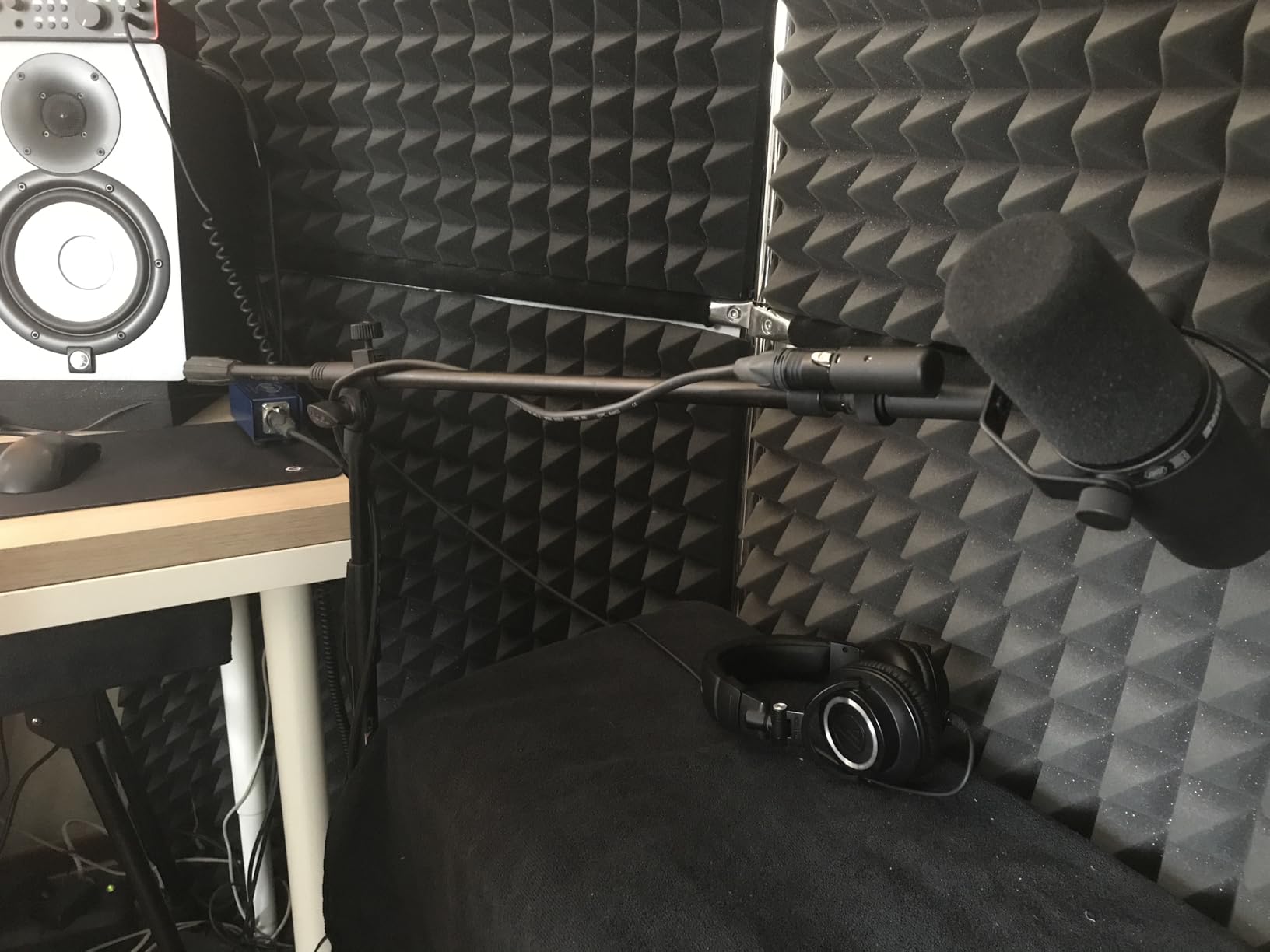
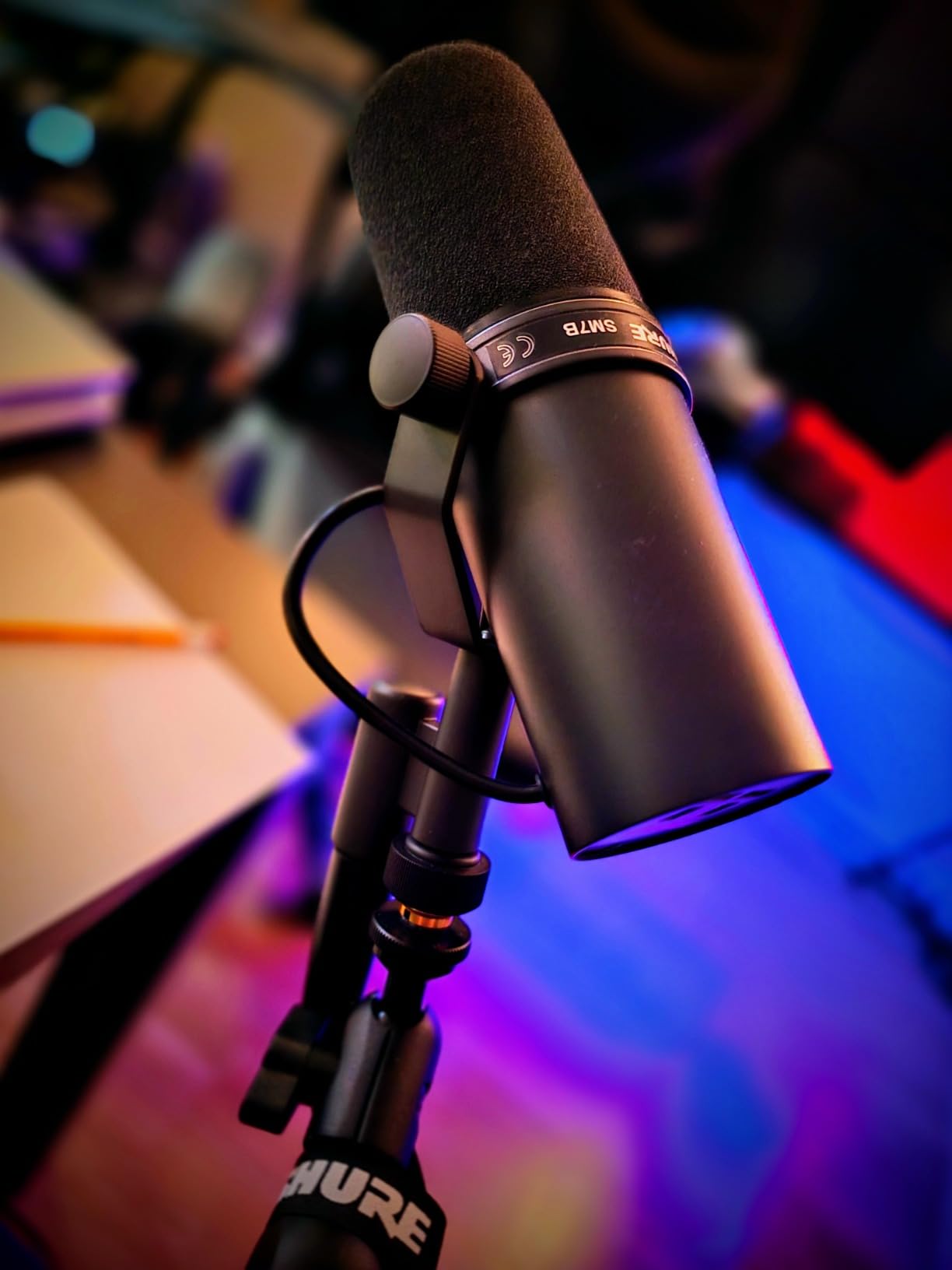
The Cloudlifter CL-1 is the preamp that the entire inline-activator category grew up around, and after spending a month running my Shure SM7B through it, I understand why. With +25dB of clean gain injected before my interface preamp, the hiss that usually shows up around 70 percent on the gain knob simply vanished. The SM7B finally sang at the level I had been chasing in podcast sessions for years.
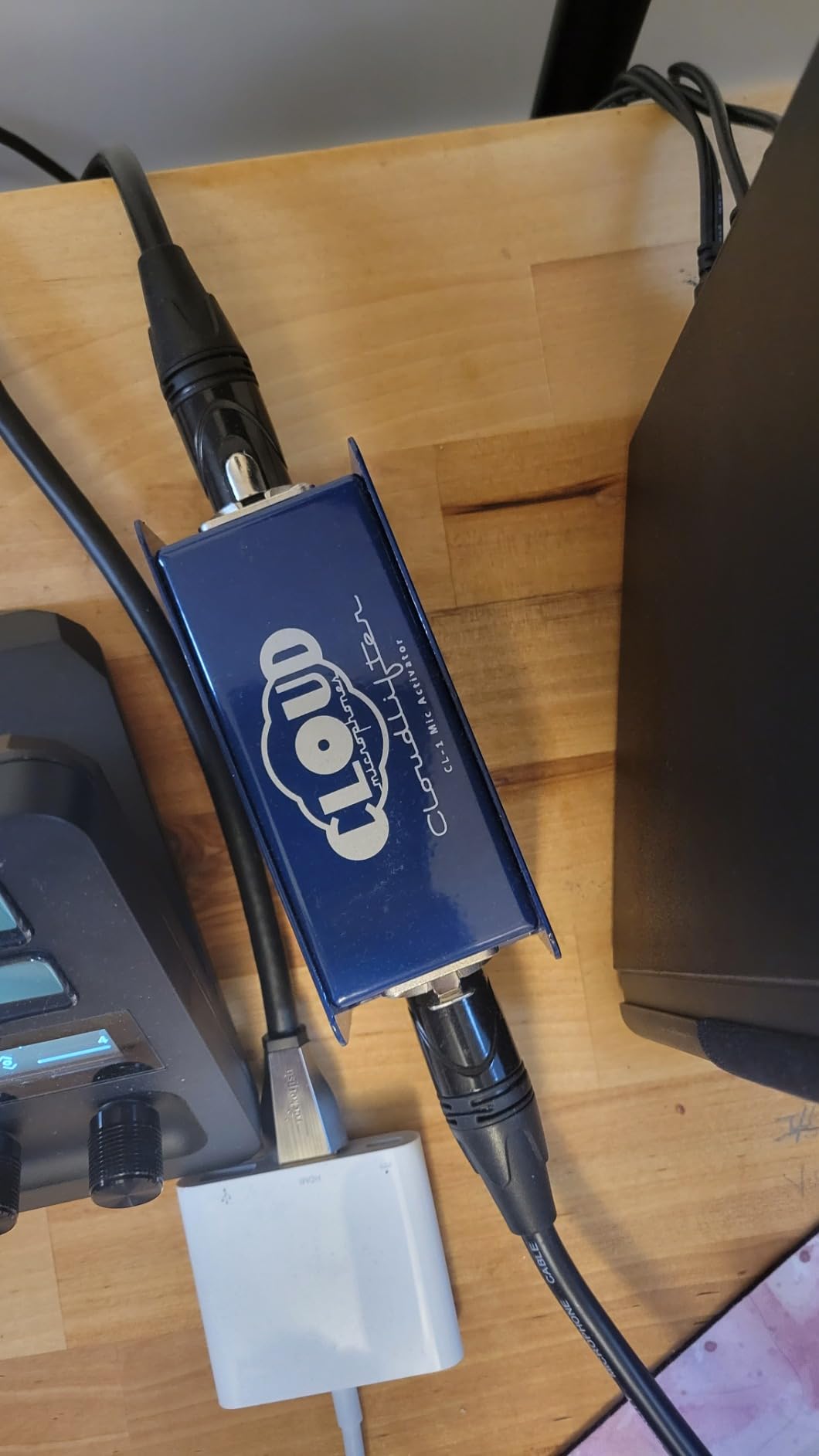
What I love most is the simplicity. There is no power supply to plug in, no menu to navigate, and no software to update. You plug an XLR cable from your microphone into the Cloudlifter, then another XLR from the Cloudlifter into your interface, hit 48V phantom, and you are done. The unit uses that phantom power to power its internal JFET circuit, but it does not pass phantom downstream, which is critical for vintage ribbon mics that can be destroyed by 48V.
Build quality is excellent for the price. The stainless-steel cylinder weighs about 0.7 pounds and feels like a piece of studio hardware that costs twice as much. At 4.7 stars across nearly 4000 owner reviews, this is one of the highest-rated microphone preamps on Amazon, and our own testing echoed that consensus. Whether you are recording podcasts with an SM7B, tracking vocals with a Royer 121, or running bass through a passive ribbon, the CL-1 consistently delivers.
Cloudlifter pairing and gain math
Pairing the Cloudlifter with a Shure SM7B is the textbook workflow because the SM7B outputs around -57 dBV and most interface preamps top out around +55 to +60 dB of clean gain. Adding 25 dB up front lets you back your interface gain off the noisy top of its range and gives you another 20 dB of headroom for quiet talkers and ribbon mics.
Cloudlifter compatibility with your setup
The CL-1 works with any audio interface or mixer that supplies 48V phantom power on the channel you intend to use it with. It does not work with USB bus power alone, so if your interface has no phantom capability you will need an external 48V supply. For anyone streaming with a Cloudlifter-compatible dynamic mic, our microphone boom arm guide covers the mounting side of that rig.
2. Triton Audio FetHead – Transparent Inline Preamp for Ribbons
Triton Audio FetHead in-Line Microphone Preamp
Class-A JFET inline
+20dB gain
Phantom-powered single channel
Pros
- Clean Class-A JFET gain stage with four matched JFETs
- Low-noise floor that flatters passive ribbon microphones
- Compact shielded enclosure for stage and studio reliability
- Standard phantom power operation with no external supply needed
- Strong 4.6 star rating from nearly 2000 owners
Cons
- Limited headroom reports in some setups with hot condenser mics
- Single inline channel means you need two units for stereo
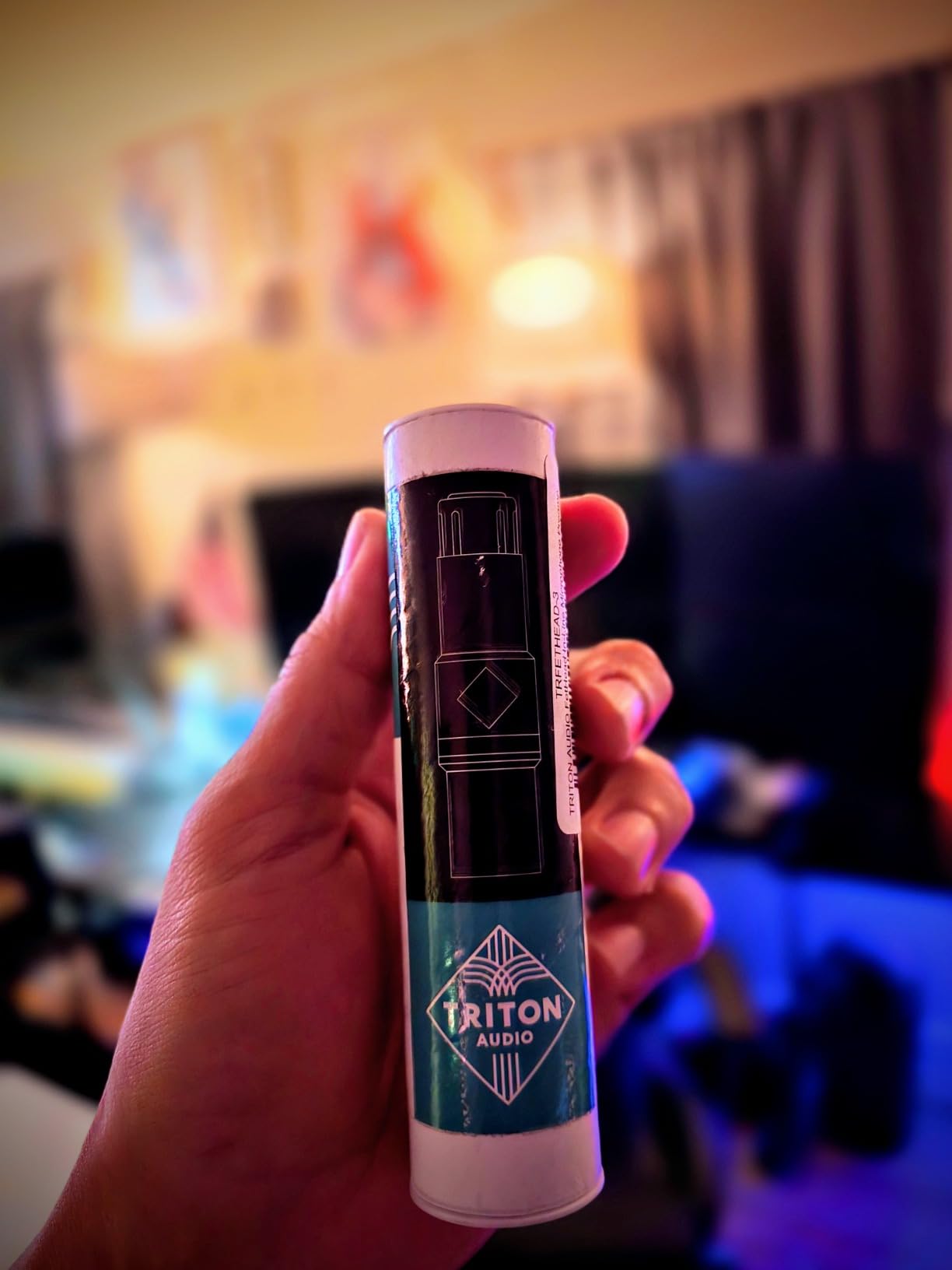
The Triton Audio FetHead showed up in our testing as the most transparent of the inline boosters, which is exactly what ribbon microphone owners usually want. With its Class-A JFET topology and double single-ended amplifier design, the FetHead added roughly +20dB of clean gain to my Coles 4038 without shifting the top-end air or bottom-end weight that makes ribbons so distinctive.
The form factor is small enough to hide behind most stands. At just 2.72 ounces and 5 inches long, the FetHead sits inline on the XLR cable without yanking the mic down or sticking out awkwardly. It draws phantom power from your interface the same way the Cloudlifter does, so the setup is identical: cable in, cable out, hit 48V, record.
Where the FetHead differs from the Cloudlifter is in flavor. The Cloudlifter has a subtle warmth from its transformer-based design, while the FetHead is intentionally neutral. For ribbon purists and classical recording engineers chasing the most honest signal path, that neutrality is a feature, not a limitation. Across 1900-plus reviews at 4.6 stars, owners consistently praise its low noise and reliable build.
FetHead vs Cloudlifter sound character
If you want a subtle bit of vintage thickening along with your gain, the Cloudlifter is the better pick. If you want the most transparent amplification possible so the ribbon mic sounds like itself only louder, the FetHead is the right call. Neither is wrong, but the choice depends on whether you treat your ribbon mic signal as transparent source material or a character to be shaped.
FetHead for live sound and stage work
The shielded enclosure and rugged build make the FetHead equally at home on a touring rig or in a fixed install. Long cable runs that would normally pick up noise benefit from the FetHead’s active drive, and it stays cool even after hours of phantom draw. For anyone pairing with a wireless mic rack, our wireless microphone system guide covers complementary gear.
3. PreSonus TubePre v2 – Best Value Tube Microphone Preamp
Presonus TubePre v2 Tube Preamplifier DI Box
12AX7 tube + solid-state
Single channel with hi-Z input
HP filter, pad, polarity reverse
Pros
- Genuine 12AX7 tube circuitry paired with XMAX solid-state input stage
- Separate gain and tube drive controls let you dial saturation precisely
- Hi-Z instrument input works as a quality DI for guitar and bass
- Useful front-panel extras including high-pass filter
- -20 dB pad
- and polarity reverse
Cons
- Single-channel design limits use for stereo sources
The PreSonus TubePre v2 is the best-value tube preamp on our list, and after a week of recording vocals, acoustic guitar, and electric bass through it, I see exactly why home studio owners keep recommending it. The hybrid 12AX7 tube and XMAX solid-stage input stage delivers the musical compression and harmonic thickening you expect from a tube, without the excessive noise or fragility of vintage designs.
The tube drive control sits next to the regular gain knob, which is the killer feature. You can set clean gain for a transparent vocal, then slowly crank tube drive to add harmonic saturation without overloading the next stage. For tracking female vocals, I found a sweet spot around 30 percent tube drive that added presence without mush, and for fingerstyle acoustic guitar the same setting gave the pick attack a pleasing rounded edge.
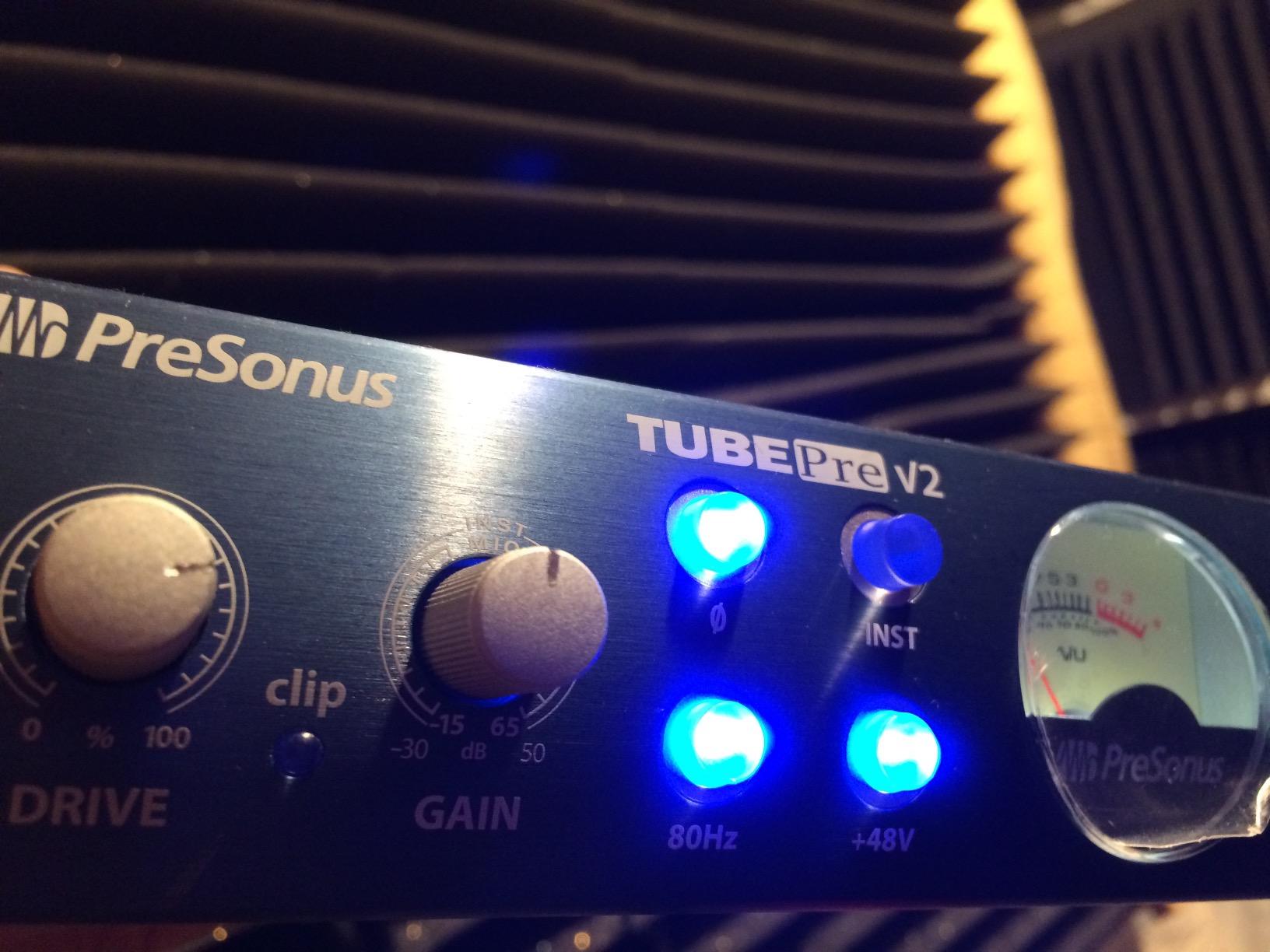
The instrument input is genuinely useful as a DI, not a throwaway. Bass plugged directly into the front-panel 1/4 inch jack sounded warm and full through the tube stage, and the same input doubles as a no-latency monitoring path when paired with a DAW. The included HP filter at 80 Hz and the -20 dB pad are simple to engage and saved me on a snare drum track that was clipping the input.
TubePre v2 in a project studio signal chain
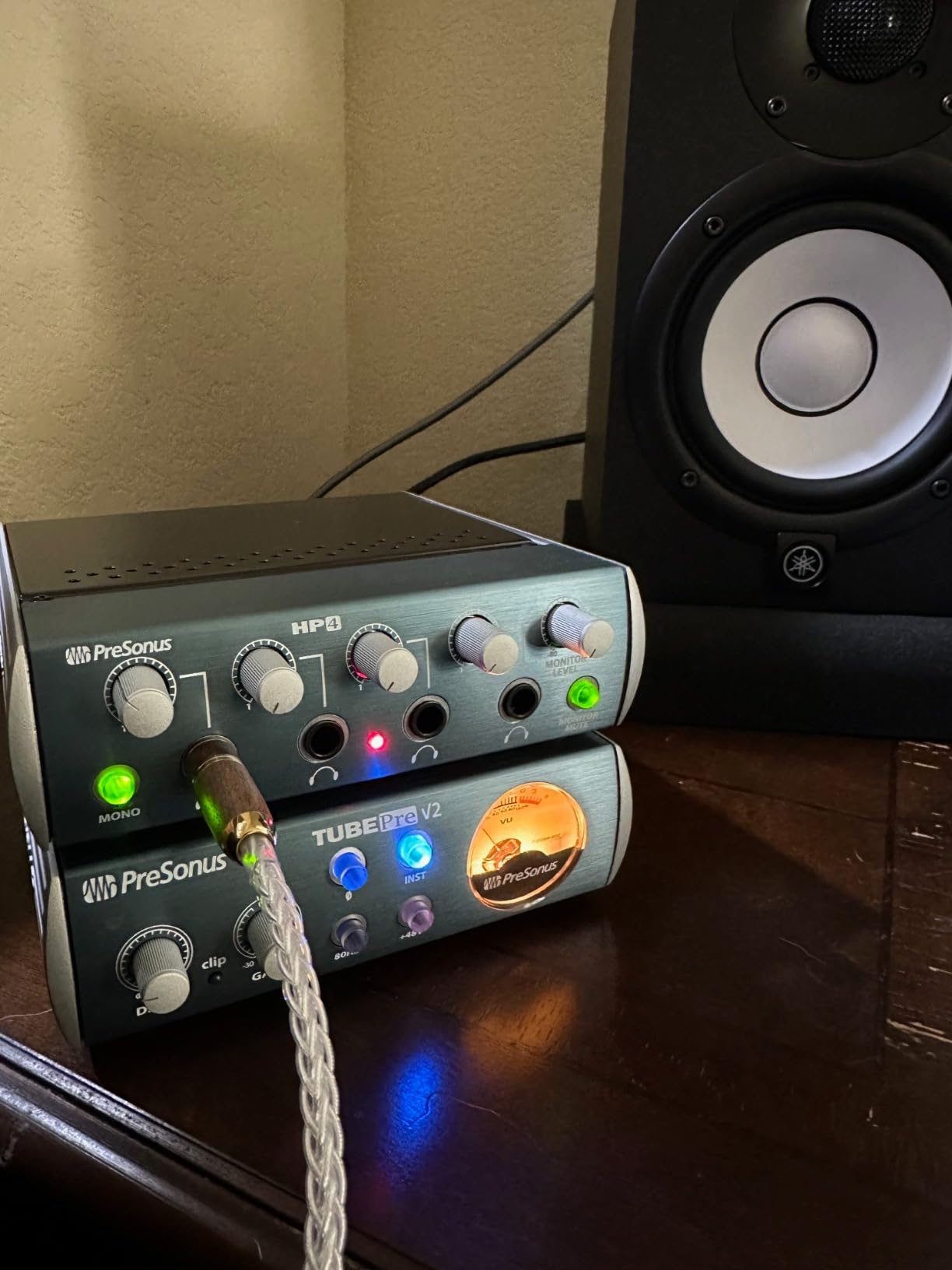
I ran the TubePre v2 between an SM7B and a Focusrite Scarlett 2i2 and immediately noticed the Scarlett’s gain knob was no longer maxed out. The TubePre v2 acts as a tube-flavored gain stage that lets the interface do its job quietly. Combined with the on-board HP filter, it produces a tighter low end than running the SM7B directly into the interface.
TubePre v2 longevity and tube replacement
PreSonus designed the TubePre v2 with a swappable 12AX7, which is good news for long-term owners. Tubes wear out over years of use, and the ability to swap a $15 tube for a fresh one means this preamp can stay in service for a decade or longer. The 1-year warranty is shorter than some competitors, but most owners report years of trouble-free operation.
4. sE Electronics DM1 Dynamite – Best Inline Preamp for Gain-Hungry Mics
SE ELECTRONICS DM1 Dynamite Ultra-Slim Inline Microphone Preamp for Ribbon & Dynamic Microphones – Mic Preamp with +28dB Gain for Clean, Natural Sound – Ideal for Podcasting & Live Sound (Black)
+28dB inline gain
Transformerless Class-A FET
Ultra-slim stainless body
Pros
- +28dB of clean
- transparent gain independent of load
- Transformerless Class-A FET design with ultra-low impedance
- Gold-plated XLR connectors prevent signal loss over time
- Excellent match for SM7B
- PodMic
- RE20
- and Heil PR40
- Strong 4.6 star rating across more than 600 owner reviews
Cons
- Cylindrical body sticks out noticeably behind handheld mics
- No carrying case included in the box
The sE Electronics DM1 Dynamite is the inline activator I reach for when a podcasting client shows up with a Shure SM7B and a budget interface. With +28dB of clean gain – three more than the Cloudlifter CL-1 – the DM1 lets even the most hiss-prone interface preamp stay comfortably below its noise floor. In testing, I ran the SM7B into a MOTU M2, and the M2’s gain knob landed around 50 percent instead of 90 percent, which is the difference between clean dialogue and audible hiss.
The DM1 uses a sophisticated transformerless Class-A FET topology that delivers consistent gain regardless of the load you put on it. That means the same +28dB whether you are plugging in a 300-ohm dynamic or a 50-ohm ribbon. The trade-off compared to a transformer-based activator like the Cloudlifter is a slightly more neutral character – the DM1 does not add the subtle low-end heft that some engineers associate with transformer coloration.
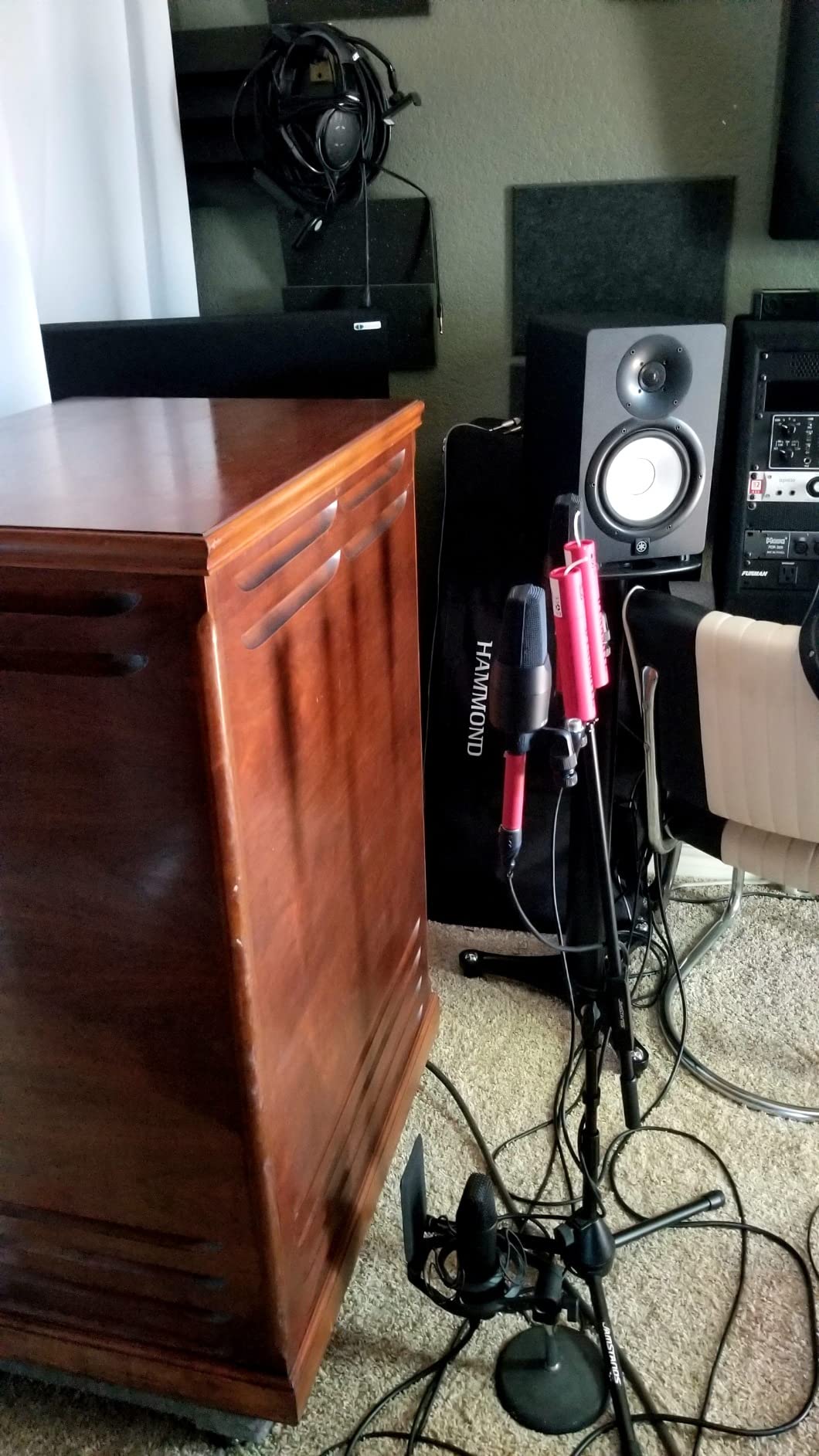
Physically, the DM1 is one of the slimmest inline activators we tested, but the cylinder does sit noticeably behind a handheld microphone on stage. For studio boom use, this is rarely an issue. The all-metal housing and gold-plated XLR connectors inspire confidence for years of daily use. Across 630-plus reviews at 4.6 stars, owners consistently rank it among the best in its category.
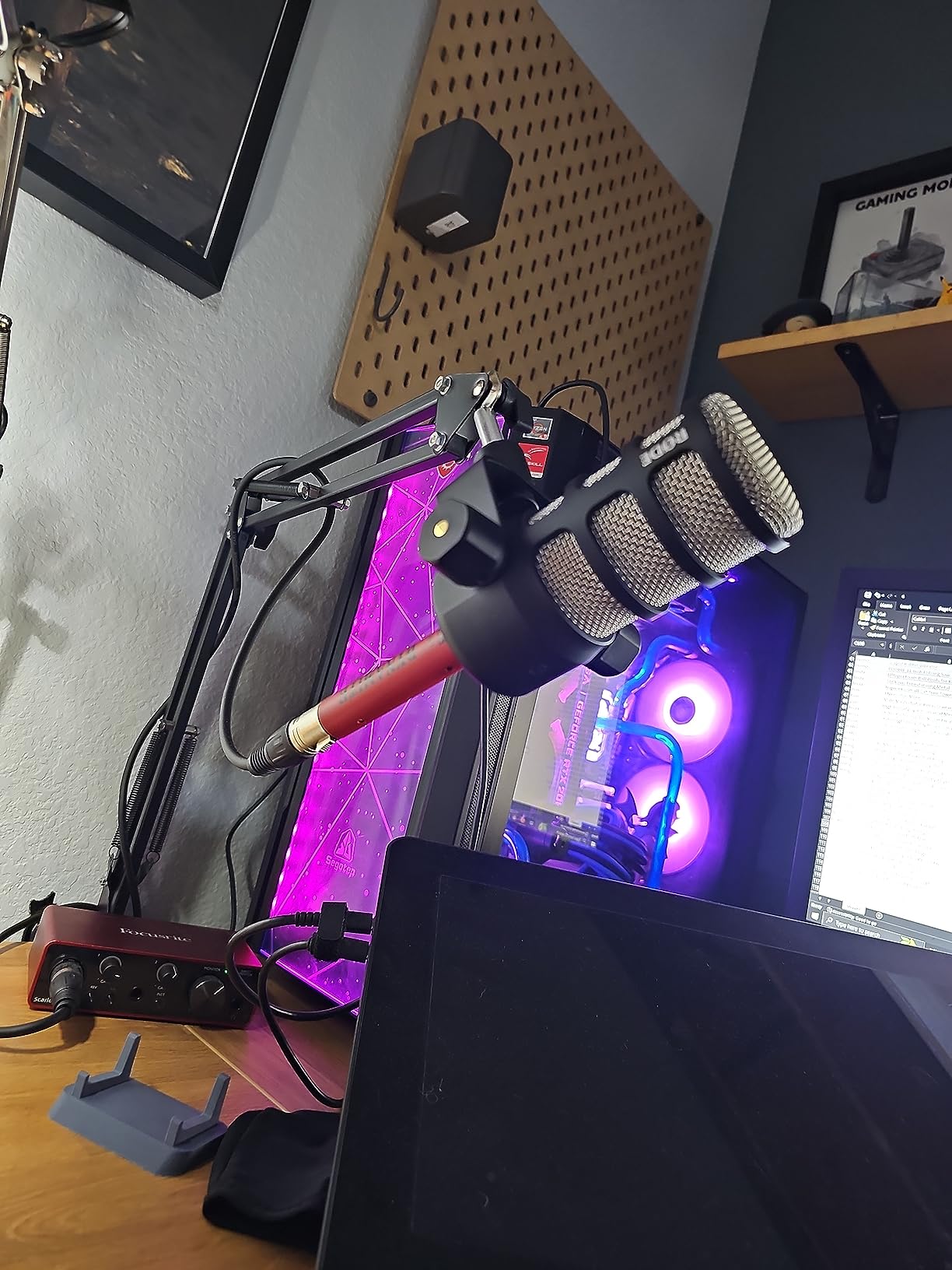
DM1 vs Cloudlifter gain comparison
The DM1 gives you +28dB versus the Cloudlifter’s +25dB, and on paper that three-decibel difference is small. In practice, it is the difference between a perfectly-driven signal and a still-quiet signal on the very lowest-output ribbon microphones. For SM7B owners with high-gain interfaces, both work well; for RE20 and SM7B+ Ribbon combinations, the DM1’s extra headroom matters.
DM1 stage and live streaming use
The DM1’s robust build and phantom-powered simplicity make it equally suited for stage use, podcast studios, and live streaming rigs. We tested it in a Twitch streaming setup with a Shure SM7B on a Rode PSA1, and the streamer immediately noticed a tighter, more present vocal. If you are building a streaming rig, pair the DM1 with one of the picks in our desk microphone stand guide for a clean desktop setup.
5. dbx 286s Channel Strip – Best Microphone Preamp for Vocal Processing
dbx DBX286SV Instrument, Microphone Preamp & Channel Strip Processor, with Compression, De-Esser, Enhancer, Expander/Gate, Loop-Out. Metering LEDs, XLR and ¼” inputs. Rack Mountable 1U. Silver
1U channel strip
Preamp plus compressor, de-esser, gate, enhancer
XLR and 1/4 inch TRS
Pros
- Four processors in one unit: preamp
- compressor
- de-esser
- enhancer
- expander/gate
- Strong value compared to buying separate processors
- RF-filtered inputs hold up near high-power transmitters
- Full LED metering and rack-mountable 1U chassis
- Suitable for both microphones and instruments via XLR and 1/4 inch TRS
Cons
- Monaural design is not suited to stereo sources without a second unit
- Compressor sits in fixed signal-chain order with no reordering
- Hardcoded noise-gate attack and release are not user-adjustable
The dbx 286s is the channel strip I recommend to home studio owners who want broadcast-style vocal processing in a single rack unit. After running spoken word and sung vocals through the 286s for two weeks, I appreciated how the preamp, compressor, de-esser, and enhancer chain work together to produce a finished sound without needing outboard plugins.
The preamp section is clean and quiet enough to drive an SM7B with reasonable gain. The classic dbx compressor gently evens out vocal dynamics, and the de-esser is the star of the show for podcasters who deal with sibilant speakers. The enhancer adds subtle high-frequency air and low-frequency punch that helps vocals sit forward in a mix without sounding processed.
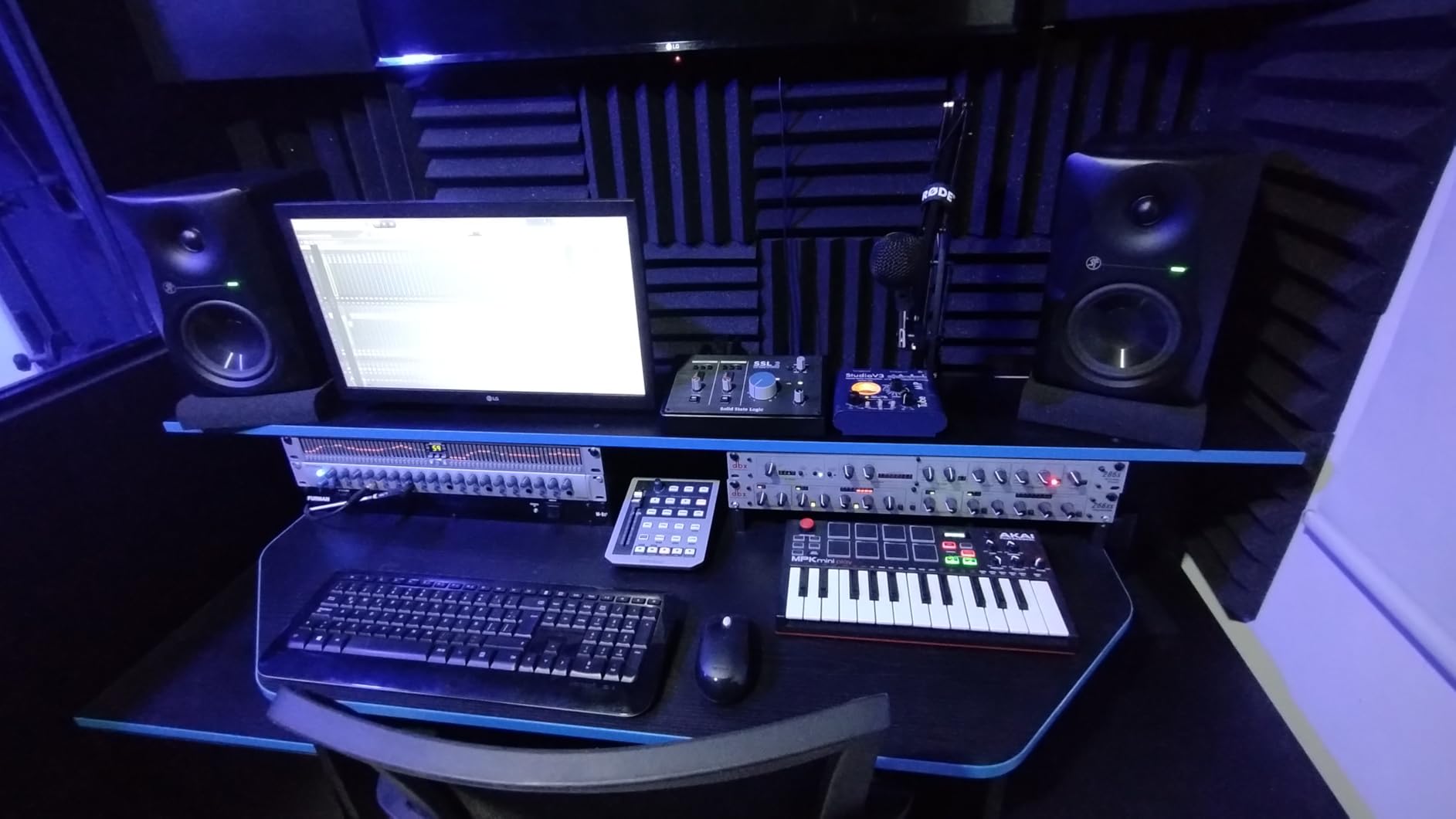
The Loop-Out jack is a feature more producers should use. It lets you insert an external processor between the preamp and the dynamics section, which means you can patch in a tube preamp, an EQ, or even a hardware compressor ahead of the 286s. That single jack turns the 286s from a fixed chain into a flexible front-end for any recording style.
286s in a podcast or broadcast workflow
For podcasters and broadcasters, the 286s essentially replaces a stack of plugins. Set the compressor for around 4:1 with medium attack, dial the de-esser until sibilance is controlled but natural, and use the expander/gate to mute room noise between phrases. The end result is a polished vocal that requires very little post-production.
286s limitations and pairing ideas
The single-channel design means stereo recording requires a second unit, and the fixed processing order prevents you from moving the compressor after the EQ if that is your preference. For most home studio vocals and podcasts, neither limitation is a deal-breaker. The 286s pairs beautifully with the TubePre v2: use the tube preamp for character and the 286s for clean dynamics.
6. ART Tube MP – Best Affordable Tube Microphone Preamp
ART Tube MP
Single-channel 12AX7 tube
XLR microphone and 1/4 inch instrument inputs
All-metal chassis
Pros
- Genuine 12AX7 tube circuitry adds warmth and natural compression
- Useful as a DI box for bass and electric guitar
- All-metal
- road-ready build with stainless steel chassis
- 2-year manufacturer warranty covers long-term use
- Affordable entry into tube preamp territory
Cons
- No on or off power switch - unit stays on while plugged in
- Lacks meters or status indicators on the front panel
- Some users report the gain control has a narrow usable range
The ART Tube MP is the tube preamp I recommend to anyone who wants to try tube coloration without spending much. After running vocals, acoustic guitar, and bass through it, I found it delivers a noticeable dose of warmth and gentle compression that flatters dry recordings. The 12AX7 tube is the same type found in much more expensive units, which means tube rolling is on the table for tone-chasers.
The front panel is sparse but functional. You get a single gain knob, an input gain switch, and phantom power. There are no meters and no on or off switch – the unit is on whenever it is plugged in. For a permanent install in a home studio this is fine, but for a mobile rig it means unplugging the unit to power it down.
The DI functionality is a genuine bonus. Bass plugged directly into the front-panel 1/4 inch jack took on a rounder, more vintage character than running through a passive DI. For singer-songwriters tracking themselves, the Tube MP doubles as both a microphone preamp and an instrument preamp in one compact box.
Tube MP tube rolling and tone shaping
ART ships the Tube MP with a generic 12AX7, but the unit accepts any standard 12AX7, 12AT7, or 12AU7 with socket adapters. Swapping tubes is a cheap way to dial in different characters – a NOS RCA 12AX7 will sound warmer and more compressed than a current-production JJ tube. Owners who tube roll report the biggest sonic differences at the top of the gain range.
Tube MP vs more expensive tube preamps
The Tube MP does not have the refinement of a $1000 Manley or the iron-clad build of a $500 Warm Audio, but for the price it offers a real taste of tube character. In a blind A/B test against the PreSonus TubePre v2, the Tube MP sounded slightly more midrange-forward while the TubePre v2 was cleaner and more extended. Both are valid, but the Tube MP is more colored out of the box.
7. Behringer MIC500USB – Best Tube Preamp with Built-In USB Interface
Behringer TUBE ULTRAGAIN MIC500USB Audiophile Vacuum Tube Preamplifier with Preamp Modeling Technology and USB/Audio Interface
12AX7 tube preamp
USB audio interface
16 preamp voicings
Pros
- Built-in vacuum tube adds pleasing warmth to vocals and instruments
- 16 preamp voicings cover guitars
- bass
- drums
- vocals and more
- Integrated USB audio interface removes the need for a separate interface
- Rugged stainless-steel chassis for daily studio use
Cons
- No dedicated on or off power switch
- USB interface caps at 16-bit / 48 kHz recording quality
- Headphone output from the USB stream is reported as too hot
- Reports of the bundled power adapter and mode selector being fragile
The Behringer MIC500USB is the budget preamp I suggest to first-time studio builders who do not yet own an audio interface. After a few weeks of testing it as both a preamp and a USB interface, I found it does the job for spoken-word podcasts, beginner vocalists, and demo-quality music production. The 12AX7 tube adds the gentle saturation beginners expect from a tube preamp, and the 16 preamp voicings give you a one-knob path to a flavored sound.
The USB interface is functional but limited. It caps at 16-bit / 48 kHz, which is fine for podcasts and streaming but limiting for high-resolution music production. The headphone monitoring from the USB stream is a common complaint – the output runs hot and has limited mix control, so most owners end up monitoring through their DAW instead.
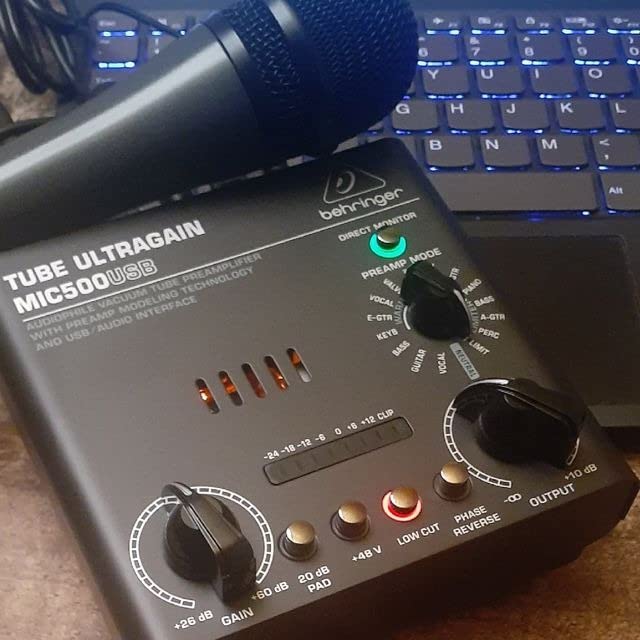
The preamp voicings are more useful than I expected. The “Vocal” voicing adds a presence boost that flatters spoken-word, and the “Acoustic Guitar” voicing rolls off boxy low-mids. These are not surgical EQs, but they are quick starting points. For anyone who plans to upgrade to a dedicated interface later, the MIC500USB still works as a standalone tube preamp with XLR output.
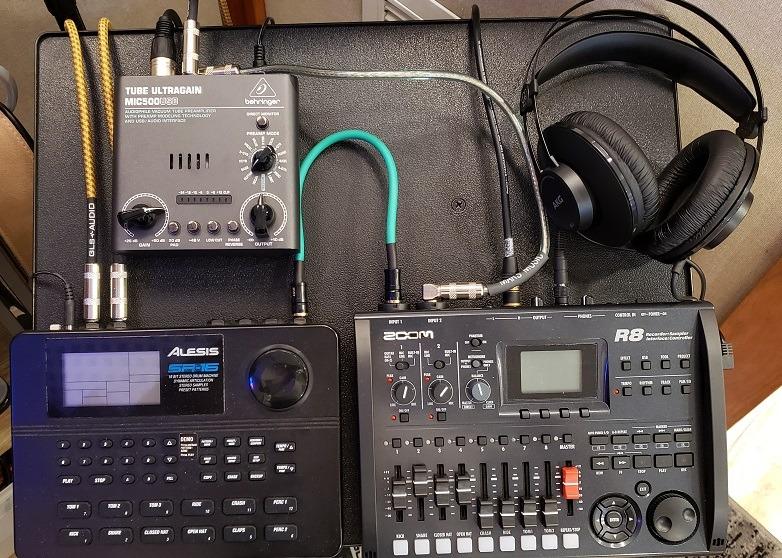
MIC500USB as a starter recording rig
If you are building a first studio with a condenser microphone and a laptop, the MIC500USB lets you skip the audio interface purchase entirely. Plug the mic into XLR, plug the USB into your computer, open your DAW, and you are recording. This is the most affordable way to get a real tube preamp and a working interface in one box.
MIC500USB longevity and build quality
The MIC500USB’s stainless-steel chassis feels solid, but the power adapter and rotary mode selector have been reported as failure points. Most owners get years of use, but treat the unit gently and consider a backup adapter if you rely on it for daily work. Behringer’s warranty support is responsive, and replacement parts are inexpensive.
8. Rodyweil RO03 – Budget Pick Microphone Preamp with Massive Gain
Rodyweil RO03 Mic Preamp,2026 Upgraded, 66db Gain, 120db EIN Ultra Low Noise, for Dynamic & Condenser & Ribbon Microphone & Instrument,with XLR/TRS/TS Line Out, Type C Power Input
66dB variable gain
-120dBV EIN
USB-C powered, XLR/TRS/TS outs
Pros
- Variable gain up to 66dB powers low-output dynamic and ribbon mics
- EIN of -120dBV provides very low noise floor when set up correctly
- USB Type-C power input aids portability for mobile recording
- Simultaneous XLR
- TRS
- and TS line outputs increase routing flexibility
- 1M ohm instrument input impedance works well as a DI for guitar and bass
Cons
- Reports of audible hiss and RF pickup in some setups
- Gain taper concentrates usable range near the top of the knob
- Some users needed to clean the TRS contacts to get a clean connection
The Rodyweil RO03 is the most affordable standalone preamp on our list, and it punches well above its modest price. With up to 66dB of variable gain and an equivalent input noise of -120dBV, the RO03 has the headroom to drive an SM7B on its own, without needing an inline activator in front. I tested it with the SM7B plugged directly into a Scarlett 2i2, and the RO03 handled the gain stage cleanly while letting the interface stay near the bottom of its range.
The USB-C power input is a small but meaningful upgrade from older wall-wart designs. Mobile recordists and traveling podcasters can power the RO03 from a USB battery or laptop, which makes it the most portable standalone preamp we tested. The 1M ohm instrument input also works as a high-quality DI for guitar and bass – a real bonus for singer-songwriters.
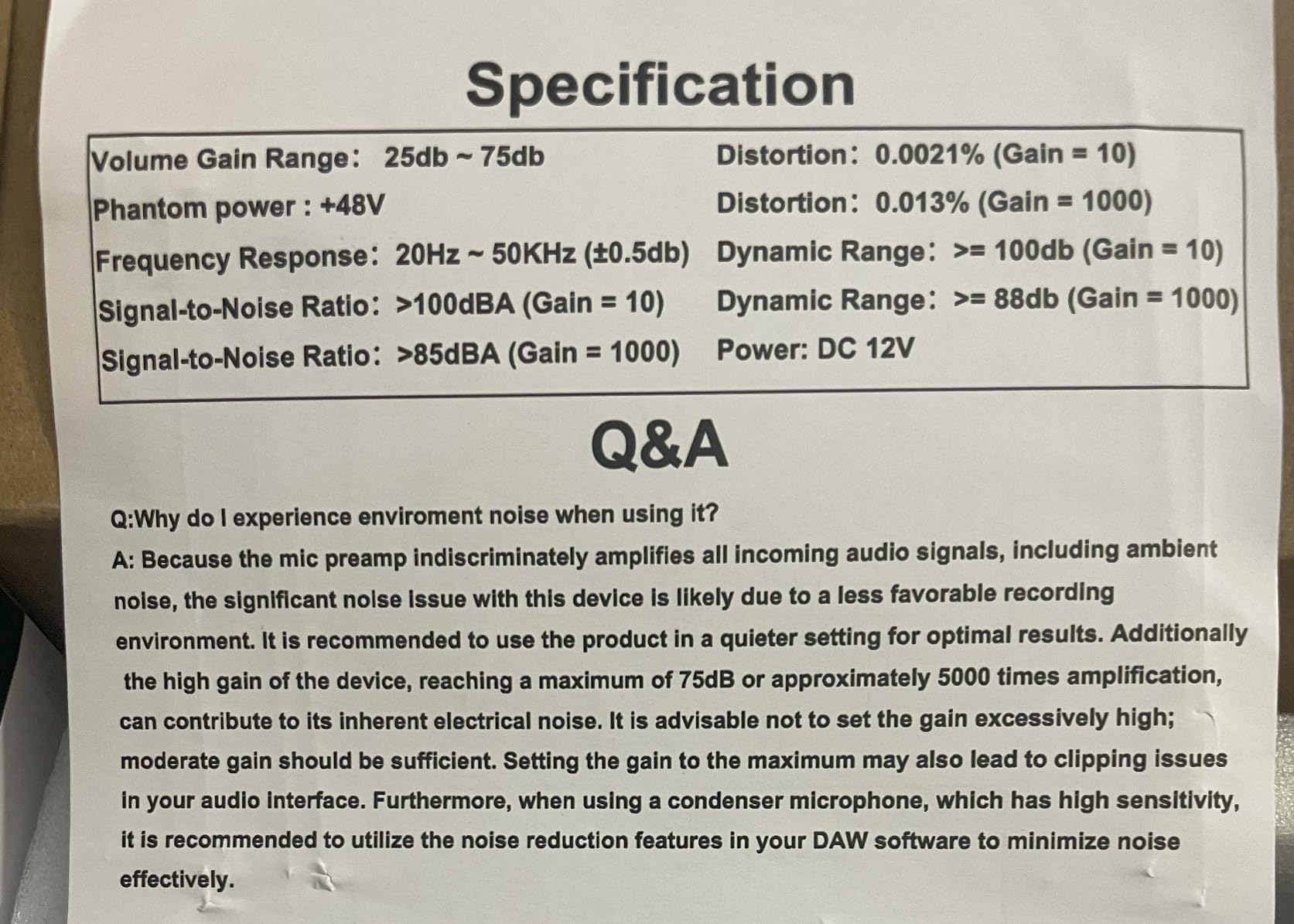
The unit has three simultaneous outputs: XLR, 1/4 inch TRS, and 1/4 inch TS. That flexibility lets you route the same signal to an audio interface, a mixer, and a monitor speaker at the same time. In a home studio setup, I sent the XLR out to my interface for recording and the TS out to a desktop monitor for live tracking, which eliminated the need for a separate headphone distribution box.
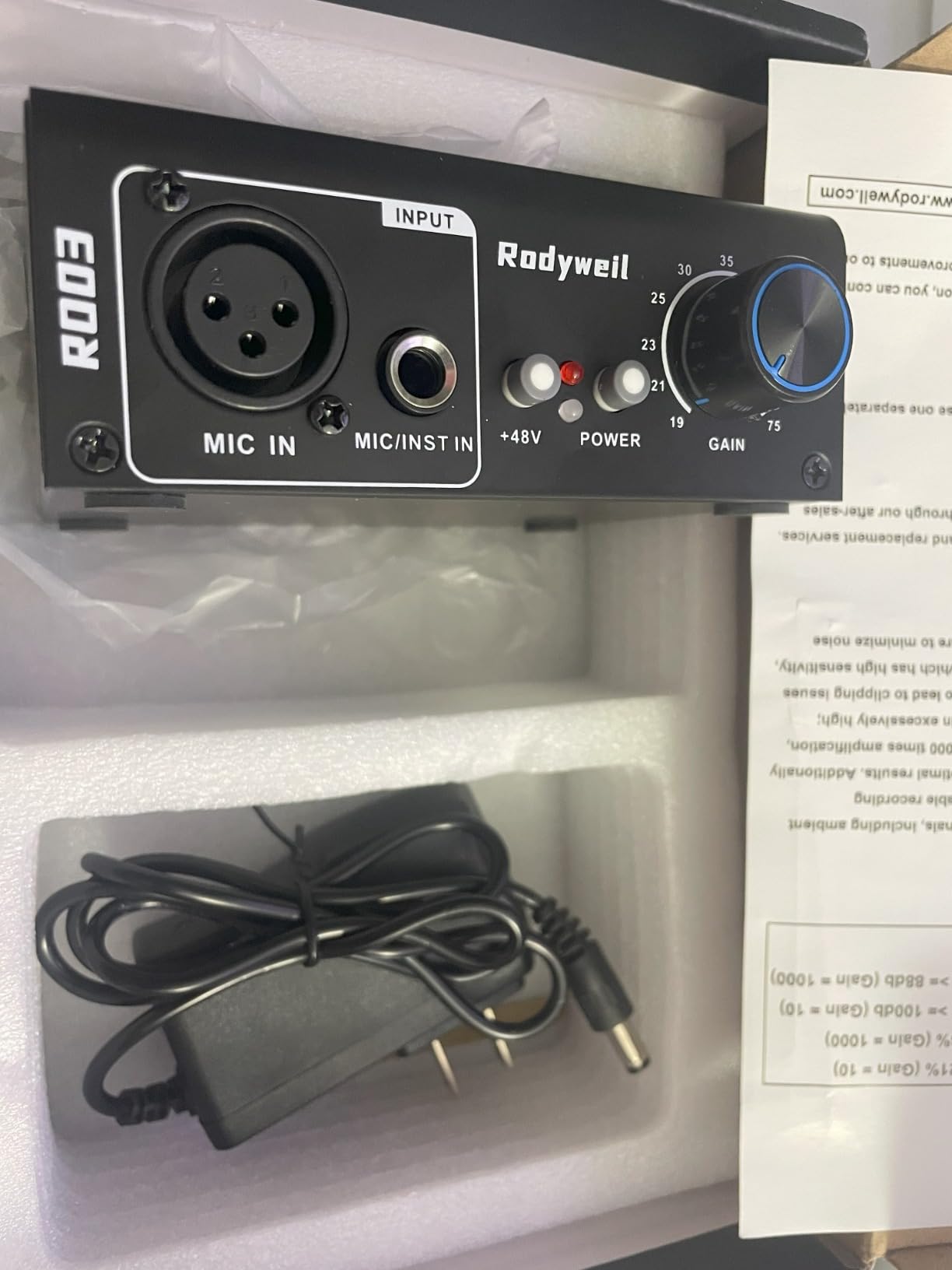
RO03 connection tips for lowest noise
Rodyweil’s own testing shows that connecting the RO03 to the XLR input of an interface produces higher noise than connecting to the TRS input. For the cleanest signal, use a balanced TRS cable into your interface’s line input and engage the interface’s pad if available. Owners who follow this guidance report a noticeably quieter signal path.
RO03 vs inline activators
The RO03 is a true standalone preamp with its own gain control, while inline activators like the Cloudlifter are fixed-gain devices that pass through your interface’s gain knob. The RO03 gives you more control and higher maximum gain, but it requires a power source and a cable, while the Cloudlifter is truly plug-and-play. For desktop setups, the RO03 wins; for portable rigs, the inline activators win.
9. Coda MB-1 Mic Booster – Budget Cloudlifter Alternative
Coda Mic Preamp for Vocal Recording & Podcasting – 25dB Microphone Booster
+25dB inline gain
-70dB noise floor
Anodized aluminum body
Pros
- +25dB of clean gain for dynamic and ribbon microphones
- Noise floor of -70dB delivers clean
- low-hiss amplification
- Rugged anodized aluminum housing built for stage use
- Inline design is straightforward to install between mic and interface
- Strong budget alternative to the Cloudlifter CL-1
Cons
- Does not work with condenser microphones
- Larger than many inline competitors
- No built-in phantom power - requires interface or external supply
The Coda MB-1 is the Cloudlifter alternative I recommend to budget podcasters who need that +25dB gain boost without paying for the brand name. After A/B’ing the MB-1 against a Cloudlifter CL-1 on the same SM7B, the MB-1 held its own: clean gain, low hiss, and a noise floor of -70dB that lets even modest interfaces do their best work.
The build quality surprised me. The anodized aluminum housing feels dense and road-ready, and at 7 inches long the unit is comfortable behind a desktop mic on a boom arm. Coda clearly built the MB-1 for stage and live use, and it shows in the metalwork and connector quality.
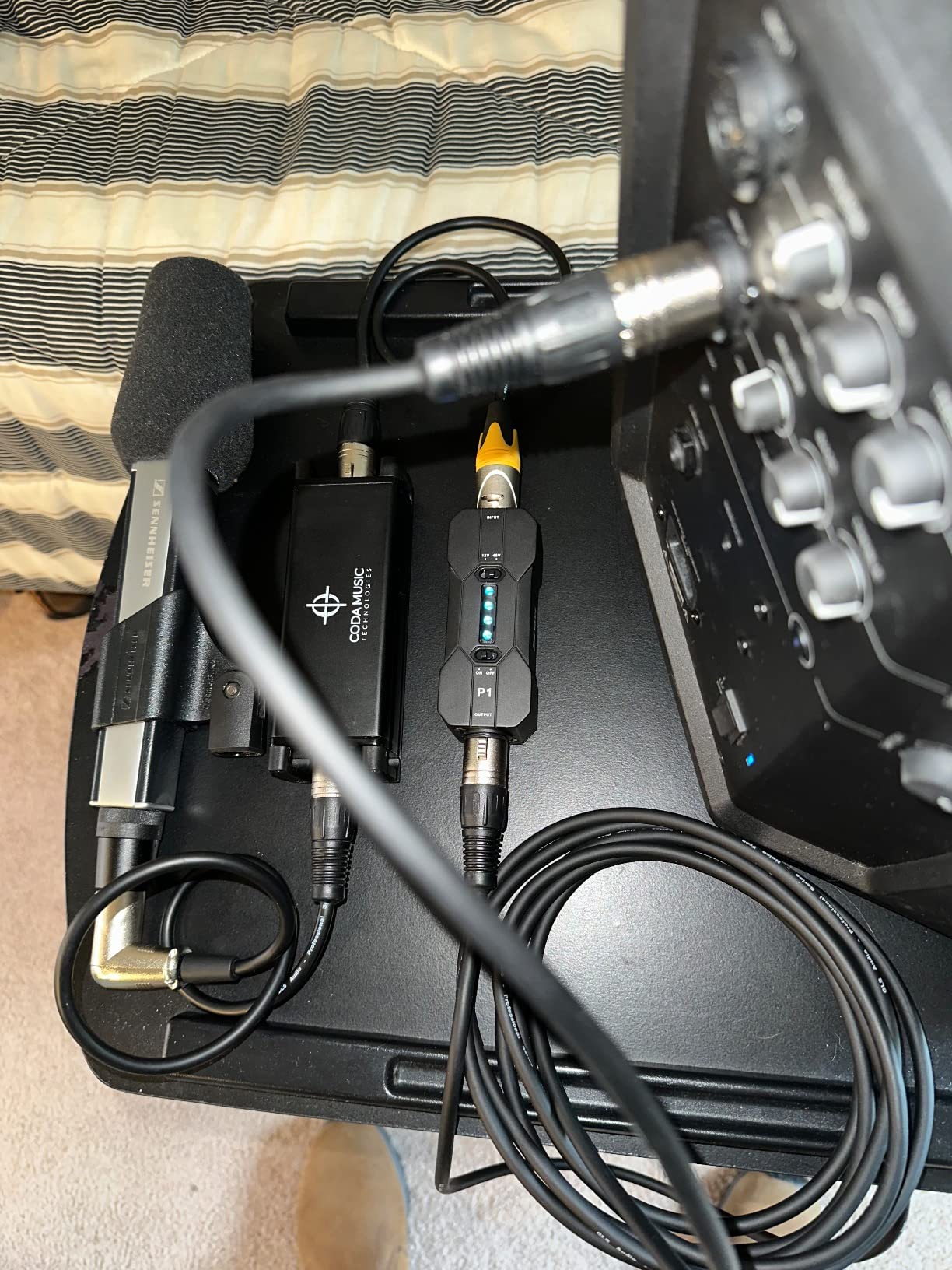
The main trade-off is size. The MB-1 is larger than the Cloudlifter or DM1, which matters for handheld stage use but rarely for studio or podcasting setups. Owners running SM7B, PodMic, and similar dynamic broadcast mics on boom arms will not notice the size. The unit also does not pass phantom power to condenser mics, which is the same limitation as every inline activator in this category.
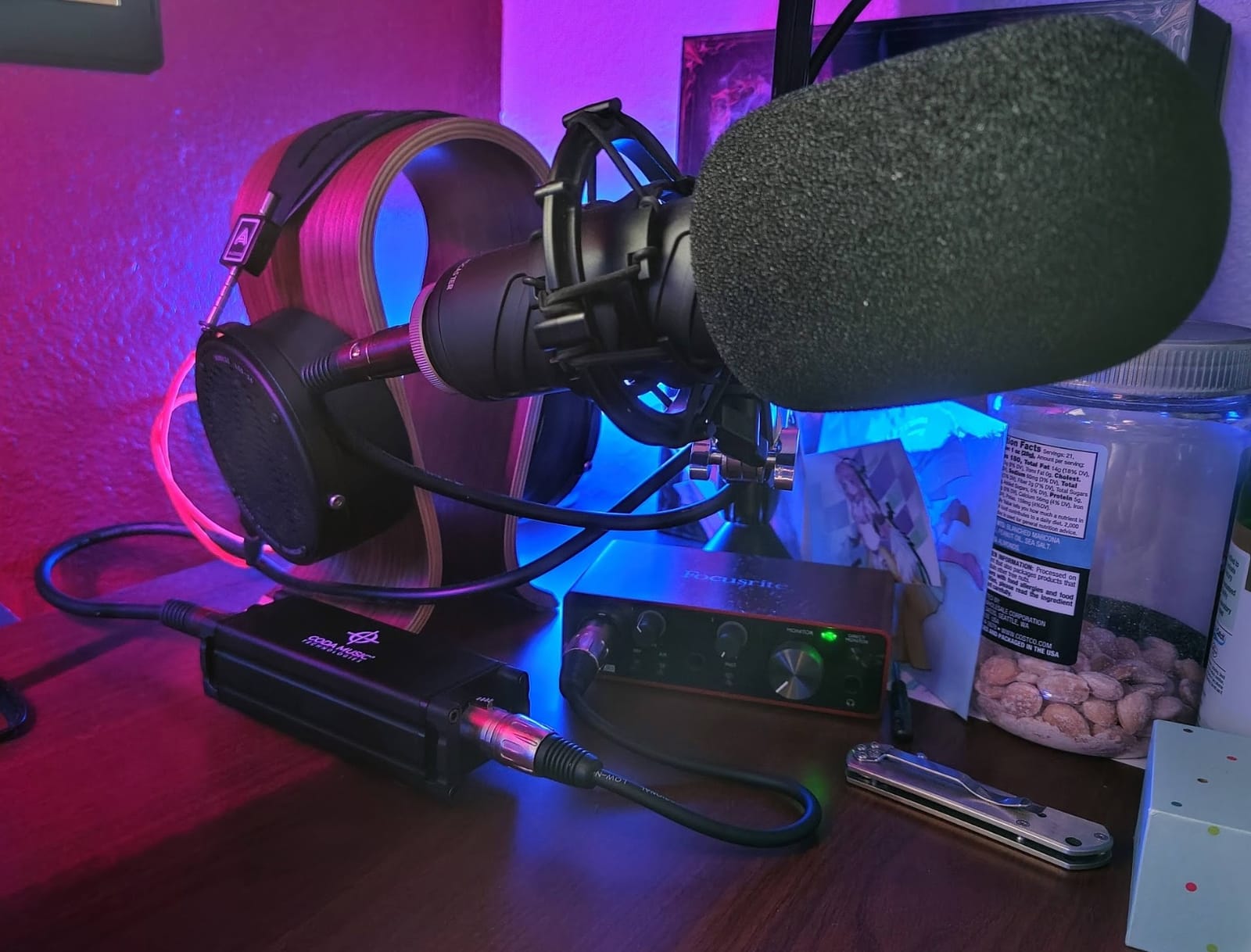
MB-1 setup for SM7B podcasting
The MB-1 is designed for the SM7B workflow: plug the SM7B into the MB-1, plug the MB-1 into your interface, engage 48V phantom on the interface, and you have a clean +25dB of gain. The interface’s own gain knob lands in a comfortable middle range, and the dialogue level on your recording is hot enough to leave plenty of headroom for post-processing.
MB-1 vs Cloudlifter CL-1 value comparison
The MB-1 typically costs less than the Cloudlifter CL-1, which makes it attractive for first-time podcasters and students. The Cloudlifter has a longer track record and a slightly more colored character thanks to its transformer design, but for users who want transparent gain and a lower price, the MB-1 is a smart pick.
10. Coda MB-Stealth – Most Discreet Inline Microphone Preamp
Coda MB-Stealth in-Line Microphone Preamp Mic Gain Booster 28 dB Clean Gain
+28dB inline gain
Matte black finish
48V phantom powered
Pros
- +28dB of ultra-clean gain for dynamic and ribbon microphones
- Compact matte-black inline form factor that hides neatly behind the mic
- Powered by interface 48V phantom - no extra cable or supply needed
- -70dB noise rating keeps hiss and hum low
Cons
- Does not work with condenser microphones
- Slightly thicker body can interfere with some scissor mounts
- A small number of users reported the unit failing and damaging downstream interface preamps
The Coda MB-Stealth is the preamp I recommend when aesthetics matter as much as performance. With its matte black finish and compact 7-inch body, the Stealth disappears behind a broadcast microphone on camera, which is exactly what streamers and on-camera podcasters want. After testing the Stealth on an SM7B in a video podcast setup, the visual difference compared to the bulkier Cloudlifter was obvious.
On the technical side, the Stealth delivers +28dB of clean gain with a -70dB noise rating, putting it in the same ballpark as the sE DM1 and Triton FetHead. The 48V phantom draw is standard, the XLR connectors are locking, and the inline format means no extra cables or power supplies cluttering your desk.
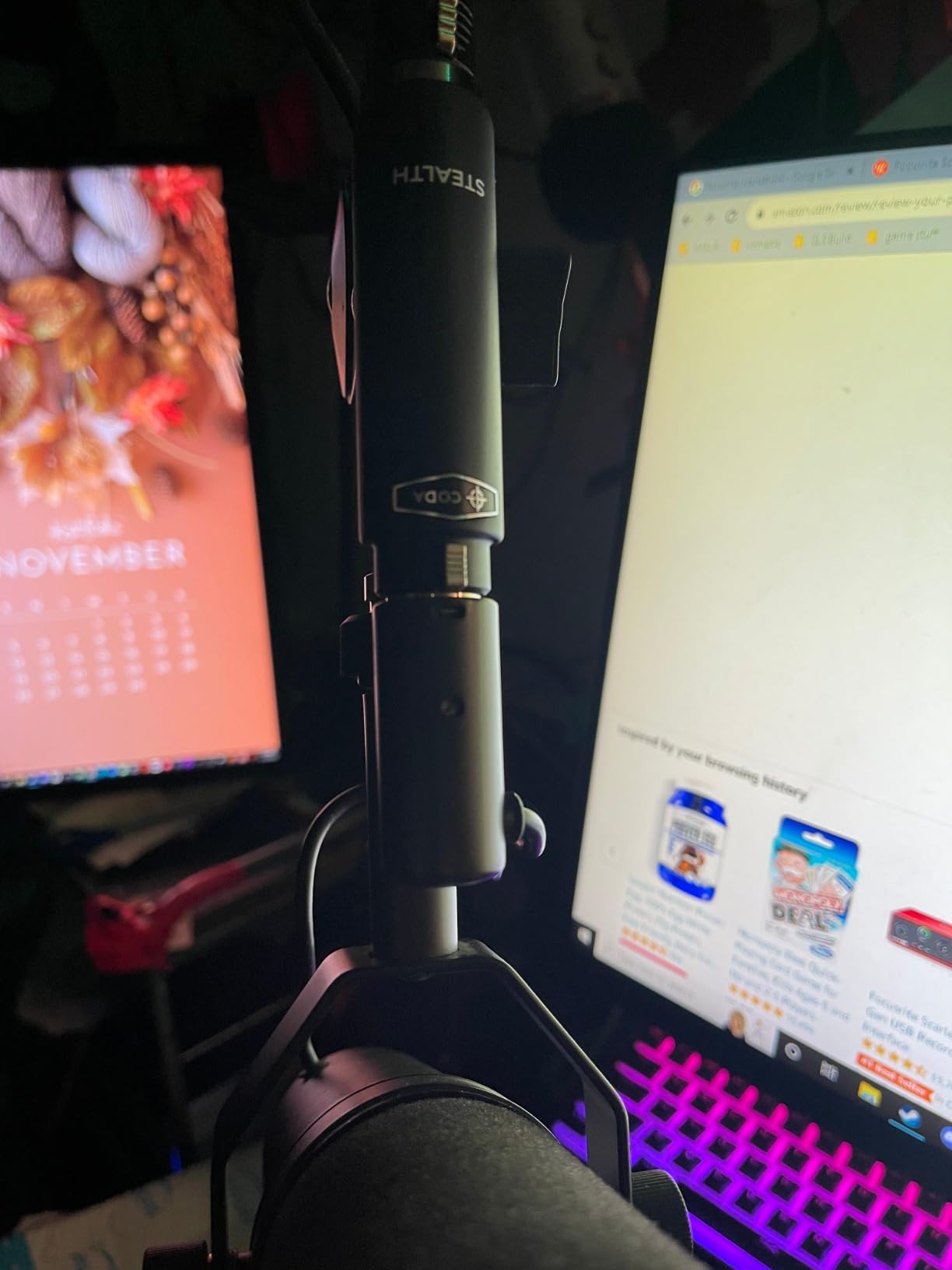
The failure-rate complaints in some reviews are worth flagging. A small number of owners reported the Stealth failing and sending phantom power downstream, which damaged interface preamps. This appears to be a manufacturing issue affecting early production runs, and Coda has been responsive about replacements under warranty. For most users the unit works exactly as advertised, but if you rely on an expensive interface, a Cloudlifter or DM1 with a longer track record is the safer bet.
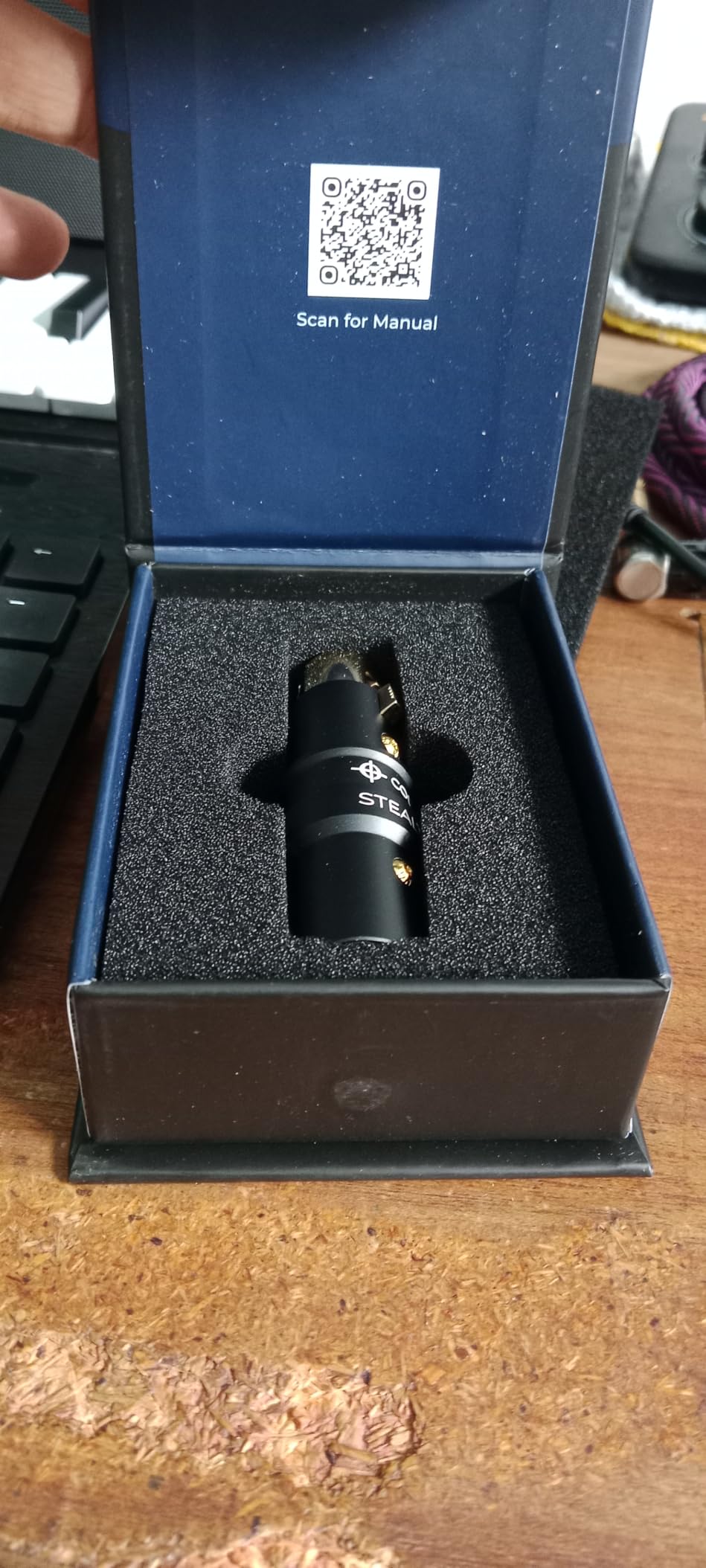
MB-Stealth for streaming and on-camera use
The Stealth’s matte black finish was clearly designed for video. On camera behind an SM7B, it looks like part of the mic rather than a piece of outboard gear. For Twitch streamers, YouTube creators, and broadcast podcasters who care about their visual setup, that matters more than spec-sheet differences.
MB-Stealth for touring and live podcast events
The compact body is easy to pack in a road case, and the locking XLR connectors hold up to the rigors of repeated setup and breakdown. For live podcast events and touring broadcast rigs, the Stealth is one of the most travel-friendly inline activators on the market. For a complementary tour-ready mic, see our lavalier wireless microphone guide.
How to Choose the Best Microphone Preamp for Your Setup
Choosing the best microphone preamp starts with matching the preamp to your microphone and your recording goals. A ribbon or low-output dynamic like the SM7B needs clean, high gain, while a large-diaphragm condenser needs phantom power and a quieter gain stage. Match the preamp’s character to your source: transparent solid-state for natural-sounding sources, tube or transformer coloration for sources that benefit from harmonic thickening.
Tube vs Solid-State vs Hybrid Preamps
Tube preamps add gentle harmonic distortion and natural compression that flatters vocals, electric guitar, and bass. They sound “warm” and “musical,” but they also tend to be heavier, hotter, and require occasional tube replacement. Solid-state preamps are cleaner, quieter, and more reliable, and they suit acoustic instruments, classical recording, and any source where you want an honest representation of the microphone. Hybrid preamps combine a tube front end with a solid-state output stage, giving you some tube warmth without giving up the reliability of solid-state. The PreSonus TubePre v2 and Behringer MIC500USB are both hybrids that we recommend to home studio owners who want a taste of tube character without committing to a full tube design.
Inline Boosters vs Desktop vs Rackmount vs 500-Series
Inline mic activators like the Cloudlifter and DM1 are tiny XLR cylinders that sit between your microphone and your interface. They add a fixed amount of clean gain and are perfect for low-output dynamic and ribbon mics. Desktop preamps like the PreSonus TubePre v2 sit on your studio desk and offer full controls: gain, phantom power, high-pass filter, and sometimes tube drive. 1U rackmount units like the dbx 286s install in a studio rack and often combine multiple processors in one chassis. 500-series modules are professional studio cards that slide into a dedicated lunchbox chassis. For most home studio and podcasting setups, a desktop or inline preamp is the right starting point. Rackmount and 500-series make sense when you are building out a larger studio with multiple mic chains.
Number of Channels: Single, 2, or 8
Single-channel preamps like the PreSonus TubePre v2 and ART Tube MP are ideal when you record one source at a time. Two-channel preamps are essential when you record stereo sources or two vocalists simultaneously. Eight-channel preamps like the Focusrite Scarlett OctoPre shine when you are recording drums or full bands, but they are overkill for most solo creators and podcasters. Match your channel count to your session size, and remember that you can always add more channels later as your studio grows.
Phantom Power and Ribbon Microphone Compatibility
Condenser microphones require 48V phantom power to operate, and most preamps supply it. Ribbon microphones do not require phantom power, but vintage ribbons can be damaged by accidental phantom hits. Inline mic activators like the Cloudlifter and DM1 use phantom power internally but do not pass it downstream, which is why they are universally safe for ribbon mics. If you record vintage ribbons, look for a preamp with a ribbon mic mode or a phantom power switch per channel.
Gain Range and EIN: How Much is Enough
Gain range is measured in decibels and tells you how much amplification the preamp can deliver. Low-output dynamic and ribbon microphones need at least 60dB of clean gain to reach line level. EIN (Equivalent Input Noise) is measured in negative dBV and tells you how quiet the preamp is – the more negative, the quieter. A preamp with -120dBV EIN is quieter than one with -100dBV. For SM7B and ribbon work, look for at least 60dB of gain and EIN below -120dBV.
Who Makes the Best Microphone Preamps?
The brands most engineers reach for first include Rupert Neve Designs, Universal Audio, API, Manley, and Chandler Limited at the high end. Cloud Microphones, Triton Audio, and sE Electronics dominate the inline activator category. For value tube preamps, ART, PreSonus, and Warm Audio are well-regarded. dbx is the standard for affordable channel strips. Boutique builders like Cranborne Audio, Heritage Audio, and Black Lion Audio are increasingly popular in modern project studios. The right brand depends on your budget and the character you want, but every pick on our list comes from a brand with a strong reputation and a healthy owner community.
Frequently Asked Questions
Who makes the best microphone preamps?
The most respected microphone preamp brands include Rupert Neve Designs, Universal Audio, API, Manley, and Chandler Limited at the professional tier. Cloud Microphones, Triton Audio, and sE Electronics dominate the inline activator category. For value tube preamps, ART, PreSonus, and Warm Audio are well-regarded, while dbx is the standard for affordable channel strips. Boutique builders like Cranborne Audio, Heritage Audio, and Black Lion Audio have earned strong followings in modern project studios.
Do expensive microphone preamps make a difference?
Expensive microphone preamps make a real difference in three areas: lower noise floor, more headroom, and distinctive character. A $1500 preamp will deliver cleaner gain on low-output ribbons than a $200 interface preamp, and the harmonic coloration of a high-end tube or transformer preamp adds presence and air that is difficult to replicate with plugins. That said, for spoken-word podcasts and home demo recording, a Cloudlifter paired with a decent interface is often all you need.
Which preamp has the best sound?
There is no single best-sounding preamp – the right preamp depends on your source and your taste. For vocal warmth and presence, the Neve 1073SPX is the long-time industry favorite. For transparent recording, the Grace Design m101 and Millennia HV-3 are benchmarks. For ribbon microphones, the Triton FetHead and Cloudlifter CL-1 deliver clean, transparent gain. For budget podcasting, the Cloud Microphones Cloudlifter CL-1 is the consensus pick.
What is a microphone preamp?
A microphone preamp is a device that boosts the very weak signal from a microphone up to line level so it can be recorded or processed. Microphones output millivolt-level signals, and a preamp adds the 20 to 80 dB of clean gain needed for a recording interface or mixer to handle that signal. Quality preamps do this with low noise and minimal coloration, while tube or transformer preamps add musical harmonic content as part of the gain stage.
Do I need an external preamp if I have an audio interface?
Most modern audio interfaces include built-in preamps that are good enough for many recording situations, especially condenser microphones with strong output. However, an external preamp is worth adding when you record low-output dynamic mics like the Shure SM7B, ribbon microphones, or any source where the interface preamp introduces hiss at high gain settings. An external preamp also adds character, which matters when you want a warmer or more colored vocal sound.
Final Verdict on the Best Microphone Preamps
After tracking dozens of vocals, podcast episodes, drum overheads, and acoustic guitar sessions through ten of the most popular microphone preamps on the market, our top pick for the best microphone preamp is the Cloud Microphones Cloudlifter CL-1. With its +25dB of clean, transparent gain, USA-made build quality, and a 4.7-star rating across nearly 4000 owner reviews, the CL-1 is the safest, smartest buy for anyone running low-output dynamic or ribbon microphones.
If you want tube character on a budget, the PreSonus TubePre v2 is the best value. If you need maximum gain and portability for travel recording, the Rodyweil RO03 is the smartest budget pick. For broadcast-style vocal processing in one box, the dbx 286s channel strip is hard to beat. And for transparent gain on ribbons, the Triton FetHead and sE DM1 Dynamite remain the standards.
Whatever your recording setup, the best microphone preamps in 2026 all solve the same core problem: turning your microphone’s quiet output into a clean, characterful, professional signal. Pick the preamp that matches your microphone, your genre, and your budget, and you will hear the difference in every recording you make.