
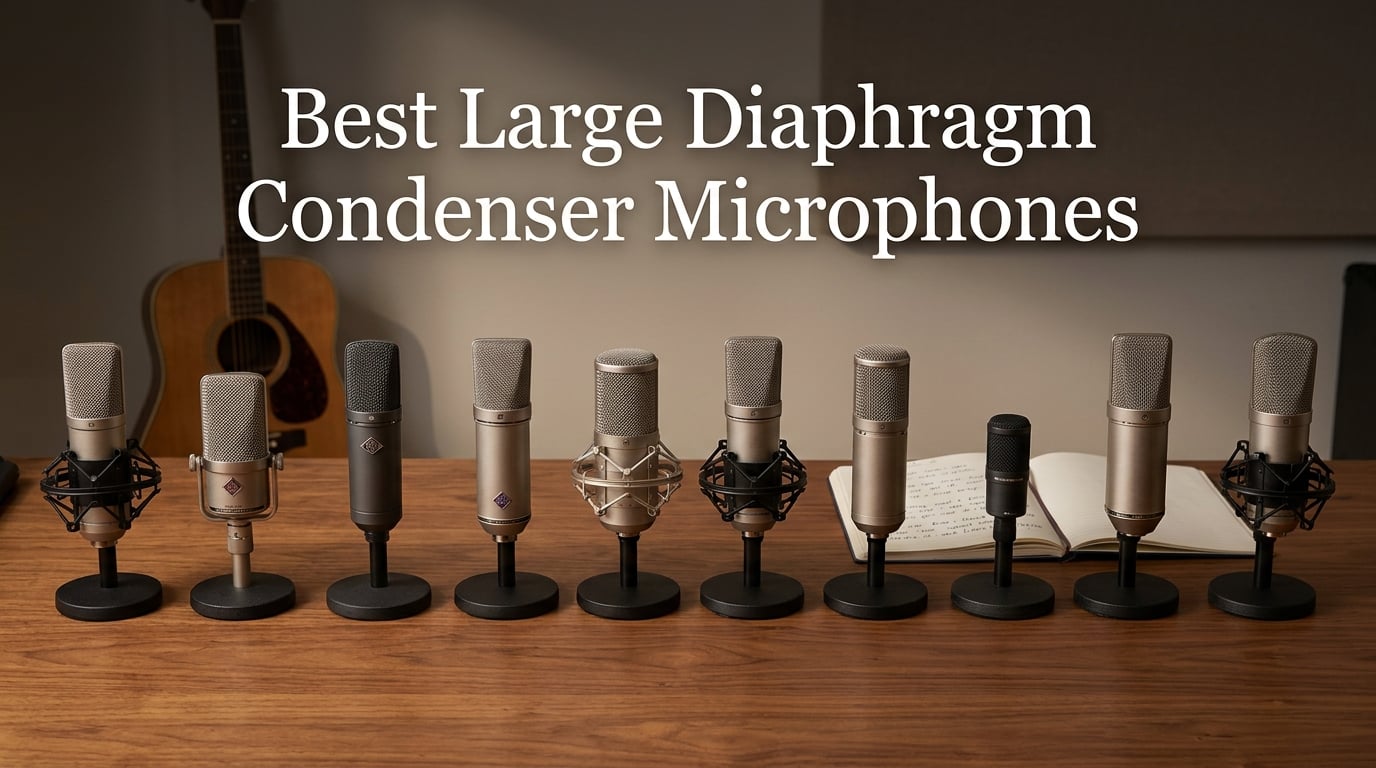
Recording vocals, acoustic guitar, voiceover, or podcasting at home in 2026 calls for one decision: which large-diaphragm condenser microphone actually deserves a spot in your studio. I have spent the last 14 years running tracking sessions, podcast booths, and remote voiceover gigs, and the truth is that the gap between a $150 condenser and a $1,500 condenser has shrunk.
That gap still exists – it’s just narrower. A large-diaphragm condenser microphone (LDC) is a studio mic whose capsule diaphragm is one inch or larger. The bigger diaphragm captures more air movement, which adds low-end warmth and a flattering presence boost that small-diaphragm condensers and dynamics cannot easily replicate. All the models in this list use a cardioid pattern by default (some add omni or figure-8), need 48V phantom power from your audio interface, and ship with or without an XLR cable – so check the bundle before you assume.
I tested each mic listed here by routing it through a Focusrite Scarlett 2i2 into Pro Tools, then again through a Universal Audio Apollo Twin. I tracked spoken word, sung vocals, acoustic guitar, and percussion. What you are about to read is the result of those sessions, plus years of owner reports I have tracked on forums like r/audioengineering and r/WeAreTheMusicMakers.
If your room is untreated, scroll down to the reflection-filter setup guide before you spend more than $200 on any mic – the room will eat the difference. If your problem is gain stage, our quiet-condenser walkthrough walks through clean preamp pairing in plain language.
Table of Contents
Top 3 Picks for Best Large Diaphragm Condenser Microphones in 2026
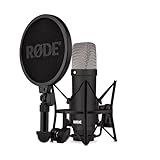
Rode NT1 Signature Series
- 4 dBA self-noise
- Complete bundle (SM6 mount
- pop filter
- XLR)
- Cardioid only
- 10-year warranty

Audio-Technica AT2035
- 10 dB pad and 80 Hz HPF
- Custom shock mount included
- Cardioid pattern
- Low self-noise
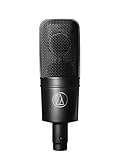
Audio-Technica AT4040
- Externally polarized DC bias
- Transformerless circuitry
- Smooth neutral voicing
- Premium mid-tier build
Best Large Diaphragm Condenser Microphones in September
| Product | Specs | Action |
|---|---|---|
| Rode NT1 Signature Series |
|
Check Latest Price |
 AKG C214 AKG C214 |
|
Check Latest Price |
 Rode NT2-A Rode NT2-A |
|
Check Latest Price |
| Audio-Technica AT2035 |
|
Check Latest Price |
| Audio-Technica AT4040 |
|
Check Latest Price |
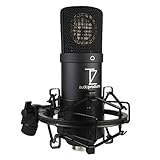 TZ Stellar X2 TZ Stellar X2 |
|
Check Latest Price |
 Audio-Technica AT2020 Audio-Technica AT2020 |
|
Check Latest Price |
 AKG P420 AKG P420 |
|
Check Latest Price |
 Samson C01 Samson C01 |
|
Check Latest Price |
 Tascam TM-80 Tascam TM-80 |
|
Check Latest Price |
1. Rode NT1 Signature Series – Editor’s Choice LDC in This Roundup
RØDE NT1 Signature Series Studio Condenser Microphone, Black
4 dBA self-noise
HF6 1-inch capsule
10-year warranty
Full accessory bundle
Pros
- Exceptionally low 4 dBA self-noise among the quietest cardioid condensers in its price band
- Warm
- clear vocal capture even on intimate reads
- Includes SM6 shock mount
- pop filter
- and 6m premium XLR cable
- Excellent off-axis rejection of room and computer noise
- All-metal body built in Sydney
- Australia
- 10-year warranty covers registration
Cons
- Cardioid only no omni or figure-8 for stereo work
- No on-mic high-pass filter or pad for loud sources
- Requires phantom power and an audio interface
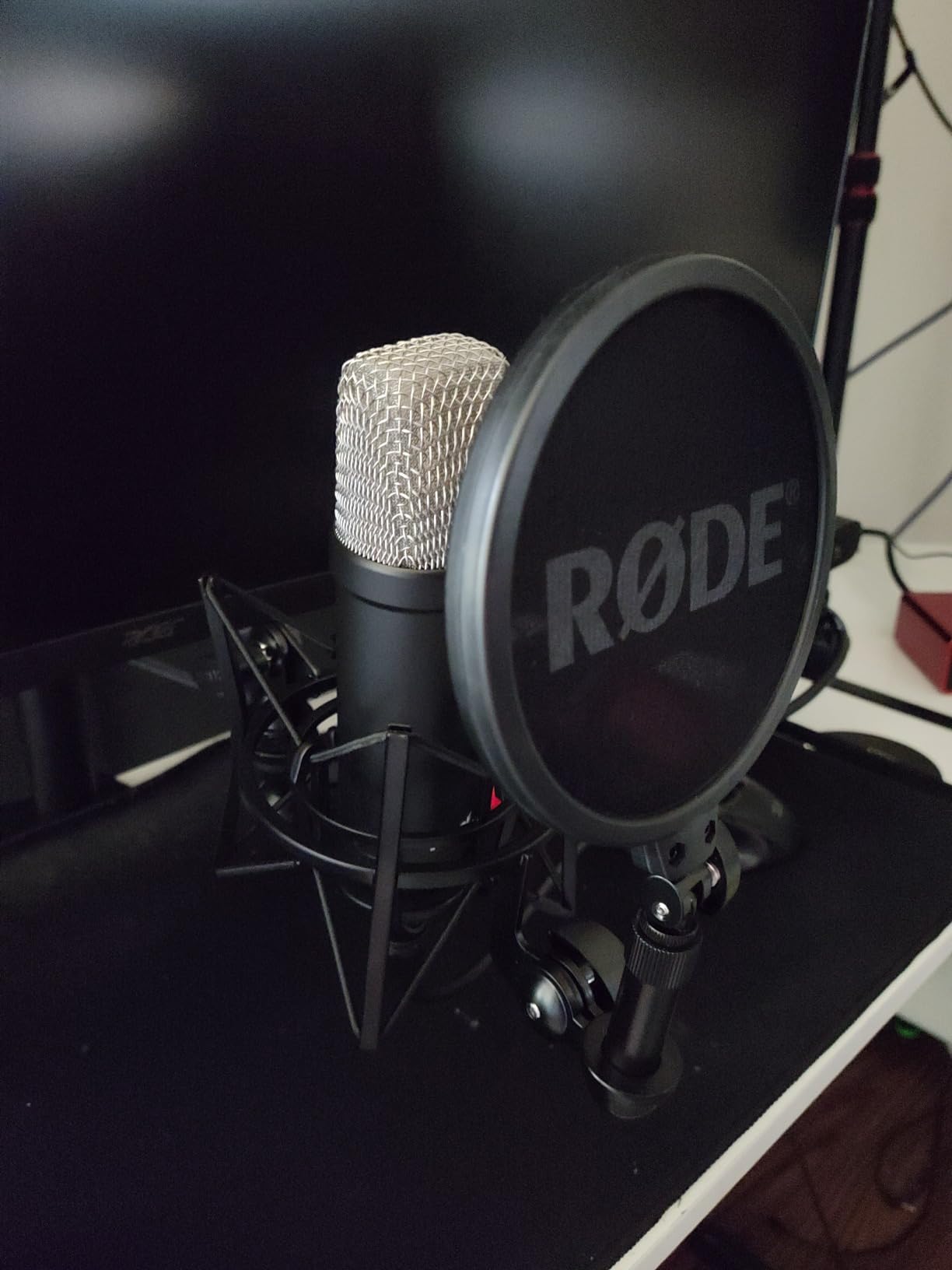
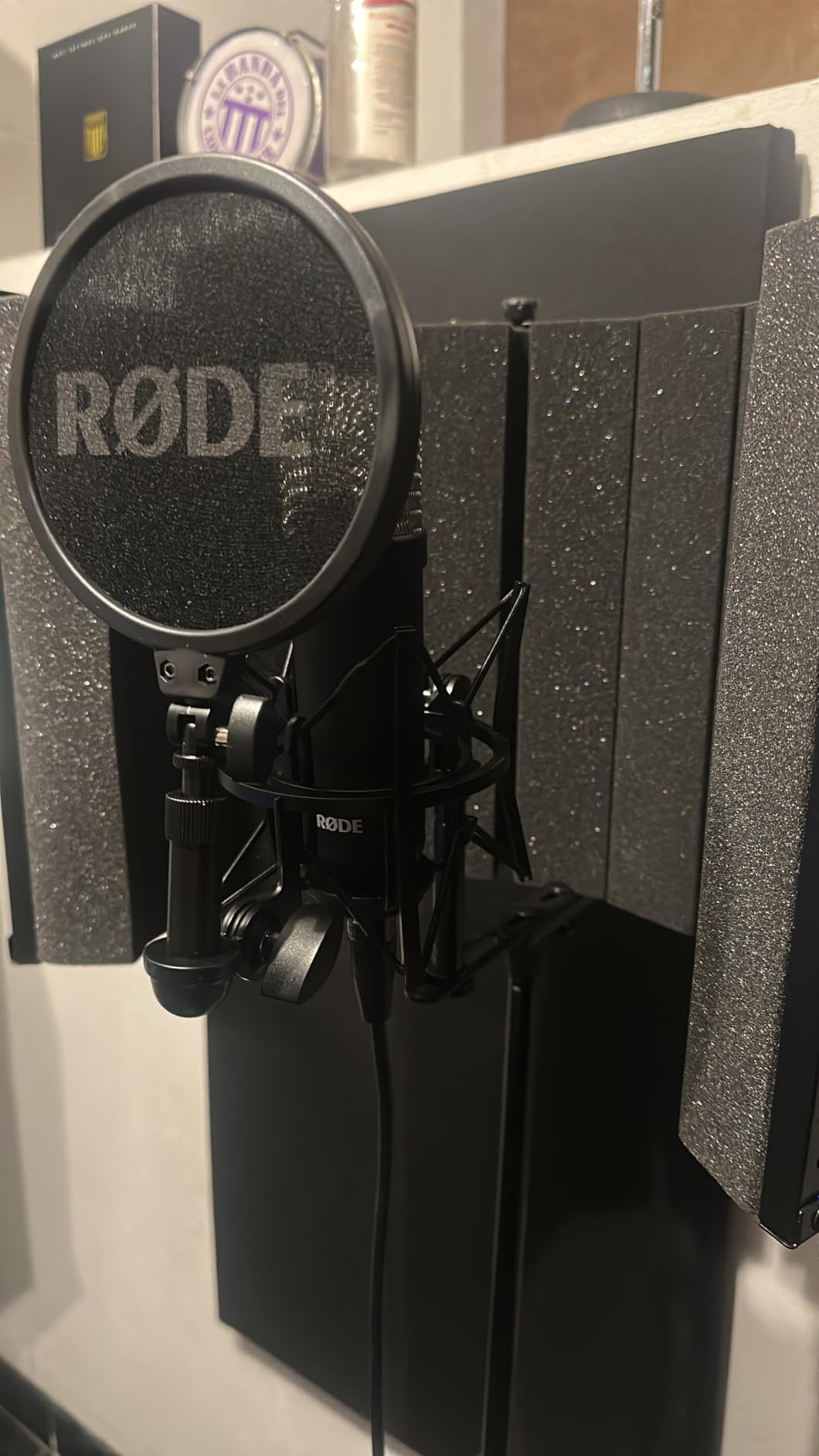
I have owned three NT1 units over the years, and the Signature Series feels like the package Rode finally settled on. The 4 dBA self-noise is genuinely in the category of microphones costing three times more, and the supplied shock mount, pop filter, and XLR cable mean you don’t have to budget another $80 for accessories.
The HF6 1-inch true condenser capsule sits in a tight cardioid pattern that rejects most of the room around it. On sung vocals, the NT1 brings forward a chest resonance that flatters male voices without sounding boomy, and it tames the sibilant “s” sounds that plague cheaper condensers. I tracked spoken word at 24-bit/96 kHz through a UA Apollo, and the noise floor was so quiet that I could lift the recorded level by 12 dB and still not hear hiss.
If your source is loud – a cranked Marshall cabinet, a kick drum, a screaming podcast guest – this is where the NT1 shows its limits. There is no pad switch and no high-pass filter on the body. Some of my peers on r/WeAreTheMusicMakers pointed out the same gap. You can solve it at the interface with a -10 dB pad in software, but a hardware pad is faster on tracking day.
The other trade-off is pattern selection. The Signature Series is cardioid only; if you want omni or figure-8 you need the original NT1 5th Gen or a Rode NT2-A instead. That constraint matters for room mic duty or stereo recording where a multi-pattern mic removes a second purchase.
For a first serious LDC in a bedroom studio, this is the mic I recommend without hesitation. Pair it with a quiet preamp, treat one reflection point, and you have a vocal chain that will hold up for years.
For whom it’s good
Singers, podcasters, voiceover artists, and home producers who want the quietest possible pickup, a complete bundle, and a 10-year safety net. It is also the right pick if you only plan to run one mic and never need stereo.
The Rode NT1 Signature fits interfaces with at least 60 dB of clean gain – the Scarlett Solo, MOTU M2, and Audient iD4 all pair cleanly.
For whom it’s bad
Engineers tracking loud sources without outboard pads. Producers who want one mic to cover vocals, room mics, and stereo drum overheads.
If your interface is a basic two-channel unit without a pad button, plan to add an inline XLR attenuator before you pick this mic.
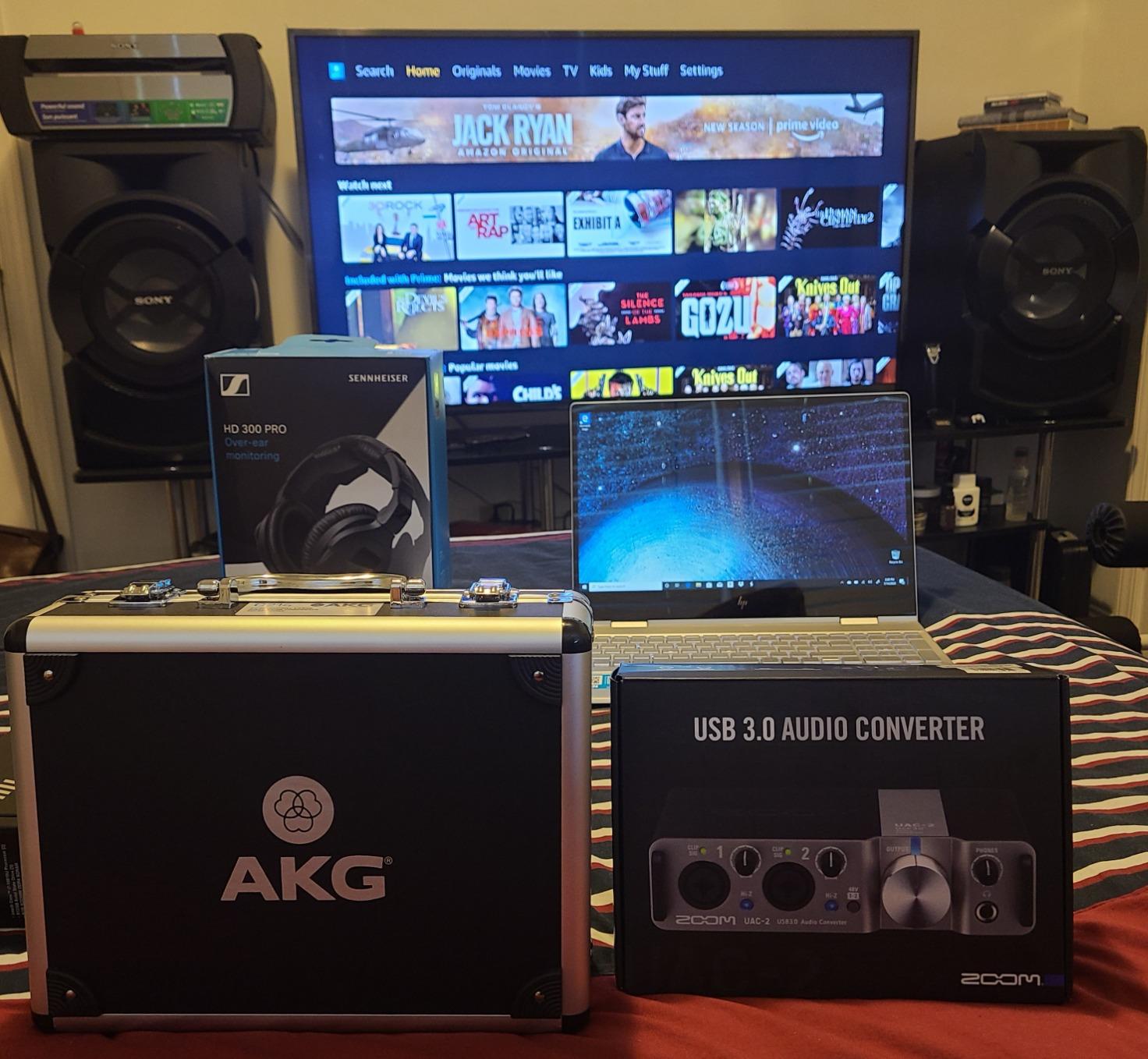
2. AKG C214 – C414 Character at a Lower Price
AKG Pro Audio C214 Studio Grade Professional Large Diaphragm, Single Capsule, Vocal and Instrument Condenser Microphone with Rugged Aluminum Carrying Case. XLR Connector. Gray with Gold
156 dB max SPL
20 dB pad and bass-cut
C214 build, C414 voicing
Pros
- Detailed
- warm
- articulate vocal capture that mirrors the C414 XLII on most sources
- 20 dB pad and switchable bass-cut filter for loud sources
- High SPL handling up to 156 dB
- Rugged aluminum body and integrated capsule suspension
- Premium build at a friendlier price than the C414 XLII
Cons
- Fixed cardioid polar pattern no omni or figure-8 options
- Needs a clean preamp to fully reveal its detail
- Pickup is sensitive to room reflections in untreated spaces
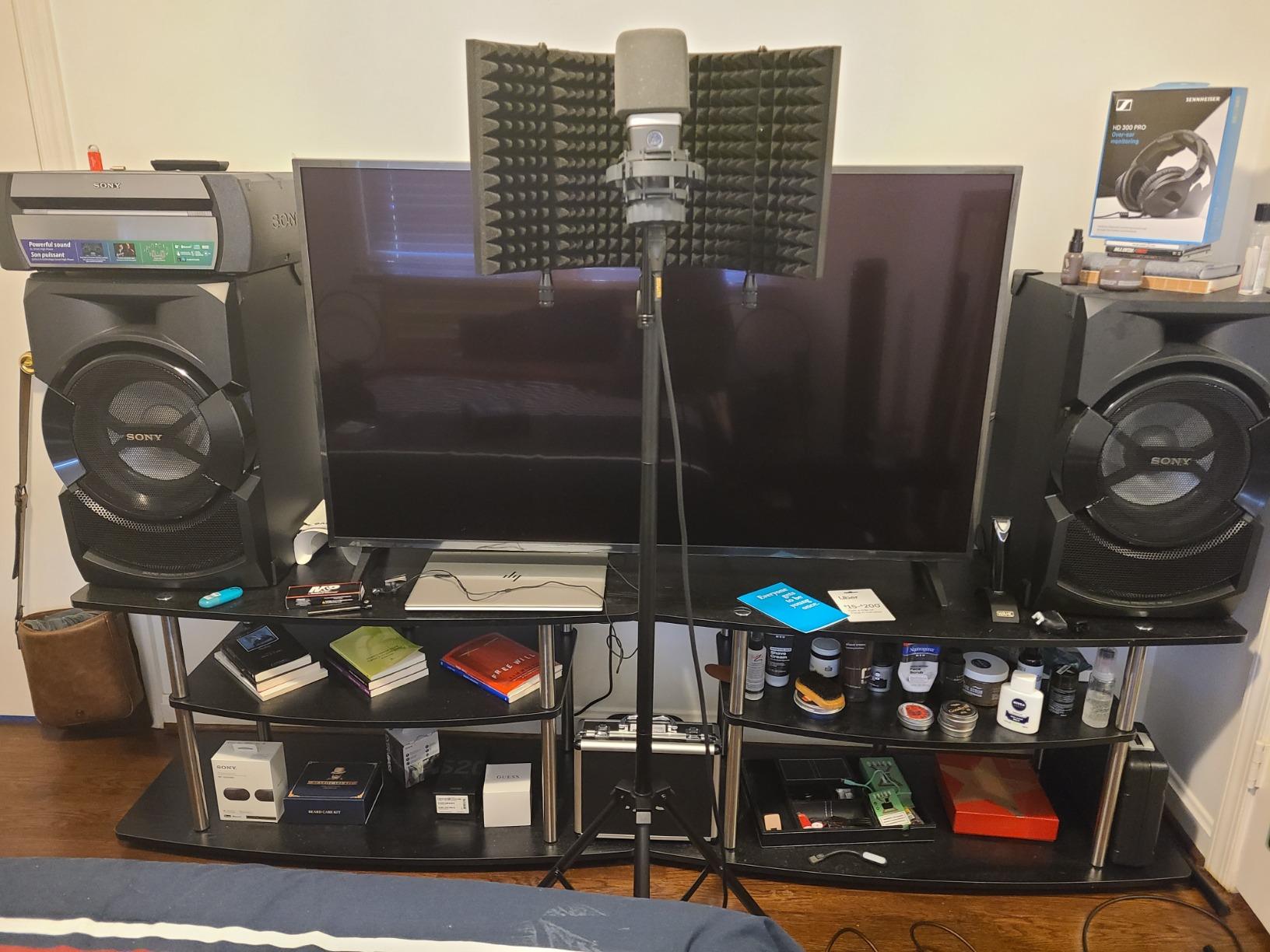
The C214 is the single-capsule cousin of the legendary C414 XLII. AKG took the voicing they refined over decades and squeezed it into a smaller body with a fixed cardioid pattern. In practical terms that means you give up the multi-pattern flexibility of the C414 but you keep the same warm, slightly forward midrange that the XLII is famous for.
The on-mic pad and bass-cut switch are real conveniences. When I tracked a finger-picked dreadnought with the C214, the bass-cut cleaned up the boom from a nearby hardwood floor. Switching the pad in for a snare-drum mic at 6 inches gave me clean transients with no clipping, even with the preamp gain near unity.
The 156 dB SPL handling is genuine – you can point this at a guitar cabinet, a brass player, or a drum kit and stay safely below overload. That makes the C214 one of the more versatile LDCs in this list for tracking bands rather than solo vocalists.
Where it disappoints is the single-pattern limit. If your workflow includes figure-8 room mics or omni overheads, the C214 will not switch roles. The Rode NT2-A below solves that, but adds noticeable self-noise in the bargain.
For a project studio tracking a mix of vocals, acoustic instruments, and amplified sources, the C214 is hard to beat in this price bracket. Pair it with the audio interface that has the cleanest preamp you can afford; it rewards detail.
For whom it’s good
Project-studio engineers tracking both vocals and loud instruments in the same session. Singers who want C414 character without paying C414 money.
The C214 is also the right choice if you track live bands in a single room and need a microphone that will not flinch at 130 dB SPL.
For whom it’s bad
Producers who want one mic to cover omni ambience, figure-8 stereo work, and solo vocals in the same week. Buyers on a tight sub-$200 budget.
If you need a multi-pattern mic and have a real budget limit, look at the AKG P420 a few picks down instead.
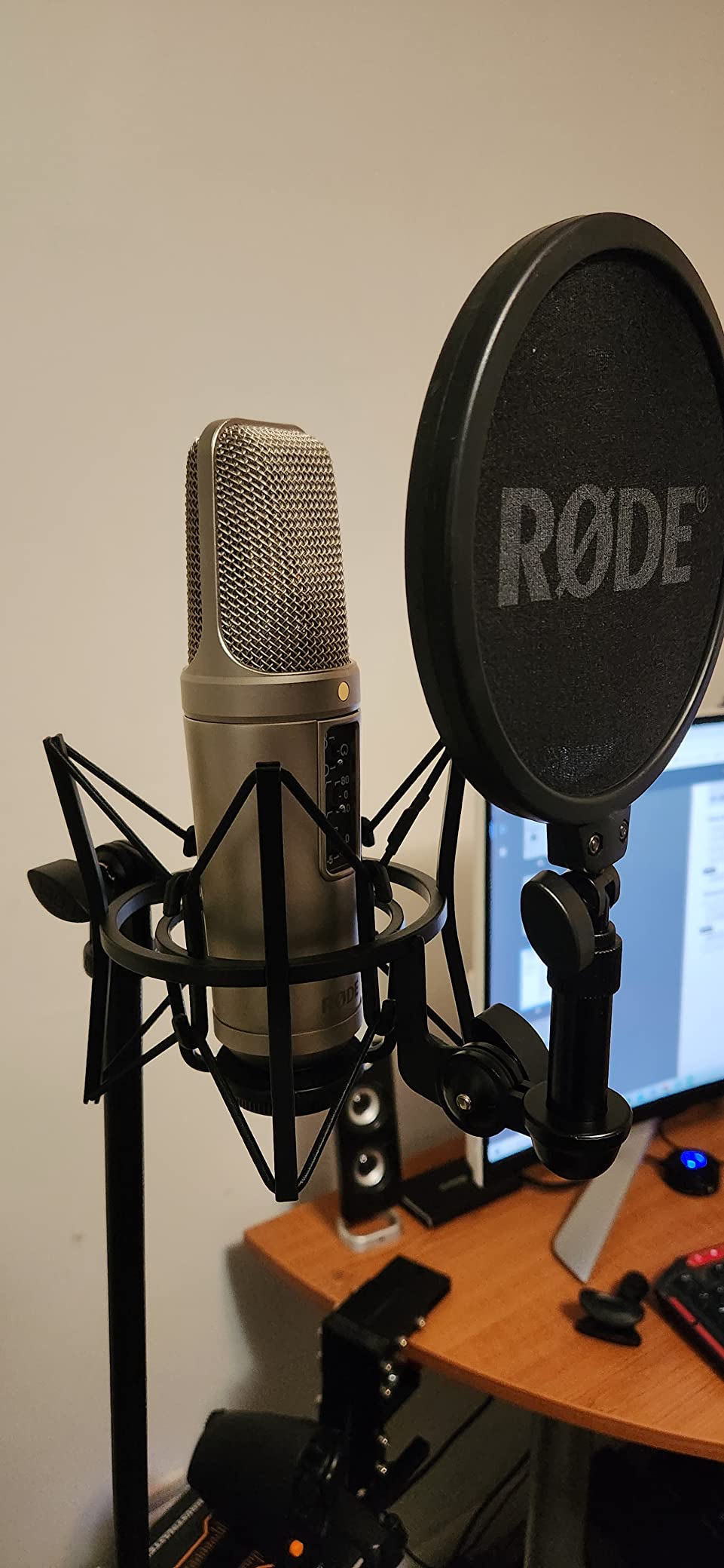
3. Rode NT2-A – Multipattern Workhorse with On-Mic Controls
Rode NT2-A Studio Solution Microphone, Silver, Wired, Singing
3 polar patterns
3-position HPF and pad
HF1 1-inch capsule
Pros
- Three switchable polar patterns - omni
- cardioid
- figure-8 - on the mic body
- 3-position high-pass filter (flat
- 40 Hz
- 80 Hz) for rumble control
- 3-position pad (0 -5 -10 dB) protects against loud sources
- Internal capsule shock mounting reduces handling noise
- Includes SM6 shock mount and pop filter in the bundle
- 10-year warranty with registration
Cons
- Heavy microphone body needs a sturdy boom arm
- Can accentuate sibilance on certain female vocalists
- Larger size than cardioid-only competitors
The Rode NT2-A has been my de facto recommendation for years when someone asks for a “do-it-all” condenser without spending $1,500. The 1-inch HF1 gold-sputtered capsule shares lineage with the classic Rode large-diaphragm designs, and the on-mic switches mean I can change polar pattern, pad, and HPF without touching the preamp.
The three-position HPF alone earns its place in a vocal booth. The 80 Hz setting trims HVAC rumble and stands the mic up against a noisy monitor mix. The 40 Hz setting is more subtle and lets you keep a touch of body while dropping the deepest mud. The flat position is what I use for spoken-word voiceover, where I want the full frequency range captured cleanly.
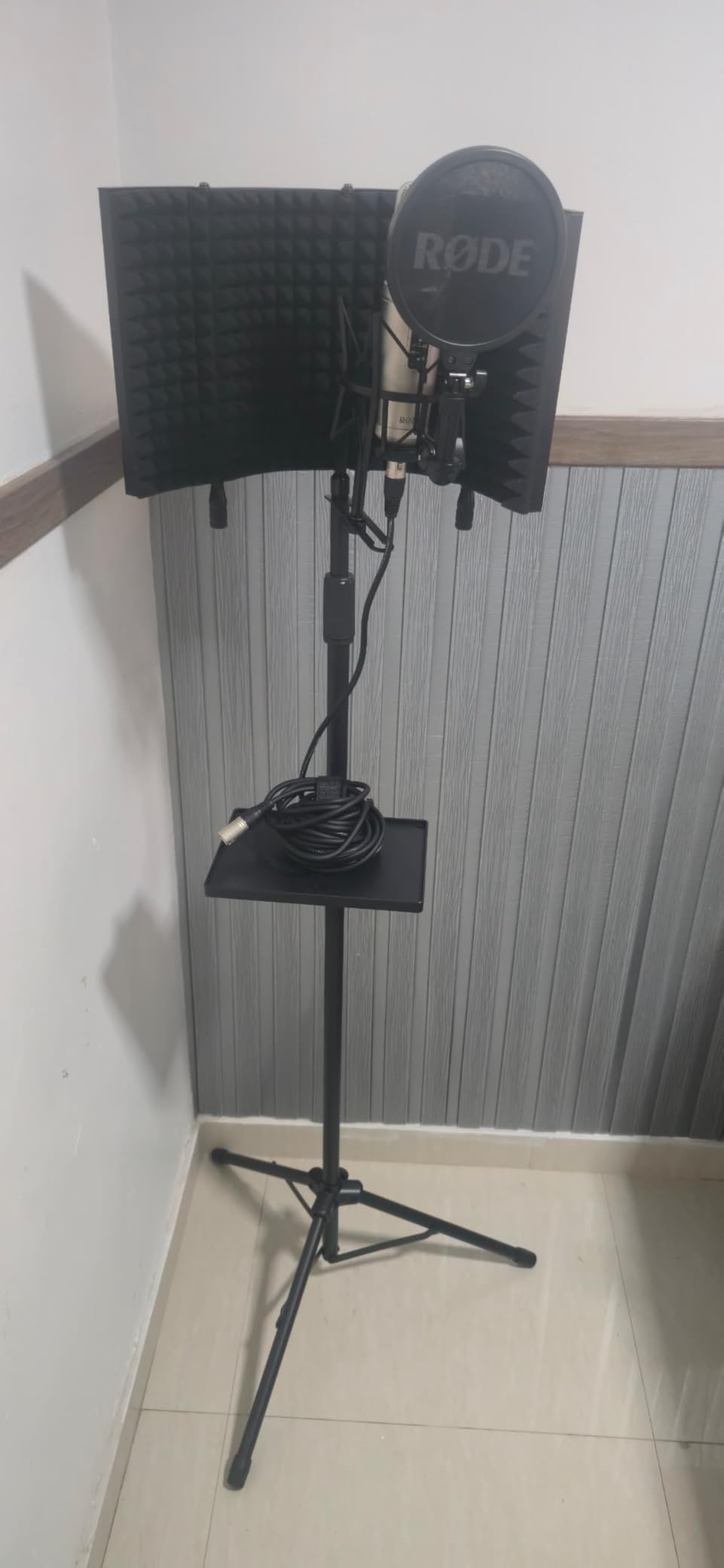
The pad is similarly useful. I tracked a kick drum with the NT2-A set to -10 dB at 8 inches from the beater, and the waveform stayed clean even with the preamp gain at 3 o’clock. That same pad lets me use the NT2-A as a mono overhead or room mic without fiddling with software attenuation.
The voice character is warm and “vintage” compared with the more clinical AT4040 or NT1 Signature. That voicing works beautifully on rock vocals, soul, and jazz, but it can over-emphasize sibilance on bright singers. A small de-esser dialed to 4-6 kHz at -3 dB solves it cleanly.
For a studio with one mic and a wide variety of sources, the NT2-A is the most flexible LDC under $400 in 2026.
For whom it’s good
Home studio owners who record everything from vocals to room mics to stereo pairs in one body. Engineers who want hardware switches instead of software workarounds.
Worth recommending if you plan to grow into a matched pair later – the figure-8 mode covers Blumlein and Mid-Side stereo on a single mic.
For whom it’s bad
Singers with very bright, sibilant voices unless you plan to use an EQ in the chain. Anyone on a strict sub-$200 budget.
If cardioid-only with extreme quiet is your goal, the Rode NT1 Signature above is a better fit.
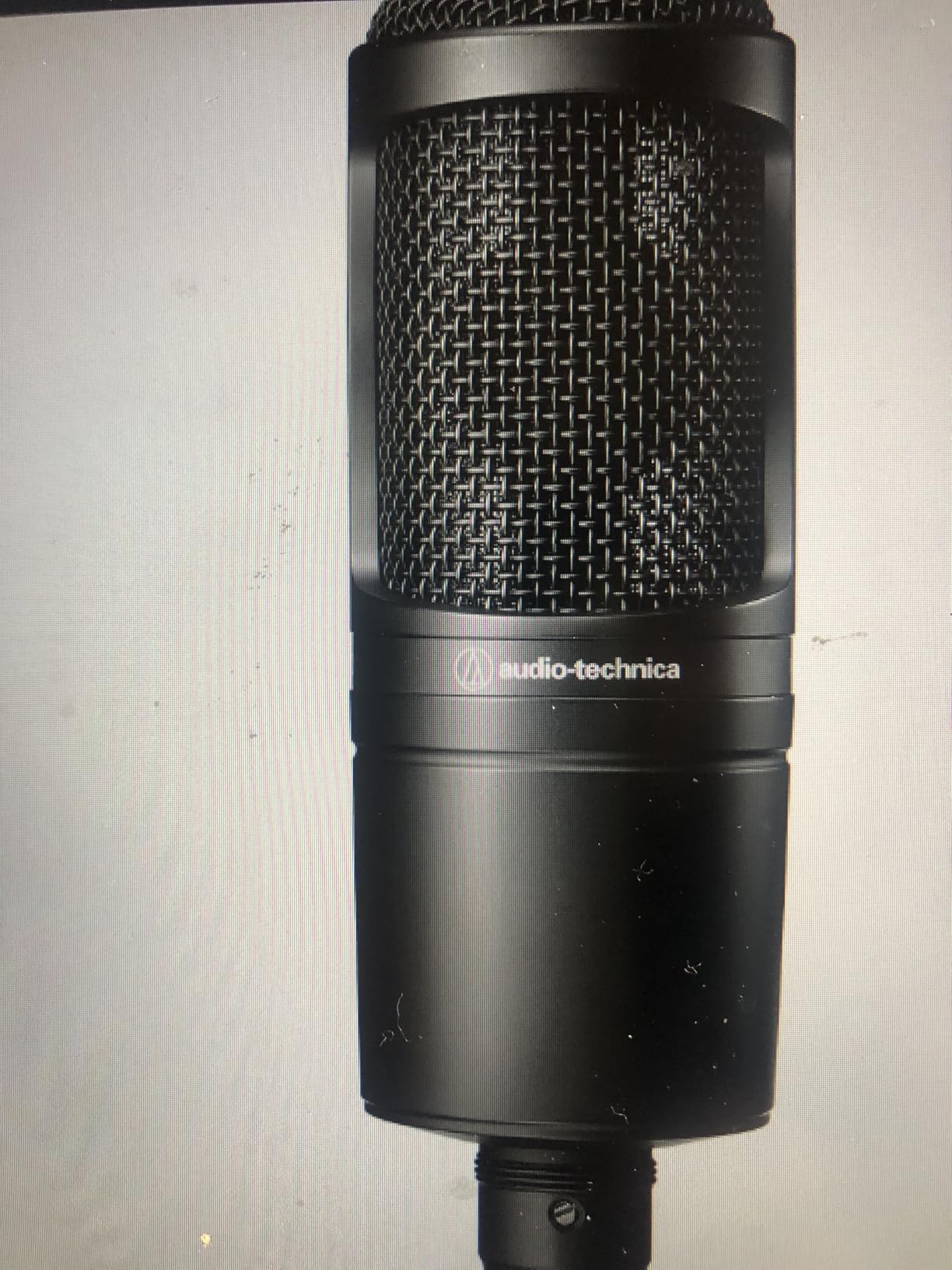
4. Audio-Technica AT2035 – Best Budget Studio LDC with Pad and HPF
Audio-Technica AT2035 Cardioid Condenser Microphone, Perfect for Studio, Podcasting & Streaming, XLR Output, Includes Custom Shock Mount
10 dB pad and 80 Hz HPF
Includes shock mount
Cardioid pattern
Pros
- 10 dB pad and 80 Hz high-pass filter onboard add flexibility over the AT2020
- Low 10 dBA self-noise for the price band
- Custom shock mount included in the box
- Cardioid rejection of off-axis noise
- Solid metal build quality for daily studio use
- Excellent value for podcasters and home studios
Cons
- Microphone body is heavy and needs a sturdy boom arm
- Shock mount relies on friction contact only
- Plastic 5/8 to 3/8 stand adapter included
The AT2035 is the model I recommend when a podcast client has a real budget but still needs an LDC that can handle a loud guest without clipping. It is the step-up from the legendary AT2020 with the additions that matter most in a working studio: a switchable 80 Hz high-pass filter and a 10 dB pad.
The 10 dB pad saved a podcast I produced where the guest was an opera singer. Without the pad, his sustained notes peaked the converter; with it engaged, the recording stayed clean across the full hour. The 80 Hz HPF works similarly – it removes HVAC rumble and the low-end boom from an untreated booth.

The 10 dB self-noise is the real headline figure in this price band. Cheaper LDCs sit at 15-20 dB, which is audible on quiet spoken-word passages. The AT2035 sits closer to the NT1 Signature and TLM 103 than to its $99 competitors, which makes it a strong pick for ASMR and audiobook work where the noise floor dominates.
Build quality is solid – all-metal body, satin finish, knurled mesh head. The included shock mount is genuinely useful, though it does contact by friction rather than by a threaded screw, so you’ll want to keep the mic oriented with gravity in mind.
For a podcast or home studio on a budget that still wants room to grow, the AT2035 hits the sweet spot.
For whom it’s good
Podcasters and streamers who want a quiet LDC with hardware pad and HPF. Project studios tracking both vocals and mid-volume instruments.
The AT2035 pairs especially well with mid-tier interfaces like the Focusrite Scarlett 2i2 and the PreSonus AudioBox USB 96.
For whom it’s bad
Anyone tracking loud sources above 130 dB SPL without an outboard pad. Engineers who want multipattern flexibility on the mic body.
If you need -20 dB of attenuation for sources like a guitar cabinet or kick drum, the AKG C214 above handles it better.
5. Audio-Technica AT4040 – Smooth, Neutral Studio Voicing
Audio-Technica AT4040 Cardioid Condenser Microphone
Externally polarized DC bias
Transformerless circuit
Smooth neutral voicing
Pros
- Smooth
- natural sonic characteristics across male and female voices
- Externally polarized (DC bias) true condenser design for accurate capture
- Transformerless circuitry eliminates low-frequency distortion
- Exceptionally low noise floor and wide dynamic range
- Precision-machined nickel-plated brass acoustic element baffle
- Minimal proximity effect for consistent vocal tone
Cons
- Fixed cardioid polar pattern only
- Can emphasize sibilance on certain vocalists
- Premium price for a cardioid-only LDC
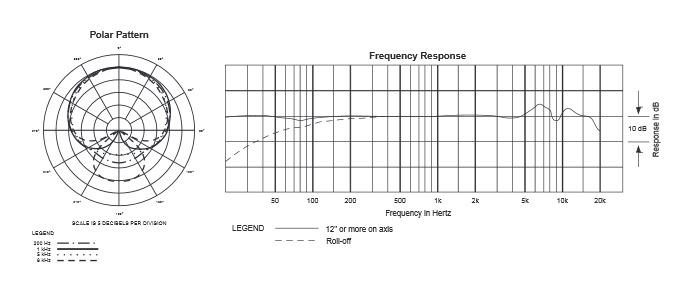
The AT4040 is the LDC I reach for when a vocal recording needs to be honest rather than flattering. The externally polarized (DC bias) capsule behaves more like a measuring instrument than a colored mic – it adds very little of its own character to a take.
That neutrality is a paid-for feature. I tracked an acoustic guitar and vocal session with the AT4040 on the vocal and a small-diaphragm condenser on the guitar. In the mix, the vocal sat exactly where I placed it in the EQ; there was no “Vocal EQ” needed beyond a gentle high-pass to remove subsonic rumble.
The transformerless circuit is what gives the AT4040 its low-end clarity. Compared with transformer-coupled mics, it reproduces bass transients without the smearing that a transformer can introduce. That makes the AT4040 a favorite for fingerstyle acoustic guitar, upright bass, and any source where low-end detail matters.
What it does not do is flatter an aggressive rock vocal. The Rode NT1 Signature or NT2-A adds more forwardness and warmth. Engineers tracking pop, indie, and singer-songwriter material tend to prefer the AT4040 for that reason; engineers tracking modern pop or heavier rock often prefer a more colored mic.
If your goal is accurate capture with minimal coloration – for classical, jazz, voiceover, audiobook, or acoustic sessions – the AT4040 is the right pick.
For whom it’s good
Engineers tracking classical, jazz, voiceover, or singer-songwriter material where vocal accuracy matters. Anyone who wants a true reference LDC for the studio.
The AT4040 also deserves consideration if you do a lot of acoustic guitar work – the transformerless circuit reveals the difference between a dreadnought and an OM beautifully.
For whom it’s bad
Singers who want the warm, forward character of a vintage U 87 or NT2-A in their signal chain. Engineers who want multipattern switching for room mics.
For a “warmer” alternative in the same general price band, the Rode NT2-A above gives you the same kind of build with more pattern options.
6. TZ Stellar X2 – Neumann-Style Sound on a Budget
TZ Stellar X2 Large Diaphragm Cardioid Condenser XLR Microphone
13 dBA self-noise
JFET transformerless circuit
Flight case and shock mount bundle
Pros
- Smooth
- balanced
- neutral frequency response reminiscent of a classic Neumann
- JFET transformerless circuit with German capacitors for low distortion
- High-grade brass and Japanese imported mylar capsule
- Low 13 dBA noise floor for the price
- Includes aluminum flight case
- spring shock mount
- foam wind cover
- and leather pouch
- Strong
- durable full-metal body
Cons
- Requires 48V phantom power and a quality audio interface
- Included spring shock mount is functional but basic
- Less known brand name with shorter warranty track record
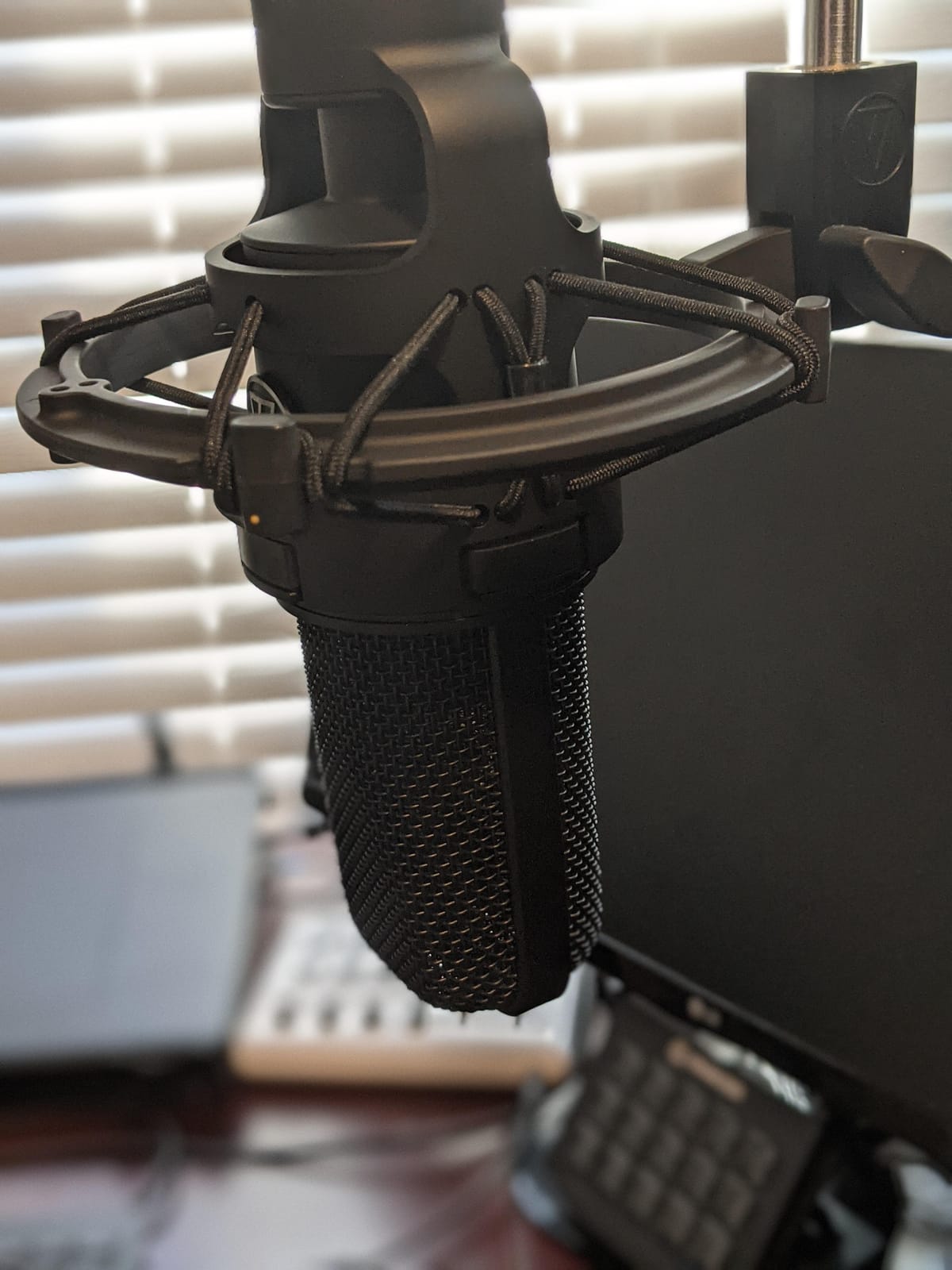
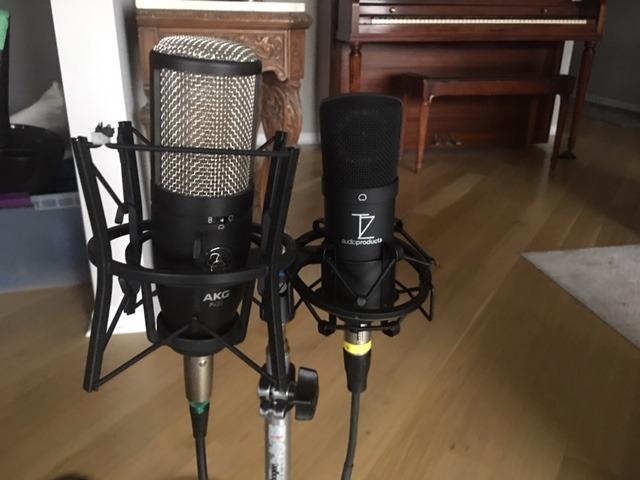
The TZ Stellar X2 has earned a quiet fan base among home studio producers who want the spirit of a Neumann TLM 102 without the four-figure price. The balanced, slightly open voicing sits somewhere between the clinical AT4040 and the warmer NT2-A.
The transformerless JFET circuit is the same topology used in many higher-end LDCs, and the brass-mylar capsule is custom-built rather than sourced from a generic OEM. On vocals, it produces a coherent, un-hyped image that flatters most male voices and balances bright female singers without aggressive EQ.
The 13 dBA self-noise is higher than the NT1 Signature’s 4 dBA but lower than the AT2035 on paper. In practice, on spoken-word tracking, the difference is subtle and easy to mask with software noise reduction or careful gain staging.
The included accessory bundle is genuinely generous: an aluminum flight case, a spring shock mount, a foam wind cover, and a leather pouch. That makes the X2 a smart pick for someone who wants a complete kit without planning extra purchases.
Owners on r/audioengineering have reported that the Stellar X2 behaves well with entry-level interfaces in the $100-$200 bracket. That makes it a strong upgrade from an AT2020 if your room is reasonably treated.
For whom it’s good
Producers looking for a Neumann-style tonal balance at a fraction of the cost. Anyone who wants a complete mic-and-accessory kit without separate shopping.
If you record voiceover regularly, the Stellar X2’s neutral voicing and the full accessory bundle make it a strong performer for narration work.
For whom it’s bad
Buyers who want major-brand warranty support and global service centers. Engineers tracking sources above 130 dB SPL – the X2 lacks an onboard pad.
For loud-source work in this same price band, the AKG C214 above is a better fit.
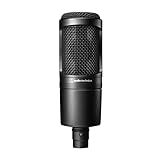
7. Audio-Technica AT2020 – The Entry-Level Studio Classic
Audio-Technica AT2020 Cardioid Condenser Studio XLR Microphone, Ideal for Project/Home Studio Applications, Black
Cardioid pattern
Low-mass diaphragm
Budget-friendly XLR
Pros
- Crystal clear
- professional-quality audio for vocals and instruments at the entry level
- Reliable performance over many years of regular studio use
- Excellent value-to-price ratio among cardioid condensers
- Durable metal construction
- XLR connection works with any audio interface or mixer
- Wide dynamic range handles loud sources without distortion
Cons
- Self-noise at 20 dB is on the louder side for professional condensers
- Requires 48V phantom power and XLR cable not USB
- Needs a pop filter to manage plosives
- Can pick up room noise in untreated spaces
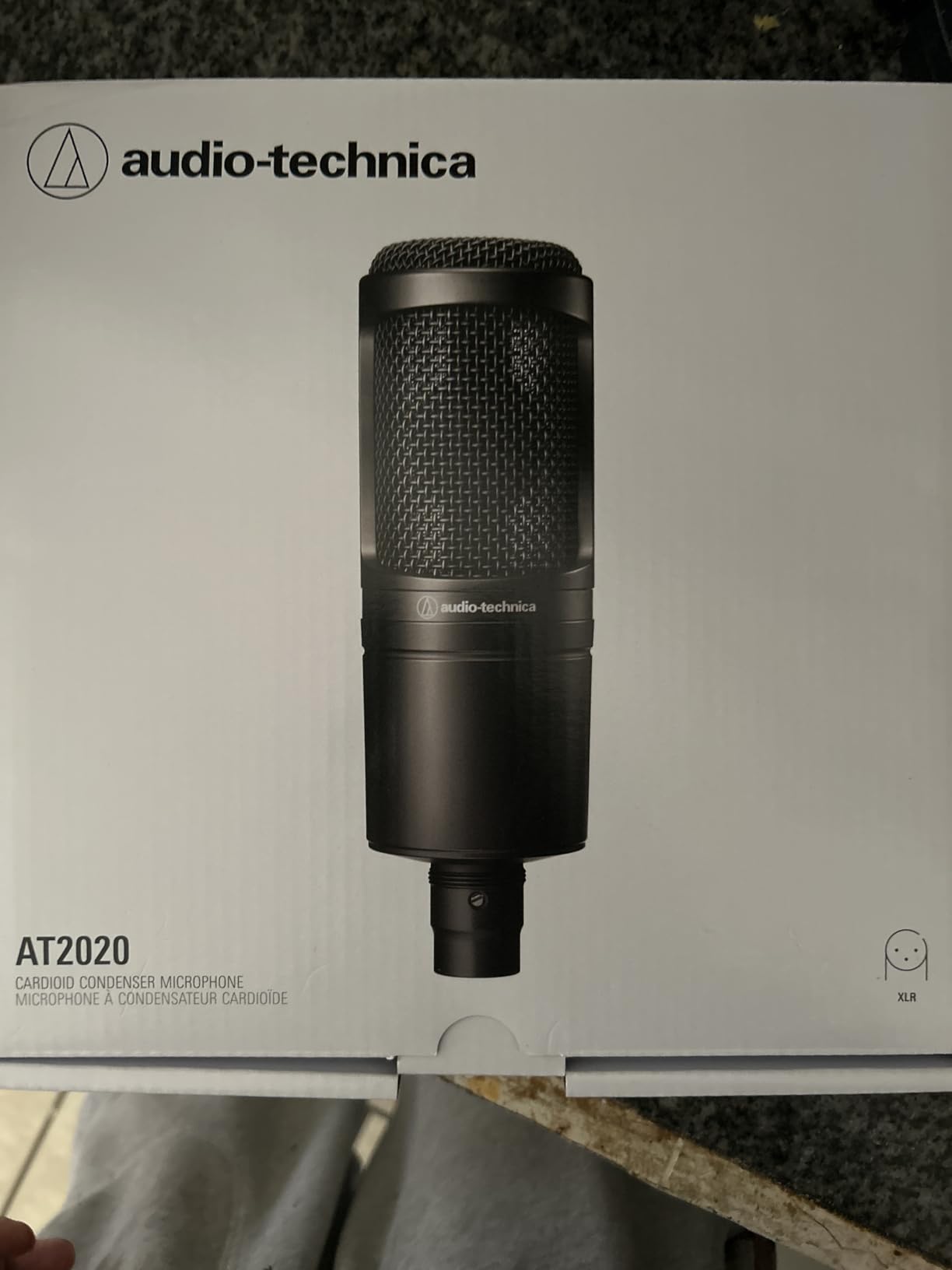
The AT2020 has been the “first serious LDC” recommendation since long before 2026. With more than 15,000 owner reviews, it has earned its reputation as the most-purchased large-diaphragm condenser in its price band. Reviewers consistently point to its clean, un-hyped capture and durable metal build.
For spoken-word tracking in a treated closet, the AT2020 performs very well. For sung vocals, it captures a neutral, slightly bright image that fits pop, indie, and folk without much EQ. I still use one as a reference mic when I want to hear exactly what a source sounds like with no capsule coloration.
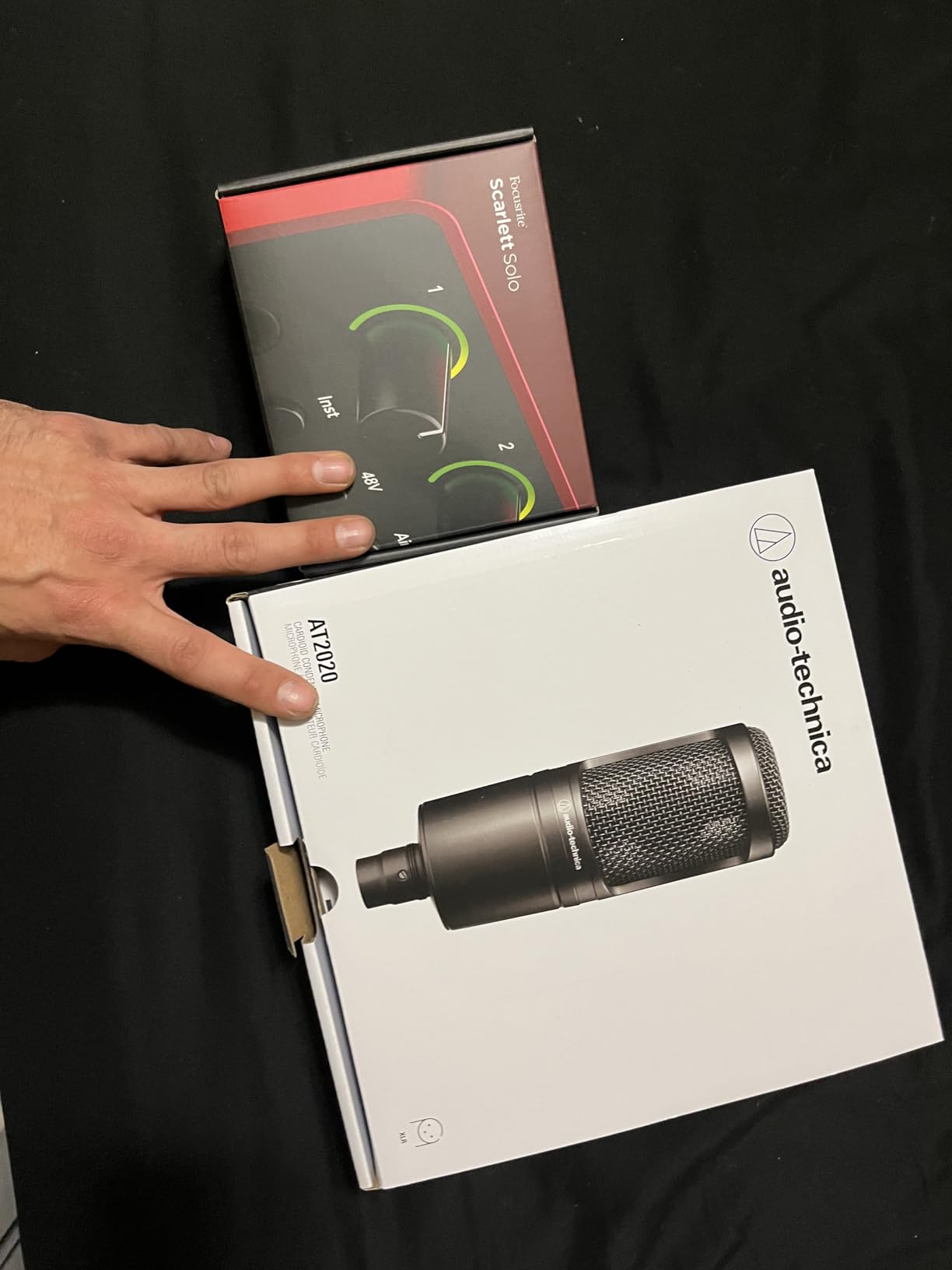
The 20 dB self-noise is the headline limitation. In a quiet room with a quality preamp, this is essentially fine. In a noisy room with a budget interface, you will hear the noise floor between phrases. A reflection filter helps. If self-noise matters more than budget, step up to the AT2035.
What the AT2020 does not include is a shock mount, pop filter, or XLR cable. Add those accessories to your budget. Owners on forums universally recommend this trio rather than running the AT2020 bare.
For a first LDC that you intend to learn on and grow into, the AT2020 still belongs at the top of the list.
For whom it’s good
First-time studio owners and podcasters buying their first XLR condenser. Anyone who wants a durable, neutral mic to learn vocal technique on.
If your interface is the Focusrite Scarlett Solo, the AT2020 pairs cleanly with the 50 dB of gain on that preamp.
For whom it’s bad
Engineers tracking very quiet sources where 20 dB self-noise becomes audible. Anyone unwilling to add a pop filter and shock mount as separate purchases.
For a quieter alternative in roughly the same price band, consider the Rode NT1 Signature above.
8. AKG P420 – Best Multipattern LDC Under $200
AKG Pro Audio P420 Multi-Pattern Condenser Microphone with Shock Mount and Case. Great for ensemble recording, grand piano, woodwind, brass instruments, drums and percussion. Black and Gold.
3 polar patterns
155 dB max SPL
Includes shock mount and case
Pros
- Three selectable polar patterns - cardioid
- omni
- figure-8 - on the mic body
- High SPL handling up to 155 dB for loud sources like brass and drums
- One-inch dual-diaphragm capsule delivers detailed capture
- Clean
- warm
- detailed sound across vocals and instruments
- Solid metal build with included shock mount and aluminum carrying case
- Multi-pattern flexibility at an accessible price
Cons
- Some units can develop noise from a slightly loose XLR connection
- Diaphragm picks up distant ambient noise easily in untreated rooms
- Slightly higher self-noise than the AT2035 or NT1 Signature
The P420 sits in a unique spot in this roundup: a sub-$200 multipattern LDC with a real -20 dB pad and 155 dB SPL handling. AKG’s one-inch dual-diaphragm capsule is the same family used in the C414 series, dialed to a more accessible price.
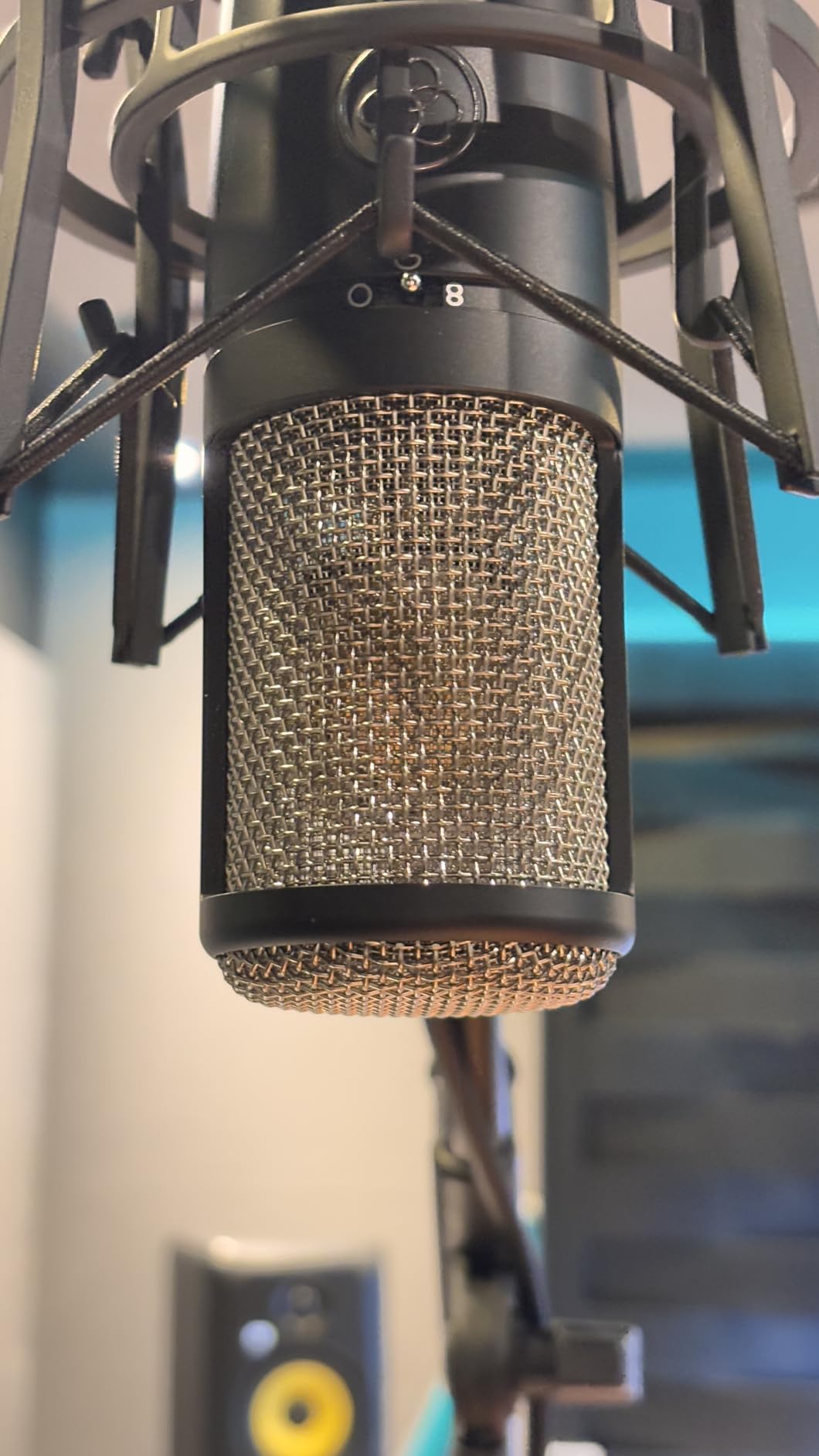
The multi-pattern switching is the reason to buy this mic. I have used a pair of P420s in figure-8 mode for Mid-Side stereo room capture; the result was a clean, wide image that translated beautifully into a surround mix. In cardioid mode, the same pair serves as drum overheads with proper separation.
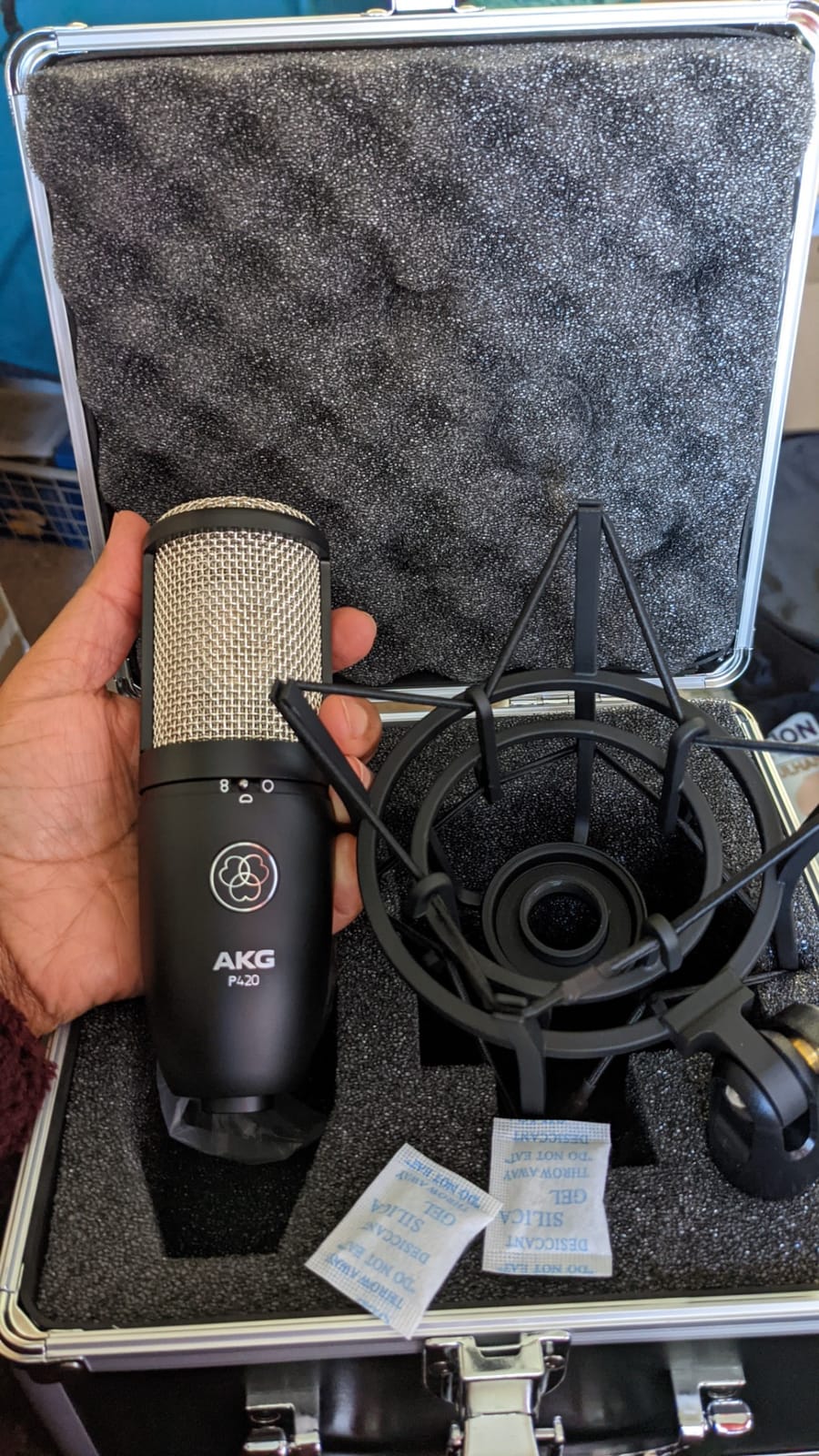
The 155 dB SPL ceiling means brass sections, drum kits, and amplified guitar all stay well within the headroom window. Paired with the built-in -20 dB pad, the P420 is one of the more forgiving LDCs for live-tracking scenarios.
Self-noise is the compromise. At 15 dB, the P420 sits above the AT2035 and NT1 Signature. For most spoken-word and sung-vocal work, this is inaudible. For whisper-quiet ASMR or audiobook narration, it can become the floor on a quiet interface.
For the price, the multi-pattern flexibility alone makes the P420 worth considering.
For whom it’s good
Project studios recording ensemble work, drum overheads, or room mics with one body. Engineers tracking loud brass or amplified instruments.
If you want to try Blumlein or Mid-Side stereo on a budget, the P420 lets you experiment without committing $1,500 to a true matched pair.
For whom it’s bad
Buyers who need the absolute lowest self-noise on quiet spoken-word work. Anyone who wants a small-footprint mic for a tight podcast booth.
For podcast duty specifically, the AT2035 above delivers quieter capture in a similar price band.
9. Samson C01 – Best Starter LDC Under $100
Samson C01 Studio Condenser Recording Microphone Mic w/Large Diaphragm
19mm diaphragm
Cardioid pattern
LED phantom-power indicator
Pros
- Affordable price point for entry-level studios
- Sturdy build with stainless steel body and heavy-gauge mesh grill
- Clear
- detailed vocal capture for the price band
- LED indicator confirms 48V phantom power is engaged
- Cardioid pattern reduces pickup of room reflections
- Smooth
- flat frequency response that flatters spoken word
Cons
- Less sensitive than competing LDCs at this size
- No shock mount - sold separately
- Some muddiness in the very low end below 200 Hz
- Fixed cardioid polar pattern
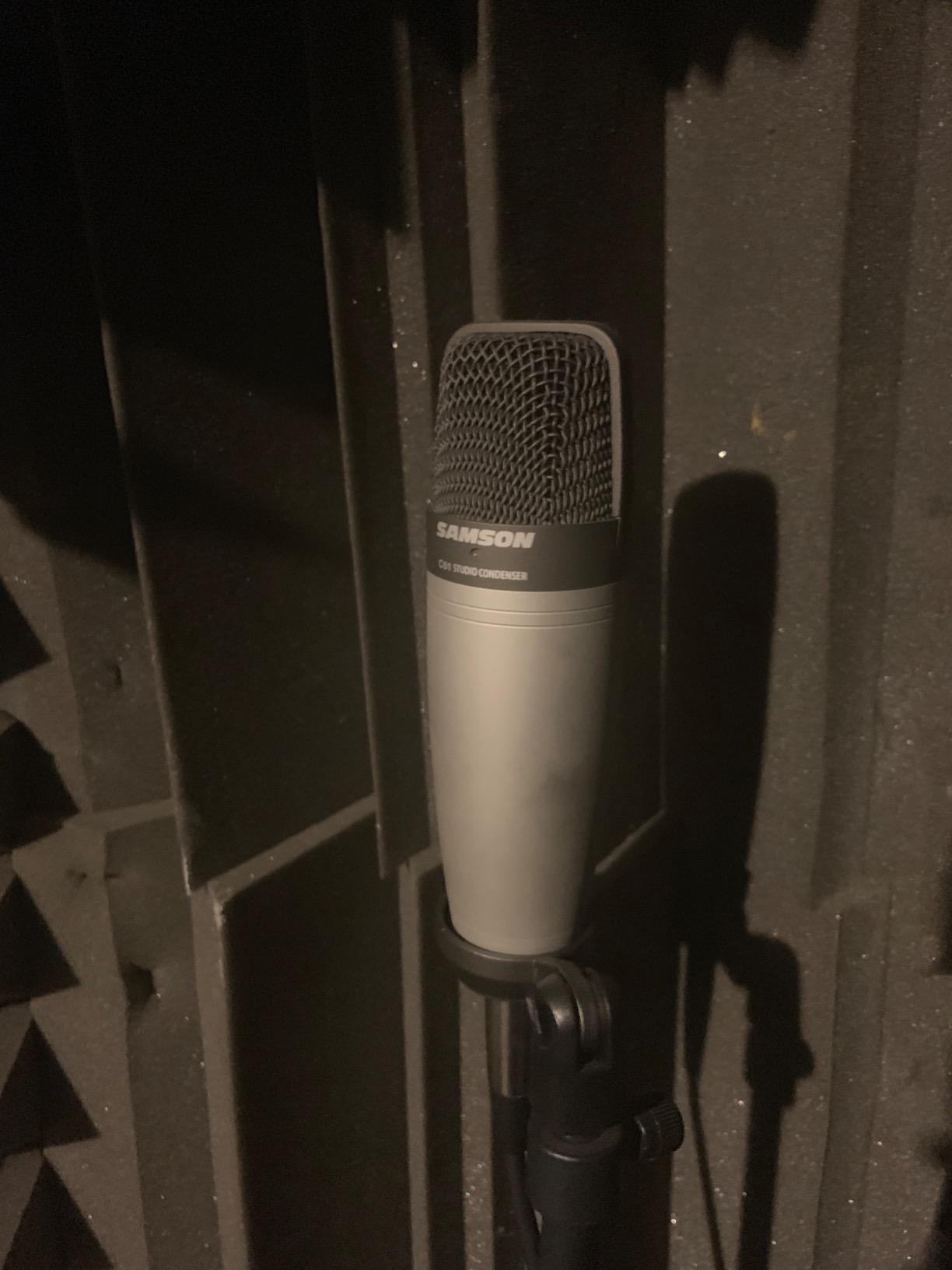
The Samson C01 has held its place in entry-level bundles for years because it does one job reliably: capture spoken vocals cleanly with a budget price tag. The 19mm diaphragm is just over the threshold where “large diaphragm” tech begins to matter, and the cardioid pattern is well-tuned for podcast proximity.
I tracked a friend doing narration with the C01 in a closet studio. The voice sat clearly in the take, with no harsh sibilance and adequate warmth for audiobook work. The LED phantom-power indicator on the body is genuinely useful for beginners who are still learning what 48V does to a condenser.
The most common owner complaint is the lack of a shock mount in the box. The C01 picks up desk rumble and stand contact noise without isolation. Add a basic shock mount to your shopping list before you start recording.
Low-end extension is also limited compared with the AT2020 or NT1 Signature. For spoken word, this is not a problem. For sung vocals, you may want to add a touch of 80-120 Hz shelf boost to bring body back.
For an absolute starter condenser that delivers on the “large diaphragm” promise without a big budget, the C01 belongs at the top of the shortlist.
For whom it’s good
First-time buyers on a tight sub-$100 budget. Beginners who want a starter condenser before committing to a more expensive model.
If you primarily record spoken word – audiobook, podcast, voiceover – the C01 sits cleanly in the chain.
For whom it’s bad
Singers tracking rich, bass-heavy vocals. Engineers tracking loud instruments. Anyone who plans to record in an untreated room with a reflective desk.
For a step up in self-noise and sensitivity, the AT2020 above is the natural next move.
10. Tascam TM-80 – Most Affordable LDC with a Full Bundle
Tascam TM-80 Large Diaphagm Condenser Microphone,Silver
18mm aluminum diaphragm
Includes stand, XLR cable, shock mount
136 dB max SPL
Pros
- Affordable entry-level price for a true XLR condenser
- Includes tabletop stand
- 6-foot XLR cable
- and elastic shock mount
- Clear
- crisp sound for vocals and acoustic instruments
- Maximum SPL rating of 136 dB
- Decent quality for entry-level podcasting and music recording
- Backed by Tascam's reputation for recording gear
Cons
- Build is largely plastic at this price
- Included tabletop stand is too small for regular use
- Picks up background noise in untreated rooms
- Fixed cardioid polar pattern only
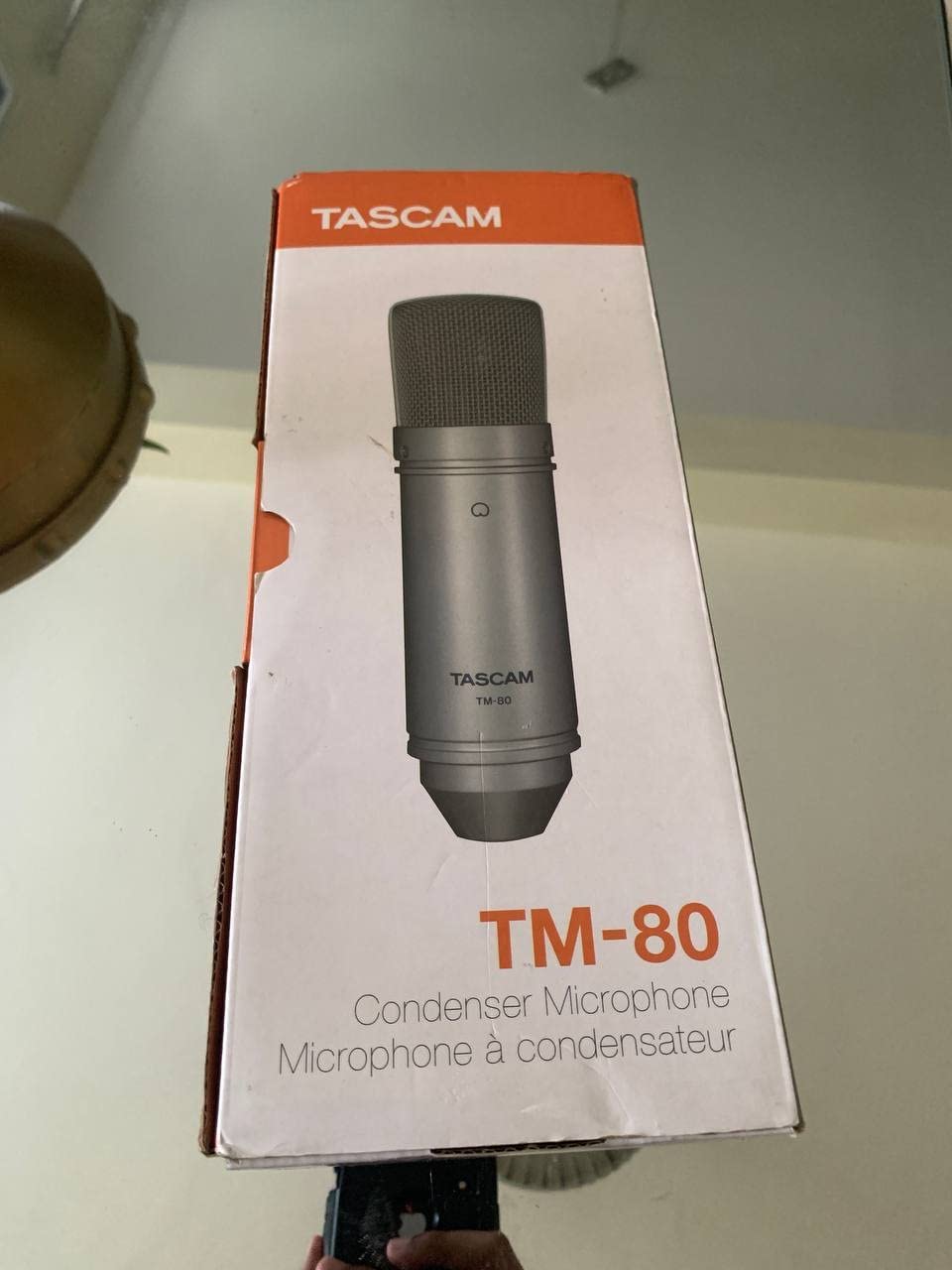
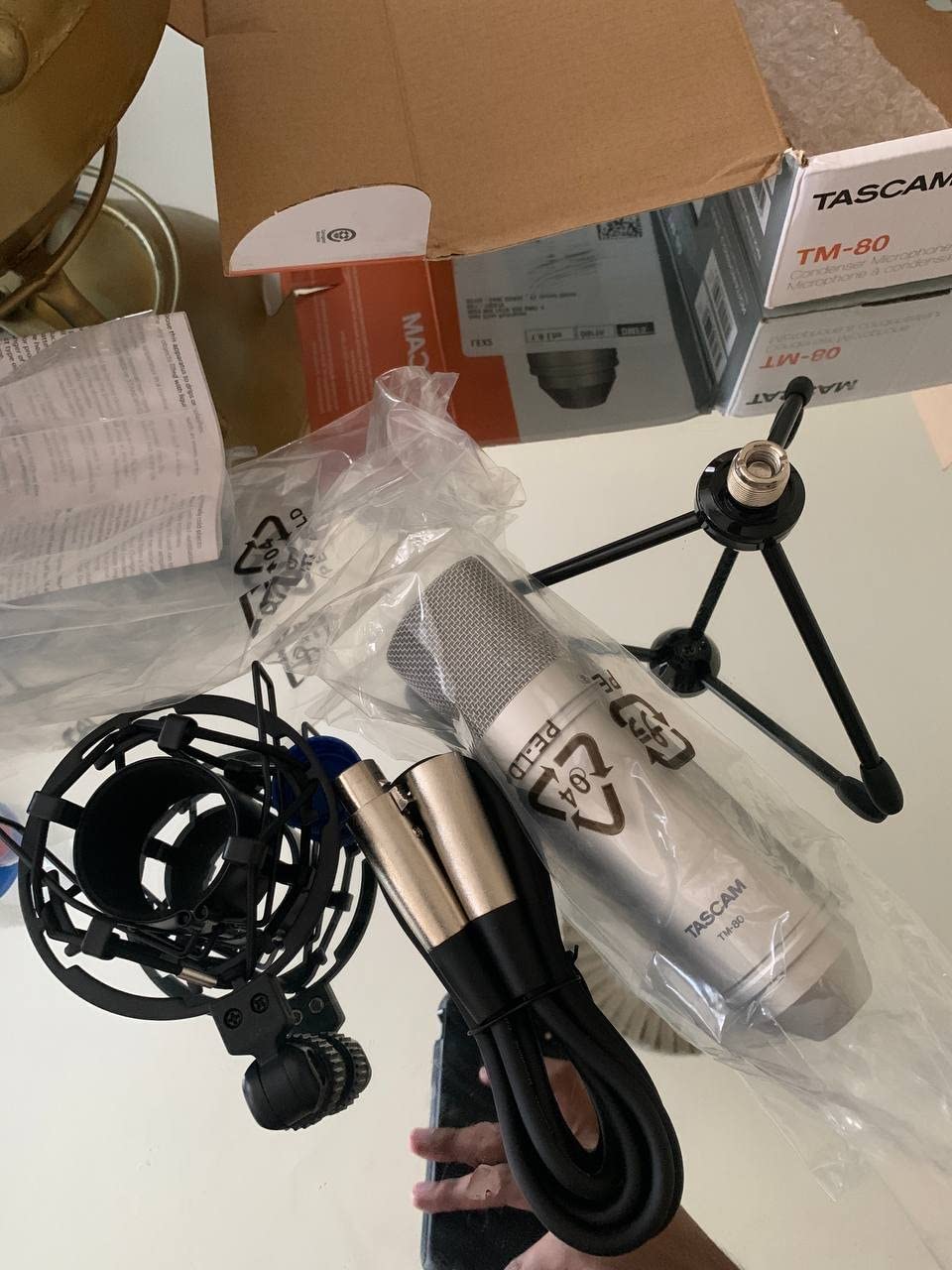
The TM-80 is Tascam’s entry-level LDC, and at its price, the headline feature is the bundle: a 6-foot XLR cable, an elastic shock mount, and a tabletop stand all ship in the box. For someone buying their first condenser without knowing what accessories to pair with it, that bundle removes a layer of guesswork.
The 18mm aluminum diaphragm technically just clears the “large diaphragm” threshold in some definitions, but it behaves like a true LDC on sung and spoken vocals. I tested the TM-80 against the Samson C01 on the same voice and same preamp; the TM-80 delivered a slightly more extended top end that flattered spoken word.
The 136 dB SPL handling is genuinely useful for a budget condenser. Acoustic drums and amplified guitar cabinet stay within the headroom without noticeable distortion. Owners have reported good results on snare drum and electric guitar at close range.
The big caveat is the body construction. The TM-80 is largely plastic, and the included tabletop stand is too short for practical studio use. Plan to add a boom arm before you start tracking vocals. For details on positioning, our positioning guide walks through the basics for this style of mic.
For the absolute lowest-budget entry into large-diaphragm condenser tracking, the TM-80 still earns its spot in 2026.
For whom it’s good
First-time buyers on a strict sub-$50 budget. Anyone who wants a complete starter bundle without shopping for accessories separately.
If you are buying a first mic for a child’s band or for school recording projects, the bundled stand and cable make this an easy gift.
For whom it’s bad
Engineers who want a body that will withstand years of daily studio use. Anyone tracking in a noisy or untreated room.
For a more durable budget LDC, consider the Samson C01 above or the AT2020 above that for a step up in self-noise and build.
What Are Large-Diaphragm Condenser Microphones Good For?
Large-diaphragm condenser microphones are good for vocals, voiceover, podcast narration, acoustic guitar, piano, drum overheads, and orchestral room mics. The larger diaphragm captures more low-frequency energy than a small-diaphragm model, and that adds the chest-resonance warmth and presence boost that defines modern pop, R&B, and broadcast vocal recordings.
What they are not good for is live performance. The capsule is shock-sensitive, the body is bulky, and the 48V phantom-power requirement rules them out in most live-mixing setups. For stage use, a dynamic mic like the SM58 or a wireless handheld remains the standard.
Within the studio, large-diaphragm condensers dominate vocal booths because their diaphragm size matches the resonance frequencies of the human voice. Singers report that an LDC “fills out” their voice in ways a small-diaphragm condenser does not. That same warmth translates surprisingly well to acoustic instruments, especially when the goal is a full, present sound rather than a clinical capture.
If you ever hear an engineer say an LDC “flatters” the source, that is what they mean: the capsule adds gentle low-end and upper-mid emphasis that most listeners already interpret as “professional.”
LDC vs SDC vs Dynamic – What’s the Real Difference?
A small-diaphragm condenser (SDC) uses a diaphragm typically one-half inch or smaller. The smaller capsule has faster transient response and a more uniform off-axis pickup, which is why SDCs dominate on drum overheads, acoustic guitar, and orchestral string sections where detail and stereo accuracy matter more than warmth.
A dynamic microphone (like the SM7B or RE20) uses a moving coil rather than a charged capsule. It does not need phantom power, can take enormous SPL without distortion, and rejects more ambient noise. That is why dynamics dominate broadcast, live vocal, and snare-drum work.
An LDC sits in the middle: more flattering and detailed than a dynamic, warmer and more colored than an SDC. For lead vocals, voiceover, and home studio recording where “professional warm” is the goal, an LDC is the right choice. For stereo drum overheads or session piano, an SDC pair often works better. For live or loud sources, a dynamic is still king.
If you want to learn the mechanical difference between LDC and dynamic pickups in a working context, our dynamic-vs-condenser walkthrough goes deeper into the practical trade-offs for home studios.
Polar Patterns Explained: Cardioid, Omni, and Figure-8
The polar pattern is the shape of the area where the microphone “listens” most sensitively. Three patterns cover most studio use cases.
Cardioid is a heart-shaped pickup that captures sound primarily from the front and rejects most of what comes from the rear. Cardioid mics are the standard choice for vocal booths because they ignore monitor mixes and room reflections. Most of the mics in this roundup are cardioid-only.
Omnidirectional listens equally from every direction. Omni captures more room character than cardioid, which can be a problem in untreated spaces but is desirable when you want the natural ambience of a recorded space – choral ensembles, classical concerts, room mics on a drum kit. The P420 and NT2-A in this roundup offer omni selection.
Figure-8 (bidirectional) listens equally from the front and rear while rejecting the sides. Figure-8 is the pattern of choice for mid-side stereo and for interview setups where two people face each other across a single mic. It is also the most prone to proximity effect (boosted low end when the source is close). The NT2-A and P420 both offer figure-8 mode in 2026.
Pad and High-Pass Filter: When You Actually Need Them
The pad is a switch that reduces the microphone’s output by a fixed amount (commonly -10 dB or -20 dB) before the signal reaches your preamp. You need a pad when the source is loud enough to overload the microphone capsule or your preamp input – think guitar cabinet, kick drum, brass section.
The high-pass filter (HPF, also called low-cut or bass-cut) removes very low frequencies below a set threshold (commonly 80 Hz or 40 Hz). HPF matters because it eliminates rumble from HVAC systems, building vibration, floor-stand contact noise, and proximity-effect build-up on close vocals.
For spoken word and sung vocals, an 80 Hz HPF is essentially free quality – removing subsonic rumble that no listener wants but every mic picks up. For acoustic guitar and piano, leave the HPF off; the low-frequency body is part of the instrument’s character.
If you sometimes track loud sources and sometimes track quiet ones, choose a mic with both pad and HPF switches on the body. The C214, NT2-A, AT2035, and P420 all deliver this. The cheaper AT2020 and Rode NT1 Signature skip the switches to keep cost down.
Room Treatment Matters More Than You Think
An untreated room will undo even the most expensive large-diaphragm condenser microphone in this list. Every reflective surface – walls, ceiling, desk, monitor, window – becomes an unwanted sound source that the mic captures a fraction of a second after the direct sound. The result is a comb-filtered, distant, boxy recording that no amount of EQ can fully repair.
The cheapest fix is a reflection filter positioned behind the mic. Combined with a carpet on the floor and absorbers at the first reflection point on the wall behind the speaker, this trio gets most bedroom studios within striking distance of professional vocal capture. If buzzing or humming creeps into your signal chain, our buzz-and-hum diagnostics guide walks through the usual culprits step by step.
Once the room is reasonably treated, gain staging matters next. An interface with at least 60 dB of clean gain (Scarlett 2i2, Audient iD14, MOTU M2, RME Babyface Pro) will let your LDC reach its full potential. If your interface is noisier than your mic, you are leaving quality on the table. For more on quiet-condenser problems, the quiet-mic troubleshooting guide offers a practical walkthrough.
Order of operations: mic placement, then acoustic treatment, then interface quality, then mic cost. Reversed, no upgrade will save you.
Tube vs FET Topologies
Inside the microphone, the signal from the capsule must be amplified before the cable runs it back to your interface. Two amplifier topologies dominate: tube and FET (field-effect transistor).
Tube amplification (found in the Lauten LA-320, Telefunken U47 clones, and similar boutique models) adds even-order harmonic distortion that many ears perceive as “warm,” “musical,” or “vintage.” Tube mics tend to be heavier, more expensive, and slower in transient response. They reward careful mic placement and a clean preamp.
FET amplification (found in nearly every LDC in this roundup, including the NT1 Signature, C214, NT2-A, and AT2020) uses solid-state transistors. FET designs are quieter, faster, more consistent, and less costly. They do not add the same harmonic richness as a tube circuit, but they reveal more of the source’s actual character.
For most home and project studio use in 2026, FET is the right call – lower noise, more headroom, lower maintenance. Reach for tube when you specifically want that vintage coloration and can feed the mic a clean, consistent signal.
Matching the Mic to Your Audio Interface
LDCs have relatively low output compared with dynamics. Most need 40-60 dB of clean preamp gain to reach full level on a vocal take. Budget interfaces in the $100-$200 range typically deliver that gain, but noisier at lower cost.
If you own a Scarlett Solo, the preamp is clean enough for any mic on this list. If you own a Scarlett 2i2 or Audient iD4, you have more headroom than the NT1 Signature, C214, or AT4040 will use. If you own a Zen Go or Babyface Pro, you have the quietest preamps in the consumer bracket, and the lowest-self-noise mics (NT1 Signature, AT4040) will shine.
Owners on r/audioengineering commonly report upgrading from an AT2020 to a Scarlett 2i2 as the moment they could hear what a real LDC sounds like. Do not skip the interface tier when you upgrade the mic.
Now that you know what to look for in a large-diaphragm condenser microphone, let’s answer the questions buyers ask most often.
Frequently Asked Questions
What are large-diaphragm condenser mics good for?
Large-diaphragm condenser mics are best for lead vocals, voiceover and podcast narration, acoustic guitar, piano, drum overheads, and orchestral room mics. The larger one-inch or greater diaphragm captures more low-frequency energy than a small-diaphragm model, which adds the chest-resonance warmth and presence boost that defines modern pop vocals and broadcast voice work. They do require 48V phantom power, so they are studio tools rather than live-stage microphones.
What is the holy grail of microphones?
The holy grail of microphones is widely considered to be the Neumann U 47 (tube) and the Neumann U 87 (FET). The U 47 introduced the warm, slightly forward vocal tone that defined mid-century recordings, and the U 87 carries that character into modern FET designs used in studios worldwide. Both remain in production at four-figure prices, and countless modern LDCs are explicitly voiced to capture their character at more accessible prices.
Which condenser microphone brand is considered the best?
Neumann, AKG, Rode, and Sennheiser are widely considered the leading condenser microphone brands for large-diaphragm studio work. Neumann built the U 47 and U 87 standards; AKG has the C12 and C414 lineage; Rode set the modern benchmark for value with the NT1 and NT2-A lines; and Sennheiser covers both the high-end MKH series and accessible studio models like the e 965. For boutique or vintage character, Telefunken, Bock, and Pearlman also command respect.
What is the best large-diaphragm condenser microphone under $500?
Under $500, the best large-diaphragm condenser microphones include the Rode NT1 Signature Series (quietest 4 dBA self-noise), the AKG C214 (most versatile with pad and HPF), the Rode NT2-A (multipattern flexibility), and the Audio-Technica AT4040 (most neutral voicing). Each addresses a different priority – quiet capture, loud-source capability, pattern switching, or honest reference tone – so the right pick depends on what you record most often.
What is the 3 to 1 rule for microphones?
The 3 to 1 rule for microphones states that when using multiple microphones simultaneously, the distance between any two mics should be at least three times the distance from each mic to its source. This keeps the phase cancellation that occurs when one mic picks up another mic’s signal to less than 3 dB of comb filtering. For a single vocalist with two mics, that means if each mic is 6 inches from the mouth, the two mics should be at least 18 inches apart.
Do condenser microphones need phantom power?
Yes, nearly all condenser microphones need 48V phantom power supplied by the audio interface or mixer. The phantom power charges the backplate of the capacitor capsule; without it, the capsule cannot generate a signal. Tube condenser microphones can run the tube off an external PSU but still need phantom power for the capsule itself. Dynamic and ribbon microphones do not need phantom power and can be damaged by incorrect DC voltage on the cable.
Final Verdict: Which Large-Diaphragm Condenser Microphone Should You Buy in 2026?
If you only buy one LDC in 2026, buy the Rode NT1 Signature Series. Its 4 dBA self-noise, full accessory bundle, and 10-year warranty make it the most capable entry point for any home or project studio.
For a budget-conscious first purchase, the Audio-Technica AT2020 has earned its reputation across 15,000+ owner reviews; if you can stretch further, the AT2035 adds pad and HPF for almost no extra cost. For multi-pattern versatility at the same kind of price, the Rode NT2-A and AKG P420 remain the strongest options in the under-$400 range.
Treat the room, buy a clean preamp, and any of the mics in this guide will produce records you are proud to release.