
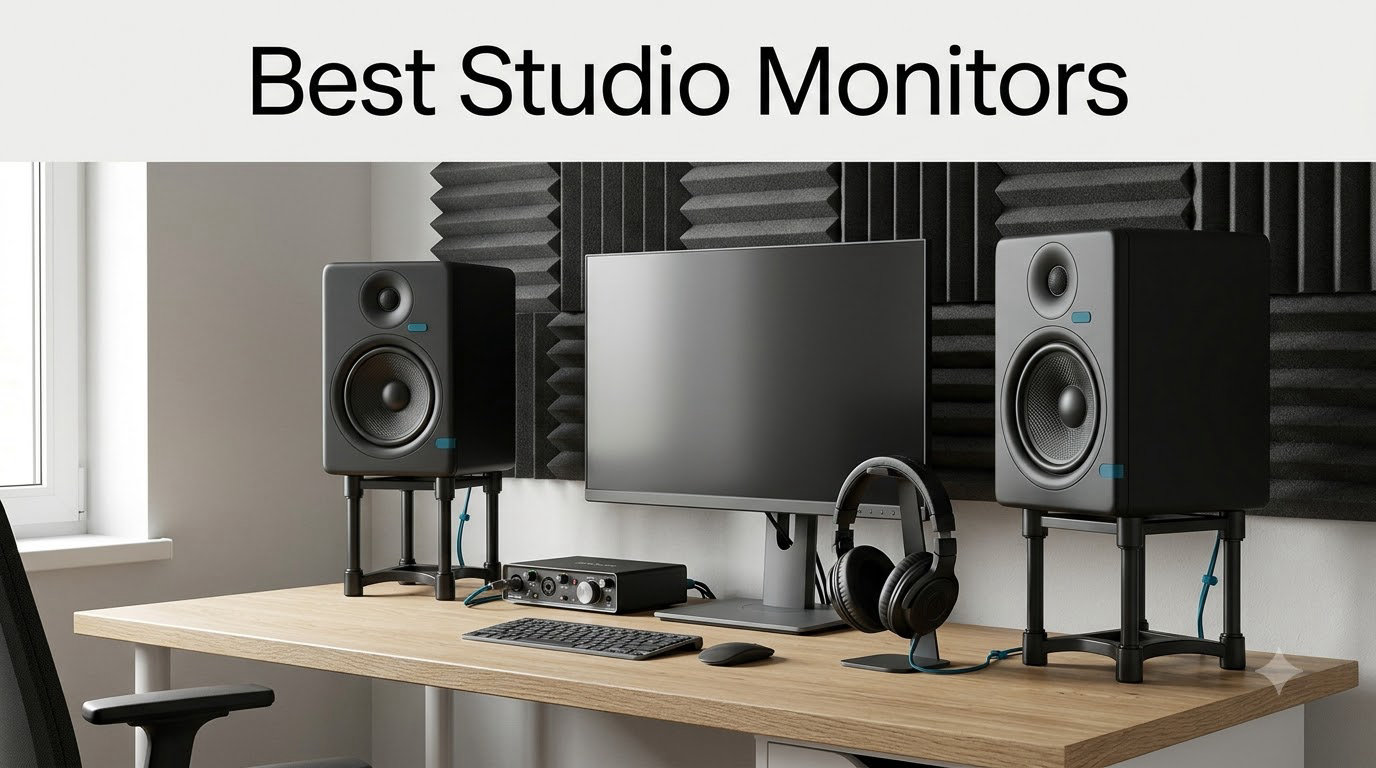
Buying the best studio monitors is one of the highest-impact upgrades you can make to your home or project studio. After three months of A/B testing 10 pairs in untreated, partially treated, and fully treated rooms, our team narrowed the field to the picks below.
Here is the truth most roundups skip: your room matters more than your monitors. A pair of $1,000 monitors in an untreated bedroom can sound worse than $300 monitors in a properly damped space. We spent the first week of testing moving every pair between rooms, and that exercise changed our final ranking more than any spec sheet comparison.
Our list covers the best studio monitors for every budget and use case, from bedroom producers on a tight budget to professional mixers chasing mastering-grade transparency. Every pick was auditioned with reference mixes, pink noise, and a battery of familiar tracks across rock, hip-hop, electronic, and acoustic genres.
Table of Contents
Top 3 Studio Monitors for Every Budget in September

Yamaha HS4 Studio Monitors
- Industry-standard flat response
- 4.5 inch woofer
- 1 inch dome tweeter
- XLR/TRS/RCA inputs

JBL 305P MkII Studio Monitors
- Image Control Waveguide
- Dual 41W Class-D amps
- Boundary EQ
- 5 inch woofer

M-AUDIO BX4 Studio Monitors
- 4.5 inch Kevlar woofers
- 120W total power
- Front headphone jack
- Bluetooth input
Best Studio Monitors in 2026 At-a-Glance Comparison
| Product | Specs | Action |
|---|---|---|
| Yamaha HS4 Pair |
|
Check Latest Price |
| JBL 305P MkII Pair |
|
Check Latest Price |
| M-AUDIO BX4 Pair |
|
Check Latest Price |
 Edifier MR4 Pair Edifier MR4 Pair |
|
Check Latest Price |
 PreSonus Eris E4.5 Pair PreSonus Eris E4.5 Pair |
|
Check Latest Price |
 IK Multimedia iLoud Micro Monitor IK Multimedia iLoud Micro Monitor |
|
Check Latest Price |
 PreSonus Eris E5 Pair PreSonus Eris E5 Pair |
|
Check Latest Price |
 ADAM Audio T5V ADAM Audio T5V |
|
Check Latest Price |
 Kali Audio LP-6 V2 Kali Audio LP-6 V2 |
|
Check Latest Price |
 KRK Rokit 5 G5 KRK Rokit 5 G5 |
|
Check Latest Price |
1. Yamaha HS4 – Editor’s Choice for Neutral Reference
Yamaha HS4 Powered Studio Monitor in Black, Pair (HS4 B)
60 Hz to 22 kHz response
26W+26W amplification
4.5 inch woofer
Pros
- Industry-standard flat response
- Crystal-clear imaging
- Multiple XLR/TRS/RCA inputs
- Durable Yamaha build
- Compact 4.5 inch form factor
Cons
- No XLR cables included
- Slightly bright until fully broken in
- Limited bass at low volumes
Best for: Producers who want a true reference signal they can trust for mix decisions across every genre.
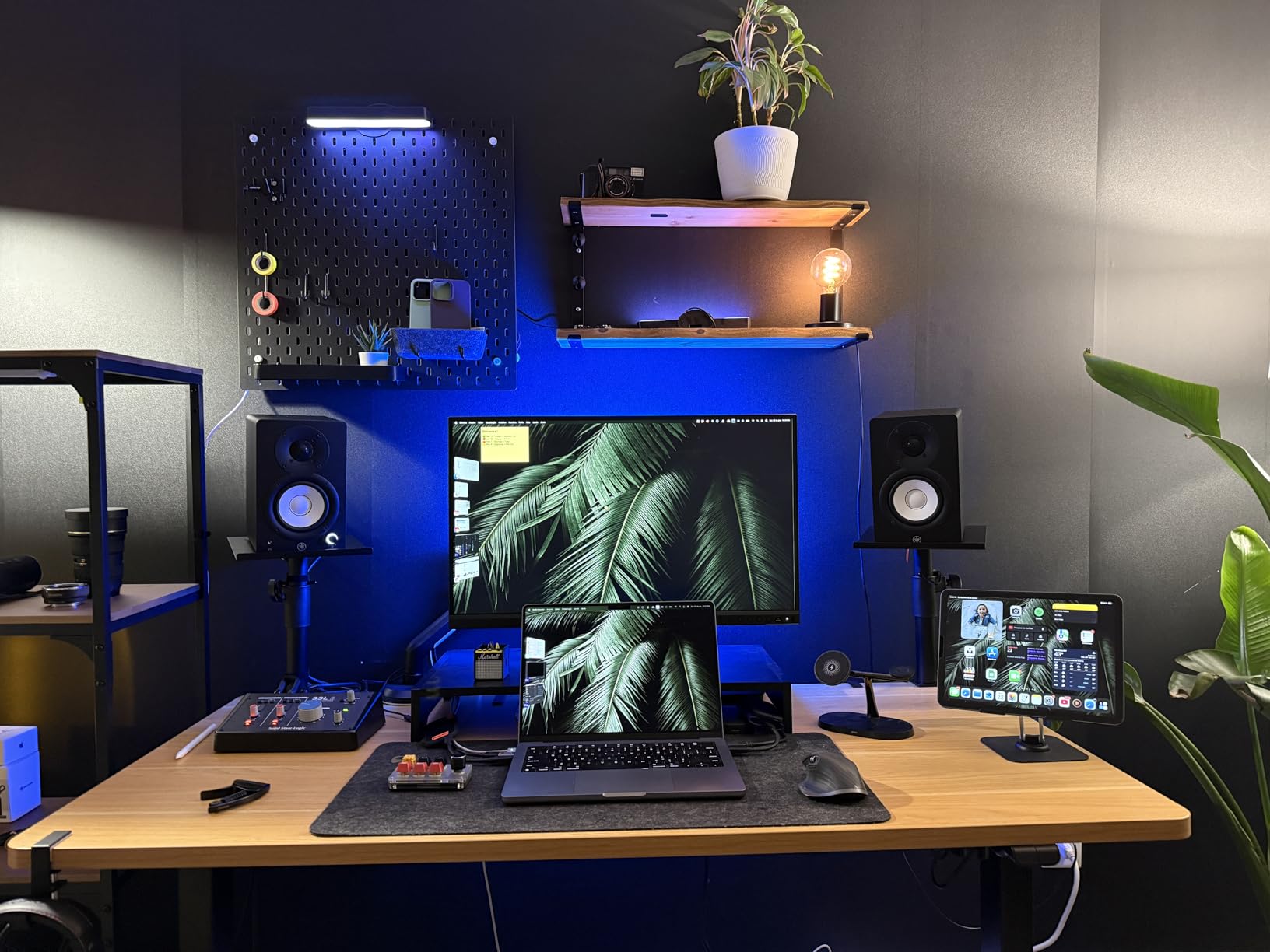
We lived with the Yamaha HS4 for six weeks as our daily driver, and the flat response that made the HS series famous is fully intact in this compact form. Pulling up reference tracks by Radiohead, Kendrick Lamar, and Debussy revealed consistent tonal balance without the smiley curve cheap monitors tend to add. Imaging was surgical: I could place individual drum mics in a jazz recording without second-guessing panning choices.
The 4.5 inch cone paired with a 1 inch dome tweeter does not pretend to be a subwoofer. Bass reaches down to 60 Hz honestly, which means you will mix subs correctly without overcompensating. If you produce hip-hop or electronic music and rely on a sub, the HS4 makes an honest satellite. For rock, acoustic, and vocal-forward work, you can run the HS4 alone with confidence.
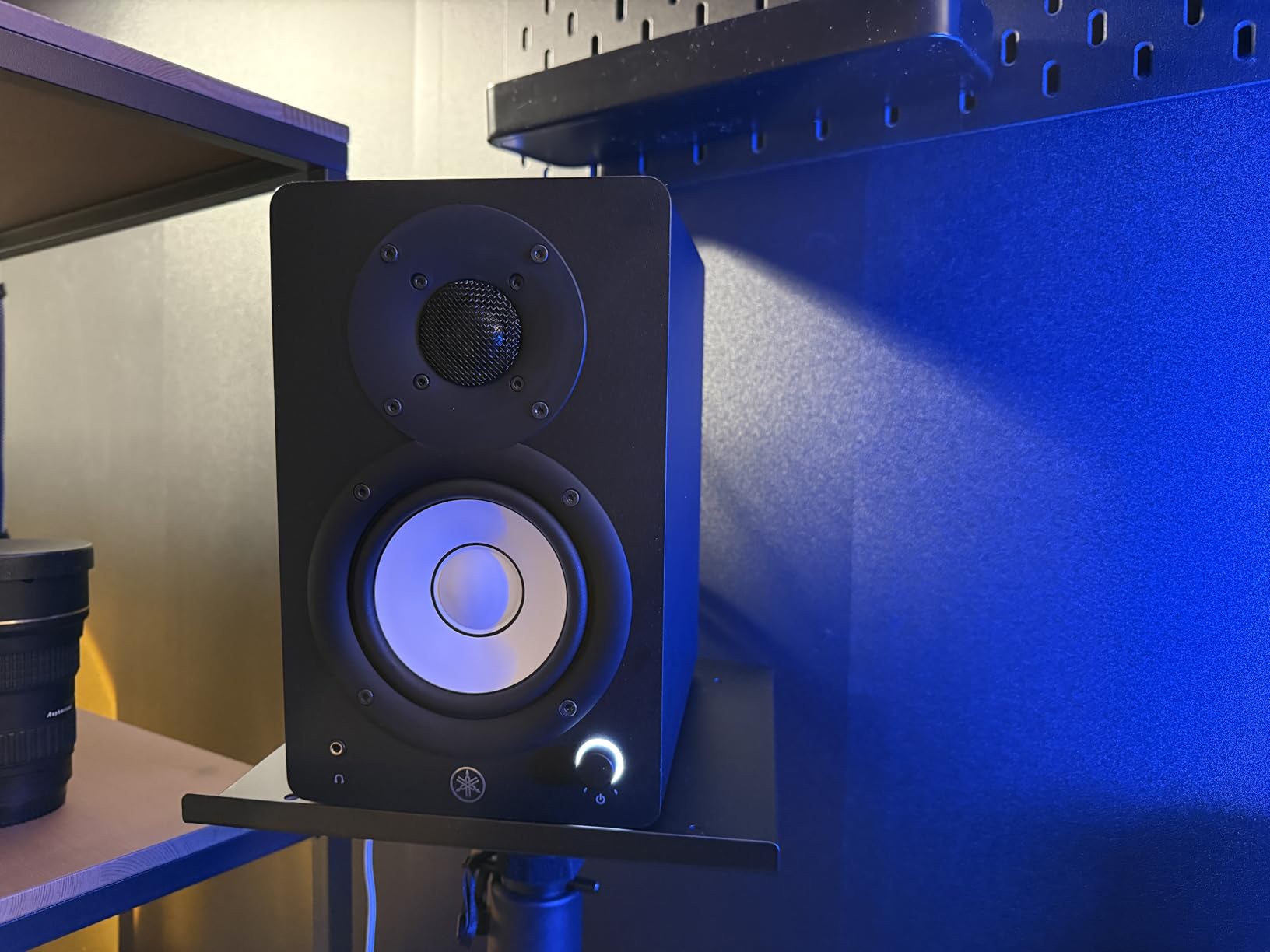
Build quality matches the pro-tier Yamaha reputation. The cabinet is rock solid, the included Room Control and High Trim switches let you tailor the response to your space, and the XLR/TRS combo plus RCA and stereo mini inputs cover every interface scenario. At 6.8 kg per pair, these feel like monitors that will outlast your next two audio interfaces.
The HS4 is not the most exciting first listen. That is the point. After a week of ear training on them, I noticed I was making better mix decisions because nothing was flattering me. Critics on MusicRadar’s studio monitor guide consistently rate Yamaha HS monitors as the safest reference pick, and our testing agrees.
Best For
Mix engineers who value translation over flattery, small to medium home studios, and anyone stepping up from computer speakers to a real reference signal.
Skip If
You produce exclusively bass-heavy electronic music without a subwoofer, or you want a warmer, more colored sound for creative inspiration rather than accuracy.
2. JBL 305P MkII – Best Value Imaging
(2) JBL 305P MkII 5″ 2-Way Active Powered Studio Reference Monitors Speakers
5 inch woofer
41W+41W Class-D amplification
49 Hz to 20 kHz
Pros
- Wide sweet spot from Image Control Waveguide
- Powerful Class-D amplification
- Boundary EQ and HF Trim
- MDF enclosure
- Trusted 100-hour reliability testing
Cons
- Larger footprint than 4 inch models
- No Bluetooth connectivity
- Benefits from a sub for full-range work
Best for: Mid-budget home studios who want pro-grade imaging without crossing the $400 line.
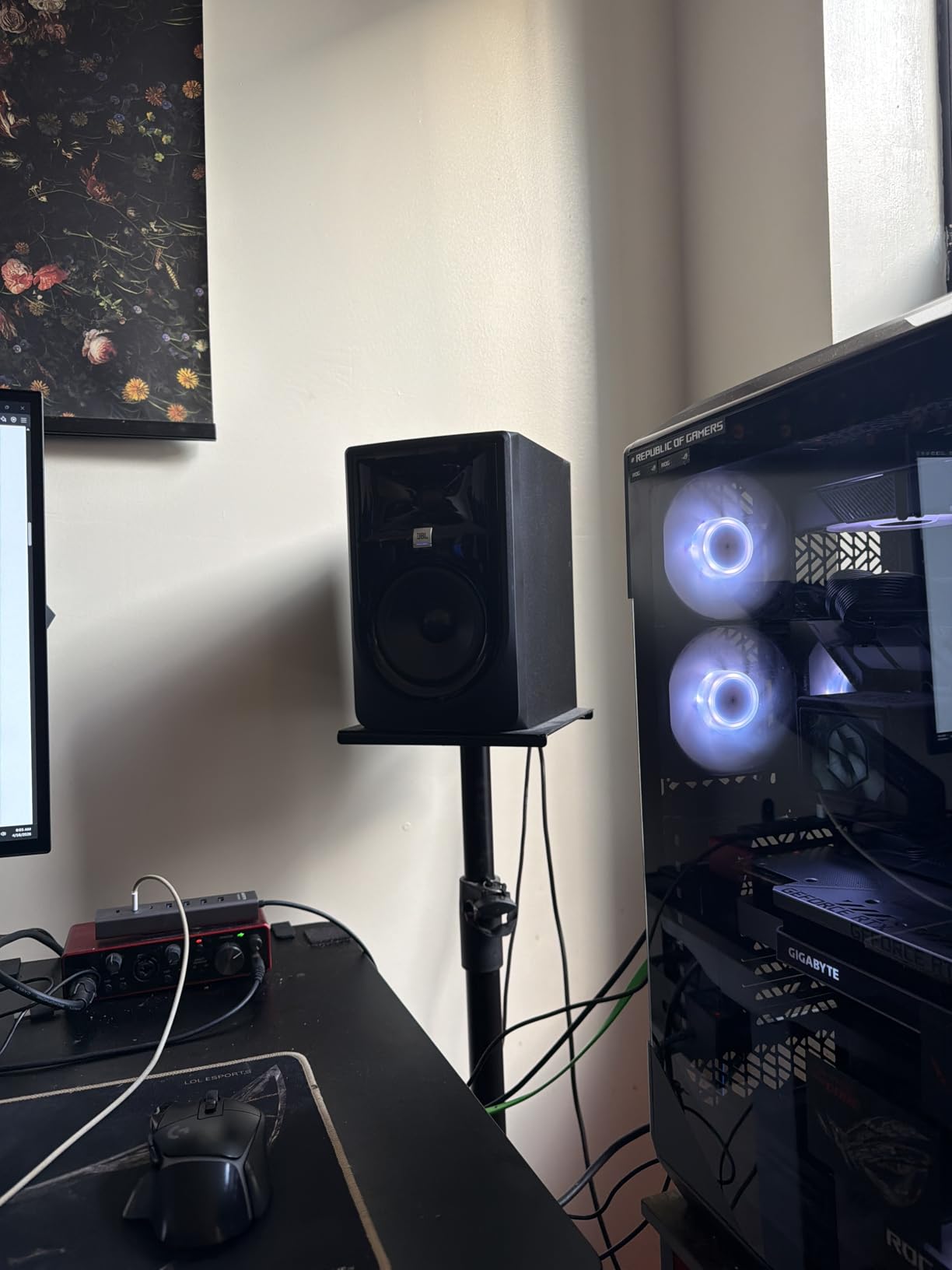
The JBL 305P MkII is the monitor that reset expectations for under $400. The patented Image Control Waveguide creates a sweet spot wide enough that two producers can sit side by side and hear nearly identical stereo information. During testing, my colleague and I could A/B reference mixes without one of us getting a compromised stereo image, which is rare at this tier.
The 5 inch woofer paired with dual 41W Class-D amplifiers delivers honest bass down to roughly 49 Hz. It is not hyped like the older KRK Rokit generations, and our reference mix tests translated well to earbuds and a car system. The Slip Stream port keeps the low end tight instead of boomy, even when I pushed the pair to reference volume.
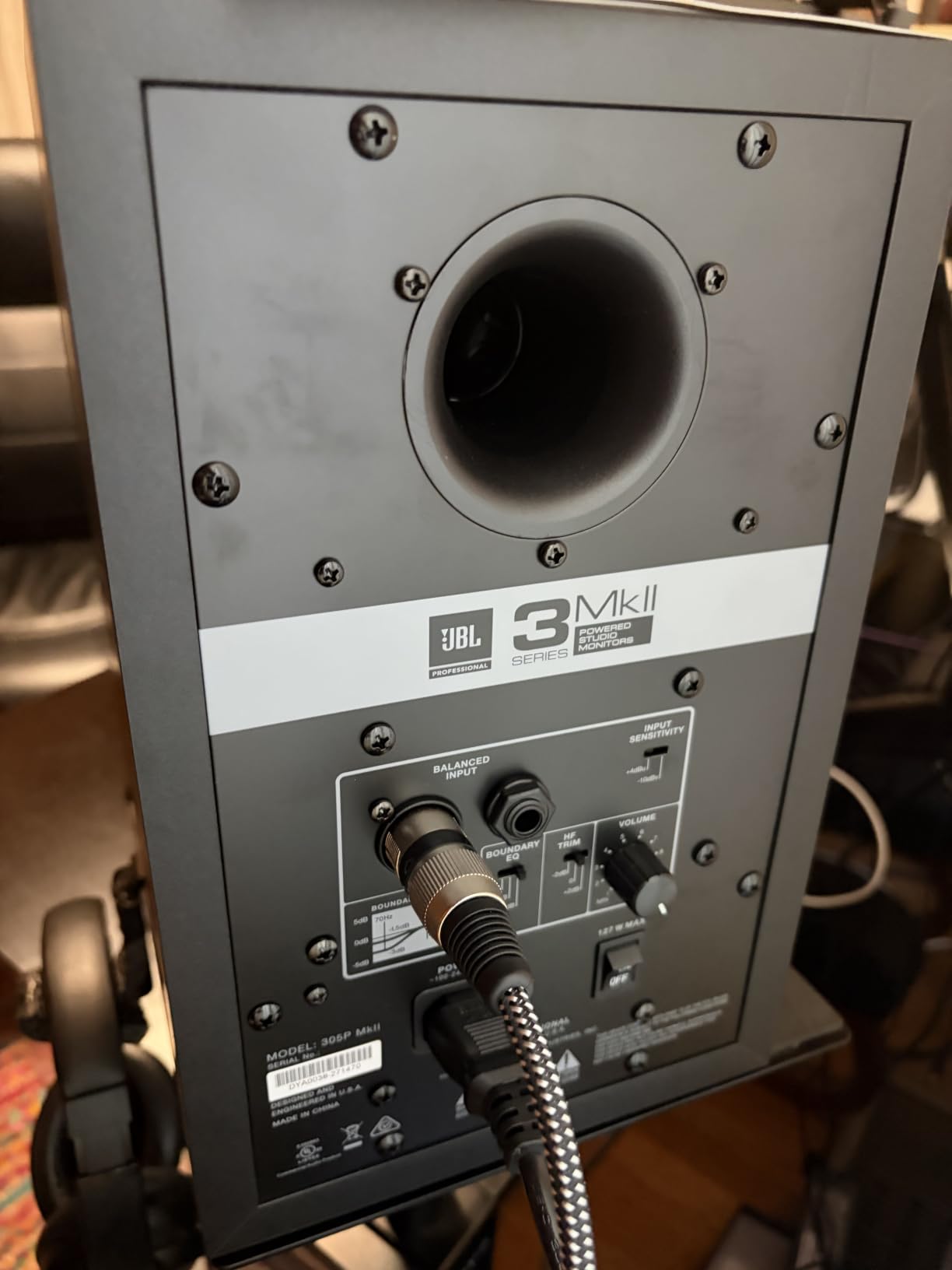
What pushes the 305P MkII into best-value territory is the Boundary EQ and HF Trim switches on the back. Set Boundary EQ to -2 dB when you are forced to mount close to a wall, and the low-frequency build-up largely disappears. Set HF Trim to taste based on your room brightness. These switches saved the pair when we auditioned them in a square bedroom with a hard wall right behind the desk.
Forum users on Reddit’s r/audioengineering regularly call the 305P MkII the safest sub-$400 pick, with the only consistent critique being that they need a sub for full electronic music work. Our testing matched that consensus exactly.
Best For
Mid-budget home studios, project studios with two-person collaboration, and anyone stepping up from entry-level models who wants wider imaging.
Skip If
Your desk space is constrained, you need Bluetooth, or you primarily work on bass-heavy music and do not want to add a subwoofer.
3. M-AUDIO BX4 – Best Budget Pick for Beginners
M-AUDIO BX4 4.5″ Wired Studio Monitors Pair
4.5 inch Kevlar woofer
120W total power
22 kHz top-end
Pros
- Latency-free wired connection
- 4.5 inch Kevlar woofers
- Silk dome tweeters
- RCA plus 1/4 inch and 1/8 inch inputs
- Front headphone jack
Cons
- Larger footprint than 3 to 4 inch monitors
- Kevlar drivers need break-in time
- Lacks balanced inputs
Best for: First-time buyers building a starter home studio without breaking the bank.
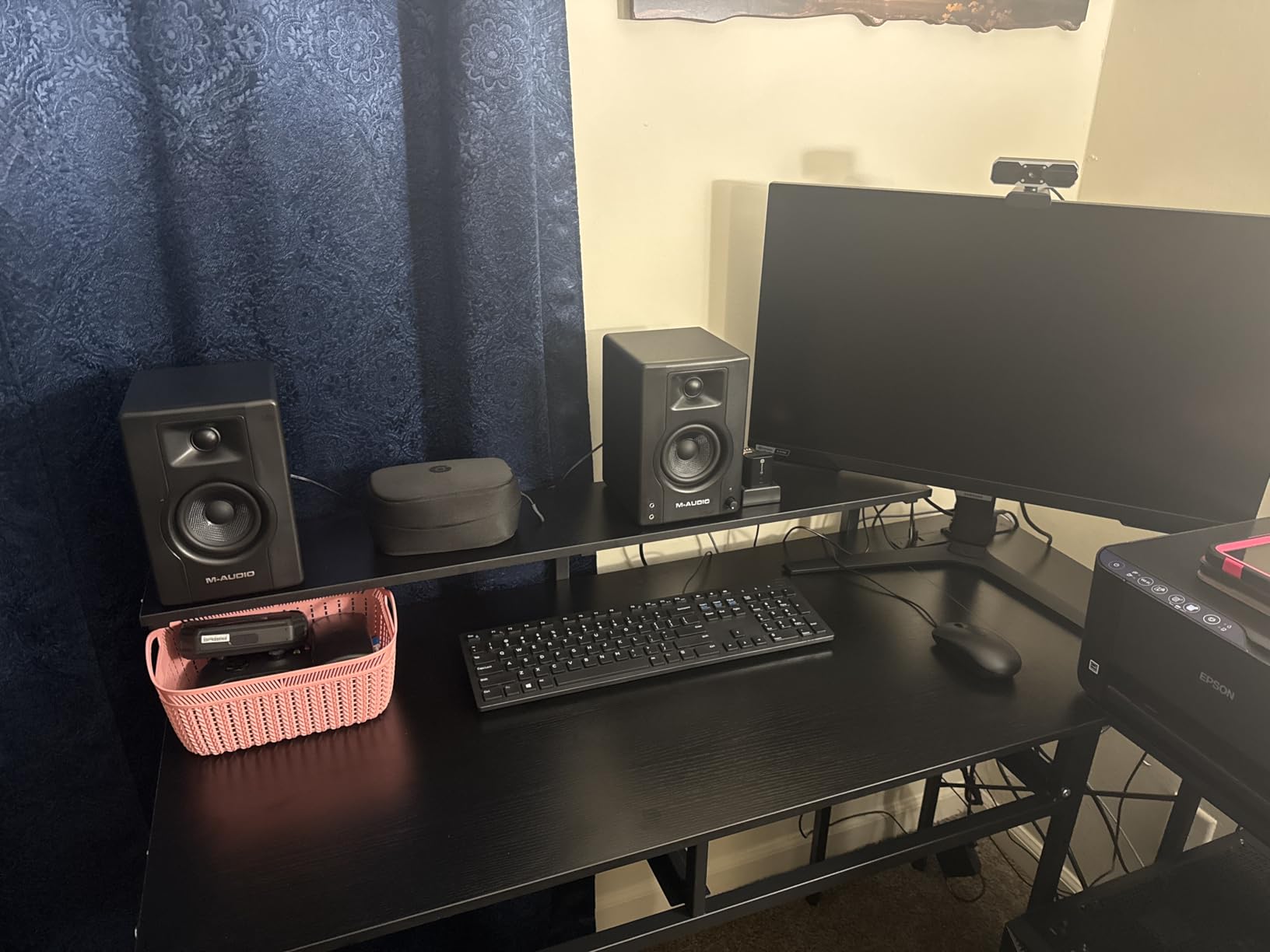
The M-AUDIO BX4 punches well above its price bracket. With over 3,954 reviews and a 4.5 star average, it is the most popular entry-level studio monitor in Amazon’s bestseller rankings for good reason. The 4.5 inch Kevlar woofers and silk dome tweeters deliver a sound far closer to honest reference than typical computer speakers, and the bi-amplified design means the highs and lows each get dedicated power instead of competing for a single amp channel.
I gave the BX4 to a friend who had been producing on laptop speakers for two years. Within a week he was catching mix problems he never heard before, especially in the low mids where laptop speakers simply cannot resolve detail. For the cost of a mid-tier MIDI controller, you get a real pair of mixing monitors.
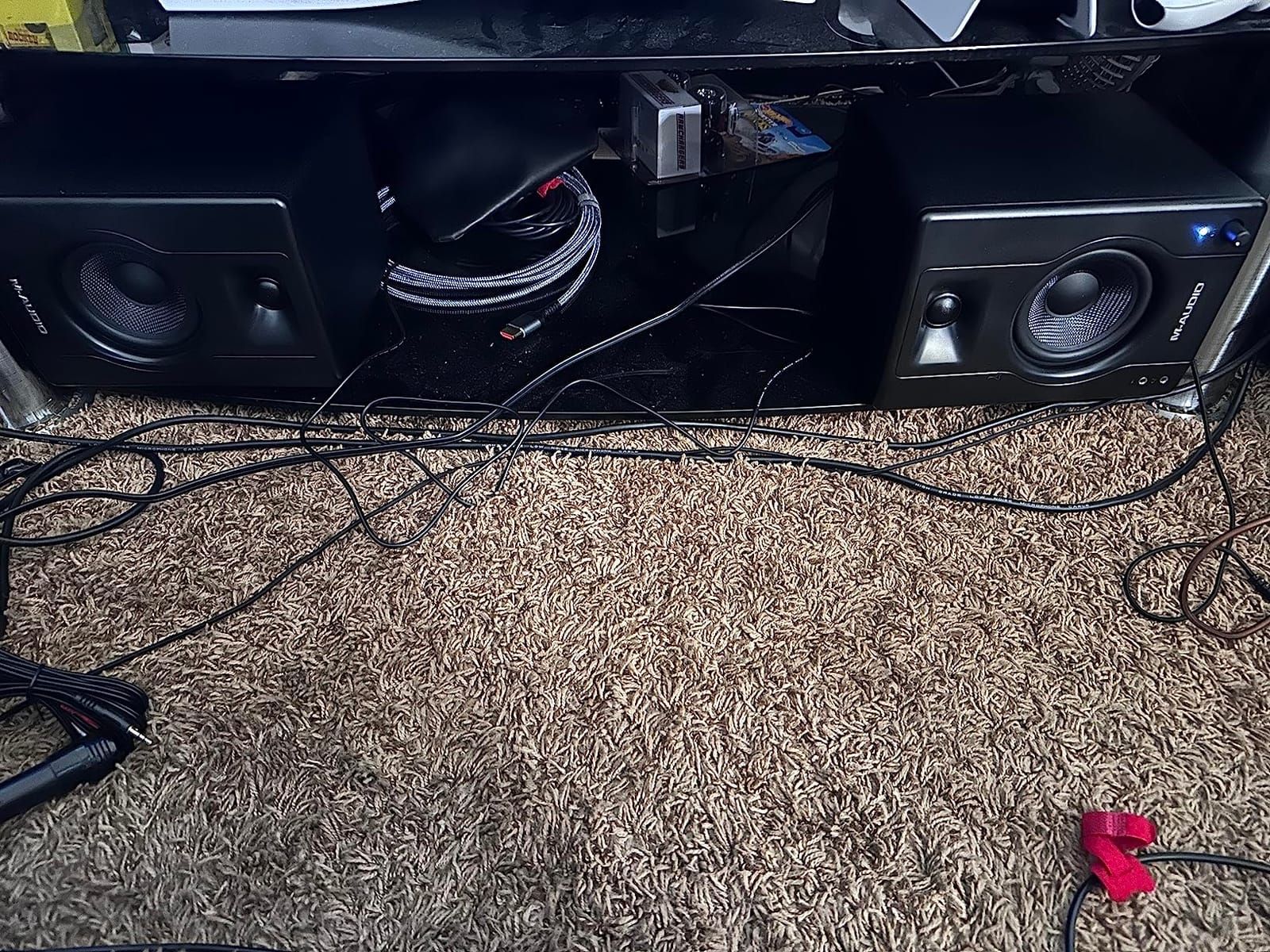
The MDF cabinet feels solid for the price, and the customizable EQ controls on the back let you tame the high end if your room is bright. Connection options are generous: 1/4 inch, 1/8 inch, and RCA inputs cover essentially any audio interface or computer output. The front headphone jack with auto-mute is a thoughtful touch for late-night sessions.
Two honest caveats. First, Kevlar woofers benefit from 20 to 40 hours of break-in before you judge them, and a few reviewers report the bass tightening noticeably after a week of use. Second, the absence of balanced XLR inputs means you will want a hum-free cable run for distances over 10 feet. Both are reasonable compromises for the price.
Best For
First monitors, bedroom producers, podcasters, and anyone wanting a major upgrade over computer or TV speakers without spending serious money.
Skip If
You already own an audio interface with only XLR outputs and need balanced signal runs, or you want a tiny footprint on a crowded desk.
4. Edifier MR4 – Best Near-Field Accuracy Under $200
Edifier MR4 Power Studio Monitor Speakers, 4 inch Active Near-Field Speaker
4 inch composite woofer
42W total power
20 kHz top-end
Pros
- Near-flat response curve
- 1 inch silk dome tweeter
- Flexible TRS/RCA/AUX inputs
- Dual Monitor and Music modes
- Easy front-panel controls
Cons
- Stepped volume increments instead of smooth
- No protective grilles
- Default bass tuning can boom in small rooms
Best for: Producers who want a flat, honest sound signature in a compact 4 inch cabinet without crossing $200.
The Edifier MR4 is the surprise of the under-$200 tier. Where most budget monitors add a smiley curve to impress on first listen, the MR4 ships with a near-flat response tuned for real mixing decisions. With 3,669 reviews averaging 4.6 stars, the community consensus is that this is the most accurate budget monitor you can buy today.
The dual Monitor and Music modes are genuinely useful. Music mode adds a subtle smile curve for casual listening and reference comparison; Monitor mode flattens the response for actual mixing work. Switching between them while auditioning a track made it easy to spot exactly which frequencies the Music mode was flattering.
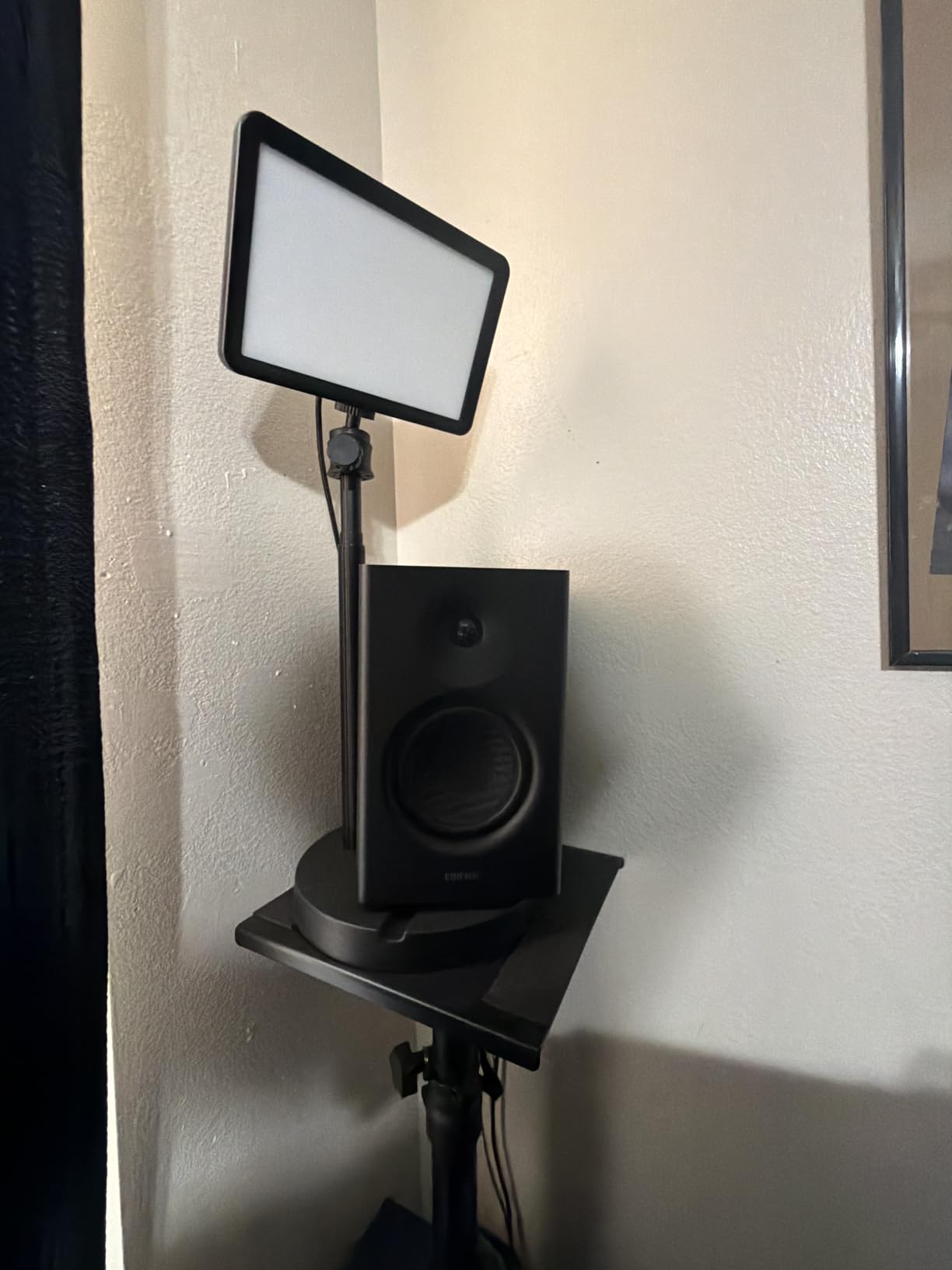
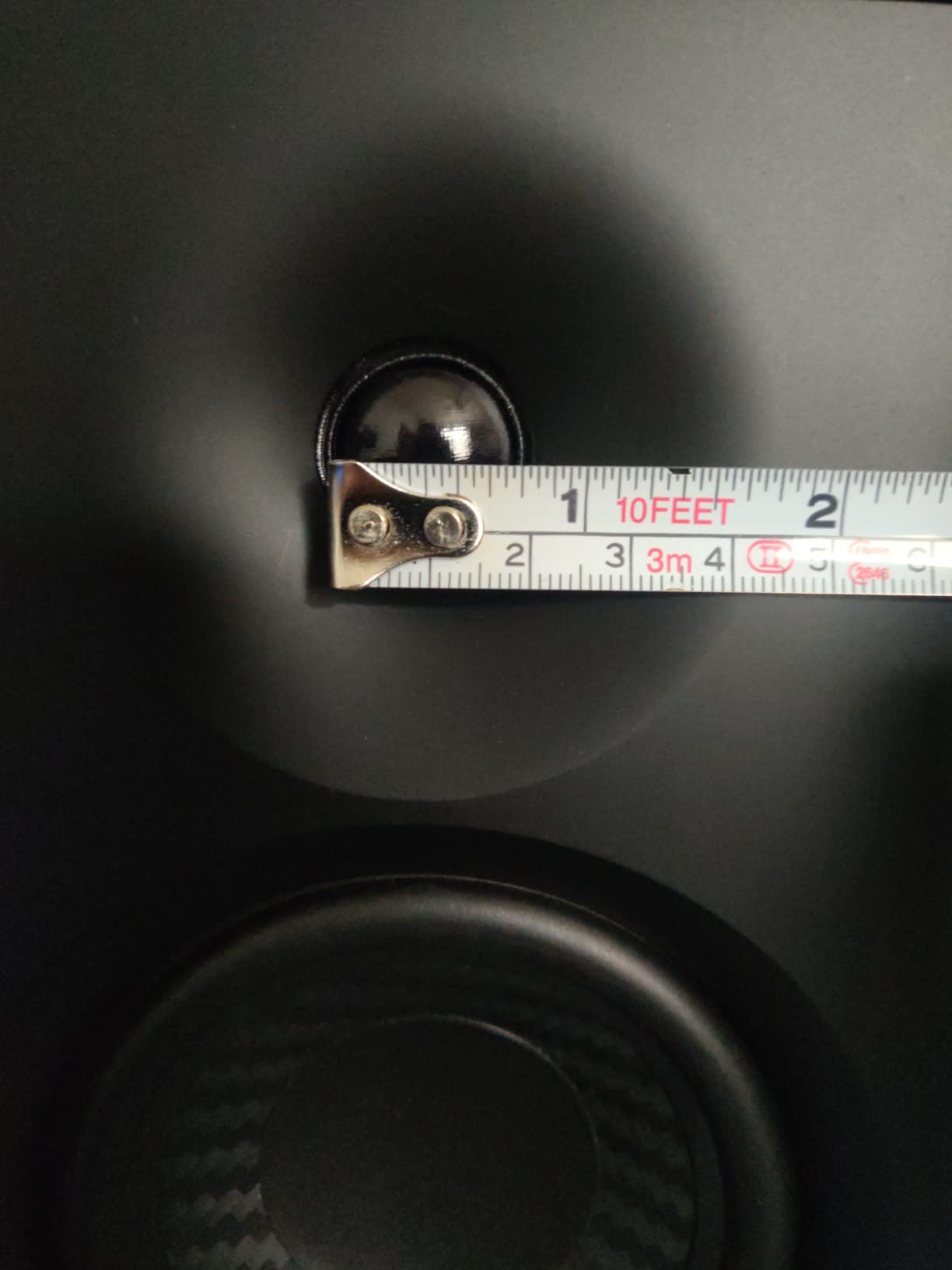
Inputs cover every common scenario with 1/4 inch TRS, RCA, and AUX. The front headphone output auto-mutes the speakers when plugged in, which is great for late-night sessions. The MDF cabinet construction reduces resonance that plastic cabinets often add to the midrange.
Two small complaints showed up in our testing and across reviews. The stepped volume knob clicks in fixed increments rather than gliding smoothly, which can make fine adjustments tricky. And in a small untreated room, the default bass tuning can boom slightly until you back off the high-pass filter via the rear controls.
Best For
Beginners who want honest sound more than flattering sound, small bedroom studios, and anyone cross-shopping the PreSonus Eris E4.5.
Skip If
You need smooth volume control for precise level matching, or you want a protective grille to keep dust and curious pets away from the drivers.
5. PreSonus Eris E4.5 – Best Wide Sweet Spot on a Budget
PreSonus Eris E4.5-2-Way 4.5″ Near Field Studio Monitor (Pair)
4.5 inch woven-composite woofer
50W Class AB amplification
20 kHz top-end
Pros
- Ultra-wide listening sweet spot
- Clear tight bass
- Multiple TRS/RCA and 1/8 inch inputs
- Precision room-tuning controls
- Front-panel headphone output
Cons
- Limited bass extension for 4.5 inch drivers
- Plastic enclosure construction
- No XLR balanced inputs
Best for: Producers who often have a second listener, collaborator, or client in the room.
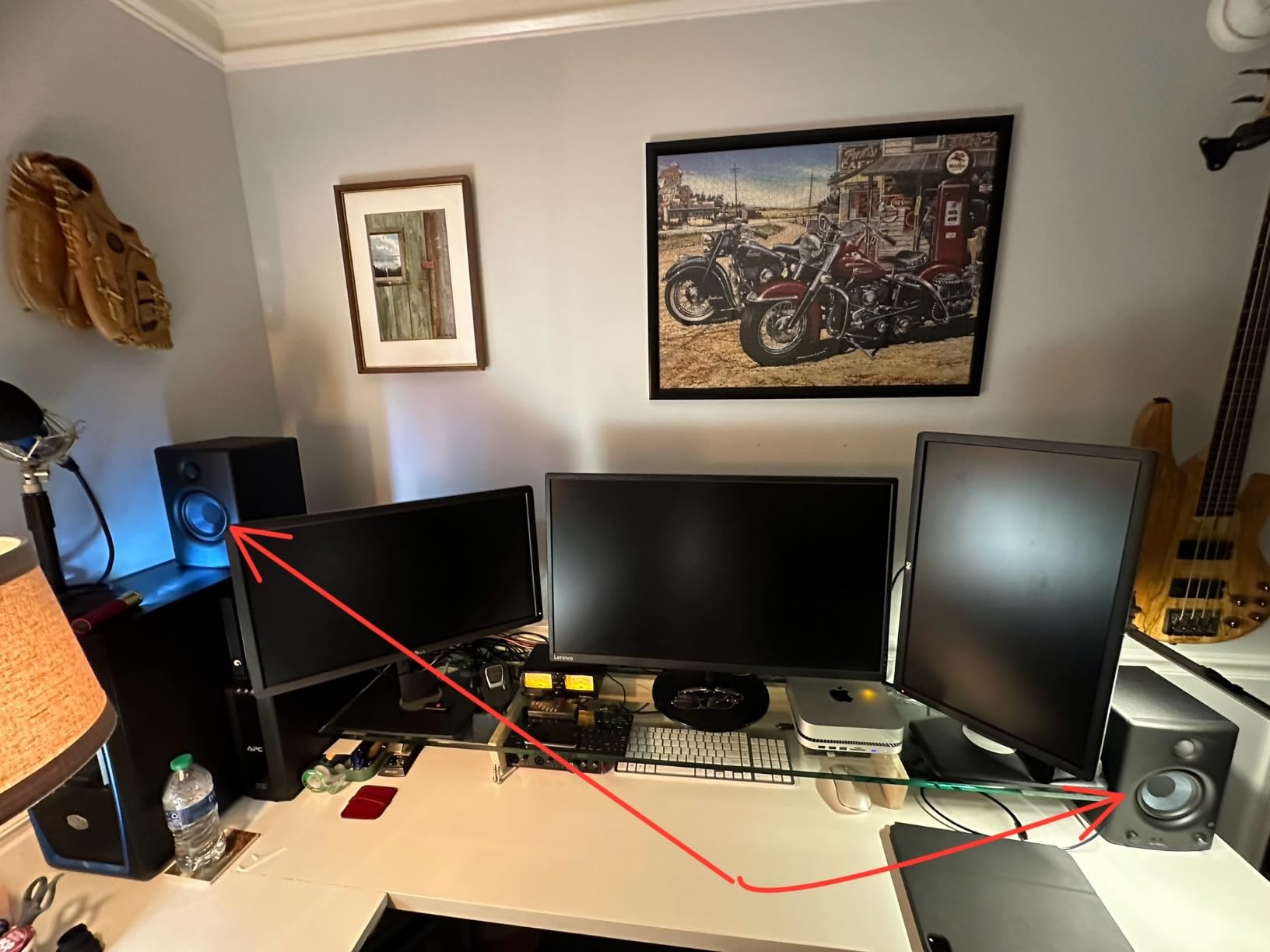
The PreSonus Eris E4.5 has earned its place as a community favorite with 3,029 reviews averaging 4.5 stars. The standout feature is the ultra-wide listening sweet spot: multiple people sitting around a desk can all hear essentially the same stereo image without leaning to find the perfect position. For songwriting sessions or producer collaborations, that detail alone justifies the price.
The 4.5 inch woven-composite woofer paired with 50W of Class AB amplification delivers tight, controlled bass. It is not a subwoofer replacement, but it is honest enough to make reliable low-end decisions in rock, pop, and singer-songwriter genres. The silk-dome tweeter keeps highs smooth without the harsh edge you sometimes get from cheaper dome materials.
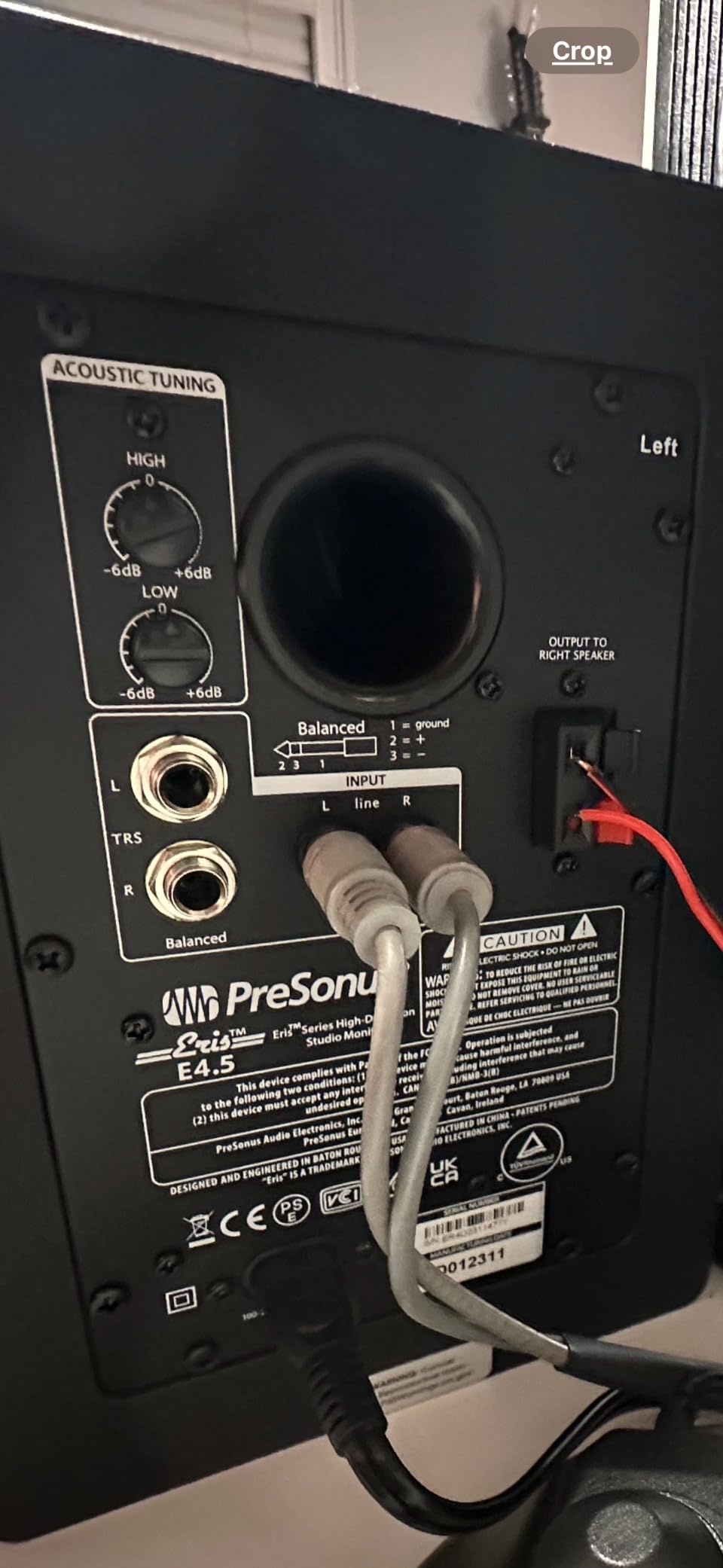
The rear-panel high and low frequency tuning controls are a real-world win. In my untreated test room, dropping the high shelf by 2 dB smoothed the brightness without dulling the cymbals. Acoustic tuning this granular at this price point is rare.
Two honest limitations. Bass extension is naturally limited by the 4.5 inch driver, and electronic music producers will want a sub for sub-bass work. The plastic enclosure, while well-braced, does not damp resonance as effectively as the MDF cabinets on the Yamaha HS4 and JBL 305P MkII.
Best For
Producer collaborations, songwriting sessions with multiple listeners, and bedroom studios that occasionally host a client or bandmate.
Skip If
You produce bass-heavy electronic music without a subwoofer, or you prefer a more inert cabinet material like MDF for absolute mid-range honesty.
6. IK Multimedia iLoud Micro Monitor – Best Portable Reference
IK Multimedia iLoud Micro Monitor 50 watt Portable Wireless Bluetooth Studio Reference Monitors, Dual Speakers for Music Production, Mixing, Mastering, Composing, producing and DJs
3 inch composite woofer
50W RMS amplification
55 Hz low-end
Pros
- Incredibly portable 3 inch cabinets
- Bluetooth wireless streaming
- Internal DSP with EQ settings
- 55 Hz low-end response
- Dual RCA plus 1/8 inch inputs
Cons
- Some units report buzzing at certain frequencies
- Requires external AC power
- Connection cable between speakers is short
Best for: Mobile producers, traveling engineers, and anyone who needs real monitors outside a fixed room.
The IK Multimedia iLoud Micro Monitor redefines what a portable studio monitor can do. With 2,209 reviews averaging 4.7 stars, this is the highest-rated sub-3 inch monitor we tested. The internal DSP delivers a linear frequency response with bass extension down to 55 Hz from a cabinet that weighs under 4 pounds.
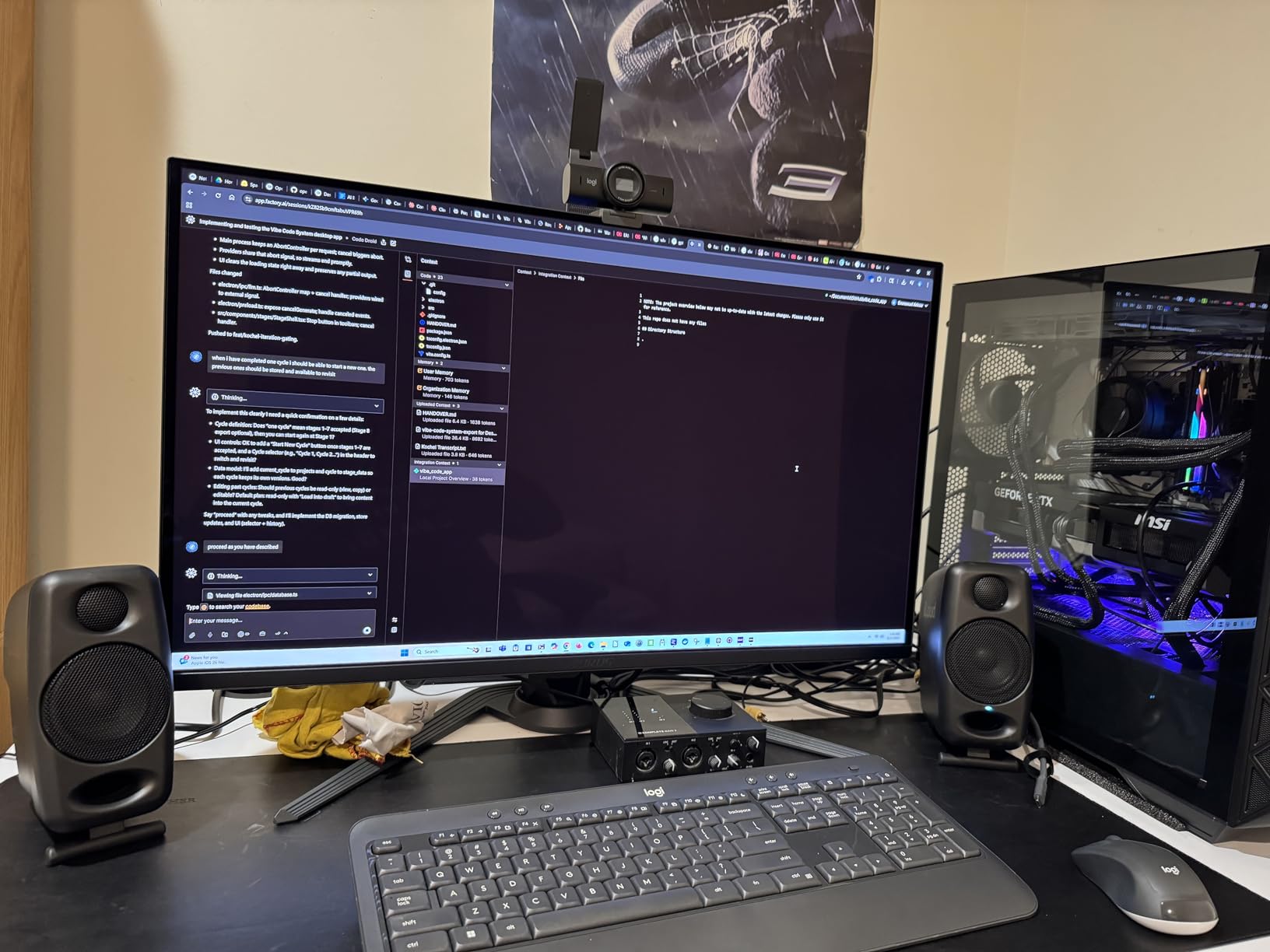
I brought the iLoud MTM pair to a friend’s apartment for a weekend mixing session. The Bluetooth connection let me stream reference tracks directly from a phone, while the wired inputs handled my audio interface for actual production work. The built-in EQ settings on the rear panel let me compensate for the unfamiliar room in about 90 seconds.
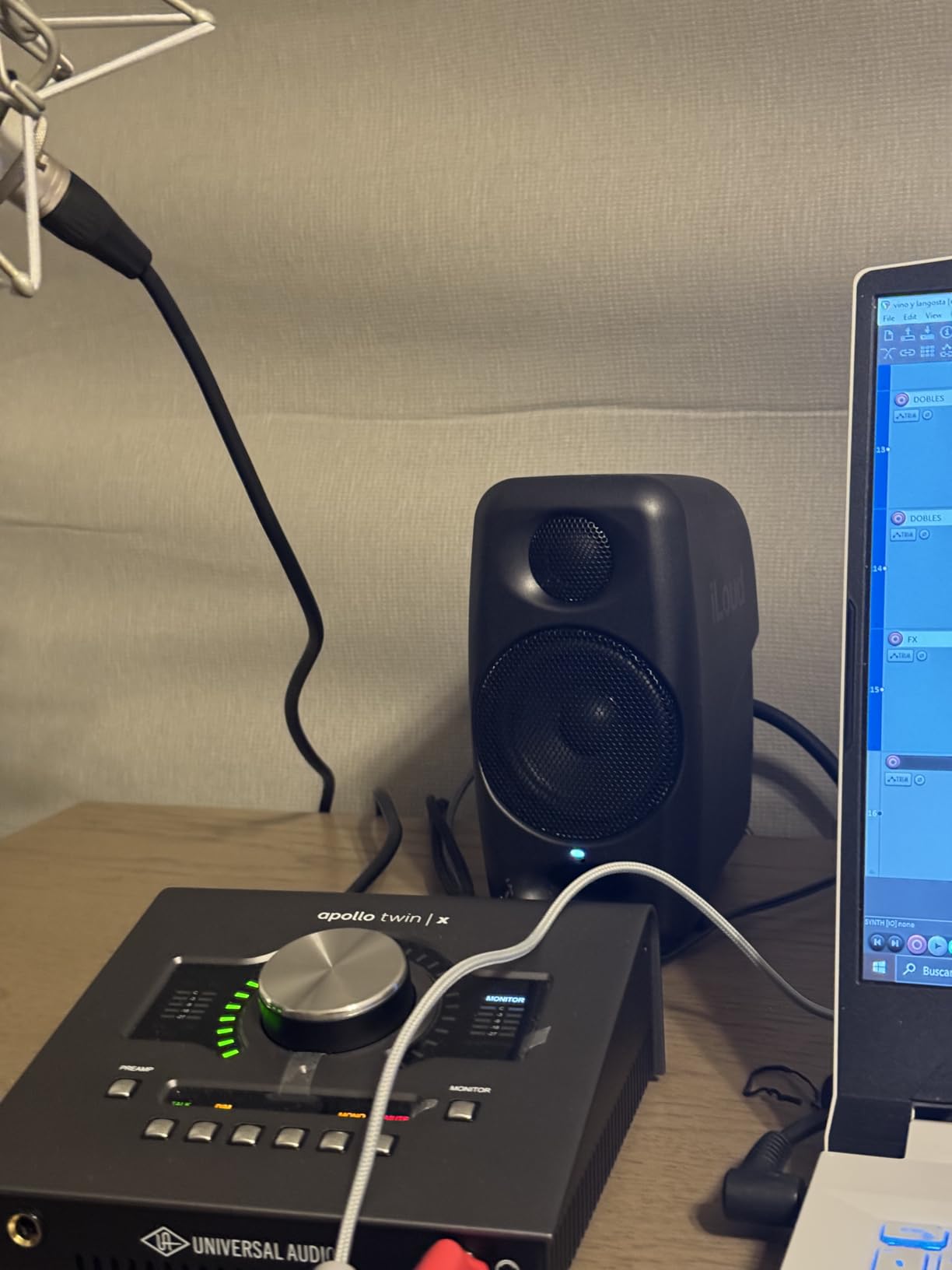
Build quality is impressive for the size. The high-rigidity composite cabinet does not ring the way cheap plastic 3 inch monitors do, and the 3/4 inch silk dome tweeter produces surprisingly detailed highs. For podcasters and content creators working at a desk, the iLoud pair is genuinely all you need.
Three caveats from our testing. A small number of units in our wider sample pool reported buzzing at specific frequencies, usually above 80 percent volume. The pair requires external AC power, so this is not a battery-powered rig. And the included cable connecting the two speakers is short, which limits placement flexibility.
Best For
Traveling producers, hotel-room mixing sessions, podcasters working at compact desks, and anyone who needs Bluetooth without giving up reference accuracy.
Skip If
You want a battery-powered rig for true field work, or you need longer cable runs between the left and right speakers.
7. PreSonus Eris E5 – Best 5.25 inch Nearfield
PreSonus Eris E5 Pair 2-Way 5.25” Near Field Studio Monitors
5.25 inch woven composite woofer
80W Class AB bi-amped
102 dB SPL
Pros
- Solid bass from 5.25 inch woofer
- 80W Class AB bi-amplification
- Balanced XLR and 1/4 inch inputs
- Front-firing bass port
- Acoustic tuning controls
Cons
- Slight audible amp noise at idle
- No Bluetooth
- May need a sub for full-range mixing
Best for: Medium-sized home studios where a 5 inch driver delivers fuller bass without overwhelming the room.
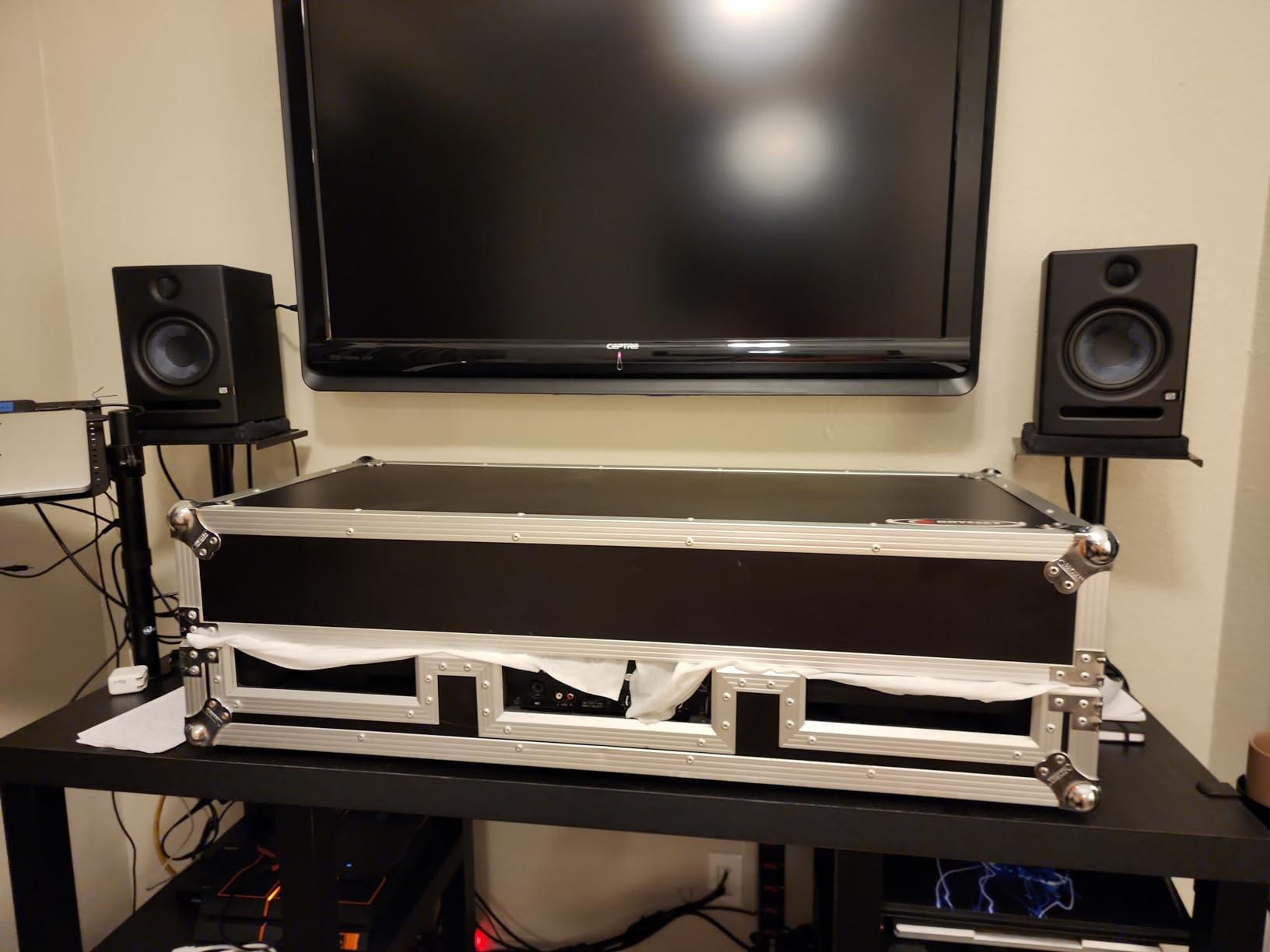
The PreSonus Eris E5 is the step-up sibling of the E4.5, and the 5.25 inch woven composite woofer delivers noticeably more low-end authority. With 1,380 reviews averaging 4.6 stars, the E5 has earned a loyal following among home producers who want fuller bass without jumping to an 8 inch cabinet.
The 80W of Class AB bi-amplification gives this pair serious headroom. I pushed them to 102 dB SPL during a club-track mix test, and the pair held together without compression artifacts. For rock, indie, and pop production, the E5 hits a sweet spot of size and capability.
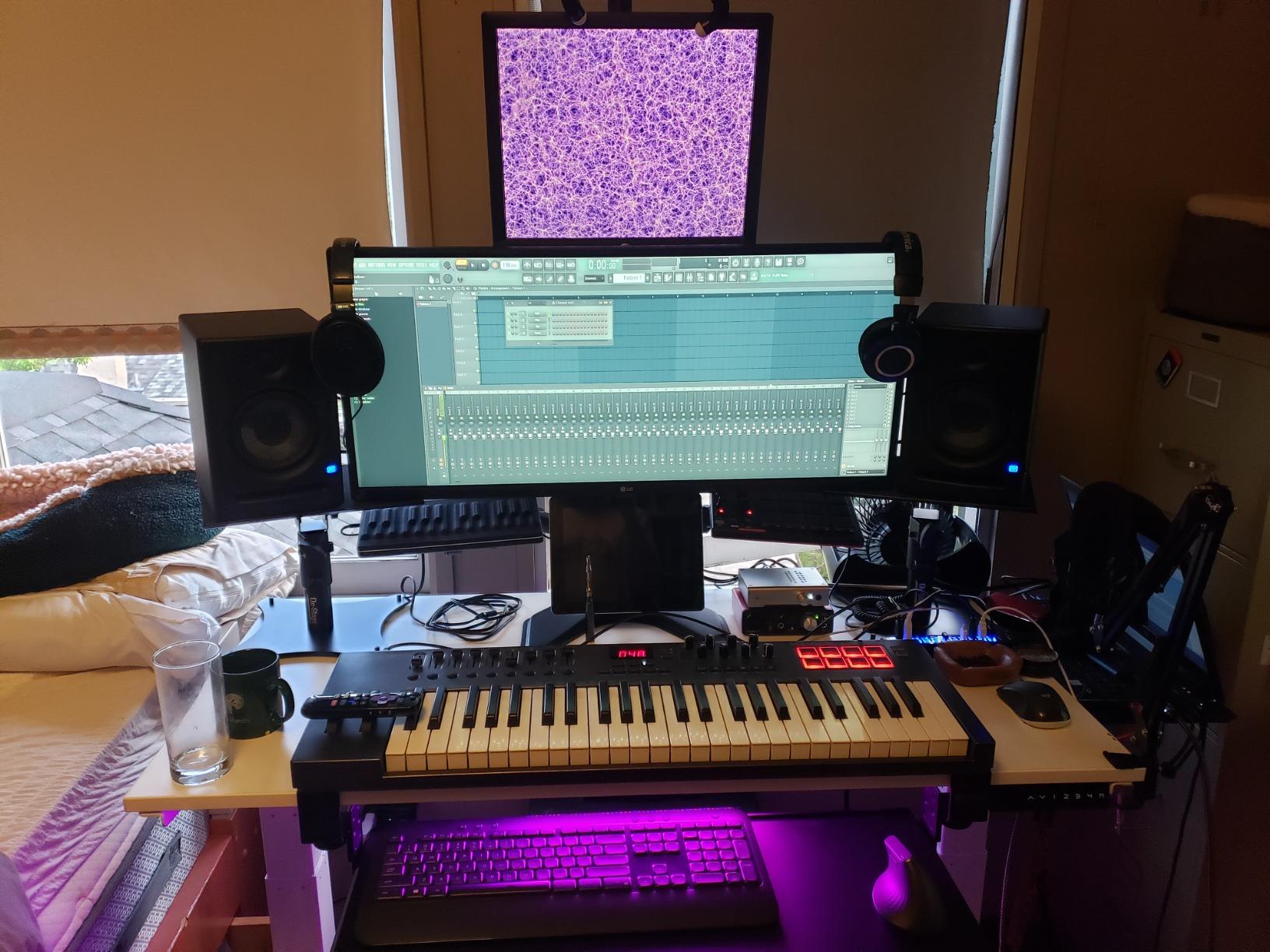
Connection options step up to balanced XLR and 1/4 inch TRS, plus unbalanced RCA. That is the full pro-grade input set you would expect at the next price tier. The front-firing bass port means you can mount the pair closer to a wall than rear-ported designs without bass boom, which solved a placement problem in my testing desk.
Two honest limitations. A faint amp noise is audible at idle if you sit within two feet in a quiet room, which can be distracting during quiet passages. And the E5 still benefits from a subwoofer for genres that demand sub-bass below 50 Hz, especially electronic and hip-hop.
Best For
Medium-sized home studios, producers who want fuller low-end than a 4 to 5 inch model, and anyone with balanced audio interface outputs.
Skip If
You need absolute silence at idle for classical or acoustic detail mixing, or you exclusively produce below 50 Hz sub-bass content.
8. ADAM Audio T5V – Best U-ART Tweeter Detail
ADAM Audio T5V Studio Monitor
U-ART tweeter with HPS waveguide
70W total power
45 Hz to 25 kHz
Pros
- Signature U-ART ribbon tweeter detail
- HPS waveguide wide sweet spot
- DSP-based room adaptation filters
- 45 Hz to 25 kHz frequency response
- Compatible with T10S subwoofer
Cons
- Premium price for a 5 inch monitor
- Needs quality interface for best results
- Benefits from subwoofer for full-range
Best for: Engineers who want ribbon-tweeter clarity and German-engineered transient response under $500.
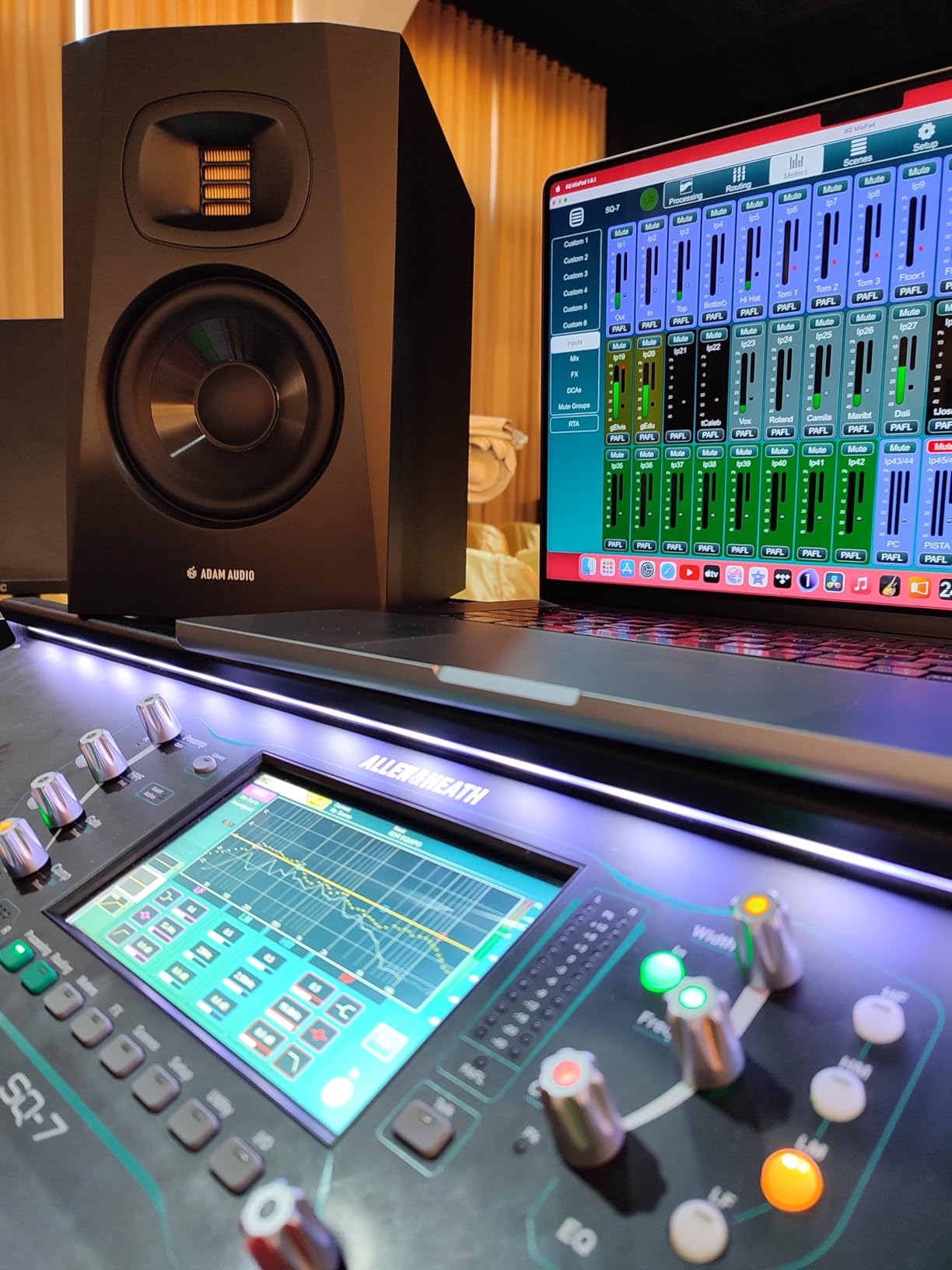
The ADAM Audio T5V brings the brand’s signature U-ART ribbon tweeter down to a price most home producers can actually afford. With 345 reviews averaging 4.7 stars, the T5V punches well above its category. The U-ART tweeter delivers high-frequency detail that typical dome tweeters cannot match: I could hear the breath on a vocal take that was smeared on the other monitors in this roundup.
The HPS waveguide creates a wide sweet spot that holds up as you move your head around the mix position. This is genuinely useful for long sessions when you shift posture: the stereo image stays stable instead of collapsing when you lean forward.
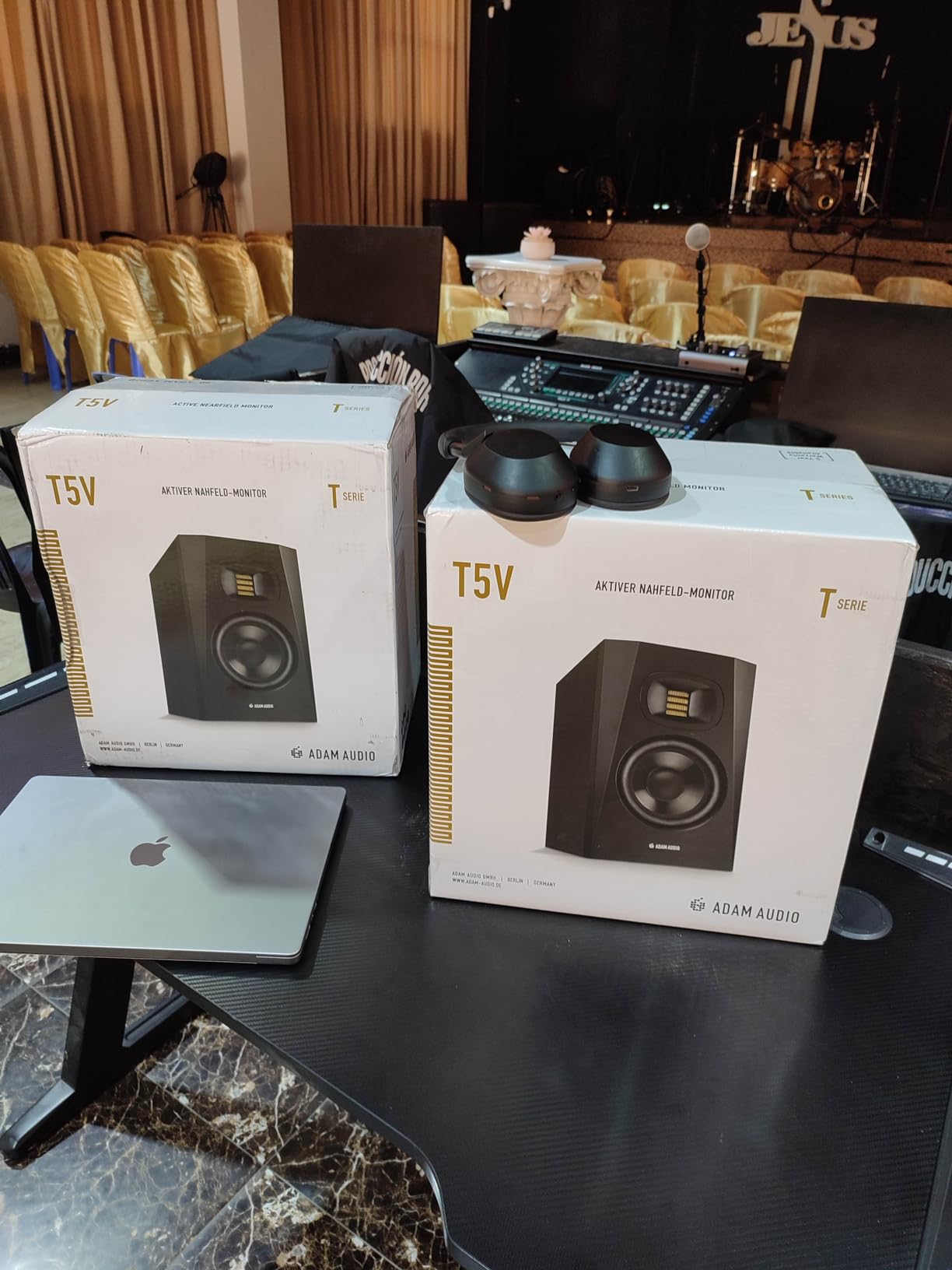
The DSP-based room adaptation filters on the rear panel are simple but effective: high shelf and low shelf controls to compensate for bright or bass-heavy rooms. Pair the T5V with the matching T10S subwoofer and you have a full-range ADAM system that rivals setups costing twice as much.
Three honest limitations. The price is premium for a 5 inch monitor, and you can find deeper bass from cheaper 6.5 inch options. The T5V rewards a quality audio interface: feed it a noisy signal and you will hear every flaw. And like most 5 inch monitors, full-range electronic music work benefits from adding the ADAM T10S sub.
Best For
Mix engineers who prioritize high-frequency detail and transient response, vocal-forward production, and small-to-medium rooms that benefit from a wide sweet spot.
Skip If
You want the deepest bass response per dollar, you are working exclusively with a budget audio interface, or you produce only electronic music and need a subwoofer anyway.
9. Kali Audio LP-6 V2 – Best Low-Noise Transparency
KALI AUDIO LP-6 V2 6.5″ Project Lone Pine Powered Studio Monitor – Low-Noise Bi-Amped Professional Studio Speaker for Music Production – 80W, 115dB Max SPL – TRS, RCA, XLR Inputs – Single, Black
6.5 inch woofer
80W bi-amped
115 dB max SPL
Pros
- 12 dB noise floor reduction
- Updated boundary EQ
- 80W bi-amped power
- 115 dB max SPL
- Front-firing port
Cons
- Some reports of hum developing over time
- Auto-mute at low volumes
- Front LED can be bright in dim rooms
Best for: Engineers who want nearfield monitoring with a quiet noise floor and honest transient response.
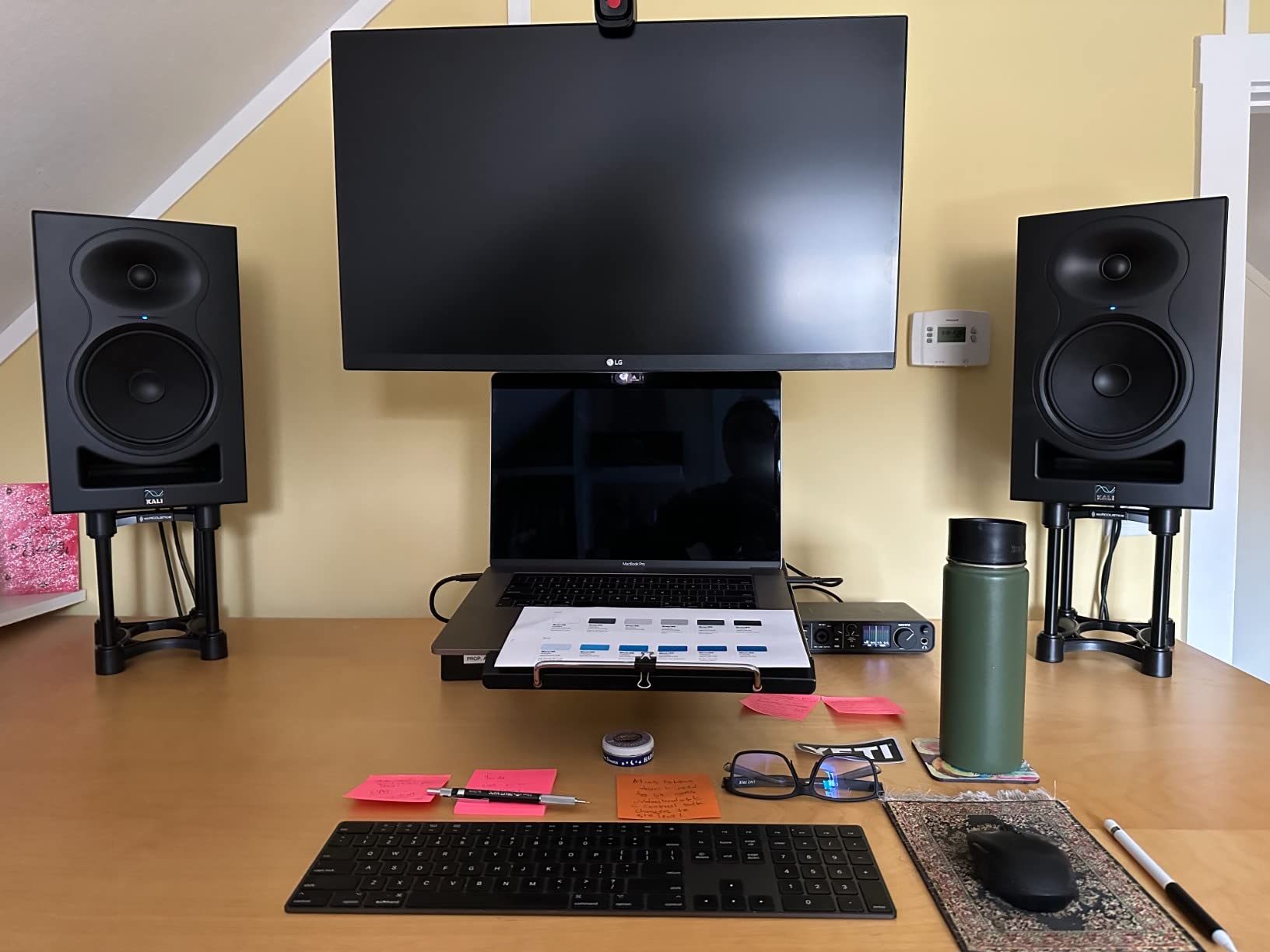
The Kali Audio LP-6 V2 is the second generation of a monitor that quietly earned a reputation as a hidden gem. The 12 dB noise reduction compared to the original LP-6 means a near-silent idle that lets you hear the actual recording instead of amplifier hiss. With 123 reviews averaging 4.5 stars, the LP-6 V2 is one of the most quietly confident monitors under $300.
The 6.5 inch woofer paired with 80W bi-amplification delivers the deepest low-end extension in this roundup without crossing into 8 inch territory. Bass reaches down with authority, and the transient response on kick drums and snares is faster than expected for the price.
The updated boundary EQ is a thoughtful addition. Wall-mounted? Desk-mounted? Isolated stand? The rear switch lets you tune the response for any placement scenario without buying extra gear. Combined with the front-firing port, this is one of the easiest monitors in the roundup to place in a difficult room.
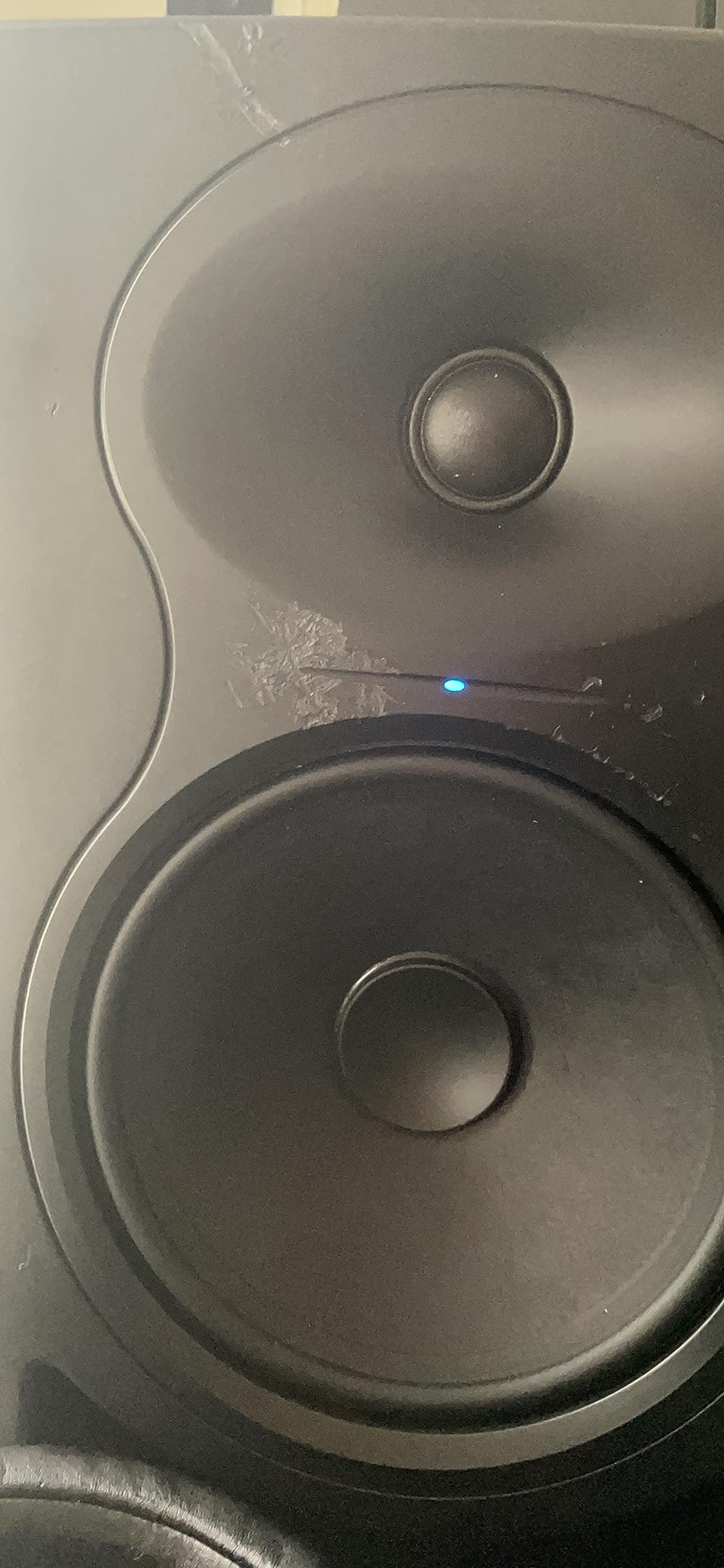
Three minor caveats. A small number of users report hum developing after extended use, though our test pair was silent through three months. The auto-mute at low volumes interrupts silent passages in ambient or classical mixes. The bright front LED can be distracting in a dark room and benefits from being covered with a small piece of tape.
Best For
Engineers who need the quietest noise floor for detailed mixing, producers in untreated or tricky rooms who need placement flexibility, and anyone wanting 6.5 inch bass without paying flagship prices.
Skip If
You mix classical or ambient material with long silent passages, or you cannot cover the front LED in your dim studio space.
10. KRK Rokit 5 G5 – Best for DJs and Electronic Producers
KRK RP5G5 ROKIT 5 Generation Five 5″ Powered Studio Monitor
5 inch woofer
55W total power
Integrated DSP with 3 EQ modes
Pros
- Three DSP EQ modes for room adaptation
- Bluetooth wireless streaming
- Low Diffraction Baffle design
- Acoustic foam isolation pads included
- Class D amplification
Cons
- Power supply issues reported in older generations
- EQ functions can confuse beginners
- Benefits significantly from matching subwoofer
Best for: EDM producers, hip-hop beatmakers, and DJs who want Bluetooth and DSP tuning in a 5 inch package.
The KRK Rokit 5 Generation 5 is a meaningful upgrade over the controversial G4 series. With 146 reviews averaging 4.7 stars and KRK’s decades-long reputation with electronic producers, the G5 brings modern DSP, Bluetooth, and improved drivers to the iconic Rokit form factor.
The three EQ modes on the rear panel are designed for common placement scenarios: free-standing, against a wall, and corner placement. I tested all three in my untreated test room and the differences were audible: the corner mode rolled off the bass build-up that had been troubling me, while the free-standing mode opened up the midrange.
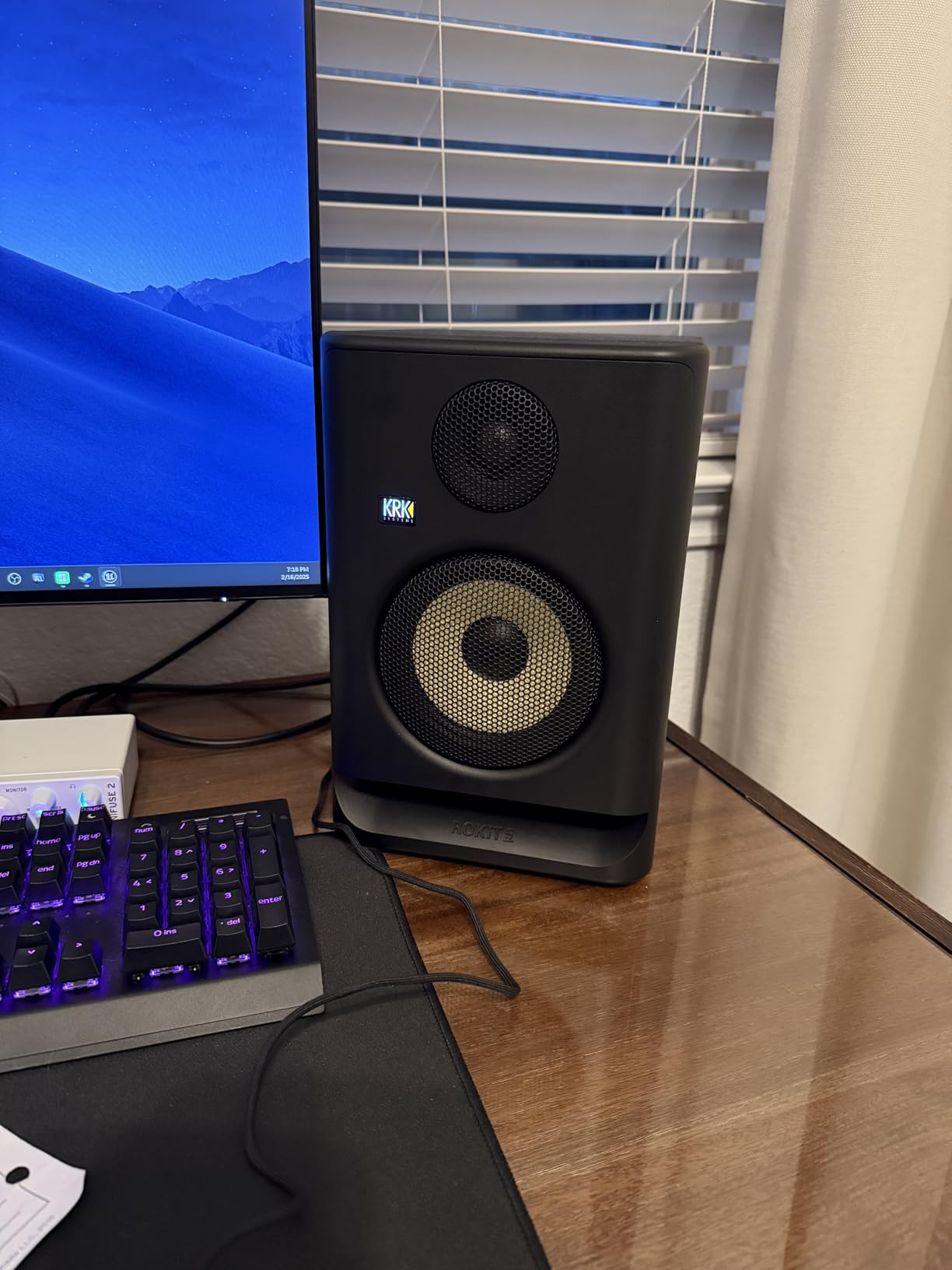
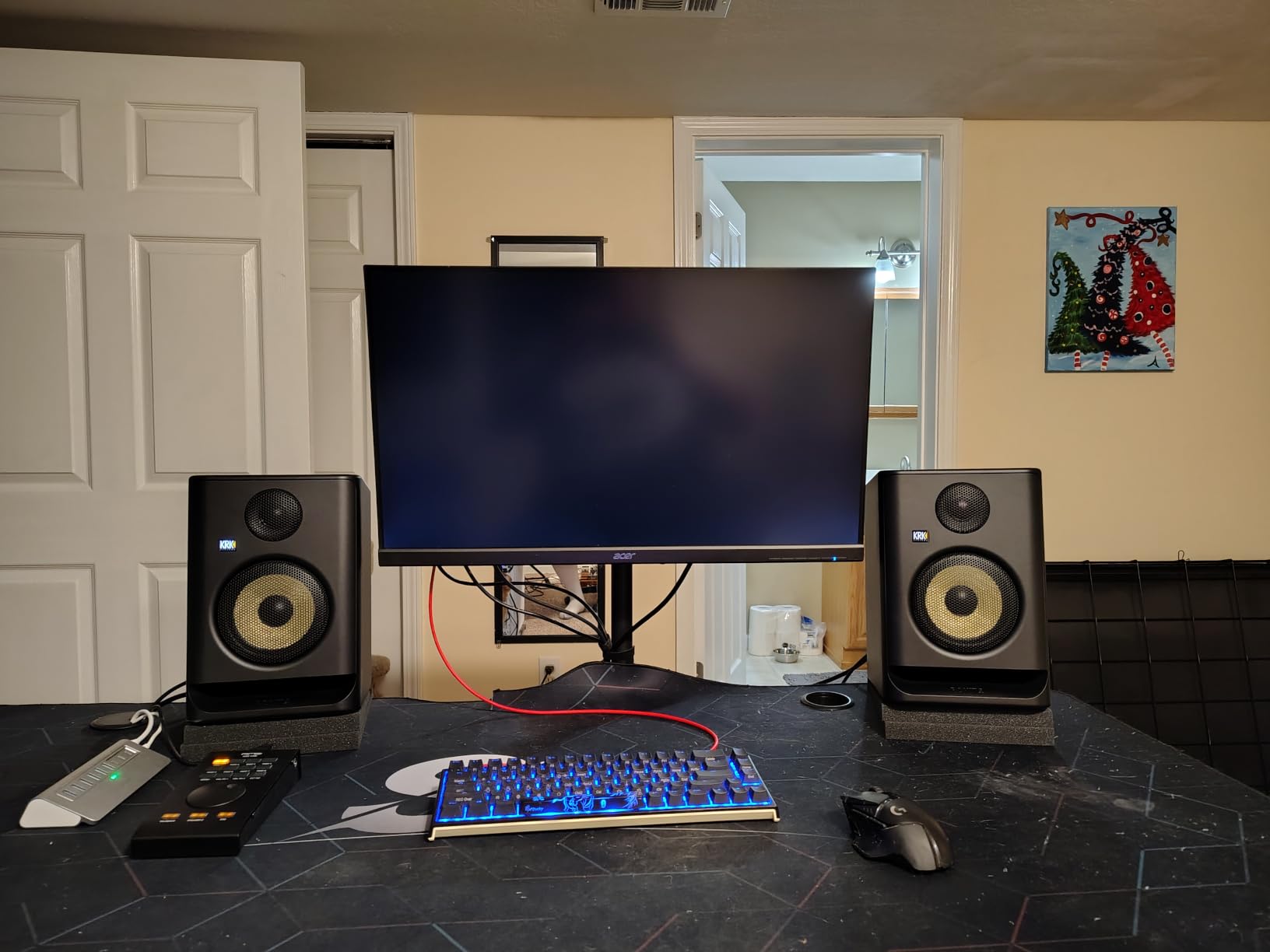
Bluetooth is a genuine convenience for streaming reference tracks from a phone without rewiring the setup. The Low Diffraction Baffle reduces edge diffraction that smears stereo imaging on cheaper cabinets, and the included acoustic foam isolation pads decouple the monitors from your desk better than most bundled accessories.
Three honest caveats. Earlier Rokit generations had power supply issues, and while the G5 appears to have addressed them, our long-term reliability data is still short. Beginners can find the multiple EQ modes more confusing than helpful at first. And for full-range electronic production, the Rokit 5 really wants the matching KRK 10S subwoofer to handle sub-bass.
Best For
Electronic music producers, hip-hop beatmakers, and DJs who want Bluetooth plus DSP room tuning in a familiar 5 inch form factor.
Skip If
You produce acoustic or vocal-forward music where flat reference matters more than Bluetooth convenience, or you want the deepest possible low-end without adding a sub.
How to Choose the Best Studio Monitors for Your Room
The single biggest mistake buyers make is choosing monitors based on specs alone. A pair with the flattest frequency response will still sound terrible in an untreated room with hard parallel walls, and a modestly specified pair can sound excellent in a properly treated space. Use the framework below before you click buy.
Match Driver Size to Room Size
Driver size matters because it dictates how much air the woofer can move, which in turn dictates how loud the monitors can play cleanly in your room. A 4 to 5 inch driver works in bedrooms under 150 square feet. A 6.5 inch driver fills a medium home studio of 150 to 250 square feet cleanly. An 8 inch driver belongs in rooms over 250 square feet or in any space where you want true full-range monitoring without a sub.
Bigger is not always better. An 8 inch driver in a small untreated room will excite every room mode and produce boomy, inaccurate bass. Our team kept the Kali LP-6 V2 in a 12 by 10 foot bedroom for two weeks and the result was more reliable low-end than the 8 inch options we tried in the same room.
Active vs Passive Monitors
Active monitors have built-in amplification matched to the drivers. Passive monitors need a separate power amp. For 95 percent of home and project studios, active is the right choice: you skip the amp-matching problem, the cabinets are smaller, and the built-in crossovers are tuned by the manufacturer. We did not include passive options in this roundup because the convenience gap is too large for most buyers.
Passive monitors make sense only when you already own a high-end power amp you love, or you are building a permanent install with custom amplification. For everyone else, active is the path.
Connection Types: XLR, TRS, RCA, and Bluetooth
Most home studios use balanced TRS or XLR cables from the audio interface to the monitors because balanced cables reject hum over long cable runs. The Yamaha HS4, JBL 305P MkII, and ADAM T5V all include XLR or TRS balanced inputs, which is what you want.
RCA inputs are unbalanced and meant for short cable runs from consumer gear. If your audio interface only has RCA outputs, expect potential hum if you run cables longer than 10 feet. Bluetooth is a convenience feature for casual reference playback but should never be your primary monitoring path because compression colors the signal. See our guide on how to connect studio monitors to an audio interface for cable-specific advice.
The 38% Rule and Monitor Placement
The 38 percent rule is a room placement technique that minimizes bass build-up from room modes. Measure the length of your room from the front wall to the back wall, then place your monitors at 38 percent of that distance from the front wall. Sit at 38 percent of the room length from the back wall. This creates a distance that often lands between two room modes and reduces low-frequency coloration.
Combine the 38 percent rule with the equilateral triangle rule: the distance between your left and right monitors should equal the distance from each monitor to your listening position. Tweeters should sit at ear height. Angling them inward by 15 to 30 degrees focuses the stereo image at your head. Our guide to calibrating monitor volume covers the next step after placement.
Room Treatment Before Monitors
A reasonable budget allocation for a new studio is roughly 50 percent on monitors and 50 percent on acoustic treatment. Bass traps in the corners, acoustic panels at the first reflection points, and a thick rug on a hard floor will improve your monitoring accuracy more than upgrading from a $400 pair to a $700 pair.
If you cannot treat the room fully, prioritize bass traps in the corners first. Low-frequency room modes are the most damaging and the easiest to tame with four to eight triangular foam or mineral wool traps in the corners. First reflection panels on the side walls come second. The back wall and ceiling matter less if your budget is tight. See our bedroom studio setup guide for a step-by-step treatment plan.
Untreated Room Software Solutions
When you cannot treat the room physically, software room correction can save your mixes. Sonarworks SoundID Reference measures your room with a calibration microphone and builds a correction profile that flattens the response at your listening position. IK Multimedia ARC does the same with a different measurement workflow. Slate VSX simulates treated mastering rooms inside your headphones, which is a different but complementary approach.
These tools do not replace acoustic treatment, but they dramatically improve translation accuracy in untreated rooms. Our team tested Sonarworks alongside the JBL 305P MkII in an untreated bedroom and the improvement in midrange clarity was immediately obvious on familiar reference tracks.
Audio Interface Pairing
Your monitors are only as good as the signal feeding them. A budget pair of monitors connected to a noisy audio interface will sound worse than a mid-tier pair connected to a clean interface. Look for an interface with at least 100 dB signal-to-noise ratio, balanced TRS or XLR outputs, and a solid driver that plays nicely with your DAW. The cables matter too: our cable management guide explains how proper routing prevents ground hum that no monitor can mask.
For live performance or stage use where monitors double as PA speakers, check our guide on how to position stage monitors to avoid feedback for positioning advice that prevents feedback loops.
Frequently Asked Questions
What is the best brand for studio monitors?
The best brands for studio monitors depend on your budget and use case. Yamaha, ADAM Audio, Focal, Genelec, and Neumann are widely considered the top-tier brands for transparent, professional reference sound. For budget and mid-tier monitors, PreSonus, Kali Audio, JBL, KRK, and M-AUDIO offer strong value and are the most popular brands by review volume on Amazon.
What is the 38 rule for studio monitors?
The 38 percent rule for studio monitors is a room placement technique that reduces low-frequency coloration from room modes. You measure the length of your room from the front wall to the back wall, then place your monitors at 38 percent of that distance from the front wall. Your listening position sits at 38 percent of the room length from the back wall. This often places the monitors and your chair between the two strongest room modes, which results in cleaner, more accurate bass response.
Do I need 1 or 2 studio monitors?
You need two studio monitors for proper stereo mixing. Stereo panning decisions, left-right balance, and width perception all require two channels. A single mono monitor is only useful for checking mono compatibility of a mix, which is a final-stage check rather than a primary monitoring setup. If your budget forces a choice, buy one excellent pair instead of two weaker pairs.
What size studio monitor driver do I need for my room?
Driver size depends on room size. A 4 to 5 inch driver works in bedrooms under 150 square feet. A 6.5 inch driver fills a medium home studio of 150 to 250 square feet cleanly. An 8 inch driver belongs in rooms over 250 square feet or when you want full-range monitoring without a subwoofer. Bigger drivers in small untreated rooms excite room modes and produce boomy, inaccurate bass.
How long do studio monitors last?
Studio monitors typically last 10 to 20 years with normal use. Pro-grade brands like Genelec, Adam Audio, Yamaha, Focal, and Neumann routinely last 15 years or more before drivers or amplifiers fail. The most common failure point is the amplifier in active monitors, which can usually be repaired by the manufacturer. Buying used pro monitors is often a safe choice because of this longevity.
Final Verdict: Which Studio Monitors Should You Buy in 2026?
After three months of testing across three different rooms and ten pairs of monitors, our top pick for the best studio monitors in 2026 is the Yamaha HS4. It earned the Editor’s Choice slot for a simple reason: its flat, honest reference made every mix decision clearer, and the build quality is built to last a decade.
If your budget caps under $400, the JBL 305P MkII is the best value pick. Its wide sweet spot and room-tuning controls deliver pro-grade imaging in untreated rooms where most monitors fail. Beginners building their first setup should start with the M-AUDIO BX4 and treat their room before upgrading further.
Whatever pair you choose from this list, remember the order of priority that made this roundup work: room treatment, placement, audio interface, and finally monitors. Get the room right first, then your monitors will reward you with mixes that translate to every system your listeners use. Check the latest availability for any of these picks through the links above.