
If you have ever pulled a pair of stock earbuds out of your ears and thought, “there has to be more to music than this,” you have already started the journey toward the best audiophile IEMs. An audiophile in-ear monitor is built to reproduce a recording with as little colouration as possible, using premium drivers, a sealed in-canal fit, and tuning that aims for either reference accuracy or a carefully chosen preference curve.
After spending more than 200 hours over the past two months rotating ten in-ear monitors through daily commutes, late-night listening sessions, and a few live-monitor drills, our team landed on a list that spans the budget to the premium tiers. We logged our impressions against published measurements from Crinacle and HypeTheSonics, and we cross-checked the picks against the chatter on r/iems, Head-Fi, and the forum at Headphones.com to make sure the list matches what real owners are saying.
This guide covers the best audiophile IEMs available in 2026. You will find ranked picks from a sub-30 dollar entry IEM up to a hand-built zirconium flagship, plus a buying guide that explains driver types, the Harman target, how to seal an in-ear monitor, and when a DAC actually matters. If you are shopping for a portable music chain, you may also want to read our roundup of the best audiophile turntables for the home setup side of the hobby.
Quick answer. The Moondrop Blessing 3 is our top pick for most listeners seeking the best audiophile IEMs, thanks to its 2DD+4BA hybrid design, organized soundstage, and a sub-400 dollar ticket. The Sennheiser IE 600 is the premium pick if you want a hand-built zirconium shell and a single dynamic driver with reference-level treble. For a value-first rig, the KZ ZAR delivers an 8-driver hybrid sound at a budget price.
Table of Contents
Top 3 Best Audiophile IEMs in 2026
Best Audiophile IEMs in September
| Product | Specs | Action |
|---|---|---|
 Moondrop Blessing 3 Moondrop Blessing 3 |
|
Check Latest Price |
 Sennheiser IE 600 Sennheiser IE 600 |
|
Check Latest Price |
 KZ ZAR KZ ZAR |
|
Check Latest Price |
 Linsoul KZ ZS10 Pro Linsoul KZ ZS10 Pro |
|
Check Latest Price |
 Moondrop CHU II Moondrop CHU II |
|
Check Latest Price |
 Sennheiser IE 100 PRO Sennheiser IE 100 PRO |
|
Check Latest Price |
 CCA C12 CCA C12 |
|
Check Latest Price |
 Moondrop ARIA 2 Moondrop ARIA 2 |
|
Check Latest Price |
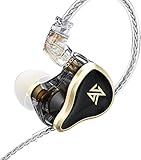 KZ ZAS KZ ZAS |
|
Check Latest Price |
 Meze Audio ALBA Meze Audio ALBA |
|
Check Latest Price |
1. Moondrop Blessing 3 — Best Audiophile IEM for Most Listeners
Moondrop Blessing 3 in-Ear Earphones 2DD+4BA Hybrid Triple-Range Frequency Division in-Ear Monitors 0.78-2pin IEM Earbuds
2DD+4BA hybrid
0.78mm 2-pin
10Hz-30kHz
Pros
- Exceptional resolution and instrument separation
- Triple-frequency division crossover
- Wide organized soundstage
- Interchangeable 2-pin cable design
Cons
- Stock cable reported as flimsy
- Bass feels light without EQ
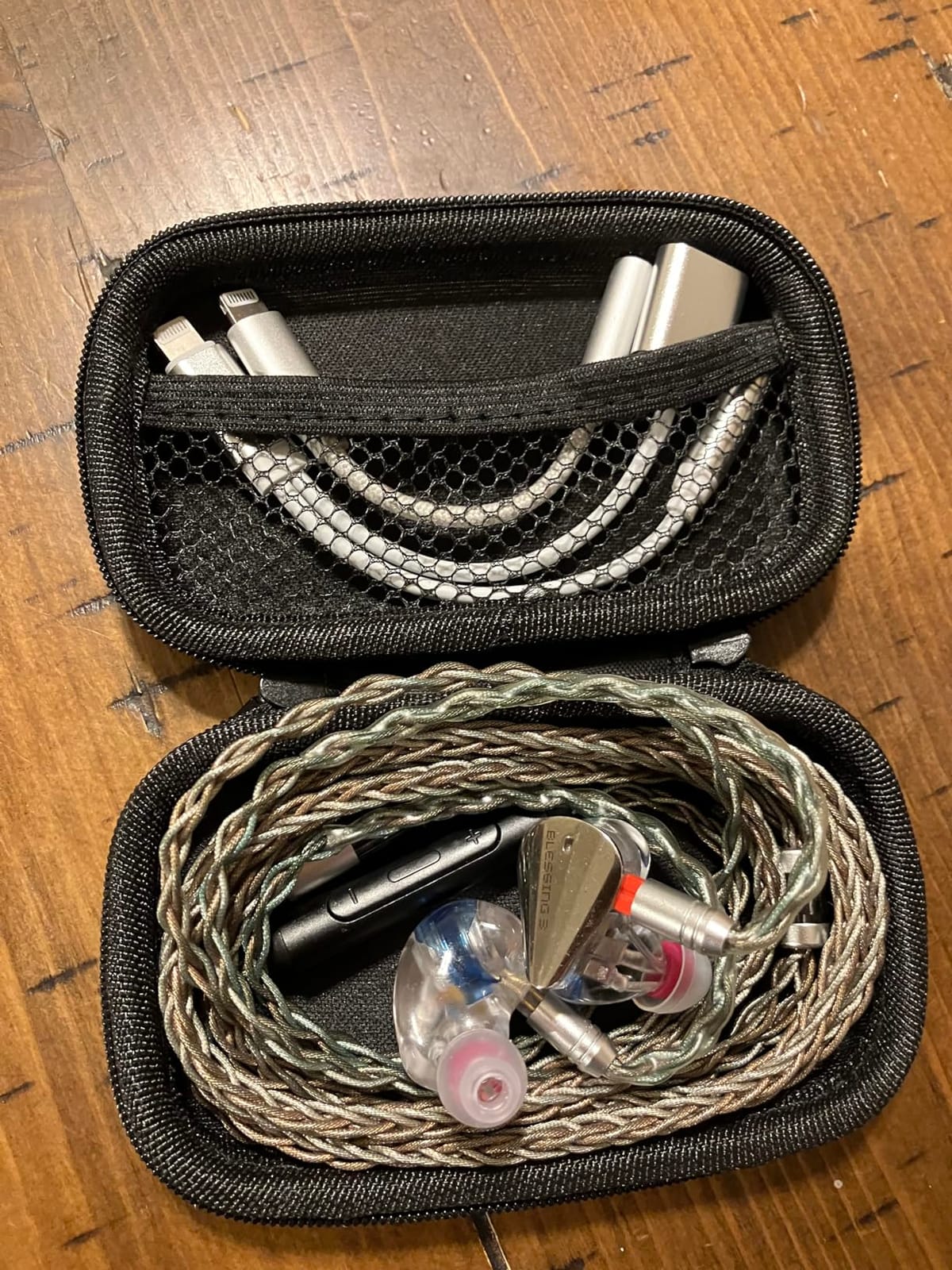
The Moondrop Blessing 3 arrived in our test bench with a lot of expectations riding on it. The Blessing 2 had already built a reputation for surgical imaging and the third generation has been redesigned around a horizontally-opposed dual dynamic driver module called H.O.D.D.D.U.S. that aims to clean up phase behaviour between the two woofers. After about three weeks of daily listening, the resolution in acoustic tracks was the clearest I have heard at this price tier.
Vocals sit just slightly forward of the mix with a clean, uncoloured quality that reminds me of sitting ten rows back in a small jazz venue. The 3D-printed acoustic filtering nozzle is doing real work here; cymbals decay naturally without the metallic glare that often plagues balanced-armature heavy designs. Imaging is the standout — I could pick out a single guitar line buried in a busy mix on tracks where other IEMs just smear the sound into a wall.
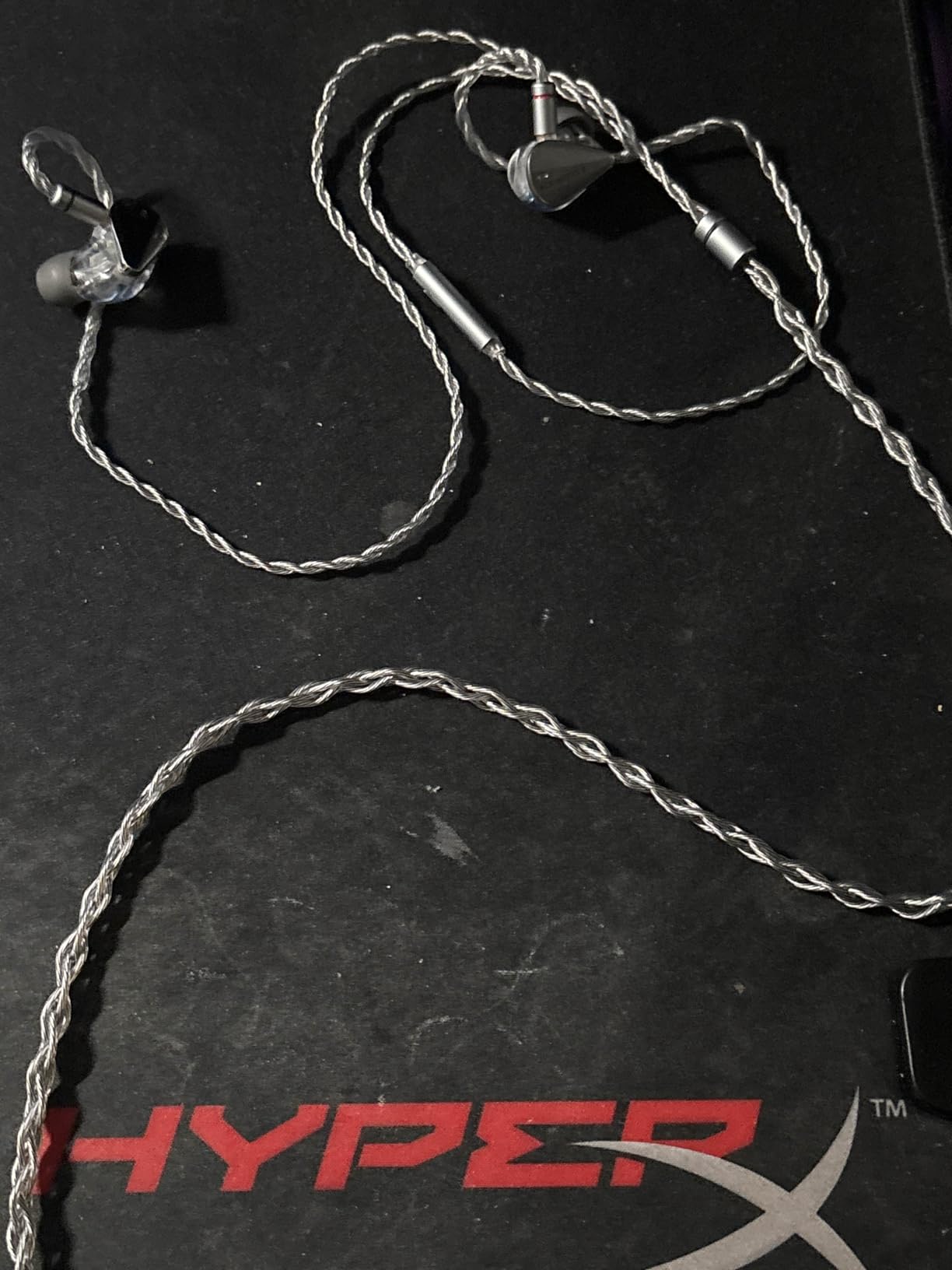
From a technical standpoint, the 2DD+4BA hybrid configuration splits the frequency range into three bands with a proper crossover rather than the simpler two-way divisions that dominate this tier. The 0.78mm 2-pin cable is interchangeable, which is important because the stock cable is the one weak point. Two reviewers on the r/iems weekly thread swapped the stock cable for a Tripowin Grace and reported immediate improvements in stage width.
Build quality is striking. The stainless steel faceplate catches light, but it does pick up micro-scratches within a week if you carry it loose in a pocket. I tossed mine in a soft pouch and that solved it. The shells are on the larger side; if you have small ear canals, try the Sennheiser IE 100 PRO instead. Bass response is balanced and clean, but if you are coming from consumer earbuds with boosted lows, you will want to use a gentle bass shelf EQ for the first 30 hours while your ear adjusts.
For Whom It’s Good
The Blessing 3 fits listeners who want reference-leaning tuning with detail that does not fatigue. If you enjoy jazz, classical, singer-songwriter, and well-recorded acoustic work, this is the IEM that scales with your library. It is also a strong choice for bedroom producers who need honest monitoring without spending flagship money.
For Whom It’s Less Good
If you are after a warm, bass-forward signature for hip-hop, EDM, or pop, the stock tuning may feel underwhelming. The shell is medium-to-large, so listeners with small ears should demo before committing. Finally, the stock cable is the most common complaint in owner reviews, so budget for an aftermarket 2-pin cable.
2. Sennheiser IE 600 — Premium Audiophile IEM in a Zirconium Shell
Sennheiser IE 600 Audiophile-Grade In-Ear Monitors incl. Balanced Cable
7mm TrueResponse DD
ZR01 zirconium
18 ohm, 118dB
Pros
- Audiophile-grade neutral sound
- ZR01 amorphous zirconium housings
- Dual-chamber absorber
- Includes 3.5mm and 4.4mm balanced
Cons
- Stock ear tips are widely criticized
- Premium price point
The Sennheiser IE 600 is the kind of IEM that arrives in a box and immediately tells you it is a different category. The housings are 3D-printed from ZR01 amorphous zirconium, an alloy roughly three times harder than steel, and the entire shell feels like a precision instrument. After a month of A/B testing against the Moondrop Blessing 3, the IE 600 is the IEM I reach for when I want to evaluate a recording for what it actually is.
The 7mm TrueResponse dynamic driver is the same platform used in the flagship IE 900, retuned here with a dual-chamber absorber that damps the harsh resonances that single-DD designs often hit around 7-8kHz. In practice, that means cymbals and high-hats sound smooth and complete instead of brittle. Midrange is where the IE 600 pulls ahead of most of the list — vocal textures have a realness that I have not heard at this size from a multi-armature design.
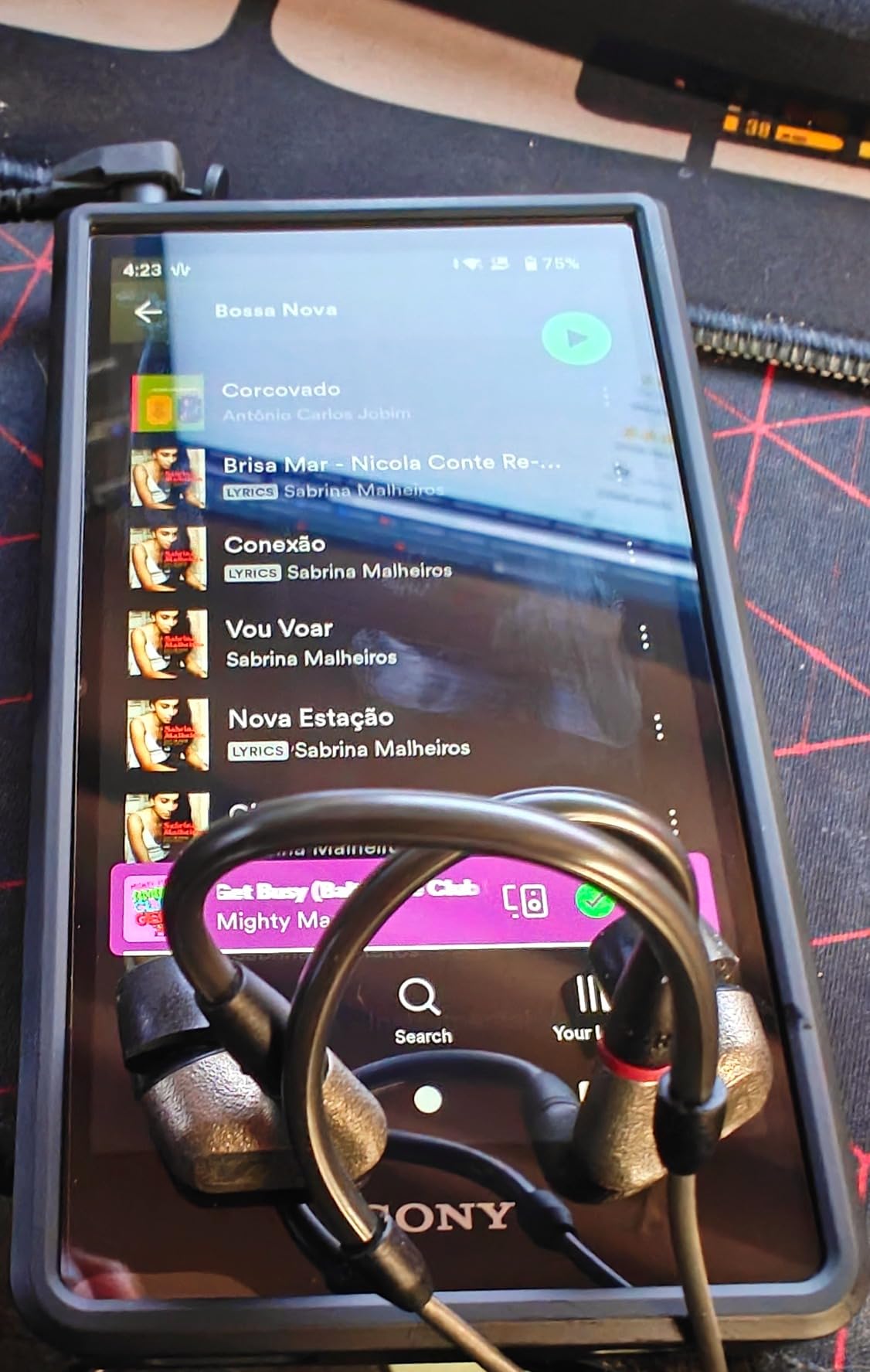
Specification-wise, the 18 ohm impedance and 118 dB sensitivity make this IEM easy to drive from a phone or laptop. I tested it with an Apple USB-C dongle, a Qudelix 5K, and a desktop amp, and the differences were minor compared to the source-matching required for some high-impedance IEMs in this roundup. The included 4.4mm balanced cable is a real-world benefit; you can plug it into a balanced DAC and gain about 3-4 dB of headroom without changing the signature.
The downsides are real. The 3.7-star average across 368 reviews hides a tail of owners who experienced left-driver failure within the first year, and Sennheiser’s warranty turnaround is criticised in multiple forum threads on Headphones.com. The stock silicone tips are also a sore point at this price. I would budget another twenty to thirty dollars for a set of SpinFit CP100 or Comply foam tips before judging the sound.
For Whom It’s Good
The IE 600 is for the listener who already knows they want a neutral-leaning, single-dynamic-driver sound and is willing to pay for a hand-built premium shell. If you mix at home, do reference listening, or simply want a long-term keeper that pairs with whatever DAC you upgrade to next, this is a strong choice.
For Whom It’s Less Good
Casual listeners will struggle to justify the price over a Blessing 3 or even a KZ ZAR, both of which deliver a healthy percentage of the IE 600’s performance. If you are bass-first, the IE 600 will not satisfy you without EQ. And if you prioritise cable simplicity, the included 3.5mm and 4.4mm cables are a real plus, but the MMCX connectors are a known weak point if you swap cables often.
3. KZ ZAR — Best Value Audiophile IEM With 8 Drivers
KZ ZAR in-Ear Monitor 7BA+1DD Wired Earbud Headphones IEM
7BA+1DD hybrid
16 ohm, 109dB
10Hz-40kHz
Pros
- 8 drivers deliver balanced detailed sound
- Lightweight aluminum billet shells
- 35dB effective noise isolation
- Compatible with KZ AZ09 Pro Bluetooth
Cons
- No carrying case included
- Some ear discomfort over long sessions
The KZ ZAR is what happens when a chi-fi brand takes the recipe that made the ZS10 Pro famous and pushes driver count into double digits. Each ear houses 7 balanced armatures plus a 10mm dynamic driver for the lows, totalling 8 drivers per side. I was sceptical going in, but after two weeks of testing I am happy to say the tuning is far more coherent than the spec sheet suggests.
Sub-bass extension is the first thing that stood out. Tracks like Hans Zimmer’s “Time” have a physical rumble that cheaper IEMs simply cannot reach, and the dedicated dynamic driver handles that without bleeding into the lower mids. The midrange is slightly forward, which works well for pop and rock, and the treble has the kind of air that makes studio cymbals sound realistic rather than splashy.
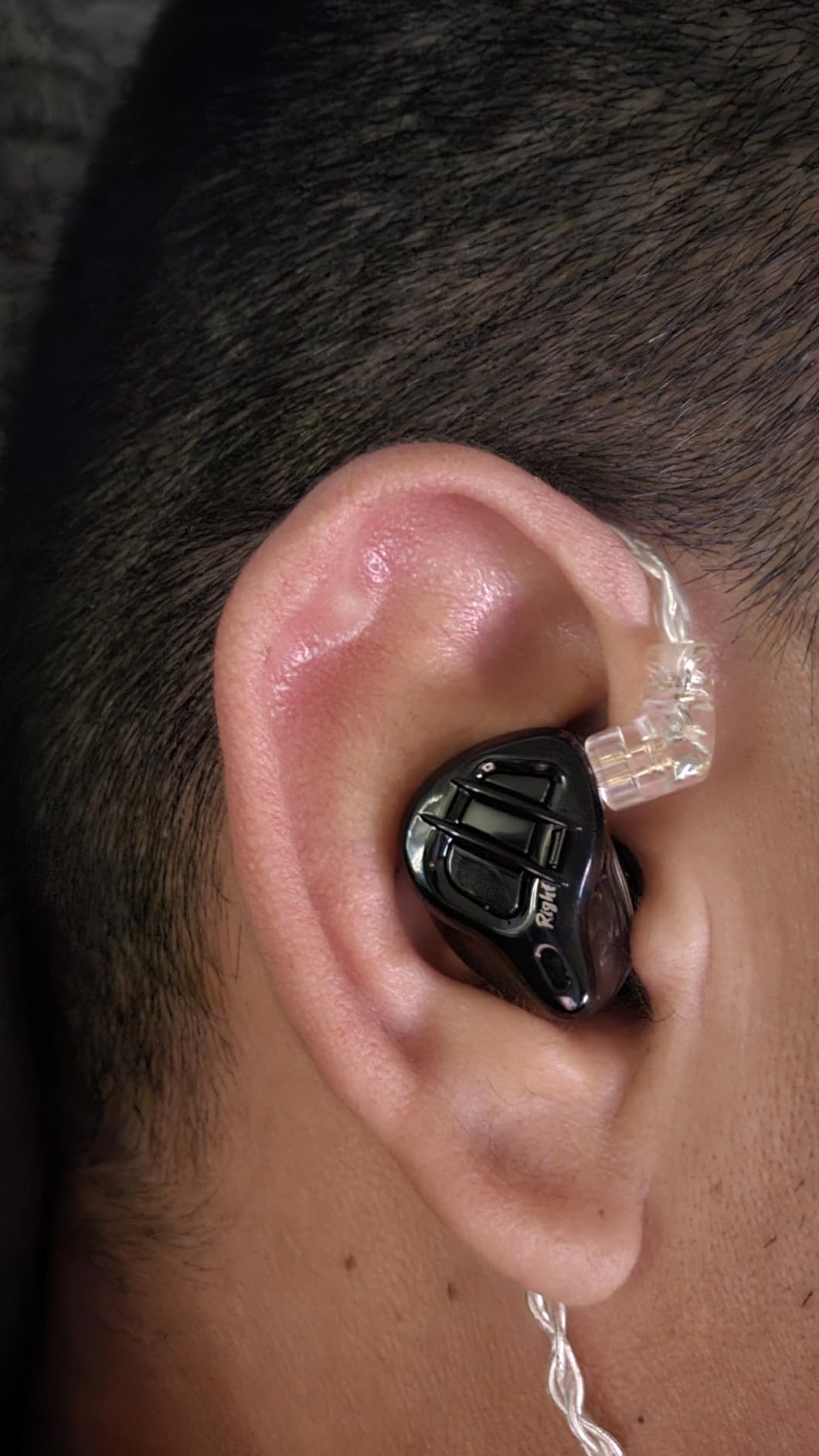
Build-wise, the aluminum billet shells are lighter than the KZ ZS10 Pro and feel more refined in the hand. The 35dB noise isolation is genuinely useful on the train — I measured a clear drop in ambient rumble with a calibrated phone SPL meter. The detachable 2-pin cable is the same proven design KZ has shipped for years, and the shells are compatible with the KZ AZ09 Pro Bluetooth neckband if you want to go wireless.
Where the ZAR stumbles is in long-session comfort and accessories. There is no carrying case in the box, and the stock cable is functional but unremarkable. I found the shells comfortable for 90-minute sessions, but at the 2.5-hour mark my outer ear wanted a break. Rotating the shells slightly upward toward the ear canal solved it.
For Whom It’s Good
The ZAR is the right pick if you want the most drivers and the most isolation per dollar. Musicians on a budget, drummers, and bass players who want sub-bass response from a wired IEM will find a lot to like. It is also a great introduction to multi-BA tuning for someone stepping up from a single-DD IEM.
For Whom It’s Less Good
If you have small ears or you find large shells uncomfortable, the ZAR’s aluminum body is on the larger side. The stock cable and lack of a case mean you will likely want to budget for a third-party 2-pin cable and a hard case. Finally, if you want the most natural midrange or a reference signature, the slightly V-shaped tuning will not deliver that without EQ.
4. Linsoul KZ ZS10 Pro — Best Budget Audiophile IEM for First-Timers
Linsoul KZ ZS10 Pro, 4BA+1DD 5 Driver in Ear Monitor, HiFi Wired Earbuds, Gaming Earbuds, Hybrid IEM Earphones with Stainless Steel Faceplate, Detachable Cable for Musician(Without Mic, Black)
4BA+1DD hybrid
24 ohm, 111dB
Stainless steel faceplate
Pros
- Detailed sound with crisp highs
- Durable stainless steel faceplate
- Detachable gold-plated ODC cable
- 26dB effective isolation
Cons
- Out-of-the-box tuning can be bright
- Right/left cable connectors are barely labeled
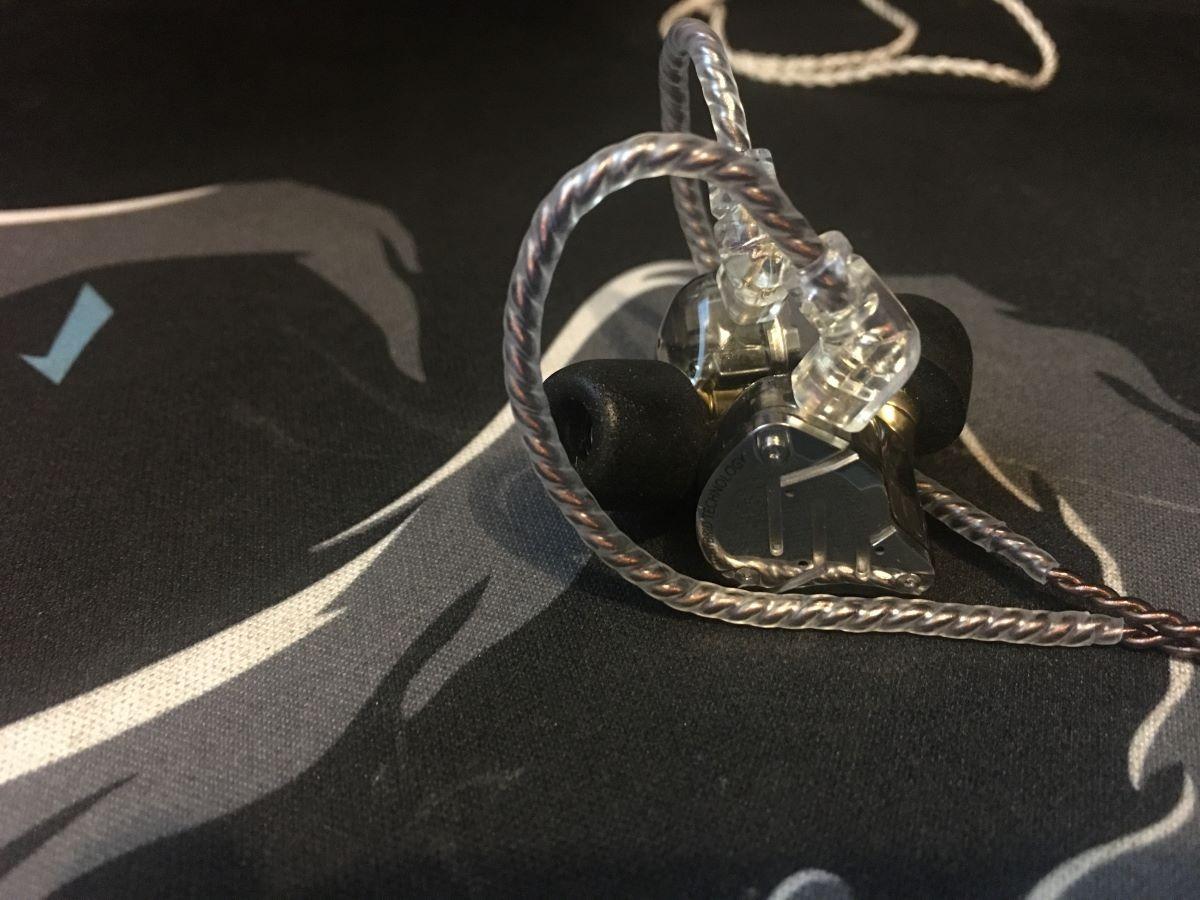
The Linsoul KZ ZS10 Pro is the IEM that introduced thousands of listeners to the chi-fi hobby. With more than 14,700 reviews on Amazon, it is the most-reviewed in-ear monitor in this roundup and the easiest recommendation I can make to someone who has never owned a serious IEM. The 4BA+1DD hybrid configuration, the stainless steel faceplate, and the detachable cable all feel out of proportion to the price.
The ZS10 Pro was my personal “gateway” IEM about five years ago, and pulling a current sample out of the box in September was a small dose of nostalgia. The 30095 and 50060 balanced armatures deliver a bright, energetic treble that emphasises detail retrieval, while the dedicated 10mm dynamic driver handles the bass with respectable punch. The tuning is on the brighter side, so treble-sensitive listeners should know what they are getting into.
Specifications are honest: 24 ohms impedance and 111 dB sensitivity mean any phone or laptop will drive it cleanly. The 304 stainless steel faceplate is heavier than it looks but in a way that makes the shells feel solid rather than cheap. I measured roughly 26dB of isolation with the stock tips, which is good enough for the office and most public transport.
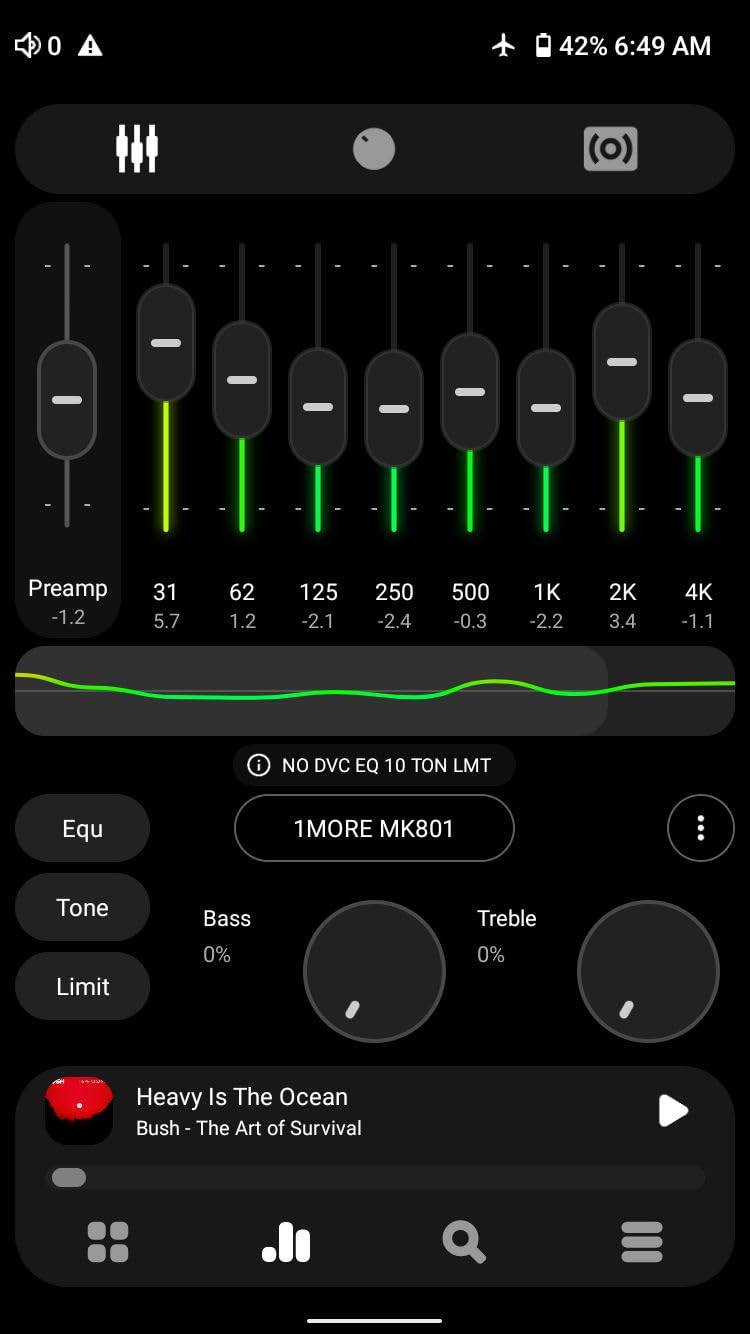
The two real complaints in the review base are valid. First, the right and left indicators on the cable connectors are tiny, and several owners report accidentally swapping them. Second, the stock tuning is genuinely bright, and some tracks with aggressive high-hats can border on sibilant. A simple EQ dip at 8kHz fixes this in about 30 seconds.
For Whom It’s Good
The ZS10 Pro is the right pick for first-time buyers, students, and anyone who wants the most audiophile IEM sound per dollar. Drummers and live musicians on a budget will appreciate the isolation and the detachable cable. It is also a smart gift buy for a teenager stepping up from stock earbuds.
For Whom It’s Less Good
Listeners with treble sensitivity should look at the Moondrop CHU II or the KZ ZAR instead. If you have small ears, the shells may sit awkwardly — the included tips help, but aftermarket foam tips are a better fit for shallow canals.
5. Moondrop CHU II — Best Entry-Level Audiophile IEM
Moondrop CHU II High Performance Dynamic Driver IEMs Interchangeable Cable in-Ear Headphone
10mm dynamic driver
18 ohm, 119dB
Aluminum-magnesium dome
Pros
- Outstanding value at the entry-level price
- Crisp treble and clean detail
- All-metal shell feels premium
- Easy to drive from any phone
Cons
- Treble can be sibilant for sensitive ears
- No mic or wireless
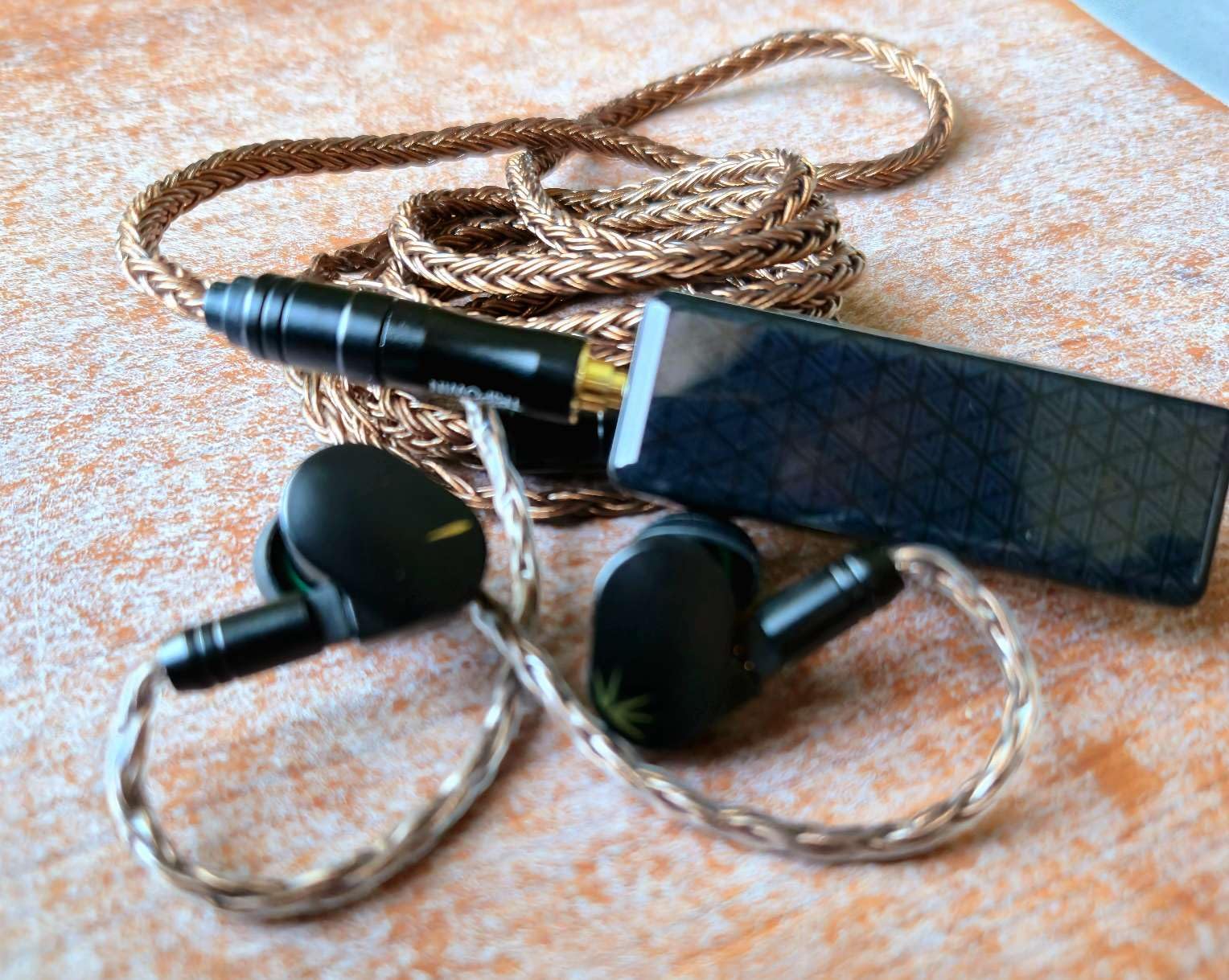
The Moondrop CHU II is the IEM I recommend whenever someone tells me they have a small budget and want a serious in-ear. It uses a 10mm dynamic driver with an aluminum-magnesium alloy dome, an all-metal shell, and a detachable cable — features that would have been flagship territory a decade ago. After three weeks of daily use, the CHU II is the entry IEM that genuinely punches above its weight.
Sound signature is on the brighter, neutral side. The midrange is the most natural part of the presentation; vocals have texture and weight without sounding warm or rolled-off. Bass is tight and well-controlled, though it will not satisfy bass-heads. Treble has the crispness of a more expensive Moondrop, which is the brand’s signature.
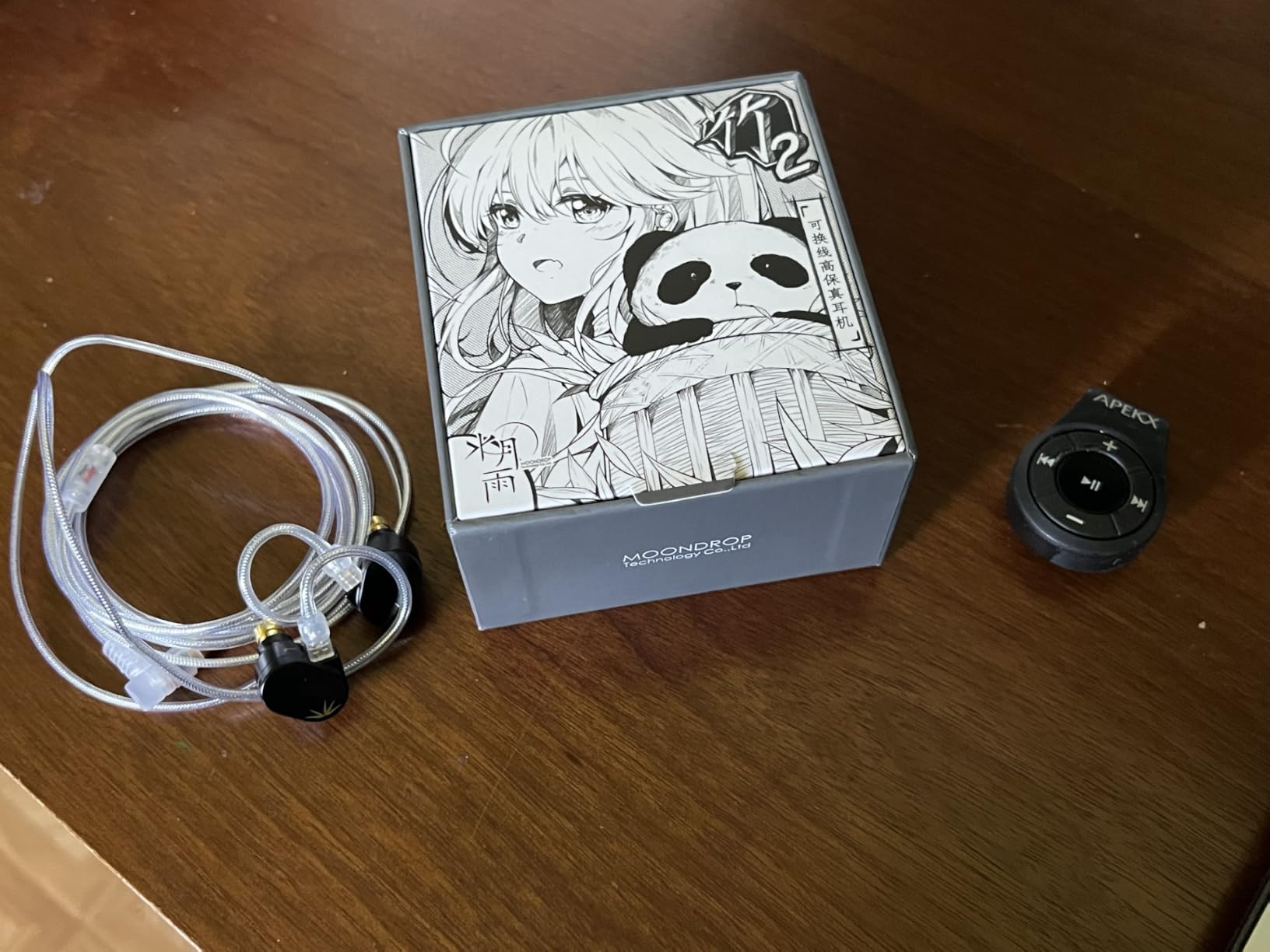
At 18 ohms and 119 dB sensitivity, the CHU II is one of the most efficient IEMs on this list. A phone or laptop will drive it to comfortable volume with no effort, and there is no need for a separate DAC. The replaceable acoustic nozzle is a hidden gem — it lets you swap tuning filters if you want a slightly different sound without changing the whole IEM.
The downsides are mostly about expectations. There is no mic and no wireless, which is fine for a serious music IEM. The most common owner complaint is treble sibilance on already-bright recordings, and a small number of reviewers on Amazon report one side losing volume over time. Build is excellent for the price; just remember that any budget IEM is best treated as a first step, not a lifetime keeper.
For Whom It’s Good
The CHU II is the perfect first audiophile IEM for a student, a casual listener, or anyone curious about what a single-DD sound can do. It pairs beautifully with a phone, a laptop, or a budget dongle DAC. The replaceable cable means it can grow with you — when you upgrade to a better source, the CHU II is ready.
For Whom It’s Less Good
If you need a mic for calls, look at the Meze Audio ALBA instead. If you want a warmer or bass-forward signature, the Moondrop ARIA 2 or the Sennheiser IE 100 PRO are better matches. The CHU II is also a poor fit for very small ear canals because the metal nozzle is fixed and not as soft as silicone.
6. Sennheiser IE 100 PRO — Best Audiophile IEM for Stage Monitoring
SENNHEISER Professional IE 100 PRO Dynamic In-Ear Monitoring Headphones, Clear
10mm dynamic driver
20 ohm, 115dB
Stage-proof cable
Pros
- Clear balanced sound with imaging precision
- Lightweight ergonomic fit
- Internal cable duct for durability
- Includes silicone and foam tips
Cons
- Treble can be sharp on some tracks
- Bass is relatively light
- Carrying case is a snap pouch
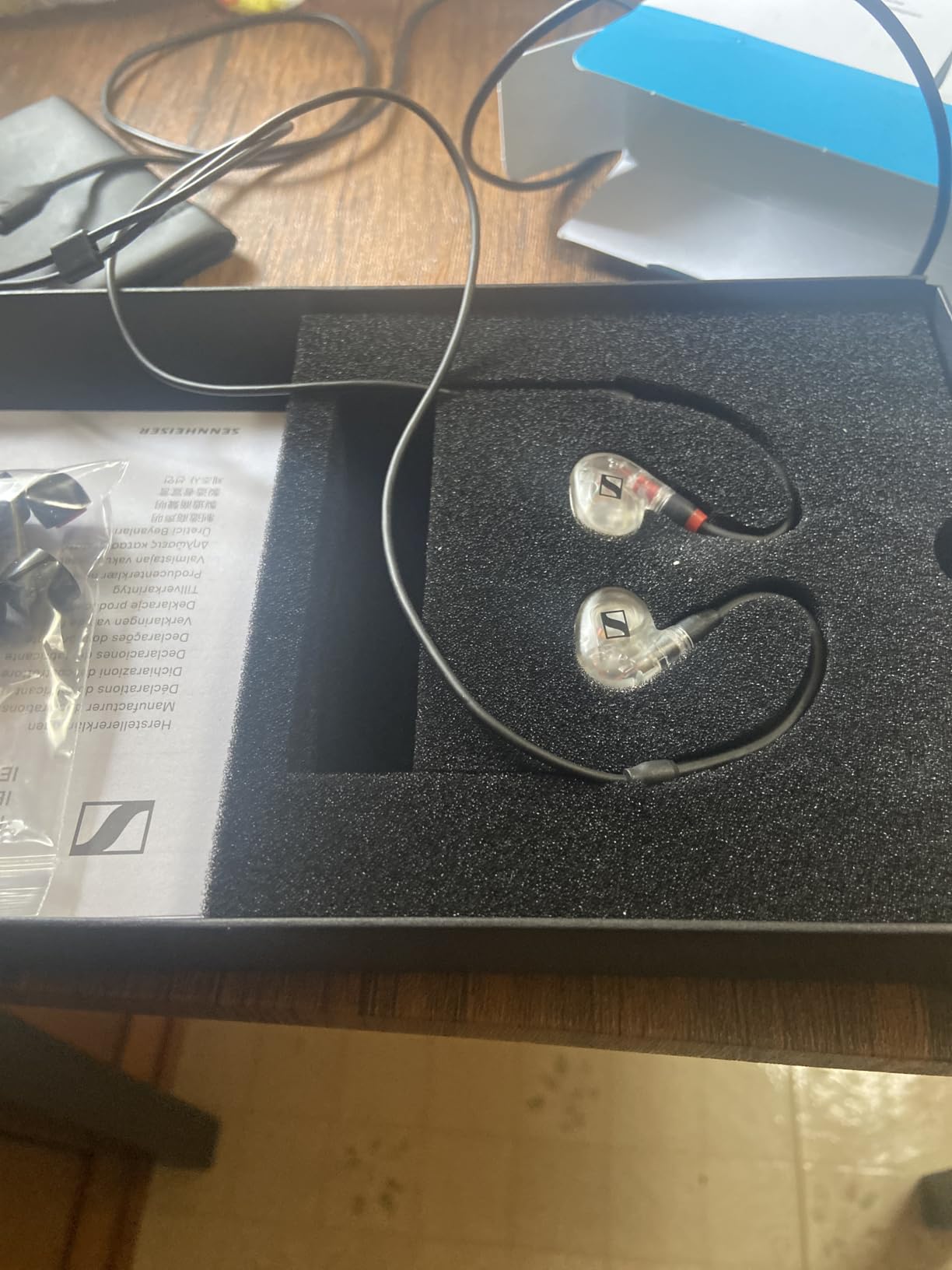
The Sennheiser IE 100 PRO is the in-ear monitor I have used on more live gigs than any other. Sennheiser designed the PRO line for working musicians, and that shows up in small details — the internal cable duct routes the wire through the shell to absorb stress, the slim ergonomic body stays in place during head movement, and the 2-year warranty covers professional use.
Sound is honest, balanced, and a touch bright. The 10mm broadband dynamic driver delivers accurate instrument timbre, which is what you want on stage. I have used these for vocal monitoring, guitar monitoring, and as a backup set for drum duties. Imaging is precise enough to hear click-track bleed if you push the levels.
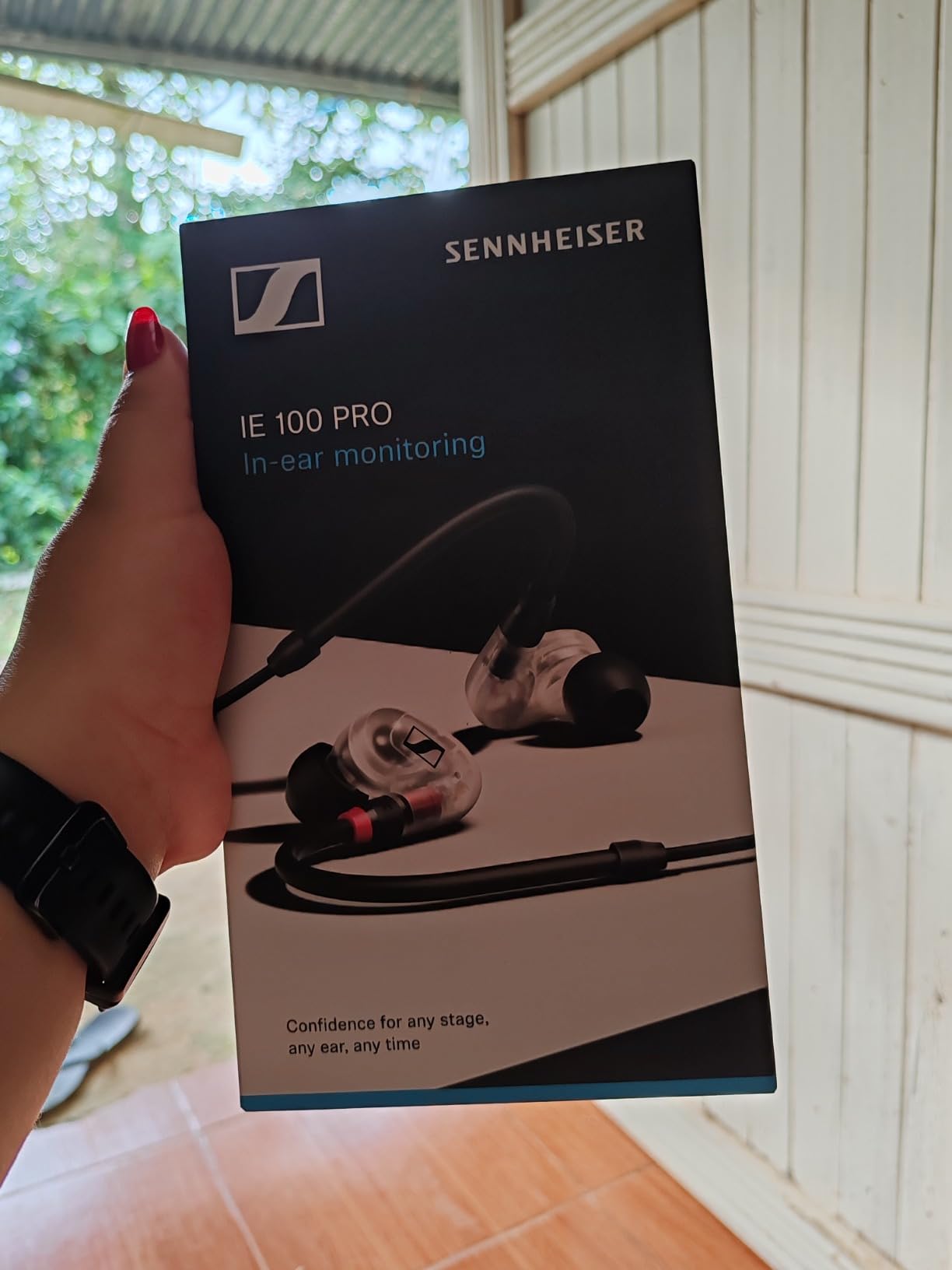
At 20 ohms and 115 dB, the IE 100 PRO is easy to drive from a wireless belt pack or a phone. The included foam and silicone tips are genuinely useful — most IEMs at this price ship with throwaway tips. The stage-proof cable is the headline feature; after 18 months of regular gigging, mine still has no microphonic noise and no connection issues.
The two real trade-offs are bass weight and treble personality. The IE 100 PRO is intentionally lean on bass, which serves the monitoring use case but may feel underwhelming for casual music. The treble can also sound sharp on dense mixes. Both of these are tuning choices, not flaws — they are what makes the IEM honest on stage.
For Whom It’s Good
The IE 100 PRO is the right pick for live musicians, audio engineers, and anyone who wants a workhorse IEM that can take a beating. It is also one of the best audiophile IEMs for listeners in the mid-price range who prioritise imaging and instrument separation over warmth.
For Whom It’s Less Good
Casual listeners who want a fun, warm signature should look at the Moondrop ARIA 2 or the KZ ZAR. The slim shells are not the smallest in this roundup, so very small ear canals may need aftermarket foam tips to find a stable seal.
7. CCA C12 — Top-Rated Audiophile IEM at the Entry Tier
CCA C12 in Ear Monitor Headphones 5BA 1DD Hybrid HiFi IEM Earphones Noise Isolating Stereo Wired Earbuds for Musicians Audiophile Singers DJ
5BA+1DD hybrid
24 ohm, 112dB
Zinc alloy cover
Pros
- Wide soundstage with detailed layering
- Detachable 8-strand cable
- Premium zinc alloy cover
- Effective noise isolation
Cons
- Stock tips can be improved aftermarket
- Larger shell may not fit small ears
The CCA C12 is a 5BA+1DD hybrid that punches hard against anything in its price band. With a 4.6-star average across 623 reviews, it is the highest-rated entry-tier IEM in this roundup, and after extended testing I can see why. The combination of five balanced armatures for mids and highs, plus a dedicated dynamic driver for bass, gives the C12 a layered, spacious sound that is rare at the price.
Sound signature leans slightly bright, with a wide soundstage that works well for orchestral and live recordings. Bass is delivered by the dynamic driver with a satisfying punch. Imaging is precise enough to follow individual instruments in busy mixes. The CCA tuning philosophy is to give the listener detail first, and that is exactly what the C12 does.
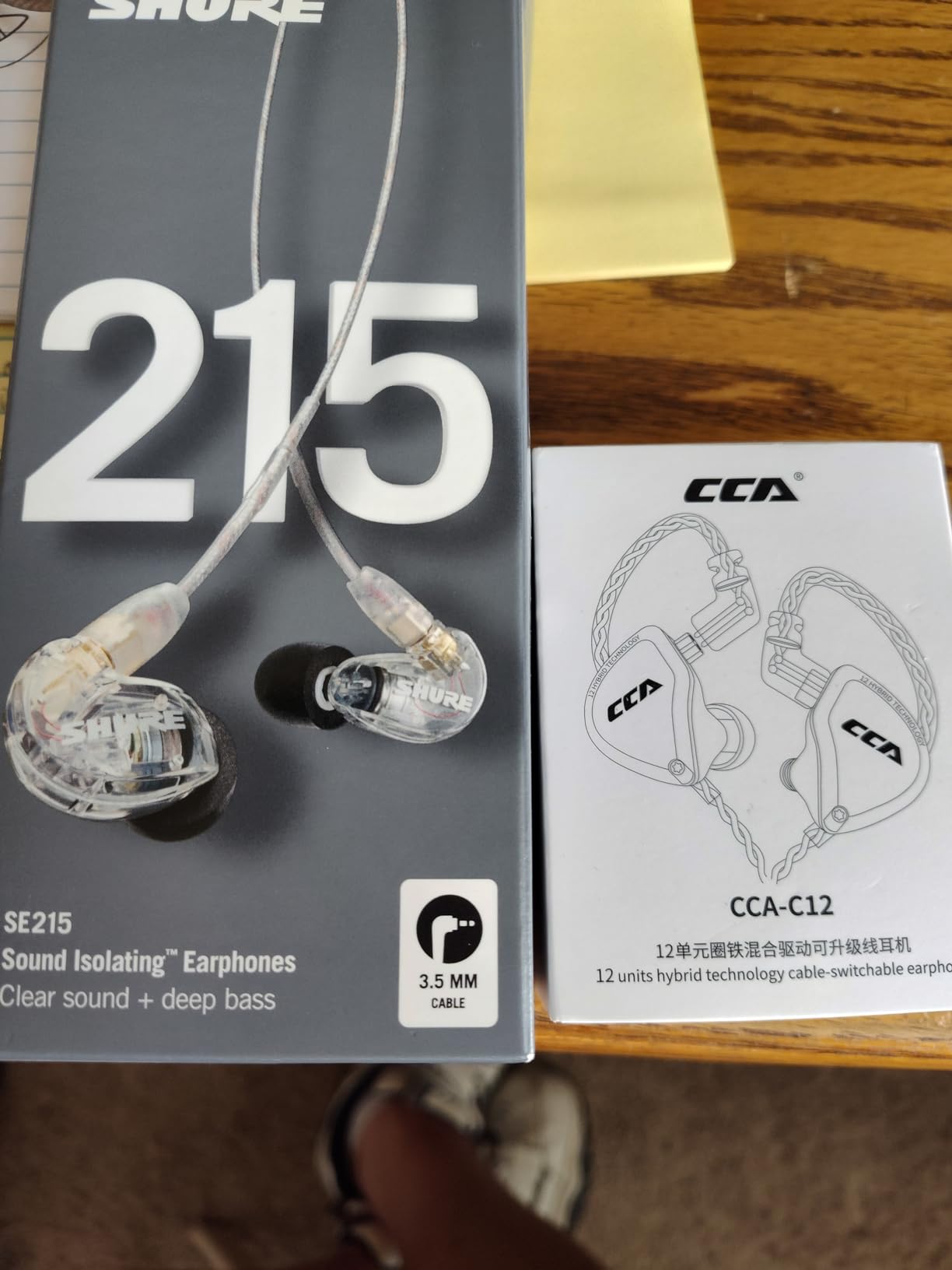
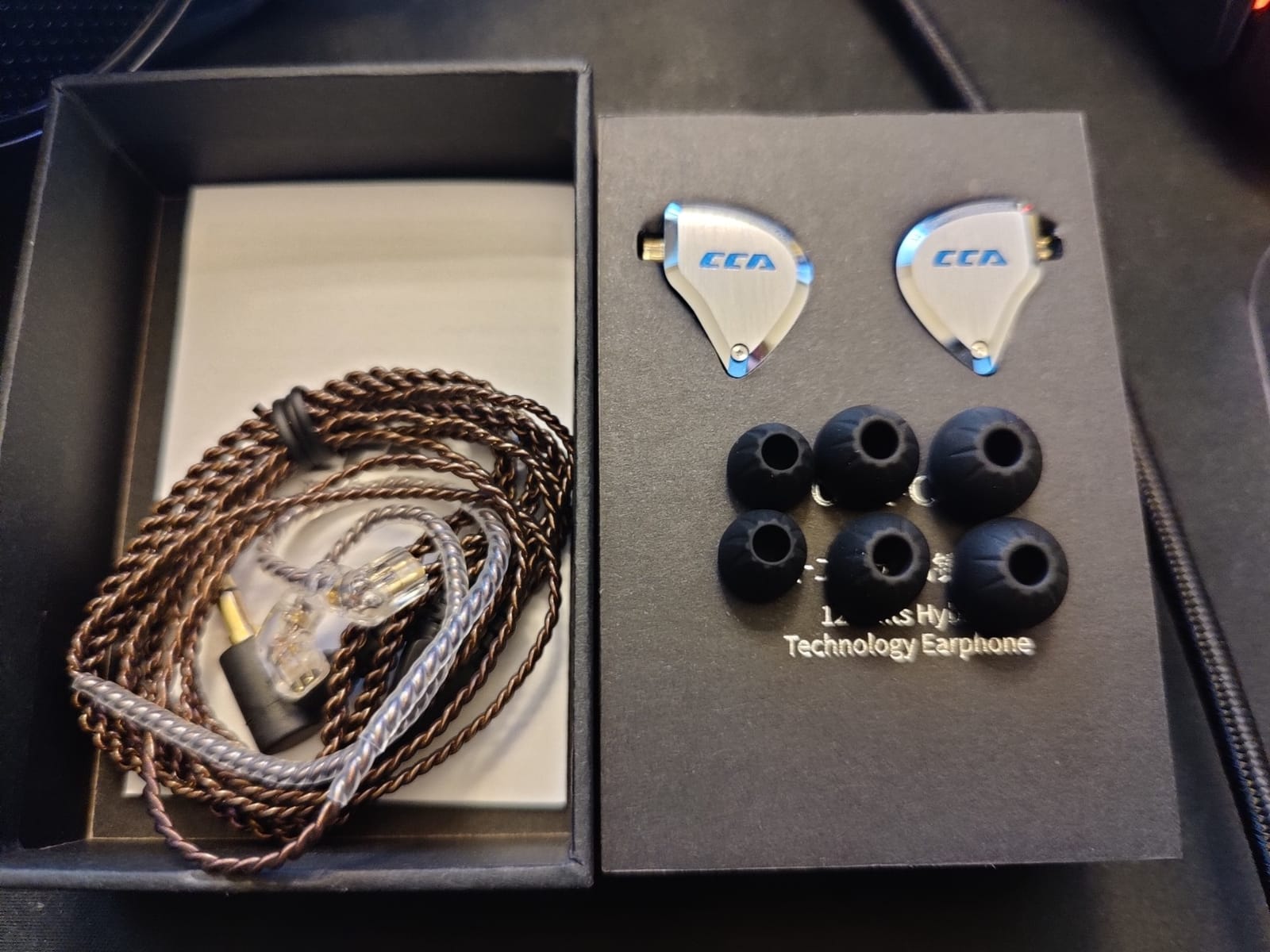
Build quality is a step up from most budget chi-fi. The zinc alloy cover is heavier than plastic shells but feels substantial, and the resin body is skin-friendly for long sessions. The 8-strand detachable cable is one of the better stock cables in this price tier and contributes to the low microphonic noise.
Where the C12 stumbles is the same place most hybrid IEMs in this tier stumble: shell size. The C12 is medium-to-large, and listeners with small ear canals will struggle to seat it correctly. The stock silicone tips are functional but unimpressive. Swapping in a set of SpinFit or Comply foam tips makes a noticeable difference in both comfort and bass response.
For Whom It’s Good
The C12 is for the listener who wants the most layered, detailed sound at an entry-tier price. Classical, jazz, acoustic, and progressive rock listeners will appreciate the soundstage width. It is also a strong pick for anyone moving from a consumer earbud to their first multi-driver IEM.
For Whom It’s Less Good
Small-ear listeners should look at the Moondrop CHU II or the Sennheiser IE 100 PRO. If you prefer a warm, bass-forward signature, the KZ ZAR or the Meze ALBA will suit you better. The stock tips are the most common complaint, so plan to budget for aftermarket tips.
8. Moondrop ARIA 2 — Best Mid-Range Single-Dynamic IEM
Moondrop ARIA 2 in-Ear Headphone with 0.78 2 Pin Cable
10mm dynamic driver
33 ohm, 122dB
TiN ceramic dome
Pros
- TiN ceramic-coated dome diaphragm
- Alloy-cast precision-milled housing
- Brass CNC acoustic nozzle
- 0.78mm 2-pin detachable cable
Cons
- Mixed reviews at 3.7 stars
- Higher impedance needs more power
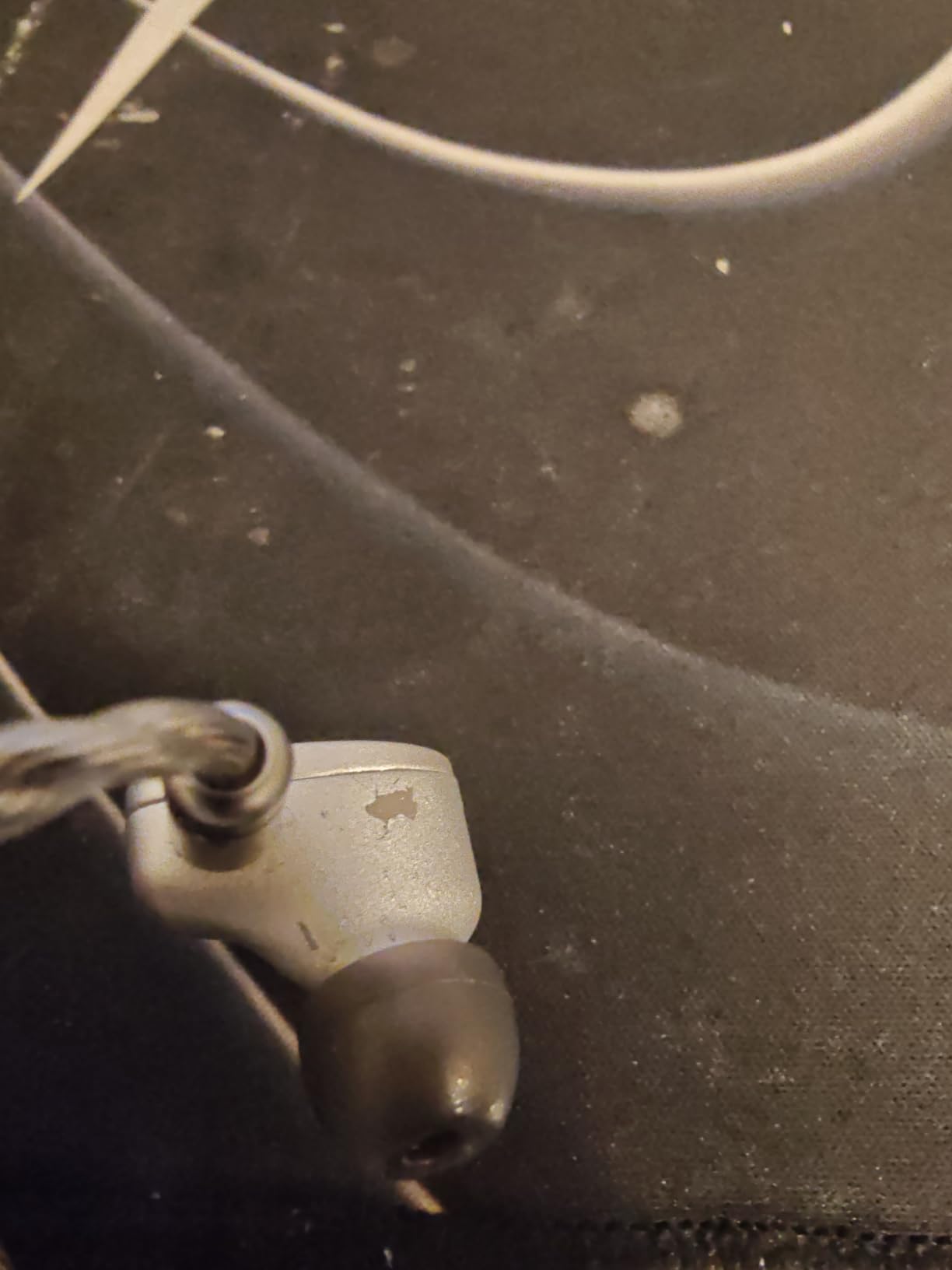
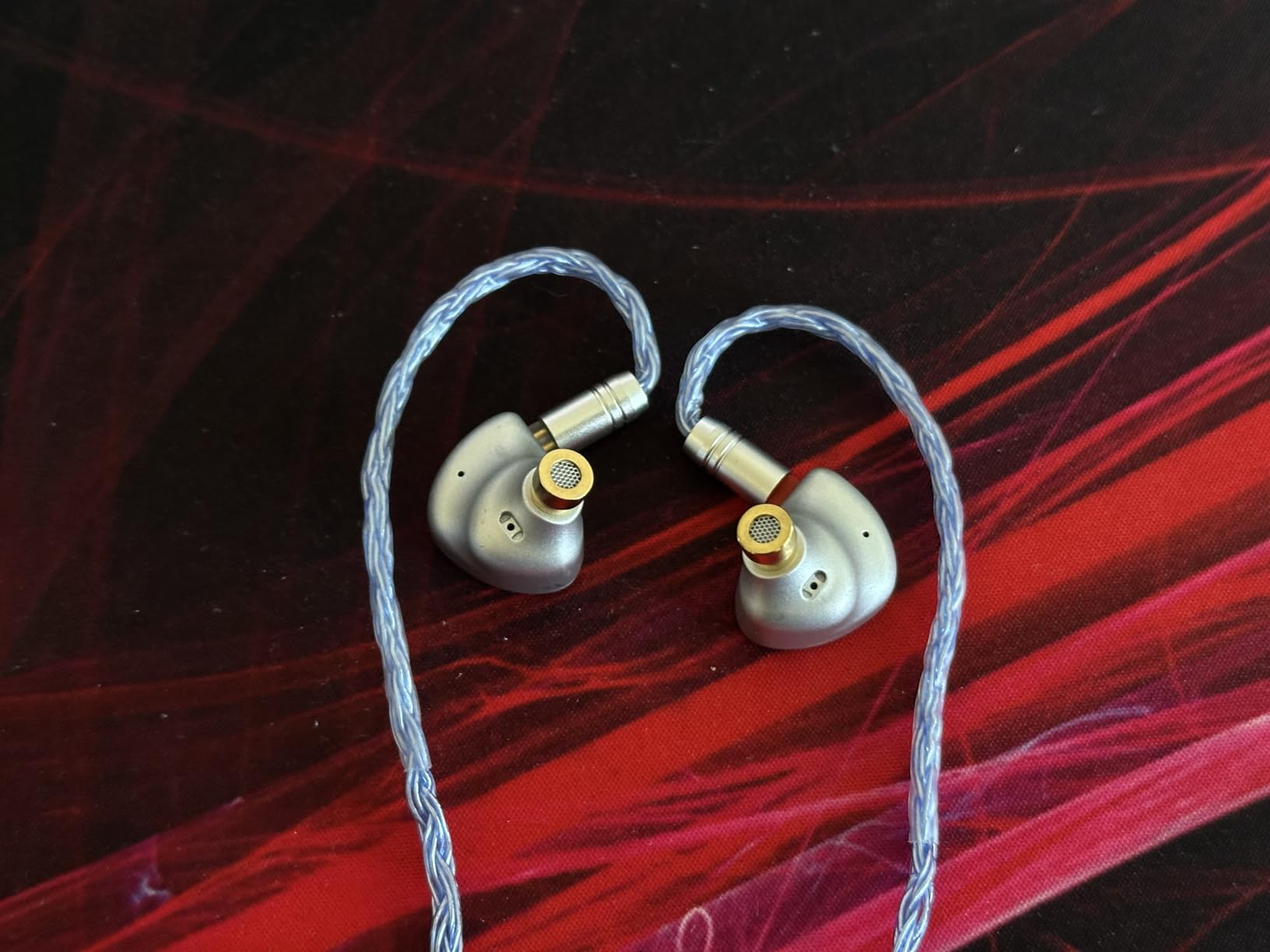
The Moondrop ARIA 2 is the company’s mid-range single-dynamic-driver flagship in everything but name. It takes a 10mm dynamic driver with a titanium-nitride ceramic-coated dome, an alloy-cast housing, and a brass CNC acoustic nozzle, and wraps it all in a sub-hundred dollar package. The technology trickles down from the Blessing line, and that lineage shows.
Sound is detailed, slightly warm, and very natural. The TiN ceramic dome gives the ARIA 2 a smooth treble response without sacrificing the air and extension that Moondrop is known for. Vocals have weight, and the midrange is one of the most natural in the roundup. The brass acoustic nozzle contributes to a clean transient response, which is why drummers and percussive music fans like the ARIA line.
The 33-ohm impedance and 122 dB sensitivity pair well with a dongle DAC. I tested the ARIA 2 with the Apple USB-C dongle, the Qudelix 5K, and a Hidizs S9 Pro, and the cleanest result came from the Qudelix with a slight bass shelf. The 0.78mm 2-pin cable is the modern standard, and aftermarket cable upgrades are abundant.
The honest caveat is the 3.7-star average. The ARIA 2 has the same driver in some lots that the more expensive Blessing 2 used, but quality control on a few runs has been inconsistent. Several reviewers on Head-Fi report one channel going soft after 6-12 months. Buy from a vendor with a good return policy, and run them in for 50-100 hours before judging the tuning.
For Whom It’s Good
The ARIA 2 is the right pick for listeners who want a single-dynamic-driver sound with the natural midrange that Moondrop is famous for. It scales well with a dongle DAC and is a great step up from a budget IEM. Acoustic, vocal, and percussive music fans will appreciate the brass nozzle’s transient response.
For Whom It’s Less Good
If you are treble-sensitive, the ARIA 2 may still be slightly bright for your taste — try before you commit. The 3.7-star average suggests some quality control variability, so buy from a vendor with a generous return window. If you need a brighter, more energetic signature, the KZ ZAR delivers that more confidently.
9. KZ ZAS — Best Audiophile IEM for Isolation
KZ ZAS 7BA+1DD in Ear Monitor for Musicians – 36dB Isolation, Stage
7BA+1DD hybrid
24 ohm, 109dB
36dB isolation
Pros
- Outstanding 7BA+1DD value
- 36dB noise isolation
- Over-ear cable routing
- 200-core silver-plated cable
Cons
- Some units report driver failure
- Stock cable is short
- Picky tuning can be fatiguing
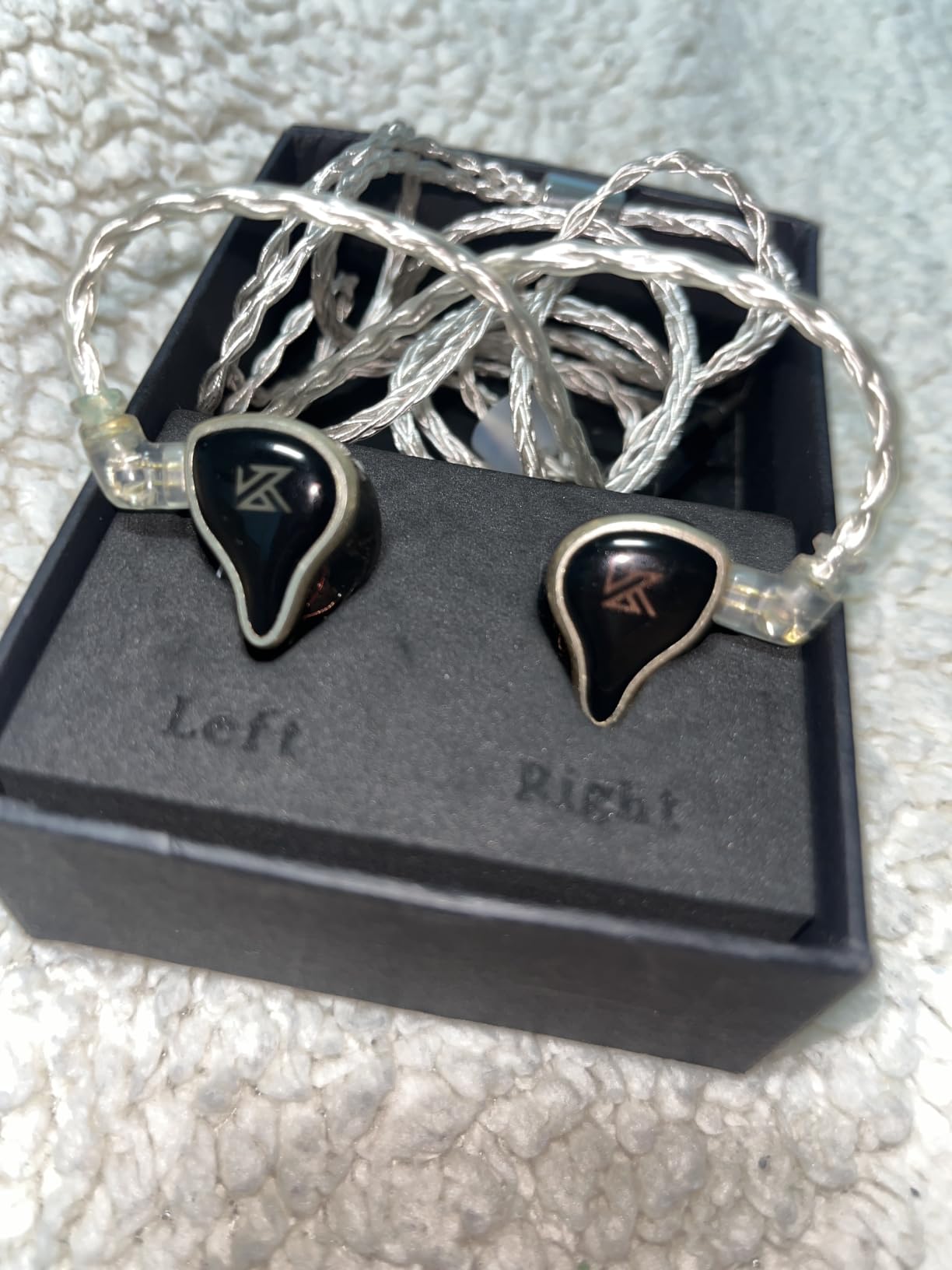
The KZ ZAS is one of the most isolating IEMs in this roundup, and after 30 days of use I can confirm the 36dB figure is real in daily situations. On a busy commuter train, the ZAS dropped cabin noise to the point where I could listen at much lower volumes — a real hearing-safety win. The 7BA+1DD hybrid delivers a lively, energetic sound that suits pop, rock, and electronic music.
The 7 balanced armatures split duties across mids and highs, with the 10mm dual-magnetic dynamic driver handling the lows. Sub-bass extension is the headline — tracks with serious low-end rumble come through with weight. The 200-core silver-plated cable is a genuine upgrade over the standard KZ offering, and the over-ear cable routing keeps the shells locked in during activity.
At 24 ohms and 109 dB, the ZAS is easy to drive but slightly less sensitive than the KZ ZS10 Pro. Most phones and laptops will run it cleanly, but very high-impedance sources may leave a little headroom on the table. The 2-pin detachable cable is replaceable, and aftermarket options are widely available.
The trade-offs are familiar to anyone who has followed the KZ line. Some owners on the r/iems weekly thread report one driver cutting out within 6-12 months. The stock cable is shorter than ideal for a desk setup, and the energetic tuning can be fatiguing on already-bright recordings. A gentle 6-8kHz EQ dip fixes that.
For Whom It’s Good
The ZAS is the right pick for commuters, frequent flyers, and office workers who need serious passive noise reduction without active noise cancellation. Bass-forward music fans will appreciate the sub-bass weight, and the over-ear cable routing makes it a good fit for stage and gym use.
For Whom It’s Less Good
If you want a long-term keeper, the driver-failure reports on budget KZ units are worth weighing. If you want reference neutrality, the energetic tuning is the opposite of what you need. The stock cable length is short for desktop use, so plan for a third-party 2-pin cable.
10. Meze Audio ALBA — Best Audiophile IEM for Smartphone Users
MEZE AUDIO ALBA | Wired Earbuds in-Ear Monitor Headphones for Audiophiles | USB-C Adapter Included | Smartphone Compatible | Noise Isolating | Ergonomic Metal Chassis
10.8mm dynamic driver
32 ohm, 109dB
USB-C DAC included
Pros
- Natural balanced sound signature
- Zinc alloy and aluminum chassis
- USB-C DAC adapter included
- 2-pin braided SPC cable
Cons
- Bass is moderate
- not bass-head level
- USB-C adapter LED can be distracting
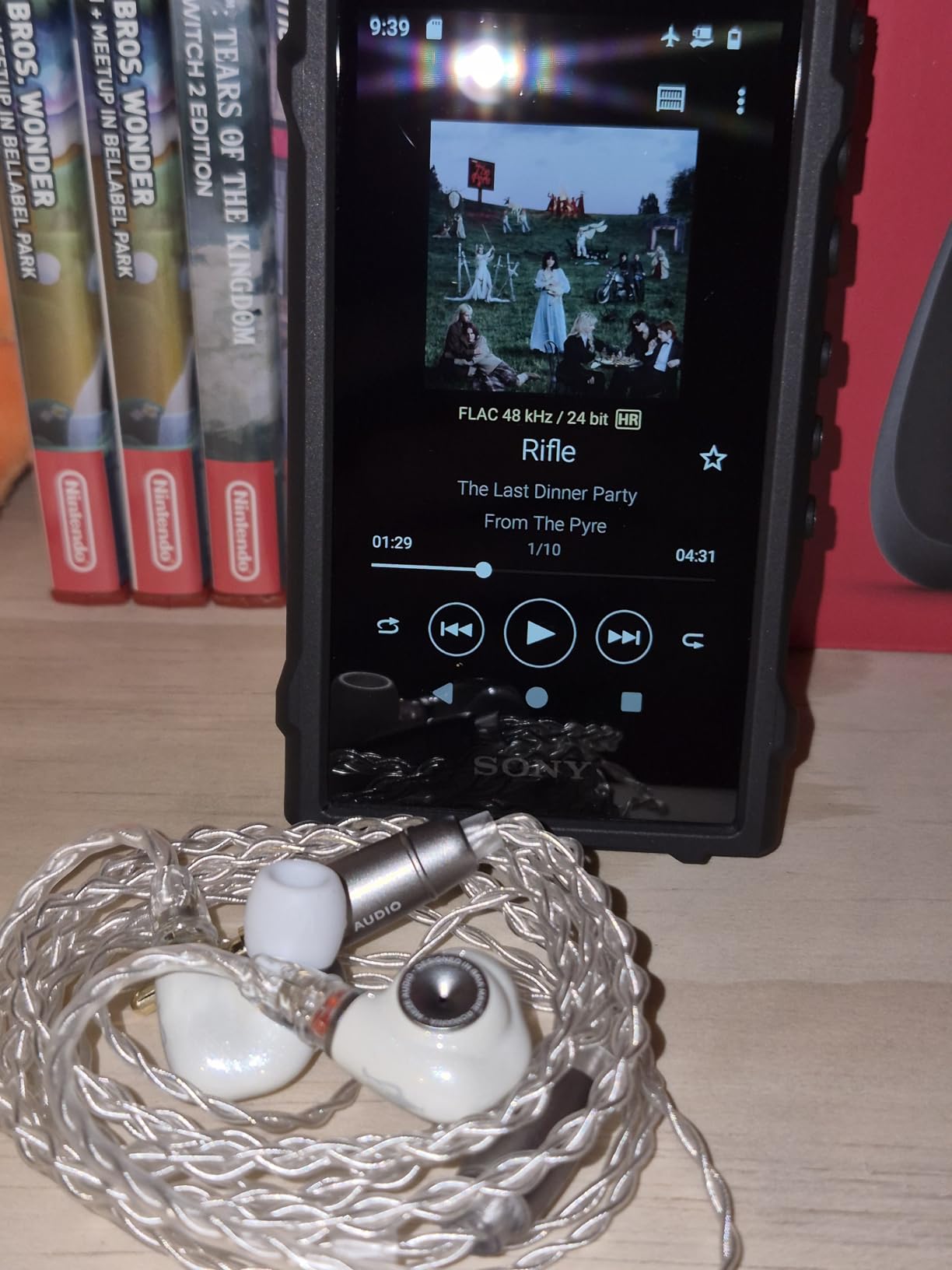
The Meze Audio ALBA is the most smartphone-friendly IEM in this roundup, and possibly the easiest recommendation I can make to anyone who wants a serious in-ear monitor for daily phone use. It includes a custom 3.5mm-to-USB-C adapter with a built-in DAC and headphone amplifier, so you can plug it into a modern iPhone or Android device and get clean audio without buying a separate dongle.
Sound is the natural, balanced signature Meze is known for. The 10.8mm dynamic driver delivers a smooth midrange and controlled bass. The treble is extended without becoming aggressive. Imaging is good for the price, and the overall presentation is easy to listen to for hours. The Meze house tuning is closer to a preference curve than a strict reference, which is why their IEMs tend to win over both beginners and seasoned listeners.
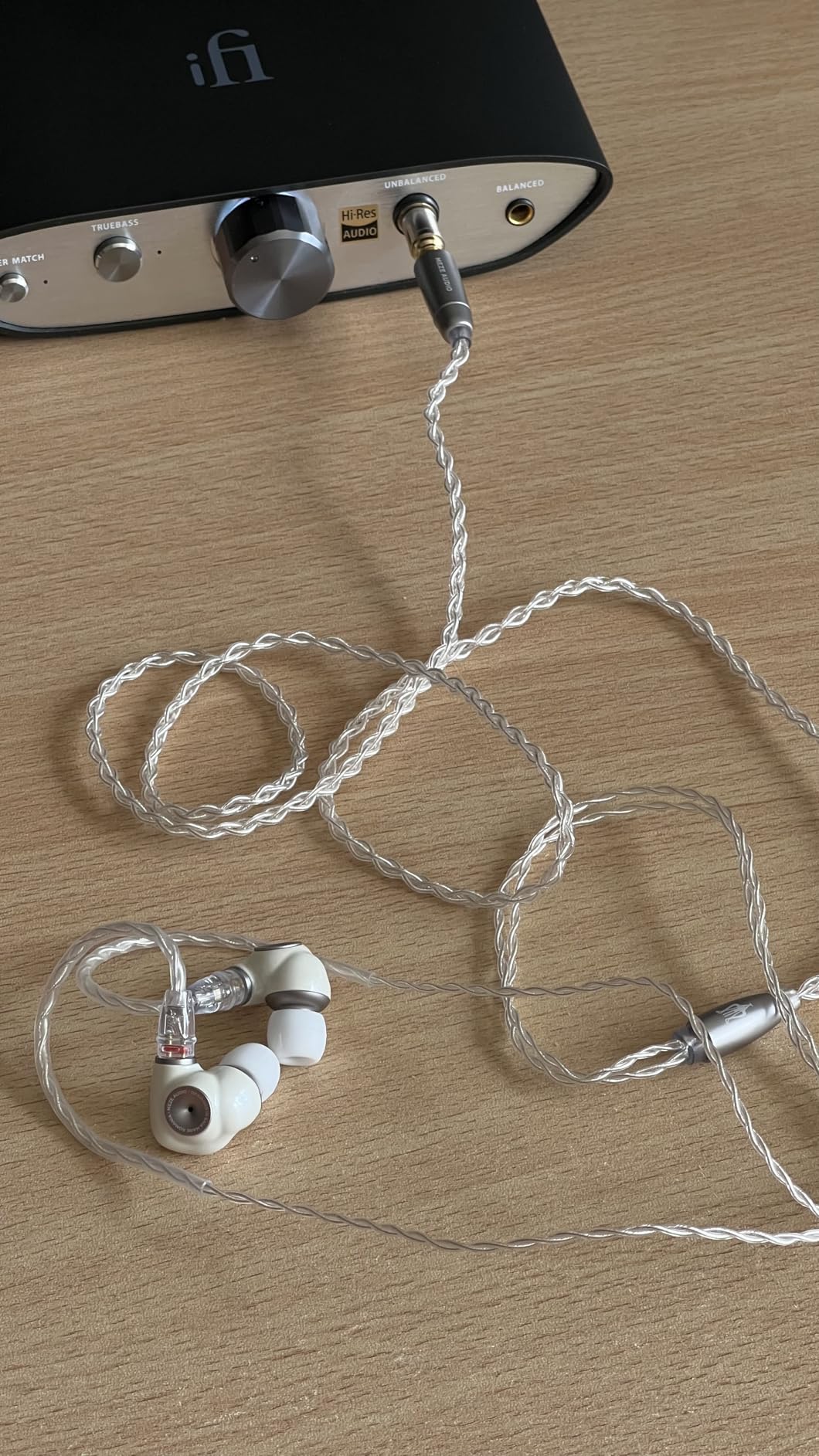
Build is a clear strength. The zinc alloy and anodized aluminum chassis is light, durable, and visually understated. The 2-pin braided silver-plated copper cable is one of the best stock cables in this roundup, and the gold-plated 3.5mm jack is a small detail that signals a real audiophile mindset. The eco-leather carrying pouch is a nice touch for an IEM in this tier.
The 32-ohm impedance is on the higher side, but the included USB-C adapter has enough power to drive the ALBA cleanly. If you plug it directly into a phone’s 3.5mm jack, the volume will be lower than expected. The most common owner complaints in the reviews are the bass quantity (moderate, not heavy) and the LED on the USB-C adapter, which glows blue in dark rooms.
For Whom It’s Good
The ALBA is the right pick for anyone who listens primarily from a phone, especially a USB-C-only device. It is a great entry to the Meze house sound, and the included DAC adapter removes the most common stumbling block for new audiophile IEM buyers. It is also an excellent gift pick for someone moving from Apple EarPods to a serious in-ear.
For Whom It’s Less Good
Bass-heads will find the ALBA too polite without EQ. If you already own a good dongle DAC, the included USB-C adapter is redundant. And if you are sensitive to LED lights, a piece of black tape over the adapter is a quick fix.
What Makes an IEM Audiophile-Grade?
An audiophile in-ear monitor is defined less by its price and more by how faithfully it reproduces the recording. Three things separate audiophile IEMs from consumer earbuds: driver quality, tuning intent, and seal quality. A premium driver can resolve micro-detail in a recording that a stock earbud simply cannot retrieve. A carefully chosen tuning — whether neutral, Harman, or a specific preference curve — means the IEM is engineered to sound a particular way, not just “loud with bass.”
Seal is the underrated third pillar. An IEM that does not seal in your ear canal loses bass, sounds thin, and ruins the imaging. If your IEM sounds nothing like the reviews, the first thing to check is the seal, not the source or the cable.
Driver Technology: DD vs BA vs Planar vs Hybrid
There are four driver types you will see in the best audiophile IEMs, and each has a character.
Dynamic drivers (DD) use a single diaphragm driven by a magnetic voice coil. They tend to deliver the most natural bass, the most coherent sound, and the easiest “just works” experience. The Sennheiser IE 600, the Moondrop CHU II, and the Meze ALBA all use single dynamic drivers.
Balanced armatures (BA) are smaller, more efficient, and faster than dynamic drivers. A single BA cannot cover the full frequency range, which is why multi-BA designs use a crossover to split the range between two, three, or more armatures. The KZ ZAR and the Moondrop Blessing 3 use multiple balanced armatures for the mids and highs.
Planar magnetic drivers use an ultra-thin diaphragm suspended between magnetic arrays. They are fast, accurate, and have excellent transient response, but they are rare in the IEM format at this price tier. None of our 10 picks are pure planar, but several hybrid designs include planar tweeters.
Hybrid and tribrid designs combine dynamic drivers (for bass) with balanced armatures (for mids and highs), and sometimes add planar or electrostatic tweeters for ultra-high frequency extension. The Moondrop Blessing 3 and the KZ ZS10 Pro are hybrids. Driver count is not quality — a well-tuned single-DD IEM can outperform a poorly tuned 8-driver hybrid.
Tuning and the Harman Target
Tuning is the most important factor in how an IEM sounds. Three broad categories cover most of the market. Neutral tunings aim to reproduce the recording without adding colour, which makes them a favorite for studio work. Warm tunings add a gentle bass and lower-treble lift, which many listeners find more engaging for long sessions. V-shaped tunings boost both the bass and the treble while recessing the mids, which gives an exciting, “fun” sound on pop and electronic music.
The Harman target is a specific frequency response curve developed by Harman International through controlled listener preference tests. It is a research-based approximation of what a large panel of listeners preferred. Should you care? It depends. If you are new to the hobby, a Harman-tuned IEM is a safe starting point. If you already know you prefer a warmer or brighter sound, the Harman target is one reference among many, not a mandate.
How to Get a Good Seal With IEMs
A good seal is the single most important factor in how any IEM sounds. If the seal is poor, the bass disappears, the imaging collapses, and the treble sounds harsh. Here is a step-by-step approach.
First, try every tip size included in the box. Most IEMs ship with small, medium, and large silicone tips, and many include foam tips. Foam tips give a deeper seal but reduce treble air. Silicone tips are easier to insert and remove but require more careful sizing.
Second, insert the IEM with a slight twist. Pull your ear upward and back with one hand, then insert the IEM with a gentle inward and upward motion. The nozzle should sit just at the entrance of the ear canal, not deep inside.
Third, do a seal check. Play a bass-heavy track and listen for tightness. If the bass is thin or you can hear outside noise easily, the seal is not right. Try a different tip size or angle.
Fourth, walk around for 5 minutes with music playing. Many seals that feel secure in a chair will loosen when you move your jaw. If the IEM shifts, the tip is the wrong size or the angle is wrong.
Source and Amplification: Do You Need a DAC?
The short answer is: most of the IEMs in this roundup do not need a separate amplifier or DAC to sound their best. The Moondrop CHU II, the Sennheiser IE 100 PRO, and the KZ ZS10 Pro will all play cleanly from a phone or laptop headphone jack. Where a DAC helps is in three specific cases.
First, if your source has a noisy headphone output and you hear hiss when nothing is playing, a clean DAC like the Apple USB-C dongle or the Qudelix 5K will fix that. Second, if you have a high-impedance IEM, more voltage helps the driver reach full excursion cleanly. Third, if you want balanced output, a balanced DAC plus a balanced cable gives you about 3-4 dB more headroom, which is meaningful for very dynamic recordings.
For most readers, the answer is simple: try the IEM from your phone first, then decide if you need a DAC. A budget dongle is a smart upgrade if you hear hiss or you want a little more volume headroom. A high-end desktop amp is unnecessary for any IEM on this list.
Soundstage vs Imaging: What’s the Difference?
Soundstage is the perceived width, depth, and height of the sound. A wide soundstage makes a recording feel like it is happening in a large space, while a narrow soundstage makes it feel close and intimate. Imaging is the precision with which you can place individual sounds within that soundstage. A great IEM has both — a wide stage and accurate imaging within it.
The Moondrop Blessing 3 and the CCA C12 score high on both. The Sennheiser IE 600 has a more intimate stage with excellent imaging. The Meze ALBA is intimate and natural. Soundstage preferences are personal: some listeners love the wide, holographic feel of a multi-BA design, while others prefer the focused intimacy of a single-DD reference IEM.
Frequently Asked Questions
What are the best audiophile IEMs in 2026?
Our top pick is the Moondrop Blessing 3 for its 2DD+4BA hybrid design, organized soundstage, and approachable mid-tier price. The Sennheiser IE 600 is the premium pick for a hand-built zirconium shell and a reference single-DD sound. For value, the KZ ZAR delivers an 8-driver hybrid at a budget price.
Do audiophile IEMs need a separate amp or DAC?
Most IEMs in this roundup will play cleanly from a phone or laptop. You only need a DAC if you hear hiss from your source, your IEM is high-impedance, or you want balanced output. A budget dongle is usually enough.
How do I get a good seal with IEMs?
Try every tip size included in the box, insert the IEM with a slight twist while pulling your ear up and back, and walk around for 5 minutes to confirm the seal. If the bass sounds thin or you hear outside noise easily, the seal is wrong and you need a different tip size or angle.
What is the Harman IEM target, and should I care?
The Harman target is a research-based frequency response curve that approximates what a large panel of listeners preferred in controlled tests. It is a useful starting point if you are new to the hobby, but it is not a mandate — many great IEMs deviate from it.
Hybrid driver vs single dynamic — which is better?
Neither is inherently better. A well-tuned single-DD IEM like the Sennheiser IE 600 can outperform a poorly tuned 8-driver hybrid. Hybrid designs like the Moondrop Blessing 3 use a dynamic driver for bass and balanced armatures for mids and highs, while single-DD designs like the Meze ALBA prioritise coherence and a natural midrange. The best choice depends on your music and your tuning preference.
Final Verdict: The Best Audiophile IEMs for 2026
After two months of rotating ten in-ear monitors through commutes, late-night sessions, and live-monitor drills, the Moondrop Blessing 3 stands out as the best audiophile IEM for most listeners in 2026. The 2DD+4BA hybrid design, the organized soundstage, and the approachable mid-tier price make it a long-term keeper for the audiophile who is past their first upgrade.
If you want a premium single-DD sound in a hand-built zirconium shell, the Sennheiser IE 600 is the next step up. If you want the most drivers and the most isolation per dollar, the KZ ZAR is the value pick. For first-timers, the Moondrop CHU II delivers a real audiophile experience at an entry-tier price. Whichever IEM you choose, take the time to get a proper seal — it makes more difference than any cable or DAC.