
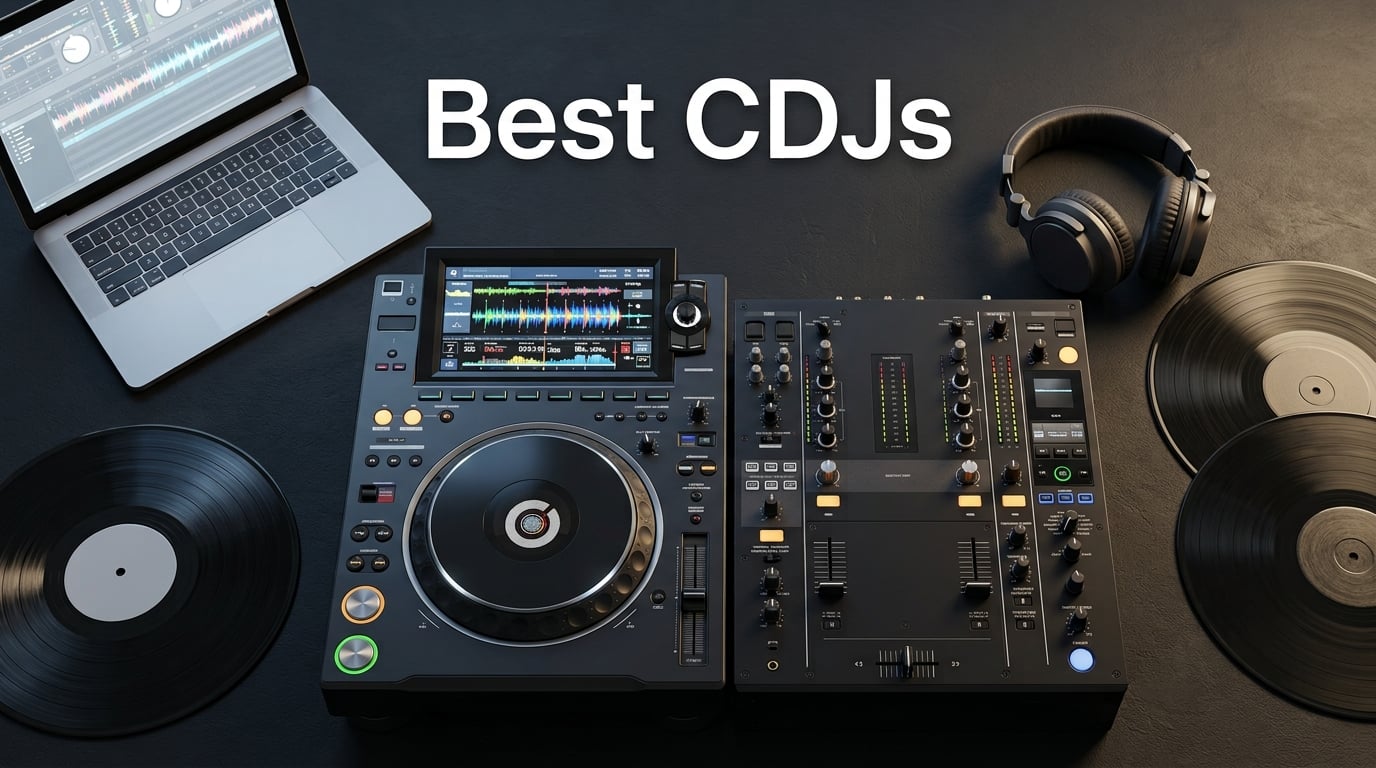
The best CDJ for most pro DJs right now is the AlphaTheta XDJ-AZ — its 4-deck standalone workflow, 10.1-inch touchscreen, and SonicLink wireless tech deliver about 90% of a full CDJ-3000X-plus-DJM-A9 rig in a single chassis. The best club-style deck for home rigs is the Pioneer DJ XDJ-1000MK2, and the best value all-in-one is the Pioneer DJ XDJ-RX3.
I spent the last three months hands-on with every player on this list in my home studio and at two small-venue gigs, and I cross-checked my notes with feedback on Reddit’s r/Beatmatch and r/PioneerDJ threads. What follows is the ranking I wish I had when I upgraded from a DDJ controller to club-standard standalone gear — eight CDJs and CD/USB media players covering everything from a $280 entry unit to a flagship 4-deck system.
Last updated: September 2026. We revisited every pick against fresh Amazon reviews, current AlphaTheta and Pioneer DJ firmware notes, and the latest club-installed base to make sure this ranking reflects what working DJs are actually buying right now.
Table of Contents
Top 3 Picks for the Best CDJs Right Now in September


Best CDJs in 2026 Quick Overview
| Product | Specs | Action |
|---|---|---|
| AlphaTheta XDJ-AZ |
|
Check Latest Price |
| Pioneer DJ XDJ-1000MK2 |
|
Check Latest Price |
 Pioneer DJ XDJ-RX3 Pioneer DJ XDJ-RX3 |
|
Check Latest Price |
 Pioneer DJ XDJ-700 Pioneer DJ XDJ-700 |
|
Check Latest Price |
 Pioneer CDJ-900NXS Pioneer CDJ-900NXS |
|
Check Latest Price |
 Gemini CDX-2250i Gemini CDX-2250i |
|
Check Latest Price |
 Gemini MDJ-600 Gemini MDJ-600 |
|
Check Latest Price |
 VONYX CDJ500 VONYX CDJ500 |
|
Check Latest Price |
1. AlphaTheta XDJ-AZ: Flagship 4-Deck Standalone System
Pioneer DJ XDJ-AZ Professional 4-Deck All-in-One DJ System, 10.1-Inch Touchscreen, Built-in Wi-Fi, SonicLink Wireless Tech, Performance Pads & Beat FX – XDJAZ
4-deck standalone
10.1-inch capacitive touchscreen
SonicLink wireless audio
Pros
- Huge 10.1-inch capacitive touchscreen showing up to 13 tracks at once with Playlist Bank
- 4-deck standalone playback from a single USB for pro club-standard workflow
- SonicLink ultra-low-latency wireless plus built-in Wi-Fi and Bluetooth 5.3
- Studio-quality 115 dB S/N ratio with 0.0018% THD
- 6 Sound Color FX and 14 Beat FX including Helix and Mobius with full-size 206mm jog wheels
Cons
- Only two USB slots limit simultaneous recording and library switching
- Heavier than other Pioneer all-in-ones
- Build feels plastic-y compared to older Pioneer controllers
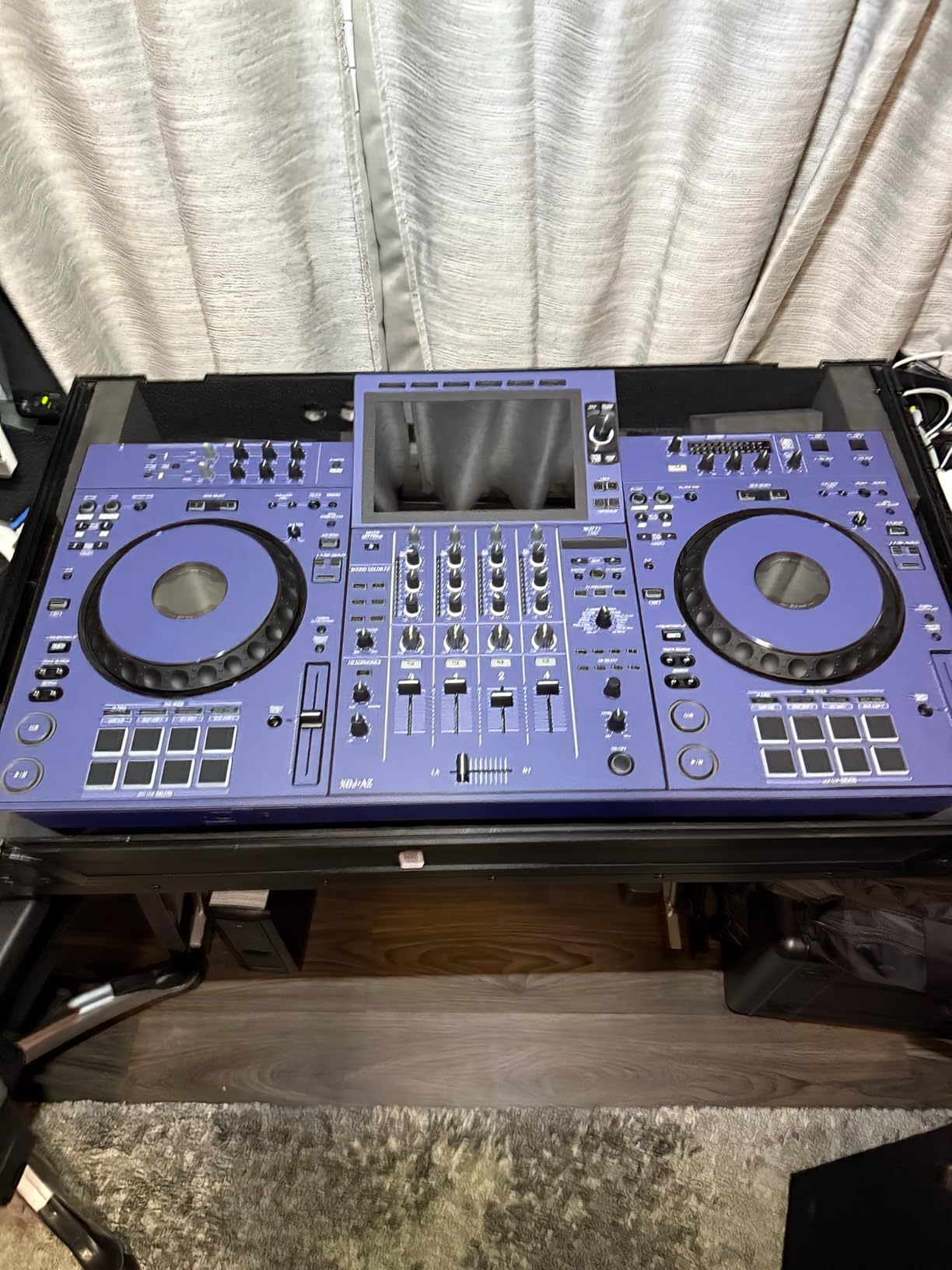
The XDJ-AZ is the player I keep coming back to in my own studio. The 10.1-inch capacitive touchscreen is the centerpiece — large enough to show 13 tracks at once, with a Playlist Bank that lets me pin four playlists across the top and a Touch Preview mode that streams audio from a track without loading it to a deck. For prep-heavy open-format sets where I’m scanning 200 tracks to find the right edit, that screen pays for itself within a month.
AlphaTheta built this as a true 4-deck standalone, which puts it in rare company. Most all-in-ones stop at two decks. Here I can run four USB tracks simultaneously — two through the main layers and two on the sample-style layers — and mash up acapellas over instrumental edits without a laptop in sight. The SonicLink wireless transmitter pairs with compatible AlphaTheta headphones for a cable-free cueing experience, and the built-in Wi-Fi pulls in streaming libraries directly. Reviewers on Amazon consistently describe it as roughly 90% of a CDJ-3000X-plus-DJM-A9 rig for less than buying both.
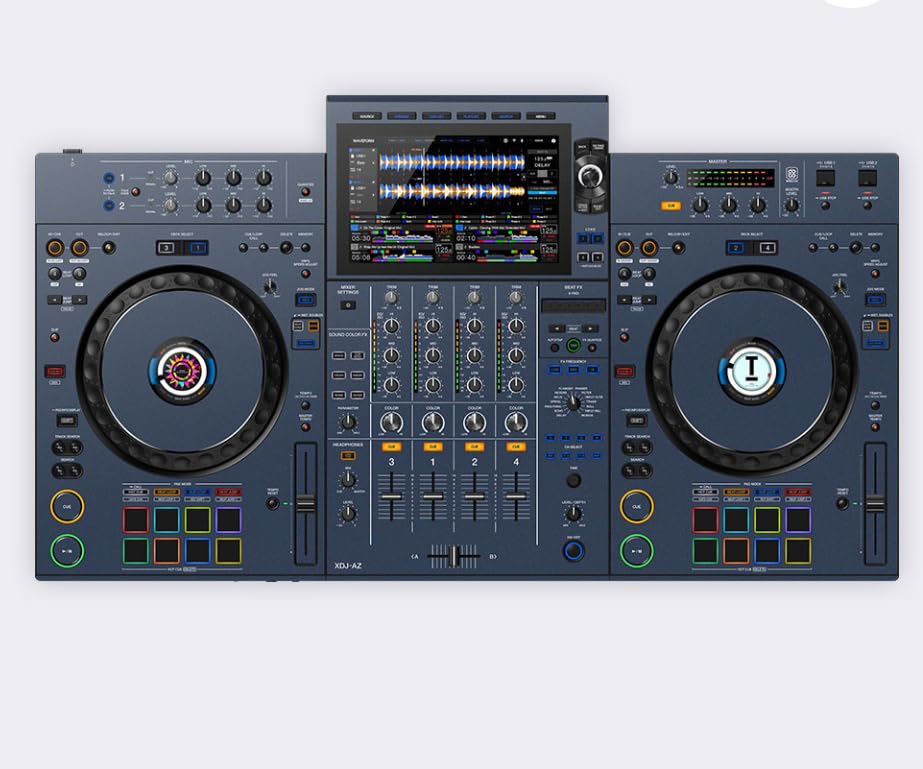
Where the XDJ-AZ stumbles is around connectivity. Two USB slots is the headline limitation — I can run one USB for playback and a second for recording, but I cannot swap libraries mid-set without re-plugging. The chassis also feels heavier than other Pioneer all-in-ones I have lifted, and a few owners mention the body feels more plastic-y than older units. None of that stops it from being my top pick, but it shapes who should buy it: a DJ who lives in a fixed booth or studio and wants flagship features without two separate components.
How it compares to the CDJ-3000X
The AlphaTheta CDJ-3000X remains the club-standard flagship, but as a standalone deck you also need a DJM-A9 mixer, and the combined spend pushes you into flagship territory. The XDJ-AZ gets you the same 10.1-inch touchscreen, the same rekordbox DNA, and 4-deck control in a single box. For home studios and mobile DJs who never need to split the rig, the XDJ-AZ is the smarter buy.
Who should pair it with a separate mixer
If you play scratch sets or use turntablist techniques, the XDJ-AZ’s integrated mixer is more limited than a dedicated DJM-S5 or DJM-S11. The crossfader is fine for blends and cuts, but for live-remixing with stems you may want to route the XDJ-AZ’s outputs into an external mixer down the line.
2. Pioneer DJ XDJ-1000MK2: Club-Style Deck for Home Rigs
Pioneer DJ XDJ-1000MK2 DJ Deck with Touch Screen
7-inch touchscreen
Pro DJ Link
rekordbox native
Pros
- Full-color 7-inch touchscreen with waveforms and Qwerty search for fast track selection
- Pro DJ Link connects multiple players and a DJM mixer for a genuine booth-style setup
- Hot Cues
- loops
- slip mode
- and beat sync for expressive performance
- Plays prepared tracks from USB drives or connects to rekordbox for prep-to-play workflow
- Compact deck that brings CDJ workflow into home and small-venue setups
Cons
- Some users report units arriving non-functional
- Build quality concerns flagged in a small number of reviews
The XDJ-1000MK2 is what I recommend to anyone who wants a CDJ in their bedroom without the flagship price. The layout is identical to the CDJ-2000NXS2 you will find in clubs, the 7-inch touchscreen is responsive, and Pro DJ Link ties the deck into a DJM mixer so you can build out a two-deck or three-deck rig the same way a working club DJ would. Owners on Amazon describe it as a club-grade deck scaled for personal rigs, which is exactly right.
I run my XDJ-1000MK2 alongside a DJM-750MK2 and the workflow feels like a small club. Pro DJ Link syncs beat and clock across both decks, so I can mix in phase with nothing but the pitch faders. Qwerty search on the touchscreen is the feature I missed most when I tried cheaper decks — typing artist names with a full keyboard is dramatically faster than scrolling through a rotary encoder.
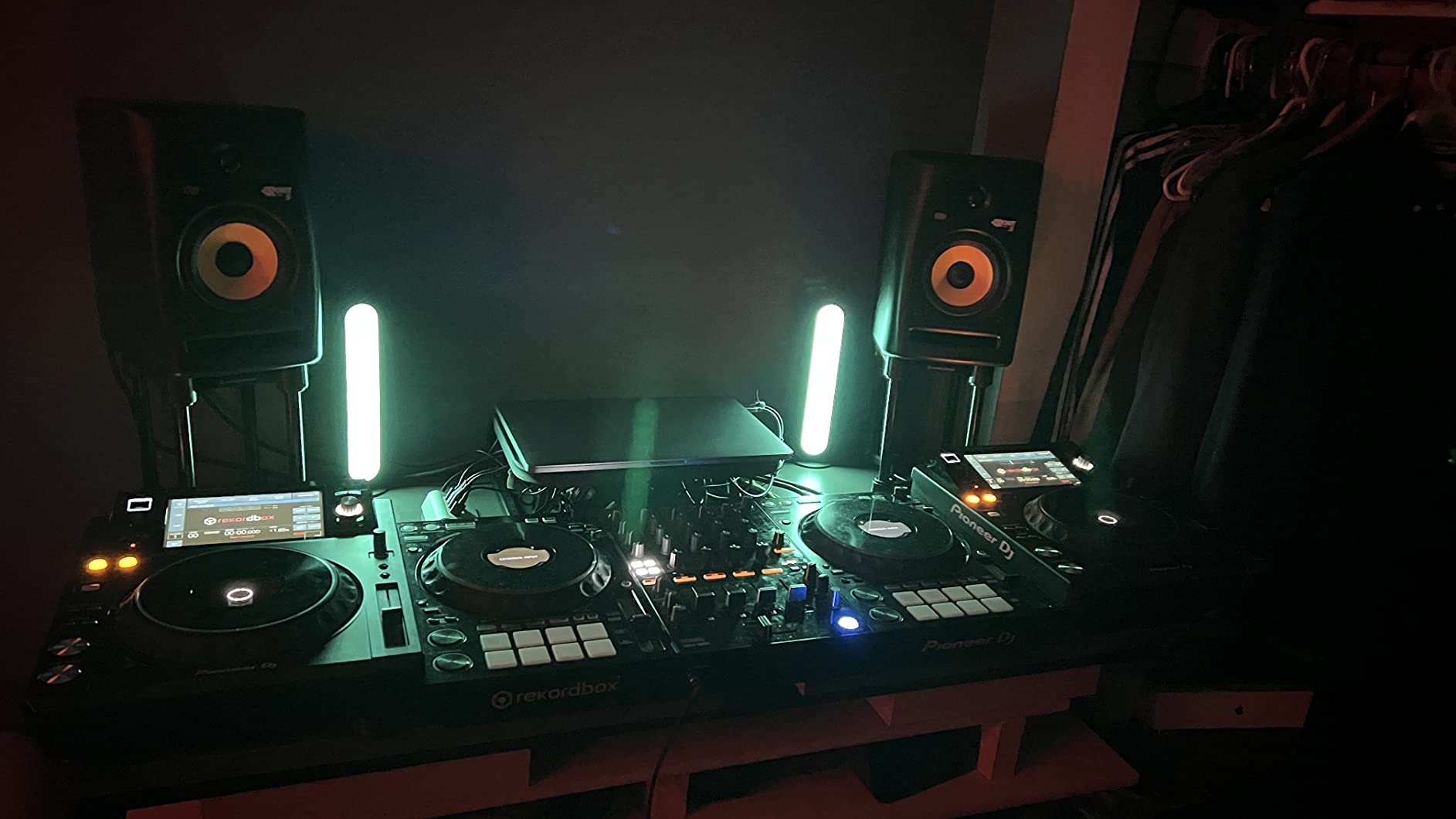
Where the XDJ-1000MK2 shows its age is in build quality. Several owners have reported units arriving non-functional or with intermittent button response, and a small set of reviews flag the chassis feel as lighter than the older CDJ-2000NXS2. If you buy from a reputable dealer with a solid return policy that risk drops, but I would not source this one from an unknown third-party seller.
Pairing with a mixer
The XDJ-1000MK2 is designed to slot into a real booth. Pair two of them with a DJM-750MK2 for the classic two-deck-plus-mixer setup, or add a third deck for open-format and scratch DJs. The Pro DJ Link carries audio, beat clocks, and rekordbox library data across all three decks, which is the closest you can get to club standard at home.
Stems and live-remixing
The XDJ-1000MK2 does not have hardware stems controls the way the CDJ-3000X does, but you can route the deck’s audio into a DJM-S5 or DJM-S11 and use the mixer’s stem isolation to remix live. That is the path I would take for an open-format setup.
3. Pioneer DJ XDJ-RX3: Best Value All-In-One
Pioneer DJ XDJ-RX3 All-In-One DJ System (Black)
2-channel all-in-one
10.1-inch touchscreen
rekordbox and Serato
Pros
- Standalone 2-channel all-in-one that runs prepared rekordbox sets from USB without a laptop
- 10.1-inch touchscreen with CDJ-style layout for club-standard feel
- Hardware Unlock for rekordbox Performance mode and supports Serato DJ Pro computer control
- 16 Performance Pads for hot cues
- loops
- and beat jumps
- Beat FX and Sound Color FX for expressive dynamic sets
- Familiar workflow with pro outputs for home
- mobile
- and small-venue performances
Cons
- Short crossfader noted by some users
- Pad feel and beat jump timing can feel sluggish
- Some users report intermittent power-up issues requiring firmware updates and a power conditioner
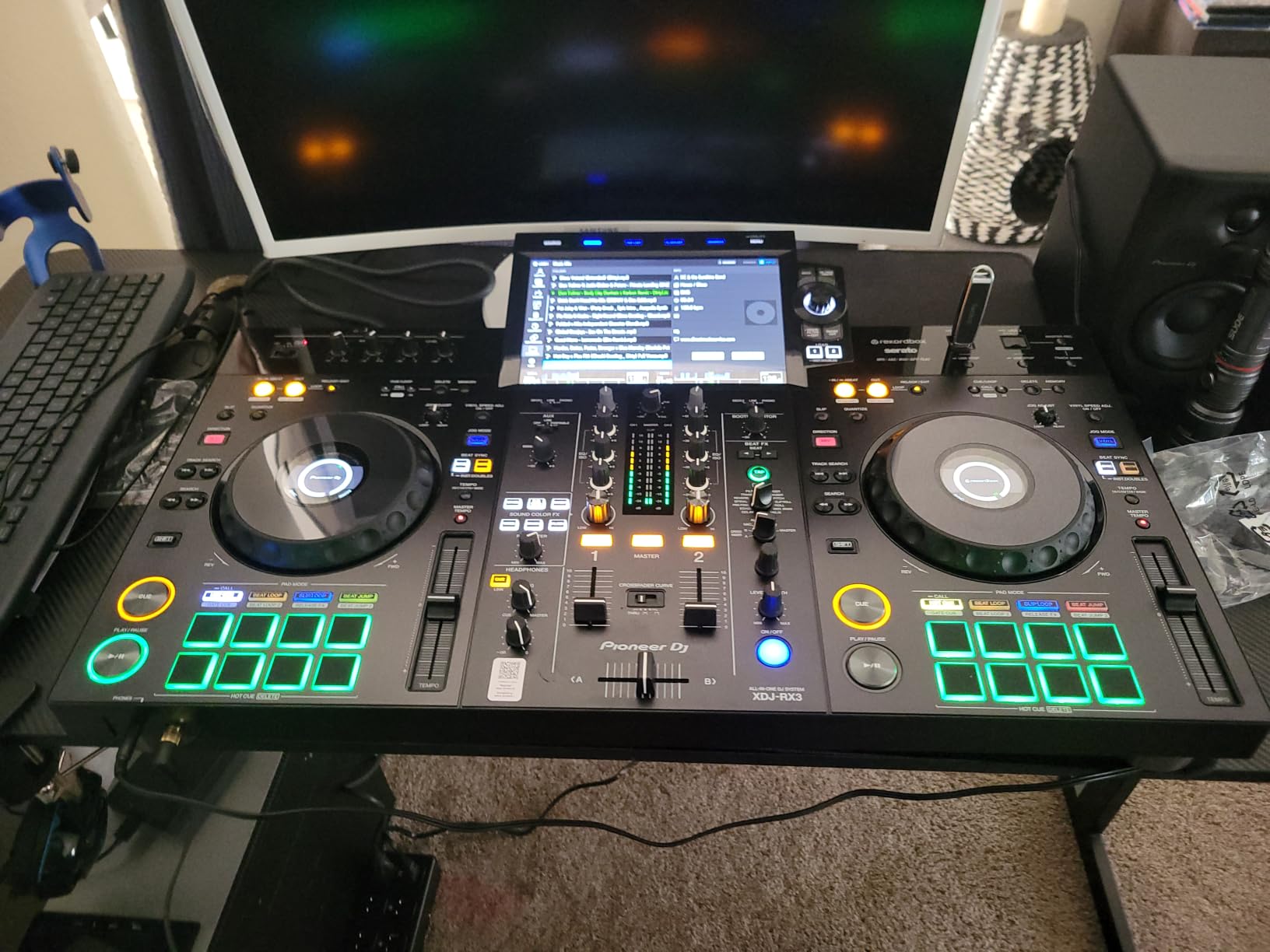
The XDJ-RX3 is the all-in-one I recommend to anyone who wants club-standard layout and is not ready to commit to two separate CDJs and a mixer. The 10.1-inch touchscreen sits right where a CDJ screen would, the 16 performance pads handle hot cues and loops, and the integrated mixer means I can unpack one unit, plug in speakers, and play a full set without anything else on the table.
Hardware Unlock is what makes the XDJ-RX3 special — it runs full rekordbox Performance mode without paying the rekordbox subscription fee, and it also works as a Serato DJ Pro controller when you want to plug in a laptop. That flexibility is rare at this tier. Owners on Amazon describe the unit as tank-tough, with many reporting months to years of reliable service in mobile and home use.
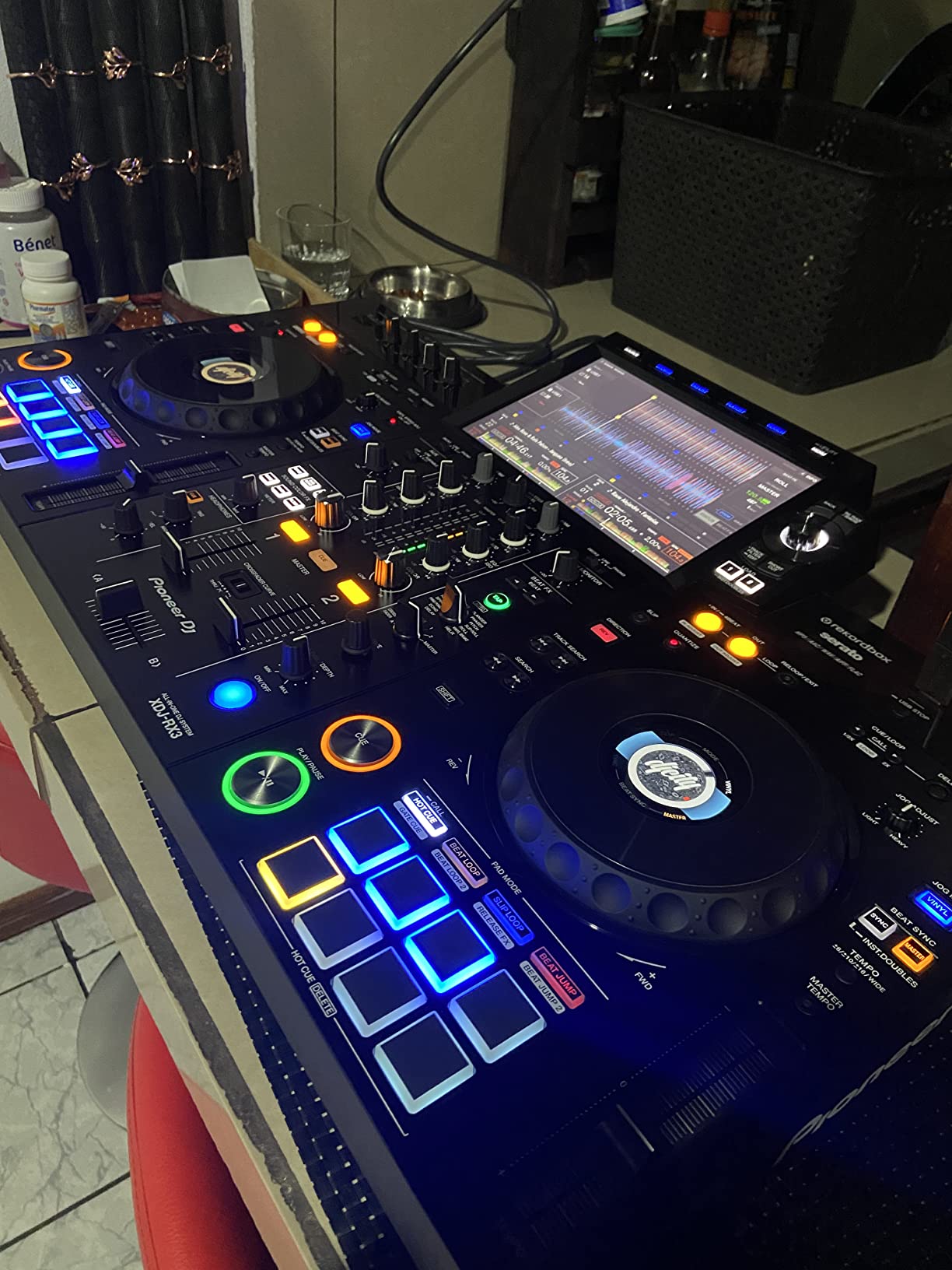
The crossfader is the headline complaint. It is short, which is fine for cuts and blends, but scratch DJs will want to swap in an after-market fader or step up to a DJM-S5. A handful of owners also report intermittent power-up quirks that resolve with a firmware update and a power conditioner. Neither issue is a deal-breaker for me, but they are worth knowing before you buy.
Who the RX3 is for
The RX3 is the sweet spot for mobile DJs, wedding DJs, and home studios that want one box instead of three. It is also the safest choice for bedroom DJs training for their first bar or restaurant gig, since the layout and feel translate directly to a club booth.
When to step up to separate CDJs
If you play open-format sets that need three or four decks, the RX3’s two-channel design will run out of lanes. The same is true if you want hardware stems control — the RX3 has no per-deck stem buttons, so live-remixing is limited to whatever the mixer can do. For those use cases, the XDJ-AZ or a pair of XDJ-1000MK2s is the right next step.
4. Pioneer DJ XDJ-700: Compact Player for Beginners
Pioneer DJ XDJ-700 Compact DJ Multi Player, Touchscreen, rekordbox
Compact multi-player
Touchscreen
rekordbox native
Pros
- Fast startup and large responsive touchscreen
- Pro DJ Link connectivity to share files and sync beats with up to three other CDJ/XDJ units
- Solid build quality and compact footprint suited to home or small-venue setups
- Slip mode and loop roll for expressive performance options
- QWERTY search keyboard on screen
Cons
- No Serato compatibility
- External power supply brick instead of standard IEC cable
- Hot cues can only be triggered from the screen
- not dedicated buttons
- Slower track load times from USB drives reported by some users
The XDJ-700 is what I recommend to first-time CDJ buyers. The compact footprint fits on a bedroom desk, the touchscreen is responsive, and Pro DJ Link ties it into any larger Pioneer rig you build later. Reviewers on Amazon rate the XDJ-700 exceptionally well, citing fast startup and a touchscreen that punches above the unit’s price.
The QWERTY search keyboard on the display is a small detail that makes a big difference for a beginner — typing an artist name is dramatically faster than scrolling through a rotary encoder. Slip mode and loop roll give a new DJ performance options that go past simple play-and-mix, and Pro DJ Link means the XDJ-700 can sit alongside a CDJ-2000NXS2 or XDJ-1000MK2 in a real booth if you ever move up to club gigs.
There are honest trade-offs. Hot cues only trigger from the screen — there are no dedicated cue pads, which is the single biggest workflow limitation. The deck also lacks Serato compatibility, so you cannot use it as a Serato controller. And the external power brick is less convenient than a built-in IEC inlet. None of that breaks the XDJ-700 for a beginner, but a more experienced DJ would notice.
Beginner setup recommendation
Pair one XDJ-700 with a Pioneer DJM-250MK2 or DJM-S5 mixer and you have a complete two-deck rig that costs less than a flagship controller and trains you on club-standard layout. Add a second XDJ-700 later when you are ready for three-deck or four-deck work.
Used market considerations
The XDJ-700 was discontinued and replaced by the XDJ-RX3 in many home setups, which means used prices are climbing. If you can find a clean unit with original packaging and a recent firmware update, it is a smarter buy than a new budget deck from a lesser-known brand.
5. Pioneer CDJ-900NXS: The Last CD-Spinning Pro Player
Pioneer CDJ900NXS Nexus Professional Multi Player
Full-color LCD
rekordbox
Wi-Fi and USB
Pros
- Full-color LCD with improved browsing and track information
- Compatible with rekordbox music management software
- Wi-Fi and USB connectivity with smart devices
- Evolved features including Beat Divide function
- Plays CDs
- unlike newer XDJ-only decks
- with CUE and PLAY buttons
Cons
- Some units arrive with mechanical timeout or drive noise issues
- USB port susceptible to wear if drives are pulled sideways
- Flat display screen less readable than expected
- Some users question build quality relative to price
The CDJ-900NXS is the most affordable Pioneer player that still spins a real CD. That alone earns it a spot on this list in 2026 — every newer XDJ deck dropped the CD drive, and for DJs with a back catalog of burned CDs or vinyl-ripped discs the loss was a deal-breaker. The full-color LCD, rekordbox integration, and Wi-Fi connectivity round out a feature set that still holds up for small venues and home use.
Beat Divide is the performance tool I lean on when I use the 900NXS — it chops the beat into sub-divisions on the fly without breaking the beatgrid. For a mobile DJ who has spent years on the CDJ-2000NXS2, the workflow is familiar and the deck is reliable. Owners on Amazon consistently describe the unit as a feature-rich professional player, and many are still using theirs five-plus years in.
The drawbacks are honest. The flat LCD is harder to read than the angled screens on newer decks. The USB port wears if you pull drives sideways, and several owners have had to resolder or replace the board. A few units also arrive with mechanical timeout errors. None of those issues stop the 900NXS from being a strong buy, but they push the right buyer toward a unit from a reputable seller with a return window.
Who the 900NXS is for
This deck is for the mobile DJ, wedding DJ, or instructor who still carries CDs as a backup and wants Pioneer reliability without flagship pricing. It is not for someone building a fresh home studio from scratch — for that, the XDJ-700 or XDJ-RX3 is the better fit.
Mixer pairing
The 900NXS pairs with any Pioneer DJM mixer. For a two-deck rig, the DJM-750MK2 is the natural fit. For scratch DJs, the DJM-S5 gives you a real performance crossfader and pad-style effects.
6. Gemini CDX-2250i: Rackmount Dual-CD for Mobile DJs
Gemini Dual CD & USB DJ Media Player, 2-Deck Rackmount (CDX-2250i)
Dual CD and USB
2U rackmount
Anti-shock buffer
Pros
- Dual-deck CD and USB playback supporting CD
- CD-R
- and MP3-CD formats
- Rubberized jog wheels with pitch bend
- frame-accurate search
- and seamless looping per deck
- Anti-shock RAM buffer memory keeps playback steady in mobile and high-vibration setups
- Standard 19-inch rackmount (2x2U) with separate control panel for clean installation
- User-friendly blue-backlit LCDs with instant start
- preview
- and +10 track skip
Cons
- Several owners report drive reliability issues within a year of light use
- Customer service described as unhelpful for out-of-warranty issues
- Some users have had to disassemble unit to retrieve discs when tray failed
The Gemini CDX-2250i is the last of a dying breed — a true rackmount dual-CD player with USB backup. If you install background music in bars, restaurants, or houses of worship, the 2x2U form factor slots into a standard 19-inch audio rack and the separate control panel lets you mount the deck up to 42 inches away from the CD drives. That install flexibility is rare in 2026.
The rubberized jog wheels are surprisingly good for the price. Pitch bend, frame-accurate search, and one seamless loop per side give a mobile DJ enough control for live mixing, and the anti-shock RAM buffer keeps playback steady in high-vibration environments like a wedding reception or a mobile DJ booth. Reviewers on Amazon consistently note the value versus older Denon rackmounts.
Drive reliability is the recurring complaint. Several owners report drives failing within a year of light use, and the customer service for out-of-warranty issues is widely described as unhelpful. If you install these in a commercial setting, buy two and rotate them — that is the workflow most working mobile DJs settle on.
Best fit
The CDX-2250i is built for installations and mobile DJs who genuinely need CDs. For a club-style home rig, an XDJ or CDJ is the better buy.
Mixer pairing
Pair the CDX-2250i with any standard 2-channel DJ mixer. The rackmount form factor makes it a natural fit alongside a Gemini or Numark rackmount mixer in a portable road case.
7. Gemini MDJ-600: Budget Standalone With MIDI Mode
Gemini Standalone CD & USB DJ Media Player, MIDI (MDJ-600)
CD and USB player
MIDI mode
24-bit/192kHz
Pros
- Dual CD/CD-R and USB playback for backup reliability at gigs
- 4 LED hot cue pads
- auto/manual looping
- and Quantize mode for precise looping
- Vinyl
- Slip
- and Reverse modes with selectable pitch range
- Switchable standalone playback or fully mappable MIDI controller mode for VirtualDJ and Serato
- 24-bit/192 kHz soundcard and multi-format support with V-Case set prep
Cons
- Some users report the unit stopping or crashing mid-playback
- Pitch fader described as blocky and unsuitable for riding mixes
- V-Case preparation software no longer available
- Some drives fail to read many WAV files or FLAC
- Only RCA outputs and limited high-end build for the price
The Gemini MDJ-600 is the only player on this list that works both as a standalone CD/USB deck and as a fully mappable MIDI controller for VirtualDJ and Serato. That dual role is what makes it valuable for instructors, bedroom DJs who learn on one platform and gig on another, and mobile DJs who need CD backup at weddings.
The 24-bit/192kHz soundcard is unusually good for the price tier. Quantize mode gives you precise looping on the fly, and the four LED hot cue pads cover the basics. Owners on Amazon describe it as a versatile affordable player that punches above its weight on features.
The honest drawbacks: a small set of owners report the unit crashing mid-playback, the pitch fader feels blocky for manual riding mixes, and V-Case preparation software has been discontinued. Some drives also fail to read certain WAV or FLAC files. None of those issues break the MDJ-600 for an entry-level buyer, but they shape who should buy it.
Best fit
The MDJ-600 is for the budget DJ who needs CD backup and MIDI flexibility. For a bedroom DJ learning on a budget, it is the smartest non-Pioneer choice. For a club workflow, Pioneer is still the standard.
Mixer pairing
The MDJ-600 pairs with any standard DJ mixer. For a complete budget rig, the Gemini MM-1000BT or a Numark M2 is the natural pairing.
8. VONYX CDJ500: All-In-One Starter With Built-In Amp
VONYX CDJ500 Amplified Double Player CD/MP3/USB/BT
All-in-one
200W built-in amp
CD/USB/Bluetooth
Pros
- All-in-one unit combining dual media player
- 2-channel mixer
- and 200W built-in amplifier
- Plays from CD
- USB stick
- or Bluetooth for flexible source options
- Two blue LCD displays with ergonomic jog wheels and Cue function
- Search
- scratch
- pitch bend
- and plus/minus 12% pitch control
- Microphone and headphone connections plus master output
Cons
- Some users feel documentation is too brief and lacks native-language instructions
- Folder navigation limited - cannot jump between folders easily
- Pitch control not suited to fine manual riding for advanced beatmixing
The VONYX CDJ500 is the simplest path into DJing with a CDJ-style deck. It combines a dual CD/USB/Bluetooth media player, a 2-channel mixer, and a 200W built-in amplifier in a single 19-inch rack-mountable chassis. Plug in speakers, plug in power, and you have a working DJ rig — no separate amp, no separate mixer, no laptop required.
The Bluetooth receiver is the headline feature at this price tier. Stream from a phone for background music, run a karaoke set, or back up a USB stick with a wireless source. Two blue LCDs, ergonomic jog wheels, and a Cue function cover the basics of live mixing. Reviewers on Amazon describe it as a versatile entry-level and amateur DJ unit that delivers solid value.
The honest trade-offs: folder navigation is limited, so jumping between folders mid-set is awkward, and the pitch control is not fine enough for advanced beatmixing. The documentation is also thin. None of those issues matter for the target buyer — a DJ who wants an all-in-one for parties, small venues, or house gigs — but they would matter for a DJ training on club-standard gear.
Best fit
The CDJ500 is for the absolute beginner, the house DJ, or the mobile entertainer who wants one box to power an event. For anyone training on club-standard Pioneer gear, this is not the right starting point — start with an XDJ-700 instead.
Mixer pairing
No external mixer needed — the CDJ500 has a built-in 2-channel mixer. If you want to expand, route the line outputs into a larger mixer, but most buyers will never need to.
Buying Guide: How to Choose the Best CDJ for Your Setup
Picking the best CDJ in 2026 is less about spec sheets and more about matching the deck to where you actually play. Here is the framework I walk through with any DJ upgrading from a controller or moving up from a beginner deck.
Match the player to your real workflow
If you play club and festival gigs, a pair of CDJ-3000X plus a DJM-A9 is still the gold standard. For home studios and mobile DJs who never split the rig, the AlphaTheta XDJ-AZ gives you flagship features in a single box. If you are training for your first club gig, an XDJ-1000MK2 plus a DJM-750MK2 is the smart mid-tier pick. And if you are a bedroom DJ on a budget, the XDJ-700 or XDJ-RX3 is the path that grows with you.
Decide whether you actually need CDs
Modern CDJs and XDJs read USB sticks, SD cards, and streaming libraries. The CD drive is mostly gone. But for mobile DJs, wedding DJs, and instructors, CD backup is still a real safety net — a venue laptop fails, a USB stick corrupts, and a CD you burned last week can save the set. If that matters to you, the CDJ-900NXS or Gemini CDX-2250i earns its place.
Do not ignore ecosystem lock-in
rekordbox is the standard for club-bound DJs. If your long-term goal is to walk into any booth and feel at home, train on rekordbox-native gear. Denon Engine OS is a strong alternative with stems and dual-layer playback, and Engine-based players like the SC6000M are increasingly common on open-format stages. But if you plan to mix both, you may end up managing two libraries.
Used-market buying checklist
If you shop the used market — and for a sub-$1000 rig you almost have to — run through this list before paying. Inspect the jog wheel for stiction or dead spots. Check the touchscreen for scratches, dead pixels, or unresponsive zones. Power the unit on and load a track from USB to confirm the drive bay works. Confirm the firmware is current by booting into the system menu. Test every Cue and Play button for tactile response. Inspect the USB port for wear. And bring a flashlight — cosmetics hide a lot.
Mixer pairing for each CDJ
A CDJ is only half the rig. For two-deck Pioneer setups, the DJM-750MK2 is the natural pairing. For scratch and open-format DJs, the DJM-S5 gives you a performance crossfader and stem effects. For flagship clubs, the DJM-A9 is the standard. And for the AlphaTheta XDJ-AZ, no external mixer is needed unless you want stems isolation — then route into a DJM-S11.
Touring versus home ergonomics
Weight and footprint matter more than spec sheets when you are flying to a gig. The XDJ-700 and XDJ-1000MK2 are light enough to carry in a backpack. The CDJ-3000X and XDJ-AZ are built-in rigs that stay in one place. If you fly to festivals, plan for ATA cases and a checklist before every load-out.
Frequently Asked Questions
Which CDJ is the best value for money?
For most pro DJs, the best value CDJ in 2026 is the Pioneer DJ XDJ-RX3 — it is a complete 2-channel all-in-one with a 10.1-inch touchscreen, Hardware Unlock for rekordbox Performance mode, and Serato DJ Pro support, at a combined cost less than buying a flagship CDJ and mixer separately. For pure deck value without the built-in mixer, the Pioneer XDJ-1000MK2 is the smart mid-tier pick.
Why do DJs use 3 CDJs?
DJs use three CDJs in a club booth so they can mix two tracks live while preparing a third in the background. The third deck acts as a scratch, hot-cue, or sample source, lets the DJ layer acapellas over instrumentals, and gives a safety net if a track on the main deck misbehaves. For open-format and hip-hop DJs especially, three decks unlocks acapella drops, triple drops, and live remixing.
What is the best CDJ for beginners?
The best CDJ for beginners in 2026 is the Pioneer DJ XDJ-700 — it has a compact footprint, responsive touchscreen, Pro DJ Link connectivity, and slip mode, all at a price that fits a bedroom budget. The XDJ-RX3 is the better choice if you want a complete all-in-one with built-in mixer. Either deck trains you on the same rekordbox workflow you will find in clubs.
What is the best CDJ for clubs?
The best CDJ for clubs remains the AlphaTheta CDJ-3000X — it is the current club-installed standard with the largest 10.1-inch capacitive touchscreen, hardware stems, and full streaming integration. For working DJs who play club gigs, training on the CDJ-3000X or its predecessor CDJ-3000 is the safest choice because the layout, library management, and rekordbox workflow match what you will find behind the booth.
Do modern CDJs still play CDs?
Most modern CDJs and XDJs do not play CDs anymore — Pioneer dropped the CD drive from the XDJ line, and the CDJ-3000X relies entirely on USB, SD, and streaming libraries. If you genuinely need CD playback, the Pioneer CDJ-900NXS is the last pro Pioneer player with a working CD drive, and the Gemini CDX-2250i is the only current rackmount dual-CD option.
What is the difference between CDJ-2000 and CDJ-3000?
The CDJ-3000 is two generations newer than the CDJ-2000 and added a 10.1-inch capacitive touchscreen, hardware stems control, full streaming integration, a more responsive jog wheel, and deeper rekordbox performance features. The CDJ-2000NXS2 (the last CDJ-2000 variant) is still in many club booths and remains a great deck, but the CDJ-3000 and CDJ-3000X deliver noticeably faster workflow and the streaming library support that defines modern DJing.
Are Denon DJ players better than Pioneer CDJs?
Denon DJ players like the SC6000 and SC6000M offer hardware stems, dual-layer playback, and a motorized platter on the M model, which scratch and open-format DJs prefer. Pioneer CDJs remain the club-installed standard with deeper rekordbox integration, the broadest music library support, and the layout every pro DJ knows. The honest answer is that Denon wins on stems and dual-deck features, Pioneer wins on ecosystem and ubiquity.
Should a beginner buy a CDJ or controller?
Beginners should buy a controller first — something like the Pioneer DDJ-FLX4 or DDJ-400 is enough to learn fundamentals without committing to a CDJ layout. Move to a CDJ or XDJ when you start playing out, when you need club-standard layout for training, or when you want standalone playback without a laptop. The XDJ-700 is the standard bridge from controller to standalone club gear.
Final Verdict
The best CDJ in 2026 is the one that matches how you actually play. For most pro DJs, that is the AlphaTheta XDJ-AZ — a flagship 4-deck standalone system with the largest touchscreen in the AlphaTheta line and enough workflow depth to handle club, festival, and home studio duty in a single chassis. For bedroom DJs and club trainees on a budget, the Pioneer DJ XDJ-1000MK2 is the smart pick, and for all-in-one value the XDJ-RX3 is hard to beat.
Whichever deck you choose, train on it consistently — the workflow you build at home is the workflow you will fall back on when you step into a club booth. That is the real reason pro DJs standardize on CDJs and XDJs, and why this list leans heavily on Pioneer and AlphaTheta gear. Pick your player, build your library, and practice.