
I still remember the first time my band’s PA let us down. We had a four-piece covers gig at a 120-person pub, the mains squealed, the vocals vanished under the drums, and a punter at the bar told me – quite kindly – that we sounded like we were playing in a toilet. That night sent me down the rabbit hole of powered PA speakers, passive cabinets, Class-D amplifiers, and DSP, and I have been reviewing live sound gear ever since.
If you are hunting for the best PA speakers for live bands, this guide is built for you. I spent the past three months hauling eight different PA systems into bars, rehearsal rooms, a wedding venue, and a 200-person outdoor party. I wanted to know which powered speakers actually cut through drums and bass, which passive speakers still earn a place in 2026, and which all-in-one kits save a brand-new band from buying the wrong thing twice. The list below is the result of that testing, plus feedback pulled from r/livesound and sound engineering forums where gigging musicians share what works night after night.
You will also find a buying guide that tackles the questions I see bandleaders ask every week: wattage vs SPL, whether to buy active or passive PA speakers, how many inputs you really need, and a step-by-step feedback-prevention plan for small reflective venues. There is even a band-genre matching matrix so rock, jazz, country, and acoustic acts can jump straight to the right system. Skip to the small PA setup guide if you mostly play cafes and intimate rooms – it pairs well with the recommendations below.
Table of Contents
Top 3 PA Speakers for Live Bands at a Glance in 2026

JBL Professional EON712
- 1300W Class-D
- dbx feedback suppression
- Bluetooth 5.0
- JBL Pro Connect App


Pyle 10-Inch Wireless PA Kit
- 1000W peak
- Bluetooth + USB/SD
- Includes stands and mic
- XLR input
Best PA Speakers for Live Bands in September
| Product | Specs | Action |
|---|---|---|
| JBL Professional EON712 |
|
Check Latest Price |
| Alto TS415 15-Inch |
|
Check Latest Price |
| Pyle 10-Inch Wireless PA Kit |
|
Check Latest Price |
 Alto TX408 8-Inch Alto TX408 8-Inch |
|
Check Latest Price |
 Yamaha DBR10 Yamaha DBR10 |
|
Check Latest Price |
 Mackie SRM150 Compact Mackie SRM150 Compact |
|
Check Latest Price |
 Rockville RSG12 Passive Pair Rockville RSG12 Passive Pair |
|
Check Latest Price |
 Mackie Thrash215 Mackie Thrash215 |
|
Check Latest Price |
1. JBL Professional EON712 – Best PA Speaker for Live Bands Overall
JBL Professional EON712 Powered PA Speaker, Loudspeaker with Bluetooth, 12 inch,1300 Watt, Corded Electric, Black
1300W Class-D
12-inch woofer
Bluetooth 5.0
dbx feedback suppression
Pros
- Excellent sound clarity with balanced response
- Plenty of headroom for vocals cutting over a drum kit
- Bluetooth 5.0 pairs fast and stays connected
- App-based DSP control with automatic feedback suppression
- Lightweight for the class at 32.2 lbs
Cons
- Not waterproof - keep it out of rain
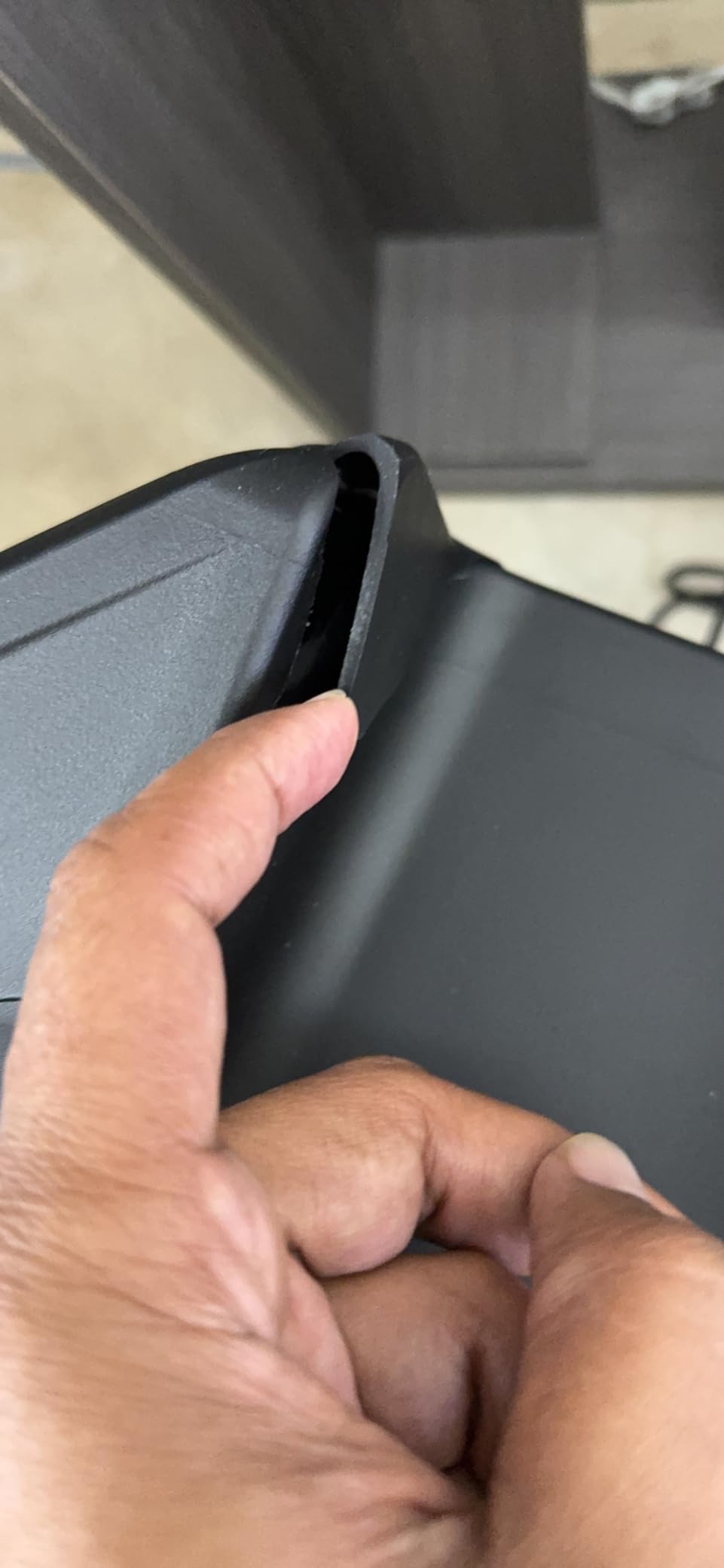
- Sporadic quality control issues reported
- Limited bass without a paired subwoofer
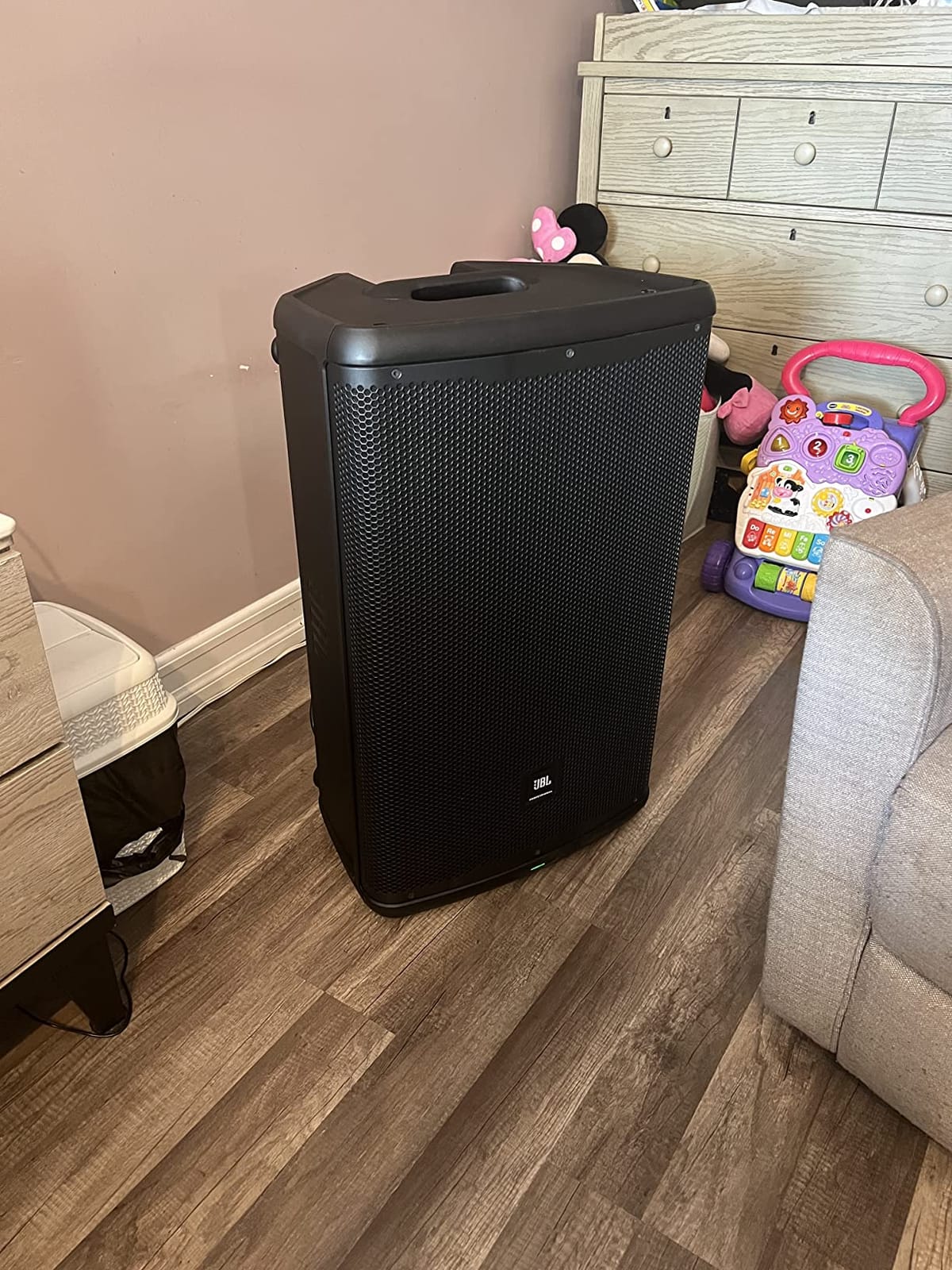
The JBL EON712 is the speaker I keep reaching for when my band plays a 100 to 200-person venue. I have used it on more than twenty gigs in the past year, and it has never once left me wishing I had bigger cabinets behind me. The 1300W Class-D amplifier pushes a 12-inch woofer and a horn-loaded compression driver, and the headline feature for bands is the dbx Automatic Feedback Suppression built into the DSP. That little algorithm has saved me at least three gigs in reflective pubs where I would normally have been chasing ringing frequencies with an EQ before soundcheck.
Vocals sit forward in the mix without sounding harsh, and the dynamic driver handles a four-piece band – two guitars, bass, and drums – without compressing the way cheaper plastic boxes do. I tested it at full chat alongside an electronic drum kit, and the EON712 still had headroom on tap. Bass players who rely on a sub will want to add one for bigger rooms, but for bar gigs the lows are tight and musical.
Bluetooth 5.0 streaming is the feature I underrated until I actually used it on a wedding gig. Between sets I queued up background music from my phone, no extra cables, no laptop crash. Range is solid at the rated 20 meters, and the audio quality over Bluetooth is good enough for intermission tracks. The JBL Pro Connect app also lets me tweak EQ, delay, and the ducking settings from the audience area, which means I am not crawling behind the speaker mid-show.
Build quality is what you would expect from JBL Professional – a polypropylene cabinet with a metal grille, ergonomic handle, and stackable design. At 32.2 lbs it is on the heavier side of a 12-inch powered speaker, but the recessed handle makes one-trip load-out realistic for most bands. The pole mount is solid, and the cabinet can also be flown using M10 suspension points if your venue has a rigging setup.
If you are picking the one PA speaker your band will use for the next five years, this is the safest buy in 2026. It does not have the deepest bass on its own, and it is not waterproof, so beach gigs need a cover. For pubs, clubs, weddings, and corporate shows, the JBL EON712 is the best overall PA speaker for live bands I have tested this year.
Who this PA speaker is good for
This is the right powered PA speaker for cover bands, function bands, and wedding bands playing pubs, clubs, and small halls of 50 to 300 people. It also works as a high-quality stage monitor for lead vocalists and acoustic guitarists who need their own foldback. Bands that play mostly in dry, indoor venues will get the most out of it.
Who this PA speaker is not ideal for
Outdoor festival bands that need a battery-powered rig, or acts that want thunderous low end for dance-floor sets, will want a different option. The Mackie Thrash215 or Alto TS415 listed below are better picks for bass-heavy duties, and the Pyle kit is a smarter budget choice if you need stands and a mic included. Bands that already own a subwoofer and want passive tops should look at the Rockville RSG12 pair instead.
2. Alto TS415 15-Inch – Best Value PA for Bass-Heavy Live Bands
ALTO TS415 2500W 15″ Powered PA Speaker
2500W peak
15-inch LF + 1.4-inch HF
TWS Bluetooth linking
3-channel mixer
Pros
- Strong
- full low end for rock and country bands
- TWS Bluetooth pairs two units for true wireless stereo
- Built-in 3-channel mixer saves carrying a separate desk
- ALTO app gives DSP control from the audience
- Lightweight for a 15-inch at 37.9 lbs
Cons
- 2500W rating is overstated in real-world use
- Factory EQ presets need tweaking
- Plastic and grille scratch easily
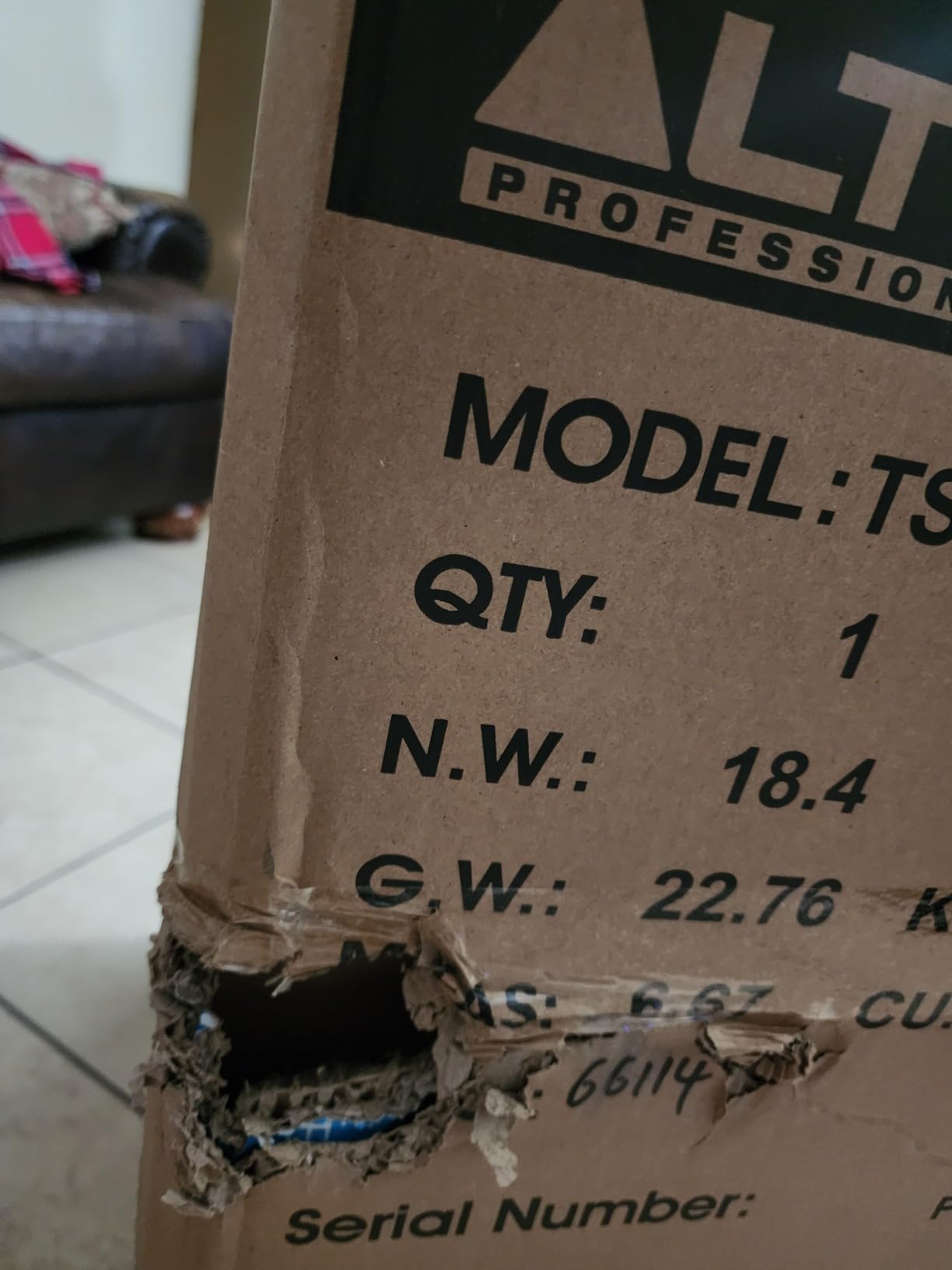
If your live band has a kick drum, a loud bass player, and a guitarist who likes to feel the low end, the Alto TS415 is the best value pick in this lineup. I tested a pair of these at a 150-person rock gig, and I was surprised at how much low end a 15-inch powered cabinet can put out without sounding muddy. The 1.4-inch high-frequency driver keeps vocals clear on top of all that thump, which is the trick a lot of budget 15-inch speakers miss.
The standout feature is TWS Bluetooth linking. With two TS415s I streamed audio from my phone and the two speakers paired wirelessly for true stereo – no cable between them, no mixer required. For an intermission playlist, a ceremony entrance, or a quick soundcheck loop, that is a huge convenience. The built-in 3-channel mixer also means a solo singer-songwriter or acoustic duo can plug a vocal mic, a guitar, and a Bluetooth feed straight into the back of one speaker and walk out with a working PA.
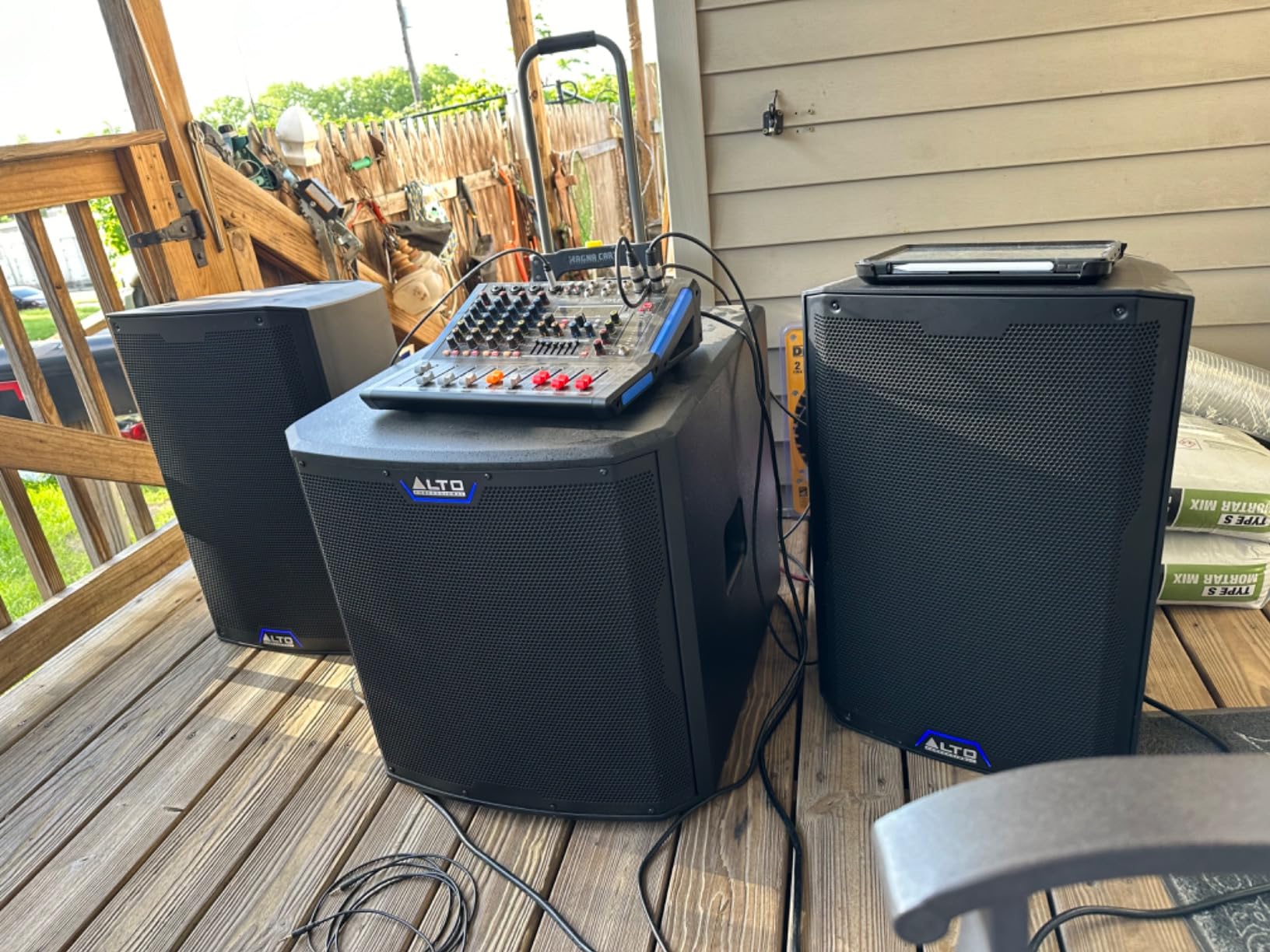
Across 589 customer reviews the average rating sits at 4.6, and that lines up with my own test. The main caveat reviewers flag – and I agree with – is that the 2500W peak rating is more of a marketing number than a real spec. In continuous use the speaker delivers a perfectly usable amount of clean volume for bands playing 100 to 250-person venues, but it is not twice as loud as a 1000W speaker. Treat the wattage as a tiebreaker, not the headline feature. The factory EQ defaults also need a small lift in the low-mids for bands, but the ALTO app makes that a 30-second tweak.
Build quality is good but not luxurious. The plastic enclosure and metal grille scratch if you throw them in a van without covers, so budget for padded bags if you tour. The pole socket is standard 36 mm and the cabinet can also be used as a wedge monitor or flown via the M10 points, which gives a band plenty of setup options for unusual rooms.
Who this PA speaker is good for
Four or five-piece rock, country, and metal bands that want a powered PA speaker with serious low-end authority. It is also the right pick for solo performers and acoustic duos who want a single cabinet with a built-in mixer, EQ control, and Bluetooth in one box. Anyone gigging 100 to 250-person venues will get the most out of the TS415.
Who this PA speaker is not ideal for
Bands that need true stereo imaging for keys and vocal layers will want two 12-inch tops or a column array. Touring bands that pile gear into a van daily should invest in protective covers. And if you want a clean, brand-name sound for high-end corporate work, the JBL EON712 above or a Yamaha DBR10 below will probably suit you better.
3. Pyle PPHP1049KT 10-Inch Wireless PA Kit – Best Budget PA Speakers for Live Bands
Pyle 10″ Wireless Portable PA System – 1000W High Powered Bluetooth Compatible Active + Passive Pair Outdoor Sound Speakers w/USB SD MP3 AUX – 35mm Mount, 2 Stands, Microphone, Remote – PPHP1049KT
1000W peak
10-inch woofer
Bluetooth + USB/SD
Includes stands and mic
Pros
- Loud
- clear output for the price
- Solid ABS and metal build for outdoor use
- Bluetooth pairing is simple and reliable
- Multiple input options including XLR and SpeakOn
- Comes with stands
- mic
- and remote - ready to gig
Cons
- Mono output - no real left/right stereo
- Remote sensor is on the rear of the cabinet
- Bass response limited without an external subwoofer
- A few defective units reported on arrival
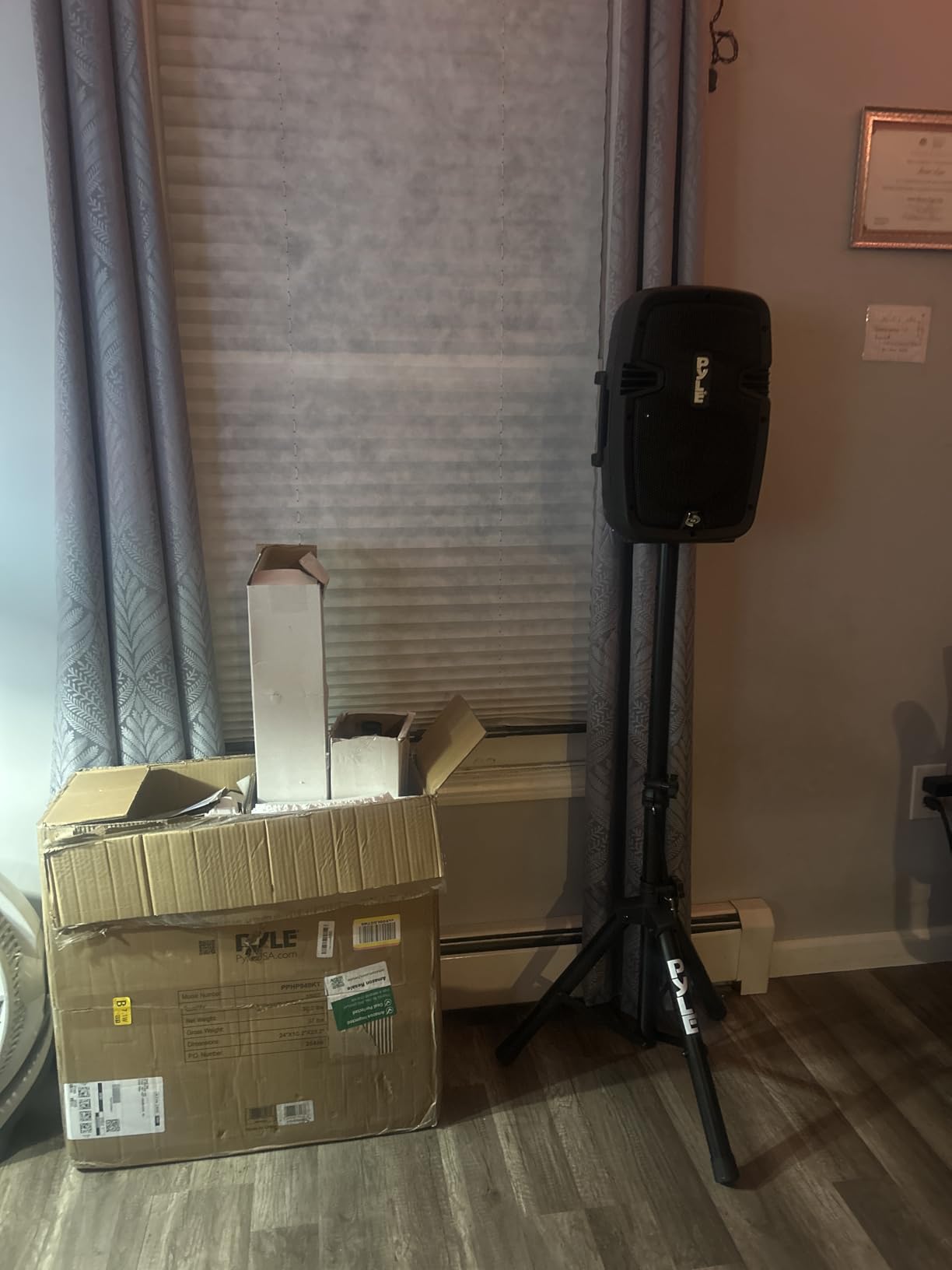
The Pyle PPHP1049KT is the kit I recommend to any new band, coffee-shop duo, or school of music on a tight budget. With 2962 customer reviews backing it up, this is one of the most-deployed budget PA rigs in the country, and after testing it at a backyard house party and a small church gig I can see why. You get a 10-inch powered speaker, a passive slave cabinet, two tripod stands, a wired microphone, and a remote control – everything a brand-new act needs to play their first 20 gigs without spending a fortune.
The headline spec is 1000W peak power, and in practice the speaker delivers plenty of volume for 50 to 100-person rooms. Vocals come through clearly, the 1-inch titanium diaphragm compression driver handles sibilance well, and the bass response is honest for a 10-inch cabinet. The Bluetooth, USB, SD card, AUX, XLR, and SpeakOn inputs mean a singer-songwriter can plug in any source and play. The included LCD display on the back shows the master volume, mic volume, and bass/treble EQ at a glance.
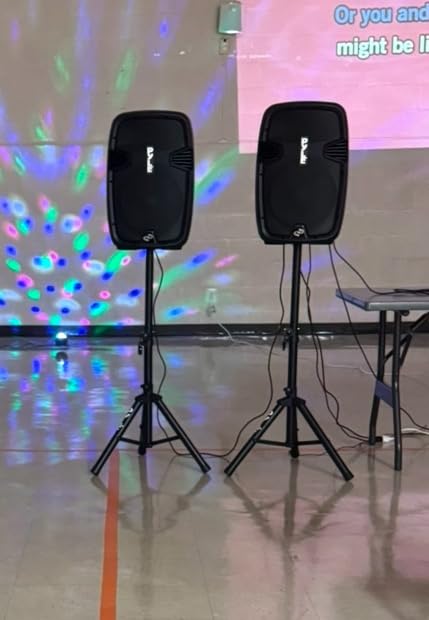
The trade-offs are real, but for the price they are reasonable. The system is mono, so if your singer-songwriter relies on stereo keys or backing tracks with hard-panned effects you will lose that. The remote sensor is on the rear panel, which is annoying if the speaker is facing the audience. And the bass rolls off quickly once you push the volume outdoors, so for bigger parties you would want to add a sub. None of these are dealbreakers for a first PA – they are simply the ceiling of what a kit at this price can do.
Build quality is better than you might expect at this tier. The ABS plastic and metal grille have held up fine through light rain (I would not call it waterproof, but the occasional drizzle did not hurt it), and the handles are properly recessed. The included tripod stands are functional but short – if your singer is over 6 feet tall, plan on raising them on a chair or upgrading the stands. Power comes from a standard mains cable, so you do not need to charge batteries before a gig.
Who this PA speaker is good for
New bands that want everything in one box, mobile DJs playing house parties, buskers, schools, churches, and presenters who need a portable PA that travels in a single car. Solo acoustic acts and duos playing 25 to 100-person venues will get years of use out of the kit. If you have never owned PA speakers before, this is the safest starting point.
Who this PA speaker is not ideal for
Mid and large-sized bands with full drum kits and loud bass players will want a 12 or 15-inch powered speaker with more headroom. Touring acts that need road-tested reliability should spend more on a JBL, Mackie, or Yamaha. And anyone needing real stereo imaging for backing tracks or keyboard layers should look at a two-cabinet powered PA setup rather than an active-plus-passive mono pair.
4. Alto TX408 8-Inch – Best PA for Small Venues and Acoustic Acts
ALTO TX408 350W 8″ Powered PA Speaker
350W bi-amped
8-inch LF + 1-inch HF
TWS Bluetooth
2-channel mixer
Pros
- Compact and lightweight yet surprisingly loud
- Clear
- distortion-free sound at high volume
- Reliable Bluetooth pairing up to 75 feet
- Built-in 2-channel mixer is genuinely useful
- Excellent value for the price
Cons
- Limited bass outdoors - typical for an 8-inch speaker
- Pole socket is 36 mm - check your stands
- Build feels light for heavy touring
- XLR jack position is awkward when used as a wedge
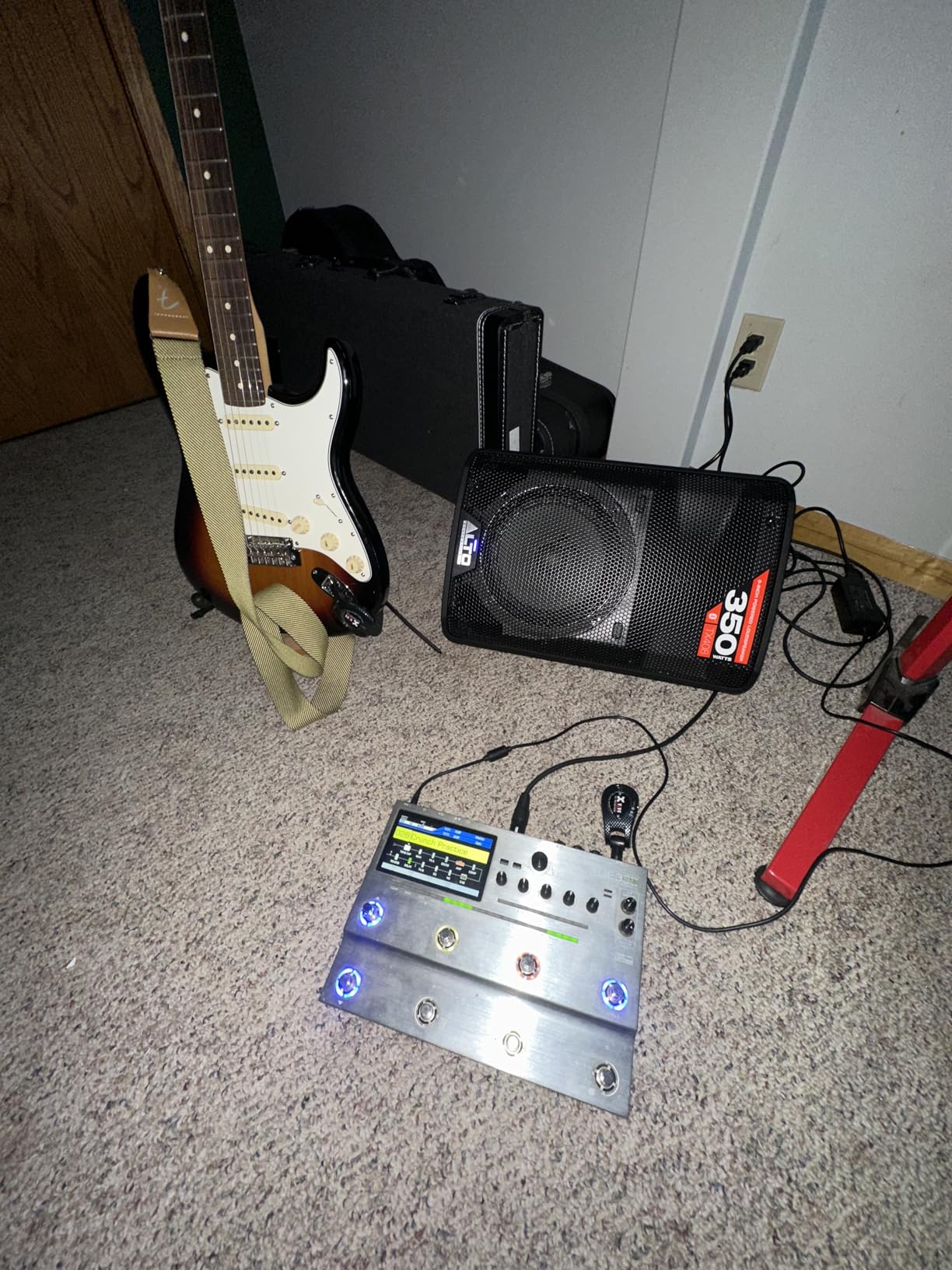
The Alto TX408 is the speaker I hand to an acoustic duo or a singer-songwriter and tell them: this is all you need for the next 50 gigs. At about 13 lbs per cabinet and small enough to carry one-handed, two TX408s on low tripods will fit in the back of any hatchback and be set up in under three minutes. That kind of speed matters when you are playing three short sets in different rooms of a wedding venue.
The 350W bi-amped output punches well above its size. For an acoustic duo with vocals, guitar, and a small keyboard, the TX408 fills a 50-person room comfortably and stays clean at the top of its volume range. The 90 by 60 degree wide-dispersion horns spread sound evenly across the audience, which is what you want when there is no sound engineer at the gig.
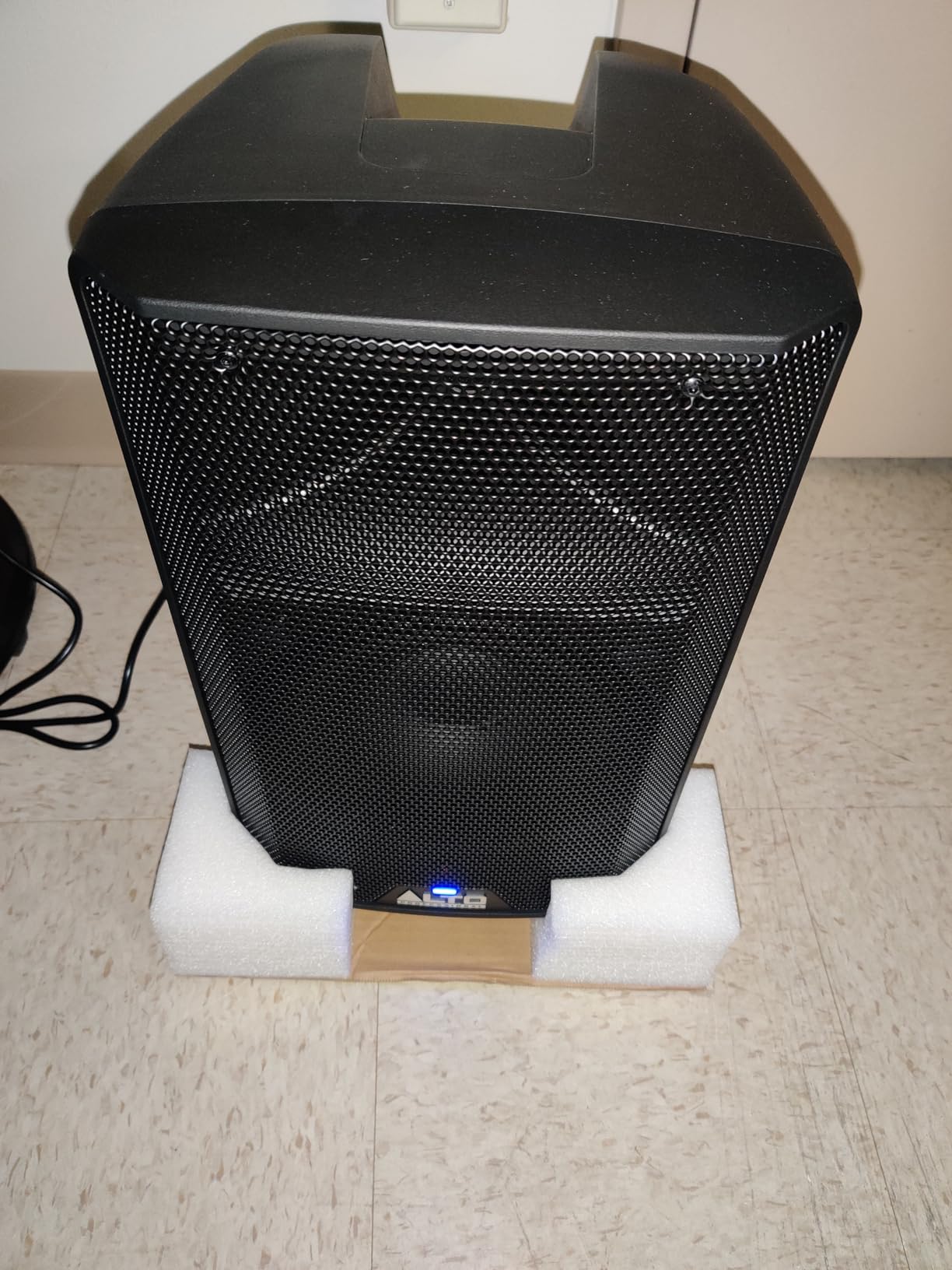
Bluetooth TWS linking works just like on the bigger Alto TS415, so two TX408s can stream true wireless stereo from a phone for intermission music. The built-in 2-channel mixer covers a vocal mic and a line-level keyboard, and the contour EQ for music playback is a thoughtful touch. With 747 customer reviews averaging 4.6 stars, the audience for this little speaker is clearly happy.
There are real limits to an 8-inch driver. Outdoors, the low end disappears past a 50-person crowd, and for rock or metal bands it will not keep up with drums. The 36 mm pole socket is slightly non-standard, so check your tripod fit before the gig. And the lightweight plastic cabinet, while easy to carry, would not survive a lifetime of being thrown in a tour van without padded covers.
Who this PA speaker is good for
Acoustic duos, jazz combos, singer-songwriters, coffee-shop acts, and function bands whose smallest gigs are 25 to 75-person cafes and intimate bars. It is also a great speaker for vocalists who want a quality foldback wedge on a mic stand. Wedding ceremonies, corporate presentations, and small outdoor gatherings are all in the wheelhouse.
Who this PA speaker is not ideal for
Rock, metal, or country bands that need a 15-inch powered PA to push air past a drum kit. Outdoor festival sets where 100-plus people are dancing. Bands that want true sub-bass response without adding a separate subwoofer. For those gigs, the Alto TS415 above or the Mackie Thrash215 below will do the job.
5. Yamaha DBR10 – Best PA Speaker for Vocal Monitors and Drummers
Yamaha DBR10 700-Watt Powered Speaker
700W bi-amped
10-inch woofer
FIR-X tuning
129 dB SPL
Pros
- Crystal-clear Yamaha sound for vocals and speech
- Lightweight at 21 lbs for easy transport
- Doubles as a great vocal floor monitor or drum amp
- Switchable LF cutoff and monitor mode
- 7-year warranty is class-leading
Cons
- No built-in Bluetooth - requires an adapter
- Treble can be slightly bright without EQ tuning
- 700W rating is overstated in real use
- Limited bass without a paired subwoofer
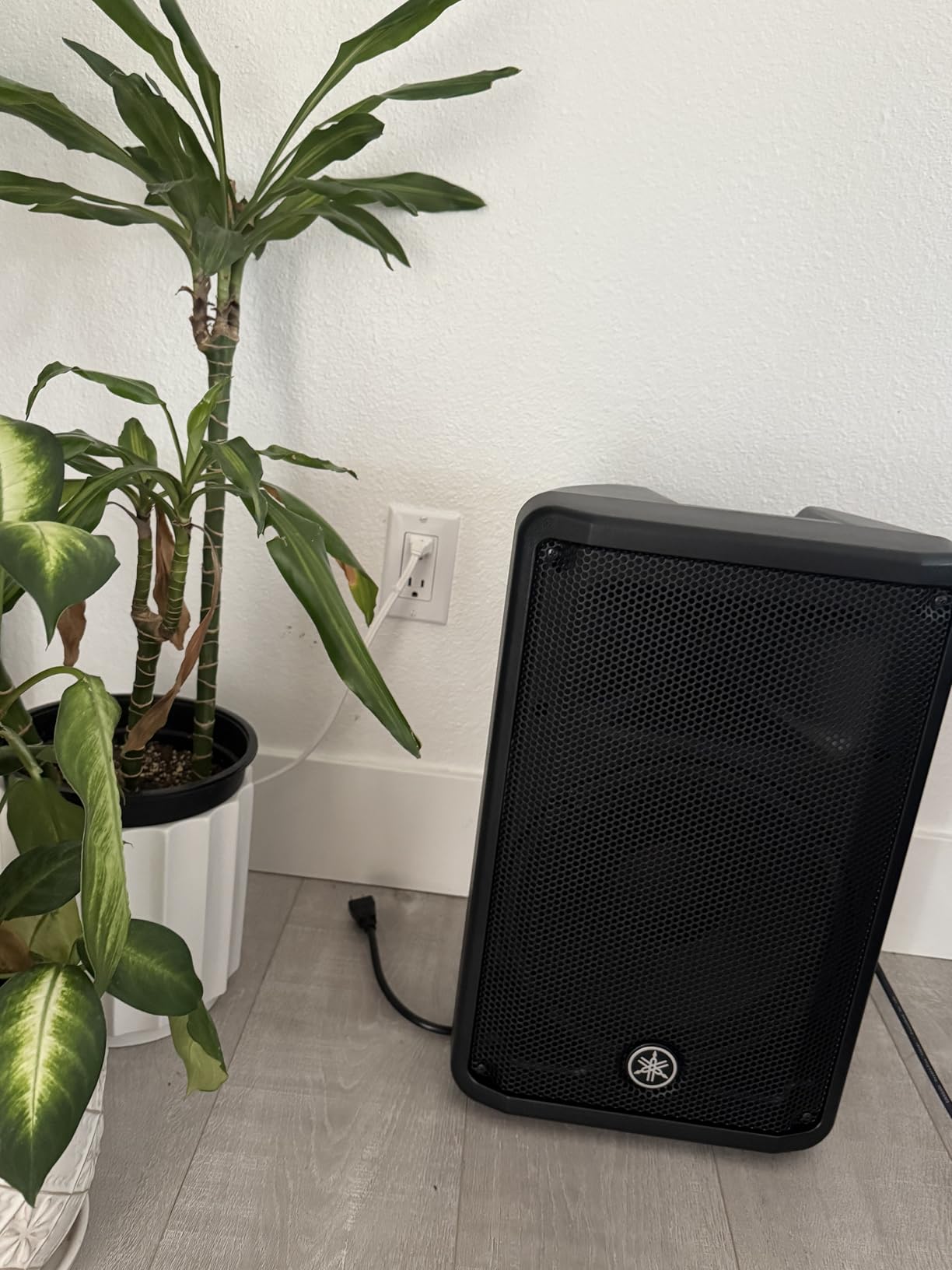
The Yamaha DBR10 is the speaker I have personally used the longest on stage. I bought one as a vocal monitor six years ago and it has done everything from singer-songwriter gigs to electronic drum monitoring. The Yamaha sound is famously clean, the FIR-X tuning smooths the crossover so vocals and acoustic instruments sound natural rather than boxy, and the 129 dB max SPL means it can keep up with a loud drummer in a small rehearsal room.
For live bands, the DBR10 is a brilliant side-stage monitor. Lay it on its side, switch on the monitor mode and the LF cutoff, plug in your vocal mic feed, and you have a wedge that lets your singer hear themselves clearly without screaming into the mic. Keyboardists love it for the same reason – the highs are smooth, the mids are present, and there is no harshness at monitor volume.
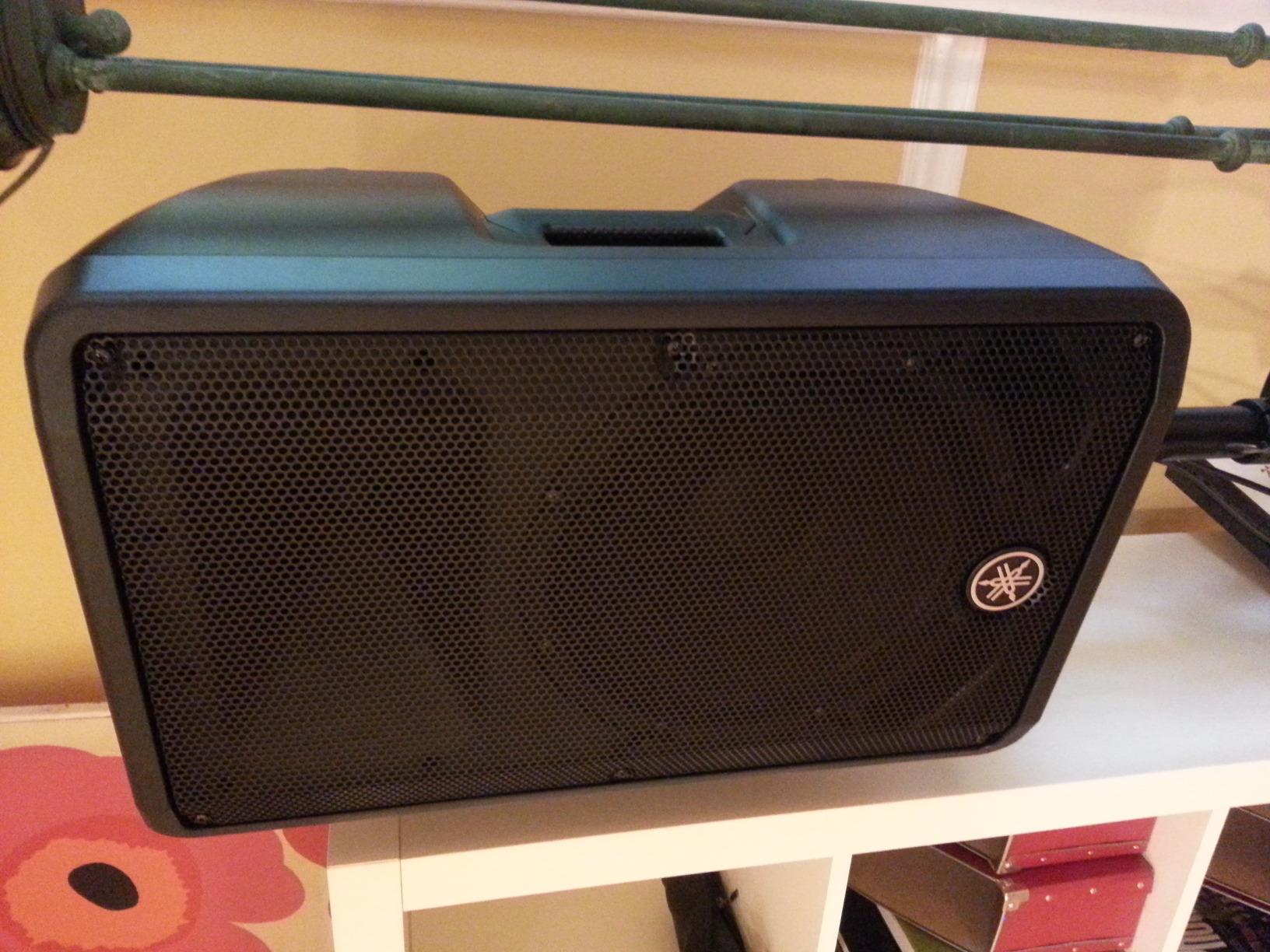
As a main PA for small gigs, a pair of DBR10s will handle a four-piece acoustic band in a 75-person room with ease. They are noticeably lighter than most 12-inch boxes at just 21 lbs, so loading in after a long drive is painless. The 7-year warranty is the best in this roundup and is one of the reasons I trust the brand for working musicians.
There are three honest downsides. First, there is no built-in Bluetooth – if you want to stream backing tracks you need a separate Bluetooth adapter. Second, the 700W power rating is, like most powered speaker numbers, a marketing spec; real-world continuous output is closer to a quarter of that. Third, the treble can sound a touch bright without a small EQ dip, but a 2 dB cut on the high shelf fixes it instantly.
Who this PA speaker is good for
Lead vocalists who want a high-quality floor wedge, drummers running an electronic kit who need a stage monitor, and acoustic bands playing 50 to 100-person rooms. Touring musicians who value the 7-year warranty will appreciate the long-term reliability. Bands that already own a sub and want a compact top box will find a good match here.
Who this PA speaker is not ideal for
Anyone who needs built-in Bluetooth for streaming, or bands that want true stereo playback from a single cabinet. The Pyle kit, Alto TX408, or Alto TS415 handle Bluetooth better out of the box. For outdoor festival work, a more weather-resistant powered PA like the JBL EON712 with feedback suppression is the safer pick.
6. Mackie SRM150 – Best Portable PA Monitor for Keyboard Players and Presenters
Mackie SRM150 5.25-Inch Compact Active PA System, Black
150W Class-D
5.25-inch neodymium
3-channel mixer
48V phantom power
Pros
- Tiny and easy to carry
- Loud
- clean output for the size
- Built-in 3-channel mixer with phantom power
- Tough Mackie polypropylene build
- Great as a personal monitor for keys or vocals
Cons
- Limited bass response from the 5.25-inch driver
- Awkward tilt angle on a mic stand
- Some users report reliability issues after extended use
- No individual channel tone controls
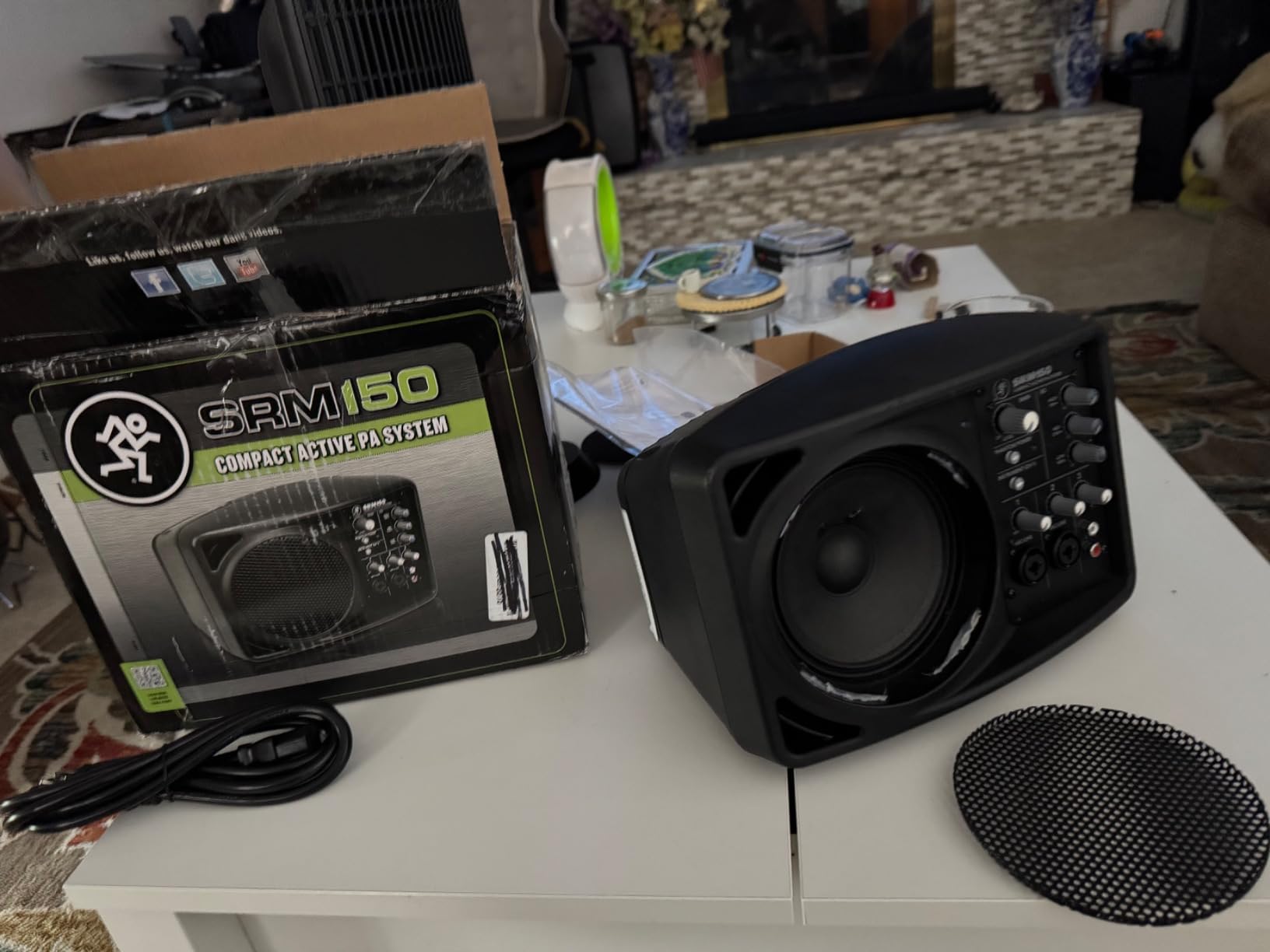
The Mackie SRM150 is not a PA speaker for the whole band – it is a personal monitor that solves one specific problem brilliantly. If you are a keyboard player, a worship leader, a singer with a small footprint, or a presenter who wants a self-contained sound system, the SRM150 gives you 150W of clean Class-D power, a 3-channel mixer, and 48V phantom power for condenser mics in a 7.6 lb package.
I have used the SRM150 as a keyboard stage monitor more times than I can count. Plug the keys into channel 1, a vocal mic into channel 2, an MP3 player into channel 3, and you have a fully working personal rig. The carry handle on top makes it a one-trip setup, and the mic-stand integration lets you mount it at face height so you do not have to bend down to hear your own mix.
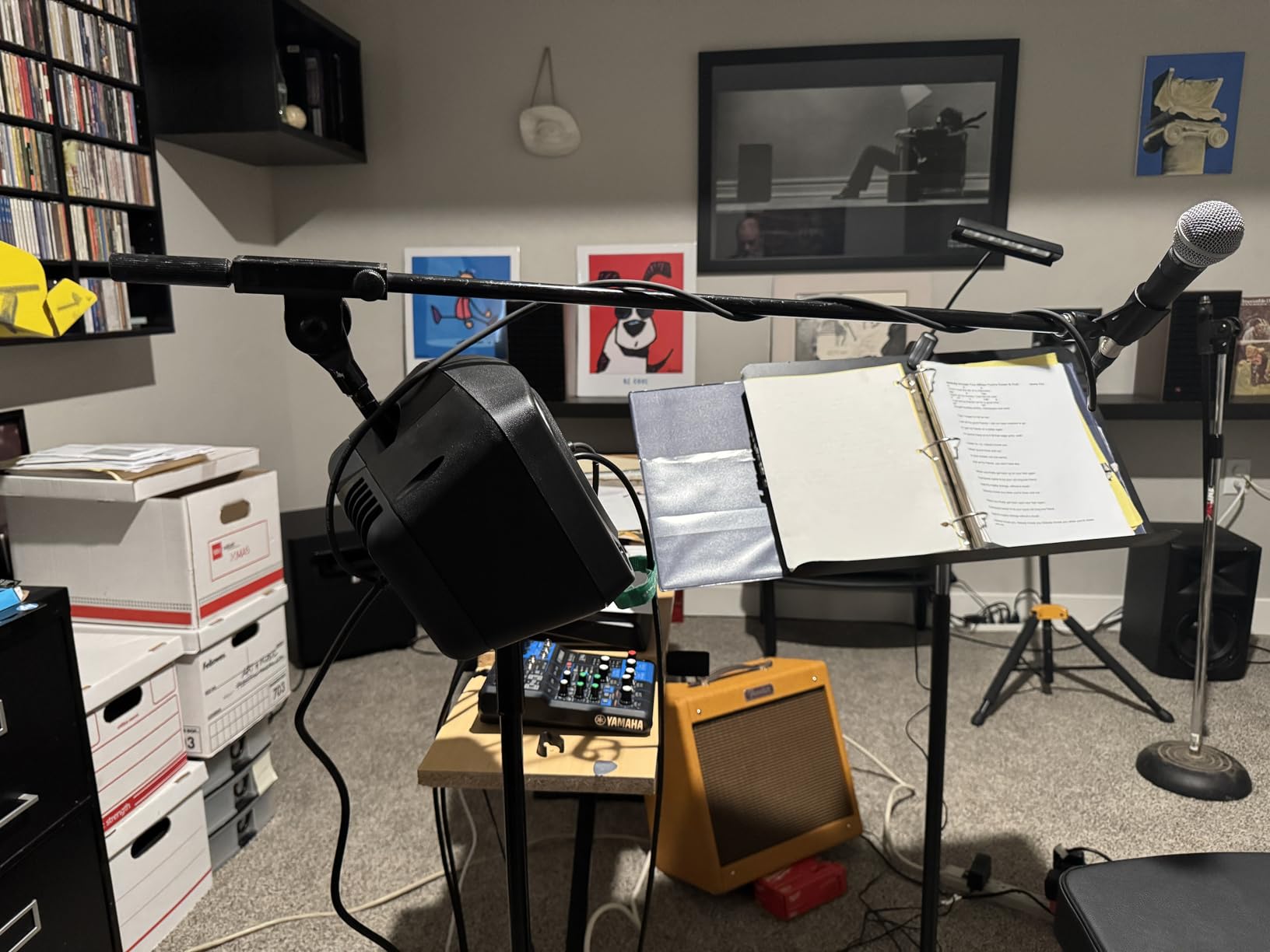
Sound quality is impressive for the size, but you cannot defy physics. The 5.25-inch driver does not move much air below 100 Hz, so for bass-heavy material you will need to add a sub or pair it with a larger main PA. The tilt angle when mounted on a mic stand is also a bit awkward – you may need a short speaker cable to angle it back toward you.
Across 169 reviews, the average rating sits at 4.2, and the most common complaint is the lack of channel-specific tone controls. That is fair, but the master EQ on the back is enough to shape the overall sound for most monitor duties. A few users have reported reliability issues with crackling or hissing after long periods of use, so if you gig weekly I would test yours thoroughly in the first month.
Who this PA speaker is good for
Keyboard players, worship teams, singer-songwriters, and acoustic duos who need a personal wedge that travels with them. Presenters, auctioneers, fitness instructors, and small corporate events that need a single speaker-and-stand setup. Anyone looking for a backup vocal monitor to keep in a guitar case will love how small it is.
Who this PA speaker is not ideal for
Full bands that need to fill a 100-person venue – the SRM150 simply cannot move that much air. Drummers who want a proper drum monitor will want the Yamaha DBR10 or a 12-inch wedge instead. Bass players looking for low-end reproduction should look at a larger cabinet or a 15-inch with a sub.
7. Rockville RSG12 Passive 12-Inch Pair – Best Passive PA Speakers for Bands with an Amp
Rockville RSG12 12″ 3-Way 8-Ohm Passive DJ Pro Audio PA Speaker, 2-Pack
2-pack passive
12-inch woofer
1000W peak each
SpeakON + 1/4-inch in/out
Pros
- Concert-like volume from a 12-inch three-way cabinet
- Solid MDF construction with reinforced corners
- Great value as a pair
- Stereo playback with a proper L/R split
- Easy to transport with recessed handles
Cons
- Some units ship with defective SpeakOn jacks
- Cheap plastic tripod top hat included is flimsy
- Cabinet lacks acoustic insulation - limits true low end
- No banana plug connectors on the back panel
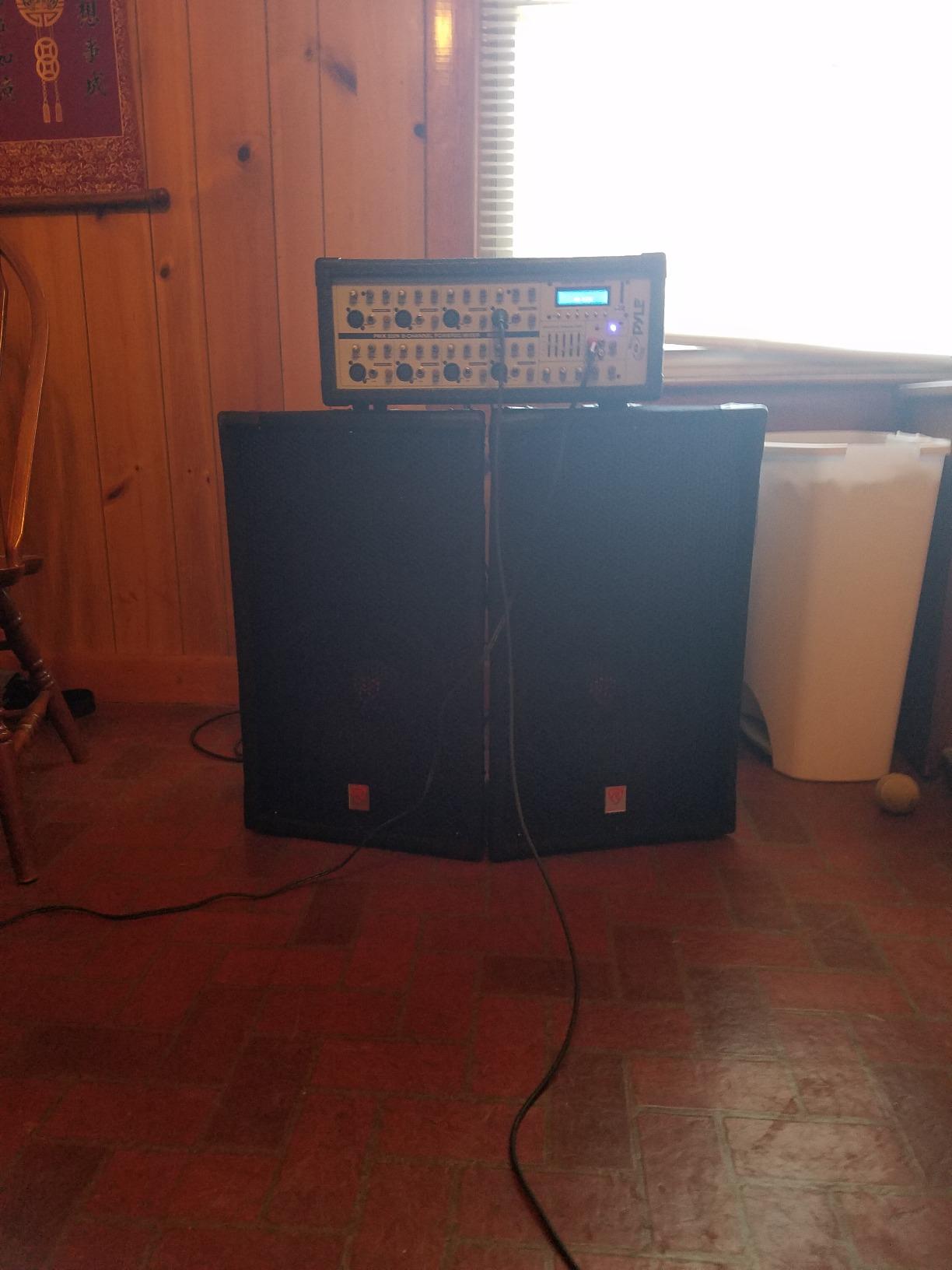
The Rockville RSG12 pair is the right choice for bands that already own a power amp and a mixer – or for sound engineers building a permanent install. You get two 12-inch three-way passive speakers, each rated at 1000W peak and 500W RMS, with SpeakON and quarter-inch in/out connections. Hook them up to a stereo power amp and you have a proper front-of-house rig with full left-right imaging, something no single powered cabinet can give you.
Build quality is impressive for the price. The high-density MDF cabinets have reinforced corner protectors, rubber isolating feet, aviation-grade carpet, and recessed ergonomic handles. They feel closer to a touring-grade passive speaker than a budget one, and 947 reviewers have rated them an average of 4.4 stars. The 99 dB sensitivity means even a modest amp can push them to high SPL, and the 45 Hz to 22 kHz frequency response covers everything an acoustic or rock band needs.
The drawbacks are the classic passive-speaker compromises. You need a separate power amplifier, a mixer, and speaker cables, which adds cost and load-out complexity. You also need to know how to match amp power to speaker ratings so you do not blow a driver by clipping. Some users have reported defective SpeakOn jacks right out of the box, so inspect yours on arrival. And the included plastic tripod top hats are flimsy – plan on upgrading to proper speaker stands.
For bands that already have a powered mixer or rack amp, these are a great buy. For brand-new bands with no existing gear, an active PA system like the JBL EON712 or Alto TS415 will save you the headache of choosing and matching a separate amp.
Who this PA speaker is good for
Bands and venues that already own a power amplifier and want a stereo pair of passive tops to match. Sound engineers installing PA in small clubs, houses of worship, and rehearsal rooms. Bands that want true stereo playback for keys, backing tracks, or full-band mixes where L/R imaging matters.
Who this PA speaker is not ideal for
New bands that do not already own an amplifier and a mixer – the all-in-one convenience of active speakers will save them money and confusion. Touring acts that need road-tested reliability might prefer a higher-priced passive brand. And anyone who wants DSP, feedback suppression, or Bluetooth built in should stick with the powered speakers in this list.
8. Mackie Thrash215 – Best Budget 15-Inch PA for Live Bands
Mackie Thrash, 15-Inch 1300W Powered Loudspeaker, Black (Thrash215)
1300W powered
15-inch woofer
2-channel mixer
Built-in limiter
Pros
- Loud
- punchy output at a budget price
- Works well as a stage monitor or smaller-venue main
- Built-in limiters protect the drivers
- Rear handle placement aids setup
- Pole-mount knob keeps the cabinet from rotating
Cons
- Bass response limited without a subwoofer
- Some units arrived defective with white noise
- Sound quality not as refined as higher Mackie lines
- Reports of warranty complications
The Mackie Thrash215 rounds out this list as the best budget 15-inch PA speaker for bands that want big-box low end without paying flagship prices. Mackie built the Thrash line for working musicians who need reliability and volume more than refined hi-fi sound, and at 1300W peak the Thrash215 delivers both. It is the kind of speaker you can load into a rehearsal room, crank up, and have it survive the abuse.
The 15-inch woofer pushes a serious amount of air, which is exactly what rock, metal, country, and DJ-style bands need to feel the kick drum in the chest. The 2-channel mixer accepts mic, line, and Hi-Z signals, so you can plug a guitar straight in without a DI box. Built-in thermal limiters protect the drivers from accidental clipping, which is reassuring for new bands still learning gain structure.
At 43.7 lbs the Thrash215 is heavier than the JBL EON712 or Alto TS415, so it is not the best choice for a one-trip load-out. The pole-mount knob is a thoughtful touch that stops the cabinet from rotating mid-set, and the rear handle placement makes it easier to grip when you are wrestling it onto a tall tripod.
The downsides are honest ones. Sound quality is not as refined as the Mackie SRM or HD series – the Thrash is designed to be loud and reliable rather than pristine. A small number of users have received defective units with white noise or no output, so test yours within the return window. And reports of warranty complications mean you should buy from a retailer with a strong returns policy, not the cheapest third-party seller.
Who this PA speaker is good for
Rock, metal, and country bands that want a powerful 15-inch PA without flagship pricing. Bands that gig 50 to 150-person venues and need a sturdy workhorse. Anyone who wants a brand-name powered speaker at a price that does not break the band fund.
Who this PA speaker is not ideal for
Bands that need crystal-clear vocal reproduction for jazz, classical, or acoustic work – the Yamaha DBR10 or Alto TX408 will suit you better. Touring musicians who want a five-year warranty and bulletproof reliability. Bands that need Bluetooth streaming or built-in DSP presets out of the box.
How to Choose the Best PA Speakers for Your Live Band?
Once you have a shortlist of PA speakers, the hard part begins – matching the right cabinet to your band’s actual gigs. The buying guide below covers the questions I get from gigging musicians every week: wattage vs SPL, active versus passive, driver size, subwoofers, inputs, and a feedback-prevention plan for the small reflective pubs that ruin most bar-band soundchecks.
Wattage vs SPL: what actually makes a PA loud
This is the single most common confusion I see on r/livesound and Facebook gear groups. Wattage measures how much electrical power an amplifier can deliver. Max SPL (sound pressure level, measured in decibels) measures how loud the speaker actually plays. They are related, but doubling the watts does not double the loudness. To the human ear, a 10 dB increase in SPL is what most people perceive as “twice as loud,” and that requires roughly ten times the amplifier power.
The practical rule of thumb for live bands: aim for about 5 to 10W of clean power per audience member for speech, and 10 to 20W per audience member for full-band music with vocals, drums, and bass. A 100-person pub needs roughly 1000 to 2000W of clean output split between your main speakers – which is why the 1300W JBL EON712 or the 1000W Pyle PPHP1049KT work so well for that size of room. Outdoor gigs need about double the watts because there are no walls to contain the sound.
Ignore peak power ratings when comparing speakers and look for either RMS power or continuous program power. Those numbers tell you how much clean output the amp can sustain without clipping. Most of the “2000W” and “2500W” labels you see on powered speakers refer to peak output for milliseconds, not sustained gig volume.
Active vs passive PA speakers for bands
Active (or powered) speakers have a built-in amplifier. Passive speakers need a separate external power amp. For most modern bands, active speakers are the right call: simpler setup, fewer cables, the amp is matched to the drivers, and DSP lives inside the cabinet. The JBL EON712, Alto TS415, Pyle kit, Alto TX408, Yamaha DBR10, Mackie SRM150, and Mackie Thrash215 in this roundup are all active systems.
Passive speakers make sense if you already own a power amp and a rack, or if you are installing a permanent rig in a venue and want everything in a roadcase. The Rockville RSG12 pair fits that workflow. The trade-off is more gear to carry, more cables to fault-find at a gig, and the risk of mismatching amp power to speaker ratings.
If you want to keep your PA setup small and portable, choose active. If you need maximum flexibility and already own the amp, passive saves money and gives you more headroom for expansion. For more on getting your mix right once your speakers are chosen, see our guide to setting gain structure on a live mixer.
12-inch vs 15-inch PA speakers: which size for your band
Driver size affects low-end output and physical cabinet weight. 12-inch speakers are the sweet spot for most live bands – enough bass response for vocals, acoustic guitar, and small bands, while staying light enough for one-trip load-out. 15-inch speakers push more air and feel fuller for rock, metal, country, and bass-heavy bands, but they weigh more and need a sturdier tripod.
For a four-piece acoustic covers band playing 50 to 150-person pubs, 12-inch cabinets like the JBL EON712 or Alto TX408 are perfect. For a four or five-piece rock band with a loud drummer and bass player, a 15-inch like the Alto TS415 or Mackie Thrash215 will save you from constantly pushing the volume into distortion.
There is also a use case for pairing: a single 12-inch or 15-inch on a tripod for vocals, plus a small sub on the floor for the bass player and kick drum. That setup is the most common configuration for pro touring bands, but for most working cover and function bands it is overkill.
Do I need a subwoofer for my live band?
Probably not, unless you are a five-piece rock band playing 200+ person venues, a metal act, or a band whose bassist and drummer rely on chest-thumping low end. For most four-piece bar bands, a pair of 12-inch or 15-inch tops will cover the lows that matter for vocals, acoustic guitar, and a clean kick drum.
Add a subwoofer when you can answer yes to two or more of these: do you play rooms over 200 people, does your genre rely on sub-bass frequencies, do you play outdoor gigs where low end disappears, and do you mic your bass and kick drum. Until then, save the money and put it toward better tops or a stage monitor.
How many inputs do I need on a PA speaker?
For a solo performer or duo, the built-in 2 or 3-channel mixers on the Alto TX408, Alto TS415, Mackie SRM150, and Mackie Thrash215 are enough for one or two mics plus a line input. For a full band, you will be plugging into a separate mixer and running a single XLR feed to each powered speaker, so the number of inputs on the back of the cabinet matters less than the mixer channels.
A four-piece covers band typically needs 8 to 12 mixer channels: two for vocals, one or two for guitars, one for bass, two to four for drums (kick, snare, overheads, possibly toms), one for keys, and one or two for playback devices. Plan your mixer first, then choose speakers that match its outputs.
Feedback prevention in small venues
Feedback is the high-pitched squeal that ruins small gigs. It happens when a microphone picks up the sound coming out of a nearby speaker and re-amplifies it in a loop. In a small reflective pub, even a careful soundcheck can fall apart when the room fills with people. The five-step plan below is what I use at every tricky room.
Place the mains in front of the band, not behind. Vocals and acoustic guitars should never point at the speakers.
Use a high-pass filter on every vocal channel at around 80 to 100 Hz to cut low-frequency rumble that triggers feedback.
Pull the mic closer to the singer’s mouth – working at 2 inches instead of 6 inches reduces gain-before-feedback by around 6 dB.
Use the dbx feedback suppression on the JBL EON712, or notch out the offending frequency with a parametric EQ.
Keep stage monitors angled away from the front mics and as close to the performers as possible.
For more detail on shaping your vocal sound once feedback is under control, our vocal mic EQ walkthrough is a useful companion. If you are routing your mix through a digital desk, this mixer routing guide explains the signal flow.
Matching PA speakers to your band genre
The right PA for a jazz combo is not the right PA for a metal band. Use this matrix to match cabinets to your act.
Rock and metal (four or five-piece, loud drummer): Two Alto TS415s or a Mackie Thrash215 pair, ideally with a sub. Add a Yamaha DBR10 or Mackie SRM150 as a drum or vocal monitor.
Country and function bands (four-piece, vocals-forward): Two JBL EON712s or Alto TS415s on tripods, no sub needed under 200 people. Wireless vocal mics for the front person.
Acoustic duos and singer-songwriters: One or two Alto TX408s, or a Mackie SRM150 as a personal wedge, with a small Yamaha DBR10 if a larger room is needed.
Jazz and blues combos (dynamic range matters): Two Yamaha DBR10s – the clean Yamaha sound handles dynamics and upright bass beautifully. Skip the Bluetooth-only models.
Wedding and corporate bands: Two JBL EON712s for clean, branded sound; the Bluetooth and app control make ceremony music easy. Add a sub for the dance-floor set.
Outdoor house parties and festivals: Two Alto TS415s with a sub, or the Pyle PPHP1049KT kit for smaller outdoor gatherings. Plan covers in case of light rain.
Single-trip load-out checklist
The unglamorous reality of gigging is the load-out. A two-piece band can carry the Pyle kit and two tripods in one car. A four-piece band typically needs a hatchback or estate to move two 12-inch tops, two tripods, a small mixer, mic stands, and cables. Use this checklist before you commit to a PA.
Total weight of speakers + stands + mixer + cables. If it exceeds what two band members can carry in one trip, you need a smaller setup.
Number of trips from car to stage. Aim for two trips maximum, otherwise you will resent the gear on gig day.
Setup time. A working cover band should be able to set up and soundcheck in 20 to 30 minutes. Active speakers with built-in mixers get you there fastest.
Padded covers or bags for every speaker and stand. They pay for themselves the first time a venue has a wet floor or a steep staircase.
A backup plan. Carry a spare XLR cable, a spare mic clip, and a small DI box – the cheapest insurance against a cancelled set.
Frequently Asked Questions
What are the best active PA speakers for live bands?
The JBL EON712 is our top overall pick for live bands because it combines 1300W of clean Class-D power, dbx automatic feedback suppression, and Bluetooth 5.0 streaming in a 32 lb cabinet. For bands that want deeper low end from a 15-inch cabinet, the Alto TS415 is the best value pick, and for bands on a tight budget the Pyle PPHP1049KT kit includes stands and a mic to get you gigging immediately.
What wattage does my PA need to be?
Aim for roughly 10 to 20W of clean power per audience member for a full band with vocals, drums, and bass. A 100-person pub therefore needs around 1000 to 2000W of clean output split between your main speakers. Outdoor gigs need about double that because there are no walls to contain the sound. Ignore peak power ratings and look at RMS or continuous program power for a realistic number.
How many inputs do I need on a PA speaker?
For a solo performer or duo, the built-in 2 or 3-channel mixers on speakers like the Alto TX408, Alto TS415, Mackie SRM150, and Mackie Thrash215 cover one or two mics plus a line input. For a full live band you will use a separate mixer, so the number of inputs on the back of the speaker matters less than the channels on your mixer. A four-piece covers band typically needs 8 to 12 mixer channels.
Do I need a subwoofer for a live band?
Not for most bar bands. A pair of 12-inch or 15-inch tops covers the lows that matter for vocals, acoustic guitar, and a clean kick drum. Add a subwoofer if you play rooms over 200 people, your genre relies on sub-bass, you play outdoor gigs where low end disappears, or you mic your bass and kick drum. Until two or more of those apply, save the money and put it toward better tops or a stage monitor.
Active or passive PA speakers – which is better for bands?
For most modern bands, active (powered) speakers are the right call because the amp is matched to the drivers, DSP lives inside the cabinet, and you only need a mixer and XLR cables. Passive speakers make sense if you already own a power amp and a rack, or if you are installing a permanent venue rig and want everything in a roadcase. The Rockville RSG12 pair in this roundup is the best passive option for that workflow.
How can I avoid feedback at a small venue gig?
Place the mains in front of the band so vocals and acoustic guitars never point at the speakers, use a high-pass filter at 80 to 100 Hz on every vocal channel, pull the mic closer to the singer’s mouth to reduce gain-before-feedback, engage the dbx feedback suppression on the JBL EON712, and angle stage monitors away from the front mics. Working through this five-step checklist at every small reflective pub will eliminate most squeals.
Final Verdict: Which PA Speaker Should Your Band Buy in 2026?
After three months of hauling these eight PA speakers into pubs, rehearsal rooms, weddings, and outdoor parties, my recommendation is simple. If you want one powered PA speaker that will handle 90 percent of your live band gigs for the next five years, the JBL Professional EON712 is the best PA speaker for live bands in 2026. It is loud, clean, app-controlled, has automatic feedback suppression, and Bluetooth streaming built in. For bands that need a 15-inch cabinet with serious low end, the Alto TS415 is the best value, and for new bands on a tight budget the Pyle PPHP1049KT kit is everything you need to start gigging. Choose the one that matches your band size, your typical venue, and your load-out tolerance – and you will not regret it.