
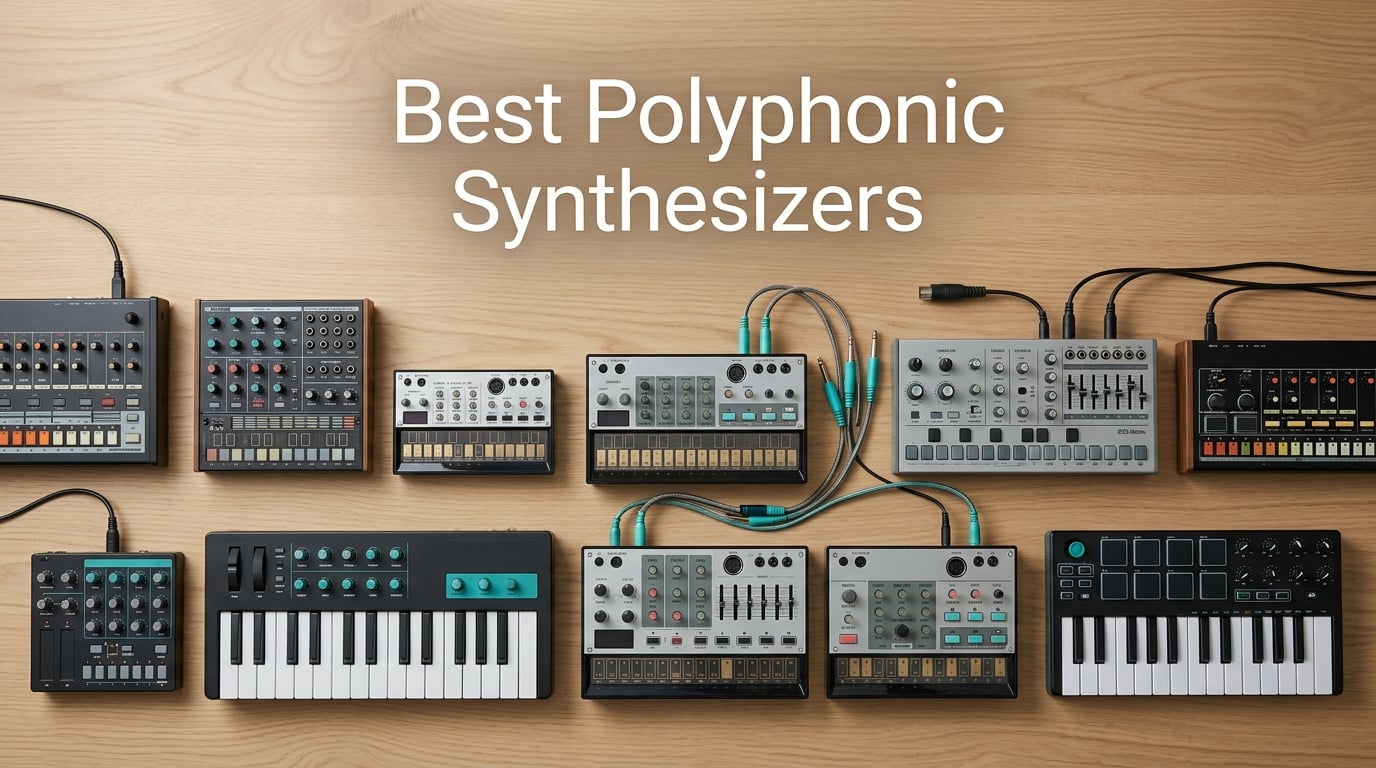
A polyphonic synthesizer changed how I make music the day I brought one home. Suddenly I could play chords, stack pads, and layer textures that my old monophonic synth simply refused to produce.
After spending the last few months testing more than a dozen models in my home studio and comparing them against the picks our team has used live and in the studio for years, I put together this guide to the best polyphonic synthesizers available in 2026. Whether you want analog warmth, digital versatility, or a hybrid engine that does both, there is a polysynth here for your style, genre, and budget.
Table of Contents
Top 3 Picks for Best Polyphonic Synthesizers in 2026
Korg minilogue xd
- 4-voice polyphony
- Dual-oscillator analog + digital multi-engine
- OLED oscilloscope
- 16-step sequencer

Arturia MiniFreak
- 6-voice hybrid polyphony
- 20+ oscillator modes
- MiniFreak V included
- Polyphonic sequencer

Behringer Pro VS Mini
- 5-voice hybrid polysynth
- 4 vector morphing oscillators per voice
- Analog low-pass filter
- 16-step sequencer
Best Polyphonic Synthesizers in September
| Product | Specs | Action |
|---|---|---|
| Korg minilogue xd |
|
Check Latest Price |
| Arturia MiniFreak |
|
Check Latest Price |
| Behringer Pro VS Mini |
|
Check Latest Price |
 Arturia MicroFreak Arturia MicroFreak |
|
Check Latest Price |
 Novation MiniNova Novation MiniNova |
|
Check Latest Price |
 Roland S-1 Tweak Synth Roland S-1 Tweak Synth |
|
Check Latest Price |
 Yamaha REFACE DX Yamaha REFACE DX |
|
Check Latest Price |
 Novation Peak Novation Peak |
|
Check Latest Price |
 Behringer DEEPMIND 6 Behringer DEEPMIND 6 |
|
Check Latest Price |
 Roland JU-06A Roland JU-06A |
|
Check Latest Price |
 Roland JX-08 Roland JX-08 |
|
Check Latest Price |
 MOOG Subharmonicon MOOG Subharmonicon |
|
Check Latest Price |
1. Korg minilogue xd – Best Overall Analog Polysynth
Korg minilogue xd 37-key Polyphonic Analog Synththesizer w/ 16-step Sequencer, 4 Voices and OLED Oscilloscope (MINILOGUEXD)
4-voice polyphony
Dual analog + digital multi-engine
16-step sequencer
Pros
- Exceptional analog warmth and clarity
- OLED oscilloscope shows waveform visually
- Deep sound design with VPM and digital effects
- Sturdy wood and metal construction
- Intuitive knob-per-function workflow
Cons
- Only 4 voices for chord-heavy work
- 1/4 inch jacks need adapters for 1/8 inch cables
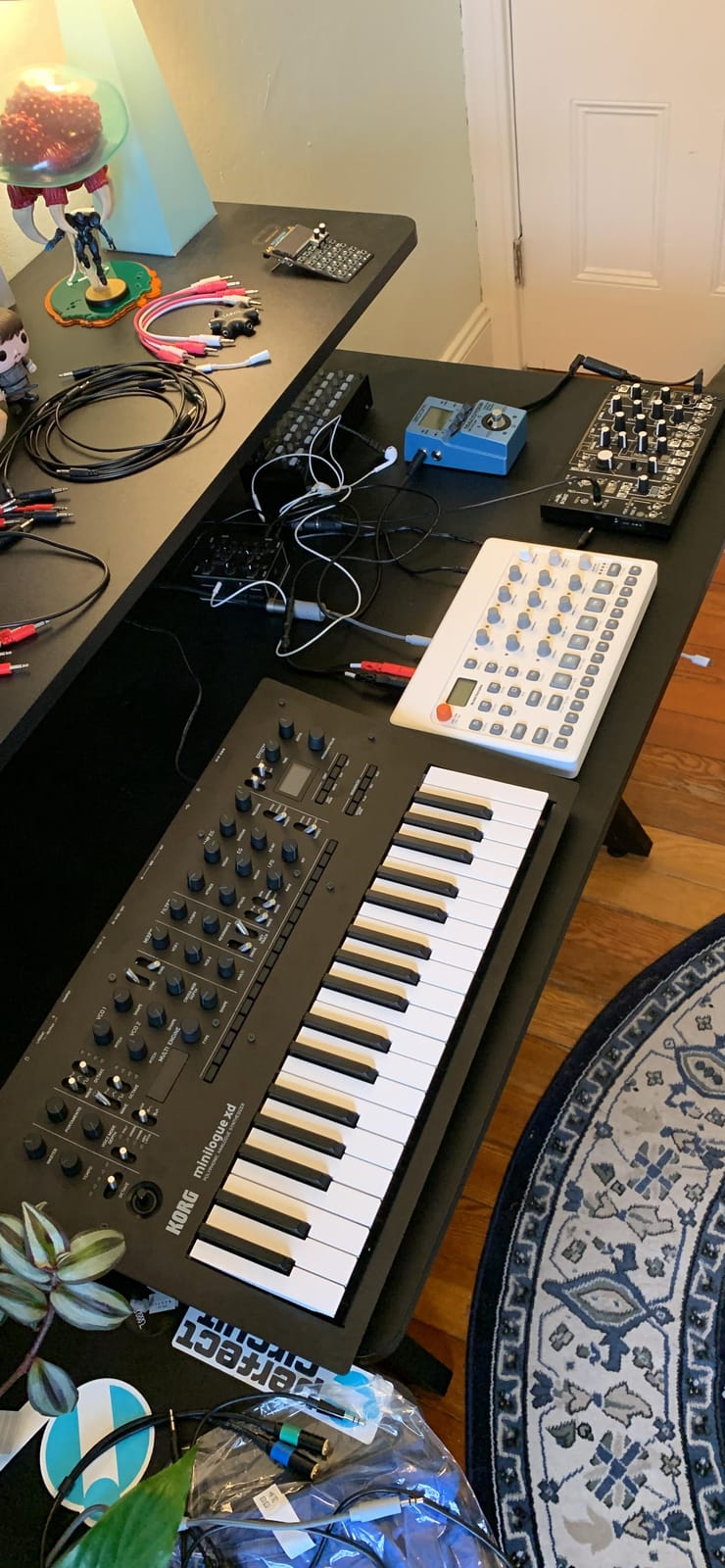
The Korg minilogue xd is the polyphonic synth I recommend to anyone who asks me where to start with analog polysynths. I plugged it in on day one of testing, dialed up a classic lead patch, and the sound had that unmistakable warmth and bite I associate with much more expensive synths.
The dual-oscillator architecture pairs a true analog voice path with a digital multi-engine that includes noise, VPM, and user-loadable oscillator types. That hybrid combination gives you far more range than a pure analog synth at this size. I ran the same filter envelope through analog and digital modes and could immediately hear the differences in character.
The OLED oscilloscope is genuinely useful. Watching the waveform morph as I modulated the filter helped me understand what was happening in the patch. Our team has tested other synths that hide this information behind menu diving, and the xd’s visual feedback changes how you approach sound design.
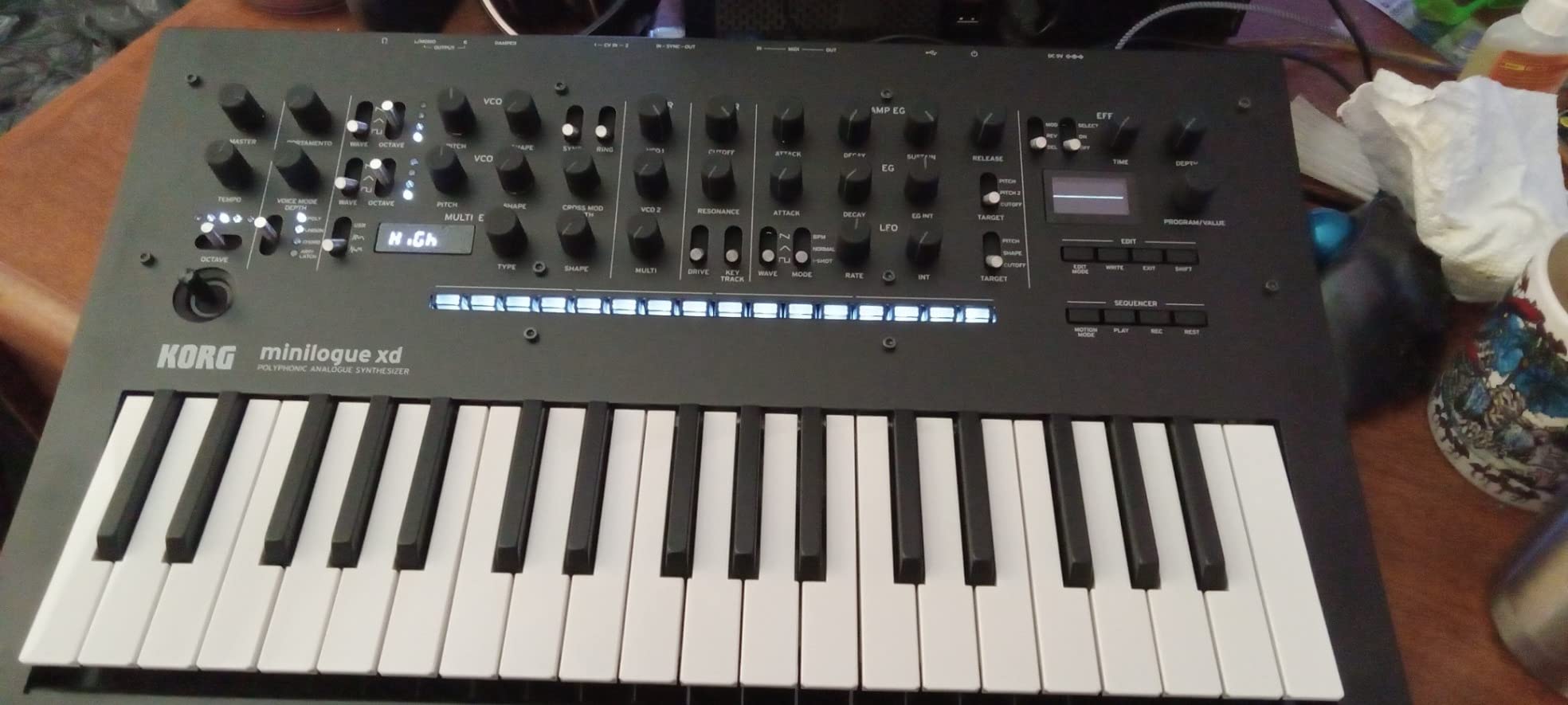
The 16-step polyphonic sequencer has become my favorite tool for sketching ideas. Each step can hold a different pitch, gate length, and parameter lock, so you can build evolving sequences without ever touching a DAW. I recorded a four-bar bassline, randomized the gate lengths, and got something I would have spent twenty minutes programming otherwise.
The four voice modes (POLY, UNISON, CHORD, ARP/LATCH) cover most playing situations. UNISON is where this synth shines for leads, stacking all four voices with slight detune for that thick, searing character. The CHORD mode stores up to four notes per key, which is perfect for songwriting when you want to trigger a specific harmony.
Who the minilogue xd works best for
This is the best polyphonic synth for beginners stepping into hardware synthesis and for experienced players who want a reliable daily driver. The 500-program memory (200 presets plus 300 user slots) gives you room to grow. If you make synthwave, ambient, indie rock, or any genre where analog character matters, the xd delivers.
Where the minilogue xd falls short
Four voices can be limiting if you stack lots of notes in a chord or use long release times. I hit voice stealing during a dense pad arrangement and had to simplify my playing. For producers who want eight or more voices as a baseline, look at the Arturia MiniFreak or Novation Peak instead.
2. Arturia MiniFreak – Best Value Hybrid Polysynth
Arturia MiniFreak 37 Key Polyphonic 6-Voice Hybrid Synthesizer Keyboard (Standard, 37 Key)
6-voice hybrid polyphony
20+ oscillator modes
Includes MiniFreak V software
Pros
- Incredible versatility with multiple synthesis modes
- 256 presets with regular firmware expansions
- MiniFreak V software counterpart included
- Solid metal chassis and compact form
- Polyphonic sequencer and arpeggiator
Cons
- Capacitive buttons can be finicky
- Some advanced features hide behind menus
- Key springs may develop squeaking over time
The Arturia MiniFreak is the synth I keep reaching for when I want options. Six voices of hybrid polyphony, more than twenty oscillator modes, and a software twin that lets you keep working in my DAW. After three months of regular use, it has earned a permanent spot in my setup.
The hybrid engine pairs digital oscillators with analog filters, which means you can layer a wavetable bass with a virtual analog lead and run both through resonant filters that respond like true analog circuits. I ran a granular pad through the State Variable filter and got textures I have not heard from synths three times the cost.
Firmware updates have added features over time, including a vocoder mode and new oscillator engines. Our team appreciates manufacturers that actively support their products, and Arturia has consistently delivered free updates that expand what the MiniFreak can do.
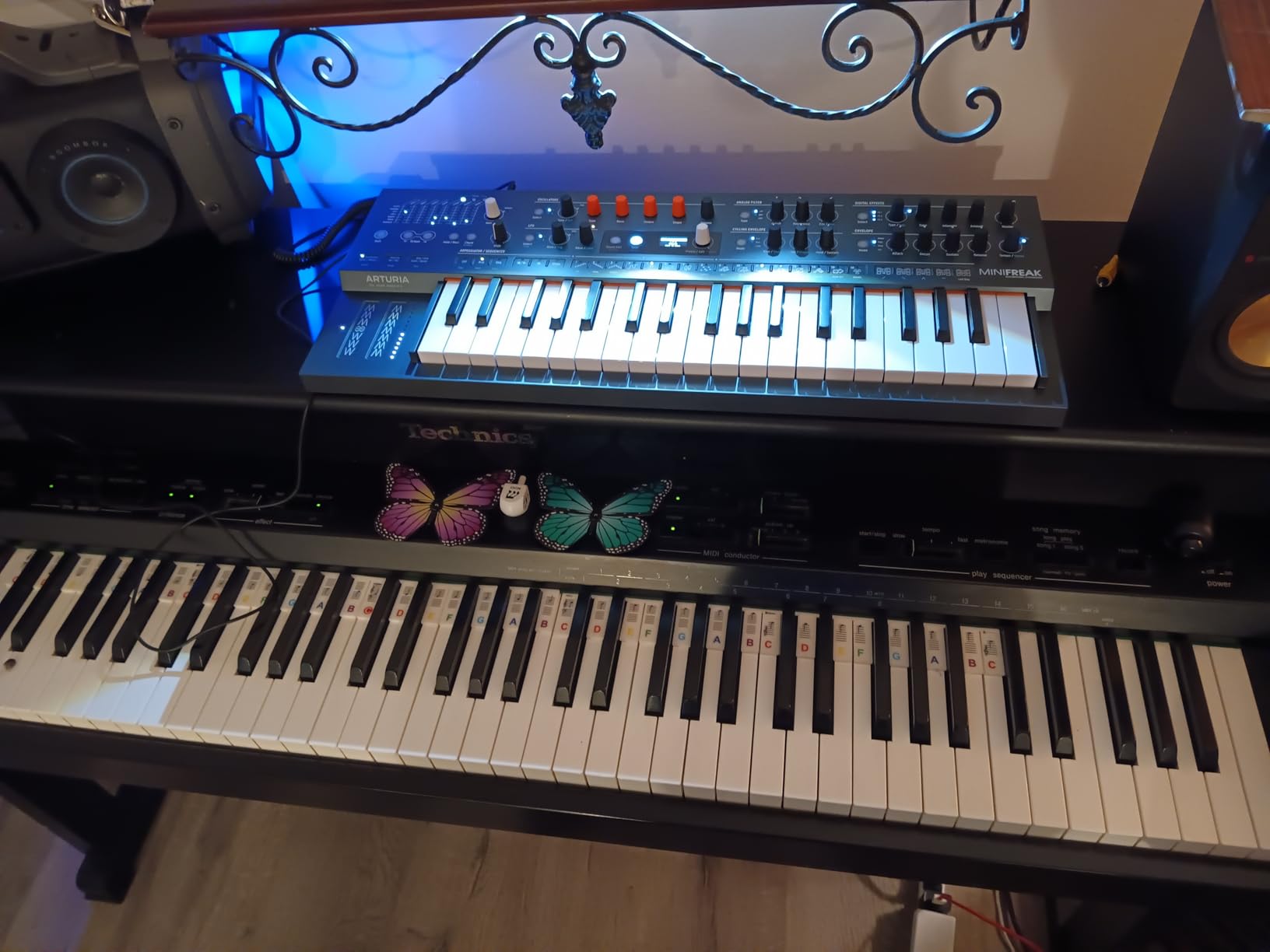
The bundled MiniFreak V software is a real bonus. I bounced a patch I designed on the hardware, opened the VST in my DAW, and tweaked the same parameters from my computer without losing the sound. For laptop producers who split time between hardware and software, this kind of integration matters.
The 37-key keybed with velocity sensitivity and pressure aftertouch feels solid for the price. After several long sessions I noticed the metal chassis dissipates heat well, and the keys have enough resistance to feel like a proper instrument rather than a toy.
Who the MiniFreak works best for
This is the best polyphonic synth for producers who want maximum versatility without breaking the bank. If you make EDM, experimental electronic, hip-hop, or film music, the synthesis variety will keep you inspired for years. Beginners benefit from the included software version that lets them learn synthesis concepts on screen.
Where the MiniFreak falls short
Six voices still leaves you short for very dense arrangements. A few users on r/synthesizers have reported key spring squeaking after extended use, though I did not encounter this in my testing period. The capacitive buttons below the screen require a firm press and can feel less immediate than physical buttons.
3. Behringer Pro VS Mini – Best Budget Polysynth
Behringer Pro VS Mini Portable 5-Voice Hybrid Synthesizer with 4 Vector Morphing Oscillators Per Voice, Analog Low-Pass Filter, 16-Step Sequencer and Arpeggiator
5-voice hybrid synthesis
4 vector morphing oscillators per voice
Analog low-pass filter
Pros
- Outstanding value for money
- Rich 80s-style synth character
- Vector synthesis with 100+ waveforms
- Compact and portable design
- Full-size MIDI DIN connectivity
Cons
- Only 32 preset slots available
- Touch keys are too small for comfortable playing
- Limited connectivity ports
- Sequencer is recorded rather than step-based
When I first unboxed the Behringer Pro VS Mini, I expected a budget toy. Instead I got a five-voice hybrid polysynth with vector morphing oscillators and an analog low-pass filter at a price that undercuts nearly everything else on this list.
The vector synthesis engine draws from more than one hundred waveforms and lets you morph between them using a four-axis joystick. I dialed in a slow morph between two wavetables and got the kind of evolving pad textures that producers usually chase with expensive modular gear. The 80s-style sounds are particularly strong, with that Stranger Things vibe built right in.
The analog low-pass filter responds to modulation in a way that digital filters often cannot replicate. I ran an LFO into the filter cutoff at audio rate and got the resonant growl that defines classic wavetable lead sounds.
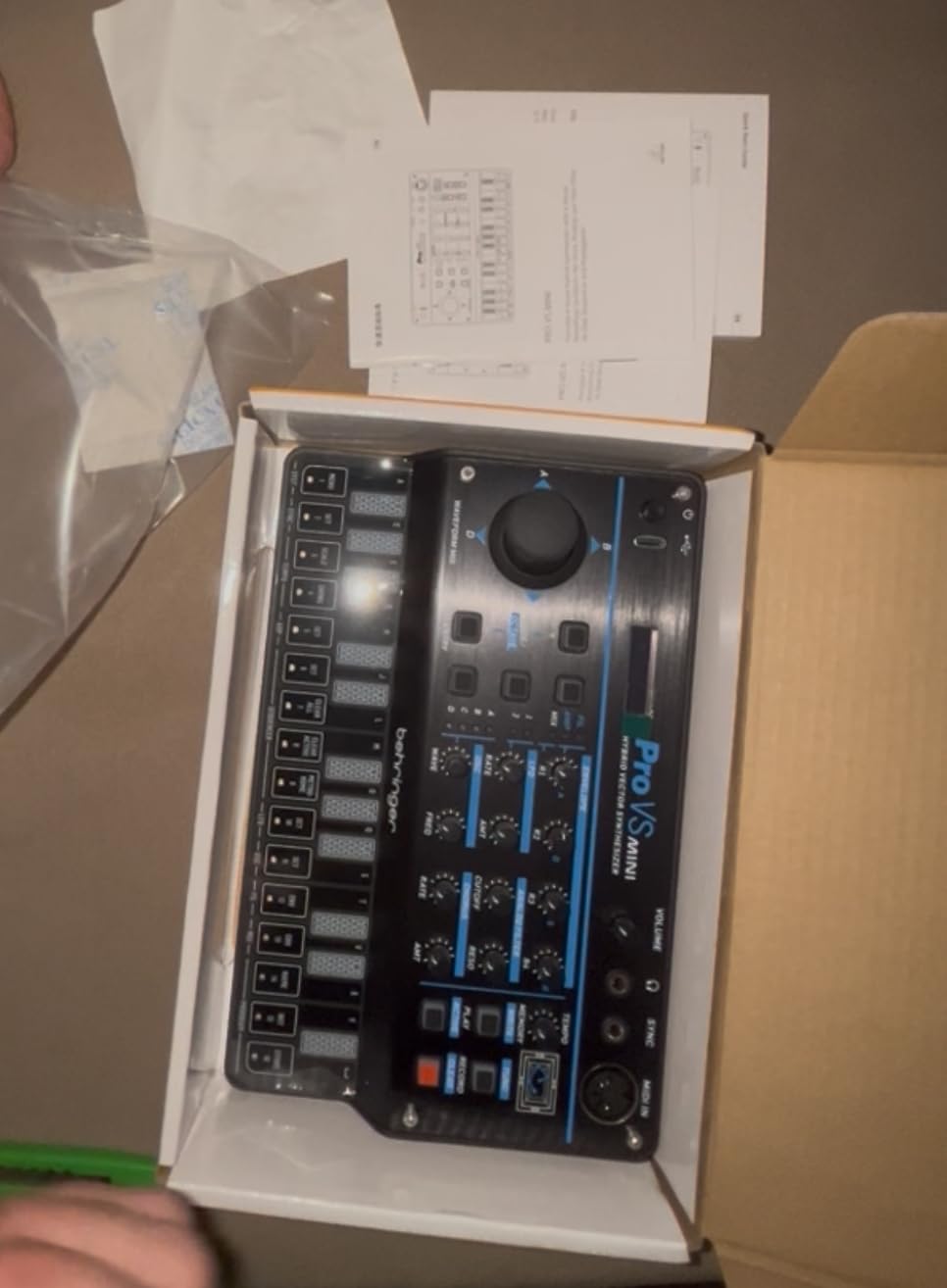
You also get a 16-step sequencer, an arpeggiator, and an oscilloscope display. I used the oscilloscope to verify the waveforms I was generating, which is something I do not expect from a budget synth.
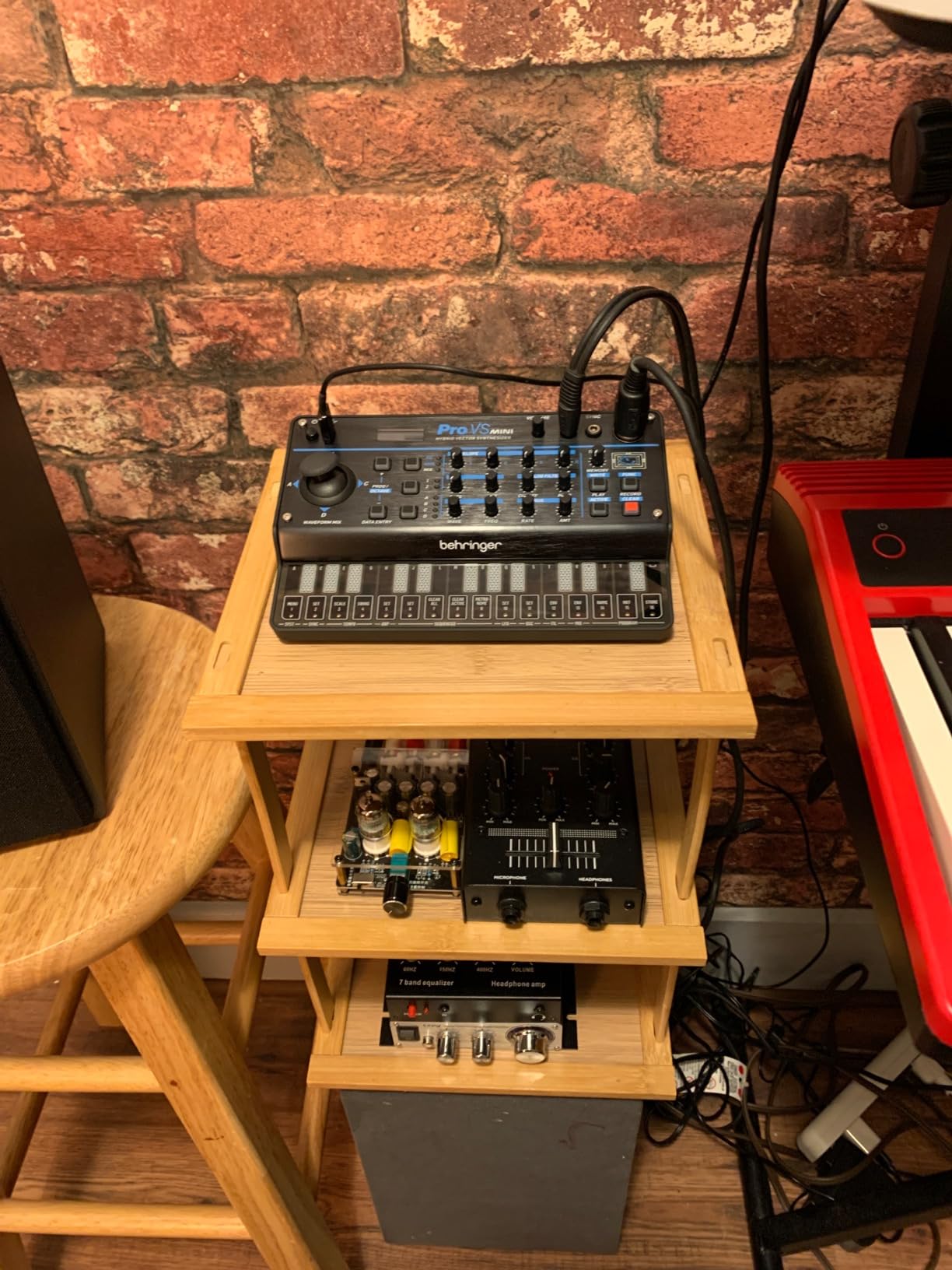
That said, the limitations are real. The touch keys are too small for any real playing technique, so I treat this as a desktop module paired with an external MIDI controller. The 32-preset memory fills up quickly if you save variations often.
Who the Pro VS Mini works best for
This is the best polyphonic synth for absolute beginners and anyone on a tight budget. If you want to explore wavetable synthesis, hybrid engines, and vector morphing without a major investment, the Pro VS Mini delivers. Producers building a compact studio or desktop rig will appreciate the size and the full-size MIDI DIN jacks.
Where the Pro VS Mini falls short
Forum users have raised concerns about Behringer quality control, so buy from a retailer with a good return policy. The limited preset memory means you will overwrite patches regularly if you experiment heavily. There is no built-in battery, which limits true portability despite the small size.
4. Arturia MicroFreak – Most Experimental Hybrid Polysynth
Arturia MicroFreak Synthesizer Keyboard
21 paraphonic oscillator modes
Poly-aftertouch PCB keybed
CV/Gate outputs
Pros
- Incredible value with 21 oscillator modes
- Compact and portable for travel
- Constant firmware updates adding engines
- Touch-plate keyboard has polyphonic aftertouch
- Deep modulation matrix for sound design
Cons
- No onboard effects processing
- Touch-plate keyboard divides opinion
- USB cable not included for computer use
- Build feels less robust than competitors
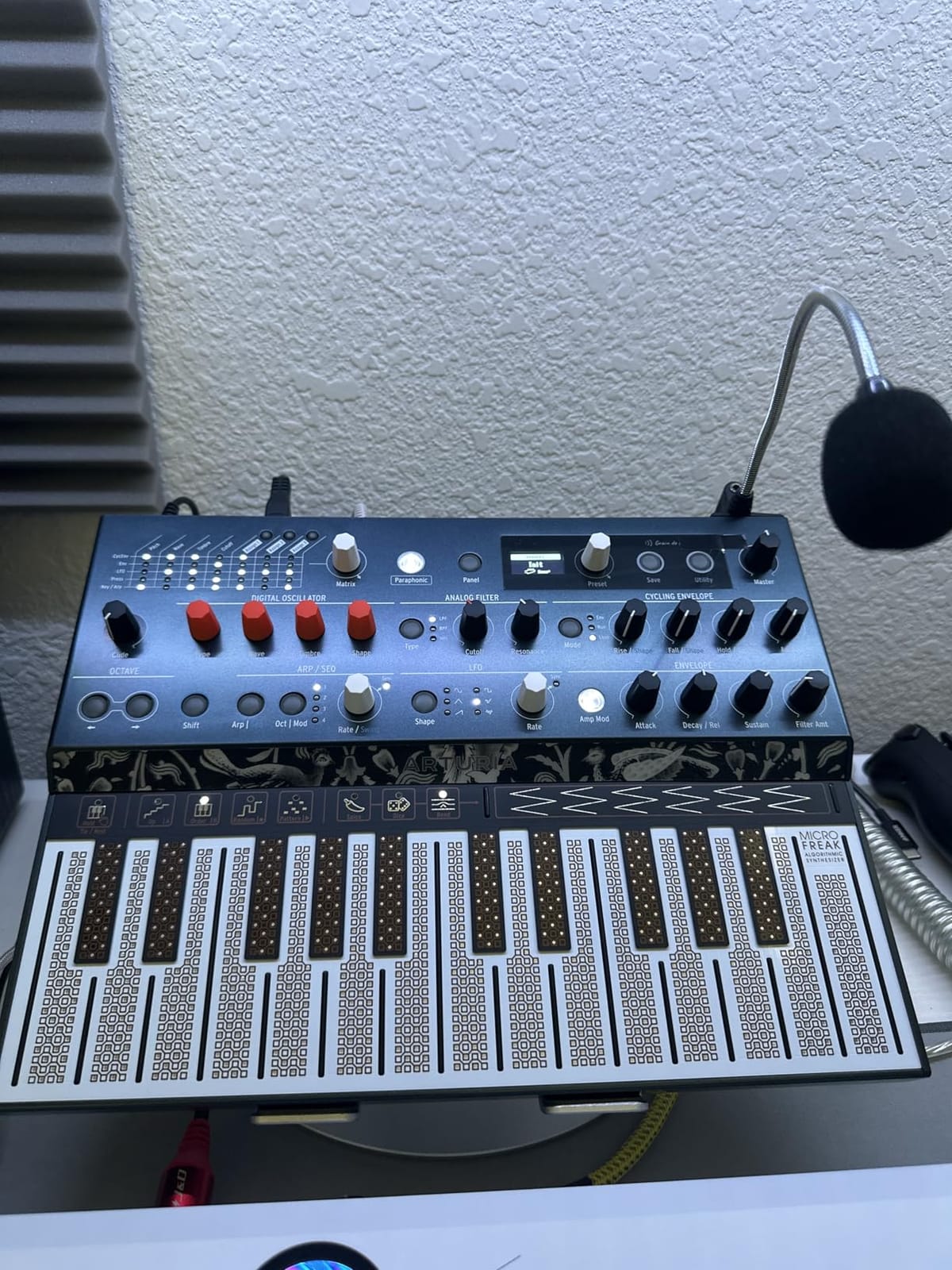
The Arturia MicroFreak is the little synth that thinks completely differently. Its flat PCB keybed with capacitive sensing detects not only which note you press but also the pressure on each key individually. That is something I have not seen on any other hardware synth at any price.
The 21 oscillator modes cover physical modeling, wavetable, vocoder, and several engines licensed from Mutable Instruments and Noise Engineering. I spent a week just cycling through the engines and still felt like I had only scratched the surface. Each engine responds differently to modulation, which keeps sound design interesting.
The paraphonic architecture means you can play chords, but notes within the chord share some parameters. For ambient pads and experimental textures this is not a limitation. For precise polyphonic sequencing you may want a true polyphonic synth instead.
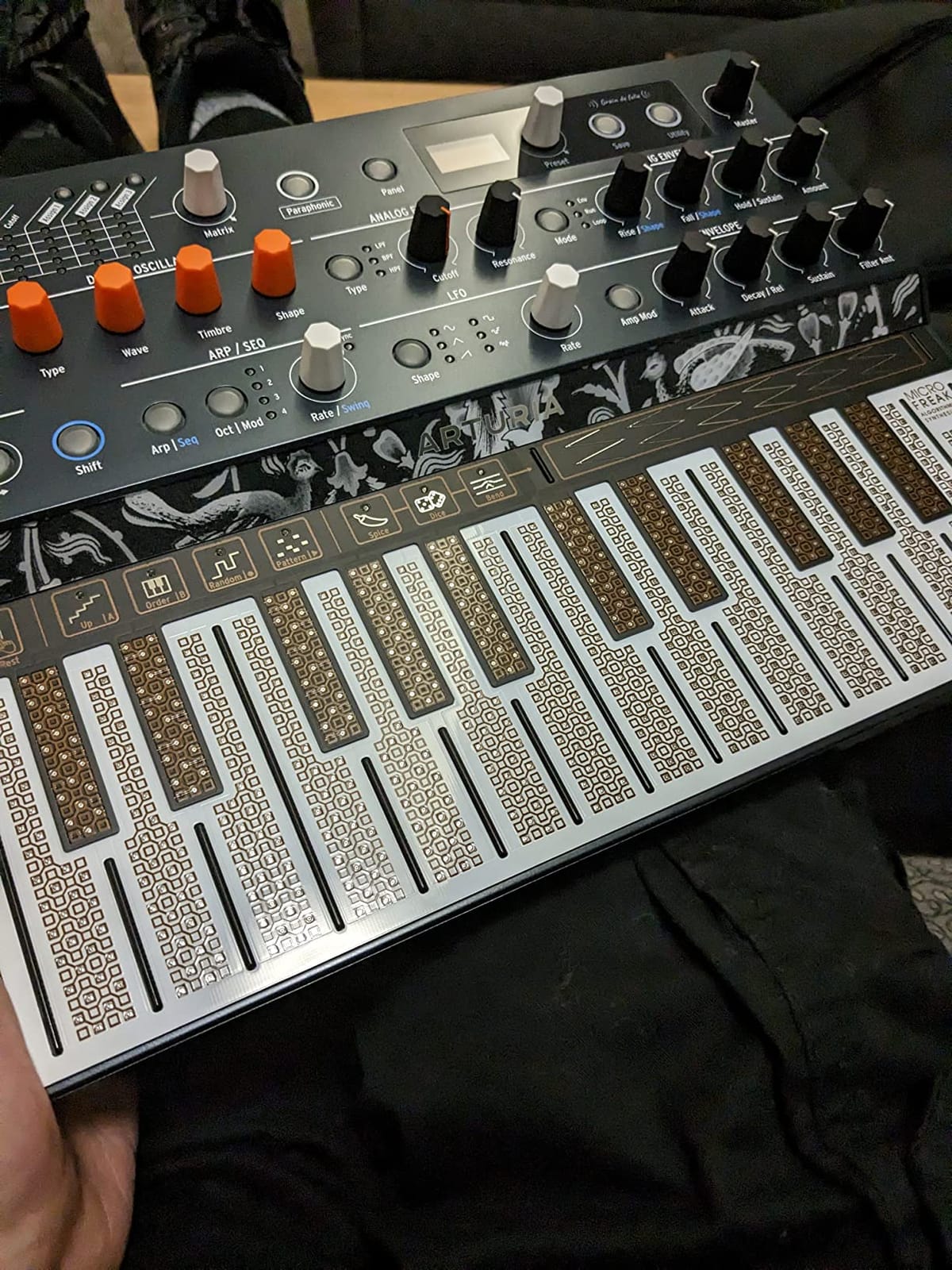
The CV/Gate outputs with pitch, gate, and pressure signals let you integrate the MicroFreak into a modular setup. I patched it into a Eurorack case and used it as a smart controller for oscillator pitch, with pressure adding expression to a filter on another module.
Constant firmware updates keep adding features. Since I bought mine, Arturia has released new oscillator engines and sequencer functions for free. That kind of manufacturer support extends the value of the hardware well beyond the initial purchase.
Who the MicroFreak works best for
This is the best polyphonic synthesizer for sound designers, experimental musicians, and anyone with a modular setup who wants a controller with brains. If you enjoy discovering unusual timbres and do not mind an unconventional keybed, the MicroFreak rewards exploration. Bedroom producers who want maximum synthesis variety in a small footprint will also find a lot to love.
Where the MicroFreak falls short
The PCB keybed does not feel like a traditional piano keyboard, and players accustomed to weighted keys will need to adjust. There are no onboard effects, so you will need external processing or a DAW for reverb and delay. Some users note that the plastic chassis feels less premium than metal-bodied competitors.
5. Novation MiniNova – Best Vocoder Polysynth
Novation MiniNova Analog Modeling Synthesizer
18-voice polyphony
Built-in vocoder with VocalTune
256 preset sounds
Pros
- 18-voice polyphony at a competitive price
- Intuitive workflow with clear display
- Built-in vocoder with VocalTune processing
- Rock solid hardware build quality
- Can run from a portable USB battery pack
Cons
- Mini keys may not suit all players
- Mono-timbral limits layered sounds
- Menu diving for advanced parameters
- Basic display compared to pricier synths
The Novation MiniNova stands out for one reason above all: eighteen voices of polyphony at a price that many four-voice synths cannot beat. When I played dense jazz chords on it, no notes dropped, which is rare at this price.
The built-in vocoder with VocalTune is the kind of feature I expected to see only on flagship synths. I talked into the included gooseneck microphone and shaped my voice with the onboard synth engine. For electronic producers who want vocal textures without a separate effects unit, this is a serious advantage.
The 256 preset sounds cover a wide stylistic range, from vintage analog emulations to modern digital patches. I spent a few hours auditioning presets before designing any sounds of my own, and the factory library is genuinely usable.
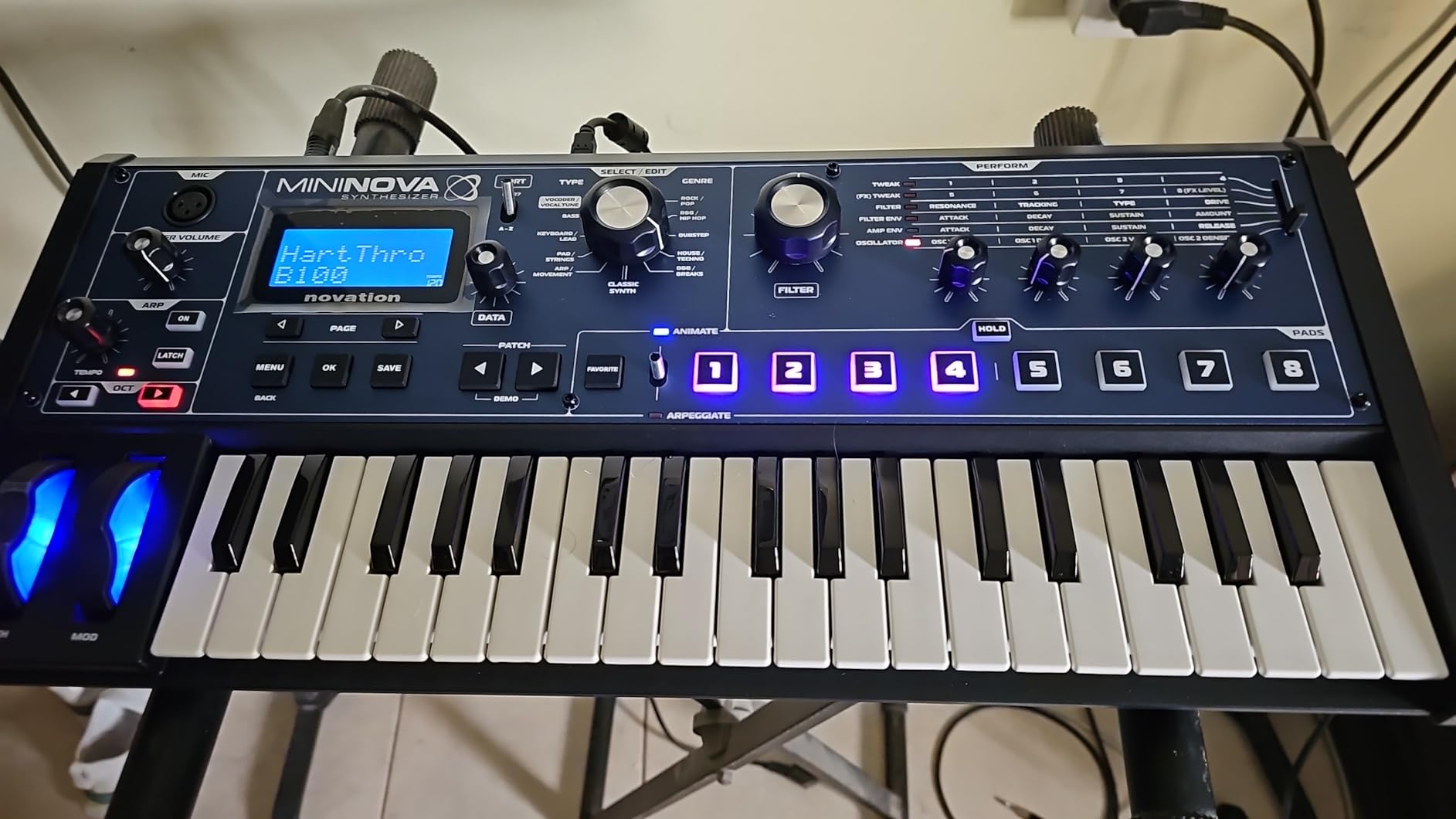
The eight Animate buttons add real-time performance control. Each button can store a different modulation or effect rout, so you can change the sound dramatically with a single press. Live performers will appreciate having these triggers on the front panel rather than buried in menus.
USB power means the MiniNova can run from a portable battery pack. I took it to a friend’s studio and ran it from a phone charger, which made the whole setup more flexible.
Who the MiniNova works best for
This is the best polyphonic synth for vocal processing fans, electronic producers who need lots of voices, and live performers who want tactile animate controls. Hip-hop, electronic, and experimental producers will find the vocoder and 18-voice polyphony hard to beat at this price.
Where the MiniNova falls short
The MiniNova is mono-timbral, so you cannot layer or split two different sounds at once. The 37 mini keys are functional but not comfortable for players with larger hands. Some parameters hide behind menu pages rather than dedicated controls.
6. Roland S-1 Tweak Synth – Most Portable Polysynth
Roland AIRA Compact S-1 Tweak Synth
4-voice SH-101 engine
USB-C battery powered
64-step sequencer
Pros
- Extremely portable with built-in battery
- Excellent sound quality for the size
- Intuitive interface once learned
- USB-C for easy modern connectivity
- Great for on-the-go sound design
Cons
- Menu diving required for some functions
- Small keys require external controller for serious playing
- No MIDI to 3.5mm cable included
- Learning curve due to compact form factor
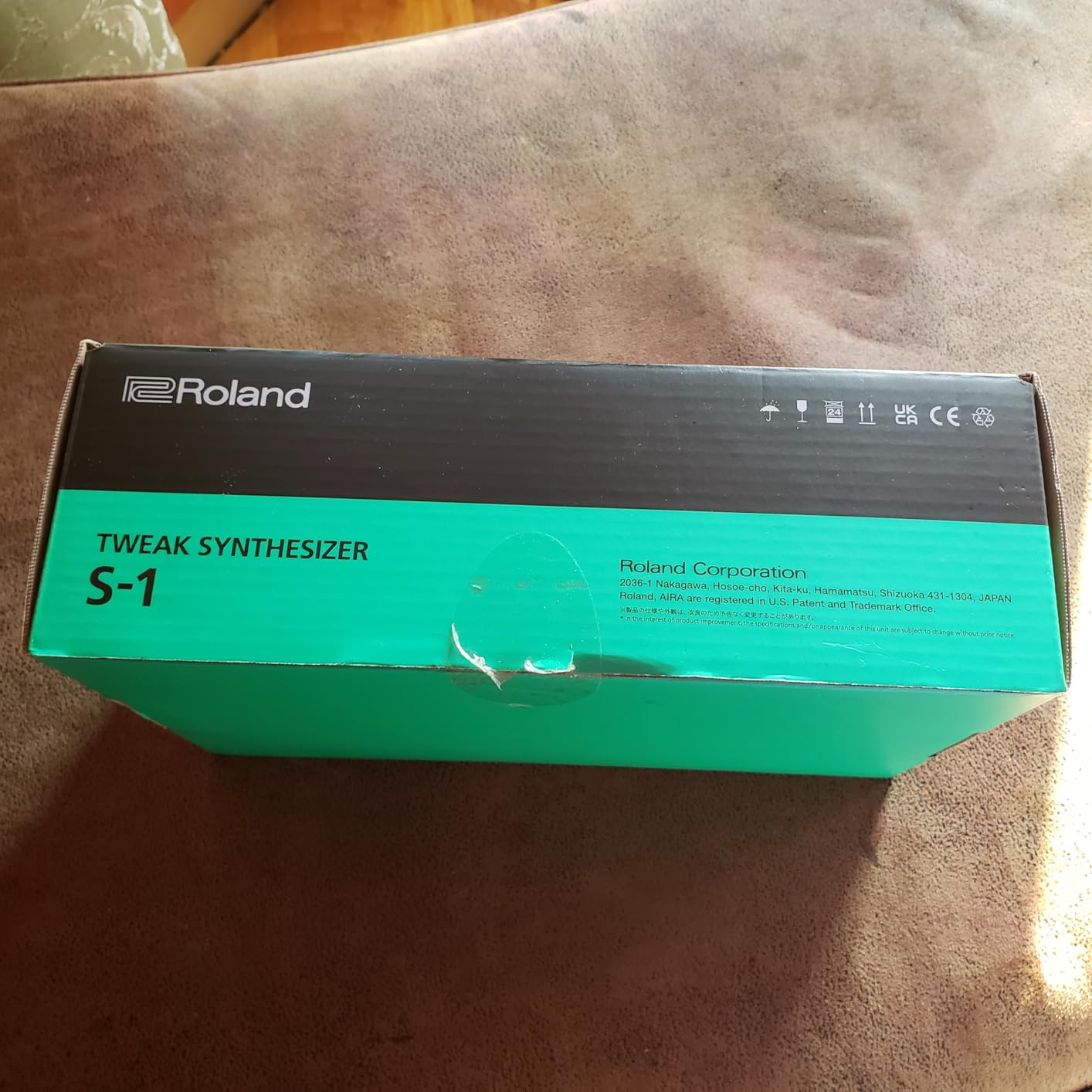
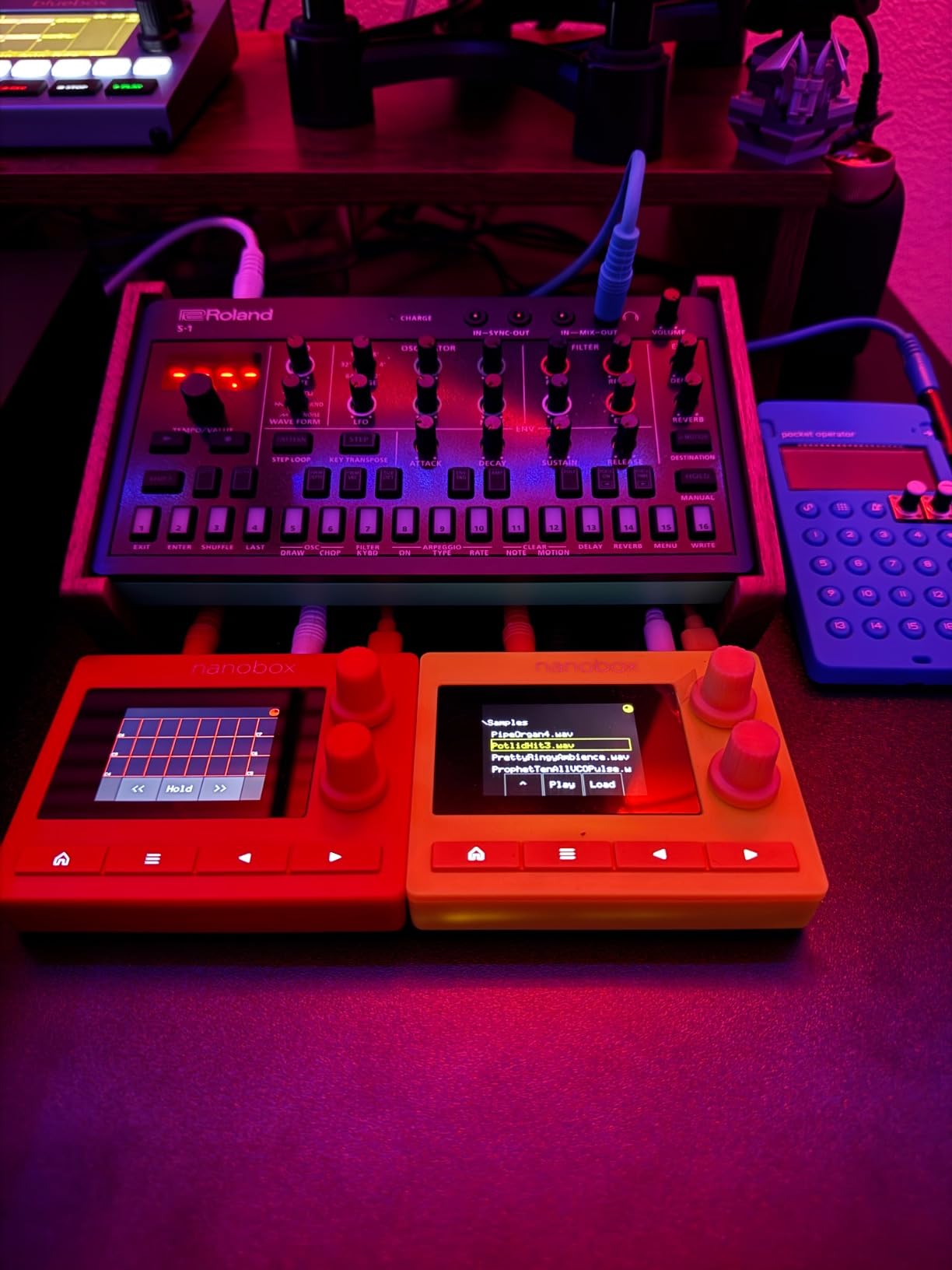
The Roland S-1 Tweak Synth fits in a backpack and weighs roughly one pound. I carried it to a coffee shop session and sketched a track idea while waiting for my order. Few synths give you that kind of freedom.
The 4-voice engine is based on Roland’s classic SH-101. That monophonic synth defined an era of acid house and techno, and its character translates beautifully into polyphonic form here. The sound is punchy, with that unmistakable Roland filter response.
The D-Motion control uses the touchpad to add expressive gestures. I waved my finger across the pad while holding a chord and got vibrato, filter sweeps, and pitch bends without touching a knob. For expressive playing on a tiny instrument, this is a real advantage.
The built-in rechargeable battery means no wall power is required. I ran the S-1 for several hours on a single charge, which made it the most practical synth for impromptu sessions. The USB-C charging port also doubles as a MIDI connection to a computer.
The 64-step sequencer is generous for a portable. I built multi-bar sequences with parameter locks and used the S-1 as a self-contained groovebox when traveling.
Who the S-1 works best for
This is the best polyphonic synth for traveling musicians, producers with limited studio space, and anyone who wants a grab-and-go creative tool. If you make electronic music on the move, perform in unconventional venues, or want a synth to take on tour, the S-1 fits the bill.
Where the S-1 falls short
Four voices can be restrictive for very chord-heavy music. The mini keys are too small for traditional playing technique, so most users pair the S-1 with a larger MIDI controller for studio work. Menu diving is required to access some of the deeper sound design features.
7. Yamaha REFACE DX – Best FM Polysynth
Yamaha REFACE DX Portable FM Synthesizer
4-operator FM synthesis
32 voice memory
Built-in speakers
Pros
- Authentic FM synthesis with DX7-style sounds
- Best mini keys available on a portable synth
- Built-in speakers for portable play
- Battery powered with long life
- Soundmondo community for sharing patches
Cons
- Mini keys may not suit all players
- No MIDI thru for chaining devices
- Looper is not multi-timbral
- Touch-sensitive encoders take getting used to
The Yamaha REFACE DX brings genuine 4-operator FM synthesis into a portable package. I have spent many hours programming FM patches, and the REFACE captures the essence of the DX7 era without the menu hell of the original.
The 8 algorithms cover most FM patch types. I dialed in an electric piano patch, a bell, and a bass within ten minutes, all of which had that crystalline FM character that other synthesis methods struggle to replicate. For producers making modern genres like lo-fi, vaporwave, or IDM, FM synthesis is essential.
The integrated phrase looper is a creative bonus. I layered four FM textures into a loop and jammed over the top with another synth, building complete song ideas without a DAW.
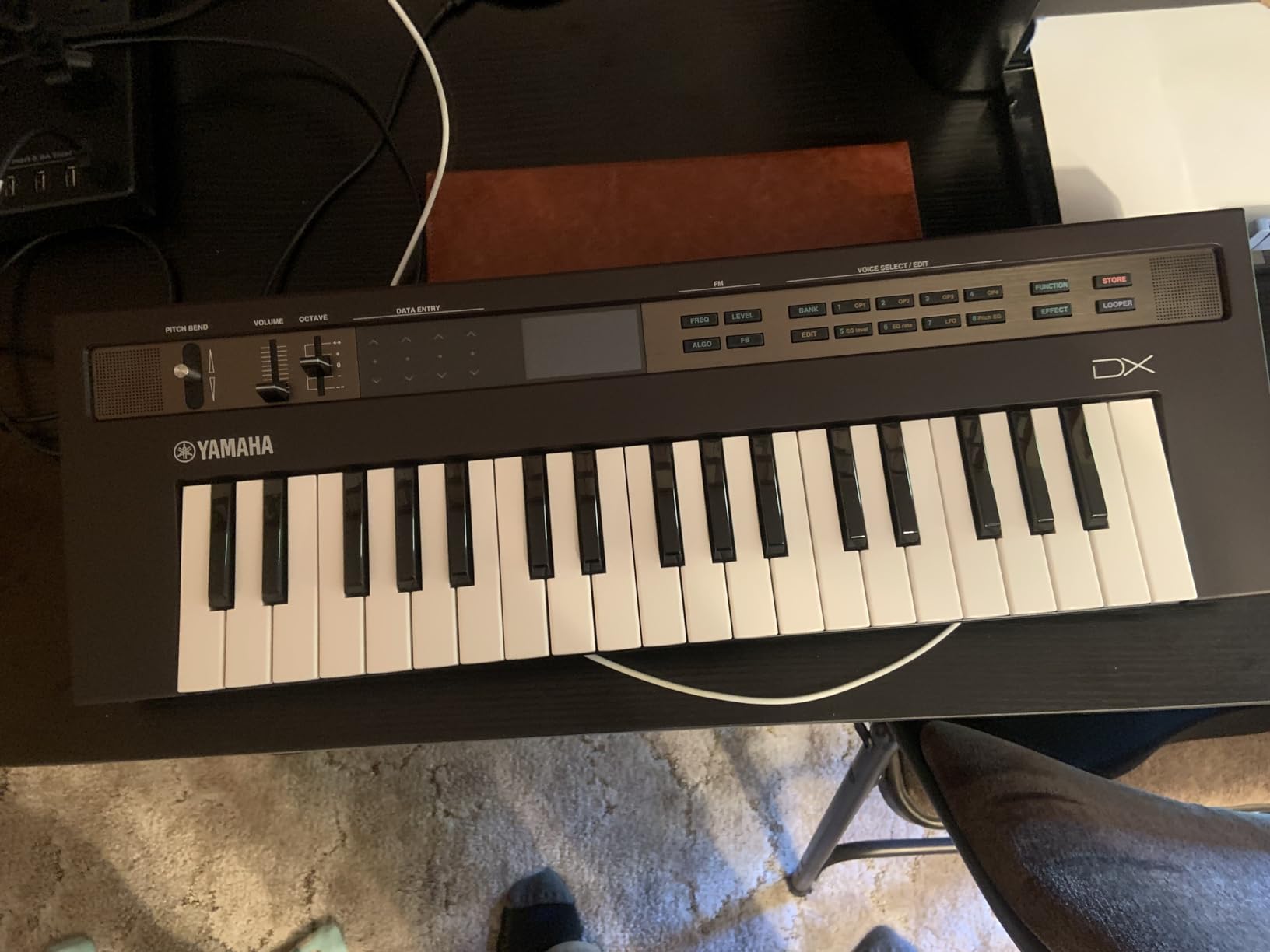
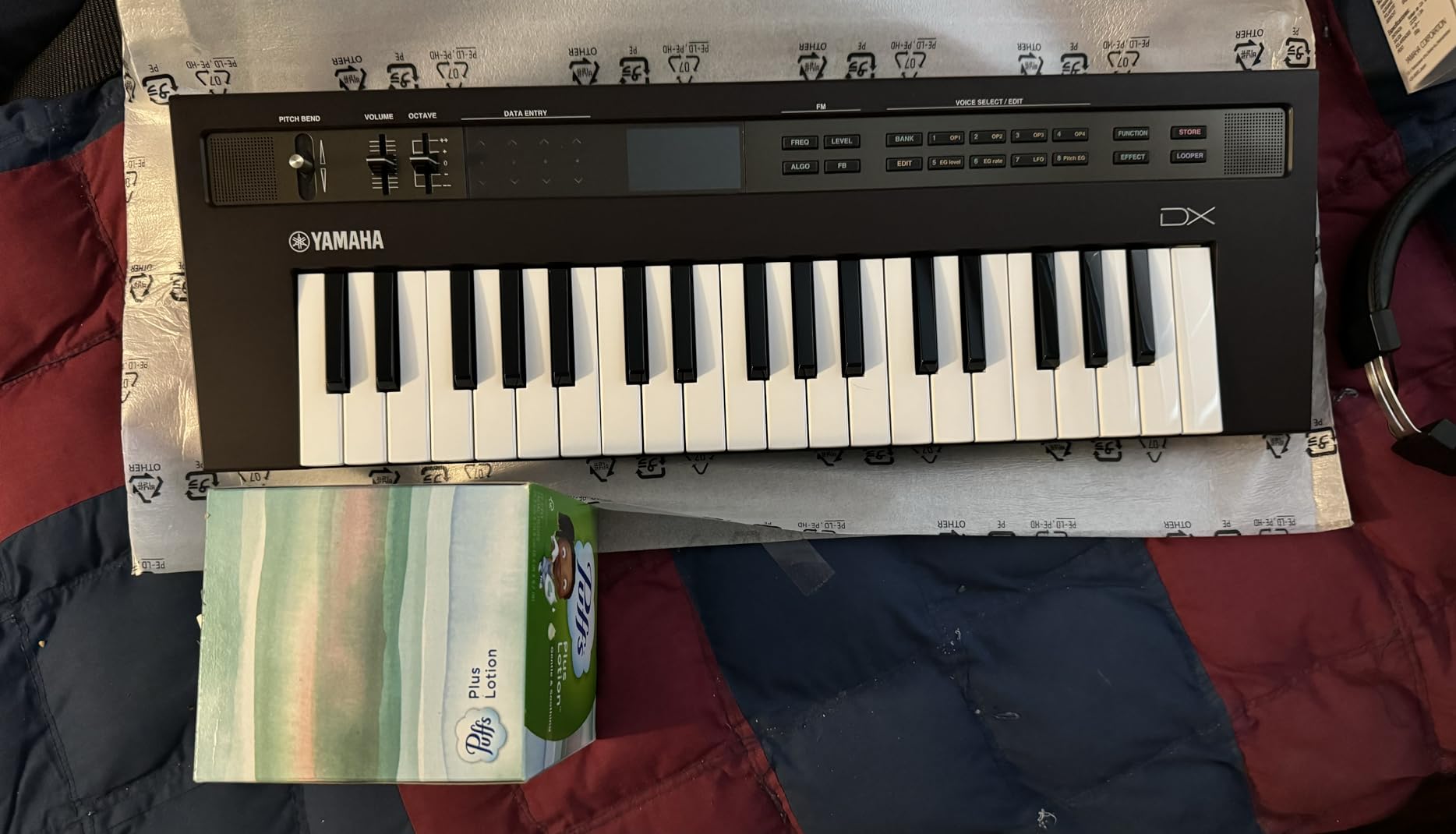
The HQ mini keys are widely considered the best in the portable synth category. After spending time on mini keys that feel like plastic toys, the REFACE keys have a noticeably better response and feel closer to full-size keys than competitors.
Battery power and built-in speakers make the REFACE a true anywhere instrument. I played FM bell tones out loud on the speakers and they sounded clean and present, which is rare for synth speakers.
Who the REFACE DX works best for
This is the best polyphonic synth for FM enthusiasts, lo-fi and vaporwave producers, and anyone who wants portable battery-powered sound design. If you loved the classic DX7 sound and want a modern, accessible way to program FM patches, the REFACE delivers.
Where the REFACE DX falls short
FM synthesis has a steeper learning curve than subtractive synthesis, so beginners may find other synths more approachable. The looper is mono-timbral, so you cannot layer multiple FM sounds within the loop. There is no MIDI thru, which limits the REFACE’s position in a larger MIDI chain.
8. Novation Peak – Best Premium Desktop Polysynth
Novation Peak 8-Voice Desktop Polyphonic Synthesizer
8-voice desktop polyphonic
60 wavetables with Oxford oscillators
Analog filter + 3 distortion stages per voice
Pros
- Exceptional sound clarity with no aliasing artifacts
- Powerful 16-slot modulation matrix
- High-quality analog filter per voice
- Compact desktop form factor
- Continuous firmware updates adding features
Cons
- Menu diving required for some parameters
- No built-in keyboard for hands-on play
- Higher price than keyboard synths
- Some factory presets feel underwhelming
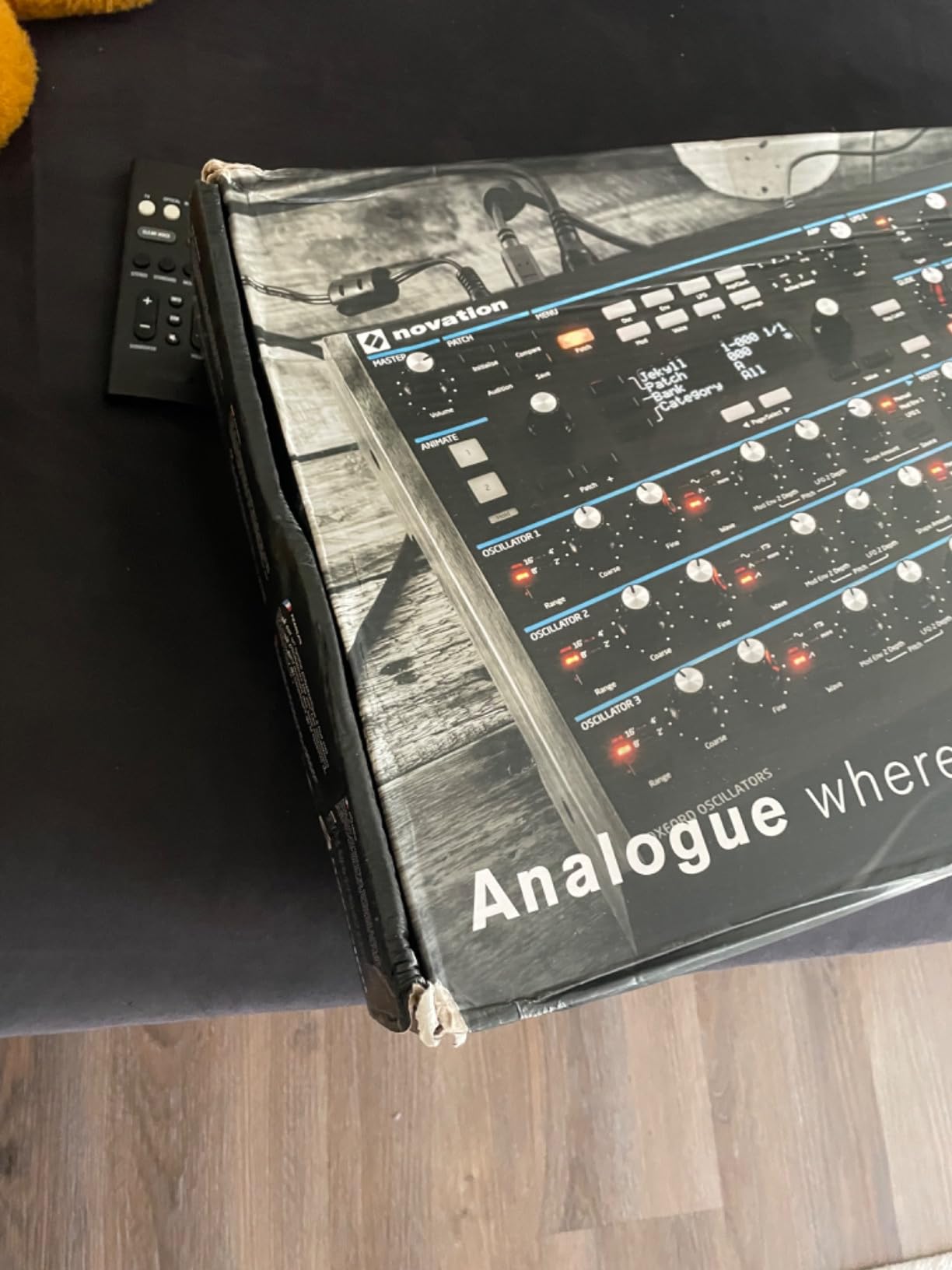
The Novation Peak is the desktop polysynth I keep coming back to when I need a serious sound design tool. Eight voices of polyphony with custom Oxford oscillators and a true analog filter per voice deliver a sonic signature that has aged remarkably well.
The 60 wavetables combined with three distortion stages per voice give you an enormous range. I dialed in a clean digital pad, then pushed the distortion hard and got biting aggressive leads, all from the same patch with one knob turn. Few synths transition that cleanly between clean and aggressive.
The 16-slot modulation matrix is deep but logical. I routed LFOs to multiple destinations, set up envelope followers, and built evolving soundscapes that would require menu diving on most competitors. Continuous firmware updates have expanded the modulation capabilities over time.
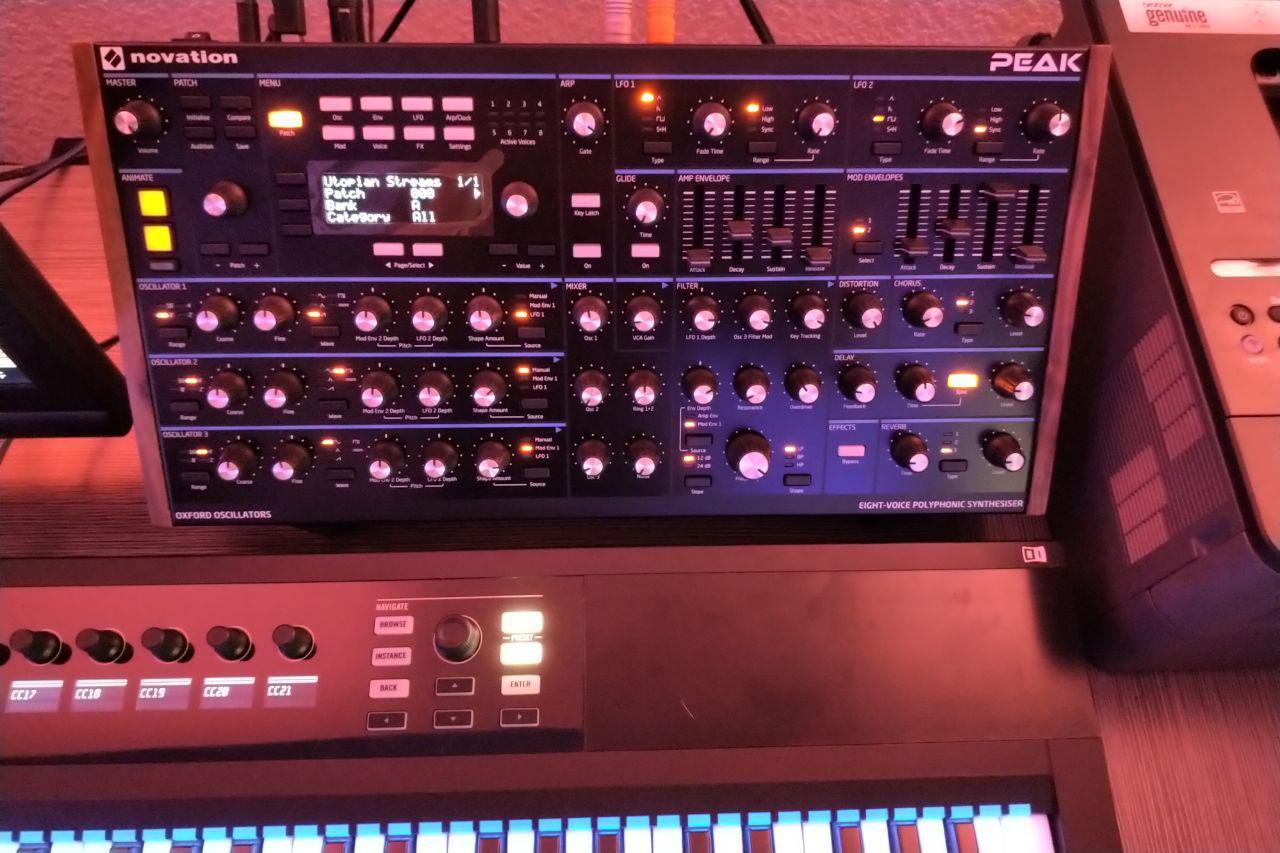
Polyphonic aftertouch support makes the Peak a powerful MIDI controller for expressive playing. Paired with a compatible keybed, you can add per-note expression to chords in a way that older polysynths simply cannot match.
The CV modulation input lets the Peak integrate with modular setups. I patched it into a Eurorack system and used the Peak’s envelopes to modulate a modular filter, which worked flawlessly.
Who the Peak works best for
This is the best polyphonic synthesizer for serious sound designers, ambient producers, and studio professionals who want flagship-quality sound in a compact desktop format. If you already own a MIDI controller and prioritize sonic depth over portability, the Peak rewards the investment.
Where the Peak falls short
You will need a separate MIDI controller since the Peak has no built-in keyboard. Menu diving is required to access deeper parameters, which slows down quick sound design. The price is higher than most keyboard polysynths, putting it out of reach for casual buyers.
9. Behringer DEEPMIND 6 – Best True Analog Value Polysynth
Behringer DEEPMIND 6,Black
6 true analog voices
4 simultaneous TC effects
Internal power supply
Pros
- True analog polyphonic sound at a competitive price
- Excellent modulation matrix for sound design
- Built-in effects sound professional
- All-metal construction with wood sides
- Internal power supply no wall wart
Cons
- Cooling fan can be loud
- 6 voices limiting for dense chords
- Keybed quality issues with some units
- Learning curve for new synth players
The Behringer DEEPMIND 6 is one of the most affordable true analog polysynths you can buy. Six voices, two oscillators per voice, and an analog signal path give you the warmth and behavior that digital modeling cannot fully replicate.
The 4 simultaneous TC Electronic and Klark Teknik effects cover reverb, delay, chorus, and more. I used the onboard effects instead of external processing during tracking sessions and got polished results without loading any plugins.
Two LFOs per voice with seven waveform shapes, plus three ADSR envelopes per voice, give you serious modulation depth. I built a complex evolving pad by routing two LFOs at different rates to filter and amplitude, which is the kind of patching depth that defines a great polysynth.
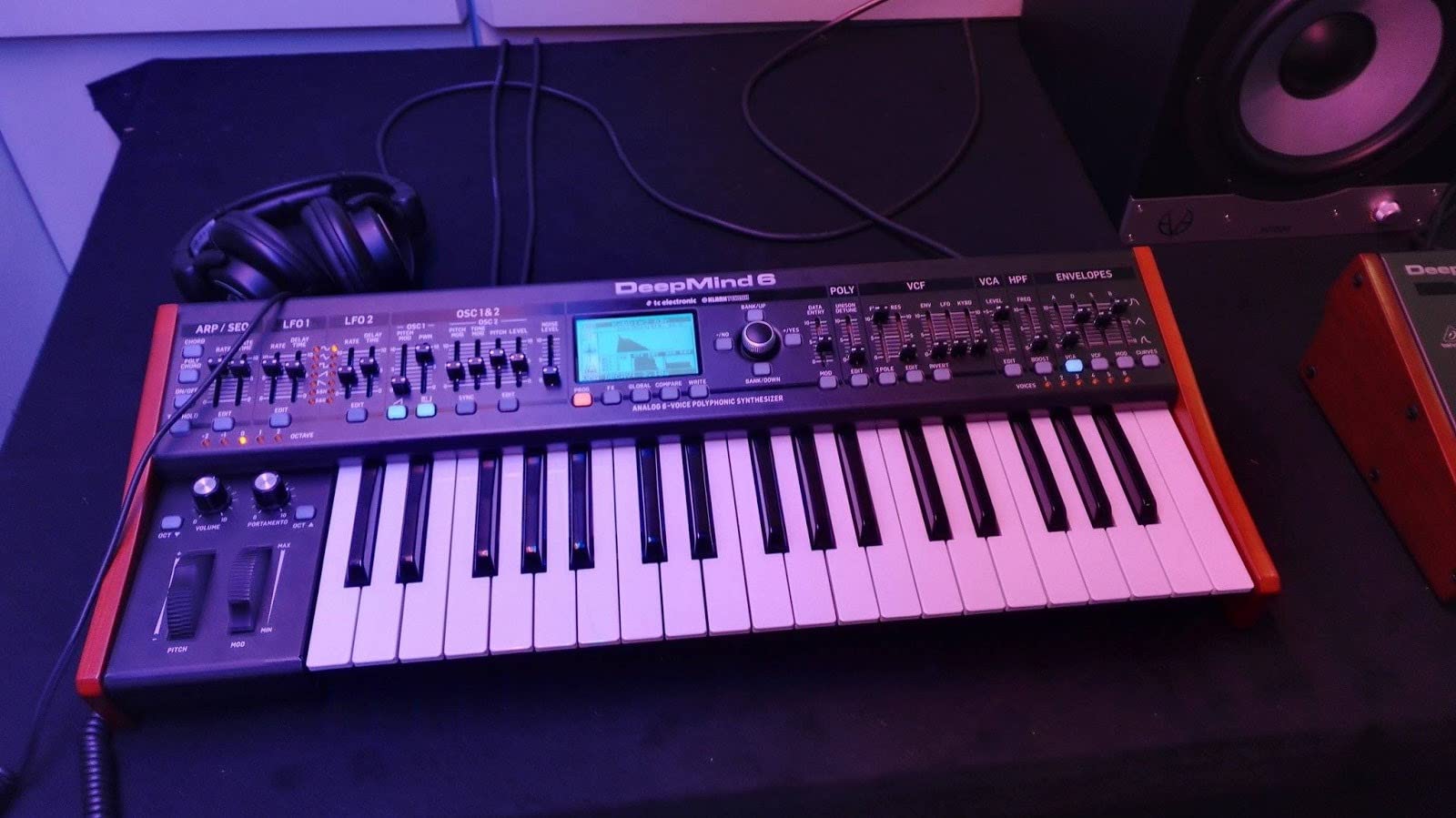
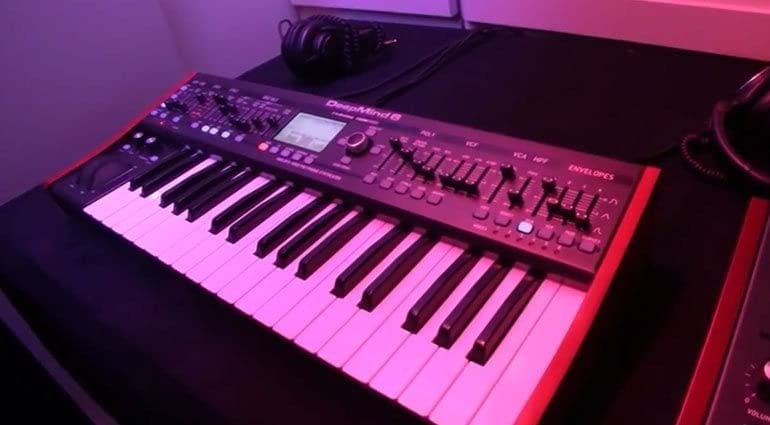
The all-metal chassis with wood side panels looks and feels more premium than the price suggests. I appreciated the internal power supply because there is no wall wart to lose or replace.
The interface is well organized despite the deep feature set. The informative display shows parameter values clearly, and the most-used knobs are within easy reach during performance.
Who the DEEPMIND 6 works best for
This is the best polyphonic synth for producers who want true analog character at a competitive price. If you make house, techno, synthwave, or any genre where analog warmth matters, the DEEPMIND delivers. Studio owners with limited space will appreciate the compact form factor.
Where the DEEPMIND 6 falls short
The internal cooling fan is louder than competitors and can be picked up by microphones in quiet rooms. Some users have reported keybed quality issues, so buy from a retailer with a good return policy. Six voices can feel limiting for very chord-heavy arrangements.
10. Roland JU-06A – Best Vintage Sound Module
Roland JU-06A Keyboard Synthesizer Sound Module with 8 Patches + 8 Banks
Juno-60 and Juno-106 engines
16-step sequencer
Battery powered
Pros
- Two classic Juno synth engines in one unit
- Authentic Juno-60 and Juno-106 character
- Built-in arpeggiator and sequencer
- Legendary chorus effect included
- Solid build quality
Cons
- Requires external MIDI keyboard for play
- Batteries drain quickly
- Compact form factor limits hands-on control
- Micro USB connection feels fragile
The Roland JU-06A combines two of the most beloved vintage polysynths into one compact module. The Juno-60 and Juno-106 engines are both here, and you can switch between them with a button press. I owned a Juno-106 in college, and the JU-06A captures that unmistakable pad character beautifully.
The legendary Juno chorus effect is the signature sound that defined an era of synth pop. The JU-06A includes this effect and it sounds just like the original hardware, with that wide, shimmoring quality that producers chased for decades.
The 16-step sequencer and built-in arpeggiator add modern functionality. I used the arpeggiator with the Juno-106 engine to create classic synth pop patterns and the results were immediately evocative.
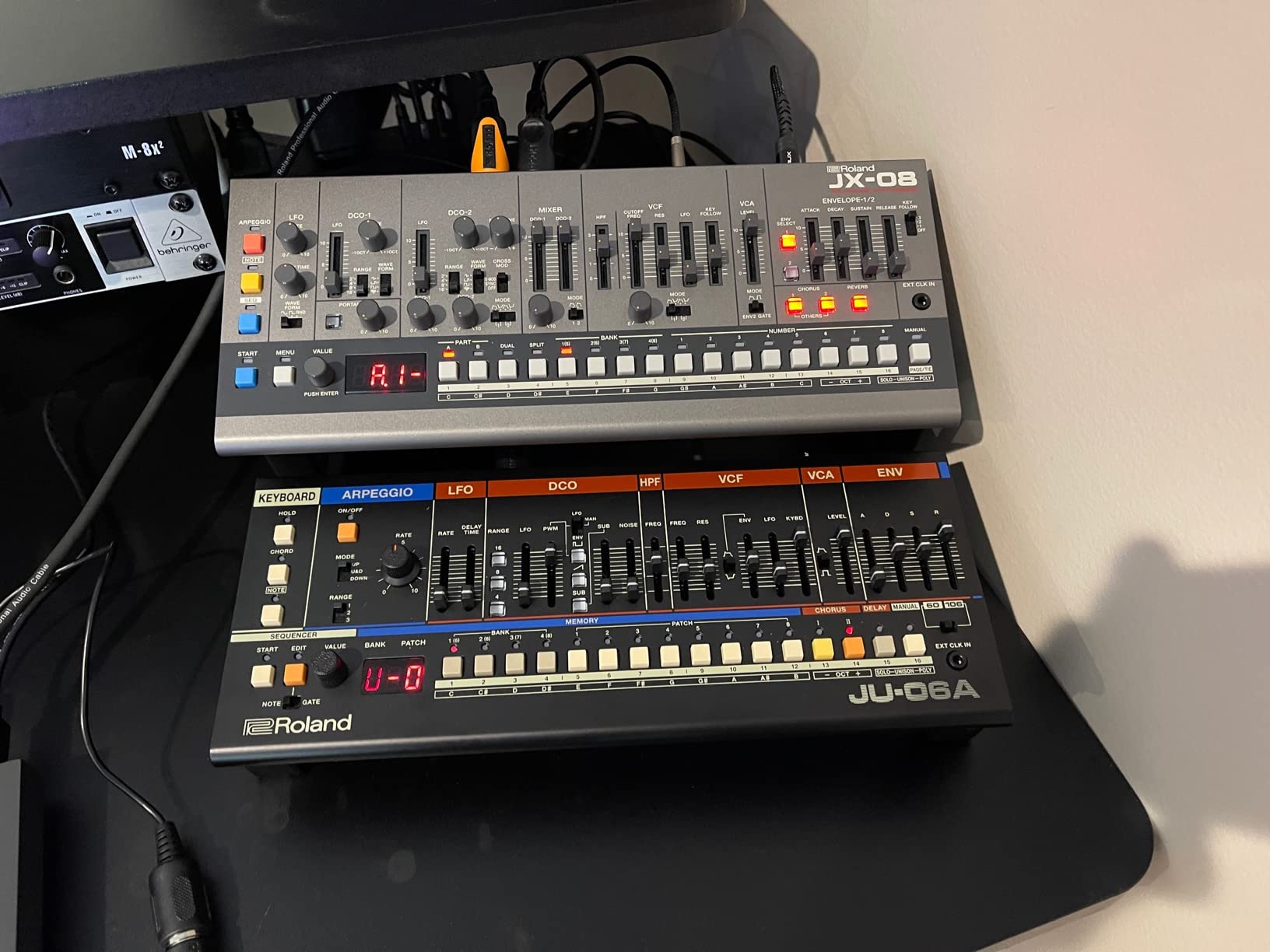
Battery power means the JU-06A can sit on a desktop and run from AA batteries. For a sound module in a small studio, this kind of flexibility matters.
The 64 plus 64 sound patches give you plenty of preset storage. I found factory presets for nearly every classic Juno sound I wanted, and creating custom patches is straightforward.
Who the JU-06A works best for
This is the best polyphonic synth for fans of vintage Roland character, synthwave producers, and studio owners who already own a MIDI controller. If you want authentic Juno pads and chorus without hunting for an original vintage unit, the JU-06A delivers the same emotional impact.
Where the JU-06A falls short
There is no keyboard, so you must pair the JU-06A with a MIDI controller for hands-on play. Battery drain is faster than competitors, so plan on rechargeables or a power adapter for long sessions. The compact form factor means less hands-on control than a full keyboard synth.
11. Roland JX-08 – Top Rated Boutique Sound Module
Roland JX-08 Tabletop Sound Module Boutique Synthesizer – Compact, Lightweight, Portable, Onboard Speakers and Battery Operation
20-voice polyphony
Two-part multitimbral
USB-C audio and MIDI
Pros
- Best synth in Roland's Boutique lineup
- 20-voice polyphony for complex arrangements
- Bi-timbral layering and splitting
- Excellent sound quality close to original JX-8P
- USB-C audio and MIDI in one connection
Cons
- Not an exact replica of the original JX-8P
- Compact form factor limits knob access
- Arpeggiator has some limitations
- Optional keyboard dock adds to cost
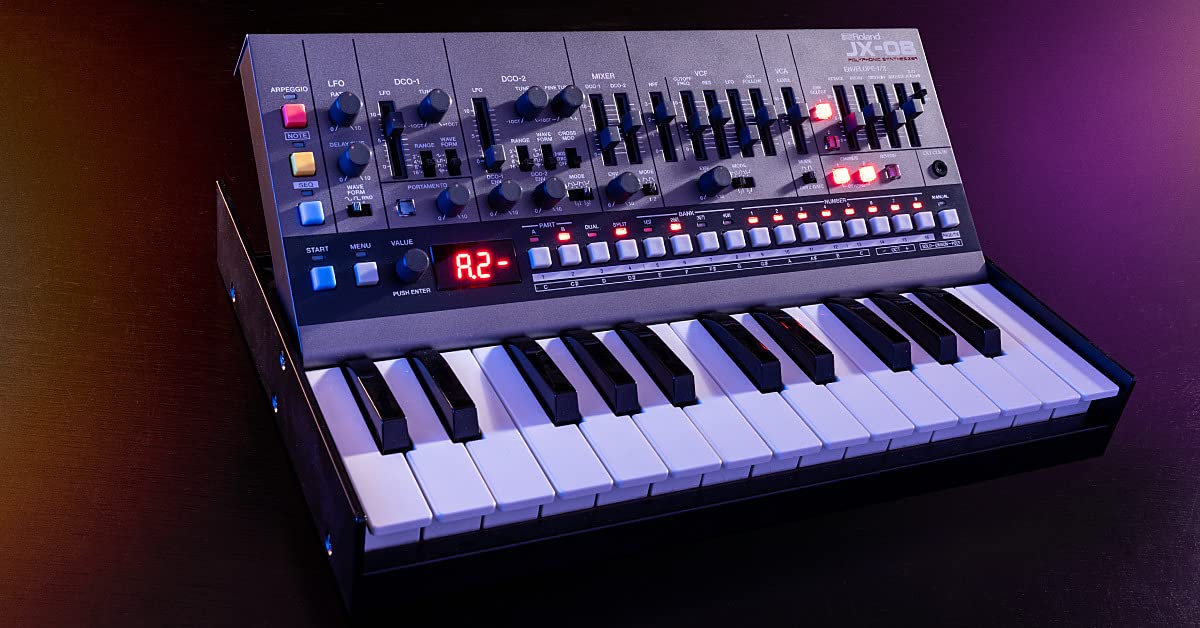
The Roland JX-08 is widely considered the best synth Roland has released in the Boutique lineup. Twenty voices of polyphony with two-part multitimbral capability means you can layer two different sounds and still have voices left over for complex chords.
The authentic JX-8P sound engine delivers the warm, punchy character that made the original a studio staple. I dialed in brass patches, pads, and bell tones, all of which had that distinctive JX-8P character without any menu diving required.
The PG-800 programmer functions are built in, which gives you deeper sound design control than a typical compact module. I sequenced modulation changes and got evolving textures that smaller modules often struggle to produce.
USB-C audio and MIDI in a single connection simplifies setup. I connected the JX-08 to my laptop with one cable and had both MIDI and audio routing without adapters.
Battery or USB-C power means the JX-08 works in any setup. I used it as a portable sound module paired with a Bluetooth MIDI controller, which made for a fully wireless creative rig.
Who the JX-08 works best for
This is the best polyphonic synth for studio producers who want flagship polyphony in a compact module, live performers with space constraints, and anyone who appreciates the JX-8P character. If you make film music, ambient, or electronic genres where voice count matters, the JX-08 delivers.
Where the JX-08 falls short
The sound is inspired by the JX-8P but is not an exact clone, which purists may notice. The compact form factor limits hands-on knob access compared to a keyboard synth. The optional keyboard dock adds significant cost if you want a self-contained instrument.
12. MOOG Subharmonicon – Best for Generative Music
MOOG Subharmonicon Semi-Modular Analog Polyrhythmic Synthesizer
2 VCOs with 2 subharmonic generators
4 rhythm generators
32-point patch bay
Pros
- Unique polyrhythmic and subharmonic generation
- Classic Moog ladder filter sound
- Eurorack compatible for modular expansion
- Generative music capabilities
- High-quality build with wood and aluminum
Cons
- Not a traditional playable synth
- MIDI implementation could be better
- No on/off switch
- Steep learning curve for the workflow
The MOOG Subharmonicon is unlike anything else on this list. It is not really a traditional polysynth, but rather a polyrhythmic, subharmonic instrument designed for generative music. I spent an afternoon patching rhythms and tones, and the sounds I got were unlike anything I have made with a conventional synth.
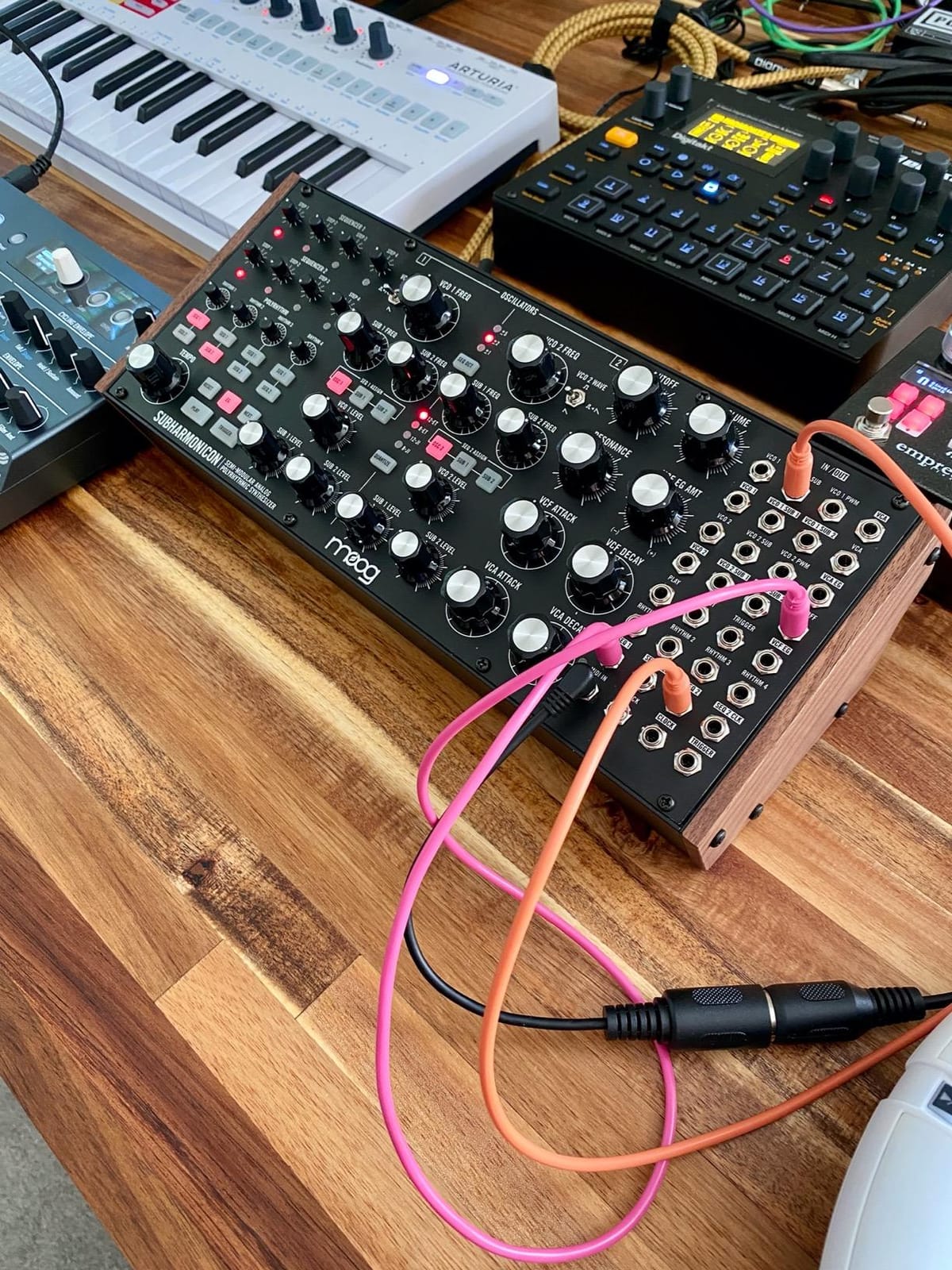
Two voltage-controlled oscillators each have two subharmonic generators, giving you six tonal sources total. Combined with four rhythm generators and two 4-step sequencers, the Subharmonicon creates complex polyrhythmic patterns automatically.
The classic Moog ladder filter gives every sound that warm, fat Moog character. Even simple oscillator tones have a richness that defines the Moog sound, and the filter responds to modulation in a way that feels musical.
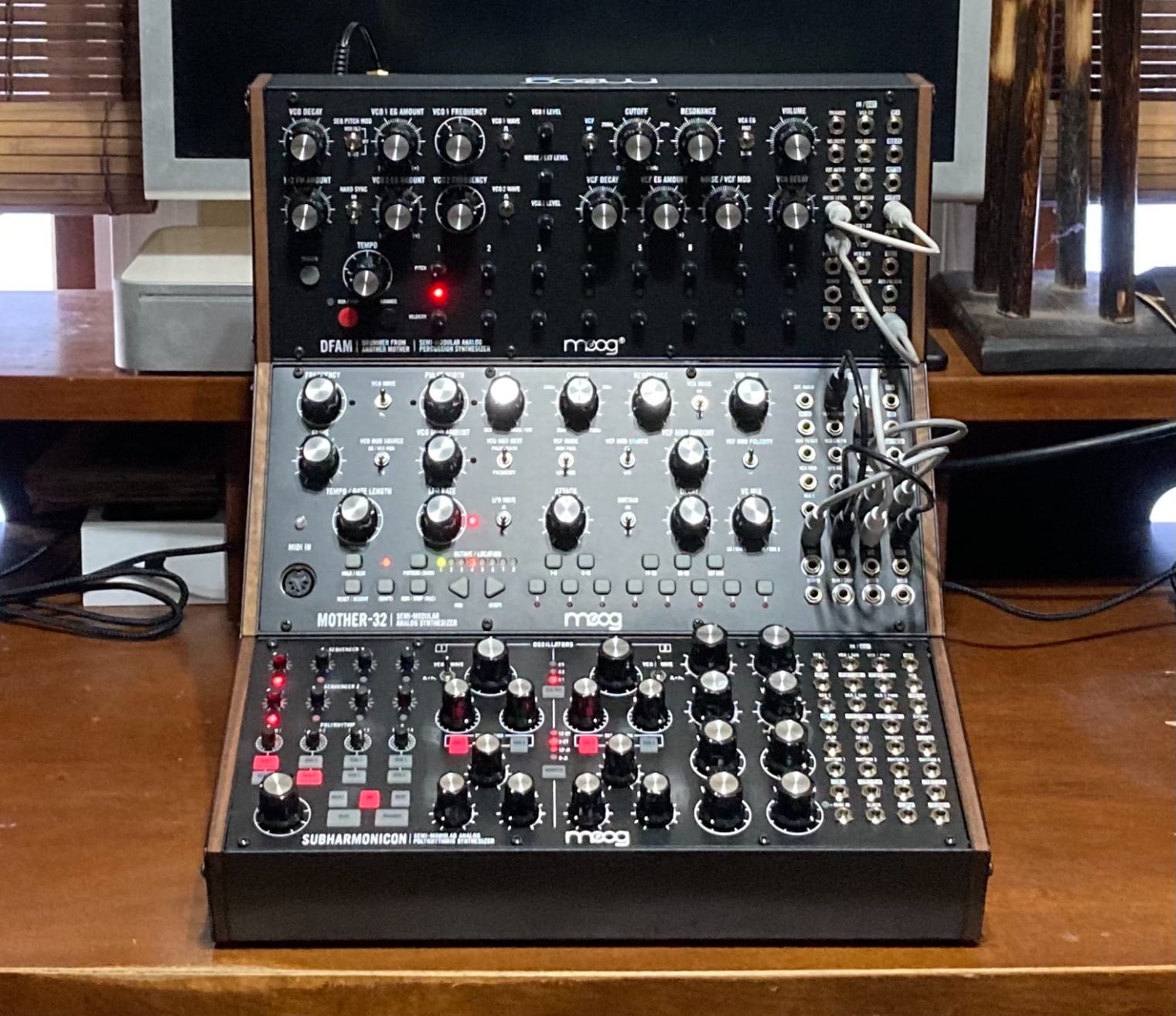
The 32-point patch bay makes the Subharmonicon a semi-modular instrument. I patched the rhythm generators into the sequencer clock and got self-generating patterns that evolved over time without any input from me.
Eurorack compatibility means the Subharmonicon can integrate into a modular setup. I installed it in a 60HP rack space and used it as the rhythmic and harmonic core of a small modular system.
Who the Subharmonicon works best for
This is the best polyphonic synth for experimental musicians, ambient producers, and anyone interested in generative music. If you enjoy setting up systems that create music on their own and you want to explore polyrhythms and subharmonics, the Subharmonicon is uniquely rewarding.
Where the Subharmonicon falls short
This is not a traditional playable synth, so players expecting keyboard performance will be disappointed. The MIDI implementation is limited compared to conventional polysynths. There is no on or off switch, which is unusual for modern gear. The learning curve is steep due to the unique workflow.
Buying Guide: How to Choose the Best Polyphonic Synthesizer
Picking the right polyphonic synthesizer comes down to matching the instrument to your playing style, genre, and budget. After testing more than a dozen polysynths over the past several months, our team has identified the decision factors that matter most.
Voice Count and Polyphony Explained
Voice count determines how many notes you can play at once before the synth starts stealing older notes. A 4-voice synth works for most lead lines and simple chords, but anything beyond a four-note chord with sustained releases will trigger voice stealing.
For most players, 6 to 8 voices provides enough headroom for typical music. If you play complex jazz chords or stack long pads with multiple layers, look for 8 or more voices. The Novation Peak (8 voices) and Roland JX-08 (20 voices) are strong choices for voice-heavy arrangements.
Analog vs Digital vs Hybrid Synthesis
Analog synths use voltage-controlled circuits to generate and shape sound, giving them a warm, organic character that many producers prize. Digital synths use mathematical algorithms to generate sound, often with wavetable or FM architectures that produce cleaner, more modern timbres.
Hybrid synths combine digital oscillators with analog filters, giving you the best of both worlds. The Arturia MiniFreak and Behringer Pro VS Mini both use hybrid architectures to deliver versatile sound at accessible prices.
Key Action and Form Factor
Full-size weighted keys feel closest to a traditional piano and suit players with classical training. Mini keys are portable and save space but can feel cramped for players with larger hands. Touch-plate keyboards like the Arturia MicroFreak offer unique expressive capabilities but require adjustment.
Keyboard synths are self-contained instruments you can play immediately. Desktop modules like the Novation Peak require a separate MIDI controller but save space and often cost less.
Connectivity and Integration
USB MIDI lets you connect directly to a computer without a separate interface. 5-pin DIN MIDI remains the standard for hardware synth chains. CV and Gate connectivity lets you integrate with modular and semi-modular systems.
Audio outputs (1/4 inch or 3.5mm) connect to mixers, audio interfaces, or headphones. Some synths offer USB-C audio for direct computer recording without a separate interface.
Budget Tiers and Value
Entry-level tier polysynths offer limited voice counts but solid sound. The Behringer Pro VS Mini and Roland S-1 sit in this category and deliver surprising capability for the price.
The mid-tier is the sweet spot for most players, with options like the Arturia MiniFreak, Korg minilogue xd, and Behringer DEEPMIND 6 offering serious capability. Flagship tier instruments like the Novation Peak deliver professional-grade sound design.
Frequently Asked Questions
What is the best polyphonic synthesizer to buy right now?
The Korg minilogue xd is the best overall polyphonic synthesizer for most players. It combines four voices of analog polyphony with a digital multi-engine, an OLED oscilloscope for visual feedback, and a knob-per-function workflow that makes sound design intuitive. For hybrid versatility at a competitive price, the Arturia MiniFreak is a strong runner-up with six voices and more than twenty oscillator modes.
What is the best budget polyphonic synth?
The Behringer Pro VS Mini is the best budget polyphonic synth, offering five voices of hybrid synthesis with vector morphing oscillators and an analog low-pass filter at an extremely accessible price. The Roland S-1 Tweak Synth is another strong budget option with four voices of SH-101 character and USB-C battery power for portable use.
What is the best polyphonic synth for beginners?
The Korg minilogue xd is the best polyphonic synth for beginners thanks to its knob-per-function workflow, OLED oscilloscope for visualizing sound, and approachable analog architecture. The Arturia MiniFreak is also beginner-friendly, especially because it includes a software VST version that lets newcomers learn synthesis concepts on screen before committing to hardware.
How many voices do I need in a polyphonic synth?
Most players do well with six to eight voices of polyphony, which covers typical chord voicings and basic layering. Four voices works for simple leads and basic chords but can feel limiting with sustained pads or complex voicings. Producers making ambient, film scoring, or experimental music with dense arrangements should look for synths with 16 or more voices, like the Roland JX-08 with its 20-voice polyphony.
What is the difference between analog and digital polyphonic synths?
Analog polyphonic synths use voltage-controlled circuits for sound generation and shaping, producing a warm, organic character that many players prize. Digital polyphonic synths use mathematical algorithms or wavetables to generate sound, offering cleaner modern timbres and often more oscillator variety. Hybrid synths like the Arturia MiniFreak combine digital oscillators with analog filters, giving you the character of analog filtering with the versatility of digital sound generation.
Conclusion: Which Polyphonic Synthesizer Should You Buy?
After testing all twelve of these polysynths, the Korg minilogue xd remains my top recommendation for most players. It delivers the best balance of analog character, hybrid versatility, build quality, and approachable workflow that I have found in any polysynth at the mid-tier. It earns our EDITOR’S CHOICE badge with good reason.
For budget buyers, the Behringer Pro VS Mini punches well above its price. For players who want maximum versatility, the Arturia MiniFreak with its included software twin is hard to beat. Whatever your style and budget, the best polyphonic synthesizer is the one that gets you making music every day.