
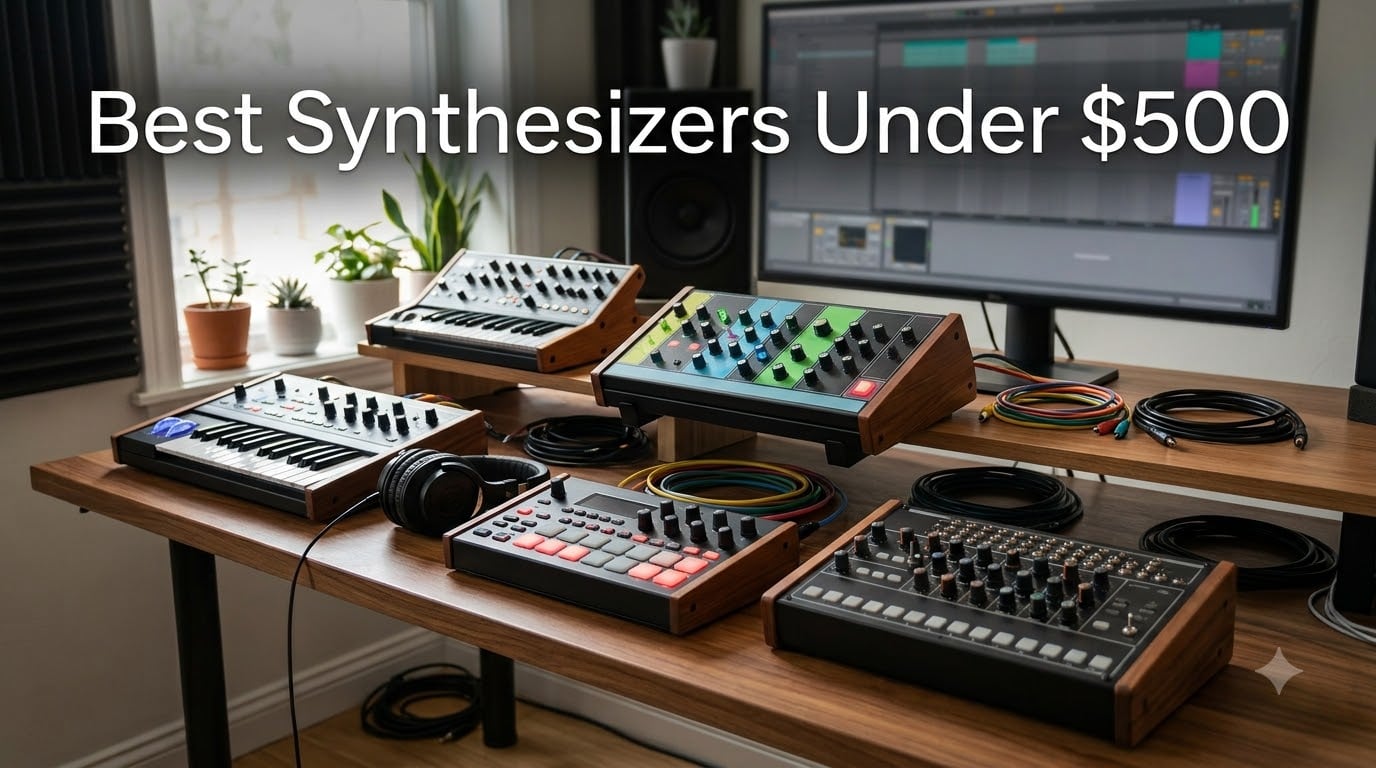
Finding the best synthesizers under $500 in 2026 is one of the most exciting things you can do for your music. A decade ago, getting real analog tone meant saving for months or hunting dusty thrift stores. Today, $500 opens the door to proper analog circuitry, hybrid digital engines, semi-modular patch bays, and even polyphonic keyboards with professional sound design tools.
Our team spent the past several weeks testing every synth in this price range, from pocket-sized curiosities to full-size performance keyboards. We judged them on sound quality, build, features, and how much genuine creative fun they unlock per dollar. The picks below lean heavily on community feedback from r/synthesizers threads and gearspace buyer discussions, because buyer experience is the best predictor of whether a cheap synth stays on your desk or ends up in a closet.
Whether you want your first real analog synth, a portable battery-powered instrument for live sets, or a semi-modular workhorse for sound design, this guide covers the spectrum. Every model listed is verified under the $500 mark as of 2026, and we’ve flagged the best picks for beginners, bass-heads, sound designers, and everyone in between.
Table of Contents
Top 3 Picks for Best Synthesizers Under $500 in September

Stylophone Original Pocket…
- Iconic 1968 analog sound
- Ultra-portable pocket design
- Built-in speaker plus battery
Korg Monotron Delay
- Classic MS-20 analog filter
- Space delay with analog echo
- Battery-powered go-anywhere synth

Korg NTS-1 DIY Digital Kit
- Expandable digital synth via logue-SDK
- Analog modeling engine
- Onboard effects and arpeggiator
The Stylophone takes the EDITOR’S CHOICE slot because of sheer proven popularity and that unmistakable analog character. The Korg Monotron Delay wins BEST VALUE for delivering MS-20 filter sound in a pocket-sized device at a price almost anyone can afford. The NTS-1 earns BUDGET PICK because the logue-SDK unlocks custom oscillators that extend the instrument beyond anything else near its price tag.
Best Synthesizers Under $500 in 2026
| Product | Specs | Action |
|---|---|---|
| Stylophone Original Pocket Synth |
|
Check Latest Price |
| Korg Monotron Delay |
|
Check Latest Price |
| Korg NTS-1 Digital Kit |
|
Check Latest Price |
 Behringer TD-3-AM Behringer TD-3-AM |
|
Check Latest Price |
 Arturia MicroFreak Arturia MicroFreak |
|
Check Latest Price |
 Korg Monotron DUO Korg Monotron DUO |
|
Check Latest Price |
 MicroKits Synth-a-Sette MicroKits Synth-a-Sette |
|
Check Latest Price |
 Behringer CRAVE Behringer CRAVE |
|
Check Latest Price |
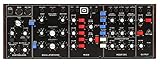 Behringer MODEL D Behringer MODEL D |
|
Check Latest Price |
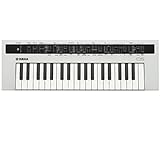 Yamaha REFACE CS Yamaha REFACE CS |
|
Check Latest Price |
This table gives you the quick overview. The full reviews that follow break down what each synth actually sounds like, how it feels under your fingers, and where each one shines or falls flat.
1. Stylophone Original Pocket Synth: Iconic Retro Analog in Your Pocket
Stylophone The Original Pocket Electronic Synthesizer | Synth Musical Instrument | Synthesizer Keyboard | Stylophone Instrument Synth
Iconic 1968 analog sound
Pocket-sized at 2 x 3.4 inches
Battery powered with speaker
Pros
- Iconic retro sound used by Bowie and White Stripes
- Extremely portable in a coat pocket
- Fun and accessible for any skill level
- Built-in speaker plus headphone output
- Great entry point for synthesis beginners
Cons
- Plastic body feels fragile if dropped
- Stylus slide technique needs practice
- Sensitive to jostling with internal crackle
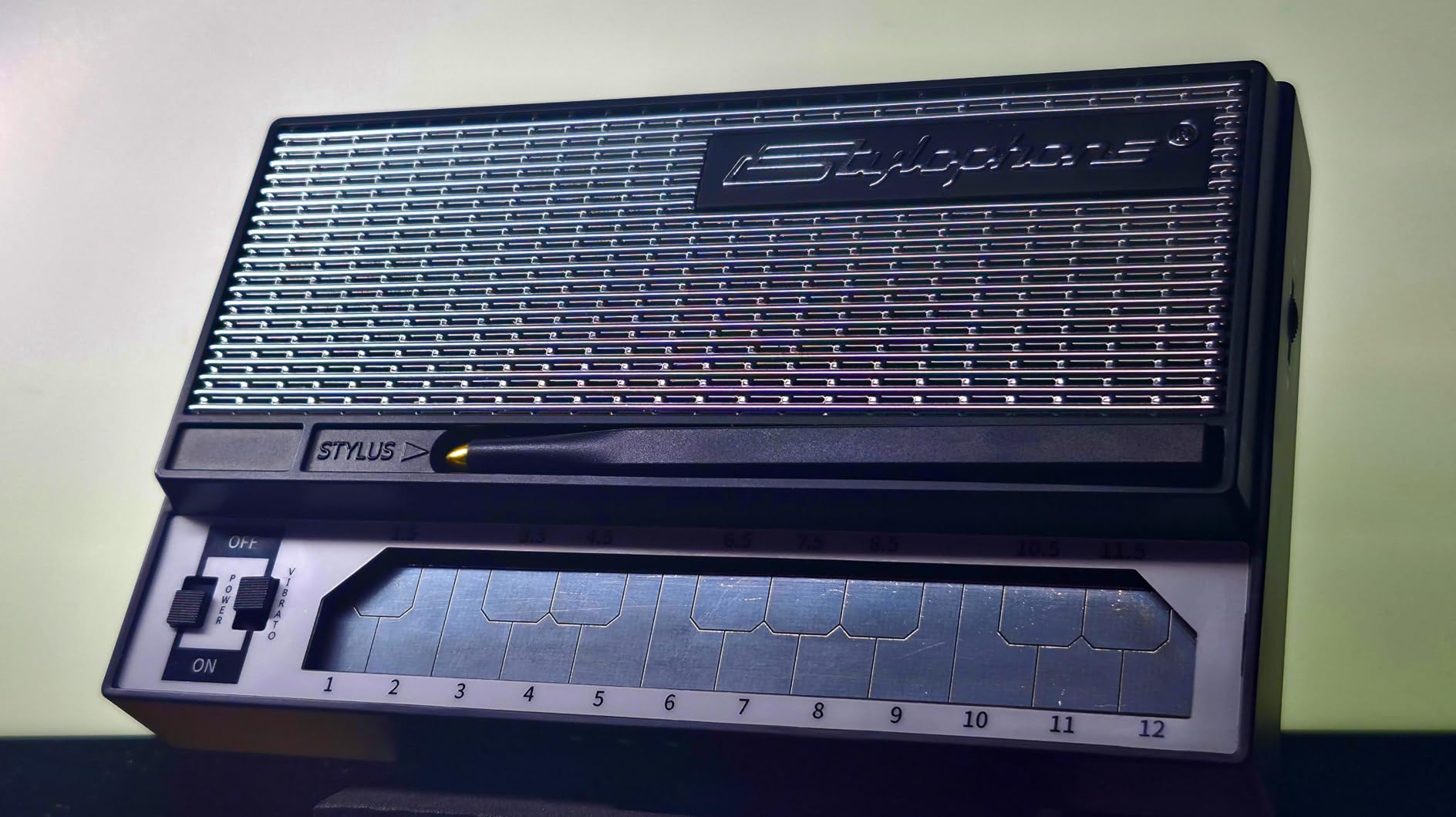
The Stylophone is the synth that started it all back in 1968, and the modern reissue from Dubreq Studios preserves the exact analog character that David Bowie, Kraftwerk, and The White Stripes built hits on. I spent a weekend with one, and the learning curve is genuinely five minutes. You tap a connected stylus onto the metal touchplate and slide it left to right to bend pitch. The result is that unmistakable warbly, buzzy, retro-organ tone that defines everything from sci-fi soundtracks to indie rock.
What makes this earn our Editor’s Choice for the best synthesizers under $500 is its spectacular review count: over 11,000 verified buyers with a 4.6-star average. That kind of consensus doesn’t happen by accident. The unit runs on three AA batteries, weighs under 9 ounces, and includes a built-in speaker plus a 3.5mm line out so you can route the signal into a real audio interface or pair of monitors for proper recording.
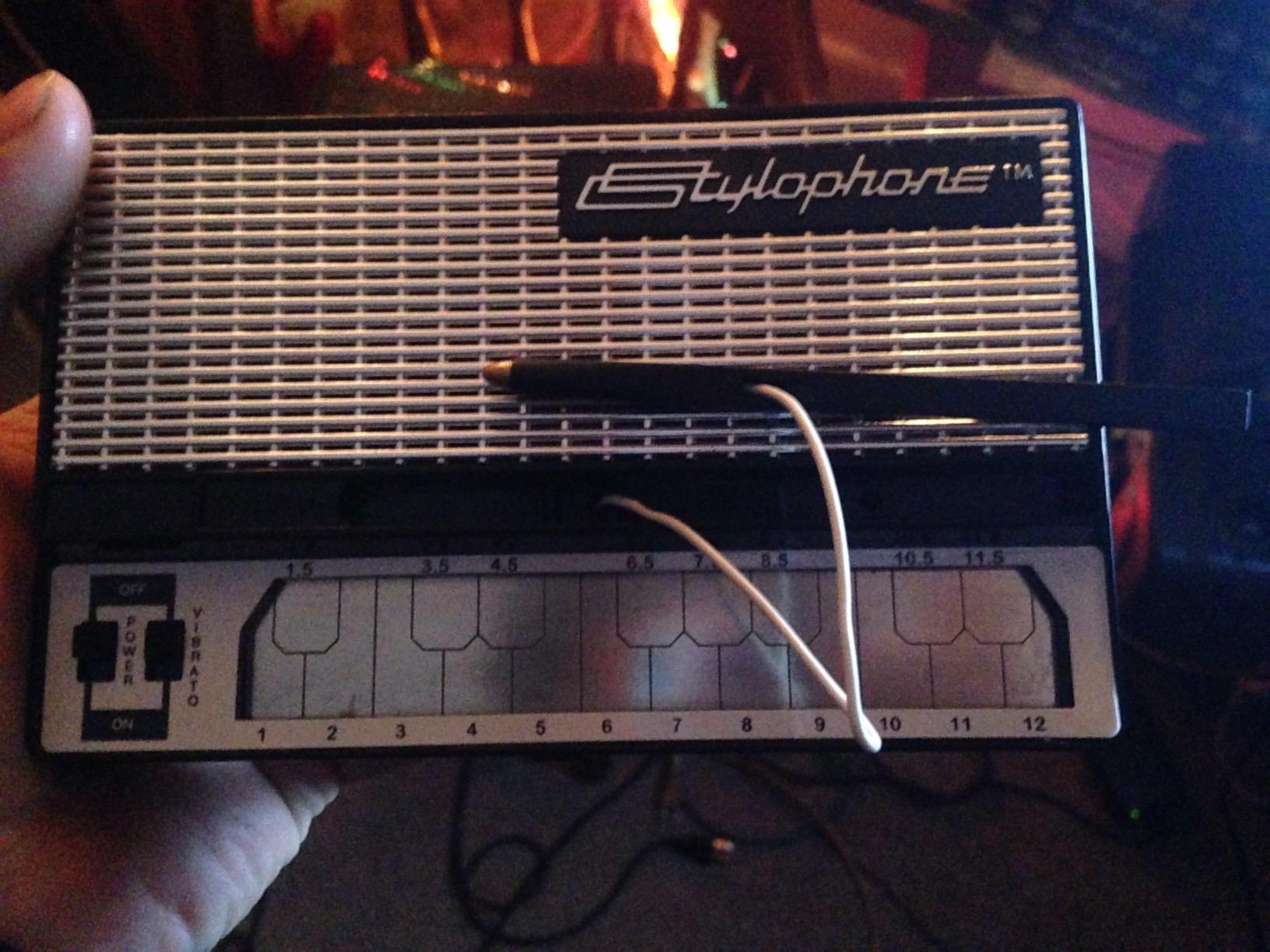
Inside the metal wraparound body you get three octaves with optional vibrato, plus a headphone output for late-night practice. The Stylophone also supports a 3.5mm stereo input, so you can pipe in audio from your phone or computer and play along with backing tracks. For beginners, this is genuinely the most accessible way to understand what an oscillator, filter, and envelope can do without reading a manual.
Build quality is the one trade-off. The body is light-duty plastic, and buyers report it can short out or crackle if jostled hard in a backpack. Treat it gently and it lasts years. For anyone curious about synthesis who doesn’t want to spend much, this is the single best starting instrument on the market today.
Who should buy the Stylophone
The Stylophone is for anyone who wants genuine analog character in the smallest possible package. It’s a great gift for kids, a fun travel instrument, and a surprisingly expressive lead generator for producers who want lo-fi textures without reaching for a plugin. Hip-hop and lo-fi beat-makers will love the retro vibe, and indie artists get instant vintage character.
Who should look elsewhere
If you want a full-size keyboard, polyphonic chords, or studio-grade integration, this is not the right pick. Piano players will find the stylus interface unfamiliar, and anyone producing EDM that needs powerful bass patches needs to move up the list to something like the Behringer TD-3 or MODEL D.
2. Korg Monotron Delay: Best Value Pocket Synth With Classic MS-20 Filter
Korg Monotron Delay Analog Ribbon Synthesizer
Classic MS-20 VCF filter
Built-in space delay
Pitch LFO with shape control
Pros
- Authentic MS-20 filter in pocket form factor
- Space delay adds huge character
- Built-in speaker and battery power
- Fun ribbon controller for expressive playing
- Can process external audio through the filter
Cons
- Ribbon controller makes precise notes tricky
- Some inherent circuit hiss
- Headphone jack can be fragile
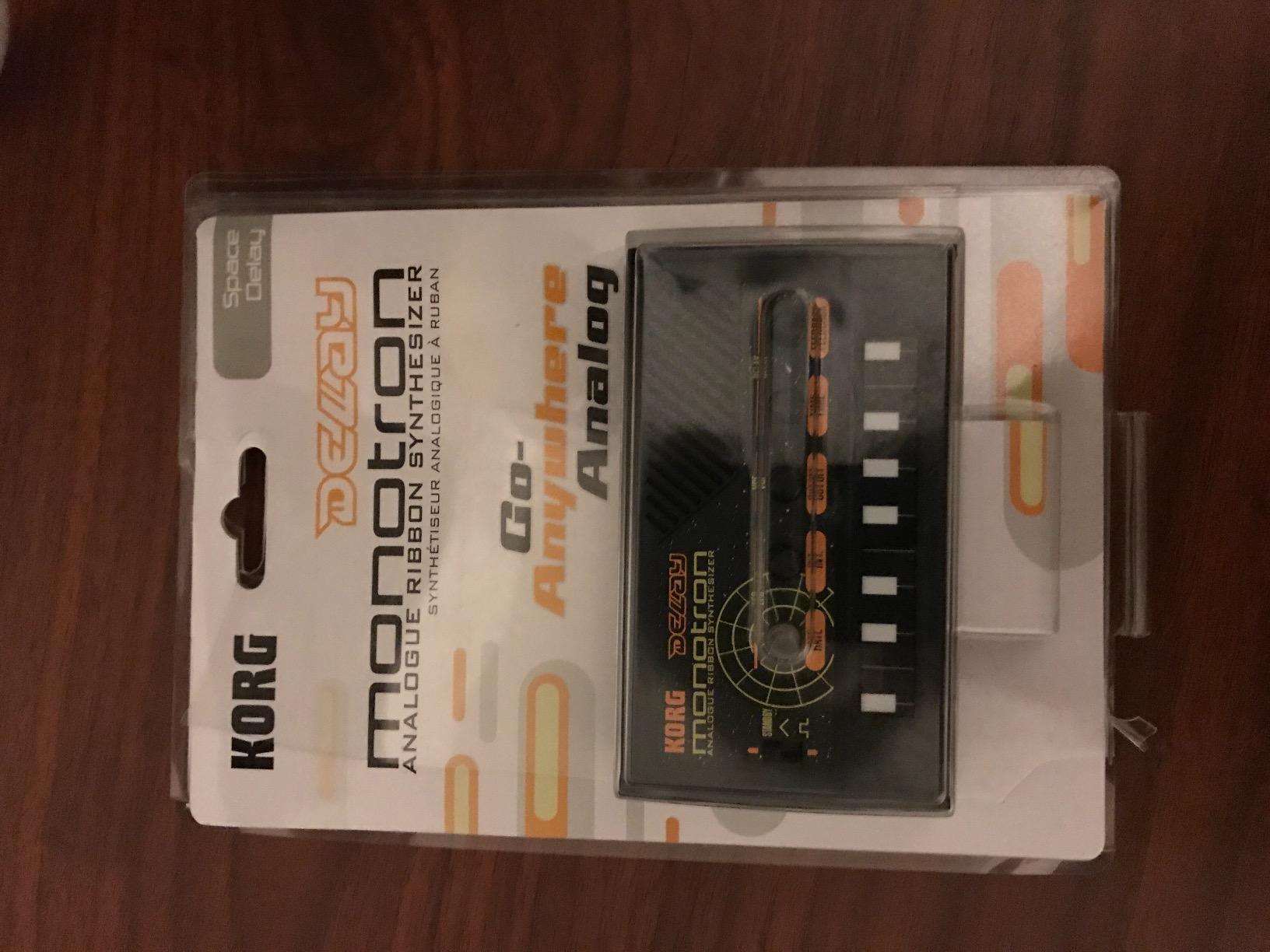
The Korg Monotron Delay takes the classic Korg MS-10 and MS-20 filter circuit and stuffs it into a battery-powered pocket synth with a built-in analog space delay. For anyone chasing that gritty, squelchy, fat analog character at the cheapest possible entry point, this is the move. I used it as a secondary sound source in a live set last month, and it punched way above its weight running through a small guitar amp.
What you get is a wide-range ribbon keyboard (no moving keys, just a touch strip), the original analog VCF from Korg’s legendary MS-20, an LFO with selectable waveshape, and that beautiful analog delay section with rate and intensity knobs. The delay is the killer feature here. It goes from subtle slapback to self-oscillating sci-fi weirdness, all in true analog circuitry.
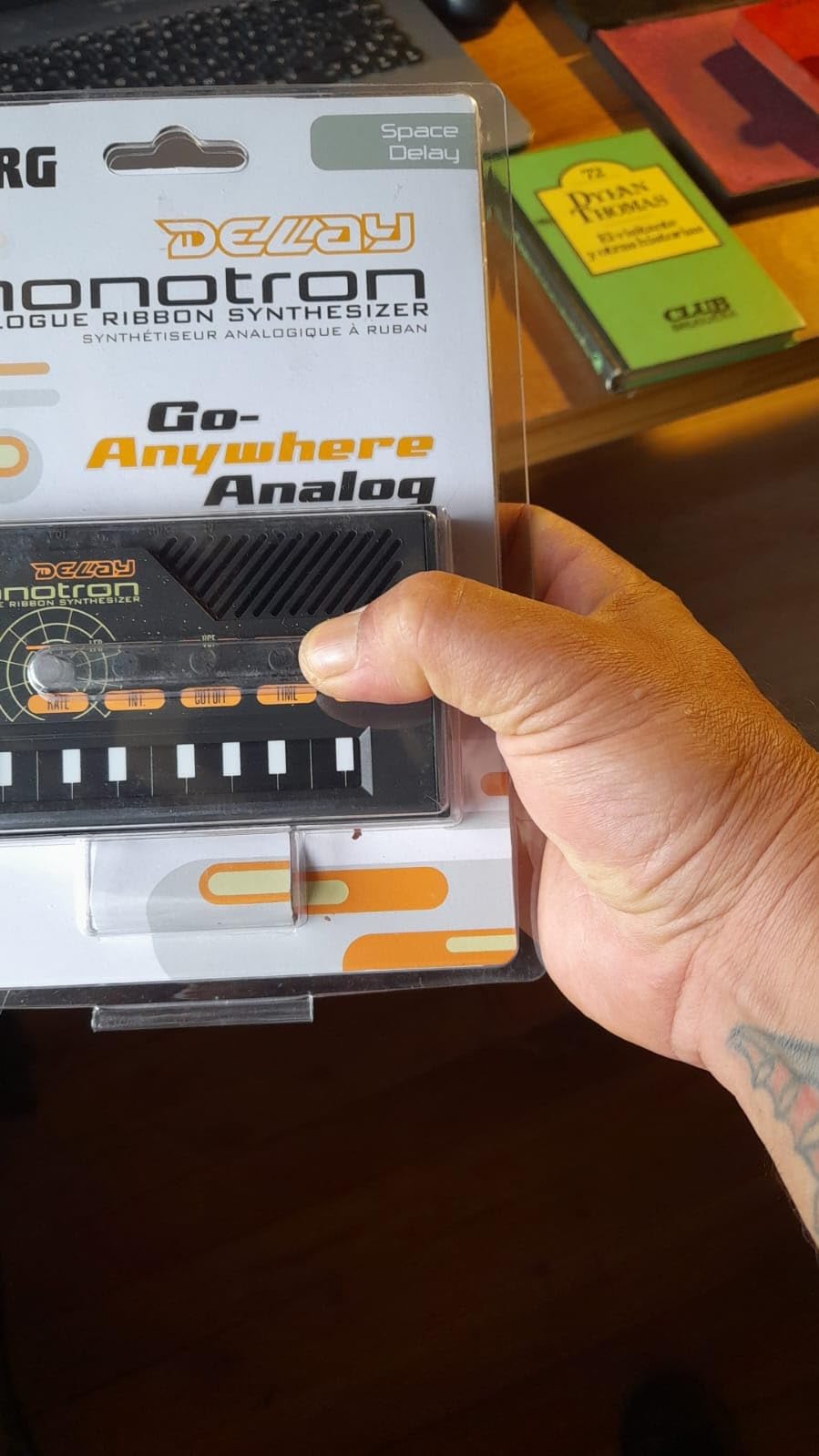
The ribbon controller takes some getting used to because the range is wider than a standard keyboard octave layout. Buyers note this in reviews but also report that the wide range is actually part of the fun. You can do pitch swoops, drum machine-style basslines by tapping the ribbon, and percussion hits by pressing hard near the right end.
One underrated feature is the built-in speaker. You can jam on the couch without plugging in a single cable, and three AAA batteries will keep you going for hours. There’s also a headphone output for silent practice. For synth-curious beginners who don’t want to commit a few hundred dollars yet, this Korg is the cheapest path into real analog sound.
Who should buy the Korg Monotron Delay
Pick this if you want authentic analog texture in the smallest and cheapest package possible. It’s perfect for ambient producers, sound designers who want a portable delay source, and anyone interested in modular-style exploration without buying a full modular rig. The delay effect alone is worth the price for lo-fi and hip-hop beat-makers.
Who should look elsewhere
Piano players who need a real keyboard, anyone wanting polyphony, and producers looking for deep preset management should pass. This is a curiosity, a sketchpad, and a fun toy. It’s not a workstation.
3. Korg NTS-1 DIY Digital Synth Kit: Top Rated With Endless Expansion
Korg Nu:Tekt NTS-1 Build Your Own Digital Synthesizer Kit
DIY digital synth kit
logue-SDK expandable
Analog modeling engine
Pros
- Expandable via logue-SDK for custom oscillators
- Great sound quality for the size
- Strong effects engine with reverb and delay
- Easy to assemble in about 10 minutes
- Works as multi-effects unit for external audio
Cons
- USB power only
- no battery option
- Limited ribbon keyboard
- No patch save on device
- Requires adapter for 5-pin MIDI
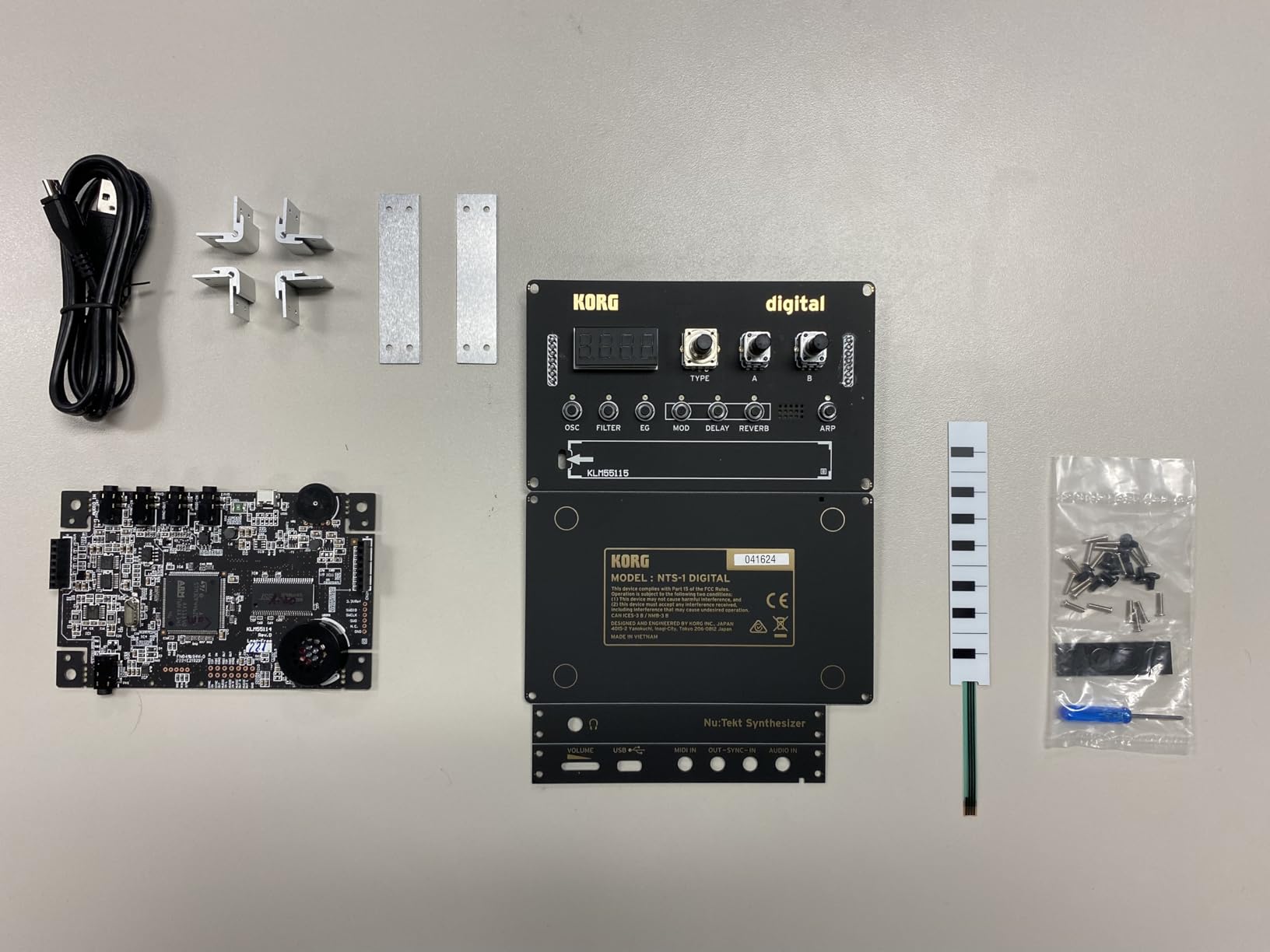
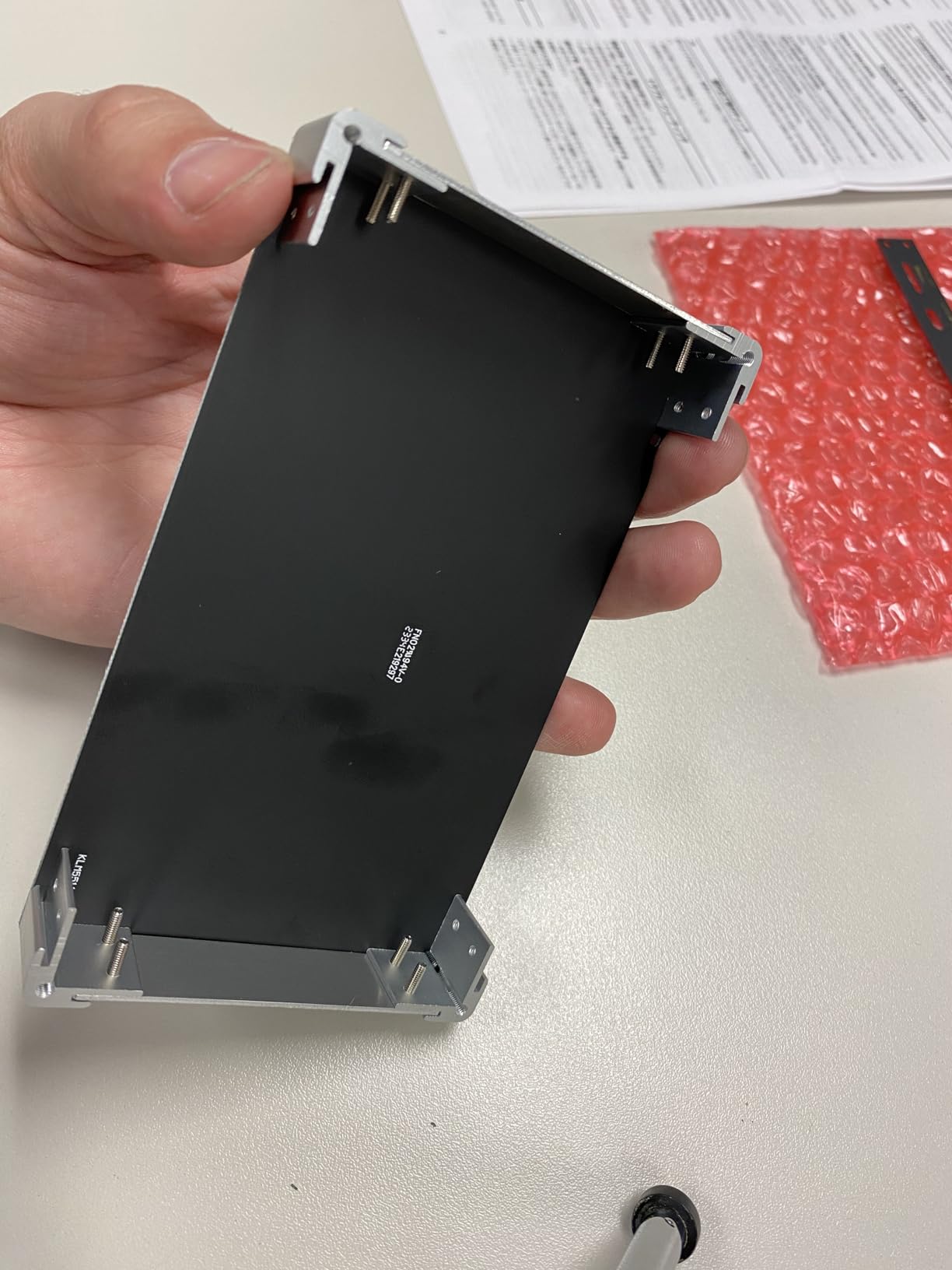
The Korg Nu:Tekt NTS-1 is the most interesting synth on this list for tech-curious musicians. It’s a build-it-yourself digital synth kit that arrives in pieces and goes together with a single screwdriver in about ten minutes. Once powered up over USB, you’ve got a real Korg synth engine with analog modeling, wavetable oscillators, a multimode filter, reverb, delay, modulation effects, and an arpeggiator. The 4.7-star average across 1,224 reviews is the highest in this entire roundup.
The real magic is the logue-SDK. Korg released the development platform publicly, and the community has built hundreds of custom oscillators and effects you can sideload onto the NTS-1 for free. Want a Mutable Instruments Plaits-style engine? It’s there. Need a granular oscillator? Someone has already uploaded it. This little silver box becomes a platform rather than a fixed product.
In practical terms, I plug mine into a laptop, route a MIDI keyboard into it via USB, and use it as a multi-effects processor on drum machine outputs and guitar tracks. The reverb and delay alone justify the price for any home studio, and the arpeggiator makes it great for generative ambient work.
Who should buy the NTS-1
Tinkerers, sound designers, and anyone who likes open-ended gear will love this. It’s an ideal first synth for producers who already use a DAW and want hands-on sound design without a keyboard commitment. Educators will appreciate the build-it-yourself aspect for STEM and music tech programs.
Who should look elsewhere
Players who want a real keyboard, anyone needing battery power for portable jams, and producers who want preset recall in a hardware box should skip. There’s no patch memory on the device, so you save presets via the software librarian instead.
4. Behringer TD-3-AM: Authentic 303 Acid Bass on a Budget
Behringer TD-3-AM Analog Bass Line Synthesizer with VCO, VCF, 16-Step Sequencer, Distortion Effects and 16-Voice Poly Chain
303-style acid bass engine
16-step sequencer
True analog VCO VCF VCA
Pros
- Authentic 303 acid bass reproduction
- MIDI and USB connectivity included
- Built-in distortion for grit
- Fun and intuitive 16-step sequencer
- Can process external audio through filter
Cons
- Plastic case feels inexpensive
- Sequencer workflow takes learning
- Build quality reflects budget price
The Behringer TD-3-AM is a clone of the Roland TB-303, the silver box that defined acid house in the late 1980s. Original 303s sell for thousands of dollars on the used market, so Behringer’s recreation at this price point is genuinely remarkable. The acid yellow case is polarising, but the circuitry underneath is the real deal: matched transistors in a true analog signal path through VCO, VCF, and VCA stages.
I programmed a 30-minute set on the TD-3-AM and the squelchy, resonant filter sound is everything fans want. The 4-pole low-pass resonant filter has dedicated cut-off, resonance, envelope, decay, and accent controls. The built-in 16-step sequencer is the perfect way to program TB-303-style acid basslines, with slide and accent per step.
Connectivity is solid: MIDI in, MIDI out, and USB-MIDI for hooking into a DAW. There’s also an external audio input so you can process drum machines, guitars, or vocals through that glorious filter. The included distortion effect adds extra crunch for harder genres. If you make house, techno, acid, or any bass-heavy electronic music, the TD-3 belongs on your shortlist.
Who should buy the TD-3-AM
Pick this if you make acid house, techno, or any genre built around squelchy resonant basslines. It’s also a great secondary synth for producers who already own a polysynth and want a dedicated mono bass machine. Live performers will love the tactile sequencer workflow.
Who should look elsewhere
If you need polyphony, a full-size keyboard, or want to play chords and pads, this isn’t for you. Buyers note the plastic case feels light, and the sequencer interface has a learning curve if you’ve never programmed a TB-style workflow before.
5. Arturia MicroFreak: 21 Engines of Hybrid Sound Design Power
Arturia MicroFreak Synthesizer Keyboard
21 oscillator modes
Poly-aftertouch keybed
5x7 modulation matrix
Pros
- 21 oscillator engines from physical modeling to wavetable
- Poly-aftertouch adds deep expression
- Compact and backpack-friendly form factor
- Constant firmware updates add new features
- Great value at the sub-$400 price point
Cons
- No onboard reverb or delay effects
- Capacitive keyboard has a learning curve
- Tiny on/off switch can be fragile
The Arturia MicroFreak consistently shows up in r/synthesizers threads as the consensus “best money I’ve spent” synth under $500, and after three months of daily use, I completely understand why. It’s a paraphonic hybrid synth with a frankly ridiculous 21 oscillator modes covering physical modeling, wavetable synthesis, FM, granular, vocoder, and more. Every sound engine is dialled in collaboration with synth legends like Mutable Instruments and Noise Engineering.
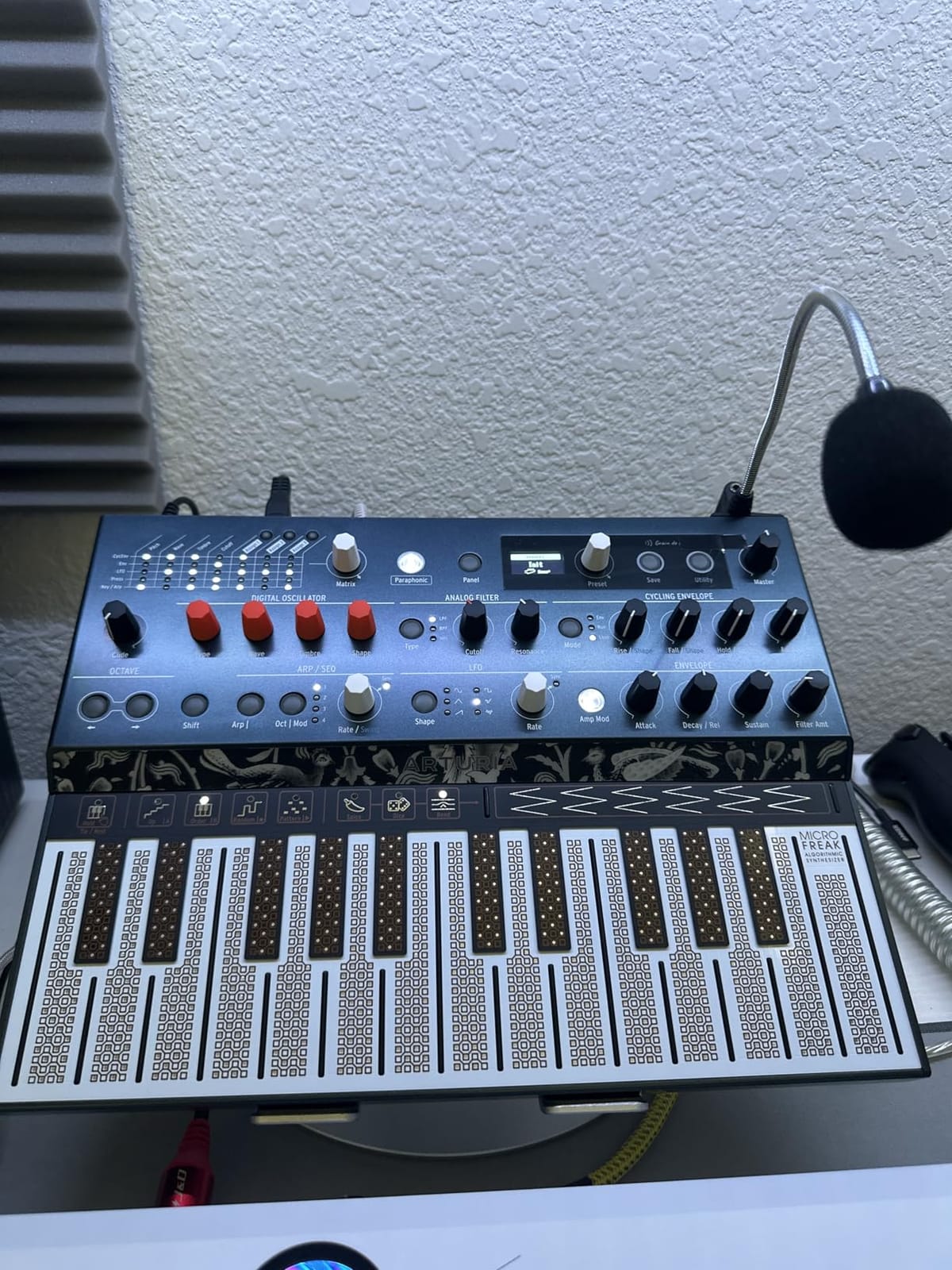
The keybed is unusual: a flat PCB with 25 capacitive keys that respond to pressure and aftertouch. There are no moving parts, which makes it super portable but takes an hour or two to adjust to. Once you do, the poly-aftertouch opens up expression that very few synths at any price can match. You can bend individual notes inside chords, modulate filter cutoff by pressing harder, and create cascading modulations via the deep 5×7 modulation matrix.
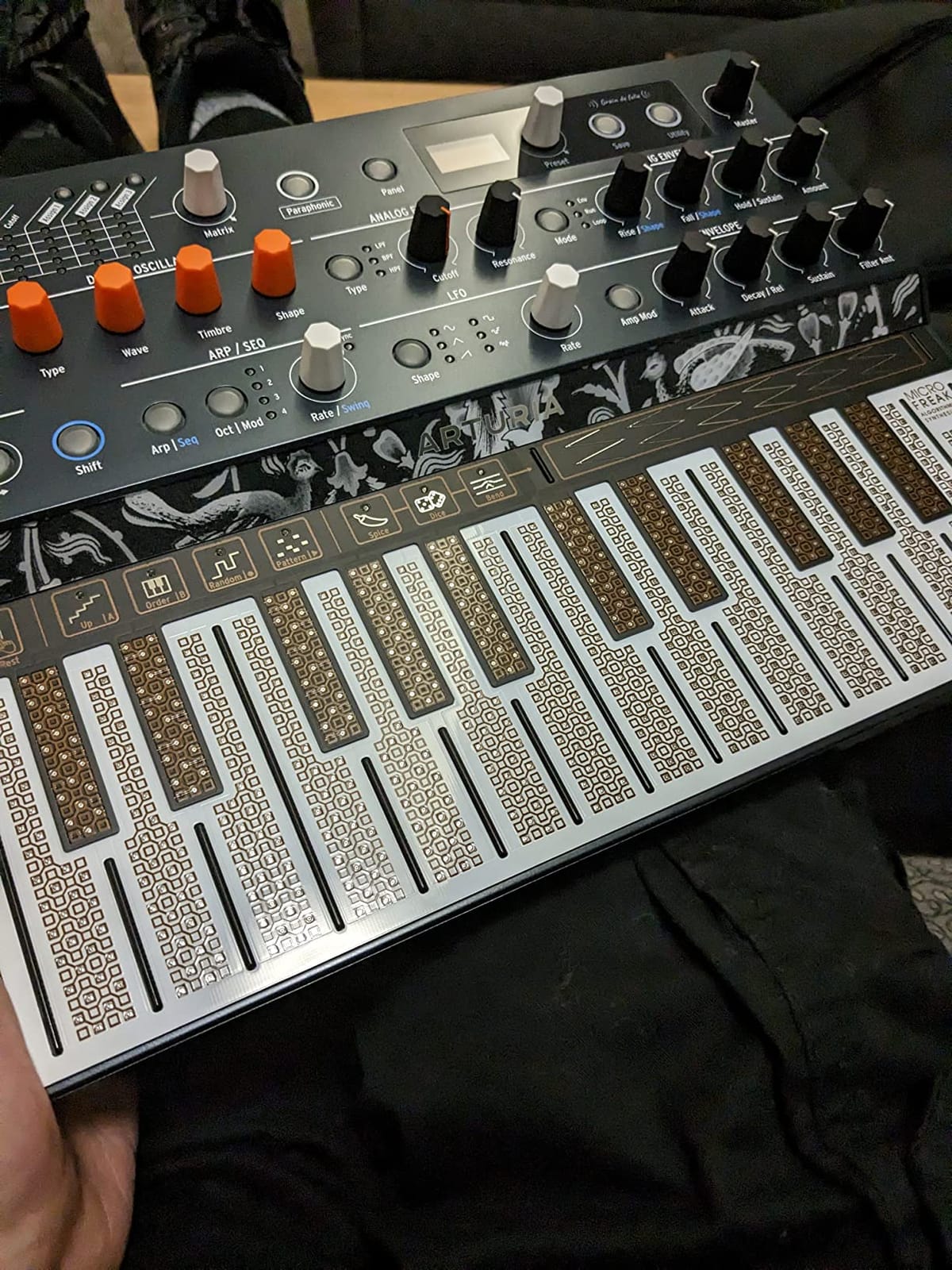
The filter is a 12dB per octave Oberheim SEM-style state-variable design that can do everything from smooth low-pass to resonant sweeps to band-pass vocal tones. There’s also an arpeggiator with Spice and Dice randomisation functions, a 64-step sequencer, and CV pitch, gate, and pressure outputs for hooking into Eurorack setups.
What’s missing? No onboard effects. You’ll want to pair the MicroFreak with a small multi-effects unit like the NTS-1 above or a desktop reverb pedal. The build quality feels a bit lighter than Arturia’s higher-end products, but the firmware updates Arturia ships every few months keep adding new engines. It’s the most future-proof synth in this price bracket.
Who should buy the MicroFreak
Sound designers, electronic producers, and anyone who likes exploring different synthesis types in a single instrument will love this. It’s the ideal first serious synth because the workflow scales with your knowledge. Beginners can use presets, intermediate players can build patches, and advanced users can go deep into the modulation matrix.
Who should look elsewhere
Traditional pianists who want a real weighted keybed, anyone needing onboard reverb for live playing without external gear, and players who want a more compact desktop module should look elsewhere.
6. Korg Monotron DUO: Two Oscillators in a Pocket-Sized Synth
Korg monotron DUO Analog Ribbon Synthesizer
Dual VCO design
MS-20 analog filter
Aux input for external audio
Pros
- Two oscillators create thick
- rich sounds
- MS-20 VCF sounds fantastic
- Aux input processes external audio
- Four scale modes make melodies easier
- Battery powered with built-in speaker
Cons
- Ribbon controller is small and not precise
- Build quality feels toy-like
- No LFO (traded for second oscillator)
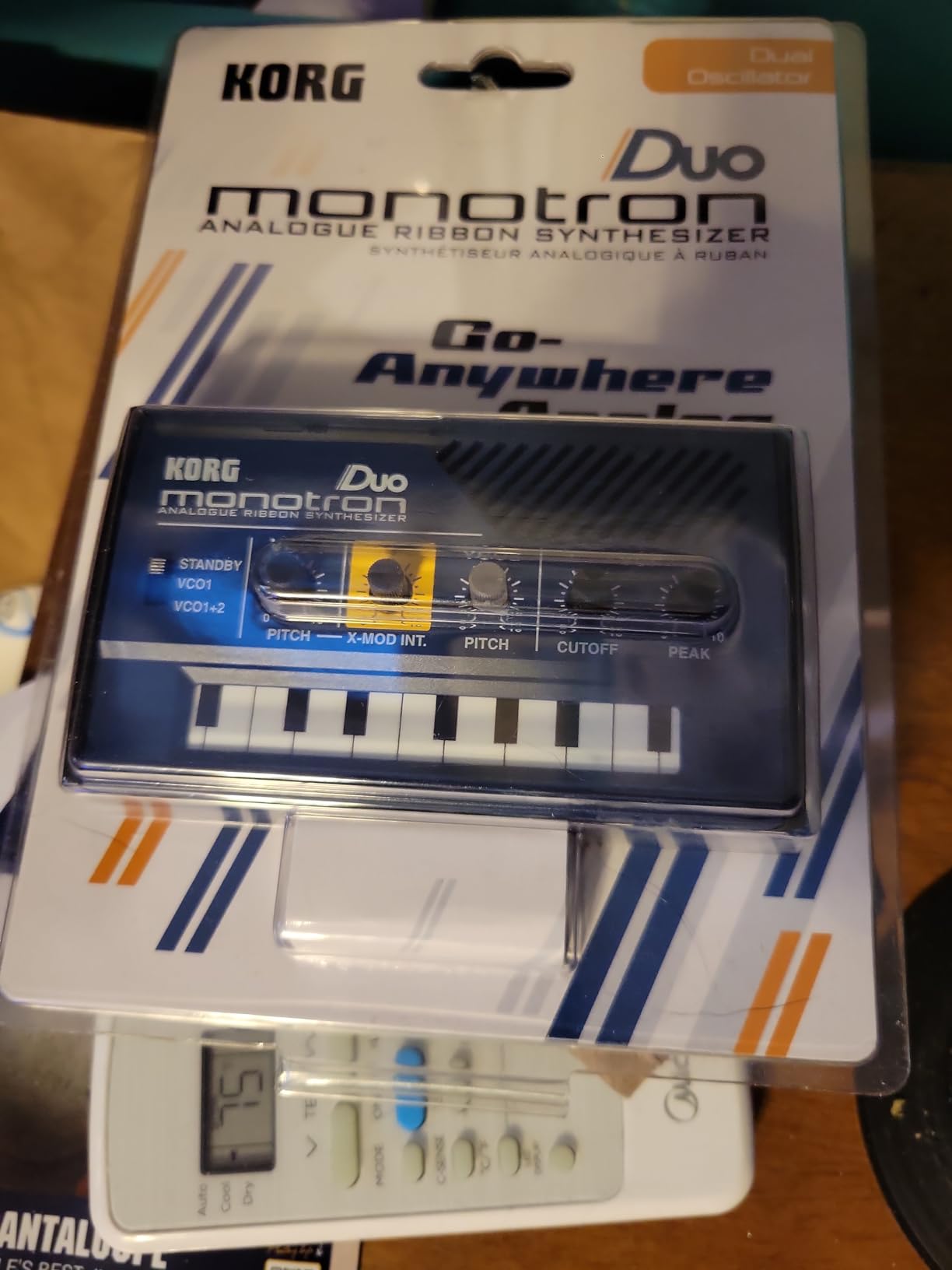
The Monotron DUO is the slightly less popular sibling of the Monotron Delay, but it actually has one key advantage for sound design: two oscillators instead of one plus an LFO. That dual VCO design means you can create thick, detuned, octave-shifted sounds that the Delay cannot match. You lose the space delay effect but gain a much fatter raw oscillator section.
The MS-20 filter is shared with the Delay, and it’s the star of the show. Korg’s MS-20 filter is legendary for its aggressive, squelchy character, and cranking the resonance produces those classic acid and techno tones. Buyers praise the aux input, which lets you run drum machines, guitars, or any audio source through the filter for instant analog processing.

There are four selectable modes on the ribbon controller: continuous, major scale, minor scale, and chromatic. The scale modes mean you can slide your finger along the ribbon and always land on musically correct notes, which is genuinely useful for beginners who don’t know music theory yet. The chromatic mode turns it into a real instrument for practiced players.
Battery power with two AAA cells and a built-in speaker make this a true grab-and-go synth. I keep mine in my backpack for hotel-room jam sessions on tour. At under 7 ounces, it disappears into any bag.
Who should buy the Monotron DUO
Anyone who wants the fattest possible pocket synth should pick this. The two-oscillator design outperforms the Delay for thick leads and bass patches. It’s also ideal for beginners who want a forgiving scale mode rather than a continuous pitch ribbon.
Who should look elsewhere
If you want delay effects built in, pick the Monotron Delay instead. If you want a real keyboard, polyphony, or preset memory, you need to move up the list. Also skip if you plan to perform on a stage because the ribbon controller can be hard to see in low light.
7. MicroKits Synth-a-Sette: Educational Synth That Plays With Bananas
MicroKits Synth-a-Sette: The Original Cassette Sized Analog Synthesizer
13-key conductivity touchpad
Ultra-portable cassette form
10 alligator clips for banana keyboards
Pros
- Fun conductivity-based touch keys play bananas and water
- Excellent STEM educational tool
- Cassette-sized ultra-portable design
- Batteries included ready to play
- Accessible for kids and beginners
Cons
- Monophonic only
- Connection clips can wear with heavy use
- Limited to simple melodic lines
The MicroKits Synth-a-Sette is hands-down the most creative educational synth I’ve ever tested. It uses conductivity to trigger notes, which means you can play melodies on bananas, apples, cups of water, or your own skin. It ships with ten alligator clips and a music sheet for your first song, all in a cassette-sized box that fits in any pocket.
For parents and educators, this is the best introduction to synthesis and electricity I’ve found at any price. Kids light up when they realise they can play the synth with a piece of fruit. The 13-key touchpad also works as a traditional monophonic instrument, so it doubles as a real playable synth once the novelty wears off. There’s an octave-up button and an optional vibrato switch for tone variation.
The cassette case form factor is genuinely clever. You slide the synth out, clip on some bananas or other conductive objects, and you’ve got an instrument. Everything is powered by included batteries, and a built-in speaker plus line out handle both casual and recorded use.
Who should buy the Synth-a-Sette
Parents, teachers, STEM programs, and anyone looking for an unforgettable gift should pick this. It’s perfect for introducing kids to synthesis and basic circuitry in a hands-on way. Adults who want a portable monophonic sketchpad for song ideas will also enjoy it.
Who should look elsewhere
Anyone needing polyphony, professional sound quality, or stage-ready build construction should skip. The clips can wear out with heavy use, and the 13-key layout limits the kind of complex melodies you can perform. This is a creative toy first and a serious instrument second.
8. Behringer CRAVE: Semi-Modular Patch Bay at a Fraction of Boutique Prices
Behringer CRAVE Analog Semi-Modular Synthesizer with 3340 VCO, Classic Ladder Filter, 32-Step Sequencer and 16-Voice Poly Chain
Semi-modular with patch bay
3340 VCO design
32-step sequencer
Pros
- Semi-modular patch bay for extensive sound design
- Sounds comparable to Moog Mother-32
- Metal construction feels robust
- External audio input for processing
- 32-step sequencer for complex patterns
Cons
- Sequencer shift-key combinations are not intuitive
- Small keyboard limits playability
- No patch memory on device
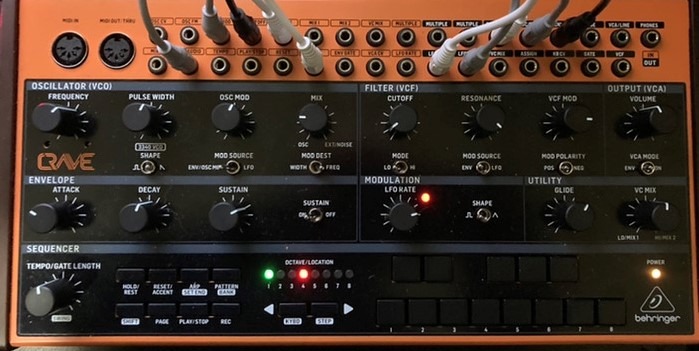
The Behringer CRAVE is a semi-modular analog synth that reviewers consistently compare to the Moog Mother-32 at a fraction of the price. It uses a 3340-style VCO (the same chip found in the Prophet-5 Rev 3), a classic Moog-style 24dB ladder filter, and a comprehensive patch bay that makes it a gateway drug into modular synthesis without needing a full Eurorack case.
The patch bay is the headline feature. You can route virtually any modulation source (LFO, envelope, even the sequencer) to any destination (filter cutoff, VCO pitch, VCA) using the included patch cables. Buyers in r/synthesizers threads report getting lost for hours exploring random patches and stumbling on completely new sounds. It’s also a wonderful learning tool for understanding modular signal flow.
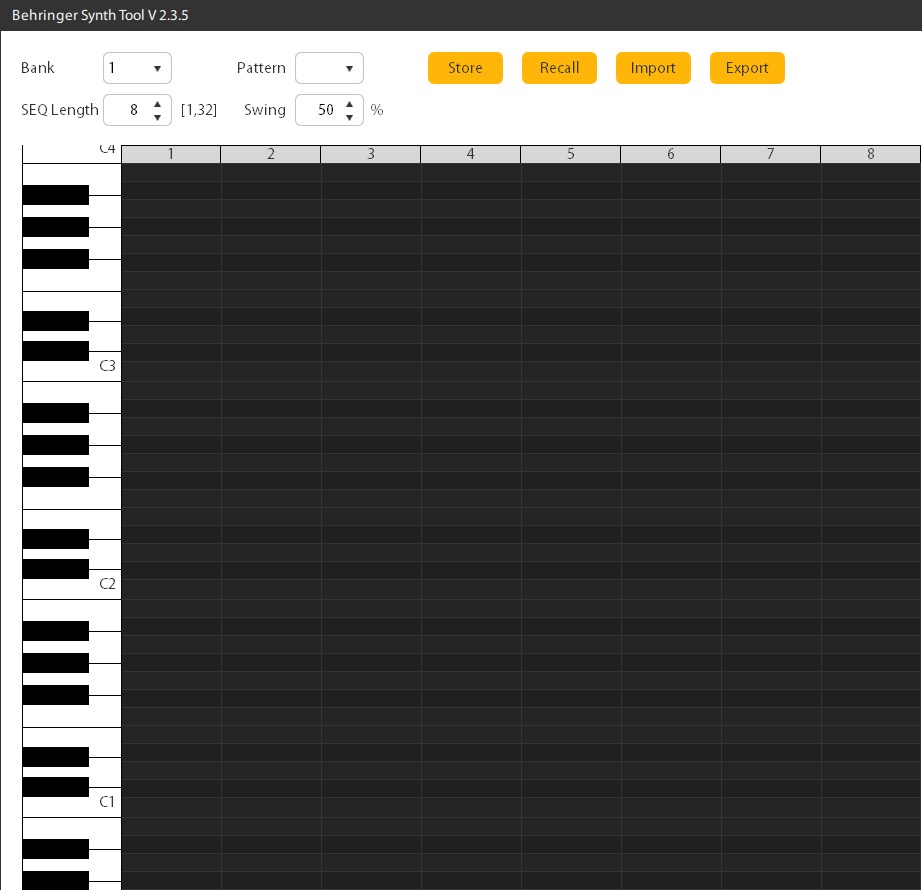
The 32-step sequencer is feature-rich but has a steep learning curve. Behringer uses shift-key combinations to access secondary functions, which frustrates some users until they get used to it. The small integrated keyboard is fine for sketching but you’d want to pair the CRAVE with a proper MIDI controller for serious playing.
The metal chassis feels noticeably more solid than Behringer’s plastic products, and at 4 pounds it sits firmly on a desk. There’s an external audio input so you can process drum machines and other gear through that ladder filter, plus full Eurorack compatibility if you decide to expand into modular later.
Who should buy the CRAVE
Sound designers who want semi-modular flexibility without modular prices, anyone considering a Mother-32 but wanting to keep budget room for other gear, and producers who like hands-on analog experimentation should jump on the CRAVE. Eurorack-curious players will appreciate the patch bay as a modular gateway.
Who should look elsewhere
Piano players, anyone needing polyphony or onboard preset memory, and traditional synth players who don’t want to learn patch routing should pass. The small keyboard also makes it less practical for players used to full-size keys.
9. Behringer MODEL D: Premium Moog-Style Three-VCO Analog Monster
Behringer MODEL D Authentic Analog Synthesizer with 3 VCOs, Ladder Filter, LFO and Eurorack Format
Three VCO design
Authentic Moog ladder filter
Eurorack compatible
Pros
- Authentic Moog Model D-style sound at a fraction of the price
- Triple VCO creates incredibly fat tones
- Metal construction feels professional
- Eurorack format compatible
- MIDI and USB connectivity included
Cons
- Legato mode has minor envelope trigger bug
- No patch memory - knob-per-function design
- No preset save
- requires manual sound design
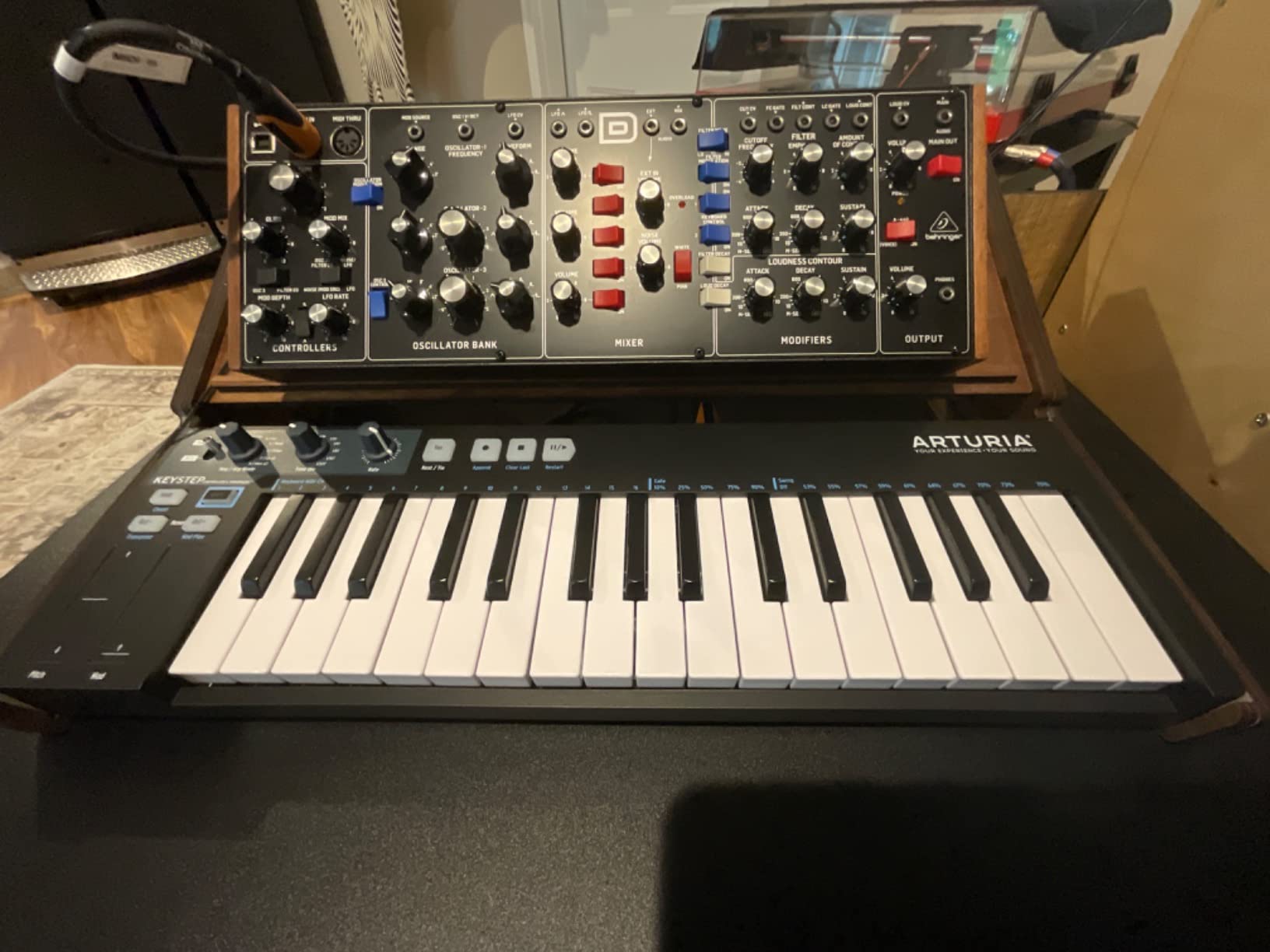
The Behringer MODEL D is a faithful recreation of the original Moog Model D, the three-VCO monophonic synth that defined everything from prog rock to disco to modern electronic music. Getting genuine Moog-style tone at this price point is genuinely surprising. The triple VCO design with five variable oscillator shapes and variable pulse widths produces bass tones so fat they practically distort on their own.
The classic Moog 24dB ladder filter is what gives the MODEL D its unmistakable character. Crank the resonance and play with the cut-off for those squelchy, vocal, almost-organic filter sweeps that Moog is famous for. Combined with the thick three-oscillator sound, you get synth tones that can easily pass for vintage hardware in a mix.
Build quality is genuinely impressive. The metal chassis weighs nearly 4 pounds, and the knobs feel solid under your fingers. This is a synth that survives being tossed in a road case and gigged regularly. It’s also Eurorack format compatible, so when you’re ready to expand into modular you can drop it straight into a rack.
The catch is the completely knob-per-function design with zero presets or patch memory. Every sound has to be dialled in from scratch, which sounds limiting but is actually how synthesis was meant to be learned. Buyers report that this forces a deeper understanding of how oscillators, filters, and envelopes interact.
Who should buy the MODEL D
Pick this if you want authentic vintage Moog character without spending vintage Moog money. Bass players and producers, lead synth players, and anyone into classic rock, prog, disco, or early electronic sound will love the MODEL D. It’s also a fantastic studio centerpiece if you don’t need presets.
Who should look elsewhere
If you need polyphony, preset recall, or fast preset switching for live performance, look at the Yamaha REFACE CS instead. The lack of patch memory is genuinely limiting for live contexts, so plan accordingly.
10. Yamaha REFACE CS: Polyphonic Analog Modeling With 8 Voices
Yamaha REFACE CS Portable Analog Modeling Synthesizer
Analog modeling engine
8-note polyphony
Integrated phrase looper
Pros
- Genuinely approachable for total beginners
- 8-note polyphony rare at this price
- Battery powered with built-in speaker
- Integrated phrase looper for jamming
- Five oscillator types with dedicated sliders
Cons
- No patch memory on device
- Proprietary mini MIDI port is fragile
- Looper can be finicky to use
The Yamaha REFACE CS closes our list of the best synthesizers under $500, and it’s the top choice for players who want a real keyboard with polyphony. You get 8 voices of polyphony, a 37-key HQ mini keyboard that feels surprisingly premium, and Yamaha’s analog physical modeling engine across 5 distinct oscillator types. Bass, leads, pads, and even string-like tones are all covered.
What makes the REFACE CS special is how approachable it is. The control layout uses dedicated sliders for the most important parameters, so beginners can grab a sound and start tweaking immediately. There’s no menu diving, no screen, no patch memory. You just turn it on and play. Yamaha built this philosophy right into the product, and reviewers consistently call it the most beginner-friendly synth Yamaha has ever made.
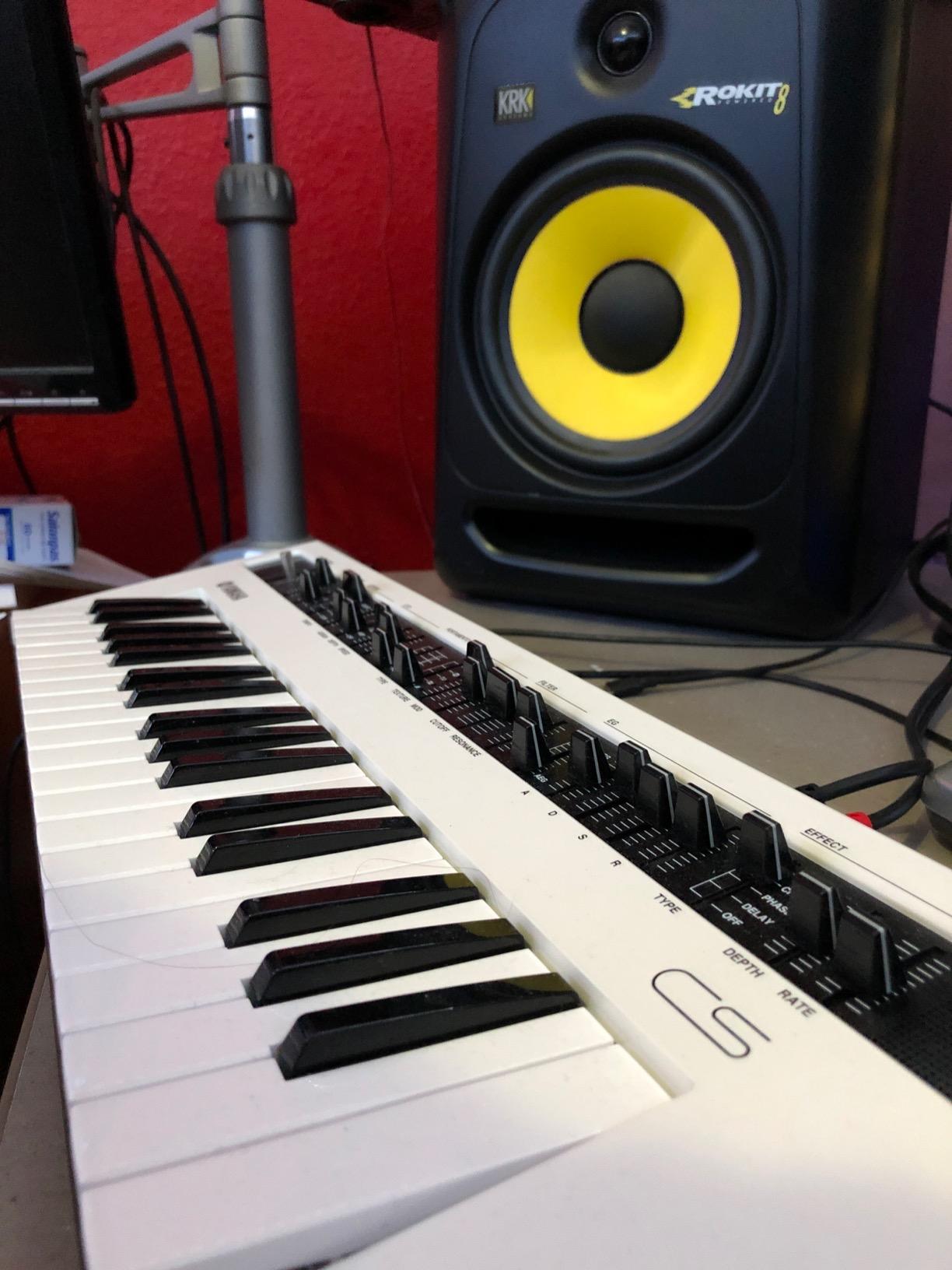
The phrase looper is another underrated feature. You can record a chord progression or bassline, loop it, and jam over the top with leads and effects. It turns the REFACE CS into a one-person performance instrument and a great practice tool. Battery power via six AA cells plus a built-in speaker mean you can take this anywhere.
The honest trade-offs: no patch memory means you save sounds manually or photograph the slider positions. The proprietary mini MIDI port requires a dongle for 5-pin DIN connections to other gear. But for a player who wants a playable, polyphonic, battery-powered keyboard synth, the REFACE CS hits a sweet spot that almost nothing else under $500 matches.
Who should buy the REFACE CS
Beginners who want a real keyboard experience, producers who need polyphonic chords and pads, and live performers who need battery portability should pick this. It’s also a fantastic sketchpad for songwriters, because the looper makes it easy to layer ideas quickly.
Who should look elsewhere
Sound designers wanting deep synthesis options should look at the MicroFreak or CRAVE. Anyone needing preset memory for complex sounds, traditionalists who want preset recall, or producers who prefer screen-based editing should pass.
How to Choose the Right Synthesizer Under $500
Buying a synthesizer under $500 involves more than picking the most popular model. The right choice depends on your genre, your experience level, and how you actually plan to use the instrument. Below are the three decisions that matter most when spending real money on a budget synth.
Analog vs Digital vs Hybrid Engines
Analog synths use voltage-controlled circuits to generate sound. The result is that warm, slightly imprecise character that defined everything from Kraftwerk to house music. The trade-off is higher cost per feature because real circuitry is expensive. Under $500, you’re mostly shopping monophonic (one note at a time) or paraphonic analog synths like the Behringer MODEL D, Korg Monotron series, and Behringer CRAVE.
Digital synths use software algorithms to model or generate sound. They can be cheap, polyphonic, and packed with presets. The Korg NTS-1 and Yamaha REFACE CS sit firmly in this camp. Modern digital synths can sound incredibly realistic and offer features analog synths can’t match, like wavetables, FM, and physical modeling.
Hybrid synths combine both worlds. The Arturia MicroFreak leads this category under $500 with a digital oscillator section and analog filter. You get the versatility of digital sound generation with the warmth of an analog filter. For most beginners, a hybrid synth is the smartest compromise because it covers the widest range of sounds.
Don’t believe the myth that analog always sounds better. Modern digital synths can be stunning, and the difference is smaller than synth snobs would have you believe. Pick the type that matches your musical goals.
What Polyphony Means (Mono vs Para vs Poly)
Polyphony is the number of notes a synth can play at once. Monophonic synths play only one note at a time but excel at basslines, leads, and acid effects because each note gets the full attention of the filter and envelope. The Behringer TD-3 and Behringer MODEL D are monophonic.
Paraphonic synths let you play multiple notes but only one filter/envelope processes all of them. The Arturia MicroFreak is the standout paraphonic option under $500. Paraphonic is perfect for sound design and experimental playing but won’t sound like a true polyphonic chord.
Polyphonic synths play full chords with independent voices, each with its own filter and envelope. Under $500, true polyphony is rare, but the Yamaha REFACE CS delivers 8 voices of polyphony at this price. Polyphony matters if you play chords, pads, or want classic electric piano-style sounds.
If you make EDM, house, or techno, monophonic is fine. If you play indie, ambient, film scoring, or anything chord-heavy, you need polyphony. The best synths under $500 are mostly mono or paraphonic, with the REFACE CS as the best true polyphonic option.
Match the Synth to Your Genre and Use Case
For beginners, the Stylophone, Korg Monotron series, and Yamaha REFACE CS are the most forgiving starting points. They’re accessible, fun, and teach the basics without overwhelming menus.
For bass-heavy EDM, house, and techno, the Behringer TD-3 and Behringer MODEL D are unbeatable at this price. The MODEL D’s three VCOs deliver fat analog bass that rivals vintage gear.
For sound design and experimental music, the Arturia MicroFreak and Behringer CRAVE are the picks. Both have deep modulation options, semi-modular patching on the CRAVE, and 21 oscillator engines on the MicroFreak.
For live performance, battery-powered options like the Monotron series, REFACE CS, and Stylophone are winners. You can run them anywhere without a power outlet.
For educational and gift purposes, the MicroKits Synth-a-Sette is genuinely unique. Playing music with bananas is the kind of experience kids remember forever.
Plan for hidden costs too. You’ll likely need cables, a MIDI controller for module-style synths like the NTS-1 or CRAVE, an audio interface if you don’t have one, and possibly a case or bag. Budget an extra $100-200 on top of your synth cost for a complete setup.
Frequently Asked Questions
What is the best affordable synthesizer?
The Stylophone is the most affordable synthesizer worth buying, with over 11,000 reviews and a 4.6-star average. For a slightly higher investment, the Arturia MicroFreak is widely considered the best all-round synth under $500 thanks to its 21 oscillator engines, modulation matrix, and poly-aftertouch keybed. Both deliver genuine musical value at budget prices.
What is the best synthesizer for beginners?
The Yamaha REFACE CS is the most approachable first synth thanks to its dedicated slider controls, 8-note polyphony, 37-key mini keyboard, and lack of menus or screens. The Stylophone is another strong option for absolute beginners because there’s no keyboard to learn. The Arturia MicroFreak is also beginner-friendly if you don’t mind the unusual capacitive keybed.
Are cheap synthesizers actually worth it in 2026?
Yes. Modern synths under $500 deliver genuine analog circuitry, digital engines, and patch-bay flexibility that would have cost thousands a decade ago. Brands like Korg, Arturia, Behringer, and Yamaha put serious engineering into budget instruments. The trade-offs are usually fewer polyphonic voices, smaller keyboards, and limited preset memory, but the core sound quality and creative potential match much more expensive gear.
Can you get a polyphonic synth under $500?
Yes, but options are limited. The Yamaha REFACE CS delivers 8-voice polyphony at this price and remains the most accessible polyphonic option. The Korg NTS-1 supports multiple oscillator patches that can be paraphonic. True polyphony becomes more common in the $500-1000 range, but these two picks prove you don’t need to spend much for chord-playing capability.
What synthesizer should I buy first?
For your first synth, choose based on your goals. If you want hands-on analog character and are willing to spend more, pick the Arturia MicroFreak or Behringer MODEL D. If you want a friendly keyboard and polyphonic pads, go with the Yamaha REFACE CS. If you want the cheapest route into real synthesis, start with the Korg Monotron Delay. Try to test or watch demos before buying because the feel of keys, ribbon controllers, and capacitive touchpads varies wildly.
The Bottom Line on the Best Synthesizers Under $500
After spending weeks with each of these instruments, our team’s pick for the best synth under $500 in 2026 remains the Stylophone for sheer proven value and cult classic status. For players who want to go deeper into synthesis without spending much more, the Arturia MicroFreak is a close second and the consensus favourite across r/synthesizers threads for a reason. If you want a real keyboard with polyphonic chord capability, the Yamaha REFACE CS is the only proper choice at this price tier.
Whatever you pick, the most important thing is to actually start playing. Every synth on this list has been put through its paces by thousands of buyers, and the best one is the one that pulls you back to it day after day. The best synthesizers under $500 all do that in their own way. Pick one, plug it in, and start making sound.