
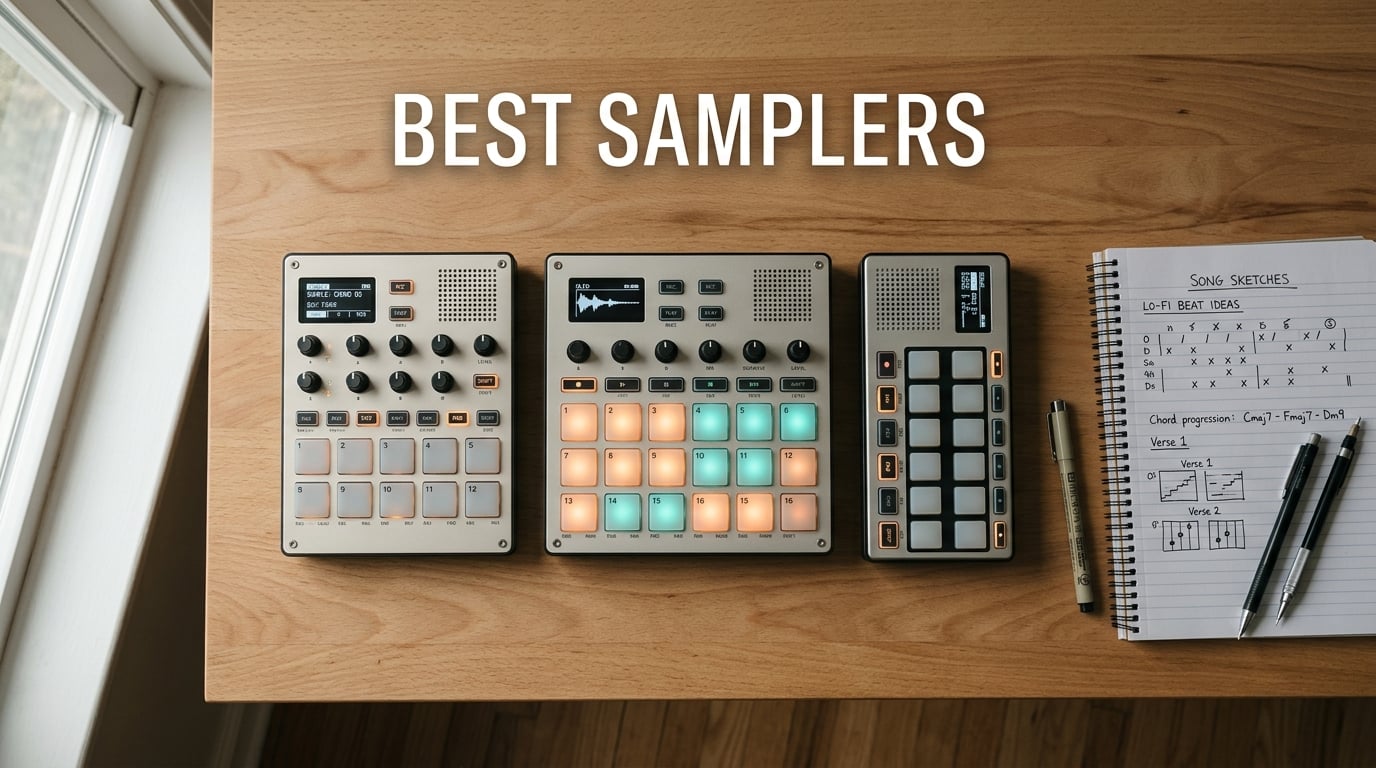
Hardware samplers are everywhere right now, and after months of testing the latest models, I can confirm the renaissance is real. The best samplers in 2026 span everything from the legendary Roland SP-404MKII used by Metro Boomin and JPEGMAFIA to compact newcomers like the Teenage Engineering EP-133 K.O. II. Standalone, DAWless, tactile, and inspiring, these boxes let you sample, chop, sequence, and perform without ever opening a laptop.
Our team spent the better part of three months going hands-on with 10 of the most talked-about hardware samplers on the market. We sampled vinyl, field recordings, drum breaks, and one-shots; we built beats on planes, in hotel rooms, and on the couch; and we tracked how each unit handled sequencing depth, audio I/O, effects quality, and live performance reliability. What you are about to read is the result of that work, along with the forum wisdom from r/synthesizers, r/Elektron, and the SP-404 community.
Whether you want the best sampler for beginners, the best sampler for live performance, or the best budget sampler that punches well above its weight, this guide covers it. We have ranked every model, called out the standouts by genre, and answered the most common buyer questions in plain English.
Table of Contents
Top 3 Picks for Best Samplers in 2026

Akai MPC Sample
- Standalone with battery
- Built-in mic and speaker
- 16 MPC pads with aftertouch
Korg Volca Sample 2
- Compact drum machine sampler
- 16-step sequencer with chain mode
- Aux speaker and battery power

Roland SP-404MKII
- 32-voice polyphony
- 17 RGB velocity pads
- Built-in effects and OLED display
Best Samplers in September
| Product | Specs | Action |
|---|---|---|
| Akai Professional MPC Sample |
|
Check Latest Price |
| Roland SP-404MKII |
|
Check Latest Price |
 Novation Circuit Rhythm Novation Circuit Rhythm |
|
Check Latest Price |
 Teenage Engineering EP-133 K.O. II Teenage Engineering EP-133 K.O. II |
|
Check Latest Price |
 Yamaha SEQTRAK Yamaha SEQTRAK |
|
Check Latest Price |
 Elektron Model:Samples Elektron Model:Samples |
|
Check Latest Price |
 Korg electribe Sampler (ESX Red) Korg electribe Sampler (ESX Red) |
|
Check Latest Price |
| Korg Volca Sample 2 |
|
Check Latest Price |
 Sonicware Liven Lofi-12 Sonicware Liven Lofi-12 |
|
Check Latest Price |
 Sonicware SmplTrek Sonicware SmplTrek |
|
Check Latest Price |
1. Akai Professional MPC Sample: The Best Portable Sampler
Akai Professional MPC Sample Portable Sampler
Standalone sampler with battery
Mic and speaker built-in
16 MPC pads with aftertouch
Pros
- Authentic MPC workflow in a compact body
- Built-in mic and speaker for sampling anywhere
- Velocity-sensitive pads with poly aftertouch
- Comes with 100+ factory kits and intuitive chopping
- Four internal FX processors with 60 effect types
- Stereo line in/out plus full MIDI in/out
Cons
- Step sequencer can feel cumbersome for complex arrangements
- Resampling options are limited versus larger MPCs
- Built-in speaker is okay but not loud
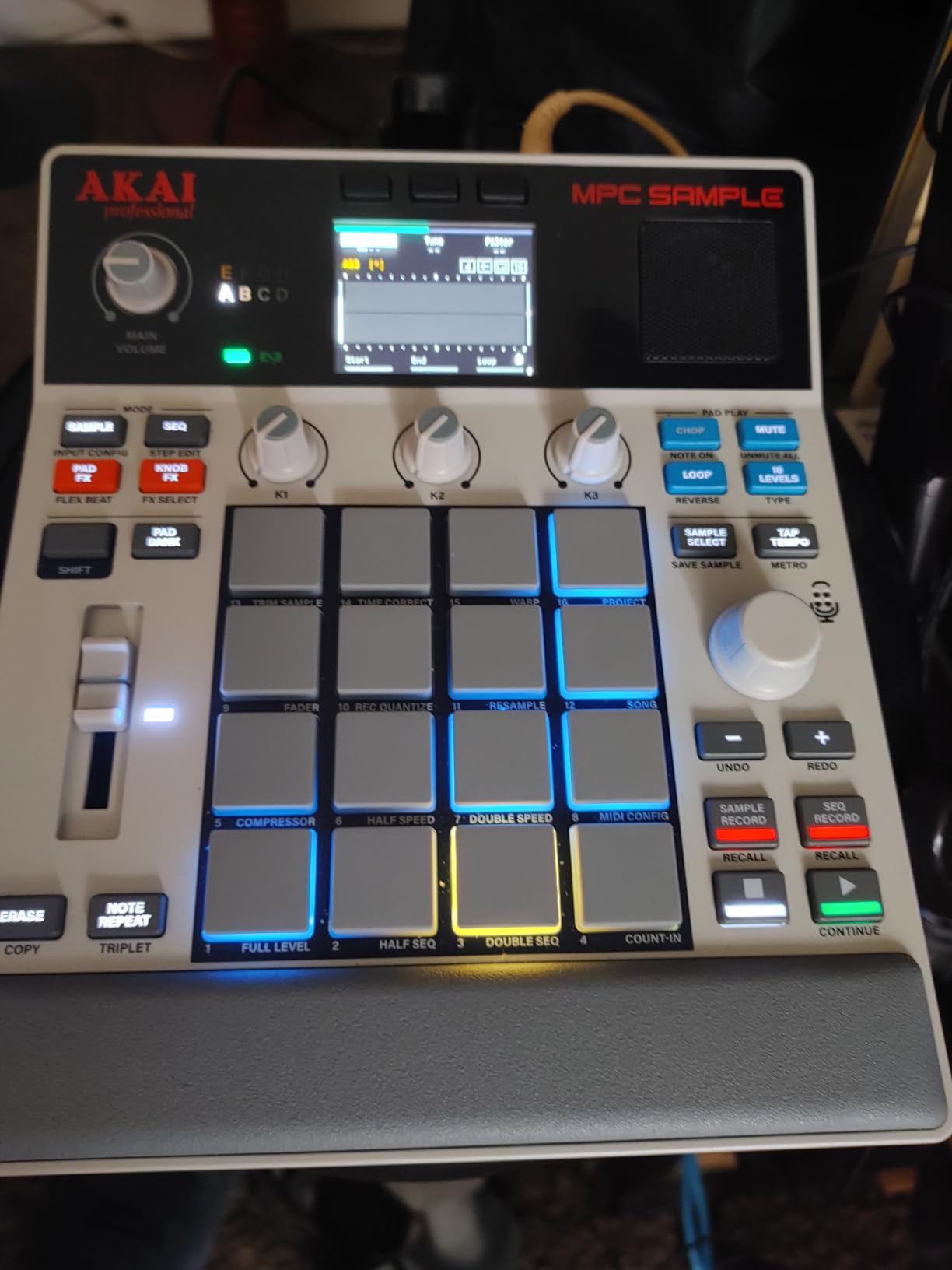
The Akai MPC Sample is the sampler I keep reaching for when I want to capture a sound the moment inspiration hits. I tested it over six weeks, dragging it to cafes, my studio, and one park bench, and the battery consistently lasted around five hours. The built-in microphone is surprisingly clean, which made field recording almost addictive; I chopped a conversation into a hi-hat pattern within ten minutes.
The 16 MPC pads are the headline feature. They feel like the pads on the larger MPCs, with proper velocity sensitivity and poly aftertouch. Finger drumming on this thing actually feels expressive rather than clicky. The 2.4-inch color display is small but readable, and the chopping workflow borrows directly from the MPC line, so existing Akai users will feel right at home.
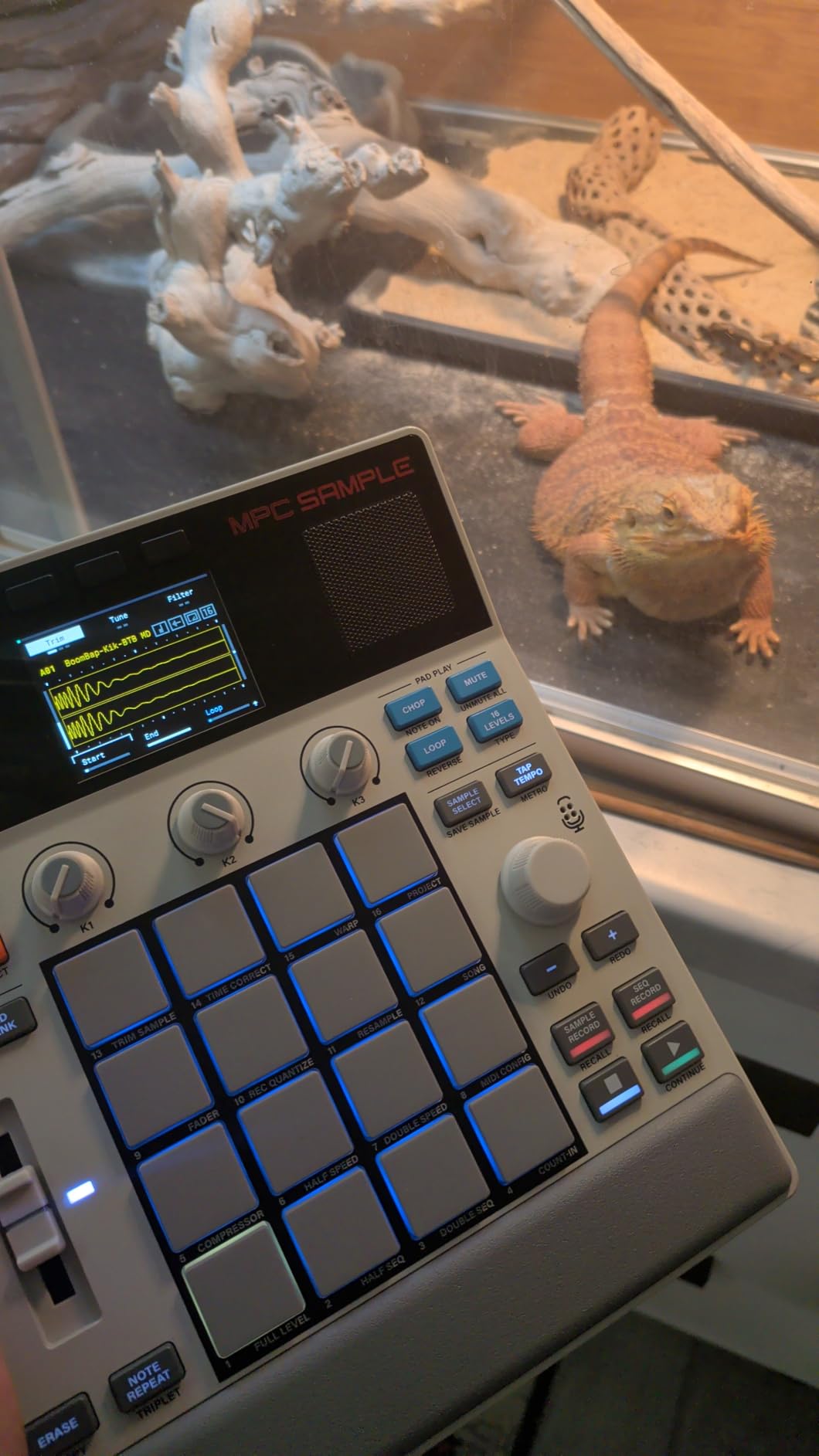
Where the MPC Sample surprised me was in sound design. With 60 effect types spread across four FX processors and full timestretch plus repitch, I was able to turn a single snare sample into a half-time trap groove, a glitchy IDM texture, and a dub echo in one sitting. The USB-C audio and MIDI connectivity plus stereo 1/4-inch line I/O mean it slots into a studio setup just as easily as a couch jam.
For me the MPC Sample is the best sampler for beginners who want room to grow and the best portable sampler for producers who do not want to haul a workstation. It is the strongest blend of authenticity, portability, and workflow in this list.
What I liked about the workflow
The pad response is genuinely musical, and aftertouch adds a dimension most portable samplers ignore. I used it as a MIDI controller for my DAW and the pad-to-software mapping was fast. The factory kits cover everything from boom-bap to house, so you can produce full tracks before loading a single sample.
What I wished was better
The built-in speaker is fine for sketching ideas but quiet for group playback. Resampling is limited compared to the SP-404MKII, and the step sequencer becomes cumbersome once a pattern grows past 64 steps. For live performance, you will still want a larger unit or pair it with another box.
2. Roland SP-404MKII: The Best Sampler for Live Performance and Hip-Hop
Roland SP-404MKII Creative Sampler and Effector
32-voice polyphony
17 RGB velocity pads
16GB storage with effects
Pros
- Fast and intuitive workflow with vivid OLED display
- 32-voice polyphony and 160 samples per project
- Versatile power including USB-C and AA batteries
- 144 pre-loaded samples and patterns
- Extensive onboard effects including SP classics
- Lightweight at 2.6 pounds and road-ready
Cons
- Steep learning curve once you go past the pads
- Menus are deep and take time to memorize
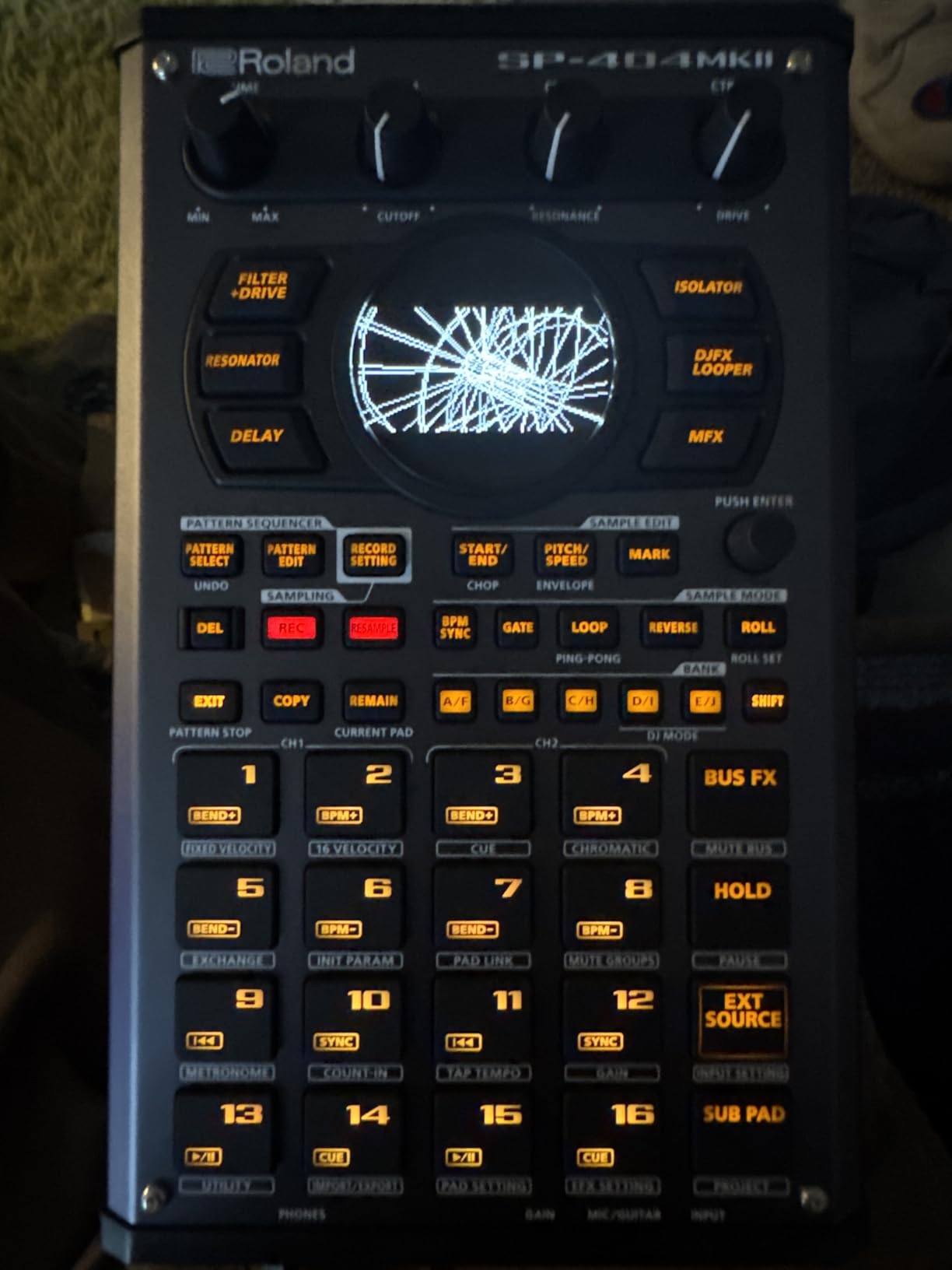
Roland’s SP-404MKII is the box hip-hop producers and live performers keep circling back to. After two months of daily use, I can confirm the hype. The OLED display, RGB pads, and resampling workflow make it feel like an instrument rather than a tool, and the effect suite is the deepest I have tested in a portable sampler.
The SP-404MKII’s killer feature is its speed. I went from sample load to finished beat in under three minutes. The auto-chop mode sliced a one-minute jazz record into 16 usable chops with one button press, and the Skip Back Sampling feature captured whatever I had just played without interrupting the flow. For finger drumming, the 17 velocity-sensitive pads feel incredible.
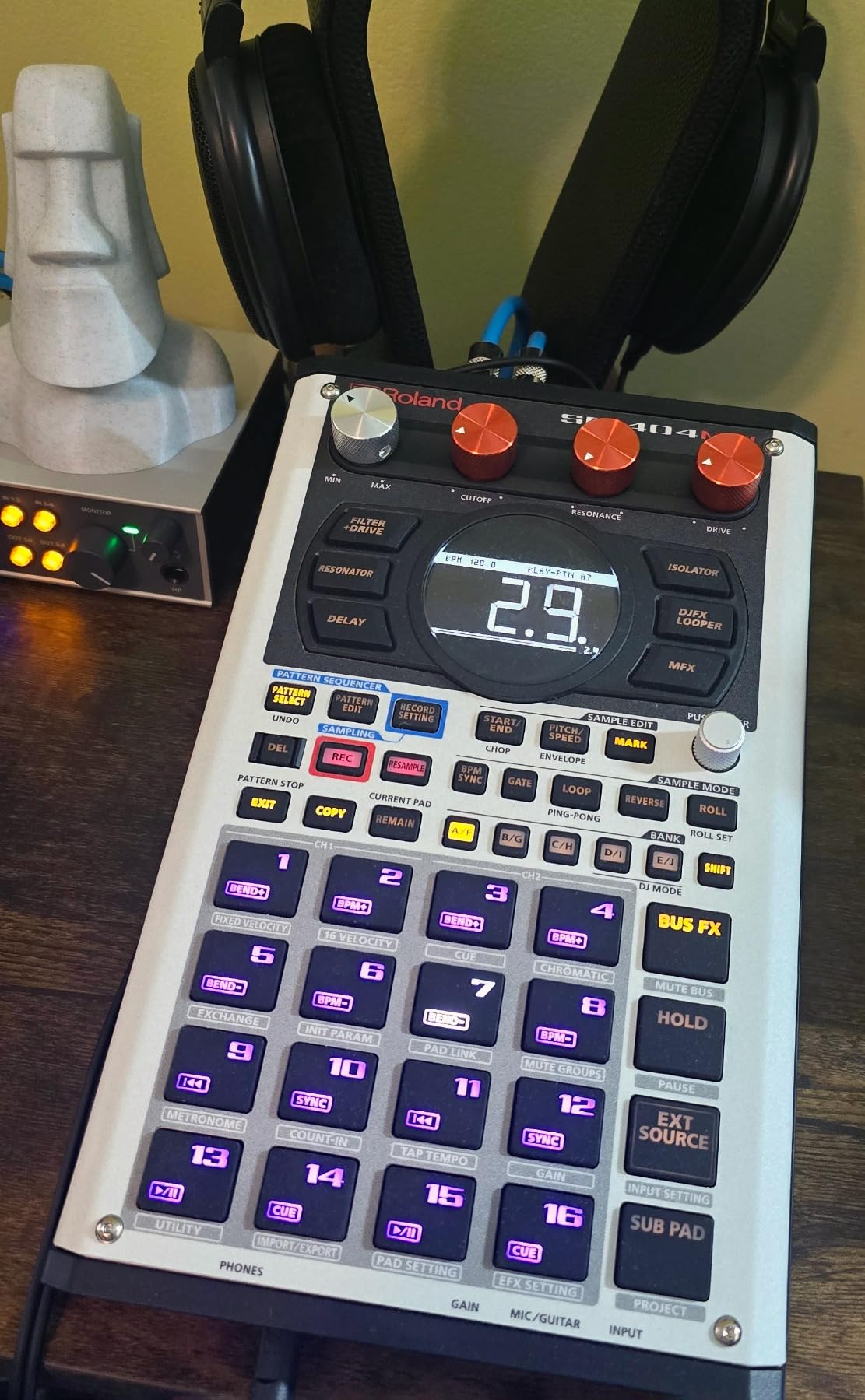
The MKII runs on USB-C, AA batteries, or AC, which makes it the most battery-friendly option in this roundup besides the MPC Sample. I took it to two DJ sets and a house party, and it never skipped a beat. On r/synthesizers and the SP-404 community forums, producers regularly describe it as an effects box and audio interface first, sampler second, which matches my experience.
The catch is depth. There are a lot of menus, and parameter locks, MASH effects, and pattern chaining all have their own learning curves. I spent a solid week before I felt efficient. But once it clicks, the SP-404MKII is the most rewarding sampler in this lineup, hands down.
Who this is best for
The SP-404MKII is the best sampler for live performance and the best sampler for hip-hop production in this guide. If you perform on stage, finger drum, or use Ableton Live as your DAW, the MKII will earn its keep within a month. Producers working in lo-fi, house, and boom-bap also consistently praise its character.
Where it falls short
It is not the deepest sequencer. Compared to the Digitakt, parameter automation per step is limited. The screen is small for serious sample editing, and loading large sample libraries takes patience. If you need tracker-level sequencing, look at the Polyend Tracker instead.
3. Novation Circuit Rhythm: Best Standalone Sampler for Live Sets
Novation Circuit Rhythm Sampler and Groovebox
Standalone 8-track sampler
4-hour battery life
MIDI in/out/thru and microSD
Pros
- Standalone capability with built-in battery
- Slice
- sculpt
- and resample sounds effortlessly
- Performance FX for dynamic and textured beats
- Eight sample tracks with chainable 32-step patterns
- Intuitive and tactile grid workflow
Cons
- No screen makes slicing difficult at first
- Slow sample saving process
- Limited microsteps (6 per step)
- MIDI implementation could be deeper
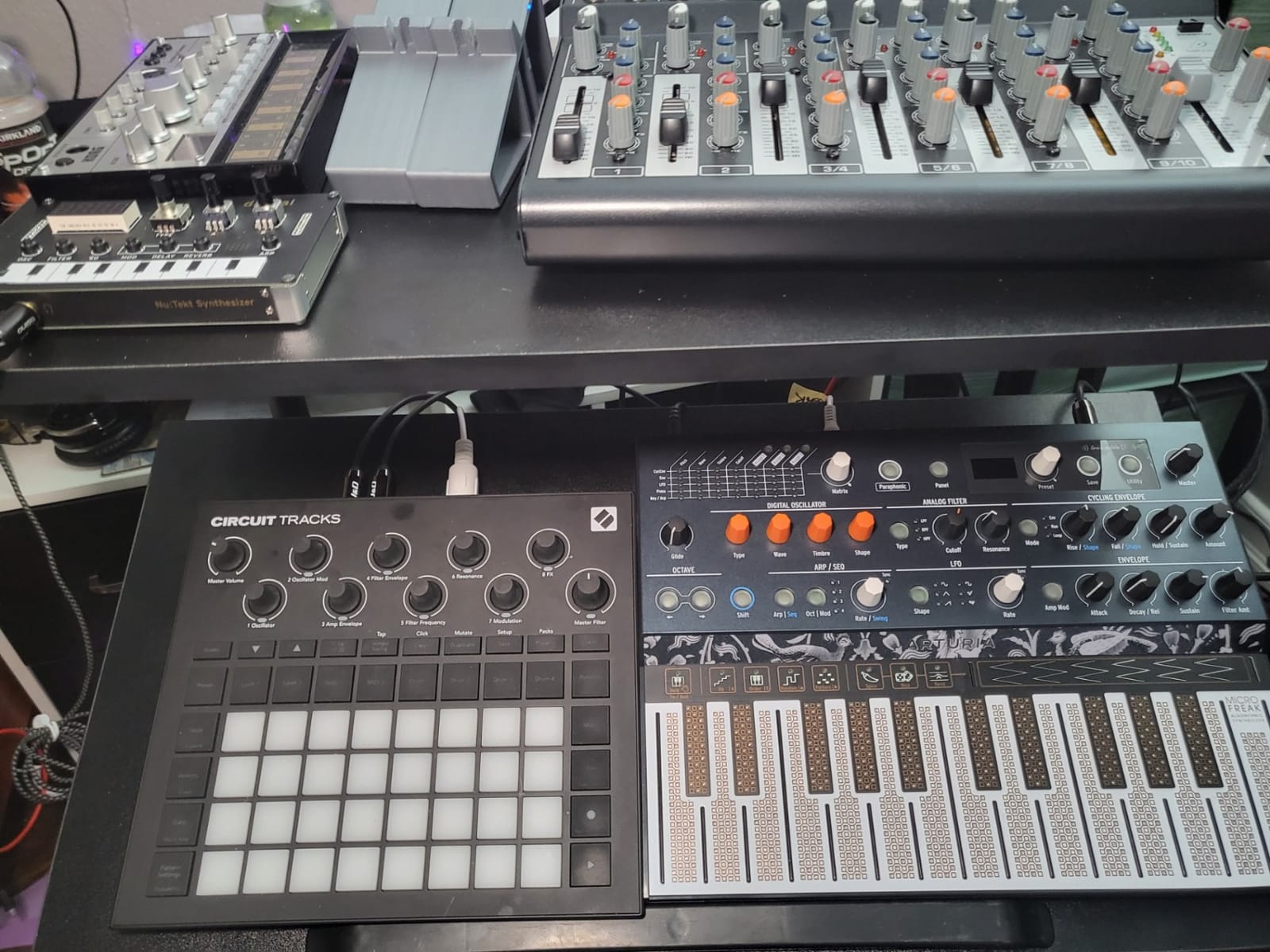
The Novation Circuit Rhythm is the most fun I have had with a sampler in a long time. Its 4×8 grid of RGB pads invites experimentation, and the 4-hour battery makes it a true grab-and-go performance box. I used it for two weeks of improv sets and the workflow is fast, expressive, and forgiving.
Sampling is one-touch. You drop a sample, hit Sample, and the unit auto-chops it into the eight pads. From there you can slice, reverse, loop, and resample with the dedicated buttons. The Performance FX section, which includes lo-fi tape, stutter, and beat repeat, is the most playable of any sampler at this level. Pushing the sidechain or reverb while a beat plays feels like performing on a synth.
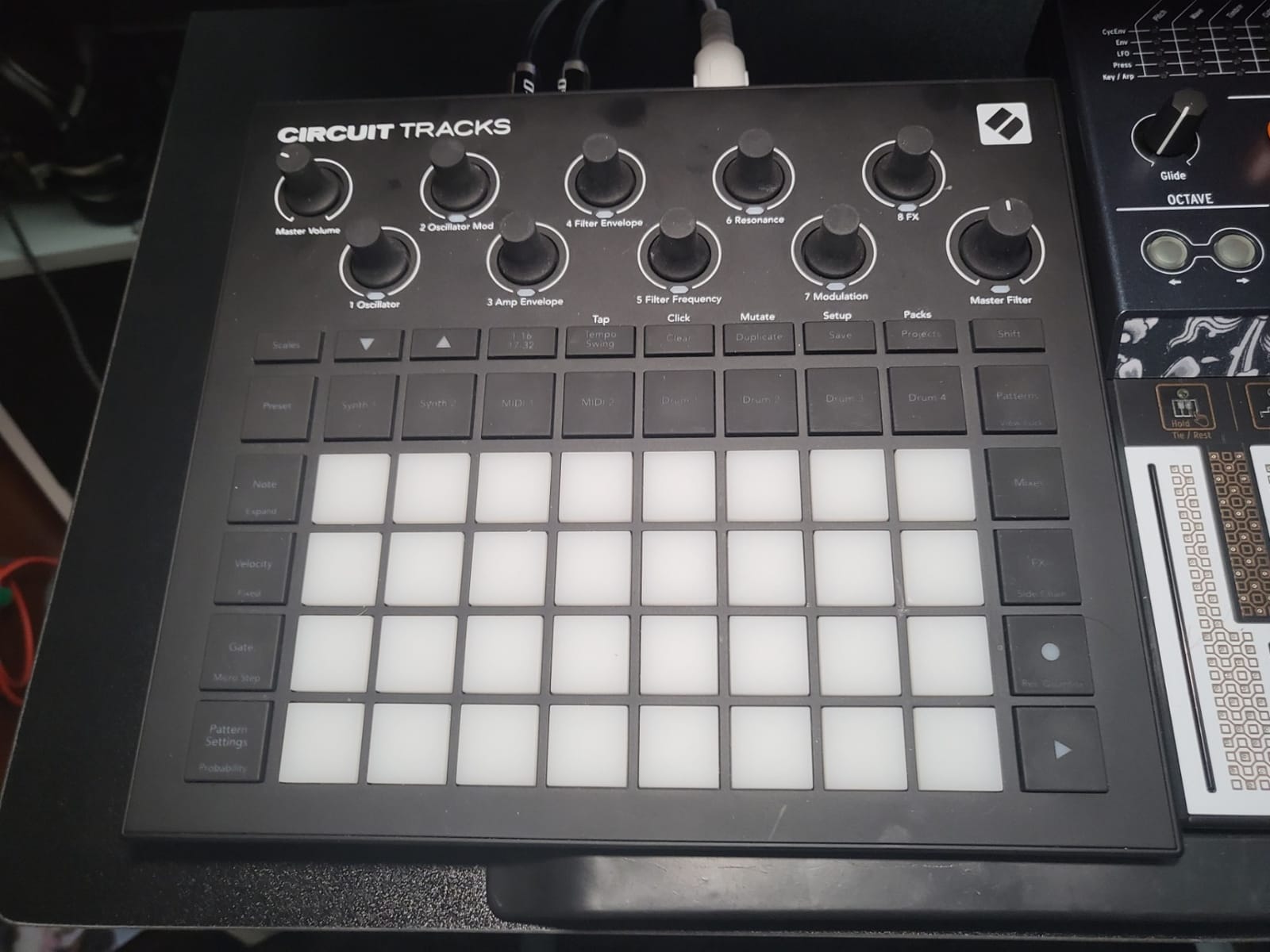
The pattern sequencer is a workhorse. Each of the eight tracks has its own 32-step pattern, and you can chain them for sequences up to 256 steps. For live performance, the Grid FX section lets you mangle beats in real time without menu diving. Combined with the microSD slot for storing projects, the Circuit Rhythm covers most live-set needs.
The honest drawback is the lack of a screen. Slicing requires counting bars on the LEDs, and the slow sample-saving process frustrated me the first few days. Compared to the SP-404MKII, the sample editing is shallow. But for performance and beatmaking, the Circuit Rhythm is a strong contender.
What I liked about the workflow
The grid workflow is the cleanest I have used for live sampling. Chaining patterns is intuitive, and the Performance FX row genuinely changes how you play. It pairs well with Ableton Live and other MIDI gear.
Where I struggled
Without a screen, you are sometimes guessing where in the waveform you are slicing. Sample loading over USB-C is slow. The MIDI implementation does not dig as deep as Elektron’s, so deep MIDI routing is limited.
4. Teenage Engineering EP-133 K.O. II: Best Budget Sampler for Beatmakers
teenage engineering EP–133 K.O. II 128MB sampler, drum machine and sequencer with built-in microphone and effects
128MB memory, 999 slots
12 punch-in 2.0 effects
AAA battery or USB-C power
Pros
- Powerful sampling and intuitive sequencer
- Built-in microphone and speaker
- Sync in/out and MIDI in/out
- Compact and portable with 4x AAA power
- Song mode for full compositions up to 9801 bars
- Distinctive Teenage Engineering aesthetic
Cons
- Limited storage with no SD card expansion
- Only 9 beats available at once
- Minimal manual requires YouTube tutorials
The Teenage Engineering EP-133 K.O. II is the spiritual successor to the cult-classic PO-33 K.O!, and it improves on the original in nearly every way. I tested the OS 2.0 firmware, and the additions of resampling, chopping, sidechain, and a real song mode turned what was a sketchpad into a proper composition tool.
The workflow is fast. You sample from the built-in mic or line-in, hit a pad, and the sample is on a button. The 12 punch-in 2.0 effects add grit and texture without menu diving, and the multifunctional fader handles stereo panning, filter cutoff, and effect throws. For beatmaking on the couch or on the move, it is one of the most inspiring boxes I have touched.
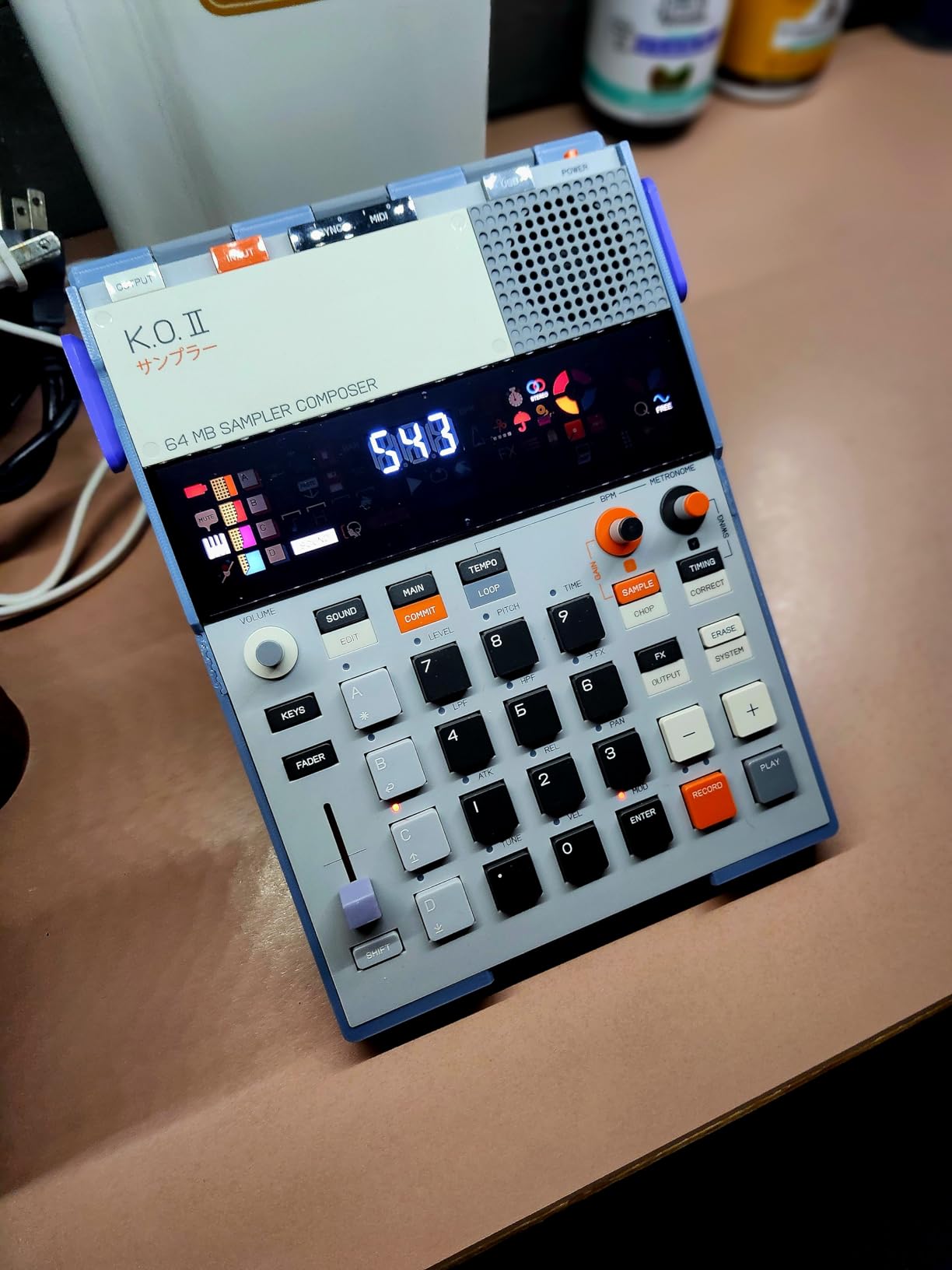
The honest complaint is storage. 128MB sounds like a lot until you start loading long samples. There is no SD card slot, so you top out at 999 slots. Producers who want deep sample libraries will run out of room fast. But for sketching, beatmaking, and field recording, the EP-133 K.O. II is the best budget sampler in 2026 for creative speed.
Best use cases
This is the best sampler for beginners who want character and the best sampler for hip-hop beatmakers on the move. The 4-track sequencer with 12 stereo voices keeps things lean and immediate. The MIDI in/out plus Sync in/out let it chain with other Teenage Engineering or pocket-operator gear.
Where it falls short
128MB fills quickly with long samples. The minimal manual means new users will need YouTube tutorials to learn the workflow. Some power features, like per-step automation, are absent.
5. Yamaha SEQTRAK: Best All-in-One Mobile Ideastation
Yamaha SEQTRAK Mobile Music Ideastation, Advanced Sequencer, Onboard Sampling, Built-In Speakers and Microphone, Black
Drums, synths, sampling, sequencing
Built-in mic and speaker
Rechargeable battery
Pros
- Tactile and hands-on interface without relying on a screen
- All-in-one drums
- synths
- sound design
- and sequencing
- Compact
- lightweight
- and portable with battery
- Built-in speaker and microphone for sampling
- Excellent Yamaha sound quality
- Companion app extends functionality significantly
Cons
- Plastic build feels a little cheap
- Synth keys lack velocity sensitivity
- Steep learning curve with many button combos
- Onboard sampler is limited compared to dedicated units
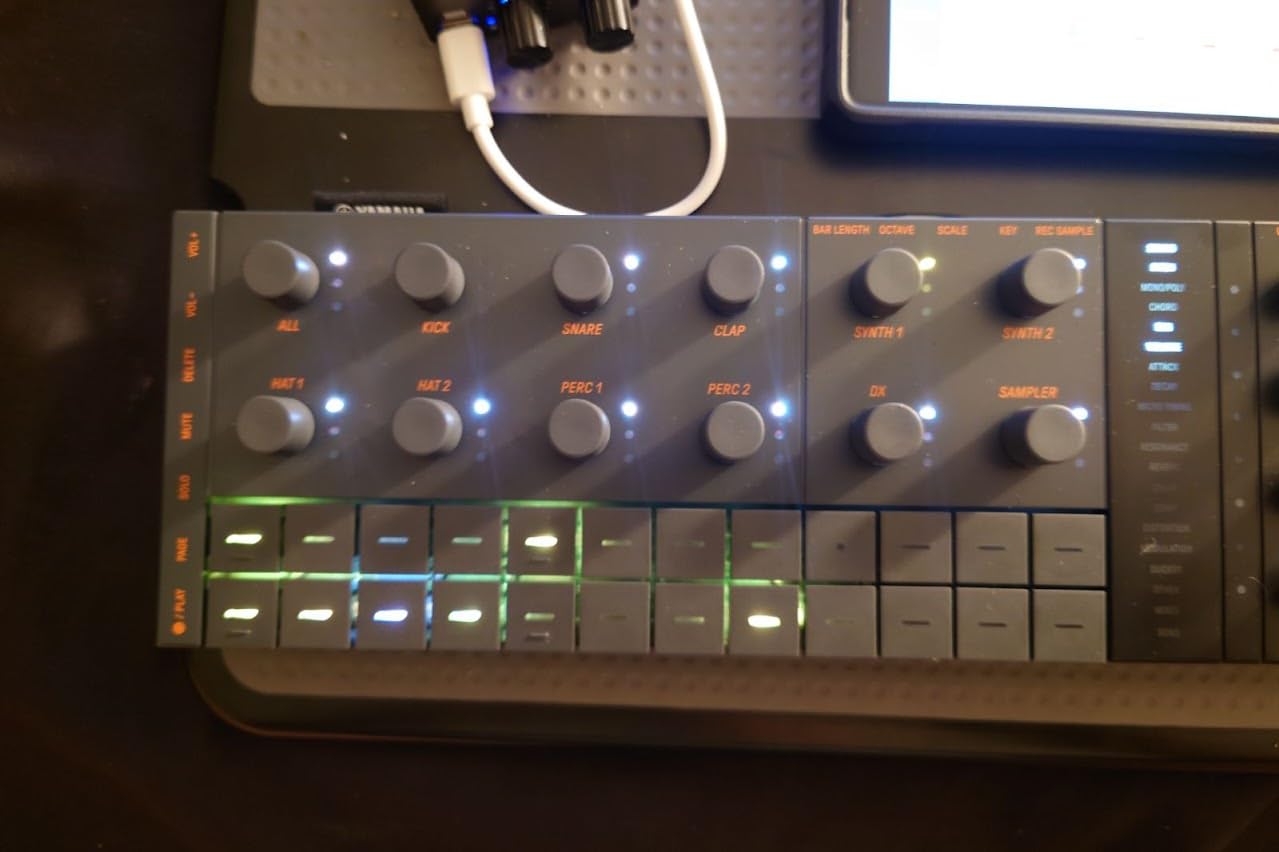
Yamaha’s SEQTRAK is an interesting hybrid: drums, synths, sampling, and sequencing in a single battery-powered box. I took it on a two-week test and found it shines as a sketchpad. The 3-part interface lets you switch between drum programming, synth bass, and sound design without menu diving.
The 2.0 firmware update expanded capabilities significantly, and the companion app for iOS, Android, Windows, and Mac extends the workflow further. The built-in mic is good enough for sketching field recordings, and the speaker is loud enough to jam with. As an ideastation, the SEQTRAK delivers exactly what it promises.
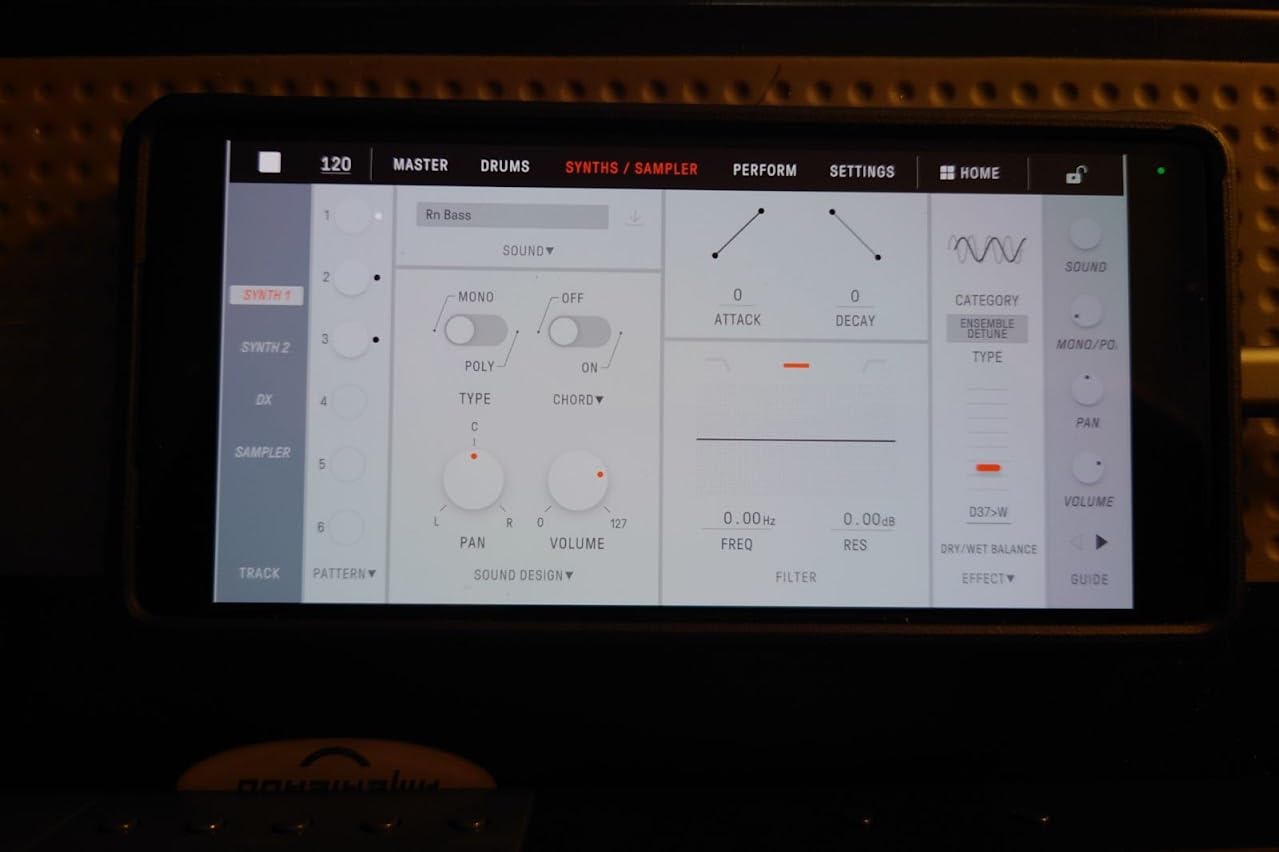
The limitations show up when you push it as a dedicated sampler. The onboard sampler is shallow compared to the SP-404MKII or MPC Sample, and the synth keys lack velocity sensitivity, which hurts expressive playing. The plastic build also feels a step below competitors like the MPC Sample. But for a single-box sketchpad, nothing else combines drums, synths, and sampling this cleanly.
Best fit
If you want one device for drums, bass, and sampling on the move, the SEQTRAK delivers. It is the best all-in-one option in this list for producers who prefer hardware over a laptop.
Where it falls short
It is not a deep sampler. The synth keys lack aftertouch. Some users report defects out of the box, so buy from a trusted source. For pure sampling workflows, the MPC Sample or SP-404MKII will serve better.
6. Elektron Model:Samples: Best for Parameter Locks and Customization
Elektron Model:Samples Six Track Sample Based Groovebox
6-track groovebox
Parameter locks per step
1GB storage and MIDI I/O
Pros
- High build quality with a compact design
- Excellent parameter locking for per-step automation
- 1GB of sample storage space
- Compact and lightweight
- Assignable LFO per track
- Comes loaded with pro-quality samples and patterns
Cons
- Cannot sample directly from external sources
- Stiff pads limit finger drumming
- Limited to 24 different samples per sequence
The Elektron Model:Samples is the best sampler for sound design in this list, period. Parameter locks let you change filter cutoff, LFO speed, or sample slot on every step of a pattern, which means a single 16-step pattern can sound like a fully produced arrangement. I spent hours dialing in per-step automation and never hit a wall.
The workflow is unmistakably Elektron. Six tracks, six pads, six dedicated buttons, and a deep but logical menu system. Once you understand the Elektron philosophy, you can build beats that would take much longer on competing units. The 1GB of storage holds a serious sample library, and MIDI I/O plus analog sync let it play nicely with modular gear.
The catch is that the Model:Samples cannot record samples directly from external sources. You load samples over USB using the Elektronauts-friendly Transfer software. The pads are stiff, so finger drumming is not its strong suit. It is a beatmaking engine for tweakers, not a performance pad.
Best use cases
Electronic producers who love per-step automation and want a deep groovebox engine will love this. It pairs beautifully with the Elektron Syntakt and Digitakt, which the forums frequently recommend. As an introduction to Elektron gear under $500, it is hard to beat.
Where it falls short
No direct sampling. Stiff pads. The 24-sample-per-sequence limit frustrates producers with larger libraries. If your priority is sampling on the move, look at the SP-404MKII instead.
7. Korg electribe Sampler (ESX Red): Best for Pattern Chaining and Full Songs
Korg electribe Sampler in ESX Red with V2.0 Software ELECTRIBE2SRD
Pattern chaining for songs
Per-part LFO and filters
AC or battery power
Pros
- Pattern chaining allows full song creation
- Versatile groovebox with each part having its own LFO
- Solid metal construction
- Battery-powered for portable use
- Backlit screen and good LED UI
- Includes Ableton Live 9 Lite license
Cons
- Limited sample memory requires deleting factory sounds
- Synth engine struggles with many oscillators at once
- No choke or mute groups
- Reduced sequence sizes versus the original ESX
The Korg electribe Sampler is a classic for a reason. Pattern chaining lets you string patterns together into a full song, and the per-part LFO plus motion sequencing turns static beats into evolving arrangements. I tested the ESX Red over three weeks and used it to sketch three full demos without ever touching a DAW.
The interface is button-heavy but logical. Each part has its own filter, LFO, and effects slot, which gives you serious sound-design power in a small box. The metal chassis feels sturdy, and the battery operation makes it portable. Ableton Live 9 Lite is included, which is a nice bonus for users who want to bridge hardware and software.
The biggest drawback is sample memory. To make room for custom samples, you have to delete factory sounds. The synth engine also voice-steals when too many oscillators are active. There are no choke or mute groups, which limits live drum performance. Still, for song building and creative exploration, the electribe holds up.
Best fit
Producers who want to arrange full songs on hardware and value per-part modulation will find a lot to love here. It is a great entry point for Korg’s groovebox philosophy.
Where it falls short
Sample memory fills quickly. The synth engine is not the deepest. The price has crept up over the years, which makes the value harder to justify versus newer options like the MPC Sample.
8. Korg Volca Sample 2: Best Budget Sampler for Beginners
Korg Volca Sample 2 Digital Sample Sequencer Drum Machine w/Pattern Chain Mode and 16-step Sequencer
8-voice polyphony
16-step sequencer with chain mode
AA battery or USB power
Pros
- Compact and powerful sample-based drum machine
- 16-step sequencer with pattern chain mode
- Affordable price point with battery power
- Good build quality for the size
- USB port for sample loading with Librarian software
- Integrated speaker and headphone output
Cons
- Small buttons and knobs can be tricky
- Korg Librarian software can feel clunky
- Limited 8-voice polyphony
- Sample loading tricky on some Windows setups
The Korg Volca Sample 2 is the best budget sampler and the best sampler for beginners in 2026. For less than a dinner out, you get an 8-voice polyphonic sample drum machine with a real 16-step sequencer, pattern chaining, and battery power. I keep one on a shelf as a sketchpad, and it has produced more usable beats than units costing five times as much.
The workflow is immediate. Drop a sample, hit a step, repeat. The pattern chain mode lets you sequence up to 64 patterns in a single song, and the integrated speaker means you can jam anywhere. The double-memory upgrade over the original Volca Sample is a welcome change. The Volca Sample 2 is widely recommended on r/synthesizers as the entry point into hardware sampling.
The drawbacks are real but expected at this price. Polyphony caps at 8 voices, the Librarian software is clunky on Windows, and the small buttons require patience. Sample loading on Windows can be a hassle. But for value and approachability, no other sampler on this list matches it.
Best fit
Anyone dipping their toes into hardware sampling should start here. It is the cheapest way to learn sequencing, chopping, and pattern chaining without compromise on the core workflow.
Where it falls short
No mic input, no real-time effects, limited memory, no screen. It is a drum machine first and a sampler second, but it is an excellent drum machine at that.
9. Sonicware Liven Lofi-12: Best for Lo-Fi and 12-bit Character
Sonicware Liven Lofi-12 [Lo-fi Groovebox & Sampler] Retro sampling with 12bit Sampler mode, 4-track step sequencer, 10 voices, 12 Track Effects + 9 Master Effect, Battery-powered, Built-in speaker
12-bit retro sampler mode
4-track sequencer
10 voices, 21 effects
Pros
- Retro 12-bit sampling mode captures lo-fi character
- Compact and battery-powered for portability
- Powerful 4-track sequencer with parameter and sound locking
- Built-in speaker for spontaneous creation
- Fun and creative workflow with the Laid-back knob
Cons
- All-plastic construction feels light
- AR envelopes instead of ADSR
- Single shared LFO
- Pattern chaining rules are restrictive
- Learning curve can be steep for newcomers
The Sonicware Liven Lofi-12 is the most character-driven sampler in this list. The 12-bit sampling mode imparts the gritty, crushed character that lo-fi and chiptune producers chase, and the Laid-back knob creates swing that sounds genuinely drunk. I used it for a week of lo-fi hip-hop sketching and was impressed by how inspiring the workflow felt.
The 4-track sequencer with parameter and sound locking is deeper than it looks. You can lock filter cutoff, sample slot, or effect on every step, which makes the Lofi-12 a serious composition tool. The 21 effects across tracks and master give you enough sound design range to cover most lo-fi and IDM needs.
The plastic construction and AR envelopes instead of full ADSR are real limitations. There is only one shared LFO, which limits modulation depth. The pattern chaining rules are restrictive. But for lo-fi character, nothing else on this list comes close at this size.
Best fit
Producers working in lo-fi hip-hop, chiptune, IDM, or experimental beats. Anyone chasing character over clinical cleanliness.
Where it falls short
Plastic build, basic envelopes, single LFO. Not a great choice if you want clean, transparent sampling.
10. Sonicware SmplTrek: Best Portable Sampler With USB Audio Interface
Sonicware SmplTrek [Portable Production Sampler] Compact, lightweight and battery powered Drum Machine & Sampler with Built-in Mic & Speaker
One-touch sample recording
2-in/2-out USB audio interface
1000+ samples included
Pros
- Compact and lightweight with battery power
- Built-in microphone unlike most portable samplers
- Scene-based DAW concept with MIDI in/out/thru
- Built-in speaker for instant playback
- Configurable pad colors for visual workflow
- Functions as a 2-in/2-out USB audio interface
- 1000+ samples included from Black Octopus
Cons
- Small 1.5-inch screen
- Speaker has limited volume and clarity
- SDXC cards not supported (SDHC up to 32GB only)
- Limited piano roll editing
- Plastic build but feels solid
The Sonicware SmplTrek is the most versatile portable sampler I tested. It combines a scene-based DAW concept, a built-in microphone, and a 2-in/2-out USB audio interface in a battery-powered 550-gram box. I used it as the centerpiece of a portable studio and was impressed by how much it could replace.
![Sonicware SmplTrek [Portable Production Sampler] Compact, lightweight and battery powered Drum Machine & Sampler with Built-in Mic & Speaker customer photo 1](https://nabihamusic.com/wp-content/uploads/2026/09/B0BLC3PVPC_customer_1.jpg)
One-touch recording with auto-slicing is fast. The time-stretching keeps samples in tempo, and the pitch-changing keeps them in key. With 16 scenes per project, 10 sequencer tracks, and 3 audio tracks, the SmplTrek covers more compositional ground than any other portable sampler I tested. The Black Octopus sample pack alone is worth a significant portion of the price.
The downsides are real. The 1.5-inch screen makes editing tight. The speaker is quiet. SDXC cards are not supported, so you are capped at 32GB SDHC. Piano roll editing cannot adjust note duration or gates, which limits melodic programming. But as a portable production centerpiece with audio interface functionality, the SmplTrek is hard to beat.
Best fit
Producers who want a single battery-powered box that samples, sequences, and functions as an audio interface. Podcasters, field recordists, and traveling producers will love the form factor.
Where it falls short
Small screen, limited piano roll, quiet speaker. SDHC-only storage.
How to Choose the Best Sampler for Your Needs
Choosing the best sampler comes down to matching the unit to your workflow. After testing all 10 of these samplers, our team has a clear view on the major decision points.
Sample Memory and Storage
Sample memory determines how many sounds you can keep loaded at once. The Roland SP-404MKII leads with 16GB of internal storage, while the Teenage Engineering EP-133 K.O. II tops out at 128MB with no expansion. If you plan to load large sample libraries, prioritize SD card slots and high internal storage. The MPC Sample uses microSD, and the Circuit Rhythm supports microSD as well. For most producers, expandable storage is non-negotiable.
Sequencing Depth and Parameter Locks
Sequencer depth separates a sampler from a groovebox. The Elektron Model:Samples and Digitakt-class devices excel at parameter locks, which let you change filter cutoff, LFO, or sample slot on every step. The Korg Volca Sample 2 and Circuit Rhythm offer pattern chaining for full songs, while the Polyend-class trackers deliver tracker-style composition. Match the sequencer to how you like to build beats.
Audio I/O and Connectivity
Audio I/O matters more than most buyers expect. The MPC Sample, SP-404MKII, and SmplTrek offer stereo line in/out plus headphone outputs, while the Volca Sample 2 and EP-133 K.O. II are headphone-only. MIDI in/out/thru is essential for hardware integration. CV/Gate matters if you use modular synths. The Model:Samples and Circuit Rhythm are well-equipped for studio and live setups.
Effects and Sound Design
Effects quality separates good samplers from great ones. The SP-404MKII has the deepest effects suite of any portable sampler, with classic SP effects plus Lo-fi, Cassette Simulator, and Resonator. The Liven Lofi-12 leans hard into lo-fi character. The MPC Sample and SmplTrek offer 60 and 30 internal effects respectively, covering most needs.
Battery and Portability
Battery-powered samplers are perfect for field recording, plane jams, and couch sessions. The MPC Sample, SP-404MKII, Circuit Rhythm, EP-133 K.O. II, SEQTRAK, Liven Lofi-12, and SmplTrek all run on batteries. The Korg electribe and Volca Sample 2 also accept AA power. If portability matters, prioritize a unit with both battery and built-in speaker.
Hardware vs Software Samplers
Hardware samplers offer tactile control and inspiration that software cannot replicate, but they are not the right tool for every job. For sample library management, stem separation, and complex routing, software samplers like Serato Sample, LANDR Sampler, and Ableton’s Simpler and Sampler instruments lead the field. Many producers use both, sketching on hardware and finalizing in a DAW. The hybrid approach is the most common workflow in 2026.
Best Samplers by Genre and Use Case
If you are choosing by genre or use case rather than by raw feature count, here is what our testing and the forum community recommend.
For hip-hop production, the Roland SP-404MKII and the Akai MPC Sample are the strongest choices. The SP-404MKII is favored for finger drumming and effects, while the MPC Sample offers authentic Akai chops and battery portability. The Teenage Engineering EP-133 K.O. II is the best budget sampler for beatmakers starting out.
For techno and house, the Elektron Model:Samples stands out for parameter locks. Pair it with a Digitakt or Syntakt for a full Elektron rig. The Novation Circuit Rhythm also performs well for live techno sets thanks to its performance FX.
For ambient and sound design, the Sonicware Liven Lofi-12 delivers character through 12-bit crunch. For clean, studio-grade sound design, the Elektron Model:Samples plus a good effects chain works well.
For live performance, the Roland SP-404MKII and Novation Circuit Rhythm are our top picks. Both are reliable on stage, easy to operate, and expressive enough for a full live show.
For beginners, the Korg Volca Sample 2 remains the best budget sampler to start on. The Teenage Engineering EP-133 K.O. II is the upgrade path once you outgrow the Volca.
SP-404MK2 vs Digitakt II vs MPC Sample: Quick Comparison
Three boxes dominate the forum discussion, so here is a direct head-to-head.
The SP-404MKII wins on performance feel, effects quality, and battery portability. Its OLED display and RGB pads make it the most tactile. The trade-off is menu depth and slower library management.
The Digitakt-class Elektron boxes win on sequencing depth and parameter locks. The trade-off is mono sampling on older units and a stiffer learning curve.
The MPC Sample wins on authentic Akai workflow, built-in mic and speaker, and the cleanest path from sample to arrangement. It is the best balanced option for producers who want one box that does everything.
For most producers, the choice comes down to whether you prioritize performance (SP-404MKII), sequencing depth (Digitakt), or all-around balance (MPC Sample). I personally reach for the MPC Sample most often and the SP-404MKII for live sets.
Frequently Asked Questions
What are the best samplers ever made?
The most iconic hardware samplers include the Fairlight CMI, E-mu Emulator, Akai S1000, Roland SP-404 series, Akai MPC line, and Elektron Octatrack. In 2026, the Roland SP-404MKII, Akai MPC Sample, and Elektron Digitakt II are the modern classics most producers reach for.
What are the best affordable samplers for music production?
For under $400, the Korg Volca Sample 2 is the best budget sampler for beginners. The Teenage Engineering EP-133 K.O. II adds more depth for a similar price. The Akai MPC Sample delivers the best value for the money if you want an all-rounder.
What are the best hardware samplers in 2026?
The best hardware samplers in 2026 include the Akai MPC Sample (best overall), Roland SP-404MKII (best for live performance and hip-hop), Novation Circuit Rhythm (best standalone for live sets), Teenage Engineering EP-133 K.O. II (best budget), and Elektron Model:Samples (best for sound design).
Which DAW has the best sampler?
Ableton Live has the deepest built-in sampler instruments (Simpler and Sampler) plus extensive Max for Live extensions. Bitwig Studio’s Sampler is also highly regarded. For pure sampling, many producers use a hardware sampler for sketching and a DAW for arrangement.
Is the SP-404MK2 good for live performances?
Yes, the Roland SP-404MKII is widely considered the best sampler for live performance. Its RGB pads, OLED display, deep effects suite, and battery power make it reliable on stage. Producers like JPEGMAFIA and Metro Boomin use SP-404 series units for live sets.
What are some alternatives to the Roland SP-404?
Strong alternatives to the SP-404MKII include the Akai MPC Sample (best all-around), Novation Circuit Rhythm (best standalone for live sets), Teenage Engineering EP-133 K.O. II (best budget option), and Elektron Model:Samples (best for sound design and parameter locks).
What is the difference between Digitakt and SP-404MK2 in terms of performance?
The Digitakt excels at parameter locks and per-step automation, with deep sequencing for techno and electronic styles. The SP-404MKII excels at performance feel, effects quality, and battery portability for live shows. Choose Digitakt for sequencing depth, SP-404MKII for live performance and hip-hop.
Which is better for me, the Akai MPC or the Roland SP-404?
The Akai MPC Sample is best for producers who want authentic Akai workflow, built-in mic and speaker, and balanced all-around performance. The Roland SP-404MKII is best for live performance, finger drumming, and effects-heavy hip-hop. If you perform live, choose the SP-404MKII. If you want one box that does everything, choose the MPC Sample.
Final Verdict: Which Sampler Should You Buy?
If I had to pick one sampler from this list, I would choose the Akai MPC Sample. It is the best sampler for the money because it combines authentic Akai workflow, battery portability, built-in mic and speaker, and a sensible price. For producers who want one box that does everything, it is the strongest option in 2026.
That said, the right pick depends on what you make. The Roland SP-404MKII is the best sampler for live performance and hip-hop. The Korg Volca Sample 2 is the best budget sampler for beginners. The Novation Circuit Rhythm is the best standalone for live sets. The Teenage Engineering EP-133 K.O. II is the best budget sampler for beatmakers on the move. And the Elektron Model:Samples is the best sampler for sound design and parameter locks.
Hardware samplers are some of the most inspiring tools in modern music production, and any of the 10 units in this guide will serve you well. Pick the one that matches your workflow, your studio setup, and your budget, and start sampling.