
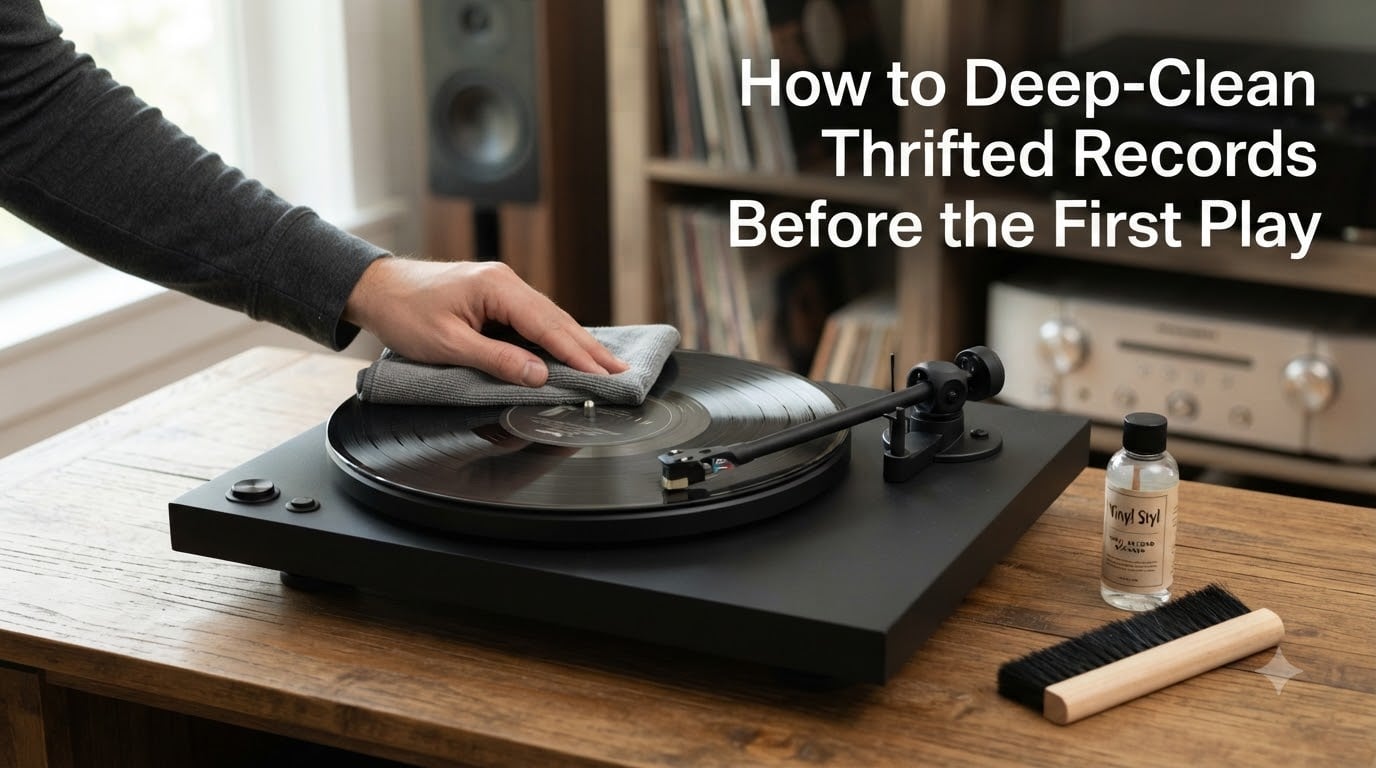
Thrift store vinyl is one of the best deals in music. A dollar or two can land you a near-mint pressing that nobody is buying digitally anymore. But before you drop the needle on a thrifted record, you need to deep clean it. Dust, fingerprints, sticky residue, smoke smell, and mystery grime all hide in the grooves, and they can damage your stylus and ruin your listening session in seconds.
I have been digging through thrift store crates for years, and I have learned the hard way that skipping the cleaning step is never worth it. In this guide, I will walk you through exactly how to deep clean thrifted records before the first play using safe, vinyl-tested methods that work whether you are working with a $2 flea market find or a $200 vintage pressing.
Table of Contents
Tools You Need to Clean Thrifted Records
You do not need an expensive machine to get great results. A solid manual kit will handle 90% of thrifted records. Here is what I keep in my cleaning caddy.
Budget-Friendly Cleaning Kit
Carbon fiber brush: Static-dissipating bristles reach deep into grooves to lift dust without scratching. Under $15 for a quality one.
Vinyl-safe cleaning solution: A pre-mixed record cleaning fluid is the safest choice. Brands like Mobile Fidelity, Spin Clean, and Groovewasher are reliable.
Microfiber cloths: Lint-free and soft. Avoid generic kitchen towels.
Distilled water: Tap water leaves mineral deposits in the grooves. Distilled water is cheap and essential.
Soft-bristle toothbrush or paintbrush: For label protection and gentle agitation.
Plastic dish or shallow tray: To hold the record flat during wet cleaning.
Premium Options for Serious Collectors
Once you have a few records under your belt, you may want to upgrade. A Spin Clean record washer kit (around $80) is the most popular mid-range machine, and a vacuum-based cleaner like a VPI or Pro-Ject VC-S2 handles heavy jobs faster. A good stylus cleaning gel and a zero-stat gun are nice add-ons for handling large batches.
How to Deep Clean Thrifted Records: Step-by-Step
Here is the exact process I use on every thrifted record before it touches my turntable. Total time per record is about 15 minutes, plus drying time.
Step 1: Inspect and Dry Brush
Before any wet cleaning, give the record a close look under a strong light. Hold it at an angle and check for scratches, scuffs, and cracks. Brush it gently with your carbon fiber brush in a circular motion following the grooves. This removes loose dust and gives you a baseline view of what you are dealing with.
Run the brush in one direction, lift it off, then repeat. Dragging the brush back and forth across the grooves is the #1 mistake beginners make. It pulls dust back across the surface instead of lifting it.
Step 2: Wet Clean with Vinyl-Safe Solution
Lay the record flat on a clean surface. Apply your vinyl-safe cleaning solution directly to the surface or onto a microfiber cloth. A spray bottle works well, but a few drops in the right spots is enough. Do not soak the label.
Protect the label by covering it with a paper label guard or a small piece of parchment paper cut to size. Some collectors use a plastic disc slightly smaller than the label to mask it. Whatever you use, the goal is to keep liquid from seeping under the label and warping the vinyl.
Step 3: Agitate Along the Grooves
Using a clean microfiber cloth or a soft brush, work the solution into the grooves with gentle, concentric strokes. Follow the direction of the grooves, not against them. Light pressure is all you need. The solution is doing the chemical work. You are just helping it reach the dirt.
For stuck-on grime, let the solution sit for 30 to 60 seconds before agitating. Never scrub hard. Vinyl is softer than you think.
Step 4: Rinse with Distilled Water
This is a step many guides skip, and it matters. Wipe the record with a fresh cloth dampened with distilled water to remove any leftover cleaning solution. Skipping this step can leave residue that attracts more dust the moment the record dries.
Pour out and replace the rinse water between records. Dirty rinse water just puts grime back where you removed it.
Step 5: Dry and Protect
Pat the record dry with a clean, dry microfiber cloth. Then stand it upright on a drying rack or lean it against a wall in a dust-free area. Allow at least 30 minutes of air drying before you put it in a sleeve. Moisture trapped in a paper inner sleeve can cause mold.
Once dry, slide the record into a fresh anti-static inner sleeve. Many thrift store records come in scratched paper sleeves that shed fibers onto the grooves every time you pull them out.
Tackling Thrift Store Specific Problems
Thrift store records come with challenges you will not find in a personal collection. Here is how I deal with the three biggest ones.
Sticky Residue and Price Tag Goo
Old thrift stores used to slap gummed price stickers right on the label. Trying to peel them off usually leaves sticky residue behind. The safe way to remove it is to apply a tiny amount of isopropyl alcohol on a cotton swab, just on the label area, never on the grooves. For residue on the vinyl itself, the wet cleaning process above will usually lift it.
A safer alternative for stubborn label residue is a small piece of painter’s tape pressed over the sticky area and pulled away slowly. Repeat until the residue is gone.
Smoke-Damaged Records
Records from smokers can smell awful and have a yellowish film in the grooves. The deep clean process above helps a lot, but smoke is essentially oily residue that bonds to vinyl. Plan on wet cleaning these records twice. For severe cases, a record cleaning machine with vacuum suction does a better job than hand cleaning because it pulls contaminants out instead of just dissolving them.
Mold and Mildew
If the record sleeve smells musty or you see fuzzy spots on the surface, you are dealing with mold. Clean the record immediately and discard the old sleeve. Use your cleaning solution with a slightly longer dwell time, and never use the same cloth or water on another record until it has been washed in hot water and dried.
If the mold has etched into the grooves, no amount of cleaning will restore the audio. That record is a learning experience, not a keeper.
What NOT to Use on Vinyl Records
The internet is full of bad advice. Here are the products to keep far away from your records.
WD-40: Despite what some old forum posts say, WD-40 leaves an oily film that attracts dust and ruins stylus grip. Never use it.
Windex or ammonia cleaners: They strip the protective coating on some pressings and can cloud the vinyl permanently.
Rubbing alcohol straight from the bottle: Diluted isopropyl alcohol (under 25% concentration) is acceptable in a DIY mix. Pure alcohol dries out and damages vinyl.
Tap water: Minerals in tap water leave deposits in the grooves that cause crackle.
Paper towels or tissues: They shed fibers and can be abrasive.
Dish soap (long-term): A tiny drop of Dawn in a DIY mix is fine for heavy grime, but repeated use removes protective coatings. Use a proper record solution for routine cleaning.
When to Use a Record Cleaning Machine vs Hand Cleaning
For most casual collectors, hand cleaning is enough. But there are clear cases where a machine earns its cost back quickly.
If you buy records in bulk, clean more than 5 to 10 records a month, or regularly handle smoky or moldy finds, a Spin Clean is worth every penny. It cleans both sides at once with rotating brushes and dries faster than hand cleaning. Vacuum-based machines like the VPI HW-16.5 are the gold standard for valuable vinyl because they actually suck contaminants out of the grooves instead of just relocating them.
Hand cleaning is fine for the occasional thrift store find. For a serious collector, a machine pays for itself in saved time and better results.
How to Tell If a Record Is Too Damaged to Save
Not every thrifted record is worth cleaning. Skip the process and move on if you see deep groove damage, large cracks, warps you cannot flatten, or audio that sounds permanently distorted even after cleaning.
Light scuffs and surface marks are normal and will not affect playback. The real test is sound. If the record is visually clean and still skips or sounds fuzzy, the stylus or cartridge may be the problem, not the record.
FAQs
How to clean old records before playing?
Start with a dry brush using a carbon fiber brush in a circular motion following the grooves. Then apply a vinyl-safe cleaning solution with a microfiber cloth, work it gently along the grooves, rinse with distilled water, and let the record air dry completely before playing.
How to clean thrifted records?
Thrifted records need a deeper clean than personal collection vinyl. Start with a carbon fiber brush to remove loose dust, then wet clean with a vinyl-safe solution. For sticky residue, smoke damage, or heavy grime, let the solution dwell for 30 to 60 seconds before agitating. Always rinse with distilled water and dry upright.
How do you deep clean vinyl records at home?
You can deep clean vinyl at home with a carbon fiber brush, vinyl-safe cleaning solution, microfiber cloths, and distilled water. Work in concentric strokes following the grooves, never across them. Protect the label, rinse with distilled water, and air dry upright for at least 30 minutes before sleeving.
Can WD-40 clean vinyl records?
No. WD-40 leaves an oily residue in the grooves that attracts dust and damages stylus grip. It is one of the most damaging products you can put on vinyl. Use a proper vinyl-safe cleaning solution instead.
Final Thoughts on Cleaning Thrifted Vinyl
Learning how to deep clean thrifted records before the first play is the single best thing you can do for your turntable and your ears. A clean record sounds better, lasts longer, and protects your stylus from premature wear.
Start with the basics. A carbon fiber brush, a good cleaning solution, microfiber cloths, and distilled water handle the vast majority of thrift store finds. As your collection grows and you start hunting in volume, consider a Spin Clean or vacuum machine to save time. Always rinse with distilled water, dry upright, and skip the household cleaners. Your records, and your stylus, will thank you.