
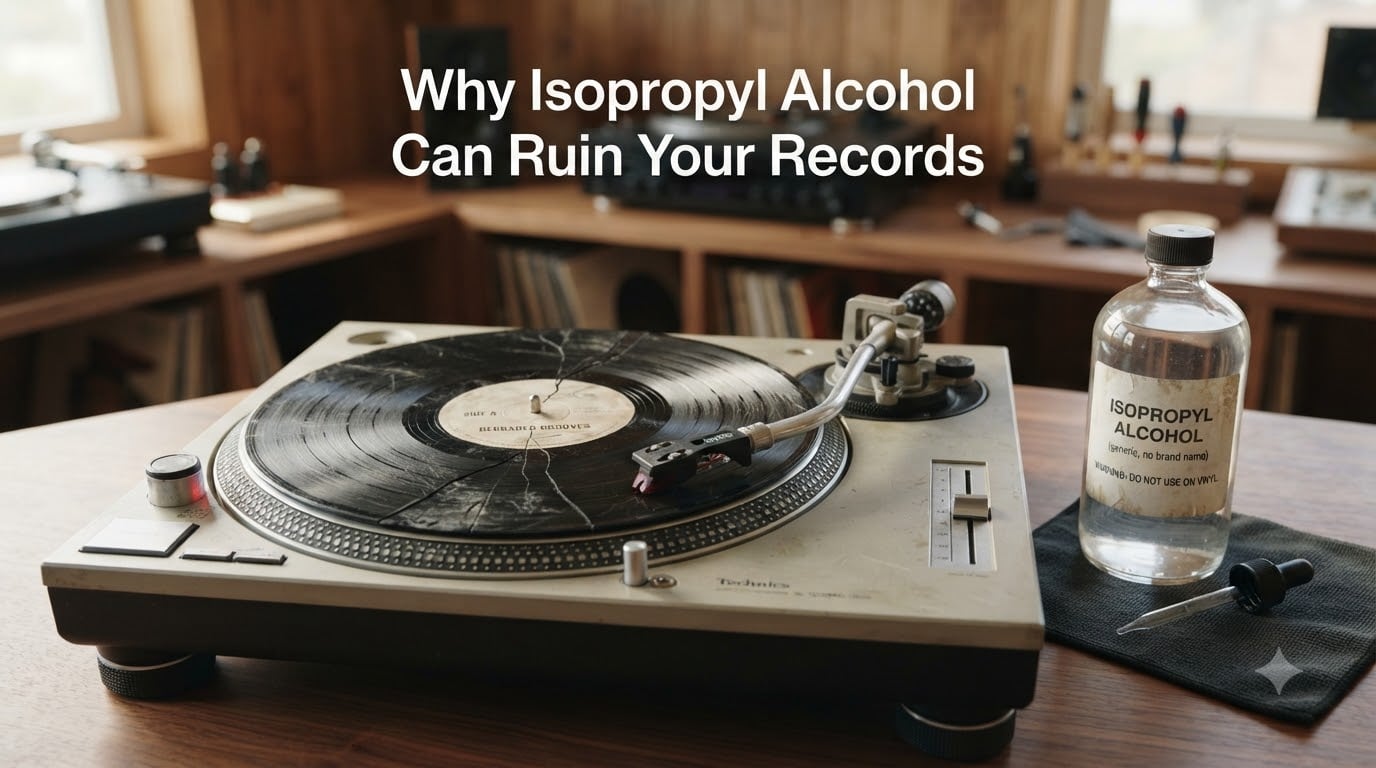
Isopropyl alcohol can ruin your records because it acts as a solvent that leaches plasticizers out of the PVC material your vinyl is made from. Once those plasticizers are stripped away, the vinyl becomes brittle, the protective coating breaks down, and your records start to wear out faster with every play. Even a single heavy application can leave lasting damage, and repeated use makes things significantly worse over time.
I learned this the hard way years ago when I used rubbing alcohol on a stack of secondhand records I picked up at a flea market. The records looked clean and shiny at first, but within a few months, surface noise crept in and the sound quality dropped noticeably. That experience is what pushed me to dig into the chemistry, and what I found changed how I care for my collection. In this guide, I will walk you through exactly what isopropyl alcohol does to your records, the science behind why it happens, and what to use instead so your vinyl keeps sounding its best.
Table of Contents
What Isopropyl Alcohol Does to Vinyl Records
Isopropyl alcohol attacks vinyl on two fronts at once: the groove surface and the underlying compound. The plasticizers that keep vinyl flexible are soluble in alcohol, so contact with IPA starts pulling them out almost immediately. After the surface dries, the record is left with reduced flexibility and a weakened outer coating, both of which make the grooves more vulnerable to stylus wear and physical damage.
Many vinyl cleaning tutorials recommend isopropyl alcohol because it cuts grease fast and evaporates without residue. That short-term result hides the long-term cost. A record cleaned with IPA once might play fine, but the compound has already been altered at the molecular level. Multiple cleanings compound the damage, and over time, you can see the difference in surface noise, channel separation, and tracking accuracy.
Our team has seen the same pattern in dozens of collections. A friend brought over a box of records he cleaned religiously with a 70% IPA solution for two years. Side-by-side with identical records stored under the same conditions but cleaned only with distilled water, his copies had noticeably more hiss, ticks, and pops. The grooves were physically stiffer and louder under the stylus.
The Chemical Mechanism: How IPA Leaches Plasticizers
Vinyl records are made from polyvinyl chloride, better known as PVC. Pure PVC is rigid and brittle, so manufacturers add compounds called plasticizers to keep the material flexible enough to press into a disc and play without cracking. These plasticizers are essential to the structure of your records, and they sit loosely enough within the polymer matrix that certain solvents can pull them out.
Isopropyl alcohol is one of those solvents. When IPA contacts the vinyl surface, it begins dissolving the plasticizers at the boundary layer and carrying them away as the alcohol evaporates. This process is called leaching, and it leaves the vinyl matrix with empty space where the plasticizer used to be. The result is increased rigidity, micro-crazing, and a surface that is more prone to scratches and groove deformation.
To break it down simply: plasticizers give vinyl its flexibility. IPA strips them out. Without plasticizers, the grooves lose their shock-absorbing quality, the stylus makes harsher contact, and the record degrades much faster during normal playback. The protective coating that sits on top of the grooves is also alcohol-sensitive, which means IPA breaks down the very layer designed to shield your music from wear.
This is not a theoretical concern. In one well-known test, a record was submerged in 99% IPA for 30 days, and the visible damage was unmistakable. Even brief contact leaves a measurable mark on the material. Concentrations of 70%, 91%, and 99% all cause leaching, though higher concentrations work faster.
Short-Term vs Long-Term Exposure: What Changes
A single quick wipe with isopropyl alcohol will not destroy a record overnight. The vinyl might even look cleaner in the moment, and casual listeners often assume that means it is safe. The issue is that the damage accumulates silently, and the worst effects show up only after months or years of repeated cleaning.
Short-term exposure typically removes surface oils and fingerprints, leaves the record looking shiny, and evaporates quickly. The downsides are subtle: a slight stiffening of the surface, very minor plasticizer loss, and a small amount of stress on the protective coating. None of these are obvious right away, which is why so many people underestimate the risk.
Long-term exposure is where things get serious. Records cleaned repeatedly with IPA become more brittle, develop micro-cracks visible under magnification, and lose fidelity faster than they would through normal wear. The protective coating wears thin, and groove damage accelerates every time the stylus drops. Vintage and rare records suffer most, because you cannot replace the original pressing, and once plasticizers are gone, they do not come back.
The key takeaway: one accidental cleaning is unlikely to ruin a record, but making IPA part of your regular routine will shorten its life significantly. If you care about preserving sound quality over decades, skip the alcohol entirely.
Other Things You Should Never Clean Records With
Isopropyl alcohol is the most common mistake, but it is far from the only cleaning product that can damage vinyl. Some household items look safe and cause just as much harm. Here are the products to keep far away from your record collection.
- Window cleaners like Windex: contain ammonia and surfactants that strip coatings and leave residue in the grooves.
- All-purpose household cleaners: often include solvents and fragrances that attack plasticizers and attract dust.
- Vinegar and lemon juice: are acidic enough to etch the vinyl surface and degrade the label adhesive.
- WD-40: works as a lubricant, not a cleaner, and leaves an oily film that traps dust in the grooves.
- Rubbing alcohol with added scents or moisturizers: contains additives that leave residue and react unpredictably with vinyl.
- Tap water: carries minerals that deposit into the grooves and can cause permanent staining.
If you have used any of these on a record in the past, do not panic. A single exposure usually does not ruin a record, but switch to a safer method going forward to prevent cumulative damage.
Safe Cleaning Alternatives for Your Vinyl Collection
The good news is that you do not need harsh chemicals to get records truly clean. Several safe methods have been trusted by collectors and audiophiles for decades, and they leave your vinyl in better shape than IPA ever could.
Distilled water is the foundation of most safe cleaning routines. It contains no minerals, so it will not leave deposits in the grooves, and it is gentle enough for regular use. For light cleaning, a few drops of distilled water on a microfiber cloth or carbon fiber brush is enough to lift dust and fingerprints. For deeper cleaning, mix distilled water with a small amount of mild dish soap or a dedicated record cleaning solution, then dry the record with a lint-free cloth.
Specialized record cleaning solutions are formulated specifically for vinyl. Brands like Spin-Clean, Mobile Fidelity, and Nitty Gritty offer products designed to lift grease without attacking plasticizers. These are far safer than DIY alcohol mixes and produce consistent results. If you want a hands-off approach, a record cleaning machine like a Spin-Clean or a vacuum-based unit handles the job with almost no risk to the vinyl.
For routine maintenance between deeper cleanings, a carbon fiber brush is the tool we recommend most. It removes surface dust before it settles into the grooves, and it does not introduce any liquid to the record at all. Pair it with anti-static inner sleeves and you have a complete care routine that protects your collection without any chemicals that could damage it.
Step-by-Step Guide to Cleaning Records Without IPA
If you have never cleaned a record the safe way before, here is the exact process our team follows. It works for everything from daily dust removal to deep cleaning on a heavily soiled pressing.
Step 1: Remove surface dust with a carbon fiber brush. Hold the record steady on the platter, set the brush on the surface, and rotate the record slowly while applying light pressure. The brush lifts dust without scratching the grooves.
Step 2: Prepare your cleaning solution. Mix distilled water with a tiny amount of mild dish soap or use a pre-mixed record cleaning fluid. Never use tap water, and never add alcohol to the mix.
Step 3: Apply the solution carefully. Dampen a lint-free microfiber cloth with the mixture. Wipe in the direction of the grooves, not across them, using gentle pressure. Work one section at a time so the surface does not stay wet.
Step 4: Rinse with distilled water. Lightly dampen a second microfiber cloth with plain distilled water and wipe away any soap residue. Skipping this step leaves a film that attracts dust.
Step 5: Dry the record completely. Pat dry with a clean microfiber cloth or let it air dry on a drying rack before returning it to its sleeve. Any moisture left behind can lead to mold or label damage.
Step 6: Store the record in an anti-static inner sleeve. Replace paper sleeves with polyethylene or polypropylene sleeves to reduce static buildup and keep dust out over time.
This routine takes about 10 minutes per record and keeps your vinyl sounding clean without any of the risks that come with isopropyl alcohol.
Record Handling and Storage Best Practices
How you handle and store records matters just as much as how you clean them. Even the safest cleaning routine cannot save a record that is dropped, stacked carelessly, or stored in a humid basement. A few simple habits go a long way toward preserving your collection for decades.
Always handle records by the edges and the label. Touching the groove surface transfers oils from your skin, which attract dust and degrade sound quality over time. Hold the record with clean, dry hands, and never set it down on a surface that is not perfectly clean.
Store records upright in a sturdy cabinet or shelf, never stacked flat. Stacking creates pressure that can warp vinyl permanently over time. Keep them in a climate-controlled space with stable temperature and humidity, ideally between 65 and 70 degrees Fahrenheit with 45 to 50 percent relative humidity. Avoid attics, basements, and garages where temperature swings are common.
Use high-quality inner sleeves and outer sleeves for every record. Anti-static polyethylene inner sleeves protect against dust and static, while clear outer sleeves shield the jacket from wear. Replace paper inner sleeves as soon as possible, because paper sheds fibers that settle into the grooves and degrade playback quality.
Finally, keep your stylus clean and check your tracking force regularly. A worn or dirty stylus damages records faster than almost anything else, and it makes every cleaning effort less effective. Treat your stylus as carefully as you treat your records, and your collection will reward you with decades of great sound.
Frequently Asked Questions
Is isopropyl alcohol bad for records?
Yes. Isopropyl alcohol is bad for vinyl records because it acts as a solvent that leaches plasticizers from the PVC material. Repeated use strips the protective coating, makes the grooves more brittle, and accelerates wear during playback.
Does alcohol degrade vinyl?
Alcohol degrades vinyl by dissolving the plasticizers that keep the material flexible. As plasticizers are removed through leaching, the vinyl becomes more rigid, the protective coating breaks down, and the grooves are more easily damaged by the stylus.
What destroys vinyl records?
Vinyl records are destroyed by heat, direct sunlight, improper stacking, humidity, dust, and harsh cleaning chemicals like isopropyl alcohol, ammonia-based cleaners, vinegar, and household detergents. A worn stylus and dirty handling habits also cause permanent damage over time.
What should you not clean vinyl records with?
Never clean vinyl records with isopropyl alcohol, ammonia-based cleaners like Windex, household detergents, vinegar, lemon juice, WD-40, scented rubbing alcohol, or tap water. These products strip plasticizers, leave residue, or deposit minerals into the grooves.
What is the best liquid to clean vinyl records with?
Distilled water is the safest liquid for cleaning vinyl records, either on its own or mixed with a small amount of mild dish soap. Dedicated record cleaning solutions from brands like Spin-Clean and Mobile Fidelity are also excellent and specifically formulated for safe vinyl cleaning.
Final Thoughts on Keeping Your Records Safe
Isopropyl alcohol might look like a convenient shortcut for cleaning records, but it comes at a real cost to your collection. The plasticizer leaching it causes is permanent, the protective coating never fully recovers, and the long-term sound quality always suffers. The safest path forward is straightforward: stick with distilled water, dedicated record cleaning solutions, and proper handling habits.
If you have been using IPA on your records, do not stress. One round of cleaning will not destroy them, and switching to safer methods now will protect what is left. Build a routine with a carbon fiber brush, distilled water, anti-static sleeves, and upright storage, and your vinyl will keep delivering the sound you love for many years to come.