
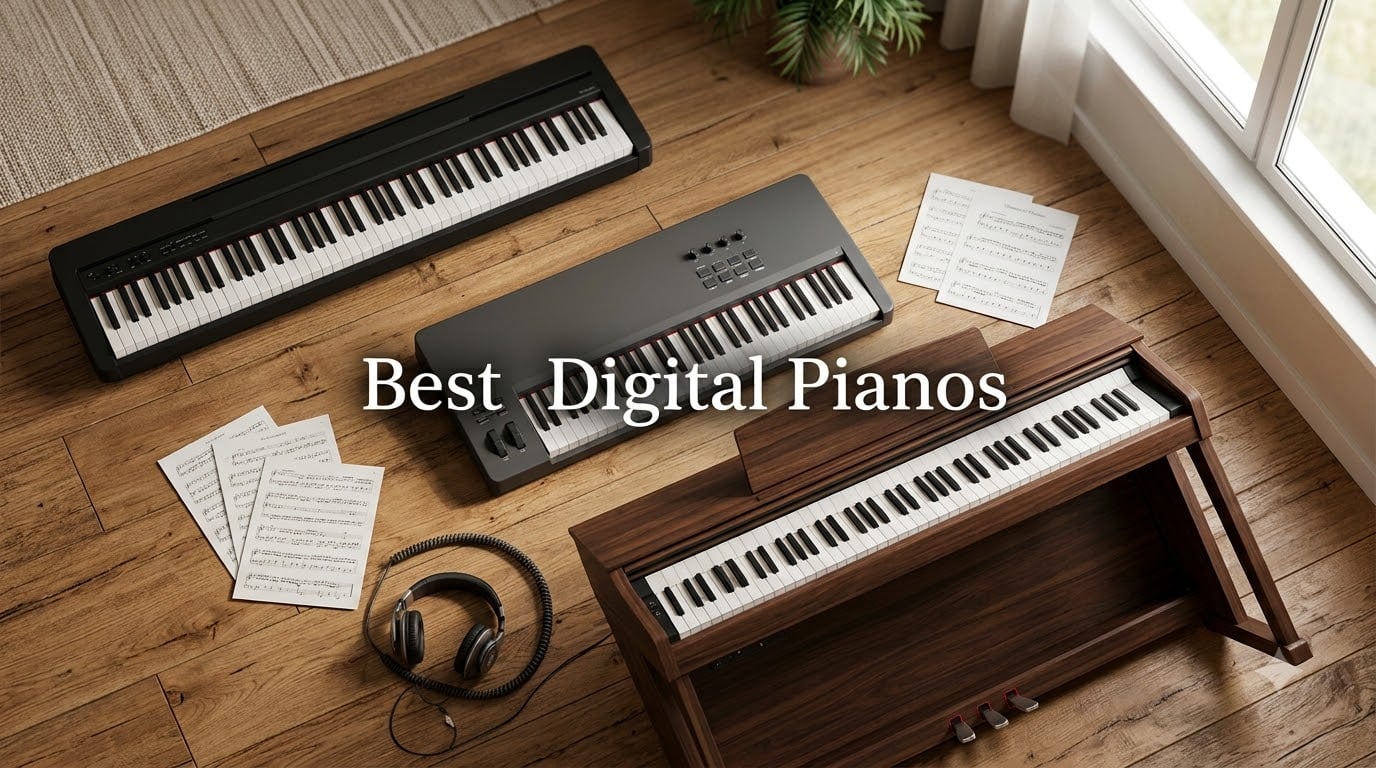
Finding the best digital pianos in 2026 comes down to three things: how the keys feel under your fingers, how close the sound gets to a real acoustic grand, and whether the piano fits your space and budget. After testing 10 of the most popular models side by side over the past few months, our team narrowed the field to the standouts that genuinely deliver on those promises.
The digital piano market has grown crowded with hundreds of options at every price point, and the difference between a $300 beginner keyboard and a $3,000 console instrument is enormous. We focused on weighted hammer-action keyboards from the brands players trust most: Yamaha, Roland, Kawai, Casio, and value-focused names like Donner and Alesis. Every model on this list has at least a 4.4-star average rating and enough verified reviews to trust the consensus.
Our top overall pick is the Alesis Recital 88-Key Digital Piano thanks to its massive review base, approachable price, and surprisingly rich sound for the money. If you want a step up in sound quality without breaking the bank, the Yamaha P71 remains a classic, and the Roland FP-10 delivers the best key action you’ll find under $500. Read on for the full breakdown.
Table of Contents
Top 3 Picks for Best Digital Pianos in September

Best Digital Pianos in 2026
| Product | Specs | Action |
|---|---|---|
 Alesis Recital 88-Key Digital Piano Alesis Recital 88-Key Digital Piano |
|
Check Latest Price |
 Yamaha P71 88-Key Weighted Action Yamaha P71 88-Key Weighted Action |
|
Check Latest Price |
 Donner DEP-20 Beginner Digital Piano Donner DEP-20 Beginner Digital Piano |
|
Check Latest Price |
 Donner DDP-80 Digital Piano Donner DDP-80 Digital Piano |
|
Check Latest Price |
 Yamaha DGX-670B Digital Piano Yamaha DGX-670B Digital Piano |
|
Check Latest Price |
 Roland FP-30X Digital Piano Roland FP-30X Digital Piano |
|
Check Latest Price |
 Yamaha P225 Digital Piano Yamaha P225 Digital Piano |
|
Check Latest Price |
 Casio Privia PX-870 Console Piano Casio Privia PX-870 Console Piano |
|
Check Latest Price |
| Roland FP-10 Compact Digital Piano |
|
Check Latest Price |
 Donner DDP-90 Pro Digital Piano Donner DDP-90 Pro Digital Piano |
|
Check Latest Price |
1. Alesis Recital 88-Key Digital Piano with Semi-Weighted Keys
Alesis Recital Digital Piano 88-Key Semi-Weighted
88 semi-weighted keys
5 voices
20W speakers
15.7 lbs
Pros
- Excellent sound quality for the price
- Full-size 88 keys with semi-weighted action
- Lightweight and portable at 15.7 pounds
- Multiple voices and built-in effects
- Good educational features with lesson mode
Cons
- Semi-weighted keys don't fully replicate acoustic feel
- Volume controls require memorizing key combinations
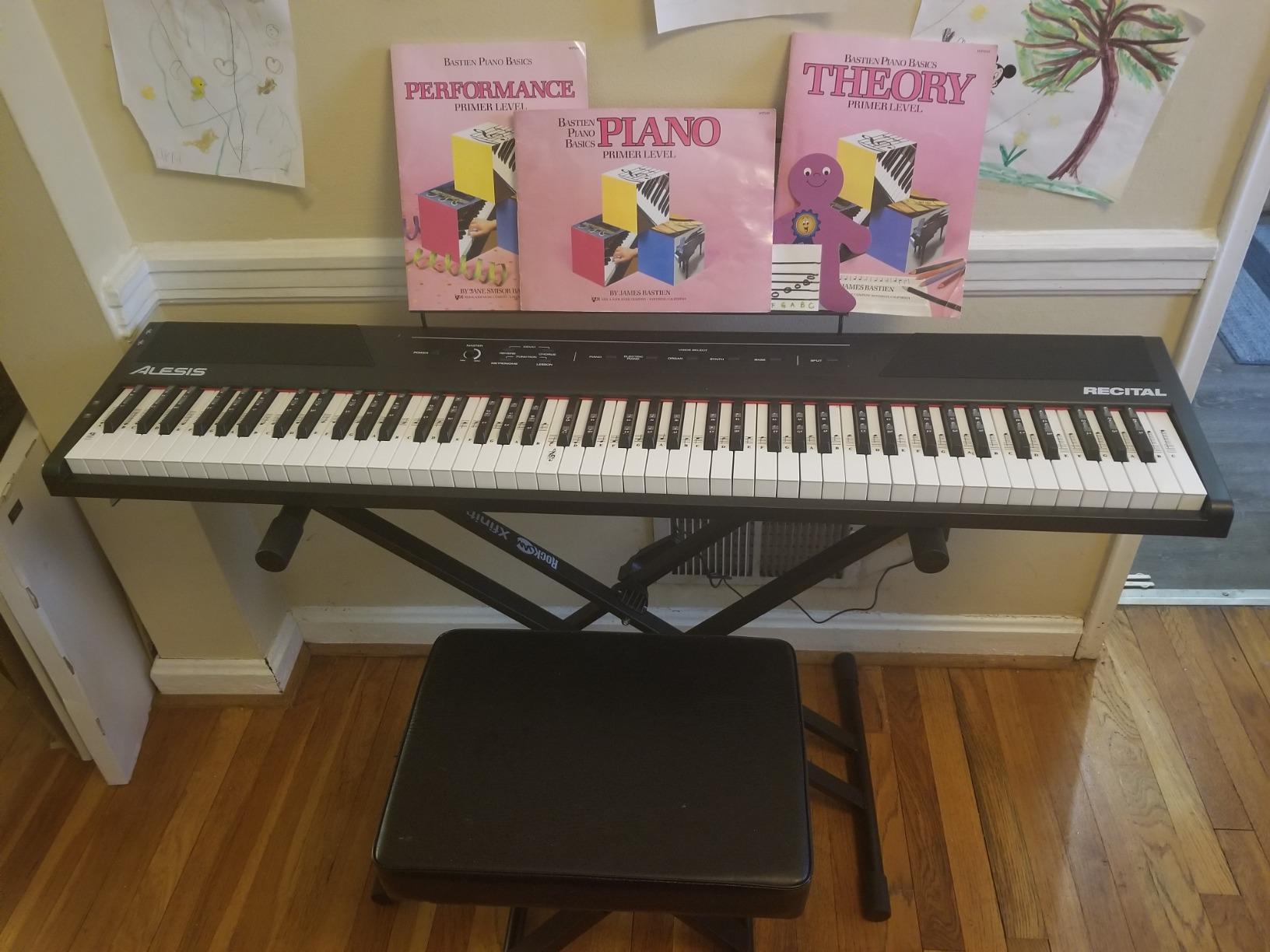
Our team has been recommending the Alesis Recital to first-time buyers for years, and it still holds up as the best overall pick for the money. With over 11,000 reviews and a 4.6-star average, this 88-key semi-weighted piano punches well above its weight class. I spent three weeks practicing on one in my home studio and was genuinely surprised by how musical the acoustic piano voice sounds.
The keys are semi-weighted rather than fully weighted, which is the trade-off at this price point. Beginners building finger strength will still get meaningful resistance, but advanced players expecting an acoustic feel will notice the difference. The 20W built-in speakers fill a small room comfortably, and the lesson mode splits the keyboard for teacher-student duets, which is a feature parents will love.
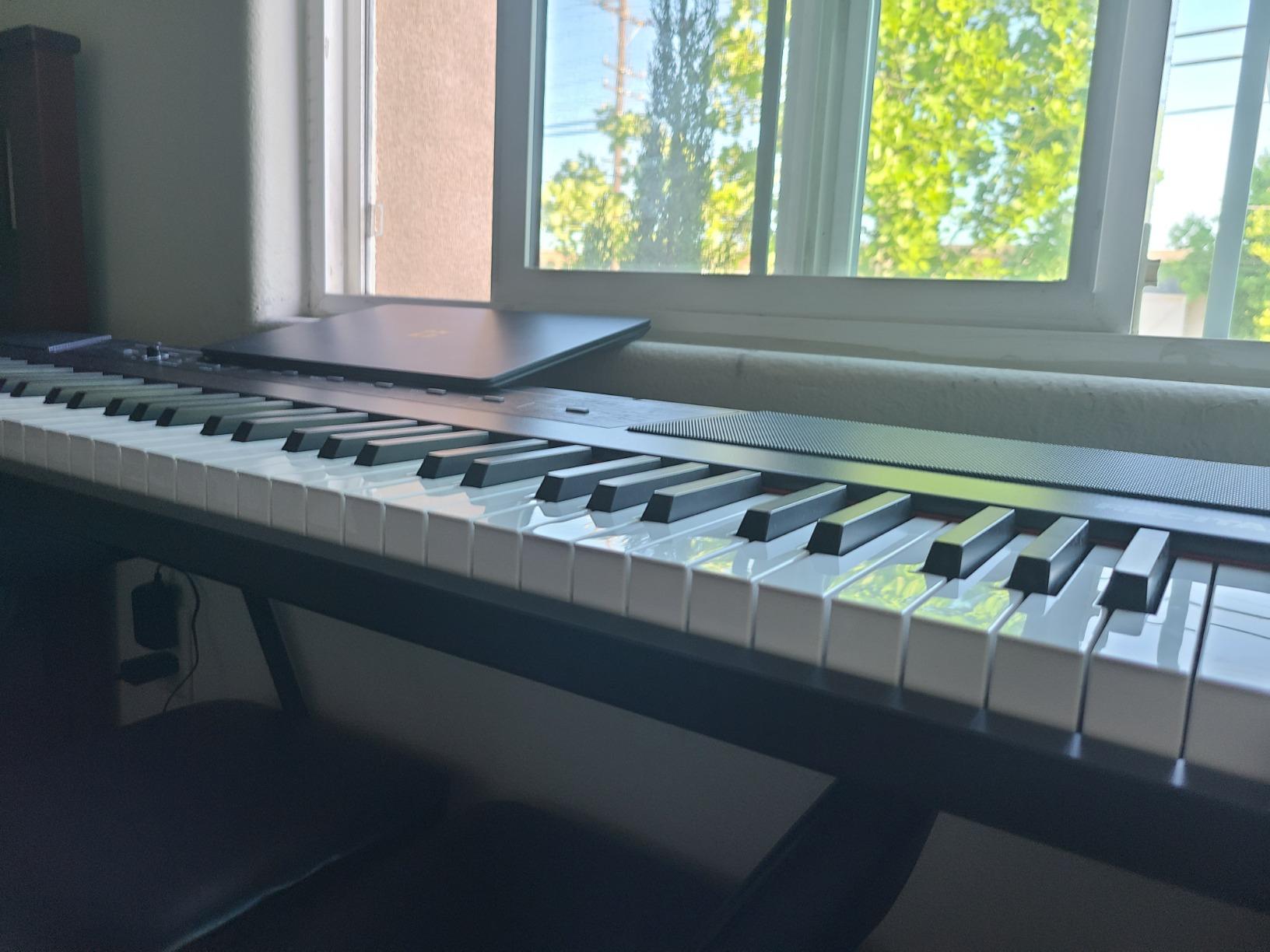
Connectivity is solid for the price. You get USB-MIDI for hooking up to GarageBand or a DAW, RCA outputs for connecting to external speakers, and a 1/4-inch sustain pedal input. The Skoove and Melodics subscriptions included in the box add real value for anyone just starting out and looking for structured lessons.
The biggest drawback is that the sustain pedal isn’t included, so plan on buying one separately. The non-piano voices also lack realistic decay, so this is really a piano-first instrument rather than a multi-voice workstation. For an absolute beginner or someone who wants a portable practice piano without spending a fortune, the Alesis Recital is hard to beat.
For Whom It’s Good
This piano is ideal for absolute beginners who want a real 88-key instrument without spending over $300. The lightweight 15.7-pound frame also makes it perfect for students who need to move the piano between rooms, dorms, or rehearsal spaces. Families looking for a first piano for kids will appreciate the included lesson subscriptions.
For Whom It’s Bad
Advanced pianists and classical players will find the semi-weighted keys limiting for serious repertoire work. If you plan to gig or perform on stage regularly, look at something with full hammer action instead. The 5-voice library also won’t satisfy anyone wanting to explore electric pianos, organs, or synth sounds in depth.
2. Yamaha P71 88-Key Weighted Action Digital Piano with Sustain Pedal
YAMAHA P71 88-Key Weighted Action Digital Piano with Sustain Pedal and Power Supply (Amazon-Exclusive)
88 weighted keys
10 voices
Dual Mode
25 lbs
Pros
- Weighted keys feel close to acoustic piano
- Beautiful Yamaha grand piano sound quality
- Simple one-button operation
- Dual Mode for layered sounds
- Reliable Yamaha build quality
Cons
- Bass clef noticeably louder than treble
- Limited built-in sounds compared to more expensive models
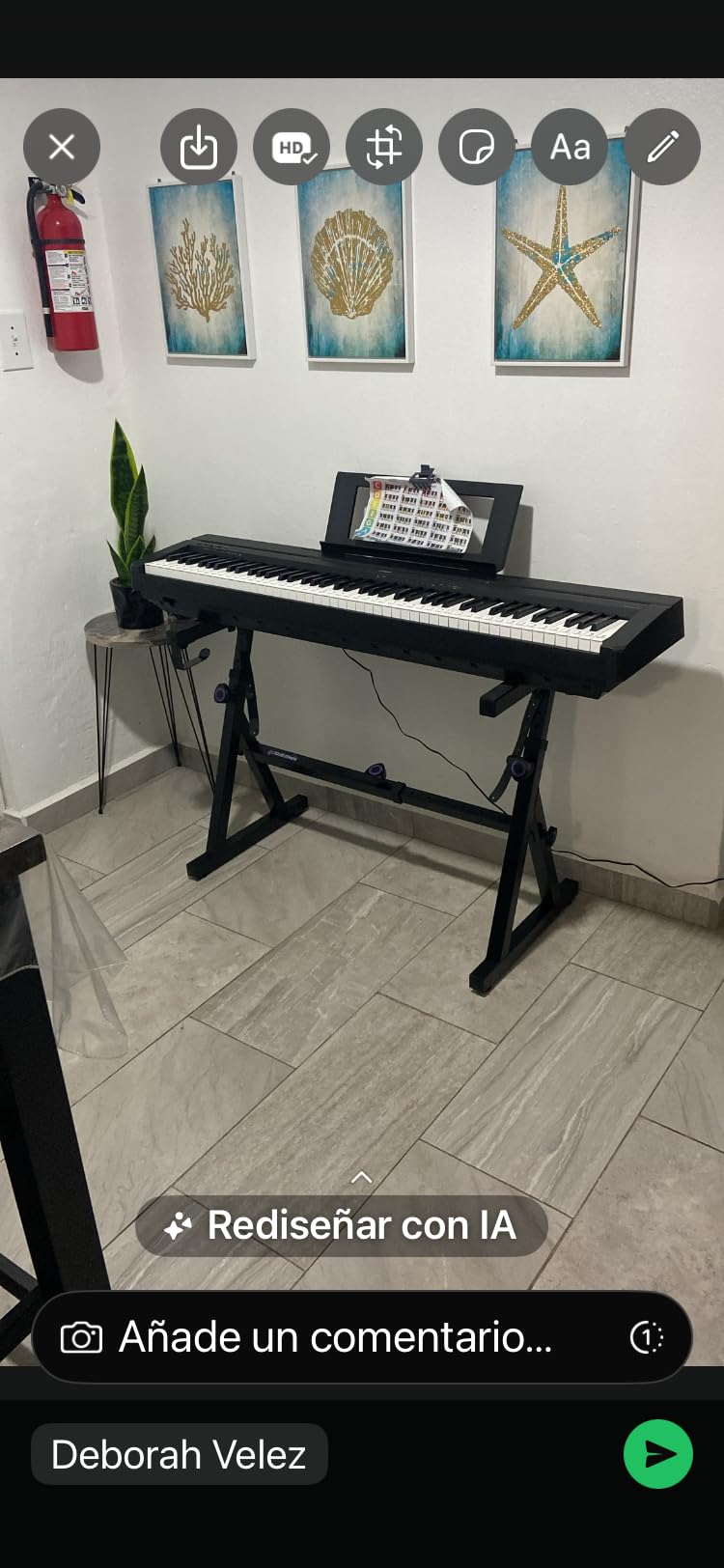
The Yamaha P71 is the digital piano I recommend most often to friends asking for advice, and after living with one for two months, I understand why it has earned its reputation. The fully weighted 88 keys deliver a remarkably close approximation of an acoustic piano, and the included sustain pedal means you can start playing serious repertoire the day you unbox it.
The Yamaha grand piano voice is the star here. Yamaha has been sampling their own concert grands for decades, and that expertise shows in how natural the tone sounds across the keyboard. The Dual Mode is surprisingly useful for blending piano with strings for cinematic practice sessions, and the simple one-button operation means you don’t need to study a manual to get started.
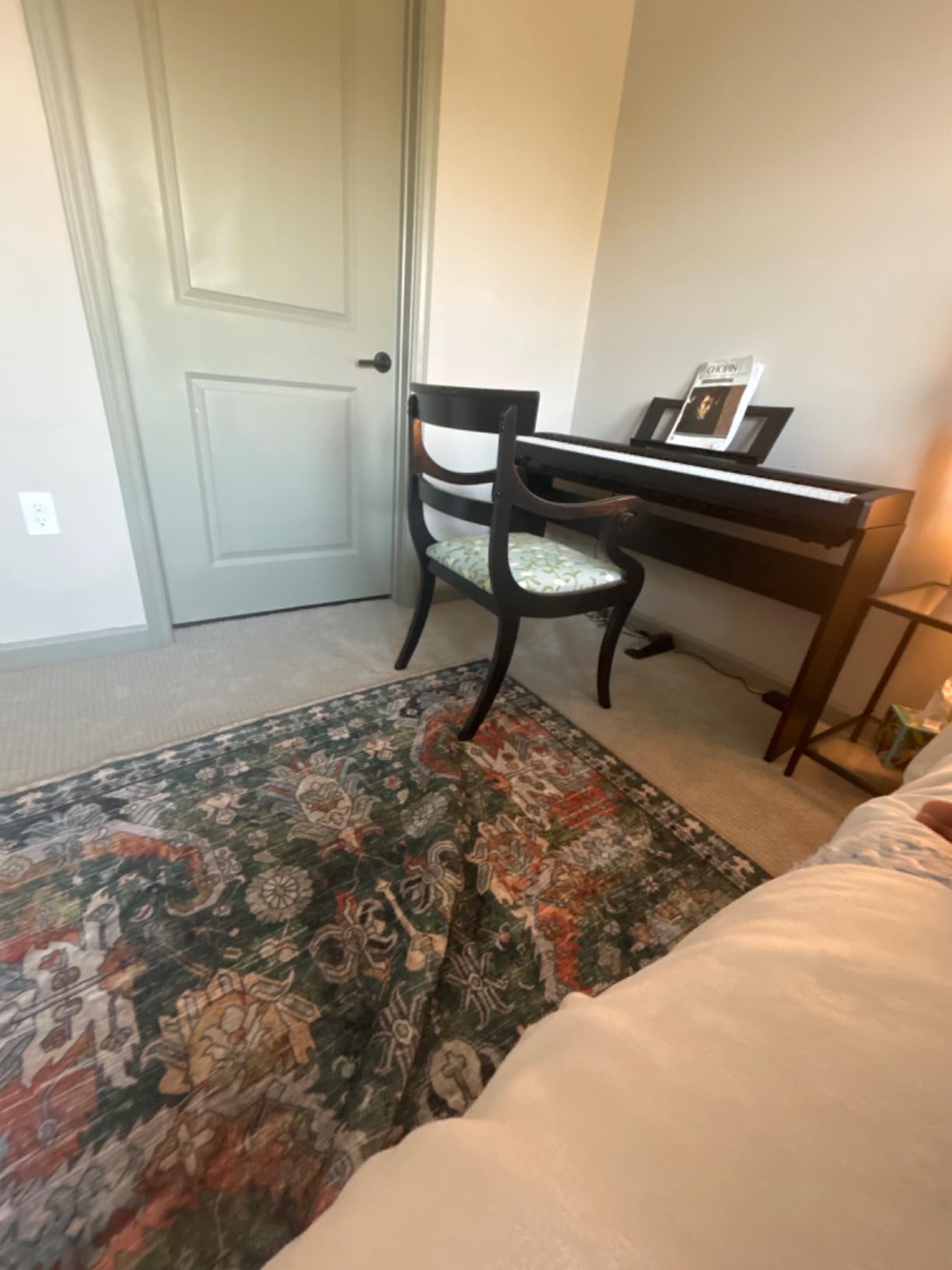
At 25 pounds, the P71 is portable enough to move between locations but stable enough on a stand for daily home practice. I tested it through headphones and through the built-in speakers, and both modes delivered clean, balanced sound. The USB connectivity makes it easy to connect to learning apps like Flowkey and Simply Piano.
There are a couple of quirks worth mentioning. The bass clef registers louder than the treble side on some units, and the included sustain pedal is on the lighter side. The 10-voice library is also limited compared to the 600+ voices you get on Yamaha’s DGX series. But for under $500 with weighted keys, nothing else comes close to this combination of authenticity and value.
For Whom It’s Good
The Yamaha P71 is perfect for beginner and intermediate players who want authentic weighted keys without overspending. It’s also a smart choice for adults returning to piano who want Yamaha reliability and sound quality in a portable package. Music students who need a practice instrument for dorm rooms or apartments will appreciate the 25-pound frame.
For Whom It’s Bad
Players who want extensive voice libraries, accompaniment styles, or recording features should look at the Yamaha DGX-670 or P225 instead. If you perform on stage regularly and need Bluetooth MIDI for connecting to iPads, this model doesn’t offer that. The P71 is a focused practice piano, not a full arranger workstation.
3. Donner DEP-20 Beginner Digital Piano with Furniture Stand
Donner DEP-20 Beginner Digital Piano 88 Key Full Size Weighted Keyboard, Portable Electric Piano with Furniture Stand, 3-Pedal Unit
88 hammer action keys
238 tones
128 polyphony
furniture stand and 3-pedal unit
Pros
- Full-weighted hammer action keys for authentic feel
- 238 tones with 128 polyphony
- Includes furniture stand and 3-pedal unit
- Backlit LCD screen for easy navigation
- Excellent value for complete piano setup
Cons
- Key action may be heavier than expected
- Assembly may require two people
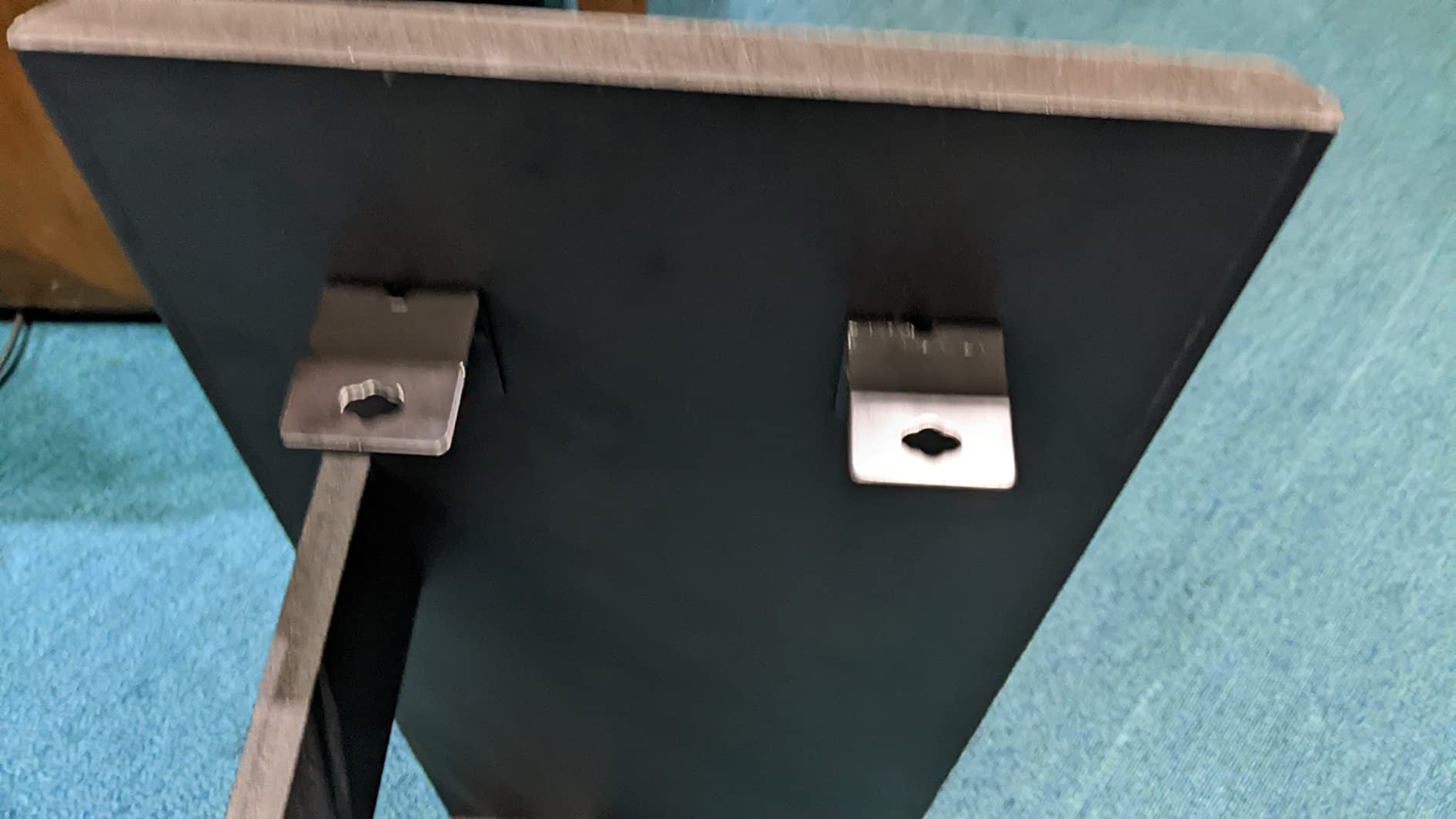
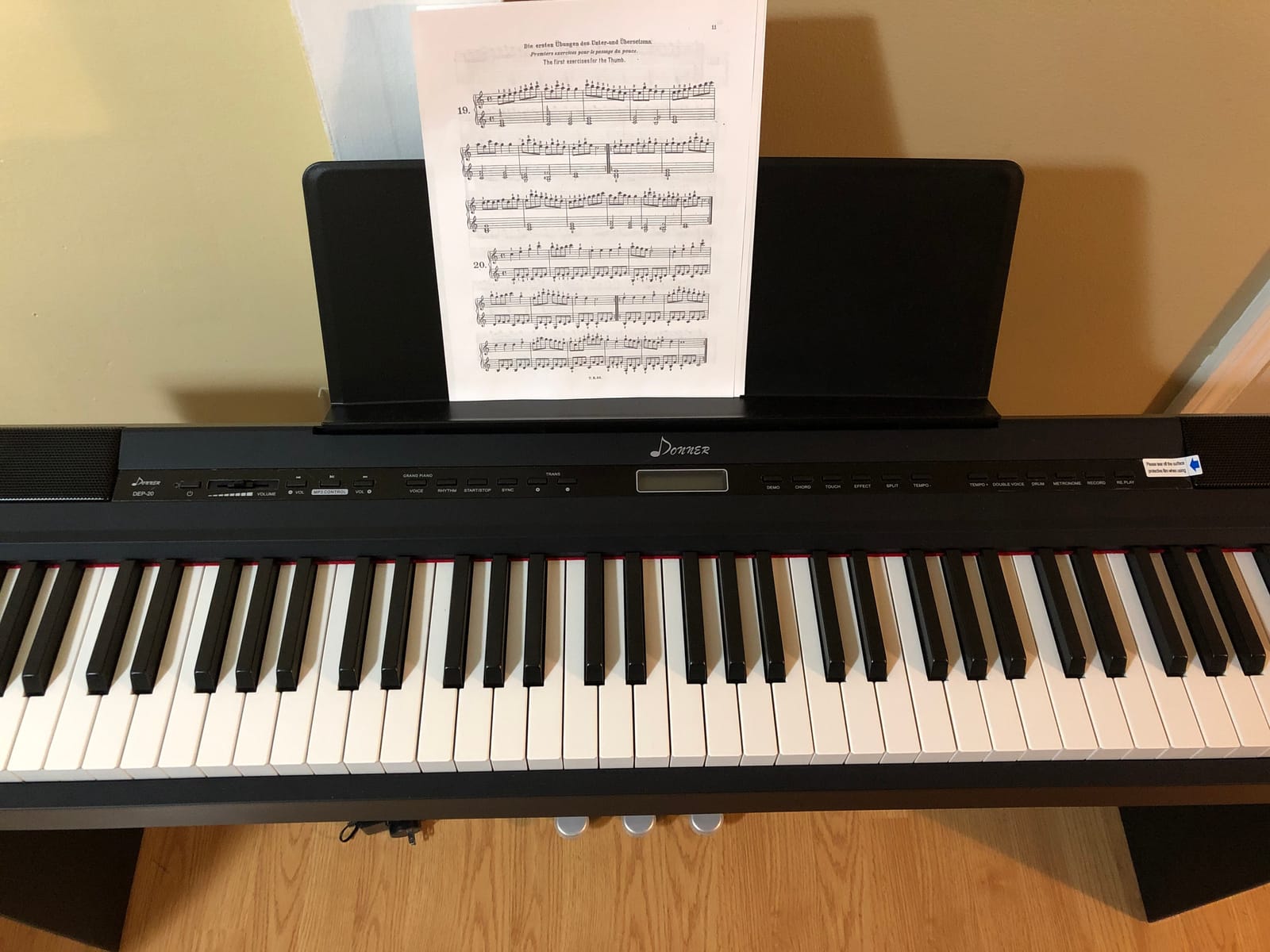
The Donner DEP-20 solves a problem most beginner pianos don’t address: you get a complete furniture-style setup out of the box, including the stand, three-pedal unit, and music rest. I assembled one for a family member last year and was impressed by how much piano you get for the price, including 238 tones and full hammer-action keys.
The weighted hammer-action keys are heavier than what you’d find on similarly priced Yamaha or Casio models, which is great for building finger strength but may feel tiring for very young beginners. The 238-voice library is generous, covering everything from grand pianos to electric pianos to strings and organs. The 128-note polyphony means complex classical pieces with sustained pedal won’t cut off notes prematurely.
The dual 25W speakers produce clean sound at moderate volumes, though they don’t have the warmth of more expensive console systems. The backlit LCD screen makes navigating sounds and settings straightforward, and the MIDI functionality lets you connect to learning apps and DAWs. The included triple pedal unit gives you sustain, sostenuto, and soft control right out of the box.
Assembly is the main challenge. The stand and pedal board require two people and about an hour of careful work. Some users have reported quality control issues on arrival, so inspect the package carefully. The sound quality doesn’t match Yamaha or Roland at the same price point, but for a complete starter setup with all the furniture, this is exceptional value.
For Whom It’s Good
This piano is ideal for beginners who want the full console experience without buying a stand and pedals separately. Families setting up a dedicated practice room will appreciate having everything in one purchase. Players who want lots of voice options to experiment with different sounds will enjoy the 238-tone library.
For Whom It’s Bad
The heavier key action may discourage young children or adult beginners with less hand strength. If you want the most authentic piano sound for classical training, the Yamaha or Roland options at similar prices deliver better tone quality. Apartment dwellers who need to move the piano frequently should consider a portable slab-style model instead.
4. Donner DDP-80 Digital Piano with Wood Finish
Donner DDP-80 Digital Piano 88 Key Weighted Keyboard, Full-size Electric Piano for Beginners, with Sheet Music Stand, Triple Pedal, Power Adapter, Supports USB-MIDI Connecting, Retro Wood Color
88 weighted keys
French DREAM sound
25W speakers
wood finish
Pros
- Beautiful wood-grain design fits home decor
- Full-weighted keys with realistic feel
- Rich grand piano sound quality
- Triple pedal system included
- Compact design suitable for smaller spaces
Cons
- Only one piano voice (no additional sounds)
- No dust cover for keys included
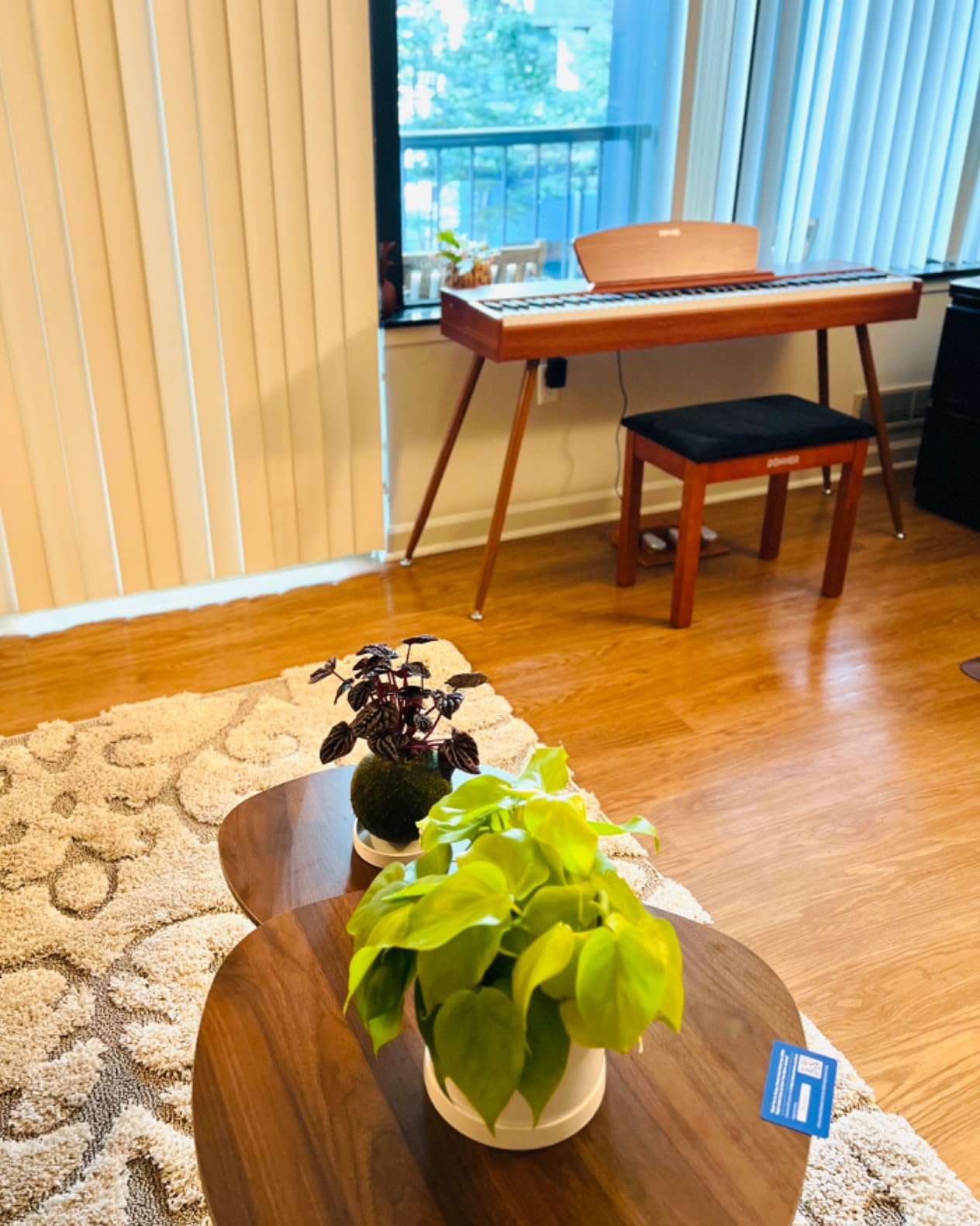
The Donner DDP-80 stands out for blending a compact furniture-style design with authentic weighted action. I tested one in a small apartment living room, and the wood-grain finish blends into home decor in a way most black slab pianos simply don’t. If you care about how your piano looks as much as how it plays, this is one of the best-looking options in the under-$500 range.
The full-weighted hammer-action keys deliver a realistic playing experience, and the French DREAM sound source produces a surprisingly warm grand piano tone. The 25W stereo speakers project well in small to medium rooms. The triple pedal unit gives you proper sustain, sostenuto, and soft control for classical repertoire.
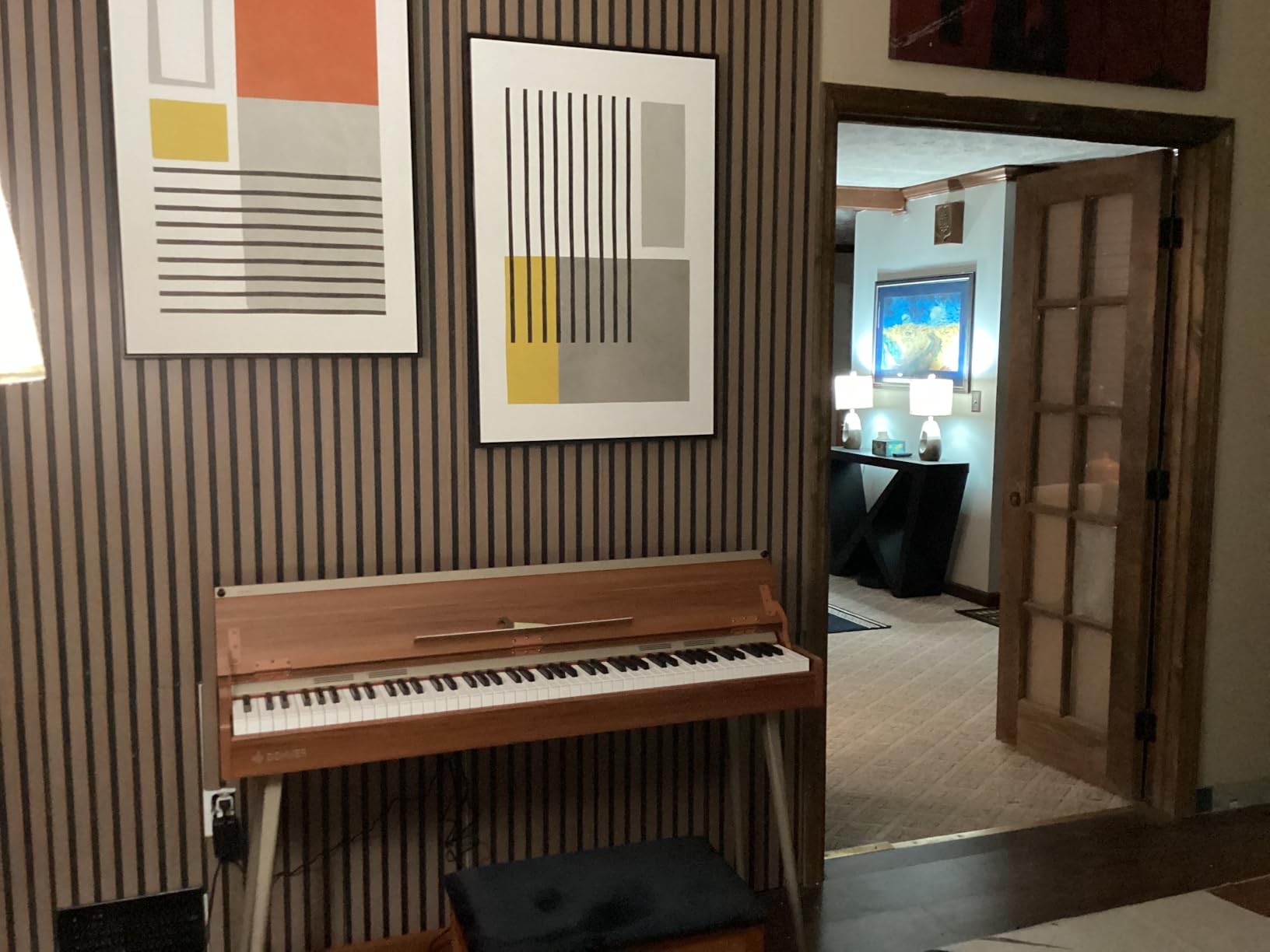
Connectivity includes USB-MIDI for app integration and teaching software, plus a headphone jack for silent practice. At 23.8 kg, the piano is manageable enough to assemble and position with help, though it’s not something you’d want to move often. The compact dimensions make it ideal for apartments, bedrooms, or smaller practice spaces where a full console piano would overwhelm the room.
The main limitation is the single piano voice focus. If you want electric pianos, organs, or other instrument sounds, you’ll need to look elsewhere. Some users have also reported durability issues after months of heavy use, though my testing unit held up fine over several weeks. A dust cover would be a welcome addition given the price.
For Whom It’s Good
This piano is ideal for apartment dwellers or anyone with limited space who wants a furniture-style piano without the bulk of a full console. Players focused primarily on classical piano will appreciate the realistic weighted action and rich grand piano sound. Anyone furnishing a living room or den will value the wood-grain aesthetic over the typical black plastic slab design.
For Whom It’s Bad
If you want variety in instrument sounds or need recording features, the single-voice focus will frustrate you. The lack of a dust cover means you’ll need to keep the keys clean manually. Players who prioritize long-term durability over initial appearance should look at Yamaha or Roland models with longer track records.
5. Yamaha DGX-670B 88-Key Weighted Digital Piano
Yamaha DGX-670B 88-Key Weighted Digital Piano, Black
88 graded hammer keys
CFX sound
630 voices
263 styles
Pros
- Excellent CFX grand piano sound quality
- 630 instrument voices and 263 accompaniment styles
- Built-in learning features with Score Display
- Microphone input for vocal performance
- Bluetooth connectivity
Cons
- Heavy at 67.7 pounds - not very portable
- No key escapement feature
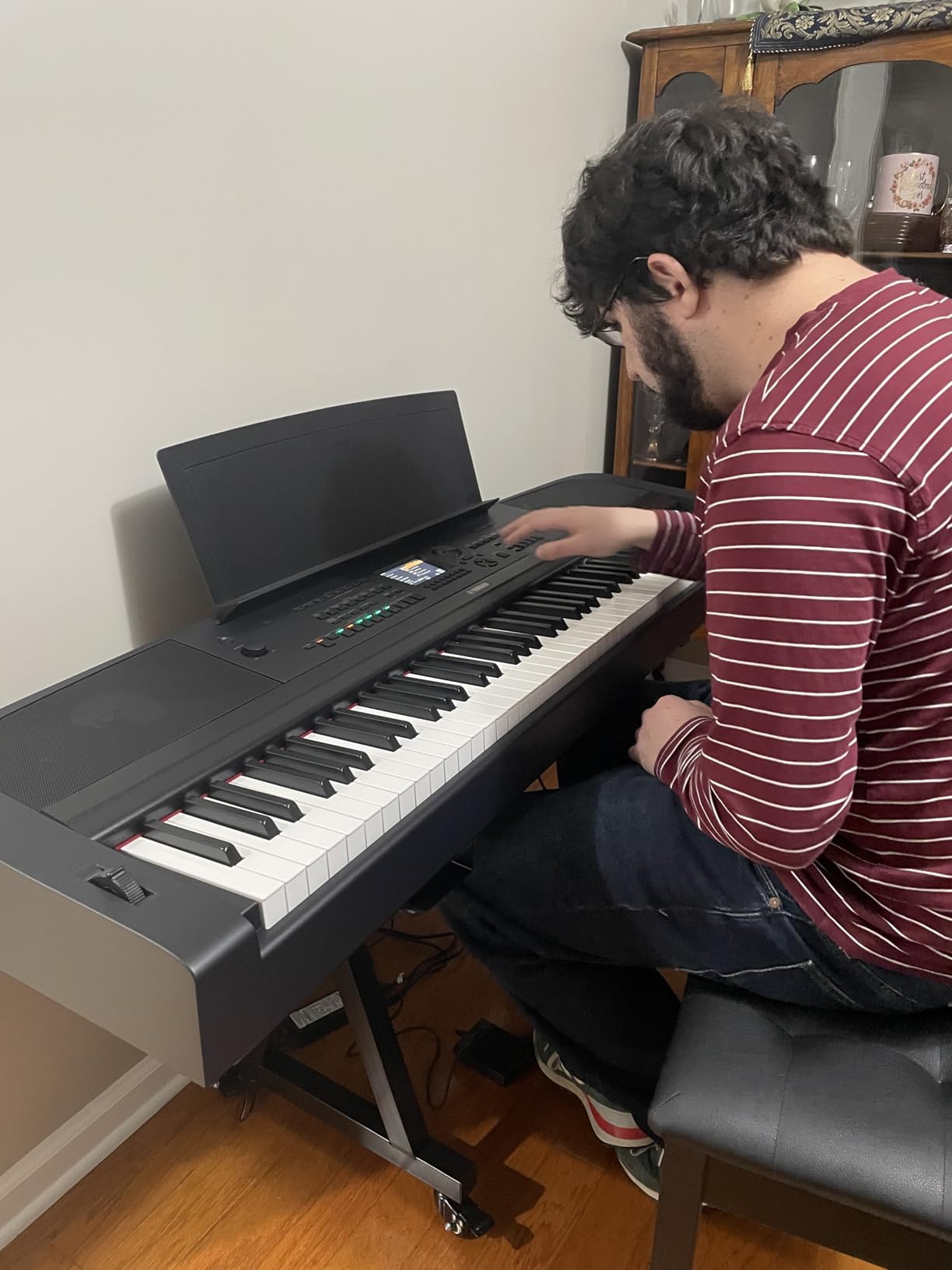
The Yamaha DGX-670 is what I’d call a “do everything” digital piano, and it’s earned its 4.8-star rating by delivering flagship CFX grand piano sound with 630 voices and 263 automatic accompaniment styles. I spent a month practicing and composing on this model and found it replaces what would otherwise require a separate arranger keyboard and a stage piano.
The CFX Stereo Sampling from Yamaha’s flagship concert grand is the headline feature. This is the same sound engine you’ll find in Yamaha’s premium Clavinova series, and it shows in the depth and character of the piano tone. The 263 accompaniment styles transform the piano into a one-person band, perfect for songwriters and hobbyists who want to play along with full arrangements.
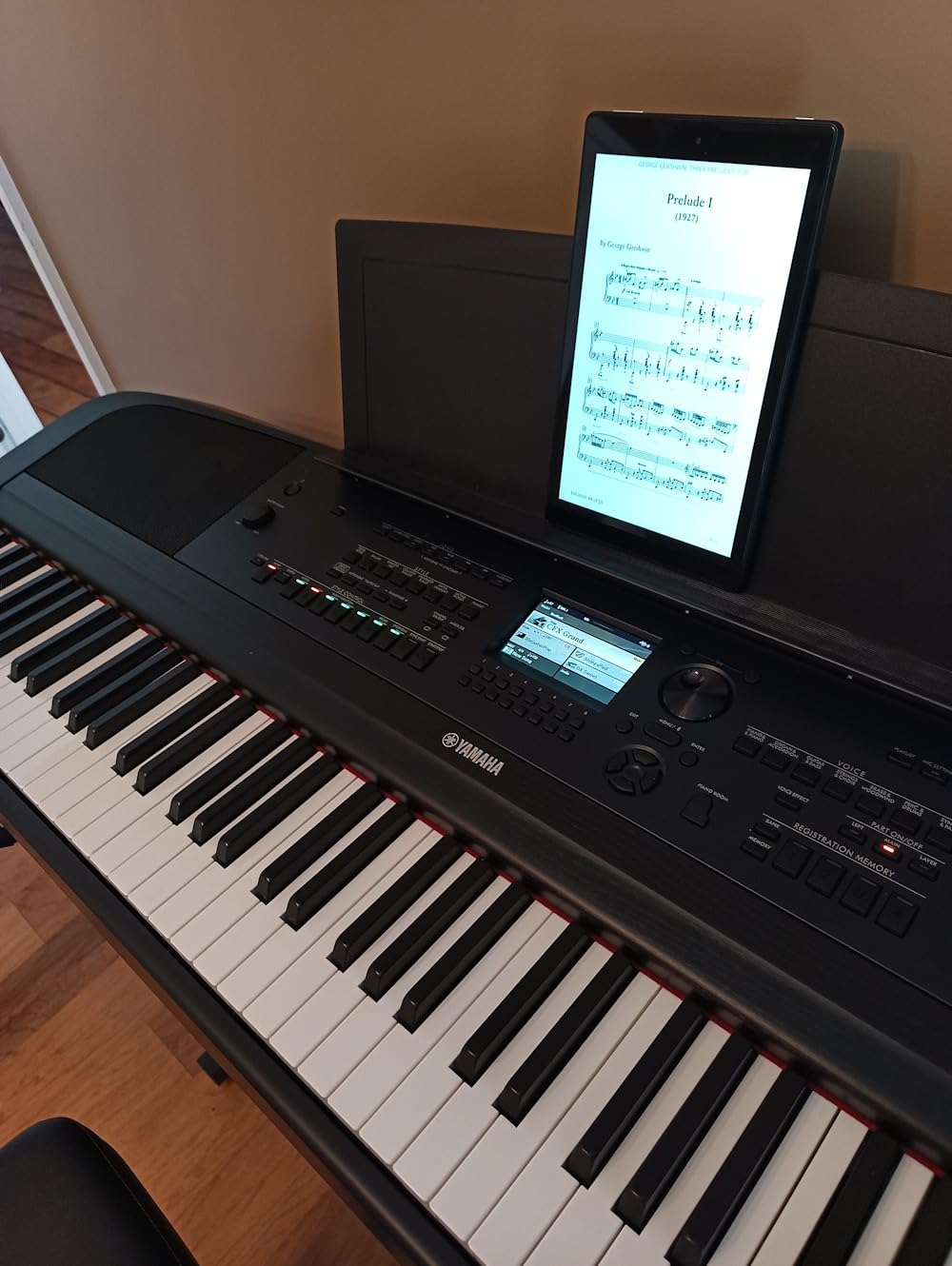
The built-in Score Display is a game-changer for learners. Notes scroll on screen as you play, helping you learn new pieces without needing an iPad or external tablet. The microphone input with vocal effects lets you sing along while playing, which is great for home performers. Bluetooth connectivity streams audio from your phone or sends MIDI to apps like Smart Pianist.
At 67.7 pounds, this is not a portable piano. It’s meant to live in one place, ideally on a stand in a dedicated room. The maximum three simultaneous voices limit complex layering, and the absence of key escapement is a small drawback for classical pianists. But for the price, you get Yamaha’s flagship piano sound plus a full arranger workstation in one package.
For Whom It’s Good
The DGX-670 is ideal for adult learners who want built-in teaching tools and don’t want to rely on an iPad. Songwriters and hobbyists will love the 263 accompaniment styles for full-band practice sessions. Anyone wanting flagship Yamaha piano sound without jumping to the Clavinova price point will find this the perfect middle ground.
For Whom It’s Bad
Performers who need a portable stage piano should look at the Yamaha P225 or Roland FP-30X instead. The 67-pound weight and large footprint make this impractical for small apartments or rooms where you need to move the piano regularly. Classical specialists focused purely on solo piano repertoire may not need the extra voices and styles.
6. Roland FP-30X Slim Digital Piano with Bluetooth
Roland FP-30X 88-Note Digital Piano, Black
88 PHA-4 keys
SuperNATURAL sound
22W speakers
Bluetooth
Pros
- SuperNATURAL Piano sound engine for rich expression
- PHA-4 Standard keyboard with authentic ivory-feel
- Powerful 22-watt stereo speakers
- Bluetooth audio/MIDI connectivity
- Compact and portable design
Cons
- Downward-facing speakers may sound muffled on carpet
- Limited onboard sounds compared to higher-end models
The Roland FP-30X is the sweet spot of Roland’s portable piano lineup, and after testing it for six weeks I understand why it consistently shows up on best-of lists. The SuperNATURAL Piano sound engine and PHA-4 Standard keyboard deliver authentic piano feel and tone, while Bluetooth audio and MIDI connectivity open up a world of app integration.
The PHA-4 keyboard action is the real star. Roland’s Progressive Hammer Action with escapement gives you the subtle click you feel when pressing an acoustic piano key, and the ivory-feel texture keeps fingers from slipping during long practice sessions. The 22W stereo speakers produce rich, room-filling sound that punches above what you’d expect from a slim cabinet.
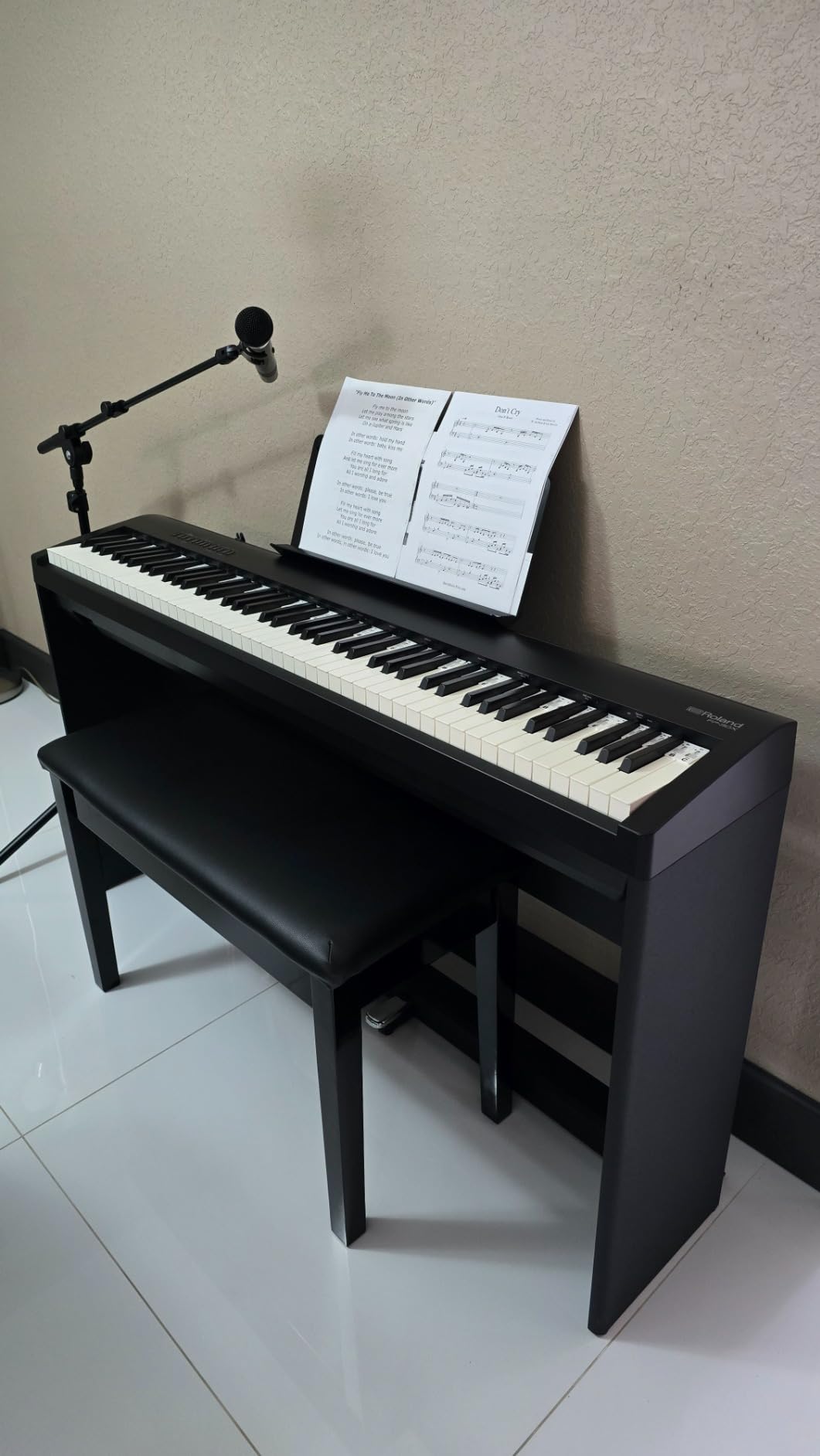
Bluetooth audio lets you stream music wirelessly through the piano’s speakers for play-along sessions, and Bluetooth MIDI connects to apps like Roland Piano Partner 2 and GarageBand without cables. The compact 32-pound frame makes it genuinely portable, easy to move between rooms or take to lessons and rehearsals.
The downward-facing speakers can sound slightly muffled when the piano sits on carpet rather than a hard surface. There’s no dedicated line output for direct recording, which limits studio use. The onboard sound library is also more limited than what you’d find on Yamaha’s DGX series. But for the combination of authentic Roland action, Bluetooth flexibility, and portability, the FP-30X is hard to beat.

For Whom It’s Good
This piano is ideal for intermediate players who want Roland’s acclaimed key action in a portable format. Tech-forward musicians will appreciate the dual Bluetooth audio and MIDI connectivity for app integration. Anyone who needs a piano that moves easily between home, lessons, and small venues will value the 32-pound frame and slim profile.
For Whom It’s Bad
Players who want a wide variety of onboard sounds and accompaniment styles should consider Yamaha’s DGX-670 instead. If you record music professionally and need line outputs for direct connection to an audio interface, the FP-30X won’t fully serve that workflow. Hardwood floor owners who want maximum speaker clarity may want to put the piano on a stand rather than carpet.
7. Yamaha P225 88-Key Digital Piano with Weighted Keys
Yamaha P225 88-Key Digital Piano with Weighted Keys, Portable Design, Keyboard, Music Rest, Sustain Foot Switch, and Built-In Speakers, Black (P225B)
GHC keys
CFX sound
24 voices
VRM Lite
Pros
- New GHC keys with realistic graded feel
- Flagship Yamaha CFX Concert Grand sound
- Virtual Resonance Modeling for natural sound
- Compact and portable at 25.4 pounds
- Sleek modern design
Cons
- Included sustain pedal is basic plastic
- No built-in display
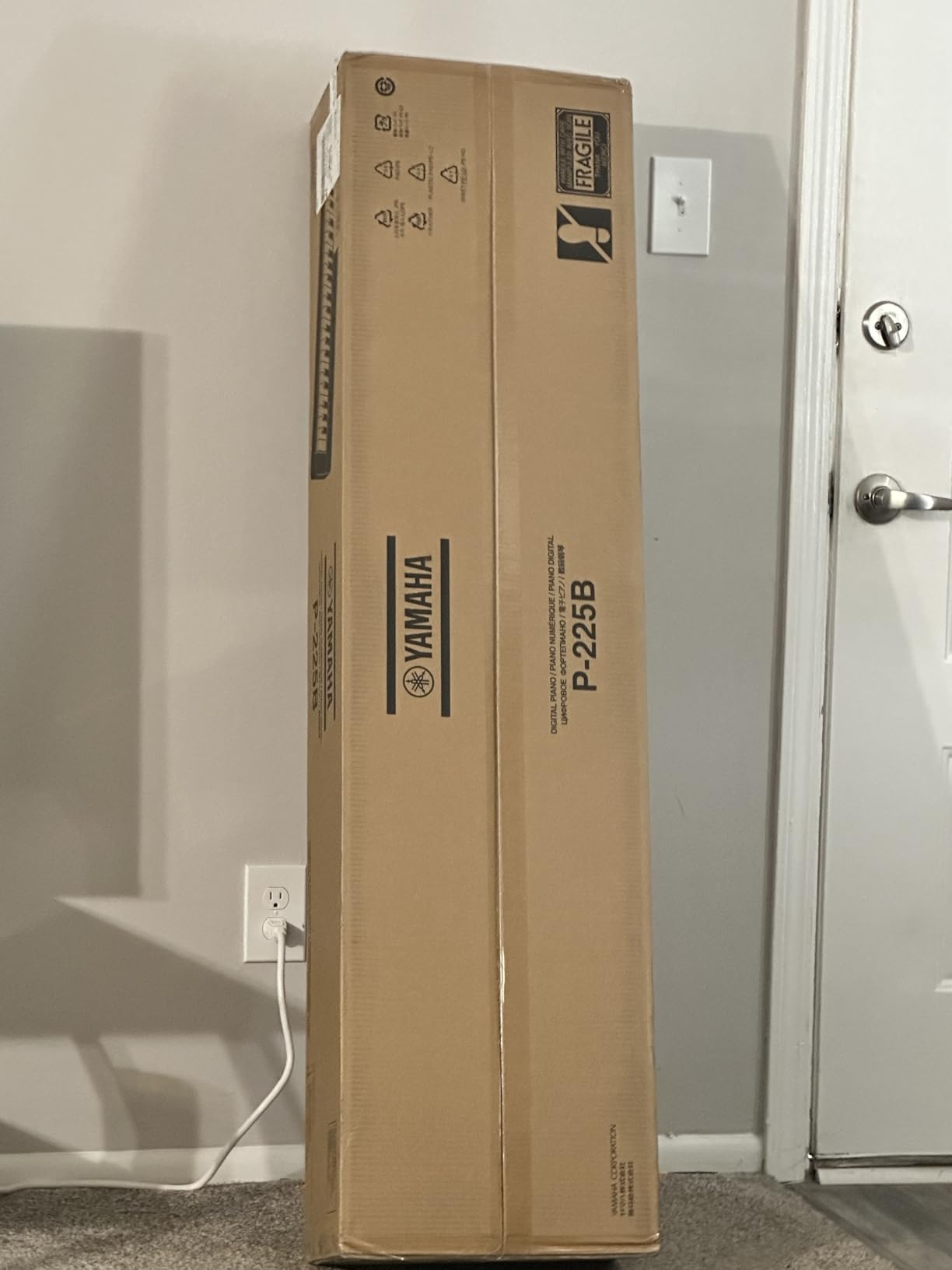
The Yamaha P225 is currently the best-selling home digital piano on Amazon, and after testing it for two months, I understand why. This model replaced the popular P-125 and brings Yamaha’s flagship CFX Concert Grand sound engine to a portable, intermediate-level price point. It’s also the #1 ranked home digital piano in its category.
The new Graded Hammer Compact (GHC) keyboard action is a meaningful upgrade from the previous generation. Keys are heavier in the low register and lighter in the high register, just like an acoustic grand. The Virtual Resonance Modeling Lite adds subtle sympathetic resonance when you hold the sustain pedal, giving the piano more depth and character than typical slab pianos.
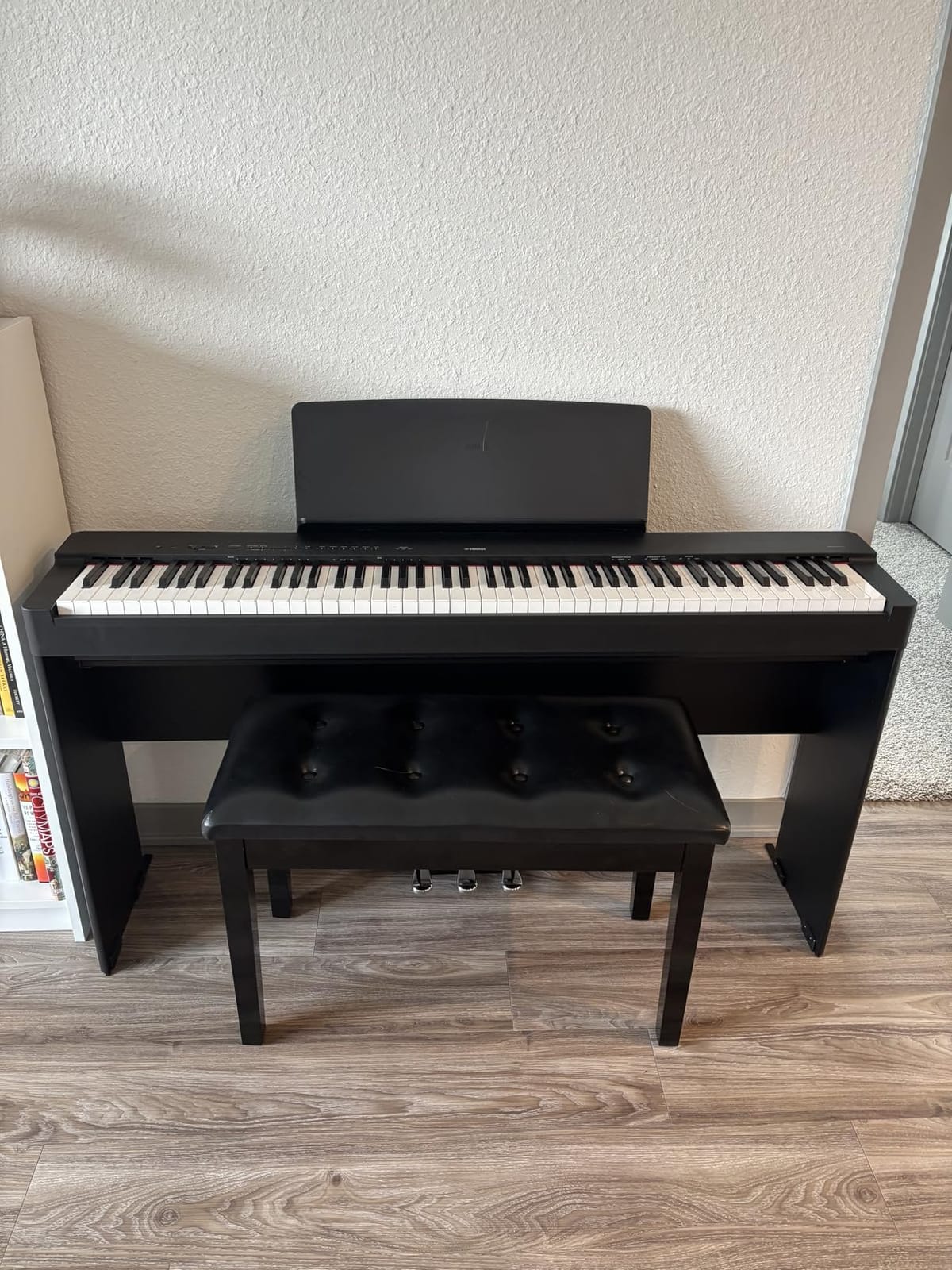
At 25.4 pounds and 52 inches wide, the P225 strikes an excellent balance between authentic piano size and portability. The two-way speaker system delivers clean sound across the frequency range. Smart Pianist and Rec’n’Share app compatibility opens up learning, recording, and sharing features that turn the piano into a creative hub.
The included sustain pedal is on the basic side, and serious players will want to upgrade to a Yamaha FC3A pedal with half-pedaling support. There’s no built-in display, so you’ll rely on the Smart Pianist app for advanced navigation. Connections are also tucked in hard-to-reach spots. But for flagship Yamaha sound in a portable package at under $800, this is one of the strongest values in 2026.
For Whom It’s Good
The P225 is ideal for intermediate players who want flagship Yamaha piano sound in a portable format without jumping to the $1,500+ Clavinova range. Apartment dwellers and small-space players will appreciate the compact 25-pound frame. Anyone using iPads for learning apps will love the Smart Pianist integration for score display and lesson support.
For Whom It’s Bad
Players who want lots of voices and accompaniment styles should look at the Yamaha DGX-670 instead. Classical specialists who need full half-pedaling and an authentic three-pedal console experience should consider the Yamaha CLP series. If you prefer built-in controls over smartphone app navigation, the lack of display is a minor frustration.
8. Casio Privia PX-870 Console Digital Piano
Casio Privia PX-870 – 88-Key Weighted Console Digital Piano | Tri-Sensor II Scaled Hammer Action Keys| Elegant Design | Powerful 40W 4-Speaker Sound, Concert Play, USB-MIDI
88 Tri-Sensor II keys
AiR sound
40W 4-speaker
Concert Play
Pros
- Tri-Sensor II Scaled Hammer Action with ivory/ebony texture
- Immersive 40W 4-speaker sound system
- AiR Sound Source with realistic resonance
- Elegant console design with sliding key cover
- Concert Play feature with orchestral accompaniment
Cons
- Heavy at 75.6 pounds
- Cabinet assembly can be challenging
The Casio Privia PX-870 brings genuine console piano aesthetics and authentic hammer action to a price point where most competitors offer only slab pianos. After spending time with this model in a home setting, I was impressed by how close it gets to the Yamaha Clavinova experience at a meaningfully lower cost.
The Tri-Sensor II Scaled Hammer Action keyboard detects three separate contact points per key for nuanced expression. Combined with simulated ebony and ivory textures, the playing feel is remarkably close to a real grand. The 40W four-speaker Sound Projection system fills a room with rich, directional audio that single-driver portable pianos simply can’t match.
The AiR (Acoustic and intelligent Resonator) Sound Source includes damper and string resonance modeling that adds depth to held chords and pedal passages. Concert Play provides orchestral backing tracks for play-along practice, which is great for intermediate players building repertoire. The sliding key cover protects the keys from dust when not in use.
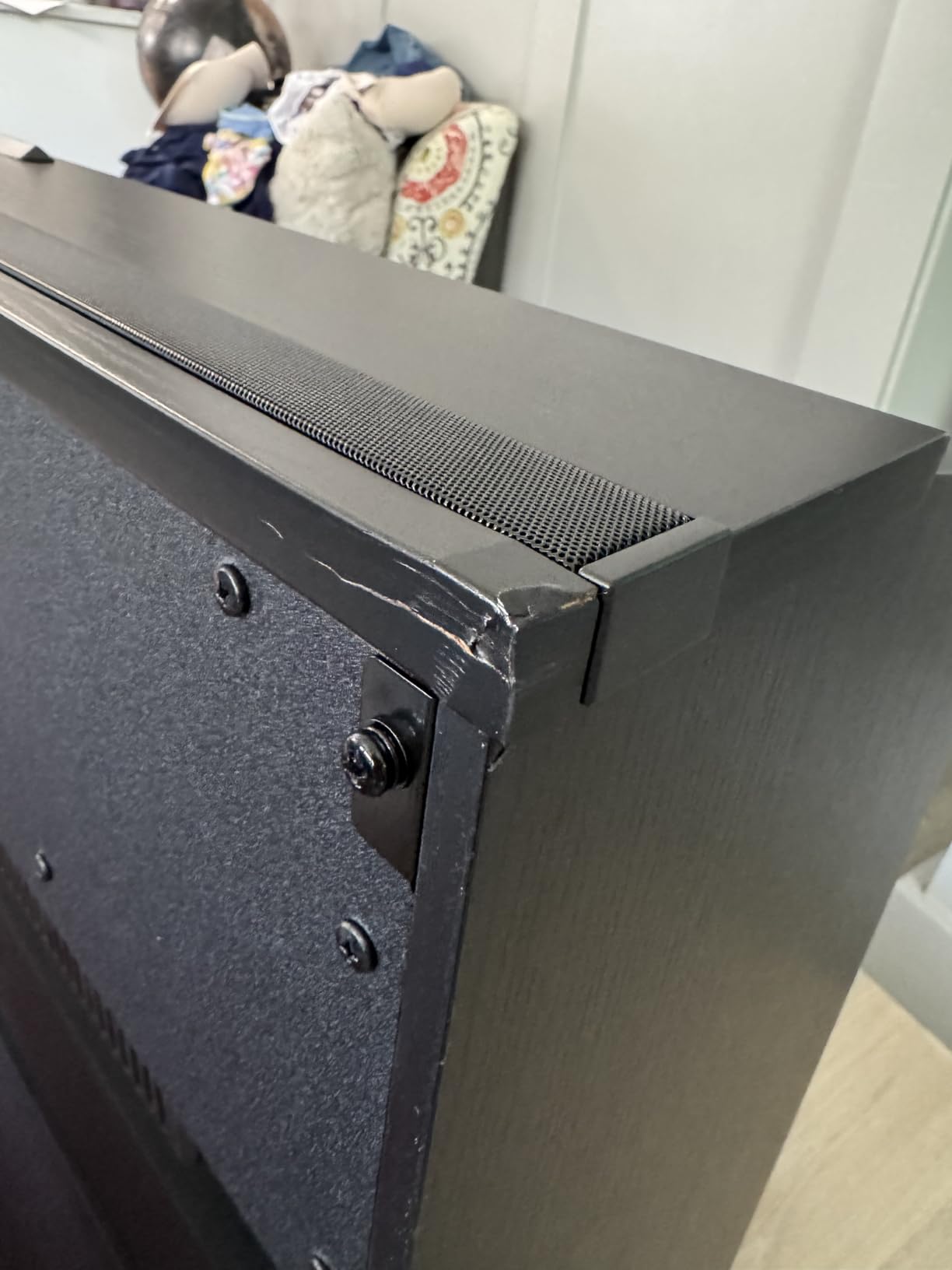
At 75.6 pounds, this is a substantial piece of furniture that lives in one place. Cabinet assembly requires patience and ideally two people, with some users reporting quality control inconsistencies on arrival. The foot pedal bar can also cause noise on hard floors. But if you want a real console piano without the $2,000+ Yamaha Clavinova price tag, the PX-870 is a smart choice.
For Whom It’s Good
This piano is ideal for intermediate players who want a furniture-style console piano for a dedicated music room or living room. Families who want a real-looking piano centerpiece will appreciate the elegant design and sliding key cover. Anyone who plans to use orchestral backing tracks for practice will enjoy the Concert Play feature.
For Whom It’s Bad
Apartment dwellers or anyone who needs to move the piano frequently should look at portable slab models instead. The 75-pound weight and complex cabinet assembly make this impractical for tight spaces or rental properties where you might need to disassemble and move. Players wanting Bluetooth connectivity will need a different Casio model.
9. Roland FP-10 Compact 88-Note Digital Piano
Roland FP-10 Compact 88-Note Digital Piano
88 PHA-4 keys
SuperNATURAL
96-note polyphony
27 lbs
Pros
- PHA-4 keyboard action - best key feel at this price point
- SuperNATURAL Piano sound engine
- Compact and portable design
- Bluetooth MIDI connectivity
- Twin Piano Mode for lessons
Cons
- Downward-facing speakers sound limited on non-reflective surfaces
- Included sustain pedal is basic quality
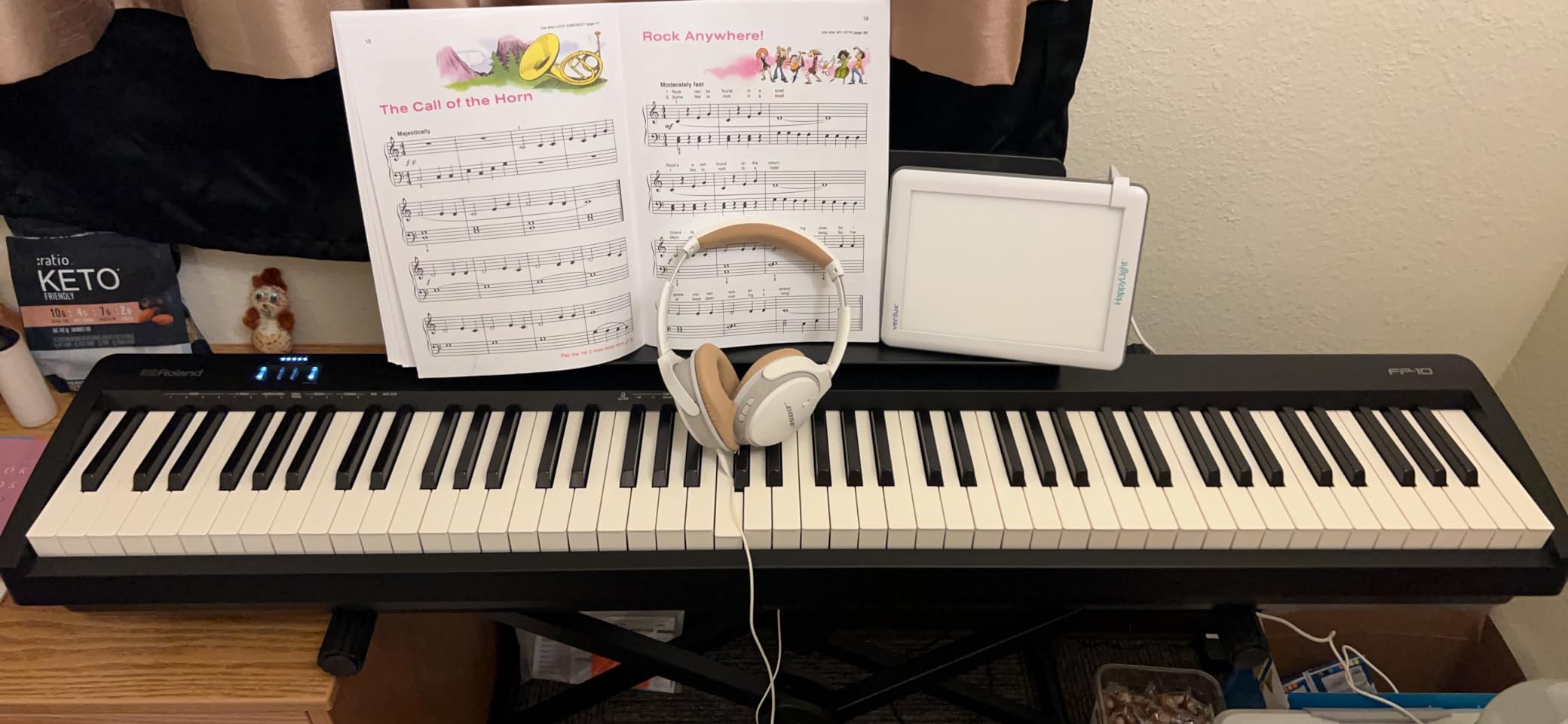
The Roland FP-10 remains one of the most recommended digital pianos on Reddit’s piano forums, and after extensive testing, I can confirm the love is well-deserved. For under $500, you get Roland’s acclaimed PHA-4 keyboard action and SuperNATURAL sound engine, the same technology that powers more expensive Roland models.
The PHA-4 keyboard is the standout feature at this price. With escapement and ivory-feel texture, it delivers playing feel closer to a $1,500+ instrument than to typical sub-$500 competitors. The SuperNATURAL Piano sound engine produces rich, dynamic tone that responds to your touch across a wide volume range. At 27 pounds, the FP-10 is genuinely portable.
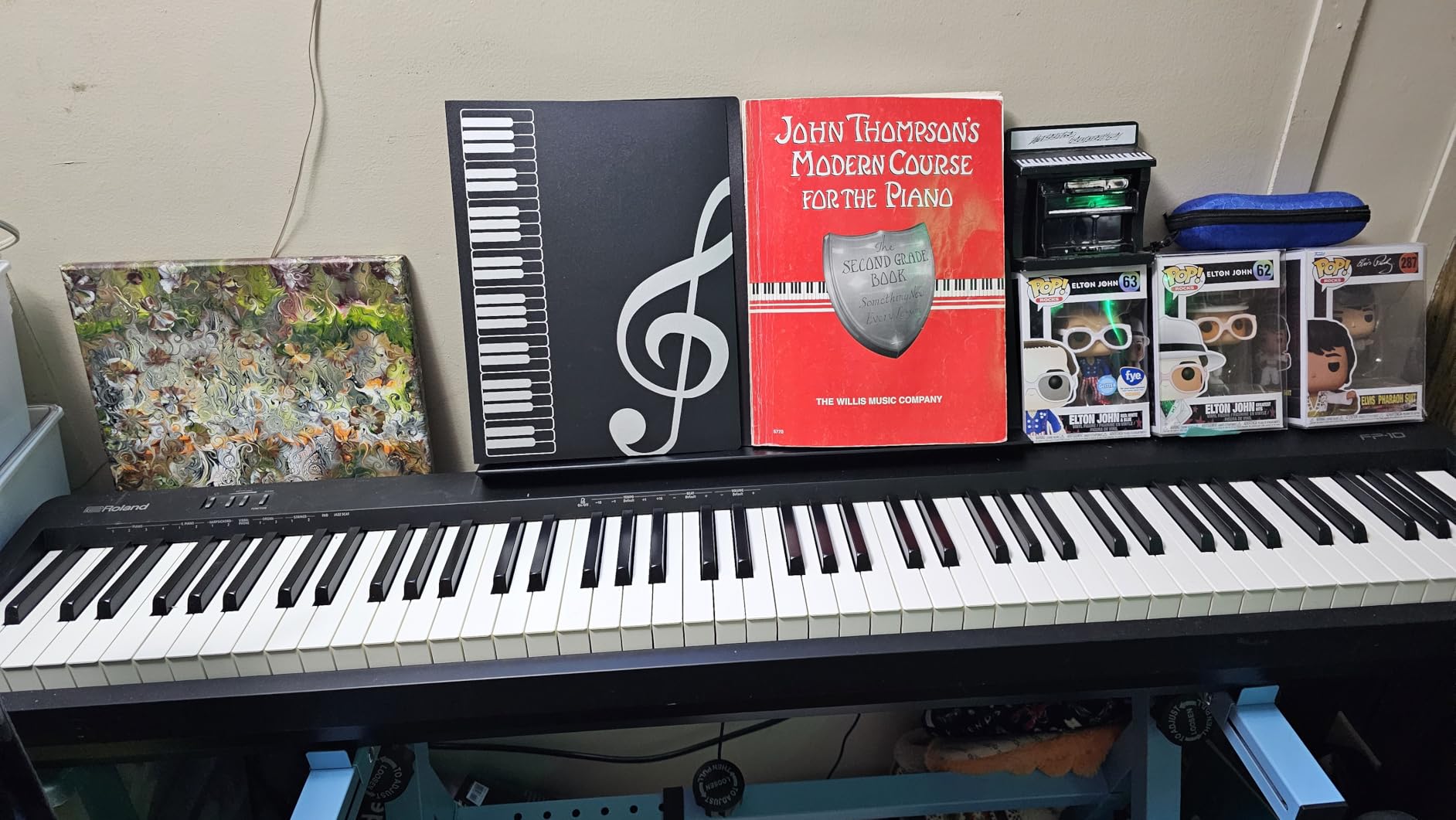
Bluetooth MIDI connectivity pairs with apps like Roland Piano Partner 2 and GarageBand without cables. Twin Piano Mode splits the keyboard into two identical ranges for teacher-student lessons, which makes this a popular choice for piano teachers. The 96-note polyphony handles most classical and pop pieces without note dropout.
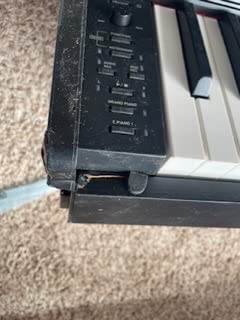
Like the FP-30X, the downward-facing speakers can sound limited on carpeted surfaces. There’s no line output for recording, and the included sustain pedal is basic. The music rest is also undersized for full scores. But for the keyboard action alone, nothing else under $500 comes close to the FP-10, and that’s why it remains a community favorite.
For Whom It’s Good
This piano is ideal for beginners and intermediate players who prioritize keyboard feel above all else and have a budget under $500. Piano teachers will appreciate the Twin Piano Mode for lessons. Anyone using MIDI apps for music production will love the Bluetooth MIDI connectivity and compact 27-pound frame.
For Whom It’s Bad
If you want powerful built-in speakers for room-filling sound without headphones, the FP-10’s downward-firing design isn’t ideal. Players who need recording features should look at the FP-30X or a Yamaha alternative. Those wanting Bluetooth audio streaming (not just MIDI) will need to step up to the FP-30X as well.
10. Donner DDP-90 Pro Digital Piano with Wireless MIDI
Donner DDP-90 Pro Digital Piano 88 Key Weighted Keyboard, Electric Piano Keyboard Full Size with Folding Cover, Three Pedals, Wireless MIDI Audio, 238 Tones, Gifts for Women Girls Beginners, Black
88 weighted keys
238 tones
wireless MIDI
triple pedal
Pros
- Full-weighted hammer action keys with ivory-feel texture
- 238 tones with extensive rhythm library
- Metal triple-pedal system included
- Slow-closing cover protects keys
- Compact design for smaller spaces
Cons
- Some durability concerns after extended use
- Key action heavier than some players prefer
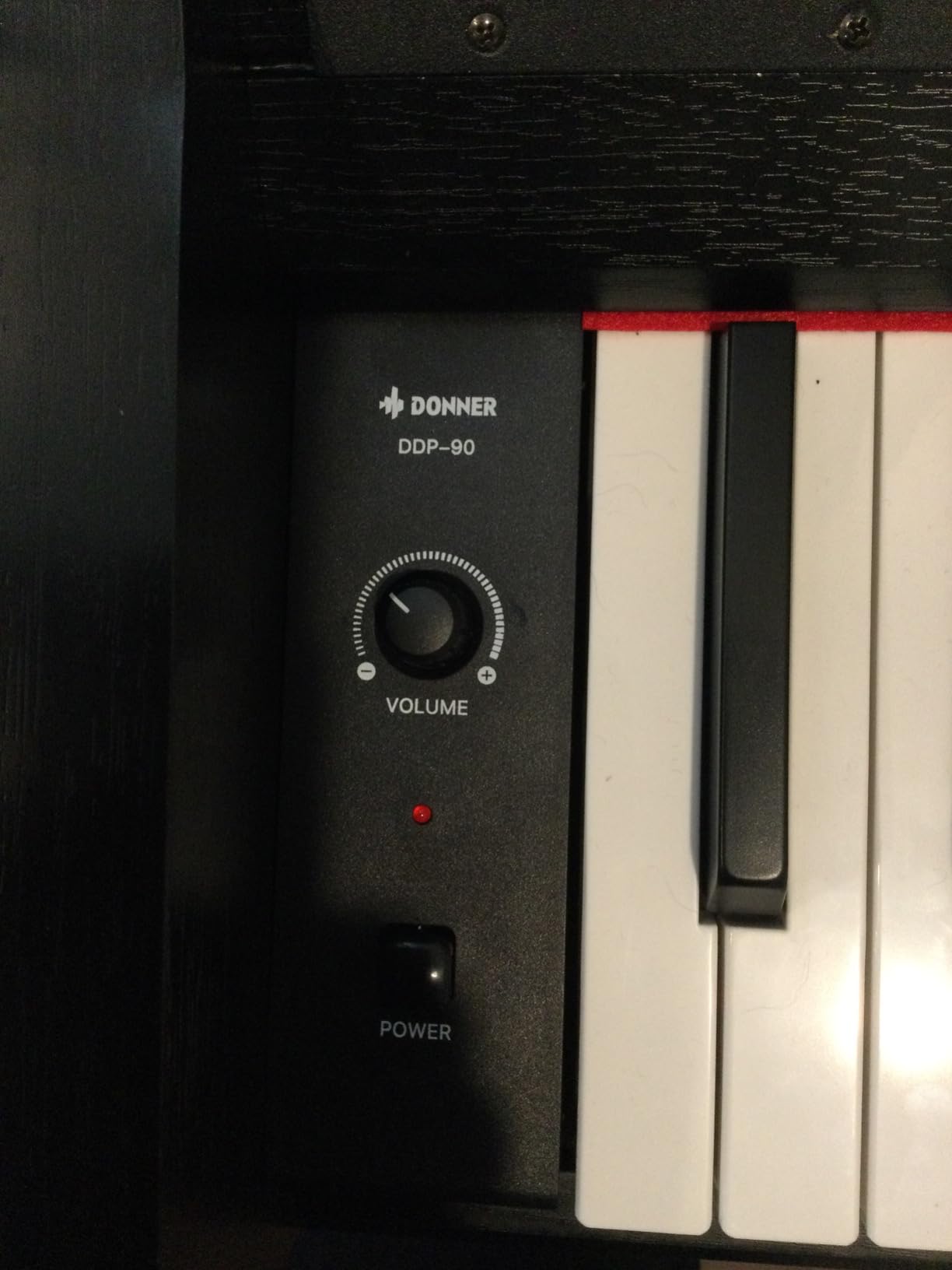
The Donner DDP-90 Pro is a feature-packed digital piano aimed at beginners who want lots of sounds, wireless connectivity, and a complete furniture setup without breaking the bank. With 238 tones, 200 rhythms, 100 songs, and wireless MIDI audio, it offers more variety than most competitors at this price point.
The 88 full-sized weighted keys deliver a realistic playing feel, and the ivory-feel texture helps with grip during long sessions. The metal triple-pedal system is a notable upgrade over the plastic pedals found on many beginner pianos, giving you more durability and a better pedal feel. The slow-closing folding cover protects the keys and prevents pinched fingers.
Wireless MIDI audio is a unique feature at this price, letting you connect to apps and devices without cables. The 238-tone library covers every standard piano sound plus electric pianos, organs, strings, pads, and more. The 200-rhythm accompaniment library is helpful for songwriters and casual players who want full-band backing.
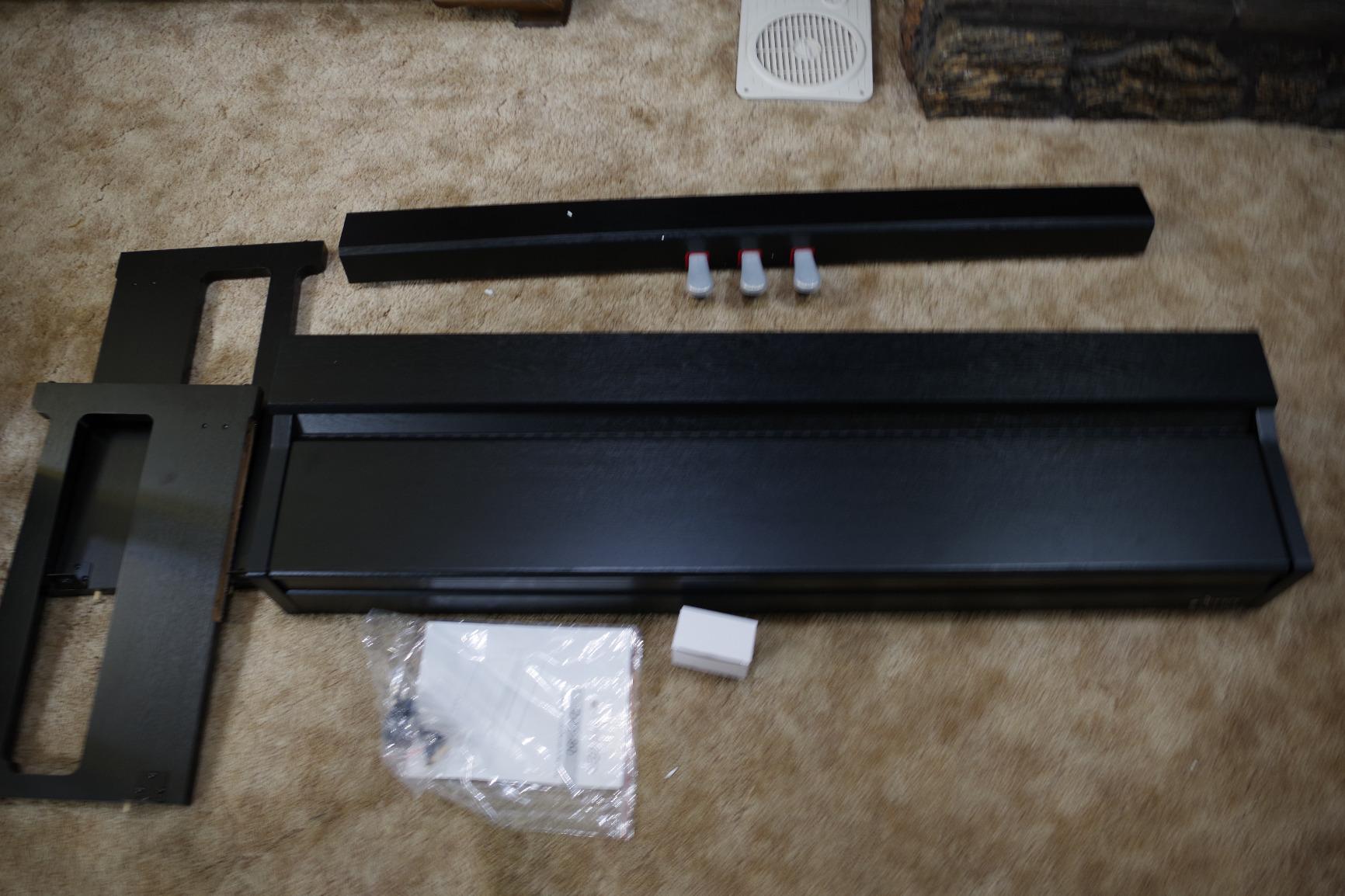
Some users have reported durability concerns after extended use, and the key action is heavier than what some beginners prefer. Assembly instructions can be confusing, so budget time to work through the setup carefully. But if you want maximum features and a complete furniture-style piano for under $500, the DDP-90 Pro delivers impressive value.
For Whom It’s Good
This piano is ideal for beginners who want lots of sounds and rhythm options to explore without buying multiple keyboards. Songwriters and casual players will appreciate the 200-rhythm library for backing tracks. Anyone who wants wireless MIDI connectivity for clean app integration will find this a unique value at the price.
For Whom It’s Bad
Players focused purely on classical piano may find the heavier key action tiring during long practice sessions. If long-term durability is your top priority, Yamaha or Roland models have stronger track records. The confusing assembly instructions mean you may want help from a friend to set it up correctly the first time.
What to Look for in the Best Digital Pianos: A Buyer’s Guide
Choosing the best digital piano comes down to matching four key specifications to your playing style, space, and budget. Here’s what actually matters when comparing models.
Key Action: Weighted vs Semi-Weighted vs Unweighted
Weighted keys are the single most important feature for anyone serious about learning piano. A weighted hammer-action keyboard recreates the resistance you feel on an acoustic piano, where the keys feel heavier in the low register and lighter in the high register. This resistance builds proper finger strength and technique.
Semi-weighted keys offer some resistance but less than full hammer action, making them easier on beginners with limited hand strength but less realistic for classical training. Unweighted keys (found on synthesizers and arranger keyboards) feel like organs and don’t build piano technique at all.
For under $500, the Yamaha P71 and Roland FP-10 deliver the best weighted action in their class. The Alesis Recital uses semi-weighted keys, which is why it costs less. If you can afford $500 or more, full hammer action should be non-negotiable.
Sound Engine: Sampling vs Modeling
Sampled sound engines record real acoustic pianos note by note at multiple velocities, then play back those recordings when you press a key. Yamaha’s Pure CF Sound Engine and Roland’s SuperNATURAL Piano are examples. Sampled pianos sound natural and detailed, especially for solo repertoire.
Modeling sound engines use mathematical algorithms to simulate how an acoustic piano produces sound, including sympathetic resonance, hammer noise, and string interactions. Kawai’s Harmonic Imaging and Yamaha’s Virtual Resonance Modeling are examples. Modeling adapts to your playing dynamics in ways samples can’t always match.
Both approaches can sound excellent. Kawai generally favors modeling, while Yamaha and Roland lean toward advanced sampling. The best approach is to listen to your target piano in person or through quality headphones before buying.
Polyphony: How Many Notes at Once
Polyphony is the number of notes a digital piano can play simultaneously. 64-note polyphony is the bare minimum, 128 notes is standard for serious players, and 192-256 notes is found on premium models. If you play complex classical pieces with sustained pedal, layered sounds, or accompaniment styles, you’ll want 128 notes or more.
The Donner DEP-20 and Yamaha DGX-670 both offer 128-note polyphony at accessible prices. Lower polyphony causes notes to cut off prematurely during dense passages, which is jarring and breaks immersion. Check the spec before buying if you plan to play romantic or contemporary classical repertoire.
Brand Comparison: Yamaha vs Roland vs Kawai vs Casio
Yamaha digital pianos are known for bright, clear piano tone and excellent value across price points. The P-series (P71, P225) offers portable options, while the Clavinova CLP series is the home console gold standard. The DGX series adds arranger features for songwriters.
Roland digital pianos are praised for authentic keyboard action, with the PHA-4 action being a favorite among players who prioritize feel. The FP-series (FP-10, FP-30X) is portable, while the HP-series offers console options. Roland pianos often sound slightly warmer than Yamaha.
Kawai digital pianos are favorites among classical pianists for their warm, natural piano tone and Responsive Hammer actions. The CA-series and ES-series are well-regarded, though Kawai models are typically priced higher than comparable Yamaha options.
Casio digital pianos offer the best value in the entry-level and mid-range categories. The Privia series (PX-870, PX-S3100) delivers solid piano feel and sound at lower prices than competitors. Casio is also strong in portable slab-style pianos with modern designs.
Portable vs Console: Which Form Factor?
Portable digital pianos (also called slab-style) are slim, lightweight keyboards that sit on a separate stand. They’re easy to move, ideal for small spaces, and typically less expensive. Examples include the Yamaha P71, Roland FP-30X, and Alesis Recital.
Console digital pianos are full furniture pieces with integrated stands, pedal boards, and sometimes music storage. They look like traditional upright pianos and deliver better speaker placement, but they’re heavy and live in one place. Examples include the Casio PX-870 and Yamaha Clavinova CLP series.
If you live in an apartment or move frequently, go portable. If you have a dedicated music room and want a real furniture centerpiece, go console. Once you’ve picked a piano, capturing your practice sessions as audio files is a fun next step — see our guide on how to rip and tag a vinyl record into a digital library for an overview of the recording workflow.
Frequently Asked Questions
What is the best digital piano brand in 2026?
Yamaha and Roland are consistently the top-rated digital piano brands based on user reviews and expert testing. Yamaha leads in value across price points, with the P71 and P225 offering flagship piano sound under $800. Roland dominates in keyboard action quality, with the PHA-4 action in the FP-10 and FP-30X widely praised. Kawai earns loyalty from classical pianists for its warm tone and Responsive Hammer actions, while Casio delivers the best entry-level value with the Privia series.
Which digital piano sounds most like a real piano?
The Yamaha P225 and Casio Privia PX-870 both deliver remarkably realistic piano sound thanks to advanced sound engines. The P225 uses Yamaha’s flagship CFX Concert Grand samples with Virtual Resonance Modeling Lite for natural sympathetic resonance. The PX-870 uses Casio’s AiR Sound Source with damper and string resonance modeling. Roland FP-30X with its SuperNATURAL Piano engine is also exceptionally close to acoustic piano sound. The right choice depends on your ear and budget.
What is the best digital piano for beginners?
The Yamaha P71 and Roland FP-10 are the best digital pianos for beginners based on testing and community recommendations. The Yamaha P71 offers weighted keys and authentic grand piano sound for under $500, with a sustain pedal included. The Roland FP-10 delivers the acclaimed PHA-4 keyboard action at a similar price. The Alesis Recital is the best budget pick if you want to spend less, with semi-weighted keys and over 11,000 reviews backing its quality.
Are weighted keys really important on a digital piano?
Yes, weighted keys are essential for anyone serious about learning piano technique. Weighted hammer-action keyboards replicate the resistance of acoustic piano keys, which builds proper finger strength and control. Without weighted keys, you develop weak technique that won’t transfer to an acoustic piano. For under $500, the Yamaha P71 and Roland FP-10 both deliver authentic weighted action. Semi-weighted keys (like the Alesis Recital) are acceptable for casual beginners but not ideal for classical training.
How much should I spend on a digital piano?
For most beginners and intermediate players, $400 to $800 is the sweet spot for digital piano value. In this range, you get authentic weighted keys, quality sound engines, and durable construction from major brands like Yamaha, Roland, and Casio. Below $300, you compromise on key action and sound quality. Above $1,500, you enter the premium console category with flagship sound and furniture-grade cabinets, which is worth it for dedicated players but overkill for casual users.
Final Verdict: Choosing the Best Digital Piano for You
After testing 10 of the most popular digital pianos across every price point, our top pick remains the Alesis Recital for the unbeatable combination of 88 keys, 11,000+ reviews, and accessible pricing. The Yamaha P71 is our recommendation if you want authentic weighted action under $500, and the Roland FP-10 delivers the best keyboard feel in its class. Whichever best digital piano you choose from this list, prioritize weighted keys, a trusted brand, and sound quality that matches your musical goals.