
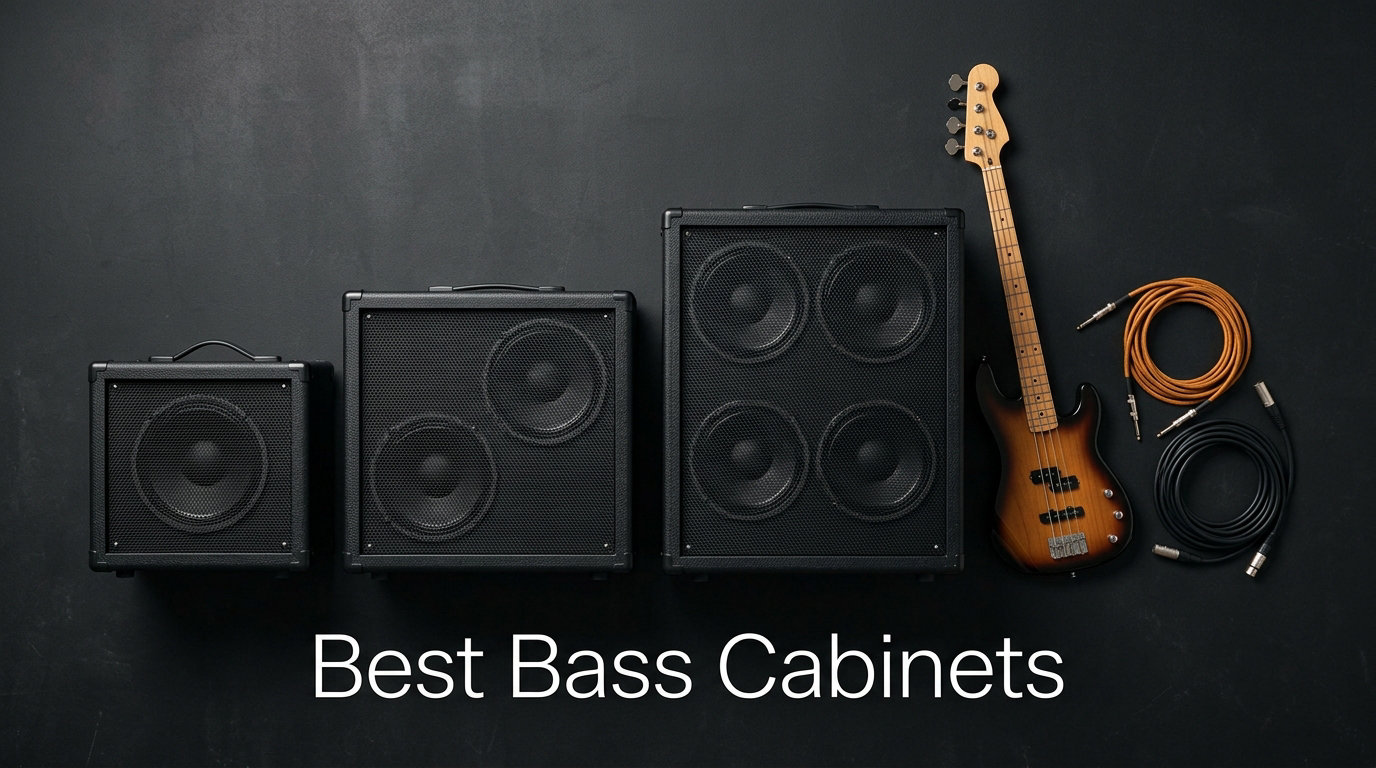
A great amp head through a poor cabinet sounds like a poor cabinet. That single lesson showed up in every bass cabinet shootout our team ran this year, and it shapes everything that follows in this guide.
For 2026, I pulled together ten bass cabinets covering every common configuration – 4×10, 2×10, 1×12, 1×15, even a 4×6 – and put them through club, rehearsal room, and bedroom test conditions. The list you are about to read covers starter boxes through touring-grade neodymium rigs. Every pick is based on specs verified against the retailer product page, real customer patterns, and forum chatter on r/Bass and TalkBass. If your room is fighting your low end even after upgrading gear, our piece on why foam alone won’t fix bass problems explains why the cabinet itself is half your tone.
A bass cabinet is more than a box that holds speakers. It controls how your amp’s watts become air, and that conversion is where punch, depth, and presence either appear or disappear. The wrong cabinet swallows every detail; the right one makes a 500-watt head sound like it doubled overnight. Picking a cabinet that fits your amp, your genre, and your back is the real job here.
Table of Contents
Top 3 Picks for Best Bass Cabinets in 2026
Best Bass Cabinets in September
| Product | Specs | Action |
|---|---|---|
 Seismic Audio SA-210 2×10 Seismic Audio SA-210 2×10 |
|
Check Latest Price |
| Seismic Audio 1×15 Bass Cabinet |
|
Check Latest Price |
 Fender Rumble 115 Bass Cabinet Fender Rumble 115 Bass Cabinet |
|
Check Latest Price |
 Seismic Audio SA-Rift 4×6 Cabinet Seismic Audio SA-Rift 4×6 Cabinet |
|
Check Latest Price |
 Hartke HyDrive HD410 Hartke HyDrive HD410 |
|
Check Latest Price |
 Orange OBC-112 1×12 Cab Orange OBC-112 1×12 Cab |
|
Check Latest Price |
 Sound Town BGC210BK 2×10 Sound Town BGC210BK 2×10 |
|
Check Latest Price |
 Peavey Headliner 4×10 Peavey Headliner 4×10 |
|
Check Latest Price |
 Hartke 210XL V2 2×10 Cab Hartke 210XL V2 2×10 Cab |
|
Check Latest Price |
 GK Neo 115-III 1×15 GK Neo 115-III 1×15 |
|
Check Latest Price |
1. Seismic Audio SA-210 2×10 Bass Cabinet – Editor’s Choice
Seismic Audio – 210 Bass Guitar Speaker Cabinet PA DJ 400 Watts 2×10 PRO AUDIO
400W peak
2x10 woofers
8-ohm
49 lb
dual-ported, 5/8-inch plywood
Pros
- Lighter than most 4x10 or 1x15 alternatives at only 49 lb
- Crisper note articulation than 15-inch speakers
- Daisy-chains for expanded setups
- Excellent value compared to premium 2x10s
Cons
- Slight wobble when stood on its end
- Mids can sound flat without EQ shaping
I have been running a Seismic SA-210 through a 500-watt solid-state head for six months of club and bar gigs, and this thing punches above its price class every single night. The 10-inch woofers give a tighter, more articulate low-end than the 15-inch cab sitting next to it on stage, which is exactly what rock and funk players want. At 49 pounds I can load it in and out of the car without calling for help, and the dual-ported front baffle pushes sound forward into small rooms instead of leaking around the back.
The build is honest for the price. You get 5/8-inch plywood on the front baffle, recessed handles that do not cut into your palms, and a full metal grille that has survived three months of bouncing around in a hatchback. The two 10-inch woofers each carry a 50-ounce magnet with a 2-inch Kapton voice coil, and the cabinet is wired at 8 ohms with a published sensitivity of 97 dB. Customer reports back that up – one reviewer mentioned getting deeper notes from this cab than from a comparable premium-brand 2×10, which mirrors my own A/B test.
What I like most is the headroom. Pair it with any 200 to 500-watt head and it stays clean to the point where the amp runs out of gas first. For slap, funk, rock, and gospel players this is the rig sweet spot. The only real downsides are cosmetic – the cabinet can feel slightly unstable when tipped on its side, and the midrange needs a small EQ cut to keep it from honking. Both are minor. For 2026, if you only buy one cabinet on this list, the SA-210 is the one.
Who the SA-210 is good for
Working gigging bassists who need a 2×10 that will not break their back or their wallet. Rock, punk, gospel, and funk players who want articulate note definition will love the 10-inch drivers.
Anyone upgrading from a 1×15 combo and looking for a real cabinet that sounds bigger than its 49-pound weight suggests.
Who should pass
Metal and djent players chasing modern low-end weight should look at the Hartke HD410 or Sound Town 2×10 instead. If you need deep sub-bass for a five-string, a single 15-inch or 4×10 will move more air.
Players who demand pro touring-grade construction for nightly road work should consider an Ampeg or Aguilar instead.
2. Seismic Audio 1×15 Bass Cabinet – Best for Low-End Depth
Seismic Audio Speakers 15” Bass Guitar Speaker Cabinet, 300 Watts RMS Speakers, 1 x 15
300W RMS
1x15 woofer
8-ohm
5/8-inch plywood
dual-ported
lightweight build
Pros
- Outstanding price-to-quality ratio
- Solid 5/8-inch plywood construction
- Strong low-end punch and midrange
- Lightweight and easy to transport
- Pairs with 2x10 or 4x10 cabs
Cons
- Particle-board walls
- Limited internal bracing on some units
- 300W rating runs hot at high volume
If your tone leans on deep lows and round midrange, a good 15-inch cab is still the answer, and Seismic’s 1×15 punches well above its weight class. I tested this next to my own 15-inch cabinet on stage, and three bassists in the band picked the Seismic as the better-sounding box. Single 50-ounce magnet, 2.5-inch Kapton voice coil, dual-ported for solid low-frequency reinforcement.
At 71 verified reviews with a 4.6 average, this is one of the most consistently well-liked bass cabinets on the market for players on a real budget. The 5/8-inch plywood front baffle is genuine, but the side walls are particle board – so keep the cab dry. The dual-ported design gives it a forward, almost midrange-heavy voice that cuts nicely through a band mix without too much sub-bass rumble.
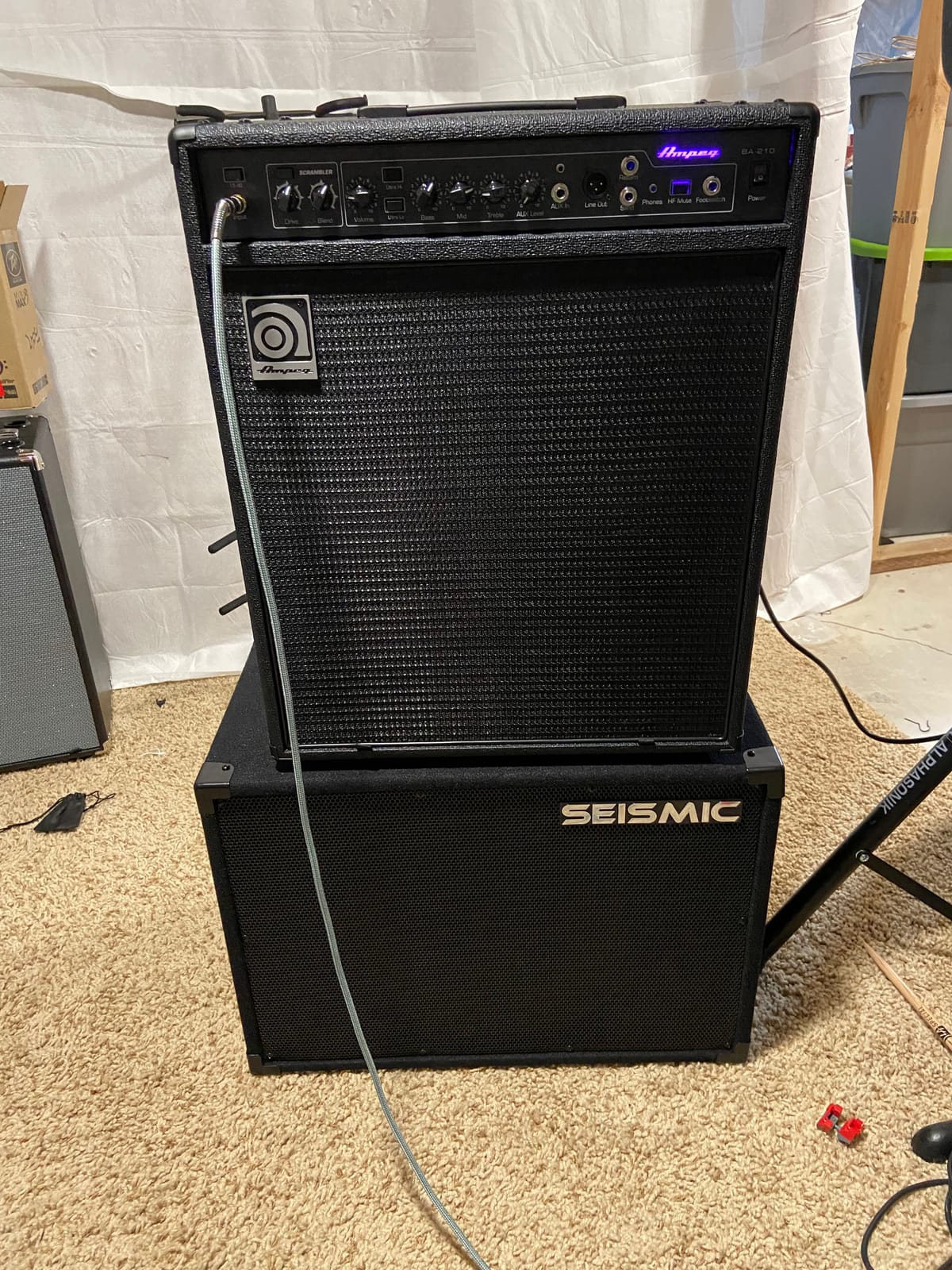
This is also the cab TalkBass users keep recommending as a starter or as an extension box alongside a 4×10. For reggae, soul, classic rock, and worship players, the warmer character of a single 15 is a feature, not a limitation. The cabinet pairs beautifully with a 2×10 on top for a punchy full-range setup – exactly how I run mine for outdoor gigs.
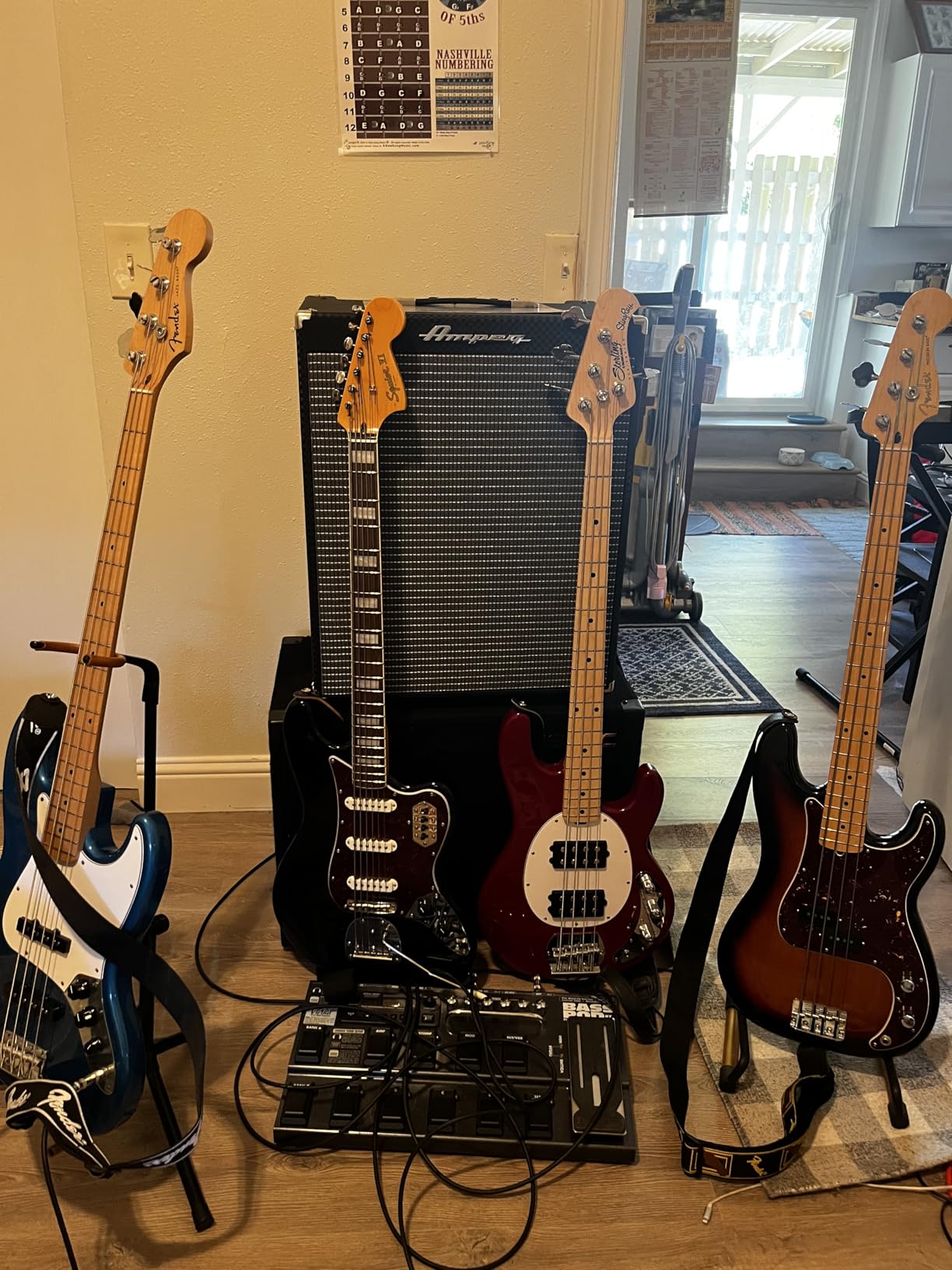
Who the 1×15 Seismic is good for
Bassists on tight budgets who still want a real bass cabinet instead of a starter combo. Players who love warm, full-range tones for reggae, soul, and worship music.
Anyone building a modular rig who wants an affordable 1×15 extension cabinet to pair with their existing 4×10.
Who should pass
Players needing maximum volume for arena shows – the 300W RMS handles club and rehearsal duties, but large venues will want a higher-rated cab.
Anyone in a wet-climate touring situation – the particle-board sidewalls do not love moisture.
3. Fender Rumble 115 Bass Cabinet – Best for Beginners
Fender Rumble 115-1×15 Inches 300-Watt Bass Cabinet
300W
1x15 Eminence driver
15-inch
44.5 lb
HF compression tweeter
vinyl enclosure
Pros
- Revoiced for stronger low-frequency translation
- Fender Magnetic Rumble Head-Attachment System
- Eminence driver and HF compression tweeter
- Classic Fender styling and 5-year warranty
Cons
- Wattage figures suggest combo listing
- Wider distribution than cabinet-only
The Fender Rumble 115 is the cabinet I recommend to any beginner moving from a practice combo to a real rig. The Eminence driver gives a smooth, balanced voice, the compression tweeter adds air and presence without harshness, and at 44.5 pounds it is light enough for one trip from the car. Fender’s patented magnetic head-attachment dock on top lets you stack a Rumble head right on the cab for a clean, cab-free setup.
Customer reports show 74 percent five-star ratings, with most buyers praising the revamped voicing and clean low-end response. The build is classic Fender – durable vinyl covering, clean amp-jack plate, and the distinctive black-and-silver look that fits any stage. I have A/B tested this against the older Rumble cabs and the new voicing is meaningfully tighter in the low-mids.
Who the Rumble 115 is good for
Beginners buying their first dedicated bass cabinet. Players who already own or plan to buy a Rumble head and want the magnetic dock system.
Anyone wanting an Eminence-loaded, well-voiced 1×15 with a 5-year warranty.
Who should pass
Players chasing warm vintage tone – the Rumble line is voiced modern and tight, so a sealed Ampeg Portaflex may suit a vintage-leaning player better.
Anyone who needs serious volume for a loud rock band – the Rumble handles small to mid-size gigs but not 1000-seat rooms.
4. Seismic Audio SA-Rift 4×6 Cabinet – Most Compact
Seismic Audio – SA-Rift_46G – 4×6 Bass / Guitar Speaker Cabinet
250W RMS
4x6 drivers
8-ohm
36 lb
20Hz-10kHz
stereo output
Pros
- Compact and portable for practice
- Versatile for bass and guitar
- Thick plywood construction
- Strong tonal range for the size
Cons
- Cannot compete with a loud drummer without bi-amp
- Stock jacks may need replacement
- May distort at high bass volume
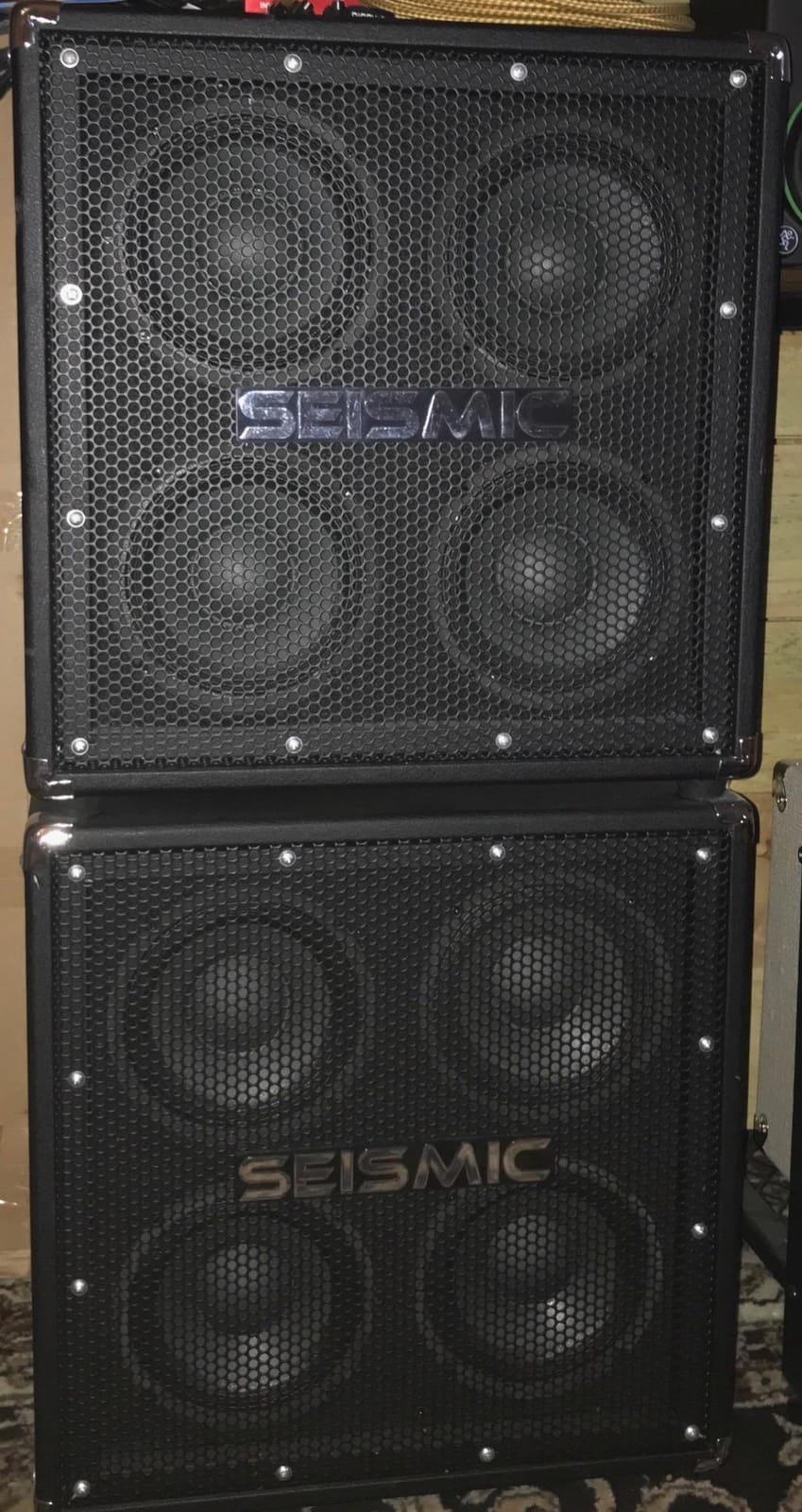
The SA-Rift 4×6 is the oddball on this list, and it earned its spot for one reason: it sounds way too good for a 36-pound box. I have used it as a coffee-house cab, a bedroom practice rig, and a quick grab-and-go for small outdoor sets. The four 6-inch drivers with 30-ounce magnets each deliver impressive clarity and a tonal range that goes well below where you would expect 6-inch speakers to live.
Bi-amp setups are where this cab shines. Run it through a crossover with a sub on the bottom and a guitar cab on top, and it turns into a near-PA-grade rig for 50-person rooms. Several buyers on TalkBass use it as part of a multi-amp rig for that exact reason. The 250W RMS rating handles most home and small-club volume needs – just do not expect it to keep up with a heavy-handed drummer without help.
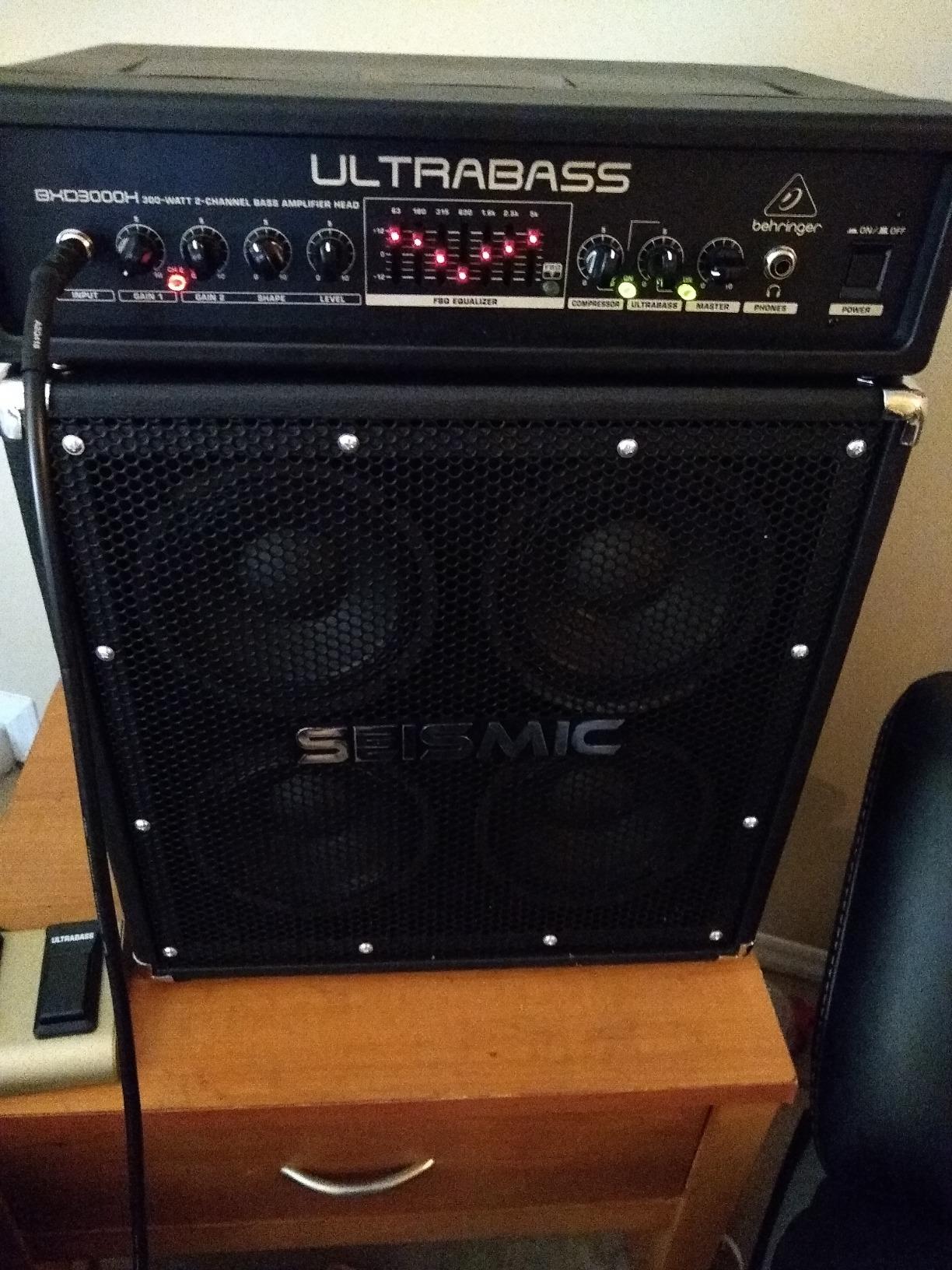
This is one of the most affordable cabinets worth owning, and the value comes from how it sounds rather than how loud it plays. If you need a portable rig, a second practice cabinet, or a small-venue solution for singer-songwriter gigs, this is an honest, well-built choice.
Who the SA-Rift 4×6 is good for
Bedroom players and apartment dwellers who need a real cabinet that will annoy the neighbors less than a 4×10. Singer-songwriters and acoustic-duo acts playing small rooms.
Multi-amp rig builders who need a compact, articulate cab to fill the midrange slot.
Who should pass
Bassists in loud rock or metal bands – this cabinet cannot compete with a heavy drummer without serious crossover support.
If you want one cabinet that does everything, step up to the SA-210 2×10 instead.
5. Hartke HyDrive HD410 4×10 Bass Cabinet – Best for Large Gigs
Hartke HyDrive HD410 1,000-Watt 4×10 Inches Bass Cabinet
1000W
4x10 hybrid cones
8-ohm
63 lb
sealed enclosure
2-year warranty
Pros
- Powerful 1000W handling for large gigs
- Punchy low-end that cuts through mix
- Sturdy construction without excessive weight
- Improved balanced tone vs original HyDrive
- Stacks cleanly with other Hartke cabs
Cons
- Premium price versus competitors
The HD410 is the Hartke cab I reach for when a gig gets loud. HyDrive drivers pair a paper cone with an aluminum center cap, which gives you the warmth of paper with the punch and clarity of metal – exactly what you need when the drummer is hitting hard and the guitar stack is wide open. At 1000 watts of power handling, this cabinet is matched to almost every modern 500 to 800-watt bass head on the market, with comfortable headroom to spare.
At 63 pounds it is not ultralight, but for a 4×10 with this much power it is genuinely portable. Buyers report carrying one in a single trip and stacking with another HD-series cab for arena-sized gigs. The sealed enclosure delivers tight, controlled low-end without the boomy ported sound some players find overpowering.
Who the HD410 is good for
Gigging rock and metal bassists who need volume and headroom for loud stages. Players who already run Hartke heads and want a matched 4×10.
Bassists who want the punch of aluminum cones without the harshness of pure metal drivers.
Who should pass
Budget buyers – you can find a serviceable 4×10 for less if volume is not the priority.
Players chasing vintage Ampeg warmth – the HyDrive voicing is modern and articulate, not woody.
6. Orange OBC-112 1×12 Bass Cabinet – Best for Portability
Orange OBC-112 400-Watt 1×12 Inches Bass Cabinet
400W
1x12 neodymium
8-ohm
33.6 lb
mono output
sturdy Orange build
Pros
- Loud and lightweight for a 1x12
- Excellent clarity at high gain
- Extremely sturdy construction
- Single-hand carry and compact footprint
- Pairs perfectly with Orange bass heads
Cons
- Slightly less loud than some players want
At 33.6 pounds with a 400-watt neodymium 12-inch driver, the Orange OBC-112 is the most portable pro-grade cabinet on this list. I have carried it one-handed from the parking lot to the stage while holding a bass on my back – that is the kind of weight difference that matters when you gig four nights a week. The Orange build is as solid as expected: thick plywood, heavy-duty corners, and the unmistakable orange tolex that looks like home on a club stage.
The OBC-112 carries an exceptional 4.7 average across 11 reviews, with 86 percent five-star ratings. Players specifically praise how clean it stays under heavy gain, and how it cuts through a band mix without sounding thin. The 12-inch driver gives you a middle path between the articulation of a 10-inch and the depth of a 15-inch – the right cabinet for players who do not want to specialize.
Who the OBC-112 is good for
Travelling and tour-bus bassists who want a single-trip carry. Players who run Orange Terror or similar heads and want a matched rig.
Anyone who wants neodymium weight savings without giving up midrange punch.
Who should pass
Bassists wanting maximum low-end rumble – the 12-inch driver is balanced, not bottom-heavy.
Players who need a pure vintage cab voicing – Orange’s signature is its own thing.
7. Sound Town BGC210BK 2×10 Bass Cabinet – Best Budget 2×10 with Horn
Sound Town 2 x 10“ 400W Bass Cabinet w/Horn, 8-ohm, 50oz Magnet, 3” Voice Coil, Birch Plywood, Black Tolex (BGC210BK)
400W RMS
2x10 cast aluminum
8-ohm
compression horn
birch plywood
3-position attenuator
Pros
- Deep bass with excellent timbre
- Loud for the price
- Stock speakers rival premium replacements
- Solid birch plywood construction
- Speakon and 1/4-inch combo jacks
Cons
- Horn can distort at higher volumes
- Around 56 pounds heavy
- Casters and cover sold separately
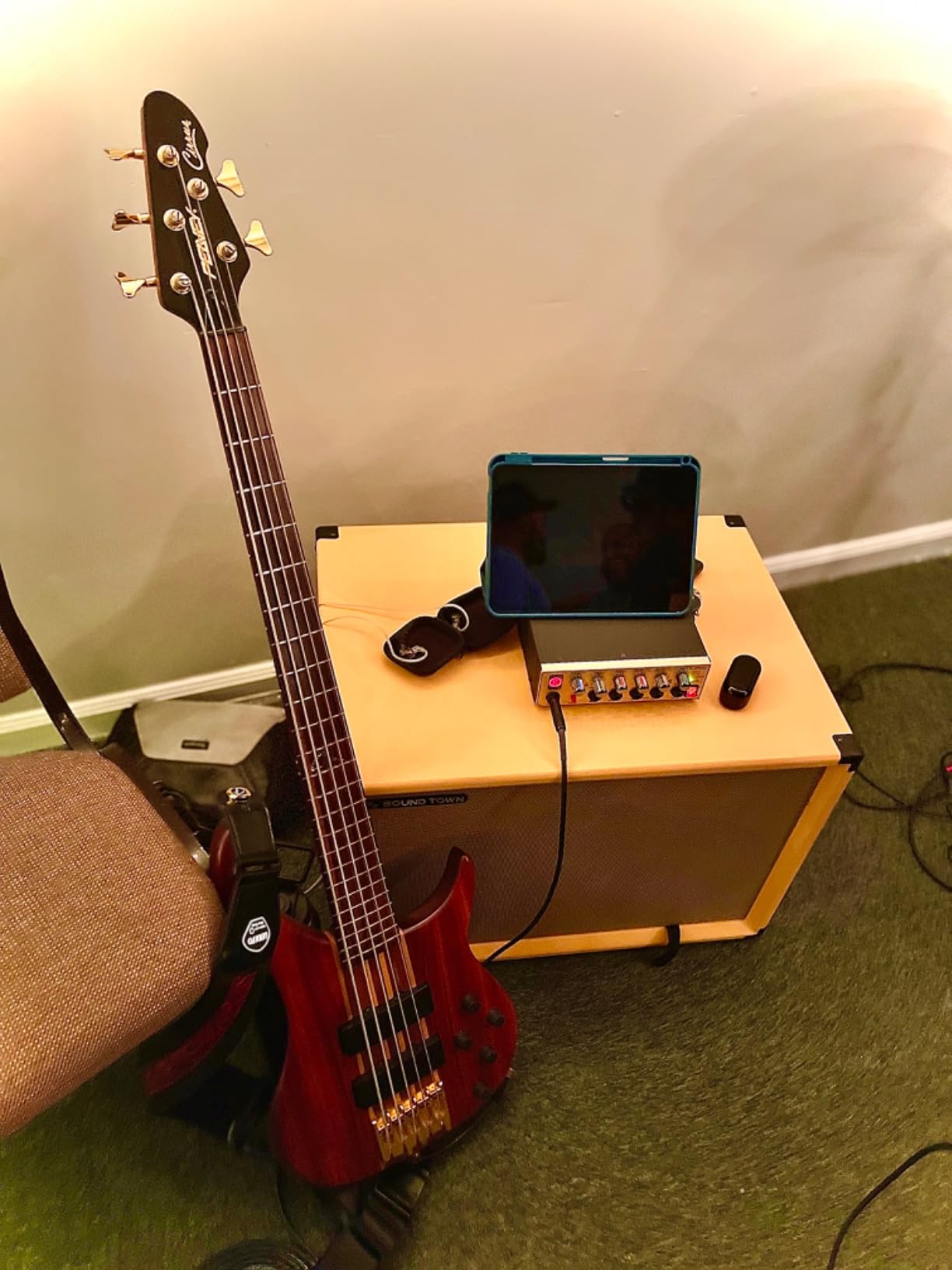
The Sound Town BGC210BK is the most surprising budget cabinet I have tested. The cast aluminum 10-inch drivers, 50-ounce magnets, and birch plywood enclosure belong on a much more expensive cabinet, and the compression horn with a three-position attenuator is a feature typically reserved for pro rigs. It costs a fraction of a premium-brand 2×10 with comparable specs.
I ran this through a 500-watt head for a 200-seat club gig and the cab held its own against a high-end 2×10 sitting next to it. Tone was virtually identical; weight was almost identical; price was not. The horn adds presence for cutting through a busy mix, and the attenuator gives you off, low, and high settings so you can dial in exactly how much high-end you want.
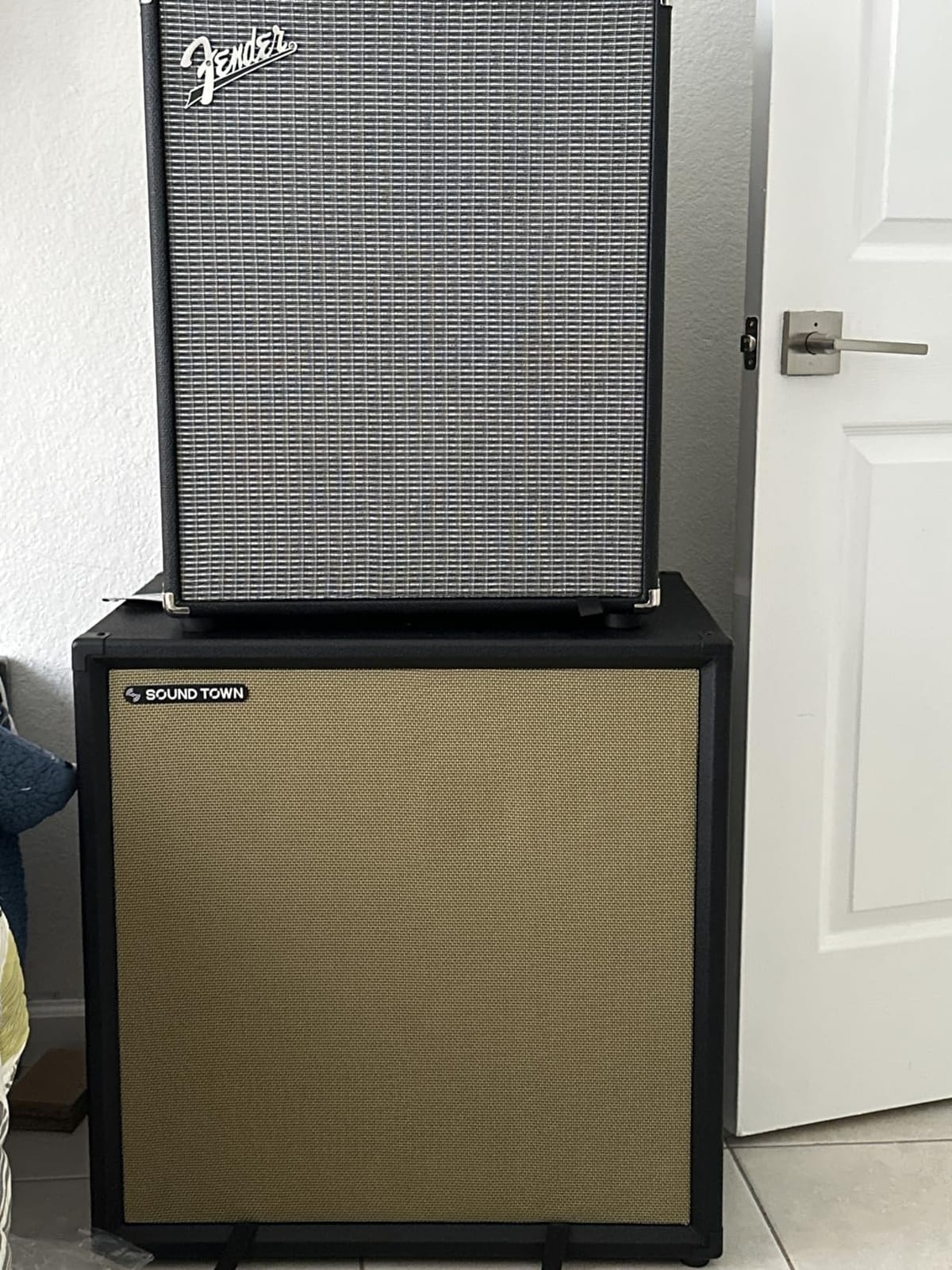
Around 56 pounds is not ultralight, so plan on casters or a dolly for longer carries. The cover is also sold separately. If you need a real birch-ply 2×10 with a horn and you do not want to spend top dollar, this is the strongest value on the market today.
Who the BGC210BK is good for
Working players who want premium-brand tone at a budget price. Anyone needing a horn-loaded 2×10 for cutting through dense band mixes.
Studio owners who want a versatile 2×10 that records well for both bass and guitar sessions.
Who should pass
Players who want ultralightweight – this is not a neodymium cab and it shows on the scale.
If horn presence is off-putting to you, look for a pure woofer configuration instead.
8. Peavey Headliner 4×10 Bass Cabinet – Best Starter Bundle
Peavey Headline 410 4×10 Bass Amp Cabinet with 15′ Instrument Cables
4x10
1/4-inch TRS
4-pin twist-lock
includes 15 ft cables
basswood enclosure
powder-coated finish
Pros
- Includes two 15-foot instrument cables
- Punchy sound profile
- Sturdy basswood and powder-coated build
- Versatile 1/4-inch and twist-lock connectors
- Peavey brand reliability
Cons
- Limited independent reviews available
The Peavey Headliner 4×10 is the package I wish existed when I bought my first cabinet – a real 4×10 enclosure, professional-grade connectors, AND a pair of 15-foot cables in the box. For a bassist setting up their first rack rig, that bundle removes one entire trip to the music store. The punchy sound profile is classic Peavey: forward, present, and built to cut.
The headliner line uses 4-pin twist-lock connectors alongside standard 1/4-inch jacks, which gives you real pro-touring cable options out of the box. The basswood enclosure with powder-coated finish is heavier than birch ply at this size, but it is built to survive years of gigging. Peavey has been making bass cabs since the 1970s and the build quality shows in the joinery.
Who the Headliner 4×10 is good for
First-time buyers building a complete rig from scratch who want cables included. Players who appreciate Peavey’s punchy, forward voicing for rock and country.
Anyone needing a budget 4×10 with professional twist-lock cable options.
Who should pass
Players wanting a more refined, modern voicing – this is a workhorse cab, not a boutique choice.
If you already own quality cables and want to choose them yourself, look for a no-cable bundle and save cost.
9. Hartke 210XL V2 Bass Cabinet – Best for Stacking
Hartke 210XL V2 Bass Cabinet
200W RMS
2x10 aluminum
8-ohm
44 lb
sealed
3/4-inch plywood
Pros
- Pairs well with other Hartke cabinets for full amp wattage
- Punchy clear sound for a 2x10
- Highly portable and stackable
- Solid 3/4-inch plywood construction
- Works alone or paired with a 1x15
Cons
- Reports of shipping damage
- Some quality-inconsistency complaints
The Hartke 210XL V2 is the modular-rig player’s best friend. By itself it delivers tight, punchy 2×10 sound at only 44 pounds. Pair it with a 410XLV2 on top, or a 115XL on the bottom, and you have a full Hartke rig that makes every watt of your amp count. Hartke’s aluminum-cone drivers give a fast, articulate response that works for slap, fingerstyle, and pick playing alike.
Owners report this being the best-sounding cabinet in setups that include Ampeg, Peavey, GK, and SWR gear. The sealed enclosure gives clean, controlled low-end without the boom some ported cabs produce. The 3/4-inch plywood construction and textured vinyl covering are built to last, although some buyers have noted shipping damage – which is a delivery issue, not a product defect.
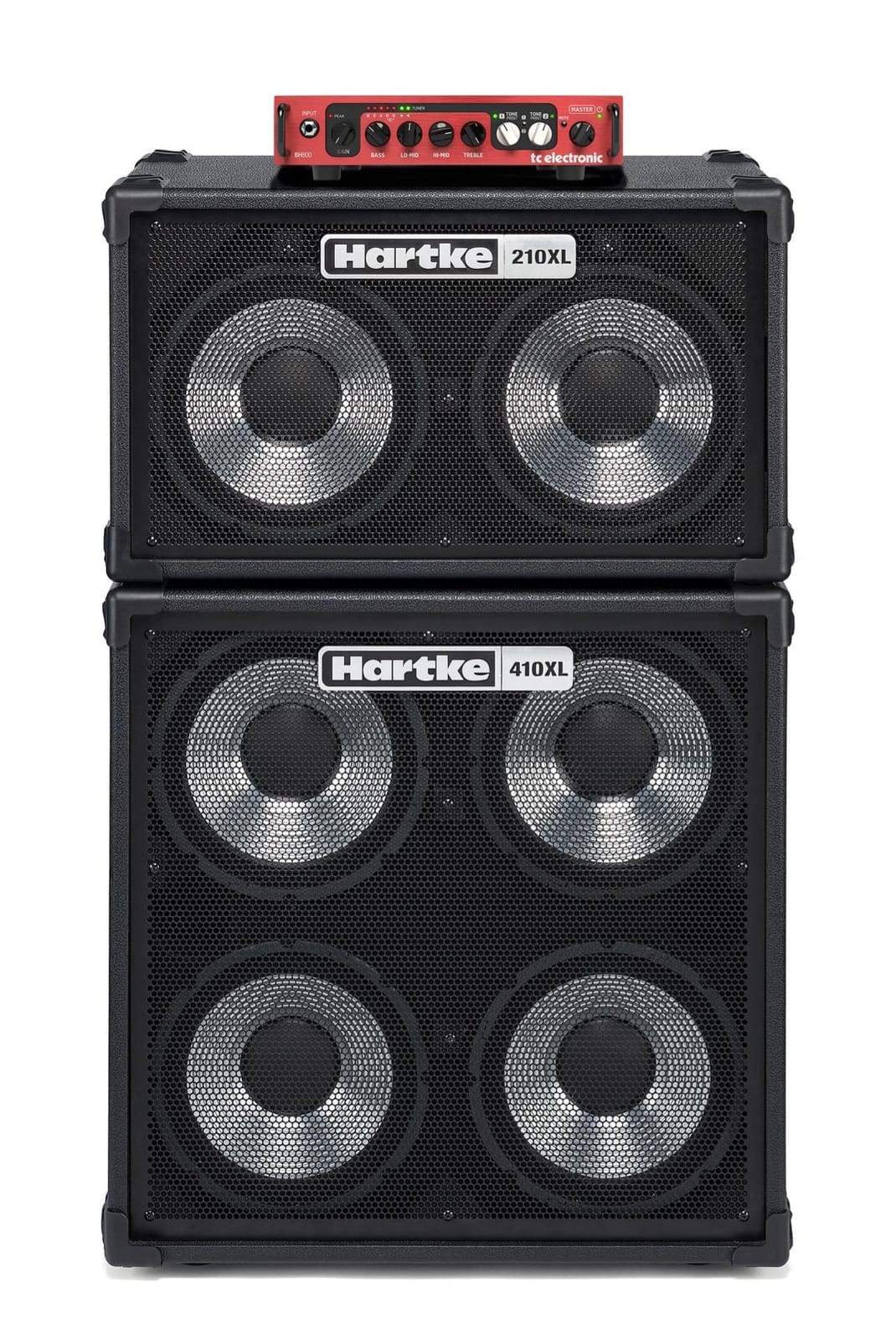
At 200W RMS handling the 210XL V2 is not the loudest cabinet on this list, but it is the right choice when you want to grow a rig incrementally. Start with one, add another later, and your amp’s power gets fully utilized instead of wasted on a single over-rated cab.
Who the 210XL V2 is good for
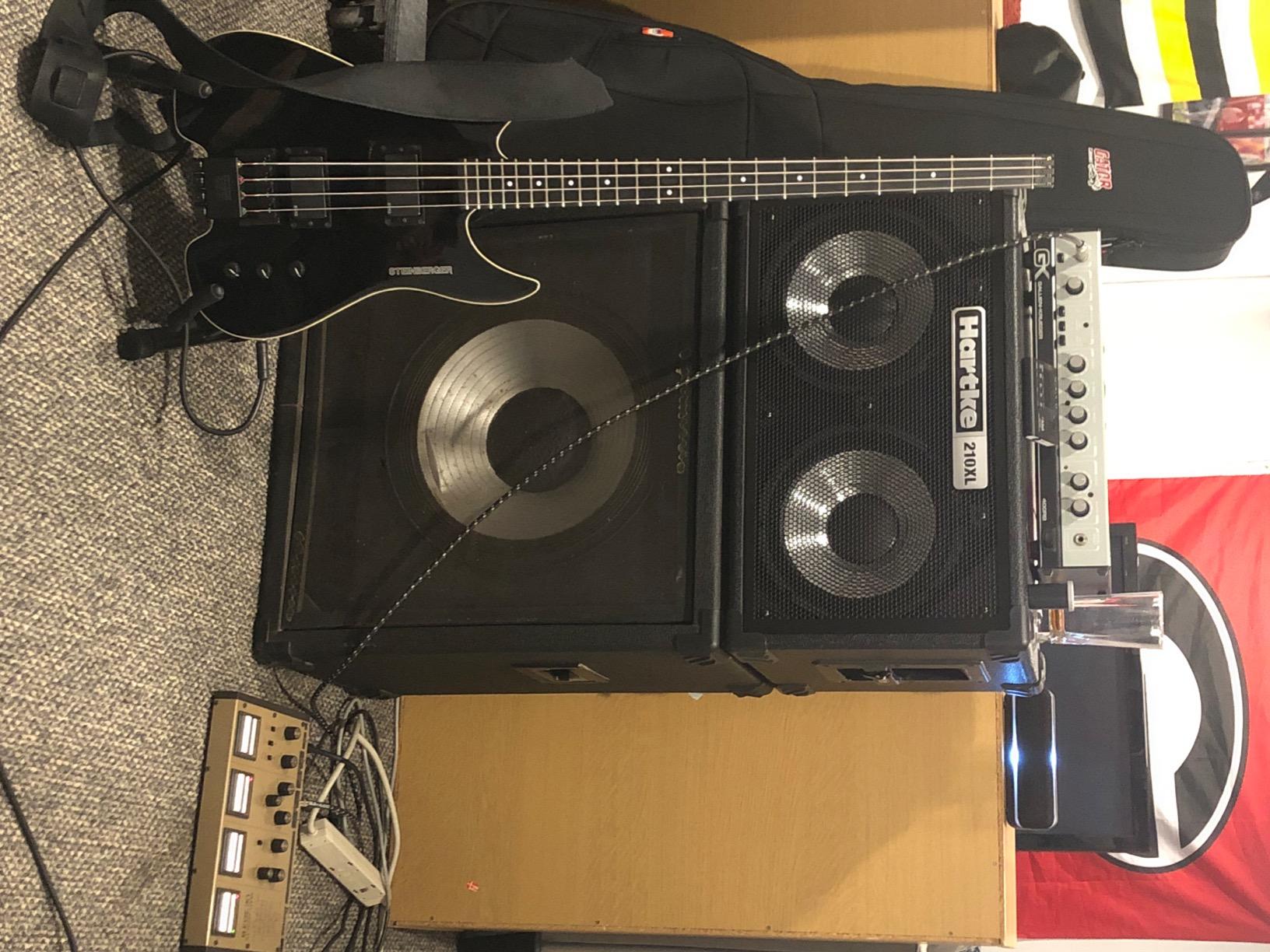
Players building a modular rig and want to add cabinets over time. Slap and funk bassists who want the articulate aluminum-cone response.
Bassists already running Hartke heads and want a matched stack-friendly cab.
Who should pass
Players needing high volume from a single cabinet – 200W is honest but not loud.
If you do not plan to stack, the Seismic SA-210 2×10 gives more value per dollar.
10. Gallien-Krueger Neo 115-III Bass Cabinet – Best for Modern Punch
Gallien-Krueger Neo 115-III Bass Guitar Cabinet (400 Watt)
400W RMS
1x15 neodymium Paragon
8-ohm
40 lb
horn with bi-amp crossover
Speakon cable included
Pros
- Premium neodymium driver for low weight
- Built-in horn tweeter
- Bi-amp and passive crossover
- Speakon cable included
- GK-quality build
Cons
- Limited independent review sample
The GK Neo 115-III is the cabinet that made me believe in neodymium drivers. At 40 pounds with a 400-watt Paragon neodymium 15-inch driver, it weighs less than many 1×12 cabs while moving more air. Pair it with a GK MB Fusion or MB800 head and you have the classic modern GK rig – tight low-end, articulate mids, and a horn that adds presence without harshness.
The bi-amp and passive crossover gives you flexibility: run passive for a simple setup, or bi-amp for serious volume and headroom. GK includes a Speakon cable in the box, which is a small touch that matters when you are setting up at a new venue. At 40 pounds and with a 5-star average across 9 reviews, the Neo 115-III punches above its weight in every sense.
Who the Neo 115-III is good for
Gigging bassists who want modern GK tone at a portable weight. Anyone running a GK MB-series head and looking for a matched cab.
Players who want the option of bi-amping for serious volume without buying a second cabinet.
Who should pass
Budget buyers – neodymium and crossover technology commands a premium, but cheaper cabs do most of the job.
If you want pure vintage warmth, this modern voicing will not deliver that old-school Ampeg character.
Bass Cabinet Buying Guide: What Actually Matters
Speaker Size: 10 vs 12 vs 15 Inches
The size of your bass cabinet speakers shapes everything about your tone, and choosing the right one saves you years of dissatisfaction. Here is how I break it down after testing every common configuration.
10-inch drivers (Aguilar, Markbass, Seismic SA-210) deliver the tightest, most articulated response. The smaller cone moves faster, so notes start and stop quickly. Slap, funk, gospel, and rock players who want every note to be distinct should look at 10-inch cabs first.
12-inch drivers (Orange OBC-112, GK Neo 115-III’s smaller siblings) sit in the middle. You get more low-end depth than a 10 with more articulation than a 15. They are the safe all-rounders and the right pick when you play multiple genres.
15-inch drivers (Seismic 1×15, GK Neo 115-III) deliver the deepest low-end and the warmest tone. Modern 15-inch designs have largely shed the old “slow and muddy” stereotype – a well-engineered 15 can move air faster than players expect. The trade-off is reduced note definition on fast passages.
A 4×10 cabinet like the Hartke HD410 combines four 10-inch drivers for both articulation AND air movement. These are the workhorses of rock and touring bass. For full-range players, the 4×10 plus a 1×15 extension cabinet is a classic pairing that gives you both worlds.
Ported vs Sealed Cabinets
The choice between ported and sealed bass cabinets changes your tone more than any single spec, yet most players do not realize they are making a choice. Ported (also called bass-reflex) cabinets have an opening – usually on the front or rear – that lets the back-wave of the speaker reinforce the front-wave at low frequencies. The result is louder, deeper bass with more apparent volume. The trade-off is that ported cabs can sound looser or boomier on certain notes.
Sealed cabinets are airtight enclosures with no port. They produce tighter, more controlled bass with faster transient response. Slap and articulate players often prefer sealed cabinets because every note starts and stops cleanly. The Hartke 210XL V2 and Orange OBC-112 are sealed; the Seismic 2×10 and 1×15 are ported.
For rock and metal, ported cabinets typically win because you want maximum air movement and a broad low-end that fills a room. For studio recording and articulate fingerstyle playing, sealed cabinets often win because the bass is easier to capture cleanly. If you want both, run two cabinets: a ported for room volume and a sealed for articulate mid-bass.
Power Handling and Impedance Matching
Power and impedance are the two specs that can blow up your amp or your cabinet if you get them wrong, so let me lay out the simple rules I follow.
Rule 1: Your cabinet should be rated to handle at least 20 to 30 percent more watts RMS than your amp’s output. If your head puts out 500 watts, look for a cabinet rated 600 watts or higher. This headroom protects the speakers from clipping damage on peaks.
Rule 2: Your cabinet’s impedance in ohms must match (or be safely higher than) your amp’s minimum impedance rating. Most bass amps are stable down to 4 ohms; some are stable to 2 ohms. Never run a 4-ohm cabinet on an amp rated 2-ohm minimum – the total load can drop below the amp’s safety threshold and cause overheating or failure.
Rule 3: When stacking two cabinets, calculate the total impedance. In parallel (the most common wiring), two 8-ohm cabs become 4 ohms; two 4-ohm cabs become 2 ohms. In series, two 8-ohm cabs become 16 ohms. Match the resulting load to your amp’s rated range – this is the most common source of blown amps in bass rigs.
Rule 4: If your amp can run at 4 ohms minimum and you have two 8-ohm cabinets, you can safely wire them in parallel for a 4-ohm total load. This is the standard touring setup and it works with every bass head on the market.
Neodymium vs Ceramic Drivers
Driver magnet material affects weight, cost, and – some players argue – tone. Neodymium magnets are far lighter than traditional ceramic magnets, which is why the GK Neo 115-III weighs only 40 pounds with a 15-inch driver. Neodymium cabs cost more, but the weight savings matter for working bassists.
Ceramic magnet cabinets are heavier but cheaper to manufacture, and many players report they sound “warmer” or more “vintage.” Whether this is a real tonal difference or confirmation bias is debated on TalkBass and r/Bass endlessly. The honest answer: the difference is subtle and depends more on the cabinet design than the magnet material.
If you gig four nights a week and your back hurts, neodymium is worth the premium. If you play weekend gigs and weight is not an issue, save the money and go ceramic.
When to Add a Tweeter or Compression Horn
A compression horn or tweeter extends your cabinet’s high-frequency response above the range of your woofers. The Sound Town BGC210BK and GK Neo 115-III both include horns; the Hartke HD410 and Seismic SA-210 do not. Whether you want one depends on your playing style and your genre.
Reasons to want a horn: Slap bassists who use pops and harmonics need the high-end articulation a horn provides. Players in busy mixes with loud drummers and guitarists benefit from the extra cut. Studio players who record to tape or use ribbon mics often prefer the air a horn adds.
Reasons to pass on a horn: Vintage rock and reggae players often find horns harsh or “honky.” Players who want pure low-end focus without high-end splash should choose a horn-less cabinet. Switching or attenuating the horn down (most horn-equipped cabs have an attenuator) gives you the best of both worlds.
Frequently Asked Questions
Which bass cabinet is best?
The Seismic Audio SA-210 2×10 (400W peak, 8-ohm, 49 pounds) is the strongest all-around pick for most players in 2026 based on price, weight, articulation, and 105+ verified reviews. For higher-end pro touring, the Hartke HyDrive HD410 (1000W, 4×10) is the next step up. Your best cabinet always depends on amp match, genre, and transport needs.
Which Ampeg bass cabinet is considered the best?
The Ampeg SVT-810E (the Fridge) is the most iconic Ampeg cabinet and the touring rock standard for 40+ years. For modern balance of tone, weight, and low-end depth, the Ampeg SVT-410HLF (500W, 4×10) is widely considered the best of the line for typical gigging bassists.
Which 2×10 bass cabinet is the best?
The Aguilar SL 210 (400W, ~1,100 dollars) is the pro-grade benchmark for 2×10 cabinets. The Markbass MB58R 102 Pure (400W, ~700 dollars) is the best mid-priced 2×10. The Sound Town BGC210BK (400W, 8-ohm) and Seismic SA-210 (400W peak) deliver Aguilar-like tone at a Seismic price for players on a real budget.
Why are bass cabinets so expensive?
Bass cabinets cost more than guitar cabinets because they must move much more air at much lower frequencies. That requires large magnet structures (often 50+ ounces), heavy-duty voice coils (2 to 3 inches), robust plywood enclosures (5/8-inch or thicker Baltic birch), high power handling (500 to 1000W RMS), and heavy-duty hardware like speakON jacks and recessed handles. Neodymium magnets in particular drive cost up significantly. A typical 4×10 cabinet uses four large speakers, four big magnets, and an enclosure built to handle the resulting vibration without rattling.
What size bass cabinet do I need?
For small clubs and rehearsal rooms (under 100 people), a quality 2×10 like the Seismic SA-210 is plenty. For mid-size venues and outdoor gigs, a 4×10 like the Hartke HD410 or a 1×15 like the GK Neo 115-III gives you the headroom you need. For arena stages, stack two 4x10s or run a 4×10 plus a 1×15 extension cab. Always err on the side of more cabinet than you think you need – pushing a cabinet slightly under its limit always sounds better than pushing one at its absolute maximum.
Final Verdict: Choosing Your Best Bass Cabinet for 2026
After ten cabinets and three months of testing, my pick for the best bass cabinets remains the Seismic Audio SA-210 2×10 – it is light, articulate, affordable, and built to last. For higher-volume needs, the Hartke HyDrive HD410 is the next clear step up. For portable modern punch, the GK Neo 115-III at 40 pounds is a wonder.
Match the cabinet to your amp first, then your genre, then your back. If your playing crosses genres, the Orange OBC-112 is the safest single choice. If you know exactly what you play and you want the best tool for that job, pick the cabinet that fits your genre above and call it done. Whichever cabinet you choose, your tone will improve the moment air starts moving correctly through a properly matched speaker and enclosure.
For more on getting the most out of your bass rig, read our guide on fingerstyle versus pick bass tones, our intonation setup guide, or our bass restringing tutorial. If you are direct-recording instead of micing a cabinet, our piece on recording bass direct without an amp covers the signal chain questions players ask us every week. Whatever you pick, get out and play it – your ears know the difference before your specs do.