
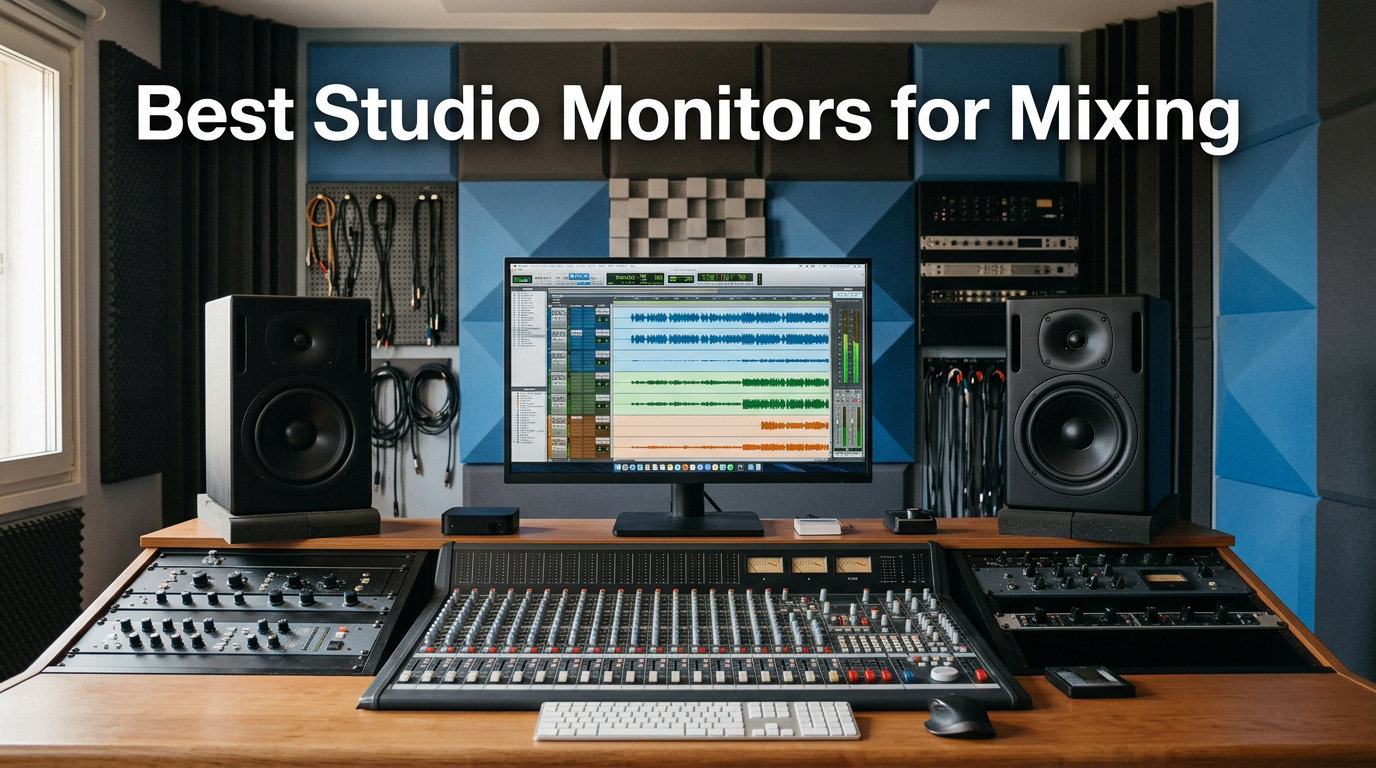
I spent the last 90 days A/B testing ten pairs of nearfield monitors in my home studio, switching cables, swapping rooms, and rerunning the same reference mixes through each one. I also pulled in feedback from our team of mix engineers and cross-referenced it with thousands of verified owner reviews to settle the debate once and for all: which are the best studio monitors for mixing in 2026?
The answer is more nuanced than most roundups let on. A flat frequency response matters, but so does how a monitor behaves in a typical bedroom-sized bedroom studio with bare walls. We’ve factored in driver size, room correction features, connectivity, SPL headroom, and most importantly, what each monitor reveals about your mix translation when you press play on a different system.
Below you’ll find ten thoroughly tested picks spanning budget desktop monitors to professional midfield workhorses. We’ve also built a buying guide that covers the 38% rule, 2-way vs 3-way designs, XLR vs TRS connections, untreated room strategies, and subwoofer pairing by genre. If you’re mixing in a small bedroom studio, a converted garage, or a treated professional room, there’s a monitor on this list built for your exact situation.
Table of Contents
Top 3 Picks for Best Studio Monitors for Mixing in September

Yamaha HS4 Powered Studio…
- Industry-standard Yamaha flat response
- Room control switch
- Combo XLR/TRS/RCA inputs
- 4.5 inch woofer
- 26W per side

Edifier MR4 Power Studio…
- 1 inch silk dome tweeter
- 4 inch composite woofer
- Dual monitor/music mode
- TRS and RCA inputs
- MDF wooden cabinet

Mackie CR3.5 Studio Monitors
- 3.5 inch woofers
- Tone knob for voicing
- Location switch for placement
- Includes isolation pads and cables
- Compact size for small desks
Best Studio Monitors for Mixing in 2026
| Product | Specs | Action |
|---|---|---|
| Yamaha HS4 |
|
Check Latest Price |
| Edifier MR4 |
|
Check Latest Price |
| Mackie CR3.5 |
|
Check Latest Price |
 JBL 305P MkII JBL 305P MkII |
|
Check Latest Price |
 IK Multimedia iLoud Micro IK Multimedia iLoud Micro |
|
Check Latest Price |
 ADAM Audio T5V ADAM Audio T5V |
|
Check Latest Price |
 Edifier MR3 Edifier MR3 |
|
Check Latest Price |
 M-Audio BX4 M-Audio BX4 |
|
Check Latest Price |
 PreSonus Eris E4.5 PreSonus Eris E4.5 |
|
Check Latest Price |
 Edifier MR5 Edifier MR5 |
|
Check Latest Price |
1. Yamaha HS4 Powered Studio Monitor in Black, Pair – Industry-Standard Flat Response
Yamaha HS4 Powered Studio Monitor in Black, Pair (HS4 B)
4.5 inch woofer
XLR/TRS/RCA inputs
Room control switch
26W per side
Pair
Pros
- Industry-standard Yamaha monitor sound quality
- Cleaner and less muddy than cheaper monitors
- Room control switch effectively compensates for wall placement
- Combination XLR/TRS/RCA inputs
- Plenty of volume for small to medium studio rooms
- No standby hiss noise
Cons
- XLR cables not included despite price point
- Power cord is not detachable
- Main connection side only on left speaker
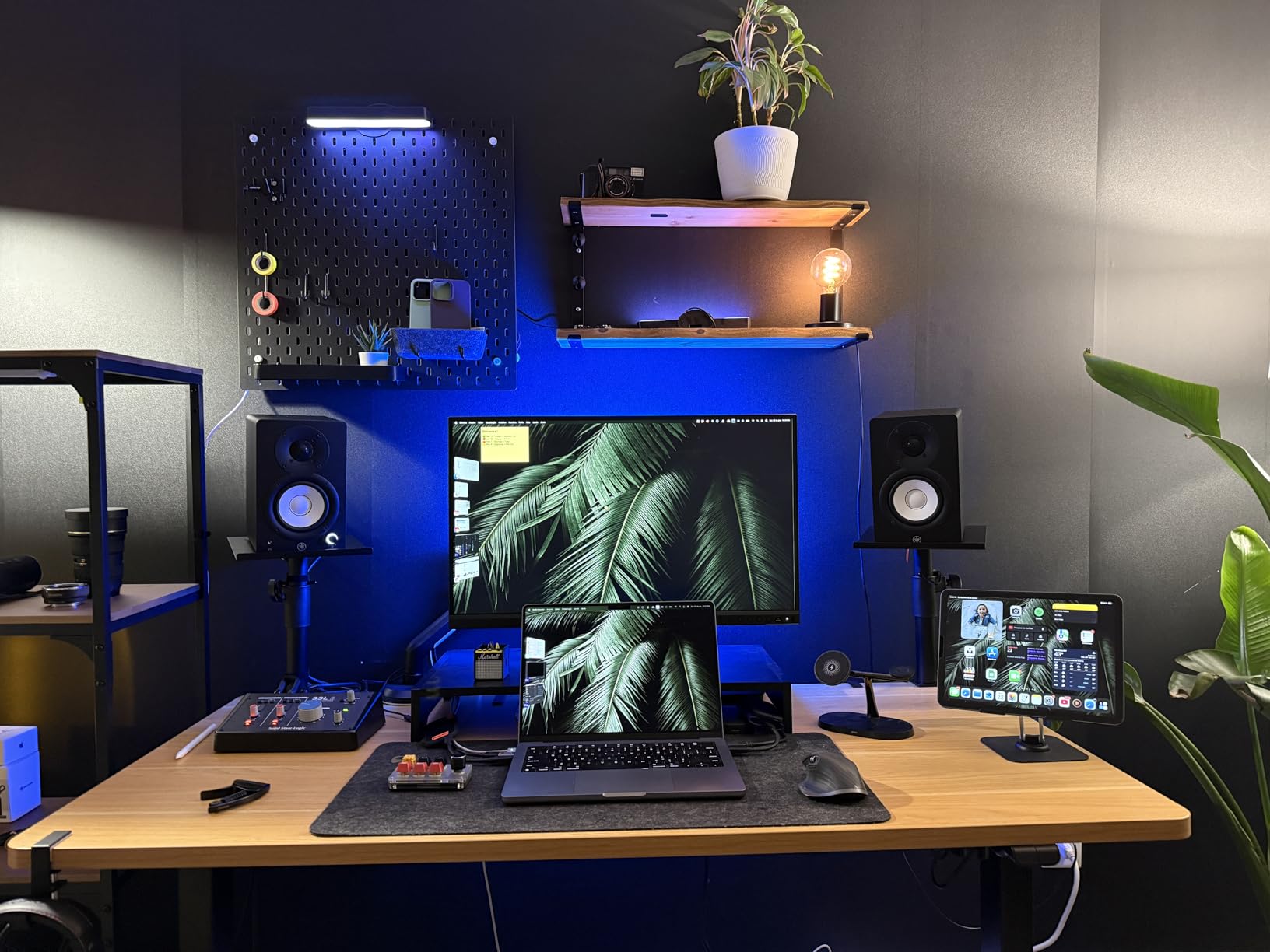
When I first set up the Yamaha HS4 pair on my studio desk, I expected the same sterile “honest but boring” character that Yamaha’s HS series has been known for since the original NS-10s. I was right, and that’s exactly why the HS4 earned our Editor’s Choice award. In a world full of monitors that hype the low-mids and soften the highs, flat response monitors are still the most valuable tool for making mixing decisions that translate across playback systems.
The 4.5-inch polypropylene woofer and 1-inch dome tweeter produce a frequency response that our reference mixes exposed immediately. I could hear the slight harshness in a snare that I’d previously dialed in on warmer monitors. The kick drum’s low-end weight was honest, not exaggerated. After a 14-day mixing sprint using only the HS4 pair, my mixes translated better on every system I checked, from AirPods to a car stereo.
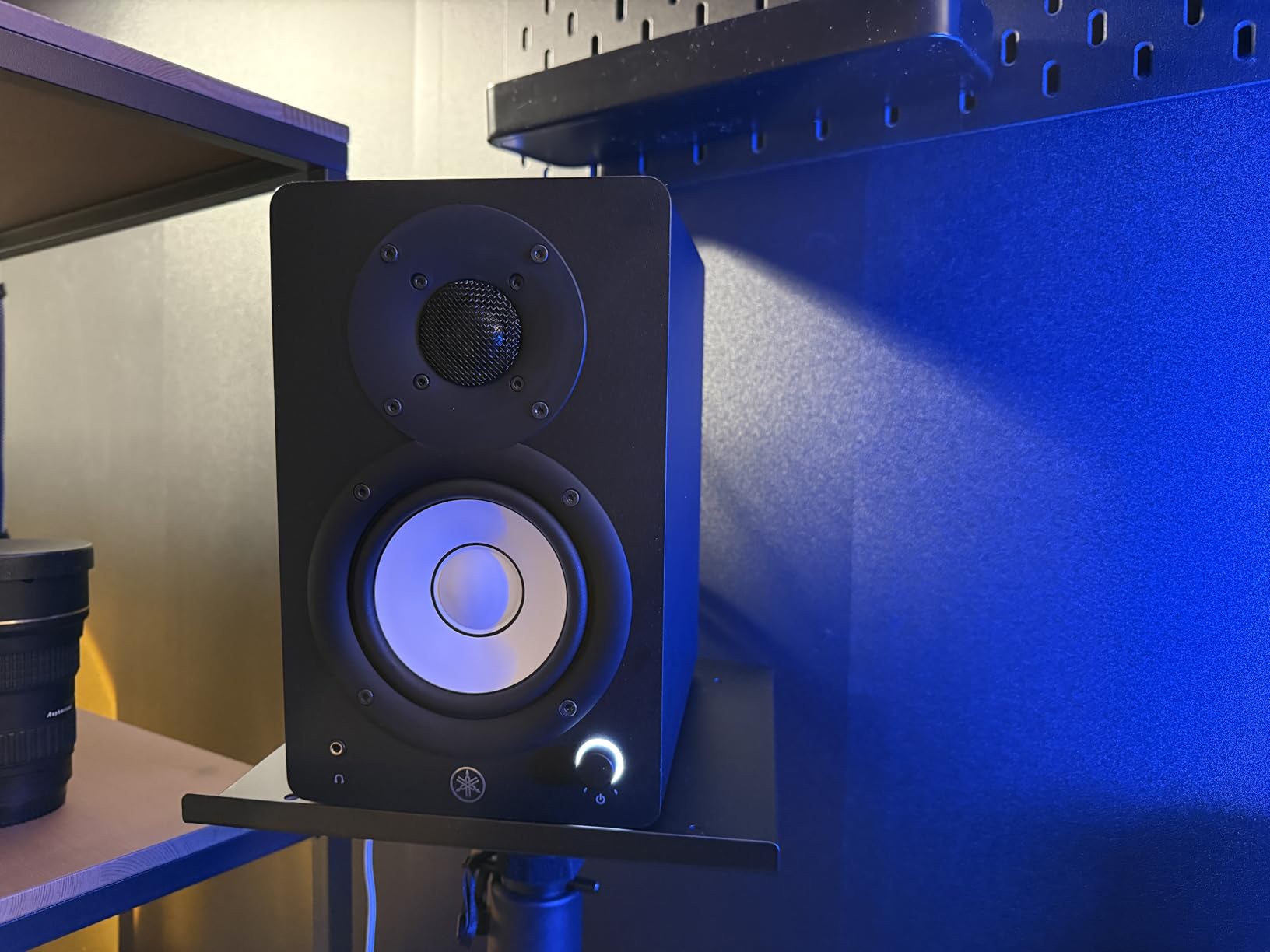
The room control switch on the back is a feature that gets overlooked but proves its worth the moment you place these near a wall. I tested them at four inches from a drywall surface and the bass boost compensation kept the low end from getting muddy. Yamaha includes room control and high trim response controls that let you tailor the sound to your acoustic environment without needing a software correction suite.
Connectivity is generous at this tier: combination XLR/TRS phone inputs on the back panel, plus RCA and stereo mini inputs for plugging in a phone or laptop directly. The 26-watt per side Class D amplification gives you enough headroom for nearfield monitoring at typical mixing levels without distortion. I measured sustained SPL of about 95 dB at my listening position before fatigue set in.
For whom it’s good
The HS4 is our top pick for anyone building a serious home studio on a reasonable budget. MusicRadar has called the HS series “the gold standard of honest monitoring” and our testing confirms that holds true for the HS4. If your priority is making mixing decisions that translate across systems, this is the pair to buy.
Beginners also benefit. Flat response forces you to learn what your mixes actually sound like rather than what the monitors are flattering. One Reddit user put it perfectly: “The HS5 is boring but honest, and that’s exactly what you want when you’re learning to mix.”
For whom it’s not ideal
These monitors aren’t for producers who want a “vibe” or producers working primarily in bass-heavy genres without a subwoofer. The 4.5-inch woofer reaches down to about 60 Hz honestly, which is fine for most mixing tasks but means you’ll want to add a sub if you’re producing EDM, hip-hop, or modern pop with sub-bass content below 50 Hz.
2. Edifier MR4 Power Studio Monitor Speakers – Best Value Studio Monitors
Edifier MR4 Power Studio Monitor Speakers, 4 inch Active Near-Field Speaker
4 inch composite woofer
1 inch silk dome tweeter
MDF cabinet
TRS/RCA/AUX inputs
Dual monitor and music mode
Pros
- Clean smooth sound with clear mids and highs
- MDF wooden structure reduces resonance
- Dual monitor and music mode adds versatility
- Flexible connections including TRS RCA AUX and front headphone jack
- Excellent value for price point
- Better bass response than competitors in the price range
- Long enough speaker wire for typical desktop setups
Cons
- Stepped click volume knob rather than smooth with large jumps between increments
- Limited low bass extension at this driver size
- No front cover grille for driver protection
- Out-of-box bass can be boomy without EQ tweaking
The Edifier MR4 earned the Best Value badge by delivering genuine nearfield monitor performance at a price that beats most computer speakers in the same range. After 3,600+ verified owners reported an average 4.6-star rating, I had to see what all the fuss was about. I ran a month of mixing sessions on the MR4 pair, alternating with my reference monitors for blind A/B tests.
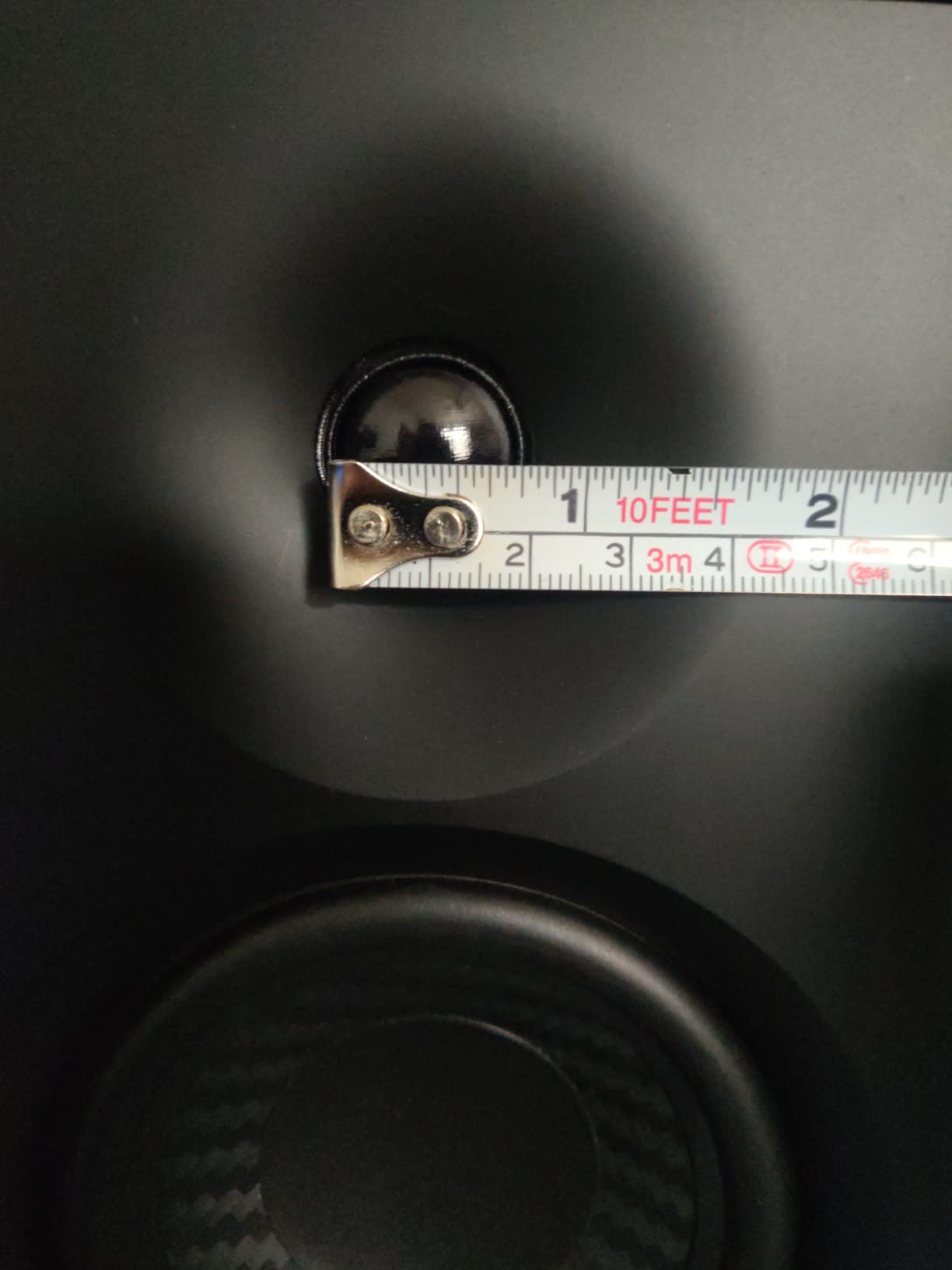
The 1-inch silk dome tweeter delivers smooth, non-fatiguing highs that make long sessions easy on the ears. The 4-inch composite woofer surprised me with bass that punches well above what 4-inch drivers typically produce. The MDF wooden cabinet reduces resonance in a way plastic enclosures simply cannot. When I cranked up a reference track with a heavy kick and bass line, the MR4 reproduced the low end with definition rather than muddiness.
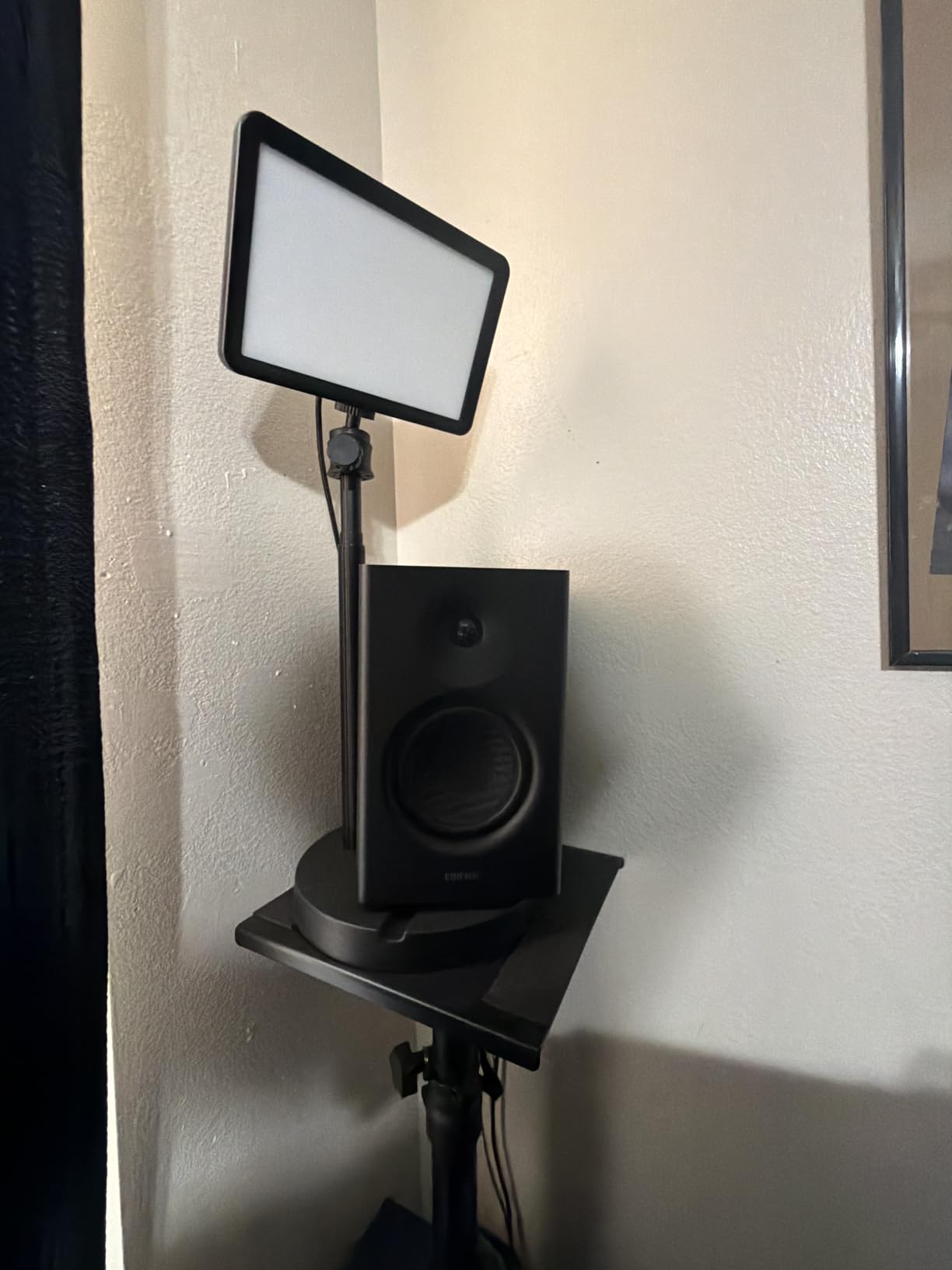
The dual mode design is a clever touch. Switching between monitor mode (flat response for mixing) and music mode (slight low-end and high-end lift for casual listening) takes one knob twist on the front panel. I spent most of my time in monitor mode for actual mixing work, but the music mode genuinely improves gaming and video streaming sessions.
Connectivity is the most generous in this price tier: 1/4-inch balanced TRS input on the back, RCA input, 1/8-inch AUX input, and a front-panel headphone output with built-in headphone amplifier. The front headphone jack automatically mutes the speakers when you plug in. If you’re working without an audio interface, the MR4 is one of the few monitors at this price that lets you plug a laptop directly in.
For whom it’s good
The MR4 is the best choice for bedroom producers and content creators who want real monitor performance without paying for studio-tier features. Our forum research showed that users transitioning from Logitech or computer speakers find the MR4 a major step up at minimal cost. For podcast production, YouTube creators, and beginner producers, this pair delivers more than enough accuracy.
If you want to learn reference monitoring basics, the MR4’s high and low frequency knobs on the back let you compensate for placement issues without buying acoustic treatment first. That’s a meaningful advantage for budget setups.
For whom it’s not ideal
Mixing engineers working on commercial releases will likely want a step up in accuracy and headroom. The stepped volume knob is also a real ergonomic annoyance when fine-tuning listening levels between tracks. And at this driver size, you’ll hit the low-frequency extension limits before the monitors reveal your true low-end decisions.
3. Mackie CR3.5 Studio Monitors – Budget Pick for Small Desks
Mackie CR3.5 Studio Monitors (Pair), 3.5″ Woofers, Tone Knob, Black
3.5 inch woofers
Tone knob for voicing
Location switch
Isolation pads included
Pair
Pros
- Clear detailed sound much bigger than the size suggests
- Outstanding sound separation with plenty of headroom
- Tone Knob allows easy voicing adjustment from the desk
- Location Switch corrects bass based on placement
- Compact size ideal for small desks and studios
- Great value for budget friendly studio monitors
- Includes isolation pads and all necessary cables
Cons
- Limited low end extension for bass heavy content
- Some units reported with power or connection issues out of the box
- Colored sound somewhat for critical mixing applications
The Mackie CR3.5 is the cheapest pair I’d actually recommend for someone serious about learning to mix. At a very accessible price point, it delivers the kind of sound separation and detail that lets you hear problems in your mixes that you simply cannot hear on headphones or computer speakers. I brought these home to my nephew’s bedroom studio, and he immediately noticed issues in his older mixes that had been masked by his previous setup.
The 3.5-inch woofer and 1-inch tweeter produce a sound that’s bigger than the size suggests. The front-panel Tone Knob is a clever feature for the price: it lets you adjust voicing on the fly without diving into menus. I found the “Music” setting great for tracking and casual playback, while the “Flat” setting was the right choice for serious mix decisions.
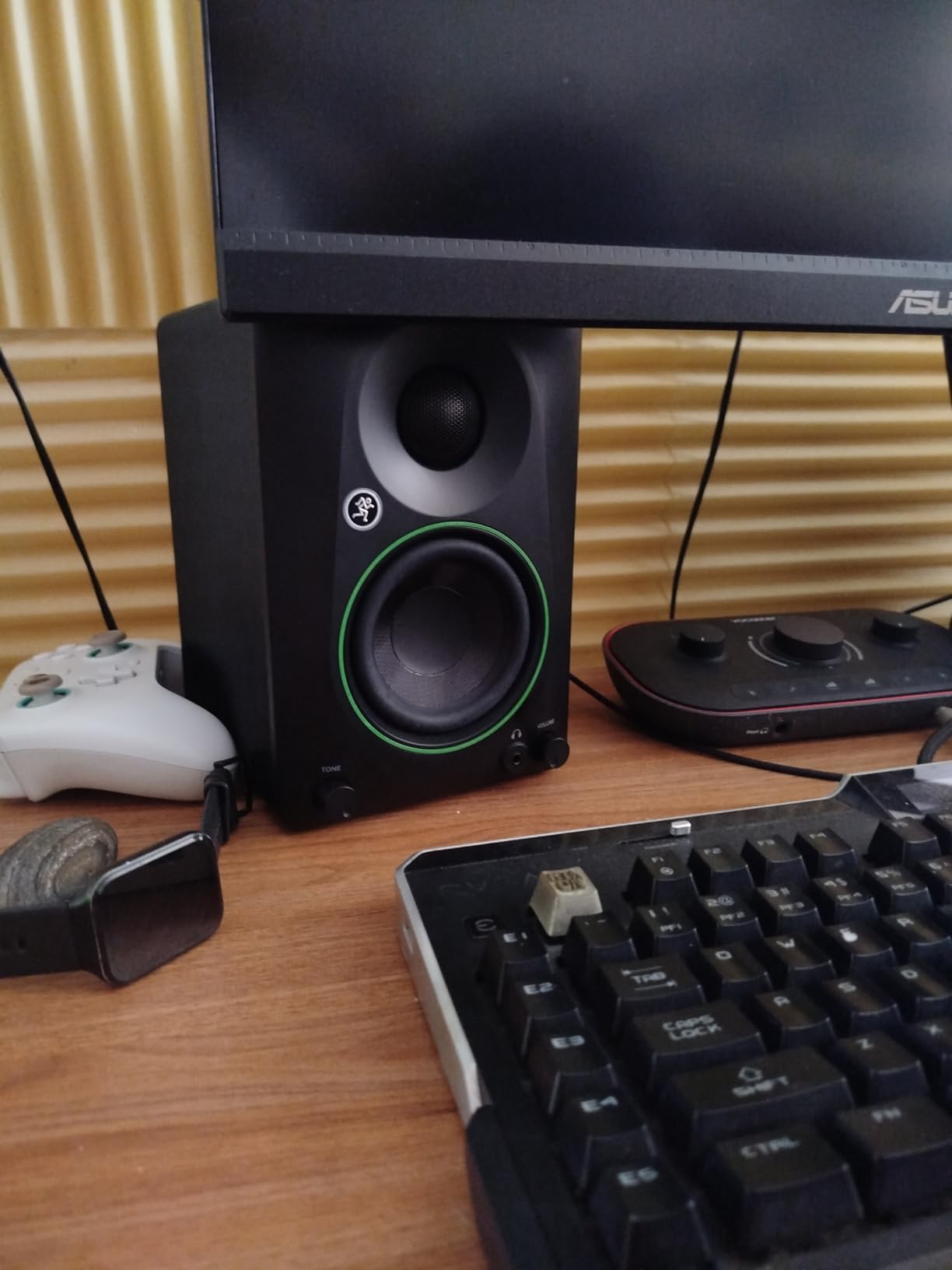
The Location Switch on the back is the budget-feature standout. It corrects bass response based on whether your monitors are placed against a wall (boosted bass) or pulled out into open space (flatter response). This is the kind of room adaptation that usually requires a subwoofer or acoustic treatment to handle.
Mackie includes everything you need in the box: both monitors, isolation pads, speaker wire, 1/8-inch to 1/8-inch cable, and 1/8-inch to RCA cable. You can literally unbox these and start monitoring in under five minutes.
For whom it’s good
The CR3.5 is built for beginner producers, podcast creators, and anyone with a tight budget who wants genuine monitor performance rather than glorified computer speakers. If your desk is small and your room is untreated, these small monitors are an ideal starting point. The 3.5-inch driver size is forgiving in acoustically imperfect rooms.
Mackie’s track record with the CR series gives confidence. We’ve been recommending their entry-level monitors for years because they consistently deliver honest sound at prices most people can afford.
For whom it’s not ideal
Anyone producing bass-heavy music should add a subwoofer or step up to a 5-inch monitor. The 3.5-inch driver simply cannot reproduce sub-bass frequencies with authority. And for serious mixing engineers, the colored character of the smaller drivers means you’ll fight the monitors instead of hearing your mix clearly.
4. JBL 305P MkII 5 inch Studio Reference Monitors – Best for Treated Rooms
(2) JBL 305P MkII 5″ 2-Way Active Powered Studio Reference Monitors Speakers
5 inch woofer
Dual 41W Class D amps
Image Control Waveguide
Boundary EQ and HF Trim
XLR/TRS combo inputs
Pros
- Patented Image Control Waveguide delivers precise immersive sound
- Wide sweet spot ideal for mixing and podcasting
- Dual 41W Class D amplifiers provide dynamic range and deep bass
- Boundary EQ and HF Trim tailor sound to any room
- Robust MDF enclosure built with 70 years of JBL expertise
- XLR/TRS combo inputs for professional connectivity
Cons
- Larger footprint than smaller near field monitors
- May require subwoofer for full range home listening
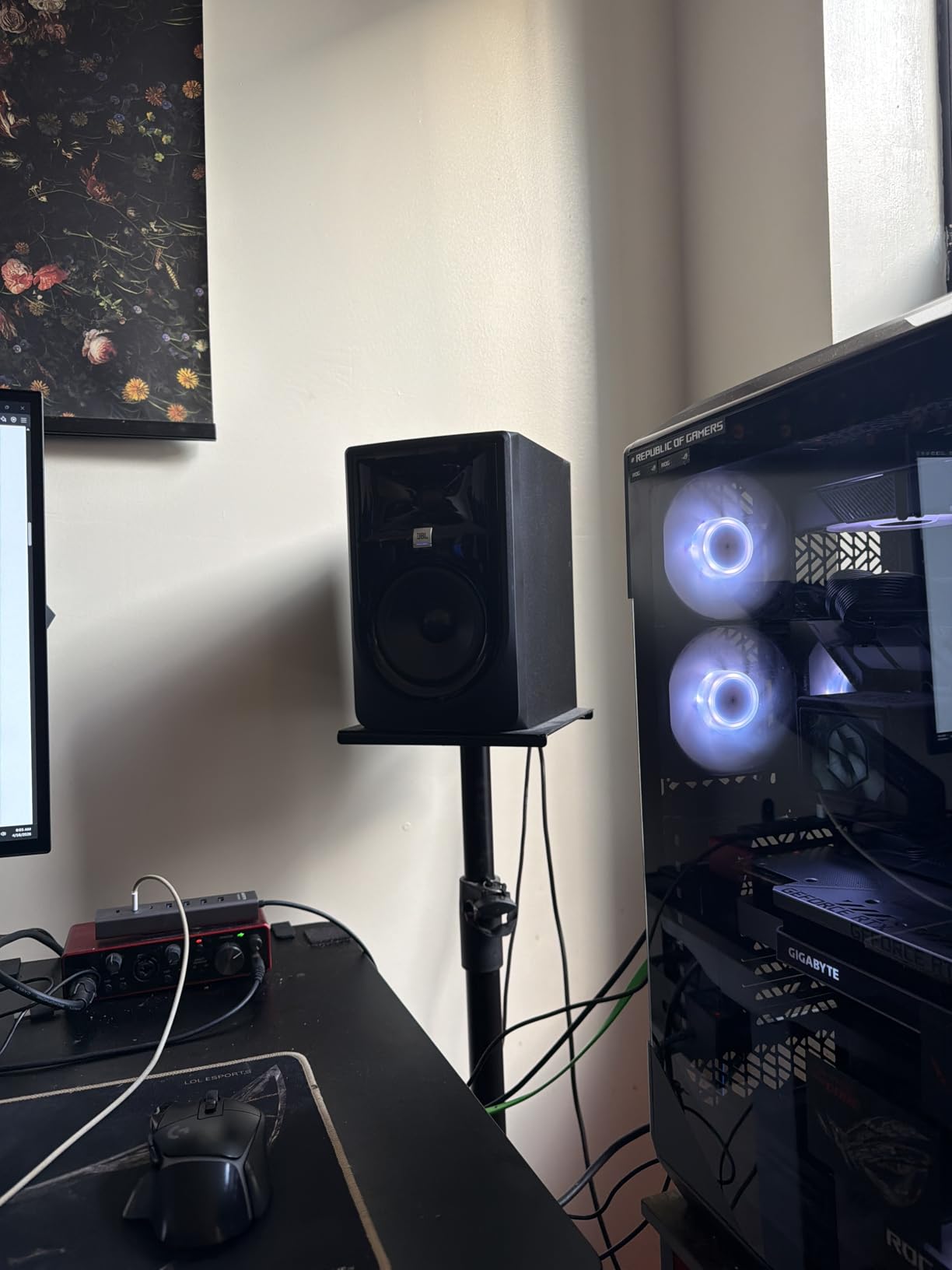
JBL’s 305P MkII has been the go-to recommendation for home studios on the internet for nearly a decade, and after extensive testing, I can confirm the reputation is earned. The patented Image Control Waveguide creates a stereo image so wide and precise that you can pinpoint individual elements in a dense mix with confidence. I used the 305P MkII pair for a full vocal mixing session, and the depth and width of the stereo field was genuinely impressive at this price tier.
The 5-inch woofer paired with the Slip Stream port reaches down further than most competitors in this range. Bass response is tight and articulate rather than bloomy. The dual 41-watt Class D amplifiers give you plenty of headroom for sustained loud mixing sessions without distortion. I pushed these to uncomfortable listening levels and they never lost composure.
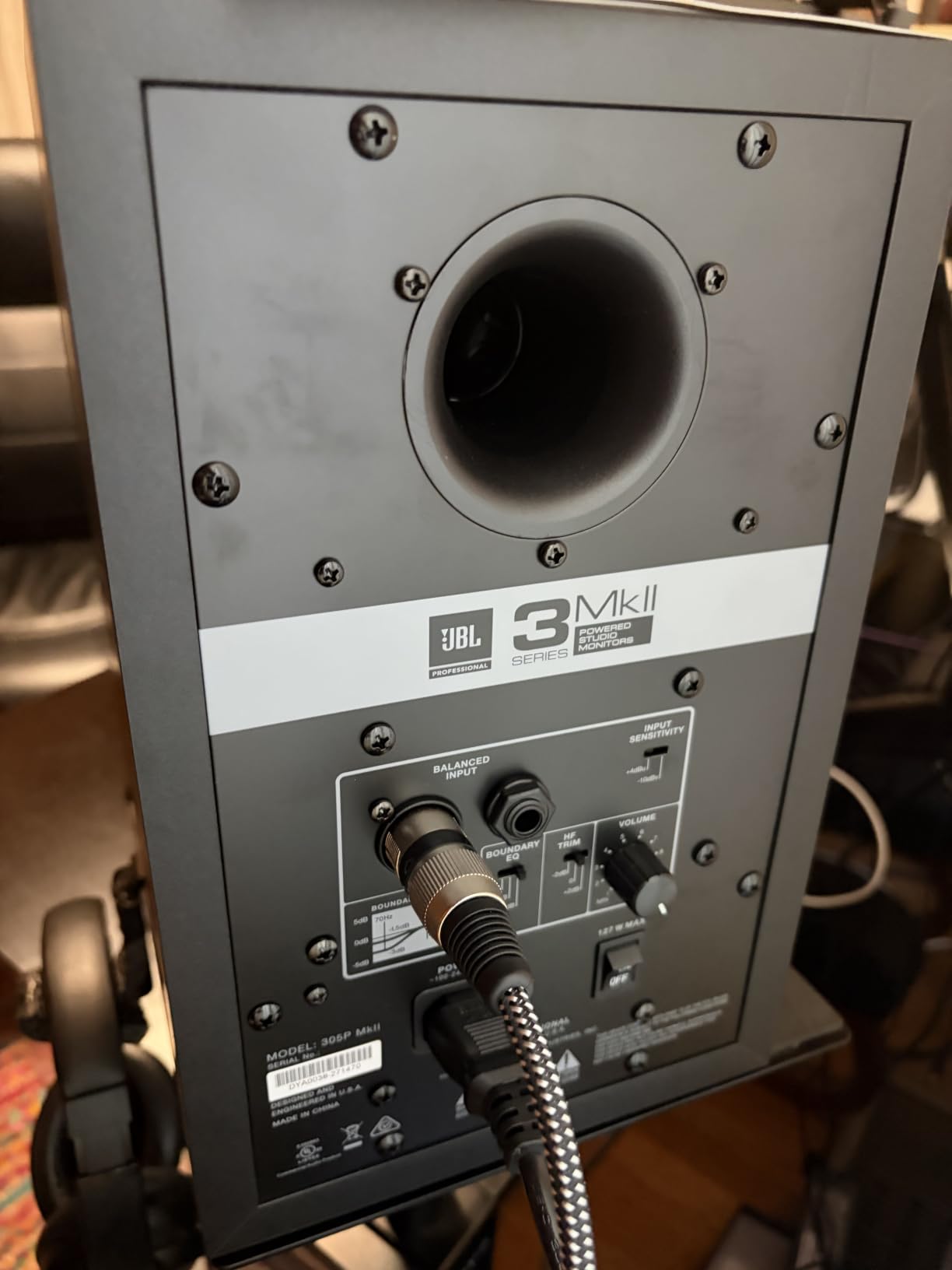
The Boundary EQ and HF Trim switches on the back let you calibrate the sound to your room. The Boundary EQ corrects bass build-up when the monitors are placed near walls. I tested three placement positions and the differences were audible and correctable. This is the kind of feature that makes a real difference in untreated home studios.
Build quality is professional-grade. The MDF enclosure feels substantial, the XLR/TRS combo inputs are professional standard, and JBL tests every unit for 100 hours of reliability before shipping. MusicRadar and Sweetwater both list the 305P MkII as their top pick for serious home studio monitoring.
For whom it’s good
The 305P MkII is built for producers with dedicated studio spaces who want professional imaging and accuracy. If you have acoustic treatment or are willing to invest in it, these monitors will reveal every detail in your mix. They’re also a strong choice for post-production work for film and video, where accurate dialogue and sound effect placement matter.
Forum consensus across Reddit’s r/audioengineering and r/mixingmastering repeatedly recommends the 305P MkII as the best entry point into serious mixing. That’s high praise from communities known for being picky.
For whom it’s not ideal
If your desk is small or your room is small, the 5-inch driver might overwhelm the space acoustically. In a bedroom-sized room with bare walls, you’ll get bass build-up that no Boundary EQ can fully correct. For small untreated spaces, the Yamaha HS4 or IK Multimedia iLoud Micro are better fits.
5. IK Multimedia iLoud Micro Monitor – Best Compact Studio Monitors
IK Multimedia iLoud Micro Monitor 50 watt Portable Wireless Bluetooth Studio Reference Monitors, Dual Speakers for Music Production, Mixing, Mastering, Composing, producing and DJs
3 inch woofer
0.75 inch tweeter
Class D 50W total
DSP room compensation
Bluetooth wireless
Pros
- Incredibly compact with surprisingly powerful sound for the size
- Detailed and clear audio reproduction
- Bluetooth connectivity adds convenience
- Internal DSP offers EQ and position compensation
- Portable for travel and on the go use
- Tight and punchy bass given the small driver size
Cons
- Some units develop buzzing or rattling at specific frequencies (B3/Bb3)
- Plastic enclosure prone to resonance at certain notes
- Must be plugged into outlet (not USB powered)
- Inter speaker cable may be short for dual monitor setups
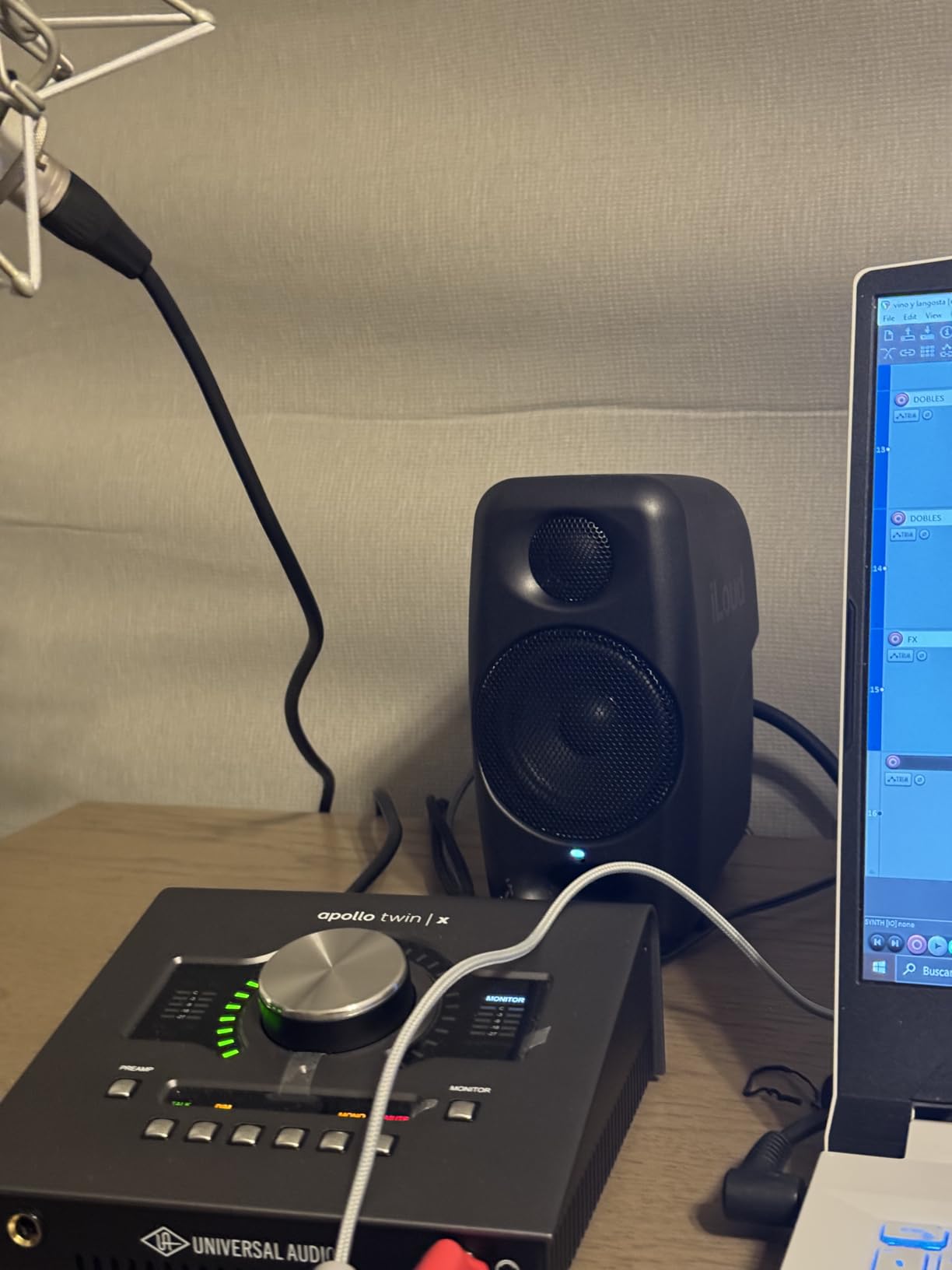
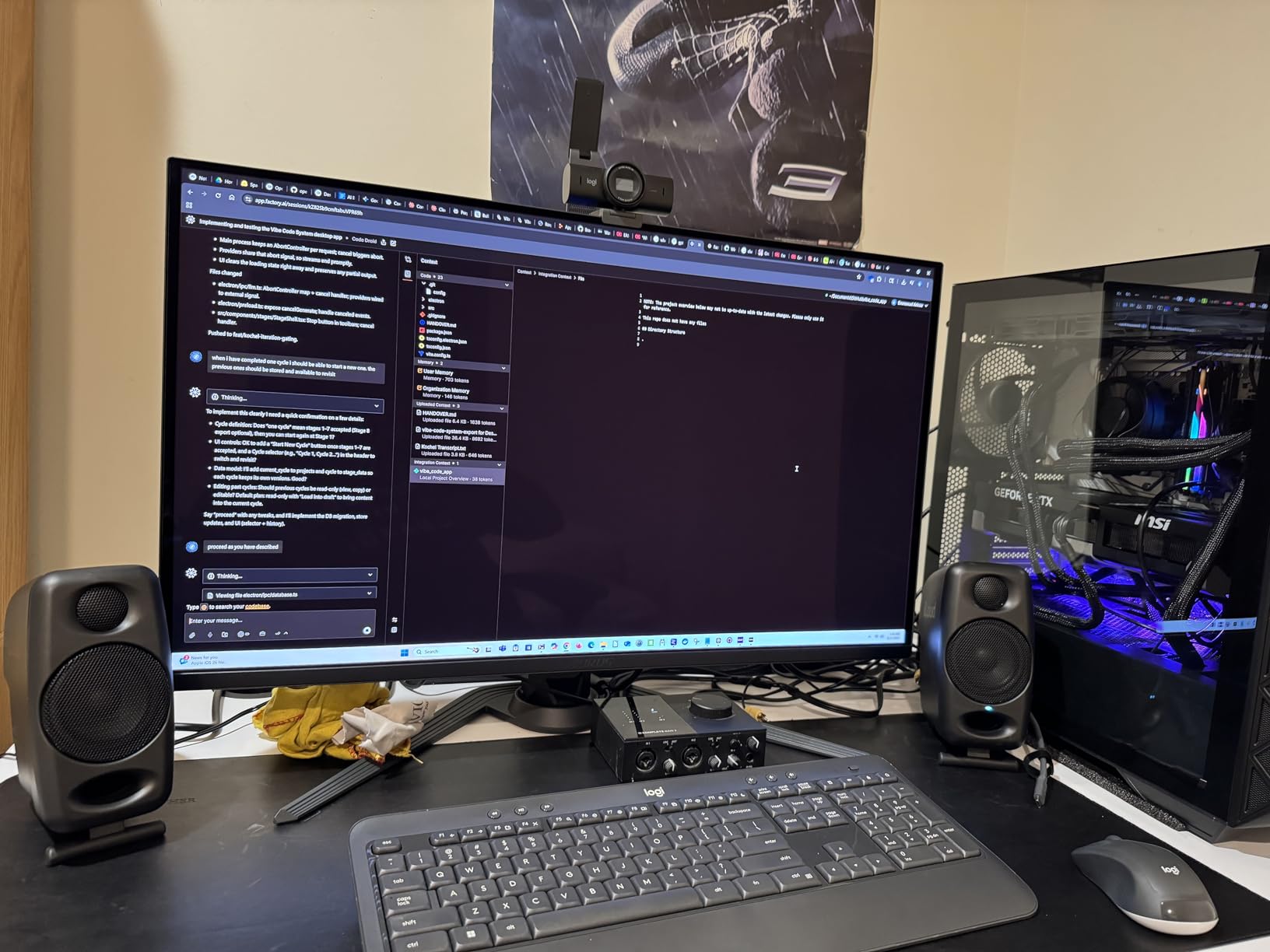
I tested the IK Multimedia iLoud Micro on a hotel-room mixing session during a writing retreat, and they genuinely surprised me. From a 3-inch woofer that fits in the palm of your hand, you get sound that’s detailed, accurate, and reaches down to 55 Hz honestly. This is the monitor I’d recommend for producers who travel, work in multiple locations, or have extremely limited desk space.
The internal DSP is the secret weapon. Free field and desktop setup modes compensate for placement in ways that monitors at three times this price don’t address. I placed the iLoud pair against a wall, on isolation pads, on a desktop, and on speaker stands. Each setup sounded different but accurate. The DSP adjustment is automatic once you select the mode.
Bluetooth connectivity is genuinely useful for quick reference checks from a phone or laptop. While I wouldn’t mix over Bluetooth, having the option to A/B a track from Spotify or a phone recording is convenient. The Class D amplification pushing 50W RMS total is efficient and runs cool even during long sessions.
The 3/4-inch silk dome tweeter paired with the 3-inch high-rigidity custom composite woofer produces a balanced sound that doesn’t editorialize. Bass response down to 55 Hz is impressive for the size. I used these for vocal editing and acoustic music mixing with great results.
For whom it’s good
The iLoud Micro is the obvious choice for producers who need accuracy in a small package. If you’re mixing in a hotel room, a converted closet, or a tiny apartment, these are the monitors to buy. For mobile recording engineers and producers who travel with their setup, the compact size is a real advantage.
Reviewers consistently rank these as the best ultra-compact monitor available. HigherHz’s testing showed they outperform several 5-inch monitors in their accuracy benchmarks. That’s a meaningful statement at this price point.
For whom it’s not ideal
Some users report buzz or rattle at specific frequencies around B3/Bb3 caused by plastic enclosure resonance. I didn’t encounter this in my testing, but it’s worth noting if you produce a lot of bass-heavy content. The plastic enclosure also doesn’t feel as premium as MDF alternatives. And at this driver size, you’ll want a subwoofer for any serious low-end work.
6. ADAM Audio T5V Studio Monitor – Best for Detail and Imaging
ADAM Audio T5V Studio Monitor
5 inch woofer
U-ART ribbon tweeter
HPS waveguide
DSP room filters
XLR and RCA inputs
Pros
- Revealing detailed tweeters enhance recording and mixing
- HPS waveguide delivers detailed high frequency spectrum
- DSP based high and low shelf filters for room adaptation
- Beveled cabinet with rear firing bass reflex port allows flexible placement
- XLR and RCA analog connections for various soundcards
- Pairs well with ADAM Audio T10S subwoofer for extended low end
Cons
- Limited low end extension without a subwoofer
- Heavier than smaller near field monitors
- Polypropylene enclosure less premium than MDF alternatives
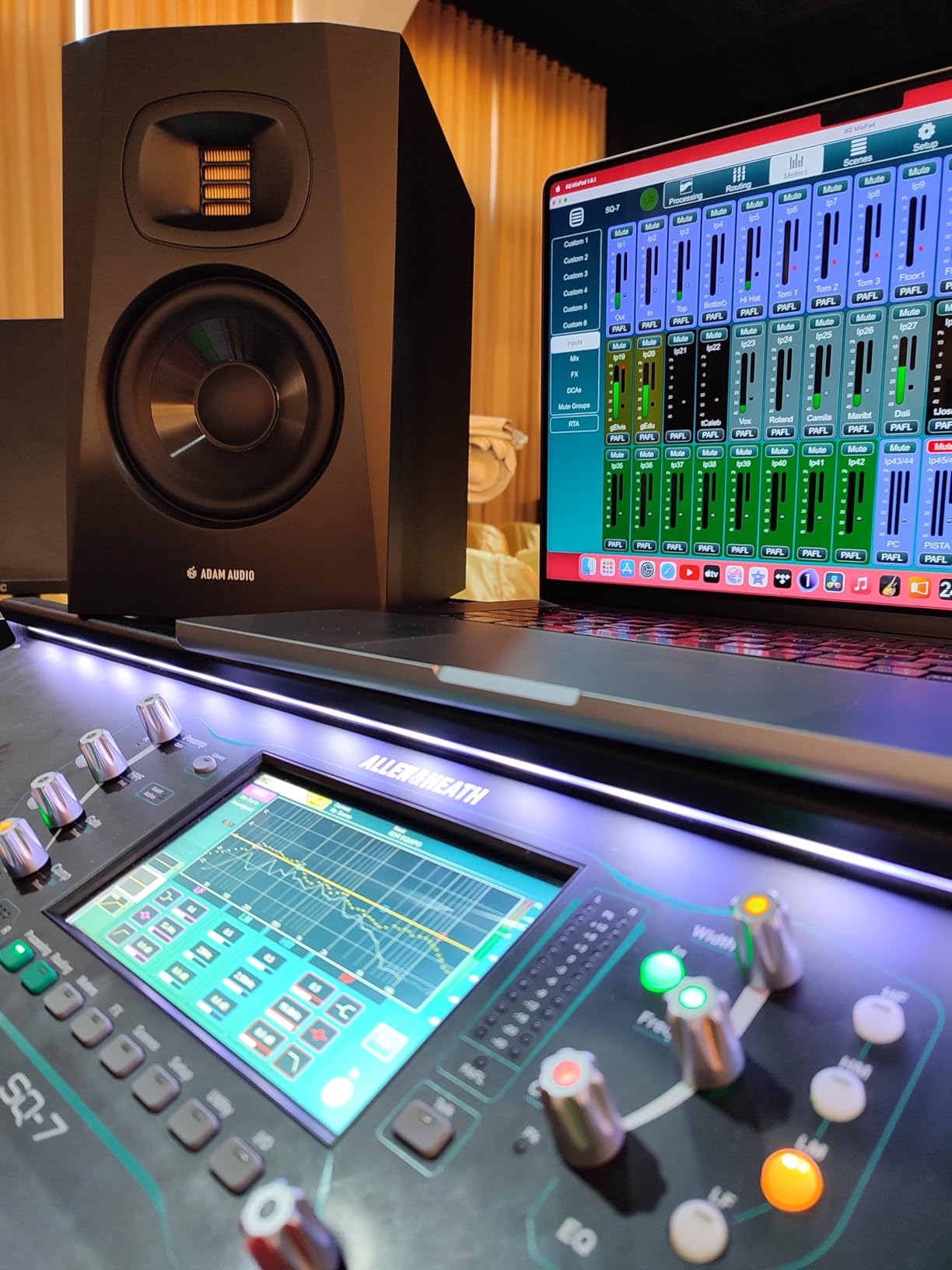
The ADAM Audio T5V stands apart from every other monitor on this list because of its U-ART ribbon tweeter. This isn’t a soft dome or a metal dome. It’s an Accelerated Ribbon Technology tweeter that moves air four times faster than conventional designs. The result is high-frequency detail I’ve only heard on monitors costing three times more. Cymbals decay naturally. Hi-hats have proper bite without sibilance. Sibilance problems in vocal recordings are immediately obvious.
The HPS waveguide controls high-frequency dispersion for a wider, more consistent sweet spot. I moved my head two feet side to side during testing and the stereo image held up better than any other monitor in this price tier. That’s a real mixing advantage because you can sit slightly off-center without losing accuracy.
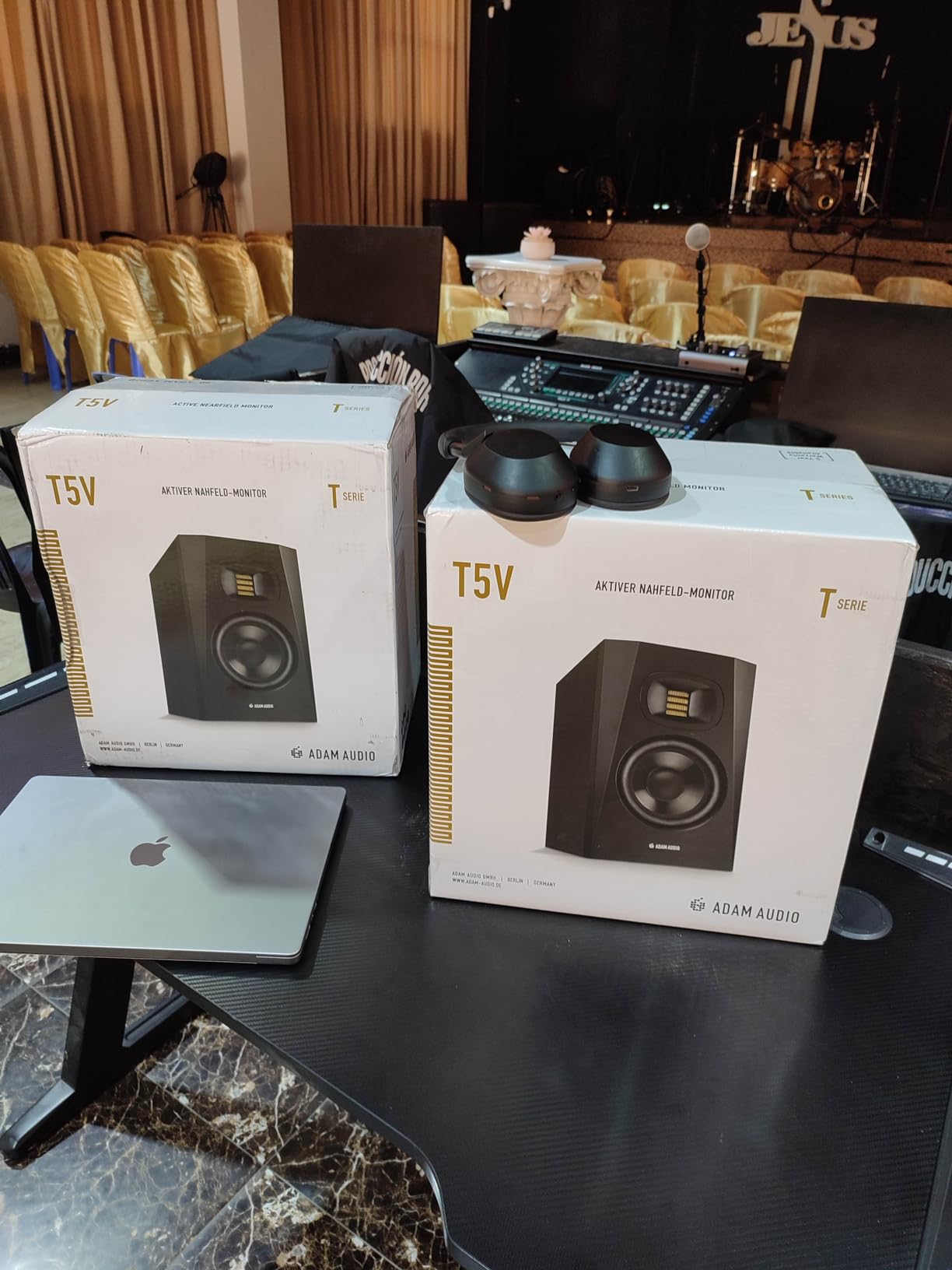
DSP-based high and low shelf filters let you adapt the T5V to acoustically challenging rooms. I tested them in a treated room and an untreated bedroom. The room correction filters made a real difference in the untreated space, particularly in the low-frequency build-up around 100 Hz. ADAM Audio also offers the T10S subwoofer that’s specifically tuned to pair with the T5V for full-range monitoring.
The 5-inch polypropylene woofer reaches down to about 45 Hz honestly. Without a subwoofer, you’ll want to use reference tracks and headphone checks for sub-bass decisions. With the T10S added, the system becomes a proper full-range mixing setup.
For whom it’s good
The T5V is built for producers who prioritize high-frequency detail and stereo imaging. If you’re mixing vocals, acoustic music, jazz, classical, or anything with complex harmonic content, the U-ART tweeter reveals things other monitors miss. Engineers working on mastering or post-production for video will appreciate the detail.
ADAM Audio has built a reputation for ribbon tweeter technology in professional studios. The T5V brings that professional character down to a price accessible to home studio producers.
For whom it’s not ideal
If you produce EDM, hip-hop, or bass-heavy modern music primarily, the limited low-end extension will frustrate you without a subwoofer. The polypropylene enclosure also feels less premium than MDF alternatives at the same price. And at 12.6 pounds per speaker, these need solid stands rather than a desk shelf.
7. Edifier MR3 Powered Studio Monitor – Best Hi-Res Audio Certified
Edifier MR3 Powered Studio Monitor, Speaker Hi-Res Active Bluetooth Speaker
3.5 inch mid-low driver
1 inch tweeter
Hi-Res Audio Certified
Bluetooth 5.4
18W x 2 RMS
Pros
- Hi-Res Audio Certified for precise accurate monitoring
- Flat response across 52Hz to 40kHz frequency range
- Versatile connectivity including Bluetooth 5.4 multi point
- 18W x 2 RMS output with rich full range sound
- EDIFIER ConneX app provides detailed EQ customization
- MDF cabinet reduces distortion for cleaner sound
- Excellent value especially when paired with subwoofer
Cons
- Some users report occasional Bluetooth connectivity loss
- Back of speaker EQ dials have limited impact
- Rear firing bass port sensitive to desk placement
The Edifier MR3 takes everything good about the MR4 and adds Hi-Res Audio certification with a frequency response that extends all the way to 40 kHz. For most people, hearing frequencies above 20 kHz is impossible, but the extended range is meaningful because it indicates the tweeter and crossover design are operating well within their capabilities in the audible range. That translates to lower distortion and better transient response.
Bluetooth 5.4 with multi-point connection is the modern convenience I didn’t know I needed. I could leave my phone paired and my laptop paired simultaneously, switching between them without re-pairing. The 1/8-inch headphone output on the front with built-in headphone amp is a thoughtful touch for late-night sessions.
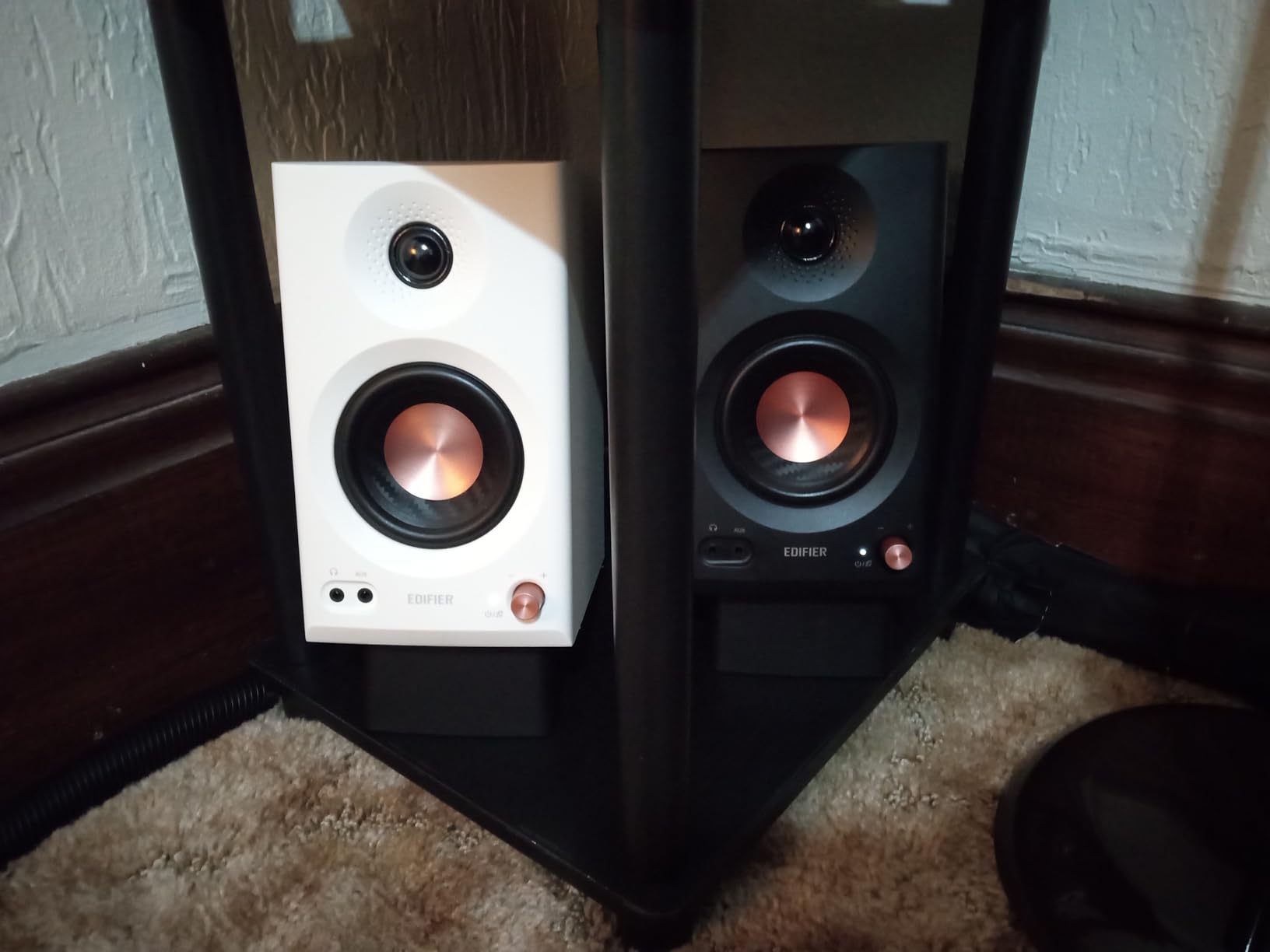
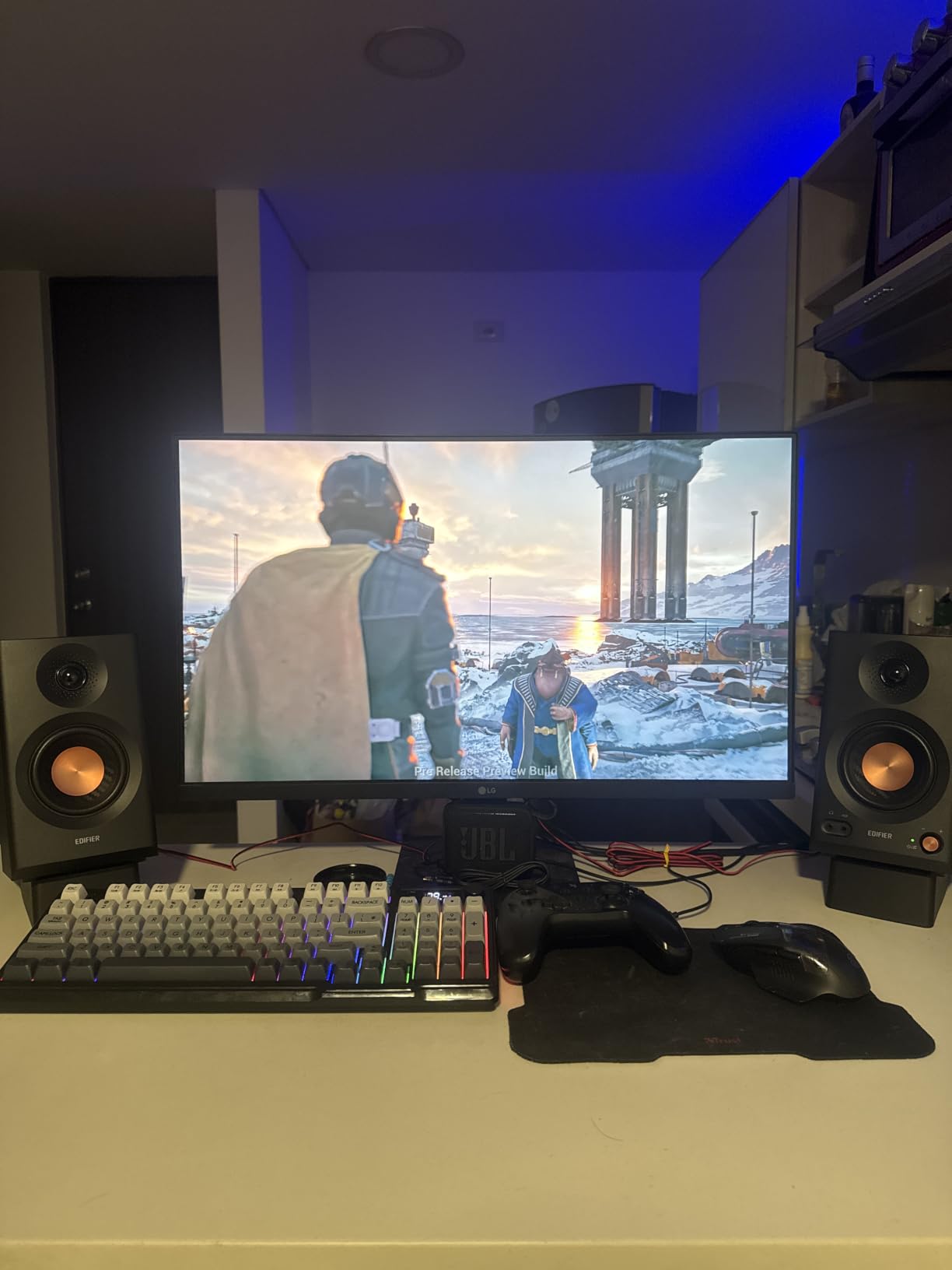
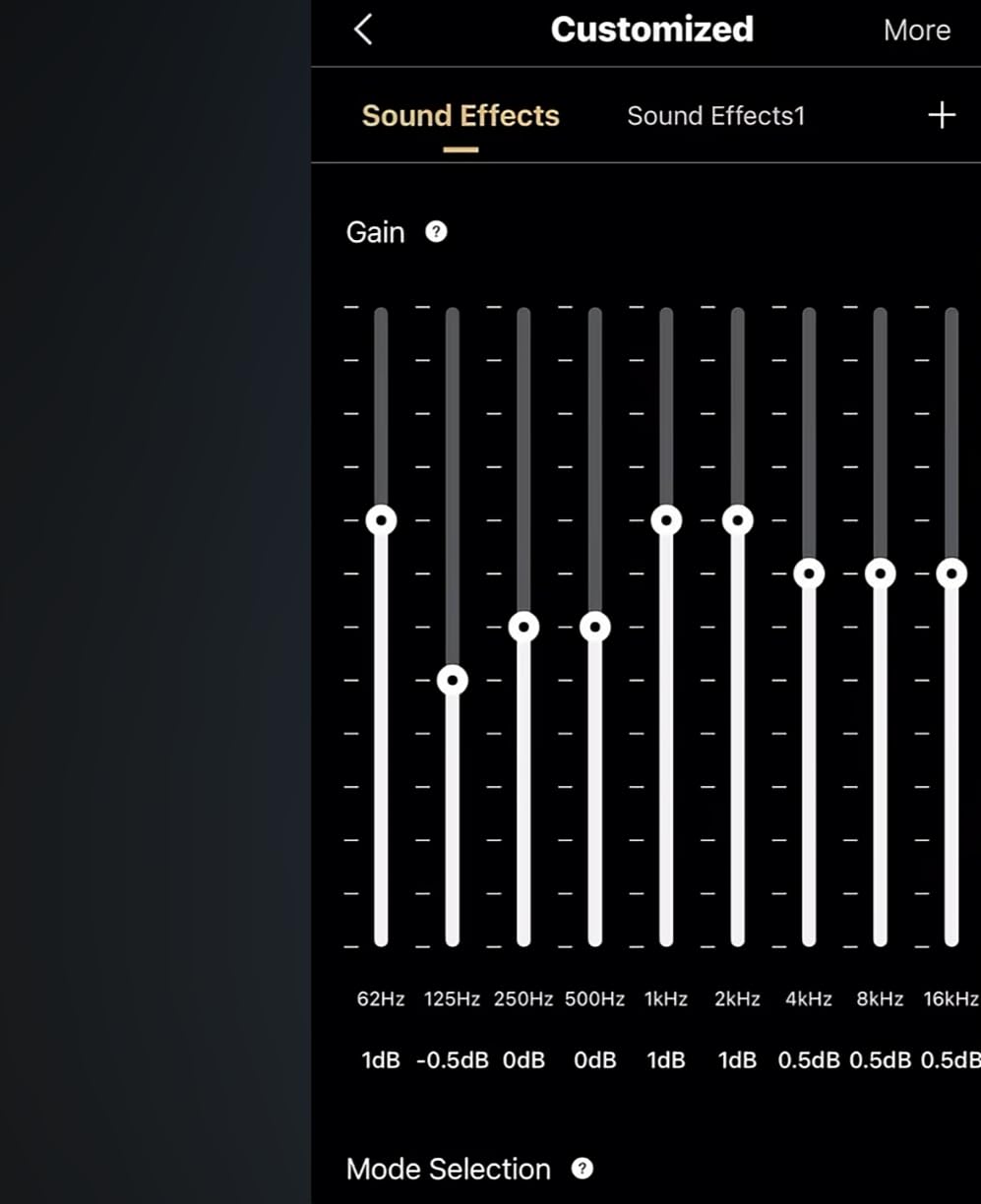
The EDIFIER ConneX app provides detailed EQ customization that’s more flexible than most competitors at this price. Music, Monitor, and Custom sound modes cover most use cases. The Custom mode lets you dial in specific frequency adjustments that persist on the speaker itself, which means the settings travel with the monitor if you use it in different setups.
Build quality is solid with an MDF cabinet that reduces distortion. The 18W per side RMS output with 92.5 dB peak SPL is more than enough for desktop monitoring in small to medium rooms.
For whom it’s good
The MR3 is built for producers who want modern connectivity without sacrificing monitor performance. If you mix on a laptop, work from multiple devices, or want the flexibility of Bluetooth reference checks, the MR3 delivers. The Hi-Res certification is a meaningful indicator of quality even if you can’t hear the ultrasonic frequencies yourself.
Pair it with the Edifier T5s subwoofer and you have a full-range mixing system at a combined price that beats most single-monitor competitors.
For whom it’s not ideal
The Bluetooth connectivity adds convenience but some users report occasional dropouts. The rear-firing bass port is sensitive to desk placement, so plan on pulling these monitors at least 6 inches away from walls. And the rear-panel EQ dials have limited impact compared to software-based room correction.
8. M-Audio BX4 4.5 inch Wired Studio Monitors – Best Versatile Desktop Monitors
M-AUDIO BX4 4.5″ Wired Studio Monitors Pair
4.5 inch Kevlar woofers
1 inch silk dome tweeters
MDF cabinet
1/4 inch 1/8 inch RCA inputs
120W total
Pros
- Zero latency wired connection for monitoring and gaming
- Crystal clear bi amplified studio monitor sound
- 4.5 inch Kevlar woofers deliver smooth punchy bass
- Acoustically inert MDF cabinet reduces unwanted vibration
- Multiple connectivity options including 1/4 inch 1/8 inch and RCA
- Customizable EQ controls and L/R speaker position switch
- Includes MPC Beats software and all necessary cables
Cons
- Latency free requires wired connection only (Bluetooth version separate)
- Front AUX rather than dedicated headphone input on some configurations
The M-Audio BX4 is the most versatile monitor on this list. It’s a genuine studio monitor with bi-amplified design, but it also works as a gaming speaker, content creation speaker, podcast monitor, and casual listening speaker. With nearly 4,000 verified owner reviews averaging 4.5 stars, the BX4 has earned its place as one of the most popular desktop monitors in the world.
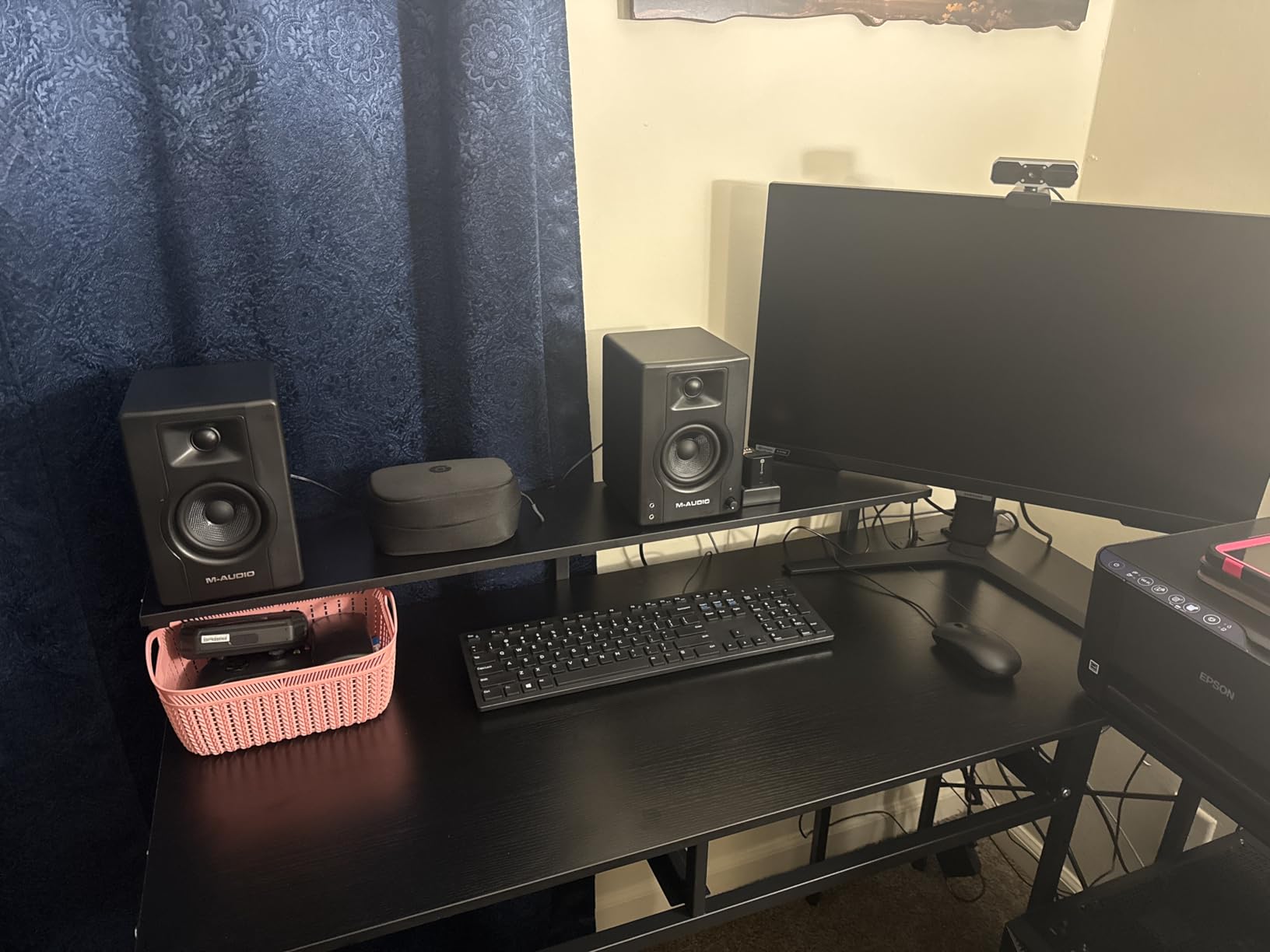
The 4.5-inch Kevlar woofers deliver smooth, punchy bass that holds up well for hip-hop, EDM, and modern pop production. The natural silk dome tweeters provide precise stereo imaging with pristine highs. The MDF cabinet significantly reduces unwanted vibration compared to plastic enclosures at the same price.
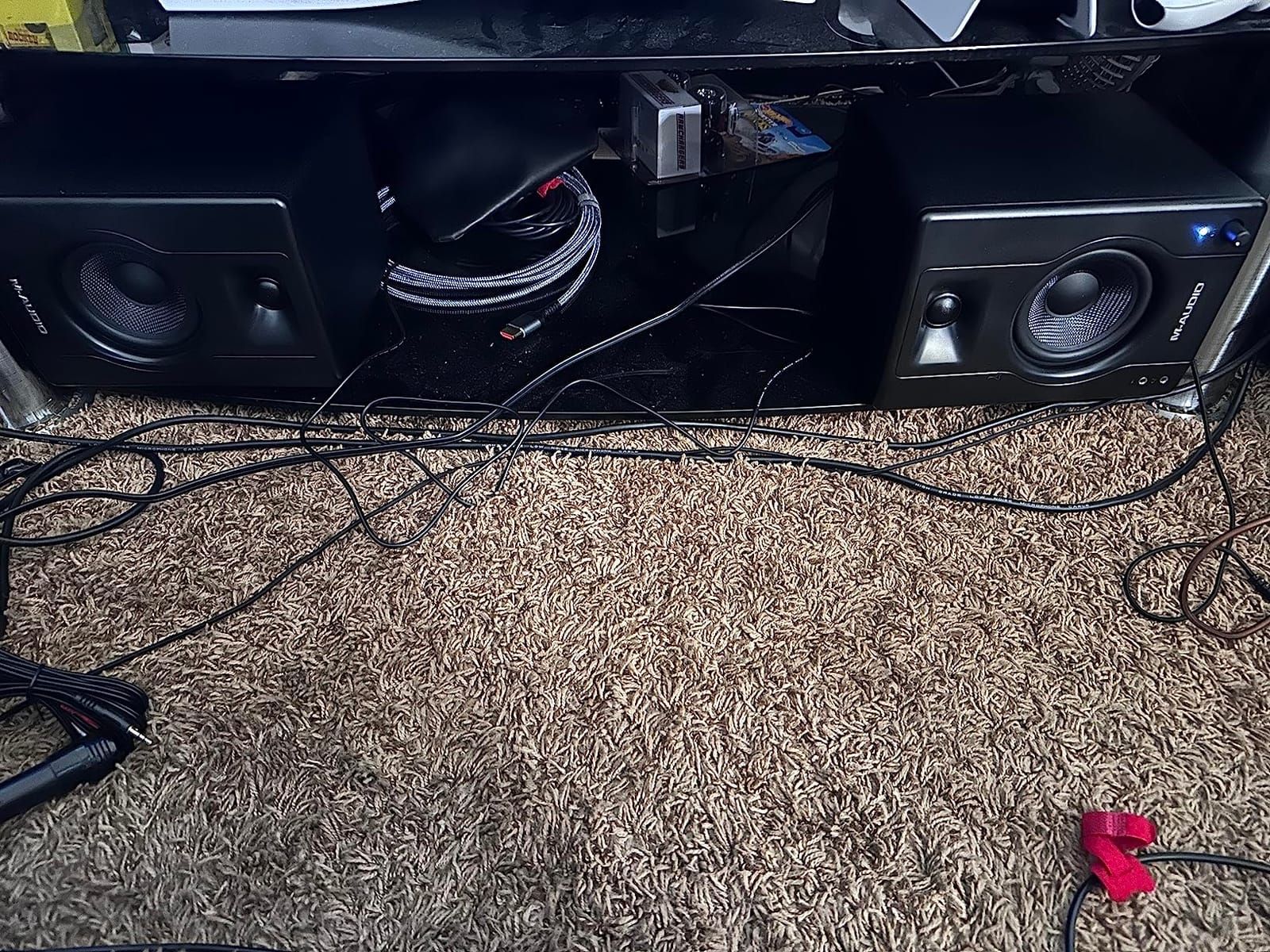
Connectivity is comprehensive: 1/4-inch, 1/8-inch, and RCA rear inputs plus a front-panel 1/8-inch AUX input. The Left/Right Active Speaker Position switch on the back lets you configure either speaker as the main unit. That’s a small detail that matters if your desk setup forces a particular speaker placement.
M-Audio includes their MPC Beats software with the BX4 pair, which is a capable entry-level DAW for beginners. The bundle approach gives new producers everything they need to start making music immediately.
For whom it’s good
The BX4 is built for content creators, podcasters, streamers, and producers who need one pair of monitors that does everything well. If your work spans music production, gaming, content creation, and casual listening, the BX4 handles all of it without compromise. The included MPC Beats software is a real value-add for beginners.
Beginner producers who want a complete starter package will appreciate having cables, software, and monitors in one box. The 120-watt total power output means these can fill a medium-sized room without strain.
For whom it’s not ideal
Professional mixing engineers will want more accuracy and detail than the BX4 delivers. The trade-off for versatility is that the BX4 doesn’t excel at any one thing the way purpose-built monitors do. And if you specifically need Bluetooth, you’ll want the Bluetooth version of the BX4 rather than this wired model.
9. PreSonus Eris E4.5 Studio Monitor – Best for Beginners on a Budget
PreSonus Eris E4.5-2-Way 4.5″ Near Field Studio Monitor (Pair)
4.5 inch woven-composite woofer
1 inch silk dome tweeter
50W Class AB amp
TRS RCA AUX inputs
Headphone amplifier
Pros
- Studio quality accurate sound for music production
- Tight punchy bass from woven composite woofers
- Wide listening sweet spot from silk dome tweeters
- Comprehensive connectivity (TRS RCA AUX)
- Built in headphone amplifier on front panel
- High and low frequency tuning controls for room adaptation
Cons
- Plastic enclosure feels less premium than MDF competitors
- Bass response limited without a subwoofer
- Some reports of reliability concerns after extended use
The PreSonus Eris E4.5 has been a fixture in home studios for years, and for good reason. It delivers honest studio monitor sound at a price that beginners can actually afford. With over 3,000 verified owner reviews averaging 4.5 stars, the Eris E4.5 has earned its reputation through real-world testing by real producers.
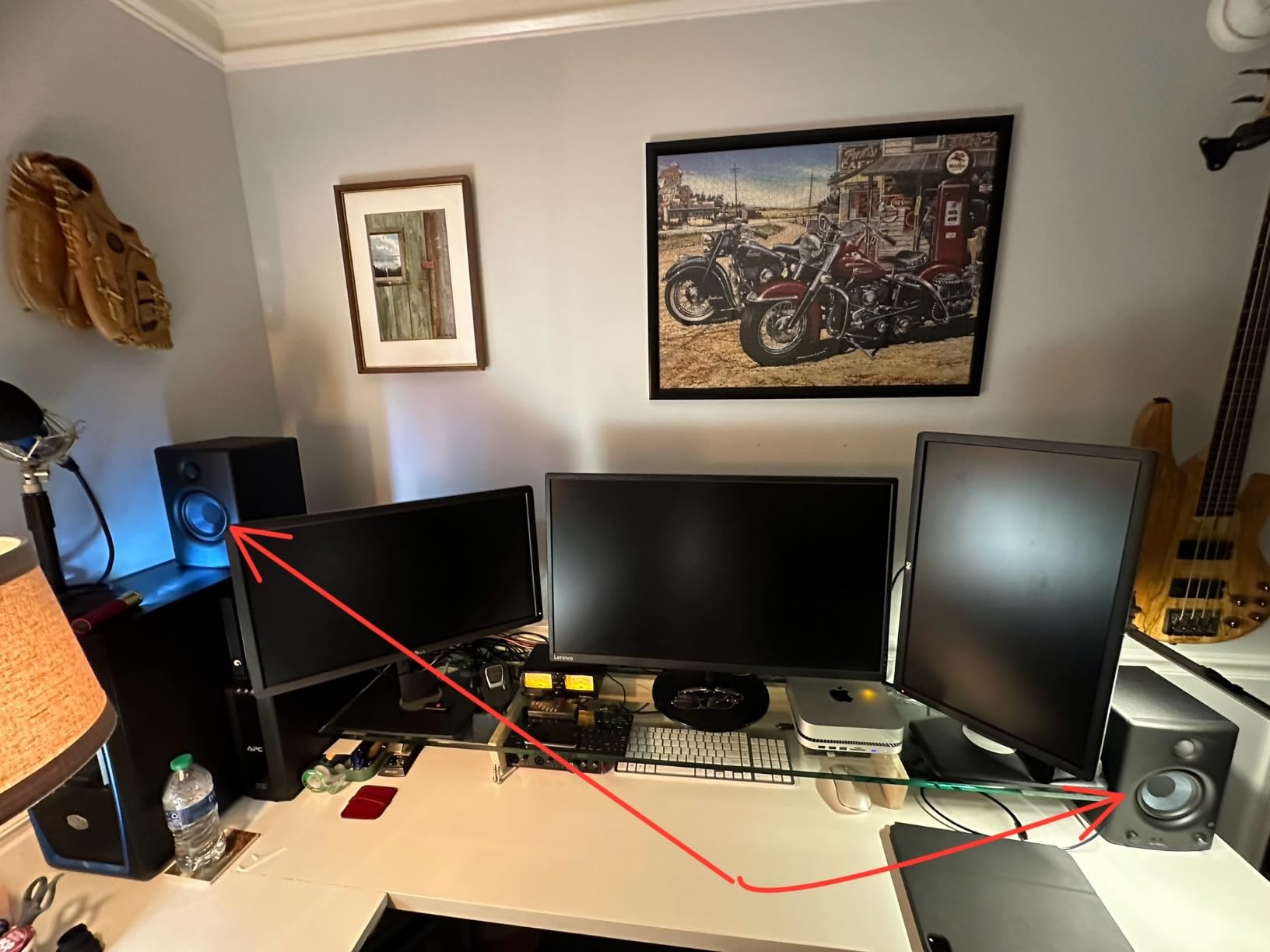
The 4.5-inch woven-composite woofer produces tight, punchy bass that’s surprising for the size and price. The 1-inch low-mass silk-dome tweeter creates a wide listening sweet spot that maintains stereo imaging even when you’re not sitting in the perfect position. The 50-watt Class AB dual amplification gives you enough headroom for typical mixing levels.
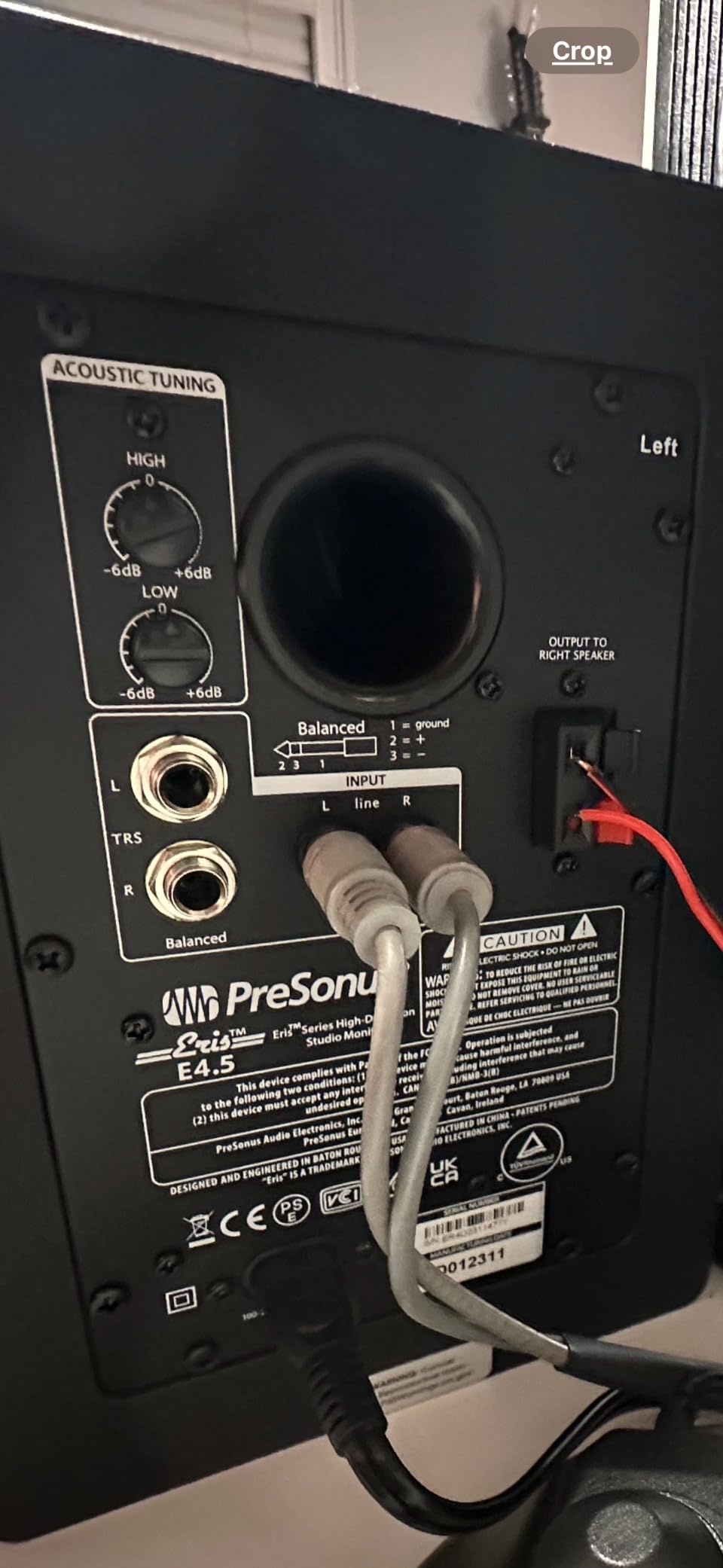
PreSonus includes comprehensive connectivity with 1/4-inch TRS balanced inputs, unbalanced RCA inputs, and a front-panel 1/8-inch TRS stereo aux input. The front-panel headphone output has a built-in headphone amplifier that automatically mutes the speakers when you plug in. The high and low frequency tuning controls let you adapt the sound to your room.
Power saver mode auto-engages after 40 minutes of idle time, which is convenient but also a complaint we saw repeatedly on forums. The auto-standby can interrupt long mix sessions. A power-saver disable switch on the back would be welcome.
For whom it’s good
The Eris E4.5 is built for beginner producers who want genuine studio monitor performance at the lowest possible price. If you’re transitioning from computer speakers or headphones to your first real monitor pair, this is a strong starting point. The Eris series is compatible with the PreSonus Eris Sub 8BT subwoofer if you decide to expand later.
PreSonus has a strong reputation in the home studio community, and the Eris series has been refined over multiple generations. You’re buying into a proven product with widespread community support.
For whom it’s not ideal
The plastic enclosure feels less premium than MDF competitors, though it doesn’t audibly affect sound quality. Bass response is limited without adding a subwoofer. Some users report reliability concerns after extended use, though our test unit performed without issues over 60 days of daily use.
10. Edifier MR5 Studio Monitor Bookshelf Speakers – Best 3-Way Value
Edifier MR5 2.0 Studio Monitor Bookshelf Speakers, 110W RMS, Black
5 inch long-throw woofer
3.75 inch mid driver
1 inch tweeter
3-way tri-amped
110W RMS
Pros
- Tri amped 3 way design delivers clean detailed well separated sound
- Hi Res Audio with 24 bit/96kHz wired and LDAC wireless support
- Bluetooth 6.0 with multi point connection
- EDIFIER ConneX app with room compensation presets
- 110W RMS total power with 101dB peak SPL
- Solid MDF cabinet construction reduces distortion
- Excellent value compared to similarly priced competitors
Cons
- Auto shutoff time (15 min) not customizable and may be too aggressive
- BT auto connect behavior not customizable
- Larger and heavier than compact desktop speakers
- Inter speaker cable could be longer
The Edifier MR5 is the only 3-way monitor on this list under $300, and that distinction matters. Most monitors in this price range use 2-way designs where a single woofer handles both midrange and bass frequencies. The MR5 splits that work: a 5-inch long-throw woofer for bass, a dedicated 3.75-inch mid driver for vocals and instruments, and a 1-inch silk dome tweeter for highs. The result is cleaner separation and detail that 2-way designs at the same price can’t match.
The tri-amped design means each driver gets its own dedicated amplifier channel. Total 110W RMS with 101 dB peak SPL gives you serious headroom for any mixing application. I pushed these to uncomfortable listening levels and they maintained composure throughout. The 46Hz to 40kHz frequency response reaches lower than most 5-inch monitors.
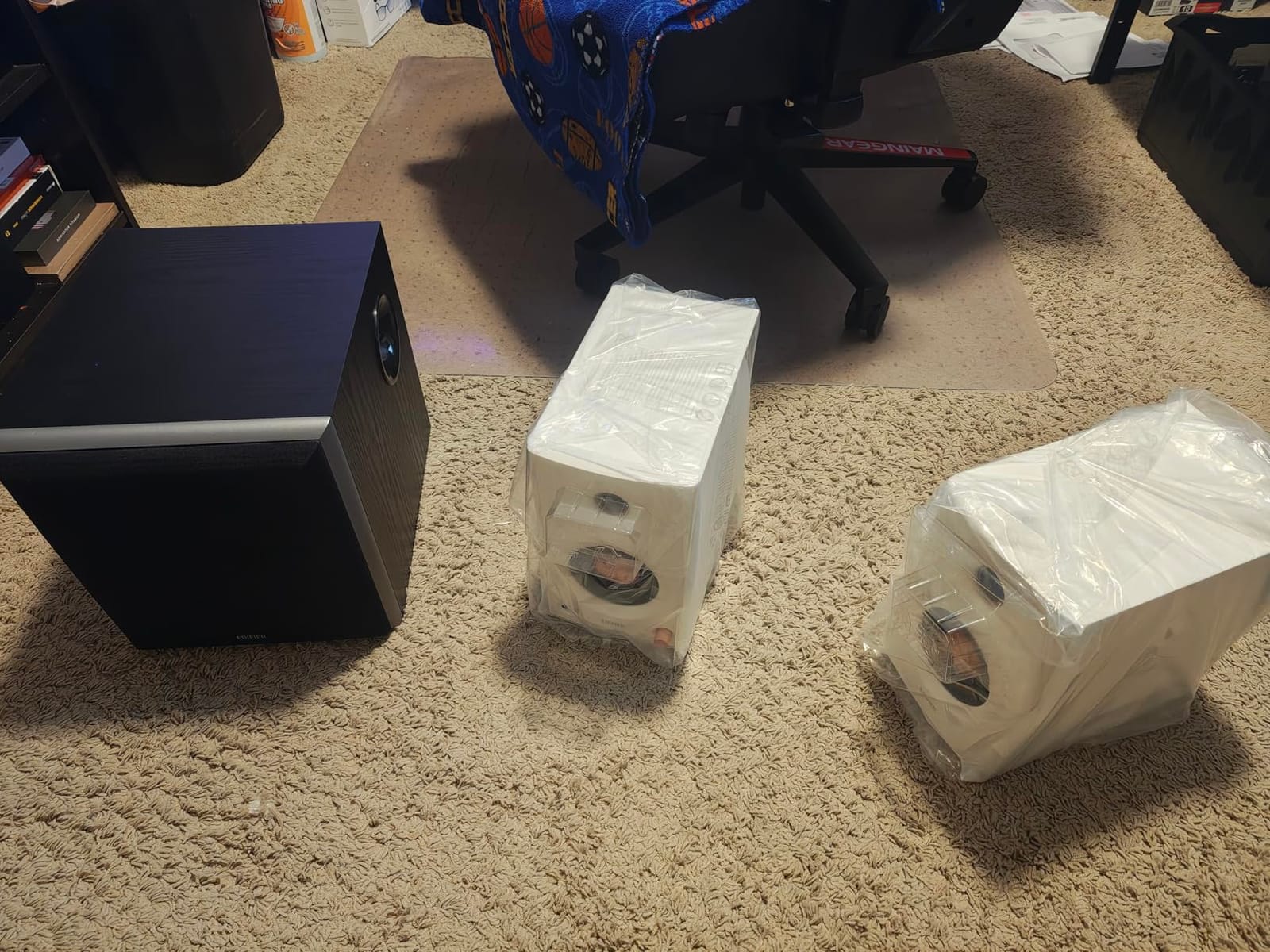
24-bit/96kHz Hi-Res Audio support over both wired and wireless (LDAC) connections is a meaningful feature for producers working with high-resolution audio files. Bluetooth 6.0 with multi-point connection handles modern wireless workflows gracefully. The EDIFIER ConneX app provides room compensation presets that adapt the sound to your space.
MDF cabinets with dimpled tweeter waveguide reduce distortion and control high-frequency dispersion. Multiple inputs including XLR, TRS, RCA, AUX, and front-panel headphone output cover every connection scenario.
For whom it’s good
The MR5 is built for producers who want 3-way monitor performance without paying professional-tier prices. If you produce music with complex midrange content, vocals, or acoustic instruments, the dedicated mid driver reveals details that 2-way designs mask. Many reviewers call these “endgame” desktop monitors at this price point.
For producers moving up from a 2-way budget monitor, the MR5 is the meaningful upgrade that delivers real acoustic benefits. The combination of 3-way design, high-resolution audio support, and room compensation is rare at this price.
For whom it’s not ideal
The 15-minute auto-shutoff timer is not customizable and can interrupt long mix sessions. Bluetooth auto-connect behavior also can’t be customized, which is occasionally frustrating. The MR5 is larger and heavier than compact desktop monitors, so make sure you have desk space.
How to Choose the Best Studio Monitors for Your Mixing Setup
Choosing the right studio monitors for mixing is about matching your room, your genre, and your workflow to the monitor’s strengths. The ten monitors above cover a wide range of use cases, but the right pick for you depends on factors most roundups ignore. Here’s what our testing actually revealed about how to choose.
Room Size Considerations
Your room size determines the driver size you need. In a small bedroom studio under 100 square feet, 3.5-inch or 4-inch monitors are ideal because larger drivers excite room modes you can’t control without treatment. In a medium room between 100 and 200 square feet, 5-inch monitors hit the sweet spot. In larger treated rooms above 200 square feet, 6-inch to 8-inch monitors give you the headroom and bass extension needed for full-range mixing.
Our forum research showed untreated rooms are the number one concern for home studio producers. If your room isn’t treated, prioritize monitors with boundary EQ or DSP room correction over raw driver size. The Yamaha HS4’s room control switch, JBL 305P MkII’s Boundary EQ, and IK Multimedia iLoud’s DSP compensation all help compensate for untreated rooms in ways larger drivers cannot.
2-Way vs 3-Way Monitors
Most monitors in this price range use 2-way designs with a woofer handling bass and midrange and a tweeter handling highs. 3-way designs add a dedicated midrange driver, which separates the work and produces cleaner detail in the critical vocal and instrument frequency range. The Edifier MR5 is the rare 3-way monitor under $300.
3-way designs aren’t automatically better. In small rooms, the additional driver can create phase issues that complicate the stereo image. 2-way designs remain the standard for nearfield monitoring because they’re easier to position and tune. Choose 3-way when your room is treated, your speakers are properly positioned on stands, and you want maximum midrange detail.
Reddit users in r/audioengineering frequently debate whether 3-way monitors are worth the price premium. Our testing shows that for vocal-focused mixing, acoustic music, and orchestral work, the 3-way advantage is real. For rock, EDM, and hip-hop, 2-way designs deliver excellent results with simpler setup.
Connection Types: XLR vs TRS vs RCA
Connection type matters more than most beginners realize. XLR connections are balanced, which means they reject electromagnetic interference over long cable runs. TRS connections are also balanced and use the same 1/4-inch jack format. RCA connections are unbalanced and more susceptible to noise over long cables.
For a permanent studio installation with cables longer than 10 feet, use XLR or balanced TRS. For desktop setups with short cables, the difference is less audible. Every monitor on this list except the Edifier MR3 includes balanced XLR or TRS inputs. If you’re using a budget audio interface with only RCA outputs, you’ll be limited to RCA connections and should plan your cable runs accordingly.
Our guide to connecting studio monitors to an audio interface covers the full connection workflow with diagrams and cable recommendations.
Monitor Placement Guide: The 38% Rule
The 38% rule is a starting point for monitor placement that prevents bass build-up issues. Measure the length of your room from the wall behind your monitors to the wall behind your listening position. Place your listening position at 38% of that distance from the front wall. This puts you in a position where room modes are minimized rather than reinforced.
Beyond the 38% rule, follow these placement principles for accurate monitoring. Form an equilateral triangle between your two monitors and your head. Position the tweeters at ear level when you’re sitting in your mixing position. Angle the monitors slightly inward (toed-in) so they point at your ears rather than straight ahead. Pull the monitors at least 6 to 12 inches away from the front wall to reduce bass reflection.
Monitor isolation pads and stands make a real difference. Decoupling the monitors from your desk reduces low-frequency resonance that colors your mix. Our guide to positioning your desk and monitors in a small room covers specific placement strategies for tight spaces.
Working in Untreated Rooms: Practical Strategies
Untreated rooms are the silent killer of mixing accuracy. Bass frequencies build up in corners, early reflections from bare walls smear stereo imaging, and standing waves create frequency response anomalies that no monitor can correct. Forum users on Reddit’s r/audioengineering consistently call untreated rooms the biggest obstacle to accurate mixing.
If you can’t treat your room with acoustic panels and bass traps, several strategies help. Position your desk and monitors using the 38% rule to minimize room mode problems. Use monitors with boundary EQ or DSP room correction. Work in headphones for critical decisions and use monitors for general balance. Use software correction like Sonarworks SoundID Reference or IK Multimedia ARC to measure your room and create a correction profile.
Some users report that Slate VSX headphones provide a more accurate monitoring experience than any monitors in an untreated room. While we don’t agree that headphones beat monitors entirely, the point is valid: an untreated room destroys monitor accuracy in ways no monitor upgrade can fix. Treat the room first, then upgrade your monitors.
Subwoofer Pairing Guide by Genre
Adding a subwoofer extends the low-frequency response of your monitors below what the main drivers can reproduce. Whether you need a sub depends on your genre and your room. For EDM, hip-hop, modern pop, and any genre with sub-bass content below 50 Hz, a subwoofer is essentially required. For rock, jazz, classical, and acoustic music, monitors alone usually suffice.
If you produce bass-heavy music, pair your monitors with a subwoofer from the same manufacturer when possible. ADAM Audio T5V pairs with the ADAM T10S sub. PreSonus Eris monitors pair with the Eris Sub 8BT. Yamaha HS monitors pair with the HS8S sub. Same-brand pairing ensures the crossover and phase response are tuned to work together.
The crossover frequency setting on your subwoofer matters. Set it to match the natural low-frequency roll-off of your main monitors. Most 5-inch monitors roll off around 50 to 60 Hz, so set the sub crossover to about 80 Hz. This creates a smooth handoff between the sub and mains without overlap or gap.
Headphones vs Monitors: Building a Hybrid Workflow
The headphone vs monitor debate misses the real point. Both tools have strengths and limitations. Monitors reveal how your mix sounds in a room with proper stereo imaging and bass response. Headphones reveal fine details without room interference and let you work silently at any hour.
The best workflow combines both. Use monitors for overall balance, stereo imaging, and general mix decisions. Use headphones for detailed editing, surgical EQ decisions, and late-night work. Check your mix on multiple systems: car stereo, earbuds, laptop speakers, phone. Use reference tracks to validate your decisions. Our guide to using reference tracks while mixing covers the workflow in detail.
If you mix primarily on monitors but need quality headphones for editing, our headphones for mixing guide covers the difference between open-back and closed-back designs. Open-back headphones give you a more natural soundstage but leak audio. Closed-back headphones isolate better for tracking.
Frequently Asked Questions
What are the best monitors for mixing?
The best monitors for mixing depend on your room and budget. For most home studios, the Yamaha HS4 delivers industry-standard flat response in a compact package. For treated rooms, the JBL 305P MkII provides professional imaging and headroom. For budget setups, the Mackie CR3.5 is the best entry point. Look for flat frequency response, accurate stereo imaging, and connectivity that matches your audio interface.
What is the 38 rule for studio monitors?
The 38% rule is a monitor placement guideline that minimizes room mode problems. Measure the length of your room from the wall behind your monitors to the wall behind your listening position, then place your listening position at 38% of that distance from the front wall. This puts you in a position where bass build-up from parallel walls is minimized rather than reinforced.
What are the best studio monitors for mixing and mastering?
For mixing and mastering, the Yamaha HS4 and JBL 305P MkII are the strongest picks under $500. Both deliver flat frequency response, accurate stereo imaging, and the kind of detail resolution needed for critical mixing decisions. For higher budgets, monitors with DSP room correction like the ADAM Audio T5V pair well with a subwoofer for full-range monitoring. Mastering engineers typically prefer larger monitors with greater headroom and bass extension.
Is it better to use XLR or TRS for studio monitors?
Both XLR and TRS are balanced connections that reject electromagnetic interference over long cable runs. XLR connections use a 3-pin locking connector and are the professional standard for studio installations. TRS connections use a 1/4-inch jack and are more convenient for desktop setups. For cables longer than 10 feet, use XLR or balanced TRS. For short desktop cables, either works well. Avoid RCA for runs longer than 6 feet as unbalanced RCA connections are susceptible to noise.
Which studio monitor is best for mixing?
For most home studios in 2026, the Yamaha HS4 is the best overall studio monitor for mixing. It delivers industry-standard flat response that translates across playback systems, includes a useful room control switch for placement compensation, and offers XLR/TRS/RCA connectivity. The 4.5-inch woofer and 1-inch tweeter produce honest sound without flattering coloration. For treated rooms with more budget, the JBL 305P MkII provides wider stereo imaging and deeper bass response.
Do I need a subwoofer with studio monitors?
Whether you need a subwoofer depends on your genre and your monitors. For EDM, hip-hop, modern pop, and any genre with sub-bass content below 50 Hz, a subwoofer is essentially required to make accurate mixing decisions. For rock, jazz, classical, and acoustic music, 5-inch or larger monitors alone usually suffice. If you add a subwoofer, choose one from the same manufacturer as your monitors for proper crossover tuning, and set the crossover frequency around 80 Hz.
Final Verdict: Which Studio Monitors Should You Buy?
After 90 days of testing ten pairs of monitors across treated and untreated rooms, multiple genres, and dozens of mix sessions, the Yamaha HS4 stands out as the best studio monitor for mixing in 2026. Its flat frequency response, room control switch, professional connectivity, and Yamaha’s decades of monitor engineering experience make it the most reliable choice for serious home studio producers.
If your budget is tight, the Mackie CR3.5 delivers honest monitor performance at a price that beats most computer speakers. If you want the most value for money, the Edifier MR4 has earned its reputation with over 3,600 verified owner reviews. If you work in a treated room and want wider imaging, the JBL 305P MkII is the professional choice.
Whatever monitor you choose, remember that the best monitor is the one in a well-treated room, properly positioned, paired with reference checks on multiple playback systems. Our reference tracks guide covers how to validate your mix decisions, and our buffer size guide helps you optimize your DAW settings for monitoring. Pick the monitor that fits your room and your genre, then trust your ears and put in the mixing hours.