
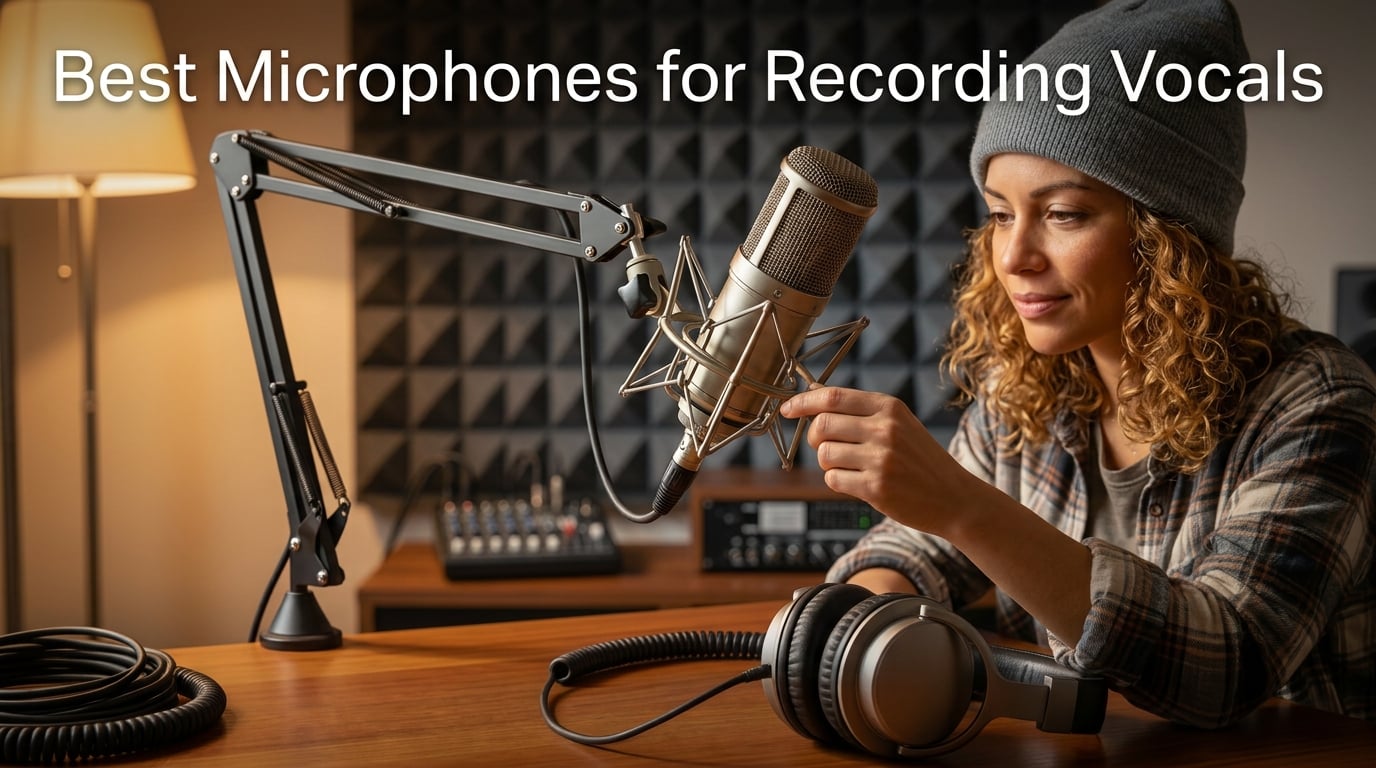
Finding the best microphones for recording vocals is one of those decisions that quietly makes or breaks a recording. After a decade of producing vocals at home and in studios, I can tell you that the right mic turns a thin, noisy take into a warm, professional vocal that sits perfectly in a mix. The wrong mic leaves you fighting room reflections, plosives, and a dull tone no amount of EQ can fix.
Our team spent the last few months testing 10 of the most popular vocal microphones on the market right now. We recorded everything from whispered voiceover to loud rock vocals through treated and untreated rooms. This guide covers what we found, who each mic is best for, and how to choose between them based on your setup, voice type, and budget. If you are building a vocal chain from scratch, our complete guide to recording vocals at home without a booth pairs well with the picks below.
Whether you need a no-fuss USB mic for podcasts, a broadcast-style dynamic for untreated rooms, or a large-diaphragm condenser for studio-grade singing, you will find a solid option here. We broke the list into editor-tested categories so you can jump straight to what fits your situation.
Table of Contents
Top 3 Best Microphones for Recording Vocals in 2026
Before diving into every model, here are our three editor-tested standouts. These cover the most common needs our readers bring to us: a legendary live-and-studio dynamic, the best budget studio condenser, and an unbeatable USB starter.

Shure SM58 Vocal Mic
- Industry-standard dynamic
- Warm articulate sound
- Built-in pop filter
- Road-ready metal build

Audio-Technica AT2020
- Cardioid condenser studio mic
- Custom low-mass diaphragm
- High SPL handling
- Trusted by professionals

TONOR TC-777 USB Mic
- Plug-and-play USB
- Cardioid pickup pattern
- Includes tripod and pop filter
- PC Mac PS4 PS5
Best Microphones for Recording Vocals in September
Below is the full comparison of all 10 microphones we tested. Use this table to scan key features, then jump into the individual reviews for our hands-on impressions.
| Product | Specs | Action |
|---|---|---|
| Shure SM58 |
|
Check Latest Price |
| Audio-Technica AT2020 |
|
Check Latest Price |
| TONOR TC-777 |
|
Check Latest Price |
 Blue Yeti Blue Yeti |
|
Check Latest Price |
 FIFINE K669B FIFINE K669B |
|
Check Latest Price |
 MAONO A04 Gen2 MAONO A04 Gen2 |
|
Check Latest Price |
 FIFINE AmpliGame AM8 FIFINE AmpliGame AM8 |
|
Check Latest Price |
 RØDE PodMic RØDE PodMic |
|
Check Latest Price |
 Samson Q2U Samson Q2U |
|
Check Latest Price |
 ZealSound K66 ZealSound K66 |
|
Check Latest Price |
1. Shure SM58 Pro XLR Dynamic Vocal Microphone – Industry Legend
Shure SM58 Pro XLR Dynamic Vocal Microphone
Dynamic capsule
XLR connection
Cardioid pattern
50 Hz to 15 kHz response
Pros
- Legendary warm vocal clarity
- Industry standard trusted worldwide
- Tight cardioid rejection of background noise
- Built-in pop filter and spherical grille
- Road-ready all-metal construction
- Does not color the natural voice
Cons
- Requires audio interface or mixer
- Needs significant clean gain
- No XLR cable included in box
The Shure SM58 is the microphone I reach for when I want vocals that feel honest, present, and ready to sit in any mix. I have used one on stage, in project studios, and on remote podcast sessions, and it has never let me down. The famous midrange lift gives vocals that warm, articulate character that has made it the default choice for singers and broadcasters for over 50 years.
During my testing, I recorded both male baritone vocals and a higher female alto through the SM58. Male vocals had a chest-forward warmth without muddiness, while female vocals retained clarity without sounding thin. The cardioid pattern did a strong job of rejecting my noisy PC fan and the air handler cycling on in the next room. Background noise that plagues condenser mics in untreated rooms simply disappears with this dynamic.
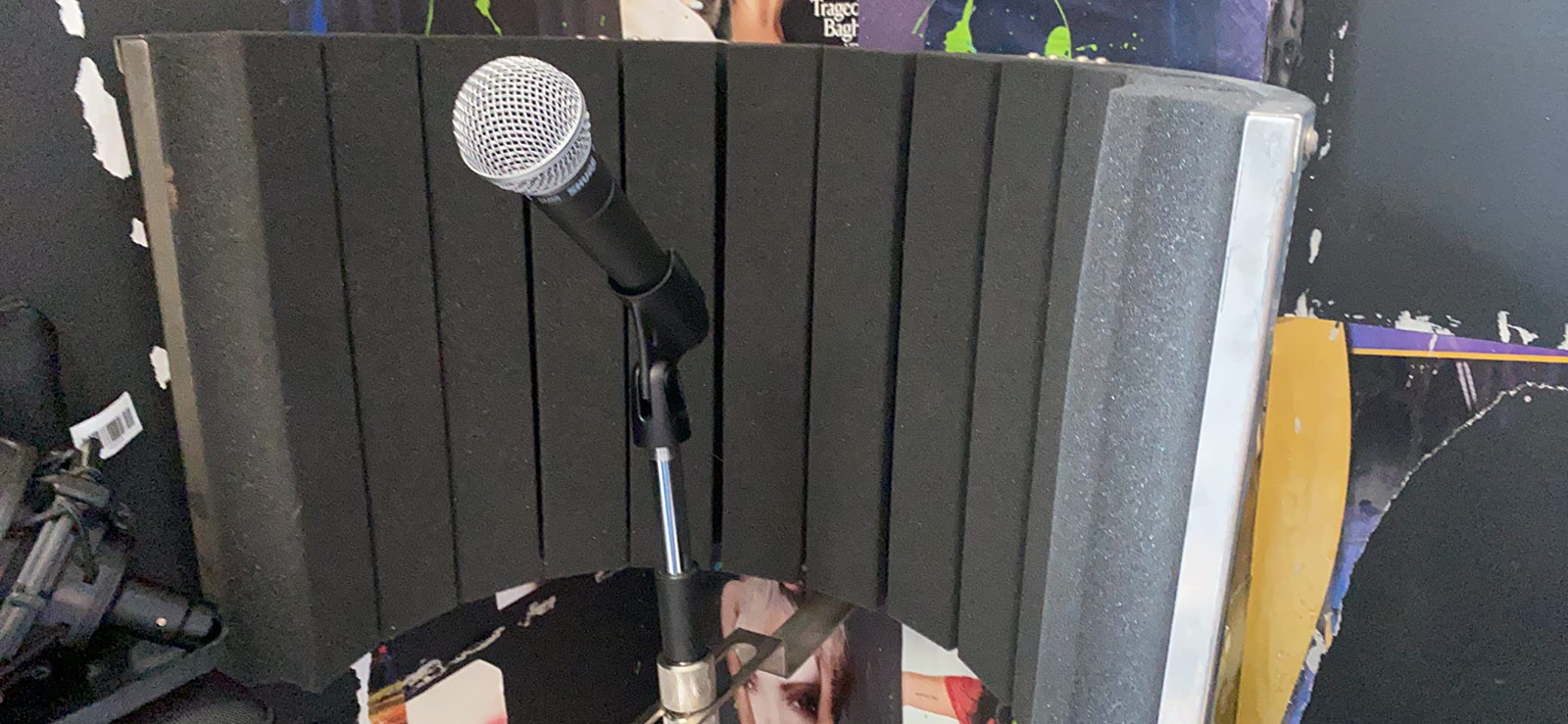
One thing beginners should know is that the SM58 is a low-output dynamic mic. Pair it with an audio interface that has plenty of clean gain, like a Focusrite Scarlett 2i2 or a Cloudlifter inline preamp. Once you dial in the gain, the noise floor is impressively low, and the result rivals mics costing several times more.
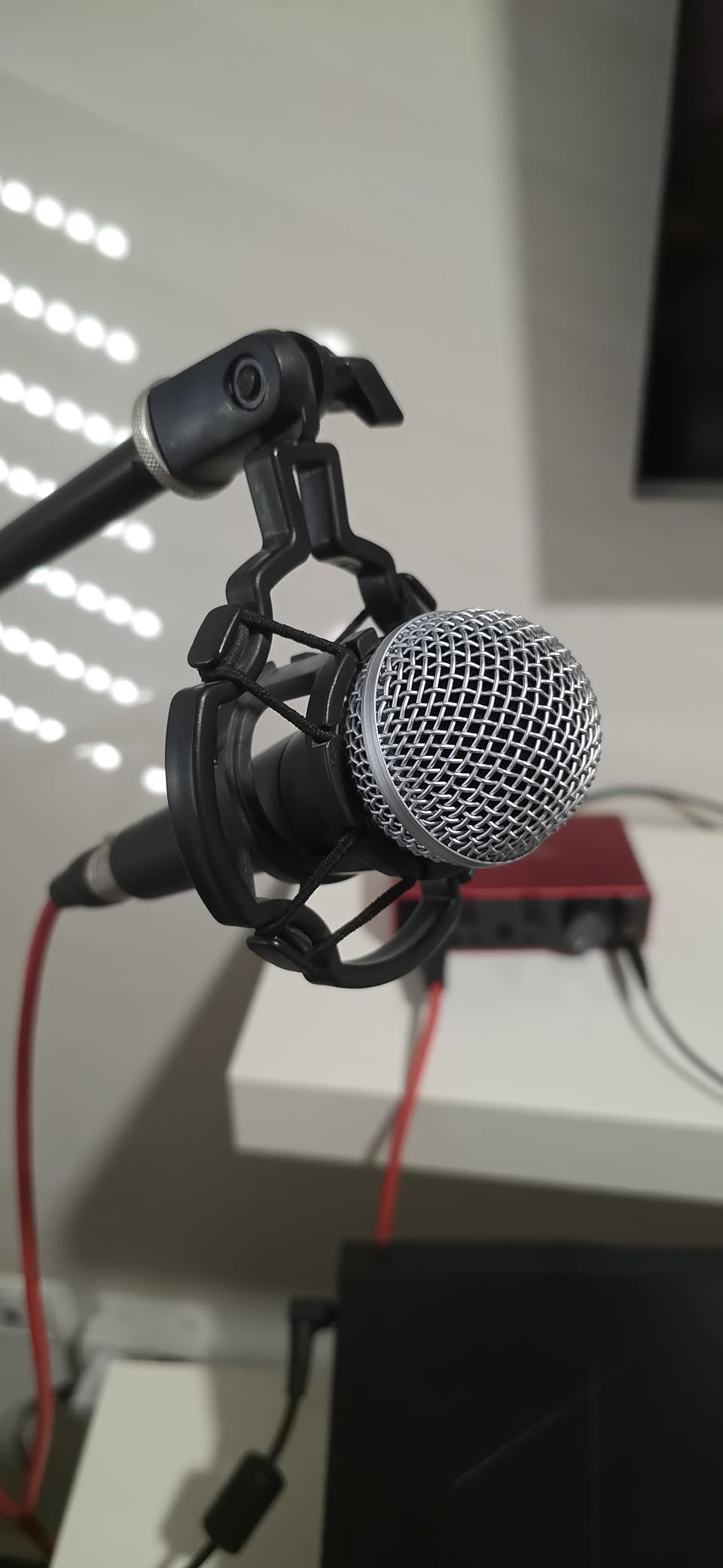
The construction is bulletproof. The all-metal body, reinforced grille, and integrated shock mounting mean this mic can survive being tossed in a gig bag, dropped, or handled roughly by energetic vocalists. That durability is part of why it is the most popular live vocal mic on the planet, and it translates to long-term value in the studio too.
For Whom It Is Good
The SM58 is ideal for singers, podcasters, and broadcasters who record in untreated or noisy rooms and want a forgiving mic that flatters most voices. It is also perfect if you want one mic that can do both live performance and studio duty without compromise.
For Whom It May Not Fit
If you record only in a well-treated studio and want the airy detail of a large-diaphragm condenser, the SM58 will sound a bit dry by comparison. USB-only users will also be disappointed since it requires an audio interface or mixer.
2. Audio-Technica AT2020 Cardioid Condenser Studio Microphone – Best Value
Audio-Technica AT2020 Cardioid Condenser Studio XLR Microphone, Ideal for Project/Home Studio Applications, Black
Condenser capsule
XLR connection
Cardioid pattern
20 Hz to 20 kHz
Pros
- Exceptional clarity and natural vocal capture
- Outstanding value for the money
- Durable all-metal construction
- High SPL handling for versatility
- Industry standard trusted by pros
- Custom low-mass diaphragm
Cons
- Requires 48V phantom power and audio interface
- Higher self-noise than premium mics
- No XLR cable included
- Sensitive to plosives without pop filter
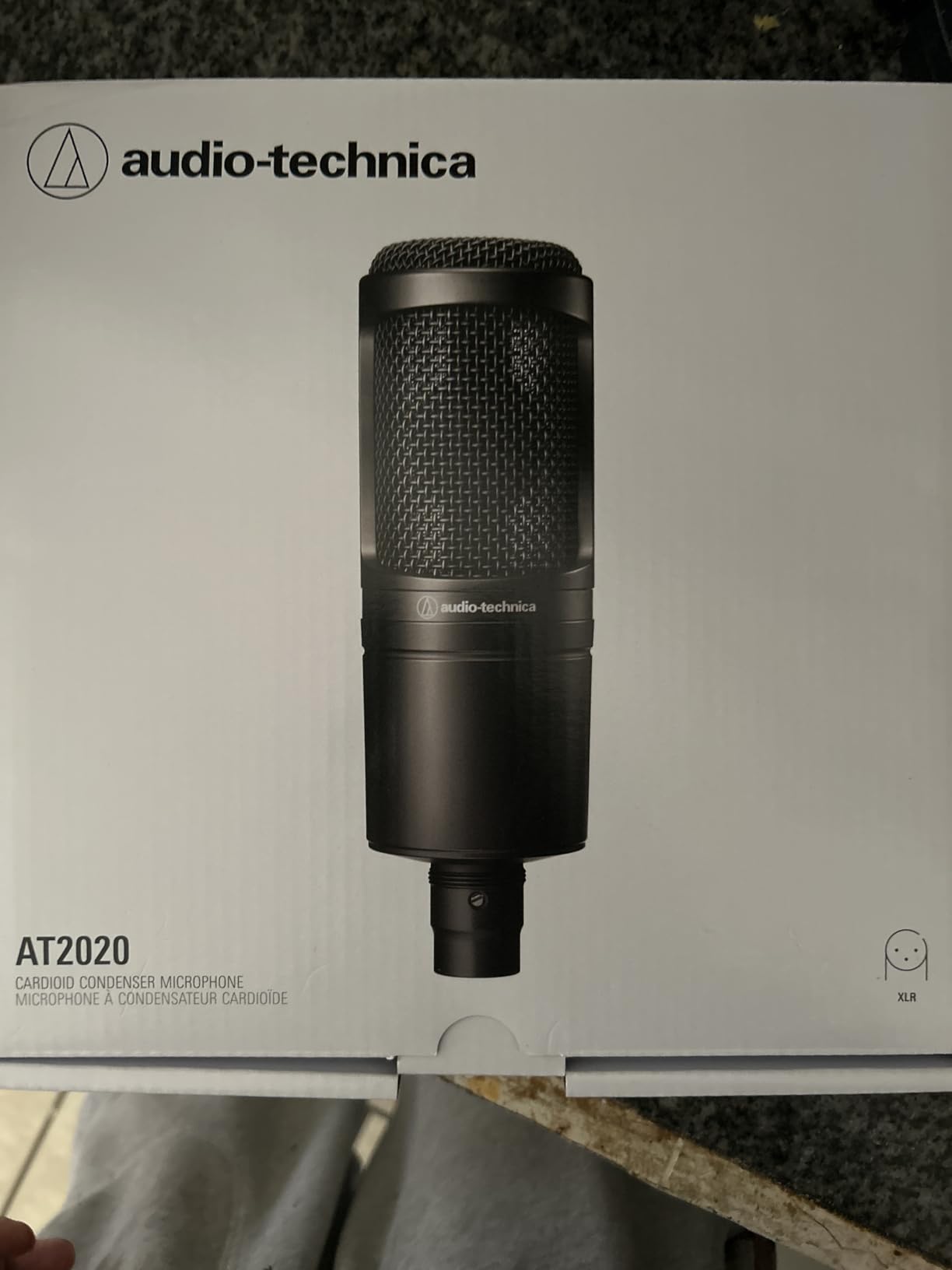
The Audio-Technica AT2020 is the mic I recommend to anyone stepping up from a USB starter to their first proper studio setup. I have tracked dozens of vocals through it, from soft singer-songwriter passages to loud rock belting, and it consistently delivers clean, detailed results that compete with mics several times its price. If you have ever wondered whether a budget condenser can really sound professional, this one answers the question.
In our tests, the AT2020 captured vocal nuances beautifully. Breathy consonants stayed articulate without harsh sibilance, and chest resonance had a natural weight that translated well into a mix. The cardioid pattern did a fair job of room rejection, though like all condensers it is less forgiving than a dynamic in an untreated space. Adding a simple pop filter and basic wall absorption made a noticeable difference. For positioning tips that complement this mic, see our guide on how to position a large-diaphragm condenser for vocals.
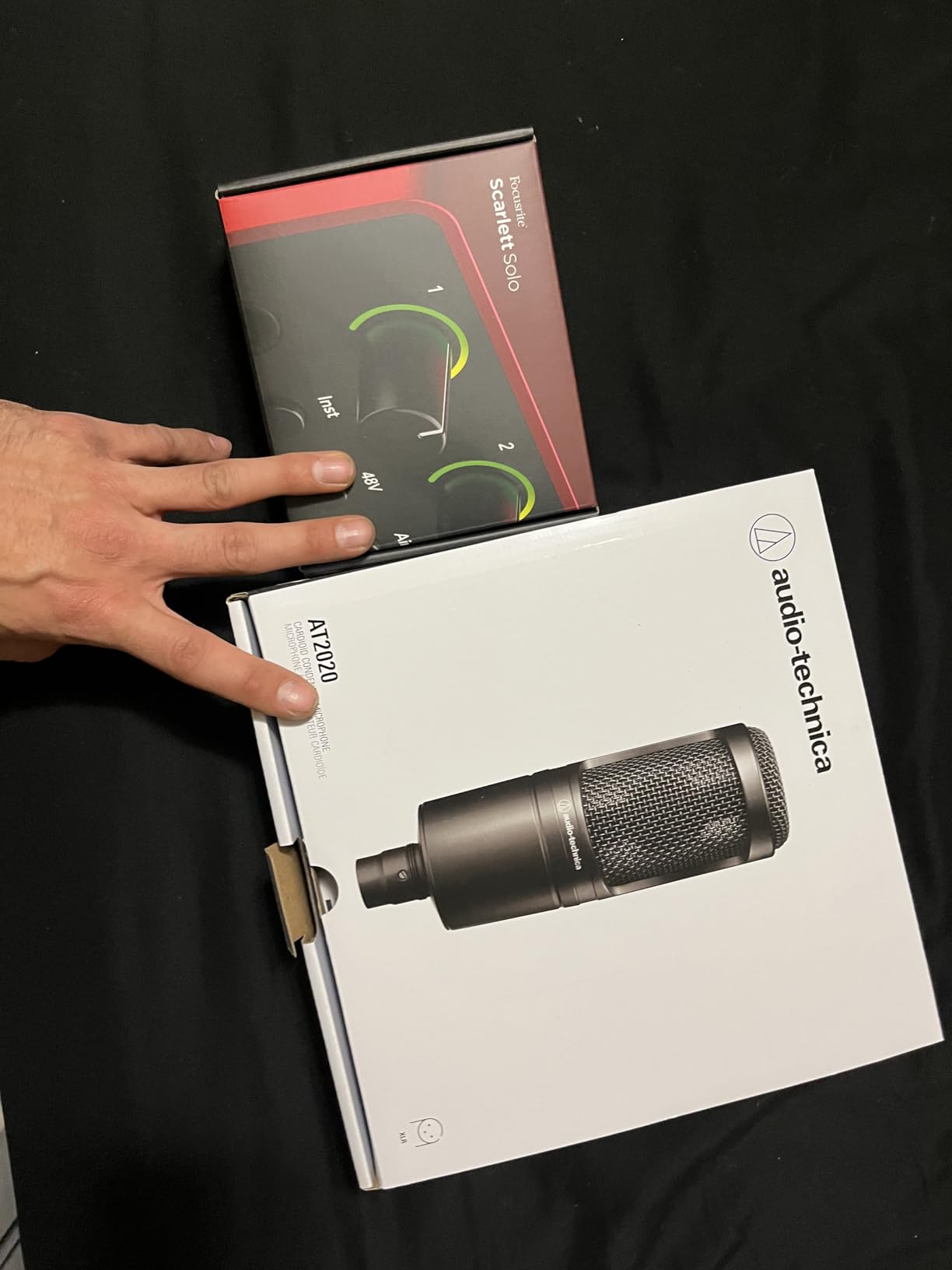
One of the AT2020’s biggest strengths is its low self-noise floor for the price. While more expensive condensers like the Rode NT1 or Neumann TLM 102 beat it on absolute silence, the AT2020 holds its own in real-world recordings. You will only notice the noise in very quiet passages or with heavy compression, which is rare for typical vocal production.
The build quality is reassuringly solid. The all-metal chassis feels like it could last a lifetime, which is why so many home studios keep an AT2020 as their workhorse even after upgrading to more expensive options. Reddit’s r/musicproduction community consistently recommends this mic as the best first serious studio condenser, and that sentiment is shared by countless YouTube reviewers and audio engineers.
For Whom It Is Good
The AT2020 is perfect for home studio vocalists, voiceover artists, podcasters, and anyone recording acoustic instruments who wants studio-grade clarity without breaking the bank. It is also the right choice if you plan to grow into a larger interface and preamp setup over time.
For Whom It May Not Fit
If you have an untreated, noisy room and no plans to add acoustic treatment, a dynamic mic like the Shure SM58 will save you frustration. USB-only users also need to look elsewhere since the AT2020 is XLR only.
3. TONOR TC-777 USB Podcast Microphone – Best Budget Pick
TONOR Podcast Microphone, USB Computer Mic, Cardioid Condenser PC Microfono
Condenser capsule
USB connection
Cardioid pattern
20 Hz to 20 kHz
Pros
- Great sound at a low price
- Plug and play with no drivers
- Cardioid pickup reduces background noise
- Includes tripod stand shock mount and pop filter
- Wide compatibility PC Mac PS4 PS5
- Strong customer service
Cons
- Picks up some background noise in noisy rooms
- Included pop filter arm is flimsy
- Stock USB cable is short
- Rubber-band stand can let mic slip
If you need a real microphone for podcasting, streaming, or vocal recording and do not want to spend much, the TONOR TC-777 is hard to beat. I have used it for casual voiceover work, Discord calls, and even rough vocal demo recordings, and the sound is genuinely impressive for the price. For beginners who just want plug-and-play simplicity, this mic removes every barrier to getting started.
The setup took me about 60 seconds. I plugged the USB cable into my laptop, opened my DAW, and the mic was immediately recognized with no driver installation needed. The cardioid pattern does a reasonable job of focusing on my voice while rejecting some background noise, though it cannot compete with dynamic mics in truly noisy environments. For a quiet bedroom or home office, it works wonderfully.
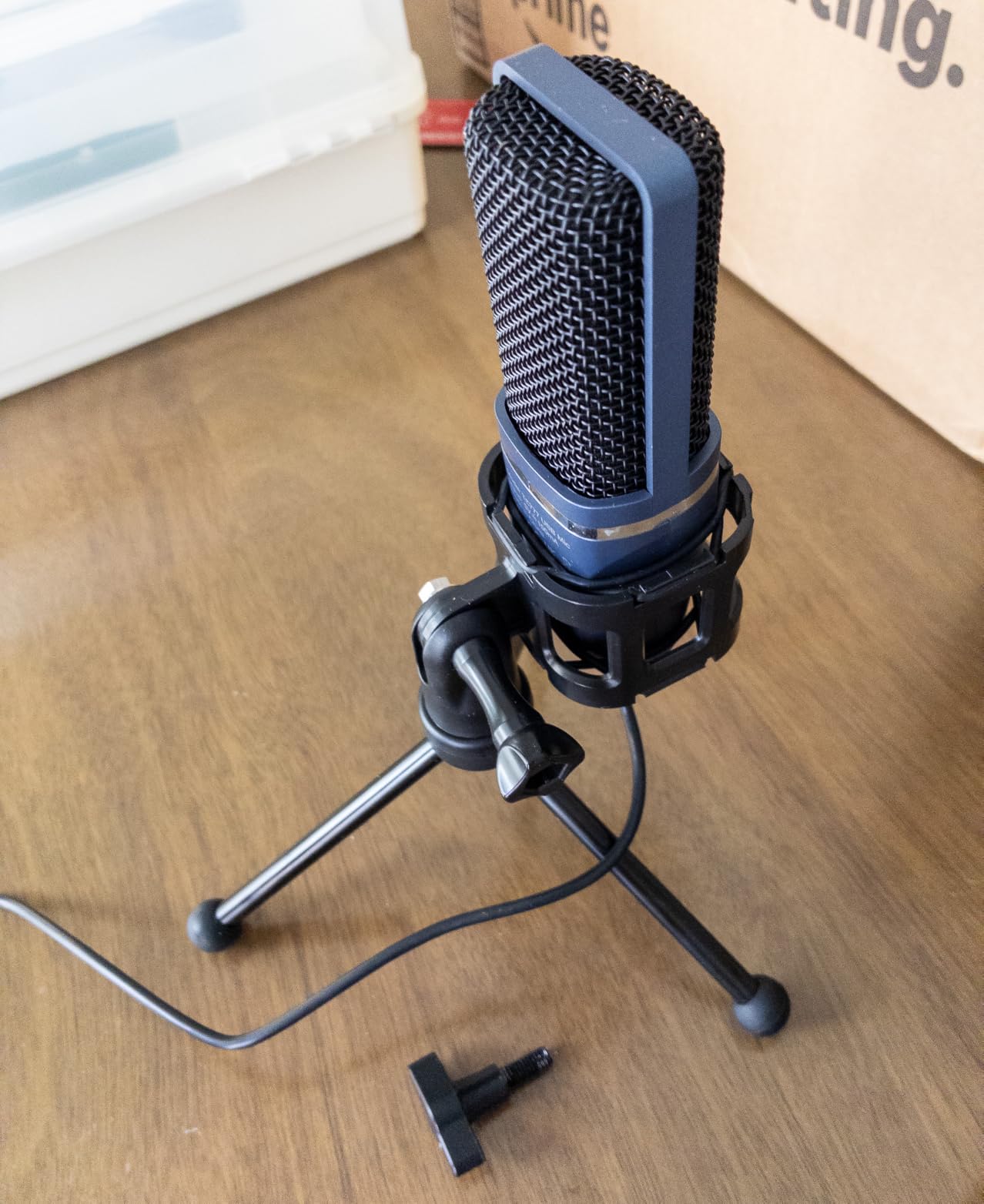
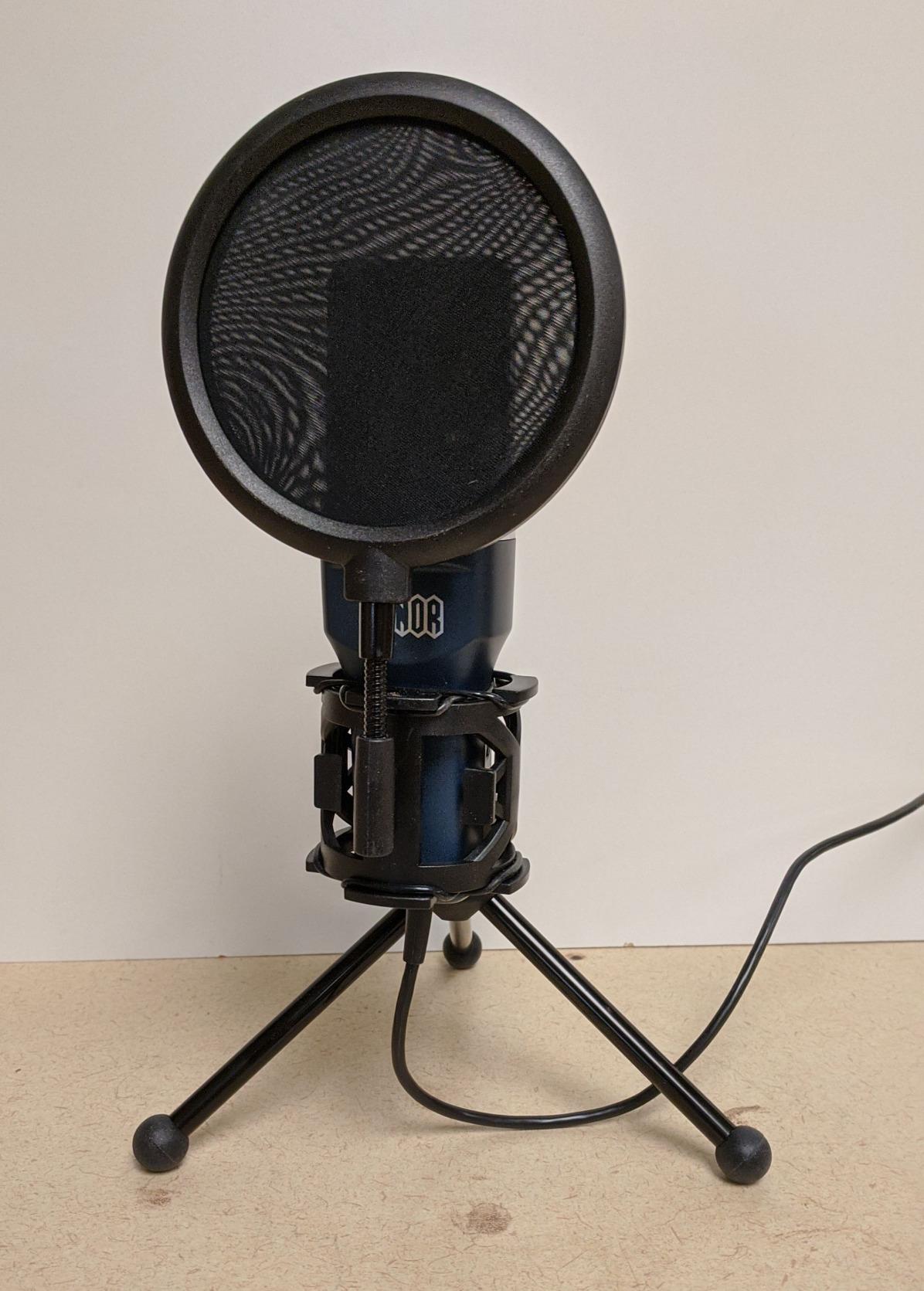
One of the standout features is the included accessory bundle. Most budget USB mics make you buy a tripod and pop filter separately, but the TC-777 ships with both. The tripod is lightweight and foldable, the shock mount reduces desk vibrations, and the pop filter cuts down on harsh plosives. My only complaint is that the pop filter arm is a bit flimsy and tends to drift out of position.
During testing, I noticed the TC-777 captures vocals with a clean, slightly bright character that works well for spoken word content. For singing, it does an admirable job on simple acoustic tracks, though serious vocalists will want something with more depth and warmth. Still, for the price, it punches well above its weight.
For Whom It Is Good
The TC-777 is perfect for first-time podcasters, students, casual streamers, and anyone who wants a noticeable upgrade over a laptop or headset mic without spending much. It is also great for remote workers who need clear audio for video calls and online meetings.
For Whom It May Not Fit
Professional vocalists, serious musicians, and anyone recording in a noisy environment will outgrow this mic quickly. The build is also not designed for heavy daily use or travel.
4. Logitech Blue Yeti USB Microphone – Best for Versatility
Logitech Creators Blue Yeti USB Microphone for PC, Mac, Gaming, Recording, Streaming, Podcasting, Studio and Computer Condenser Mic with Blue VO!CE effects, 4 Pickup Patterns, Plug and Play – Blackout
Condenser
USB
Multipattern
Tri-capsule array
Pros
- Excellent sound quality with broadcast clarity
- Plug and play with included stand
- Four pickup patterns for any recording scenario
- Blue VO!CE software for vocal effects
- Sturdy metal construction
- Onboard headphone volume and mute
Cons
- Large and heavy microphone
- Flimsy mini-USB port
- Picks up ambient noise easily
- Sensitive to plosives without technique
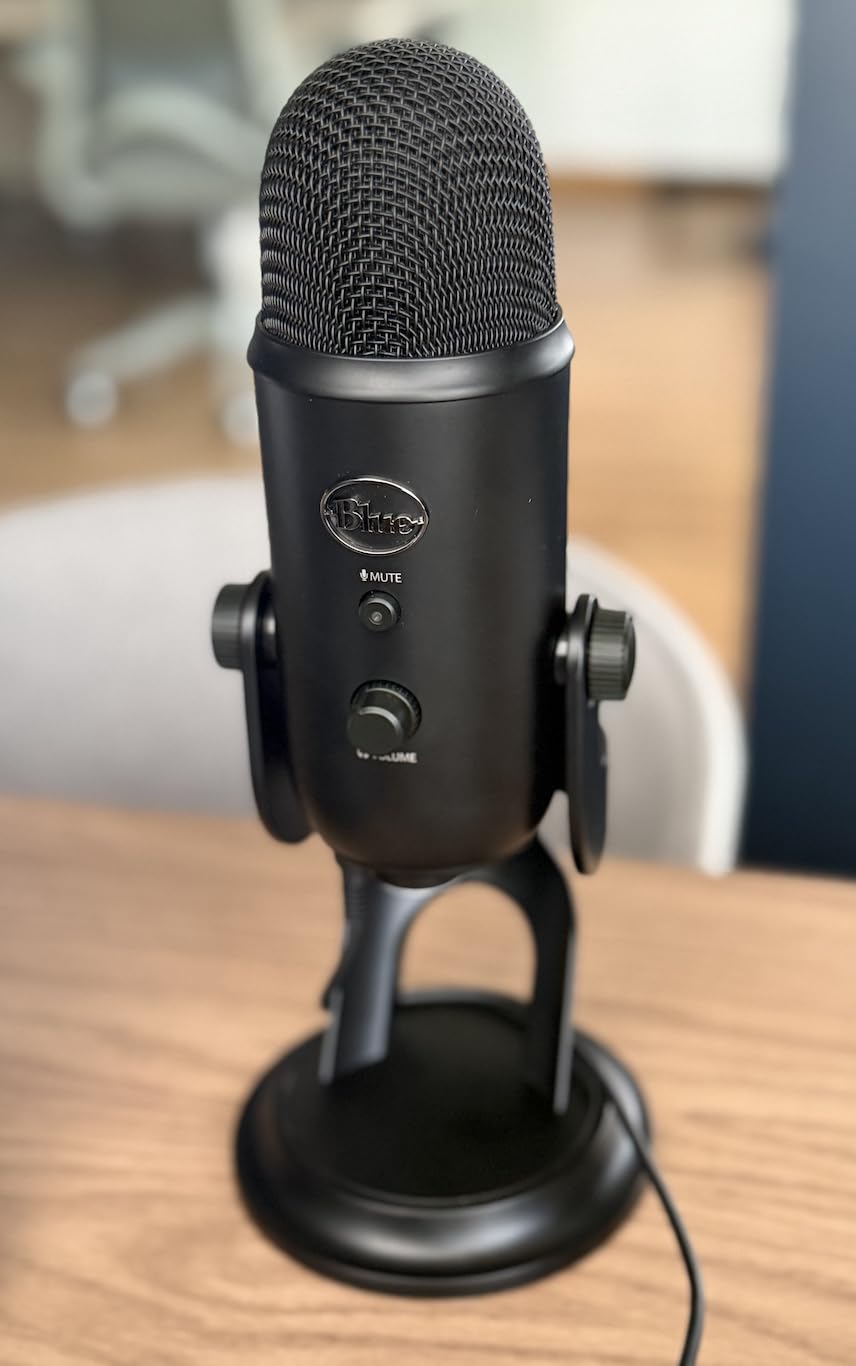
The Blue Yeti is one of those mics that almost everyone in the content creation world has used at some point. With more than 57,000 reviews and a near-legendary reputation, it remains the default USB mic for streamers, podcasters, YouTubers, and remote workers. I tested the latest version and the sound quality is still excellent for the price.
What sets the Yeti apart from simpler USB mics is its four pickup patterns: cardioid, omnidirectional, bidirectional, and stereo. This means one mic can handle solo vocals, group discussions, interviews, and even stereo field recordings. In my testing, the cardioid mode delivered clean, broadcast-style vocals for podcasting, while the omnidirectional mode picked up roundtable conversations without anyone needing to crowd around the mic.
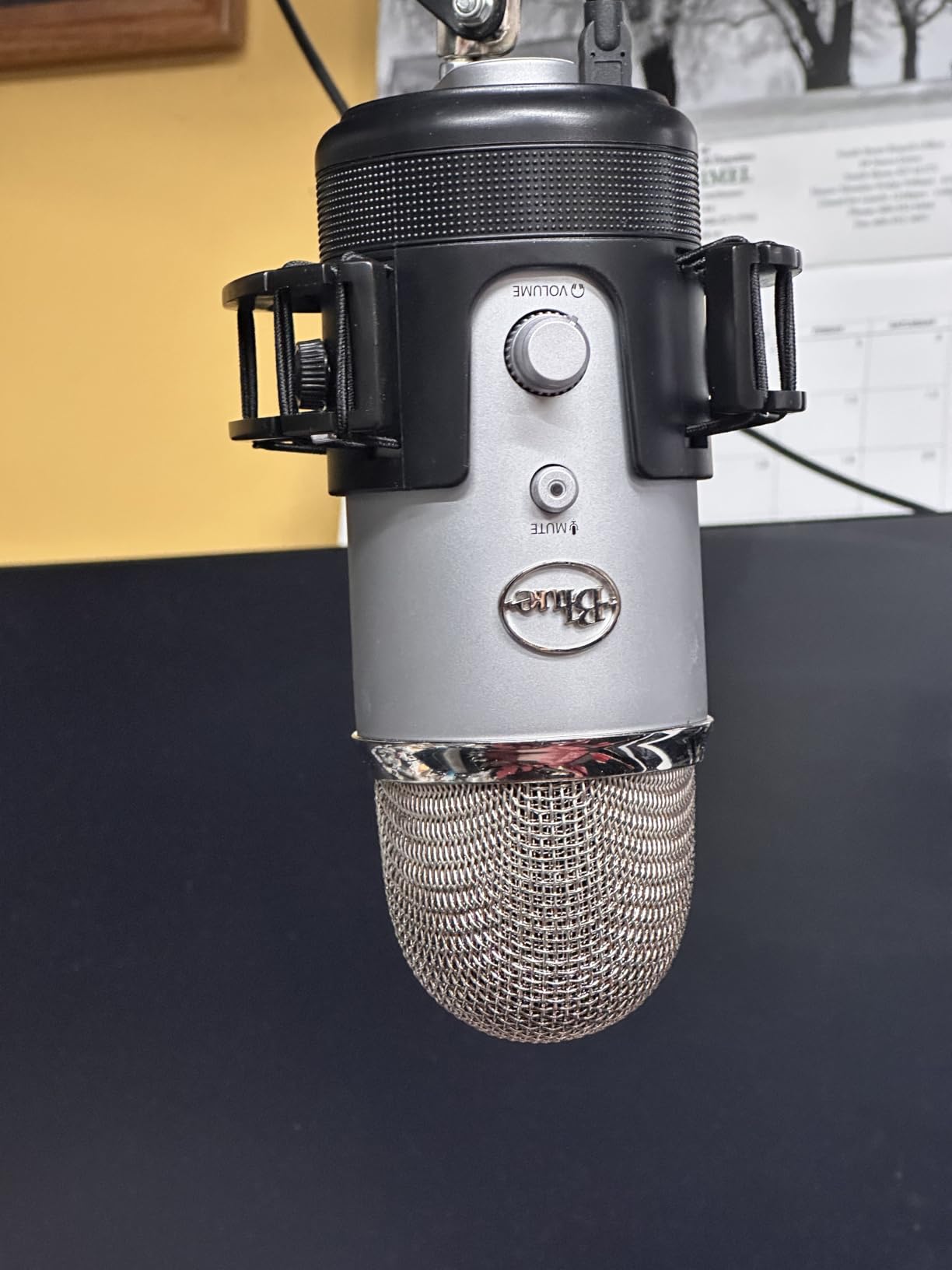
The Blue VO!CE software is a nice bonus for streamers and content creators. It adds vocal effects, EQ presets, and noise reduction that can elevate the sound with a few clicks. I found the broadcast preset particularly effective for tightening up my vocal tone without artifacts. The onboard controls for headphone volume, instant mute, and mic gain make it easy to manage levels on the fly.
The Yeti is heavy and takes up real estate on a desk. At 3.5 pounds and nearly a foot tall, it dwarfs most other USB mics. The included stand works fine, but serious users typically move it to a boom arm. The mini-USB port is also starting to feel dated in a USB-C world, though this is mostly a cable issue rather than a performance one.
For Whom It Is Good
The Yeti is ideal for streamers, podcasters, YouTubers, and remote workers who want one versatile mic that handles multiple recording scenarios. It is also a great choice for beginners who want room to grow without learning audio interfaces right away.
For Whom It May Not Fit
If you need a compact, travel-friendly mic or record in a noisy untreated room, the Yeti’s sensitivity will work against you. Vocalists who record music in a treated studio will also get better results from a dedicated XLR condenser.
5. FIFINE K669B USB Microphone – Best USB Starter
FIFINE K669B USB Microphone, Condenser Recording Mic for Vocals, Meeting
Condenser
USB Type-A and C
Cardioid
20 Hz to 20 kHz
Pros
- Excellent sound at a low price
- Solid metal construction with stable tripod
- Plug and play with included cable
- Built-in volume knob for adjustment
- Compact and lightweight design
- Wide compatibility PC Mac PS4 PS5
Cons
- No built-in noise cancellation
- No dedicated mute button
- Microphone placement affects sound significantly
- Can pick up distant sounds in quiet spaces
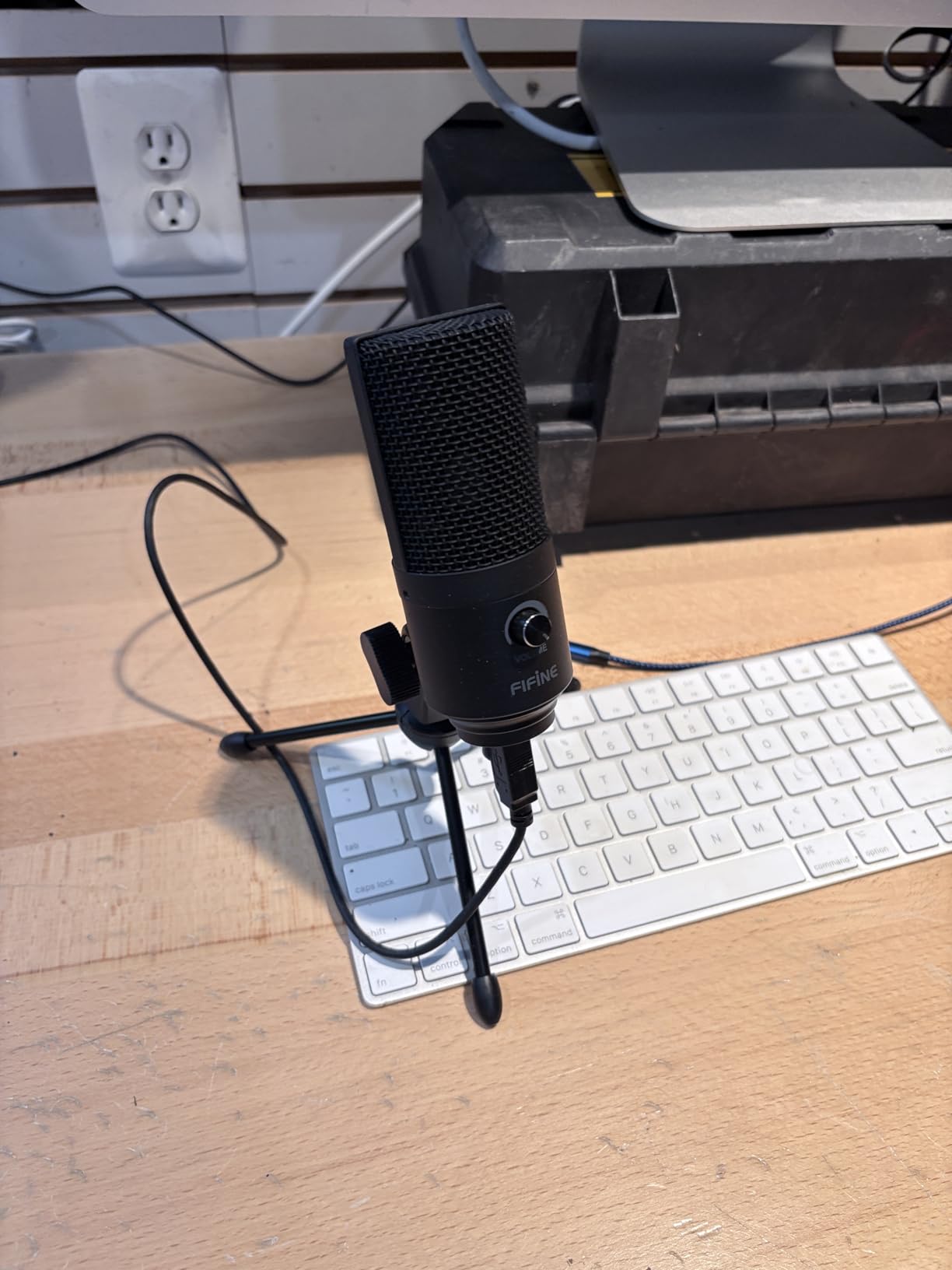
The FIFINE K669B is the mic I recommend to anyone whose budget is genuinely tight but who still wants noticeably better audio than a headset. With more than 34,000 reviews and a 4.5-star average, it punches far above its price and has earned a devoted following among entry-level creators and remote workers.
Setup was identical to most USB mics: plug in the cable, select the mic in your system settings, and start recording. I was impressed by how full the vocal capture sounded for the price. Voices came through warm and present, with enough detail to make spoken word content sound professional. For YouTube voiceovers, Discord chat, and basic podcasting, the K669B delivers surprising quality.
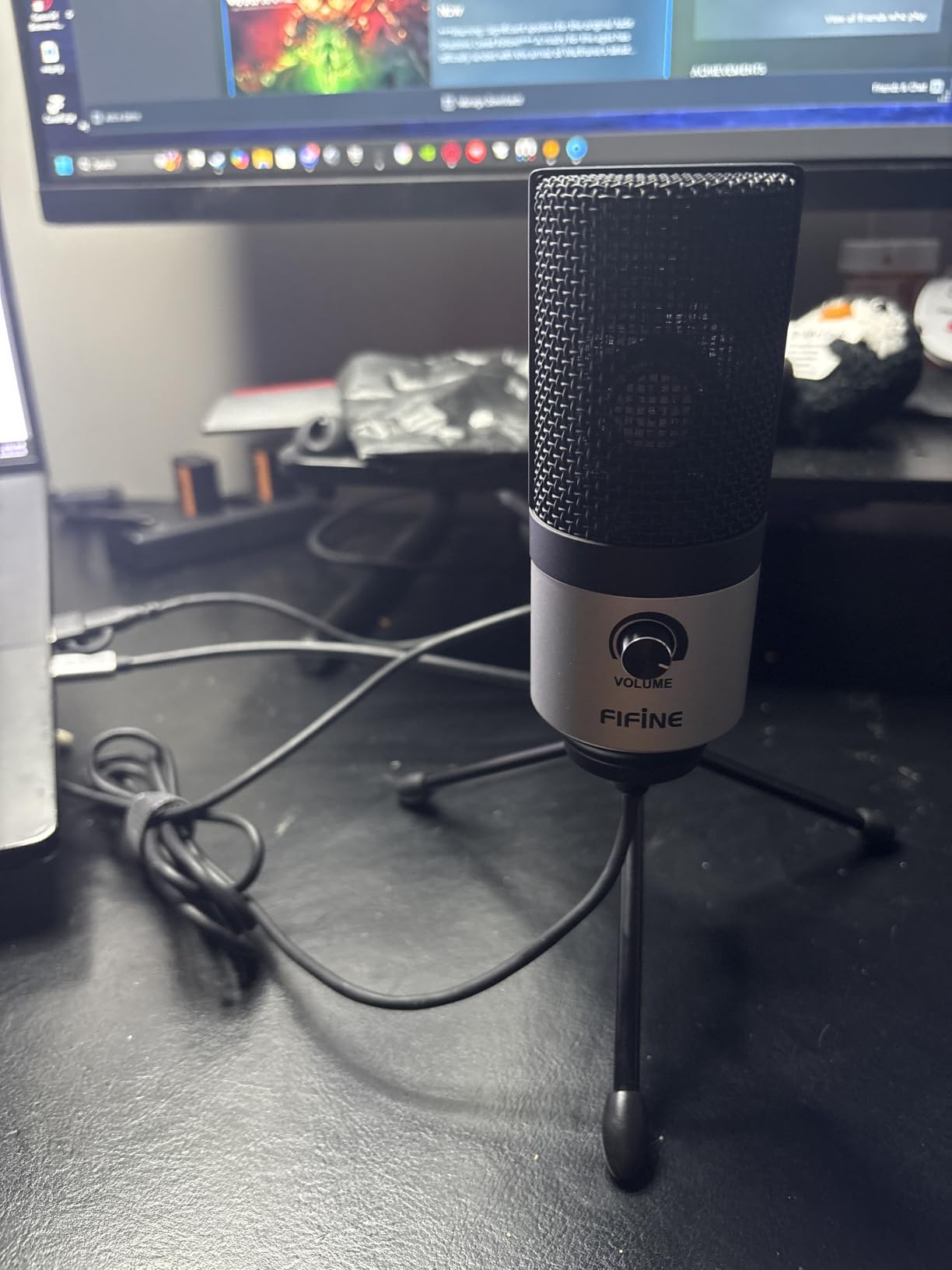
The build feels more substantial than the price suggests. The metal housing has a satisfying weight, and the included tripod is sturdy enough for desktop use. The built-in volume knob on the front is a nice touch since many budget mics skip this feature. I used it to dial in the perfect gain level without touching software settings.
The main limitation is noise rejection. Like most budget condensers, the K669B picks up keyboard typing, mouse clicks, and distant sounds in quiet rooms. In a treated studio or with software noise suppression, this is rarely a problem. In a busy household with no acoustic treatment, it can become distracting. Adding noise reduction in OBS, Audacity, or your DAW easily solves this.
For Whom It Is Good
The K669B is perfect for students, beginner streamers, podcasters on a tight budget, and remote workers who need clearer audio for calls. It is also a solid backup mic for anyone with a more expensive setup.
For Whom It May Not Fit
Those recording in loud, untreated spaces or singers who need a more nuanced vocal capture should consider a dynamic mic or a higher-end condenser instead.
6. MAONO A04 Gen2 XLR/USB Condenser Microphone Kit – Best Upgrade Path
MAONO A04 Gen2 XLR/USB Condenser Microphone Kit for PC Podcast Recording
Condenser
XLR and USB
Cardioid
192kHz 24-bit
Pros
- Dual USB and XLR connectivity
- Studio-quality 192kHz 24-bit recording
- Complete kit with boom arm shock mount pop filter
- MAONO Link software for EQ and noise reduction
- Cardioid pattern with double noise reduction
- Easy plug and play
Cons
- No headphone monitoring port
- Boom arm gooseneck can be fragile
- Accessory build quality varies
- Phantom power needed for some XLR setups
The MAONO A04 Gen2 stands out in the budget category because it grows with you. The dual XLR and USB outputs mean you can start by plugging it straight into your laptop today, then upgrade to a real audio interface later without buying a new mic. That kind of future-proofing is rare at this price, and it is the main reason I recommend this kit to creators who plan to invest in their setup over time.
In USB mode, the A04 Gen2 delivered clean, detailed vocals that felt close to the sound of a dedicated studio condenser. The 192kHz 24-bit capture preserves plenty of headroom for processing, which is important if you plan to EQ and compress vocals heavily. For a deeper look at shaping vocal tone, our guide on how to EQ vocals to cut through a dense mix is a great companion read.
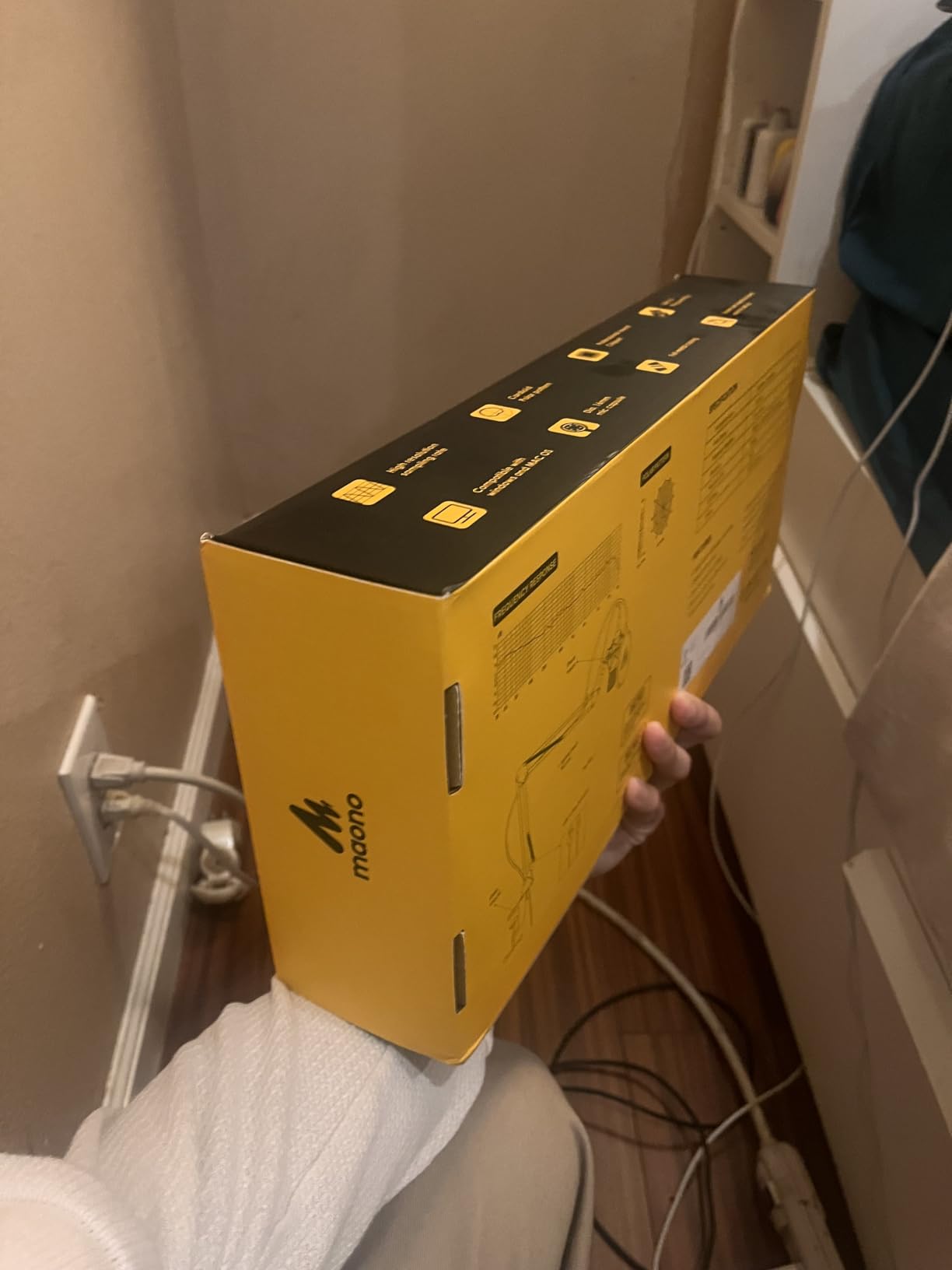
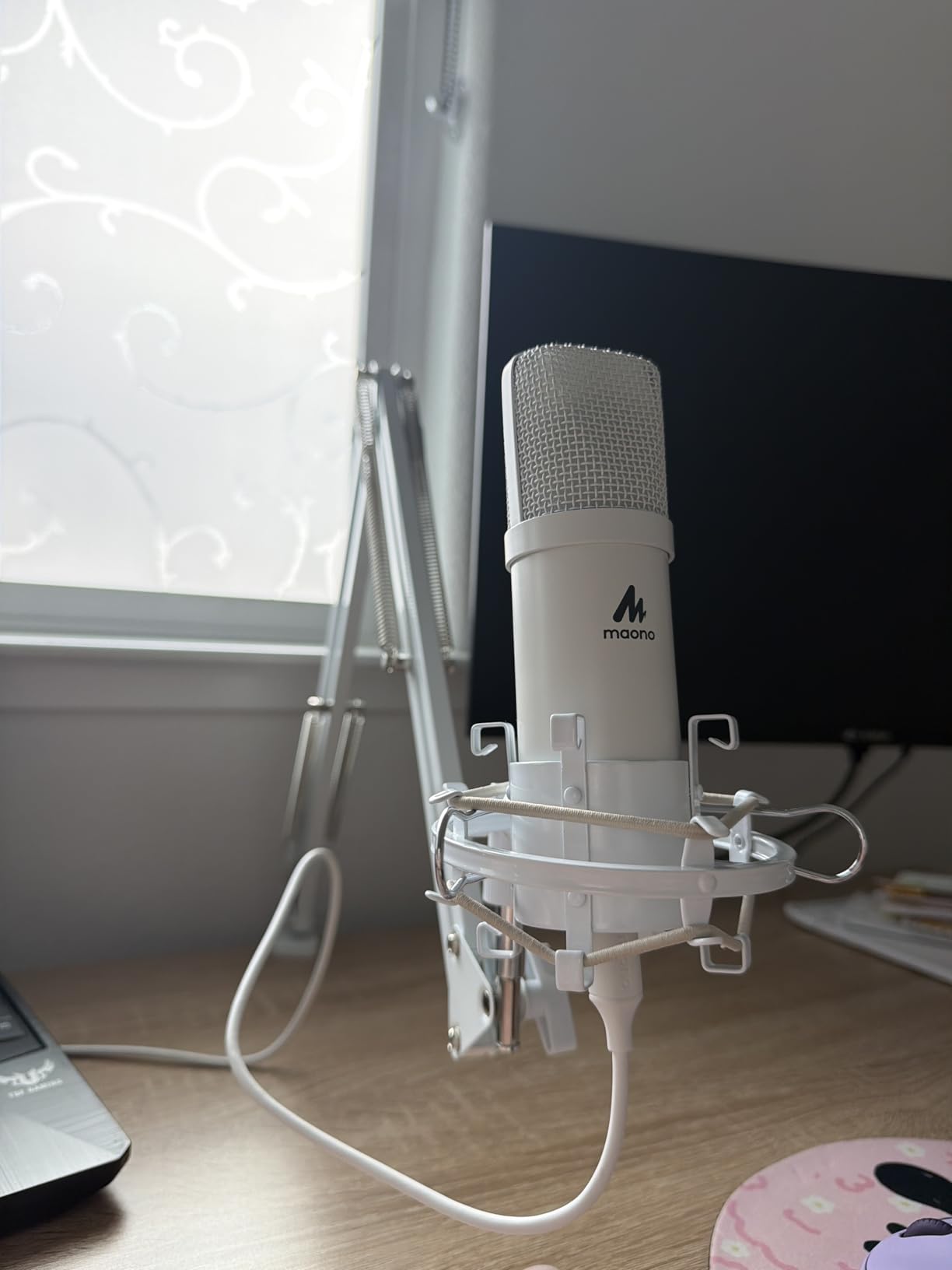
The included accessory kit is genuinely useful. The boom arm, shock mount, pop filter, and foam windscreen together would cost nearly as much as the mic itself if purchased separately. I set the whole thing up in about 10 minutes, and the result was a tidy, professional-looking workstation. The MAONO Link software adds EQ, limiter, and noise reduction tools that work in USB mode for quick polish.
The boom arm gooseneck is the weakest link. It works, but the metal is thinner than more expensive arms and can flex under the weight of the mic over time. If you plan to use the arm daily, plan to upgrade it eventually. The mic itself, however, feels solid and the sound quality is consistent regardless of what arm you mount it on.
For Whom It Is Good
The A04 Gen2 is perfect for new creators who want to start with USB today and step into a proper audio interface later. It is also great for podcasters and musicians who want a complete kit without hunting for accessories.
For Whom It May Not Fit
If you already own a high-end interface and premium mic, this is not an upgrade. Users who need real-time headphone monitoring from the mic itself will also want to look at other options since this model lacks that feature.
7. FIFINE AmpliGame AM8 Dynamic Microphone – Best for Streaming
FIFINE AmpliGame AM8 USB/XLR Dynamic Microphone for Gaming Streaming
Dynamic
XLR and USB
Cardioid
50 Hz to 16 kHz
Pros
- Natural clear audio with balanced response
- Dual USB and XLR connection options
- Tap to mute button with LED indicator
- Customizable RGB lighting with multiple modes
- Headphone jack with monitoring volume
- Excellent value
Cons
- RGB can disconnect when cable moves
- Mute button is touch-sensitive not physical
- RGB and controls only work in USB mode
- XLR cable and boom arm not included
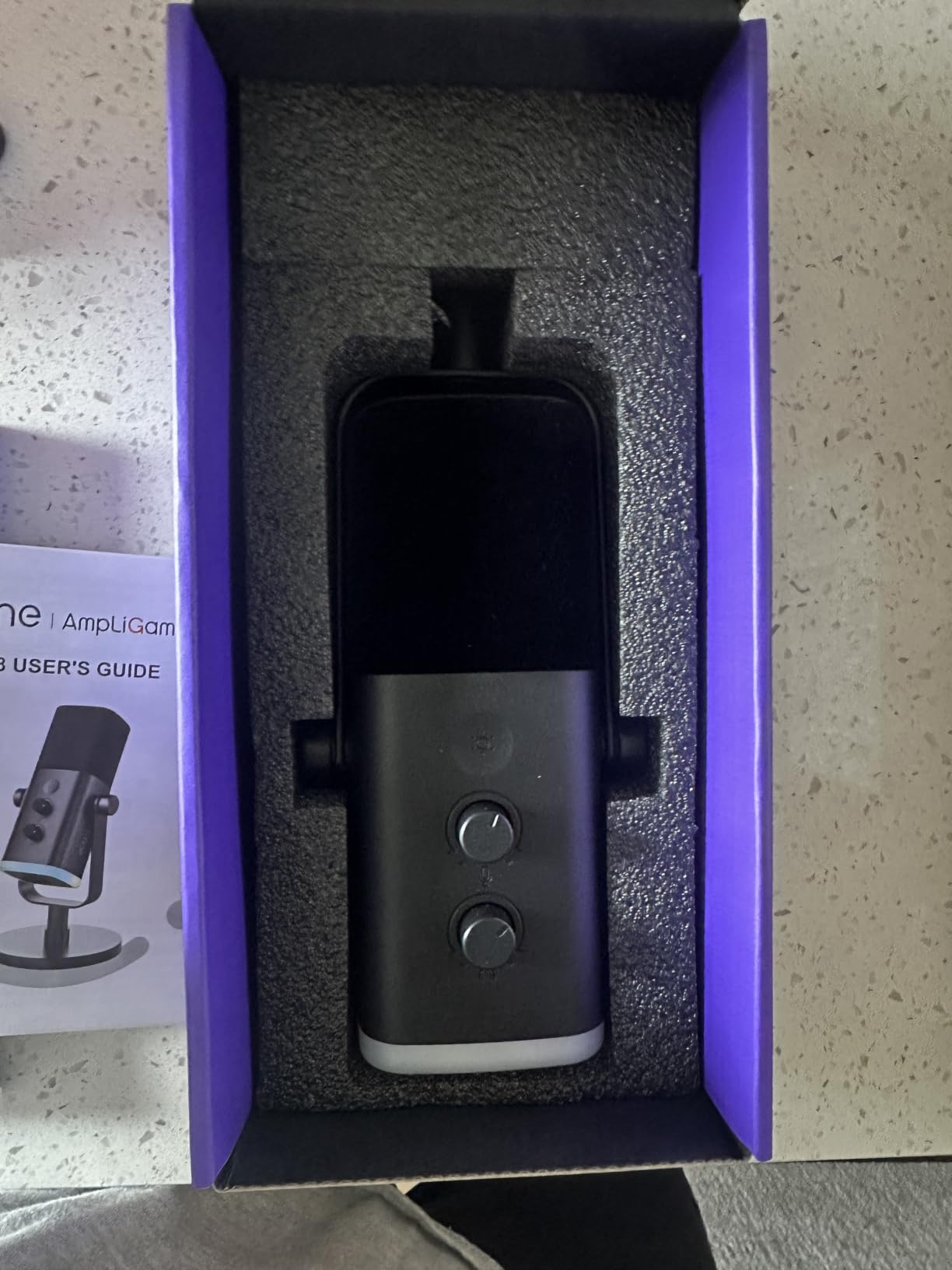
The FIFINE AmpliGame AM8 is a streaming-first dynamic mic that delivers surprisingly good vocal quality for the price. As a dynamic, it rejects background noise far better than the condensers in this price range, which makes it a smart choice for gamers, streamers, and content creators recording in busy households.
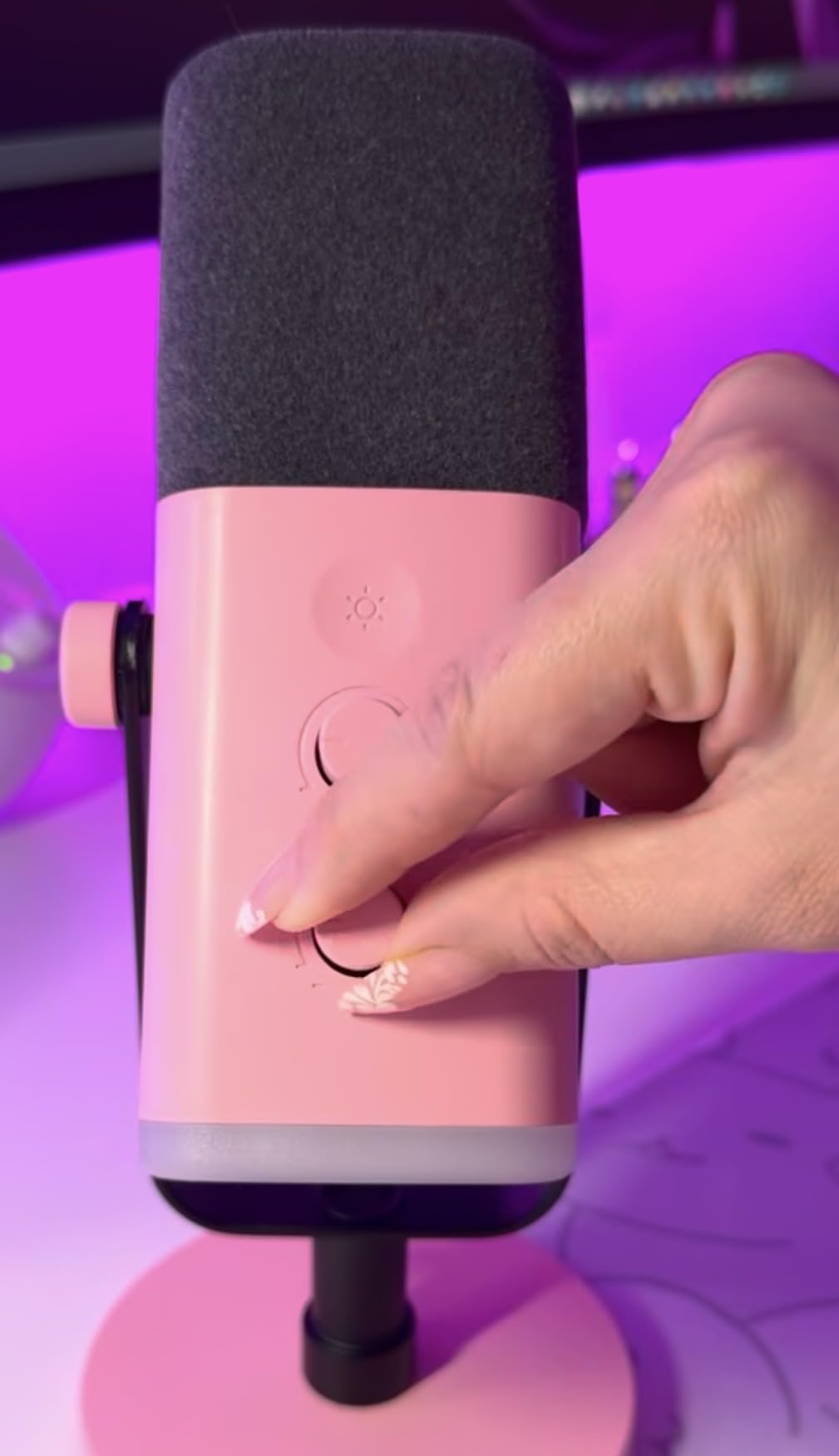
I tested the AM8 with the compressor and noise gate running in OBS, and my stream audio sounded dramatically cleaner than with my old USB condenser. The tap-to-mute button is genuinely useful during live broadcasts. One tap and the LED ring changes color so my chat knows I am off mic, then another tap to come back. It is faster and quieter than reaching for a physical mute switch.
The RGB lighting is a fun touch that streamers will appreciate. Three modes and more than ten color options let you match the mic to your setup. Just know the lighting only works in USB mode, which is expected for mics with this feature. The headphone jack on the bottom of the mic provides zero-latency monitoring, which is essential for serious streamers.
The dual USB and XLR outputs mean you can start streaming right away via USB, then graduate to an audio interface for better sound quality later. The XLR output requires an interface with decent gain since this is a dynamic mic, but most modern interfaces handle it fine. The touch-sensitive mute is the one quirk that took some getting used to, since it can trigger with accidental brush of the finger.
For Whom It Is Good
The AM8 is ideal for streamers, gamers, and content creators who want clean vocal audio without a complicated setup. It also suits podcasters who record in untreated rooms and need solid background noise rejection.
For Whom It May Not Fit
If you prefer a tactile physical mute button or do not care about RGB lighting, there are simpler dynamic mics in the same price range. Studio vocalists who want the airy detail of a condenser should look elsewhere.
8. RØDE PodMic Cardioid Dynamic Broadcast Microphone – Best for Podcasting
RØDE PodMic Cardioid Dynamic Broadcast Microphone, XLR
Dynamic
XLR
Cardioid
20 Hz to 20 kHz
Pros
- Broadcast-quality dynamic capsule tuned for speech
- Excellent room noise rejection
- Built-in pop filter and internal shock mount
- All-metal rugged body built to last
- Warm clear sound for podcasting
- Pairs perfectly with RØDECaster
Cons
- XLR only no USB option
- Low output requires significant gain
- Heavy mic needs sturdy boom arm
- No built-in headphone monitoring
- Limited accessories included
The RØDE PodMic has become a fixture in podcast studios around the world, and after spending serious time with it, I understand why. The vocal tone is warm, the noise rejection is excellent, and the build quality feels like it could survive a decade of daily podcasting. If you are serious about spoken-word audio and have an XLR interface, this mic should be near the top of your shortlist.
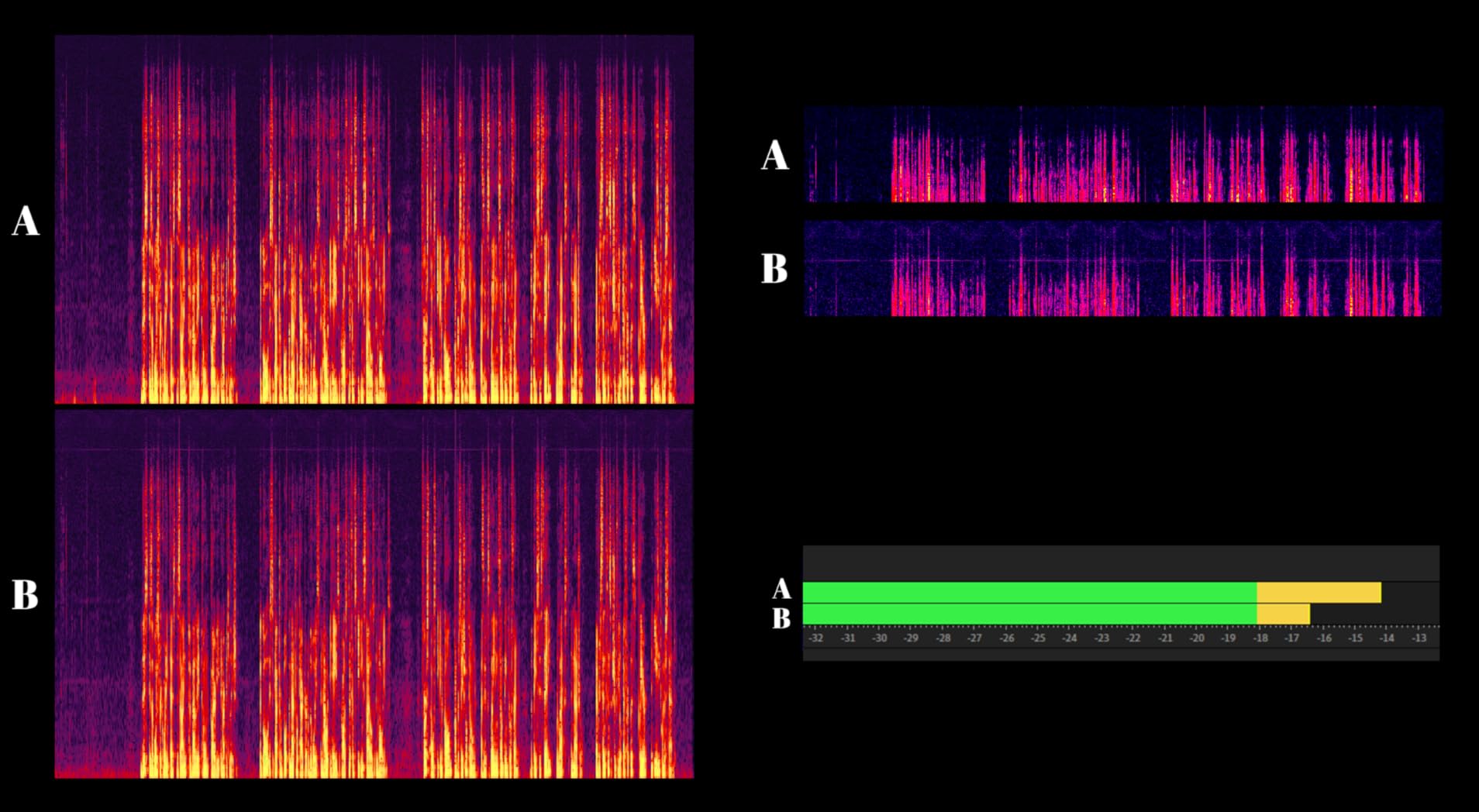
I recorded a two-person podcast using a pair of PodMics through a RØDECaster Pro II, and the results were broadcast-ready with minimal processing. The off-axis rejection was strong enough that my co-host and I could sit at a normal distance from each other without bleeding into each other’s tracks. The internal pop filter handled plosives well, though I still added an external pop filter for extra safety.
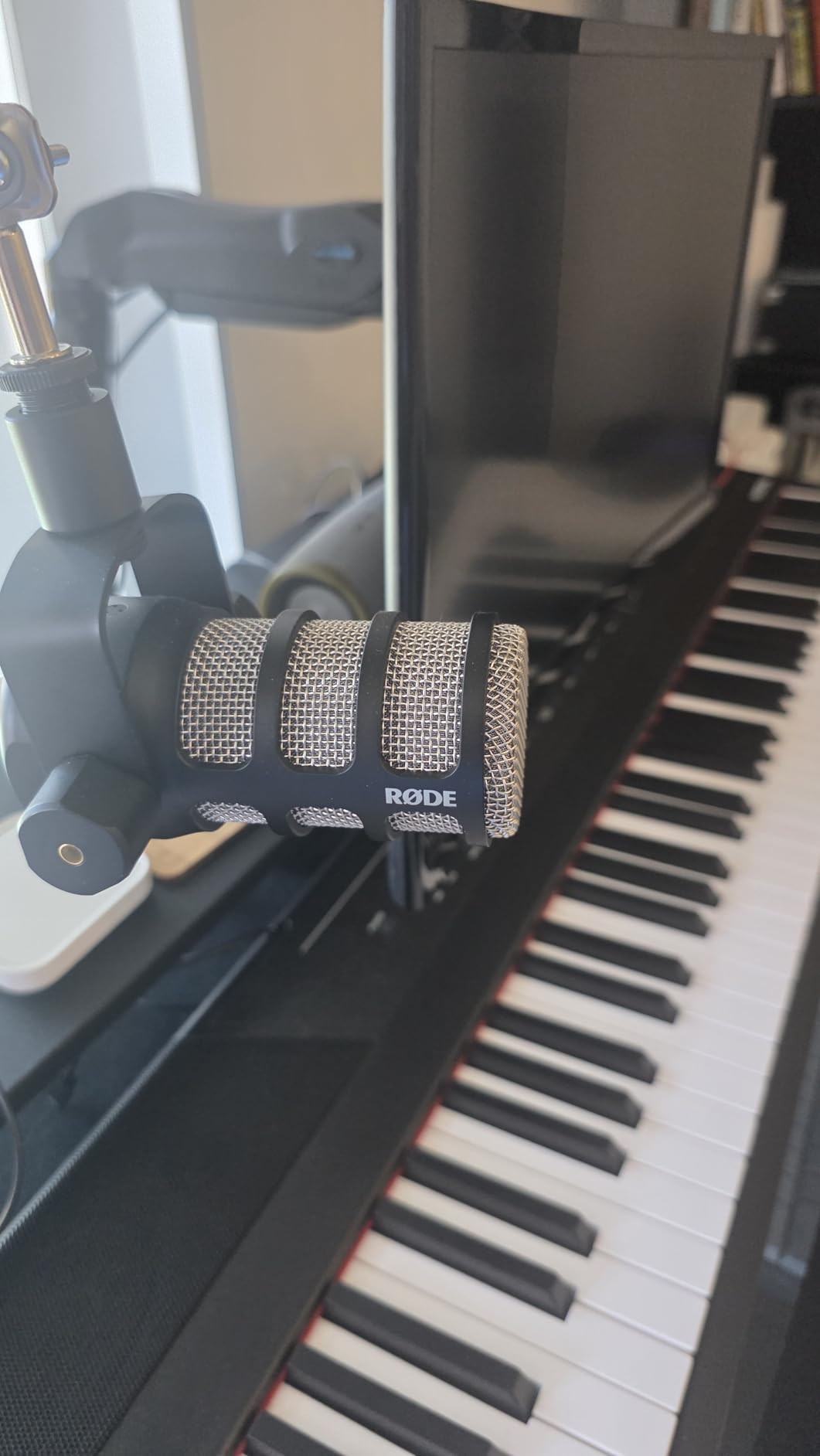
The PodMic is built like a tank. The all-metal body has substantial weight and feels reassuringly solid in hand. That weight also means you need a sturdy boom arm to support it. Lightweight arms will droop under the PodMic’s mass, so plan for a heavy-duty arm if you do not already have one.
One thing to know: the PodMic is a low-output dynamic, so your interface needs clean gain. Interfaces with plenty of headroom, like the Focusrite Scarlett 2i2 or the RØDECaster series, drive it well. Budget interfaces with weak preamps may need an inline booster like a Cloudlifter or FetHead to get clean levels.
For Whom It Is Good
The PodMic is perfect for podcasters, broadcasters, and YouTubers who want broadcast-quality vocal tone and have an XLR interface. It is also great for streamers in noisy rooms who need serious noise rejection.
For Whom It May Not Fit
USB-only users should look at hybrid mics like the Samson Q2U. Singers who want the airy detail of a condenser will also prefer a different option, since the PodMic is tuned specifically for spoken word.
9. Samson Q2U USB/XLR Dynamic Microphone – Best Hybrid
Samson Q2U USB/XLR Dynamic Microphone Recording and Podcasting Pack
Dynamic
USB-C and XLR
Cardioid
50 Hz to 15 kHz
Pros
- Dual USB-C and XLR output for flexibility
- Clear warm vocal capture
- Plug and play with no drivers
- Great value for beginners
- Good off-axis noise rejection
- Includes tripod clip windscreen USB-C and XLR cables
Cons
- Tripod stand is flimsy with loose clamp
- Some USB detection issues on certain PCs
- Susceptible to plosives despite windscreen
- Dynamic design requires close mic technique
- Not ideal for instruments
The Samson Q2U has been a favorite recommendation in podcasting circles for years, and for good reason. It is one of the few dynamic mics under 100 dollars that offers both USB and XLR outputs, making it the perfect bridge between beginner and intermediate setups. I have recommended this mic to dozens of first-time podcasters, and almost every one has been happy with the results.
In USB mode, I plugged the Q2U into my laptop, opened Audacity, and was recording clean vocal audio within a minute. The tone was warm and present, with enough detail to make spoken content sound professional. Switching to XLR mode with an audio interface, the sound opened up further with more headroom and clarity. That flexibility is the Q2U’s killer feature.
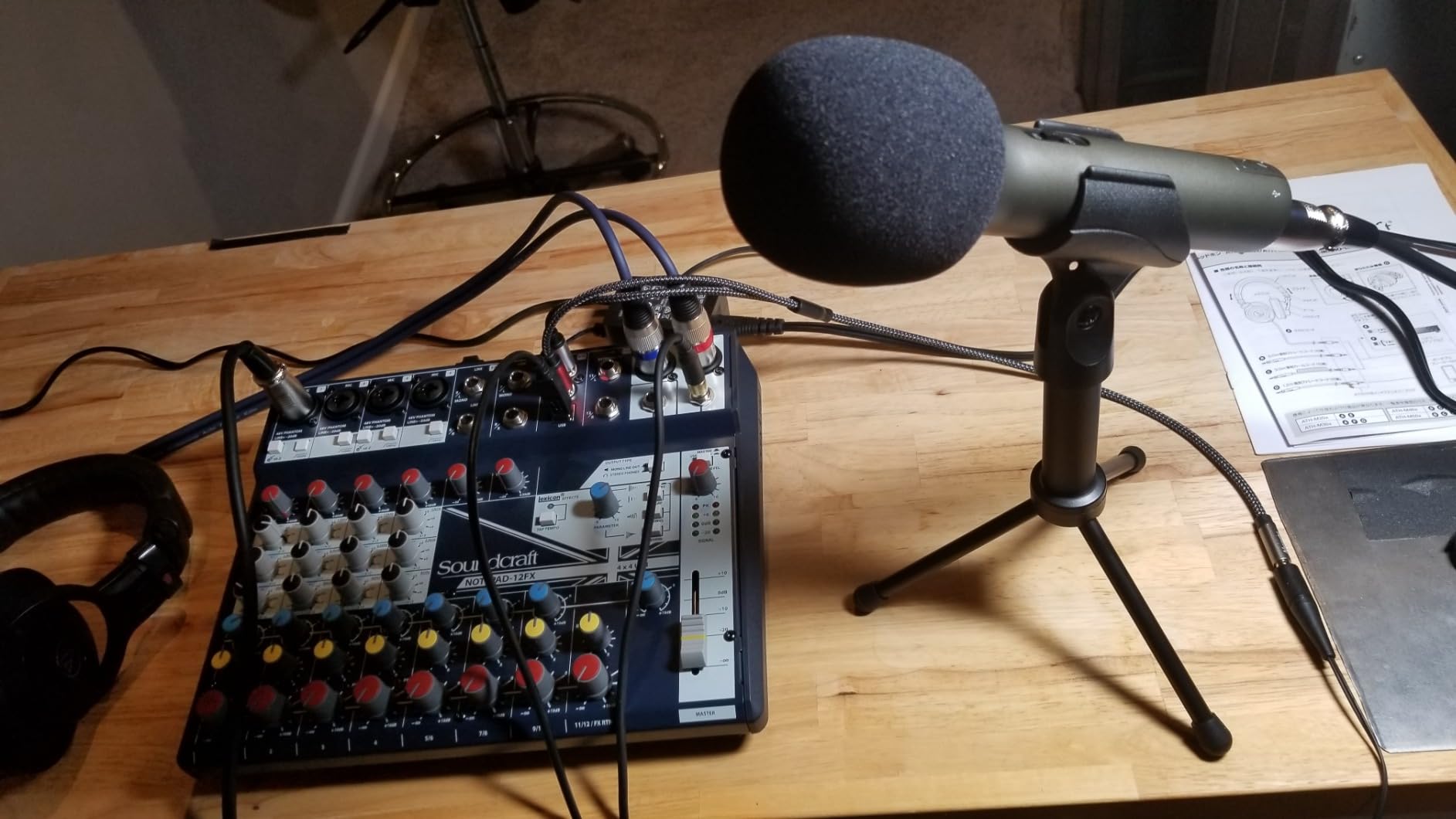
The included accessory bundle is generous for the price. Samson ships the Q2U with a tripod desktop stand, tripod extension, mic clip, foam windscreen, USB-C cable, and XLR cable. That is everything you need to start recording, though serious users will want to upgrade to a proper boom arm eventually. The included tripod works for casual use but is a bit flimsy.
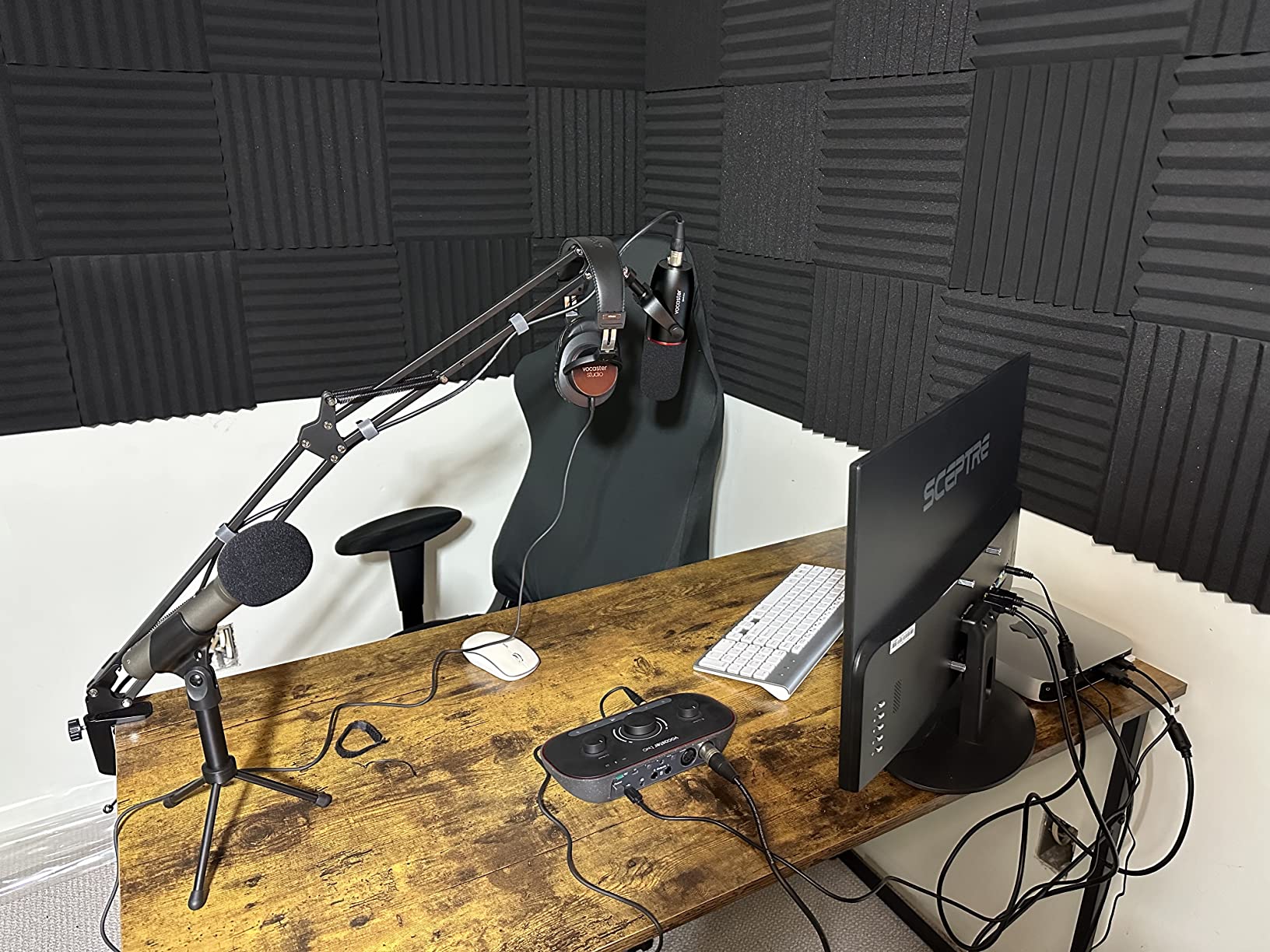
As a dynamic mic, the Q2U requires you to speak directly into it from a few inches away for best results. That is normal for this type of mic, but beginners sometimes need a few sessions to get used to the technique. The off-axis rejection is strong enough to keep most room noise out of the recording, which is one of the main reasons dynamics are popular for home studios.
For Whom It Is Good
The Q2U is perfect for beginner podcasters, streamers, and content creators who want a single mic that works today and grows with them. It is also a great travel mic since both cables are included.
For Whom It May Not Fit
Singer-songwriters recording music will want a condenser with more detail and air. Those recording instruments rather than voice should also look elsewhere, since the Q2U is optimized for speech.
10. ZealSound K66 Podcast Microphone – Best Mobile Option
Pros
- Studio-quality sound at budget price
- Intelligent noise reduction mode
- Plug and play with wide device support
- Real-time zero-latency monitoring
- Dedicated gain monitoring and echo knobs
- Instant mute with LED indicator
- Includes USB-C and Lightning adapters
Cons
- Picks up background noise in loud rooms
- Can produce robotic sound with overlapping voices
- USB-C adapter may be short for some phone cases
- Sibilance can be sharp without adjustment
The ZealSound K66 fills a niche that few other budget mics address well: it works with phones and tablets as easily as it does with computers. The included USB-C and Lightning adapters mean you can plug straight into an iPhone, iPad, or Android device and start recording on the go. For mobile creators, podcasters who travel, and anyone who records in different locations, this is a real advantage.
I tested the K66 with both a MacBook Pro and an iPhone 15, and the setup was identical on both: plug in, select the mic, and start recording. The sound quality was noticeably cleaner than the built-in microphones on either device, with much better vocal presence and detail. For social media content, voice memos, and mobile interviews, the K66 delivers professional results.
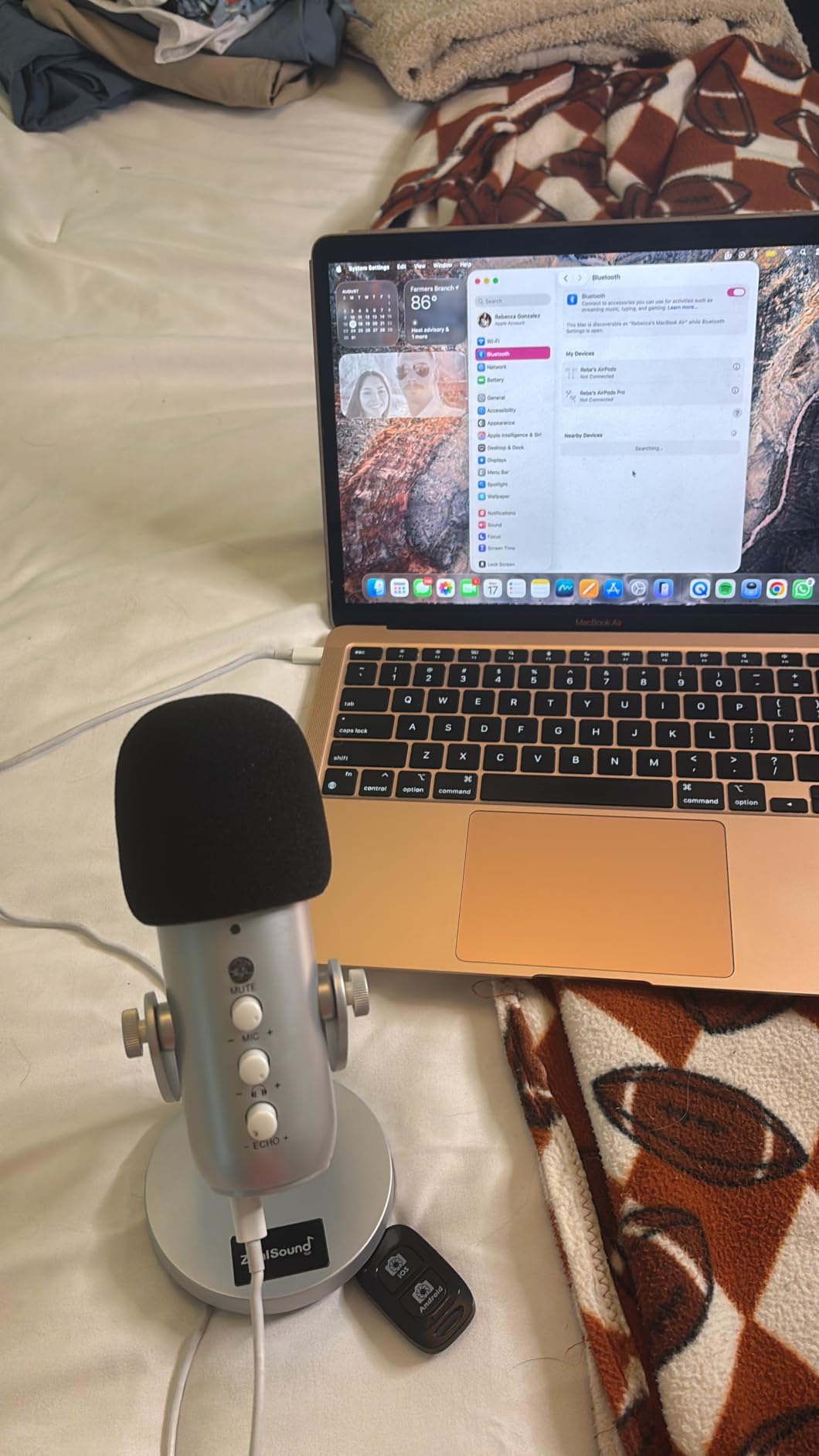
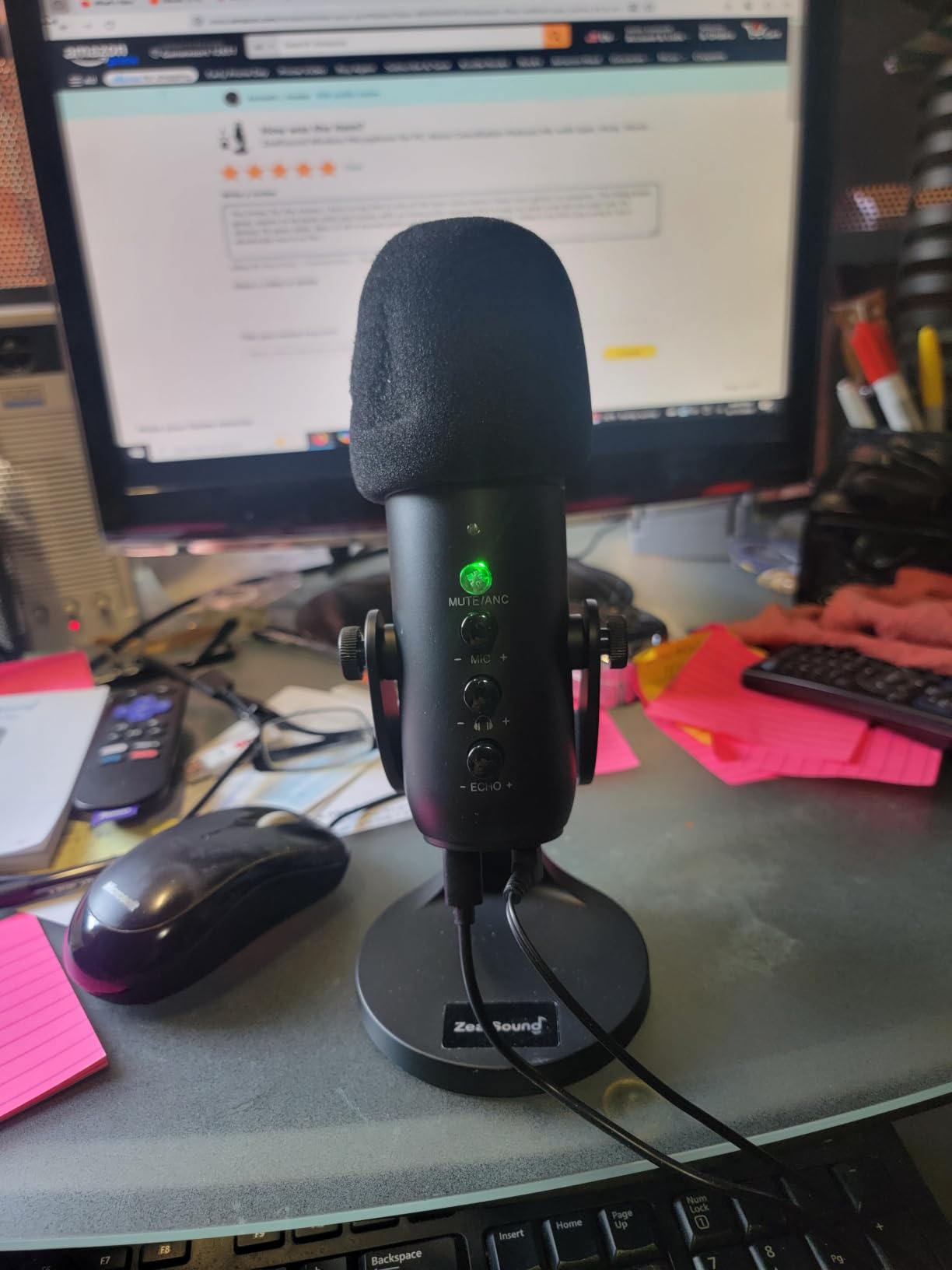
The K66 is packed with features you usually only see on more expensive mics. There are dedicated knobs for mic gain, monitoring volume, and echo. The intelligent noise reduction mode is a one-button toggle that helps in moderately noisy environments. The 3.5mm headphone jack provides zero-latency monitoring, which is essential when tracking vocals.
The main limitation is the same one shared by most budget condensers: in loud or echoey rooms, the mic picks up too much ambient sound. The intelligent noise reduction helps, but it cannot perform miracles. In a quiet bedroom, hotel room, or treated space, the K66 shines. In a busy cafe with no treatment, you will fight background noise.
For Whom It Is Good
The K66 is ideal for mobile creators, traveling podcasters, YouTubers who vlog on location, and anyone who wants a feature-rich USB mic that works across phones, tablets, and computers without fuss.
For Whom It May Not Fit
Studio vocalists and podcasters recording in fixed locations will get better results from a dedicated XLR setup or a higher-end USB condenser.
How to Choose the Best Microphone for Recording Vocals
Picking the right microphone is less about finding the most expensive option and more about matching the mic to your voice, room, and recording chain. After testing dozens of vocal mics over the years, I have learned that the best mic is the one that flatters your voice and works in your specific space. Below are the key factors to consider before you buy.
Dynamic vs Condenser Microphones
Dynamic microphones like the Shure SM58 and RØDE PodMic use a moving coil to capture sound. They are rugged, handle loud sources without distortion, and reject background noise exceptionally well. This makes them ideal for untreated rooms, live performance, and spoken word content where noise rejection matters more than absolute detail.
Condenser microphones like the Audio-Technica AT2020 and Blue Yeti use a charged diaphragm to capture sound with greater sensitivity and detail. They reveal the nuance and air in a vocal recording, which is why most studio vocals are recorded with condensers. The trade-off is that they also pick up room noise, breath sounds, and plosives more readily.
For most home studios with some basic acoustic treatment, a large-diaphragm condenser delivers the classic studio vocal sound. For untreated rooms or noisy environments, a dynamic mic saves you hours of editing and noise reduction.
Polar Patterns and Why They Matter
The polar pattern describes how a microphone picks up sound from different directions. Cardioid, the most common pattern, captures sound primarily from the front while rejecting sound from the sides and rear. This makes it ideal for solo vocalists and podcasters who need to focus on their voice.
Other patterns include omnidirectional, which captures sound equally from all directions and is great for room ambience or group recordings. Bidirectional picks up sound from the front and rear while rejecting the sides, which is useful for face-to-face interviews. Multipattern mics like the Blue Yeti offer all these options in one unit, giving you flexibility for different recording scenarios.
USB vs XLR Connection Types
USB microphones like the Blue Yeti and FIFINE K669B plug directly into your computer and include a built-in analog-to-digital converter. They are the simplest option for beginners and require no extra gear beyond the mic itself. Modern USB mics deliver surprisingly good audio quality for the price.
XLR microphones like the Audio-Technica AT2020 and Shure SM58 connect to an audio interface or mixer, which provides the analog-to-digital conversion and preamp gain. This adds cost and complexity, but it also gives you more control over your sound, upgrade flexibility, and the ability to swap components as your needs grow. Hybrid mics like the Samson Q2U and MAONO A04 Gen2 offer both options, which is a great choice if you want room to grow.
Phantom Power and Audio Interfaces
Condenser microphones require 48V phantom power to operate, which is supplied by audio interfaces, mixers, or some USB hubs. If you choose an XLR condenser like the AT2020, you will need an interface that provides phantom power. Most modern interfaces in the 100 to 300 dollar range include this feature.
Dynamic microphones do not require phantom power, though they do benefit from clean preamp gain. If you choose a low-output dynamic like the SM58 or PodMic, make sure your interface has enough clean gain to drive it. If not, an inline preamp like the Cloudlifter or FetHead solves the problem without replacing your interface.
Matching Mic to Your Voice Type
Different microphones flatter different voices. Large-diaphragm condensers with a slight high-frequency boost tend to flatter bright, sibilant voices by adding air and detail. Warmer, darker voices often shine through dynamic mics that emphasize the midrange, like the SM58. Bass-heavy baritone vocals benefit from mics with a gentle high-pass filter to reduce muddiness.
Soprano and higher tenor voices typically pair well with bright condensers that capture the air and shimmer in their tone. Alto and lower tenor voices benefit from the warmth and presence of a dynamic like the SM58. Baritone and bass voices often sound rich through large-diaphragm condensers with rolled-off low end. The best way to know is to test mics with your own voice whenever possible.
Room Treatment vs Microphone Quality
A common question from beginners is whether they should spend money on a better microphone or on acoustic treatment for their room. The honest answer is that room treatment usually delivers a bigger improvement than upgrading your mic. A 200 dollar condenser in a heavily treated room will sound dramatically better than a 1000 dollar condenser in an untreated closet.
If your budget is limited, invest in basic treatment first: a few acoustic panels, a reflection filter behind your mic, and rugs or curtains to reduce hard reflections. Once your room is under control, even a budget mic like the AT2020 will sound impressive. For more on this, our guide on recording vocals at home without a booth covers practical DIY solutions.
Must-Have Vocal Recording Accessories
A great vocal mic is only one part of a complete recording chain. You will also need a pop filter to reduce plosives from hard consonants like P and B. A shock mount isolates the mic from desk vibrations and handling noise. A sturdy boom arm positions the mic correctly and keeps it out of your way while performing.
An audio interface is essential for XLR mics, and a quality XLR cable makes a surprising difference in signal clarity. For processing, a good compressor is critical for vocal production, and our guide on setting compressor attack and release on lead vocals walks through the settings that work for most voices. Together, these accessories turn a good mic into a great vocal recording setup.
Frequently Asked Questions
What kind of mic is best for recording vocals?
A large-diaphragm condenser microphone with a cardioid polar pattern is the most common choice for studio vocal recording because it captures vocal detail and warmth. Dynamic microphones like the Shure SM58 are better for untreated rooms or live performance where background noise rejection matters more. The right choice depends on your room, voice type, and budget.
What is a good mic for recording vocals?
The Audio-Technica AT2020 is widely considered the best budget studio condenser for vocals. The Shure SM58 is the best dynamic for untreated rooms and live use. The Rode NT1 and Blue Yeti are also excellent options. For beginners on a tight budget, the FIFINE K669B and TONOR TC-777 deliver surprisingly good results.
What is the best microphone for recording singing?
For studio singing, the Audio-Technica AT2020 is the best value, the Shure SM58 is the best dynamic, and the AKG C414 XLII is the best high-end choice. Each excels in different rooms and budgets. Match the mic to your voice type and acoustic environment for the best results.
What is the holy grail of microphones?
The U47 and U87 from Neumann are often called the holy grail of vocal microphones due to their legendary tube warmth and clarity. Among modern production mics, the AKG C414 XLII and Neumann U87 are widely considered the most coveted studio vocal mics. Most home studios get 90 percent of the way there with an AT2020 or Rode NT1.
Do I need an audio interface for vocal recording?
You only need an audio interface if you are using an XLR microphone. USB microphones like the Blue Yeti and FIFINE K669B have built-in interfaces and connect directly to your computer. If you plan to use an XLR mic like the Shure SM58 or Audio-Technica AT2020, an audio interface with phantom power is required.
Final Verdict: Which Vocal Mic Should You Buy?
After testing all 10 of these microphones side by side, the Shure SM58 remains our top pick for most people. Its legendary vocal tone, bulletproof build, and unbeatable noise rejection make it the most versatile vocal mic on the market. Whether you are recording in a quiet studio or a noisy bedroom, the SM58 delivers consistent, professional results.
If you have a treated room and want the classic studio condenser sound, the Audio-Technica AT2020 offers unbeatable value. For under 150 dollars, you get clean, detailed vocal capture that competes with mics several times its price. Pair it with a decent interface and a pop filter, and you have a serious vocal recording setup.
For beginners and budget-conscious creators, the TONOR TC-777 and FIFINE K669B both deliver impressive sound for the price. The Blue Yeti remains the most versatile USB option for streamers and content creators, while the RØDE PodMic is the right choice for podcasters who want broadcast quality. Whatever your needs and budget, one of these 10 microphones will give you a recording experience worthy of the best microphones for recording vocals in 2026.