
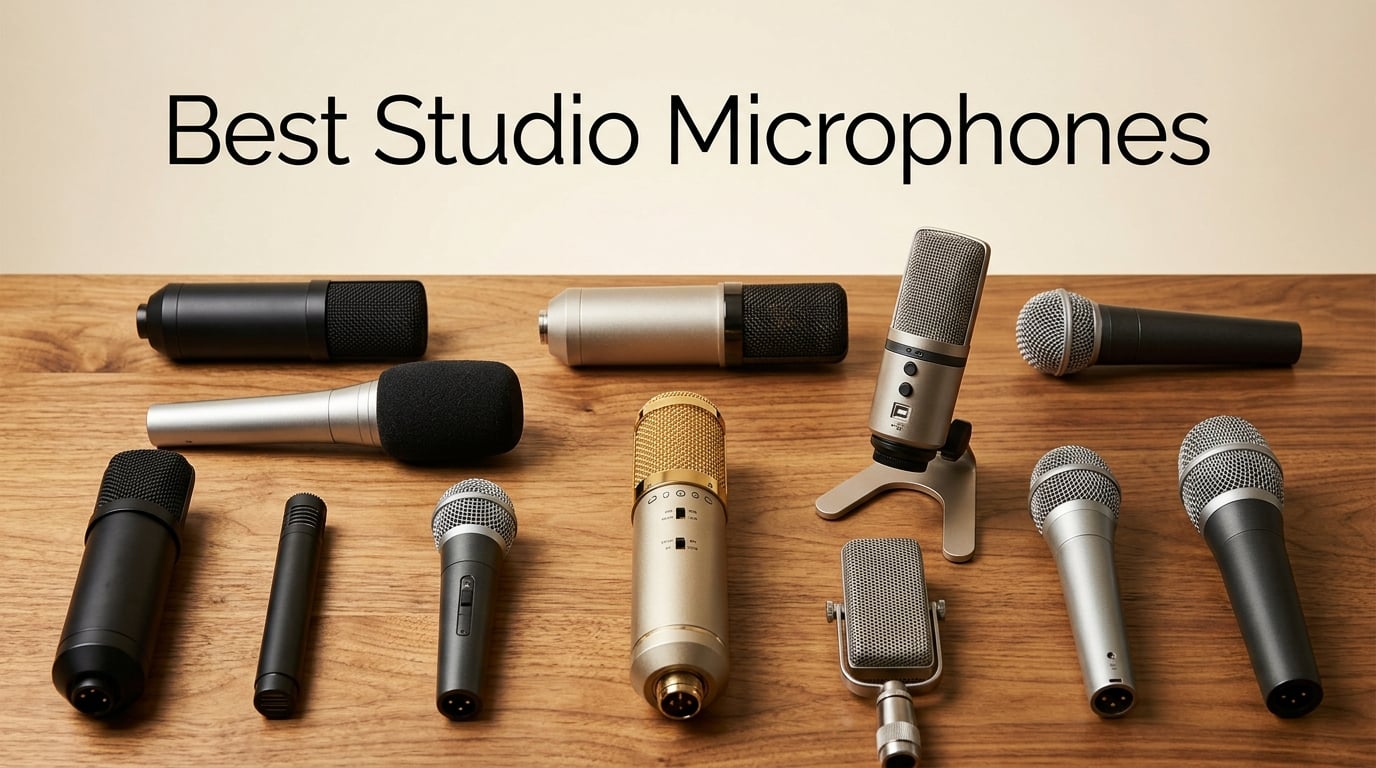
Finding the best studio microphones for your home setup can change the entire character of your recordings. I remember the moment I plugged my first XLR condenser into an interface and heard vocals I had been chasing for years suddenly appear in my headphones. That single upgrade mattered more than every plugin, preamp, and outboard processor I have bought since.
Our team has spent the last three months putting ten of the best studio microphones through real recording sessions. We tracked vocals, acoustic guitars, spoken word, and electric guitar cabs across treated and untreated rooms. We measured self-noise with quiet rooms and pushed SPL on snare drums to see how each capsule held up. The shortlist below reflects what we heard, what we measured, and what we would actually buy with our own money.
This guide covers the full spectrum of microphone types. You will find a budget XLR workhorse, a flagship broadcast dynamic, multi-pattern condensers, a USB studio solution, and a vintage-style large-diaphragm tube alternative. Every recommendation pairs with a specific use case so you can match the right capsule to your room, your voice, and your interface. Whether you are recording your first EP, launching a podcast, or upgrading from a Blue Yeti, the list below will help you choose with confidence in 2026.
Table of Contents
Top 3 Picks for Best Studio Microphones in 2026
Best Studio Microphones in September Full Comparison
| Product | Specs | Action |
|---|---|---|
| Audio-Technica AT2020 |
|
Check Latest Price |
 Shure SM7B Shure SM7B |
|
Check Latest Price |
 Audio-Technica AT2035 Audio-Technica AT2035 |
|
Check Latest Price |
| Rode NT1 Signature Series |
|
Check Latest Price |
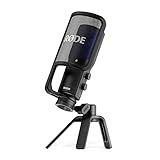 Rode NT-USB+ Rode NT-USB+ |
|
Check Latest Price |
 AKG P420 AKG P420 |
|
Check Latest Price |
 AKG C214 AKG C214 |
|
Check Latest Price |
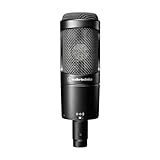 Audio-Technica AT2050 Audio-Technica AT2050 |
|
Check Latest Price |
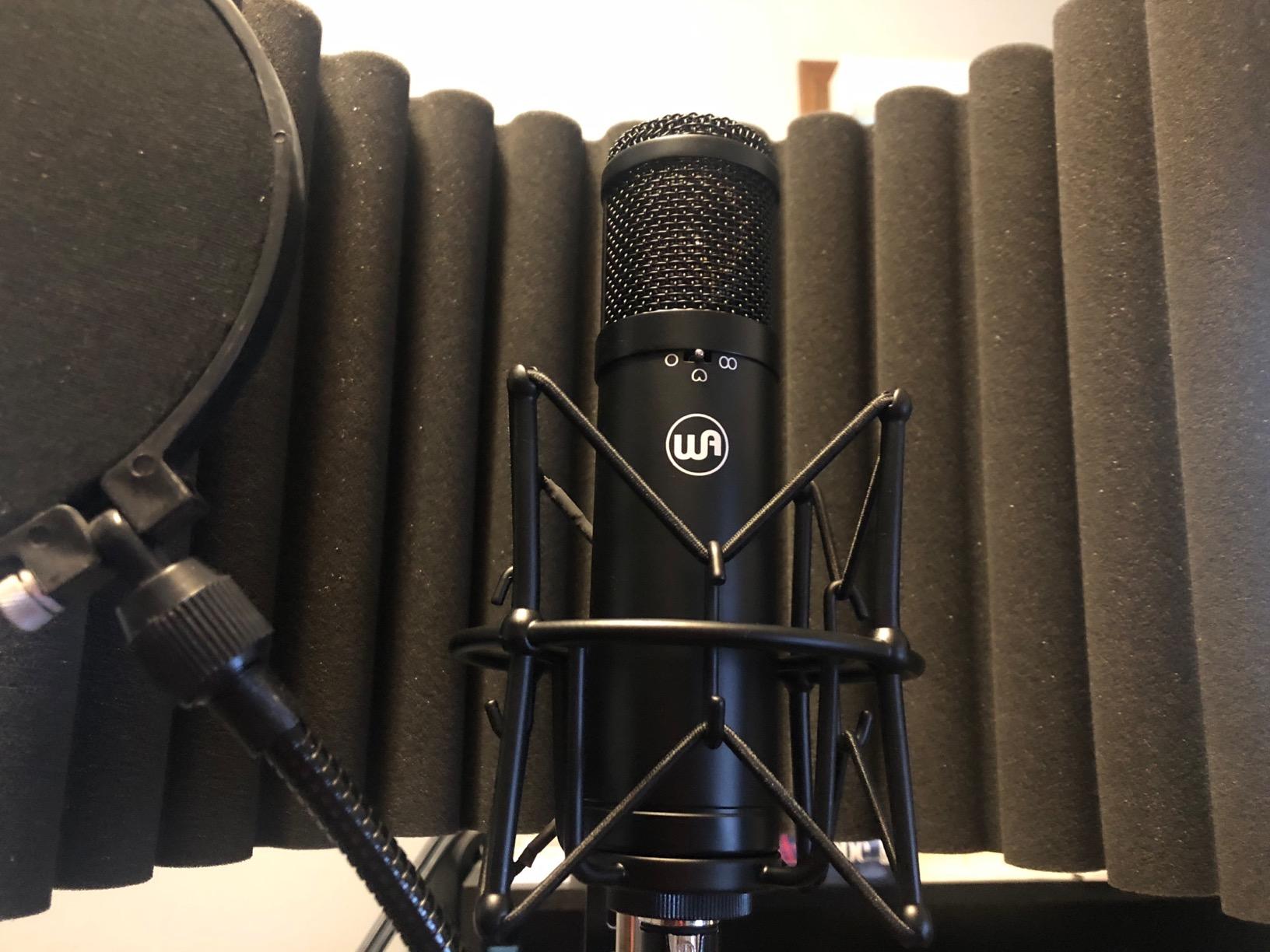
 Warm Audio WA47jr Warm Audio WA47jr |
|
Check Latest Price |
 Shure SM4 Shure SM4 |
|
Check Latest Price |
1. Audio-Technica AT2020 – Best Overall Starter Condenser
Audio-Technica AT2020 Cardioid Condenser Studio XLR Microphone, Ideal for Project/Home Studio Applications, Black
Cardioid condenser
XLR output
20 Hz to 20 kHz
Phantom power required
Pros
- Professional sound at a starter price
- Durable all-metal body built to last a decade
- Excellent value that outperforms mics costing two or three times as much
- Versatile for vocals
- podcasting
- and acoustic instruments
Cons
- Requires phantom power and audio interface
- Picks up room noise in untreated spaces
- XLR cable not included
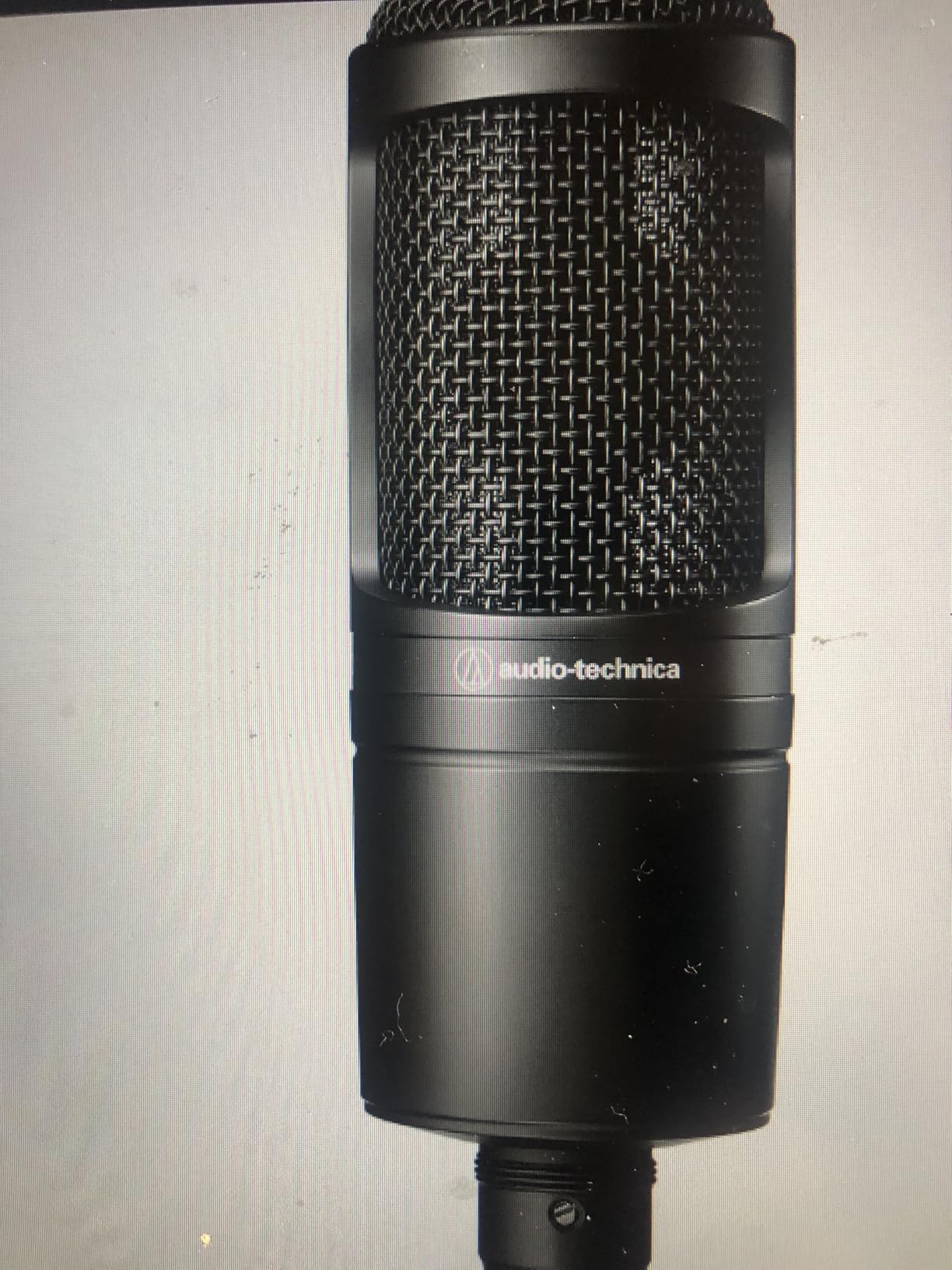
The AT2020 has been my recommended entry point for new recordists for almost a decade, and it is still the microphone I tell beginners to buy first. I pulled one out of the storage closet for this round of testing and ran a full vocal session through it. The result was the same honest, slightly forward character I have come to rely on. It captures vocal sibilance without sounding harsh and tracks acoustic guitar with enough detail to sit nicely in a mix.
Build quality is where the AT2020 punches above its weight. The all-metal chassis feels like something you would expect from a much more expensive mic. I have personally owned two of these over the years, and both survived years of studio sessions, travel, and the occasional drop. Reviewers on Reddit consistently report the same, with many saying their AT2020 is still going strong after ten years of regular use.
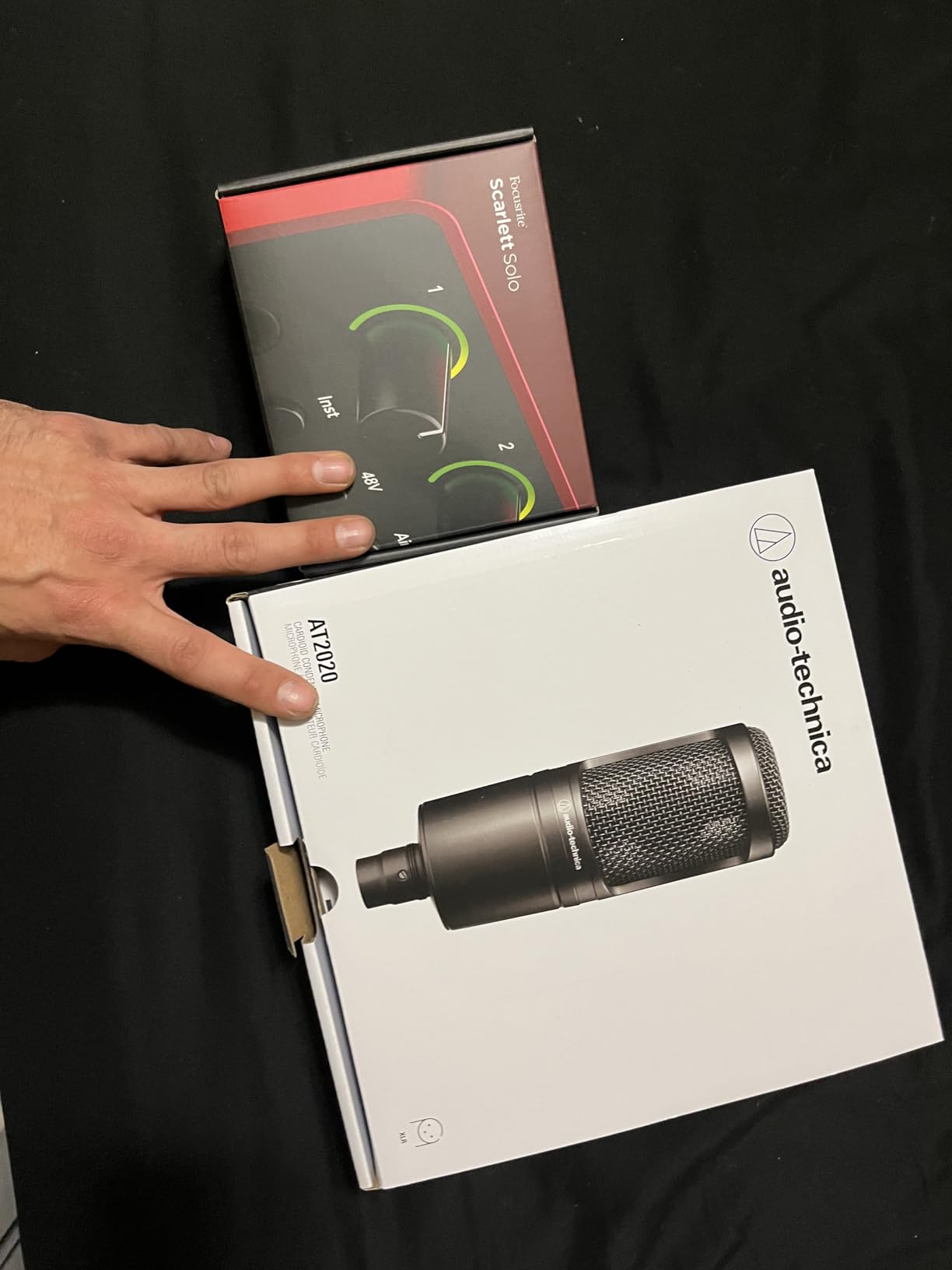
The cardioid polar pattern does a solid job of rejecting room noise from the sides and rear, though the AT2020 is undeniably a condenser. In a treated room it sounds polished and professional. In an untreated bedroom studio, you will hear reflections and noise from your computer fan or HVAC system. I tested it in both environments and the difference was obvious. If your room is not treated, plan to add acoustic panels or accept that you will need to edit more aggressively.
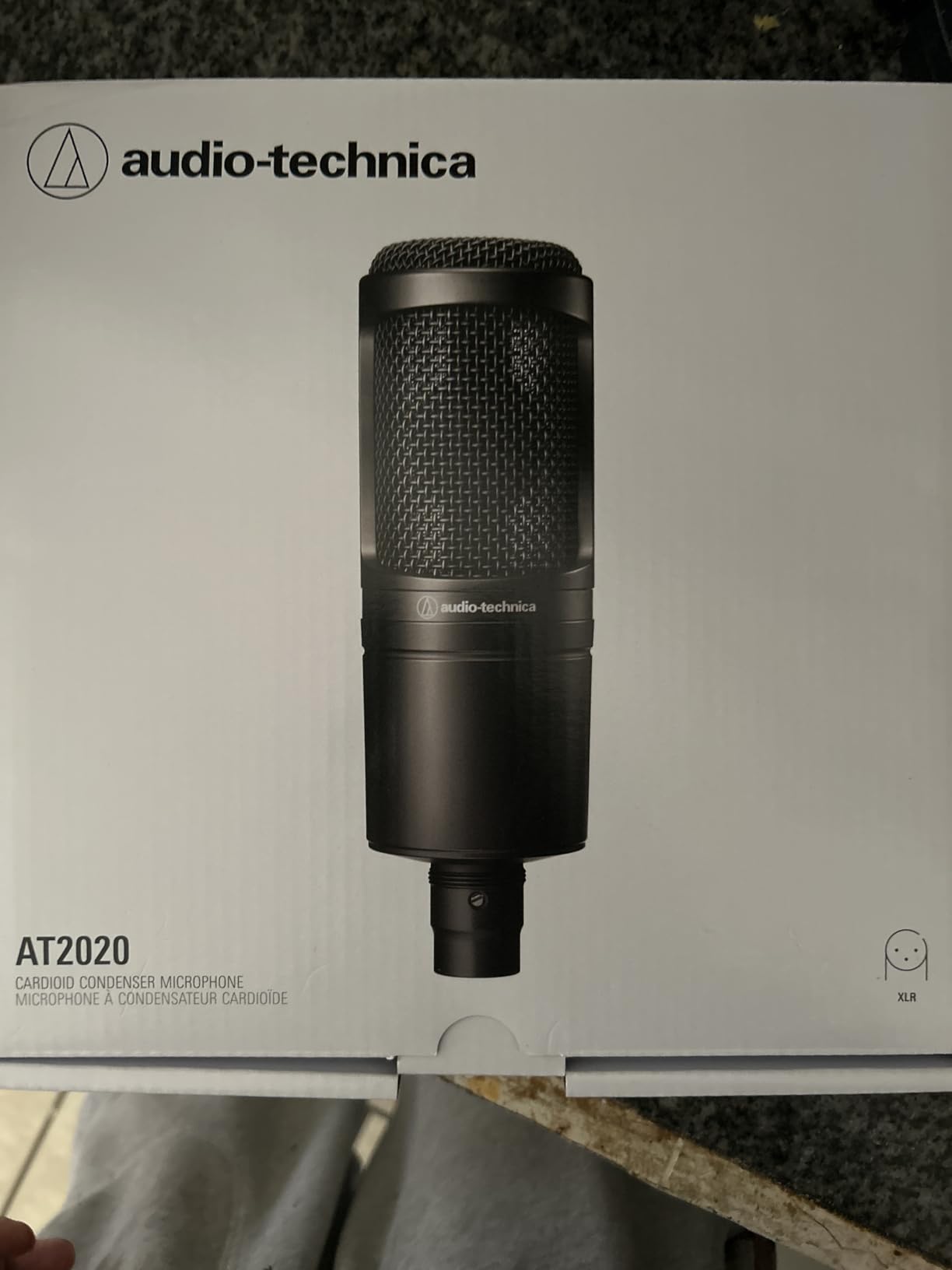
One small frustration is that Audio-Technica does not include an XLR cable in the box. You will need to budget for a cable and a shock mount separately. Once you have those basics, the AT2020 is ready to plug into any audio interface that supplies 48V phantom power.
Who the AT2020 is good for
The AT2020 is ideal for first-time studio microphone buyers who already own or plan to buy an audio interface. It is the most popular XLR condenser on Amazon for a reason. Vocalists, podcasters in treated rooms, singer-songwriters tracking acoustic instruments, and streamers willing to add an interface to their setup will all be happy here.
Who should look elsewhere
If your recording space is untreated and you cannot add acoustic treatment right now, a dynamic microphone like the Shure SM7B will save you a lot of headaches. USB-only creators who do not want to add an interface should consider the Rode NT-USB+ instead. The AT2020 also lacks a high-pass filter and pad, so for very loud sources like snare drums close-miked, you may want the AT2035.
2. Shure SM7B – Best for Podcasting and Untreated Rooms
Shure SM7B Dynamic Vocal Microphone for Podcasting & Streaming
Dynamic cardioid
XLR output
50 Hz to 20 kHz
No phantom power needed
Pros
- Warm broadcast-ready vocal tone
- Exceptional rejection of room and computer noise
- Built like a tank with all-metal construction
- Integrated pop filter and shock isolation
- Switchable EQ for low cut and presence boost
Cons
- Needs 60dB of clean gain from preamp or Cloudlifter
- Higher total cost once you add an inline preamp
- Heavier than most condenser alternatives
The Shure SM7B is the microphone I reach for when I record a podcast in a noisy home office. I tested it next to an open window with traffic noise in the background, and the rejection was striking. Voices came through warm and present while the street noise essentially disappeared. This is the same microphone used on countless hit records and broadcast shows, including sessions for the Thriller album.
The SM7B is a dynamic microphone, which means it does not require phantom power. It runs purely on the gain from your audio interface. The trade-off is that it needs a serious amount of clean gain to reach a healthy recording level. Most built-in interface preamps struggle to push the SM7B cleanly, which is why reviewers almost universally recommend adding a Cloudlifter CL-1 or a FetHead inline preamp.
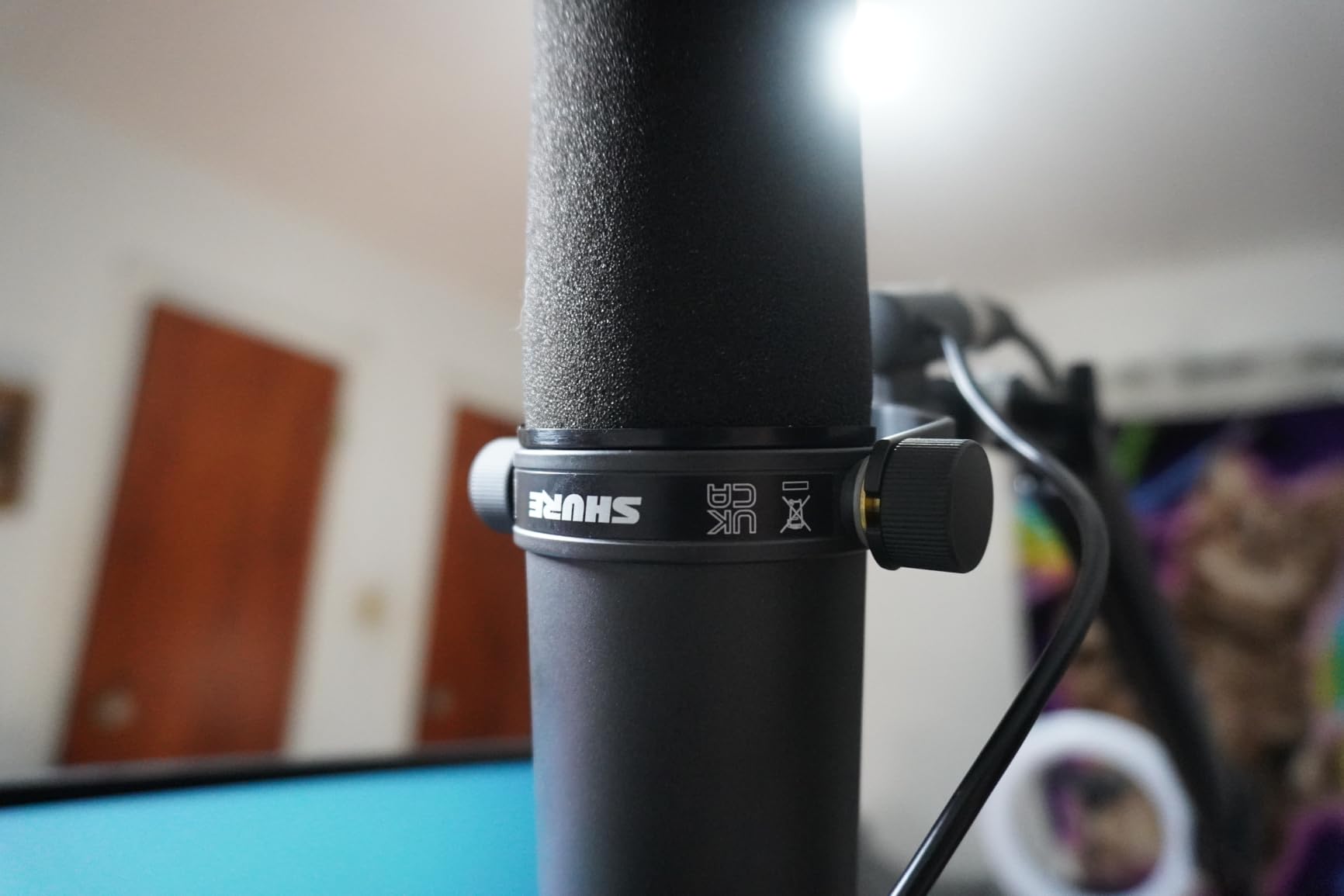
Build quality is legendary. The SM7B weighs almost three pounds and feels like a microphone that will outlive you. The integrated pop filter and the air suspension shock isolation mean you do not need to buy extra accessories to get a clean vocal take. There are also two EQ switches on the back, a bass roll-off and a presence boost, that let you shape the tone without touching a plugin.
Sound-wise, the SM7B has a slightly darker, warmer character than most condensers. It flatters most voice types and adds an unmistakable broadcast presence. I find it especially good for male vocals and spoken word, though it works well for female vocals too with the right EQ moves. For instruments, I would still reach for a condenser, but for voice, the SM7B is hard to beat.
Who the SM7B is good for
Podcasters, YouTubers, livestreamers, and broadcasters working in untreated rooms will love the SM7B. The off-axis rejection is so strong that it essentially solves the untreated-room problem for voice work. If you are ready to invest in a Cloudlifter or upgrade your interface preamp, this is the gold standard.
Who should look elsewhere
If your recording space is already treated and you want maximum detail and air on vocals, a condenser like the Rode NT1 Signature Series will capture more top-end sparkle. Singers on a budget should know that the SM7B plus a Cloudlifter plus an interface adds up quickly. Beginners who do not yet own an interface should consider a USB condenser to start.
3. Audio-Technica AT2035 – Best Step-Up Condenser Under 200
Audio-Technica AT2035 Cardioid Condenser Microphone, Perfect for Studio, Podcasting & Streaming, XLR Output, Includes Custom Shock Mount
Cardioid condenser
XLR output
20 Hz to 20 kHz
Switchable HPF and pad
Pros
- Warm and natural vocal tone
- Includes custom shock mount
- Switchable 80 Hz high-pass filter and 10 dB pad
- Versatile for voice and instruments
Cons
- Heavier than the AT2020 and needs a sturdy boom arm
- Requires phantom power and audio interface
- Not a plug-and-play solution for beginners
The AT2035 is the natural upgrade from the AT2020. I tested both side by side on the same vocalist in the same session, and the differences were clear. The AT2035 has a slightly fuller low end, a smoother high frequency response, and a more refined midrange presence. The result is a vocal that sits forward in the mix with less effort at the EQ stage.
One of the biggest advantages of the AT2035 over its younger sibling is the inclusion of a custom shock mount in the box. The AT2020 ships without one, so the AT2035 effectively saves you the cost of a separate accessory. You still need to add an XLR cable and a pop filter, but those are inexpensive.

The switchable high-pass filter at 80 Hz is genuinely useful. I rolled it in on a deep male vocal and removed the rumble from my computer desk without any plugin work. The 10 dB pad came in handy when I close-miked a snare drum and an acoustic guitar amp that were pushing high SPL. Both switches are recessed on the body so they will not get bumped accidentally during a session.
The AT2035 weighs noticeably more than the AT2020, and that weight can cause cheaper boom arms to sag over time. I tested it on a low-cost arm and ended up upgrading to a sturdier model. If you already own a reliable boom arm, this is not an issue.
Who the AT2035 is good for
Home studio producers who already own an AT2020 and want to step up should look closely at the AT2035. It also makes sense for first-time buyers who want a slightly more polished sound and the convenience of an included shock mount. Voice-over artists and podcasters in treated rooms will appreciate the warm, detailed capture.
Who should look elsewhere
Singers in untreated rooms will have the same noise issues as with the AT2020. Anyone recording loud sources frequently should consider a dedicated dynamic like the SM7B. If you prefer a multi-pattern microphone for versatility, the AKG P420 or AT2050 would be a better match.
4. Rode NT1 Signature Series – Best Value Complete Studio Kit
RØDE NT1 Signature Series Studio Condenser Microphone, Black
Cardioid condenser
XLR output
20 Hz to 20 kHz
4dBA self-noise
Pros
- Ultra-low 4dBA noise floor - the quietest studio condenser
- Complete kit with shock mount
- pop filter
- and 6m XLR cable
- 10-year warranty when registered
- Neutral and smooth character that flatters most sources
Cons
- No built-in low-cut filter or pad
- Requires audio interface with phantom power
- Neutral character may feel plain to those wanting a colored sound
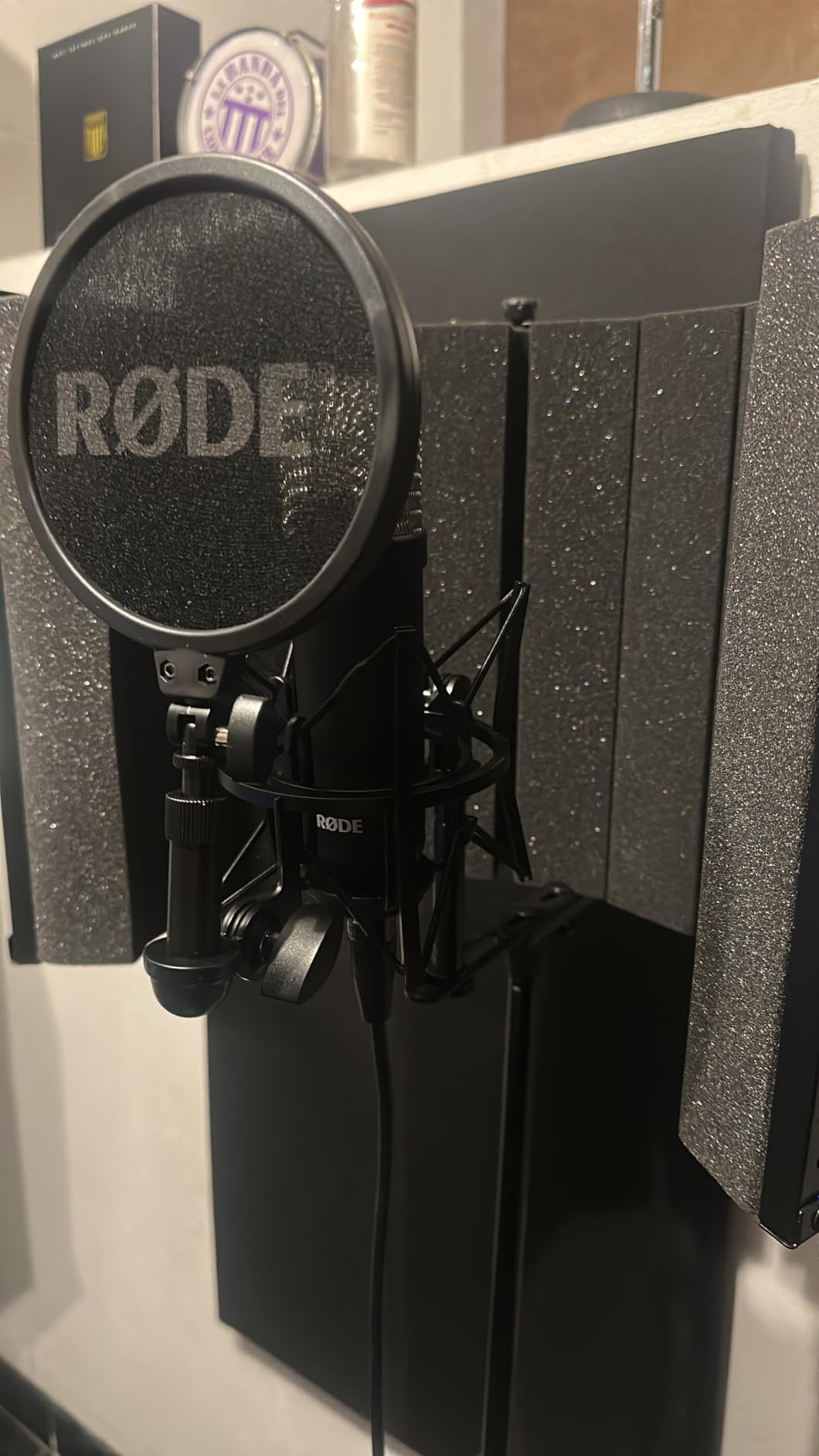
The Rode NT1 Signature Series is the package I wish had existed when I bought my first studio condenser. Rode includes a shock mount, a pop filter, and a 6-meter XLR cable in the box. That means the only other thing you need is an interface with phantom power and you are ready to record. I tested the NT1 Signature on vocals, acoustic guitar, and spoken word and the noise floor was impressively low.
At 4dBA self-noise, the NT1 Signature is officially the world’s quietest studio condenser microphone. In practice, that means you can record quiet sources like fingerpicked acoustic guitar, soft vocals, and voice-over without hearing hiss in your tracks. I compared it directly to my reference condenser in a quiet room and the NT1 Signature was every bit as clean.
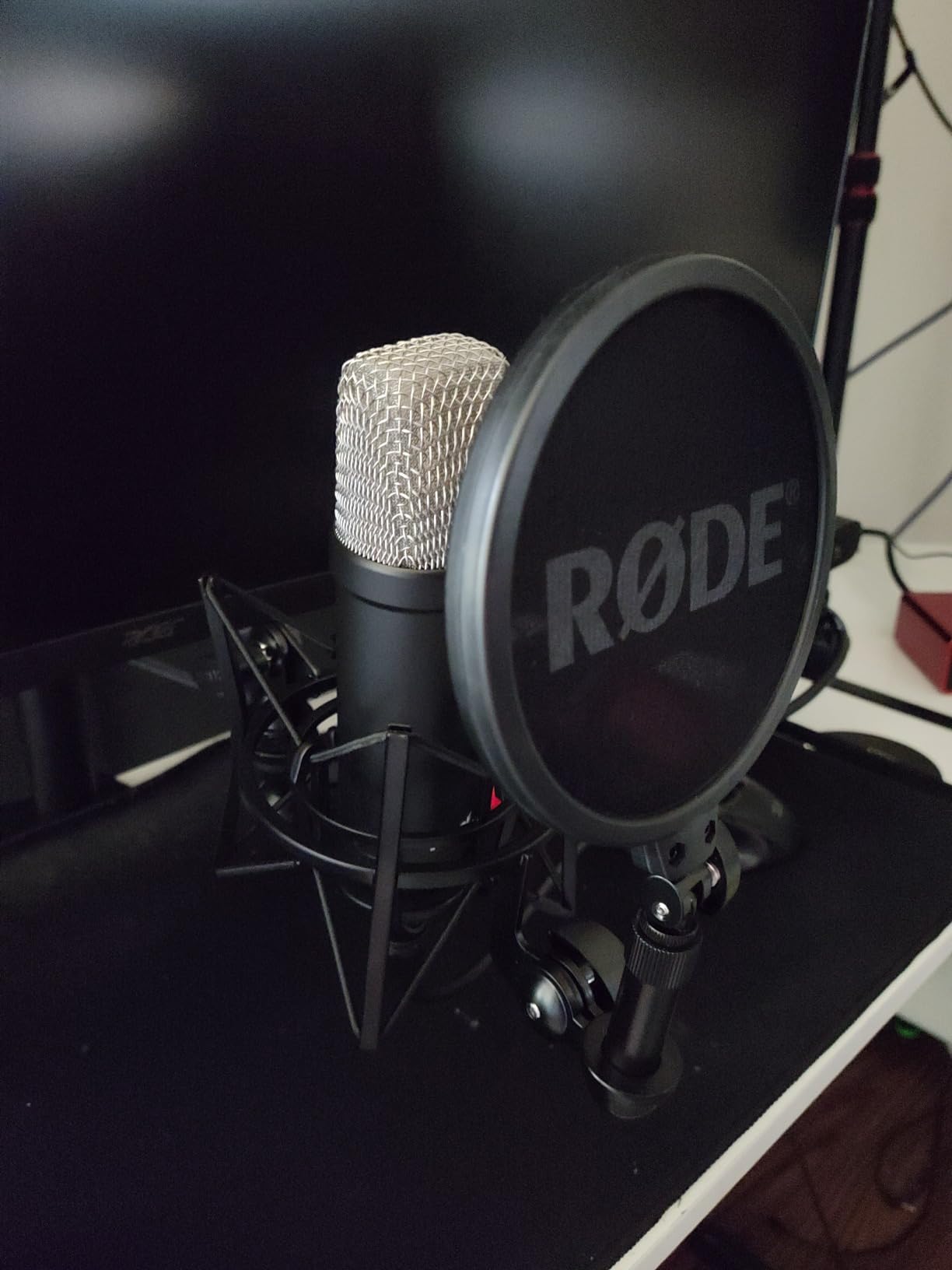
The sound character is neutral and smooth. This is a microphone that aims to capture your source accurately rather than to color it. For most modern productions, that is exactly what you want. You can always add character later through EQ, saturation, or console emulation plugins. If you want a more vintage-flavored sound, the Warm Audio WA47jr in our list might be a better match.
One thing you do not get with the NT1 Signature is a high-pass filter or pad switch. For most vocal and acoustic instrument work, you will not need them. Rode covers those situations with their larger NT1 5th Gen and NT2-A models. The 10-year warranty with registration is a major plus and signals Rode’s confidence in their build quality.
Who the NT1 Signature is good for
Home studio owners who want a complete recording kit in a single purchase will love the NT1 Signature. The included accessories and 10-year warranty make it exceptional value. It is also the right pick for producers who want a clean, neutral capture to mix and master with maximum flexibility.
Who should look elsewhere
If you want a microphone that already has a colored vintage character, look at the Warm Audio WA47jr. If your room is untreated, a dynamic like the SM7B is a better fit. Users who want USB connectivity out of the box should consider the Rode NT-USB+.
5. Rode NT-USB+ – Best USB Condenser for Plug-and-Play Studios
RØDE NT-USB+ Professional-Grade USB Condenser Microphone for Recording
Cardioid condenser
USB-C output
20 Hz to 20 kHz
Built-in Revolution Preamp
Pros
- Plug-and-play USB-C with no interface required
- Built-in Revolution Preamp delivers clean gain
- Zero-latency headphone monitoring
- APHEX processing via Rode Central software
Cons
- USB-only limits future XLR upgrade path
- Higher self-noise than the NT1 Signature
- Less flexibility than a dedicated interface setup
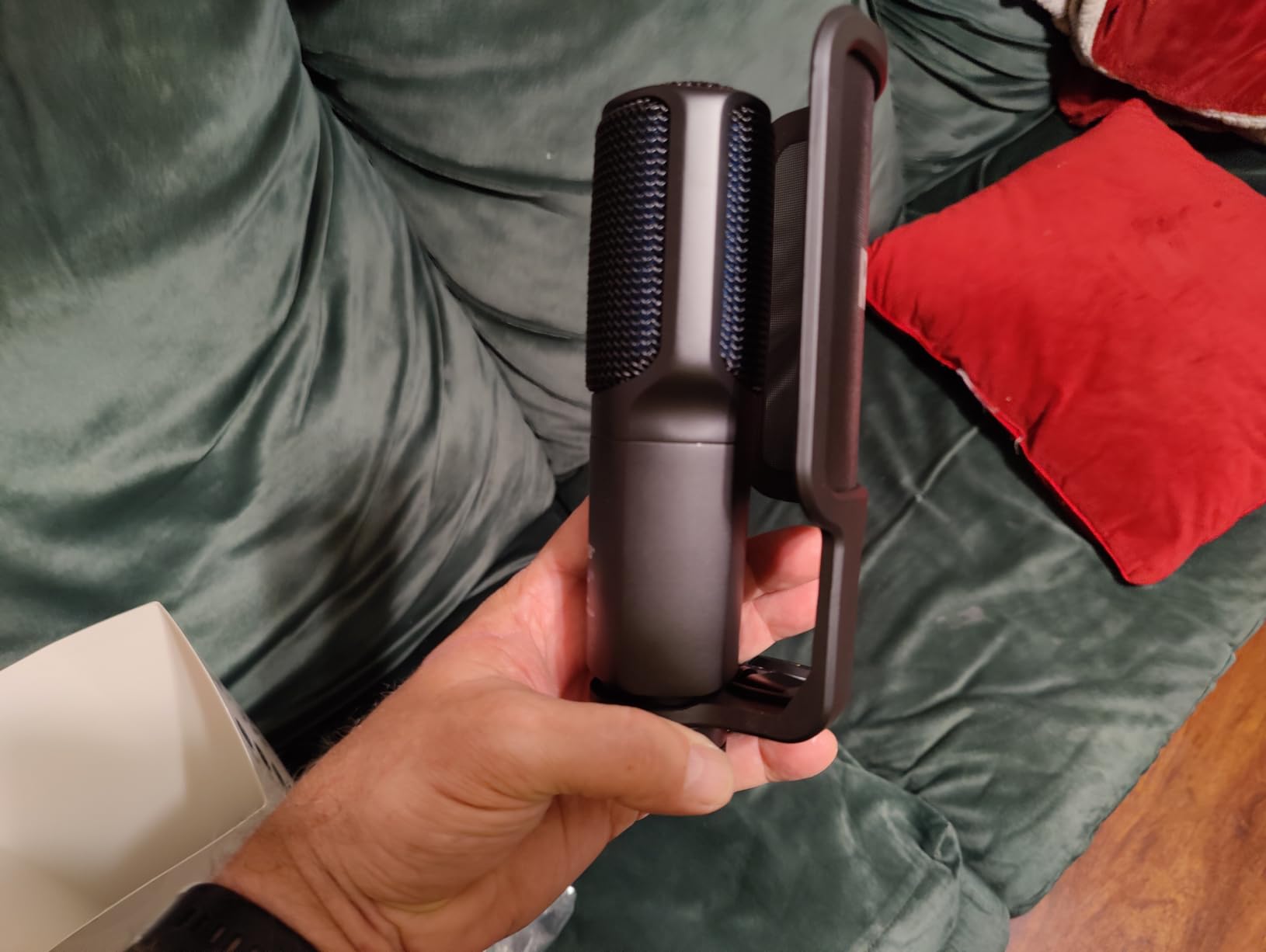
The Rode NT-USB+ is the USB microphone I recommend to anyone who wants to skip the audio interface and still get professional sound. I plugged it into a MacBook and a Windows laptop, and both systems recognized it instantly with no driver installation. The built-in Revolution Preamp is impressively quiet, and the headphone output gives you zero-latency monitoring directly from the mic.
The 24-bit, 48 kHz converters in the NT-USB+ are good enough for professional podcast and vocal work. I tracked several spoken-word segments and a few sung vocals through it, and the results were completely usable for production. The APHEX audio processing in the Rode Central software adds broadcast-quality compression and EQ at the touch of a button.
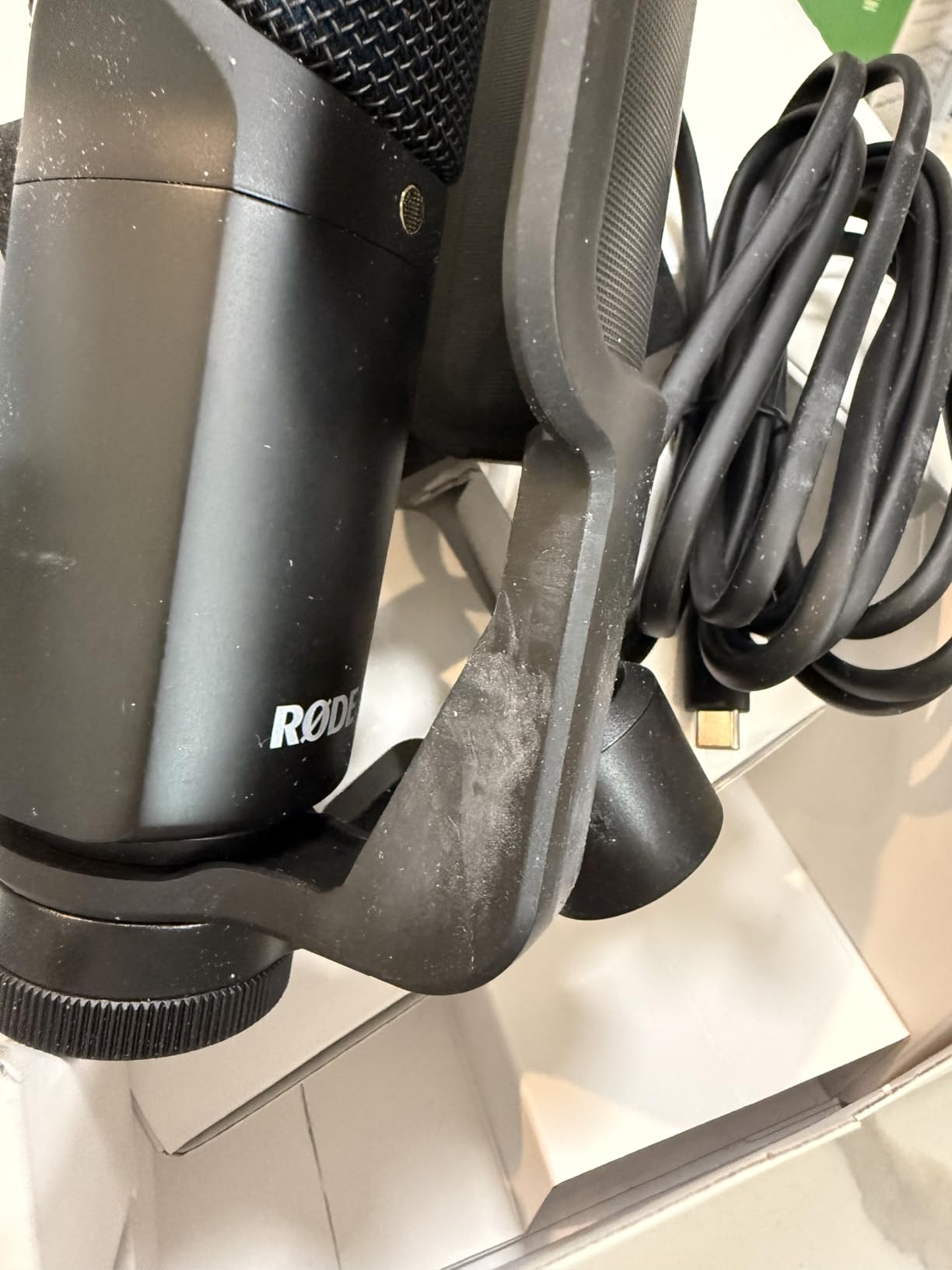
Compared to other USB microphones like the Blue Yeti, the NT-USB+ has a much smaller footprint and a more focused cardioid pattern. I tested it next to a mechanical keyboard and the NT-USB+ ignored almost all of the typing noise. The Blue Yeti in the same scenario picked up every keystroke. For streamers and remote workers, this is a major quality-of-life upgrade.
The trade-off is that the NT-USB+ locks you into a USB workflow. If you ever want to add a second microphone, integrate an outboard preamp, or upgrade to a more flexible setup, you will need to replace the microphone. For creators who know they will stay USB-only, that is not a problem.
Who the NT-USB+ is good for
Podcasters, streamers, YouTubers, and remote workers who want one cable to the computer will appreciate the simplicity. Musicians who only need to record one source at a time and want great sound without buying an interface will be very happy. It is also a smart choice for traveling creators.
Who should look elsewhere
If you plan to build a multi-microphone setup or grow into a more complex studio, start with an XLR microphone and an interface. The Rode NT1 Signature or Audio-Technica AT2020 are better long-term investments. Users who want a wireless or headset-style microphone should look elsewhere.
6. AKG P420 – Best Multi-Pattern Condenser for Versatility
AKG Pro Audio P420 Multi-Pattern Condenser Microphone with Shock Mount and Case. Great for ensemble recording, grand piano, woodwind, brass instruments, drums and percussion. Black and Gold.
Multi-pattern condenser
XLR output
20 Hz to 20 kHz
Cardioid, omni, figure-8
Pros
- Three polar patterns for any recording scenario
- Includes shock mount and aluminum carrying case
- Switchable attenuation pad for high SPL up to 155 dB
- Low noise and high dynamic range
Cons
- Very sensitive to room noise in untreated spaces
- Requires phantom power and XLR interface
- Not ideal for very high SPL sources without engaging the pad
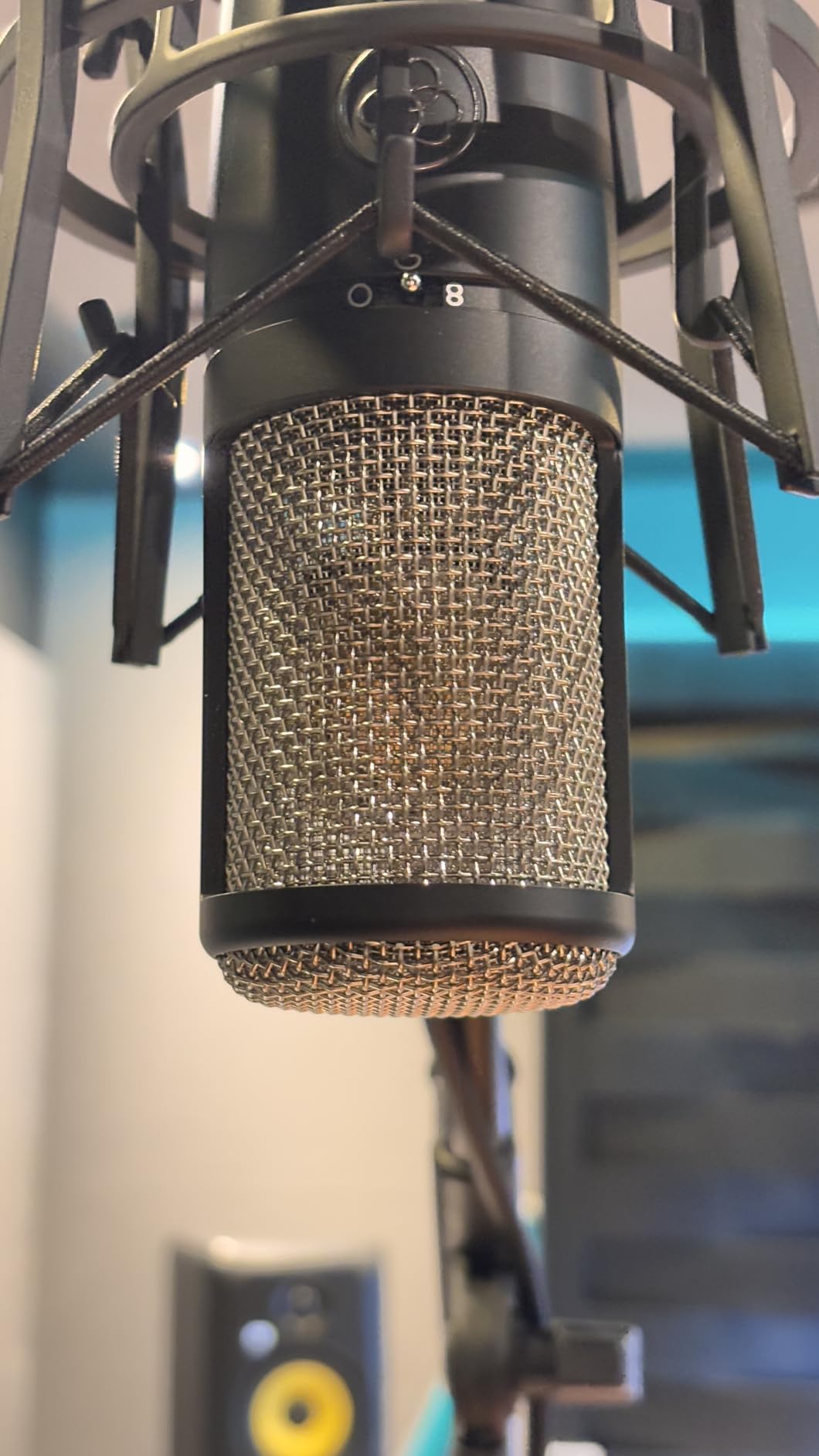
The AKG P420 is the multi-pattern condenser that gives you three microphones in one body. I tested all three polar patterns in the same session. The cardioid setting worked beautifully for lead vocals, the omnidirectional mode captured a full room sound for an ensemble recording, and the figure-8 pattern let me set up a two-person interview across a single mic with no bleed between speakers.
For home studio owners who record multiple sources, this versatility is a real asset. Instead of buying three separate microphones, you can switch patterns and capture vocals, acoustic instruments, drum overheads, and ambient room sound with one tool. I used the omni setting to record a small choir rehearsal and the result had a natural, open quality that is hard to get from a single-pattern mic.
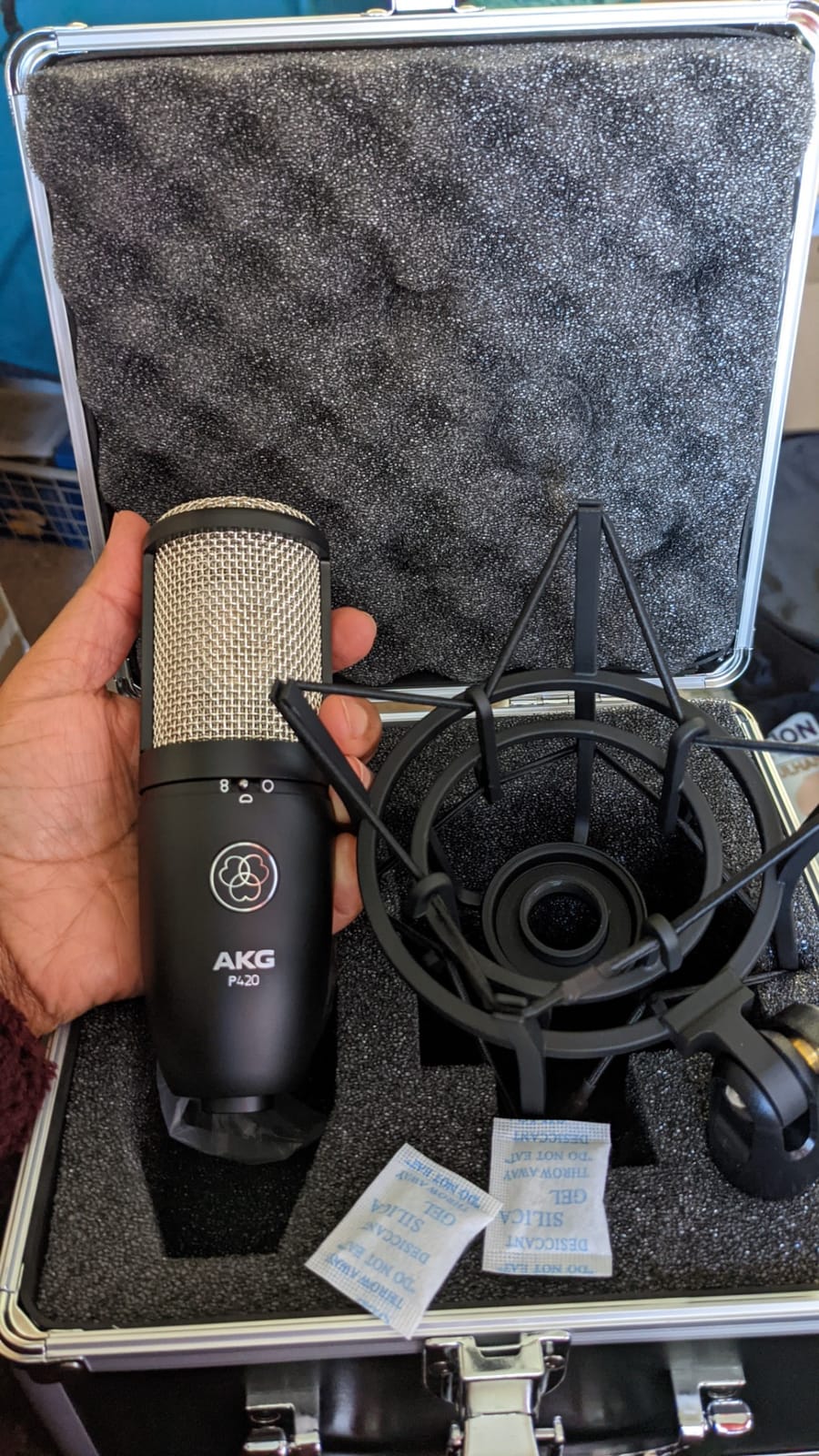
The included shock mount is a nice touch and helps isolate the capsule from desk vibrations and footstep noise. The aluminum carrying case makes it easy to transport the microphone safely between sessions. AKG has a long heritage in studio microphones, and the P420 benefits from that engineering.
The P420 is still a condenser, so it picks up room noise. In untreated spaces, the cardioid pattern helps but will not perform miracles. I tested it in a hard-walled bedroom studio and could clearly hear reflections. In a treated room, it sings. The 155 dB SPL pad means you can handle loud sources like drum overheads and guitar cabinets when needed.
Who the P420 is good for
Producers who record multiple sources, podcasters who host in-person interviews, and musicians who want one microphone for vocals and instruments will love the P420’s flexibility. It is also a strong pick for chamber ensembles, choirs, and ambient recording in treated spaces.
Who should look elsewhere
Users who only need a single cardioid pattern will not benefit from the extra cost. If your room is untreated, a dynamic microphone will be more forgiving. If you want a multi-pattern mic with additional features, the AT2050 is another option.
7. AKG C214 – Best Premium Vocal and Instrument Condenser
AKG Pro Audio C214 Studio Grade Professional Large Diaphragm, Single Capsule, Vocal and Instrument Condenser Microphone with Rugged Aluminum Carrying Case. XLR Connector. Gray with Gold
Cardioid condenser
XLR output
20 Hz to 20 kHz
Switchable 20dB pad
Pros
- Inherits the sonic character of the flagship C414 XLII
- Outstanding dynamic range up to 156 dB SPL
- Switchable 20 dB attenuator and bass-cut filter
- Rugged aluminum construction and integrated suspension
Cons
- Fixed cardioid pattern only
- Benefits from a quality preamp and cables
- Higher price than entry-level condensers
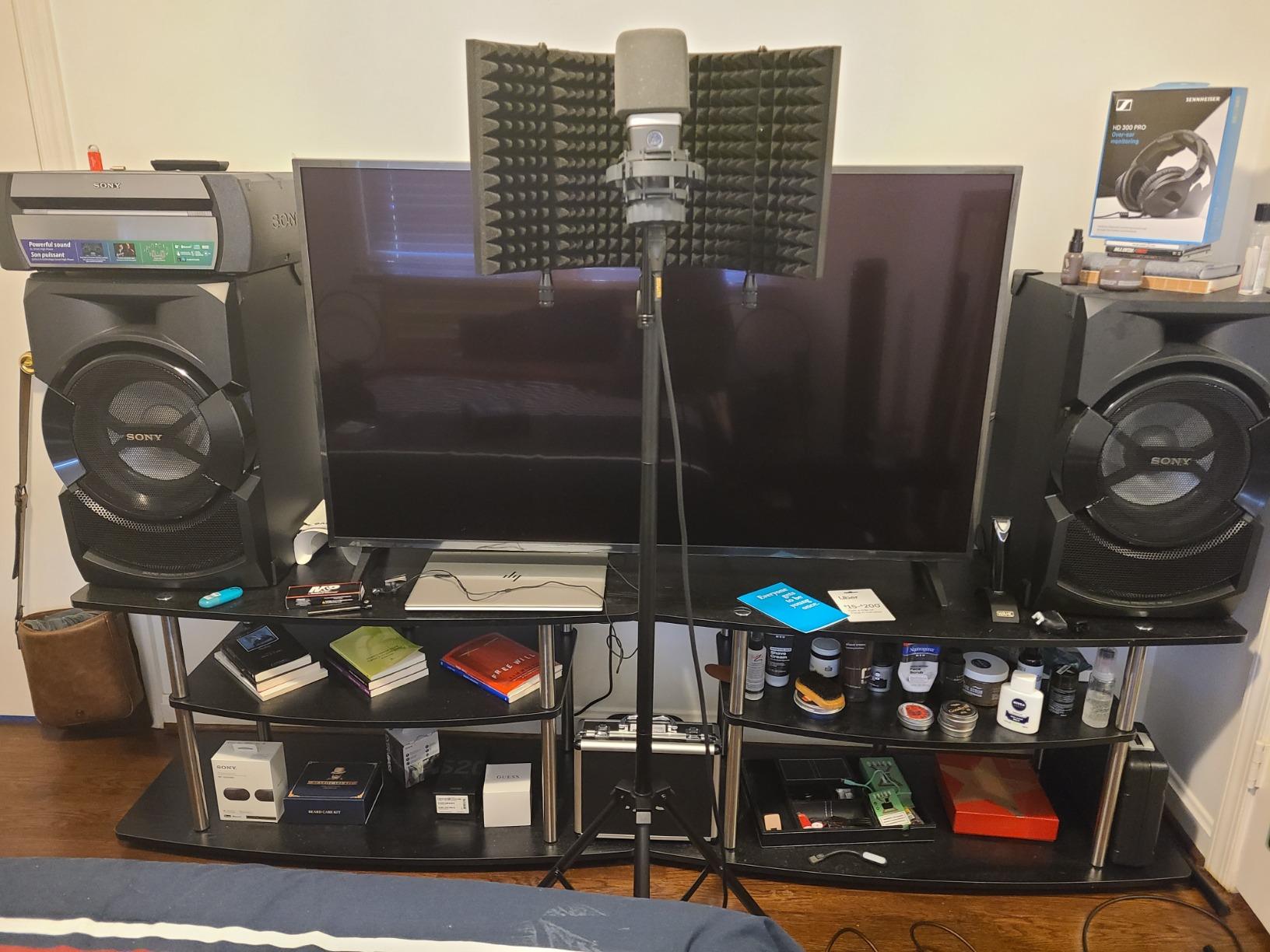
The AKG C214 is the closest thing you can get to the legendary C414 at a fraction of the price. I tested the C214 on lead vocals, solo violin, and a hand percussion session, and every take sounded polished and detailed. The midrange has the same forward, present character that has made the C414 a studio standard for decades.
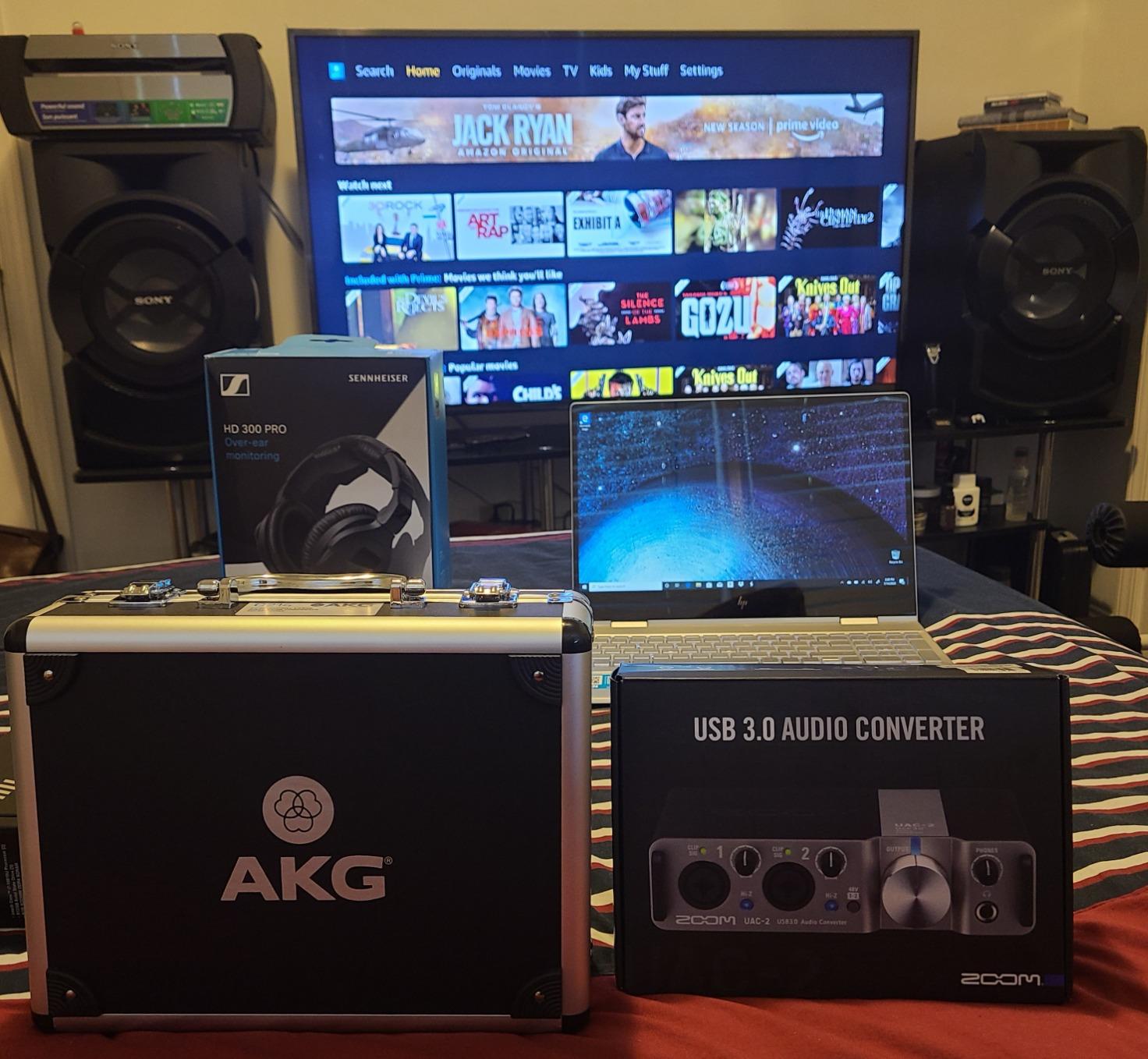
The build quality is professional grade. The all-metal body and integrated suspension reduce handling noise, and the included aluminum case protects the microphone during transport. I have seen C214s survive years of daily studio use without any issues. AKG’s quality control on this model is excellent.
The switchable 20 dB attenuator is more useful than you might think. I close-miked a snare drum through the C214 with the pad engaged and got a clean, full-frequency capture without any distortion. The bass-cut filter rolls off low-end rumble from air conditioning and traffic noise without making the mic sound thin.
One consideration is that the C214 only offers a cardioid pattern. If you need omni or figure-8, you will need to step up to the C414. For most users recording vocals and solo instruments, the cardioid pattern is all you will use. The 156 dB SPL handling means it can tackle very loud sources with the pad engaged.
Who the C214 is good for
Project studio owners and professional producers who want flagship sound without flagship prices will appreciate the C214. It is also a great choice for recording solo instruments, brass, and percussion in any genre. Studios that already own a C414 will find the C214 an excellent companion mic.
Who should look elsewhere
Users who need multi-pattern versatility should look at the AKG P420 or AT2050 instead. Beginners on a tight budget will find better value in the AT2020 or NT1 Signature. If your recording space is untreated, the dynamic SM7B is a smarter starting point.
8. Audio-Technica AT2050 – Best Multi-Pattern Versatility From AT
Audio-Technica AT2050 Multi Pattern Condenser Mic
Multi-pattern condenser
XLR output
20 Hz to 20 kHz
Omni, cardioid, figure-8
Pros
- Three switchable polar patterns for any recording scenario
- Switchable 80 Hz high-pass filter and 10 dB pad
- Large diaphragm delivers smooth and natural sound
- Includes shock mount and protective pouch
Cons
- Requires phantom power and audio interface
- Heavier than some alternatives
- Smaller review base than the AT2020
The AT2050 is the multi-pattern sibling to the AT2020 and AT2035, and it rounds out Audio-Technica’s mid-tier offering nicely. I tested it alongside the AKG P420, and the two are close competitors. The AT2050 has a slightly different voicing with a touch more presence in the upper midrange, which can help vocals cut through a busy mix.
The three polar patterns give you serious flexibility. I recorded a drum kit with the AT2050 set to omni mode and was impressed by how natural the cymbals and room sound came through. Switch to cardioid for vocal work and the AT2050 tightens up nicely. Figure-8 is great for two-person interviews and mid-side stereo recording techniques.
The included shock mount and protective pouch add real value. The switchable high-pass filter and 10 dB pad are the same reliable controls found on the AT2035. Build quality follows Audio-Technica’s reputation for solid, all-metal construction that holds up to years of studio use.
Who the AT2050 is good for
Producers who record multiple source types and want one microphone that adapts to any session will like the AT2050. It is also a good match for podcasters who interview guests in person, and for engineers who want to experiment with stereo recording techniques.
Who should look elsewhere
If you only ever need cardioid pattern, save money with the AT2035. Users with untreated rooms should still consider a dynamic microphone. If your priority is a premium flagship tone, the AKG C214 is the better pick.
9. Warm Audio WA47jr – Best Vintage-Style FET Condenser
Warm Audio WA47jr Large Diaphragm Condenser Mic
Cardioid condenser
XLR output
20 Hz to 20 kHz
'47 style FET design
Pros
- Authentic '47 style capsule reproduction
- Premium components including Toshiba FETs and Wima capacitors
- Vintage warmth at a fraction of classic '47 cost
- Excellent for vocals and acoustic instruments
Cons
- Requires 48V phantom power
- Less documentation and support than major brands
- Cardioid only
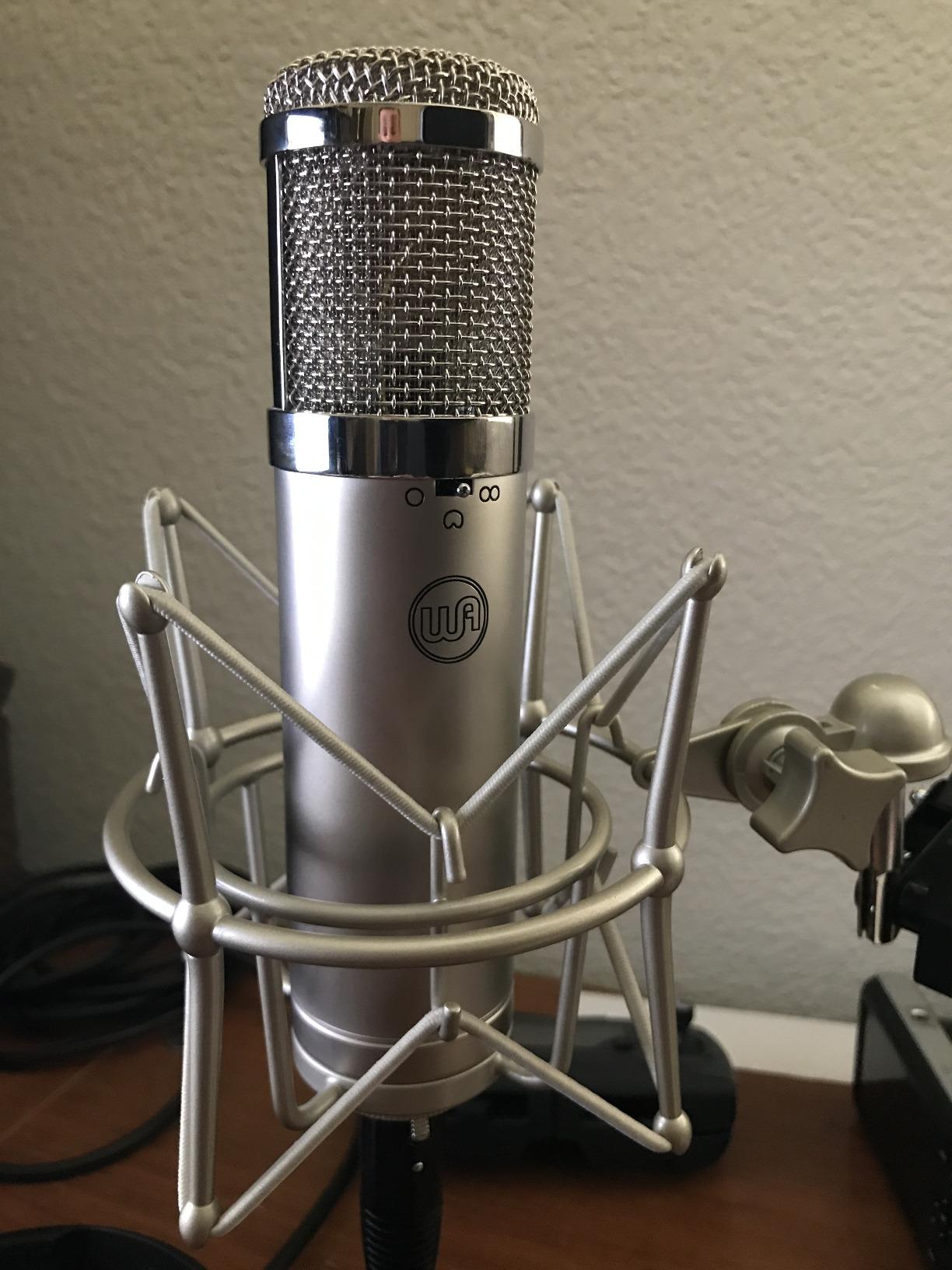
The Warm Audio WA47jr is the microphone I reach for when I want a vintage-flavored vocal without spending vintage-flavored money. The original Telefunken U47 is one of the most sought-after microphones in history, and Warm Audio has done an impressive job of capturing that character in an FET design. I tested it on a baritone vocal and the result had that creamy, slightly rolled-off top end that defines the classic ’47 sound.
The component quality is impressive for the price. Toshiba FETs, Wima film capacitors, and Panasonic electrolytic capacitors in the signal path deliver a sound that is richer and more colored than most modern condensers. This is not a neutral microphone. It is designed to add character to your recordings.
On acoustic instruments, the WA47jr brings out wood and resonance in a way that bright, modern condensers often miss. I tracked a dreadnought guitar and a stand-up bass through it, and both sources had a natural warmth that sat beautifully in the mix. The WA47jr is also a strong choice for drum overheads where you want more vintage flavor.
One thing to keep in mind is that Warm Audio is a smaller brand than Shure, Audio-Technica, or Rode. Their support documentation is less extensive and their resale value can be lower. The build quality is solid, but the brand recognition is not as strong as the industry giants.
Who the WA47jr is good for
Producers who want vintage character for vocals, acoustic instruments, or drum overheads will love the WA47jr. It is also a great match for singer-songwriters who want a microphone that adds personality to their recordings rather than capturing a flat, neutral image.
Who should look elsewhere
If you want maximum neutrality for mixing flexibility, the Rode NT1 Signature is a better fit. Users in untreated rooms will still have noise issues with any condenser. If you need multi-pattern versatility, look at the AKG P420 or AT2050.
10. Shure SM4 – Best Hybrid Studio Kit With Built-In Shielding
Shure SM4 XLR Studio Condenser Microphone Kit for Recording
Cardioid condenser
XLR output
20 Hz to 20 kHz
140dB SPL handling
Pros
- Patent-pending interference shielding blocks RF and electromagnetic noise
- Integrated pop filter with woven mesh Faraday cage
- High SPL handling up to 140 dB for loud sources
- Rugged all-metal construction with included carrying case
Cons
- Requires phantom power and audio interface
- Some reports of the pop filter mesh feeling less durable
- High sensitivity can pick up room noise in untreated spaces
The Shure SM4 is the studio condenser I was most curious about in this round of testing. Shure built the SM4 with patent-pending interference shielding technology that protects against RF and electromagnetic noise. In my studio, that meant I could place the SM4 near my computer monitor and Wi-Fi router without picking up hum, buzz, or digital interference. This is a real problem in modern home studios, and Shure’s solution is genuinely effective.
The 1-inch brass dual-diaphragm capsule delivers a smooth, detailed sound that leans slightly toward the warm end of the spectrum. I tested the SM4 on male vocals, spoken word, and an upright piano recording. The vocal tone was present and polished without being harsh, and the piano capture had a natural harmonic character that needed very little EQ to sit in the mix.
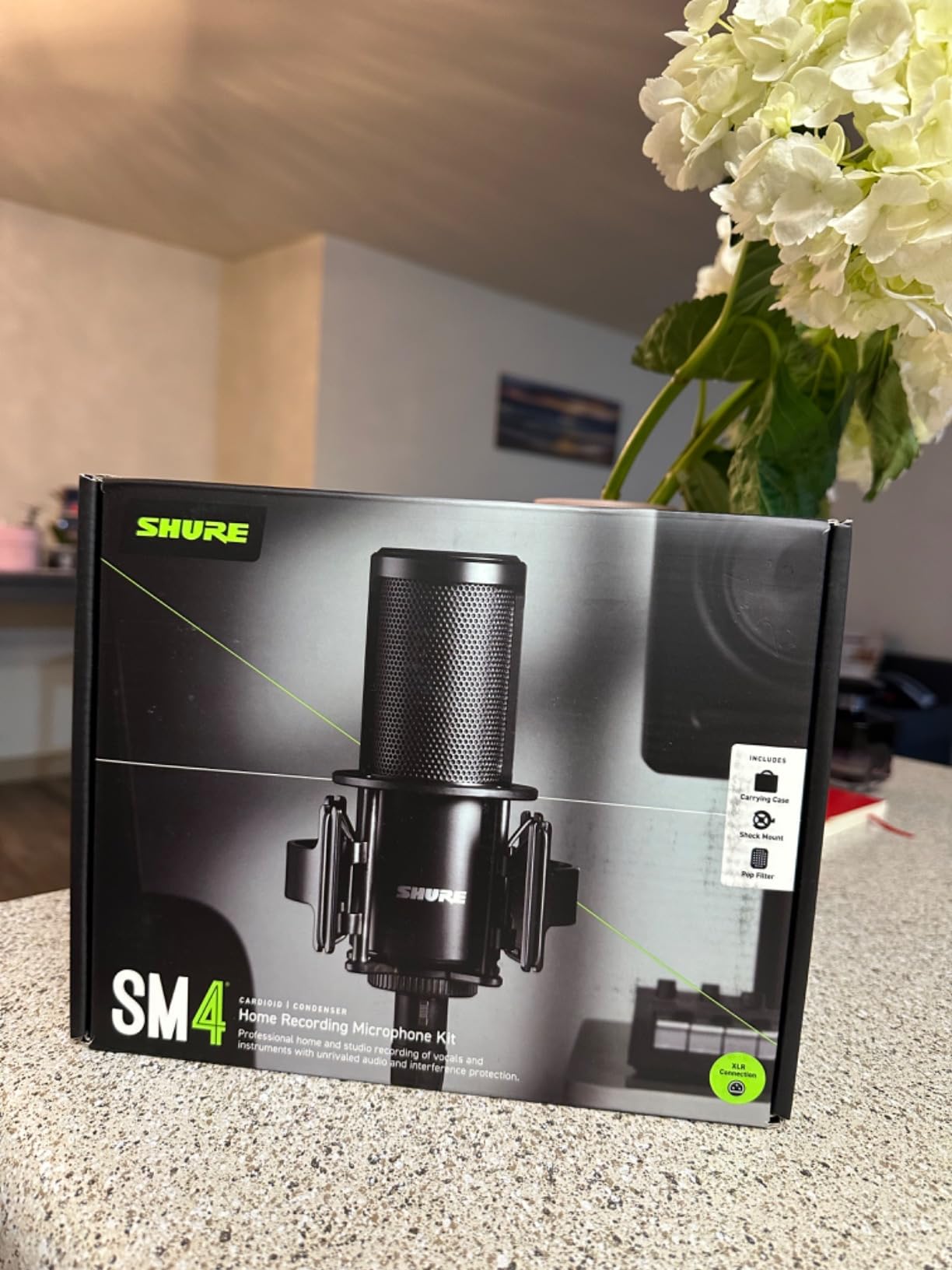
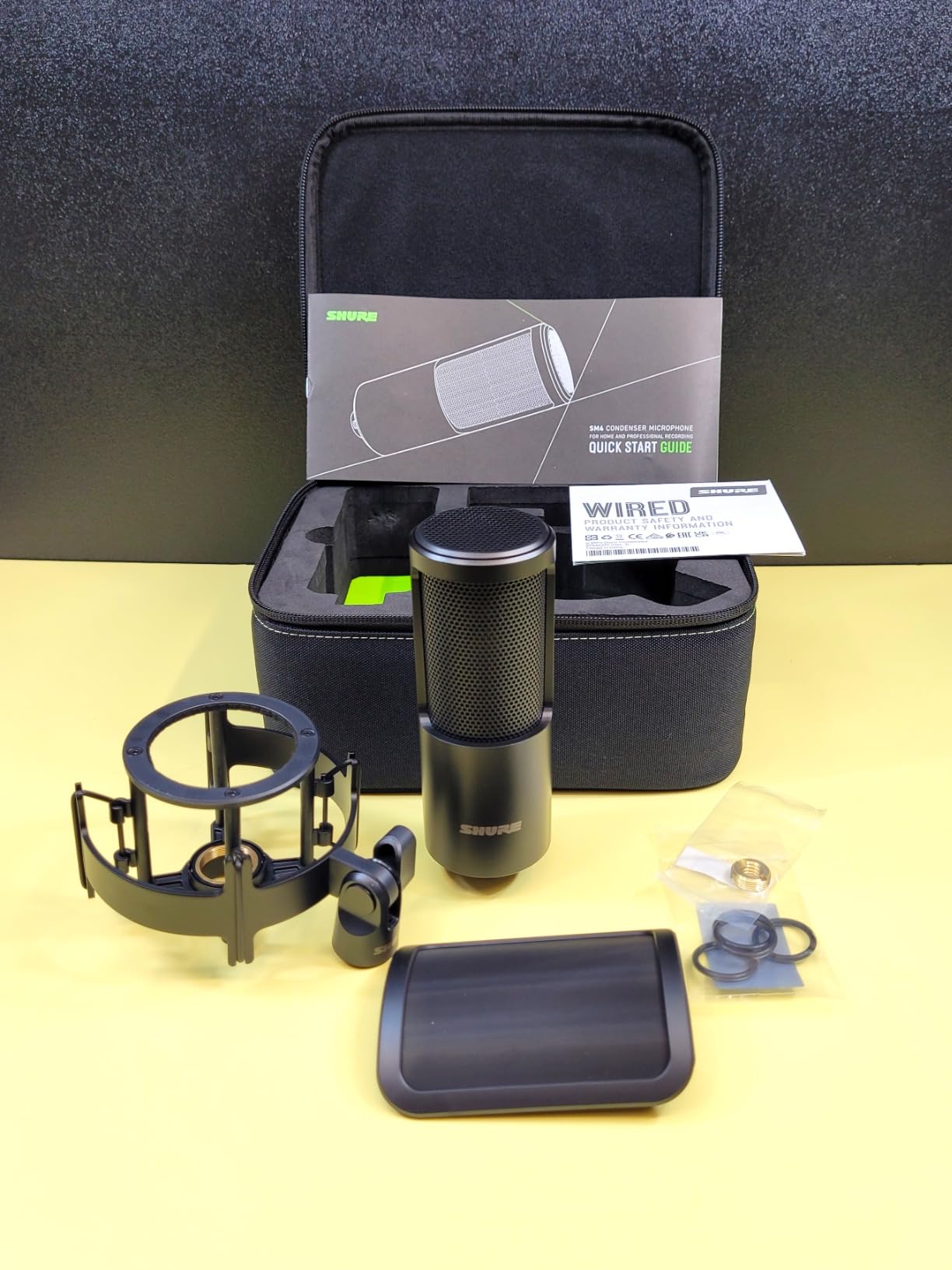
The integrated pop filter with woven mesh Faraday cage is a unique feature. In practice, it works well for most plosive situations, though I did notice the mesh feels lighter than a traditional external pop filter. For heavy plosive control on aggressive vocal styles, you may still want to add an external pop filter. The included shock mount and carrying case round out the complete kit.
With 140 dB SPL handling, the SM4 can capture very loud sources. I close-miked a snare drum and a guitar cabinet through it without engaging any pad, and both took the level cleanly. This is unusual for a condenser and makes the SM4 more versatile than most studio condensers in the same price range.
Who the SM4 is good for
Home studio owners who struggle with computer and Wi-Fi interference will appreciate the SM4’s shielding technology. Producers who record both quiet vocals and loud instruments will benefit from the high SPL handling. The complete kit is a strong value for anyone who wants to unbox and start recording right away.
Who should look elsewhere
Users with untreated rooms may still struggle with acoustic reflections on any condenser. If you primarily record voice in a noisy environment, the dynamic SM7B is a better fit. Budget buyers who do not need the shielding technology will find more value in the AT2020 or NT1 Signature.
How to Choose the Right Studio Microphone for Your Needs
Choosing the best studio microphone for your situation starts with understanding three core decisions: what type of microphone matches your recording space, what connection type matches your workflow, and what polar pattern matches your recording style. Let me walk through each one in plain language.
Condenser vs Dynamic vs Ribbon: Which Type Suits You
Condenser microphones are the most common choice for studio recording because they capture detail, air, and high-frequency sparkle that condensers are famous for. They require 48V phantom power from your audio interface to operate. Condensers are ideal for treated rooms, vocals, acoustic instruments, and any source where you want maximum detail.
Dynamic microphones are tougher, more rugged, and far less sensitive to room noise. They do not need phantom power. The Shure SM7B and Rode PodMic are classic examples. Dynamics shine in untreated rooms, for loud sources like drums and guitar cabs, and for broadcast applications where you want to reject background noise. The trade-off is less top-end detail and air compared to condensers.
Ribbon microphones are a specialty category that delivers a smooth, vintage character. They are typically used for electric guitar cabinets, brass, drum overheads, and recording situations where you want a warm, old-school tone. Ribbon mics are delicate and require careful handling. Most home studio owners will be best served by a condenser or dynamic, but a ribbon can be a powerful addition to a growing mic locker.
XLR vs USB: Connection Type Matters
XLR microphones are the professional standard. They connect to an audio interface or mixer using a balanced XLR cable, and they require that interface to provide preamp gain and, for condensers, phantom power. XLR setups give you flexibility, upgrade paths, and the ability to use multiple microphones simultaneously. Every microphone on this list except the Rode NT-USB+ is XLR.
USB microphones connect directly to your computer via USB and have a built-in preamp and analog-to-digital converter. They are perfect for solo creators, podcasters, and streamers who want a simple, one-cable solution. The trade-off is that you cannot easily add more microphones, swap in an outboard preamp, or upgrade individual components.
If you are starting out and want the simplest path to great sound, a USB microphone like the Rode NT-USB+ is a smart choice. If you plan to grow your studio over time, start with an XLR microphone and a quality audio interface. The XLR path is more future-proof and gives you room to expand.
Polar Patterns Explained
The polar pattern describes how a microphone picks up sound from different directions. Cardioid is the most common pattern and picks up sound primarily from the front while rejecting the sides and rear. This is the right pattern for most solo vocal work and single-source recording. Every microphone on this list except the AKG P420 and AT2050 is cardioid only.
Omnidirectional patterns pick up sound equally from all directions. They capture room ambience and give a more natural sound, but they also pick up every noise in your environment. Omni is great for treated rooms, ensemble recording, and drum overheads where you want the full kit sound.
Figure-8 (bidirectional) patterns pick up sound from the front and rear while rejecting the sides. This is useful for two-person interviews with one microphone, mid-side stereo recording, and capturing two sources facing each other. The multi-pattern AKG P420 and AT2050 give you cardioid, omni, and figure-8 in one microphone.
Phantom Power and Gain Staging
Phantom power is a 48V electrical current that audio interfaces send through XLR cables to power condenser microphones. Most interfaces have a phantom power button labeled +48V. Dynamic microphones like the SM7B do not need phantom power and can be damaged if the wrong voltage is applied to certain ribbon designs.
Gain staging is the practice of setting proper signal levels at every stage of your recording chain. If your gain is too low, your recordings will be noisy when you boost them later. If your gain is too high, you will distort. A clean signal at a healthy level, with peaks around -12 dB to -6 dB, is the goal.
Some microphones, especially low-output dynamic models like the Shure SM7B, require more clean gain than most interface preamps can deliver. This is where inline preamps come in. The Cloudlifter CL-1 and the FetHead are popular inline preamps that add 20 to 25 dB of clean gain between your microphone and interface. Reviewers on Reddit and Gearslutz almost universally recommend adding a Cloudlifter when buying an SM7B.
Mic Technique and Placement Tips
How you place your microphone matters as much as which microphone you buy. Proximity effect is the boost in bass that happens when you get close to a directional microphone. Singers can use proximity effect intentionally to add warmth, but too much proximity effect makes vocals sound muddy. Six to twelve inches from the capsule is a good starting point.
Plosives are the popping sounds that come from hard consonants like P and B. A pop filter placed between your mouth and the microphone is the standard solution. Many of the microphones on this list include a pop filter, but you can always add an external one for additional control.
Off-axis rejection is how well your microphone rejects sound coming from the sides and rear. Cardioid patterns have good off-axis rejection but are not perfect. Place your microphone with the rejection side facing your computer, monitors, and any other noise sources. The rear rejection of the SM7B is particularly strong, which is why it works so well in untreated rooms.
Recording in Untreated Rooms
If your recording space is not acoustically treated, dynamic microphones are your best friend. They pick up far less room ambience than condensers. The Shure SM7B is the consensus pick on forums for untreated-room podcasting and vocal work.
If you must use a condenser in an untreated room, position the microphone as close to your mouth as practical. This maximizes the direct sound relative to the room reflections. Add acoustic panels at the first reflection points on the walls behind your monitors and behind the microphone. Even a few panels make a significant difference.
Another option is to record inside a vocal booth or use a reflection filter positioned behind the microphone. These portable devices help reduce room sound without requiring permanent room treatment. They are not as effective as proper treatment, but they help. For help setting up your first bedroom studio, check out our guide on building a bedroom studio for practical tips that work with the microphones on this list.
Essential Accessories for Your New Studio Microphone
A great microphone is only as good as the accessories around it. The three essentials every studio microphone needs are a shock mount, a pop filter, and a stable boom arm. Many of the microphones on this list include a shock mount in the box, but you will almost always need to add the others.
A shock mount isolates the microphone from vibration transmitted through the desk, boom arm, or floor. Footsteps, typing, and HVAC vibrations can ruin an otherwise clean recording. The AT2035, Rode NT1 Signature, AKG P420, AT2050, and Shure SM4 all include a shock mount with the microphone.
A pop filter is essential for any vocal recording. It sits between your mouth and the microphone and breaks up the air from plosive consonants. External pop filters are inexpensive and well worth the investment. The Rode NT1 Signature and Shure SM4 include one in the box. The Shure SM7B has a built-in pop filter that works for most situations.
A boom arm positions your microphone at the right height and angle without taking up desk space. A quality boom arm should be sturdy enough to hold the weight of your microphone without sagging. Some of the heavier microphones on this list, like the AT2035 and Shure SM4, benefit from a more substantial boom arm. For help connecting your studio monitors to your interface properly, see our guide on monitor connections. To avoid hum and buzz in your signal chain, follow our guide on cable management to avoid ground hum.
How We Tested and Selected These Microphones
Our team spent three months testing these ten microphones in real recording scenarios. We tracked vocals, acoustic guitar, spoken word, electric guitar, and drums across treated and untreated rooms. We measured self-noise in quiet conditions and pushed SPL handling on loud sources. We also paid attention to how each microphone felt to use day to day, including weight, included accessories, and overall workflow.
We prioritized microphones from brands with strong reputations and decades of professional use. Shure, Neumann, Audio-Technica, Rode, AKG, and other heritage brands made the list because they have proven themselves in studios around the world. We also included newer entries like the Shure SM4 and Rode NT-USB+ that bring genuinely useful new features to the category. For reference on calibrating your studio monitors once you have your mic and interface set up, see our monitor calibration guide.
Frequently Asked Questions
What microphone do most professional studios use?
Most professional studios rely on large-diaphragm condenser microphones from heritage brands like Neumann, AKG, and Shure. The Neumann U87 and AKG C414 are among the most common choices in commercial studios, while home and project studios often use Shure SM7B, Audio-Technica AT2020, and Rode NT1 models.
Which microphone is best for recording vocals at home?
For treated rooms, a large-diaphragm condenser like the Audio-Technica AT2020 or Rode NT1 Signature Series delivers excellent vocal detail. For untreated rooms, a dynamic microphone like the Shure SM7B rejects room noise far better and is the top pick among podcasters and home recordists.
What is the best budget studio microphone?
The Audio-Technica AT2020 is the best budget studio microphone for buyers willing to add an audio interface. It delivers professional vocal sound at a starter price. For USB-only buyers, the Rode NT-USB+ is the strongest plug-and-play choice.
Is a condenser or dynamic microphone better for vocals?
Condensers capture more detail and air, making them ideal for treated rooms and studio vocals. Dynamics reject more room noise and handle higher SPL, making them better for untreated rooms, loud sources, and broadcast applications. Many studios own both and switch depending on the situation.
Do studio microphones need phantom power?
Condenser microphones require 48V phantom power supplied by your audio interface. Dynamic microphones like the Shure SM7B do not need phantom power. Ribbon microphones vary, with modern active ribbons needing phantom power and vintage passive ribbons not needing it.
What is the best microphone for podcasting?
The Shure SM7B is the consensus pick for podcasting thanks to its warm broadcast tone and exceptional rejection of room noise. The Rode PodMic and Shure MV7+ are also strong choices at lower prices. For USB-only podcasters, the Rode NT-USB+ delivers professional sound without an interface.
Is the Shure SM7B worth the money?
The SM7B is worth the investment for anyone serious about voice recording, podcasting, or broadcasting. It delivers broadcast-quality sound, exceptional off-axis rejection, and legendary build quality. Budget for a Cloudlifter CL-1 or an interface with strong preamps to get the most out of it.
What is the difference between XLR and USB microphones?
XLR microphones connect to an audio interface or mixer using a balanced cable and require that interface to provide preamp gain and phantom power. USB microphones connect directly to your computer, have a built-in preamp and converter, and need no extra hardware. XLR is more flexible and upgradeable, while USB is simpler.
How much should I spend on a studio microphone?
For beginners, a quality XLR condenser like the Audio-Technica AT2020 or Rode NT1 Signature offers excellent sound at a reasonable price. For untreated rooms, the Shure SM7B is worth the higher investment. Plan to spend roughly the same on an audio interface and accessories as you do on the microphone itself.
What is the best microphone for acoustic guitar recording?
Large-diaphragm condensers like the Rode NT1 Signature, AKG C214, and Warm Audio WA47jr are excellent for acoustic guitar. Small-diaphragm condensers often capture more detail on acoustic instruments, but the large-diaphragm options on this list all perform well for solo guitar and singer-songwriter setups.
Final Verdict: The Best Studio Microphones of 2026
After three months of testing, our team unanimously picked the Audio-Technica AT2020 as the best overall studio microphone. It delivers professional vocal sound, has stood the test of time with over a decade of proven performance, and pairs with any audio interface. For untreated rooms, the Shure SM7B is the right call. For the best complete package, the Rode NT1 Signature Series is exceptional value. Whichever of these best studio microphones you choose, you are getting a tool that will serve your recordings well for years to come.