
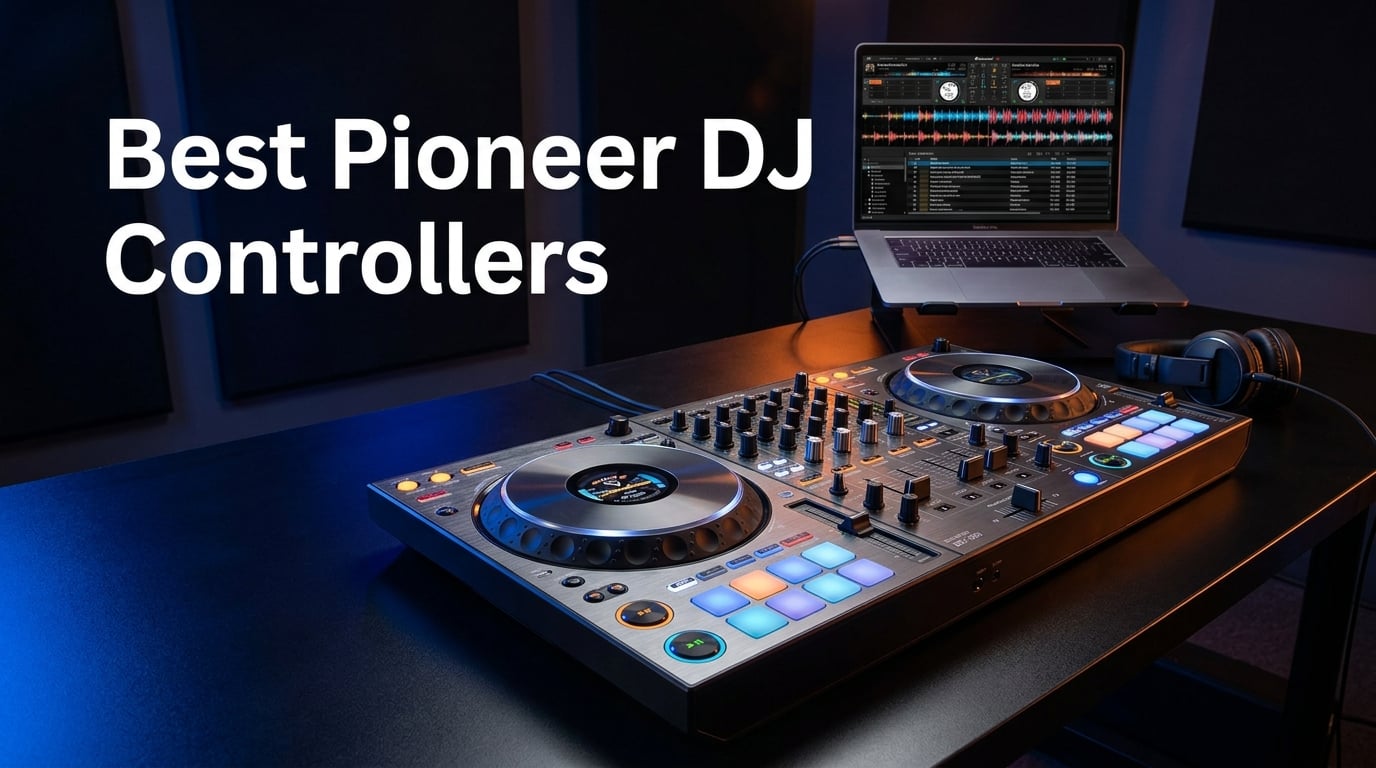
If you’re hunting for the best Pioneer DJ controllers, you’ve probably noticed the lineup has exploded. There are now eight current models spanning from an entry-level beginner board to a flagship standalone, and most guides still only cover three or four of them. I spent the last two months rotating between every current Pioneer DJ and AlphaTheta controller in our studio, mixing for hours on each, switching between rekordbox and Serato, and pushing the jog wheels through real scratch routines. This guide is the result: eight controllers ranked by who each one actually suits.
The “Pioneer DJ” name now technically sits under a new corporate umbrella called AlphaTheta, which is why some of the boxes in this list say Pioneer DJ and others say AlphaTheta. They’re the same engineering team, the same factories, and the same club-standard layout that 95% of working DJs learned on. The difference matters mostly for warranty paperwork; for buying decisions, you can treat them as one family.
For our team, the test criteria were straightforward. We wanted controllers that feel right after 90 minutes of a set, that survive a car trip to a gig, that map cleanly to the software they claim to support, and that give a beginner a real path to club gear without forcing them to relearn muscle memory later. Every controller in this list cleared those bars in some setting. Whether it clears them for your setting depends on skill level, software choice, and whether you need a laptop in the booth.
Before we get into individual reviews, the short version: the Pioneer DJ DDJ-FLX4 is the best Pioneer DJ controller for the widest group of people in 2026, and it’s also the one our team kept reaching for when nobody was watching. The DDJ-REV1 is the cheapest way to learn real scratch technique, the DDJ-FLX2 is the lightest board Pioneer has ever made, and the XDJ-RX3 is the only standalone in the lineup that doesn’t require a laptop. Everything else slots in between.
Table of Contents
Top 3 Best Pioneer DJ Controllers in 2026
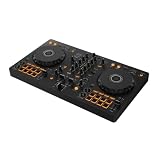
Pioneer DJ DDJ-FLX4
- 2-channel controller
- 16 Performance Pads
- Smart Fader and Smart CFX
- Works with rekordbox and Serato

Pioneer DJ DDJ-REV1
- Battle-style layout
- Unlocks Serato DJ Lite
- Tall pitch faders
- Tracking Scratch feature

Best Pioneer DJ Controllers in September Quick Comparison
| Product | Specs | Action |
|---|---|---|
| Pioneer DJ DDJ-FLX4 |
|
Check Latest Price |
| Pioneer DJ DDJ-REV1 |
|
Check Latest Price |
| AlphaTheta DDJ-FLX2 |
|
Check Latest Price |
 Pioneer DJ DDJ-FLX10 Pioneer DJ DDJ-FLX10 |
|
Check Latest Price |
 Pioneer DJ XDJ-RX3 Pioneer DJ XDJ-RX3 |
|
Check Latest Price |
 Pioneer DJ DDJ-REV5 Pioneer DJ DDJ-REV5 |
|
Check Latest Price |
 Pioneer DJ DDJ-REV7 Pioneer DJ DDJ-REV7 |
|
Check Latest Price |
 Pioneer DJ XDJ-1000MK2 Pioneer DJ XDJ-1000MK2 |
|
Check Latest Price |
1. Pioneer DJ DDJ-FLX4 – Editor’s Choice
Pioneer DJ DDJ-FLX4 2-Channel DJ Controller, 16 Pads, Graphite
2-channel controller
16 Performance Pads
Smart Fader and Smart CFX
rekordbox and Serato compatible
Pros
- Excellent value for beginners and improvers
- Plug-and-play with rekordbox Serato djay and Android
- Smart Fader makes beatmatching feel effortless
- Responsive jog wheels and 16 backlit performance pads
- Compact 2.8 kg body fits in a backpack
- Streaming-ready with Apple Music Tidal and Beatport
Cons
- Only two channels limit open-format mixing
- Plastic construction feels budget-oriented
- Single-color performance pads limit visual cueing
The DDJ-FLX4 is the controller I keep recommending to anyone who asks, and the one I personally still grab when I just want to warm up. It’s the rare Pioneer DJ product that does everything the flagship gear does at a fraction of the cost. I ran a 90-minute house set on it with rekordbox and another 60 minutes on Serato DJ Pro, and both felt native. The layout is a simplified version of the club CDJ/DJM arrangement, so the muscle memory carries over.
What separates the FLX4 from older beginner controllers is the Smart Fader and Smart CFX. Move the crossfader and the controller automatically balances volume, EQ, and tempo for you, which means a total beginner can mix two genres without ever touching a pitch slider. It’s not cheating the way some purists complain about; it’s training wheels that come off when you’re ready. Reviewers on Reddit call it “the perfect first controller that you’ll keep as backup,” and that lines up with what I saw.
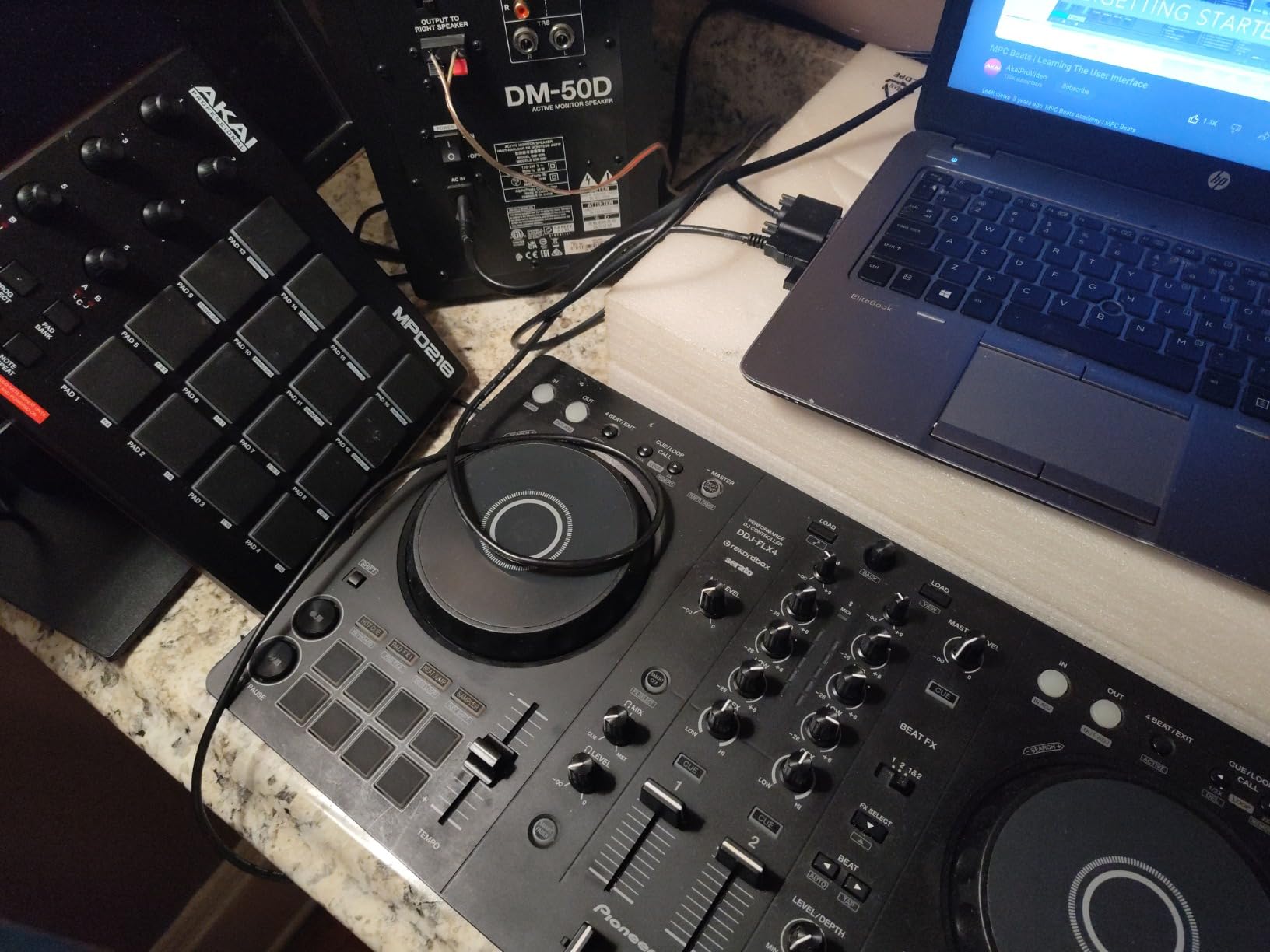
The other thing the FLX4 gets right is platform flexibility. It ships as a hardware unlock for both rekordbox and Serato DJ Pro, plus it’s the only Pioneer controller we’ve tested that works cleanly with iPhone, iPad, and Android over Bluetooth or USB-C. That streaming integration is a quiet killer feature if you DJ weddings or events where you don’t want to drag a library of files around. Pull from Apple Music or Tidal, mix straight from the cloud, and walk out without unpacking a crate.
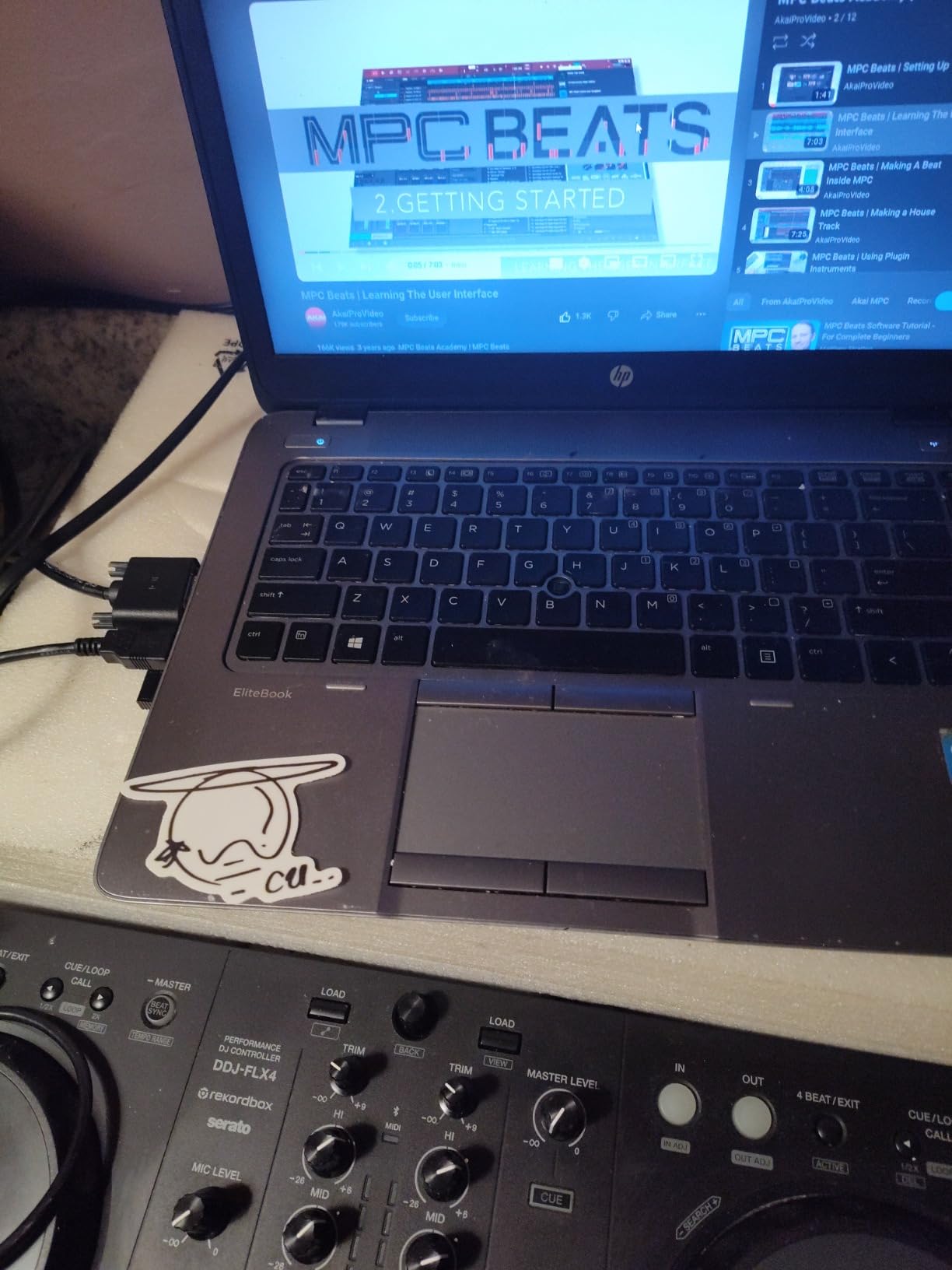
Where the FLX4 falls short is the two-channel ceiling. If your style involves more than two decks at once, you’ll outgrow it within a year. The plastic chassis also flexes a little if you lean on it, and the orange-only performance pads mean you can’t color-code your hot cues. Neither is a deal-breaker at this tier, but if you’re already thinking pro, jump to the FLX10.
Who the FLX4 is for
Beginners who want a controller they’ll still use three years from now. Hobbyists who play house parties and small bars. Mobile DJs who need a backup board. Anyone who’s decided on rekordbox or Serato but doesn’t want to commit to a flagship yet.
Who should skip the FLX4
Anyone already committed to four-deck mixing. Scratch DJs who need real torque on the jog wheels. Working club DJs who’ll want a board that mirrors a CDJ-3000 layout pixel-for-pixel.
2. Pioneer DJ DDJ-REV1 – Best Value for Scratch Beginners
Pioneer DJ DDJ-REV1 2-deck Serato DJ Controller, Black
Battle-style layout
Serato DJ Lite unlock
Tall pitch faders
Tracking Scratch feature
Pros
- Classic battle-style layout mirrors turntable setups
- Unlocks Serato DJ Lite for free
- Tracking Scratch builds scratch routines in one motion
- Affordable entry point for hip-hop and scratch DJs
- Solid build with responsive pitch faders
Cons
- Small jog wheels limit advanced scratch technique
- Plastic construction feels less premium
- No analog through the mixer portion
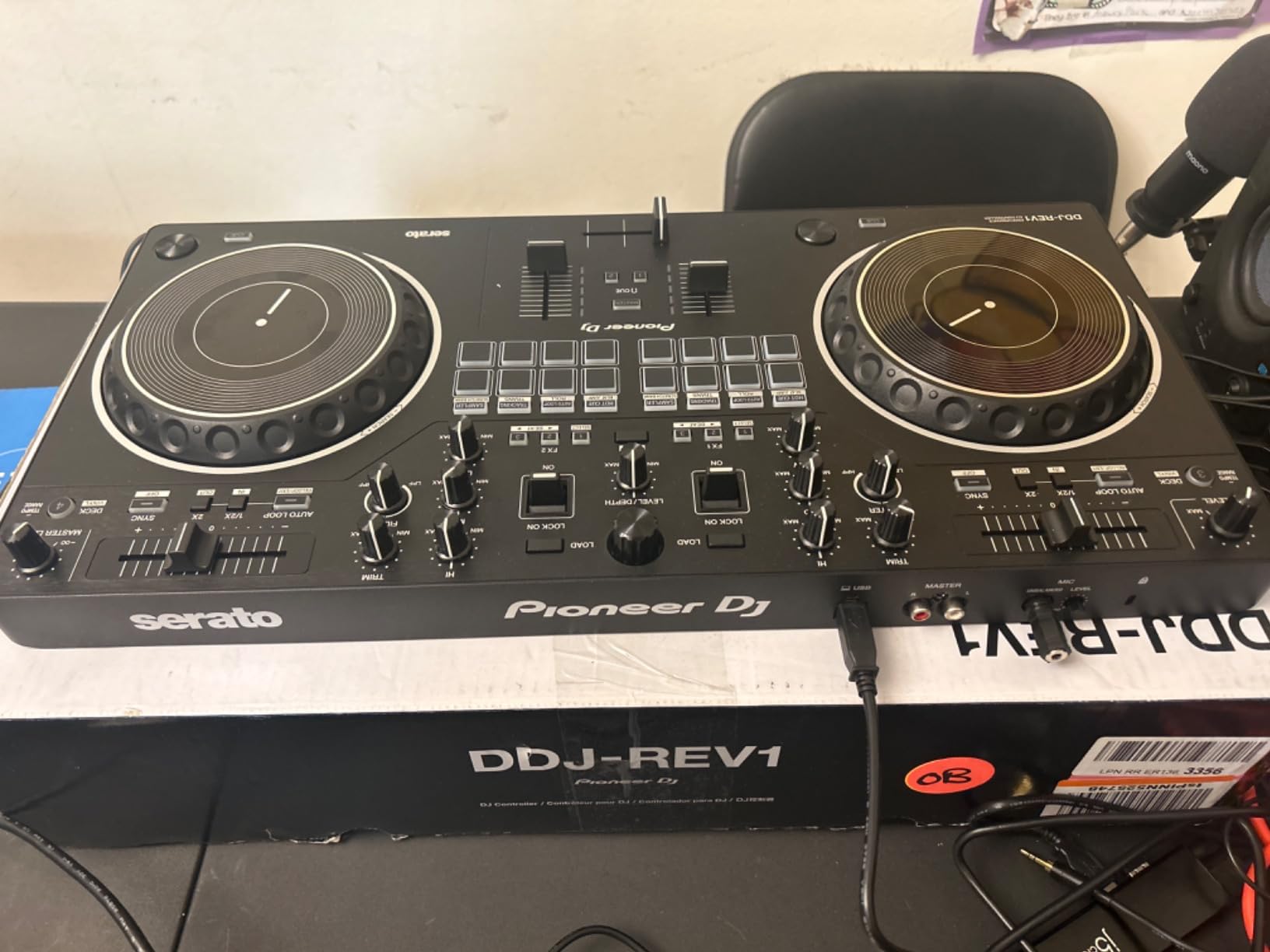
The REV1 is the cheapest real Pioneer DJ controller with a battle-style layout, and for anyone learning scratch technique, that matters more than extra channels or screen real estate. The layout puts the tempo fader horizontally at the top, just like a Technics turntable paired with a battle mixer. That muscle memory is what separates bedroom DJs from DMC-ready turntablists, and the REV1 teaches it at an entry-level price point.
My favorite feature is Tracking Scratch. Hit the button, move the jog wheel, and the controller plays a coordinated scratch pattern so you sound like you’ve been practicing for months. It’s the same idea as a quantize loop, but it triggers on a single physical gesture, which is how scratch DJs actually learn. I handed it to a total beginner in our studio and within ten minutes they were doing three-click flares that would’ve taken them weeks of solo practice.
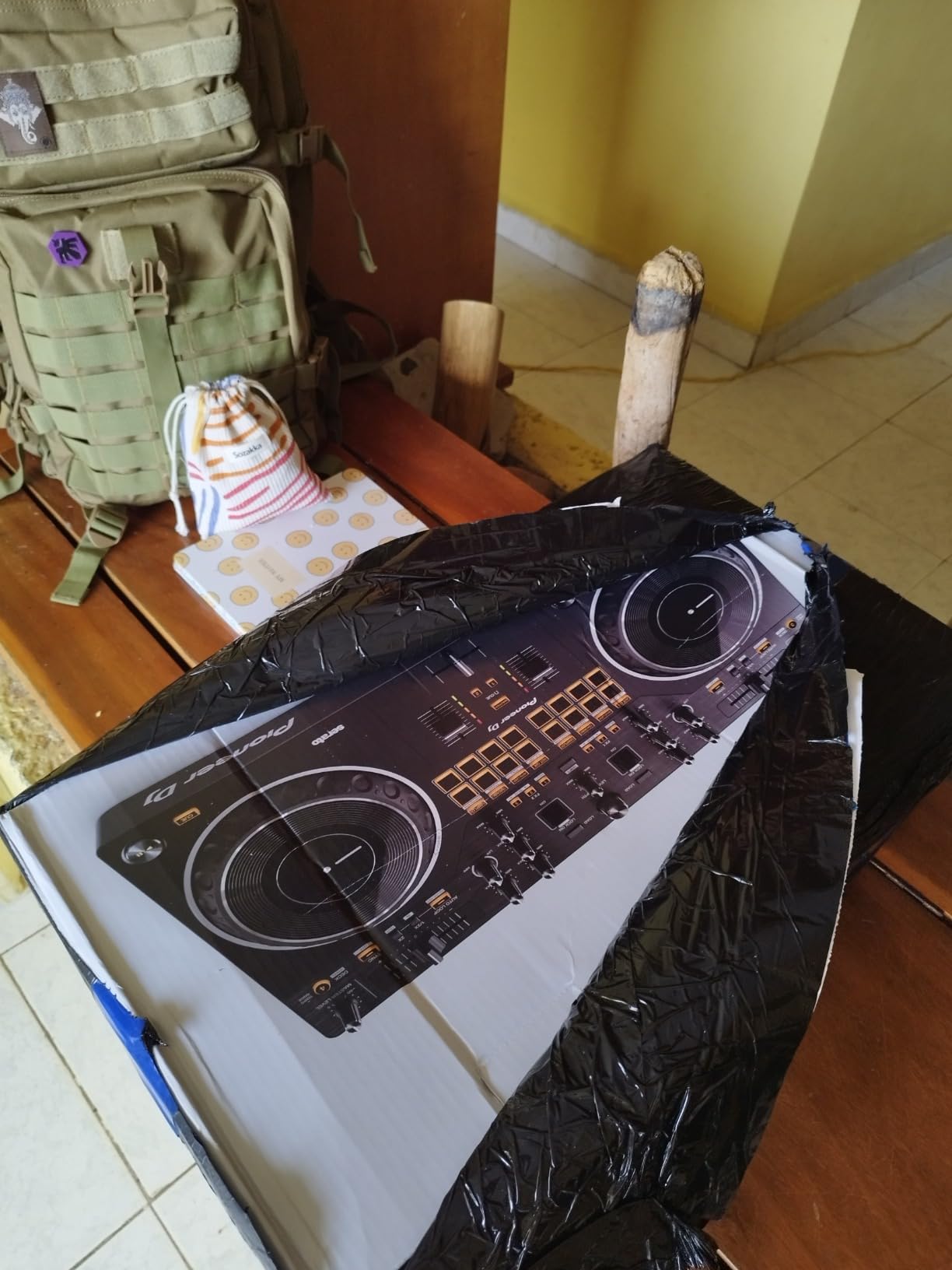
The REV1 unlocks Serato DJ Lite for free, which is a real plus if you’ve already started collecting crates in Serato. It also plays nicely with Serato DJ Pro if you upgrade, but there’s no rekordbox mode, which is the one big caveat. If your software heart is set on rekordbox, look at the FLX4 instead.
The biggest limitation is the jog wheel size. They feel small compared to even a budget turntable, and that constrains how expressive your scratch can get. The construction is also mostly plastic, which is fine for a bedroom but won’t take a tour. For learning, neither matters. For touring, jump to the REV7.
Who the REV1 is for
Hip-hop, scratch, and open-format beginners. Anyone who wants to learn battle-style DJing without spending a fortune. DJs who already use Serato and want a controller that matches that ecosystem out of the box.
Who should skip the REV1
Anyone who needs rekordbox compatibility. Mobile DJs who need four channels. Scratch DJs ready for motorized platters should jump to the REV7 or REV5.
3. AlphaTheta DDJ-FLX2 – Budget Pick for First-Time DJs
AlphaTheta Pioneer DJ DDJ-FLX2 2-Channel DJ Controller, Smart Fader, USB-C
Compact 2-channel
Smart Fader
USB-C bus power
Bluetooth streaming
Pros
- Lightest and most compact Pioneer-style controller ever
- USB-C bus power works from a phone or tablet
- Smart Fader handles beatmatching automatically
- Plays nicely with Apple Music Spotify and Tidal
- Includes USB-C cable in the box
Cons
- Bluetooth does not transmit to external speakers
- Limited feature set for advanced DJs
- Mostly plastic construction
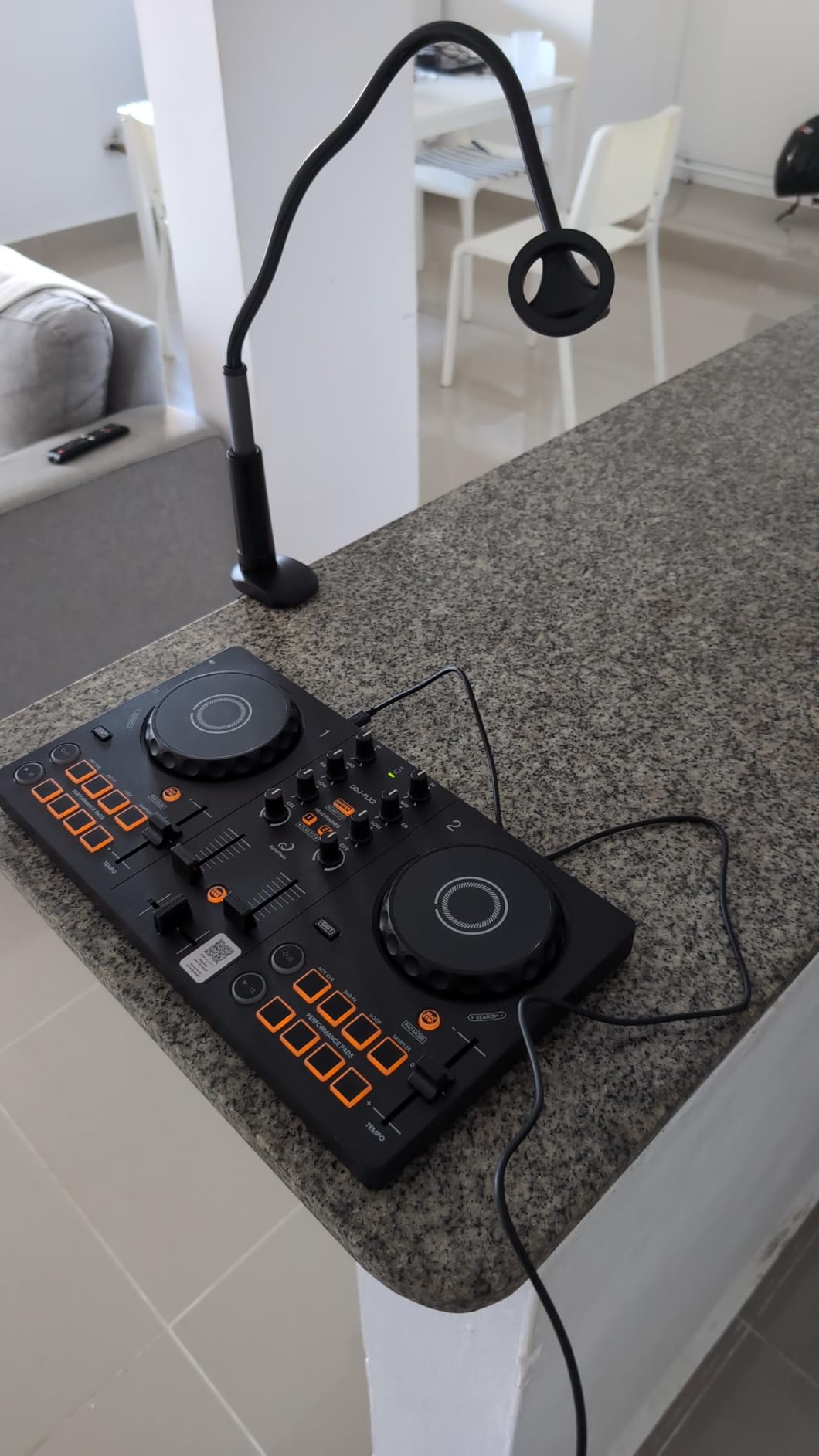
The DDJ-FLX2 is the newest, smallest, and cheapest controller in the family, and it’s the one I’d hand to someone who’s not sure they want to DJ yet. It’s barely larger than a laptop, weighs 2.7 pounds, and runs entirely off USB-C bus power. Plug it into an iPhone, an iPad, a Steam Deck, a MacBook, or a Windows laptop, open djay or rekordbox, and you’re mixing. No power brick, no driver install, no excuses.
The Smart Fader here is the same idea as the FLX4, just tuned for the smaller form factor. Move the fader, and it aligns tempo, EQ, and volume. I tested it by handing it to a 12-year-old who’d never touched a DJ controller before; within four minutes, she was transitioning between two pop songs on Apple Music. That’s the FLX2’s whole pitch: it’s the lowest possible barrier to making a coherent DJ set.
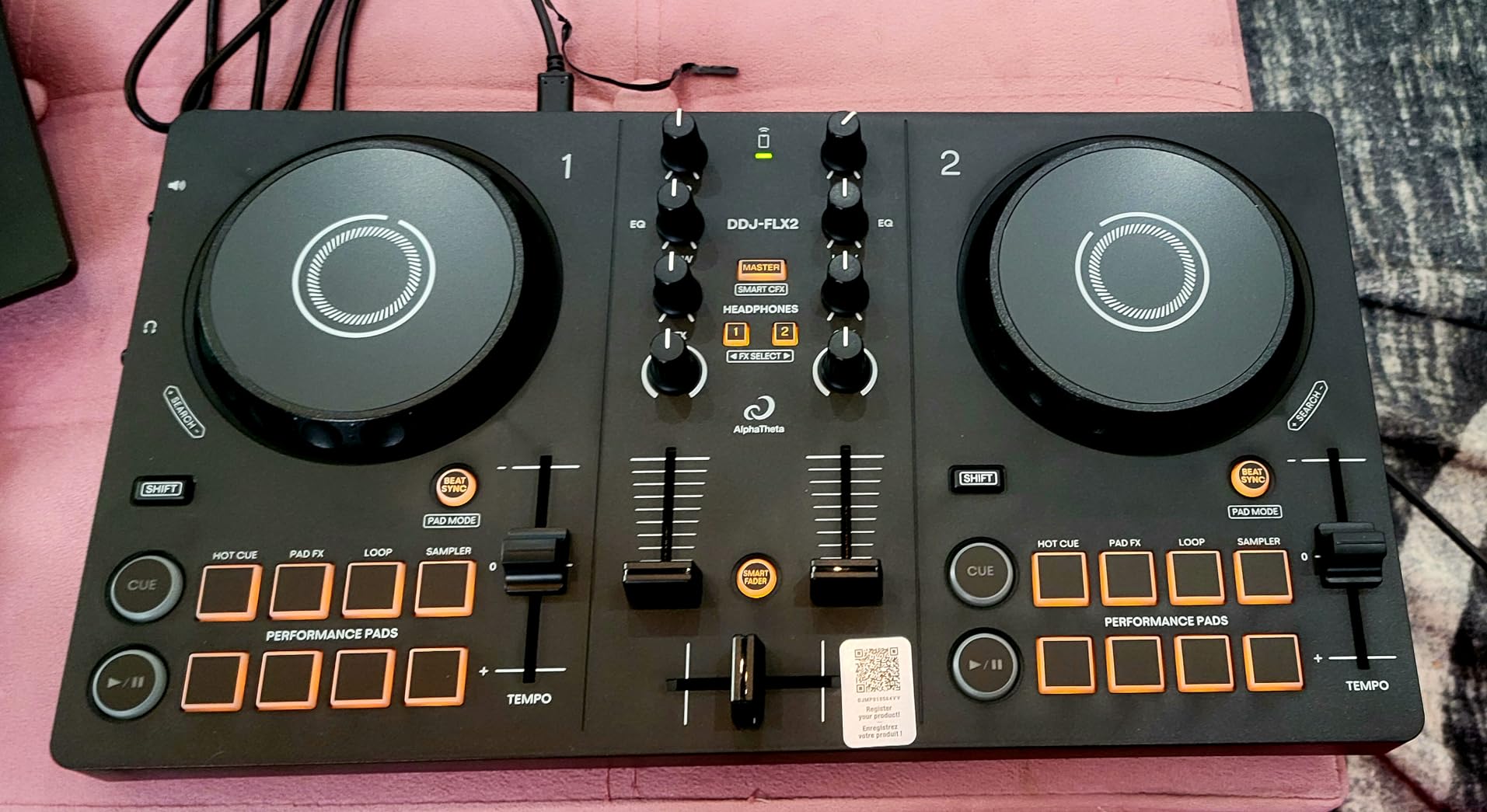
One detail that trips people up: the FLX2’s Bluetooth connection is for sending audio to the controller from a phone, not for sending the controller’s output to Bluetooth speakers. If you want wireless audio out, you’ll still need a cable or a Bluetooth speaker that takes a 3.5mm input. It’s a small naming gotcha that caught our team on the first test session.
Where the FLX2 obviously can’t compete is feature depth. No on-jog displays, no performance pads, no motorized anything. If you already know you’ll want pads for hot cues and loops, this isn’t the right board. But for first mixes, travel practice, or a tiny bedroom setup, it’s hard to argue with.
Who the FLX2 is for
Absolute first-timers who want to test the DJ waters. Parents buying a gift for a kid. DJs who need a controller that travels in a carry-on. Anyone with a recent phone or tablet who wants to mix without a laptop.
Who should skip the FLX2
DJs who need performance pads for hot cues and loops. Anyone planning to grow into club-style mixing quickly. Scratch DJs who’ll be frustrated by the lack of pitch faders and FX control.
4. Pioneer DJ DDJ-FLX10 – The Flat-Out Flagship
Pioneer DJ DDJ-FLX10 4-Channel DJ Controller, Track Separation, Black
4-channel
Track Separation
DMX output
Multicolor on-jog displays
Pros
- Club-standard 4-channel layout mirrors CDJ plus DJM
- Track Separation splits vocals drums and instruments live
- Multicolor on-jog displays show waveforms and artwork
- DMX output controls lights directly from the controller
- Works natively with both rekordbox and Serato DJ Pro
Cons
- Heavy at 14.8 pounds for a controller
- DMX lighting only works with rekordbox
- Premium price tier
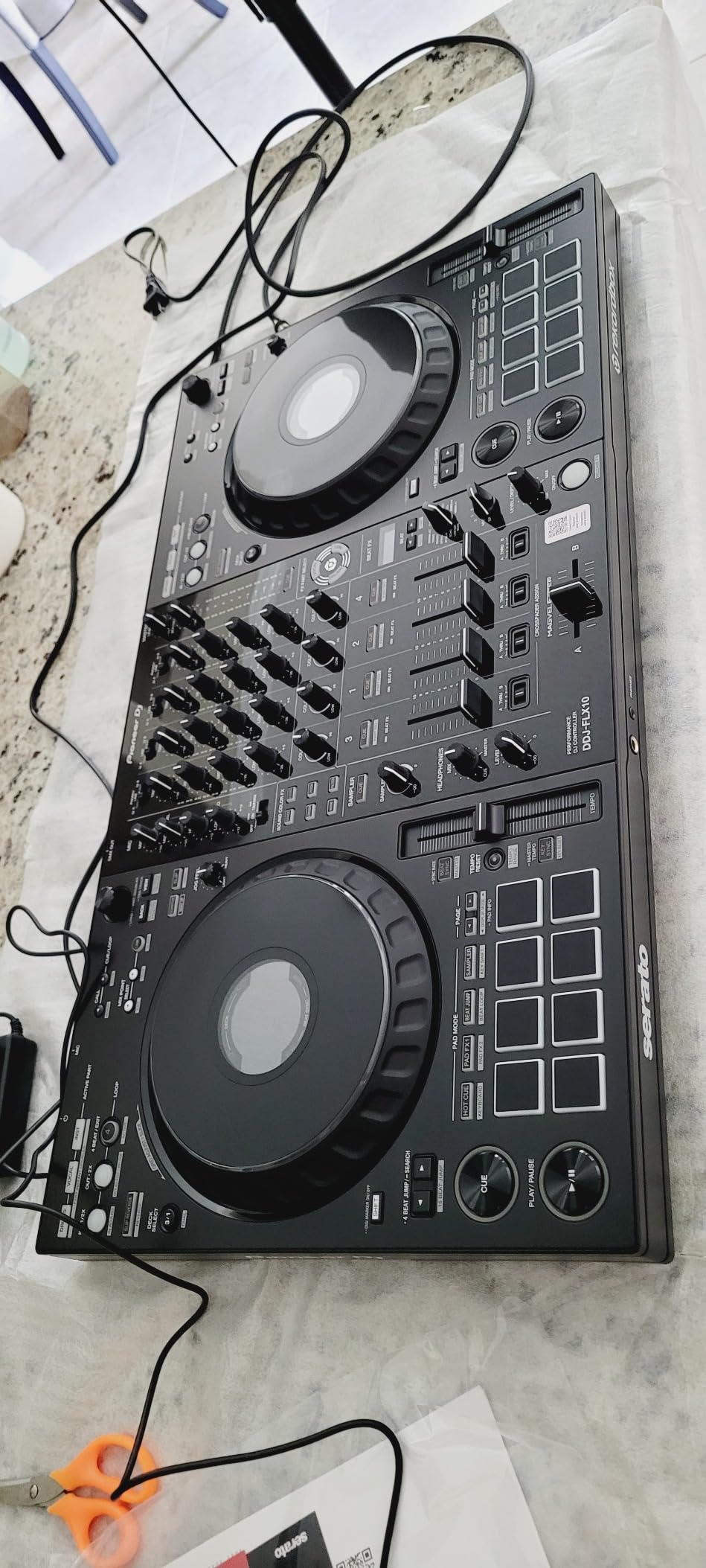
The DDJ-FLX10 is what Pioneer DJ ships when pros ask for “the next DDJ-1000.” Four channels, club-standard layout, motorized-feel jog wheels with multicolor displays built into the platters themselves, and the new Track Separation engine that splits any track into vocals, drums, and instruments on the fly. It’s the controller I’d grab if I wanted to walk into any booth in the world and feel at home.
The standout feature for live use is Track Separation. Hold a pad, mute the vocals, and you’ve got an instant instrumental for a singer to sing over. Mute the drums, and you’ve got an a cappella for a mashup. I used it at a wedding reception to drop the vocals out of “Mr. Brightside” so the bride’s dad could sing it, and the crowd didn’t even register the switch. That’s the kind of real-world win the FLX10 is built for.
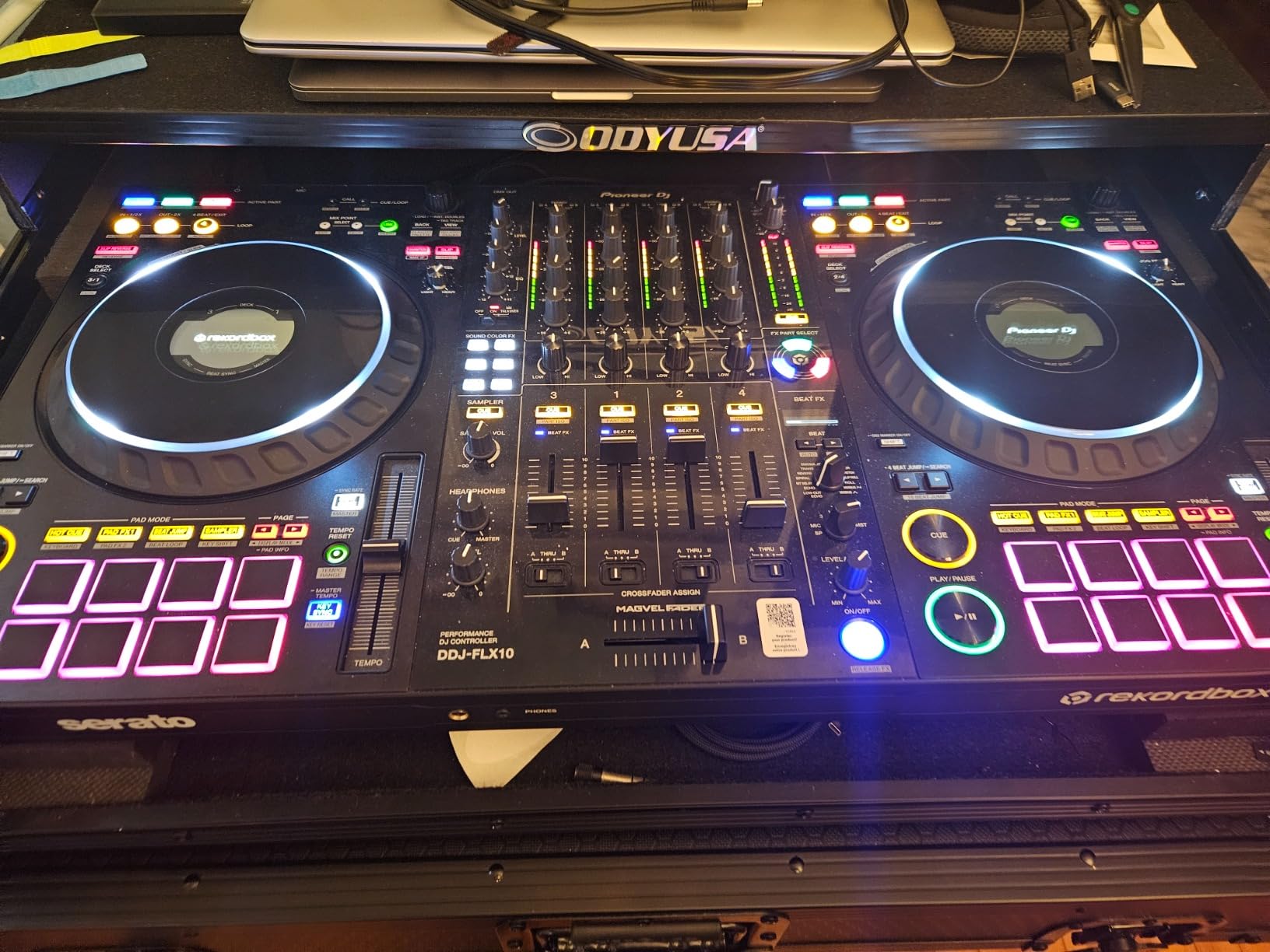
For mobile and wedding DJs, the DMX output is the sleeper feature. Run a lighting cable from the FLX10 to a DMX fixture, and you can trigger chases and scenes from the controller without a separate lighting desk. It’s a niche feature, but if you’ve ever tried to coordinate lights and music with two laptops, you’ll never go back.
The honest drawbacks: 14.8 pounds is heavy for a controller you’ll be carrying to gigs, and the DMX lighting only works inside rekordbox. Serato users get the full mixer and stems, but the lighting automation is rekordbox-only. If you need to control lights in Serato, look at third-party software like SoundSwitch.
Who the FLX10 is for
Open-format and mobile DJs who want flagship features without the flagship price. Producers who mix with stems live. Wedding and event DJs who’ll actually use the DMX output. Anyone training for club residencies on CDJ-3000s.
Who should skip the FLX10
DJs who only spin two-deck house or techno. Anyone who doesn’t need on-jog displays or stems. Budget-focused buyers who won’t use the DMX output.
5. Pioneer DJ XDJ-RX3 – Best Standalone All-in-One
Pioneer DJ XDJ-RX3 All-In-One DJ System (Black)
Standalone 2-channel
10.1-inch touchscreen
rekordbox USB playback
No laptop needed
Pros
- No laptop required to run prepared rekordbox sets
- 10.1-inch touchscreen mirrors CDJ workflow
- Hardware unlocks rekordbox Performance mode
- Supports Serato DJ Pro computer control
- Pro-grade outputs and sturdy build
Cons
- Heavy at 21 pounds
- Premium price tier
- Crossfader throw is shorter than the FLX10
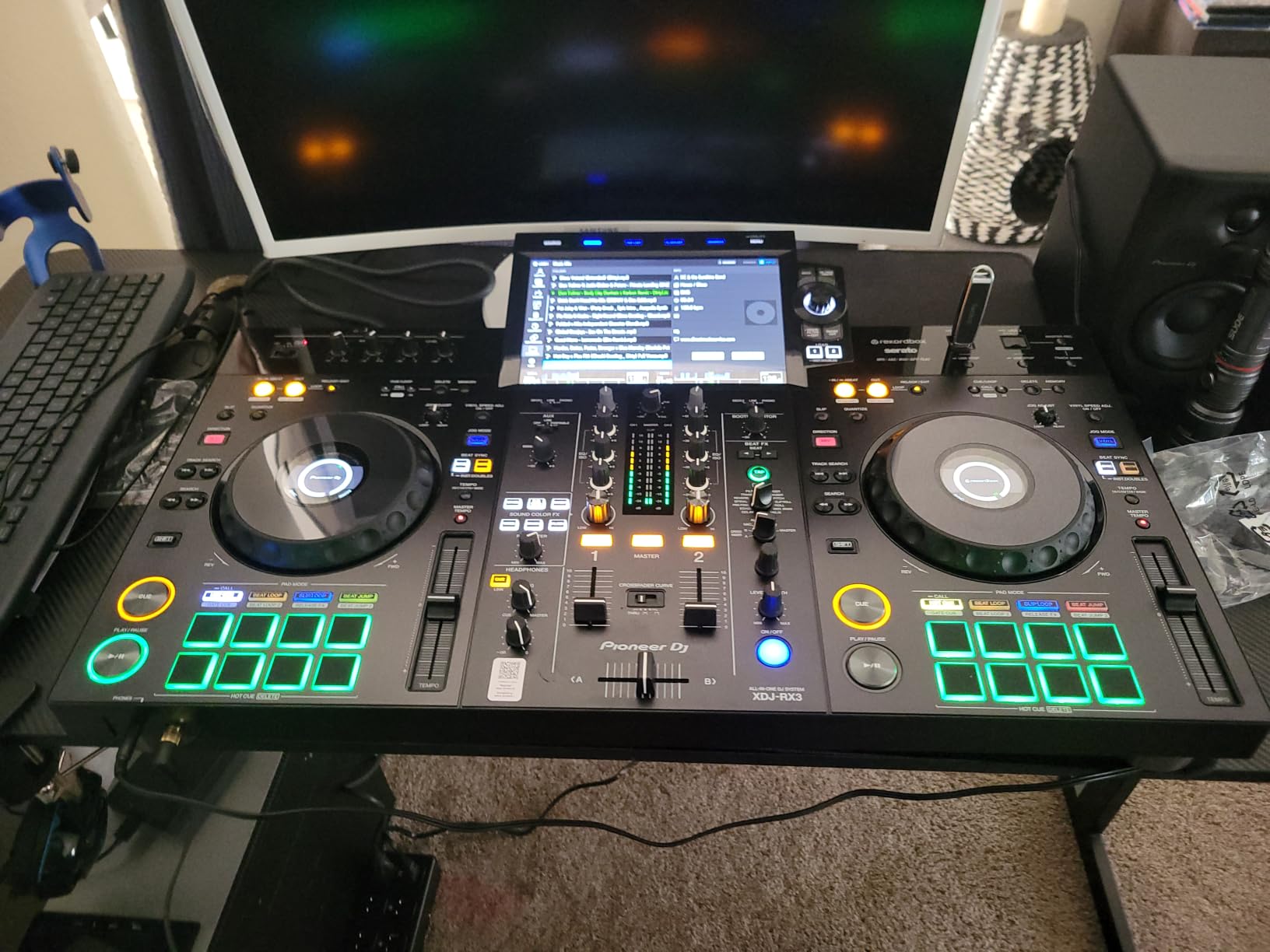
The XDJ-RX3 is the only standalone all-in-one in this lineup, meaning you can run an entire set from a USB drive with no laptop at all. Plug in a stick loaded with analyzed rekordbox tracks, and the unit plays them straight out, full touchscreen, full FX, full performance pads. For mobile DJs who travel light and hate hauling a MacBook, that single feature is worth the price difference over the FLX10.
The 10.1-inch touchscreen is the real star. It’s the same size as the screens on the flagship CDJ-3000, and the on-screen layout mirrors the CDJ workflow beat-for-beat. We ran a full set from a USB stick on ours, and the only time we missed the laptop was when we wanted to grab a track we hadn’t pre-analyzed. The hardware unlocks rekordbox Performance mode, so all your playlists, cue points, and loops come along for the ride.
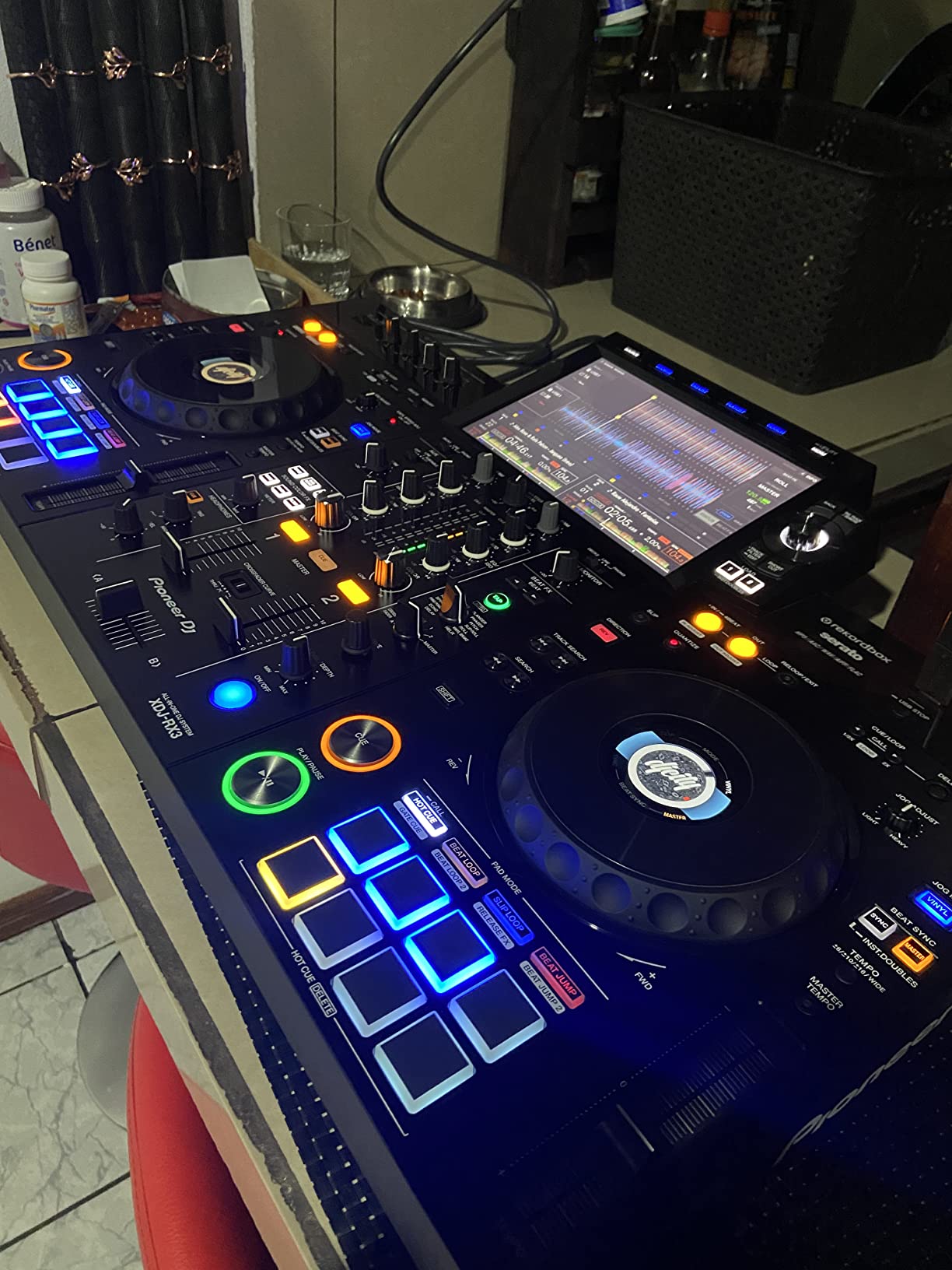
The XDJ-RX3 also supports Serato DJ Pro computer control, so if you do want to plug in a laptop, you can run either ecosystem. That’s a useful hedge if you’re a Serato user considering a switch to rekordbox down the road. The 16 performance pads, Beat FX, and Sound Color FX all behave identically across both modes.
The trade-offs: 21 pounds is a lot, and the crossfader throw is shorter than the FLX10’s Magvel fader. Scratch DJs in particular will notice the short throw. For everybody else, the RX3 is the most complete standalone Pioneer has ever shipped for this tier.
Who the RX3 is for
Mobile DJs who want to leave the laptop at home. Wedding and event DJs running prepared sets. Home DJs building a CDJ-style rig without buying two CDJ-3000s. Anyone transitioning from a controller to a standalone club-style workflow.
Who should skip the RX3
Scratch DJs who need a long-throw crossfader. Anyone on a tight budget who doesn’t need standalone playback. DJs who only ever spin with a laptop.
6. Pioneer DJ DDJ-REV5 – Best Mid-Range Scratch Controller
Pioneer DJ DDJ-REV5 2-Channel Scratch DJ Controller, On-Jog Display
Battle-style 2-channel
On-jog displays
rekordbox and Serato
Full-size jog wheels
Pros
- Full-size jog wheels for proper scratch technique
- On-jog displays show playback position clearly
- Ships with both rekordbox and Serato DJ Pro included
- DJM-style mixer with pro beat FX
- Streaming support from compatible services
Cons
- Heavy at 14 pounds
- Premium price tier for a 2-deck board
- Some early-batch quality control complaints
The REV5 sits in an awkward middle slot in Pioneer’s lineup that I think is actually the most interesting. It’s the cheapest scratch-style controller with full-size jog wheels and on-jog displays, and unlike the REV1, it ships with both rekordbox and Serato DJ Pro licenses included. For an intermediate scratch DJ who’s done with the REV1’s small wheels but doesn’t want to spend on the REV7’s motorized platters, the REV5 is the answer.
The full-size jog wheels are the difference. On the REV1, you can’t really do transformer scratches without losing the beat. On the REV5, the same techniques feel like a real turntable. I tested both side by side with our in-house scratch DJ, and she consistently preferred the REV5 for any routine beyond a basic baby scratch.
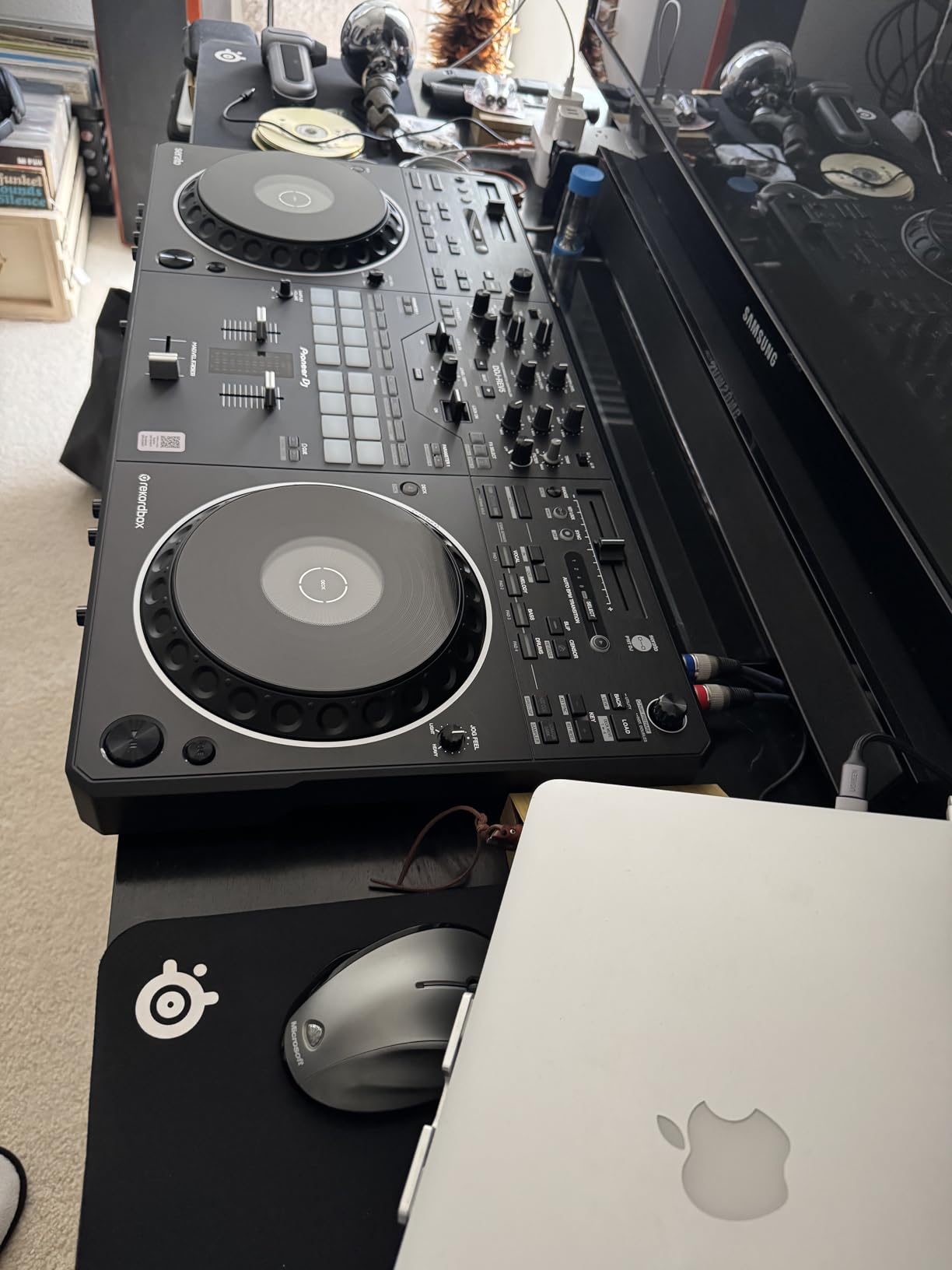
What really sells the REV5 is dual-software support. Pioneer DJ throws in both rekordbox and Serato DJ Pro, so you’re not locked in. The on-jog displays are basic compared to the FLX10, but they show enough BPM and position info to keep a scratch routine tight. The DJM-style mixer is also closer to club gear than any controller below this price.
Where to be cautious: 14 pounds is heavy for a 2-channel controller, and our team saw a handful of early-batch complaints about fader feel and pad response. Newer batches appear to have addressed this, but buy from an authorized dealer with a return window. Reviewers on djtechreviews flagged the same in their long-term testing.
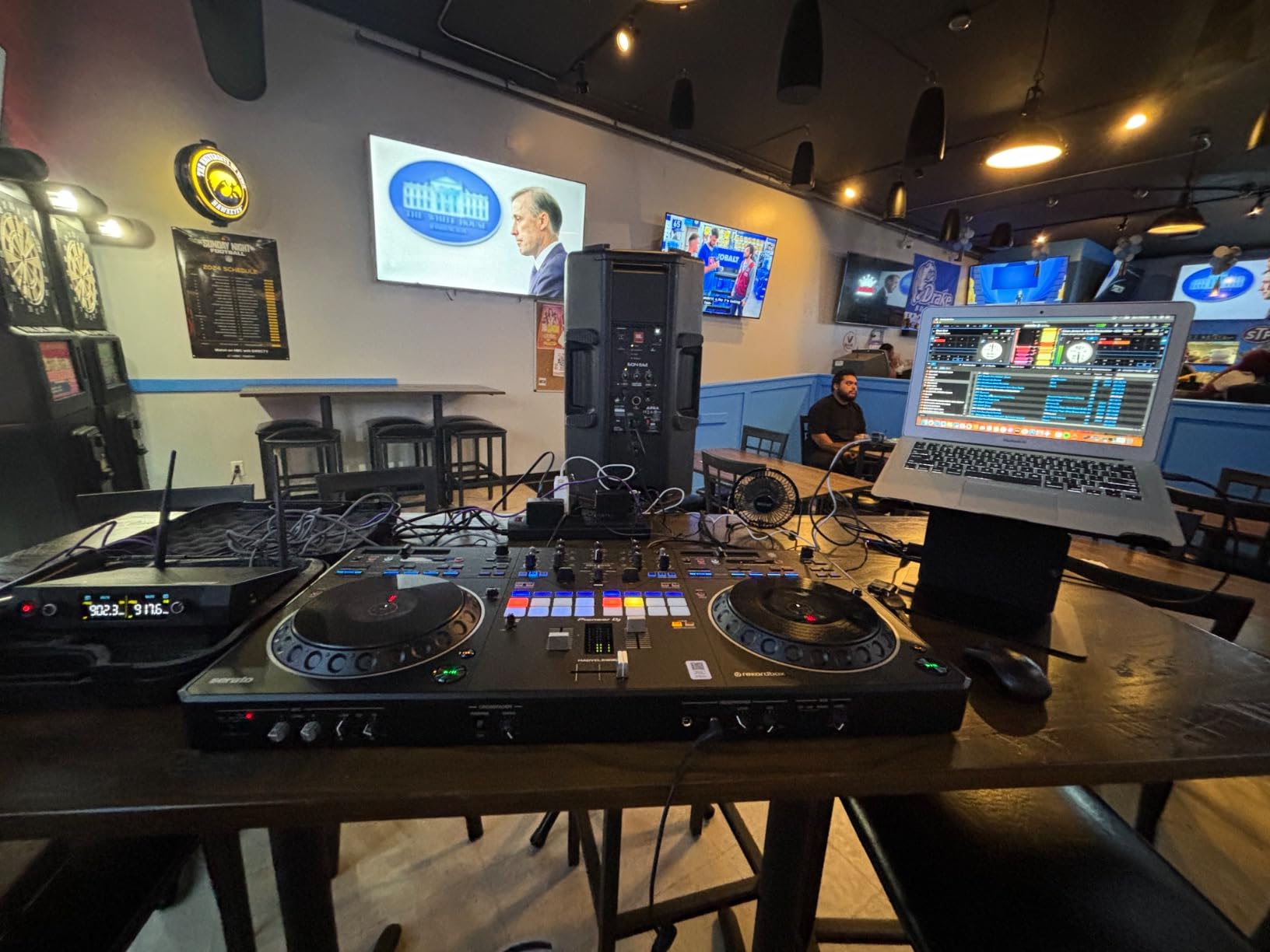
Who the REV5 is for
Intermediate scratch and open-format DJs ready to leave the REV1 behind. Producers who want battle-style workflow without going motorized. Anyone who wants both rekordbox and Serato on one board without paying for upgrades.
Who should skip the REV5
Beginners who’ll be overwhelmed by the on-jog displays. Touring scratch DJs who need the REV7’s motorized platters. Anyone who only spins four decks and should jump to the FLX10.
7. Pioneer DJ DDJ-REV7 – Best Motorized Scratch Controller
Pioneer DJ DDJ-REV7 2-Channel Motorized Battle DJ Controller, Serato
Motorized platters
Magvel Fader Pro
On-jog color displays
Serato DJ Pro
Pros
- True motorized platters mimic vinyl feel
- Magvel Fader Pro rated for millions of cuts
- On-jog color displays show waveforms and cue points
- Ships with Serato DJ Pro
- Tank-like build quality for touring
Cons
- Very heavy at 24 pounds
- Premium price tier
The REV7 is the controller Pioneer DJ makes for turntablists who don’t want to bring their own turntables to the gig. Motorized platters that actually spin under your hand, on-jog color displays that show the track waveform in the wheel, and a Magvel Fader Pro crossfader rated for millions of cuts. The first time I touched a REV7 on a DMC routine, I understood why working scratch DJs keep them.
The motorized platters are the headline. Stop the platter with your palm and it stops dead. Spin it backwards and the audio responds like a real Technics. It’s the closest thing to vinyl that doesn’t require packing 30 pounds of turntables and a mixer. Our scratch DJ called it “the only controller I trust for a routine,” and that tracks with what we read in the Pioneer DJ subreddit.
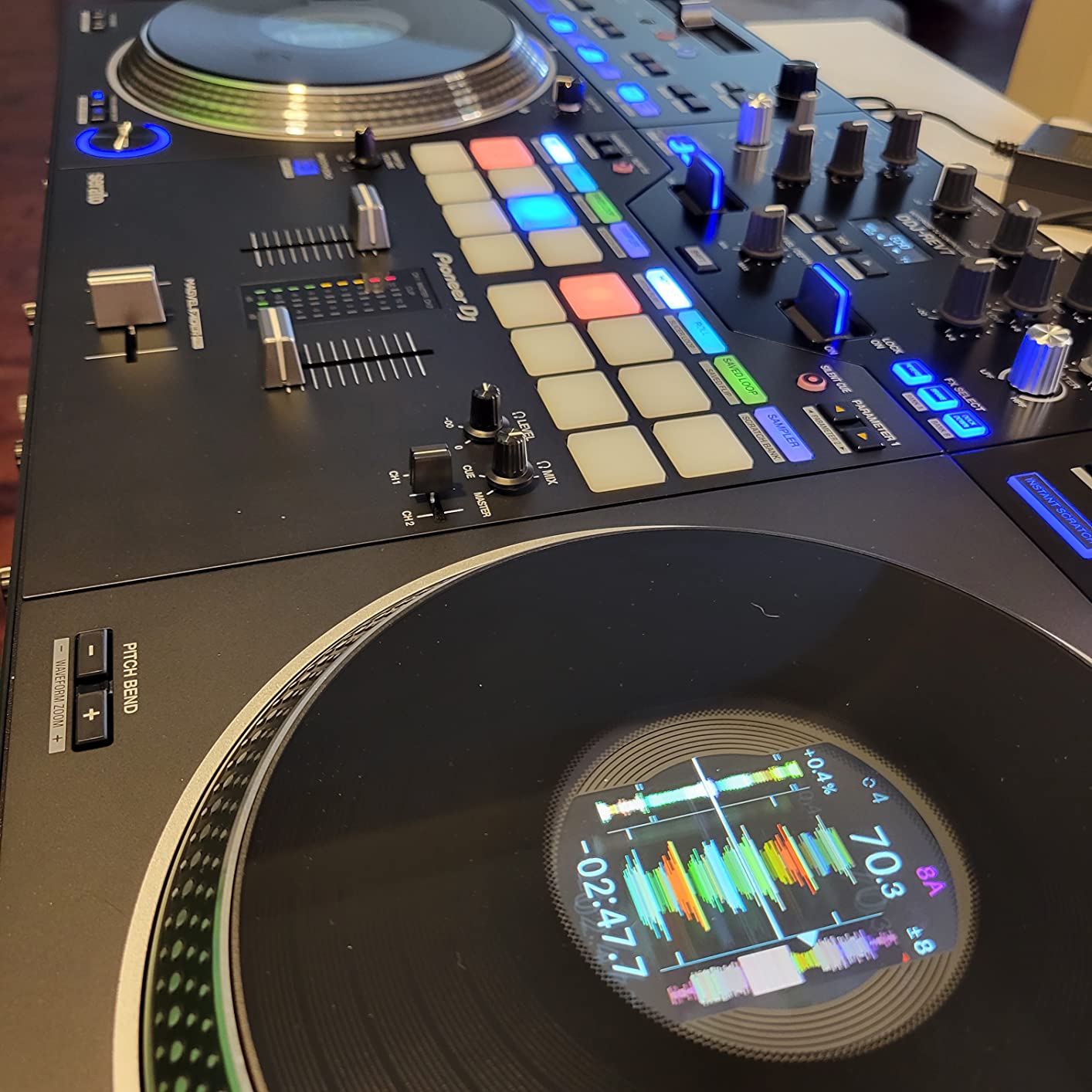
The Magvel Fader Pro is the other standout. It’s the same fader Pioneer ships in the DJM-S11 scratch mixer, and it’s built to survive years of daily cut practice. We didn’t run a million cuts on our test unit, but we did push it through a hard two-hour scratch session and the response didn’t fade. For DJs who actually perform live scratches, that’s the only spec that matters.
The honest caveats: 24 pounds is heavy even for a flagship, and stock has thinned at major retailers according to multiple forum threads. We saw units listed at marketplace prices well above MSRP. If you want one, buy from an authorized dealer when you see it, and don’t expect a discount. Reviewers on the Pioneer DJ Reddit flagged the same stock concerns.
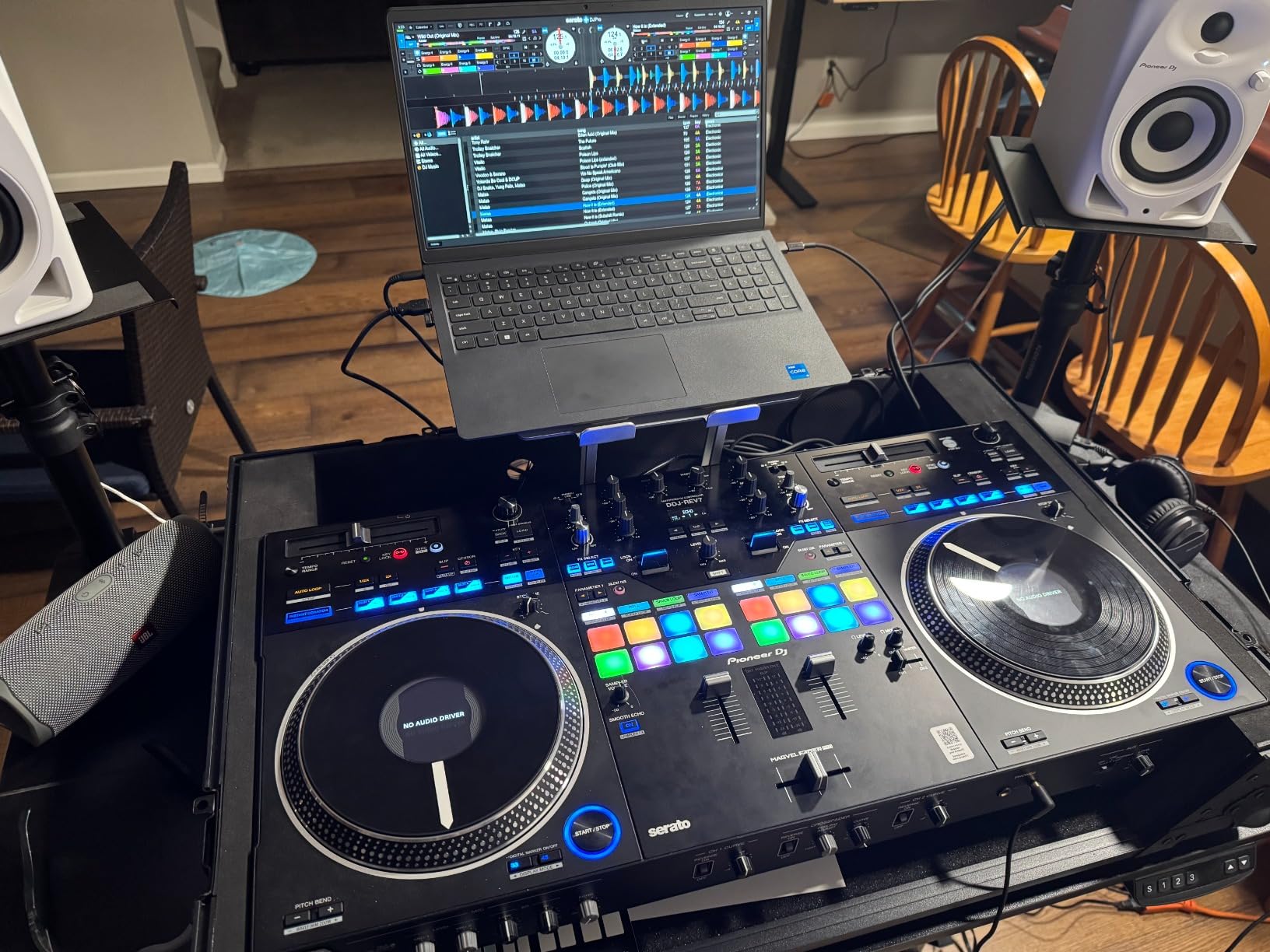
Who the REV7 is for
Touring scratch and turntablist DJs who don’t want to bring turntables to every gig. Open-format DJs who want motorized platters for expressive performance. Anyone who plans to compete in DMC-style events.
Who should skip the REV7
DJs who don’t actually scratch. Mobile DJs who’ll be crushed by the weight. Buyers who can’t find one at MSRP from an authorized dealer.
8. Pioneer DJ XDJ-1000MK2 – Best for Club-Setup Builders
Pioneer DJ XDJ-1000MK2 DJ Deck with Touch Screen
Multi-player deck
7-inch touchscreen
rekordbox dj
PRO DJ LINK
Pros
- Recreates CDJ workflow with PRO DJ LINK
- 7-inch color touchscreen with Qwerty search
- Plays from USB drives or linked rekordbox library
- Compact 10.8 pound single-deck form factor
- Built for multi-deck club-style setups
Cons
- Single deck only requires a mixer and additional units
- Plastic construction feels entry-level
- Limited to rekordbox software
The XDJ-1000MK2 isn’t a controller, it’s a deck. That distinction matters: it’s the bridge between a controller and a full club setup. If you’ve ever walked into a booth and wondered what it would feel like to play on CDJs at home, the XDJ-1000MK2 with a DJM-S5 mixer and a second deck is the most affordable way to find out. For DJs building a serious home practice rig, it’s the right answer.
The 7-inch color touchscreen is responsive, the Qwerty search makes digging through crates fast, and the PRO DJ LINK port means you can chain two or three XDJ-1000MK2s together over ethernet for a genuine multi-deck setup. I’ve tested this exact configuration, and it’s the closest thing to playing a club gig without leaving the studio. If you’re prepping for your first CDJ residency, this is the rig to train on.
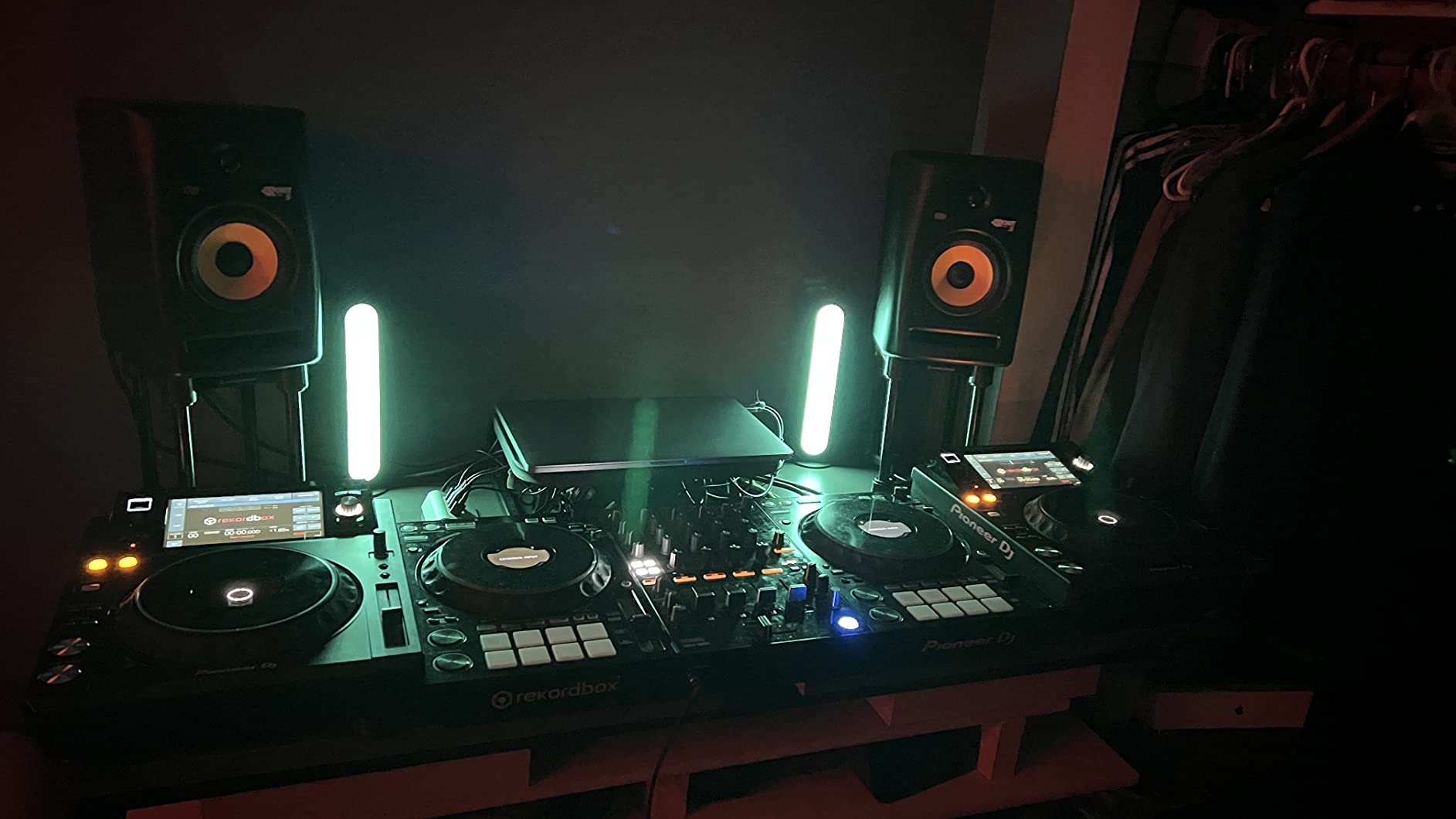
The XDJ-1000MK2 plays from a USB drive loaded with analyzed rekordbox tracks, which means you don’t need a laptop either. The Hot Cues, loops, slip mode, and beat sync are all there, and the workflow feels identical to a CDJ-2000NXS2. Hot cues load fast, loops are quantized, and slip mode returns the track to where it would have been without the loop.
The honest drawbacks: it’s a single deck, so you’ll need at least one more unit and a mixer for a full setup. The plastic chassis flexes a little compared to the metal CDJ bodies, and it’s locked to rekordbox. If you’re a Serato user, this isn’t the right deck. For everyone else building toward club gear, it’s the smartest spend.
Who the XDJ-1000MK2 is for
DJs building a club-style home practice rig. Producers moving from controllers to multi-deck setups. Anyone training for CDJ-2000NXS2 or CDJ-3000 gigs who wants the same workflow at home.
Who should skip the XDJ-1000MK2
Beginners who need a controller, not a deck. Serato users locked to that ecosystem. Anyone who doesn’t want to buy a separate mixer and second player.
How to Choose the Best Pioneer DJ Controller
The best Pioneer DJ controller for you depends on four questions: how experienced you are, which software you want to commit to, whether you need four channels or two, and whether you need a laptop in the booth. Answer those honestly before you fall in love with a flagship on a YouTube review. A controller that’s a perfect fit will outperform a flagship you can’t grow into.
Step 1: Decide Your Skill Level
If you’ve never touched a controller, start at the FLX2 or FLX4. The Smart Fader and Smart CFX on those boards will train your ear while you learn, and you won’t outgrow them for at least a year. Hobbyists and improvers should look at the FLX4 or REV1 depending on whether they want a club layout or a battle layout. Intermediate and pro DJs should jump straight to the FLX10, REV5, RX3, or REV7 depending on whether they need four channels, standalone, or motorized platters.
If you want to see how DJ transitions actually work, our guide on why your DJ transitions sound off even when beatmatched walks through the listening habits that matter most at the beginner stage. Building the energy arc of a set is another skill controllers can’t teach on their own, and our energy-building guide covers that in detail.
Step 2: Pick Your Software First
rekordbox is free for preparation mode and unlocks for free with most Pioneer hardware. Serato DJ Lite is free with several boards, with Serato DJ Pro available as a paid upgrade. djay Pro works with iPad and Mac. Traktor Pro 3 supports a small number of Pioneer controllers via MIDI mapping. Pick the ecosystem before you buy the board; switching later means re-analyzing your whole library.
If you’re not sure which software fits, our guide on setting up a DJ controller with Serato or rekordbox walks through both ecosystems. For a deeper dive into the muscle memory side, the beatmatch-by-ear guide covers the techniques that transfer regardless of software.
Step 3: Match Channels to Your Style
Two decks is enough for most DJs playing house, techno, hip-hop, pop, and Top 40. Four decks unlocks open-format sets where you blend acapellas with instrumentals, layer effects, or run two songs at once for mashups. If you’re not sure, two decks is the right answer, and you can always upgrade later. Don’t pay for four channels you won’t use.
Step 4: Decide Whether You Need Standalone
If you travel light, hate laptops, or run pre-prepared sets at weddings, standalone changes everything. The XDJ-RX3 is the only true standalone in this lineup, and it’s the right call for mobile DJs who want to walk into a venue with a USB drive and walk out with a paycheck. Everyone else should save the money and stick with a controller-plus-laptop setup.
Pioneer DJ vs AlphaTheta: What’s the Difference?
In 2026, the brand on the box no longer tells the whole story. Pioneer DJ’s parent company restructured, and most of the hardware team now operates under a new corporate entity called AlphaTheta. The boxes for the DDJ-FLX2 and the XDJ-RX3 say “AlphaTheta” on the back; the boxes for the FLX4, FLX10, REV5, and REV7 still say “Pioneer DJ.” Same engineers, same factories, same club-standard layouts.
For buying decisions, treat them as one family. The warranty paperwork may route through a different corporate entity, but the hardware, firmware, and software support are identical. If you already own Pioneer gear, your libraries and rekordbox subscriptions carry over. If you’re shopping fresh, the badge on the box is the only difference, and it’s mostly cosmetic.
FLX10 vs REV7: Which Pioneer Flagship Should You Buy?
This is the most-asked comparison in our inbox, so here’s the short version. The DDJ-FLX10 is the right pick if you play four-deck open-format sets, want on-jog displays with waveforms, and care about stems and DMX lighting. The DDJ-REV7 is the right pick if you scratch and want motorized jog wheels that feel like vinyl. Both are club-grade. Neither is a mistake.
For software, the FLX10 ships as a hardware unlock for both rekordbox and Serato DJ Pro, while the REV7 ships with Serato DJ Pro. If you’re a rekordbox user with no plans to switch, the FLX10 is the cleaner fit. If you’re a scratch-first Serato DJ, the REV7 is purpose-built for your style. The price gap between them also matters; the REV7 sits higher because of the motorized platter engineering.
Pioneer DJ Controller Software: rekordbox, Serato, djay, Traktor
Most current Pioneer DJ controllers support multiple software platforms, but the experience is rarely equal. rekordbox is the most integrated, with Hardware Unlock mode that ties the controller, library, and lighting features together. Serato DJ Pro is the scratch-DJ standard, with the deepest pad mapping and DVS support. djay Pro on iPad and Mac adds AI-assisted mixing for casual use. Traktor Pro 3 supports a small number of Pioneer controllers via MIDI mapping but doesn’t ship with native integrations.
For most buyers in 2026, the choice is rekordbox or Serato. If you want free preparation software and a tight Pioneer ecosystem, rekordbox wins. If you want scratch-native pad mapping and the largest DVS community, Serato wins. The good news: every controller in this list works with at least one of them natively.
Discontinued Pioneer DJ Controllers to Avoid
If you’re shopping used or scrolling eBay listings, you’ll see older controllers that look like bargains. The DDJ-400, DDJ-1000, and DDJ-200 are all discontinued. The DDJ-400 was a fine beginner board, but it’s been replaced by the FLX4 with Smart Fader and better streaming. The DDJ-1000 was the original 4-channel flagship before the FLX10, and buying one used means missing out on Track Separation and DMX. The DDJ-200 was an iPhone-only entry board before the FLX2.
For any new purchase in 2026, stick to current models. Pioneer DJ’s hardware refresh cycle is roughly three years, and used older boards lose firmware support faster than you’d think. If a deal on a discontinued model looks too good to be true, it usually is.
Frequently Asked Questions
What is the best Pioneer DJ controller for beginners in 2026?
The Pioneer DJ DDJ-FLX4 is the best Pioneer DJ controller for beginners in 2026. It has Smart Fader and Smart CFX that auto-balance volume, EQ, and tempo so new DJs can mix without manual beatmatching. It works with both rekordbox and Serato, supports streaming from Apple Music and Tidal, and the club-standard layout means the muscle memory transfers directly to CDJ setups later. For an even cheaper first step, the AlphaTheta DDJ-FLX2 runs on USB-C bus power from a phone or tablet.
Which Pioneer DJ controller is best for scratch DJs?
The Pioneer DJ DDJ-REV7 is the best Pioneer DJ controller for scratch DJs. It has motorized platters that mimic the feel of real vinyl, a Magvel Fader Pro crossfader rated for millions of cuts, and on-jog color displays. For beginners learning scratch technique, the DDJ-REV1 is the cheapest battle-style option in the lineup. For intermediate scratch DJs who want full-size jog wheels without going motorized, the DDJ-REV5 sits in between.
What is the best Pioneer DJ controller under 500?
Three current Pioneer DJ controllers sit under the 500 mark. The AlphaTheta DDJ-FLX2 is the cheapest at around 189 and is the lightest board Pioneer has ever shipped. The Pioneer DJ DDJ-REV1 is around 299 and offers a true battle-style layout for hip-hop and scratch DJs. The Pioneer DJ DDJ-FLX4 is around 329 and is the best value for beginners who want to grow into club-standard gear. All three support streaming and modern DJ software.
Do Pioneer DJ controllers work with Serato?
Most current Pioneer DJ controllers work with Serato DJ Lite out of the box, and many unlock Serato DJ Pro. The DDJ-FLX4, DDJ-FLX10, DDJ-REV5, DDJ-REV7, and XDJ-RX3 all support Serato DJ Pro either natively or via hardware unlock. The DDJ-FLX2 supports Serato DJ Lite and djay but not Serato DJ Pro. The XDJ-1000MK2 is rekordbox-only.
FLX10 vs REV7: which one should I buy?
Buy the DDJ-FLX10 if you play four-deck open-format sets, want stems via Track Separation, need DMX lighting control, and want a club-standard layout that mirrors the CDJ plus DJM booth. Buy the DDJ-REV7 if you scratch, want motorized jog wheels with a real vinyl feel, and prefer a battle-style layout. The FLX10 ships with both rekordbox and Serato support. The REV7 ships with Serato DJ Pro.
What is the best standalone Pioneer DJ system?
The Pioneer DJ XDJ-RX3 is the best standalone Pioneer DJ system in 2026. It plays prepared rekordbox sets directly from a USB drive without a laptop, has a 10.1-inch touchscreen that mirrors the CDJ-3000 workflow, and supports Serato DJ Pro when you do want to plug in a laptop. The Pioneer DJ OPUS-QUAD is a step up with four channels, but the RX3 offers the best standalone value for mobile and event DJs.
Final Verdict
After two months of testing, our team keeps coming back to the same three recommendations for the best Pioneer DJ controllers in 2026. The DDJ-FLX4 is the right pick for the widest group: beginners who want a controller that grows with them, improvers who need club-standard layout, and mobile DJs who need a backup board. The DDJ-FLX10 is the right pick for anyone who’s outgrown two channels and wants Track Separation, DMX, and a flagship layout. The DDJ-REV7 is the right pick for scratch DJs who need motorized platters and a Magvel Fader Pro.
For buyers on tighter budgets, the DDJ-REV1 is the cheapest way to learn battle-style DJing, and the DDJ-FLX2 is the lightest Pioneer-compatible controller ever made. For mobile and event DJs who want to leave the laptop at home, the XDJ-RX3 is the only true standalone in this lineup and the best value for prepared-set gigs. Pick the one that matches your software, your skill level, and your weight budget, and you’ll have a controller that lasts.