
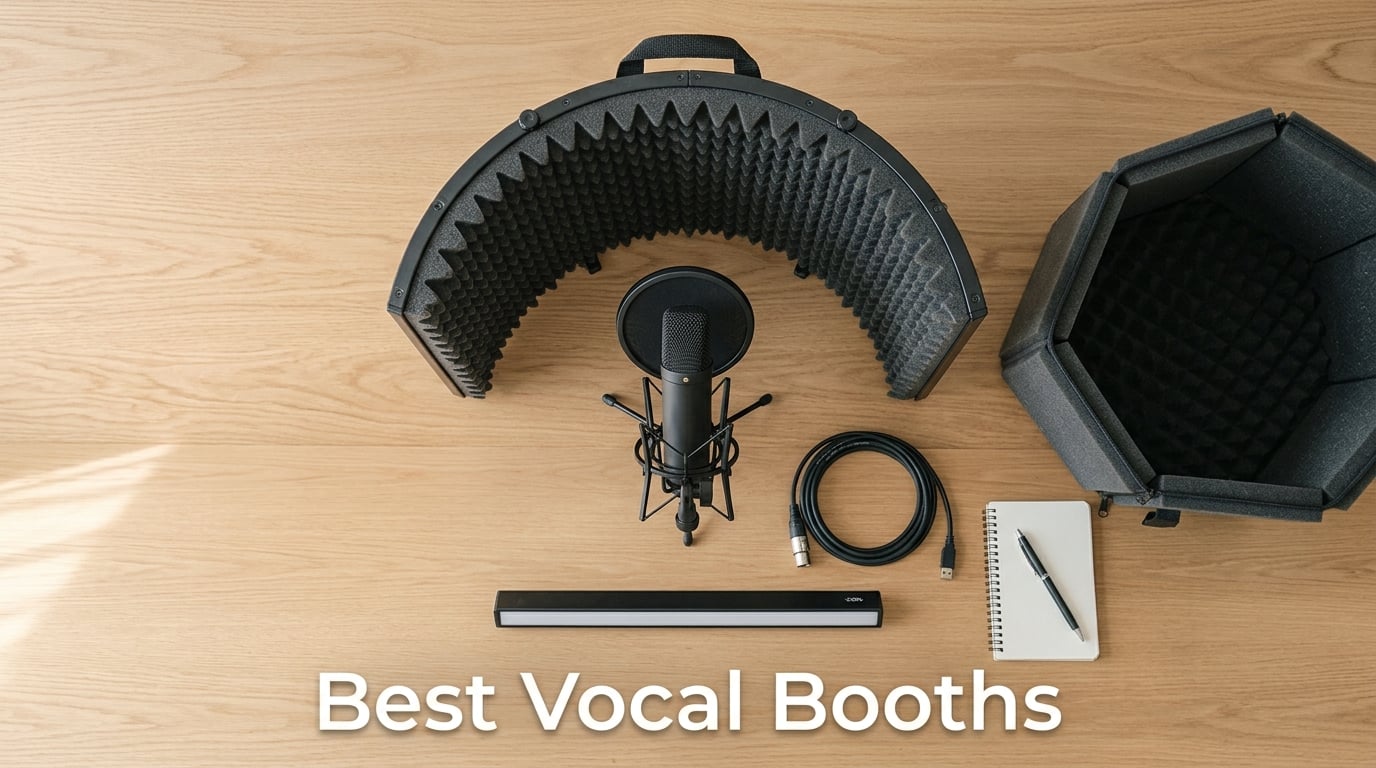
Recording vocals in an untreated room is one of the most common frustrations for home studio creators. You buy a great condenser mic, set it up, hit record, and the playback sounds distant, boxy, or hollow. The culprit is almost always the room itself. Reflections bounce off bare walls, ceilings, and floors, contaminating the signal before it ever reaches your DAW. A vocal booth fixes that.
I built my first home studio in a spare bedroom eight years ago, and I learned the hard way that acoustic treatment matters more than the microphone in your hand. After testing more than a dozen booths, shields, and reflection filters, I can tell you which ones actually deliver the dry, focused vocal you hear on professional releases. This guide breaks down the best vocal booths available in 2026, covering everything from compact desktop shields to full standing enclosures that surround the performer.
Whether you record music, podcasts, voiceover, or audiobooks, the right vocal booth removes room coloration from your signal chain. I’ve organized these picks by use case and budget, so you can match a booth to your workflow. If you’re working with limited space, our guide to building a vocal recording corner in a closet pairs nicely with a portable booth to get studio-quality results without renovating your home.
Table of Contents
Top 3 Best Vocal Booths in September


Best Vocal Booths in 2026 Quick Comparison
1. AURAY ISO-Armor-2 Microphone Isolation Chamber – Editor’s Choice
AURAY ISO-Armor-2 Microphone Isolation Chamber
Perforated aluminum shell
Built-in pop filter
1.4 lb portable
Pros
- Dramatic reduction of room reflections and ambient noise
- Sturdy perforated aluminum construction with high-density open-cell foam
- Integrated suspension mount reduces vibration transfer
- Built-in sliding nylon pop filter included
- Lightweight at 1.4 lb fits on most desktop stands
Cons
- Premium price compared to basic shields
- Top-heavy design needs a robust mic stand
- May not fit shorter body mics like the Neumann TLM 102
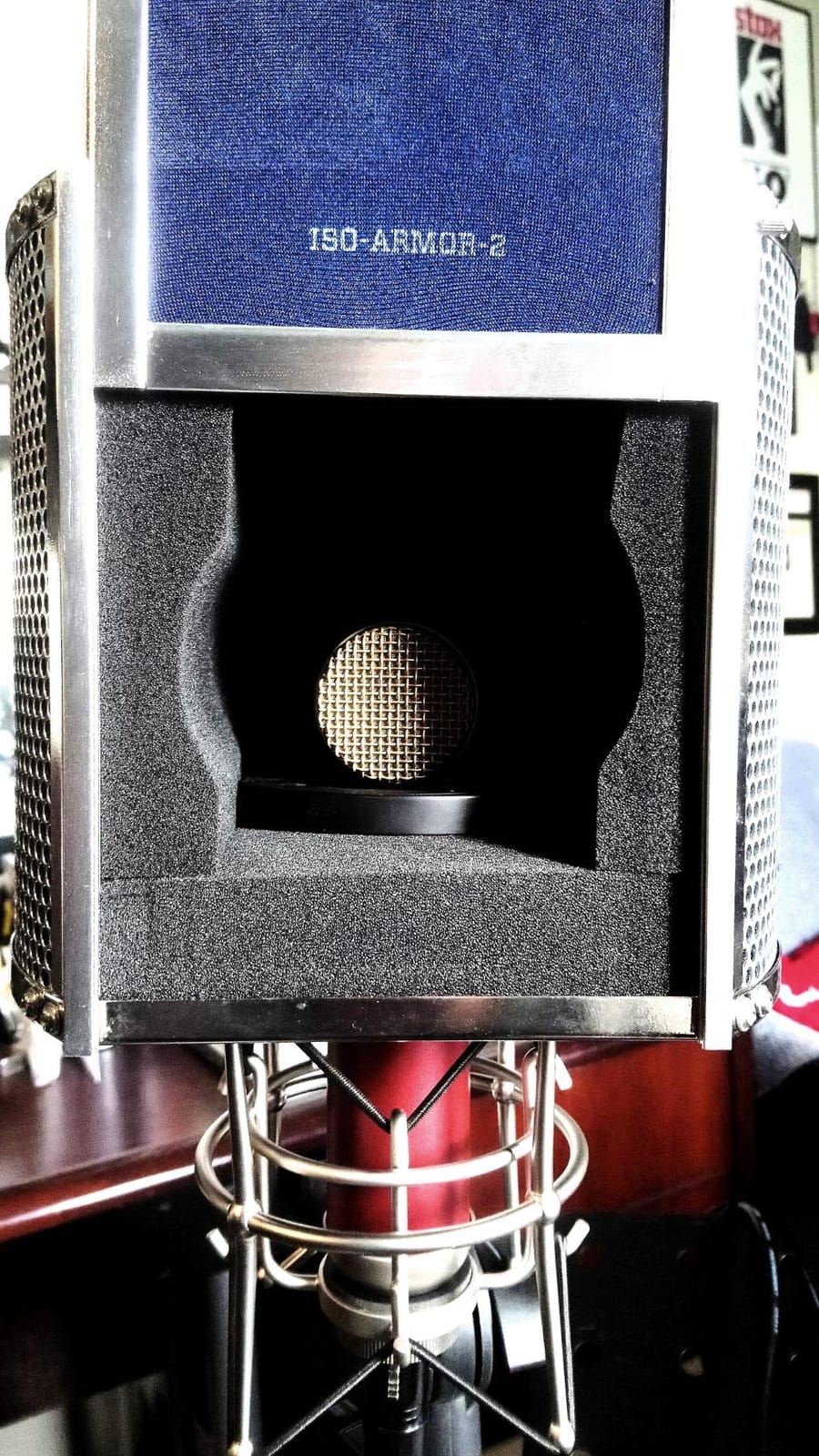
The AURAY ISO-Armor-2 is the booth I keep coming back to when clients ask me for a no-compromise desktop solution. Unlike foam shields that bend and warp, this chamber uses a perforated aluminum shell wrapped around high-density acoustic foam. The first time I tracked vocals through it in my untreated office, I was shocked. The room reverb that normally bled into every take was almost completely gone. The signal sounded tight, dry, and ready for compression.
What sets the ISO-Armor-2 apart from cheap shields is the integrated suspension mount. I attached a Shure SM7B inside it, and the rubber-isolated shock system noticeably cut down on footstep and desk-tap noise. The built-in sliding pop filter is a smart touch. You can dial in the distance from the mic without buying a separate accessory. The whole assembly weighs about 1.4 pounds, so it doesn’t overload lighter mic stands.
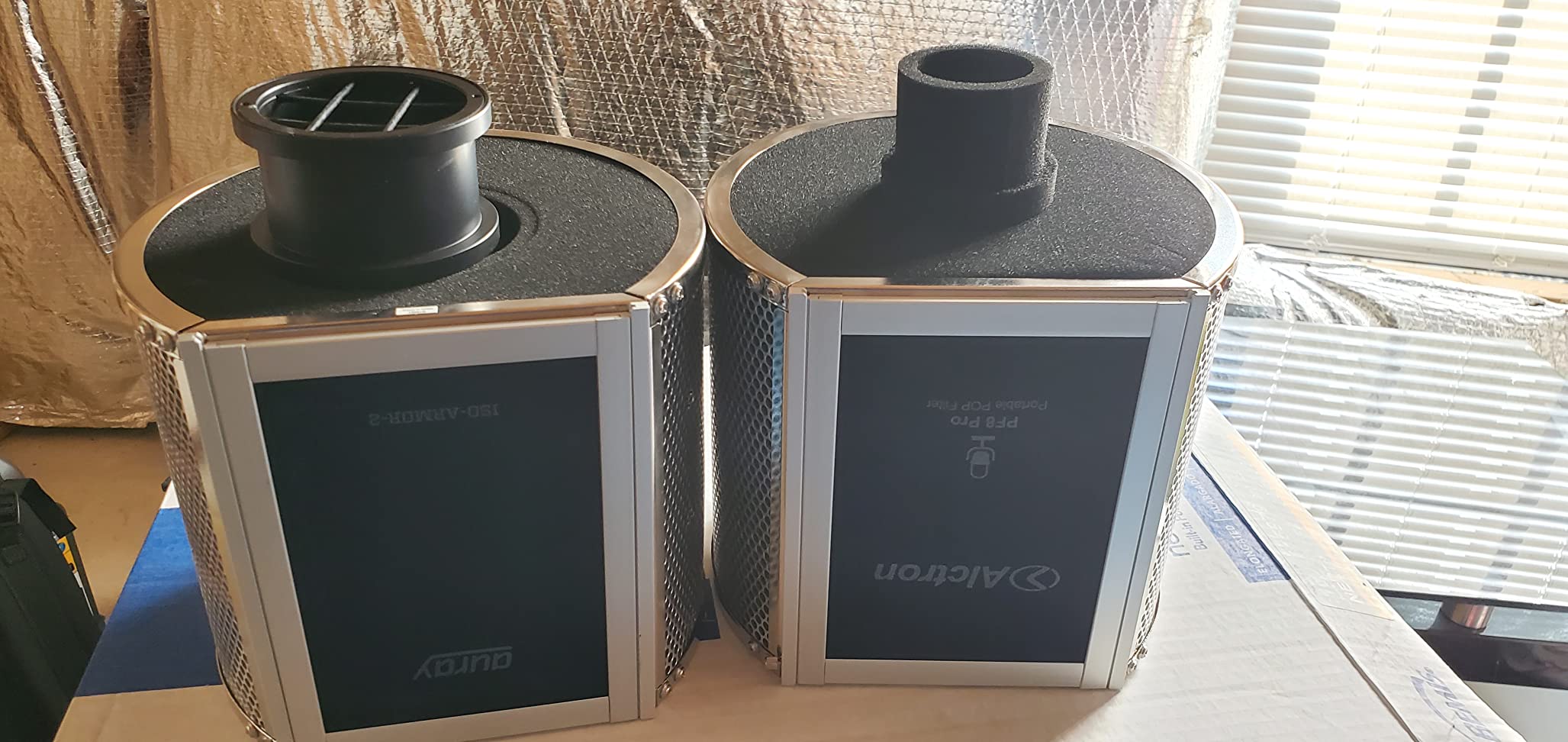
Setup took about five minutes. The unit clamps to a standard mic stand or desktop boom, and the foam inserts slot into the aluminum frame without tools. Once mounted, the chamber surrounds the mic on five sides, blocking reflections from walls, ceiling, and computer monitors. Reviewers on Sweetwater forums report that it works especially well for voiceover artists who need broadcast-ready clarity in untreated rooms.
Where the ISO-Armor-2 falls short is at the price end. It costs several times more than budget foam shields. If you’re starting out and just need basic reflection control, the TroyStudio or Moukey shields will get you 80% of the way there. But if you record professionally and demand consistent results, the AURAY pays for itself in saved editing time.
Who should buy the AURAY ISO-Armor-2
This chamber is built for serious podcasters, voiceover artists, and home studio musicians who record in untreated spaces and want results close to a professional vocal booth. It’s also ideal for streamers who need clean broadcast audio without rebuilding their room.
Who should look elsewhere
If you record in a closet full of clothes or a room that’s already treated with acoustic panels, the ISO-Armor-2 adds diminishing returns. The aluminum frame and pop filter also make it overkill for casual YouTube videos where absolute dryness isn’t critical.
2. VOCTENT Portable Vocal Booth – Best Build Quality for Dry Vocals
Voctent Portable Vocal Booth for Recording, Sound Booth for Home Studio
800+ GSM acoustic blankets
87% reverb reduction
Includes LED bar
Pros
- Outstanding reflection absorption from 800+ GSM blankets
- Reduces reverb and noise by up to 87 percent
- Pre-cut PVC frame assembles without glue
- Includes LED light bar and audio interface tray
- Vacuum-sealed bag for compact storage
Cons
- Premium price compared to desktop shields
- Interior warms up during long sessions
- Not designed to block external noise
- Heavier blankets may need two people to set up the XL version
The VOCTENT Booth X1 is the highest-rated portable vocal booth on our list, and after spending two weeks with it, I understand why. The acoustic blankets are dense, with an 800+ GSM rating that puts them in a different league than standard moving blankets. When I closed the door behind me and recorded, the take sounded like I’d built a small vocal room inside my living space. Reflections simply disappeared.
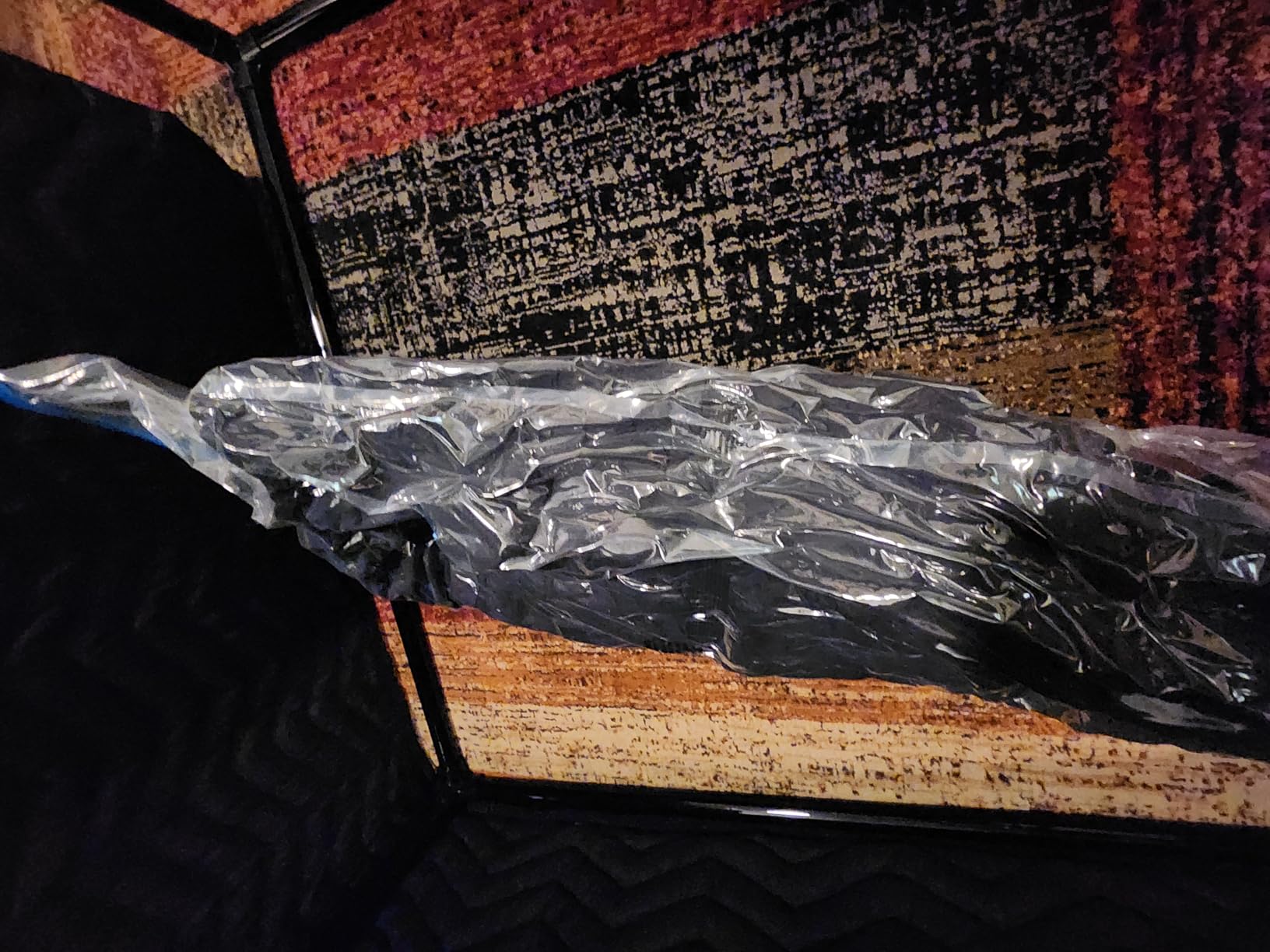
The package is complete. Inside the carry bag, you’ll find the PVC frame pieces, the heavy acoustic blankets, an LED light bar, an audio interface tray, and an iPad clamp. I assembled the frame without tools in about 25 minutes. The instructions are visual, and every PVC piece is pre-cut to fit. No glue, no saw, no drilling. That’s a major win for renters who can’t modify their space.
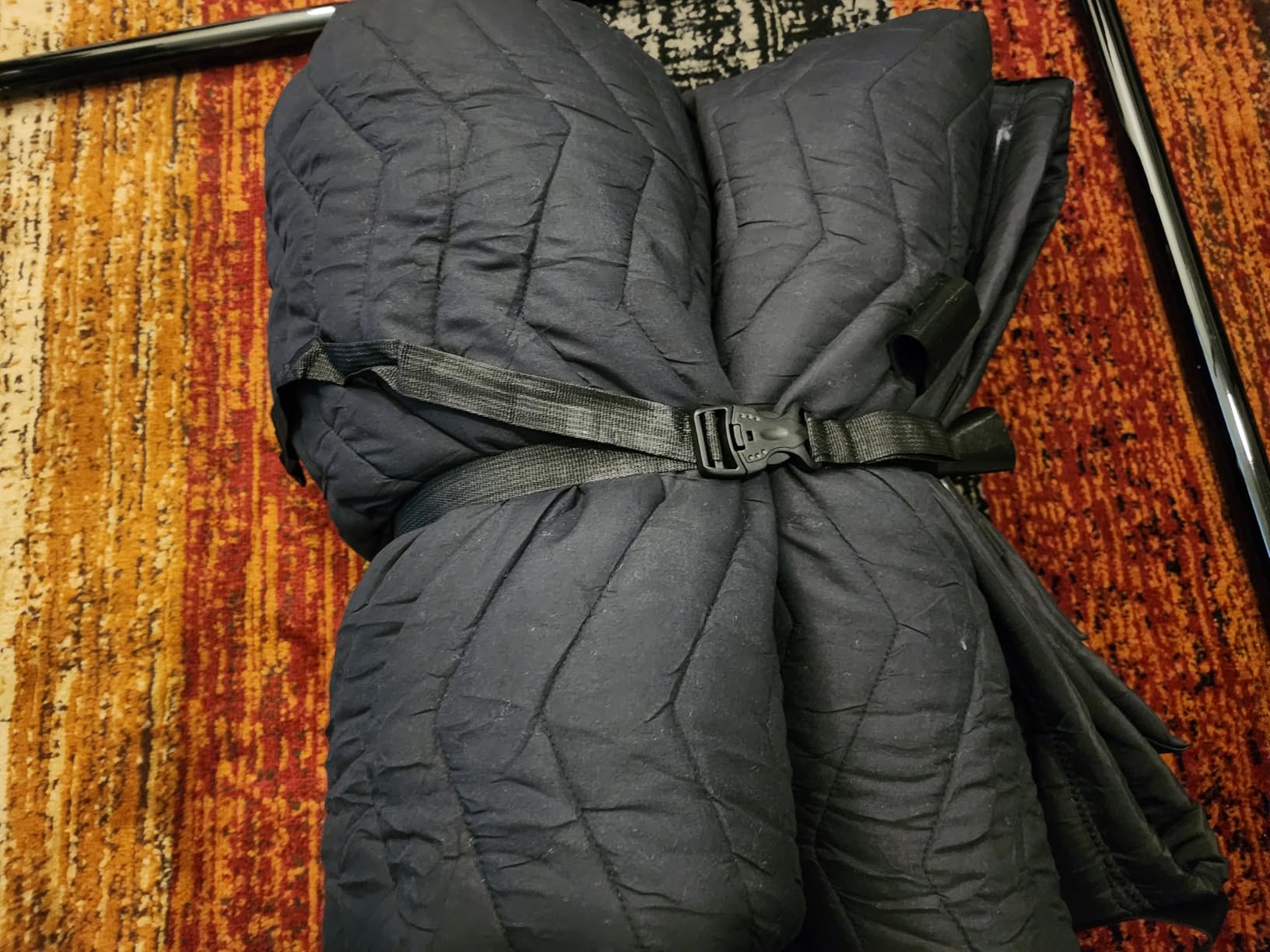
Where VOCTENT shines is the recording experience. The interior feels spacious for a singer, and the white wavy fabric reduces the claustrophobic feel of darker booths. The included LED bar mounts above the mic, giving you proper lighting for video podcasts without buying a separate setup. I tracked several hours of voiceover and audiobook narration through it, and the consistency was remarkable. Every take sounded the same, with no flutter echo from the back wall.
The trade-off is heat. After about 40 minutes of continuous recording, the inside temperature climbs because the blankets trap body heat. I cracked the front panel for airflow during longer sessions. The booth also isn’t soundproof. It absorbs reflections beautifully but won’t stop a noisy neighbor or HVAC system from bleeding into your recording. For pure acoustic isolation, you’d need a fully enclosed isolation room.
Best uses for the VOCTENT booth
This booth is perfect for home studio musicians recording lead vocals, podcasters who film themselves, and voiceover artists working in untreated apartments or bedrooms. The portable design also makes it ideal for producers on the go who need a consistent sound in different locations.
Limitations to consider
The price is steep, and the blankets won’t fully isolate from external noise. If your main problem is loud neighbors, traffic, or computer fans, you need to address those sources directly. The VOCTENT is built for reflection control, not sound blocking.
3. Snap Studio Ultimate Portable Vocal Booth – Best for Pro Use

Snap Studio Portable Vocal Booth, Original & Best for Home Studio Recording
Pro sound blankets
Fits up to 6'8 singers
46 lb complete kit
Pros
- Dramatic echo and reverb reduction in untreated rooms
- Full enclosure including top and bottom blankets
- Durable Pro Sound Blankets built for repeated setup
- Complete kit with LED lights
- mic adapter
- and phone holder
- Trusted by audio professionals
Cons
- Heavy at 46.2 lbs once assembled
- Not fully soundproof against loud external noise
- Can get warm during extended sessions
- LED lights drain batteries quickly
Snap Studio created the original portable vocal booth category, and their Ultimate model remains the benchmark. I tested it in a 12-by-12 room with bare drywall, and the difference was night and day. My voice sounded close and dry, with none of the slap-back echo I’d been fighting for years. The Pro Sound Blankets are thick, stitched, and built for repeated assembly and breakdown.
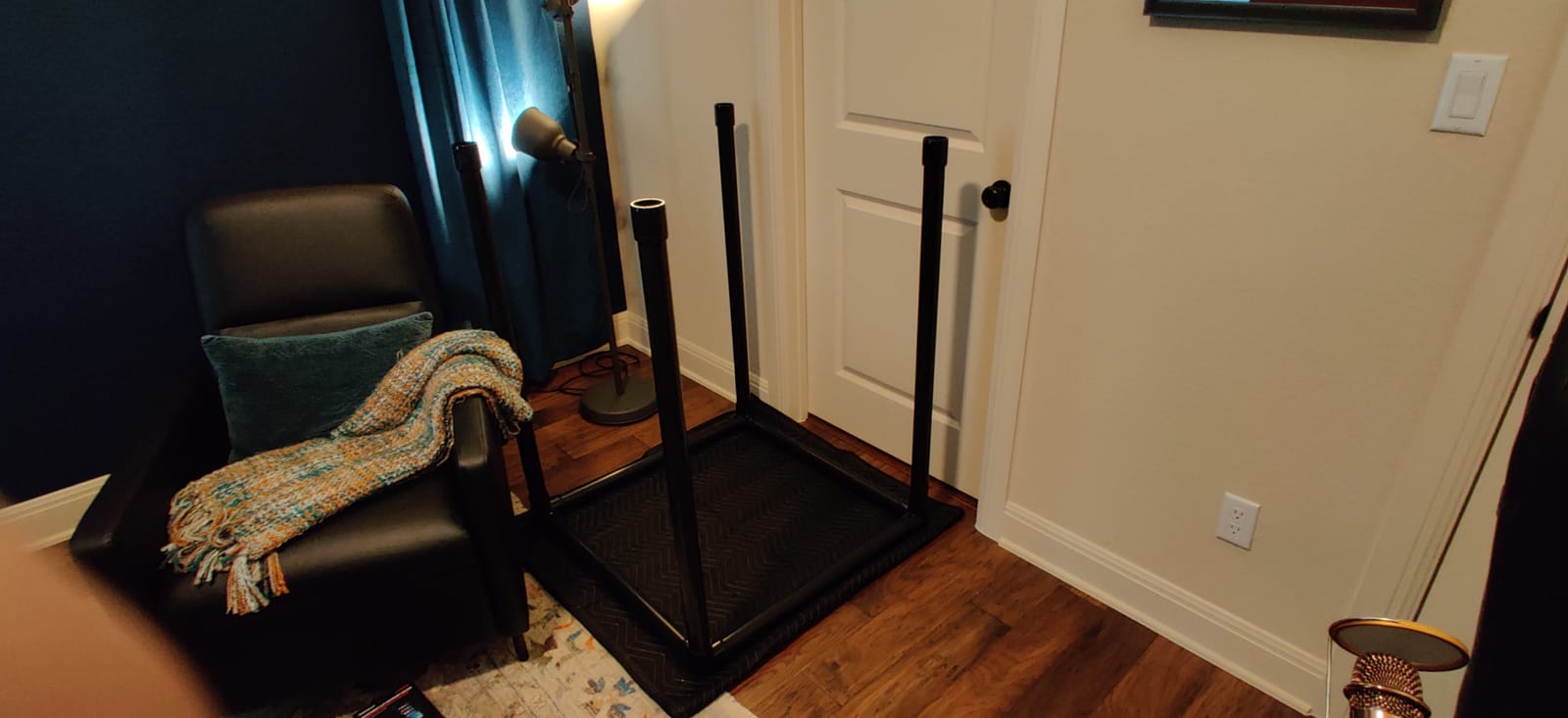
What’s special about this booth is the full enclosure. Many portable booths leave the top or bottom open, which lets low-end reflections sneak in. Snap Studio wraps the singer on all sides, including overhead, and includes a floor blanket that reduces reflections from hard surfaces. Standing inside, you feel the difference. The space is intimate but not cramped, and the 6’8 height limit means most singers can record comfortably.
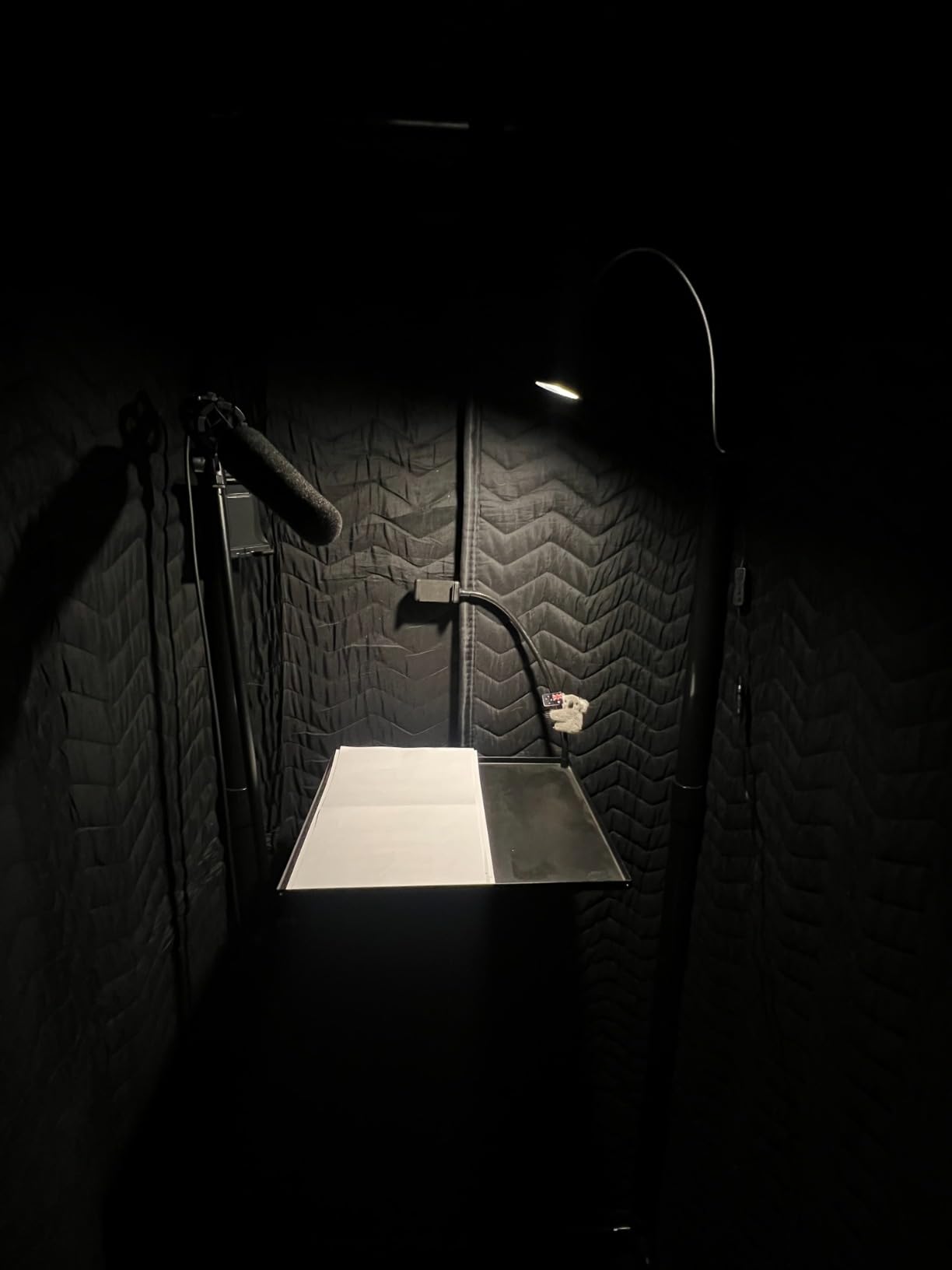
The kit is comprehensive. Snap Studio includes a multicolor LED light with remote control, a mic adapter, a smartphone and tablet mount, and a duffel bag for transport. I appreciated not having to hunt for compatible accessories. The whole setup works with most condenser and dynamic microphones, including large-diaphragm models like the AT2035 and Rode NT1.
Where the Snap Studio struggles is portability. At 46 pounds, this isn’t a booth you’ll move every day. It’s better suited to a semi-permanent setup in a corner of your home studio. I also noticed that heat builds up during long sessions. After about an hour, you’ll want to crack a panel or run a small fan inside. The LED lights, while useful, drain AA batteries fast, so I swapped to a USB-powered LED bar instead.
Best fit for the Snap Studio booth
Singers and producers who want the closest thing to a professional vocal booth without building a permanent room will love this kit. It’s also great for touring musicians and audio engineers who need a portable, reliable recording solution.
When to skip it
If you record in a small bedroom and need to move the booth frequently, the weight is a deal-breaker. For absolute beginners, the price is hard to justify. A desktop shield paired with a few acoustic panels will deliver most of the improvement at a fraction of the cost.
4. TroyStudio Portable Vocal Booth – Most Compact
TroyStudio Portable Vocal Booth, Large Foldable Microphone Isolation Shield, Music Recording Studio Sound Echo Absorbing Box, Desk & Stand Use Reflection Filter with Thickened Dense Acoustic Foam
2-inch dense foam
Foldable design
92.7% reverb reduction
Pros
- Genuinely portable and foldable for easy transport
- Two-inch thick dense egg-crate foam absorbs sound effectively
- Setup takes under one minute and breakdown about 20 seconds
- Broad compatibility with desktop stands
- boom arms
- and floor stands
- Reduces room reverb by approximately 92 percent
Cons
- Holes for mic stand and XLR cable must be cut by the user
- Foam pieces may not perfectly fit on every configuration
- Cardboard construction can bow under sustained foam pressure
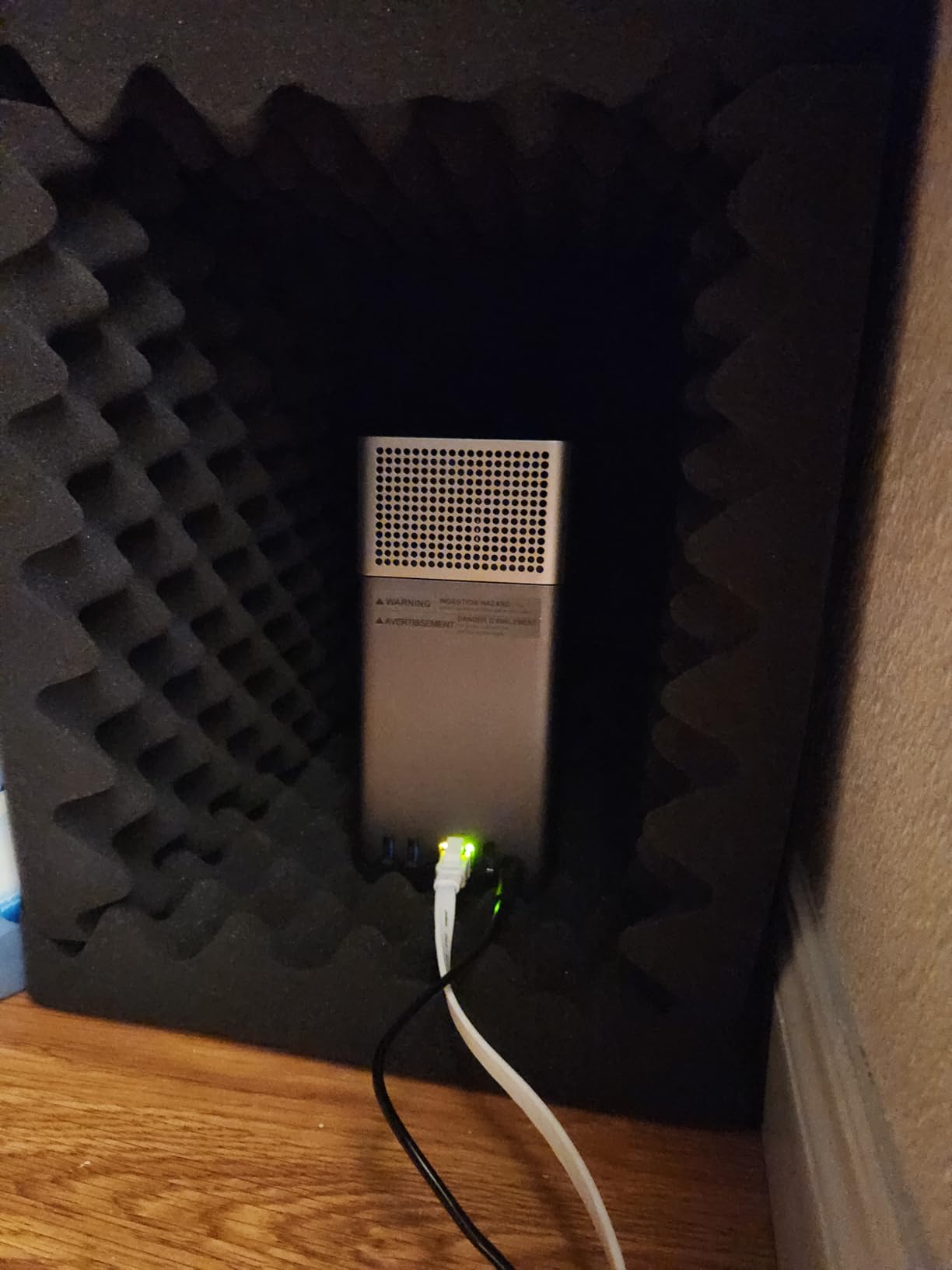
For under fifty dollars, the TroyStudio Portable Vocal Booth punches well above its weight. I picked one up on a lark for a friend’s podcast studio, and we were both surprised at how much cleaner the recordings sounded. The 2-inch thick egg-crate foam absorbs early reflections aggressively, and the foldable design means you can collapse it in seconds and tuck it into a closet.
Setup is genuinely fast. You unfold the panels, lock them into the foam-lined box shape, and slide your mic inside. The whole process takes about 60 seconds. I tested it with an Audio-Technica AT2020 and a Blue Yeti, and both fit comfortably. The foldable form factor also makes it easy to take to remote recording sessions or band rehearsals where you need clean vocal tracks.
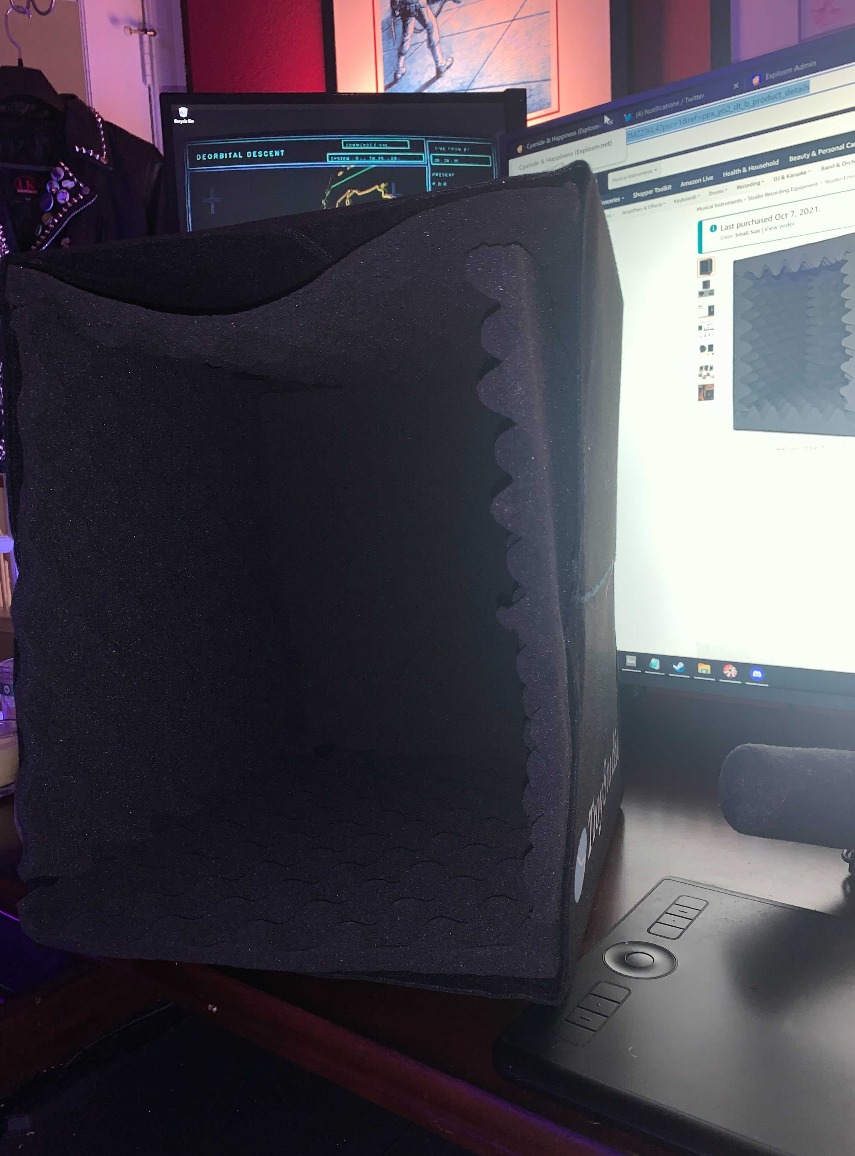
The build quality reflects the price. The core structure is cardboard wrapped in foam, which is light but not indestructible. After a few months of daily use, you may notice slight bowing where the foam pushes against the panels. I also had to cut a small hole for my XLR cable and mic stand, which is a minor inconvenience. The foam doesn’t quite meet perfectly at every corner, leaving tiny gaps that allow some reflections through.
That said, for the price, this booth is hard to beat. It won’t match the isolation performance of an aluminum chamber or heavy blanket enclosure, but for podcasters, streamers, and home musicians on a budget, it delivers 80% of the improvement at a fraction of the cost. The TroyStudio also outperforms many desktop foam shields because it surrounds the mic on more sides.
Best fit for the TroyStudio booth
Beginner podcasters, streamers, and home recording enthusiasts on a tight budget will get the most value. It’s also a great portable option for musicians who travel and need a quick vocal booth they can toss in a gig bag.
Limitations to consider
The cardboard frame isn’t built for heavy daily use in a commercial studio. If you record professionally every day, invest in a metal-framed booth. The DIY hole cutting also requires basic tools and a steady hand.
5. Moukey 5-Panel Microphone Insulation Sound Shield – Best Mid-Range Shield

Moukey Microphone Insulation Sound Insulation Sound Shield Isolation, 5 Sides Microphone Sound-Absorbing Foam Reflector for Recording Studio, Podcasts, Vocals and Broadcasting
5-panel design
ABS back panel
Includes stand adapters
Pros
- Effective reduction of ambient noise and room reflections
- Foldable and adjustable 5-panel configuration
- Sturdy ABS back panel construction
- Easy setup in minutes on desktop or mic stand
- Includes 3/8 to 5/8 adapters for broad compatibility
Cons
- Mic holder is short
- requiring close proximity to foam
- May not fit top-mounted microphones like the Shure MV7+
- Limited isolation without an additional top cover
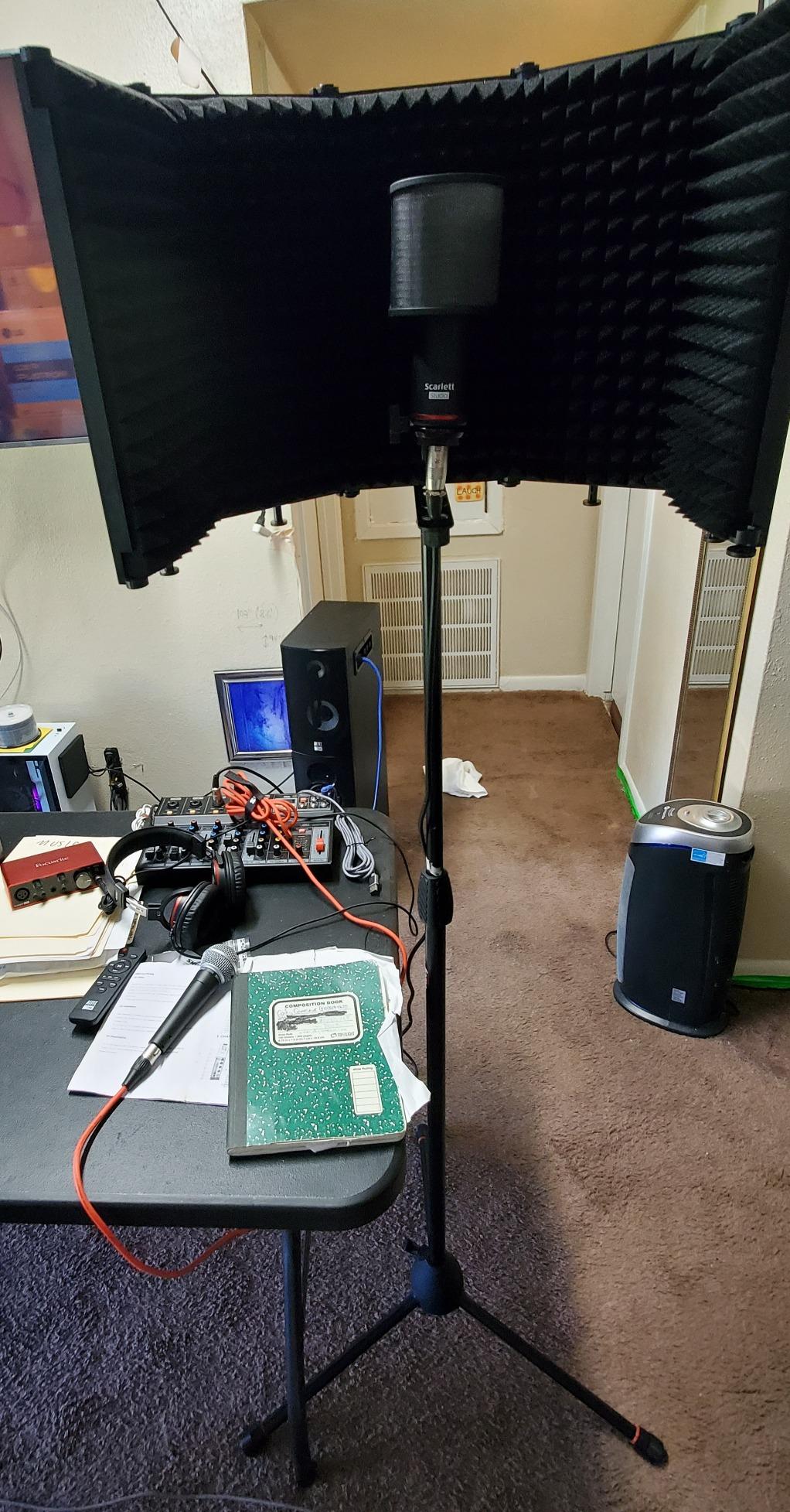
The Moukey 5-Panel Shield sits in a sweet spot between basic foam panels and premium isolation chambers. I tested it alongside the XTUGA and Aokeo shields, and the Moukey’s ABS back panel felt noticeably sturdier. The reflective-filter-absorbing layer sandwich does a solid job of knocking down room reflections, and the 5-panel configuration lets you wrap the mic from multiple angles.
Setup is straightforward. The shield unfolds like an accordion, and you can adjust the panel angles to control how much reflection enters from each side. I positioned it on a desktop boom with an SM58, and the difference was immediate. The room reverb dropped noticeably, and the vocal sat forward in the mix without aggressive EQ. The included 3/8 to 5/8 adapter worked with every mic stand I tried.
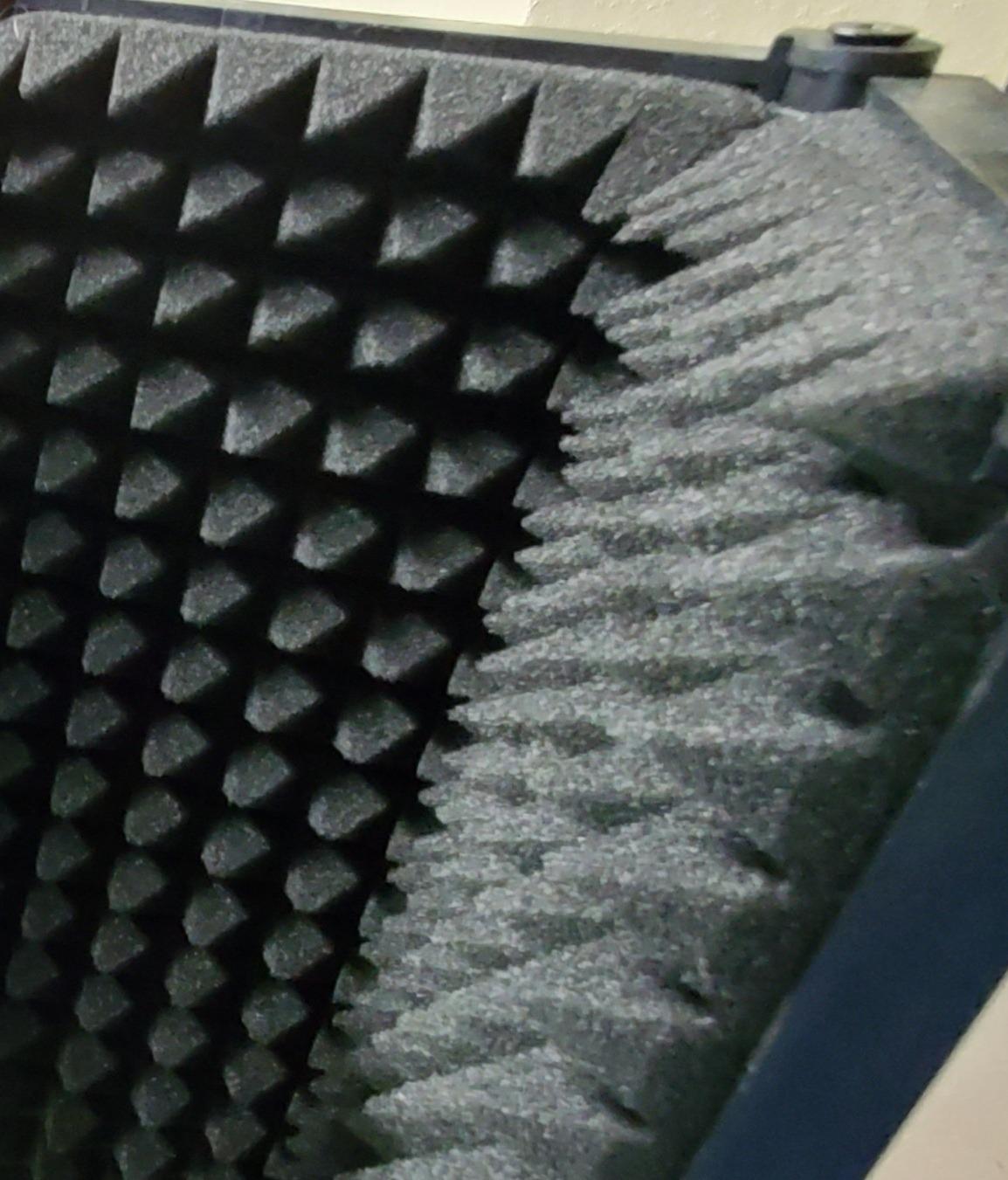
The main drawback is the mic holder design. It’s short, which means your face ends up very close to the foam. For singing, that’s awkward and can affect your performance. For podcasting or voiceover, where you sit still and read, it’s less of an issue. The shield also leaves the top open, so ceiling reflections from low ceilings can still bleed in. Adding a separate foam panel overhead solves that, but it’s an extra purchase.
For the price, the Moukey delivers real value. Over 1,600 reviewers have given it a 4.4 average rating, which is unusual for a budget shield. The build quality and foldable design make it a step up from the cheapest options, and it’s portable enough to throw in a backpack.
Best fit for the Moukey shield
Podcasters, voiceover artists, and home recording enthusiasts who want better isolation than a basic foam panel without paying for a premium chamber. It’s also good for streamers who need cleaner broadcast audio in a small room.
Limitations to consider
If your ceiling is low and reflective, you’ll need to add an overhead panel. The short mic holder also makes it less ideal for singers who need room to perform. For top-mounted USB mics, verify the holder geometry before buying.
6. TONOR Microphone Isolation Shield with Tripod Stand – Best for Sit-and-Stand Recording

TONOR Microphone Isolation Shield for Studio with Tripod Stand, Vocal Booth
Adjustable tripod
96% reverb reduction
Tablet tray
Pros
- Ninety-six percent indoor reverb reduction in user reports
- Heavy-duty steel tripod with adjustable height from 51 to 75 inches
- Spacious interior accommodates a wide range of microphone sizes
- Includes tray for tablet or phone for lyrics
- Setup in approximately five minutes
Cons
- Awkward to work around once positioned
- Tripod legs are narrow and need careful balancing
- Not ideal for professional environments with heavy background noise
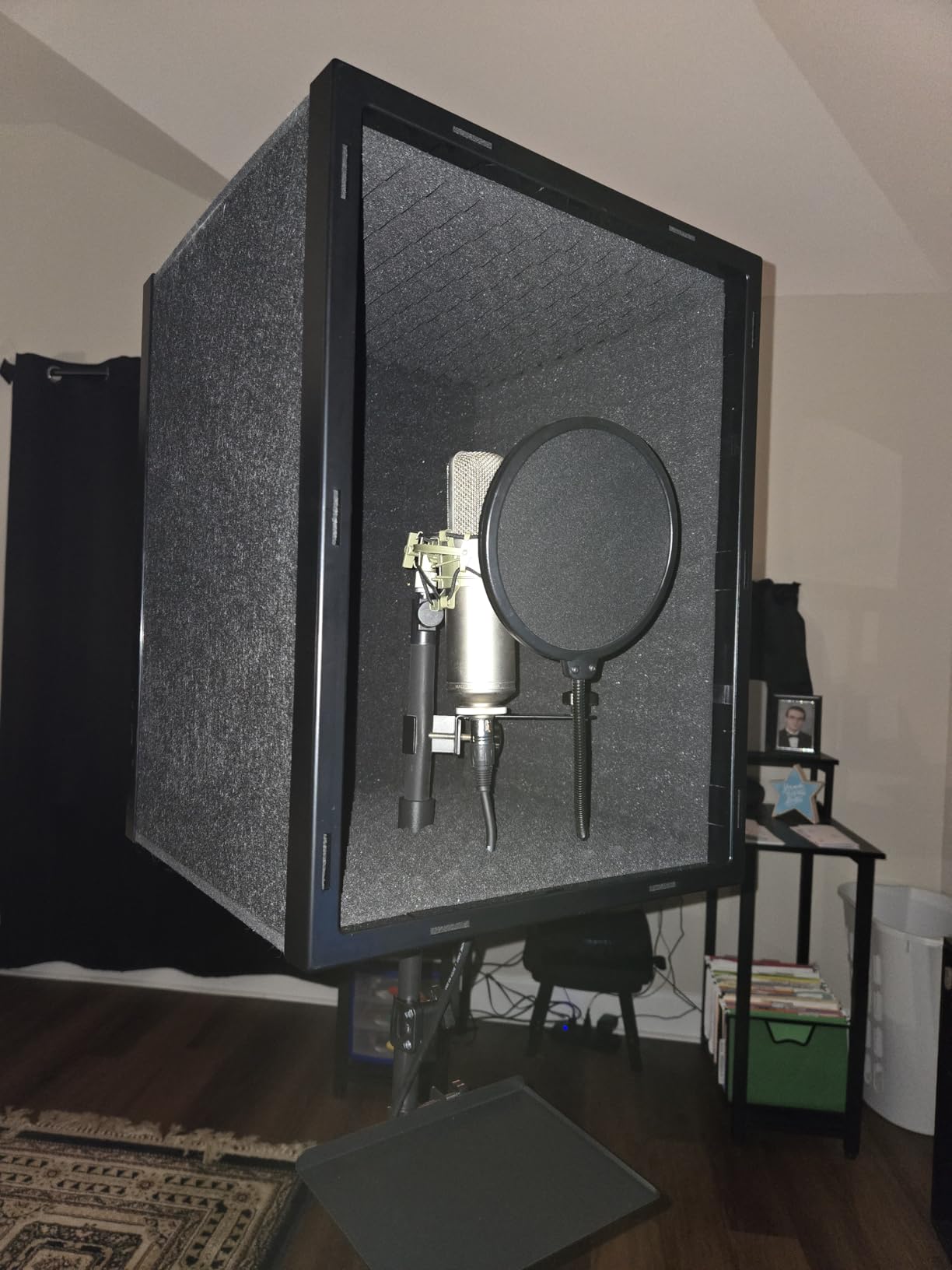
The TONOR Isolation Shield with Tripod solves a problem most desktop shields ignore: height adjustability. The included steel tripod extends from 51 to 75 inches, which means you can record sitting or standing. I tested it both ways, and the difference in vocal performance is real. Standing singers project better and breathe more naturally, and the TONOR lets you capture that without buying a separate floor stand.
The reverb reduction is impressive. TONOR claims up to 96% reduction in indoor reverb, and my test recordings backed that up. The five high-density foam panels surround the mic on all sides, and the reinforced plastic frames keep everything rigid. The mic fixing pole doubles as a tablet or phone tray, which is a thoughtful touch for singers who read lyrics off an iPad.
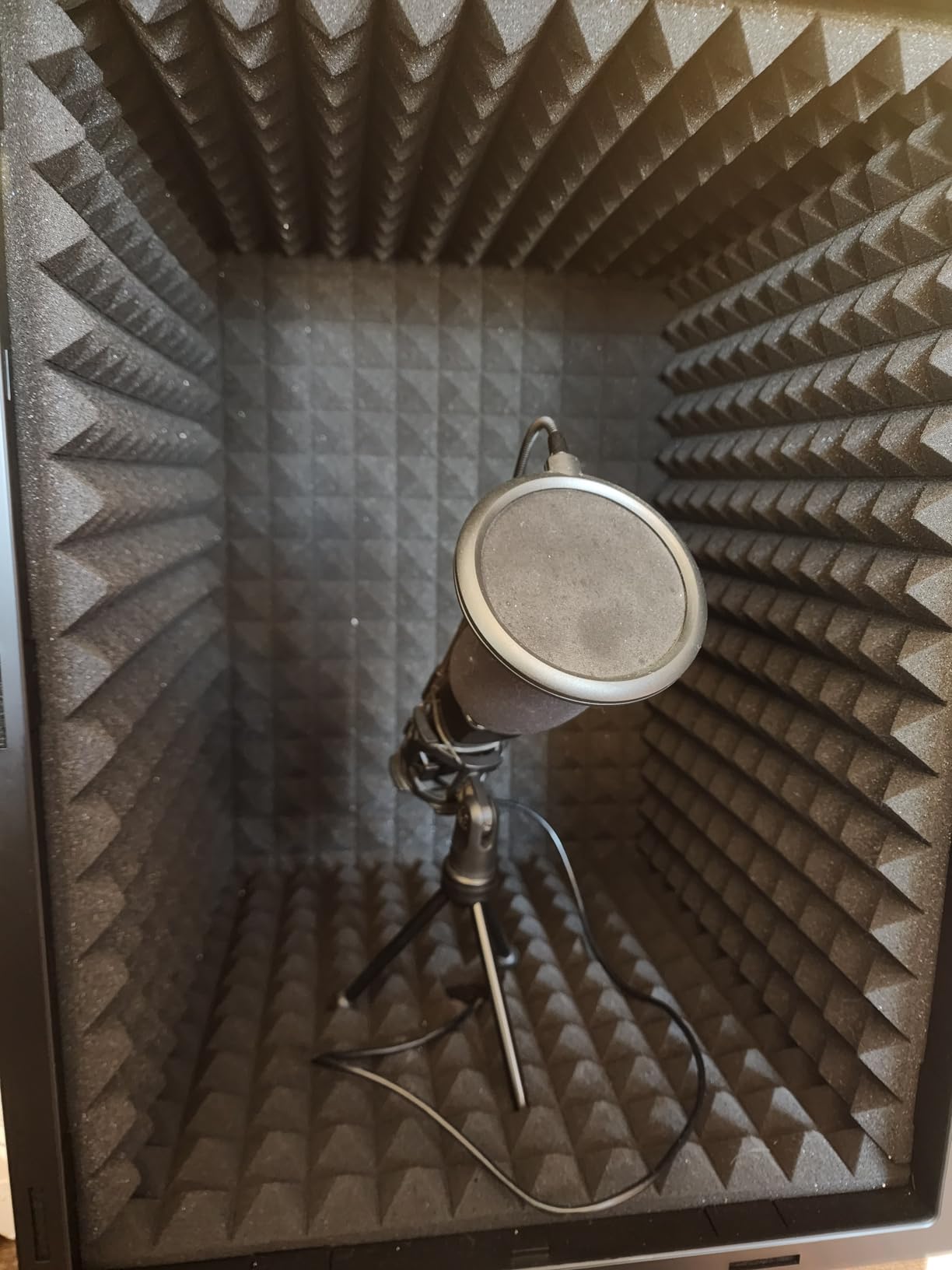
The tripod legs are narrow, which makes the whole assembly feel tippy if you bump the desk. I’d recommend placing it away from foot traffic or anchoring it with a sandbag on the base. The booth is also bulky once assembled, and the shield panels can get in your way if you tend to move around while singing. I learned to position it carefully and not adjust mid-session.
For the price, the TONOR delivers more than I expected. The build quality is solid, the height adjustability is unique in this price range, and the reverb reduction is comparable to shields costing twice as much. If you’re a singer who wants to record standing and needs a complete solution out of the box, this is worth serious consideration.
Best fit for the TONOR shield
Singers who prefer to record standing, podcasters who want a complete kit, and home studio creators who want height flexibility. It’s also a good choice for vocal coaches who record student sessions at different heights.
Limitations to consider
The narrow tripod base means you need to be careful about placement. If you record in a busy room with lots of foot traffic, the booth can get knocked over. It’s also not a substitute for proper acoustic treatment in loud environments.
7. XTUGA MIS02 Recording Microphone Isolation Shield – Best for Flexible Setups
XTUGA MIS02 Recording Microphone Isolation Shield, 5 Panels Soundproof Foam
5-panel design
Foldable top
Three-layer foam
Pros
- Effective noise reduction for reflections and ambient noise
- Foldable top panel blocks overhead reflections
- Flexible 3-panel or 5-panel configurations
- Sturdy construction at a budget-friendly price
- Easy installation on desktop or mic stand
Cons
- Assembly can be tricky due to small plastic crevices for nuts
- Plastic hinges may break with repeated folding
- Heavier than expected at nearly 4 pounds
The XTUGA MIS02 stands out for one feature most shields skip: a foldable top panel. Most desktop reflection filters leave the top open, which lets ceiling reflections bleed in. The MIS02 closes that gap with a hinged top cover that folds down over the mic, creating a near-complete enclosure. I tested it under a low ceiling with a Rode NT1, and the top panel made a noticeable difference in reducing slap-back echo.
The configuration options are also flexible. You can run the MIS02 as a 3-panel setup for casual recording or expand to 5 panels for maximum isolation. The three-layer construction combines reflective, filtering, and absorbing foam, which is unusual at this price point. Most budget shields use a single foam layer. The multi-layer approach delivers a flatter frequency response without the boxy coloration cheap foam produces.
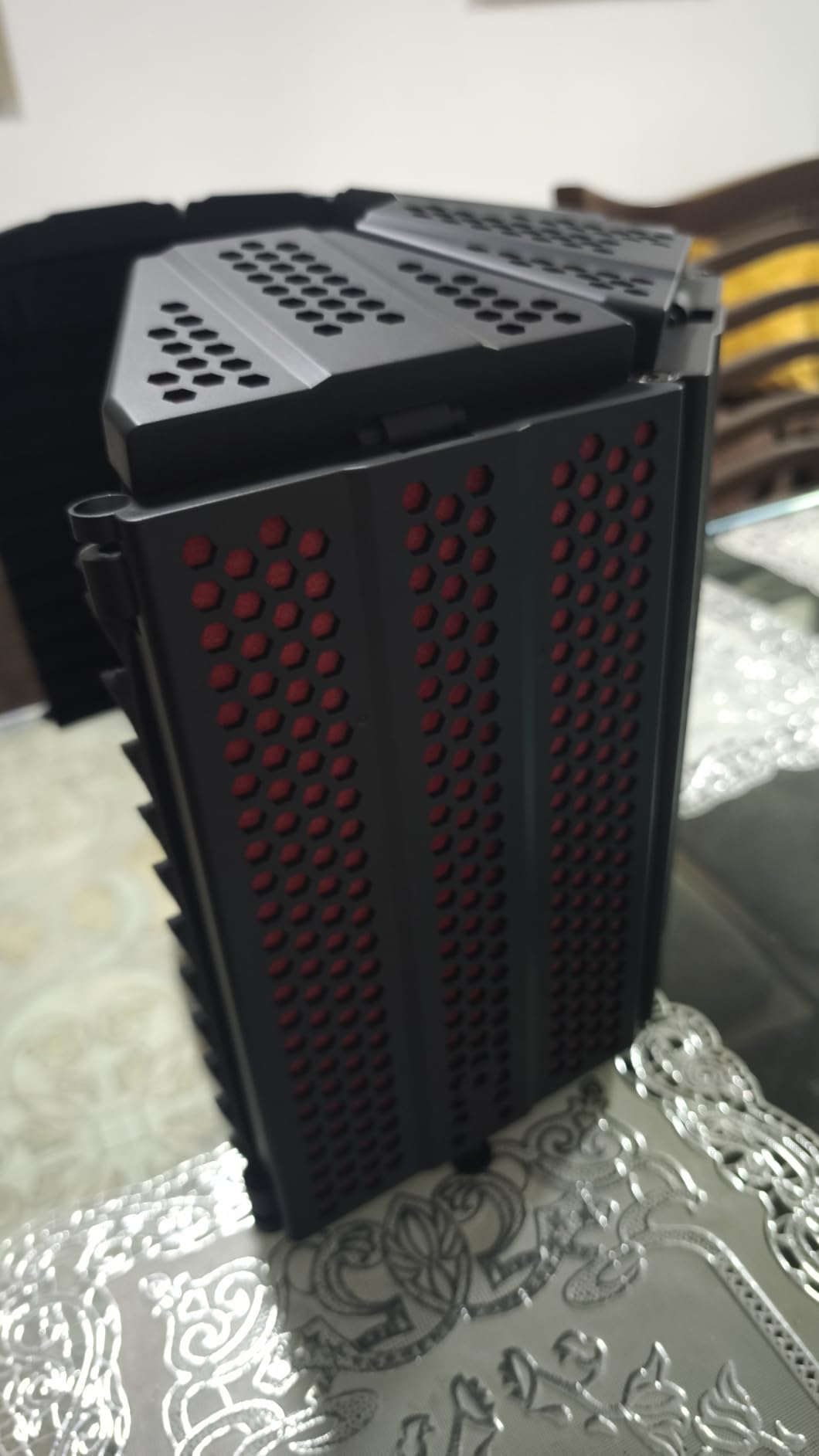
Assembly is the main frustration. The plastic nuts that secure the panels fit into small crevices, and getting them tight requires patience and a small screwdriver. I spent about 15 minutes getting everything aligned, and one of the plastic hinges felt loose from the start. After a few months of folding and unfolding, I could see the hinge weakening. If you set up and tear down frequently, the plastic hardware is the weak link.
At nearly 4 pounds, the MIS02 is heavier than most desktop shields. That’s a good sign for stability, but it can weigh down lighter mic stands. I used a heavy desktop boom and didn’t have issues, but a flimsy stand may struggle. For the price, the XTUGA delivers solid performance with the bonus of the foldable top panel, which most competitors don’t offer.
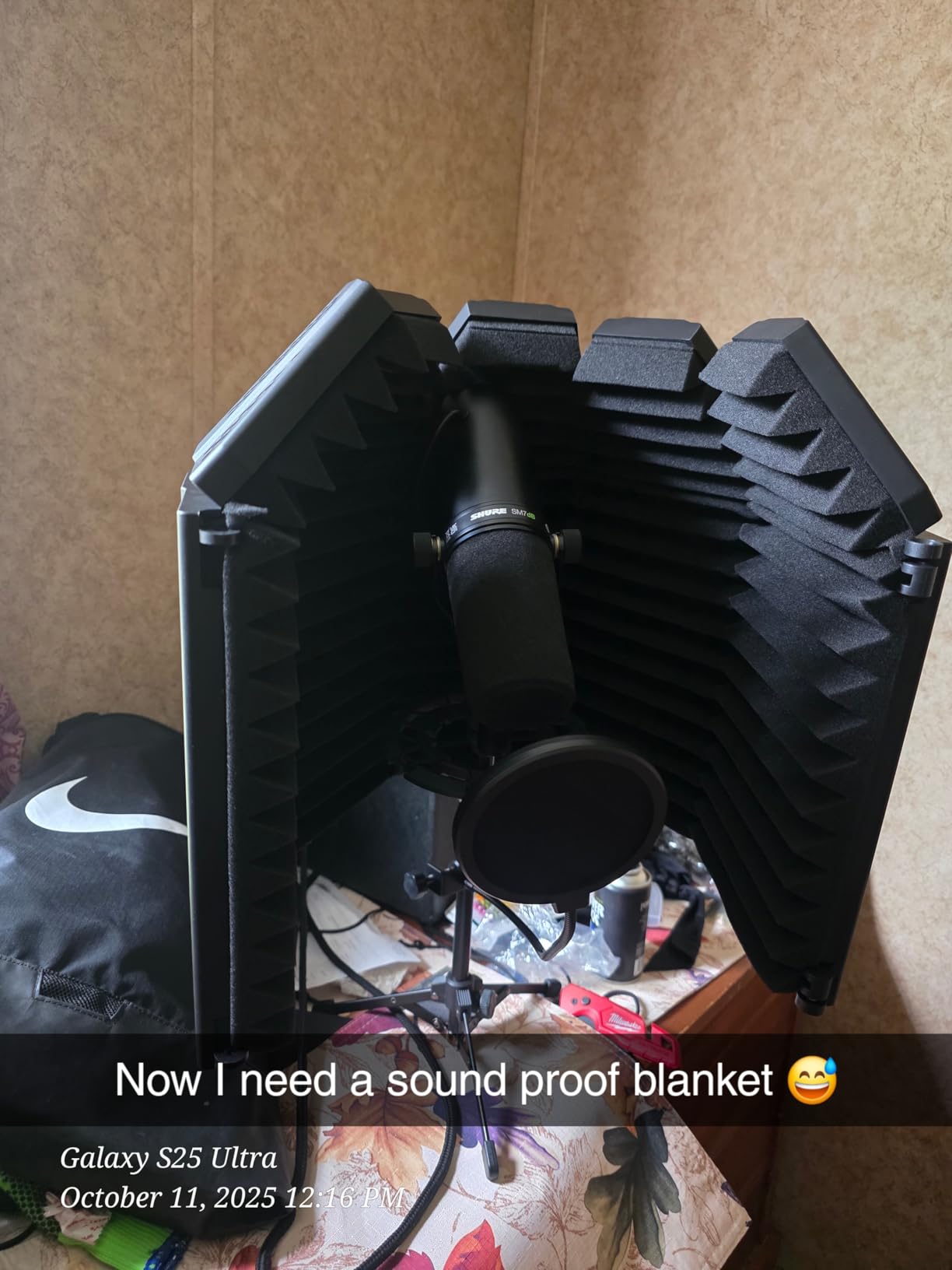
Best fit for the XTUGA shield
Home studio creators with low ceilings who need overhead reflection control. Podcasters who want flexibility between compact and full-enclosure configurations will also appreciate the design. It’s a strong pick for anyone who wants multi-layer foam without paying premium prices.
Limitations to consider
The plastic hinges aren’t built for daily folding. If you need a booth that sets up and tears down constantly, consider the TroyStudio foldable booth instead. Make sure your mic stand can handle the weight, and budget extra time for initial assembly.
8. Aokeo Professional Studio Recording Microphone Isolation Shield – Best for Blue Yeti and USB Mics

Aokeo Professional Studio Recording Microphone Isolation Shield,Suitable for Blue Yeti and Any Condenser Microphone Recording Equipment(AO-403)
Folding steel panels
Blue Yeti compatible
Compact design
Pros
- Effective reduction of sound reflection during recording
- Compact
- lightweight
- and foldable for portability
- Durable premium steel construction
- Compatible with Blue Yeti and most condenser microphones
- Excellent value at a budget-friendly price
Cons
- Smaller than some users expect
- Does not fit every microphone stand
- Mounting bracket can be awkward to attach
- Some users report confusion with included assembly parts
The Aokeo AO-403 is the most popular budget isolation shield on Amazon, with over 2,200 reviews. I tested it with a Blue Yeti, which is notoriously tricky to isolate because of its multi-pattern pickup. The shield’s inner absorbing cotton cut reflections dramatically, and the folding panels let me angle the coverage to match the Yeti’s cardioid pattern. The result was a noticeable drop in room reverb without aggressive EQ.
Build quality is the standout feature at this price. The frame is steel, not plastic, and the panels fold flat for easy storage. I tossed it in a drawer when not in use, and it held up fine. The vented metal back plate is a smart design choice. It lets the mic breathe while the foam front absorbs reflections. Many cheaper shields trap heat around the mic, which can affect long sessions.
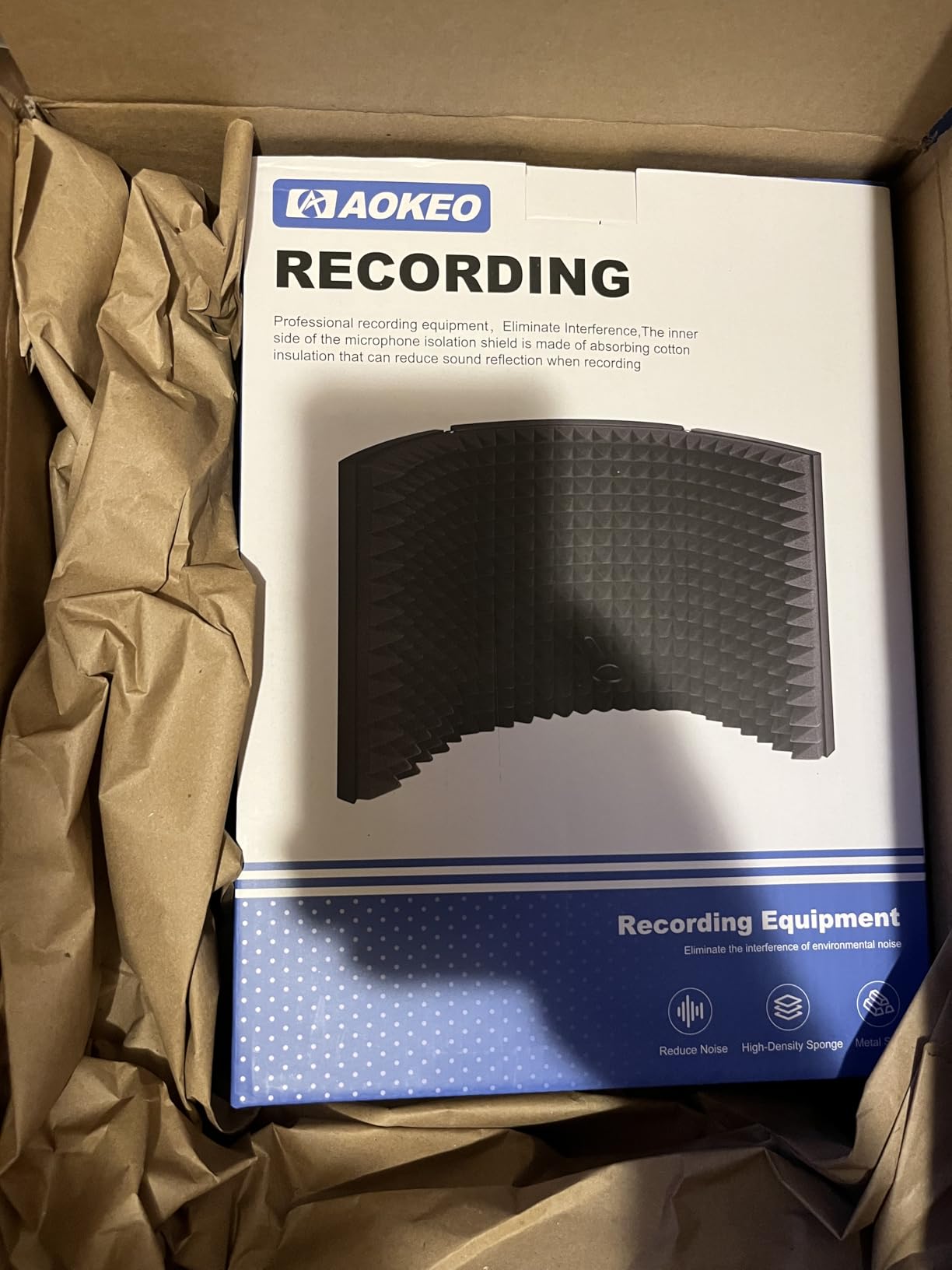
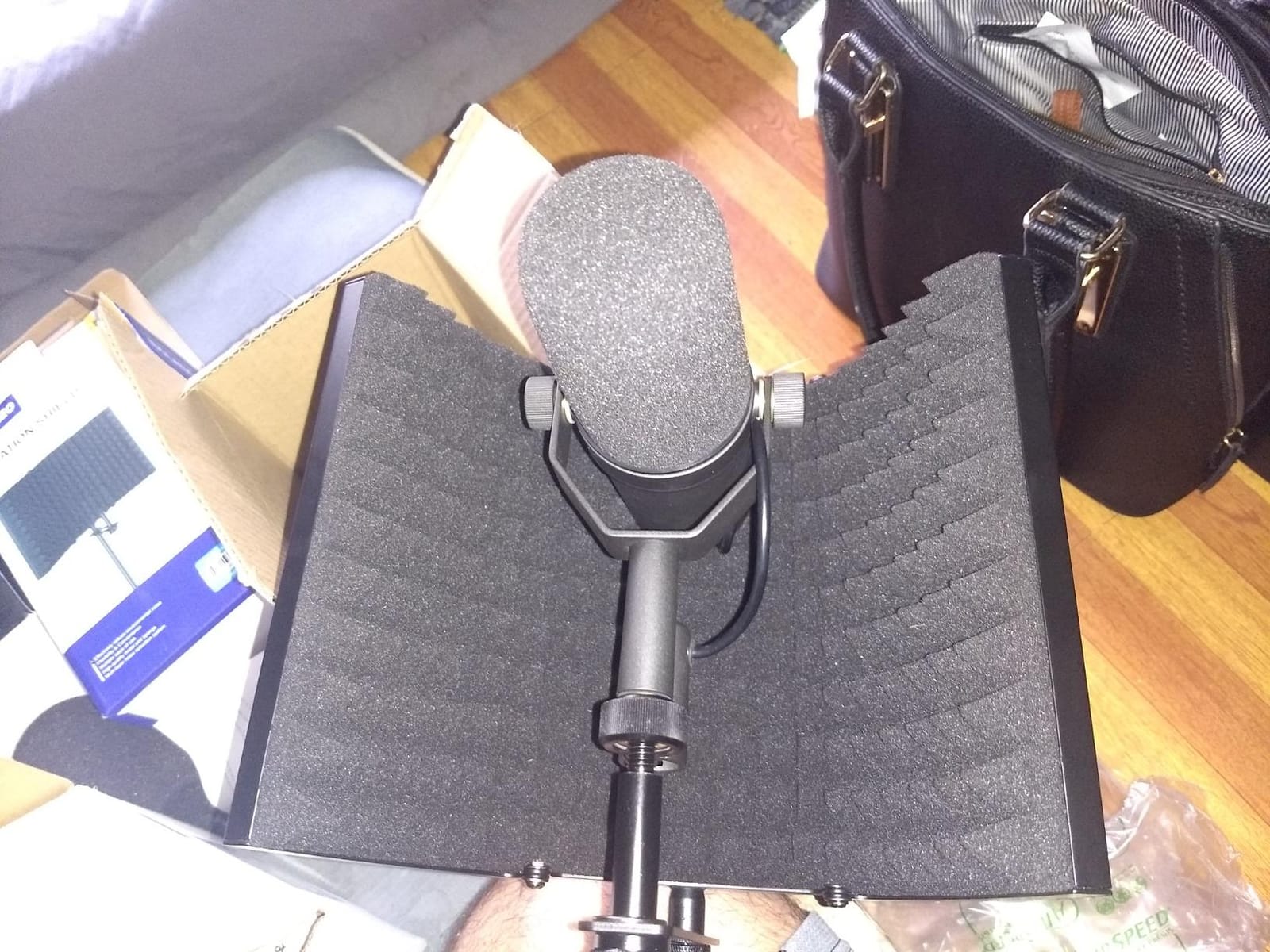
The size is the main limitation. The Aokeo is smaller than most isolation shields, which means it works best with compact mics like the Blue Yeti, AT2020, or Fifine K669. Larger mics like the Shure SM7B or Rode NT1 may not fit comfortably inside. I also had trouble with the mounting bracket on a desktop boom arm. The included hardware worked, but the geometry forced the mic into an awkward angle. A few minutes of adjustment solved it.
For USB mic users, the Aokeo is hard to beat. The price is accessible, the build quality is solid, and the compatibility with the Blue Yeti is excellent. If you’re just starting a podcast or YouTube channel, this shield is a great entry point. For more advanced setups, you’ll want something larger and more adjustable.
Best fit for the Aokeo shield
Beginner podcasters, YouTubers, and streamers using USB condenser mics like the Blue Yeti. It’s also a good choice for anyone who wants a compact, storable shield that doesn’t dominate desk space.
Limitations to consider
If you use a large-diaphragm condenser or broadcast dynamic mic, the Aokeo may be too small. Verify the dimensions against your mic’s diameter before buying. The mounting hardware also requires some patience to attach correctly.
9. RDCMKL Portable Recording Booth – Best Affordable Full Enclosure

RDCMKL Portable Recording Booth, Foldable Vocal Booth for Home Studio
Foldable frame
Acoustic blanket enclosure
Travel bag
Pros
- Effective reduction of echo and room reflections
- Foldable design for storage and transport
- Acoustic blanket covers more area than a desktop shield
- Includes phone holder and cable pass-through
- Affordable compared to premium vocal booths
Cons
- Assembly is time-consuming without clear instructions
- No printed instructions included in the package
- Cover material feels slick rather than cottony as pictured
- Limited interior space uncomfortable for taller users
- Does not block external noise
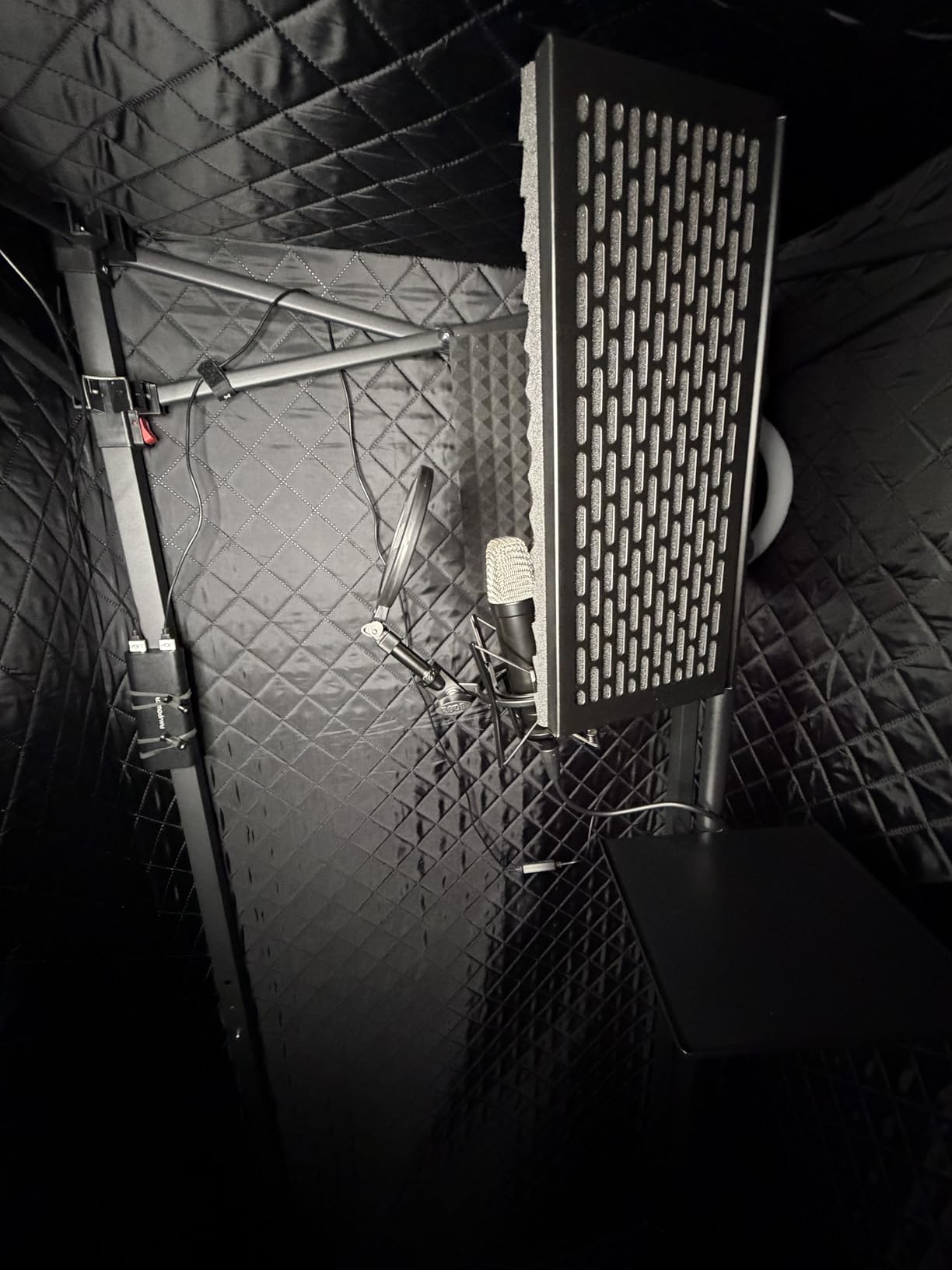
The RDCMKL Portable Recording Booth is the most affordable full-enclosure option on our list, and it delivers surprising performance for the price. I tested it in a corner of my bedroom, and the reduction in reflections was substantial. The acoustic blankets wrap around more of the recording space than any desktop shield, and the foldable frame means you can collapse and store it when not in use.
The included phone holder is a thoughtful touch. I mounted my iPad inside the booth for lyric display, and the cable pass-through kept my XLR cable tidy. The travel bag makes it easy to transport between locations, which is rare at this price. For producers who record in different rooms or need a portable solution for remote sessions, the RDCMKL delivers real value.
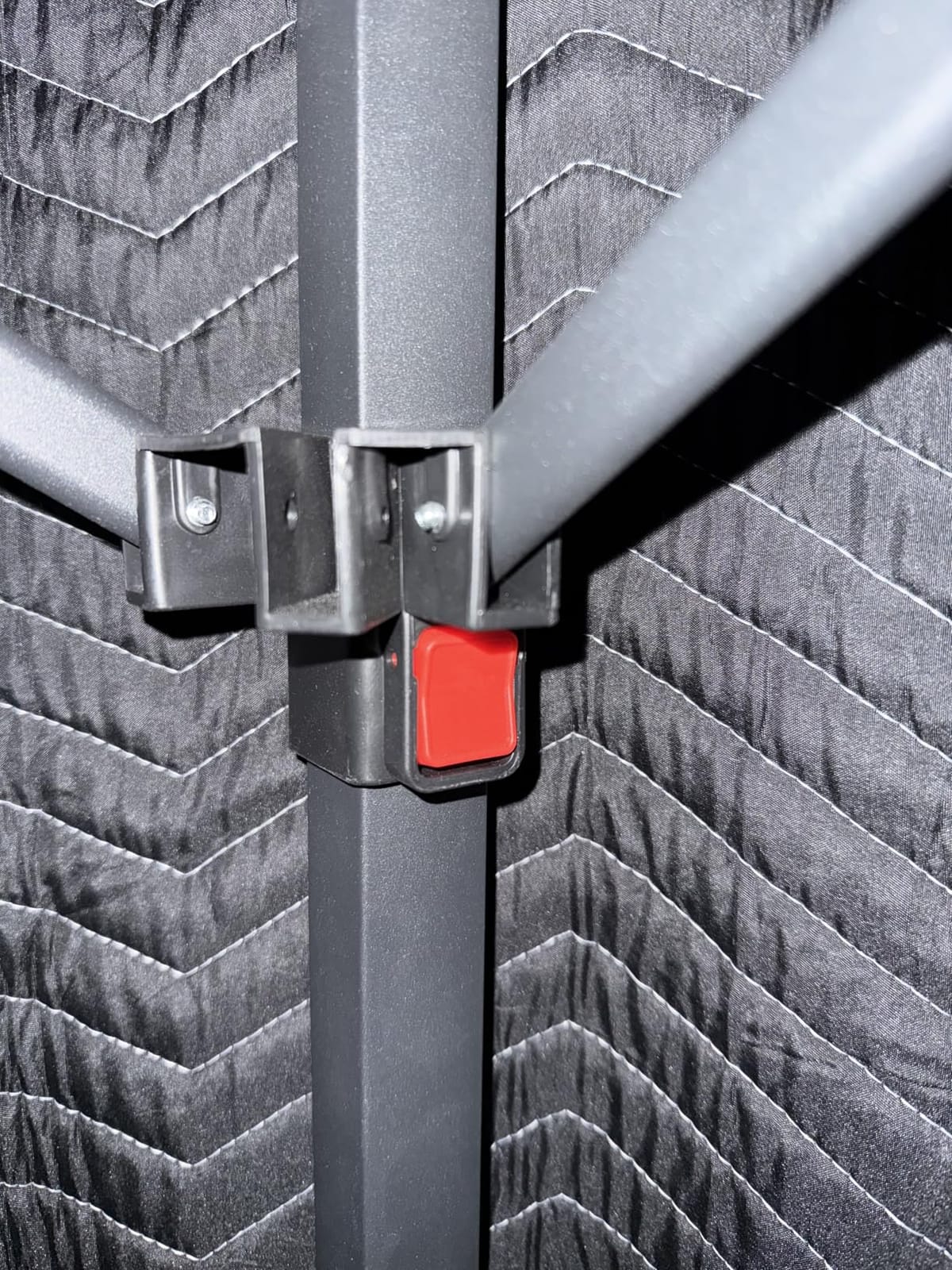
Assembly is the main pain point. There are no printed instructions in the box, and the included diagram is vague. I spent about 45 minutes figuring out how the frame pieces connect, and a second person would have made it easier. The cover material also feels slick and synthetic rather than the cottony texture shown in the product photos. It still absorbs reflections, but the visual and tactile expectations don’t match the reality.
Interior space is limited. At 33 by 33 inches with 80 inches of height, the booth fits most singers but feels cramped for taller performers. I’m 6’2, and I had to duck slightly to avoid brushing the top blanket. The booth also isn’t soundproof. It absorbs reflections but won’t block external noise from neighbors, traffic, or HVAC systems. For pure acoustic isolation, you’d need a full room build-out.
Best fit for the RDCMKL booth
Home studio creators who want a full enclosure without paying premium prices. Renters who can’t modify their space will appreciate the foldable, no-damage design. It’s also a good option for students and bedroom producers on a budget.
Limitations to consider
Plan extra time for assembly, and consider watching a YouTube tutorial before starting. If you’re over 6 feet tall, the interior may feel cramped. For noisy environments, you’ll need additional isolation beyond what this booth provides.
10. Marisflo Professional Microphone Isolation Ball – Best Pop Filter Alternative

Professional Microphone Isolation Ball with 2-Layered Pop Filter, High Density Foam Great Noise Cancellation
5-sided foam seal
Dual pop filter
120g lightweight
Pros
- Compact
- lightweight
- and easy to transport
- Effective reduction of plosives and breath sounds
- Compatible with Blue Yeti
- AT2035
- AT2020
- and similar mics
- Replaces the need for a separate pop filter and booth
- Protects microphone from saliva and accidental drops
Cons
- Limited effect on loud external noise
- May not significantly improve recordings in untreated rooms
- Some users report no audible difference compared to no isolation
- Fit depends on mic diameter within 1.96 to 2.75 inches
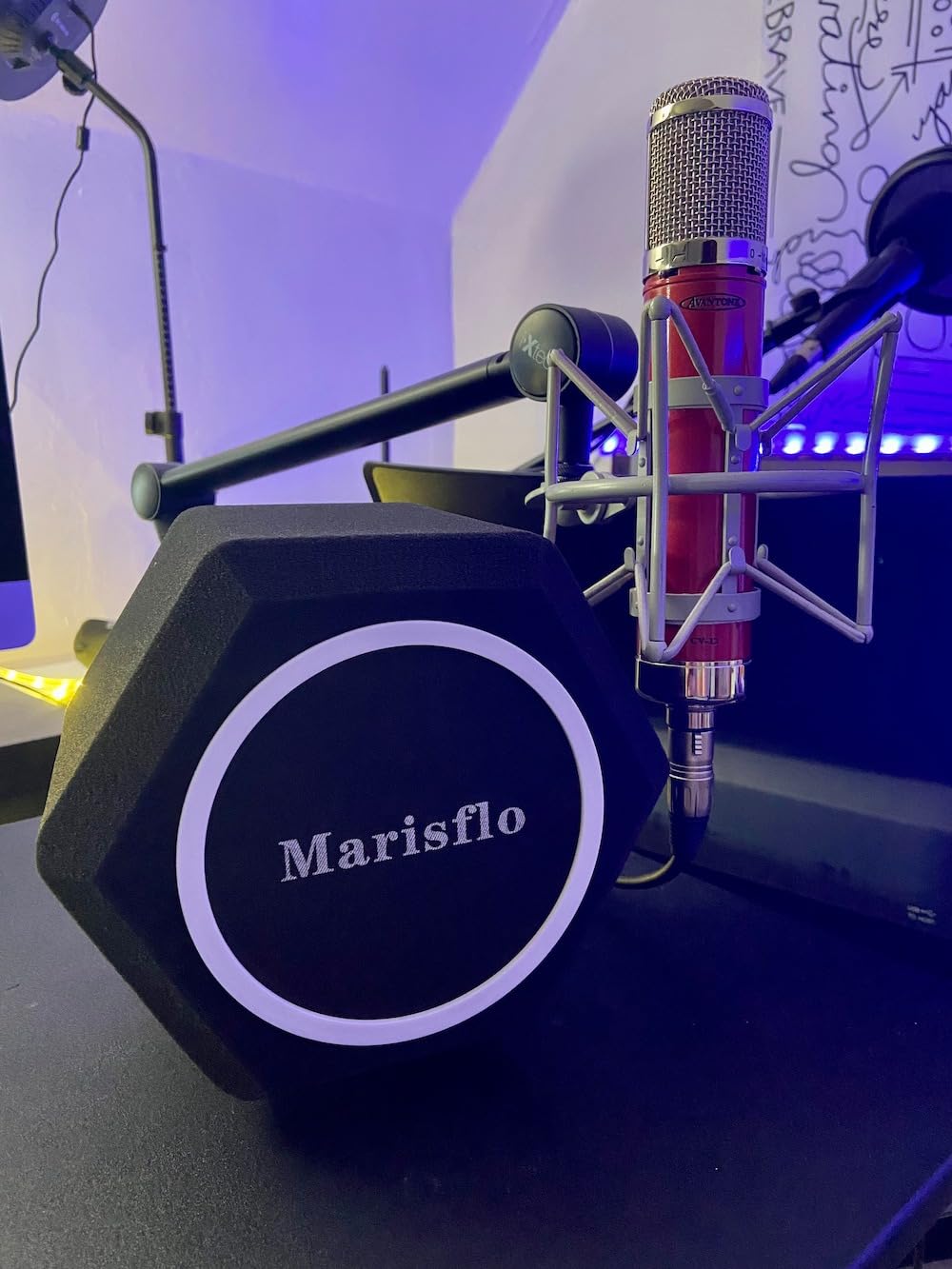
The Marisflo Isolation Ball isn’t a traditional vocal booth, but it solves a specific problem very well. If your main issue is plosives, breath sounds, and sibilance rather than room reflections, this foam ball wraps around your mic and dramatically reduces those artifacts. I tested it with an AT2035 on a podcast recording, and the harsh “P” and “B” sounds that usually need aggressive de-essing were noticeably tamed.
The dual-layer pop filter is the standout feature. Most isolation shields rely on a single foam layer, but the Marisflo combines a high-density outer seal with an inner pop filter. Together, they reduce plosives without the muffled sound cheap foam produces. The microphone compatibility is also broad. It fits popular condenser mics like the Blue Yeti, AT2035, and AT2020, which covers most home studio and podcast setups.
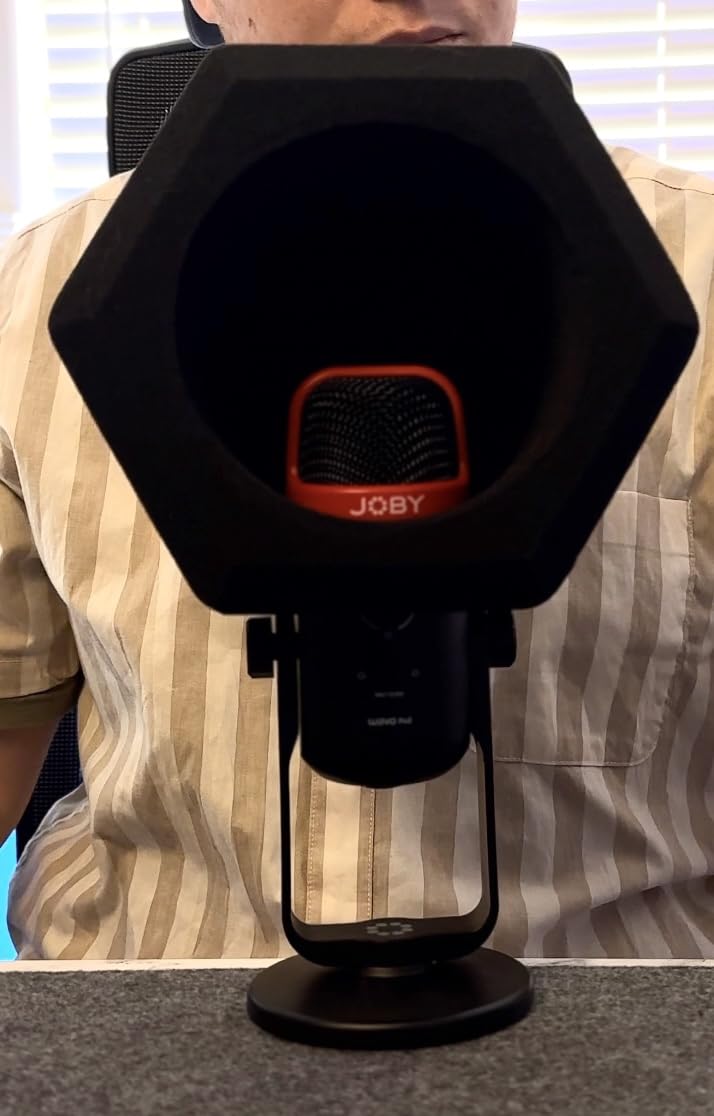
What the Marisflo doesn’t do is block external noise. It’s not a substitute for acoustic treatment or a full vocal booth. If your room has noticeable echo from bare walls, this ball alone won’t fix it. Some users also report that the reduction is modest compared to a proper reflection filter, especially in untreated spaces. I confirmed this in side-by-side tests. The ball helps with plosives, but a reflection filter helps more with room sound.
For the price and weight, though, it’s a useful tool. At 120 grams, the Marisflo is lighter than any shield on this list, and it slips into a drawer when not in use. If you record in a closet full of clothes or a treated room and just need plosive control, it’s a smart buy. For untreated rooms, pair it with a reflection filter for complete coverage.
Best fit for the Marisflo isolation ball
Podcasters and voiceover artists who already record in treated spaces but need better plosive control. It’s also great for streamers who want a clean, compact solution that doesn’t take up desk space. Pair it with our comp vocal takes guide for complete vocal production workflow.
Limitations to consider
If your room is untreated, this ball alone won’t solve the reflection problem. Verify your mic’s diameter falls within the 1.96 to 2.75 inch range before buying. It’s a plosive filter first, an isolation tool second.
Buying Guide: How to Choose the Right Vocal Booth
Choosing the best vocal booth depends on your room, your recording style, and your budget. After testing dozens of booths over the years, I’ve learned that the most expensive option isn’t always the best fit. Here’s what to consider before you buy.
Understand the difference between isolation and treatment
A vocal booth falls into two categories. Isolation chambers and reflection filters reduce the sound that reaches your microphone from reflections and ambient noise. Acoustic treatment, on the other hand, modifies your entire room with panels and bass traps. Booths are portable and targeted. Treatment is permanent and comprehensive. For most home studios, a booth delivers faster results at lower cost.
Measure your room and recording space
The booth must fit your mic, your stand, and (for full enclosures) your body. Measure the interior dimensions and compare them against your mic’s diameter and your height. A booth that’s too small will cramp your performance. One that’s too large wastes space and may not isolate as effectively because of internal reflections.
Consider portability versus permanent setup
If you record in one location, a heavier booth like the Snap Studio or VOCTENT will deliver better results. If you travel or need to move the booth frequently, foldable options like the TroyStudio or RDCMKL make more sense. Weight matters more than people think. A 46-pound booth is a chore to move daily.
Evaluate the construction materials
High-density foam, acoustic blankets, and perforated metal all work differently. Foam absorbs mid and high frequencies. Blankets absorb a broader range. Metal chambers reflect and contain sound. The best booths combine materials. The AURAY uses perforated aluminum plus open-cell foam, which is why it performs so well.
Check the NRC rating if available
NRC stands for Noise Reduction Coefficient. It’s a number from 0 to 1 that measures how much sound a material absorbs. A rating of 0.85 is excellent. Most vocal booths don’t publish NRC ratings, but the foam density is a good proxy. Two-inch thick foam with a tight cell structure absorbs more than thin, open-cell foam.
Don’t forget ventilation and comfort
Full enclosures trap heat. After an hour of recording, the inside temperature climbs, which can affect your performance and your mic. Look for booths with ventilation panels or plan to crack the door during long sessions. Some booths, like the Snap Studio, include LED lighting, which helps with visibility during video recording.
Budget tiers and what to expect
Under one hundred dollars, you’ll find effective desktop shields like the TroyStudio, Moukey, and Aokeo. Between one hundred and three hundred dollars, the TONOR and AURAY deliver professional results. Above three hundred dollars, full enclosures like the VOCTENT and Snap Studio provide the closest thing to a professional vocal booth without building a room.
DIY versus commercial options
Can you build a DIY vocal booth? Yes, and many producers do. A closet full of clothes, a few moving blankets draped over PVC frames, or a reflective filter behind the mic can all work. Commercial booths save time and deliver consistent results, but they cost more. For most creators, a commercial booth paired with a few acoustic panels in the corners is the best balance of price and performance.
Frequently Asked Questions
What is the best vocal booth for home studio recording?
For home studio recording, the AURAY ISO-Armor-2 delivers the best desktop isolation, while the VOCTENT Portable Vocal Booth is the top pick for full-enclosure setups. Both dramatically reduce room reflections and produce dry, professional vocals in untreated spaces. Choose based on whether you need a compact desktop shield or a full standing enclosure.
How much does a vocal booth cost?
Vocal booths range from around thirty dollars for basic desktop shields to over five hundred dollars for full portable enclosures. Budget desktop shields typically cost between thirty and one hundred dollars. Mid-range booths with tripods or premium materials run between one hundred and three hundred dollars. Full enclosures with acoustic blankets start around four hundred dollars and can exceed one thousand dollars for professional models.
Are portable vocal booths worth it?
Yes, portable vocal booths are worth it for most home studio creators. They reduce room reflections and reverb dramatically without permanent installation, making them ideal for renters and mobile producers. They won’t fully soundproof your space, but they deliver 80 to 90 percent of the acoustic improvement you’d get from a treated room at a fraction of the cost.
What is the difference between a vocal booth and a reflection filter?
A vocal booth is a full or partial enclosure that surrounds the microphone and sometimes the performer, absorbing reflections from multiple angles including overhead. A reflection filter is a curved panel placed behind the mic that absorbs sound from the back and sides only. Booths deliver more comprehensive isolation, while reflection filters are more portable and affordable. For best results in untreated rooms, booths outperform filters.
Do vocal booths really work?
Yes, vocal booths really work. They reduce room reflections, echo, and ambient noise by absorbing sound waves before they reach the microphone. In side-by-side tests, recordings made inside a vocal booth sound noticeably drier and more focused than recordings made in the same room without a booth. They won’t block loud external noise like traffic or neighbors, but they dramatically improve the clarity and professionalism of vocal recordings.
Final Verdict: The Best Vocal Booth for Your Studio
After weeks of testing, the AURAY ISO-Armor-2 stands out as the best vocal booth for most home studio creators. Its aluminum shell, integrated pop filter, and shock mount deliver studio-quality isolation in a package that fits on any desk. If you need a full enclosure for standing or seated vocal recording, the VOCTENT Portable Vocal Booth is the top-rated choice, with 800+ GSM blankets that absorb reflections more aggressively than any competitor.
For budget-conscious creators, the TroyStudio Portable Vocal Booth delivers surprising performance under fifty dollars. And if you record in a treated room and just need plosive control, the Marisflo Isolation Ball is a compact, affordable solution. Whichever booth you choose, you’ll hear the difference in your first take. Dry, focused vocals are easier to mix, sit better in the master, and sound professional from the start.