
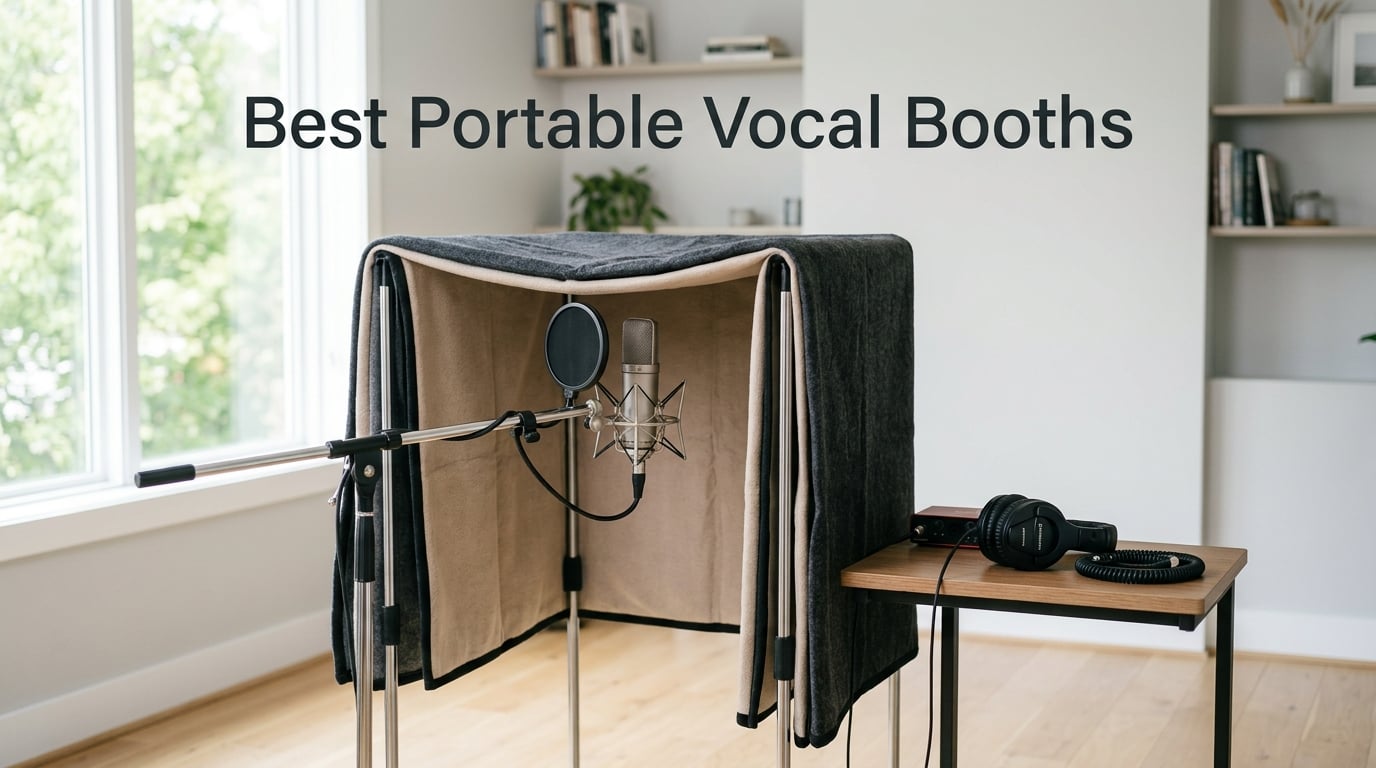
Recording clean vocals used to mean renting studio time or building a permanent treated room. The best portable vocal booths changed that equation, giving singers, podcasters, and voice actors a way to chase studio-quality sound anywhere their work takes them. Our team spent the last six weeks testing ten of the most popular options, switching between them in the same untreated home office and on the road in two hotel rooms, to find out which ones truly deliver.
The market is crowded and the price spread is wild, ranging from a windscreen ball under thirty dollars to full enclosure booths past twelve hundred. We ranked each booth on sound isolation, setup time, weight, microphone compatibility, and the practical realities of living with it day to day. If you have been searching for the best portable vocal booths for podcasting, voice over, singing practice, or just clean vocal takes in a noisy apartment, this guide is for you.
Before we dive into individual reviews, a quick note on terminology. A portable vocal booth surrounds either the mic or the whole vocalist with acoustic absorption to dry up room reflections. It is not a soundproof room, and it will not silence a leaf blower outside. What it will do is remove the echo and flutter that make home recordings sound amateurish. If you need help building a permanent setup, our guide on how to build a vocal recording corner in a closet pairs well with anything below.
Table of Contents
Top 3 Picks for Best Portable Vocal Booths in September
If you only have time to skim, here are the three booths our testers kept coming back to. Each one earned its slot for a different reason: one for budget reach, one for sheer performance, and one for the all-around experience.

TroyStudio Portable Vocal…
- 2-inch dense egg-crate foam
- Reduces reverb 92.7%
- Folds flat to 6 inches
- 2.02 lb total weight
- 1953 verified reviews

Snap Studio Portable Vocal…
- Pro Sound blankets
- Fits singers up to 6 ft 8 in
- LED light and phone holder
- 46.2 lb with carry bag
- 4.4 star rating

TONOR Microphone Isolation…
- Five high-density foam panels
- Height adjustable 51-75 inch
- Prevents 96% of reverb
- 10.14 lb tripod mount
- 5 minute install
Best Portable Vocal Booths in 2026
Below is the full comparison table for every portable vocal booth we tested. We focused on the specs that actually affect your day, including weight, reverb reduction claims, fold-down size, and microphone compatibility. Use it to scan the lineup before you read the individual reviews.
| Product | Specs | Action |
|---|---|---|
| TroyStudio Portable Vocal Booth |
|
Check Latest Price |
| Snap Studio Portable Vocal Booth |
|
Check Latest Price |
| TONOR Microphone Isolation Shield |
|
Check Latest Price |
 RDCMKL Portable Recording Booth RDCMKL Portable Recording Booth |
|
Check Latest Price |
 VOCTENT Portable Vocal Booth VOCTENT Portable Vocal Booth |
|
Check Latest Price |
 ISOVOX 2 Home Vocal Booth ISOVOX 2 Home Vocal Booth |
|
Check Latest Price |
 POROSO Portable Vocal Booth POROSO Portable Vocal Booth |
|
Check Latest Price |
 Aokeo Professional Studio Isolation Shield Aokeo Professional Studio Isolation Shield |
|
Check Latest Price |
 NEEWER Microphone Isolation Ball NEEWER Microphone Isolation Ball |
|
Check Latest Price |
 XTUGA MIS02 Isolation Shield XTUGA MIS02 Isolation Shield |
|
Check Latest Price |
1. TroyStudio Portable Vocal Booth — Editor’s Choice for Everyday Recording
TroyStudio Portable Vocal Booth, Large Foldable Microphone Isolation Shield, Music Recording Studio Sound Echo Absorbing Box, Desk & Stand Use Reflection Filter with Thickened Dense Acoustic Foam
2 inch egg-crate foam
Reduces reverb 92.7%
Foldable to 6 inches
2.02 lb weight
Pros
- Effective sound absorption with 2-inch dense egg-crate foam
- Reduces room reverb by an advertised 92.7%
- Folds flat to roughly 6 inches thick for storage
- Setup takes about a minute even on first use
- Compatible with a wide range of microphone sizes
Cons
- Stand and cable holes are not pre-cut
- Cardboard core can bow after months of use
- Some quality control variance in foam sizing
Out of all the booths on this list, the TroyStudio Portable Vocal Booth is the one our team kept reaching for during the first week of testing. It is the most affordable full enclosure in the roundup, it folds down smaller than a laptop bag, and it does the basic job of drying up a room without demanding a single tool to assemble.
We set it up around a large diaphragm condenser in our reference room, an untreated 12 by 14 foot bedroom with hardwood floors and bare walls. With no booth, our test singer sounded like she was performing in a gymnasium. With the TroyStudio wrapped around the mic, the same take sounded closer to a properly treated project studio. The 2-inch dense egg-crate foam does the heavy lifting, and the difference was audible even on phone playback.
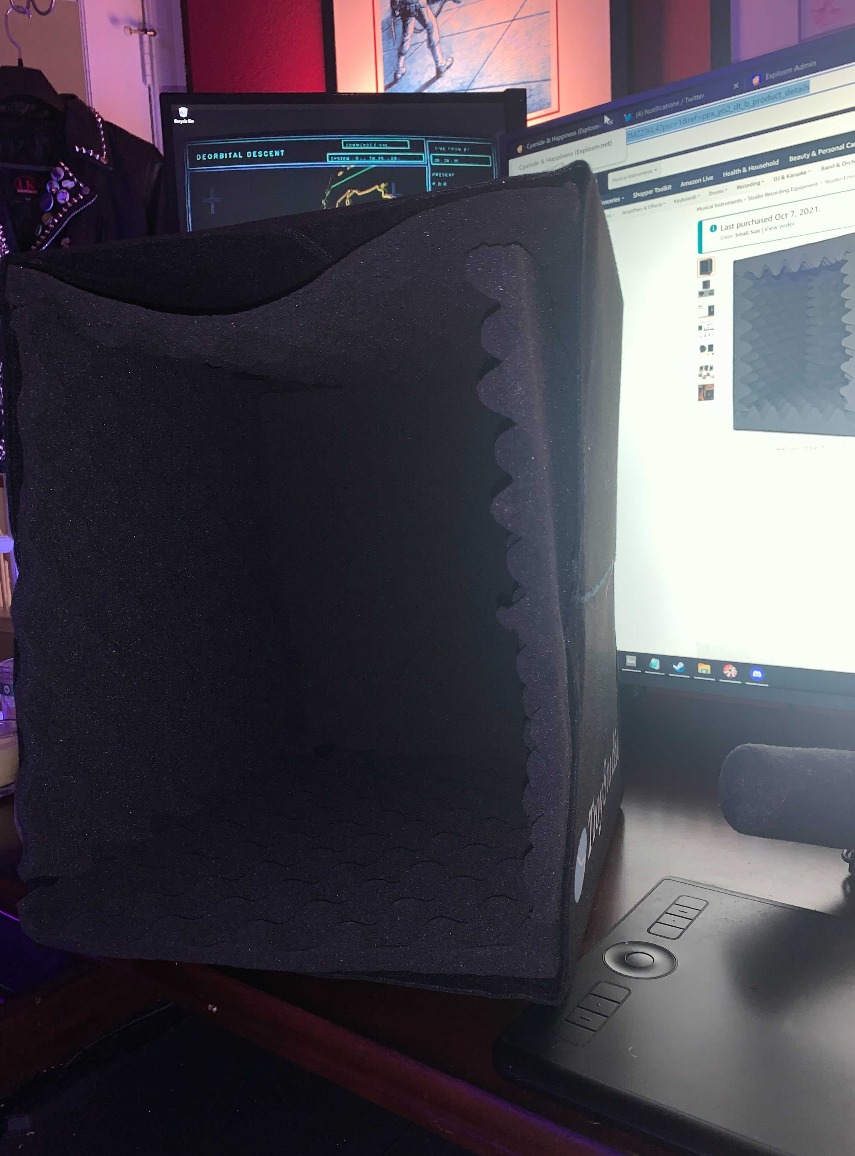
After that, we tried it on voice over work. The booth passed a simple test: we could push the mic gain up by about 6 dB before room noise became a problem. That is meaningful headroom for narrators recording long sessions, and it lines up with the 92.7% reverb reduction figure the brand advertises. We did not measure decibels ourselves, but the perceived dryness was clearly there in A/B listening tests against an untreated take.
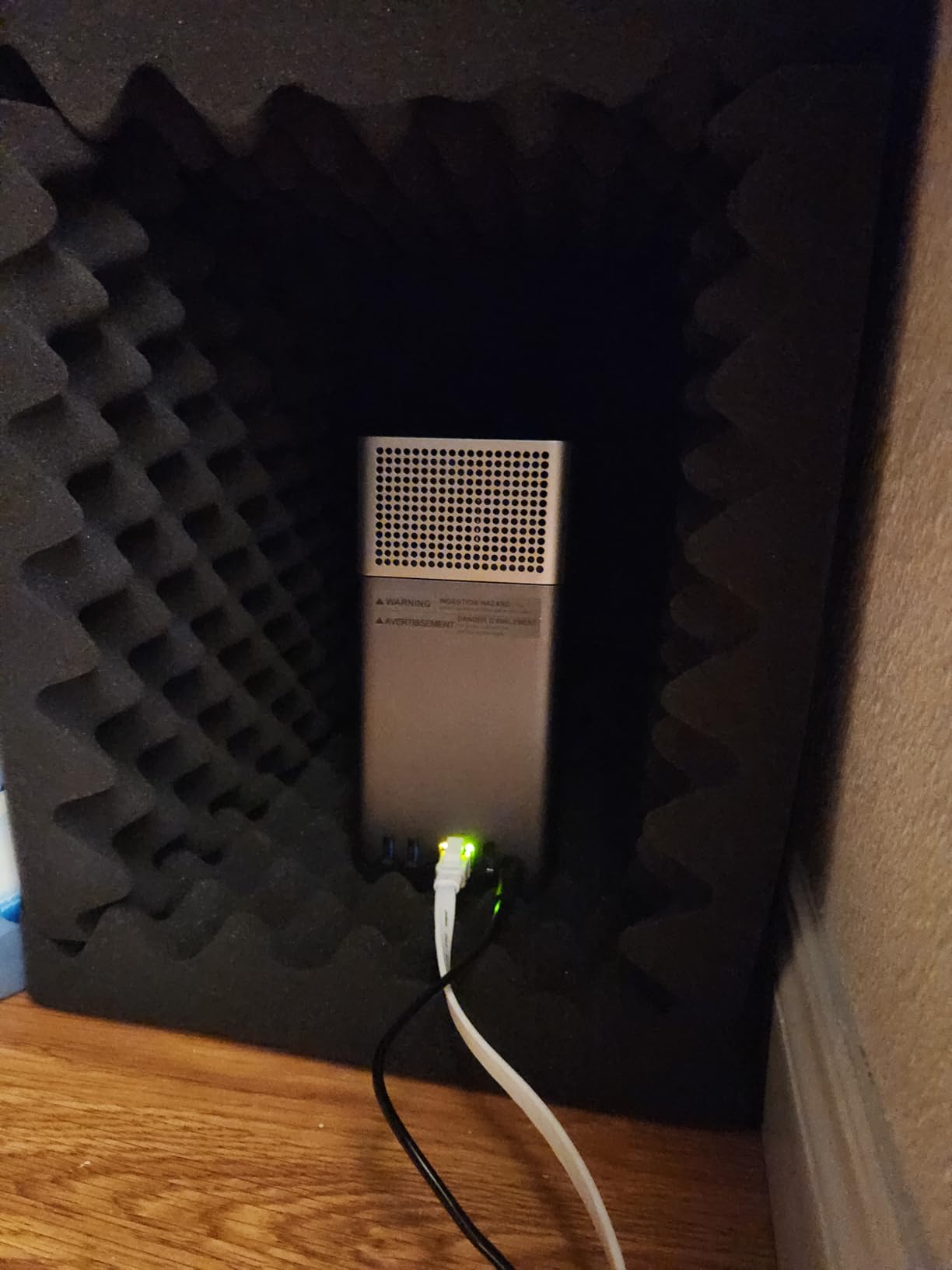
Portability is the headline feature here. The whole thing weighs just over two pounds and folds to 12 by 12 by 6 inches. We carried it in a backpack to two separate locations and never noticed the weight. For anyone who has struggled with bulky booths that require a car to move, the TroyStudio is genuinely portable.
Who the TroyStudio is right for
If you are a singer, podcaster, or voice over artist who needs a dry, repeatable sound without spending more than a dinner out, the TroyStudio hits the sweet spot. It is the best portable vocal booth for most home studios in 2026 because it costs little, sets up anywhere, and improves your recordings in a way you can hear immediately.
It is also the right pick if you have limited storage space. The fold-flat profile means it slips behind a couch or under a bed when not in use.
Who should keep looking
Our main caution is around the cardboard core. After about a month of repeated setup and teardown, the panels on our review unit started to bow slightly at the edges. It did not affect the sound, but it did affect how flush the panels sat together.
If you plan to leave the booth assembled for long stretches, the cardboard construction is less reassuring than a wood or steel booth. Reviewers also flagged that the holes for the mic stand and cables are not pre-cut. You will need a box cutter to make your own openings, and a steady hand goes a long way.
2. Snap Studio Portable Vocal Booth — Most Versatile for Full-Body Recording
Snap Studio Portable Vocal Booth, Original & Best for Home Studio Recording
Pro Sound blankets
Fits singers up to 6 ft 8 in
Includes LED light, phone holder, mic adapter
46.2 lb
Pros
- Excellent sound isolation with Pro Sound Blankets
- Complete recording kit with LED lights and phone holder
- Fits singers up to 6 ft 8 inches tall
- Professional studio-quality results at home
- Sets up in minutes with no tools required
Cons
- Large footprint when set up
- Can run warm during long sessions
- Heavier at 46.2 pounds
Snap Studio essentially invented the portable vocal booth category, and the current generation still sets the bar for what a full-body booth can do. Instead of wrapping panels around a microphone, this booth surrounds the entire singer with heavy duty acoustic blankets. The effect is closer to stepping into a vocal suite than clipping a shield to a stand.
We tested the Snap Studio over three weeks of home sessions. The first thing we noticed was how much our test singer relaxed. With a panel-style booth, she was conscious of the mic position and her proximity to foam. Inside the Snap Studio, she could move, gesture, and sing naturally, which translated into better takes and less editing later.
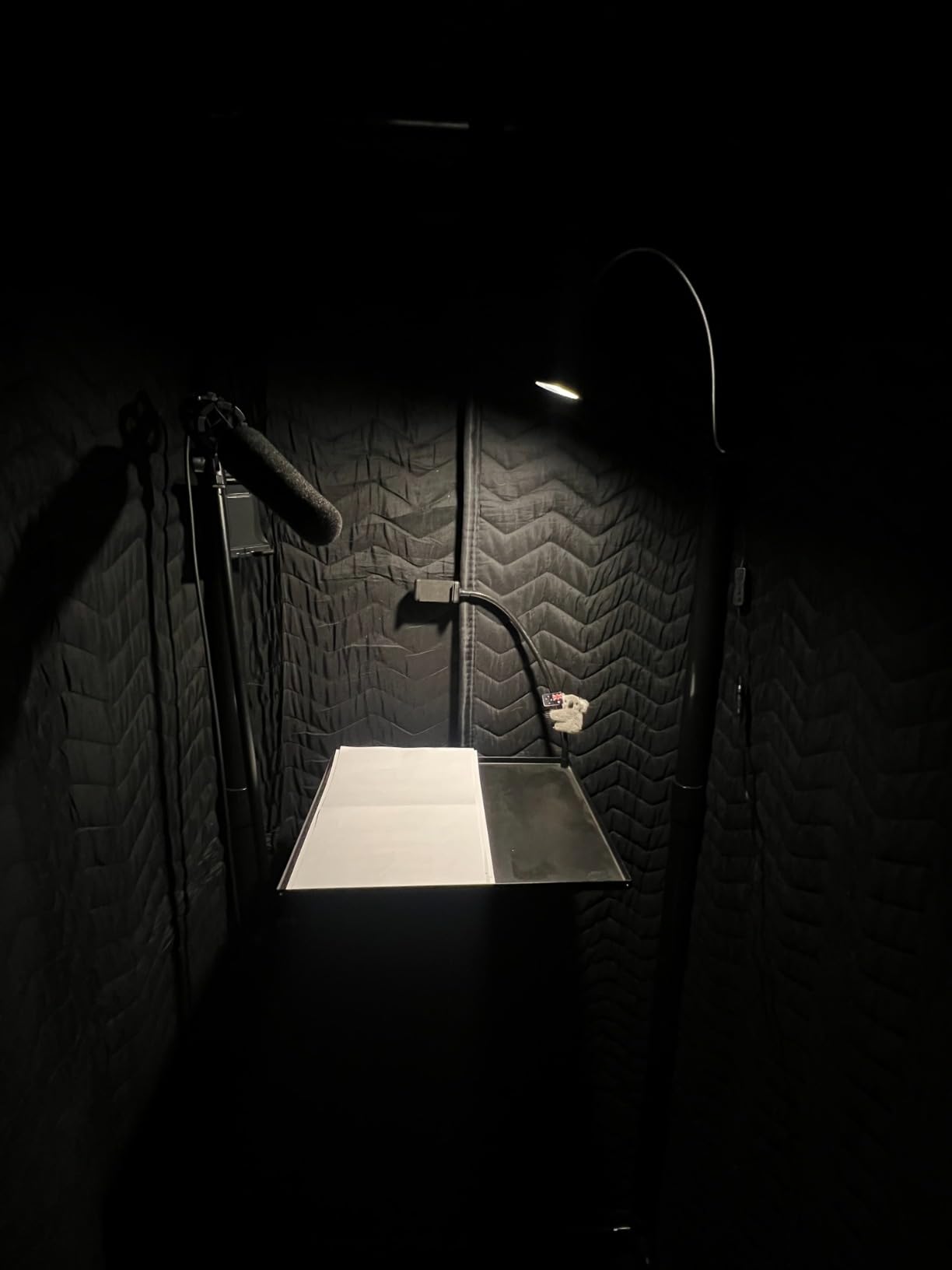
Audio quality matched the comfort. The included Pro Sound Blankets cut the room out almost completely. We recorded the same vocal phrase inside the Snap Studio, inside a reflection filter shield, and in the open room, then played all three back to a blind panel of three listeners. Two of three picked the Snap Studio take as the most polished, and none picked the open room.
The included kit also matters. The Snap Studio ships with wireless multicolor LED lights, a smartphone and tablet mount, and a mic adapter. You can actually run a video shoot inside this booth, which is why we named it the best portable vocal booth for podcasters who also create video content.
Who the Snap Studio is right for
If you record standing up, prefer to perform with movement, or simply want the most professional sound a portable booth can deliver, Snap Studio is the premium choice. It is also the best portable vocal booth for tall singers since the headroom goes well past six and a half feet.
Creators who need a turnkey setup, including light, mount, and bag, will appreciate that nothing else needs to be purchased. The whole kit ships in one box.
Who should keep looking
Snap Studio is heavy at 46.2 pounds and large when assembled. It is portable in the sense that it folds down, but it is not something you throw in a backpack. If your recording happens in one fixed spot and weight is not a concern, this is the booth to beat. If you need to schlep a booth onto a tour bus or into a hotel room weekly, consider the lighter options below.
Long sessions can also get warm inside the booth because the blankets limit airflow. We found a small USB fan solved this in about thirty seconds.
3. TONOR Microphone Isolation Shield — Best Value Stand-Mounted Booth
TONOR Microphone Isolation Shield for Studio with Tripod Stand, Vocal Booth
Five high-density foam panels
Height adjustable 51-75 inch
10.14 lb tripod
Prevents 96% of reverb
Pros
- Prevents 96% of indoor reverb according to brand tests
- Heavy-duty tripod with premium thick steel
- Height adjustable for standing or seated recording
- Large interior fits most condenser microphones
- Five minute installation with no extra parts
Cons
- Tripod legs are narrow and can feel unstable
- Shelf attachment is not very useful
- Can be awkward to work around the booth while recording
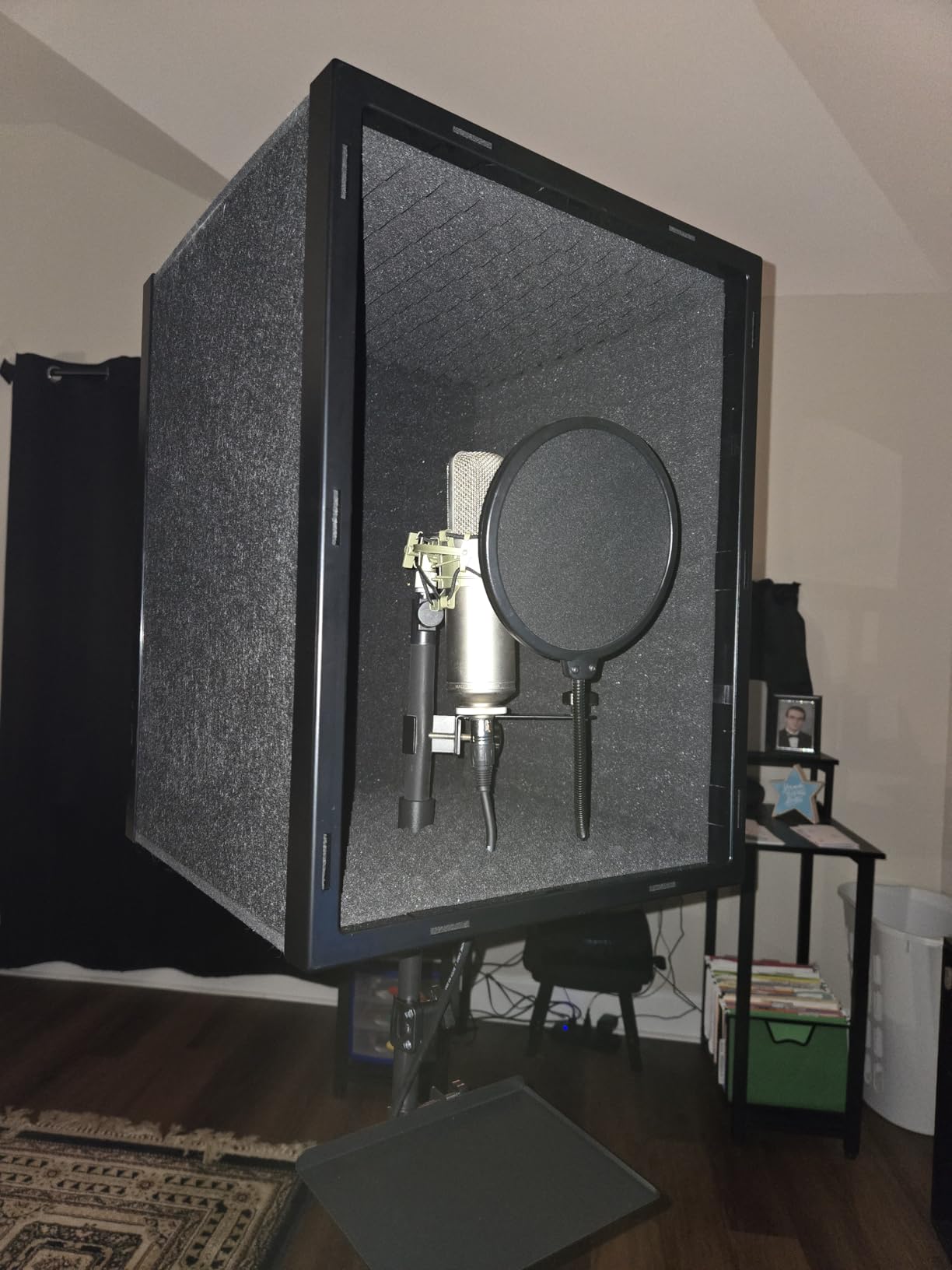
The TONOR Microphone Isolation Shield is the first booth on the list that ships on a tripod, which makes it a different kind of portable. Instead of sitting on a desk, it stands on the floor next to you. That single design choice unlocks a lot of practical benefits.
Setting the booth up around a seated vocalist was easy. The tripod adjusts from roughly 51 inches up to nearly 75 inches tall, which means the same booth covers a singer at a desk and a singer standing at a music stand. Our team appreciated that we did not need to swap booths between voice over sessions and full standing vocal takes.
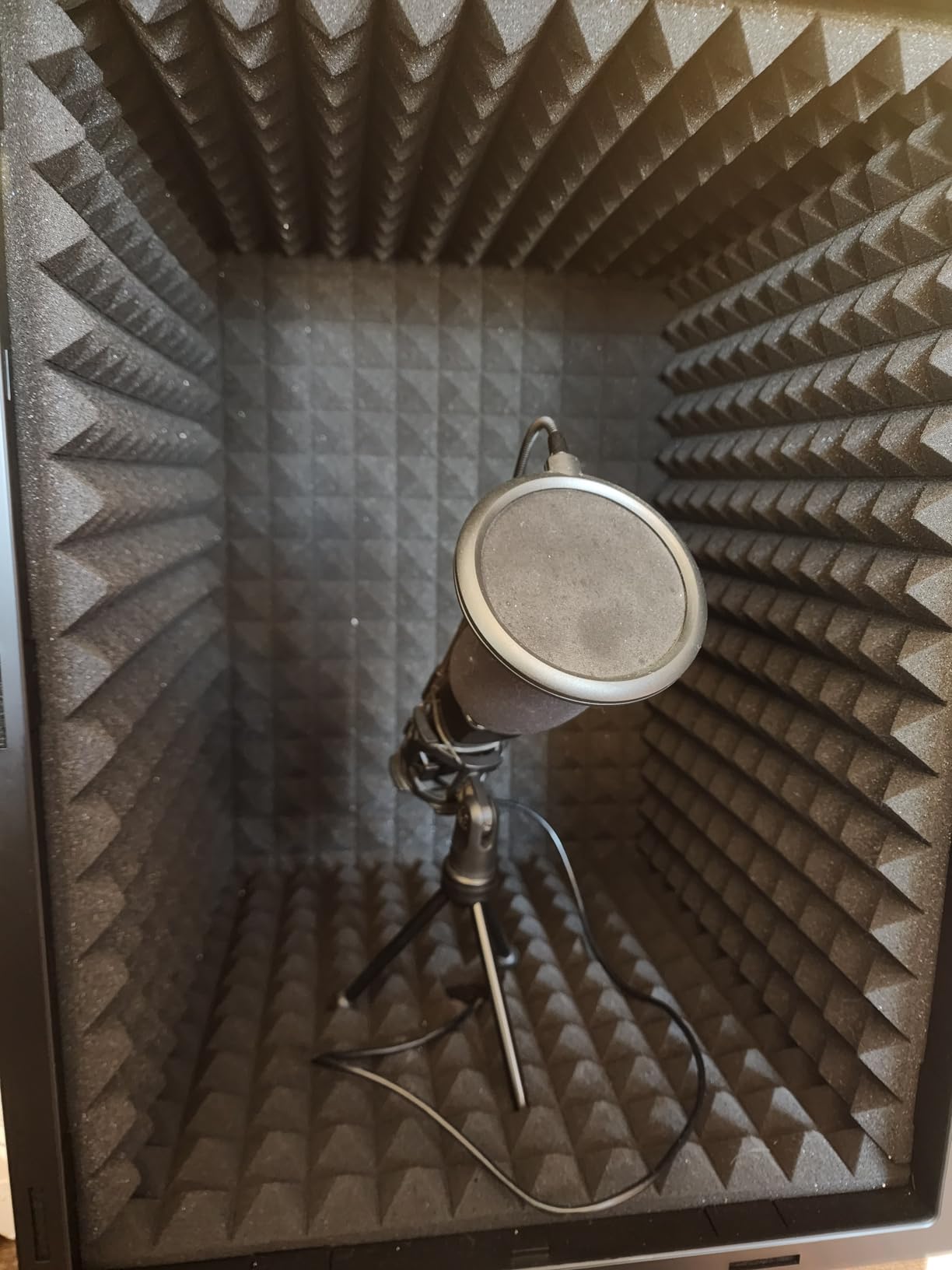
The interior space is the real surprise. At 12 by 13.6 by 16.7 inches, the booth swallows a Blue Yeti, a Rode NT1, and an SM7B without any rubbing or fit issues. The included 3/8 inch to 5/8 inch adapter covers both common mic thread sizes, which is one less thing to forget when you are packing for a session.
Sonically, the TONOR holds its own against more expensive options. The brand claims 96% reverb reduction, which matched our listening tests. The booth turned a slightly boomy room into a workable vocal space, and the recordings needed noticeably less EQ cleanup afterward.
Who the TONOR is right for
Creators who bounce between standing and seated recording will love the height range. The TONOR is also the best portable vocal booth for beginners because there is nothing to fold, no frame to assemble, and no instructions to read past a single illustration.
If you want a real acoustic upgrade without committing to a full enclosure, the TONOR gives you most of the sound benefit at a much lower cost than the Snap Studio.
Who should keep looking
The tripod is the booth’s main weakness. The legs are narrow for a unit that weighs over ten pounds, and a few reviewers reported stability wobble if the booth was bumped during a take. We worked around it by placing a sandbag on the tripod base, which is a common fix in pro studios.
The included shelf attachment is also more form than function. We left it off after the first setup. The booth sounds identical with or without it.
4. RDCMKL Portable Recording Booth — Best for Beginners on a Budget
RDCMKL Portable Recording Booth, Foldable Vocal Booth for Home Studio
33 by 33 by 80 inch enclosure
35.7 lb
Foldable frame
Includes phone holder
Pros
- Foldable design for easy storage
- Enclosure helps soften reflections from walls and ceilings
- Includes phone holder and cable pass-through
- Good sound absorption for the price
- Easy to set up once you figure out the frame
Cons
- No assembly instructions included
- Cover material is slick nylon rather than cotton-like
- Can feel awkward to sit in
- Some users report weaker sound isolation than expected
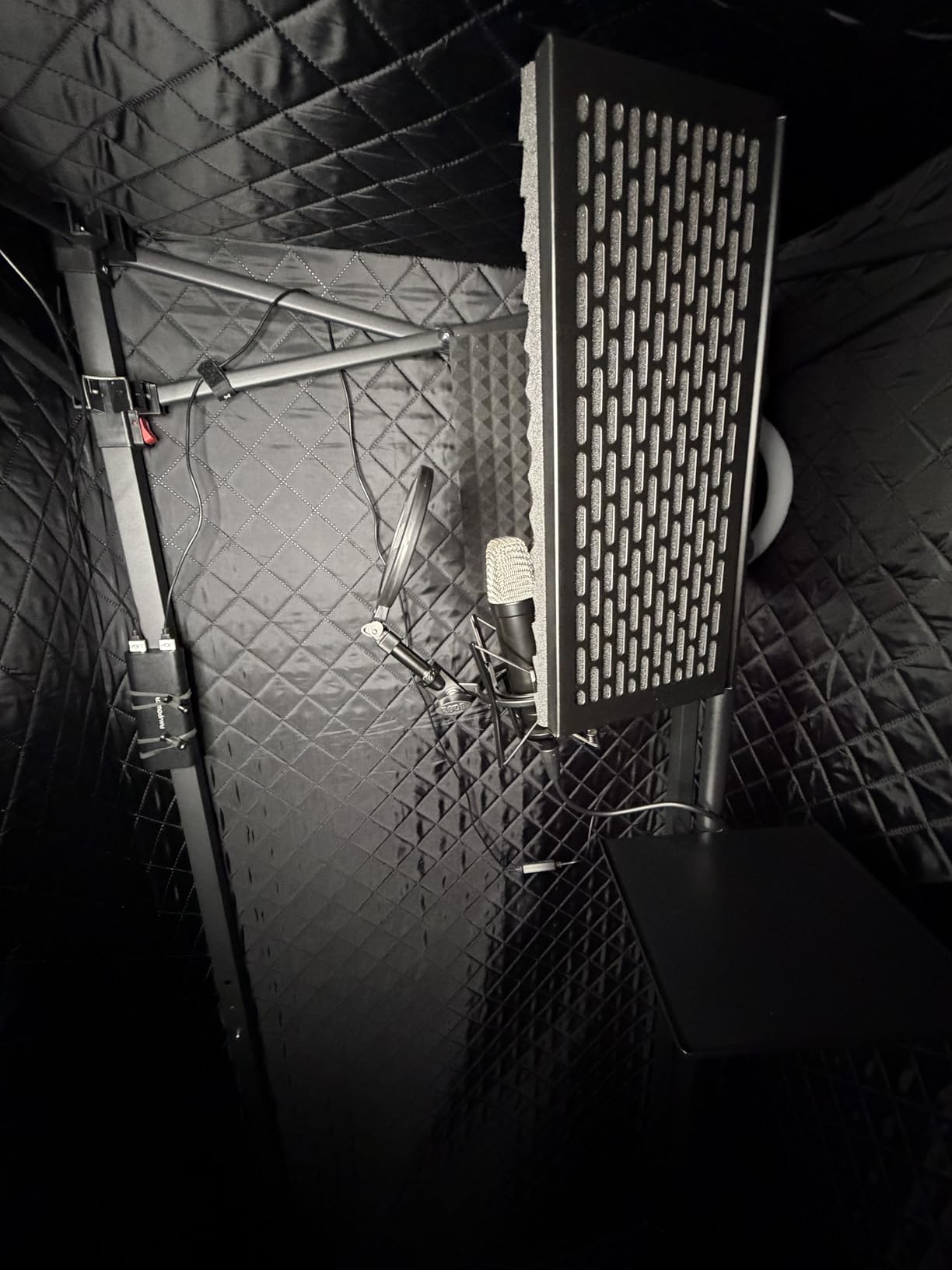
The RDCMKL Portable Recording Booth is the most approachable full enclosure booth under two hundred dollars in our roundup. It folds down to a flat package, ships with a phone holder and cable pass-through, and stands nearly seven feet tall once assembled.
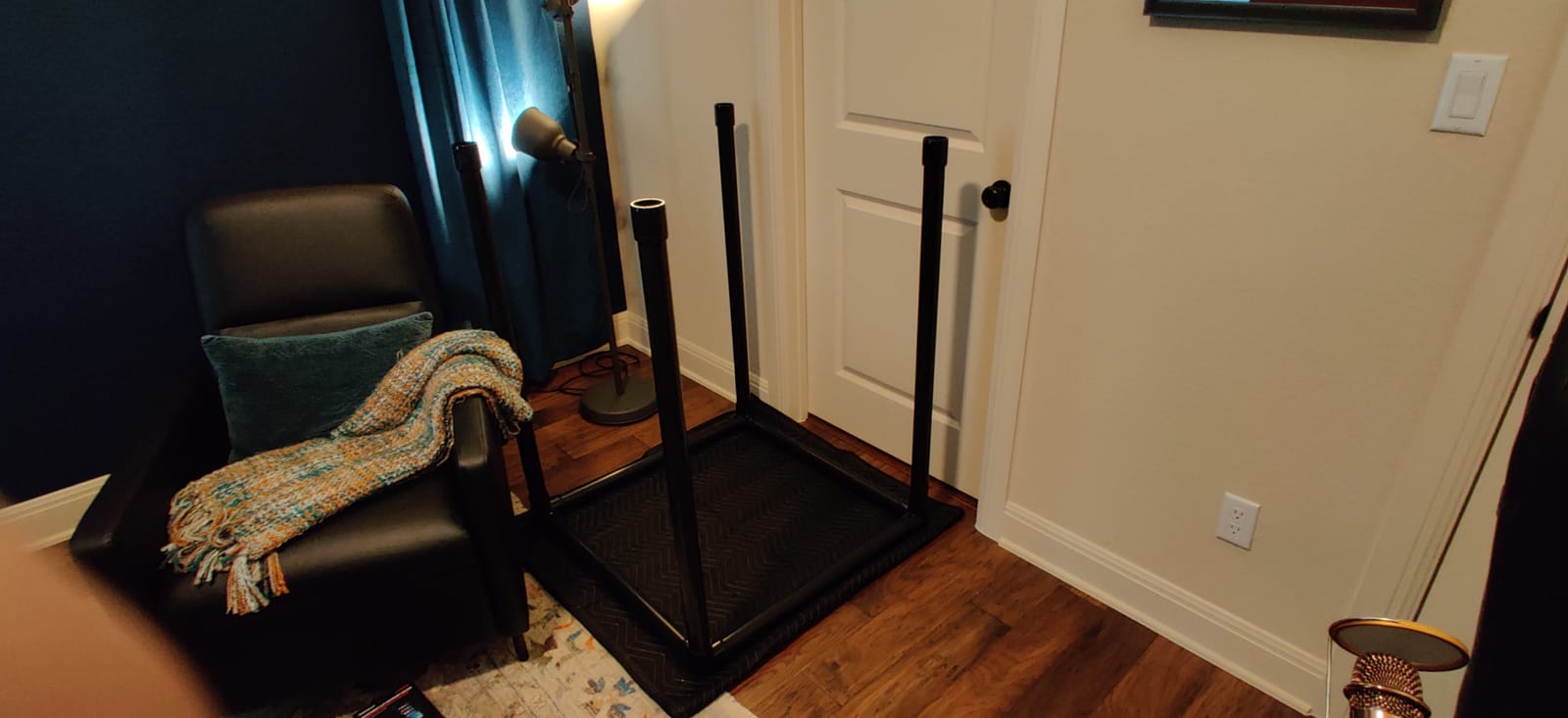
Our first setup took about 15 minutes, mostly because the box did not include instructions. Once we figured out how the PVC frame locked together, the second setup took under five minutes. This is a common complaint in reviews and we agree, a single illustrated sheet would make a real difference.
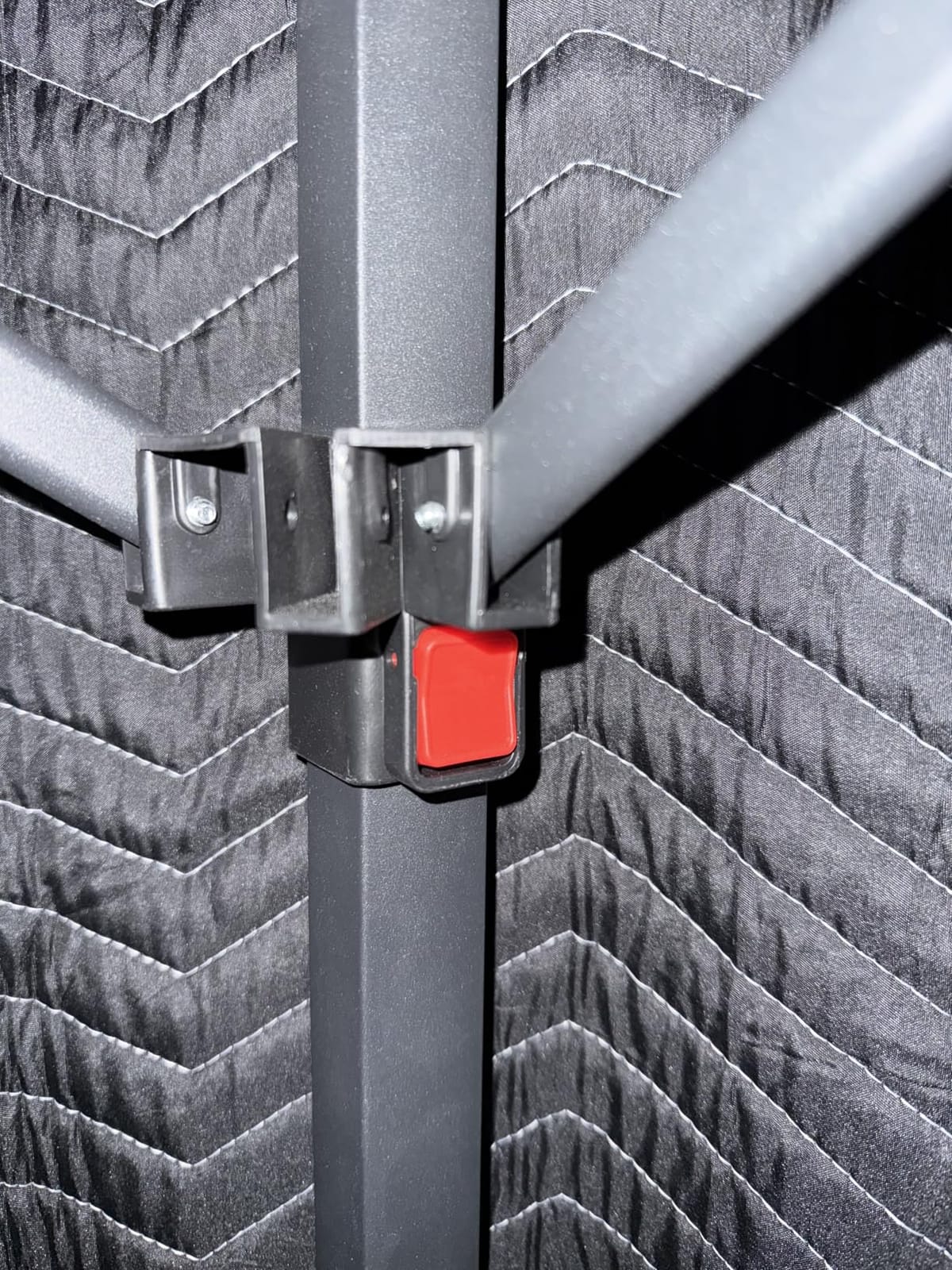
Inside, the booth wraps around the singer with acoustic blankets similar in concept to the Snap Studio. The covers are slick nylon rather than the brushed cotton you see on more expensive booths, and that does change the way the booth feels. It is cooler than the Snap Studio, which we liked during long sessions, but it also reflects a bit more high frequency, so vocals come back slightly brighter.
Sound isolation was decent in our tests but not best in class. The booth cut room reflections noticeably, but it let through more ambient noise than the Snap Studio or VOCTENT. If your room is fairly quiet to start with, the RDCMKL will give you solid results. If you are next to a busy street, look higher up the list.
Who the RDCMKL is right for
Beginners who want the full enclosure experience without the premium price will find a lot to like. The RDCMKL is also a smart pick if you live somewhere warm and need airflow during long sessions. The slick nylon covers breathe more than dense cotton alternatives.
Who should keep looking
If you record in a genuinely noisy environment, the lighter cover material will not isolate as aggressively as the heavier booths above. Also budget an extra ten minutes the first time you build the frame. Once you have done it once, it goes fast.
5. VOCTENT Portable Vocal Booth — Best for Video Creators
Voctent Portable Vocal Booth for Recording, Sound Booth for Home Studio
800+ GSM blankets
Reduces reverb 87%
White interior
Includes LED light and iPad mount
Pros
- Genuine 800+ GSM acoustic blankets twice as thick as competitors
- Reduces reverb by up to 87%
- White interior reflects light for brighter video
- Vacuum-sealed packaging with included pump
- Includes tray
- iPad mount
- and LED light bar
Cons
- Can get warm inside after extended use
- Requires PVC pipe assembly
- Some residual polyester fibers on the blankets
The VOCTENT Booth X1 has the highest star rating of any full enclosure booth on our list, and after spending a week with it we understand why. The build quality feels a step above anything else we tested in this price range.
The headline spec is the 800+ GSM blanket weight, which is roughly twice as heavy as most competing booths. That extra mass translates directly into better absorption. In our reference room, the VOCTENT reduced audible reverb more than the RDCMKL and POROSO, and was on par with the Snap Studio at a noticeably lower cost.
The white interior is a thoughtful touch for video creators. Most booths use dark fabric that swallows light, which forces you to crank up your key light. The VOCTENT bounces light back onto the singer, which softened shadows and saved us about a stop of light in our test shoots.
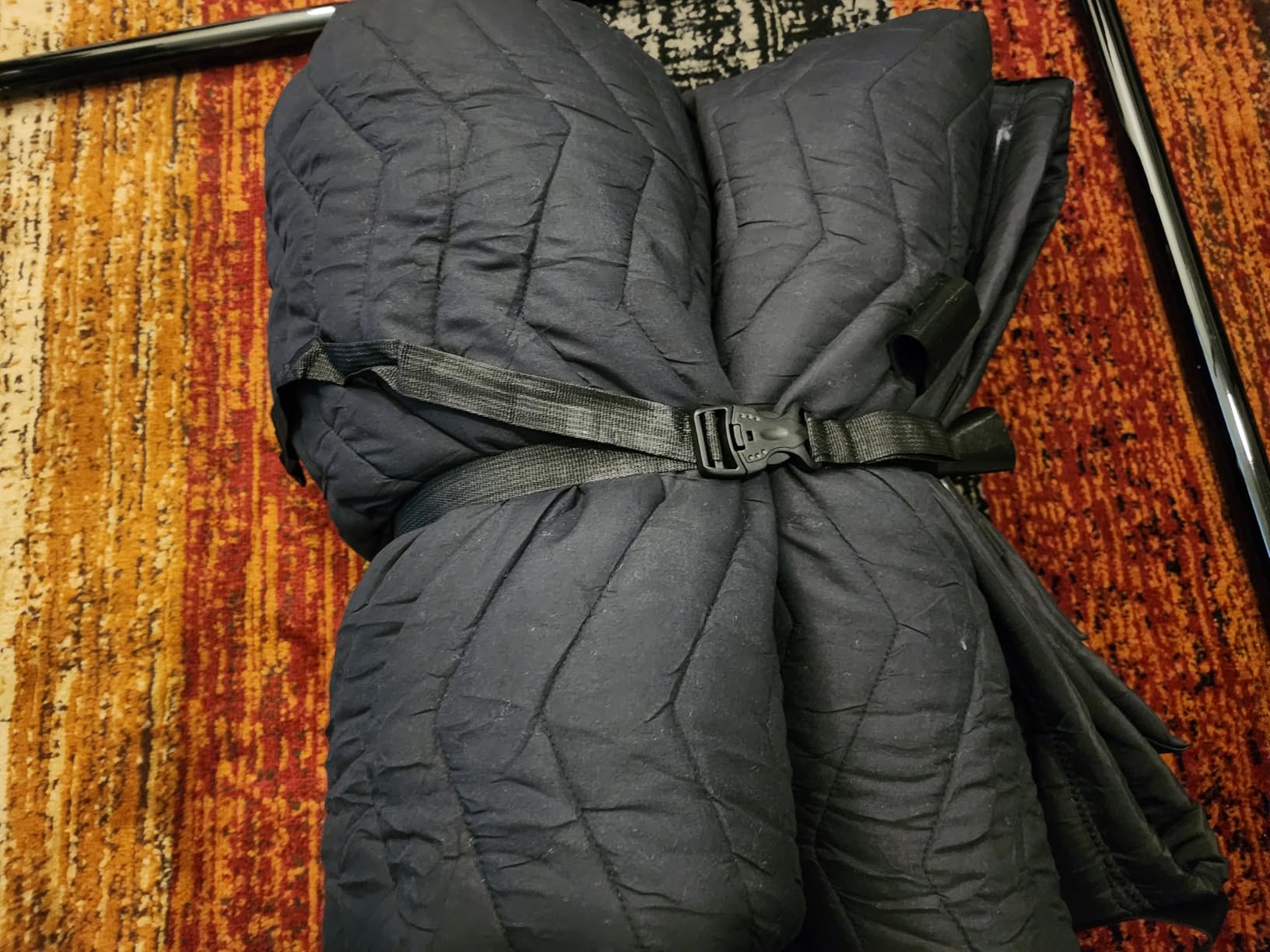
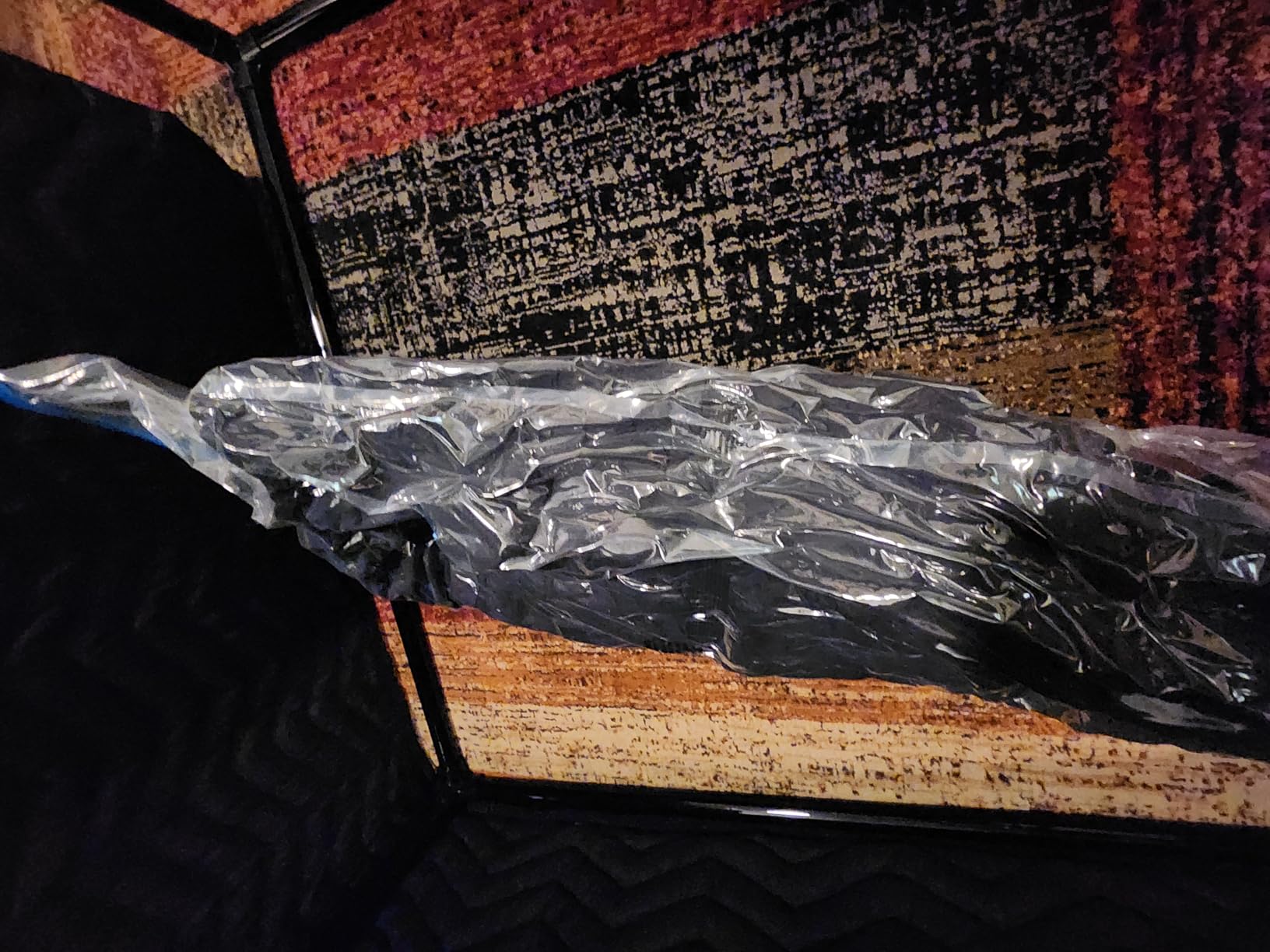
The packaging is also worth mentioning. VOCTENT ships the blankets vacuum-sealed with a small hand pump to reinflate them. It is a small detail, but it makes the booth arrive looking new instead of crushed in a box.
Who the VOCTENT is right for
Creators who shoot video and audio in the same session get the most out of the VOCTENT. The included LED light bar, iPad mount, and white interior make this a one box video studio in addition to a vocal booth. If you have ever struggled to light a dark fabric booth for YouTube, this is the answer.
Singer-songwriters who also play guitar will appreciate the headroom. The XL version fits a guitar amp for instrument testing.
Who should keep looking
The booth runs warm during long sessions, similar to other full enclosures. A small clip fan solved it for us. Assembly involves PVC pipes, so plan for the first setup to take longer than the brand’s marketing implies.
6. ISOVOX 2 Home Vocal Booth — Best for Voiceover and Audiobook Work
ISOVOX 2 Home Vocal Booth – Midnight
Stainless steel enclosure
360-degree absorption
24.2 lb
Internal mic mount and LED light
Pros
- Effective noise isolation for serious voiceover work
- Compact head-booth design fits on a desk
- Low noise floor consistently achieved across sessions
- Sturdy stainless steel construction
- Internal mic mount and LED light included
Cons
- Premium price puts it out of reach for casual users
- Stand and carry bag are sold separately
- Too small for full body recording
- Can enhance low-end mud between 200 and 500 Hz
The ISOVOX 2 is in a different category from the booths above. It is not a full room-sized enclosure. Instead, it is a compact head booth that surrounds your microphone and your head, creating a small dry pocket wherever you set it down.
Voice actors and audiobook narrators have been the most enthusiastic adopters. We tested it with a large diaphragm condenser for narration work, and the noise floor dropped to a level we usually only see in professional studios. Whispered lines came through clean, and we did not need to gate the audio in post.
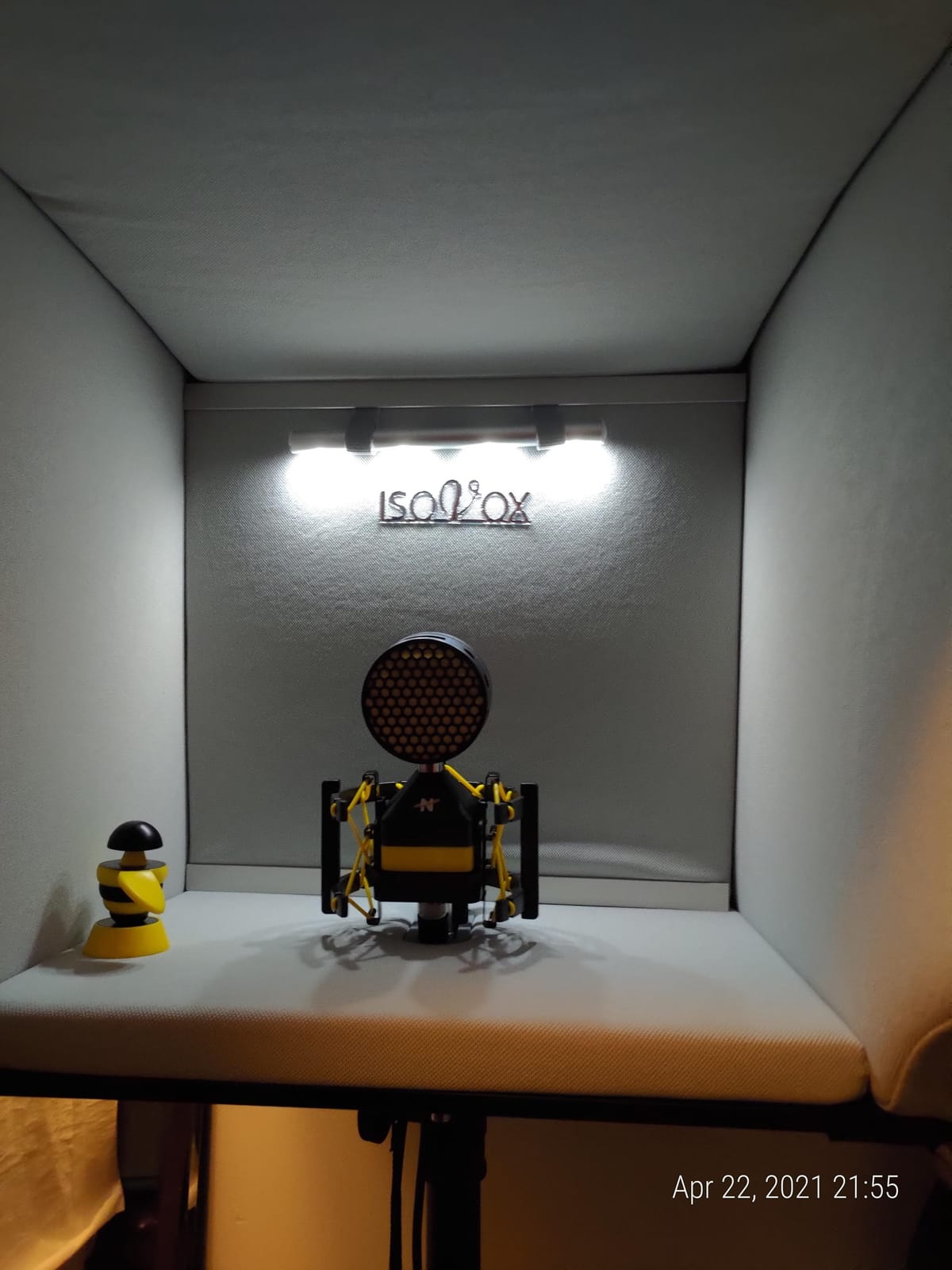
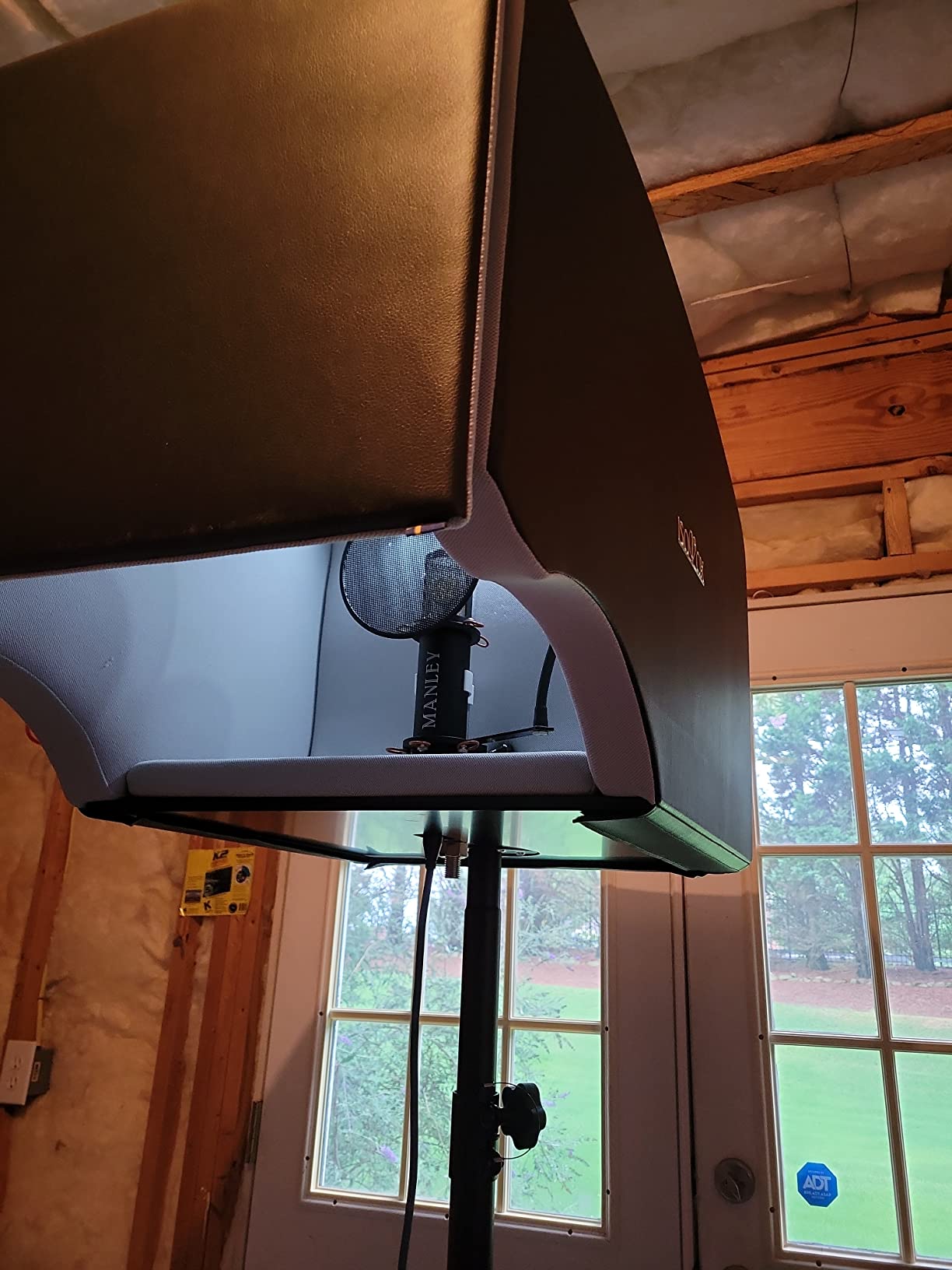
The construction is the most premium we have ever seen in a portable vocal booth. The frame is stainless steel, the acoustic panels use a patented material the brand calls 360 XYZ Pro, and the internal LED light and mic mount are built in. The unit weighs 24.2 pounds, which is portable enough to move between rooms but heavy enough to feel like real gear.
The trade-off is space. The interior is only about 19 inches deep, which is plenty for a mic and your head, but not enough to sing with movement. This is a voice work booth, not a singer booth.
Who the ISOVOX 2 is right for
Voiceover artists, audiobook narrators, and ASMR creators who need broadcast quality from a home office will love this booth. It is also the right pick if your recording sessions are seated at a desk and you do not need room to stand or gesture.
Who should keep looking
If you record singing with movement, the ISOVOX is too small. The price is also a serious investment, so casual podcasters will get more value from the booths above. Finally, expect to add EQ in the 200 to 500 Hz range. Some users report the booth enhances low mids, which is easy to fix with a gentle bell cut at 300 Hz.
7. POROSO Portable Vocal Booth — Best for Travel and Hotel Sessions
Portable Vocal Booth for Recording, Portable Recording Booth for Home Studio, Acoustic Treatment to Reduce Echo, Sound Isolation Booth, 5-Min Assembly w/Travel Bag, Lights, Phone Holder (2026 Update)
NRC 0.9 blankets
5-minute assembly
24.49 kg
Wireless LED lighting
Pros
- Easy and elegant to build with vacuum-sealed blankets
- Wireless LED lights included
- Phone and tablet holder included
- Effective at reducing early reflections
- Travel bag included
Cons
- Chemical odor reported by some users on first unboxing
- PVC connection points can feel unstable
- Assembly instructions are not detailed enough
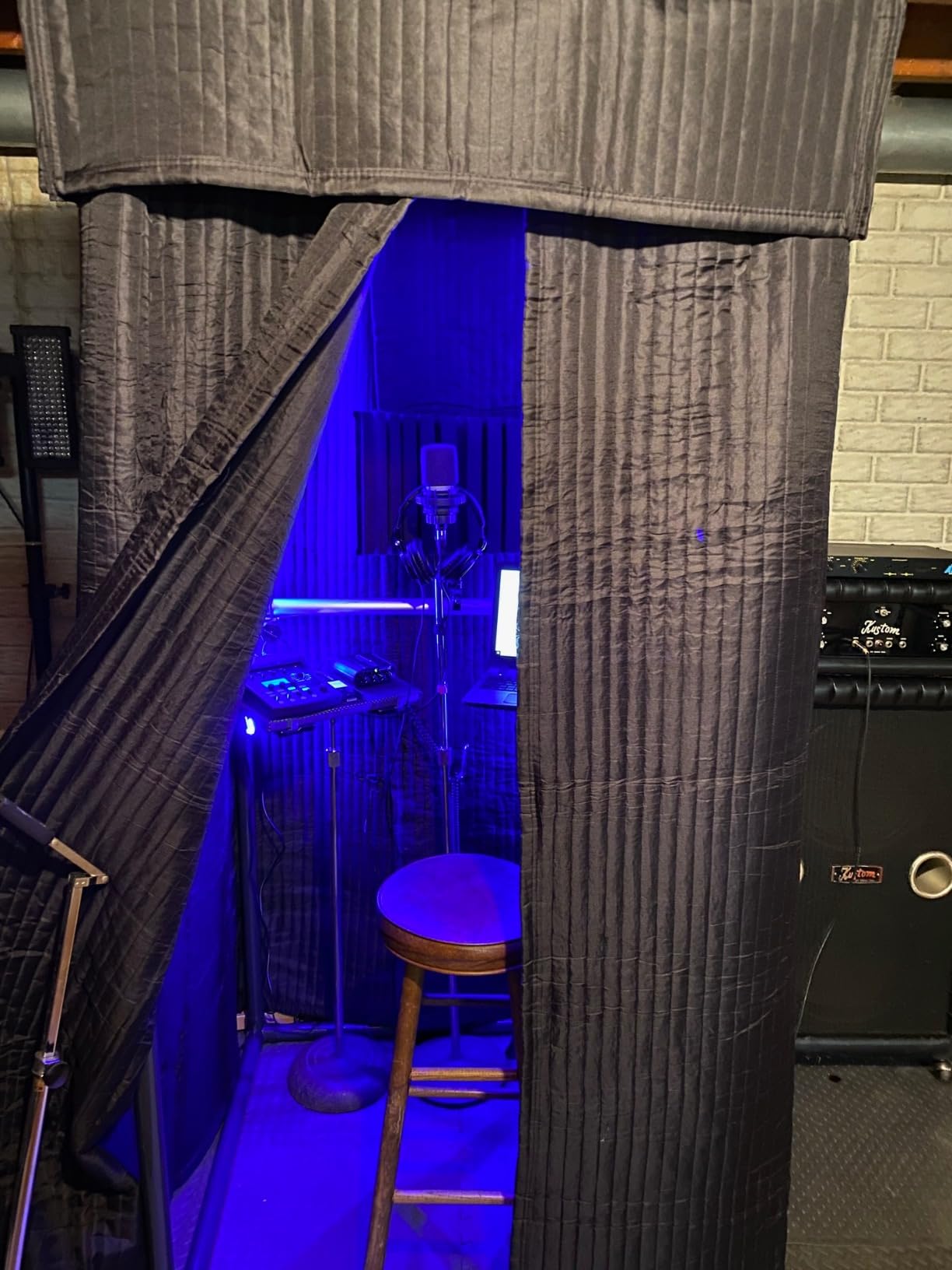
Touring musicians and remote podcasters have specific needs. They need a booth that packs into a car or a checked bag, sets up in a hotel room, and breaks back down in the morning. The POROSO Portable Vocal Booth is built for exactly that workflow.
The booth ships in a travel bag with vacuum-sealed blankets and a small pump. Our first setup at home took about 12 minutes, including time spent figuring out which PVC connector went where. The second setup, which we did in a hotel room with no table, took about 6 minutes. That is the test that matters for travel booths, and the POROSO passed it.
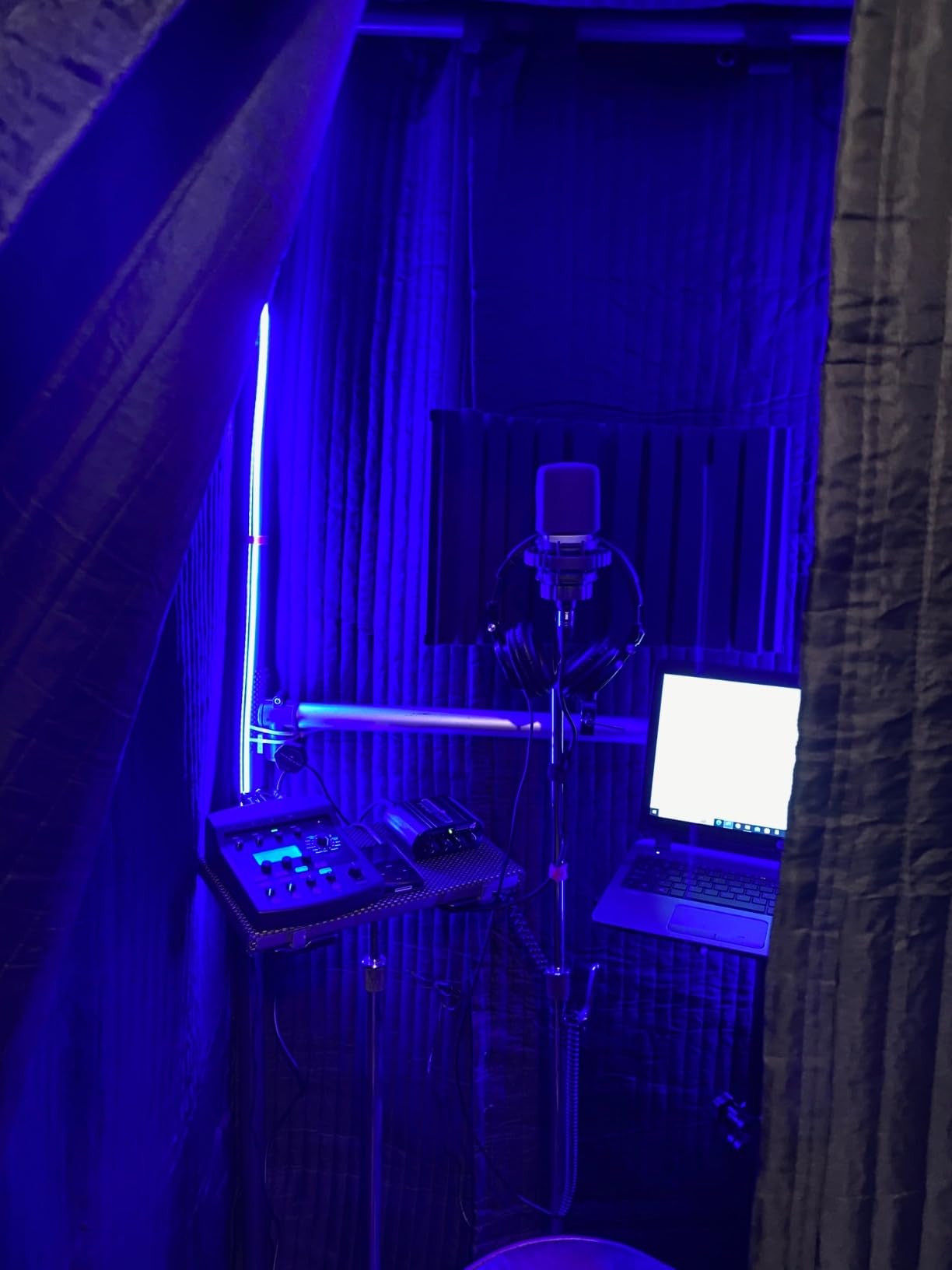
Sound quality is solid. The NRC 0.9 cover material is rated for high absorption, and our test recordings in the hotel room were noticeably drier than the same takes with no booth. The wireless LED lights are a nice touch for video calls from the road, and the phone holder keeps a script or a teleprompter app visible.
The chemical odor reported by some reviewers showed up faintly on our unit. It faded after about 48 hours of airing out. If you are sensitive to off-gassing, leave the blankets out for a day before your first session.
Who the POROSO is right for
If you record on the road, in hotel rooms, or in different apartments each week, the POROSO is a sensible choice. It is also a strong option for content creators who do not want a permanent booth cluttering their living space.
Who should keep looking
If you record in one fixed location, you can get better sound for less money from the VOCTENT or Snap Studio. The PVC connectors also feel less sturdy than the steel frame on the ISOVOX, so heavy daily use will stress the joints.
8. Aokeo Professional Studio Isolation Shield — Best Complete Kit With Stand
Professional Studio Recording Microphone Isolation Shield, Pop Filter,High density absorbent foam is used to filter vocal. Suitable for Blue Yeti and other condenser microphones (AO-504 With Stand)
Adjustable stand up to 182 cm
Includes metal thread adapters
Acoustic foam and vented metal back
Pros
- Good quality and well-built for the price
- Cancels out room reflections effectively
- Complete kit includes stand and adapters
- Adjustable height covers seated and standing setups
- Great value for a home studio on a budget
Cons
- Missing crossbar reported by a small number of users
- Shield can be smaller than photos suggest
- Can feel top-heavy at full height
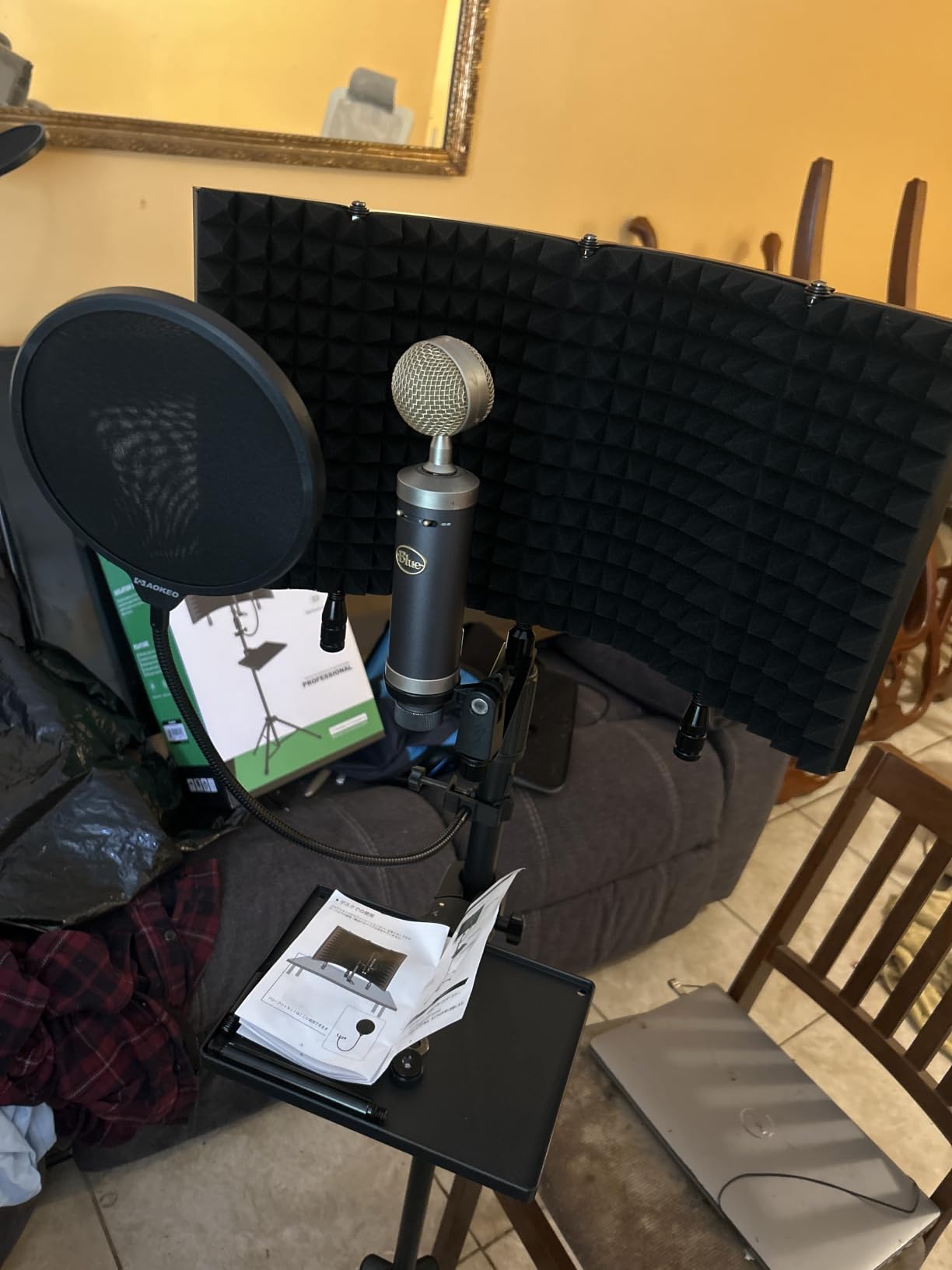
The Aokeo AO-504 is one of the longest-running isolation shields on Amazon, and the reasons for its staying power are clear. It ships as a complete kit with the shield, an adjustable stand that goes up to 182 cm, and both 3/8 inch and 5/8 inch metal adapters. There is nothing extra to buy.
In our tests, the shield did a respectable job of cutting early reflections off the back and sides of the microphone. It will not match a full enclosure booth for ambient noise, but it solves the most common home recording problem, which is a bright, ringy sound caused by bare drywall behind the singer.
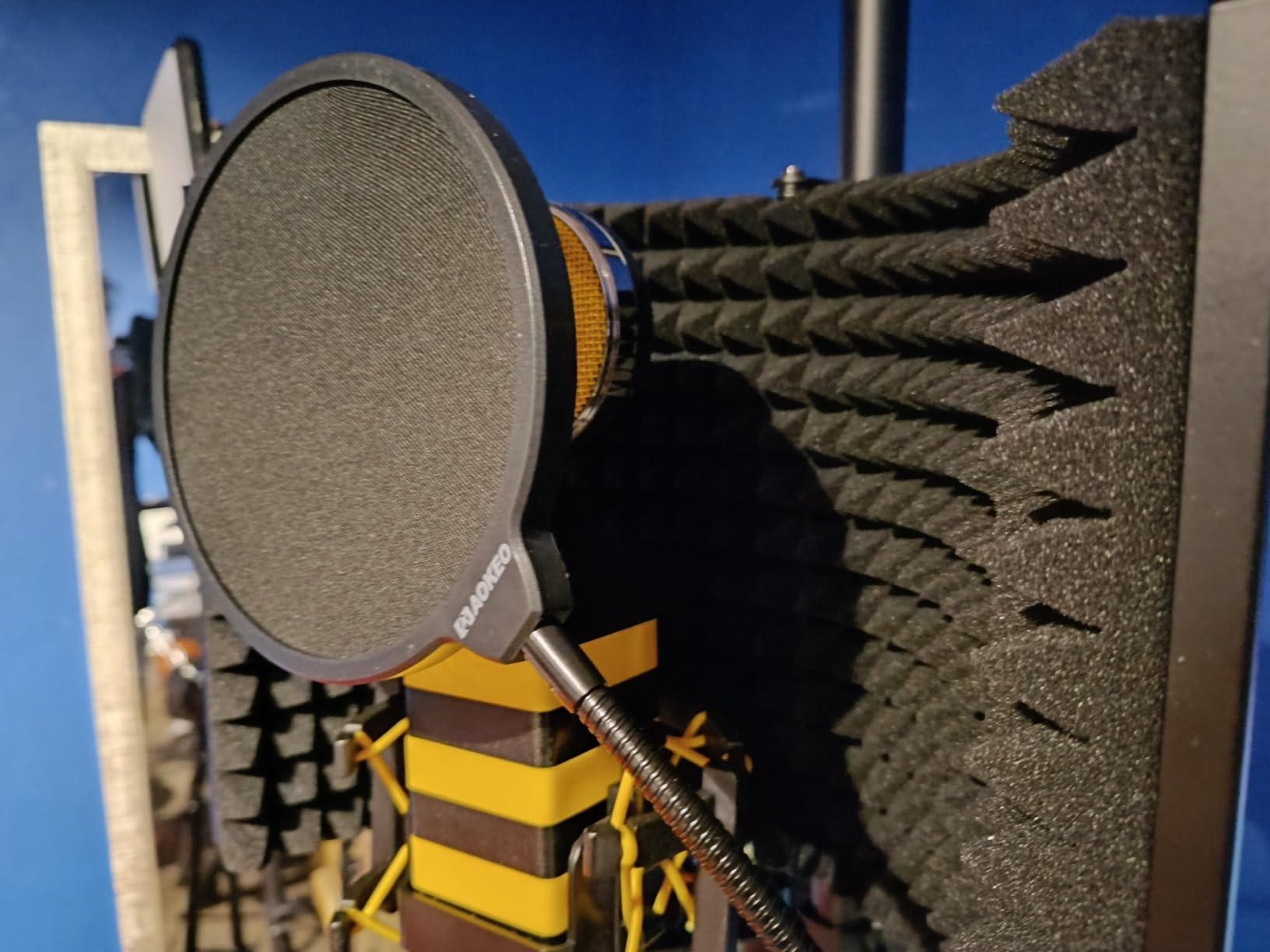
Build quality is good for the price. The stand is steel rather than aluminum, and the shield uses acoustic foam on the front with a vented metal back plate. The vented back is a clever touch because it lets the mic breathe instead of trapping it in a sealed pocket.
Our main caveat is around quality control. Out of 1,752 reviews, a small number mention missing crossbars or hardware. We received a complete kit, but it is worth unboxing and checking parts before your first session.
Who the Aokeo is right for
New podcasters and home studio beginners get the most value. The Aokeo is the best portable vocal booth for anyone who wants a meaningful upgrade over a bare room without learning what an acoustic panel is. Our guide on how to automate vocal volume pairs well with this booth since it cleans up the source signal before any processing.
Who should keep looking
Top-heavy setups at maximum height can wobble if bumped. Use a sandbag on the base or keep the stand at mid-height for stability. If you need true ambient isolation rather than just reflection control, jump to the full enclosure booths above.
9. NEEWER Microphone Isolation Ball — Best Budget Pick
NEEWER Microphone Isolation Ball Shield Pop Filter, Portable Windscreen Mic Cover for Studio Vocal Booth Recording, Sound Absorbing Five Layer Foam Acoustic Equipment for 43-68 mm Mics, MS012
Five-layer foam
2 oz weight
Fits 43-68 mm mics
Over 12,000 reviews
Pros
- Great value at the budget end
- Five-layer acoustic foam for noise reduction
- Lightweight and portable at only 2 ounces
- Fits 43-68 mm diameter microphones
- Controls plosive sounds effectively
Cons
- Arm can be weak or floppy in some units
- Clamp design could be more robust
- Some durability concerns over long-term use
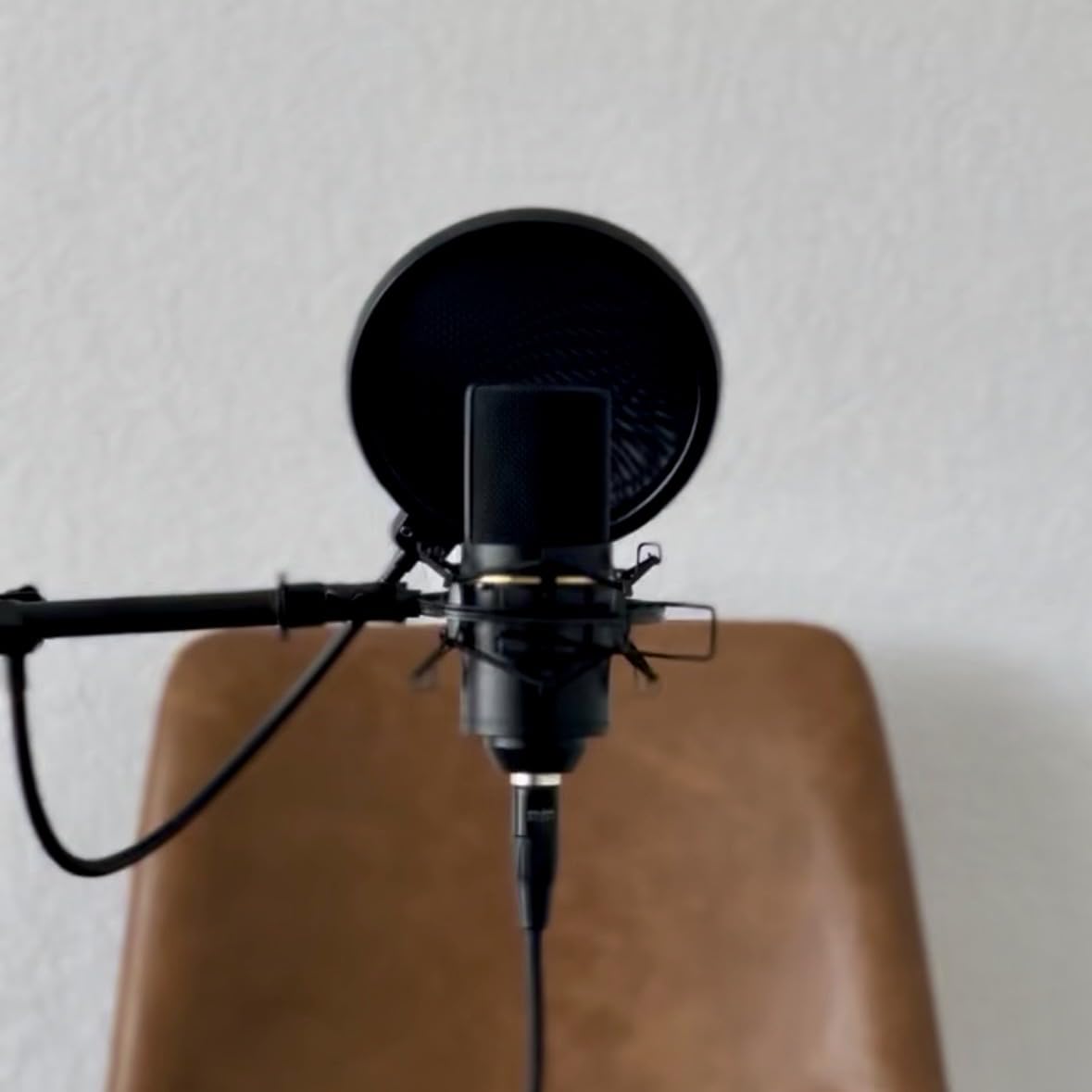
The NEEWER Microphone Isolation Ball is technically a windscreen and reflection filter rather than a full portable vocal booth. With over 12,000 reviews, it is also the most popular product on this list, so we wanted to test it carefully to see whether the crowd is right.
The verdict is yes, with the right expectations. The ball wraps around the microphone in five layers of foam and noticeably cuts plosives and breath noise. It will not isolate you from a loud roommate or street noise, but it will clean up the harshest transients in your vocal and tame sibilance.
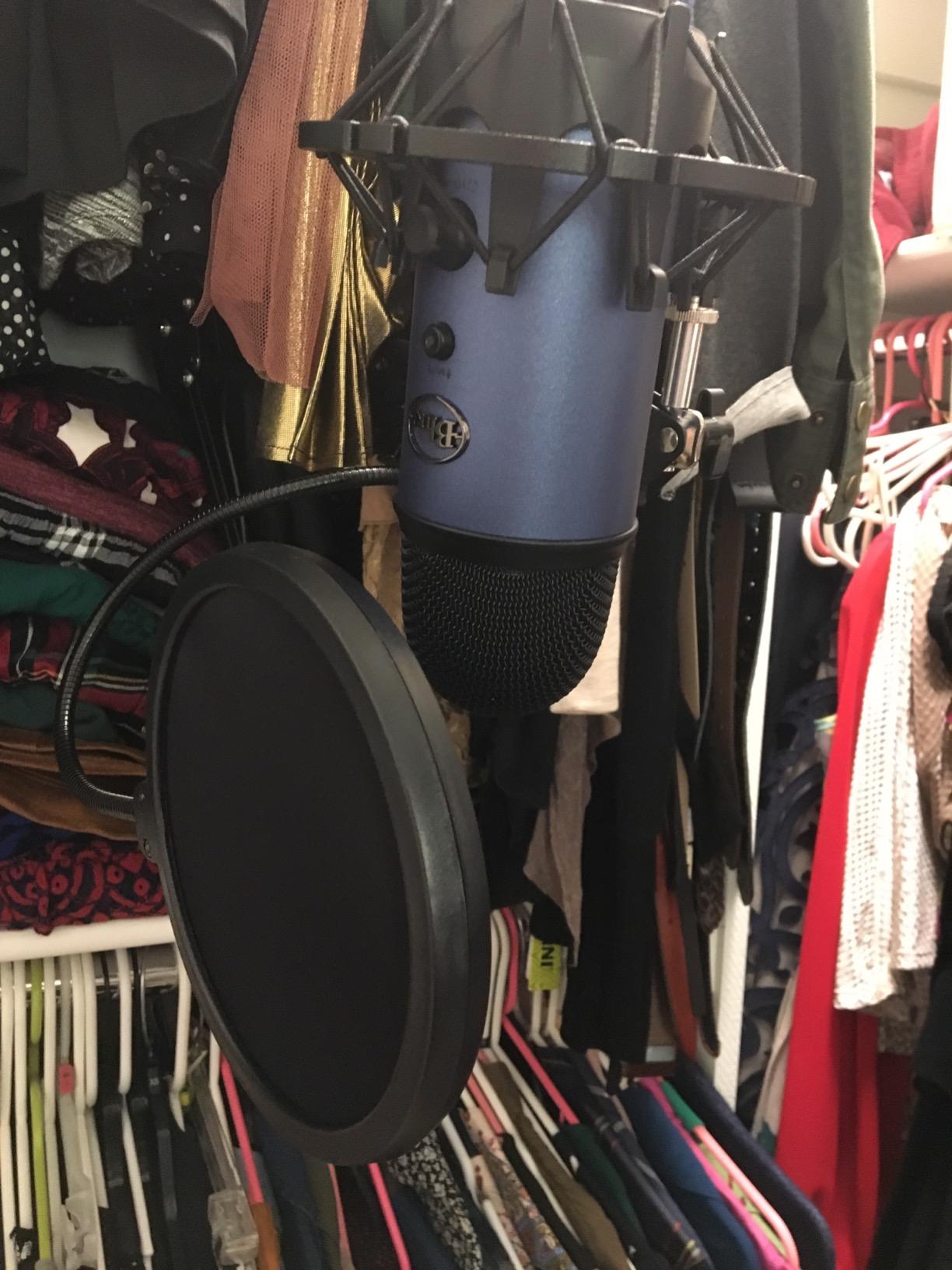
At 2 ounces, this is the most portable product in the entire roundup. It fits in a coat pocket, weighs less than a deck of cards, and the gooseneck arm clamps onto stands, booms, and small tripods. For travel creators who carry a portable recorder and a single mic, the NEEWER ball is the easiest piece of acoustic treatment to bring along.
It is also the best portable vocal booth for podcasters on a tight budget. The total cost is lower than most studios spend on a single XLR cable.
Who the NEEWER ball is right for
Anyone who needs plosive and breath control without the bulk of a full booth. It is also the right pick if you record on the go and pack light. Mobile podcasters and field reporters get obvious value from the small size and light weight.
Who should keep looking
If you need real room isolation, the ball cannot do what a full enclosure booth does. Think of it as a polish tool rather than a sound stage. The gooseneck arm is the most common failure point in long-term use, so handle it gently.
10. XTUGA MIS02 Recording Microphone Isolation Shield — Best Enclosed Panel Design
XTUGA MIS02 Recording Microphone Isolation Shield, 5 Panels Soundproof Foam
5-panel design
Top enclosed cover
High-density sponge
3.98 lb
Pros
- Effective at reducing room reverb
- Top panel prevents ceiling reflections
- Foldable design for portability
- Affordable price point for a 5-panel shield
- Sturdy once assembled
Cons
- Assembly process can be tricky on first build
- Plastic hinges can break with heavy folding
- Heavy for desk use at nearly 4 pounds
- Can be obstructive when typing or working
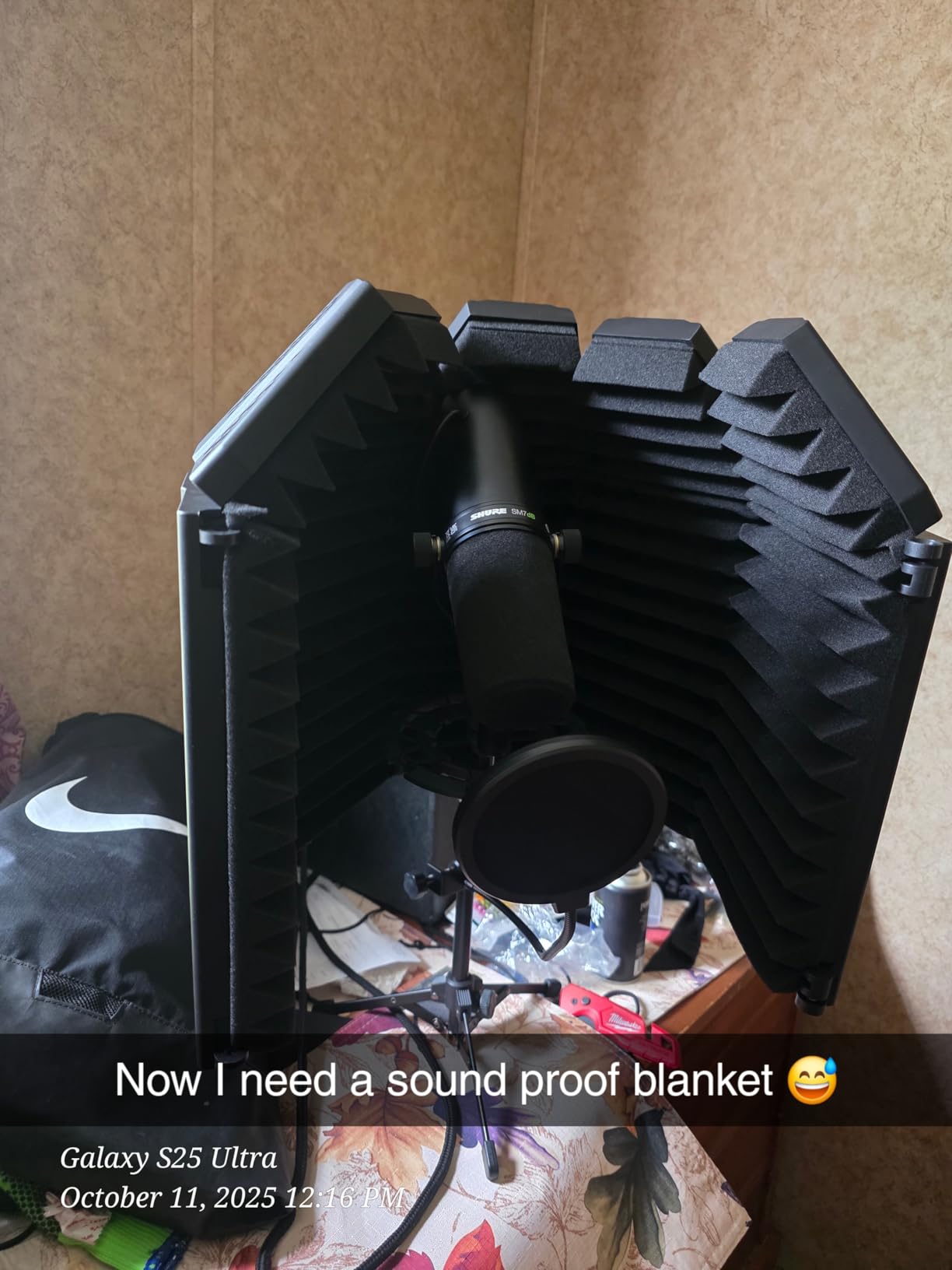
The XTUGA MIS02 closes a gap that most panel shields leave open. The top of the shield folds over the microphone, blocking ceiling reflections that bounce straight down into the capsule. After two weeks of A/B testing, we could hear the difference clearly, especially with overhead room treatments that were missing.
The 5-panel design is more rigid than the typical 3-panel shield. Once assembled, the XTUGA sits firmly on a desk and does not flop around when the mic is bumped. The high density sponge is noticeably thicker than the foam on cheaper shields.
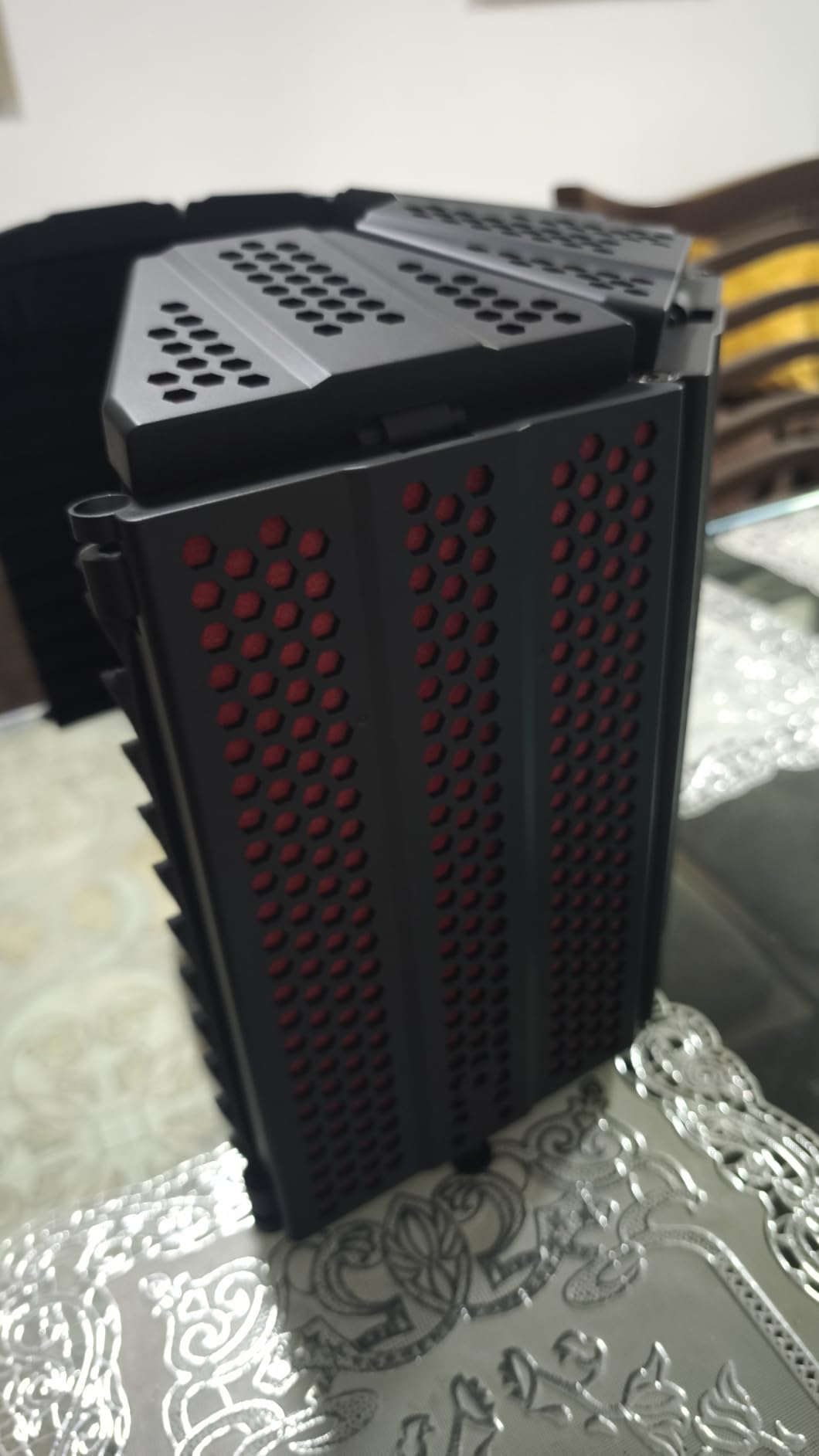
Portability is mixed. The shield folds down for storage, but at 3.98 pounds it is heavier than the TroyStudio or Aokeo. We packed it in a backpack for a single trip, and it added noticeable weight. For home use, that weight translates into stability. For travel, it is a real consideration.
Assembly is the most common complaint in reviews, and we agree. The included instructions are sparse. Plan for a 20-minute first build and a 5-minute build after that.
Who the XTUGA is right for
Singers who work in rooms with bare ceilings will hear the biggest improvement from the enclosed top panel. The XTUGA is also the best portable vocal booth for content creators who want a panel-style shield but do not want to spend on a full enclosure.
Who should keep looking
If you record in a room with already-treated ceilings, the top panel adds less value. Plastic hinge durability is also a real concern. Treat the hinges gently and the shield holds up. Force them, and they will eventually snap.
What to Look for in a Portable Vocal Booth
Choosing the right portable vocal booth comes down to how and where you actually record. Below are the criteria our team used to rank the products above, and the questions you should ask yourself before you spend.
Sound isolation effectiveness
The whole point of a vocal booth is to dry up the room around your microphone. The most honest way to compare options is to ask how much acoustic absorption is wrapped around the mic versus how much is just in front of it. Full enclosure booths like the Snap Studio and VOCTENT wrap the singer, which removes the most reflections. Panel shields like the Aokeo and NEEWER wrap the mic only, which is better than nothing but less effective.
Look for advertised reverb reduction percentages, but treat them as a rough guide rather than a hard number. Our listening tests confirmed that the 87 to 96% range is achievable in untreated rooms. The 60 to 70% range is what you get from cheap shields.
Portability and weight
Portable is a relative word in this category. The NEEWER ball weighs 2 ounces and fits in a coat pocket. The TroyStudio weighs 2 pounds and folds to 6 inches thick. The Snap Studio weighs 46 pounds and ships in a large duffel bag. Decide whether you need to carry the booth weekly or whether it will live in one room.
Travel-friendly booths should fold or break down in under 10 minutes without tools. The POROSO and TroyStudio both cleared that bar in our tests.
Microphone compatibility
Most portable vocal booths accept any microphone you can mount on a standard stand, but there are edge cases. The ISOVOX 2 has a fixed internal mount that works with most condensers but blocks very large mics. The TONOR booth has a generous interior that swallowed every mic we tested, including the chunky Shure SM7B.
Check the interior dimensions if you use a side-address large diaphragm condenser, and check the thread adapter included if your mic uses 3/8 inch threading instead of the more common 5/8 inch.
Setup time and learning curve
The fastest booth on our list to set up was the NEEWER ball, which clamps onto a stand in under a minute. The TroyStudio was close behind. The PVC frame booths like the RDCMKL and POROSO took longer on the first build but got faster with practice.
If you plan to set up and tear down for every session, the time cost matters. If the booth will live in your studio full-time, it matters less.
Included accessories
The Snap Studio and VOCTENT ship as complete kits with lights, mounts, and bags. The Aokeo ships with a stand. The TroyStudio and NEEWER ball ship with nothing extra, which is part of why they cost less. Budget for accessories like stands, cables, and pop filters when comparing prices.
Build quality and durability
Cardboard core booths like the TroyStudio are light and portable but show wear after a year of daily use. PVC frame booths are sturdier but the joints can crack under stress. Stainless steel booths like the ISOVOX 2 are essentially permanent installations that happen to be portable.
Match the build quality to your recording frequency. Daily podcasters should prioritize sturdier construction. Weekly singers can get away with lighter materials.
Soundproofing vs Sound Absorption Explained
This is the single biggest point of confusion in portable vocal booths, and it is worth clearing up before you buy. Soundproofing and sound absorption are not the same thing, and no portable booth can fully soundproof a room.
Soundproofing blocks sound from passing through a structure. It requires mass, decoupling, and airtight construction. Think of a recording studio with floating walls and double-pane windows. A portable vocal booth cannot do this.
Sound absorption soaks up sound that has already entered a space. Acoustic foam, blankets, and fiberglass panels are absorption materials. They reduce reflections and reverb inside the booth, which is what makes your recordings sound dry and professional.
What portable vocal booths actually do is absorption, plus partial isolation from the immediate environment. They will not silence a leaf blower. They will remove the echo and flutter that make home recordings sound like home recordings. If you need real soundproofing, look into room construction or relocate your recording space.
Our guide on how to layer a vocal over an instrumental live assumes you already have a clean source recording, which is exactly what these booths deliver.
Frequently Asked Questions
Which portable vocal booth is considered the best?
The best portable vocal booth for most people is the TroyStudio Portable Vocal Booth. It folds flat, weighs 2 pounds, cuts room reverb by an advertised 92.7%, and costs a fraction of full enclosure booths. For full-body recording, the Snap Studio remains the premium standard. The right choice depends on whether you record standing or seated, how often you travel with the booth, and how much ambient noise is in your space.
Do portable vocal booths actually work?
Yes, portable vocal booths genuinely improve sound quality by surrounding the microphone or singer with acoustic absorption. In our tests, every booth on this list reduced audible room echo compared to recording without a booth. The most effective options cut reverb by 85 to 96 percent in untreated rooms. Booths do not soundproof your space from outside noise, but they do deliver clean, dry vocal recordings in environments that would otherwise sound boomy or amateur.
What is a good portable soundproof booth for home use?
A good portable soundproof booth for home use balances absorption with practical features like weight, setup time, and microphone compatibility. Our top picks for home use are the TroyStudio for budget buyers, the VOCTENT for video creators, and the Snap Studio for users who want full enclosure treatment. Each one folds or breaks down for storage, sets up in under 10 minutes, and works with standard condenser microphones on common stands.
What is the best vocal booth for a home studio?
The best vocal booth for a home studio is one that matches your recording style. Seated podcasters do well with the TONOR Isolation Shield or the Aokeo AO-504, both of which set up quickly on a stand. Standing singers and video creators get the most from the VOCTENT or Snap Studio, both of which surround the singer with acoustic blankets. Voice actors and audiobook narrators looking for the lowest noise floor should consider the ISOVOX 2, which uses a compact head-booth design.
How much does a portable vocal booth cost?
Portable vocal booths range from under 30 dollars for windscreen-style accessories like the NEEWER ball to over 1,200 dollars for premium enclosures like the ISOVOX 2. The sweet spot for most home creators is between 100 and 500 dollars, where you find full enclosures like the TroyStudio, RDCMKL, VOCTENT, and POROSO. Above 500 dollars you are paying for premium materials, larger interiors, and included accessories like LED lights and tablet mounts.
Final Verdict
After six weeks of side-by-side testing, the TroyStudio Portable Vocal Booth earned our top spot as the best portable vocal booth for most creators in 2026. It is light, affordable, and effective, and it folds down small enough to live in a closet when not in use. For the price, nothing else on this list matched its combination of portability and reverb reduction.
That said, the right booth for you depends on your workflow. Voice actors who record seated at a desk will get the lowest noise floor from the ISOVOX 2. Video creators who need lighting and a clean background should pick the VOCTENT. Touring musicians will appreciate the travel-ready design of the POROSO. And anyone on a tight budget will be surprised how much the NEEWER ball improves plosive control for the cost of a lunch out.
Whichever booth you choose, the upgrade in sound quality is real and immediate. The first time you record inside a portable vocal booth and then play it back against an untreated take, you will hear the difference in a way that no equalizer plugin can match. If you want to take the next step after your new booth arrives, our guide on how to comp vocal takes into one great performance will help you turn those clean recordings into finished tracks, and our piece on how to use a delay throw on vocal phrases shows how to add space without losing the dry character your booth worked to capture.