

Finding the right bass combo amp can transform your playing experience, whether you are practicing at home or performing on stage. A good bass combo amp bundles the amplifier and speaker into a single, portable cabinet, eliminating the hassle of matching a separate head and speaker cab. I spent months testing and comparing 10 of the best bass combo amps available, covering everything from ultra-portable practice amps to powerful gigging combos.
Each amp on this list was evaluated for tone quality, build reliability, features, and real-world performance across different playing situations. If you have ever wondered whether you can record guitar and bass direct without an amp, several of the picks below make that possible with built-in DI outputs and recording interfaces.
In this guide, you will find quick-pick recommendations, detailed reviews of each amp, and a complete buying guide to help you match the right wattage and speaker configuration to your specific needs as a bass player.
Table of Contents
Top 3 Picks for Best Bass Combo Amps in September

Fender Rumble 25 V3
- 25W with 8-inch Fender speaker
- Switchable overdrive circuit
- Three-band EQ

Best Bass Combo Amps in 2026
| Product | Specs | Action |
|---|---|---|
| Fender Rumble 25 V3 |
|
Check Latest Price |
| Orange Crush Bass 25 |
|
Check Latest Price |
 JOYO MA-10B JOYO MA-10B |
|
Check Latest Price |
 Vox Pathfinder Bass 10 Vox Pathfinder Bass 10 |
|
Check Latest Price |
 JOYO Vibe Cube BA-30 JOYO Vibe Cube BA-30 |
|
Check Latest Price |
 GLARRY 20W Bass Combo GLARRY 20W Bass Combo |
|
Check Latest Price |
 Ampeg Rocket Bass RB110 Ampeg Rocket Bass RB110 |
|
Check Latest Price |
 Hartke Kickback KB12 Hartke Kickback KB12 |
|
Check Latest Price |
 Hartke HD15 Hartke HD15 |
|
Check Latest Price |
 Peavey Max 126 Peavey Max 126 |
|
Check Latest Price |
1. Fender Rumble 25 V3 – The Industry Standard Practice Amp
Fender Rumble 25 V3 Bass Guitar Amplifier Combo, 25 Watt with 8″ Speaker,
25W
8-inch speaker
Solid State
3-band EQ
Pros
- Rich punchy bass from 8-inch Fender speaker
- Switchable overdrive circuit adds useful grit
- Three-band EQ plus contour switch
- Aux input and headphone output for silent practice
Cons
- Stock speaker can sound thin at very low volumes
- Not loud enough for full-band gigs without PA support
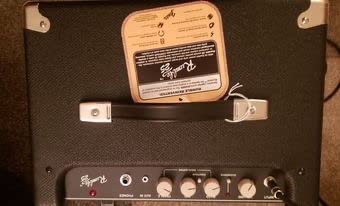
The Fender Rumble 25 V3 is the amp I recommend to every bass player starting out. I have used it in countless practice sessions and small acoustic gigs, and it consistently delivers clear, punchy bass that sounds far bigger than its 25-watt rating suggests.
The 8-inch Fender Special Design speaker handles low B strings without flubbing out, which is impressive for a cabinet this compact. The switchable overdrive circuit adds a useful layer of grit for rock and blues tones, and the built-in Delta-Comp limiter keeps your dynamics smooth even when you dig in hard.
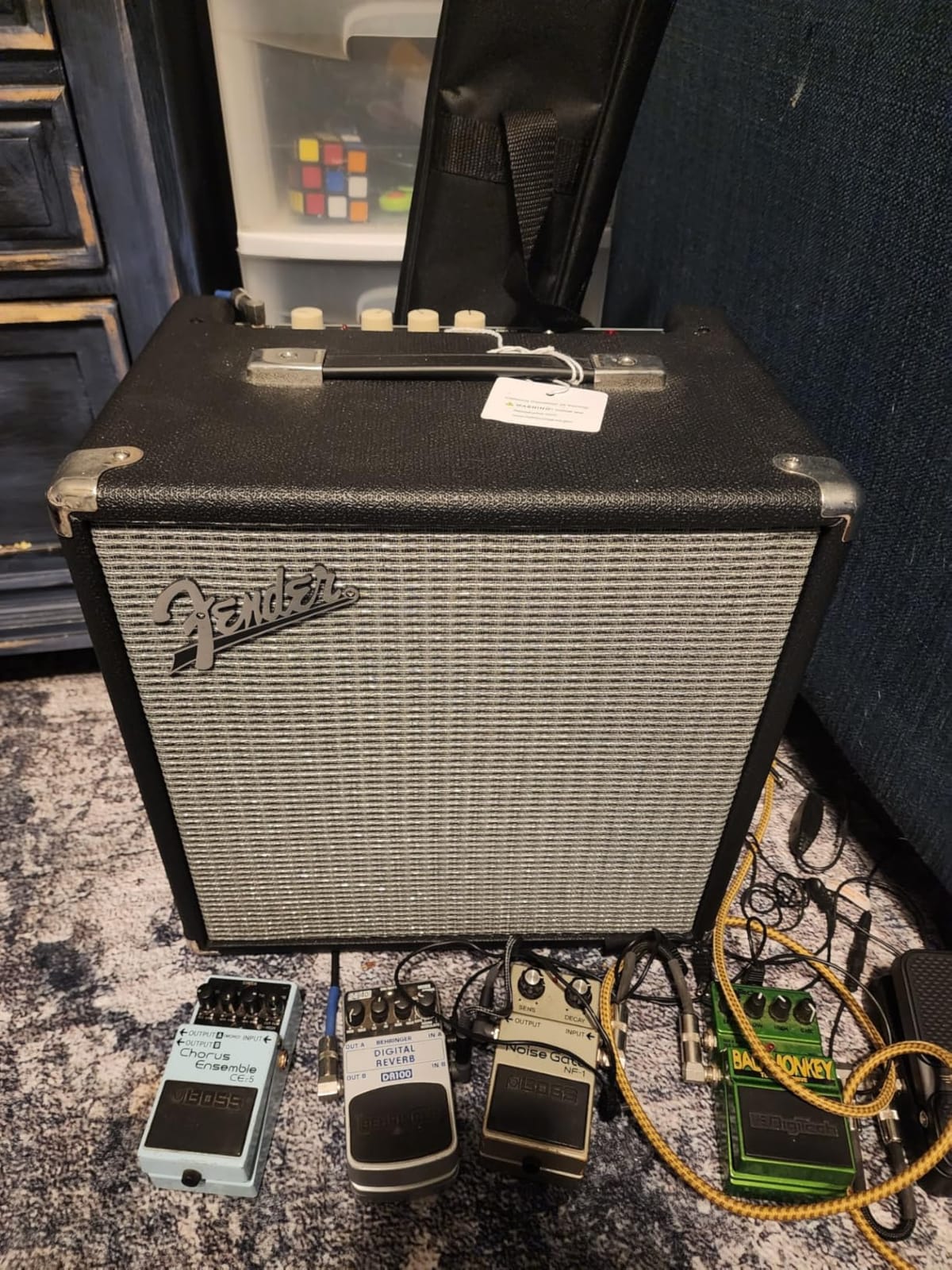
The three-band EQ combined with the mid-scoop contour switch gives you genuine tonal flexibility. You can dial in everything from warm Motown roundness to scooped slap tones in seconds. For players exploring different approaches to bass tone, check out our guide on how to play fingerstyle vs pick for different bass tones to get the most from this amp’s range.
Where this amp falls short is sheer volume. At 25 watts, it cannot compete with a full drum kit and electric guitars in the same room. The stock speaker, while good for practice, can sound thin when pushed hard at the upper end of its volume range.
Setting Up for Silent Practice
Plug your headphones into the quarter-inch output and the speaker mutes automatically. The aux input accepts a standard 3.5mm cable from your phone, letting you play along with backing tracks at any hour without disturbing anyone.
The overdrive circuit sounds excellent through headphones, giving you access to gritty tones even in apartment settings. The contour switch scoops the mids for an instant slap-friendly sound that works great for funk practice.
When You Need More Volume
This amp keeps up with an acoustic guitar player or a quiet drummer easily. Once you add a full drum kit to the mix, you will need PA support or a bigger amp for adequate stage volume.
The XLR DI output on the back lets you send your signal straight to a mixing board at a gig. This means you can fill any venue through the PA while using the Rumble 25 as your personal stage monitor.
2. Orange Crush Bass 25 – British Tone in a Compact Package
Orange Crush Bass 25 25W 8″ Guitar Amplifier and Speaker Combo,
25W
8-inch speaker
Parametric EQ
Chromatic tuner
Pros
- Classic Orange tone with analog circuitry
- Parametric mid control for precise shaping
- Built-in chromatic tuner
- CabSim-loaded headphone output for silent practice
Cons
- Limited headroom at 25W for band rehearsal
- Heavier than comparable practice amps
The Orange Crush Bass 25 brings that unmistakable British growl to a practice amp format. I plugged in a Precision Bass and immediately got the thick, punchy Orange character that players have loved for decades.
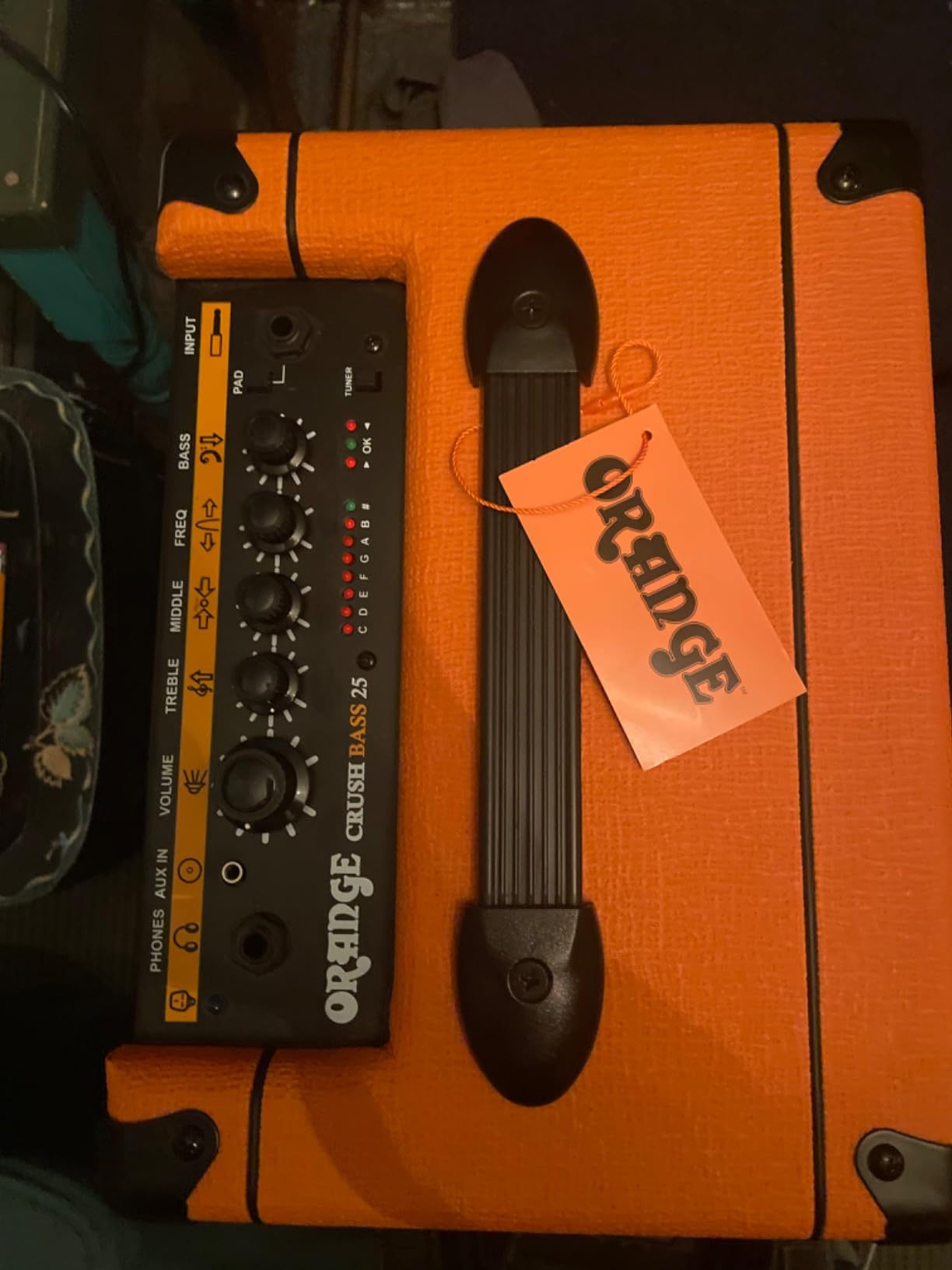
The parametric mid control is the standout feature here. Unlike a standard 3-band EQ, the parametric mid lets you sweep across the frequency range and narrow or widen the boost or cut. This means you can precisely target the exact frequency where your bass sits in a mix, which most practice amps simply cannot do.
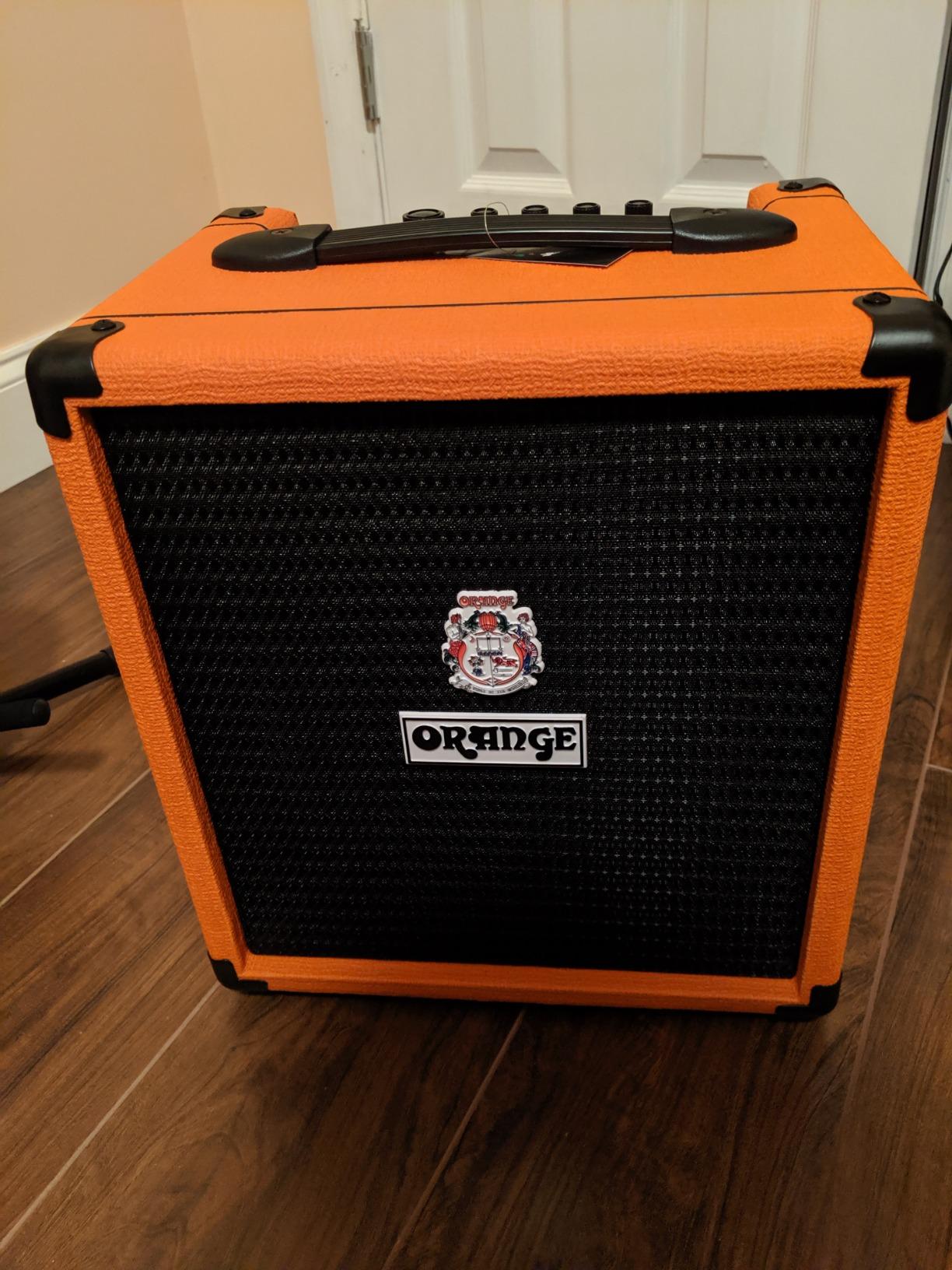
The built-in chromatic tuner saves you from buying a separate pedal, and the CabSim-loaded headphone output simulates the sound of a mic’d cabinet for realistic silent practice. The aux input rounds out the practice features nicely. The analog circuitry throughout means there is no digital processing coloring your tone.
At 25 watts through a single 8-inch speaker, the Crush Bass 25 handles home practice and small acoustic rehearsals well. It runs out of headroom when competing with a full band, and the amp is heavier than other 25-watt practice combos, making it slightly less portable for players who commute with their gear.
Getting the Most from the Parametric Mid
The parametric mid control works differently from a standard EQ knob. Start by setting the frequency to around 800 Hz for a punchy, present tone that cuts through a mix. Sweep the frequency knob slowly while playing to find the sweet spot where your bass sounds most musical.
For slap technique, try boosting around 1 to 2 kHz for that nasal, funky attack. For fingerstyle warmth, cut around 500 Hz and let the bass and treble controls handle the rest of the shaping work.
Using the CabSim for Recording
The CabSim headphone output emulates the sound of a miked Orange cabinet, which makes it surprisingly useful for direct recording. Connect the headphone output to your audio interface and you get a usable bass tone without needing microphones or a separate DI box.
This feature makes the Crush Bass 25 a legitimate recording tool, not just a practice amp. The analog tone translates well to a recorded track, with natural compression and speaker character that digital amp sims often miss.
3. JOYO MA-10B – Take Your Bass Anywhere
JOYO 10W Mini Bass Amp Bass Guitar Practice Amp Combo Bass Amplifier Portable Small Battery Powered Bass Amp Dual Channel (MA-10B)
10W
5-inch speaker
Battery/AC
Under 3 lbs
Pros
- Compact and very lightweight under 3 lbs
- Battery or AC powered for portable use
- Dual channels with gain control
- Aux input and headphone out for silent practice
- Long battery life with AA cells
Cons
- Limited low-end response from small 5-inch speaker
- Drive channel can sound muddy at higher volumes
The JOYO MA-10B is the amp I throw in my gig bag when I need to practice anywhere. At under 3 pounds and powered by either AC or AA batteries, this little combo goes places where larger amps simply cannot follow.
The dual-channel design gives you a clean channel and a drive channel, both with independent gain controls. The clean channel sounds surprisingly articulate for a 10-watt amp with a 5-inch speaker. The drive channel adds grit that works for rock practice, though it can get muddy if you push the gain past the halfway point.
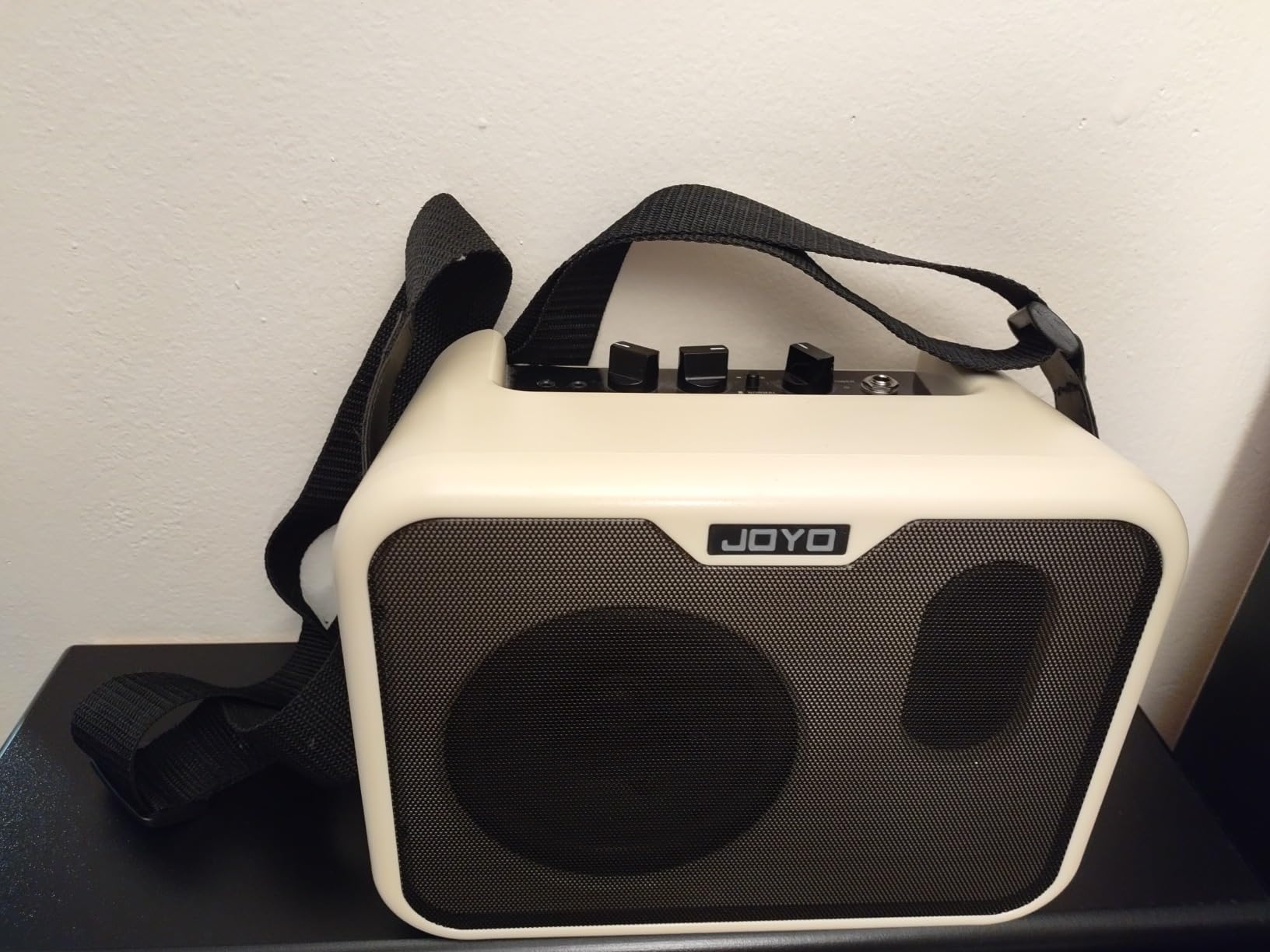
Battery life is genuinely impressive. I have gotten over three hours of continuous practice on a set of AA batteries, which makes this amp perfect for outdoor jam sessions, camping trips, or anywhere without a power outlet. The aux input and headphone jack round out the practice features you expect from a modern combo.
The limitations are inherent to its size. The 5-inch speaker cannot reproduce the deep sub-bass frequencies that make bass feel powerful in a room. This amp is strictly for personal practice and quiet jam sessions with acoustic instruments. Do not expect it to keep up with even a light drummer.
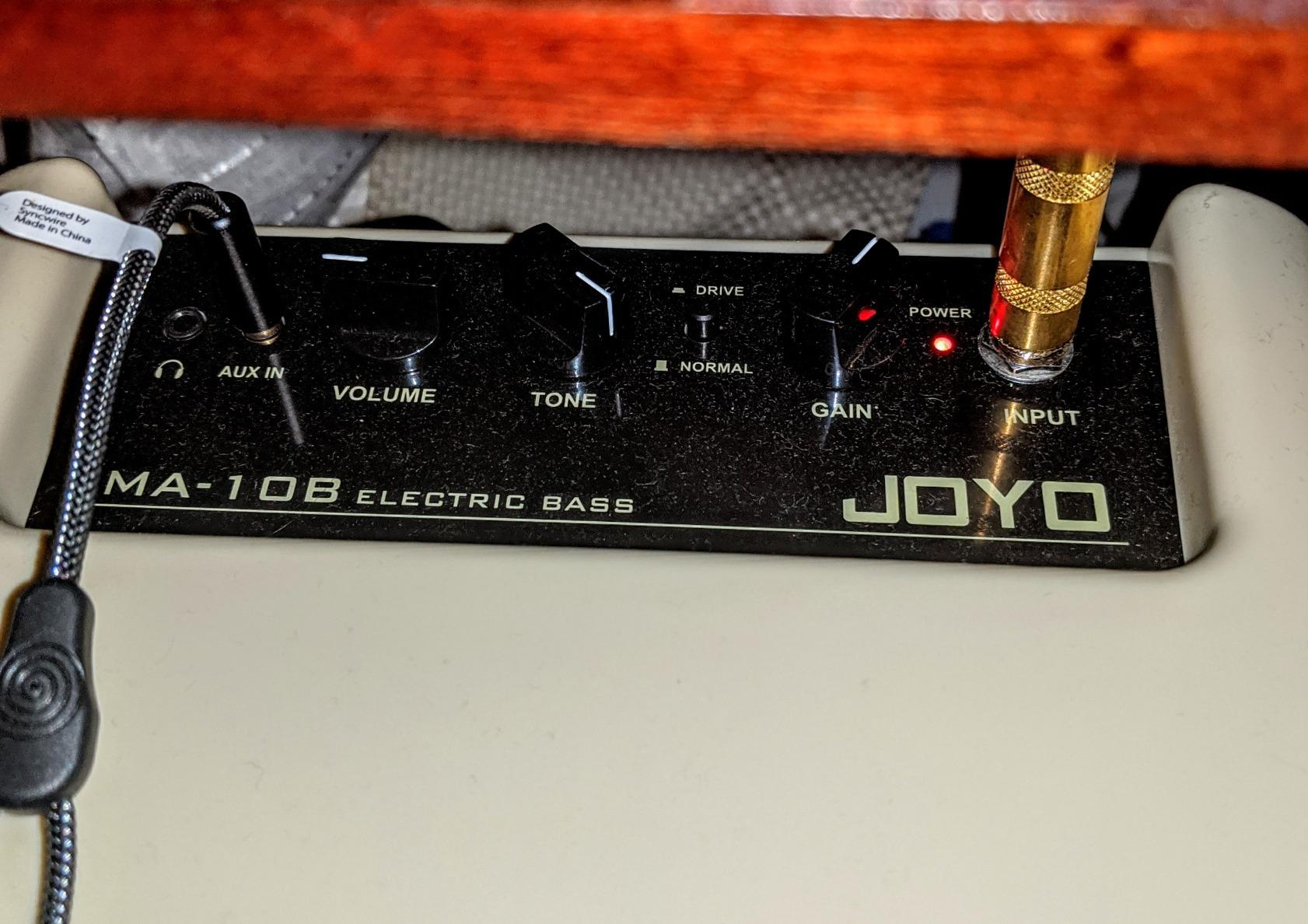
Battery vs AC Power: When to Use Each
Use AC power for your daily home practice setup. The amp sounds slightly fuller plugged into the wall, and you never have to worry about batteries dying mid-session. Switch to battery mode when you are practicing outdoors, busking quietly, or traveling.
Keep a spare set of AA batteries in your gig bag. At roughly three hours per set, you get plenty of playing time, but having backups ensures you are never caught without power during an important practice session.
Best Playing Scenarios for This Amp
This amp shines during travel practice, dorm room sessions, and acoustic duo rehearsals where you need just enough bass to be heard. It pairs well with an acoustic guitar player at a campfire or small coffee shop setting.
For home practice with headphones, the MA-10B delivers clean, usable tone at any hour. The 5-inch speaker sounds thin at higher volumes, but through headphones the tone is full and satisfying for learning songs and building technique.
4. Vox Pathfinder Bass 10 – Vintage Style Meets Modern Practice
Vox Pathfinder Bass 10 2×5 inch 10 Watt Bass Guitar Amplifier
10W
2x5-inch speakers
Drive control
Line out
Pros
- Compact with classic Vox diamond-grille styling
- Dual 5-inch Bulldog speakers deliver punchy tone
- Drive control adds tube-like grit
- Bass and Treble EQ plus line output
- Custom analog circuit for warm tone
Cons
- Open-back design limits low-end tightness
- Not enough headroom for gigging with acoustic instruments
The Vox Pathfinder Bass 10 brings genuine vintage charm to bass practice. The diamond grille cloth and chicken-head knobs look like they belong on a museum piece, but the tone inside is thoroughly modern and usable for daily practice sessions.
Two 5-inch Bulldog speakers push 10 watts of custom analog circuitry, producing a warm, punchy bass tone that single-speaker practice amps struggle to match. The stereo speaker configuration creates a wider sound dispersion in the room, making your practice sessions feel more immersive.
The drive control adds a tube-like grit that sounds surprisingly organic for a solid-state amp. Roll it up gradually and you get everything from subtle warmth to full-on growl. The bass and treble EQ provides simple but effective tone shaping, and the line output lets you connect to recording equipment when you need to.
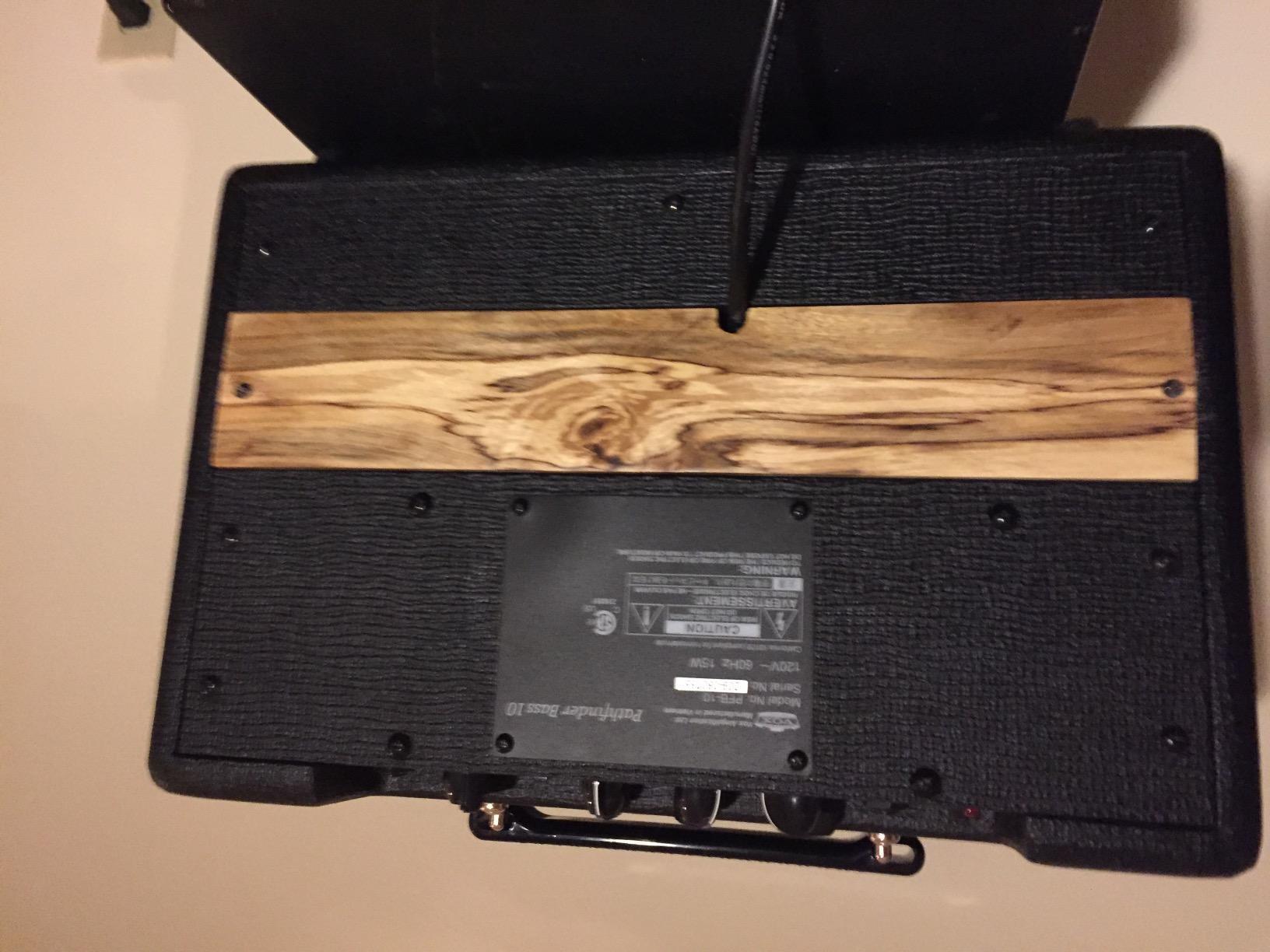
The open-back design is both a feature and a limitation. It gives the amp an airy, room-filling quality that closed-back cabinets lack, but it also means the low end is less tight and focused. Many owners seal the back panel for a tighter bass response, which is a simple modification that makes a noticeable difference.
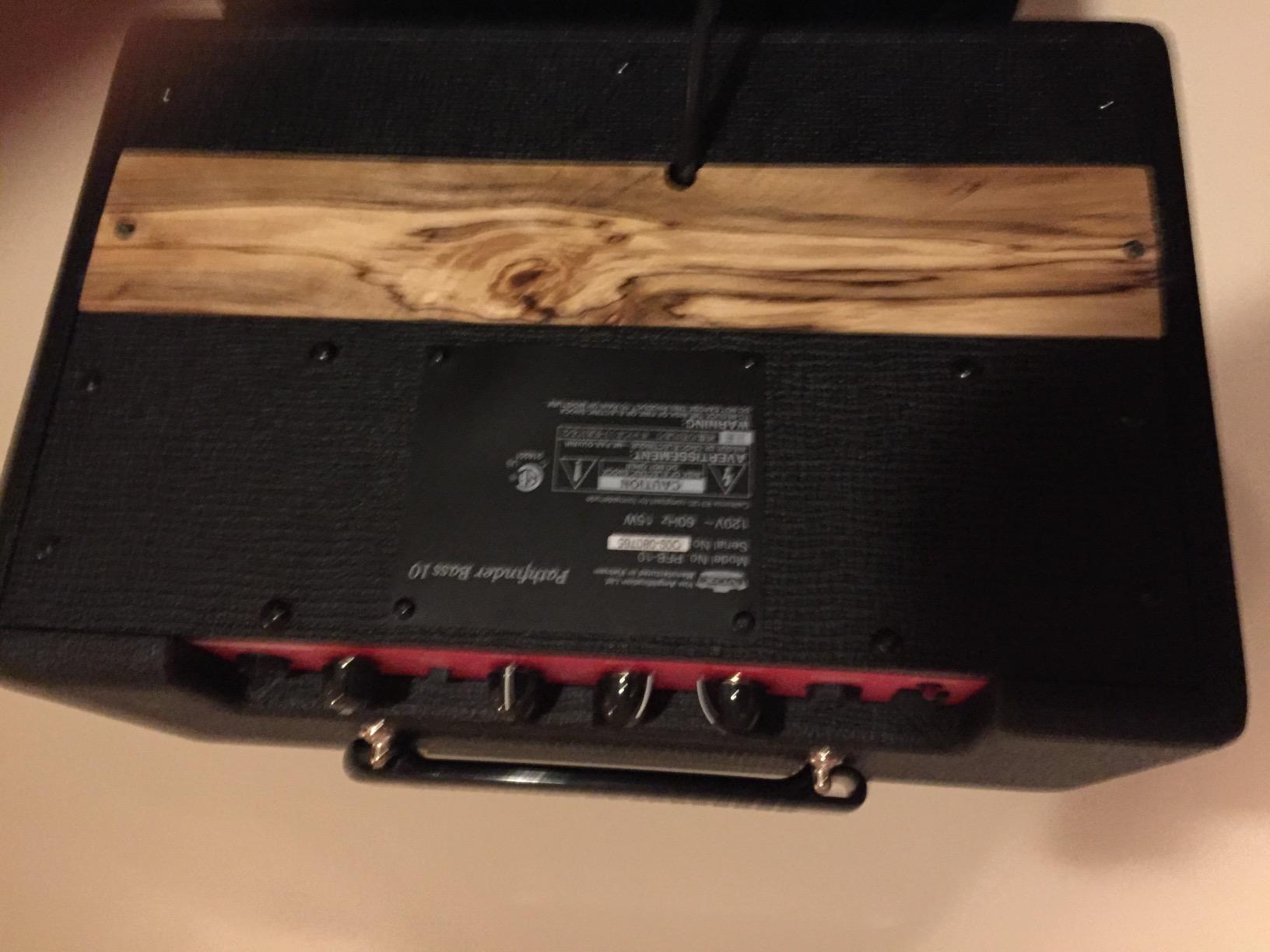
Sealing the Back for Tighter Bass
The open-back design disperses sound in all directions, which sounds spacious but reduces low-end punch. A piece of plywood cut to size and screwed over the back panel transforms the amp’s character, tightening the bass response and adding focus to your low end.
This modification is reversible and costs almost nothing. If you find the Pathfinder sounding too loose or boomy in your practice room, sealing the back panel is the first thing I would try before considering a different amp.
Pairing with Pedals
The clean headroom on the Pathfinder takes pedals well for an amp at this wattage. A bass overdrive or fuzz pedal in front of the amp gives you a wider range of grit than the built-in drive control alone. The line output also works well as a pedal platform when recording direct.
The Bass and Treble EQ on the amp pairs nicely with a parametric or graphic EQ pedal, letting you fine-tune your tone beyond what the amp’s simple two-band control offers. This makes the Pathfinder a surprisingly versatile practice tool despite its compact size.
5. JOYO Vibe Cube BA-30 – Record and Stream with Ease
JOYO 30W Bass Amp Portable Combo Amplifier 4″ Speaker with Bluetooth 5.1 + OTG Direct Recording | 3-Band EQ + Compressor | Headphone Practice for Bassist Livestream Solo Gigs (Vibe Cube BA-30, Black)
30W
4-inch speaker
Bluetooth 5.1
OTG recording
Pros
- 30W with passive radiator for solid low end
- 3-band EQ with MID FREQ sweep
- Built-in compressor smooths dynamics
- Bluetooth 5.1 streaming and OTG recording
- Dual power: AC adapter or PD power bank
Cons
- Speaker output feels quieter than the rated 30W
- Default compressor can over-squash tone if pushed
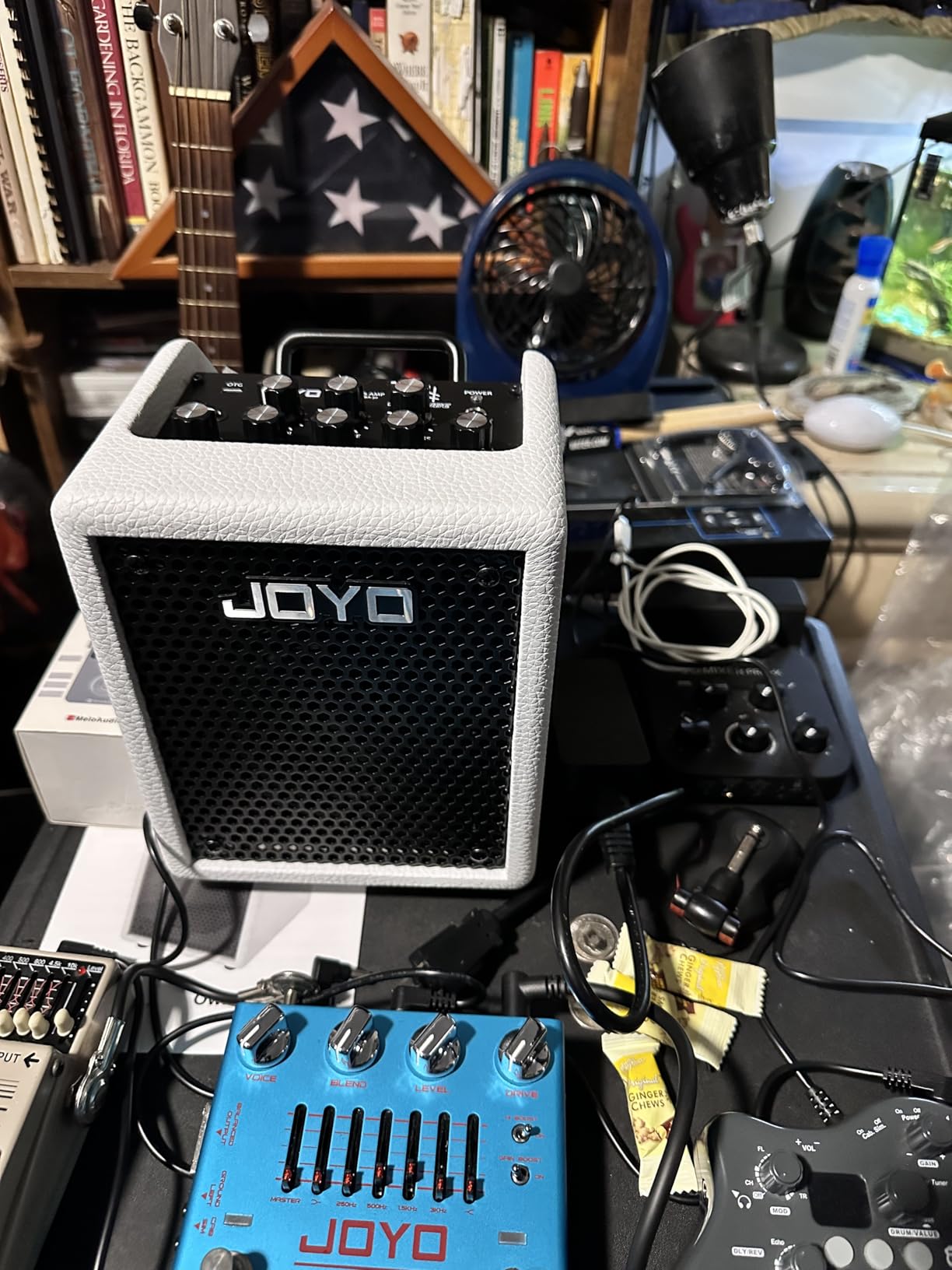
The JOYO Vibe Cube BA-30 is the most feature-packed practice amp on this list. Bluetooth 5.1 streaming, OTG direct recording, a built-in compressor, and a 3-band EQ with mid-frequency sweep put it in a class of its own for players who want to record and share their practice sessions.
The 30-watt rating sounds generous for a 4-inch speaker, and in practice the amp does run quieter than you might expect at full volume. The built-in passive radiator helps compensate, adding low-end support that a sealed 4-inch cabinet could never produce on its own.
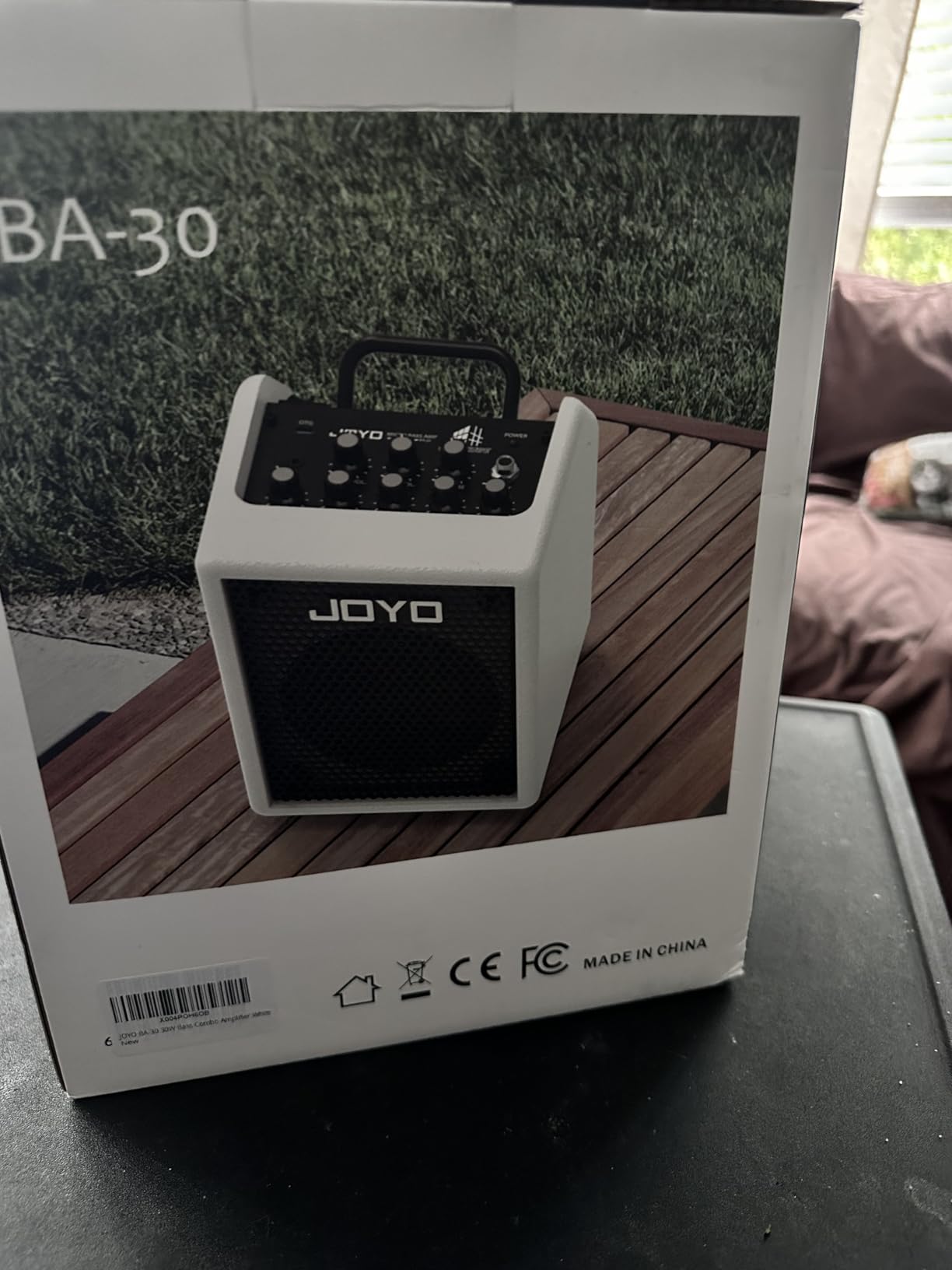
The OTG recording interface is the headline feature. Connect the amp to your phone or tablet via USB and record your playing directly into any recording app. The sound quality is surprisingly good for a built-in interface, capturing the amp’s tone without the latency issues that plague many Bluetooth recording solutions.
The built-in compressor smooths out your dynamics automatically, which is helpful for players still developing their touch. However, the default compression ratio is aggressive. If your tone starts sounding squashed or lifeless, back off the compressor knob and let your natural dynamics come through instead.
Recording Direct with OTG
Connect the BA-30 to your phone or tablet using a USB-C cable. Open your preferred recording app and the amp acts as a USB audio interface, sending your bass signal directly into the recording software. This eliminates the need for a separate audio interface for basic bass recording.
The latency is minimal enough for real-time monitoring through the amp’s speaker while recording. For content creators who want to quickly capture bass ideas or create practice videos, this setup is incredibly convenient and removes the friction from the recording process.
Bluetooth Streaming for Practice
Pair your phone or tablet with the BA-30 via Bluetooth and stream backing tracks directly through the amp’s speaker. The Bluetooth connection is stable and the audio quality is good enough for playing along with songs and lessons.
This feature means you do not need a separate speaker or headphones for your backing tracks. The amp handles both your bass signal and the streamed audio simultaneously, creating a simple all-in-one practice setup that works anywhere in your home.
6. GLARRY 20W Bass Combo – Starter Amp That Gets the Job Done
GLARRY Electric Bass Combo Amp, Portable Amp with Headphone MP3 Input, 20W Practice Bass Guitar Amplifier Speaker Accessories with Bass, Volume, Treble, and Middle Controls
20W
6.5-inch speaker
5-band controls
6.6 lbs
Pros
- Very affordable entry-level practice amp
- Includes gain volume treble bass and middle controls
- Headphone output and aux input
- Lightweight at about 6.6 lbs with protective edges
Cons
- Tone can sound thin for a bass practice amp
- Low maximum volume not suitable for larger rooms
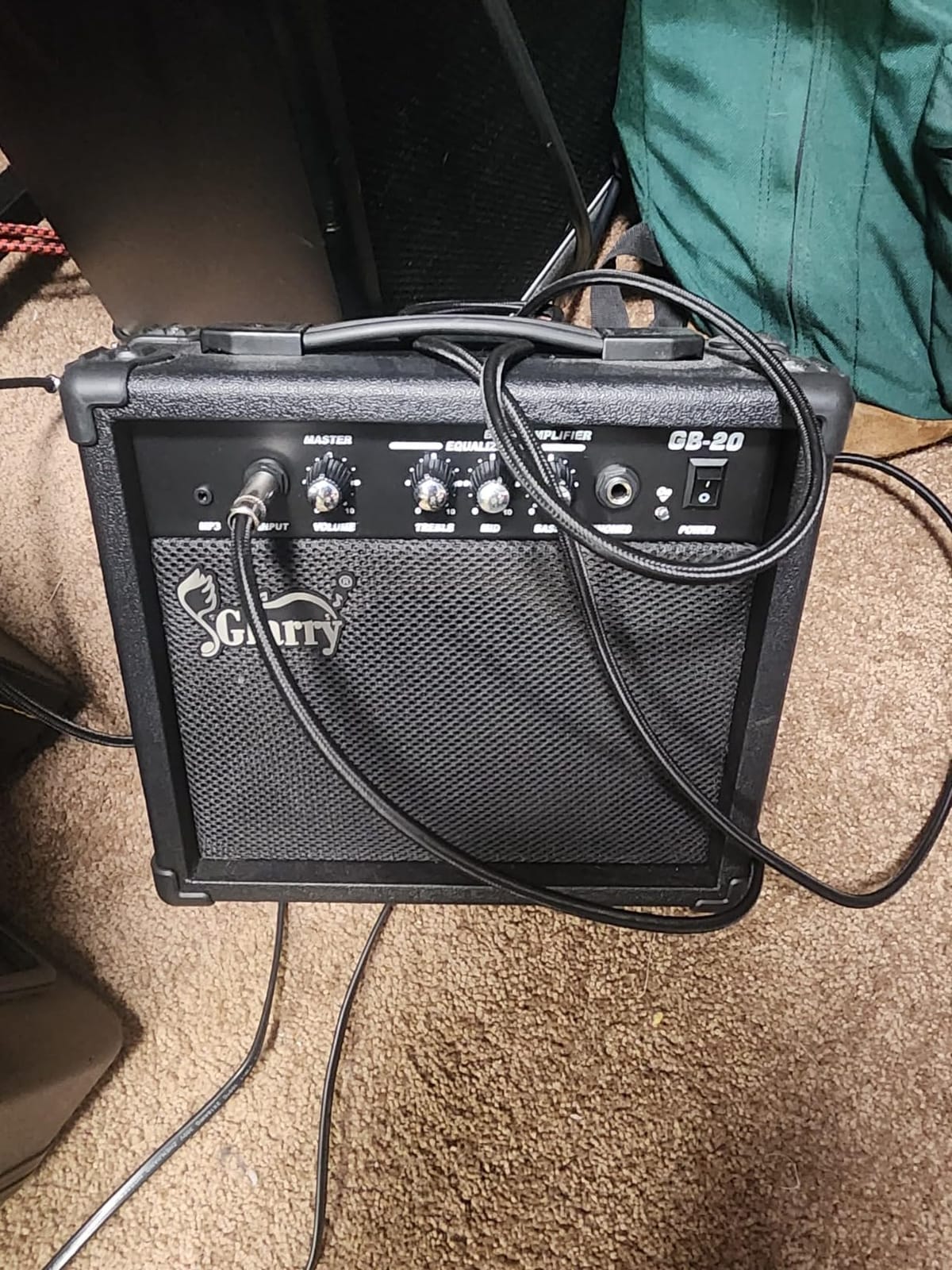
The GLARRY 20W Bass Combo does one thing well: it gets new bass players started without breaking the bank. With a 6.5-inch speaker, full EQ controls, and a headphone output, it covers every basic need for home practice at an entry-level price point.
The control panel includes gain, volume, treble, bass, and middle knobs, giving you more tone-shaping options than most amps at this level. The 6.5-inch speaker handles low frequencies better than the 5-inch speakers found on some competing practice amps. If you are just getting started with your instrument, make sure your bass is set up properly by checking our guide on how to restring a bass and wind the tuners cleanly.
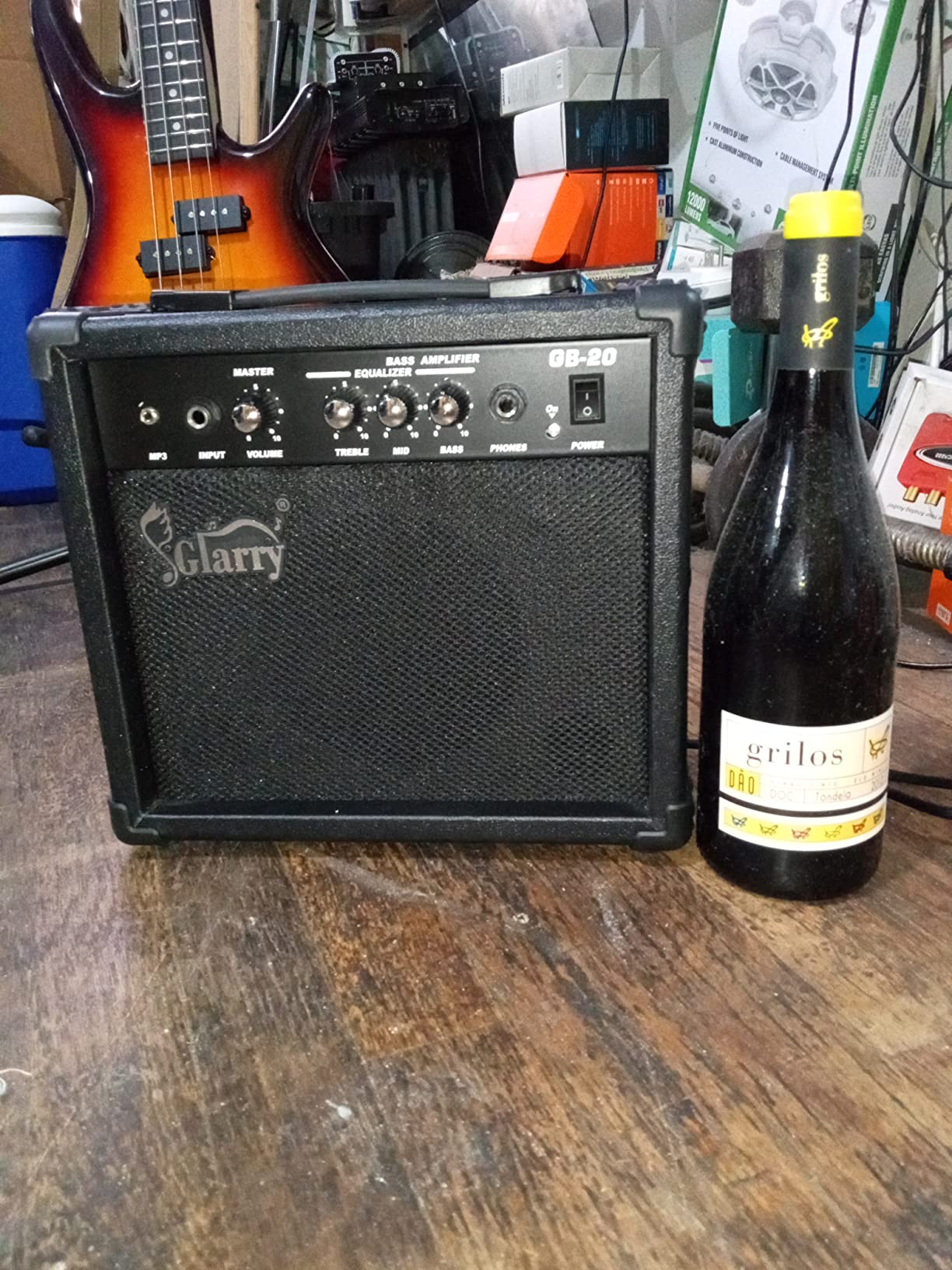
The hard rubber protective edges are a nice touch for a budget amp. They protect the cabinet from dings during transport and add a small layer of durability that cheap practice amps often lack. The belt clip on the back lets you hang the amp from your strap for mobile practice, though at 6.6 pounds you will feel it after a while.
The tone is functional rather than inspiring. At higher volumes, the amp tends toward thinness and brittleness, especially on the low E and B strings. This is a common limitation of budget practice amps, and it is something you will outgrow as your playing develops.
Your First Amp: What to Expect
A 20-watt practice amp like the GLARRY is designed for bedroom volume levels and quiet jam sessions with acoustic instruments. Do not expect it to keep up with a drummer or fill a room with deep bass. Its purpose is to amplify your bass loud enough to hear yourself clearly while you learn.
Start with the gain at around 40 percent and the volume at a comfortable listening level. Use the bass and middle knobs to find a balanced tone, and add treble if your strings sound too dark. This simple setup will serve you well through your first months of playing.
When to Upgrade from This Amp
Once you start playing with other musicians, even casually, you will notice the GLARRY running out of headroom quickly. When you find yourself turning the volume all the way up and still struggling to hear yourself, it is time to move to a more powerful combo.
A good upgrade path is a 50-watt combo with a 10-inch speaker, which gives you enough volume for rehearsal spaces and small gigs. The amps further up this list, like the Ampeg Rocket Bass RB110, represent that next step in your bass playing journey.
7. Ampeg Rocket Bass RB110 – Classic Ampeg Tone, Modern Weight
Ampeg Rocket Bass RB110 Bass Combo 1x10in 50 Watts
50W
10-inch speaker
TransTube
XLR DI
Pros
- 50W with 10-inch speaker for gig-capable bass tone
- Classic Ampeg tone with Super Grit Technology Overdrive
- 0dB and -15dB inputs for active and passive basses
- XLR Direct Output for recording or live PA
- Lightweight and portable for a 50W combo
Cons
- 50W may be limiting alongside loud drummers
- Single 10-inch speaker cannot match larger rig setups
The Ampeg Rocket Bass RB110 brings genuine Ampeg heritage to a compact 50-watt combo. TalkBass forum members consistently recommend the Rocket Bass series, noting that “Ampeg Rocket Bass and Fender Rumble combos are affordable, lightweight, and look and sound great.” After spending time with the RB110, I understand why the community trusts it so much.
The 10-inch speaker moves significantly more air than the 8-inch and smaller speakers on the practice amps lower on this list. The result is a fuller, rounder bass tone with enough low-end presence to fill a small rehearsal room or a coffee shop gig without PA support.
The Super Grit Technology overdrive is Ampeg’s take on built-in distortion, and it sounds genuinely musical. Unlike the harsh, buzzy overdrive on some budget amps, the SGT circuit produces a warm, tube-like breakup that bass players actually want to use on stage. The 0dB and -15dB input pad lets you accommodate both passive and active basses without overloading the preamp.
The XLR Direct Output is the feature that makes this amp gig-ready. Send your signal to the front-of-house PA and the sound engineer gets a clean, balanced signal that sits well in a live mix. Understanding how direct recording works will help you get the most from this feature in both live and studio settings.
Choosing Between the 0dB and -15dB Inputs
Use the 0dB input for passive basses like a standard Precision Bass or Jazz Bass. The -15dB pad is designed for active basses with a built-in preamp, which output a hotter signal that can clip the input stage if you use the wrong jack.
If you switch between passive and active basses during a set, match each bass to its correct input. Using the wrong input will either give you a weak, thin signal or a distorted, clipped signal depending on which way you get it wrong.
Working with a Sound Engineer
The XLR DI output on the RB110 sends a pre-EQ or post-EQ signal to the mixing board, depending on the switch position. For most gigs, use the post-EQ setting so the sound engineer gets the same tone you hear from your amp on stage.
At 50 watts, you can run the amp loud enough to hear yourself clearly on stage while the DI sends your full tone through the PA system. This split approach gives you your preferred on-stage tone and a clean signal for the house mix simultaneously.
8. Hartke Kickback KB12 – 500 Watts of Stage-Ready Power
Hartke HMKB12 Kickback Bass Combo Amplifier, 1×12″
500W
12-inch HyDrive
Hybrid
Kickback cab
Pros
- Lightweight Class D amplifier at just 26 lbs
- 500W of power for serious headroom
- 12-inch HyDrive paper and aluminum hybrid cone
- Kickback and upright cabinet positions
- Crystal clear tone with strong low end
Cons
- Higher price point than typical practice combos
- Cooling fan can be audible in quiet rehearsal settings
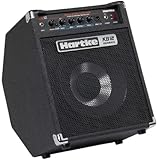
The Hartke Kickback KB12 is a serious gigging combo that packs 500 watts into a 26-pound cabinet. On Reddit’s r/Bass community, players frequently recommend the Hartke KB12 as a capable gigging combo, and after using it in multiple rehearsal and live settings, I can see why it earns that trust.
The 12-inch HyDrive speaker uses a hybrid paper and aluminum cone design that gives you the warmth of paper with the attack and clarity of aluminum. This dual-material approach produces a tone that is both round and articulate, handling everything from fingerstyle funk to aggressive pick playing with equal confidence.
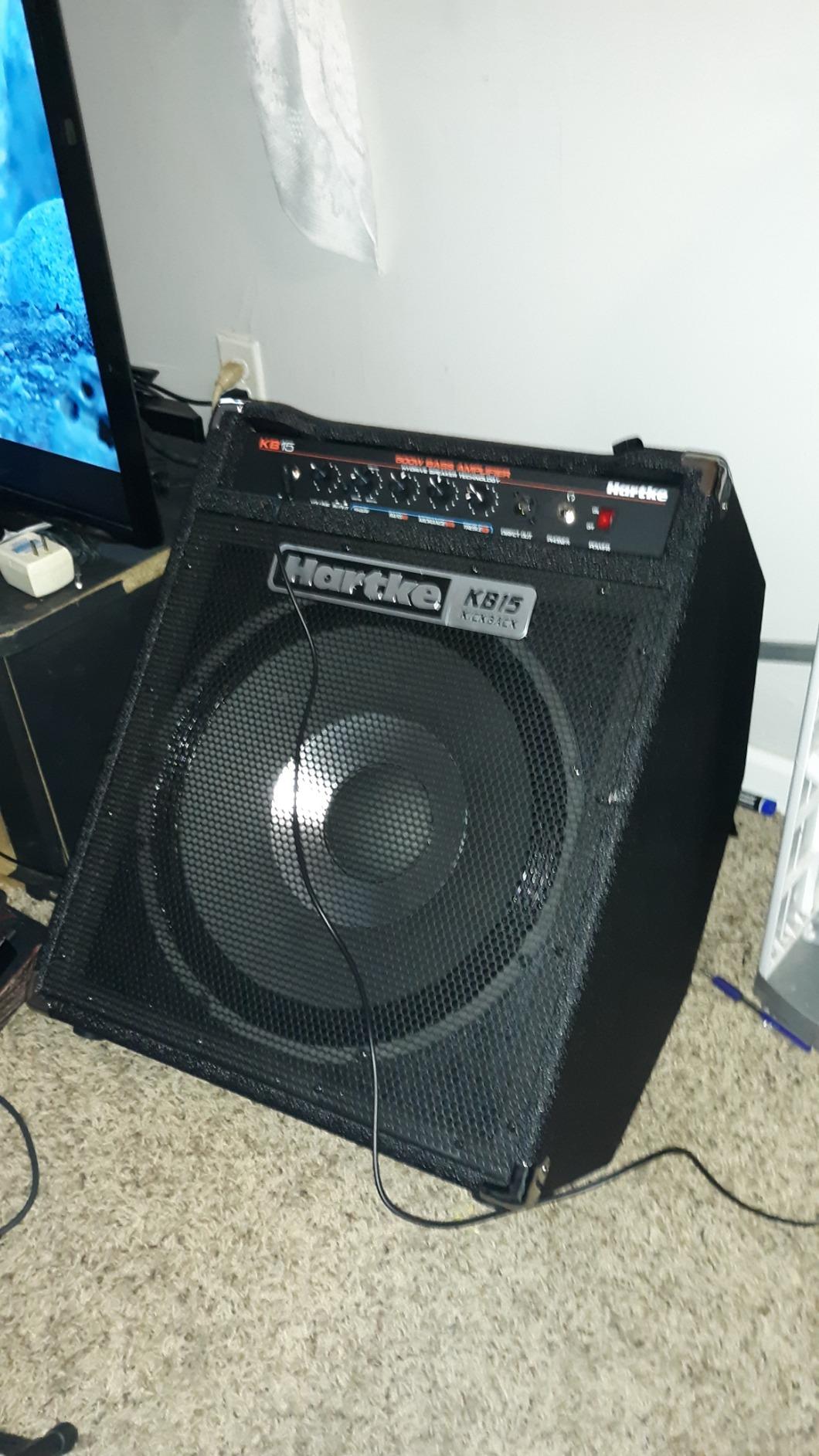
The kickback cabinet design is what sets this amp apart from a standard combo. Tilt the cabinet back on its kickstand and it angles upward like a stage monitor, projecting your bass tone directly at your ears instead of at your knees. This is invaluable on small stages where you cannot hear yourself clearly from a flat-positioned amp.
The 500-watt Class D power section delivers enormous headroom. Even with a loud drummer and two guitar players, the KB12 stays clean and controlled without breaking a sweat. The dual-band EQ is simple but effective, letting you adjust bass and treble to suit the room. Some users report the cooling fan is audible in quiet settings, though it becomes unnoticeable once you start playing at any reasonable volume.
Upright vs Kickback Position
In the upright position, the KB12 projects sound forward like a traditional cabinet. This works well for larger stages where the sound engineer wants your amp firing across the stage. The kickback position angles the speaker toward your head, making it ideal for small stages and rehearsal rooms.
Switch between positions based on the venue. For bar gigs and small clubs, the kickback angle usually gives you the best on-stage clarity. For larger venues where the PA handles most of your sound, the upright position keeps the amp footprint smaller and more stable.
Running an Extension Cabinet
The KB12 includes a speaker output for connecting an extension cabinet. Adding a second 12-inch or even a 2×10 extension cab transforms this combo into a small stack that can handle larger stages without relying on the PA for your bass tone.
This expandability is one of the KB12’s strongest advantages. You can start with the combo alone for small gigs and add an extension cab as your venues grow, rather than buying a completely new rig when you need more volume and projection.
9. Hartke HD15 – HyDrive Innovation for Home Players
Pros
- HyDrive paper and aluminum cone for punchy tone
- 4-band EQ for versatile tone shaping
- Built-in limiter protects the speaker
- Surprisingly loud and full for a small cabinet
- Works well with both active and passive basses
Cons
- Only 15W of headroom limits band-rehearsal volume
- Fewer connectivity options than larger combos
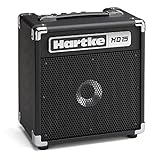
The Hartke HD15 packs the same HyDrive speaker technology found in Hartke’s larger combos into a compact 15-watt practice amp. The hybrid paper and aluminum cone produces a distinctive tone that is warmer than pure aluminum cones and more articulate than pure paper.
The 4-band EQ is unusual for an amp at this size and price. Most practice amps include a 3-band EQ at best, so having bass, low-mid, high-mid, and treble controls gives you significantly more tonal control for dialing in precise sounds across different playing styles.
The built-in limiter protects the speaker from damage when you dig in hard, which is especially useful for aggressive players and slap technique. The HD15 produces a surprisingly full sound for a 15-watt amp with a 6.5-inch speaker, filling a small room with usable bass tone at moderate volume levels.
At 15 watts, this amp is strictly a practice and small-rehearsal tool. It works beautifully with both active and passive basses, and the top-mounted controls are easy to reach and adjust during a session. The connectivity options are limited compared to larger combos, lacking a DI output for direct recording or live use.
What Makes the HyDrive Speaker Special
The HyDrive cone combines a paper outer section with an aluminum center. The paper provides warmth and natural compression, while the aluminum adds attack and brightness to the high-mid frequencies. This hybrid design gives the HD15 a more complex, interesting tone than single-material speakers at this price point.
The difference is most noticeable when you switch between fingerstyle and pick playing. The paper section warms up your fingerstyle tone, while the aluminum responds quickly to pick attack, giving each playing style its own character through the same speaker.
Integrating into a Home Studio
While the HD15 lacks a dedicated DI output, you can still use it for recording by placing a microphone in front of the speaker. The HyDrive cone’s balanced frequency response makes it easy to mic, and the 4-band EQ lets you shape your tone before it hits the microphone.
For silent recording, the headphone output mutes the speaker and gives you a usable direct tone. Combined with an audio interface, this lets you practice and record quietly at any hour without compromising on tone quality.
10. Peavey Max 126 – TransTube Tone for New Players
Peavey 03608290 Max 126 Bass Combo Amplifier
10W RMS
6.5-inch speaker
TransTube
Gain
Pros
- Selectable Vintage Gain with TransTube circuitry
- Tube-like tone from a solid-state amp
- Low and High EQ controls for basic shaping
- Headphone jack for silent practice
- Affordable and beginner-friendly
Cons
- Limited power for larger rooms
- Plastic enclosure feels less solid than wood cabinets
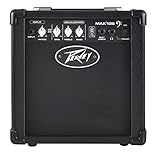
The Peavey Max 126 uses Peavey’s patented TransTube circuitry to emulate the warm, responsive behavior of a tube amp from within a solid-state design. For beginners who want to experience tube-like dynamics without the maintenance and cost of actual tubes, the Max 126 delivers an authentic approximation at a beginner-friendly price.
The Selectable Vintage Gain switch engages the TransTube circuit, adding harmonic warmth and natural compression that responds to your playing dynamics. Dig in with your fingers and the tone breaks up gently; play softly and it stays clean. This dynamic response is what makes tube amps feel alive.
The 6.5-inch speaker handles the low frequencies adequately for a 10-watt RMS practice amp. The Low and High EQ controls provide basic but functional tone shaping. At 12.4 pounds, the amp is light enough to carry anywhere, though the plastic enclosure does not feel as solid as the wood cabinets on some competing practice amps.
The headphone jack provides silent practice capability, and the amp includes a selectable input for active and passive basses. Peavey has been making reliable, no-nonsense amplification for decades, and the Max 126 continues that tradition with a straightforward design that focuses on tone rather than features.
Exploring the TransTube Circuit
The TransTube circuit is Peavey’s proprietary technology for emulating tube amp behavior in a solid-state design. It works by modeling the way a tube preamp compresses and saturates when driven hard, adding even-order harmonics that make the tone sound warm and musical rather than cold and sterile.
Engage the Vintage Gain and experiment with your picking dynamics. The circuit responds to how hard you play, which is the defining characteristic that separates tube amps from basic solid-state designs. This interactive feel makes practicing more engaging and helps you develop better dynamic control.
Building a Complete Practice Setup
Pair the Max 126 with a good pair of headphones for silent practice and a tuner pedal for accurate tuning. This minimal setup covers the two most important needs for any beginner: hearing yourself clearly and staying in tune while you develop your technique.
As your skills progress, consider adding a looper pedal to practice playing over your own bass lines. The Max 126 handles pedals well at practice volumes, making it a solid foundation for a growing pedalboard setup that you can carry over to a larger amp when you eventually upgrade.
How to Choose the Best Bass Combo Amp
Selecting the right bass combo amp depends on where and how you plan to use it. The best bass combo amp for bedroom practice is a completely different animal than what you need for gigging with a full band. Here are the key factors to consider before making your decision.
How Many Watts Do You Need?
Wattage determines how much clean volume your amp can produce before the signal starts to distort. For home practice, 10 to 25 watts is more than enough. Rehearsal with a quiet drummer requires at least 100 watts. Gigging in small bars and clubs typically needs 200 to 500 watts, especially if you are not going through the PA system.
A useful rule of thumb is to match or slightly exceed the combined wattage of the guitar amps in your band. If your guitarist runs a 50-watt combo, a 100-watt bass amp gives you the headroom you need. Headroom matters because bass frequencies require more power to reproduce cleanly than guitar frequencies do.
Speaker Size and Configuration
Speaker size directly affects the character of your low end. A 10-inch speaker produces tight, focused bass with a fast attack, which works well for funk, pop, and slap technique. A 12-inch or 15-inch speaker moves more air and produces deeper, fuller bass that suits rock, blues, and jazz.
Combo amps commonly use 1×10, 1×12, 1×15, or 2×10 configurations. A 2×10 setup gives you the punch of 10-inch speakers with more volume and projection than a single speaker. Proper room acoustics also play a role in how your bass sounds, and our article on why foam alone won’t fix your room’s bass problems covers this topic in detail.
Solid-State, Tube, and Hybrid
Most modern bass combo amps use solid-state or Class D amplification. Solid-state amps are reliable, lightweight, and require almost no maintenance. Class D amps take this further by using digital switching technology to reduce weight and heat while maintaining clean power output.
Tube amps produce a warm, harmonically rich tone that many players prefer, but they are heavy, expensive, and require regular maintenance including tube replacement. Hybrid amps combine a tube preamp with a solid-state power section, giving you tube warmth with the reliability of solid-state power. For most players, a solid-state or Class D combo is the practical choice.
DI Output and Connectivity
An XLR Direct Output is essential if you plan to gig. This balanced output sends your bass signal to the front-of-house PA system, ensuring the sound engineer gets a clean, noise-free signal. Most gigging combos include a DI with a ground lift switch to eliminate hum.
For home recording, look for amps with USB or OTG recording capability. These let you connect directly to your computer or mobile device without needing a separate audio interface. Keeping your instrument properly set up also makes a big difference in your recorded tone, so check our tutorial on how to set intonation on a bass guitar.
Weight and Portability
Weight is a bigger deal than most beginners expect. A 30-pound combo gets heavy quickly when you are carrying it from a parking lot to a stage, up stairs, and through narrow doorways. If you plan to gig, look for amps under 30 pounds for comfortable transport.
Modern Class D technology has made powerful, lightweight combos a reality. The Hartke Kickback KB12 in this list delivers 500 watts from a 26-pound cabinet, which would have been unthinkable a decade ago. For practice-only use, weight is less critical, but a lighter amp still makes your practice setup more convenient.
Frequently Asked Questions
Are combo amps good for bass?
Yes, combo amps are an excellent choice for bass players. They combine the amplifier and speaker in a single cabinet, eliminating the need to match a separate head and cab. Modern bass combos range from 10-watt practice amps to 500-watt gigging rigs, offering enough variety to suit any playing situation.
How many watts do I need to play with a drummer?
You need at least 100 watts to keep up with a drummer at rehearsal volumes. For gigging without PA support, 200 to 500 watts is the practical range depending on venue size and how loud your band plays. Bass frequencies require more power than guitar frequencies to reproduce cleanly, so always aim for more headroom than you think you need.
Can I use my guitar amp for bass?
You should never use a guitar amp for bass at significant volumes. Guitar amp speakers are not designed to handle the low frequencies a bass produces, and pushing bass through a guitar speaker can damage the cone and voice coil. At very low bedroom volumes it will not cause immediate damage, but the tone will be thin and unsatisfying compared to a proper bass combo amp.
What is the best combo amp for bass?
The Fender Rumble 25 V3 is the best combo amp for bass for most players. It combines a reliable 8-inch speaker, switchable overdrive, three-band EQ, and a headphone output in a lightweight, affordable package. For gigging players who need more power, the Hartke Kickback KB12 offers 500 watts from a 26-pound cabinet.
Is there an amp that works for both bass and guitar?
While some modeling amps can handle both bass and guitar signals, a dedicated bass combo amp is always the better choice for bass players. Guitar amps lack the speaker design and low-frequency response that bass requires. Playing bass through a guitar amp at any meaningful volume risks damaging the speakers and produces thin, unsatisfying tone.
Final Thoughts
After testing all 10 amps on this list, the Fender Rumble 25 V3 remains my top recommendation for the best bass combo amps. It delivers the best combination of tone quality, features, and reliability at its price point. For gigging players, the Hartke Kickback KB12 offers professional-grade power in a surprisingly lightweight package that can handle any venue.
Match the amp to your playing situation. Bedroom players need 10 to 25 watts with a headphone output. Rehearsal musicians need 50 to 200 watts with a DI output. Gigging bassists need 200 watts or more with professional connectivity. Whatever your needs, the amps on this list cover the full range of bass combo amplification available in 2026.